The World Health Organization: Limits of Global Health in a World That Won’t Be Governed

A collaboration between Lewis McLain & AI

The decision by the United States to withdraw from the World Health Organization did not simply reopen a policy debate. It exposed a deeper confusion that has long surrounded the institution itself. Critics and defenders often talk past one another, not because they disagree on facts, but because they carry different, usually unspoken assumptions about what WHO was ever meant to be.

Some imagine a global equivalent of the CDC, capable of decisive action and enforcement. Others fear a supranational authority imposing mandates across borders. In reality, WHO has always been something far more constrained—and far more revealing of the limits of modern international governance.

To understand why WHO struggled when it mattered most, and why the U.S. ultimately chose to leave, it is necessary to begin not with recent controversies, but with the idea that gave birth to the institution itself.


An Institution Born from Ruins

WHO was not created in a moment of optimism. It was created in a moment of exhaustion.

In the aftermath of World War II, infectious disease followed mass displacement and demobilization. Typhus, cholera, tuberculosis, and malaria crossed borders with ease. The war made one reality unavoidable: public health could no longer be treated as purely domestic.

In 1948, WHO was formally established, consolidating earlier international health efforts into a single global body. Its founding constitution declared that “the enjoyment of the highest attainable standard of health is one of the fundamental rights of every human being.” The moral ambition was expansive. The institutional design beneath it was deliberately narrow.

WHO was structured around three core principles:

  • Universal membership, even at the cost of compromise
  • Respect for national sovereignty, especially over internal affairs
  • Technical authority embedded within diplomacy, not above it

WHO would coordinate, not command. It would advise, not enforce. It would preserve access even when confrontation seemed justified.

This design reflected the political realities of the postwar world. Over time, it would also define WHO’s limits.


Science Without Sovereignty: The Core Tension

Every major outbreak reveals the same contradiction.

Governments want early warnings from others.
They hesitate to provide early warnings themselves.

Early disclosure risks economic disruption, political blame, and international stigma. Delay risks uncontrolled spread and preventable death. WHO operates inside this narrow corridor, dependent on the cooperation of member states whose incentives often cut against transparency.

When information flows freely, WHO appears effective. When it does not, WHO appears compromised—even when it lacks the authority to compel disclosure. COVID-19 did not create this tension. It forced it into view.


Scale, Capacity, and Misplaced Expectations

Public expectations of WHO have rarely aligned with its actual capacity.

WHO’s entire budget is comparable to that of a large hospital system, not a global emergency command. Its workforce—under ten thousand even before recent cuts—is spread across more than 160 countries, often embedded as advisors rather than operators.

WHO does not run hospitals, stockpile national reserves, or command laboratories. Expecting it to “control” a pandemic is akin to expecting a weather service to stop a hurricane. Its function is detection, interpretation, and communication—not coercion.


Funding, Crisis, and the Quiet Geometry of Power

One structural feature of WHO is essential to understanding its behavior: how it is funded.

Only a minority of WHO’s budget comes from mandatory, assessed contributions. The majority—well over two-thirds in recent cycles—comes from voluntary, earmarked funding, much of it tied to specific diseases, emergencies, or crises.

This matters because earmarked funding shapes priorities. Programs that attract donor interest expand. Emergencies become more fundable than prevention. Crisis, over time, becomes currency.

WHO leadership is acutely aware that alienating major contributors—financial or political—can have immediate operational consequences. This is not corruption. It is dependence.


China’s Role: Influence Without Formal Control

Within this funding and governance structure, China occupies a distinctive position.

China is not WHO’s largest financial contributor; historically, the United States filled that role. China’s influence flows instead from indispensability. As the world’s most populous nation and a central node in global travel and trade, China’s cooperation is essential for credible disease surveillance in East Asia and beyond.

This creates an asymmetry. WHO needs access to China more than China needs WHO.

That imbalance surfaced repeatedly:

  • in the careful language surrounding early COVID-19 transmission,
  • in the reluctance to escalate public warnings without Chinese confirmation,
  • and most visibly in the exclusion of Taiwan from formal WHO participation despite its advanced public-health infrastructure.

Taiwan’s exclusion was not a scientific judgment. It was the point at which universality collided with access. WHO chose access.


When Structural Limits Became Visible

COVID-19 was not merely a failure of response; it was a stress test of incentives.

WHO repeated early assurances from Chinese authorities, calibrated its language carefully, and delayed escalation. Subsequent reviews focused on technical delays and verification gaps. Less often discussed was why escalation felt institutionally dangerous.

Escalation threatened access.
Access threatened funding stability.
Funding threatened operational survival.

This was the moment when diplomacy, science, and finance converged—and constrained action.


What WHO Never Was

For clarity: WHO cannot impose laws, mandate lockdowns, or override governments. It is not a global sovereign. Its failures stem from weakness, not domination.

This distinction matters, because it reframes the question. The issue is not whether WHO failed to act like a global authority. It is whether the world ever empowered it to be one.


The U.S. Withdrawal: An Unspoken Calculation

Publicly, the U.S. cited accountability failures and stalled reform. Privately—and structurally—the concern ran deeper.

From a U.S. perspective, a paradox had emerged:

  • The U.S. paid more.
  • China constrained more.
  • WHO navigated carefully between them.

Reform efforts aimed at reducing earmarked funding, strengthening verification authority, or increasing mandatory dues stalled repeatedly. Member states, including China, showed little appetite for changes that diluted sovereignty or leverage.

Withdrawal thus became less about WHO itself and more about resetting leverage outside the institution—through bilateral surveillance, intelligence-linked monitoring, and allied coordination.

Whether that strategy proves superior remains to be seen.


What WHO Ultimately Reveals

WHO is neither villain nor savior. It is a mirror.

It reflects the difficulty of governing shared risk in a world that prizes autonomy, where transparency is costly and influence often outweighs candor. Its failures were not aberrations; they were predictable consequences of its design.

The U.S. decision to leave does not end global health coordination. It resets the stage. Existing channels will persist in altered form, new arrangements will be tested, and old assumptions will meet reality.

Whether this recalibration produces greater clarity, fragmentation, or a different kind of leverage will only be known over time—measured not by rhetoric, but by the handling of the next outbreak, or by the quiet success of early detection before one takes hold.


Appendices


Appendix A: Ebola in West Africa — The Cost of Waiting

Early warnings in 2014 reached WHO quickly. Action did not. Fear of overreaction delayed declaration. By the time a global emergency was declared, Ebola had spread across multiple countries. Health systems collapsed. Over 11,000 died.

Delay was not neutrality. It was a decision.


Appendix B: SARS — When Speed Beat Diplomacy

In 2003, WHO acted decisively — issuing alerts, coordinating labs, and recommending travel advisories without full political consensus. SARS was contained within months. The difference was timing, not authority.


Appendix C: A Model for Detection and Orderly Communication

A viable future model separates detection from declaration, uses probability ranges instead of false certainty, enforces structured communication cadence, preserves sovereignty while incentivizing transparency, and mandates after-action review. It does not eliminate tradeoffs. It prevents them from being resolved silently and politically.

I’ve Been This Way Before

A collaboration between Lewis McLain & AI

https://m.media-amazon.com/images/I/61xDPreYUSL.jpg
https://asliceofbrooklyn.com/wp-content/uploads/2017/10/09f557df64a5555a6238ab4890bbc681.jpg
https://imgs.goldradio.com/images/246347?crop=1_1&signature=sS2pn9ADnfUzEVsl940LnVoMpVM%3D&width=2914

Years ago, I was listening in my car to a Neil Diamond album. One song I had hear before was playing. It grabbed me anew. I played it again at a higher volume. Then again. And again. At least six times.

I thought to myself: I want this song played at my funeral. Today, I am saying it publicly. This is my song that might (or might not) accompany a hymn or two.
Linda and I have seen Neil Diamond live at least three times. He is mesmerizing. There is no single artist like him. Enough about me. Let’s go meet Neil.


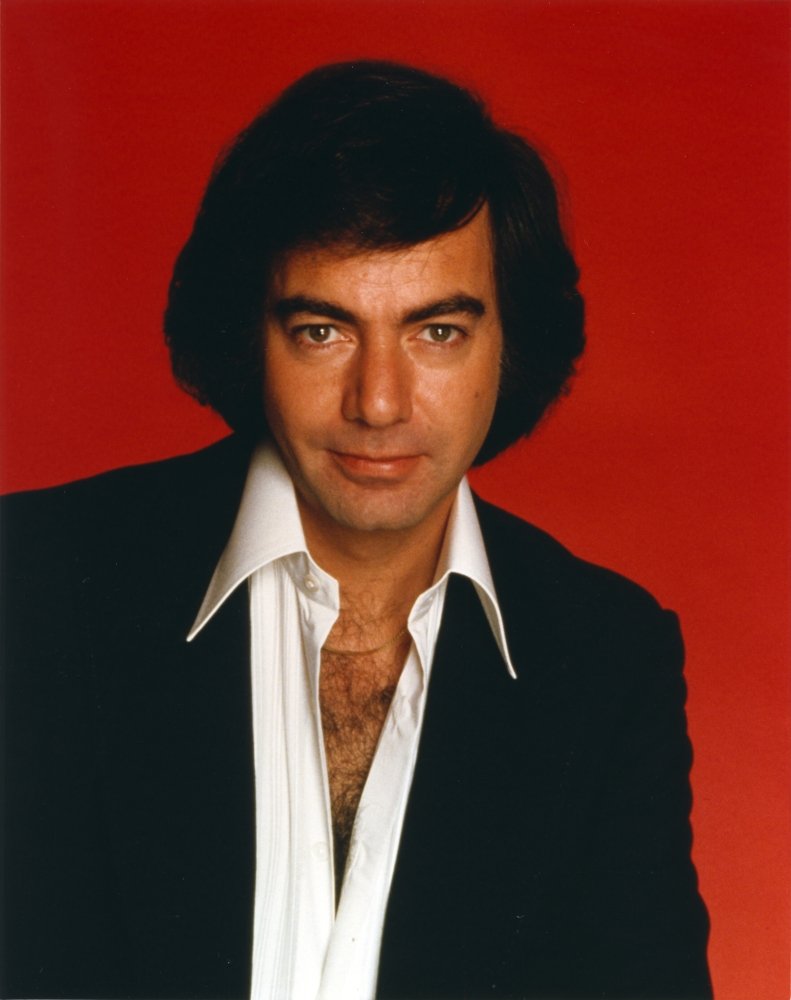
Most pop stars ascend quickly and fade just as fast. Neil Diamond didn’t follow that arc. Born in 1941 in Brooklyn to hardworking, culturally rich immigrant parents, he absorbed the grit and poetic tension of city life early on. The Brooklyn streets were not just home but a classroom in rhythm and blues, showmanship, and storytelling. That background—humble, restless, and full of voices—became part of his voice. Unlike many of his peers, Diamond never just chased trends. He mined emotion and reflection, building songs that felt like someone speaking directly into your memory.

Diamond’s early years were tough in the way that teaches craft and persistence. After attending Erasmus Hall High School—where he crossed paths with another future legend, Barbra Streisand—he briefly studied at NYU on a fencing scholarship. Fencing teaches precision and restraint; songwriting taught him phrase economy and melodic durability. He found his way into the famed Brill Building in Manhattan, where songwriters churned out hits for others while often remaining anonymous. There, Diamond honed his songs like a sculptor shaping marble, learning not just how to write, but how to feel music from the inside out.

By the late 1960s and 1970s, Diamond was no longer just a writer—he was a voice of a generation. Arena tours, platinum albums, and iconic hits like “Sweet Caroline” and “Cracklin’ Rosie” made his catalog a backdrop to countless life moments.

Yet as acclaim deepened, so did critical scrutiny. Critics often dismissed his earnestness as “schmaltzy,” while audiences embraced the sincerity he refused to hide behind irony.

That tension—between popularity and critical cool, between spectacle and introspection—is the soil from which I’ve Been This Way Before grows.


“I’ve Been This Way Before” — A Song as Personal Philosophy

The song appears on the soundtrack to The Jazz Singer (1980), a film about a singer wrestling with identity, tradition, and expectation. That thematic context is vital because the song isn’t a love ballad in the usual sense—it’s an existential declaration.

At first listen, the title—even the phrase itself—sounds like a shrug. But within Diamond’s voice it becomes a statement of gravity: one who recognizes the terrain of joy and sorrow, of acclaim and criticism, of life’s unpredictable loops. The narrative here isn’t newness but recurrence with understanding.

A youthful voice might plead, persuade, or beg for one more chance. Diamond’s voice in this song simply recognizes the pattern and moves through it with calm assurance. The lyrics, textured with experience rather than with doubt, function less as persuasion and more as self-remembrance.

This is someone who has walked through seasons of doubt, eclipse, acclaim, reinvention, and doubt again. To say “I’ve been this way before” is to assert: I recognize this moment; it does not define me nor sway me.

That is wisdom, not resignation. It’s the voice of someone who has learned that storms pass, trends shift, critics change, but a grounded self persists.


The Later Years: Triumph and a Debilitating Health Shift

Diamond’s story didn’t end with reflection; it faced a new trial. In 2018, as he was wrapping up his 50 Year Anniversary World Tour, he announced a diagnosis of Parkinson’s disease, a progressive neurological disorder that affects movement, coordination, and balance. That diagnosis forced him to retire from touring and scaled back the life of public performance that had defined him for decades.

Parkinson’s is not just a label—it’s a condition that gradually diminishes motor function and, in many cases, affects voice, movement, and daily activity in profound ways. Symptoms like tremors, muscle rigidity, and slow movement are hallmarks of a disease that attacks the very systems a performer depends on.

Yet Diamond did not vanish. He continued writing and remained engaged with his creative world, at times appearing publicly in rare, emotional moments—like surprise performances tied to A Beautiful Noise: The Neil Diamond Musical, the Broadway and touring show based on his life and songs. In 2025, at age 84, he made a moving appearance during the curtain call of a performance in Los Angeles, singing “Sweet Caroline” from his seat and connecting with fans one more time.

His health battle is ongoing, and Parkinson’s remains without a cure. But Diamond’s continued presence—especially his embrace of life beyond touring—mirrors the very essence of “I’ve Been This Way Before.” He has walked through the fear, the change, and now the physical limitations, yet his voice endures through memory, community, and art. That endurance is not denial of his condition, but rather a reorientation of purpose: finding new meaning and expression even when the stage has changed.


Conclusion: The Song as Life’s Metaphor

When viewed through the arc of his life, I’ve Been This Way Before isn’t just a lyric—it’s a life stance. It is a way of looking at setbacks, acclaim, doubt, and even illness from a place anchored by self-awareness.

Neil Diamond’s journey—from Brooklyn kid to global star, from the relentless road to confronting a neurological disease—traces a path where recurring challenges aren’t stops but milestones. The song captures not just where he’s been, but how he’s learned to stand still while the world spins.

His current health situation may limit the physical body, but it has deepened the resonance of a song about having been there before—and still finding oneself standing. That’s the kind of insight only a lifetime of music, struggle, and self-reflection can give.

I’m going to add a rendition of the song at the end. Add an introduction with an encouragement to listen to the rise in his voice, holding the notes as his emphasis about some people struggling to see the light, some only when they die.

Here is an introductory section you can place just before the embedded rendition of the song. It’s written to prepare the listener’s ear, not explain the music away.


Listening for the Weight of a Lived Voice

Before you listen, listen how Neil Diamond sings—not just what he sings.

Pay attention to the rise in his voice, the way he climbs deliberately into certain phrases and then holds the note longer than comfort requires. That holding is not a flourish. It is emphasis. It is a man insisting that some truths cannot be rushed.

When he sustains those notes, he is doing more than showcasing control. He is pressing meaning into time, forcing the listener to sit with an idea a moment longer than expected. The song is full of that restraint: a voice that knows when to wait, when to linger, when to let the thought land.

This matters because the song is quietly wrestling with a hard reality—that some people struggle their entire lives to see the light, to understand themselves, to recognize meaning or peace. Others, as the song suggests with gentle gravity, only see it at the very end, sometimes only when life itself is slipping away. There is no judgment in that observation, only recognition.

Diamond doesn’t sing this like a warning or a sermon. He sings it like someone who has watched it happen—who has lived long enough to know that clarity is unevenly distributed, and often painfully delayed.

So listen for the patience in his phrasing.
Listen for the steadiness rather than the drama.
Listen for the voice of someone who has been here before—and knows that insight often arrives late, but still arrives.

Then let the song speak for itself.

I’ve Been This Way Before

I’ve seen the light
And I’ve seen the flame
And I’ve been this way before
And I’m sure to be this way again
For I’ve been refused
And I’ve been regained
And I’ve seen your eyes before
And I’m sure to see your eyes again

Once again
For I’ve been released
And I’ve been regained
And I’ve sung my song before
And I’m sure to sing my song again
Once again

Some people got to laugh
Some people got to cry
Some people got to make it through
By never wondering why

Some people got to sing
Some people got to sigh
Some people never see the light
Until the day they die

But I’ve been released
And I’ve been regained
And I’ve been this way before
And I’m sure to be this way again
Once again
One more time again
Just one more time

Songwriter: Neil Diamond.


Psst: Listen. Lean in closer. Don’t tell anybody I said this. But go see the movie Song Sung Blue.

Prohibition: America’s Great Moral Experiment—and the Courage to Undo It

A collaboration between Lewis McLain & AI

https://fourteeneastmag.com/wp-content/uploads/2020/01/ProhibitionHistory_wikicom.jpg

Prohibition stands as one of the most instructive chapters in American public life, not because it failed, but because it failed honestly—with good intentions, broad support, and devastating unintended consequences. It is a case study in how a democratic society wrestles with morality, law, and human behavior, and what it means to admit error without abandoning principle.

The Moral Confidence of the Early 20th Century

Prohibition did not emerge from fanaticism. It grew from reform.

By the late 1800s and early 1900s, alcohol was deeply entangled with social harm. Excessive drinking contributed to domestic violence, workplace injuries, chronic poverty, and political corruption. Saloons were often tied to exploitative labor practices and machine politics. Women, in particular, bore the costs at home with little legal protection.

The temperance movement brought together an unlikely coalition: Protestant churches, progressive reformers, women’s organizations, public-health advocates, and rural voters who viewed alcohol as an urban vice. Their logic was straightforward: if alcohol is a primary cause of social disorder, then eliminating alcohol will reduce disorder.

It was a classic Progressive Era belief—social problems have technical solutions, and law can accelerate moral improvement.

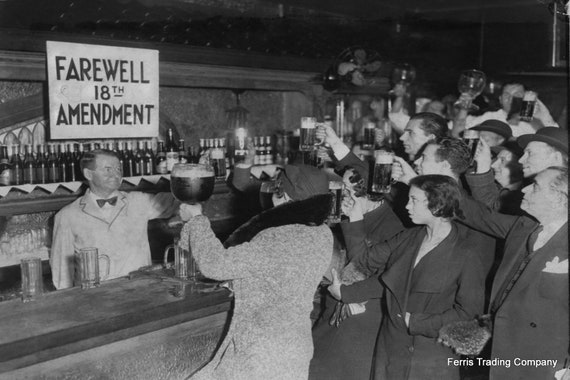
In 1919, that belief crystallized into the 18th Amendment. In 1920, Prohibition went into effect nationwide.

The Reality That Followed

The policy did not collapse overnight. It unraveled systemically.

First, consumption adapted rather than disappeared. Alcohol did not vanish; it went underground. Speakeasies flourished in cities. Home distillation surged in rural areas. The quality of alcohol often worsened, leading to poisonings and long-term health damage. Drinking became less visible but more dangerous.

Second, crime industrialized. Prohibition transformed alcohol from a regulated commodity into a high-margin illicit product. Criminal organizations stepped in to meet demand. Smuggling routes expanded. Violence became a business tool. What had once been localized criminal activity evolved into national syndicates with unprecedented resources.

Third, respect for the law eroded. Millions of ordinary Americans violated Prohibition laws casually and repeatedly. Enforcement became selective, uneven, and corruptible. Police officers, judges, and politicians were placed in impossible positions—expected to enforce a law that large portions of the public openly rejected.

This was not a moral awakening; it was a credibility crisis. When law drifts too far from lived reality, it stops teaching virtue and starts teaching evasion.

The Cost No One Planned For

Perhaps the most damaging consequence was institutional.

Prohibition weakened faith in governance itself. Citizens learned that laws could be aspirational rather than practical, symbolic rather than enforceable. The gap between public virtue and private behavior widened. Hypocrisy became visible, and cynicism followed.

The federal government also discovered its limits. Enforcing Prohibition required resources far beyond what Congress was willing to provide. Borders proved porous. Local governments resisted. States interpreted enforcement unevenly. The machinery of the state strained under the weight of moral ambition.

Prohibition revealed a hard truth: the state is powerful, but not omnipotent—and pretending otherwise corrodes trust.

Why Repeal Was the Real Achievement

The repeal of Prohibition in 1933 is more significant than its enactment.

Governments are adept at creating policy. They are far less adept at reversing it. Repeal required lawmakers and citizens alike to concede that a deeply moral project had produced deeply immoral outcomes—not because the goals were wrong, but because the method was flawed.

The 21st Amendment did not celebrate excess. It acknowledged complexity.

Repeal restored regulation rather than chaos. Alcohol returned to legal channels where quality could be controlled, taxes collected, and criminal enterprises disrupted. Public health and safety improved not because Americans became virtuous overnight, but because law once again aligned with human behavior.

This was not moral surrender. It was moral realism.

The Enduring Lesson

Prohibition is often remembered as a joke—speakeasies, gangsters, bathtub gin. That memory misses the point.

The real lesson is about limits:

  • The limit of law as a tool for shaping personal behavior
  • The limit of enforcement in a free society
  • The limit of certainty when policy meets culture

Prohibition teaches that durable reform moves in sequence: culture, then law—not the other way around. When law attempts to leapfrog culture, it creates shadow systems that are harder to govern and more dangerous than the original problem.

This is why Prohibition continues to echo in modern debates—over drugs, gambling, speech, and even technology. Different issues, same temptation: legislate the outcome rather than shape the conditions.

Why January 20 Matters

January 20, 1933, sits quietly in the historical calendar, but it marks a rare civic moment: a nation choosing correction over pride.

On a day associated with power transitions and public authority, the United States demonstrated something rarer than resolve—humility. It recognized that strength is not found in doubling down on a mistake, but in changing course before the damage becomes irreversible.

A Closing Reflection

Prohibition failed not because Americans rejected morality, but because morality cannot be mass-produced by statute. It must be cultivated, modeled, and supported by institutions that understand human nature rather than deny it.

That lesson is neither liberal nor conservative. It is simply hard-earned.

And it is one worth remembering—especially when certainty feels tempting and restraint feels weak.

The Day After: January 21, 1933 — When the Country Woke Up Sober

https://prohibition.themobmuseum.org/wp-content/uploads/2016/11/RepealCelebBarprohibition.jpg
https://jhgraham.com/wp-content/uploads/2017/03/april-7-1933-we-want-beer.jpg
https://i.etsystatic.com/12414326/r/il/8aeb63/2573703189/il_570xN.2573703189_5fnd.jpg

The repeal of Prohibition did not end with speeches or signatures. Its meaning unfolded the next morning.

On January 21, 1933—the day after repeal authority snapped back into place—America did not descend into revelry or collapse into vice. Instead, something quieter and more revealing happened: normal life resumed.

Bars did not instantly become lawless. Breweries did not flood streets with alcohol. Families did not unravel overnight. What returned was not excess, but legibility. Alcohol was no longer a rumor, a secret, or a criminal enterprise. It became visible again—regulated, taxable, inspectable, boring in the way lawful things usually are.

That boredom mattered.

From Illicit Thrill to Regulated Reality

Under Prohibition, alcohol carried the romance of defiance. Speakeasies thrived not merely because people wanted to drink, but because drinking had become a small act of rebellion. The day after repeal stripped alcohol of that mystique.

When something returns to daylight, it loses its glamour.

Legal beer—initially capped at low alcohol content—reappeared first. Breweries reopened cautiously. Distributors dusted off ledgers. States scrambled to design regulatory systems. Cities issued permits. Clerks checked licenses. Accountants sharpened pencils.

The machinery of ordinary governance restarted.

Crime syndicates, by contrast, began losing oxygen immediately. Without monopoly pricing and legal risk premiums, profits shrank. Violence became less “necessary.” The underground market contracted not because criminals found virtue, but because economics changed.

The day after repeal demonstrated a simple truth: regulation outcompetes prohibition when demand is durable.

A Subtle Restoration of Trust

Perhaps the most important change on January 21 was psychological.

For over a decade, millions of Americans had lived with a quiet contradiction: respecting the law in public while breaking it in private. The day after repeal lifted that tension. Citizens no longer had to pretend. Police no longer had to look away. Judges no longer had to perform moral arithmetic in sentencing.

The law once again described reality rather than denying it.

That alignment matters more than slogans. A legal system does not function on punishment alone; it functions on voluntary compliance. The day after repeal restored the possibility that citizens and institutions could once again inhabit the same moral universe.

What Did Not Happen

Equally instructive is what did not occur the day after repeal:

  • There was no national spike in chaos
  • No collapse of public morals
  • No evidence that restraint had been holding civilization together by its fingernails

Life continued. People went to work. Families ate dinner. The republic survived the admission of error.

That absence of catastrophe is itself an argument.

Why This Matters for a Modern Reader

Publishing this essay the day after January 20 invites an intentional parallel.

January 20 is about authority—who holds it, how it is transferred, how it is justified. January 21 is about what authority does once the ceremony is over. The day after asks a harder question than the day of:

Does policy still make sense when the speeches stop?

Prohibition failed that test. Repeal passed it.

The day after repeal reminds us that responsible governance is not measured by how dramatic a law sounds at enactment, but by how quietly society functions once it is in force.

A Final Reflection to Close the Essay

The repeal of Prohibition did not make America virtuous. It made America honest—about human behavior, about enforcement limits, and about the difference between moral aspiration and civic design.

The day after repeal, the country woke up without a grand illusion—and discovered it could still stand.

That may be the most encouraging lesson of all.

Davos and the World Economic Forum: A Plain-Spoken Guide for the Curious

A collaboration between Lewis McLain & AI

Every January, headlines begin to murmur about a small Alpine town in Switzerland where presidents, prime ministers, billionaires, activists, and journalists gather in winter coats and sensible boots. The place is Davos. The occasion is the annual meeting of the World Economic Forum.

For many people, what they hear sounds mysterious, elite, or faintly ominous. For others, it sounds like empty talk in a luxury setting. Most people simply want to know: what is this thing, who’s there, and why does it matter?

This essay is written for that middle ground—the reader who knows little, hears a lot, and wants a clearer picture without conspiracy or cheerleading.


What the World Economic Forum actually is

The World Economic Forum is not a world government. It cannot pass laws, levy taxes, deploy troops, or compel nations or companies to do anything. It is an international nonprofit organization based in Geneva whose central purpose is to convene people who rarely sit in the same room: political leaders, business executives, academics, civil-society leaders, technologists, and journalists.

Its core belief is simple: many of the biggest problems of modern life—financial instability, pandemics, climate change, technological disruption—do not respect borders or sectors. Governments alone cannot solve them. Markets alone cannot solve them. NGOs alone cannot solve them. The Forum exists to provide a neutral place where these worlds collide, talk, argue, and sometimes align.

That makes the Forum a platform, not a power. Its influence comes from who attends and what conversations happen—not from any formal authority.


How Davos became Davos

The Forum began modestly in 1971, founded by German economist Klaus Schwab as the European Management Forum. The early meetings focused on helping European companies learn modern management practices. Davos, a quiet mountain town, was chosen deliberately: remote enough to keep people focused, neutral enough to avoid national dominance.

Over time, as globalization accelerated, business problems became political problems, technological problems became ethical problems, and economic decisions began shaping entire societies. The Forum expanded with the world it was trying to understand.

What started with a few hundred executives grew into a global gathering. Today, the annual meeting typically brings about 2,500–3,000 participants from more than 130 countries, including dozens of heads of state and government, hundreds of CEOs, leaders of international organizations, researchers, activists, and several hundred journalists. It is large—but intentionally capped to remain workable rather than sprawling.


What actually happens there

The popular image of Davos is a series of panel discussions filled with polished talking points. Those panels do exist, and they are public-facing for a reason: they help surface ideas and set agendas.

But the real substance happens elsewhere.

Davos is designed for density of interaction. Leaders move between formal sessions, small working groups, bilateral meetings, and unplanned conversations in hallways and cafés. Many of these meetings are private and off the record—not because secrets are being plotted, but because frank conversation is impossible when every sentence becomes a headline.

No binding decisions are made. No treaties are signed. What does happen is relationship-building, early alignment, and problem-definition. In global affairs, those are often the invisible first steps before any formal action occurs later through governments, markets, or institutions.


What the Forum has actually achieved

It’s fair to say the World Economic Forum has not “solved” the world’s problems. Anyone claiming otherwise should be met with raised eyebrows. Its contributions are subtler.

First, the Forum is exceptionally good at agenda-setting. Ideas such as stakeholder capitalism, ESG reporting, global health coordination, and AI governance gained early prominence at Davos before moving into boardrooms and legislatures.

Second, the Forum has served as an incubator for cooperation. It has helped launch or align initiatives in areas like vaccine access, climate finance, and cybersecurity norms by bringing public and private actors together before formal mechanisms existed.

Third, Davos has functioned at times as an informal diplomatic space. Leaders from rival nations have used it to test ideas, reduce misunderstandings, or reopen channels of communication. These moments rarely make headlines, but they matter precisely because they happen before crises harden into policy.

In short, Davos doesn’t produce outcomes the way elections or treaties do. It produces conditions under which outcomes later become possible.


The criticisms—and why they persist

Criticism of Davos is not irrational. It is, by design, an elite gathering. Many participants arrive by private jet to discuss inequality, climate change, or social strain. The optics are unavoidable, and resentment is understandable.

There is also a persistent frustration that Davos produces more talk than action. That criticism confuses a forum with an executive authority—but it still lands emotionally, because people want visible results.

Finally, there is the concern that some voices—particularly from poorer countries or grassroots movements—struggle to compete with corporate and state power. The Forum has tried to broaden participation, but the imbalance remains a legitimate tension.

These critiques don’t mean Davos is useless. They mean it is limited, and that limitation should be understood rather than ignored.


The bottom line

The World Economic Forum is neither a secret government nor an empty spectacle. It is a tool—an imperfect one—for convening global influence in one place and forcing conversations that rarely happen elsewhere.

Davos matters not because it commands the world, but because it reflects it. The same tensions people feel about globalization, inequality, power, and accountability show up there in concentrated form. That makes it an easy target—and also a useful mirror.

In a fragmented age, the experiment of bringing rivals, allies, critics, and skeptics into the same snowy town continues not because it is ideal, but because no better alternative has yet emerged. Davos doesn’t promise solutions. It offers something rarer and more fragile: the possibility that people with power might listen to one another before deciding what to do next.


Appendix A: Security, Protest, and Public Order at Davos

One of the most common questions people ask—often with suspicion—is: How can so many powerful people gather without turning the place into a fortress?

Security at Davos is led almost entirely by Swiss public authorities, not private forces. Swiss federal and cantonal police, local Davos police, and Swiss Army units operate in support roles such as airspace monitoring, logistics, and rapid response. Visiting leaders bring their own close-protection teams, but overall coordination remains Swiss.

The approach is layered and restrained. Davos is a small, geographically isolated town with limited access routes, which allows authorities to manage entry into the town rather than militarize individual buildings. Accreditation controls, police presence, and venue security form concentric rings, while the overall posture emphasizes predictability and calm rather than intimidation.

Protests are not banned. Switzerland strongly protects the right to assembly. Demonstrations are permitted with advance coordination, designated areas, and agreed routes. Police focus on separation and de-escalation, not suppression. As a result, protests at Davos are usually visible, peaceful, and orderly—more expression than confrontation.

Security at Davos works not because it is overwhelming, but because it is boringly competent.


Appendix B: Who Sets the Agenda?

The Forum’s agenda is not improvised, nor dictated by any single government or corporation.

At the top is a Board of Trustees, responsible for mission, long-term direction, and governance. The board does not choose individual panel topics or speakers, but it defines strategic priorities—the big questions the Forum believes the world must confront in the coming years.

Turning those priorities into an annual theme and program is handled by executive leadership, standing expert networks, and ongoing consultation with governments, international organizations, companies, and research institutions. Themes are often developed years in advance and refined annually as conditions change.

The board sets the compass, the staff draws the map, and participants fill in the terrain.


Appendix C: Where Is the Founder Now?

After leading the organization for more than five decades, Klaus Schwab has stepped back from day-to-day control. He no longer runs operations, sets agendas, or directs programming.

Today, his role is honorary and advisory—that of an institutional elder rather than an executive. Operational leadership rests with a new generation of executives, reflecting the Forum’s attempt to evolve beyond its founder while preserving continuity.


Why the appendices matter

Questions about security, agenda control, and founder influence are often where speculation rushes in to fill silence. Laying out the mechanics doesn’t require defending the Forum—it simply replaces myth with structure.

The World Economic Forum’s influence lies less in who controls it than in who chooses to show up. That remains its defining feature—and its enduring controversy.

This is what I read on MLK’s Birthday

 AFRICAN STUDIES CENTER – UNIVERSITY OF PENNSYLVANIA 

“Letter from a Birmingham Jail”
Martin Luther King, Jr.

16 April 1963

My Dear Fellow Clergymen:

While confined here in the Birmingham city jail, I came across your recent statement calling my present activities “unwise and untimely.” Seldom do I pause to answer criticism of my work and ideas. If I sought to answer all the criticisms that cross my desk, my secretaries would have little time for anything other than such correspondence in the course of the day, and I would have no time for constructive work. But since I feel that you are men of genuine good will and that your criticisms are sincerely set forth, I want to try to answer your statement in what I hope will be patient and reasonable terms.

I think I should indicate why I am here in Birmingham, since you have been influenced by the view which argues against “outsiders coming in.” I have the honor of serving as president of the Southern Christian Leadership Conference, an organization operating in every southern state, with headquarters in Atlanta, Georgia. We have some eighty five affiliated organizations across the South, and one of them is the Alabama Christian Movement for Human Rights. Frequently we share staff, educational and financial resources with our affiliates. Several months ago the affiliate here in Birmingham asked us to be on call to engage in a nonviolent direct action program if such were deemed necessary. We readily consented, and when the hour came we lived up to our promise. So I, along with several members of my staff, am here because I was invited here. I am here because I have organizational ties here.

But more basically, I am in Birmingham because injustice is here. Just as the prophets of the eighth century B.C. left their villages and carried their “thus saith the Lord” far beyond the boundaries of their home towns, and just as the Apostle Paul left his village of Tarsus and carried the gospel of Jesus Christ to the far corners of the Greco Roman world, so am I compelled to carry the gospel of freedom beyond my own home town. Like Paul, I must constantly respond to the Macedonian call for aid.

Moreover, I am cognizant of the interrelatedness of all communities and states. I cannot sit idly by in Atlanta and not be concerned about what happens in Birmingham. Injustice anywhere is a threat to justice everywhere. We are caught in an inescapable network of mutuality, tied in a single garment of destiny. Whatever affects one directly, affects all indirectly. Never again can we afford to live with the narrow, provincial “outside agitator” idea. Anyone who lives inside the United States can never be considered an outsider anywhere within its bounds.

You deplore the demonstrations taking place in Birmingham. But your statement, I am sorry to say, fails to express a similar concern for the conditions that brought about the demonstrations. I am sure that none of you would want to rest content with the superficial kind of social analysis that deals merely with effects and does not grapple with underlying causes. It is unfortunate that demonstrations are taking place in Birmingham, but it is even more unfortunate that the city’s white power structure left the Negro community with no alternative.

In any nonviolent campaign there are four basic steps: collection of the facts to determine whether injustices exist; negotiation; self purification; and direct action. We have gone through all these steps in Birmingham. There can be no gainsaying the fact that racial injustice engulfs this community. Birmingham is probably the most thoroughly segregated city in the United States. Its ugly record of brutality is widely known. Negroes have experienced grossly unjust treatment in the courts. There have been more unsolved bombings of Negro homes and churches in Birmingham than in any other city in the nation. These are the hard, brutal facts of the case. On the basis of these conditions, Negro leaders sought to negotiate with the city fathers. But the latter consistently refused to engage in good faith negotiation.

Then, last September, came the opportunity to talk with leaders of Birmingham’s economic community. In the course of the negotiations, certain promises were made by the merchants–for example, to remove the stores’ humiliating racial signs. On the basis of these promises, the Reverend Fred Shuttlesworth and the leaders of the Alabama Christian Movement for Human Rights agreed to a moratorium on all demonstrations. As the weeks and months went by, we realized that we were the victims of a broken promise. A few signs, briefly removed, returned; the others remained. As in so many past experiences, our hopes had been blasted, and the shadow of deep disappointment settled upon us. We had no alternative except to prepare for direct action, whereby we would present our very bodies as a means of laying our case before the conscience of the local and the national community. Mindful of the difficulties involved, we decided to undertake a process of self purification. We began a series of workshops on nonviolence, and we repeatedly asked ourselves: “Are you able to accept blows without retaliating?” “Are you able to endure the ordeal of jail?” We decided to schedule our direct action program for the Easter season, realizing that except for Christmas, this is the main shopping period of the year. Knowing that a strong economic-withdrawal program would be the by product of direct action, we felt that this would be the best time to bring pressure to bear on the merchants for the needed change.

Then it occurred to us that Birmingham’s mayoral election was coming up in March, and we speedily decided to postpone action until after election day. When we discovered that the Commissioner of Public Safety, Eugene “Bull” Connor, had piled up enough votes to be in the run off, we decided again to postpone action until the day after the run off so that the demonstrations could not be used to cloud the issues. Like many others, we waited to see Mr. Connor defeated, and to this end we endured postponement after postponement. Having aided in this community need, we felt that our direct action program could be delayed no longer.

You may well ask: “Why direct action? Why sit ins, marches and so forth? Isn’t negotiation a better path?” You are quite right in calling for negotiation. Indeed, this is the very purpose of direct action. Nonviolent direct action seeks to create such a crisis and foster such a tension that a community which has constantly refused to negotiate is forced to confront the issue. It seeks so to dramatize the issue that it can no longer be ignored. My citing the creation of tension as part of the work of the nonviolent resister may sound rather shocking. But I must confess that I am not afraid of the word “tension.” I have earnestly opposed violent tension, but there is a type of constructive, nonviolent tension which is necessary for growth. Just as Socrates felt that it was necessary to create a tension in the mind so that individuals could rise from the bondage of myths and half truths to the unfettered realm of creative analysis and objective appraisal, so must we see the need for nonviolent gadflies to create the kind of tension in society that will help men rise from the dark depths of prejudice and racism to the majestic heights of understanding and brotherhood. The purpose of our direct action program is to create a situation so crisis packed that it will inevitably open the door to negotiation. I therefore concur with you in your call for negotiation. Too long has our beloved Southland been bogged down in a tragic effort to live in monologue rather than dialogue.

One of the basic points in your statement is that the action that I and my associates have taken in Birmingham is untimely. Some have asked: “Why didn’t you give the new city administration time to act?” The only answer that I can give to this query is that the new Birmingham administration must be prodded about as much as the outgoing one, before it will act. We are sadly mistaken if we feel that the election of Albert Boutwell as mayor will bring the millennium to Birmingham. While Mr. Boutwell is a much more gentle person than Mr. Connor, they are both segregationists, dedicated to maintenance of the status quo. I have hope that Mr. Boutwell will be reasonable enough to see the futility of massive resistance to desegregation. But he will not see this without pressure from devotees of civil rights. My friends, I must say to you that we have not made a single gain in civil rights without determined legal and nonviolent pressure. Lamentably, it is an historical fact that privileged groups seldom give up their privileges voluntarily. Individuals may see the moral light and voluntarily give up their unjust posture; but, as Reinhold Niebuhr has reminded us, groups tend to be more immoral than individuals.

We know through painful experience that freedom is never voluntarily given by the oppressor; it must be demanded by the oppressed. Frankly, I have yet to engage in a direct action campaign that was “well timed” in the view of those who have not suffered unduly from the disease of segregation. For years now I have heard the word “Wait!” It rings in the ear of every Negro with piercing familiarity. This “Wait” has almost always meant “Never.” We must come to see, with one of our distinguished jurists, that “justice too long delayed is justice denied.”

We have waited for more than 340 years for our constitutional and God given rights. The nations of Asia and Africa are moving with jetlike speed toward gaining political independence, but we still creep at horse and buggy pace toward gaining a cup of coffee at a lunch counter. Perhaps it is easy for those who have never felt the stinging darts of segregation to say, “Wait.” But when you have seen vicious mobs lynch your mothers and fathers at will and drown your sisters and brothers at whim; when you have seen hate filled policemen curse, kick and even kill your black brothers and sisters; when you see the vast majority of your twenty million Negro brothers smothering in an airtight cage of poverty in the midst of an affluent society; when you suddenly find your tongue twisted and your speech stammering as you seek to explain to your six year old daughter why she can’t go to the public amusement park that has just been advertised on television, and see tears welling up in her eyes when she is told that Funtown is closed to colored children, and see ominous clouds of inferiority beginning to form in her little mental sky, and see her beginning to distort her personality by developing an unconscious bitterness toward white people; when you have to concoct an answer for a five year old son who is asking: “Daddy, why do white people treat colored people so mean?”; when you take a cross county drive and find it necessary to sleep night after night in the uncomfortable corners of your automobile because no motel will accept you; when you are humiliated day in and day out by nagging signs reading “white” and “colored”; when your first name becomes “nigger,” your middle name becomes “boy” (however old you are) and your last name becomes “John,” and your wife and mother are never given the respected title “Mrs.”; when you are harried by day and haunted by night by the fact that you are a Negro, living constantly at tiptoe stance, never quite knowing what to expect next, and are plagued with inner fears and outer resentments; when you are forever fighting a degenerating sense of “nobodiness”–then you will understand why we find it difficult to wait. There comes a time when the cup of endurance runs over, and men are no longer willing to be plunged into the abyss of despair. I hope, sirs, you can understand our legitimate and unavoidable impatience. You express a great deal of anxiety over our willingness to break laws. This is certainly a legitimate concern. Since we so diligently urge people to obey the Supreme Court’s decision of 1954 outlawing segregation in the public schools, at first glance it may seem rather paradoxical for us consciously to break laws. One may well ask: “How can you advocate breaking some laws and obeying others?” The answer lies in the fact that there are two types of laws: just and unjust. I would be the first to advocate obeying just laws. One has not only a legal but a moral responsibility to obey just laws. Conversely, one has a moral responsibility to disobey unjust laws. I would agree with St. Augustine that “an unjust law is no law at all.”

Now, what is the difference between the two? How does one determine whether a law is just or unjust? A just law is a man made code that squares with the moral law or the law of God. An unjust law is a code that is out of harmony with the moral law. To put it in the terms of St. Thomas Aquinas: An unjust law is a human law that is not rooted in eternal law and natural law. Any law that uplifts human personality is just. Any law that degrades human personality is unjust. All segregation statutes are unjust because segregation distorts the soul and damages the personality. It gives the segregator a false sense of superiority and the segregated a false sense of inferiority. Segregation, to use the terminology of the Jewish philosopher Martin Buber, substitutes an “I it” relationship for an “I thou” relationship and ends up relegating persons to the status of things. Hence segregation is not only politically, economically and sociologically unsound, it is morally wrong and sinful. Paul Tillich has said that sin is separation. Is not segregation an existential expression of man’s tragic separation, his awful estrangement, his terrible sinfulness? Thus it is that I can urge men to obey the 1954 decision of the Supreme Court, for it is morally right; and I can urge them to disobey segregation ordinances, for they are morally wrong.

Let us consider a more concrete example of just and unjust laws. An unjust law is a code that a numerical or power majority group compels a minority group to obey but does not make binding on itself. This is difference made legal. By the same token, a just law is a code that a majority compels a minority to follow and that it is willing to follow itself. This is sameness made legal. Let me give another explanation. A law is unjust if it is inflicted on a minority that, as a result of being denied the right to vote, had no part in enacting or devising the law. Who can say that the legislature of Alabama which set up that state’s segregation laws was democratically elected? Throughout Alabama all sorts of devious methods are used to prevent Negroes from becoming registered voters, and there are some counties in which, even though Negroes constitute a majority of the population, not a single Negro is registered. Can any law enacted under such circumstances be considered democratically structured?

Sometimes a law is just on its face and unjust in its application. For instance, I have been arrested on a charge of parading without a permit. Now, there is nothing wrong in having an ordinance which requires a permit for a parade. But such an ordinance becomes unjust when it is used to maintain segregation and to deny citizens the First-Amendment privilege of peaceful assembly and protest.

I hope you are able to see the distinction I am trying to point out. In no sense do I advocate evading or defying the law, as would the rabid segregationist. That would lead to anarchy. One who breaks an unjust law must do so openly, lovingly, and with a willingness to accept the penalty. I submit that an individual who breaks a law that conscience tells him is unjust, and who willingly accepts the penalty of imprisonment in order to arouse the conscience of the community over its injustice, is in reality expressing the highest respect for law.

Of course, there is nothing new about this kind of civil disobedience. It was evidenced sublimely in the refusal of Shadrach, Meshach and Abednego to obey the laws of Nebuchadnezzar, on the ground that a higher moral law was at stake. It was practiced superbly by the early Christians, who were willing to face hungry lions and the excruciating pain of chopping blocks rather than submit to certain unjust laws of the Roman Empire. To a degree, academic freedom is a reality today because Socrates practiced civil disobedience. In our own nation, the Boston Tea Party represented a massive act of civil disobedience.

We should never forget that everything Adolf Hitler did in Germany was “legal” and everything the Hungarian freedom fighters did in Hungary was “illegal.” It was “illegal” to aid and comfort a Jew in Hitler’s Germany. Even so, I am sure that, had I lived in Germany at the time, I would have aided and comforted my Jewish brothers. If today I lived in a Communist country where certain principles dear to the Christian faith are suppressed, I would openly advocate disobeying that country’s antireligious laws.

I must make two honest confessions to you, my Christian and Jewish brothers. First, I must confess that over the past few years I have been gravely disappointed with the white moderate. I have almost reached the regrettable conclusion that the Negro’s great stumbling block in his stride toward freedom is not the White Citizen’s Counciler or the Ku Klux Klanner, but the white moderate, who is more devoted to “order” than to justice; who prefers a negative peace which is the absence of tension to a positive peace which is the presence of justice; who constantly says: “I agree with you in the goal you seek, but I cannot agree with your methods of direct action”; who paternalistically believes he can set the timetable for another man’s freedom; who lives by a mythical concept of time and who constantly advises the Negro to wait for a “more convenient season.” Shallow understanding from people of good will is more frustrating than absolute misunderstanding from people of ill will. Lukewarm acceptance is much more bewildering than outright rejection.

I had hoped that the white moderate would understand that law and order exist for the purpose of establishing justice and that when they fail in this purpose they become the dangerously structured dams that block the flow of social progress. I had hoped that the white moderate would understand that the present tension in the South is a necessary phase of the transition from an obnoxious negative peace, in which the Negro passively accepted his unjust plight, to a substantive and positive peace, in which all men will respect the dignity and worth of human personality. Actually, we who engage in nonviolent direct action are not the creators of tension. We merely bring to the surface the hidden tension that is already alive. We bring it out in the open, where it can be seen and dealt with. Like a boil that can never be cured so long as it is covered up but must be opened with all its ugliness to the natural medicines of air and light, injustice must be exposed, with all the tension its exposure creates, to the light of human conscience and the air of national opinion before it can be cured.

In your statement you assert that our actions, even though peaceful, must be condemned because they precipitate violence. But is this a logical assertion? Isn’t this like condemning a robbed man because his possession of money precipitated the evil act of robbery? Isn’t this like condemning Socrates because his unswerving commitment to truth and his philosophical inquiries precipitated the act by the misguided populace in which they made him drink hemlock? Isn’t this like condemning Jesus because his unique God consciousness and never ceasing devotion to God’s will precipitated the evil act of crucifixion? We must come to see that, as the federal courts have consistently affirmed, it is wrong to urge an individual to cease his efforts to gain his basic constitutional rights because the quest may precipitate violence. Society must protect the robbed and punish the robber. I had also hoped that the white moderate would reject the myth concerning time in relation to the struggle for freedom. I have just received a letter from a white brother in Texas. He writes: “All Christians know that the colored people will receive equal rights eventually, but it is possible that you are in too great a religious hurry. It has taken Christianity almost two thousand years to accomplish what it has. The teachings of Christ take time to come to earth.” Such an attitude stems from a tragic misconception of time, from the strangely irrational notion that there is something in the very flow of time that will inevitably cure all ills. Actually, time itself is neutral; it can be used either destructively or constructively. More and more I feel that the people of ill will have used time much more effectively than have the people of good will. We will have to repent in this generation not merely for the hateful words and actions of the bad people but for the appalling silence of the good people. Human progress never rolls in on wheels of inevitability; it comes through the tireless efforts of men willing to be co workers with God, and without this hard work, time itself becomes an ally of the forces of social stagnation. We must use time creatively, in the knowledge that the time is always ripe to do right. Now is the time to make real the promise of democracy and transform our pending national elegy into a creative psalm of brotherhood. Now is the time to lift our national policy from the quicksand of racial injustice to the solid rock of human dignity.

You speak of our activity in Birmingham as extreme. At first I was rather disappointed that fellow clergymen would see my nonviolent efforts as those of an extremist. I began thinking about the fact that I stand in the middle of two opposing forces in the Negro community. One is a force of complacency, made up in part of Negroes who, as a result of long years of oppression, are so drained of self respect and a sense of “somebodiness” that they have adjusted to segregation; and in part of a few middle-class Negroes who, because of a degree of academic and economic security and because in some ways they profit by segregation, have become insensitive to the problems of the masses. The other force is one of bitterness and hatred, and it comes perilously close to advocating violence. It is expressed in the various black nationalist groups that are springing up across the nation, the largest and best known being Elijah Muhammad’s Muslim movement. Nourished by the Negro’s frustration over the continued existence of racial discrimination, this movement is made up of people who have lost faith in America, who have absolutely repudiated Christianity, and who have concluded that the white man is an incorrigible “devil.”

I have tried to stand between these two forces, saying that we need emulate neither the “do nothingism” of the complacent nor the hatred and despair of the black nationalist. For there is the more excellent way of love and nonviolent protest. I am grateful to God that, through the influence of the Negro church, the way of nonviolence became an integral part of our struggle. If this philosophy had not emerged, by now many streets of the South would, I am convinced, be flowing with blood. And I am further convinced that if our white brothers dismiss as “rabble rousers” and “outside agitators” those of us who employ nonviolent direct action, and if they refuse to support our nonviolent efforts, millions of Negroes will, out of frustration and despair, seek solace and security in black nationalist ideologies–a development that would inevitably lead to a frightening racial nightmare.

Oppressed people cannot remain oppressed forever. The yearning for freedom eventually manifests itself, and that is what has happened to the American Negro. Something within has reminded him of his birthright of freedom, and something without has reminded him that it can be gained. Consciously or unconsciously, he has been caught up by the Zeitgeist, and with his black brothers of Africa and his brown and yellow brothers of Asia, South America and the Caribbean, the United States Negro is moving with a sense of great urgency toward the promised land of racial justice. If one recognizes this vital urge that has engulfed the Negro community, one should readily understand why public demonstrations are taking place. The Negro has many pent up resentments and latent frustrations, and he must release them. So let him march; let him make prayer pilgrimages to the city hall; let him go on freedom rides -and try to understand why he must do so. If his repressed emotions are not released in nonviolent ways, they will seek expression through violence; this is not a threat but a fact of history. So I have not said to my people: “Get rid of your discontent.” Rather, I have tried to say that this normal and healthy discontent can be channeled into the creative outlet of nonviolent direct action. And now this approach is being termed extremist. But though I was initially disappointed at being categorized as an extremist, as I continued to think about the matter I gradually gained a measure of satisfaction from the label. Was not Jesus an extremist for love: “Love your enemies, bless them that curse you, do good to them that hate you, and pray for them which despitefully use you, and persecute you.” Was not Amos an extremist for justice: “Let justice roll down like waters and righteousness like an ever flowing stream.” Was not Paul an extremist for the Christian gospel: “I bear in my body the marks of the Lord Jesus.” Was not Martin Luther an extremist: “Here I stand; I cannot do otherwise, so help me God.” And John Bunyan: “I will stay in jail to the end of my days before I make a butchery of my conscience.” And Abraham Lincoln: “This nation cannot survive half slave and half free.” And Thomas Jefferson: “We hold these truths to be self evident, that all men are created equal . . .” So the question is not whether we will be extremists, but what kind of extremists we will be. Will we be extremists for hate or for love? Will we be extremists for the preservation of injustice or for the extension of justice? In that dramatic scene on Calvary’s hill three men were crucified. We must never forget that all three were crucified for the same crime–the crime of extremism. Two were extremists for immorality, and thus fell below their environment. The other, Jesus Christ, was an extremist for love, truth and goodness, and thereby rose above his environment. Perhaps the South, the nation and the world are in dire need of creative extremists.

I had hoped that the white moderate would see this need. Perhaps I was too optimistic; perhaps I expected too much. I suppose I should have realized that few members of the oppressor race can understand the deep groans and passionate yearnings of the oppressed race, and still fewer have the vision to see that injustice must be rooted out by strong, persistent and determined action. I am thankful, however, that some of our white brothers in the South have grasped the meaning of this social revolution and committed themselves to it. They are still all too few in quantity, but they are big in quality. Some -such as Ralph McGill, Lillian Smith, Harry Golden, James McBride Dabbs, Ann Braden and Sarah Patton Boyle–have written about our struggle in eloquent and prophetic terms. Others have marched with us down nameless streets of the South. They have languished in filthy, roach infested jails, suffering the abuse and brutality of policemen who view them as “dirty nigger-lovers.” Unlike so many of their moderate brothers and sisters, they have recognized the urgency of the moment and sensed the need for powerful “action” antidotes to combat the disease of segregation. Let me take note of my other major disappointment. I have been so greatly disappointed with the white church and its leadership. Of course, there are some notable exceptions. I am not unmindful of the fact that each of you has taken some significant stands on this issue. I commend you, Reverend Stallings, for your Christian stand on this past Sunday, in welcoming Negroes to your worship service on a nonsegregated basis. I commend the Catholic leaders of this state for integrating Spring Hill College several years ago.

But despite these notable exceptions, I must honestly reiterate that I have been disappointed with the church. I do not say this as one of those negative critics who can always find something wrong with the church. I say this as a minister of the gospel, who loves the church; who was nurtured in its bosom; who has been sustained by its spiritual blessings and who will remain true to it as long as the cord of life shall lengthen.

When I was suddenly catapulted into the leadership of the bus protest in Montgomery, Alabama, a few years ago, I felt we would be supported by the white church. I felt that the white ministers, priests and rabbis of the South would be among our strongest allies. Instead, some have been outright opponents, refusing to understand the freedom movement and misrepresenting its leaders; all too many others have been more cautious than courageous and have remained silent behind the anesthetizing security of stained glass windows.

In spite of my shattered dreams, I came to Birmingham with the hope that the white religious leadership of this community would see the justice of our cause and, with deep moral concern, would serve as the channel through which our just grievances could reach the power structure. I had hoped that each of you would understand. But again I have been disappointed.

I have heard numerous southern religious leaders admonish their worshipers to comply with a desegregation decision because it is the law, but I have longed to hear white ministers declare: “Follow this decree because integration is morally right and because the Negro is your brother.” In the midst of blatant injustices inflicted upon the Negro, I have watched white churchmen stand on the sideline and mouth pious irrelevancies and sanctimonious trivialities. In the midst of a mighty struggle to rid our nation of racial and economic injustice, I have heard many ministers say: “Those are social issues, with which the gospel has no real concern.” And I have watched many churches commit themselves to a completely other worldly religion which makes a strange, un-Biblical distinction between body and soul, between the sacred and the secular.

I have traveled the length and breadth of Alabama, Mississippi and all the other southern states. On sweltering summer days and crisp autumn mornings I have looked at the South’s beautiful churches with their lofty spires pointing heavenward. I have beheld the impressive outlines of her massive religious education buildings. Over and over I have found myself asking: “What kind of people worship here? Who is their God? Where were their voices when the lips of Governor Barnett dripped with words of interposition and nullification? Where were they when Governor Wallace gave a clarion call for defiance and hatred? Where were their voices of support when bruised and weary Negro men and women decided to rise from the dark dungeons of complacency to the bright hills of creative protest?”

Yes, these questions are still in my mind. In deep disappointment I have wept over the laxity of the church. But be assured that my tears have been tears of love. There can be no deep disappointment where there is not deep love. Yes, I love the church. How could I do otherwise? I am in the rather unique position of being the son, the grandson and the great grandson of preachers. Yes, I see the church as the body of Christ. But, oh! How we have blemished and scarred that body through social neglect and through fear of being nonconformists.

There was a time when the church was very powerful–in the time when the early Christians rejoiced at being deemed worthy to suffer for what they believed. In those days the church was not merely a thermometer that recorded the ideas and principles of popular opinion; it was a thermostat that transformed the mores of society. Whenever the early Christians entered a town, the people in power became disturbed and immediately sought to convict the Christians for being “disturbers of the peace” and “outside agitators.”‘ But the Christians pressed on, in the conviction that they were “a colony of heaven,” called to obey God rather than man. Small in number, they were big in commitment. They were too God-intoxicated to be “astronomically intimidated.” By their effort and example they brought an end to such ancient evils as infanticide and gladiatorial contests. Things are different now. So often the contemporary church is a weak, ineffectual voice with an uncertain sound. So often it is an archdefender of the status quo. Far from being disturbed by the presence of the church, the power structure of the average community is consoled by the church’s silent–and often even vocal–sanction of things as they are.

But the judgment of God is upon the church as never before. If today’s church does not recapture the sacrificial spirit of the early church, it will lose its authenticity, forfeit the loyalty of millions, and be dismissed as an irrelevant social club with no meaning for the twentieth century. Every day I meet young people whose disappointment with the church has turned into outright disgust.
Perhaps I have once again been too optimistic. Is organized religion too inextricably bound to the status quo to save our nation and the world? Perhaps I must turn my faith to the inner spiritual church, the church within the church, as the true ekklesia and the hope of the world. But again I am thankful to God that some noble souls from the ranks of organized religion have broken loose from the paralyzing chains of conformity and joined us as active partners in the struggle for freedom. They have left their secure congregations and walked the streets of Albany, Georgia, with us. They have gone down the highways of the South on tortuous rides for freedom. Yes, they have gone to jail with us. Some have been dismissed from their churches, have lost the support of their bishops and fellow ministers. But they have acted in the faith that right defeated is stronger than evil triumphant. Their witness has been the spiritual salt that has preserved the true meaning of the gospel in these troubled times. They have carved a tunnel of hope through the dark mountain of disappointment. I hope the church as a whole will meet the challenge of this decisive hour. But even if the church does not come to the aid of justice, I have no despair about the future. I have no fear about the outcome of our struggle in Birmingham, even if our motives are at present misunderstood. We will reach the goal of freedom in Birmingham and all over the nation, because the goal of America is freedom. Abused and scorned though we may be, our destiny is tied up with America’s destiny. Before the pilgrims landed at Plymouth, we were here. Before the pen of Jefferson etched the majestic words of the Declaration of Independence across the pages of history, we were here. For more than two centuries our forebears labored in this country without wages; they made cotton king; they built the homes of their masters while suffering gross injustice and shameful humiliation -and yet out of a bottomless vitality they continued to thrive and develop. If the inexpressible cruelties of slavery could not stop us, the opposition we now face will surely fail. We will win our freedom because the sacred heritage of our nation and the eternal will of God are embodied in our echoing demands. Before closing I feel impelled to mention one other point in your statement that has troubled me profoundly. You warmly commended the Birmingham police force for keeping “order” and “preventing violence.” I doubt that you would have so warmly commended the police force if you had seen its dogs sinking their teeth into unarmed, nonviolent Negroes. I doubt that you would so quickly commend the policemen if you were to observe their ugly and inhumane treatment of Negroes here in the city jail; if you were to watch them push and curse old Negro women and young Negro girls; if you were to see them slap and kick old Negro men and young boys; if you were to observe them, as they did on two occasions, refuse to give us food because we wanted to sing our grace together. I cannot join you in your praise of the Birmingham police department.

It is true that the police have exercised a degree of discipline in handling the demonstrators. In this sense they have conducted themselves rather “nonviolently” in public. But for what purpose? To preserve the evil system of segregation. Over the past few years I have consistently preached that nonviolence demands that the means we use must be as pure as the ends we seek. I have tried to make clear that it is wrong to use immoral means to attain moral ends. But now I must affirm that it is just as wrong, or perhaps even more so, to use moral means to preserve immoral ends. Perhaps Mr. Connor and his policemen have been rather nonviolent in public, as was Chief Pritchett in Albany, Georgia, but they have used the moral means of nonviolence to maintain the immoral end of racial injustice. As T. S. Eliot has said: “The last temptation is the greatest treason: To do the right deed for the wrong reason.”

I wish you had commended the Negro sit inners and demonstrators of Birmingham for their sublime courage, their willingness to suffer and their amazing discipline in the midst of great provocation. One day the South will recognize its real heroes. They will be the James Merediths, with the noble sense of purpose that enables them to face jeering and hostile mobs, and with the agonizing loneliness that characterizes the life of the pioneer. They will be old, oppressed, battered Negro women, symbolized in a seventy two year old woman in Montgomery, Alabama, who rose up with a sense of dignity and with her people decided not to ride segregated buses, and who responded with ungrammatical profundity to one who inquired about her weariness: “My feets is tired, but my soul is at rest.” They will be the young high school and college students, the young ministers of the gospel and a host of their elders, courageously and nonviolently sitting in at lunch counters and willingly going to jail for conscience’ sake. One day the South will know that when these disinherited children of God sat down at lunch counters, they were in reality standing up for what is best in the American dream and for the most sacred values in our Judaeo Christian heritage, thereby bringing our nation back to those great wells of democracy which were dug deep by the founding fathers in their formulation of the Constitution and the Declaration of Independence.

Never before have I written so long a letter. I’m afraid it is much too long to take your precious time. I can assure you that it would have been much shorter if I had been writing from a comfortable desk, but what else can one do when he is alone in a narrow jail cell, other than write long letters, think long thoughts and pray long prayers?
If I have said anything in this letter that overstates the truth and indicates an unreasonable impatience, I beg you to forgive me. If I have said anything that understates the truth and indicates my having a patience that allows me to settle for anything less than brotherhood, I beg God to forgive me.

I hope this letter finds you strong in the faith. I also hope that circumstances will soon make it possible for me to meet each of you, not as an integrationist or a civil-rights leader but as a fellow clergyman and a Christian brother. Let us all hope that the dark clouds of racial prejudice will soon pass away and the deep fog of misunderstanding will be lifted from our fear drenched communities, and in some not too distant tomorrow the radiant stars of love and brotherhood will shine over our great nation with all their scintillating beauty.

Yours for the cause of Peace and Brotherhood, Martin Luther King, Jr.

Published in:
King, Martin Luther Jr.

Page Editor: Ali B. Ali-Dinar, Ph.D.

Why Are We Going Back to the Moon?

https://cdn.mos.cms.futurecdn.net/2epY5LNfoPScFvNcGd7UbH-1203-80.jpg

A collaboration between Lewis McLain & AI

Why We’re Going Back to the Moon

Not to Repeat Apollo, but to Learn How to Last

When people hear that humanity is “going back to the Moon,” the instinctive response is often puzzled disbelief. We’ve been there. We planted flags. We brought back rocks. Why return now, decades later, at enormous expense, when Earth has so many unsolved problems?

The question is reasonable. The answer is quietly radical.

We are not going back to the Moon to reenact Apollo. We are going back because Apollo solved the problem of arrival. What it did not solve—and never tried to—was the far harder problem of endurance.


Apollo Was a Sprint. This Is a Supply Chain.

The Apollo missions were triumphs of urgency and focus. Engineers built a narrow, brilliant bridge between Earth and the lunar surface, crossed it a handful of times, and then dismantled it. Nothing about Apollo was designed to last. It was a technological moonshot in the most literal sense.

The modern lunar effort, led by NASA through the Artemis Program, has a fundamentally different goal: permanence. Or at least persistence.

This time, the Moon is not the destination. It is the training ground.


The Moon as a Classroom for Survival

The Moon is close—three days away—but it is unforgiving. There is no atmosphere to soften radiation, no weather to erode mistakes, no margin for sloppy engineering. Lunar dust shreds seals and joints. Two-week nights test power systems to their limits. Every failure is exposed, documented, and merciless.

That is precisely why the Moon matters.

If we cannot build habitats, power systems, life support, and logistics chains that function reliably on the Moon, we have no business sending humans to Mars, where rescue is impossible and resupply is measured in years, not days.

The Moon allows us to fail where failure is survivable.


Water Changes Everything

The most consequential discovery of the past two decades is not geological or poetic—it is practical. At the Moon’s south pole, inside permanently shadowed craters, lies water ice.

This transforms the Moon from a dead rock into a strategic asset.

Water is life, but it is also fuel. Split into hydrogen and oxygen, it becomes rocket propellant. That means spacecraft no longer need to haul all their fuel out of Earth’s gravity well. They can refuel in space.

This concept—known as in-situ resource utilization—is the hinge on which deep-space civilization turns. With it, the Moon becomes a refueling station, a logistics hub, and a proving ground for resource extraction beyond Earth.

Without it, Mars remains a stunt. With it, Mars becomes a system.


Building the Architecture of Space

The plan unfolding now is incremental and deliberate.

Humans return to lunar orbit and the surface. Habitats are tested. Power systems endure long nights. Crews learn how isolation really feels when Earth hangs small and distant in the sky. Orbiting infrastructure such as the Lunar Gateway serves as a staging node, teaching us how to operate beyond low Earth orbit for months at a time.

This is not glamorous work. It is infrastructure work. And infrastructure, not heroics, is what makes civilizations durable.


The Strategic Reality No One Likes to Admit

Space is no longer an empty frontier. Other nations are moving quickly, forming partnerships, staking operational claims, and planning long-term presence. Navigation systems, communication relays, resource extraction norms, and orbital traffic management are becoming matters of geopolitics.

Ignoring the Moon would be like ignoring the world’s oceans once ships became global. Space is becoming a domain of activity, not exploration alone. Presence matters—not for conquest, but for competence.


Why Not Just Go Straight to Mars?

Because Mars is a one-way exam with no retakes.

A Mars mission requires years of flawless life support, radiation protection, psychological resilience, and autonomous repair. The Moon lets us rehearse those requirements under real conditions, with real consequences, while still allowing return.

Skipping the Moon would not be bold. It would be reckless.


The Deeper Reason Beneath the Engineering

There is a quieter truth beneath all the policy papers and mission timelines.

Civilizations stagnate when they stop expanding their operational horizon. Not their fantasies—their capabilities. The Moon forces us to confront what it actually takes to live beyond Earth, not just visit it.

Apollo proved that humans could reach another world. Artemis asks a more unsettling question: can we build systems that outlast individual missions, administrations, and generations?

Going back to the Moon is not nostalgia. It is rehearsal.

And rehearsals are what make the future survivable.

https://upload.wikimedia.org/wikipedia/commons/0/03/Diane_de_Versailles_-_Mus%C3%A9e_du_Louvre_AGER_Ma_589.jpg

The Moon program is called Artemis for a reason that is at once mythological, symbolic, and quietly deliberate.

In Greek mythology, Artemis is the goddess of the Moon, wilderness, and the hunt. She is also the twin sister of Apollo, the god of the Sun.

That sibling relationship is the key.


Apollo Had a Twin All Along

NASA’s original Moon missions in the 1960s were called Apollo program, named for the sun god—appropriate for an era defined by boldness, visibility, and raw technological firepower. Apollo was about speed, dominance, and proving capability under pressure.

But mythology never told a one-sided story. Apollo always had a twin.

Artemis, unlike her brother, was not associated with conquest or spectacle. She was a guardian of thresholds: forests, animals, young life, and the quiet rhythms of nature. She moved through harsh terrain with patience and precision. She survived.

When NASA named the modern lunar effort the Artemis Program, the message was subtle but intentional:
this is not Apollo reborn—it is Apollo’s counterpart.


A Name That Signals a Shift in Purpose

Apollo answered the question: Can we get there?
Artemis asks a different one: Can we live there?

The name reflects that shift. Artemis is about endurance rather than arrival, systems rather than stunts, continuity rather than closure. In myth, she roamed wild, unforgiving places and mastered them without trying to dominate them. That is exactly the posture required for long-term life beyond Earth.

There is also a human layer to the symbolism. Artemis is female, and the program explicitly includes landing the first woman and the next man on the Moon. But the symbolism runs deeper than representation. It signals balance—between ambition and restraint, power and sustainability.


Myth as Engineering Language

NASA has always borrowed from myth not as decoration, but as shorthand for purpose. Mercury, Gemini, Apollo—each name encoded a philosophy.

Artemis completes the story Apollo began.

The twin returns to the Moon not in a blaze of novelty, but with the quieter ambition of staying, learning, and building something that does not immediately vanish when the mission ends.

In that sense, the name is not poetic fluff. It is a mission statement disguised as mythology.

Apollo showed us how to touch another world.
Artemis is about learning how not to let go.

Leaving the City Better: Leadership, Limits, and the Question of a Bridge Too Far

A collaboration between Lewis McLain & AI

Leaders inherit messes. They step into offices burdened by deferred maintenance, ignored threats, regulatory capture, and systems quietly bent by special interests. In such a world, passivity does not preserve stability; it preserves neglect. Action becomes the moral baseline, not the exception. The enduring civic question is not whether leaders should push, but how far pushing remains stewardship rather than overreach.

The ancient Greek civic pledge offers a compass: leave the city better than you found it. Public life is stewardship across generations. Authority exists to repair what neglect erodes and to confront what avoidance normalizes. The statesman acts not for comfort, but for continuity—aware that problems ignored do not stay small.

This is where leadership grows hard. Entrenched interests organize precisely because complexity protects them. Manipulation thrives in delay. Incentives reward stasis. Gentle pressure rarely unwinds decades of avoidance. Leaders who push against these forces often look abrasive in real time, not because ego drives them, but because reform disturbs equilibria that were never healthy to begin with.

The phrase “a bridge too far” sharpens this tension. It enters common language through Cornelius Ryan’s account of Operation Market Garden in A Bridge Too Far. The plan is bold and morally urgent—end the war sooner, save lives—but it asks reality to cooperate with optimism. One bridge lies just beyond what logistics, intelligence, and time can support. The failure is not daring; it is miscalculation. The lesson is not “do nothing.” It is “know the load.”

Applied to leadership, the metaphor cuts both ways. Societies stagnate when leaders merely manage decline. Yet institutions exist for reasons that are not always cynical. Some limits preserve legitimacy, trust, and continuity—the invisible infrastructure of a functioning republic. The craft of leadership lies in distinguishing protective limits from self-serving barriers, then pressing the latter without snapping the former.

Seen through this lens, modern leaders often operate in the present tense of pressure. They test boundaries, confront norms, and treat friction as evidence of movement. That posture can be corrective when systems have grown complacent. It can also be hazardous when escalation outruns institutional capacity or public trust. A bridge does not fail the first time it is stressed; it fails after stress becomes routine.

This is where Donald Trump enters the conversation—not as verdict, but as caution. Trump governs with explicit confrontation. He challenges norms openly, personalizes conflict, and compresses long-delayed debates into immediate contests. Supporters see overdue action against captured systems. Critics see erosion of the trust that makes systems work at all. Both readings coexist because the pressure is real and the inheritance is heavy.

The wondering question is not whether such pressure is justified—it often is—but whether its sequencing and tone preserve the very institutions meant to be improved. The post-election period after 2020 brings the metaphor into focus. Legal challenges proceed as allowed; courts rule; states certify. Rhetoric, however, accelerates beyond evidence, and persuasion shades toward insistence. The bridge becomes visible. Not crossed decisively, but clearly approached. The risk is not a single act; it is precedent—teaching future leaders that legitimacy can be strained without immediate collapse.

January 6 stands as a symbolic edge of that bridge. Whatever one concludes about intent, the episode reveals an old truth: rhetoric travels faster than control. When foundational processes are publicly contested, leaders cannot always govern how followers translate suspicion into action. The system endures—but at a cost to shared reality.

None of this denies the core point: leaders given a boatload of neglect are not obligated to be passive. Improvement demands pressure. But the Greek ideal pairs strength with sophrosyne—measured restraint guided by wisdom. The city is left better not by humiliating institutions, but by restoring their purpose; not by replacing trust with loyalty to a person, but by renewing confidence in processes that outlast any one leader.

So what does leadership require in a world of manipulation and special interests?

It requires action, because neglect compounds.
It requires push, because stagnation corrodes.
It requires listening, because limits exist for reasons.
It requires calibration, because strength without proportion becomes its own form of neglect.

A bridge too far is rarely obvious in the moment. It announces itself later—through fragility, cynicism, or precedent. The enduring task of leadership is to cross the bridges that must be crossed, stop short of those that should not, and leave the city—tested, repaired, and steadier—better than it was found.

Existential Threats — and Why History Urges Calm

A collaboration between Lewis McLain & AI

https://upload.wikimedia.org/wikipedia/commons/9/9a/Tucson05_TitanICBM.jpg
https://www.ibm.com/content/dam/connectedassets-adobe-cms/worldwide-content/stock-assets/getty/image/photography/98/c4/22_27_p_gorodenkoff-549.jpg
https://assets.bwbx.io/images/users/iqjWHBFdfxIU/iuLIaQ77jhhM/v0/-1x-1.webp

Existential Threats — and Why History Urges Calm

It’s hard to read the news today without sensing that something fundamental is at risk. Nuclear tensions flicker back into relevance. Artificial intelligence accelerates faster than governance can follow. Climate systems strain, pandemics linger in collective memory, and truth itself feels fractured by speed, scale, and noise.

The language has grown heavier: existential risk, civilizational collapse, end of the world as we know it. These aren’t fringe ideas anymore; they’ve moved into mainstream conversation. And on the surface, the concern doesn’t seem irrational. The tools we’ve built are powerful, interconnected, and increasingly autonomous. A mistake at scale no longer stays local.

It feels different this time.

But that feeling deserves examination.


A necessary pause

Before concluding that the present moment is uniquely fragile, it’s worth asking a quieter, steadier question:

How many times have recent generations believed they were living at the edge of catastrophe—and survived anyway?

The answer is not “once or twice.”
It’s repeatedly.


Living under the shadow of instant annihilation

From 1945 through the end of the Cold War, nuclear war was not a background concern—it was a daily assumption. Children practiced duck-and-cover drills in classrooms. Missile flight times were measured in minutes. Early-warning systems were crude, leaders were fallible, and several near-launch incidents were stopped only because a single human being hesitated.

This was not a slow, abstract threat. Civilization could have ended on a Tuesday afternoon due to misinterpretation or panic.

It didn’t.


World wars that truly looked final

Before existential risk was a phrase, it was a lived reality. World War I shattered empires and faith in progress. World War II erased cities, normalized mass civilian death, and introduced industrial genocide. Nuclear weapons were not theoretical—they were used.

In the early 1940s, it was entirely reasonable to believe that modern civilization had run past its own limits.

Instead, nations rebuilt. Institutions re-formed. Norms—damaged but not destroyed—re-emerged.


Economic collapse that shook belief itself

The Great Depression wasn’t just a downturn; it was a crisis of legitimacy. One-quarter of the workforce unemployed. Banks failing. Democratic capitalism itself under suspicion. Radical alternatives didn’t just sound plausible—they sounded inevitable.

Later came oil shocks, stagflation, and repeated predictions that the economic model could not continue.

It did—messily, imperfectly, but decisively.


Environmental fears that once felt irreversible

In the 1960s and 1970s, many believed overpopulation would cause mass starvation, pollution would make cities unlivable, and atmospheric damage was permanent. Some fears were exaggerated. Others were real—and addressed through regulation, innovation, and adaptation.

Not solved. Managed well enough to keep going.


So what’s actually different now?

The difference is not danger itself. Danger has always been present.

What is different is how risks now overlap, compound, and accelerate. Technology compresses decision-making time. Systems are more interconnected. Failures propagate faster. Threats are less discrete and more ambient.

That makes the present feel uniquely unstable—even if, historically, it may not be uniquely lethal.


The pattern history keeps revealing

Looking backward, one truth emerges with surprising consistency:

Catastrophe requires near-perfect failure. Survival requires only partial success.

Civilizations rarely endure because they are wise in advance. They endure because:

  • restraint interrupts escalation,
  • coordination emerges under pressure,
  • and adaptation happens before collapse becomes inevitable.

History’s most underrated force isn’t genius.
It’s imperfect competence sustained long enough.


A quieter, earned conclusion

None of this denies today’s risks. It simply resists panic masquerading as insight.

Every generation feels its moment is unprecedented—and in form, it usually is. But in structure, it rarely is. The future always looks more fragile when you’re standing inside it.

That doesn’t guarantee safety.
It does suggest resilience.

Not because humans are calm.
Not because institutions are flawless.
But because again and again, we adjust, restrain, and muddle through before the worst becomes unavoidable.

That isn’t denial.
It’s historical memory.

And memory, used well, is one of humanity’s most reliable survival tools.

The Insurrection Act: History, Thresholds, and the Contemporary ICE Context

A collaboration between Lewis McLain & AI

Introduction: A Law Designed for the Republic’s Worst Days

The Insurrection Act is among the most powerful domestic authorities granted to a U.S. president. It authorizes the use of federal military force within the United States—something the American constitutional system otherwise treats with deep suspicion.

The Act exists because the Founders understood a hard truth: republics can collapse not only from tyranny, but from paralysis. When civil authority fails, the Constitution does not require the federal government to stand aside and watch itself dissolve.

Yet the same tool, if misused, can erode federalism, civilian rule, and public trust. The Insurrection Act is therefore best understood as a constitutional circuit breaker—meant to be used rarely, deliberately, and only when the ordinary machinery of law has stopped functioning.

This paper traces the Act’s history, explains its legal thresholds, and evaluates whether recent assaults on ICE agents plausibly approach those thresholds today.

I. Origins: Why Congress Passed the Insurrection Act (1807)

The Act was passed in 1807, when the United States was still an experiment, not an inevitability.

Two earlier crises shaped congressional thinking:

Shays’ Rebellion Armed resistance to state courts revealed how quickly economic unrest could morph into open defiance of law. Whiskey Rebellion President Washington personally led militia forces to assert federal authority over violent resistance to federal taxation.

These events convinced early leaders that states might fail—or refuse—to enforce federal law. The Constitution allowed Congress to provide for suppressing insurrections; the Insurrection Act supplied the mechanism.

At its core, the Act answers a single question:

What happens when federal law cannot be enforced by ordinary civil means?

II. How the Insurrection Act Works (Plainly and Precisely)

The Act authorizes the president to deploy federal armed forces domestically under three broad conditions:

State Request A governor asks for federal assistance to suppress insurrection or restore order. State Inability or Unwillingness State authorities cannot or will not protect federal operations or constitutional rights. Obstruction of Constitutional Rights Violence or resistance prevents enforcement of federal law or denies equal protection.

Ordinarily, the Posse Comitatus Act forbids federal troops from routine law enforcement. The Insurrection Act is the explicit exception, not a loophole.

Crucially, the Act does not require:

Nationwide rebellion Formal secession Martial law Suspension of courts

It requires functional obstruction.

III. Early Uses: Preserving Federal Authority in a Fragile Nation

Civil War and Reconstruction

Abraham Lincoln invoked insurrection authority repeatedly during the Civil War, not merely against Confederate armies but to suppress resistance in border states where loyalty was contested.

After the war, Ulysses S. Grant used the Act to combat Ku Klux Klan terrorism. Southern states either could not or would not protect Black citizens, voters, and federal officials. Federal troops and enforcement actions were necessary to make constitutional amendments real.

This period matters because it establishes a key precedent:

The Act may be used not to suppress dissent, but to enforce constitutional equality when states refuse.

IV. The Civil Rights Era: Federal Power Against State Defiance

Little Rock, Arkansas (1957)

The most morally unambiguous invocation came when Dwight D. Eisenhower enforced school desegregation.

Arkansas officials openly defied federal court orders. Local authorities did not merely fail to protect students—they obstructed federal law.

Eisenhower deployed the 101st Airborne to protect the Little Rock Nine. Federal troops escorted children to school so the Constitution could function in practice, not just on paper.

Later presidents, including John F. Kennedy and Lyndon B. Johnson, invoked similar authority in Alabama and Mississippi.

The lesson: targeted resistance—not generalized chaos—can justify federal military intervention.

V. Urban Unrest and Restoration of Order

The Act has also been used when civil order collapsed:

Detroit riots of 1967 Widespread arson and violence overwhelmed local authorities; federal troops restored control. Los Angeles riots of 1992 After days of unchecked violence, President George H. W. Bush deployed troops at California’s request.

These cases emphasize scale and incapacity—not mere unrest.

VI. Modern Restraint: Why Presidents Hesitate

In recent decades, presidents have shown caution:

Hurricane Katrina (2005) President George W. Bush considered but declined invocation amid state resistance. George Floyd Protests (2020) President Donald Trump threatened invocation but relied on National Guard deployments instead.

The pattern is consistent: presidents prefer not to normalize military involvement in civil life.

VII. The ICE Assault Question: Are We Near the Threshold?

Assaults on U.S. Immigration and Customs Enforcement agents are already serious federal felonies. Criminality alone, however—even violent criminality—has never been sufficient to invoke the Insurrection Act.

The threshold turns on structure, not emotion.

Factors that push toward the threshold

Repeated or organized assaults on federal officers Targeting of agents during routine lawful duties Local officials refusing to assist or protect federal operations Federal law enforcement forced to withdraw or suspend operations

Factors that hold the line

State or local arrests still occurring Courts functioning normally Federal prosecutions proceeding National Guard available under gubernatorial control

Historically, the Act becomes defensible when federal law becomes geographically conditional—enforceable only where politically welcome.

VIII. Is the Threshold Met—or Nearly Met?

The claim that conditions are “very close” is not unreasonable.

If assaults on ICE agents become:

Sustained rather than episodic Tolerated rather than condemned Unpoliced rather than prosecuted

then the legal argument for invocation strengthens rapidly.

However, if state authorities continue—even reluctantly—to enforce the law, the constitutional system remains intact, and invocation would be vulnerable to challenge.

IX. The Real Constitutional Danger

The gravest danger is not use of the Act.

It is the selective collapse of federal authority.

A republic cannot survive if:

Federal law applies only by local consent Officers of the law require armed convoys to operate Constitutional enforcement becomes optional

The Insurrection Act exists precisely to prevent that condition—not to accelerate it.

Appendix A: The Insurrection Act (Structure and Amendments)

(Public-domain statute; summarized for clarity)

Original Authority (1807)

Authorized the president to use militia and armed forces to suppress insurrections obstructing federal law.

Key Codified Sections (Current U.S. Code)

10 U.S.C. § 251 – Assistance at state request 10 U.S.C. § 252 – Enforcement of federal law when obstructed 10 U.S.C. § 253 – Protection of constitutional rights when states fail

Major Amendments

1871 (Ku Klux Klan Act) Clarified authority to protect civil rights against private violence when states fail. 1956–1957 Technical revisions preceding civil-rights enforcement. 2006 (Post-Katrina amendment) Temporarily expanded authority; later repealed after bipartisan concern about overreach.

The modern Act reflects deliberate restraint shaped by historical misuse fears.

Conclusion: A Law Meant to Be Uncomfortable

The Insurrection Act is uncomfortable by design. It sits at the boundary between liberty and order, reminding Americans that freedom requires functioning authority, and authority requires restraint.

Whether today’s conditions justify its use is not a question of passion, but of evidence—and of whether civil authority is failing or merely strained.

History suggests a simple rule worth remembering:

The Act is justified not when the law is challenged—but when it can no longer operate.

That line is thin. It is also the line that has kept the American republic intact for more than two centuries.

What’s the Deal With Greenland?

A collaboration between Lewis McLain & AI

In December of 1966, I was at the end of basic training at Lackland in San Antonio. We were days away from being shipped to our selected fields of training. The memories of early days of basic training where the Staff Sargent stood 6 inches from your face and yelled at you were faintly going away. Even Sargent Sharp’s demeanor had changed. We had been transformed under his leadership. There was even a tinge of humor in his voice. Sometimes.

Our squad leader had somehow learned we were Sgt Sharp’s last group to train. He as being shipped to Thule Greenland. On the last day our squad leader made up a chant about Thule. Sgt Sharp was in another building with his peers while we were taking a break. In perfect formation, we marched by the building screaming out the chant. After we passed, we turned around and went by the barracks again. This time Sgt Sharp came out of the building, looking tough with his hands on his hips. Then he burst out in laughter. It was a great moment.

I had not heard the words “Thule Greenland” in over 60 years until it came up in the news recently. So,

I decided to gain a better understanding of this story on my own and share it with you today. LFM

Ice, power, restraint — and what a U.S. president can actually do

Greenland looks empty on a map. White space. Edge-of-the-world quiet. That appearance is deceptive. Greenland is one of those places where geography speaks in a low voice that never shuts up. It sits between North America and Europe, under the polar routes that matter for missiles, satellites, and future shipping, and adjacent to the ambitions of Russia and China.

That is why it keeps resurfacing in American politics — including under Donald Trump. And to understand why his options are narrower than his rhetoric, you have to understand Greenland whole.


History in brief: autonomy, not absence

Greenland has been home to Inuit peoples for millennia. Norse settlers arrived around 1000 AD and vanished. Danish administration followed centuries later, eventually folding Greenland into the Kingdom of Denmark.

In the modern era, Greenland steadily pulled authority inward:

  • 1979: Home Rule
  • 2009: Self-Government

Greenland now controls its internal affairs, culture, language, and economy. Denmark retains defense and foreign policy, but Greenland is no passive appendage. It has a parliament, a national identity, and a long memory of being spoken about rather than with.


Why the U.S. showed up — and stayed

The U.S. arrived during World War II after Nazi Germany occupied Denmark. Greenland could not defend itself. America stepped in to prevent German control of the North Atlantic and Arctic approaches.

The Cold War turned that necessity into permanence. At the center stood Thule Air Base — now Pituffik Space Base — positioned to watch the polar routes where Soviet missiles would fly. Greenland became a shield, not a launchpad.

At the Cold War peak (late 1950s–early 1960s):

  • ~10,000 U.S. personnel
  • A full military town
  • Central to missile warning and Strategic Air Command planning

Today, that footprint is lean: roughly 150–200 U.S. service members, focused on missile warning, space surveillance, and Arctic operations. Fewer people. More precision. Higher stakes.


Why it was called Thule

“Thule” comes from classical antiquity — Ultima Thule, the farthest place imaginable, beyond the edge of the known world. Greek and Roman writers used it as shorthand for the extreme north, where maps dissolved into myth.

The Cold War base inherited the name because it sat beyond precedent: remote, polar, and strategically singular. Its renaming to Pituffik — the Greenlandic place name — reflects a deeper shift. Greenland no longer wants to be a myth on someone else’s map. It wants to be a place with a voice.


Population, oil, electricity: restraint as strategy

Greenland has about 56,000 people, one-third of them in Nuuk, the rest scattered along the coast. There are no inland cities. Ice owns the interior.

That scale explains three major choices:

  • Oil: Greenland may sit near offshore hydrocarbon basins, but in 2021 it halted new oil and gas exploration. The risks — environmental, social, political — were judged too large for a tiny population to absorb.
  • Electricity: Civilian power is mostly renewable, anchored by hydropower from glacial meltwater. There is no national grid — each town runs its own isolated system. It’s pragmatic, not flashy.
  • Military footprint: Greenland resists large permanent forces because scale overwhelms small societies fast.

Across domains, Greenland repeatedly chooses control over speed.


The missing piece: what President Trump can actually do

This is where headlines often outrun reality.

A U.S. president cannot buy Greenland, seize Greenland, or unilaterally expand forces there. Greenland is not U.S. territory, and American presence exists under treaty — especially the 1951 defense agreement with Denmark. Unilateral action would violate law, fracture alliances, and hand Russia and China a propaganda gift.

But that does not mean a president is powerless. Far from it.

Trump’s practical Greenland strategy (not the theatrical one)

1. Renegotiate, don’t bulldoze
Trump can push to update defense agreements with Denmark to reflect:

  • New missile threats
  • Space-domain competition
  • Arctic access and logistics needs

Treaties evolve when threat pictures change — and the Arctic threat picture has changed dramatically.

2. NATO-ize the Arctic
By framing upgrades as NATO requirements rather than unilateral U.S. moves, resistance drops. Denmark gains cover. Greenland hears “alliance defense,” not “American expansion.”

3. Spend money instead of issuing ultimatums
Greenland is small. Targeted U.S. funding for:

  • Airports
  • Ports
  • Communications
  • Dual-use infrastructure
    can materially change public opinion without changing sovereignty.

Influence scales faster where population is tiny.

4. Crowd out China quietly
China wants Arctic access, minerals, and influence. Trump’s real leverage is negative:

  • Export controls
  • Financing pressure
  • Market access signals

Greenland prefers Western partners. It just doesn’t want to look coerced.

5. Expand incrementally, not dramatically
More rotations, more “temporary” systems, more mission creep — fewer headline announcements. In a society of 56,000 people, shock matters more than numbers.

6. Control the tone
Talking about “buying” Greenland backfires. Talking about partnership works. In small societies, rhetoric is not noise — it’s substance.


Why the map matters

Look again at the Arctic map:

  • Greenland sits between the United States and Russia
  • China is not Arctic by geography, but is pushing in by economics and science
  • Missiles, satellites, and shipping all pass north

Greenland is not a side story. It is a junction.


The real deal

Greenland is not a prize to be claimed. It is a pivot to be managed.

It matters because geography never stopped mattering — even in an age of cyberspace and AI. But Greenland has learned something many places learn too late: once you let scale run away from you, you don’t get control back.

So the deal is this:

The U.S. will always need Greenland.
Russia and China will always want influence there.
And Greenland will continue doing what small, strategically vital societies do best:

Move slowly. Say no often. Trade access for respect.

That isn’t weakness.
That’s survival at the top of the world.