Why Are We Going Back to the Moon?
https://cdn.mos.cms.futurecdn.net/2epY5LNfoPScFvNcGd7UbH-1203-80.jpg

A collaboration between Lewis McLain & AI

Why We’re Going Back to the Moon

Not to Repeat Apollo, but to Learn How to Last

When people hear that humanity is “going back to the Moon,” the instinctive response is often puzzled disbelief. We’ve been there. We planted flags. We brought back rocks. Why return now, decades later, at enormous expense, when Earth has so many unsolved problems?

The question is reasonable. The answer is quietly radical.

We are not going back to the Moon to reenact Apollo. We are going back because Apollo solved the problem of arrival. What it did not solve—and never tried to—was the far harder problem of endurance.


Apollo Was a Sprint. This Is a Supply Chain.

The Apollo missions were triumphs of urgency and focus. Engineers built a narrow, brilliant bridge between Earth and the lunar surface, crossed it a handful of times, and then dismantled it. Nothing about Apollo was designed to last. It was a technological moonshot in the most literal sense.

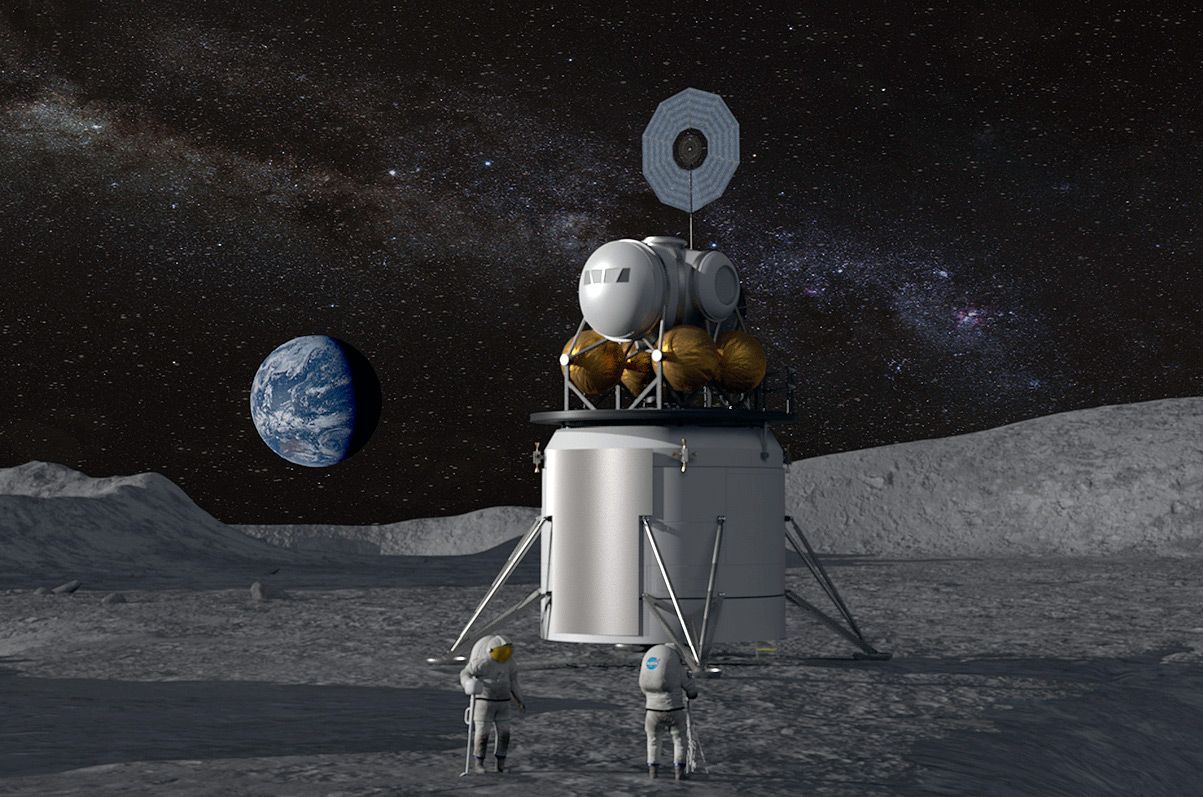
The modern lunar effort, led by NASA through the Artemis Program, has a fundamentally different goal: permanence. Or at least persistence.

This time, the Moon is not the destination. It is the training ground.


The Moon as a Classroom for Survival

The Moon is close—three days away—but it is unforgiving. There is no atmosphere to soften radiation, no weather to erode mistakes, no margin for sloppy engineering. Lunar dust shreds seals and joints. Two-week nights test power systems to their limits. Every failure is exposed, documented, and merciless.

That is precisely why the Moon matters.

If we cannot build habitats, power systems, life support, and logistics chains that function reliably on the Moon, we have no business sending humans to Mars, where rescue is impossible and resupply is measured in years, not days.

The Moon allows us to fail where failure is survivable.


Water Changes Everything

The most consequential discovery of the past two decades is not geological or poetic—it is practical. At the Moon’s south pole, inside permanently shadowed craters, lies water ice.

This transforms the Moon from a dead rock into a strategic asset.

Water is life, but it is also fuel. Split into hydrogen and oxygen, it becomes rocket propellant. That means spacecraft no longer need to haul all their fuel out of Earth’s gravity well. They can refuel in space.

This concept—known as in-situ resource utilization—is the hinge on which deep-space civilization turns. With it, the Moon becomes a refueling station, a logistics hub, and a proving ground for resource extraction beyond Earth.

Without it, Mars remains a stunt. With it, Mars becomes a system.


Building the Architecture of Space

The plan unfolding now is incremental and deliberate.

Humans return to lunar orbit and the surface. Habitats are tested. Power systems endure long nights. Crews learn how isolation really feels when Earth hangs small and distant in the sky. Orbiting infrastructure such as the Lunar Gateway serves as a staging node, teaching us how to operate beyond low Earth orbit for months at a time.

This is not glamorous work. It is infrastructure work. And infrastructure, not heroics, is what makes civilizations durable.


The Strategic Reality No One Likes to Admit

Space is no longer an empty frontier. Other nations are moving quickly, forming partnerships, staking operational claims, and planning long-term presence. Navigation systems, communication relays, resource extraction norms, and orbital traffic management are becoming matters of geopolitics.

Ignoring the Moon would be like ignoring the world’s oceans once ships became global. Space is becoming a domain of activity, not exploration alone. Presence matters—not for conquest, but for competence.


Why Not Just Go Straight to Mars?

Because Mars is a one-way exam with no retakes.

A Mars mission requires years of flawless life support, radiation protection, psychological resilience, and autonomous repair. The Moon lets us rehearse those requirements under real conditions, with real consequences, while still allowing return.

Skipping the Moon would not be bold. It would be reckless.


The Deeper Reason Beneath the Engineering

There is a quieter truth beneath all the policy papers and mission timelines.

Civilizations stagnate when they stop expanding their operational horizon. Not their fantasies—their capabilities. The Moon forces us to confront what it actually takes to live beyond Earth, not just visit it.

Apollo proved that humans could reach another world. Artemis asks a more unsettling question: can we build systems that outlast individual missions, administrations, and generations?

Going back to the Moon is not nostalgia. It is rehearsal.

And rehearsals are what make the future survivable.

https://upload.wikimedia.org/wikipedia/commons/0/03/Diane_de_Versailles_-_Mus%C3%A9e_du_Louvre_AGER_Ma_589.jpg

The Moon program is called Artemis for a reason that is at once mythological, symbolic, and quietly deliberate.

In Greek mythology, Artemis is the goddess of the Moon, wilderness, and the hunt. She is also the twin sister of Apollo, the god of the Sun.

That sibling relationship is the key.


Apollo Had a Twin All Along

NASA’s original Moon missions in the 1960s were called Apollo program, named for the sun god—appropriate for an era defined by boldness, visibility, and raw technological firepower. Apollo was about speed, dominance, and proving capability under pressure.

But mythology never told a one-sided story. Apollo always had a twin.

Artemis, unlike her brother, was not associated with conquest or spectacle. She was a guardian of thresholds: forests, animals, young life, and the quiet rhythms of nature. She moved through harsh terrain with patience and precision. She survived.

When NASA named the modern lunar effort the Artemis Program, the message was subtle but intentional:
this is not Apollo reborn—it is Apollo’s counterpart.


A Name That Signals a Shift in Purpose

Apollo answered the question: Can we get there?
Artemis asks a different one: Can we live there?

The name reflects that shift. Artemis is about endurance rather than arrival, systems rather than stunts, continuity rather than closure. In myth, she roamed wild, unforgiving places and mastered them without trying to dominate them. That is exactly the posture required for long-term life beyond Earth.

There is also a human layer to the symbolism. Artemis is female, and the program explicitly includes landing the first woman and the next man on the Moon. But the symbolism runs deeper than representation. It signals balance—between ambition and restraint, power and sustainability.


Myth as Engineering Language

NASA has always borrowed from myth not as decoration, but as shorthand for purpose. Mercury, Gemini, Apollo—each name encoded a philosophy.

Artemis completes the story Apollo began.

The twin returns to the Moon not in a blaze of novelty, but with the quieter ambition of staying, learning, and building something that does not immediately vanish when the mission ends.

In that sense, the name is not poetic fluff. It is a mission statement disguised as mythology.

Apollo showed us how to touch another world.
Artemis is about learning how not to let go.

Leaving the City Better: Leadership, Limits, and the Question of a Bridge Too Far

A collaboration between Lewis McLain & AI

Leaders inherit messes. They step into offices burdened by deferred maintenance, ignored threats, regulatory capture, and systems quietly bent by special interests. In such a world, passivity does not preserve stability; it preserves neglect. Action becomes the moral baseline, not the exception. The enduring civic question is not whether leaders should push, but how far pushing remains stewardship rather than overreach.

The ancient Greek civic pledge offers a compass: leave the city better than you found it. Public life is stewardship across generations. Authority exists to repair what neglect erodes and to confront what avoidance normalizes. The statesman acts not for comfort, but for continuity—aware that problems ignored do not stay small.

This is where leadership grows hard. Entrenched interests organize precisely because complexity protects them. Manipulation thrives in delay. Incentives reward stasis. Gentle pressure rarely unwinds decades of avoidance. Leaders who push against these forces often look abrasive in real time, not because ego drives them, but because reform disturbs equilibria that were never healthy to begin with.

The phrase “a bridge too far” sharpens this tension. It enters common language through Cornelius Ryan’s account of Operation Market Garden in A Bridge Too Far. The plan is bold and morally urgent—end the war sooner, save lives—but it asks reality to cooperate with optimism. One bridge lies just beyond what logistics, intelligence, and time can support. The failure is not daring; it is miscalculation. The lesson is not “do nothing.” It is “know the load.”

Applied to leadership, the metaphor cuts both ways. Societies stagnate when leaders merely manage decline. Yet institutions exist for reasons that are not always cynical. Some limits preserve legitimacy, trust, and continuity—the invisible infrastructure of a functioning republic. The craft of leadership lies in distinguishing protective limits from self-serving barriers, then pressing the latter without snapping the former.

Seen through this lens, modern leaders often operate in the present tense of pressure. They test boundaries, confront norms, and treat friction as evidence of movement. That posture can be corrective when systems have grown complacent. It can also be hazardous when escalation outruns institutional capacity or public trust. A bridge does not fail the first time it is stressed; it fails after stress becomes routine.

This is where Donald Trump enters the conversation—not as verdict, but as caution. Trump governs with explicit confrontation. He challenges norms openly, personalizes conflict, and compresses long-delayed debates into immediate contests. Supporters see overdue action against captured systems. Critics see erosion of the trust that makes systems work at all. Both readings coexist because the pressure is real and the inheritance is heavy.

The wondering question is not whether such pressure is justified—it often is—but whether its sequencing and tone preserve the very institutions meant to be improved. The post-election period after 2020 brings the metaphor into focus. Legal challenges proceed as allowed; courts rule; states certify. Rhetoric, however, accelerates beyond evidence, and persuasion shades toward insistence. The bridge becomes visible. Not crossed decisively, but clearly approached. The risk is not a single act; it is precedent—teaching future leaders that legitimacy can be strained without immediate collapse.

January 6 stands as a symbolic edge of that bridge. Whatever one concludes about intent, the episode reveals an old truth: rhetoric travels faster than control. When foundational processes are publicly contested, leaders cannot always govern how followers translate suspicion into action. The system endures—but at a cost to shared reality.

None of this denies the core point: leaders given a boatload of neglect are not obligated to be passive. Improvement demands pressure. But the Greek ideal pairs strength with sophrosyne—measured restraint guided by wisdom. The city is left better not by humiliating institutions, but by restoring their purpose; not by replacing trust with loyalty to a person, but by renewing confidence in processes that outlast any one leader.

So what does leadership require in a world of manipulation and special interests?

It requires action, because neglect compounds.
It requires push, because stagnation corrodes.
It requires listening, because limits exist for reasons.
It requires calibration, because strength without proportion becomes its own form of neglect.

A bridge too far is rarely obvious in the moment. It announces itself later—through fragility, cynicism, or precedent. The enduring task of leadership is to cross the bridges that must be crossed, stop short of those that should not, and leave the city—tested, repaired, and steadier—better than it was found.

Existential Threats — and Why History Urges Calm

A collaboration between Lewis McLain & AI

https://upload.wikimedia.org/wikipedia/commons/9/9a/Tucson05_TitanICBM.jpg
https://www.ibm.com/content/dam/connectedassets-adobe-cms/worldwide-content/stock-assets/getty/image/photography/98/c4/22_27_p_gorodenkoff-549.jpg
https://assets.bwbx.io/images/users/iqjWHBFdfxIU/iuLIaQ77jhhM/v0/-1x-1.webp

Existential Threats — and Why History Urges Calm

It’s hard to read the news today without sensing that something fundamental is at risk. Nuclear tensions flicker back into relevance. Artificial intelligence accelerates faster than governance can follow. Climate systems strain, pandemics linger in collective memory, and truth itself feels fractured by speed, scale, and noise.

The language has grown heavier: existential risk, civilizational collapse, end of the world as we know it. These aren’t fringe ideas anymore; they’ve moved into mainstream conversation. And on the surface, the concern doesn’t seem irrational. The tools we’ve built are powerful, interconnected, and increasingly autonomous. A mistake at scale no longer stays local.

It feels different this time.

But that feeling deserves examination.


A necessary pause

Before concluding that the present moment is uniquely fragile, it’s worth asking a quieter, steadier question:

How many times have recent generations believed they were living at the edge of catastrophe—and survived anyway?

The answer is not “once or twice.”
It’s repeatedly.


Living under the shadow of instant annihilation

From 1945 through the end of the Cold War, nuclear war was not a background concern—it was a daily assumption. Children practiced duck-and-cover drills in classrooms. Missile flight times were measured in minutes. Early-warning systems were crude, leaders were fallible, and several near-launch incidents were stopped only because a single human being hesitated.

This was not a slow, abstract threat. Civilization could have ended on a Tuesday afternoon due to misinterpretation or panic.

It didn’t.


World wars that truly looked final

Before existential risk was a phrase, it was a lived reality. World War I shattered empires and faith in progress. World War II erased cities, normalized mass civilian death, and introduced industrial genocide. Nuclear weapons were not theoretical—they were used.

In the early 1940s, it was entirely reasonable to believe that modern civilization had run past its own limits.

Instead, nations rebuilt. Institutions re-formed. Norms—damaged but not destroyed—re-emerged.


Economic collapse that shook belief itself

The Great Depression wasn’t just a downturn; it was a crisis of legitimacy. One-quarter of the workforce unemployed. Banks failing. Democratic capitalism itself under suspicion. Radical alternatives didn’t just sound plausible—they sounded inevitable.

Later came oil shocks, stagflation, and repeated predictions that the economic model could not continue.

It did—messily, imperfectly, but decisively.


Environmental fears that once felt irreversible

In the 1960s and 1970s, many believed overpopulation would cause mass starvation, pollution would make cities unlivable, and atmospheric damage was permanent. Some fears were exaggerated. Others were real—and addressed through regulation, innovation, and adaptation.

Not solved. Managed well enough to keep going.


So what’s actually different now?

The difference is not danger itself. Danger has always been present.

What is different is how risks now overlap, compound, and accelerate. Technology compresses decision-making time. Systems are more interconnected. Failures propagate faster. Threats are less discrete and more ambient.

That makes the present feel uniquely unstable—even if, historically, it may not be uniquely lethal.


The pattern history keeps revealing

Looking backward, one truth emerges with surprising consistency:

Catastrophe requires near-perfect failure. Survival requires only partial success.

Civilizations rarely endure because they are wise in advance. They endure because:

  • restraint interrupts escalation,
  • coordination emerges under pressure,
  • and adaptation happens before collapse becomes inevitable.

History’s most underrated force isn’t genius.
It’s imperfect competence sustained long enough.


A quieter, earned conclusion

None of this denies today’s risks. It simply resists panic masquerading as insight.

Every generation feels its moment is unprecedented—and in form, it usually is. But in structure, it rarely is. The future always looks more fragile when you’re standing inside it.

That doesn’t guarantee safety.
It does suggest resilience.

Not because humans are calm.
Not because institutions are flawless.
But because again and again, we adjust, restrain, and muddle through before the worst becomes unavoidable.

That isn’t denial.
It’s historical memory.

And memory, used well, is one of humanity’s most reliable survival tools.

The Insurrection Act: History, Thresholds, and the Contemporary ICE Context

A collaboration between Lewis McLain & AI

Introduction: A Law Designed for the Republic’s Worst Days

The Insurrection Act is among the most powerful domestic authorities granted to a U.S. president. It authorizes the use of federal military force within the United States—something the American constitutional system otherwise treats with deep suspicion.

The Act exists because the Founders understood a hard truth: republics can collapse not only from tyranny, but from paralysis. When civil authority fails, the Constitution does not require the federal government to stand aside and watch itself dissolve.

Yet the same tool, if misused, can erode federalism, civilian rule, and public trust. The Insurrection Act is therefore best understood as a constitutional circuit breaker—meant to be used rarely, deliberately, and only when the ordinary machinery of law has stopped functioning.

This paper traces the Act’s history, explains its legal thresholds, and evaluates whether recent assaults on ICE agents plausibly approach those thresholds today.

I. Origins: Why Congress Passed the Insurrection Act (1807)

The Act was passed in 1807, when the United States was still an experiment, not an inevitability.

Two earlier crises shaped congressional thinking:

Shays’ Rebellion Armed resistance to state courts revealed how quickly economic unrest could morph into open defiance of law. Whiskey Rebellion President Washington personally led militia forces to assert federal authority over violent resistance to federal taxation.

These events convinced early leaders that states might fail—or refuse—to enforce federal law. The Constitution allowed Congress to provide for suppressing insurrections; the Insurrection Act supplied the mechanism.

At its core, the Act answers a single question:

What happens when federal law cannot be enforced by ordinary civil means?

II. How the Insurrection Act Works (Plainly and Precisely)

The Act authorizes the president to deploy federal armed forces domestically under three broad conditions:

State Request A governor asks for federal assistance to suppress insurrection or restore order. State Inability or Unwillingness State authorities cannot or will not protect federal operations or constitutional rights. Obstruction of Constitutional Rights Violence or resistance prevents enforcement of federal law or denies equal protection.

Ordinarily, the Posse Comitatus Act forbids federal troops from routine law enforcement. The Insurrection Act is the explicit exception, not a loophole.

Crucially, the Act does not require:

Nationwide rebellion Formal secession Martial law Suspension of courts

It requires functional obstruction.

III. Early Uses: Preserving Federal Authority in a Fragile Nation

Civil War and Reconstruction

Abraham Lincoln invoked insurrection authority repeatedly during the Civil War, not merely against Confederate armies but to suppress resistance in border states where loyalty was contested.

After the war, Ulysses S. Grant used the Act to combat Ku Klux Klan terrorism. Southern states either could not or would not protect Black citizens, voters, and federal officials. Federal troops and enforcement actions were necessary to make constitutional amendments real.

This period matters because it establishes a key precedent:

The Act may be used not to suppress dissent, but to enforce constitutional equality when states refuse.

IV. The Civil Rights Era: Federal Power Against State Defiance

Little Rock, Arkansas (1957)

The most morally unambiguous invocation came when Dwight D. Eisenhower enforced school desegregation.

Arkansas officials openly defied federal court orders. Local authorities did not merely fail to protect students—they obstructed federal law.

Eisenhower deployed the 101st Airborne to protect the Little Rock Nine. Federal troops escorted children to school so the Constitution could function in practice, not just on paper.

Later presidents, including John F. Kennedy and Lyndon B. Johnson, invoked similar authority in Alabama and Mississippi.

The lesson: targeted resistance—not generalized chaos—can justify federal military intervention.

V. Urban Unrest and Restoration of Order

The Act has also been used when civil order collapsed:

Detroit riots of 1967 Widespread arson and violence overwhelmed local authorities; federal troops restored control. Los Angeles riots of 1992 After days of unchecked violence, President George H. W. Bush deployed troops at California’s request.

These cases emphasize scale and incapacity—not mere unrest.

VI. Modern Restraint: Why Presidents Hesitate

In recent decades, presidents have shown caution:

Hurricane Katrina (2005) President George W. Bush considered but declined invocation amid state resistance. George Floyd Protests (2020) President Donald Trump threatened invocation but relied on National Guard deployments instead.

The pattern is consistent: presidents prefer not to normalize military involvement in civil life.

VII. The ICE Assault Question: Are We Near the Threshold?

Assaults on U.S. Immigration and Customs Enforcement agents are already serious federal felonies. Criminality alone, however—even violent criminality—has never been sufficient to invoke the Insurrection Act.

The threshold turns on structure, not emotion.

Factors that push toward the threshold

Repeated or organized assaults on federal officers Targeting of agents during routine lawful duties Local officials refusing to assist or protect federal operations Federal law enforcement forced to withdraw or suspend operations

Factors that hold the line

State or local arrests still occurring Courts functioning normally Federal prosecutions proceeding National Guard available under gubernatorial control

Historically, the Act becomes defensible when federal law becomes geographically conditional—enforceable only where politically welcome.

VIII. Is the Threshold Met—or Nearly Met?

The claim that conditions are “very close” is not unreasonable.

If assaults on ICE agents become:

Sustained rather than episodic Tolerated rather than condemned Unpoliced rather than prosecuted

then the legal argument for invocation strengthens rapidly.

However, if state authorities continue—even reluctantly—to enforce the law, the constitutional system remains intact, and invocation would be vulnerable to challenge.

IX. The Real Constitutional Danger

The gravest danger is not use of the Act.

It is the selective collapse of federal authority.

A republic cannot survive if:

Federal law applies only by local consent Officers of the law require armed convoys to operate Constitutional enforcement becomes optional

The Insurrection Act exists precisely to prevent that condition—not to accelerate it.

Appendix A: The Insurrection Act (Structure and Amendments)

(Public-domain statute; summarized for clarity)

Original Authority (1807)

Authorized the president to use militia and armed forces to suppress insurrections obstructing federal law.

Key Codified Sections (Current U.S. Code)

10 U.S.C. § 251 – Assistance at state request 10 U.S.C. § 252 – Enforcement of federal law when obstructed 10 U.S.C. § 253 – Protection of constitutional rights when states fail

Major Amendments

1871 (Ku Klux Klan Act) Clarified authority to protect civil rights against private violence when states fail. 1956–1957 Technical revisions preceding civil-rights enforcement. 2006 (Post-Katrina amendment) Temporarily expanded authority; later repealed after bipartisan concern about overreach.

The modern Act reflects deliberate restraint shaped by historical misuse fears.

Conclusion: A Law Meant to Be Uncomfortable

The Insurrection Act is uncomfortable by design. It sits at the boundary between liberty and order, reminding Americans that freedom requires functioning authority, and authority requires restraint.

Whether today’s conditions justify its use is not a question of passion, but of evidence—and of whether civil authority is failing or merely strained.

History suggests a simple rule worth remembering:

The Act is justified not when the law is challenged—but when it can no longer operate.

That line is thin. It is also the line that has kept the American republic intact for more than two centuries.

What’s the Deal With Greenland?

A collaboration between Lewis McLain & AI

In December of 1966, I was at the end of basic training at Lackland in San Antonio. We were days away from being shipped to our selected fields of training. The memories of early days of basic training where the Staff Sargent stood 6 inches from your face and yelled at you were faintly going away. Even Sargent Sharp’s demeanor had changed. We had been transformed under his leadership. There was even a tinge of humor in his voice. Sometimes.

Our squad leader had somehow learned we were Sgt Sharp’s last group to train. He as being shipped to Thule Greenland. On the last day our squad leader made up a chant about Thule. Sgt Sharp was in another building with his peers while we were taking a break. In perfect formation, we marched by the building screaming out the chant. After we passed, we turned around and went by the barracks again. This time Sgt Sharp came out of the building, looking tough with his hands on his hips. Then he burst out in laughter. It was a great moment.

I had not heard the words “Thule Greenland” in over 60 years until it came up in the news recently. So,

I decided to gain a better understanding of this story on my own and share it with you today. LFM

Ice, power, restraint — and what a U.S. president can actually do

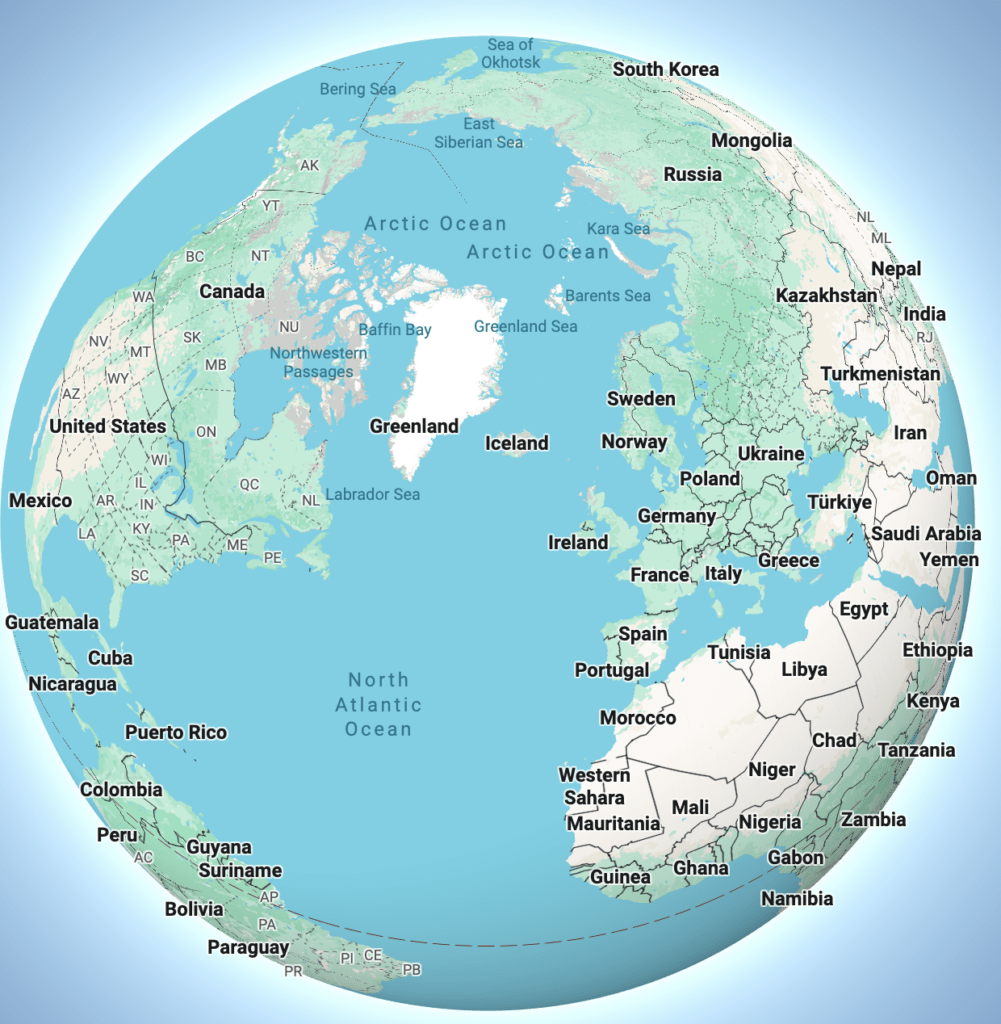
Greenland looks empty on a map. White space. Edge-of-the-world quiet. That appearance is deceptive. Greenland is one of those places where geography speaks in a low voice that never shuts up. It sits between North America and Europe, under the polar routes that matter for missiles, satellites, and future shipping, and adjacent to the ambitions of Russia and China.

That is why it keeps resurfacing in American politics — including under Donald Trump. And to understand why his options are narrower than his rhetoric, you have to understand Greenland whole.


History in brief: autonomy, not absence

Greenland has been home to Inuit peoples for millennia. Norse settlers arrived around 1000 AD and vanished. Danish administration followed centuries later, eventually folding Greenland into the Kingdom of Denmark.

In the modern era, Greenland steadily pulled authority inward:

  • 1979: Home Rule
  • 2009: Self-Government

Greenland now controls its internal affairs, culture, language, and economy. Denmark retains defense and foreign policy, but Greenland is no passive appendage. It has a parliament, a national identity, and a long memory of being spoken about rather than with.


Why the U.S. showed up — and stayed

The U.S. arrived during World War II after Nazi Germany occupied Denmark. Greenland could not defend itself. America stepped in to prevent German control of the North Atlantic and Arctic approaches.

The Cold War turned that necessity into permanence. At the center stood Thule Air Base — now Pituffik Space Base — positioned to watch the polar routes where Soviet missiles would fly. Greenland became a shield, not a launchpad.

At the Cold War peak (late 1950s–early 1960s):

  • ~10,000 U.S. personnel
  • A full military town
  • Central to missile warning and Strategic Air Command planning

Today, that footprint is lean: roughly 150–200 U.S. service members, focused on missile warning, space surveillance, and Arctic operations. Fewer people. More precision. Higher stakes.


Why it was called Thule

“Thule” comes from classical antiquity — Ultima Thule, the farthest place imaginable, beyond the edge of the known world. Greek and Roman writers used it as shorthand for the extreme north, where maps dissolved into myth.

The Cold War base inherited the name because it sat beyond precedent: remote, polar, and strategically singular. Its renaming to Pituffik — the Greenlandic place name — reflects a deeper shift. Greenland no longer wants to be a myth on someone else’s map. It wants to be a place with a voice.


Population, oil, electricity: restraint as strategy

Greenland has about 56,000 people, one-third of them in Nuuk, the rest scattered along the coast. There are no inland cities. Ice owns the interior.

That scale explains three major choices:

  • Oil: Greenland may sit near offshore hydrocarbon basins, but in 2021 it halted new oil and gas exploration. The risks — environmental, social, political — were judged too large for a tiny population to absorb.
  • Electricity: Civilian power is mostly renewable, anchored by hydropower from glacial meltwater. There is no national grid — each town runs its own isolated system. It’s pragmatic, not flashy.
  • Military footprint: Greenland resists large permanent forces because scale overwhelms small societies fast.

Across domains, Greenland repeatedly chooses control over speed.


The missing piece: what President Trump can actually do

This is where headlines often outrun reality.

A U.S. president cannot buy Greenland, seize Greenland, or unilaterally expand forces there. Greenland is not U.S. territory, and American presence exists under treaty — especially the 1951 defense agreement with Denmark. Unilateral action would violate law, fracture alliances, and hand Russia and China a propaganda gift.

But that does not mean a president is powerless. Far from it.

Trump’s practical Greenland strategy (not the theatrical one)

1. Renegotiate, don’t bulldoze
Trump can push to update defense agreements with Denmark to reflect:

  • New missile threats
  • Space-domain competition
  • Arctic access and logistics needs

Treaties evolve when threat pictures change — and the Arctic threat picture has changed dramatically.

2. NATO-ize the Arctic
By framing upgrades as NATO requirements rather than unilateral U.S. moves, resistance drops. Denmark gains cover. Greenland hears “alliance defense,” not “American expansion.”

3. Spend money instead of issuing ultimatums
Greenland is small. Targeted U.S. funding for:

  • Airports
  • Ports
  • Communications
  • Dual-use infrastructure
    can materially change public opinion without changing sovereignty.

Influence scales faster where population is tiny.

4. Crowd out China quietly
China wants Arctic access, minerals, and influence. Trump’s real leverage is negative:

  • Export controls
  • Financing pressure
  • Market access signals

Greenland prefers Western partners. It just doesn’t want to look coerced.

5. Expand incrementally, not dramatically
More rotations, more “temporary” systems, more mission creep — fewer headline announcements. In a society of 56,000 people, shock matters more than numbers.

6. Control the tone
Talking about “buying” Greenland backfires. Talking about partnership works. In small societies, rhetoric is not noise — it’s substance.


Why the map matters

Look again at the Arctic map:

  • Greenland sits between the United States and Russia
  • China is not Arctic by geography, but is pushing in by economics and science
  • Missiles, satellites, and shipping all pass north

Greenland is not a side story. It is a junction.


The real deal

Greenland is not a prize to be claimed. It is a pivot to be managed.

It matters because geography never stopped mattering — even in an age of cyberspace and AI. But Greenland has learned something many places learn too late: once you let scale run away from you, you don’t get control back.

So the deal is this:

The U.S. will always need Greenland.
Russia and China will always want influence there.
And Greenland will continue doing what small, strategically vital societies do best:

Move slowly. Say no often. Trade access for respect.

That isn’t weakness.
That’s survival at the top of the world.

The 400-Year Handoff Between the Last Prophet and the First Cry

The 400-Year Handoff

A collaboration between Lewis McLain & AI

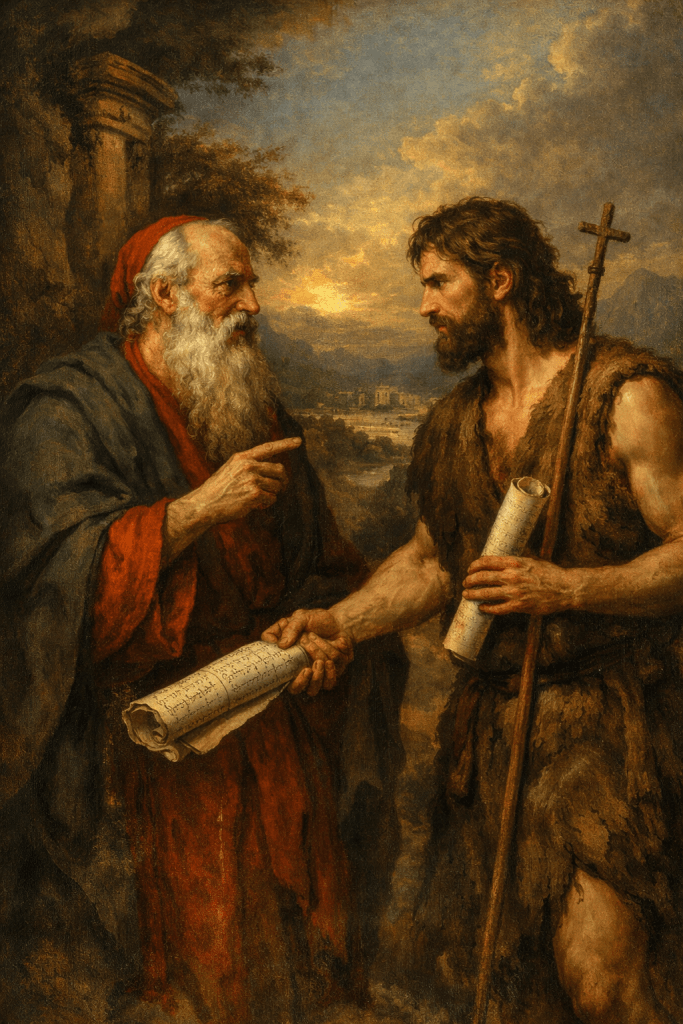
The space between Book of Malachi and John the Baptist is often called the 400 years of silence. That phrase is tidy—and misleading. Nothing about those centuries was empty. Empires rose and fell. Languages fused. Roads were laid. Synagogues multiplied. Expectations hardened. What fell silent was not history, but prophecy.

Malachi speaks at the far edge of the Old Testament, when the temple stands again but the heart has not returned with it. He diagnoses a subtler sickness than idolatry: weariness with God. Worship continues, but reverence has thinned. Obedience is procedural. Faith has become a habit rather than a hope. Malachi does not end with comfort. He ends with a hinge: remember the Law—and watch for the messenger. The sentence is left open on purpose.

Then the voice stops.

Four centuries pass. No canonical prophet stands up to finish Malachi’s thought. Instead, the world is quietly prepared. Persia yields to Greece; Greece yields to Rome. Greek becomes the common tongue; Roman roads knit the Mediterranean into a single nervous system. Israel learns to survive without a king, without a prophet, without obvious rescue. Scripture is read aloud in synagogues; law is studied; expectation migrates from repentance to anticipation. Judgment, many hope, will fall on others.

Into that long, loaded quiet steps a man in the wilderness.

John the Baptist does not sound new. That is the shock. He sounds ancient—abrasive, urgent, unmistakably prophetic. He does not flatter the faithful or soothe the powerful. He says what Malachi warned would need saying again: turn. Repentance first. Preparation before presence. The wilderness becomes the pulpit because the temple has grown too comfortable to hear.

To see the bridge clearly, imagine the handoff—not as a meeting in time, but as an exchange across it.

At the edge of silence, Malachi stands with the last word he was allowed to speak. Across the centuries, a voice gathers breath.

Malachi: I left the door open because it could not be closed with ink.
John: Then I will stand in the dust and finish the sentence.
Malachi: They mistook patience for absence.
John: Then I will tell them the waiting is over.
Malachi: I warned them the Lord would come suddenly.
John: And I will tell them to prepare—now.
Malachi: Fire is coming.
John: Then let it begin with cleansing.

The conversation is imagined, but the continuity is real. John does not introduce a new agenda; he reopens an unfinished one. Malachi promised a messenger “in the spirit of Elijah.” John arrives wearing that spirit plainly—unpolished, unafraid, uninterested in approval. He is not the destination; he is the threshold. His success will be measured by his disappearance.

And then comes the One John points to—Jesus Christ—the Lord Malachi said would come to His temple. Suddenly. Searching. Refining. The bridge does not end with John; it delivers history into its next act.

The genius of the 400-year handoff is that it reveals how God works when people stop listening. He does not shout louder. He prepares longer. When prophecy pauses, formation continues. When words cease, conditions ripen. The silence is not abandonment; it is orchestration.

Malachi closes the Old Testament facing backward and forward at once—anchored in Moses, aimed toward a messenger. John opens the New Testament doing the same—rooted in the prophets, pointing beyond himself. Between them stretches not a void, but a runway.

The handoff succeeds because it was never about eloquence or timing alone. It was about readiness. When John cries out, some hearts break instead of bristle. A remnant responds. The bridge holds.

And that is the quiet miracle of the 400 years: when the voice finally returns, it finds ears—scarce, imperfect, but ready enough for history to move again.


Who Wrote Book of Malachi if Not “Malachi”?

The short answer is: we don’t know—and many theologians think that’s intentional.
The longer answer is that scholars have proposed a few serious, restrained possibilities, none of which undermine the book’s authority or clarity.


The Main Scholarly Views

1. An Anonymous Prophet (“My Messenger” as a Title)

This is the majority scholarly position.

  • Malachi means “my messenger”
  • The book opens: “The oracle of the word of the Lord… by my messenger”
  • The prophet never gives a personal name, genealogy, or origin (unusual for prophets)

Many theologians believe Malachi functions more like:

  • “The Oracle according to the Messenger”
  • or “The Message of the Lord, delivered by His messenger”

In this view, the prophet deliberately recedes so the focus stays on:

  • God’s covenant lawsuit
  • the coming future messenger
  • the message rather than the man

This fits the book’s tone perfectly.


2. A Temple-Affiliated Prophet (Post-Exilic Reformer)

Another common view is that the author was:

  • a known but unnamed prophetic figure
  • closely tied to the Second Temple
  • likely contemporary with Ezra and Nehemiah

The issues Malachi addresses—
corrupt priests, improper sacrifices, divorce, tithes—
line up almost exactly with the reforms described in Nehemiah 13.

Because of this overlap, scholars often say:

Malachi sounds like the prophetic voice behind Nehemiah’s reforms.

Not the governor. Not the scribe.
But the conscience pressing them.


3. A Prophetic “School” or Editorial Tradition (Minor View)

A smaller group of scholars suggest the book may reflect:

  • a prophetic circle or school
  • preserving and shaping the message of a known preacher
  • similar to how some Psalms or wisdom texts developed

This view explains:

  • the tight structure
  • the disputation style (God speaks → people object → God answers)
  • the lack of personal narrative

But even here, scholars agree the book reflects a single coherent prophetic voice, not a patchwork.


Who It Is Probably Not

  • Not Ezra himself (different role, different literary style)
  • Not Nehemiah (administrator, not prophet)
  • Not a later Hellenistic editor (language and theology are firmly Persian-period)

Why the Anonymity May Be the Point

Malachi is the last prophetic voice before centuries of silence.

Ending the Old Testament with:

  • an unnamed messenger
  • promising another messenger
  • pointing beyond himself

is almost certainly deliberate.

The book says, in effect:

Do not look for the prophet.
Look for the One he points to.

That makes Malachi less a signature and more a signpost.


In One Clear Sentence

Most theologians believe the Book of Malachi was written by an anonymous post-exilic prophet, likely connected to the temple reforms of Ezra and Nehemiah, with “Malachi” serving as a theological title—“my messenger”—rather than a personal name, fitting for the final prophetic voice before John the Baptist.

It’s a quiet ending—on purpose.

The New York Nurses’ Strike, AI, and the Question Every Profession Is About to Face

A collaboration between Lewis McLain & AI

The threatened nurses’ strike in New York City today is being discussed as a labor dispute, but it is better understood as a systems negotiation under financial pressure. Thousands of registered nurses represented by the New York State Nurses Association (NYSNA) have pushed back against major hospital systems—including Mount Sinai Health System, Montefiore Medical Center, and NewYork-Presbyterian—over staffing, workload, and the terms under which new technology is introduced into care.

To understand what is really happening, one has to acknowledge both sides of the pressure. Nurses are stretched thin. But hospital administrators are also operating in an environment of rising labor costs, payer constraints, regulatory exposure, and reputational risk. AI enters this moment not as a villain or savior, but as a lever—one that can be pulled well or badly.


The Clinical Reality: A Team Under Strain

Modern hospital care is not delivered by a single role. It is delivered by a clinical triangle:

  • Bedside nurses, who provide continuous observation, early detection, and human presence.
  • Hospitalists and floor doctors, who integrate evolving data into daily diagnostic and treatment decisions.
  • Attending physicians, who carry longitudinal responsibility for diagnosis, care strategy, and outcomes.

When this triangle is overloaded, care quality degrades—not because clinicians are unskilled, but because attention is fragmented.

A central grievance in the strike is that too much clinical time is consumed by documentation, coordination, and compliance tasks that add little to patient outcomes. Nurses did not enter the profession to spend their best hours feeding data into systems. They entered it to observe, assess, comfort, and intervene. When that calling is crowded out by screens, burnout follows.


Why AI Raises Anxiety—and Why That Anxiety Is Rational

AI’s arrival in hospitals coincides with staffing shortages and cost containment mandates. That timing matters.

Clinicians are not primarily afraid that AI will replace bedside judgment. They are afraid it will be used to justify higher throughput without relief—the familiar logic of “you’re more efficient now, so you can handle more.”

From a labor perspective, that fear is rational. From a management perspective, the temptation is real. Efficiency gains are often absorbed invisibly into higher census, tighter schedules, or reduced staffing buffers.

But that path misunderstands where AI’s true value lies.


The Administrative Case for AI—Done Right

Hospital administrators are under intense pressure to control costs, reduce errors, and protect institutional reputation. Used correctly, AI directly serves those goals—not by replacing clinicians, but by reducing risk and increasing accuracy.

Consider what AI does well today and will do better soon:

  • Documentation accuracy and completeness
    AI-assisted charting reduces omissions, inconsistencies, and after-the-fact corrections—key drivers of malpractice exposure.
  • Early risk detection
    Pattern recognition across vitals, labs, and notes can flag deterioration earlier, allowing human intervention sooner.
  • Continuity and handoff clarity
    Clear summaries reduce miscommunication across shifts—a major source of adverse events.
  • Burnout reduction and retention
    A hospital known as a place where clinicians spend time with patients—not screens—retains staff more effectively. Turnover is expensive. Reputation matters.
  • Regulatory and payer confidence
    More consistent records and clearer clinical rationale improve audits, reviews, and reimbursement defensibility.

In short, AI used as an assistant improves care quality, risk management, and institutional stability—all core administrative objectives.


The Crucial Design Choice: Assistant or Multiplier

The disagreement is not about whether AI should exist. It is about what the efficiency dividend is used for.

If AI eliminates even 10% of non-clinical workload, that capacity can be treated in two ways:

  1. As a multiplier
    More patients per nurse, tighter staffing grids, higher alert volume.
  2. As an assistant
    More bedside observation, better diagnostics, calmer clinicians, lower error rates.

The first approach extracts value until the system breaks.
The second compounds value by protecting judgment.

Administrators who choose the second path are not indulging sentimentality; they are investing in accuracy, safety, and long-term workforce stability.


Why Nurses Are Right to Insist on Guardrails

Nurses’ calls for explicit contract language around AI are not anti-technology. They are pro-alignment.

They are asking for assurance that:

  • AI will reduce clerical burden, not increase patient ratios.
  • Human clinical judgment remains central and accountable.
  • Efficiency gains return as time and focus, not silent workload creep.

Absent those guarantees, skepticism is not obstruction—it is prudence.


The Deeper Truth: Why People Choose Their Professions

This dispute surfaces a deeper, universal truth.

Nurses did not fall in love with nursing to stare at documentation screens.
Doctors did not train for decades to chase alerts and reconcile notes.
Most professionals—across fields—did not choose their work to become data clerks.

They chose it to think, judge, create, and serve.


The End Note: This Is Not Just About Healthcare

What is happening in New York hospitals is a preview of what every profession is about to face.

Whether it is:

  • Nurses and physicians
  • Accountants and auditors
  • City secretaries and budget analysts
  • Engineers, planners, or consultants

The same question will arise:

When AI saves time, does that time go back to the human purpose of the profession—or is it absorbed as more output?

Institutions that answer this wisely will gain accuracy, loyalty, reputation, and resilience. Those that do not will experience faster burnout, higher turnover, and brittle systems masked as efficiency.

The New York nurses’ strike is not resisting the future.
It is negotiating the terms under which the future becomes sustainable.

And that negotiation—quietly or loudly—is coming for everyone.

January 11 and the Long Memory of the Church

A collaboration between Lewis McLain & AI

January 11 is not a date that shouts. It doesn’t clang with bells like Christmas or blaze with candles like Easter. Instead, it stands quietly at the hinge of the Christian year, often bearing the Feast of the Baptism of the Lord, the moment when the Church turns from the mystery of Christ’s birth to the meaning of his mission. Historically, this date gathers together theology, liturgy, and the lived practices of the early Church in a way that is subtle—but foundational.

From Epiphany to the Jordan

In the earliest centuries, the Church did not separate Christmas, Epiphany, and the Baptism of the Lord as neatly as later calendars would. Epiphany—the “appearing” or manifestation of God in Christ—was originally a single, sweeping celebration. It included the visit of the Magi, the wedding at Cana, and, crucially, the baptism of Jesus in the Jordan River.

By late antiquity, Western Christianity began to distribute these themes across the calendar, while Eastern churches retained a more unified Epiphany focus on baptism. January 11, when it hosts the Baptism of the Lord, thus echoes this ancient layering: a reminder that Christ is revealed not only in a manger, but in water, voice, and Spirit.

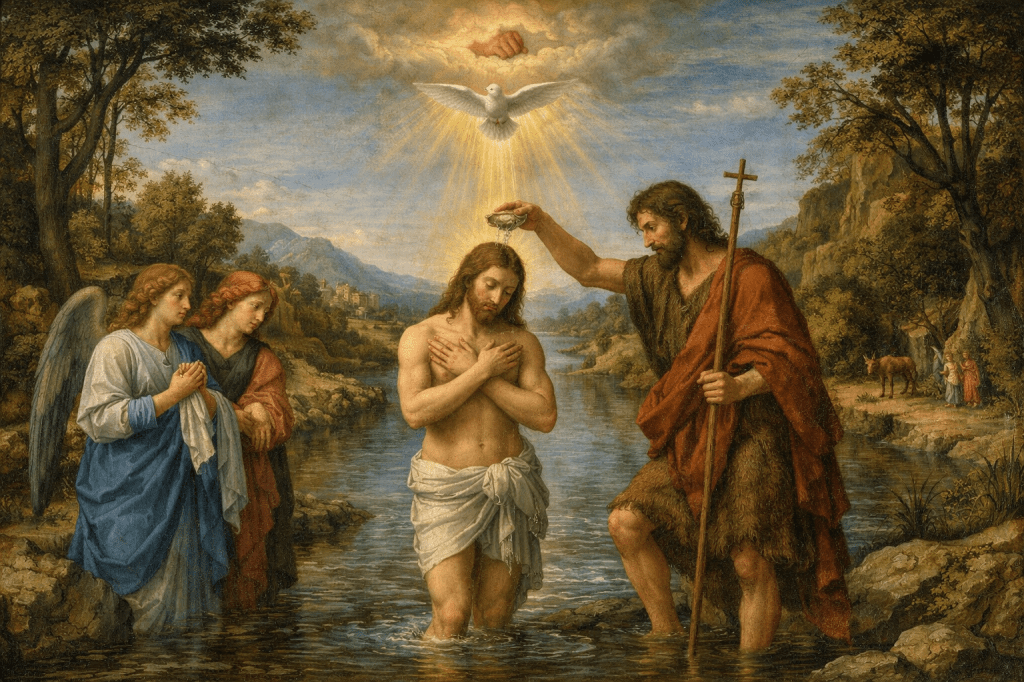
The Gospel accounts describe Jesus Christ stepping into the Jordan to be baptized by John the Baptist—an act that puzzled early theologians. Why would the sinless submit to a baptism of repentance? The Church Fathers answered not with logic alone, but with poetry and paradox: Christ enters the waters not to be cleansed, but to cleanse them.

Baptism Before There Were Baptisteries

For the early Church, this event was not merely historical; it was instructional. Baptism was the doorway into Christian life, often performed in rivers, lakes, or communal baths. Converts descended naked into the water, symbolically dying to their former life, and rose to be clothed in white—an enacted theology that echoed Christ’s own descent and rising.

January 11 therefore became a catechetical moment. Sermons preached around this feast explained what baptism meant: death and rebirth, adoption into God’s family, and incorporation into a community that spanned heaven and earth. This is why ancient lectionaries pair the Baptism of the Lord with readings about light, calling, and divine sonship. The Church was teaching people who they were, not merely what they believed.

The Voice, the Dove, and the Trinity

Church history shows a growing theological depth attached to this feast. By the fourth century, writers like Gregory of Nazianzus emphasized that Christ’s baptism is one of the clearest Trinitarian moments in Scripture: the Son in the water, the Spirit descending like a dove, and the Father’s voice declaring, “You are my beloved Son.”

This mattered profoundly in centuries when the Church was clarifying doctrine against confusion and heresy. January 11 was not abstract theology; it was a calendar-anchored confession of who God is. Long before creeds were memorized by congregations, the liturgical year taught doctrine by repetition and rhythm.

Saints Who Lived the Meaning

January 11 also carries the memory of saints whose lives embodied baptismal commitment. Among them is Theodosius the Cenobiarch, a fifth-century monastic leader who organized communal monastic life in Palestine. His title, “Cenobiarch,” means ruler of the common life—a reminder that baptism was never meant to be private spirituality. It was a public reorientation of life toward discipline, service, and shared obedience.

The Church’s habit of pairing major theological feasts with saint commemorations is not accidental. Doctrine becomes flesh in people. Baptismal vows take shape in monasteries, parishes, hospitals, and households.

January 11 as a Threshold

Historically, January 11 marks a turning. The Christmas cycle closes. Ordinary Time approaches. The infant in the manger is now revealed as the Son sent into the world. In church history, this date has functioned as a kind of spiritual handoff—from wonder to work, from revelation to responsibility.

The Church has long understood that faith cannot live forever in the glow of Christmas light. It must step into colder water. January 11 reminds Christians that the story does not move from birth straight to glory, but through obedience, humility, and vocation.

In that sense, this quiet date carries enormous weight. It tells the Church, year after year, that Christianity begins not with achievement, but with descent—into water, into community, into a calling that unfolds across time.

Happy Birthday to sister-in-law, Diane!

January 10: When Words, Institutions, and Continents Were Challenged

https://oll-resources.s3.us-east-2.amazonaws.com/oll3/store/076b9d185c78fb9c9300676533214677.jpg
https://cdnph.upi.com/svc/sv/upi_com/5431605412514/2020/1/5c4633cd8978615610244b38c99db5e7/On-This-Day-League-of-Nations-assembles-for-first-time.jpg
https://archives.rpi.edu/old-wp-content/uploads/2014/09/bottom_culebra_bennett140_newsize-e1411487497383.jpg

A collaboration between Lewis McLain & AI

January 10 is not remembered for a single dramatic event. It is remembered because, across different centuries, it marks moments when people refused to accept what had long been treated as inevitable. In 1776, political authority was stripped of its mystique. In 1920, war itself was treated as a solvable problem. And in 1914, geography was no longer allowed the final word.

Ideas came first. Then institutions. Then earth itself.


Common Sense: The Dangerous Simplicity of Clarity (1776)

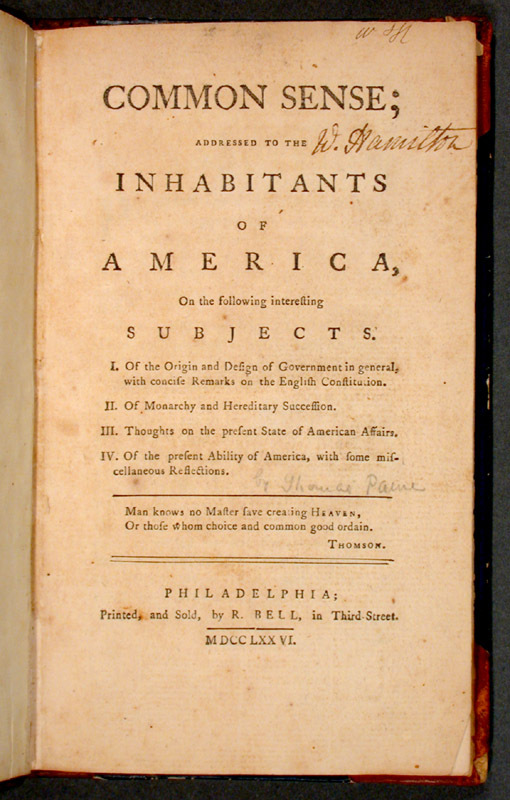
On January 10, 1776, Common Sense was published anonymously. Its author, Thomas Paine, did not argue like a philosopher addressing kings. He argued like a citizen addressing neighbors.

Paine’s brilliance was his refusal to dress radical ideas in polite language. One of his opening claims cut straight through inherited reverence:

“Government, even in its best state, is but a necessary evil; in its worst state, an intolerable one.”

Monarchy, Paine argued, was not merely unjust—it was inefficient. It solved no problem that could not be solved better by representative government. His psychological insight may have been even sharper:

“A long habit of not thinking a thing wrong gives it a superficial appearance of being right.”

Here Paine identified the real obstacle to reform: habit. People obey systems not because they are good, but because they are familiar. By naming that habit, Paine broke it. George Washington observed that Common Sense “worked a powerful change in the minds of many men.” The revolution did not begin on January 10—but on that day it acquired its moral grammar.


The League of Nations: Civilizing Power After Catastrophe (1920)

On January 10, 1920, the League of Nations met for the first time. Europe was exhausted, scarred by mechanized slaughter on an unprecedented scale. The League’s founding premise was quietly radical: war was not a right of nations, but a failure of systems.

The League sought to replace secret treaties and balance-of-power maneuvering with transparency, arbitration, and collective security. Disputes would be discussed before they turned violent. Aggression would meet unified resistance. Peace would be managed, not hoped for.

The institution failed in its ultimate task. It lacked enforcement power. Consensus rules slowed action. The absence of the United States weakened legitimacy. Yet the League permanently altered expectations. War was no longer treated as inevitable or honorable; it was treated as preventable and shameful.

Like Common Sense, the League did not solve the problem it named—but it changed how the problem was understood. Its structure, language, and lessons would later be carried forward into successor institutions built with harder edges.


The Panama Canal: Two Attempts, One Transformation (1914)

On January 10, 1914, the Panama Canal opened to commercial traffic. Unlike the pamphlet or the treaty hall, this achievement came only after failure, scandal, and staggering loss of life.

The French attempt (1881–1889): vision without realism

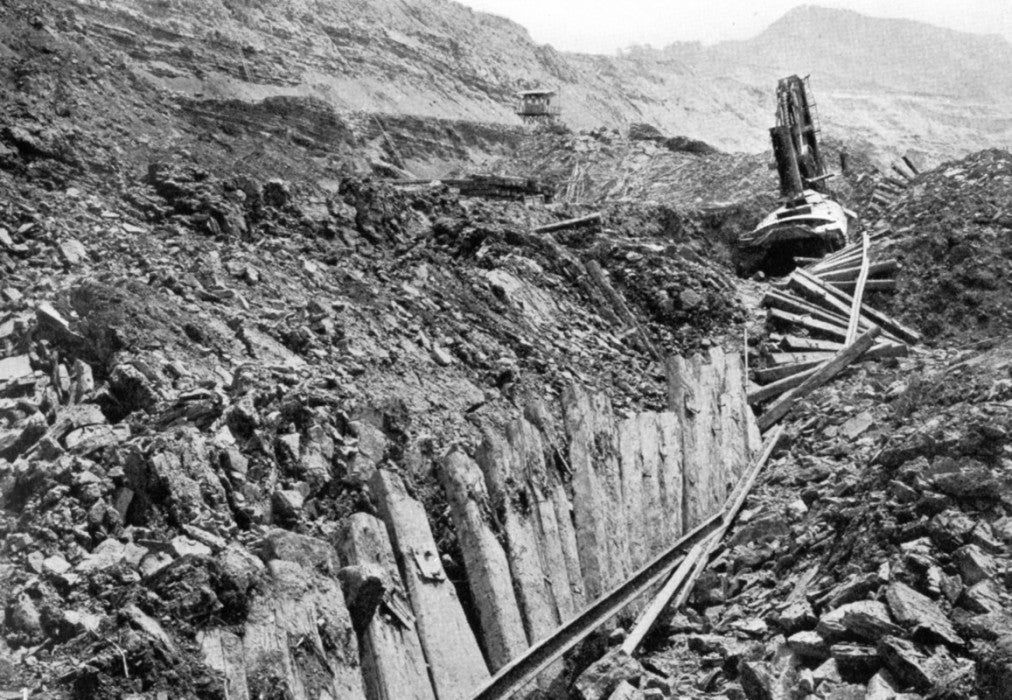
The first effort was led by Ferdinand de Lesseps, celebrated for the Suez Canal. Confident that Panama would yield to similar methods, the French attempted a sea-level canal. They underestimated the terrain, the rainfall, and the earth itself.

Even more fatal was disease. Yellow fever and malaria ravaged the workforce. Landslides repeatedly refilled excavated sections, particularly in what would later be called the Culebra Cut. Financial mismanagement and corruption scandals in Paris sealed the project’s collapse. By 1889, the effort was abandoned, leaving behind equipment, graves, and a warning.

The American effort (1904–1914): engineering, medicine, discipline

The United States took control in 1904. The approach was fundamentally different. The design shifted to a lock-and-lake system, lifting ships about 85 feet above sea level to cross the isthmus via Gatun Lake.

Equally transformative was public health. Under William C. Gorgas, mosquito control, sanitation, and clean water systems drastically reduced disease. For the first time, sustained work was possible.

Engineering leadership also mattered. John F. Stevens stabilized operations and logistics. George Washington Goethals drove the project to completion with military precision.

Scale and cost

  • Length: about 51 miles (82 km)
  • Lift: approximately 85 feet above sea level
  • Workforce: over 40,000 laborers
  • Cost (U.S. phase): roughly $375 million
  • Total deaths (French + U.S. efforts): more than 25,000

The canal permanently shortened global shipping routes by thousands of miles. Naval strategy, trade flows, and port cities were reshaped overnight. Once completed, the world became functionally smaller—and it could not return to its former scale.


The Unifying Thread

Paine questioned the inevitability of monarchy.
The League questioned the inevitability of war.
The canal questioned the inevitability of distance—and required failure before success.

January 10 reminds us that progress is rarely clean. It is argumentative, experimental, and often built on earlier mistakes. But when ideas, institutions, and engineering align, even the oldest assumptions—about power, conflict, and geography—can be rewritten.

The Day the iPhone Rewired the World

https://9to5mac.com/wp-content/uploads/sites/6/2022/01/steve-jobs-og-iphone.jpg?quality=82&strip=all&w=1600
https://cdn.osxdaily.com/wp-content/uploads/2017/01/original-iphone.jpg
https://www.macworld.com/wp-content/uploads/2025/10/original-iphone-2007-1.jpg?quality=50&strip=all

A collaboration between Lewis McLain & AI

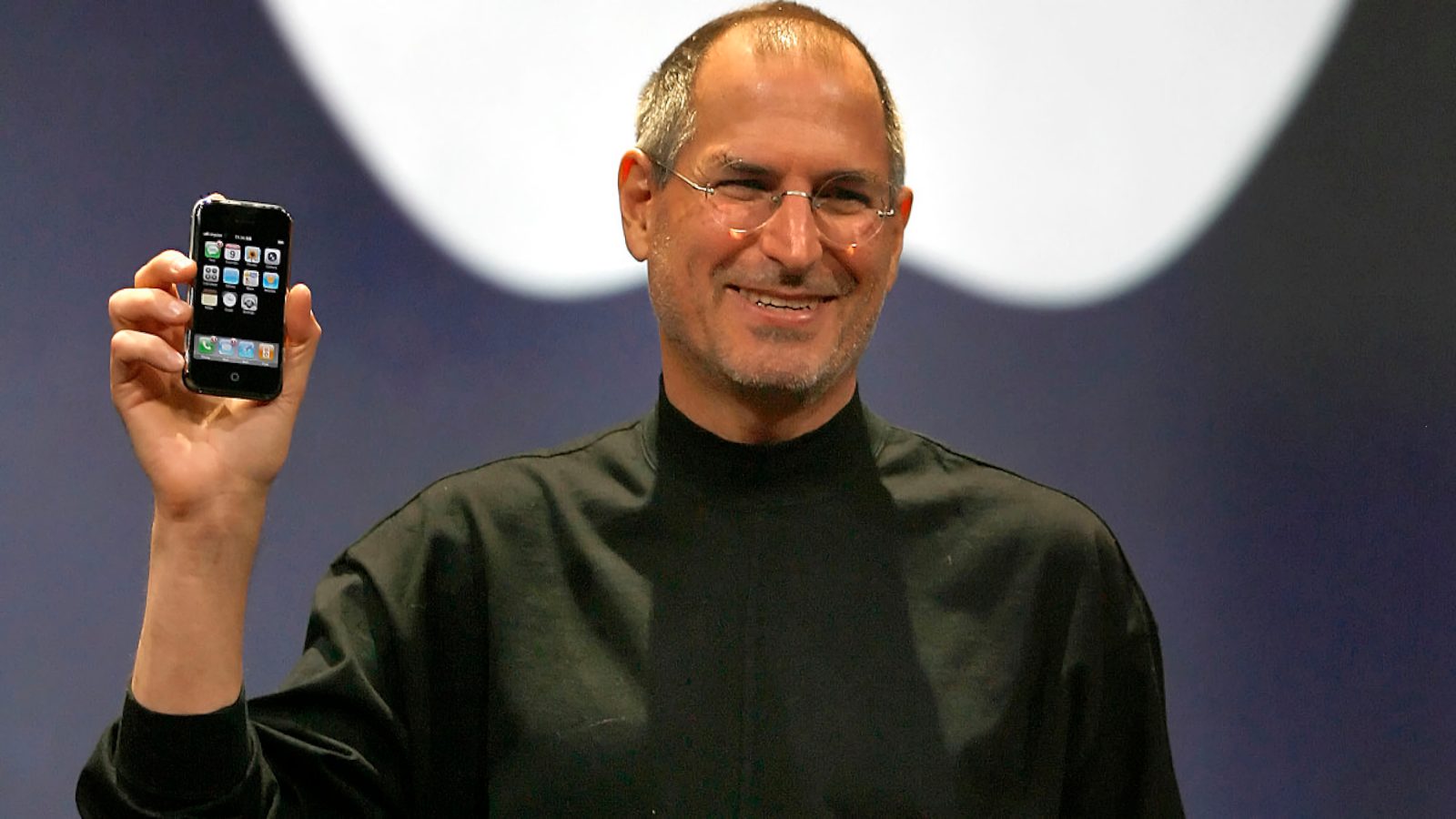
On January 9, 2007, at Macworld in San Francisco, Steve Jobs walked onto the stage and delivered one of the most consequential product announcements in modern history. He framed it theatrically—three devices in one: an iPod, a phone, and an internet communicator. Then he paused, smiled, and revealed the trick. They were not three devices. They were one. The Apple iPhone had arrived.

What followed was not merely a successful product launch. It was a hinge moment—one that quietly reordered how humans interact with technology, with information, with each other, and even with themselves.


What Made the iPhone Event Different

The iPhone announcement mattered not because it was the first smartphone, but because it redefined what a phone was supposed to be.

At the time, the market was dominated by devices with physical keyboards, styluses, nested menus, and clunky mobile browsers. BlackBerry owned business communication. Nokia owned scale. Microsoft owned enterprise software assumptions. Apple owned none of these markets.

Yet the iPhone introduced several radical departures:

  • Multi-touch as the interface
    Fingers replaced keyboards and styluses. Pinch, swipe, and tap turned abstract computing into something instinctive and physical.
  • A real web browser
    Not a stripped-down “mobile” version of the internet, but the actual web—zoomable, readable, usable.
  • Software-first design
    The device wasn’t defined by buttons or ports but by software, animations, and user experience. Hardware existed to serve software, not the other way around.
  • A unified ecosystem vision
    The iPhone was conceived not as a gadget but as a node—connected to iTunes, Macs, carriers, and eventually an App Store that did not yet exist but was already implied.

Jobs did not spend the keynote talking about specs. He talked about experience. That choice alone signaled a philosophical shift in consumer technology.


The Immediate Shockwave

The reaction was mixed. Some praised the elegance. Others mocked the lack of a physical keyboard, the high price, and the absence of third-party apps at launch. Industry leaders dismissed it as a niche luxury device.

Those critiques aged poorly.

Within a few years, nearly every phone manufacturer had abandoned keyboards. Touchscreens became universal. Mobile operating systems replaced desktop metaphors. The skeptics were not foolish—they were anchored to the past in a moment when the ground moved.


How the iPhone Changed Everyday Life

The iPhone did not just change phones. It collapsed entire categories of human activity into a pocket-sized slab of glass.

Communication shifted from voice-first to text, image, and video-first. Navigation moved from paper maps and memory to GPS-by-default. Photography became constant and social rather than occasional and deliberate. The internet ceased to be a place you “went” and became something you carried.

Several deeper changes followed:

  • Time became fragmented
    Micro-moments—checking, scrolling, responding—filled the spaces once occupied by waiting, boredom, or reflection.
  • Attention became a resource
    Notifications, feeds, and apps competed continuously for awareness, reshaping media, advertising, and even politics.
  • Work escaped the office
    Email, documents, approvals, and meetings followed people everywhere, blurring boundaries between professional and personal life.
  • Memory outsourced itself
    Phone numbers, directions, appointments, even photographs replaced recall with retrieval.

The iPhone did not force these changes, but it made them frictionless, and friction is often the last defense of human habits.


The App Store Effect

A year later, Apple launched the App Store, and the iPhone’s impact accelerated exponentially. Developers gained a global distribution platform overnight. Entire industries emerged—ride-sharing, mobile banking, food delivery, social media influencers, mobile gaming—built on the assumption that everyone carried a powerful computer at all times.

This was not just technological leverage. It was economic leverage.

Apple positioned itself as the gatekeeper of a new digital economy, collecting a share of transactions while letting others shoulder innovation risk. Few business models in history have been so scalable with so little marginal cost.


The Financial Transformation of Apple

Before the iPhone, Apple was a successful but niche computer company. After the iPhone, it became something else entirely.

The iPhone evolved into Apple’s single largest revenue driver, often accounting for roughly half of annual revenue in its peak years. More importantly, it pulled customers into a broader ecosystem—Macs, iPads, Apple Watch, AirPods, services, subscriptions—each reinforcing the others.

Apple’s profits followed accordingly:

  • Revenue grew from tens of billions annually to hundreds of billions
  • Gross margins remained unusually high for a hardware company
  • Cash reserves swelled to levels rivaling national treasuries
  • Apple became, at times, the most valuable company in the world

The genius was not just the device. It was the integration—hardware, software, services, and brand operating as a single system. Competitors could copy features, but not the whole machine.


The Long View

January 9, 2007, now looks less like a product launch and more like a civilizational inflection point. The iPhone compressed computing into daily life so completely that it is now difficult to remember what came before.

That power has brought wonder and convenience—and distraction, dependency, and new ethical dilemmas. Tools that shape attention inevitably shape culture.

Apple did not merely sell a phone that day. It sold a future—one we are still living inside, still arguing about, and still trying to understand.