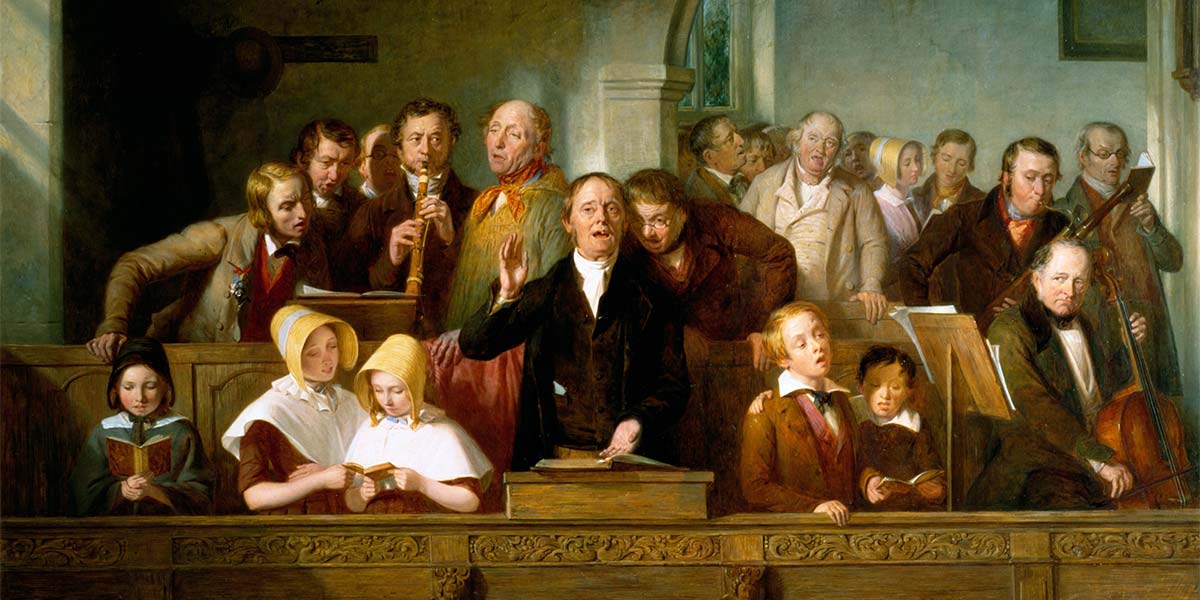
A Transcript from a Zoom Call (With the Audio On and the Thoughts Unmuted)

A collaboration between Lewis McLain & AI

00:00 — Joining the meeting
You arrive early, which feels suspicious. No one else is there. You stare at yourself. You immediately dislike your face. You adjust the camera upward. Worse. Downward. Now you look guilty. You settle on “resigned.”

00:02 — Someone joins
You nod politely at the screen like it’s a hallway encounter. They do not nod back. You wonder if nodding is still a thing. You stop nodding. It feels rude.

00:04 — “Can everyone hear me?”
Everyone says yes. Someone cannot hear you. Someone else is muted but talking confidently into the void. This is the ancient ritual. It must be honored.

00:07 — The agenda appears
You pretend to read it while scanning faces for emotional weather. One person looks alarmed. One looks like they’ve been here since 2009. One is definitely answering emails. You briefly wonder if you look like you’re answering emails.

00:10 — You speak
You say: “That makes sense.”
What you mean: I am buying time while I locate the thread of the conversation that snapped five minutes ago.

00:12 — Your face freezes
You hold perfectly still, hoping the freeze makes you look thoughtful rather than mid-blink. You fail. You now resemble a man who has just realized something too late.

00:15 — The Unexpected Question
“Joey, what do you think?”
Your brain performs a physical maneuver, like furniture being rearranged in a hurry. You say something measured. You feel proud for exactly four seconds, then remember a better sentence.

00:18 — Someone shares their screen
It is the wrong screen. It contains emails. Or a calendar titled PERSONAL. Or a document named FINAL_v8_REALLY_FINAL_THIS_ONE. No one comments. Everyone comments internally.

00:22 — The Dog / Child / Doorbell Event
A dog appears. A child appears. A doorbell rings like a prophecy. The speaker says, “Sorry about that,” even though this is the most human moment of the meeting.

00:26 — Collective Fatigue Sets In
Everyone leans back simultaneously, like a synchronized swim team trained in exhaustion. Someone asks a question already answered. No one judges them. We are all that person now.

00:29 — “Let’s take this offline”
This is the Zoom equivalent of a gentle burial. The topic is not dead, but it will never fully live again.

00:31 — The Goodbye That Never Ends
“Thanks everyone.”
“Thanks.”
“Appreciate it.”
“Talk soon.”
More thanks. More nodding. Someone waves. The meeting ends but no one leaves. You stare at the screen, unsure who must go first, like polite drivers at a four-way stop.

00:33 — Silence
You are alone again.
You exhale.
You immediately realize what you should have said.


Zoom calls are not meetings. They are small psychological experiments conducted in rectangles, where humans attempt professionalism while quietly negotiating posture, lighting, identity, and the eternal question:

Is this my face now?

EPIC, Sharia-as-governance, hindsight, and Texas’s turn toward prevention

How Did It Get This Far?

A collaboration between Lewis McLain & AI

The current conflict in Texas did not begin with a lawsuit, a school incident, or a campaign speech. It began quietly—years earlier—when the East Plano Islamic Center expanded from a conventional mosque into something far more ambitious: a comprehensive, self-sustaining religious community encompassing worship, education, housing, commerce, and social life.

From within the community, this growth appeared lawful, ordinary, and even responsible. Religious communities in America often expand to meet the needs of their members. From outside, however, the expansion crossed an invisible threshold. The concern was not size alone. It was institutional completeness—the sense that an internal system of life was forming alongside, and potentially insulated from, the surrounding civic order.

That distinction—between religion as belief and religion as governance—explains almost everything that followed.


I. Why EPIC’s expansion triggered concern before it triggered opposition

EPIC did not announce itself as a “city.” It developed incrementally: land acquisition, planning documents, internal fundraising, architectural concepts. Each step complied with zoning and nonprofit rules. No single action demanded statewide attention.

But when the full scope became visible, neighbors asked a different kind of question:

If disputes arise inside this community, what authority ultimately governs—civil law alone, or something more?

That question would not arise with a megachurch or a Catholic school. Not because Christianity lacks doctrine, but because American civic life already assumes that Christian institutions are subordinate to constitutional law.

With Islam, and specifically Sharia, that assumption is not automatically shared.


II. Sharia versus Sunni: the distinction that must be made clearly

This is where public debate often collapses into confusion, and where this essay must be precise.

Sunni Islam is not the concern

Sunni Islam is a theological identity, not a governing program. It encompasses the majority of Muslims worldwide and includes diverse schools of thought, cultures, and practices. Most Sunnis—especially in the United States—publicly oppose violence, reject terrorism, and live comfortably under secular constitutional law.

A Sunni community that:

  • affirms the supremacy of U.S. civil law
  • rejects coercive religious courts
  • condemns violence unequivocally in word and action
  • operates transparently within public institutions

does not trigger the same concern.

That must be stated plainly:
Sunni identity alone is not what alarms Texans.

Sharia-as-governance is the concern

Sharia, in its broad sense, refers to Islamic guidance for personal religious life—prayer, fasting, charity, family rituals. In that sense, most Sunnis support Sharia, just as Jews support halakhah and Catholics follow canon law in personal matters.

But Sharia also exists as a jurisprudential system addressing governance, criminal punishment, civil authority, and relations between believers and non-believers. Within classical Islamic jurisprudence are doctrines—real, documented, historically applied—concerning apostasy, blasphemy, jihad, and the subordination of non-Muslims under certain conditions.

Most modern Muslims reject coercive applications of these doctrines. But the doctrines exist, and history shows that a minority is sufficient to activate them.

This is the fault line.

The concern is not faith. It is governance.
Not belief, but systems.


III. Why Sunni diversity does not, by itself, reassure skeptics

Appealing to the fact that “most Muslims are Sunni” does not resolve the concern—not because Sunnism mandates violence, but because Sunni Islam is not a single moderating authority.

Sunni jurisprudence contains multiple schools of law, ranging from flexible and contextual to literalist and rigid. Modern jihadist movements arise almost entirely from Sunni contexts—not because Sunnism commands violence, but because its interpretive breadth allows extremists to selectively extract, absolutize, and weaponize certain doctrines.

This is not an indictment of Sunnis. It is a structural vulnerability.

Thus, when Texans react to the word “Sharia,” they are not reacting to their Muslim neighbors’ intentions. They are reacting to the worst-case potential embedded in a governing system, filtered through historical experience.


IV. The 9/11 lesson Texans did not forget

This reaction is not abstract. It is shaped by hindsight.

The 9/11 attackers did not announce their intentions. They entered ordinary systems—flight schools, airports—under normal rules, with benign appearances. The danger was invisible until the moment of catastrophe.

That experience permanently altered American risk perception:

Threats are not always visible at the point of entry.
They often look ordinary until they are not.

So when Texans observe:

  • a religious community scaling quietly into permanence
  • a legal-religious system that, in some interpretations, subordinates civil law
  • outreach touching public institutions

they do not ask, “Is this illegal today?”
They ask, “Is this the early stage we would miss again?”

That reaction is not hysteria. It is memory-driven vigilance.


V. Wylie East High School: what happened—and why it mattered anyway

The incident at Wylie East High School illustrates how this vigilance plays out.

An outside Muslim group distributed Qur’ans and offered hijabs and henna during lunch. Participation was voluntary. The problem was procedural: the group had not been properly vetted or approved under district policy.

Wylie Independent School District acknowledged the failure, placed a staff member on administrative leave, apologized publicly, and tightened access rules. Administratively, it was treated as a compliance breakdown.

That explanation is accurate—and still incomplete.

To neighbors already unsettled by EPIC’s expansion, the incident felt like pattern completion:

  • an outside religious organization
  • operating inside a public institution
  • with minimal friction

Not indoctrination.
Not coercion.
But ease of access.

In a climate shaped by Sharia-as-governance anxiety and post-9/11 hindsight, the event did not read as a paperwork error. It read as boundary testing.


VI. Texas turns toward prevention—and why that instinct is rational

When Dan Patrick elevated “preventing Sharia law” as a legislative priority, critics dismissed it as fear-mongering. But politically, it resonated because it named an anxiety others avoided:

What if tolerance today becomes submission tomorrow?

Governor Greg Abbott and Attorney General Ken Paxton then moved from rhetoric to preemptive action—investigations, lawsuits, and nonprofit challenges aimed at Muslim-linked institutions, including Council on American-Islamic Relations.

From their perspective, waiting for overt illegality would be irresponsible. Prevention is the point.

And that instinct is not irrational.


VII. The strategic problem: prevention without predicates

Here is where the effort becomes clumsy—and legally vulnerable.

American law does not punish potential.
It punishes conduct.

Preventative instincts born of intelligence failures do not translate easily into civil litigation. Courts require:

  • specific statutory violations
  • demonstrable unlawful conduct
  • clear nexus between actions and prohibited outcomes

Absent that, the state faces a structural dilemma:

If no law is being broken, prevention becomes punishment for belief, association, or scale.

That is constitutionally untenable.


VIII. What are the chances Texas loses?

If EPIC, CAIR, or related institutions are complying with zoning, nonprofit, and criminal law, the odds of Texas losing in court are high.

Not because judges are naïve.
But because American law is designed to resist preemptive suppression of lawful activity, even when fear feels justified.

This creates a paradox:

  • Texas’s vigilance is shaped by hindsight.
  • That same hindsight has strengthened constitutional protections against overreach.

The result is a strategy that is emotionally coherent but legally fragile.


IX. The harder path Texas is avoiding

The durable preventative strategy is not broad lawsuits or symbolic bans. It is:

  • strict, neutral enforcement of existing law
  • transparency requirements tied to conduct, not creed
  • early public clarification that civil law is supreme
  • federal intelligence cooperation where warranted

This path is slower, quieter, and less satisfying politically—but far more likely to hold up in court.


X. The real balance Texas must strike

Texas is right to be alert. History earned that vigilance.
Texas is wrong to act as though alertness itself is evidence.

The lesson of 9/11 was not “act first.”
It was “see clearly before it’s too late.”

Seeing clearly requires discipline—especially when fear feels earned.

If Texas can distinguish Sunni faith from Sharia-as-governance, belief from systems, and risk assessment from guilt, it can protect both its citizens and its constitutional authority.

If it cannot, it risks losing—not because it worried too much, but because it acted before the law could follow.

The Sound of Exuberance: Words That Cannot Contain Joy

A collaboration between Lewis McLain & AI

Some words do not sit still. They spill. They rise before the speaker has finished choosing them. They widen the chest, quicken the breath, and pull the face into motion before permission is granted. These are not careful words. They are not modest. They arrive carrying more feeling than syntax can hold.

Words of exuberance do not merely describe joy—they enact it.

Unlike calm, which slows the body, or sadness, which deepens it, exuberance expands. It lifts posture, increases breath, and accelerates speech. The nervous system recognizes abundance rather than threat. Energy moves outward. Smiles form reflexively. Laughter often follows close behind.

The sound of exuberance is marked by openness. These words favor wide vowels—ah, oh, ee—and voiced consonants that resonate rather than stop. The mouth opens fully. The voice carries. There is little constriction. Even when consonants are sharp, they are buoyant rather than cutting. The sound signals overflow, not alarm.

Meaning reinforces the effect. Exuberant words often express connection without reservation: love that is declared rather than implied, delight that refuses understatement, joy that does not hedge itself. Where sadness names absence, exuberance names presence—sometimes so fully that it feels uncontainable.

Consider how different love feels when it becomes adore, cherish, or treasure. The sound lengthens. The vowels bloom. The words linger in the mouth. Or take joy, which becomes delight, elation, or ecstasy. Each step adds syllables, motion, and amplitude. Exuberance, linguistically, is joy that has acquired momentum.

Many exuberant words include repetition, rhythm, or internal lift. Hallelujah rises and falls like a song. Glorious rolls forward, then opens wide. Wonderful refuses to stay short. These words feel musical even in prose. They demand air.

Unabashed expressions of love often share the same traits. Beloved, darling, my heart, my joy—these phrases are not efficient. They are extravagant. They spend syllables freely. That extravagance is the point. Joy does not optimize; it overflows.

Culturally, exuberant language is often treated with suspicion. We are taught to temper enthusiasm, to avoid excess, to keep emotion proportional. But exuberant words persist because they serve a real function. They mark moments when restraint would be dishonest. They allow the body to release surplus feeling rather than compress it.

This is why celebrations, worship, reunions, and declarations of love rely on such language. Exuberance synchronizes groups. It spreads. One person’s joy invites another’s. The sound itself becomes contagious.

Placed alongside calm, alarm, revulsion, comedy, and sadness, exuberance completes the spectrum. If sadness slows and deepens, exuberance lifts and widens. Both are honest responses to meaning that matters.

To speak exuberantly is not to abandon intelligence or dignity. It is to acknowledge that some experiences exceed quiet description. Language, at its best, stretches to meet them.


Appendix A: Words That Express Exuberance, Joy, and Unabashed Love

Pure Joy and Celebration

  • joy — deep pleasure or happiness
  • delight — great pleasure or satisfaction
  • elation — joyful excitement
  • ecstasy — overwhelming joy
  • bliss — perfect happiness
  • rapture — intense joy or pleasure
  • jubilation — triumphant happiness

Overflowing Energy and Enthusiasm

  • exuberant — full of energy and joy
  • radiant — visibly glowing with happiness
  • thrilled — filled with excited pleasure
  • overjoyed — extremely happy
  • giddy — lightheartedly excited
  • buoyant — cheerful and resilient

Love, Affection, and Devotion (Unreserved)

  • love — deep affection and attachment
  • adore — love deeply and openly
  • cherish — hold dear with affection
  • treasure — value greatly and lovingly
  • beloved — dearly loved
  • darling — term of deep affection
  • devotion — profound loyalty and love

Awe, Wonder, and Emotional Expansion

  • awe — overwhelming wonder or reverence
  • wonder — amazed admiration
  • marvel — astonishment mixed with pleasure
  • glorious — worthy of admiration and praise
  • magnificent — impressively beautiful or grand
  • splendid — exceptionally good or joyful

Celebratory and Communal Expressions

  • hallelujah — expression of praise or joy
  • hosanna — cry of celebration or gratitude
  • cheers — expression of happiness or approval
  • bravo — expression of praise
  • amen — affirmation or joyful agreement

Tender Joy and Emotional Fullness

  • heartfelt — deeply sincere
  • grateful — thankful and appreciative
  • thankful — conscious of benefit received
  • content — quietly happy and satisfied
  • fulfilled — satisfied in purpose or feeling

Why These Words Work

These words express exuberance because they:

  • require open mouth posture and breath
  • favor long, resonant vowels
  • signal abundance rather than restraint
  • invite connection instead of defense
  • allow emotion to spill outward safely

They do not merely describe joy. They give it room to live.

The Sound of Sadness: Why Some Words Make Us Cry

A collaboration between Lewis McLain & AI

Some words do not strike us. They do not repel or alarm. They arrive quietly, almost gently—and then linger. A single word can suddenly thicken the throat, slow the breath, or blur the eyes. We may not even notice the moment it happens. We only notice the aftermath.

Words like goodbye, alone, miss, or too late carry this power. They do not shout. They do not surprise. They simply open a door the body remembers how to walk through.

Sadness in language works differently than other emotional registers. Alarm sharpens attention. Revulsion rejects. Comedy releases tension. Sadness, by contrast, creates space. It slows time. It invites memory. It draws attention inward rather than outward. The body responds not with action, but with heaviness and reflection.

This effect is not accidental. Many words associated with sadness are acoustically soft. They favor long vowels, gentle consonants, and open endings. The mouth relaxes rather than tightens. Speech slows. These sounds mirror the physical posture of grief itself: lowered shoulders, shallow movement, a quieter presence. The nervous system recognizes the posture and follows it.

Meaning compounds the effect. Sad words often point to absence rather than presence. They name what is no longer here, what cannot be recovered, or what was never fulfilled. Gone, lost, never, before, after—these words position the listener in time rather than space. They orient the mind toward memory and irreversibility, two of the most reliable triggers of sorrow.

Many of the most powerful sad words are ordinary. Home. Mother. Father. Remember. They are not tragic by definition. Their emotional weight comes from what they gather around them: attachment, dependence, love, and time. The sound is simple; the meaning is layered. When spoken, they activate not one idea, but an entire constellation of lived experience.

Sadness also emerges through incompleteness. Words like unfinished, unsaid, unanswered, or waiting imply suspension rather than closure. The mind resists suspension. It wants resolution. When language denies that resolution, the body responds with ache. Tears often follow not because something terrible has happened, but because something has been left open.

Unlike alarm or disgust, sadness does not demand immediate response. It does not push us away or prepare us to act. Instead, it asks us to stay still. Crying itself is not an emergency reaction; it is a regulatory one. Tears slow breathing, soften facial muscles, and release emotional pressure. Sad words often precede tears because they prepare the body for that release.

This is why writers, poets, and speakers often rely on understatement when evoking sorrow. The most devastating lines are rarely loud. They are spare. They trust the reader’s nervous system to do the rest. A single word placed carefully can undo a room.

Understanding the sound of sadness does not make us immune to it—and that is not the goal. Sadness serves an essential human function. It honors loss. It marks significance. It signals that something mattered enough to hurt when it ended. Language that evokes sadness reminds us that feeling deeply is not weakness, but evidence of connection.

Placed alongside calm, alarm, revulsion, and comedy, sadness completes the emotional spectrum of sound. Language does not merely inform or persuade. It moves us—sometimes gently, sometimes sharply, sometimes unbearably softly. To listen closely to sad words is to listen to the way the body remembers what the mind might try to outrun.


Appendix A: Words That Commonly Evoke Sadness or Tears

Loss, Absence, and Finality

  • goodbye — expression of parting
  • farewell — final or permanent goodbye
  • gone — no longer present
  • never — not at any time
  • last — occurring at the end
  • left behind — remaining after others depart
  • final — having no continuation

Grief, Death, and Mourning

  • loss — the state of no longer having
  • grief — deep sorrow, especially after death
  • mourning — expression of grief
  • bereaved — deprived of a loved one by death
  • widow / widower — surviving spouse
  • orphan — child without parents
  • eulogy — speech honoring the dead

Loneliness and Isolation

  • alone — without others
  • lonely — feeling isolated
  • abandoned — left without support
  • forgotten — no longer remembered
  • unnoticed — not seen or acknowledged
  • unanswered — receiving no reply
  • empty — lacking what once was present

Longing, Regret, and the Unrecoverable

  • miss — feel the absence of
  • longing — deep desire for what is absent
  • yearning — persistent longing
  • regret — sorrow over past choices
  • if only — expression of unrealized hope
  • too late — after opportunity has passed
  • what might have been — imagined alternate outcome

Fragility and Weariness

  • broken — damaged beyond wholeness
  • fragile — easily hurt
  • wounded — injured emotionally or physically
  • tired — exhausted beyond rest
  • weary — worn down by time or burden
  • aching — persistent pain

Innocence, Home, and Attachment

  • childhood — early period of life
  • innocence — freedom from harm or guilt
  • home — place of belonging
  • mother — female parent
  • father — male parent
  • lullaby — song used to soothe a child
  • small — young or vulnerable

Time, Memory, and Distance

  • remember — recall the past
  • memory — mental recollection
  • photograph — captured moment
  • before — earlier time now gone
  • after — time following loss
  • years ago — distant past
  • distance — separation

Quiet Emotional States

  • sad — feeling sorrow
  • sorrow — deep distress
  • heartache — emotional pain
  • melancholy — reflective sadness
  • despair — loss of hope
  • resignation — acceptance of pain
  • tender — easily moved

Unspoken and Unfinished

  • unsaid — never spoken
  • unfinished — not completed
  • unresolved — lacking closure
  • waiting — remaining in expectation
  • silence — absence of sound or response

The Sound of Revulsion: Why Certain Medical Words Make Us Cringe

A collaboration between Lewis McLain & AI

Some words repel us instantly. We hear them and recoil—not metaphorically, but physically. The face tightens. The stomach shifts. Attention snaps to the body. Words like pus, phlegm, canker sore, or sty provoke this reaction before we have time to think about what they mean or why they matter. The response feels automatic, involuntary, and strangely universal.

This is not accidental. It is biological.

Just as the nervous system is tuned to detect calm through sound, it is also finely calibrated to detect contamination, decay, and bodily threat. Language that activates those signals does so through a powerful combination of sound, imagery, and evolutionary conditioning. The cringe response is not a failure of composure; it is a survival reflex being triggered by speech.

Many medical terms that provoke disgust cluster around a few themes: bodily fluids, tissue breakdown, infection, and invasion. These are precisely the categories the human brain evolved to treat with caution. Long before microscopes or medicine, avoiding rot, seepage, and visible injury increased survival. The words that describe these phenomena still carry that ancient warning system inside them.

Sound plays a decisive role. Harsh or wet-sounding consonants—p, k, g, t, s, z—combine with short, blunt vowels to produce acoustic “impacts.” Pus ends abruptly, like a stop. Phlegm drags and sticks in the mouth. Cyst snaps shut. These words resist smooth airflow and disrupt breath, which the nervous system interprets as obstruction or threat.

Some words imitate the sensations they describe. Ooze stretches unpleasantly. Slough feels slippery and slow. Phlegm requires throat tension to pronounce, forcing awareness of mucus and swallowing. This is a form of phonetic mimicry: the mouth reenacts the problem while naming it. The body does not appreciate the demonstration.

Imagery compounds the effect. Words like necrosis, gangrene, or putrefaction describe not just illness but loss of boundary—tissue breaking down, form dissolving, order collapsing. Humans are deeply unsettled by the erosion of physical integrity. These terms signal that something meant to be contained is spreading, leaking, or dying. The brain responds with alarm and disgust, emotions specifically designed to prompt avoidance.

Disgust itself is a fascinating emotion. Unlike fear, which prepares the body to flee, disgust prepares it to reject—to pull away, to expel, to close off. Cringing, gagging, and tightening are part of the same reflex family. When a word triggers disgust, it narrows attention to the body and overrides abstract thought. This is why even clinically neutral terms can feel emotionally loaded.

Medical professionals learn to neutralize this response through repetition and context. For patients, however, the words arrive unbuffered. Without training, the body hears the word first and reacts before reason can intervene. This helps explain why bedside language matters so much, and why euphemisms and gentler phrasing persist even in scientific settings. Precision is not the only value at stake; physiological response matters too.

There is also a social dimension. Many of these words violate polite boundaries. They drag private bodily processes into public language. That boundary crossing itself produces discomfort. Language, after all, is not just information—it is a shared space. When a word introduces decay, discharge, or rupture into that space, listeners instinctively recoil.

Yet these words exist for a reason. They are meant to be vivid. They carry urgency. They mark danger. Just as calming words invite the nervous system to rest, cringing words jolt it awake. The problem arises only when such language is used casually, excessively, or without regard for its impact. A word that belongs in a clinical chart can become unnecessarily distressing in conversation.

Understanding why these words disturb us does not require us to sanitize language or deny reality. It gives us awareness. We begin to hear not just what a word communicates, but what it does to the listener. We recognize that revulsion, like calm, can be summoned through sound—and that summoning it has consequences.

In the end, this completes the larger insight your essays have been circling: language is never inert. Words act on the body. Some soothe. Some alarm. Some repel. To speak well is not merely to choose accurate words, but to choose words with an understanding of the nervous system they will inhabit.

Appendix A: Medical and Anatomical Terms That Commonly Provoke Disgust

Fluids, Secretions, and Discharge

  • pus — thick fluid produced by infection, composed of dead cells
  • phlegm — thick mucus produced in the respiratory tract
  • sputum — material expelled from the lungs by coughing
  • mucus — slippery secretion lining and protecting tissues
  • ooze — slow leakage of fluid from tissue
  • discharge — fluid released from a wound or body opening
  • exudate — fluid leaked from blood vessels during inflammation
  • purulent — containing or producing pus
  • bile — digestive fluid produced by the liver
  • vomitus — matter expelled from the stomach
  • fecal matter — solid waste from digestion

Infection, Decay, and Tissue Death

  • necrosis — death of body tissue
  • necrotic — affected by tissue death
  • gangrene — tissue death caused by loss of blood or infection
  • putrefaction — decomposition of organic tissue
  • slough — dead tissue separating from living tissue
  • sepsis — life-threatening response to infection
  • septic — infected with disease-causing organisms
  • putrid — decaying with a foul odor
  • mortification — death and decay of tissue

Lesions, Growths, and Abnormalities

  • lesion — area of damaged or abnormal tissue
  • boil — painful pus-filled skin infection
  • abscess — localized collection of pus
  • cyst — closed sac filled with fluid or semi-solid material
  • pustule — small pus-filled skin elevation
  • carbuncle — cluster of connected boils
  • chancre — ulcer at the site of infection
  • wart — benign skin growth caused by virus
  • tumor — abnormal mass of tissue
  • nodule — small rounded mass or lump

Skin and Surface Damage

  • scab — dried blood forming over a wound
  • erosion — gradual wearing away of tissue
  • ulcer — open sore on skin or mucous membrane
  • fissure — deep crack or split in tissue
  • blister — fluid-filled pocket under skin
  • eschar — dead tissue that falls off from skin
  • excoriation — skin abrasion from scratching

Trauma and Structural Injury

  • laceration — torn or jagged wound
  • contusion — bruise caused by trauma
  • rupture — break or tear in tissue or organ
  • avulsion — forcible tearing away of tissue
  • perforation — hole formed through tissue or organ
  • prolapse — displacement of an organ from its normal position
  • herniation — protrusion of tissue through surrounding structure

Procedures and Interventions

  • debridement — removal of dead or infected tissue
  • incision — surgical cut into tissue
  • drainage — removal of fluid or pus
  • excision — surgical removal of tissue
  • cauterization — burning tissue to stop bleeding or infection
  • amputation — removal of a limb or body part
  • curettage — scraping tissue from a surface

Infestation and Invasion

  • maggot — larval stage of a fly
  • infestation — invasion by parasites
  • larvae — immature forms of insects
  • parasitic — living on or in a host organism
  • colonization — establishment of organisms in tissue
  • biofilm — community of microorganisms attached to a surface

Odor, Texture, and Sensory Descriptors

  • fetid — having an extremely unpleasant odor
  • rancid — spoiled with offensive smell
  • malodorous — emitting a bad odor
  • slimy — slippery and viscous to the touch
  • viscous — thick and sticky in consistency
  • congealed — thickened into a semi-solid state

Inflammation and Bleeding

  • edema — swelling caused by fluid retention
  • hemorrhage — heavy or uncontrolled bleeding
  • hematoma — localized collection of blood outside vessels
  • erythema — redness of the skin
  • engorged — swollen with blood or fluid

Oral, Ocular, and Facial (High Sensitivity)

  • canker sore — painful ulcer inside the mouth
  • sty — infected gland at the eyelid margin
  • conjunctival discharge — fluid from the eye
  • oral lesion — abnormal tissue in the mouth
  • infected socket — contaminated tooth extraction site

Waste and Elimination

  • excrement — bodily waste
  • fecal impaction — hardened stool stuck in intestine
  • incontinence — inability to control elimination
  • diarrhea — frequent loose bowel movements
  • suppuration — process of pus formation

Boundary-Violating Terms

  • open wound — injury with exposed tissue
  • exposed tissue — internal tissue visible externally
  • necrotic margin — boundary between dead and living tissue
  • tissue breakdown — loss of structural integrity

The Sound of Alarm: Why Some Words Agitate Us Before We Understand Them

A collaboration between Lewis McLain & AI

Just as some words calm us before we know what they mean, others provoke tension before their message is fully received. A sentence may be reasonable, even benign, yet something in it lands hard. The jaw tightens. The pulse quickens. Attention narrows. Often the listener cannot explain why—only that the words felt sharp.

This reaction is not a failure of emotional control. It is the nervous system doing exactly what it evolved to do.

Language carries sound as well as sense, and the body listens to sound first. Before meaning is parsed, tone is assessed. Long before humans debated ideas, they survived by detecting threat in noise: abrupt impacts, sharp breaks, rapid bursts, rising intensity. Those acoustic patterns still trigger alertness today, even when they arrive disguised as ordinary speech.

Harsh-sounding words tend to share certain features. They rely on hard plosive consonants—k, t, p, d, g—which require sudden closures and releases of air. They often include short, clipped vowels that speed speech rather than slow it. They may stack consonants tightly together, creating friction and force. When spoken, these words strike rather than flow.

Consider words like crack, snap, blast, cut, shock. Their meanings are forceful, but their sounds are doing much of the work. The mouth closes abruptly and releases air explosively. The body interprets this as impact. Even abstract words such as strict, hardline, or confront carry this phonetic tension. The listener’s nervous system reacts before the intellect weighs the argument.

This is why language intended to persuade can backfire when it leans too heavily on harsh sound. The speaker may be making a careful point, but the body of the listener hears urgency, pressure, or threat. Attention narrows. Defensiveness rises. Reason becomes harder to access, not because the listener is irrational, but because the physiology of alert has been activated.

Harsh words also tend to compress time. They move quickly. They discourage pauses. They resist breath. This is useful in moments that require action—warnings, commands, emergencies—but corrosive when overused. A steady diet of clipped, percussive language keeps the nervous system in a low-grade state of readiness. Over time, this can feel like anxiety, irritability, or exhaustion without a clear cause.

Modern life amplifies this effect. Headlines, alerts, slogans, and arguments often favor impact over resonance. Short words. Sharp sounds. Rapid delivery. Language becomes a series of acoustic jolts. Even when the content is informational, the soundscape keeps the body on edge.

This helps explain why people sometimes withdraw from conversations they intellectually agree with. The words feel aggressive even when the ideas are sound. It also explains why harsh self-talk—short, punishing phrases repeated internally—can erode calm just as effectively as external stressors. The body does not distinguish much between words spoken aloud and words spoken inwardly.

None of this means harsh language is inherently bad. Alarm has its place. Sharp sounds cut through danger. They focus attention. They mobilize action. The problem arises when alarm becomes the default register, when urgency is applied where reflection is needed, or when force is mistaken for clarity.

Understanding the sound of harsh words gives us the same gift as understanding the sound of calm ones: choice. We can still speak plainly, firmly, even critically—without constantly striking the nervous system like a match. We can reserve sharp sounds for moments that truly require them, and allow softer language to do its quiet work elsewhere.

Language is not only a vehicle for ideas. It is an environment the body inhabits. When words are consistently sharp, the environment feels hostile. When they are chosen with care, even disagreement can remain spacious.

To listen for harshness in language is not to demand gentleness everywhere. It is to recognize when sound is doing more than meaning intends. And it is to remember that how something is said often determines whether it will be heard at all.

The Prophets and Our Age of Political–Religious War

A collaboration between Lewis McLain & AI

The prophets are not museum pieces. They are not ancient scolds yelling at vanished empires. They are a diagnostic tradition—a long, demanding conversation in which God refuses to let belief, power, or suffering drift away from moral meaning. When societies fracture into political and religious camps convinced that the other side is the real problem, the prophetic voice does not retreat. Historically, it intensifies.

That is why the prophets feel uncomfortably contemporary.

Across Scripture, prophets arise not when faith disappears, but when faith becomes useful—useful to kings, movements, institutions, and identities. They appear when moral language is plentiful but moral coherence is thin; when worship continues, but trust is gone; when people still believe in God yet quietly suspect He is no longer doing anything.

That description fits our moment with unsettling accuracy.


Prophetic Times Are Always War Times

Every major prophetic era emerges amid conditions strikingly similar to our own:

Deep polarization.
Competing moral absolutes.
Religious institutions entangled with power.
A sense that everything important is at stake and nothing can be conceded.

In Scripture, prophets are not sent to calm those conditions. They are sent to interpret them.

They insist that history is not merely a contest of forces but a moral field in which actions accumulate consequences. They deny the comforting illusion that righteousness automatically belongs to one camp. Instead, they interrogate everyone—especially those most convinced of their own purity.

This is why prophets are never embraced by movements. Movements require loyalty. Prophets require truth.


The Prophets Would Not Choose Sides—They Would Examine Them

One of the most persistent modern misreadings of Scripture is the assumption that, if the prophets were alive today, they would be obviously aligned with our cause.

History says otherwise.

The prophets consistently rebuke:

  • Kings who invoke God while consolidating power
  • Priests who protect institutions at the expense of truth
  • Nations that confuse election with exemption
  • Movements that justify injustice by pointing to worse enemies

They oppose not only wicked outcomes but wicked reasoning. They dismantle the logic that says, “Because our cause is right, our methods are justified.”

In today’s terms, that means the prophets would unsettle:

  • The religious right when faith becomes a shield for power
  • The secular left when justice becomes unmoored from truth
  • Nationalists who confuse country with covenant
  • Activists who confuse outrage with righteousness

The prophetic voice is not left or right. It is vertical—aimed upward toward God and downward toward human behavior at the same time.


Our Moment Is Closest to Malachi’s

Among all prophetic settings, the moment of Malachi may be the closest parallel to our own.

Malachi does not speak into rebellion or exile. He speaks after the crisis has passed—after judgment, after return, after rebuilding. The Temple stands. Worship resumes. The people are back where they were supposed to be.

And yet something essential is missing.

What Malachi confronts is not unbelief, but disillusionment. A people who still practice faith but no longer expect transformation. A community that keeps the rituals while quietly renegotiating commitments—truth, marriage, leadership, justice—downward.

This is the most dangerous spiritual condition Scripture knows: not defiance, but cynical compliance.

That posture produces predictable results:

  • Leaders cut corners
  • Teaching becomes selective
  • Moral compromise becomes pragmatic
  • Faithfulness becomes negotiable

Malachi’s calm, disputational tone—“I have loved you.” “How?”—is precisely what a weary, post-trauma society requires. And it is precisely what our own moment resembles.


Prophets Versus the Politics of Absolute Innocence

Modern political and religious conflict is fueled by a single, corrosive assumption:
“Our side is righteous; therefore our actions require no restraint.”

The prophets exist to destroy that assumption.

They insist that:

  • You can be right in cause and wrong in conduct
  • You can oppose injustice unjustly
  • You can speak truth while violating covenant
  • God does not grade morality on a curve based on enemies

This is why prophets are hated by ideologues. Ideology requires moral immunity. Prophecy removes it.

In war times—cultural or literal—this makes prophets sound naïve to hardliners and cruel to idealists. They refuse the lie that hatred can be sanctified by the correctness of its target.


The Prophetic Warning About Religious Capture

One of the prophets’ most consistent warnings is this:
When religion fuses too tightly with political power, truth is the first casualty.

This does not mean faith should withdraw from public life. The prophets never advocate that. It means faith must never become dependent on power for relevance or protection.

They oppose:

  • State-approved righteousness
  • Temple systems that protect elites
  • Moral language used to silence critique

They would warn us today that:

  • When faith becomes a brand, it loses authority
  • When churches become political echo chambers, they stop being prophetic
  • When moral language is reduced to slogans, conscience atrophies

The prophets are not anti-institution. They are anti-corruption of institutions by fear and ambition.


Enemies, Evil, and Moral Restraint

In times of conflict, the prophets do something radical and deeply unpopular: they humanize enemies without excusing evil.

They condemn injustice.
They warn of judgment.
They call for repentance.

And still, they insist on restraint.

They refuse to let the existence of real evil justify the abandonment of moral coherence. They will not allow cruelty to masquerade as courage, or vengeance to pass as justice.

This is why prophetic ethics feel impractical during conflict. They slow down what war logic wants to accelerate.


What the Prophets Would Say to Religious People Today

Not “be louder.”
Not “take back the country.”
Not “withdraw and wait it out.”

They would say:

  • Guard truth more carefully than influence
  • Measure success by faithfulness, not victory
  • Stop explaining away moral compromise
  • Remember that God outlasts every regime
  • Refuse to mirror the behavior you condemn

This posture costs something. It always has. Prophets are rarely rewarded in their own time.


Why Prophetic Voices Are Rare in War Times

Because war—cultural or otherwise—rewards:

  • Certainty over humility
  • Loyalty over truth
  • Victory over integrity

Prophets offer none of these rewards. They offer clarity, accountability, and long memory.

That is why societies in conflict silence them, mock them, or domesticate them into harmless historical figures.


The Most Uncomfortable Prophetic Insight

Here it is, distilled:

The prophets were not sent because the wrong people were winning—
but because the right people were becoming unrecognizable.

That sentence applies with surgical accuracy to modern religious and political life.


How to Read the Prophets Faithfully Now

To read the prophets today is not to:

  • Find ammunition for culture-war arguments
  • Claim divine endorsement for policies
  • Prove that history is on your side

It is to ask:

  • Where have we confused conviction with cruelty?
  • Where have we defended truth while violating covenant?
  • Where have we mistaken being right for being faithful?

The prophets do not tell us how to win wars.

They tell us how to remain truthful, accountable, and human while living through them.

That, in every age—including ours—is the harder victory.

The Sound of Calm: Why Some Words Soothe Us Before We Understand Them

A collaboration between Lewis McLain & AI

Most people can recall a word that feels calming the moment it is heard—before its meaning registers, before the sentence is complete. The response is quiet but physical: shoulders loosen, breathing slows, the mind softens its focus. That reaction often sparks curiosity because it seems to bypass reason. Why should a single word, stripped of context, have any effect at all?

The answer lies in the fact that language does not operate solely at the level of meaning. It also works at the level of sound, rhythm, and bodily response. Long before words were written or analyzed, they were spoken, heard, and felt. The human nervous system evolved to listen for safety or threat in tone rather than vocabulary, and that ancient listening still runs beneath modern speech.

Certain sounds reliably signal calm. Liquid consonants such as l, m, and r require relaxed mouth positions and smooth airflow. Soft fricatives like s and h resemble breath and ambient noise. Open vowels—ah, oh, oo—create space in the mouth and naturally slow speech. Words built from these elements arrive gently, without the sharp acoustic edges the brain associates with urgency or danger.

Take lullaby. Its meaning is gentle enough, but its effect is largely phonetic. The repeated l sounds sway the tongue back and forth, mirroring the physical act of soothing. Murmur works similarly. Its repetition of m and r produces a low, continuous hum reminiscent of distant voices or water—sounds the brain treats as stable and non-threatening. Mellow rounds the lips and avoids abrupt closure, reinforcing ease through the very act of pronunciation.

Some words calm by engaging the breath directly. Sigh is both a noun and a bodily instruction. Saying it almost forces a longer exhale, activating the parasympathetic nervous system responsible for rest and recovery. Hush closes softly rather than sharply, signaling quiet without alarm. Words filled with whispering s sounds—serene, silken, susurrus—imitate rain, wind, or leaves, environmental sounds that have accompanied human rest for tens of thousands of years.

Other words soothe through spaciousness. Halo and aura rely heavily on open vowels, requiring little muscular tension. They feel balanced, airy, and complete. Reverie and nocturne slow the pace of speech and thought, inviting inward attention. Even brief words like drift suggest motion without effort—movement that does not demand control.

What makes this phenomenon more than a linguistic curiosity is what it reveals about how humans experience language. Words are not neutral containers of meaning. They are physical events. The body hears them, feels them, and reacts—often before the conscious mind has time to interpret what is being said.

This explains why poets labor over sound, why prayers and mantras repeat soft syllables, and why certain names, places, or phrases feel peaceful even when their meanings are abstract. It also explains why clipped, percussive language can heighten anxiety even when the content itself is benign. The nervous system listens first; interpretation comes later.

To become curious about soothing words is to explore the boundary between language and the body. It is to recognize that calm can be invited rather than commanded, and that attention can be softened through sound alone. In a world crowded with sharp edges and constant noise, learning which words quiet us is not escapism. It is a form of literacy—understanding not just what words mean, but what they do.


Appendix A: Soothing Words — Definitions and Pronunciation

Lullaby (LULL-uh-bye) — A gentle song to induce sleep
Murmur (MUR-mer) — A low, continuous sound
Mellow (MEL-oh) — Soft, smooth, relaxed
Melody (MEL-uh-dee) — A pleasing sequence of notes
Serene (suh-REEN) — Calm and peaceful
Silken (SIL-ken) — Smooth and soft
Sigh (sye) — A long breath of release
Susurrus / Susurration (soo-SUR-us / soo-sur-RAY-shun) — Whispering sound
Hush (huhsh) — Silence or quiet
Halo (HAY-loh) — A circle of light
Aura (OR-uh) — A subtle surrounding presence
Reverie (REV-er-ee) — Dreamy contemplation
Nocturne (NOK-turn) — A musical piece inspired by night
Ripple (RIP-uhl) — A small spreading wave
Drift (drift) — To move slowly without force
Gossamer (GOSS-uh-mer) — Light and delicate
Halcyon (HAL-see-un) — Calm and peaceful


Appendix B: How Sound Is Used to Shape Calm (Deliberately)

Soothing words are not an accident of language. Writers, speakers, and traditions across cultures intentionally deploy sound to shape emotional response—often more carefully than meaning itself.

Poetry prioritizes sound as much as sense. Poets choose vowels and consonants that slow the reader or invite breath. This is why lines meant to console are heavy with liquids and open vowels, while lines meant to alarm rely on hard stops and sharp consonants.

Prayer and mantra traditions repeat soft syllables for a reason. Repetition of breath-friendly sounds reduces cognitive load and entrains breathing. Calm is not demanded; it emerges through rhythm.

Storytelling and oral teaching rely on sound to hold attention without tension. A skilled speaker instinctively shifts toward softer phonemes when signaling reflection or safety, and sharper ones when urgency is required.

Names and places often follow the same logic. Many names that “feel peaceful” share the same phonetic traits: flowing consonants, symmetry, and vowel openness. This is not superstition—it is acoustic psychology.

Modern applications appear in therapy, guided meditation, children’s literature, and even branding. Calm language reduces resistance. The body relaxes first; the mind follows.

Understanding this gives people a subtle but powerful tool. One can choose words not only for precision, but for effect. Calm can be invited into conversation, writing, or even inner speech simply by favoring sounds that signal safety.


Final Reflection

Words are among the smallest units of human experience, yet they carry enormous power. Some inform. Some persuade. And some, quietly, soothe. Learning to hear how words sound—not just what they say—is a way of listening more deeply to ourselves. Language does not merely describe calm. At its best, it becomes one of the ways calm arrives.

The Grandstanding Meter: A Civic Suite in Three Forms

A collaboration between Lewis McLain & AI

I. The Grandstanding Meter (Main Poem)

The gavel strikes. The lights ignite.
The Grandstanding Meter blinks to life.
It does not hum for votes or laws,
But speeches given with noble pause.

It measures tone. It measures stance.
It tracks the glare, the shrug, the glance.
It does not care if bills succeed—
It runs on posture, not on need.

The gavel strikes. The lights ignite.
Stand Level One: Ceremonial Light.
Charts are shown. Heads slowly nod.
Footnotes bless the fiscal fraud.

The gavel strikes. The lights ignite.
Stand Level Two: Principled and Polite.
History invoked. Fathers named.
Complex issues neatly framed.

The gavel strikes. The lights ignite.
Stand Level Three: Defiant Right.
Lines are drawn in moral sand.
Each side claims the higher land.

Amendments bloom like weeds in spring—
Each fixes nothing, blocks the thing.
Committees meet to plan the plan
To later plan what no one ran.

The gavel strikes. The lights ignite.
Stand Level Four: Deadline Night.
The clock looks pale. The markets cough.
Experts argue, then sign off.

“We’re close,” they say. “Very near.”
The Meter spikes. The path is clear—
Not to progress, not to resolve,
But to a speech about resolve.

Staffers whisper. Pizza’s cold.
The bill grows thick. Unread. Unold.
A thousand pages, stitched at speed,
To meet the hour, not meet the need.

The gavel strikes. The lights ignite.
Stand Level Five: Historic Night.
At 2:03 a deal appears,
Forged of haste and mutual fears.

Unread, unnamed, but loudly praised,
A triumph measured, hands are raised.
Each side wins. Each side’s right.
The Meter drops. The tone is light.

The gavel rests. The lights go dim.
The Meter sleeps—but not for long.
It idles low, a faithful hymn,
Prepared to hum when next called on.

For soon enough, with solemn face,
Another stand will take its place.
And once again, with practiced grace,
They’ll stand their ground…
in the same space.

Coda:
Nothing in Congress moves faster
than a stand taken perfectly still.
And nothing is measured more precisely
than motion avoided—
with conviction.


II. The Kids Version

(The Little Meter That Couldn’t)

Once upon a hearing, in a building very grand,
Lived a Little Meter built to measure how they’d stand.
It didn’t count solutions. It didn’t track results.
It measured noble speeches and ceremonial halts.

“I think I can!” it beeped one day. “I think I’ll help them move!”
A senator stood proudly tall. “I must object—on principle.”

The Meter blinked. It climbed a bit.
The speeches grew. The smiles fit.
They shook their heads. They shook their fists.
They shook hands only off the list.

“I think I can! I think I can!”
The Meter tried its very best.
But every stand replaced a step,
And standing still became the test.

By bedtime, bills were tucked away,
Unpassed, but bravely fought.
The Little Meter dimmed its light—
Progress measured: thought.

Now every year the children ask,
“Will it help them move someday?”
The Meter hums, “I think I might…
After recess. Or delay.”

Moral:
Standing is easy. Walking is harder.
Running requires reading the bill.


III. The Shakespeare Version)

(Much Ado About Standing)

Behold the stand, so firm, so loudly sworn,
Where feet take root yet minds refuse to roam.
Each oath proclaims the other side misborn,
While progress waits outside the marble dome.

The clock doth plead, the markets groan with dread,
Yet speeches bloom where actions dare not tread.
What valor!—to remain exactly here,
Unmoved by facts, but moved by public cheer.

At midnight’s hour, when cameras softly sleep,
A bargain crawls from shadowed conference room.
Unread, unsigned by thought, but passed to keep
The fiction that tomorrow’s less of doom.

Thus stands the stand—magnificent, complete:
All postured up, with nowhere left to meet.

The Federal Reserve: Power, Purpose, and Peril in an Era of Political Pressure

A collaboration between Lewis McLain & AI

In the architecture of American governance, few institutions occupy a loftier perch in public imagination and policy importance than the Federal Reserve. Often reduced in popular debate to a symbol of elite influence or an abstract “bank” lurking behind markets and interest rates, the Fed is simpler and yet more profound: it’s the central bank of the United States, charged with guiding the entire economy through monetary policy while being intentionally set apart from the pulsations of election-cycle politics. As the Fed’s chairmanship transitions under political pressure in early 2026, understanding what the Fed is, what it can do, and what happens when it is pressured beyond healthy boundaries isn’t just a matter for economists—it’s a matter for any citizen who cares about the stability of jobs, prices, and financial markets.

Origins and Structure: Designed for Stability, Not Political Convenience

The Federal Reserve System was established by Congress in 1913 to serve as a lender of last resort and a stabilizer of financial markets. Its modern day structure was solidified by the Banking Act of 1935, which placed monetary policy decision-making authority in a corporate-government hybrid structure designed for insulation from short-run political winds.

Three interlocking components define the Fed:

  • The Board of Governors in Washington, D.C.: seven members appointed by the President and confirmed by the Senate to staggered 14-year terms, intentionally overlapping multiple presidential and congressional cycles to prevent wholesale turnover with each election.
  • Twelve Regional Federal Reserve Banks: operating across major U.S. regions, these corporations bring local economic information and supervisory functions into the system.
  • The Federal Open Market Committee (FOMC): the body that actually sets monetary policy—the target range for short-term interest rates and guidance for the economy. It includes all seven governors, the president of the Federal Reserve Bank of New York, and four rotating presidents from the regional banks.

This intentionally multilayered architecture ensures that monetary policy isn’t dictated by a single individual, political branch, or immediate electoral pressures, but through a committee integrated with regional insights and national oversight.

The Dual Mandate: What the Fed actually tries to do

The Federal Reserve’s statutory charge—often called its dual mandate—comes from amendments to the Federal Reserve Act in 1977. It directs the Fed to conduct monetary policy so as to promote maximum employment and stable prices (alongside moderate long-term interest rates, which help foster economic planning).

  • Price stability means keeping inflation low and predictable so that money retains purchasing power over time and businesses can plan for the future. Public inflation expectations matter as much as current prices: if people and firms believe prices will rise sharply, behaviors shift in ways that can make inflation self-fulfilling.
  • Maximum sustainable employment means fostering conditions under which as many people as possible who want to work can work without triggering undue inflationary pressures.

Though these objectives are conceptually complementary, they can pull in different directions. In practice, monetary policy—a handful of interest-rate decisions and balance-sheet adjustments—tries to balance them based on evolving economic data.

Tools and Limits: What the Fed Can and Cannot Do

Contrary to casual belief, the Fed does not have unilateral control over all economic outcomes:

What the Fed can influence:

  • Short-term interest rates and financial conditions through the FOMC’s target rate, administered rates like interest on reserves, and open market operations.
  • Financial stability indirectly by shaping credit availability and price expectations.
  • Bank supervision and regulation through the Board of Governors.

What the Fed cannot control directly:

  • Supply-side shocks like sudden spikes in energy prices, global shipping constraints, or wars that affect commodity costs.
  • Structural employment factors such as demographic shifts or education mismatches.
  • Congressional fiscal policy or technological shifts that redefine economic potentials.

The Fed’s influence is effective within a medium-term horizon of 12–36 months but is inherently limited by factors outside monetary tools.

Independence and Political Pressure: The Current Crossroads

A less widely understood but crucial feature of the Fed is its operational independence—a concept that means monetary policy decisions are made without direct interference from Congress or the White House, even when politicians publicly disparage or pressure the institution.

This insulation is not absolute or detached: the President nominates the governors (and the chair from among them), and Congress conducts oversight. But once appointed, governors’ long, legally protected terms and multilayered voting rules limit rapid political reshaping of policy.

In early 2026, this independence was tested dramatically. President Donald Trump, frustrated with the Fed’s decision to hold interest rates steady and opposed to the level of rates relative to his preferred economic agenda, publicly increased pressure on Chair Jerome Powell to cut rates and signaled imminent replacement of the Fed’s leader. What’s more, the administration’s efforts included a Justice Department investigation into Powell and a high-court challenge to the removal of another governor—moves viewed by many observers as attempts to influence monetary policy through legal and political pressure.

Powell’s term as chair expires in May 2026, and the White House has signaled its intention to announce a successor; shortlisted candidates reportedly have varying philosophies on rate policy, including support for more aggressive rate cuts. At the same time, Powell could remain on the Board of Governors beyond his chairmanship, potentially serving as a swing vote if he chooses to stay, making the Board’s composition strategically significant.

What Happens When Politics Pushes the Fed Past Its Best Judgment?

Assuming the Fed’s leadership sincerely strives to deliver on the dual mandate, what dangers arise when political pressure forces decisions that deviate from evidence-based judgment?

1. Inflation Expectations Unanchor

If the public begins to believe the Fed no longer prioritizes price stability, inflation expectations can rise. Higher expected inflation feeds into wage demands and price setting, ultimately making inflation harder and costlier to control.

2. Boom–Bust Cycles Intensify

Policies that keep interest rates artificially low to please political goals can overheat parts of the economy—fostering debt bubbles and misallocations of capital. Eventually, sharper tightening may be required, triggering recessions that could have been avoided with steadier policy.

3. Financial Instability

Ultra-loose policy pressures investors into riskier pursuits of yield, elevating leverage and fragility in credit markets. When markets turn, the Fed may find itself scrambling to contain systemic stress.

4. Credibility Erodes

Perhaps the Fed’s most important asset is credibility—confidence that it will act to stabilize prices and employment over the medium term. Undermining that credibility for short-run political convenience can increase volatility across markets, raise term premiums on debt, and ultimately make policy less effective, not more.

5. Communication Becomes Noise

Central banks rely on clarity and consistency. If political influence muddies the message—“we’re cutting, but we’re independent”—markets become jittery, making even well-intended policy harder to implement.

Conclusion: Independence Isn’t Privilege—It’s Stability

The Federal Reserve is not an ivory tower. It is a public institution governed by statute, accountable to Congress and, through it, to the public. Its independence isn’t an escape hatch for technical elites—rather, it is a structural safeguard that allows monetary policy to function according to economic signals rather than political cycles.

At its best, the Fed uses its tools to smooth economic fluctuations, support employment, and keep prices predictable. At its worst—if forced into policy choices that serve the short-term preferences of those in power—it risks amplifying inflation, destabilizing markets, and forfeiting the very credibility that underpins economic confidence.

In a moment when political discs are sharpening around the Fed’s leadership and direction, it matters that the public grasps not just the myth of Federal Reserve independence, but the mechanics and risks of deviating from tested, evidence-based monetary stewardship. A central bank’s strength doesn’t come from being immune to politics—it comes from being structured so that market actors and policymakers alike trust its compass even when its course is hard.