In the World but Not of the World: A Christian Call to Distinction and Engagement

By Lewis McLain & AI

Introduction: Living the Tension

The Christian life is lived in paradox. On one hand, believers are deeply embedded in the structures, relationships, and responsibilities of this world. We work, raise families, pay taxes, build communities, and live under governments. Yet Scripture repeatedly warns that our allegiance cannot be captured by the world’s systems. Jesus’ prayer in John 17 makes the distinction clear: “They are not of the world, even as I am not of it. My prayer is not that you take them out of the world but that you protect them from the evil one. As you sent me into the world, I have sent them into the world” (vv. 14–18).

This passage highlights two realities: Christians belong to another kingdom, and yet they are sent on mission within this world. Faithful discipleship requires living in that tension—refusing assimilation into sin while engaging the world in love.


Biblical Foundations: The World Defined

The Bible uses “world” in two contrasting ways.

  1. The Created World – God’s good creation, which reveals His glory (Genesis 1:31; Psalm 19:1). Believers are called to enjoy and steward this gift.
  2. The Fallen World-System – The rebellious order under Satan’s sway, opposed to God’s rule (1 John 5:19). This world is marked by lust, pride, idolatry, and hostility to God (1 John 2:15–17).

The Christian calling is not to flee the physical world, but to resist the spiritual corruption of the age. Paul urges: “Do not conform to the pattern of this world, but be transformed by the renewing of your mind” (Romans 12:2).


Pilgrims and Ambassadors: Our Identity

Christians are pilgrims—temporary residents in a foreign land (Hebrews 11:13; 1 Peter 2:11). Pilgrims do not despise the land they pass through, but neither do they mistake it for their final destination. This imagery keeps believers from despair when they feel out of step with the culture.

At the same time, Christians are ambassadors (2 Corinthians 5:20). Ambassadors live in foreign territory to represent the interests of their true homeland. Likewise, the Church exists within the nations of the earth to represent the Kingdom of God.

This dual identity means Christians must engage the world with courage and clarity—neither assimilating to its patterns nor retreating into isolated enclaves.


The Discipline of Distinction

Being “not of the world” requires deliberate spiritual discipline:

  • Holiness – Resisting sin, cultivating purity, integrity, and obedience.
  • Renewed Minds – Forming thoughts through Scripture rather than cultural trends (Romans 12:2).
  • Alternative Allegiance – Refusing to idolize money, power, or popularity, embracing instead Christ’s call to humility and service (Mark 10:42–45).

Importantly, this distinction is not for pride but for witness. Jesus called His disciples “the light of the world” (Matthew 5:14–16). Distinctive lives expose darkness and point others toward God.


Confrontations with the World Today

The call to be “not of the world” is not abstract; it collides with the realities of our cultural moment.

1. Materialism and Consumerism

Our age glorifies accumulation and consumption. Advertising disciples us to believe that happiness lies in what we buy. The Christian response is countercultural generosity. Instead of hoarding, we give. Instead of self-indulgence, we practice contentment (Philippians 4:11–13).

2. Sexual Morality and Identity

Culture increasingly defines truth and identity apart from God’s design. Believers face pressure to conform or be silent. The biblical response is to hold to God’s created order with compassion and clarity—neither compromising truth nor withholding grace. Jesus modeled this when He forgave the woman caught in adultery but also told her, “Go and sin no more” (John 8:11).

3. Political Idolatry

Nations often demand ultimate loyalty. Some Christians are tempted to baptize political ideologies as ultimate truth. Yet Scripture reminds us that Christ’s kingdom is not of this world (John 18:36). Faithful Christians may participate in civic life, but they must never confuse earthly politics with the reign of God.

4. Truth in a Post-Truth Age

In an era of misinformation, propaganda, and relativism, Christians are called to bear witness to truth. Jesus declared, “I am the way, the truth, and the life” (John 14:6). To live “not of the world” is to speak truth even when it costs us—whether about human dignity, justice, or the reality of sin and salvation.


Necessary Reactions: Courage and Grace

When confronted by the world’s pressures, the Christian response must be twofold:

  • Courage – Refusing to compromise when obedience to God conflicts with cultural demands. Like Daniel refusing to bow to Babylon’s idols (Daniel 3, 6), believers must be willing to stand apart, even at personal cost.
  • Grace – Responding without hatred or fear. Christians are not called to wage war against culture but to embody Christ within it. Paul reminds us: “Let your gentleness be evident to all” (Philippians 4:5). Our distinctiveness must be marked by love, not arrogance.


Hope: Our True Citizenship

The strength to resist the world comes from hope. Paul anchors believers’ identity in heaven: “Our citizenship is in heaven. And we eagerly await a Savior from there, the Lord Jesus Christ” (Philippians 3:20). Christians endure because they know the world’s systems are temporary, but God’s kingdom is eternal.

This hope reframes suffering. Loss, ridicule, or persecution are not signs of defeat, but marks of fidelity. Jesus promised: “Blessed are you when people insult you, persecute you and falsely say all kinds of evil against you because of me” (Matthew 5:11).


Conclusion: A Witnessing Presence

To be in the world but not of it is to live as holy exiles and faithful ambassadors. It is to work, serve, and love within our communities while refusing to bow to the idols of our age. It means meeting confrontation with courage and grace, proclaiming truth with compassion, and embodying hope when despair seems dominant.

In the end, Christians are not defined by withdrawal from the world, nor by conformity to it, but by their witness within it. As Jesus prayed, they are sent into the world for its redemption, bearing the light of a kingdom not yet fully seen, but one day revealed in glory.

The Need to Remarry Every Day

By Lewis & Linda McLain (after 60 years), Assisted by AI

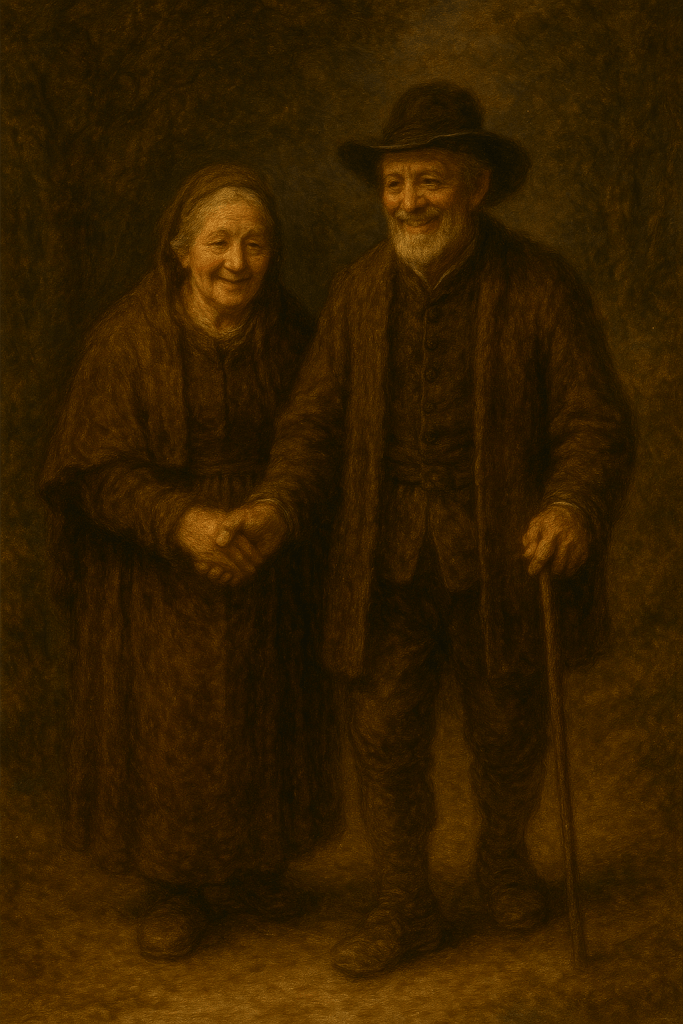
Marriage begins in radiance. Most of us can still picture that day—the nervous glances down the aisle, the joy in the faces of family and friends, the music rising as if the world itself paused to bless this covenant. The vows spoken then carry the sound of eternity: promises to love, to honor, to cherish, to remain faithful “for better or worse, for richer or poorer, in sickness and in health.” In those moments, dreams were unclouded. We imagined a life woven together in harmony, our future children, our shared home, our journey of growing old side by side.


And in 1966, The Beach Boys gave voice to that very longing with their iconic song Wouldn’t It Be Nice. It was the anthem of courtship dreams—“Wouldn’t it be nice if we were older, if tomorrow could start today?” For many couples, it became the soundtrack of first dates, long drives, and handwritten letters. The melody wasn’t just music; it was the hope of what love could become.

But dreams, no matter how sincere, eventually meet reality.

The Ups and Downs of Real Life

The truth of marriage is not just the wedding day, but every day that follows. Bills pile up, children cry in the night, careers bring stress, health falters, and personalities clash. Disappointments enter quietly: unmet expectations, miscommunications, small slights repeated until they sting more sharply. What once seemed effortless becomes labor. Disillusionments are not one-time events—they reappear, reshaping themselves with each stage of life.

In those moments, the youthful harmony can feel far away. Yet the refrain still calls: Wouldn’t it be nice if we could hold on through this storm, if we could rediscover the song that first drew us together?

The Daily Choice to “Remarry”

To stay married is not simply to refrain from leaving; it is to remake the choice of love every day. To “remarry” daily means that each morning we must decide again:

  • I will see you not as my opponent, but as my partner.
  • I will treat you not with indifference, but with honor.
  • I will choose forgiveness over resentment, conversation over silence, and patience over irritation.

This is not sentimental—this is disciplined love. To remarry each day is to awaken and recall the covenant made in youth, while layering it with the wisdom of years, the scars of hardship, and the humility that says, “I am still learning how to love you well.”

And each morning, as the alarm clock sounds, a faint echo might be heard: Wouldn’t it be nice if today we chose one another all over again?


The Skill Set of Endurance and Renewal

Love that endures is not merely a feeling; it is a skill set. Among the needed skills are:

  • Listening with depth. Hearing beneath words to the heart that speaks.
  • Conflict navigation. Arguing fairly, forgiving quickly, and refusing to keep score.
  • Resilience. Not giving up when seasons are barren, but waiting and tending until spring returns.
  • Humor. Finding laughter even when life is heavy, to remind one another that joy is still possible.
  • Faith. Believing that the story is bigger than today’s difficulty, and that grace is always available.
  • Presence and touch. Recognizing that sometimes love is best expressed without words—by simply sitting together, or by the gentle brush of a hand. Even the smallest touches—fingers brushing while passing a cup, a hand on the shoulder, the quiet weight of leaning against one another, maybe even a loving nudge with a sheepish smile—speak volumes. They are unspoken vows, reaffirmed in silence.

These are the harmonies that keep the melody alive.

More Than Vows: Returning to Courtship

But it is not only the vows we must recall. It is critical to return to the days of courtship—the beginning of the story. Do you remember the first conversation that made your heart race? The nervous excitement of a first date, the surprise of discovering how much you enjoyed being together, the eagerness to call or write, the long walks that felt too short? These are not frivolous memories; they are stored fuel.

And in those days, wasn’t there always music? Songs of longing, of wishing life could hurry up so you could finally build a life together. For some, The Beach Boys’ refrain became the anthem of that season: Wouldn’t it be nice if the world gave us permission to live out our love fully, right now?

But the heart of courtship was not only the words you spoke—it was being together. Sitting in the car long after the date ended, not needing conversation, just soaking in the nearness. The thrill of reaching for a hand and feeling it returned. These small gestures were never small; they were the first language of love. And they remain vital today. Presence itself is a gift. Touch itself is communication, no less meaningful than speech.

Rekindling the spark means asking again: What was it about you that first captured me? And then letting that answer guide new actions today—whether it is planning a small surprise, holding hands more often, or simply looking into your spouse’s eyes with the same wonder as in the beginning.

Love is not only covenant; it is also courtship renewed.

Returning to the Vows

When we “remarry” daily, we do not create new promises; we live into the ones already made. To recall the vows is to re-anchor ourselves:

  • “For better or worse” reminds us not to run when the worse comes.
  • “For richer or poorer” steadies us when financial strain presses hard.
  • “In sickness and in health” calls us to tenderness when bodies fail.

The vows are more than a contract; they are the rhythm section, steadying the music of love when the melody falters.


Practices of Daily Remarriage

  1. Leave Notes or Send Love Wishes. A small text in the middle of the workday—“Thinking of you”—or a sticky note tucked under the coffee mug can carry more weight than a grand gesture. These whispers of love remind your spouse: I see you. I choose you again today.
  2. Pray Together While Holding Hands. To clasp hands, look into each other’s eyes, and lift your marriage before God is both humbling and powerful. It says, We are not only for each other—we are with God together.
  3. Explore “For Better or Worse” Anew. Over time, the phrase deepens. What does “worse” look like in your season—financial struggle, illness, misunderstanding? Naming it together transforms the vow into shared resilience: No matter what comes, we endure side by side.
  4. Recount Your Blessings. Gratitude is glue. Sit together, list aloud the small and great gifts—your children, your laughter, your home, your faith. Counting blessings makes the heart remember that love has been carried by grace.
  5. Discuss Your Relationship with God. A marriage anchored in faith has a third strand that does not break. Speak openly about where you see God’s hand in your story, what you are praying for, and how your love can mirror His. In doing so, you are not just married to each other—you are bound within His covenant love.


Conclusion: A Lifelong Renewal

The wedding day was the first “yes.” Life after that requires thousands more. The beauty of remarriage every day is that it transforms endurance into renewal. It says that even in the weariness of years, we can rediscover the spark of the beginning. Love then becomes not only a memory of what was promised, but a living testament of what is still possible.

And so the chorus returns, softer now but deeper: Wouldn’t it be nice if today we made the same choice again, and tomorrow too, and the day after that—until one day we find that the dream we sang about in 1966 has become the life we’ve built together?

And sometimes, the most profound choice is made without a word—just in the quiet joy of being present, hand in hand, heart to heart.


A Closing Prayer

Lord, we thank You for the gift of marriage, for the joy of courtship, for the vows once spoken in trembling voices and still lived today. We ask for the courage to remarry each morning, to choose again the one You have given us.

May we be faithful for better or worse, patient for richer or poorer, tender in sickness and in health. May we learn daily to love, honor, and cherish—until death parts us, and even then, until love is made perfect in eternity.

Teach us also to treasure the quiet gift of presence—the holy silence of simply being together. May we never take for granted the power of touch, even the smallest brush of the hand, as a sacred language of love.

Bless every couple with the grace to return to their first love, to recall the courtship that began their story, to whisper love through notes and prayers, to count their blessings often, and to sing again the refrain of hope: Wouldn’t it be nice if, today, we chose each other anew?

Amen.


Wouldn’t It Be Nice – Beach Boys

Wouldn’t it be nice if we were older?
Then we wouldn’t have to wait so long
And wouldn’t it be nice to live together
In the kind of world where we belong?

You know it’s gonna make it that much better
When we can say goodnight and stay together

Wouldn’t it be nice if we could wake up
In the morning when the day is new?
And after having spent the day together
Hold each other close the whole night through

Happy times together we’ve been spending
I wish that every kiss was never ending
Oh, wouldn’t it be nice?

Maybe if we think and wish and hope and pray
It might come true (run, run, we-ooh)
Oh, baby, then there wouldn’t be a single thing we couldn’t do
We could be married (we could be married)
And then we’d be happy (and then we’d be happy)
Oh, wouldn’t it be nice?

You know it seems the more we talk about it
It only makes it worse to live without it
But let’s talk about it
But wouldn’t it be nice?

Goodnight, my baby
Sleep tight, my baby
Goodnight, my baby
Sleep tight, my baby
Goodnight, my baby
Sleep tight, my baby

Source: Musixmatch

Songwriters: Brian Douglas Wilson / Mike E. Love / Tony Asher

Wouldn’t It Be Nice lyrics © Sea Of Tunes Publishing Co., Sea Of Tunes Publishing Co Inc

Plan v Pivot: Texas Municipal Leadership in the World of “Re-”

Suggested by Dan Johnson, written mostly by AI, guided and edited by Lewis McLain

Introduction

In Texas, city and county leaders live in the tension between plans that guide and pivots that save. Long-range blueprints for infrastructure, budgets, and land use are essential. Yet when storms overwhelm, revenues collapse, or the legislature rewrites the rules, leaders must step into the re- world: redoing assumptions, rewriting priorities, reallocating resources, reassessing risks, and reestablishing trust with citizens. Leadership is not static. It is a continual act of resilience, built on both discipline and improvisation. There is a rhythm, not quite a dance, but an orchestra conductor directing an Attacca, a performance instruction that means to go straight on without pause to the next movement.


The Discipline of Planning

Texas cities exemplify disciplined planning:

  • Capital Improvement Programs (CIPs). Road expansions, water treatment plants, and fire stations are mapped years in advance.
  • Water Supply Projects. Regional providers like the North Texas Municipal Water District (NTMWD) develop 50-year strategies for reservoirs, pipelines, and treatment capacity.
  • Comprehensive Plans. Land use, housing, and growth corridors are charted to keep pace with booming populations.

Planning sets expectations, aligns departments, and reassures taxpayers. Without it, chaos replaces coordination. But even the most detailed plan must later be reassessed when conditions shift.


Planning or Pivoting?

The Guadalupe River Flood: Forced to Re-Act

On July 4, 2024, relentless rains along the Guadalupe River brought flash floods that tore through Comal and Guadalupe Counties.

  • Plans Overwhelmed. Drainage systems designed for “100-year storms” were outmatched. Evacuation maps had to be rewritten in real time.
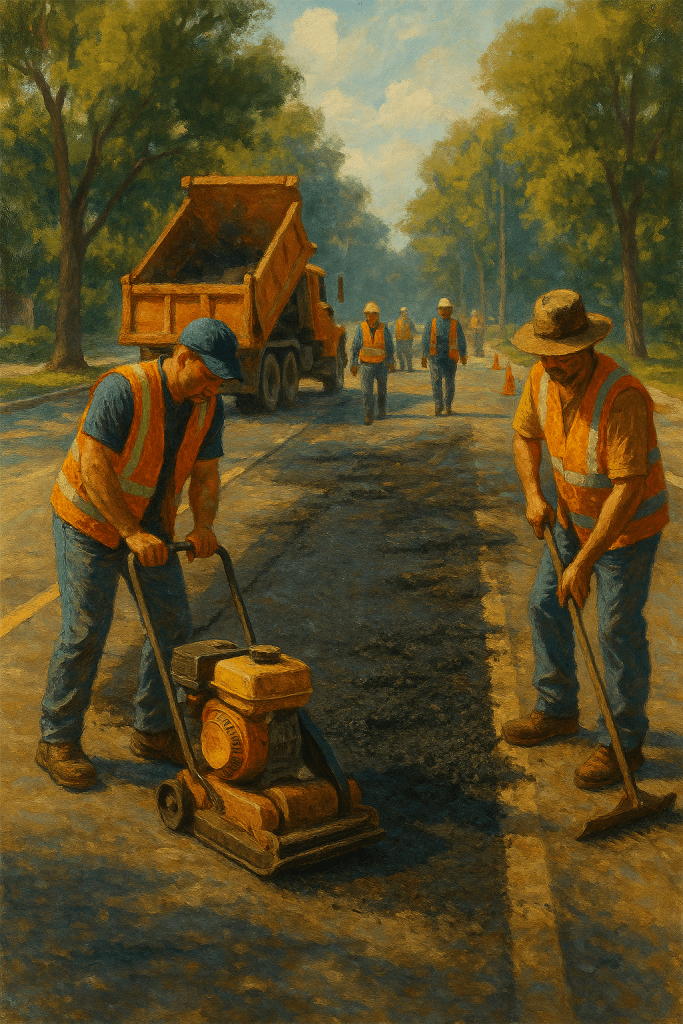
  • Immediate Pivot. Cities reallocated crews from parks to barricading roads, redirected budget reserves to emergency shelters, and reorganized communication channels for disaster alerts.
  • Aftermath. Communities began to rebuild, reestablish housing security, and rejuvenate battered neighborhoods with state and federal aid. Drainage master plans were redone with updated floodplain models, a stark reminder that plans are only drafts in the face of Texas weather.

This was not failure of planning but proof that leaders must be able to redo and rewrite without hesitation.


Normal Maintenance

Planned Programs Interrupted by Necessary Pivots

Pivoting to State Legislative Changes

Just as floods force emergency pivots, state politics forces cities into the re- cycle.

  1. Revenue Caps (2019). When Senate Bill 2 capped property tax growth at 3.5% without voter approval, cities like Austin, Plano, and may others had to recalculate their forecasts, reallocate funds from amenities to core services, and reassess debt capacity.
  2. Annexation Restrictions (2017 & 2019). Cities such as San Antonio saw decades-long growth plans undone. Annexation strategies were rewritten, and economic development priorities restructured to adapt to shrinking boundaries.
  3. Sales Tax Rebate Reforms (SB 878, 2023). Cities like Round Rock and Coppell, which had relied on rebate agreements with corporations, had to pivot to reforecast, redefine budgets, and reestablish trust with residents when revenues suddenly tightened.

In each case, local leaders could not cling to outdated forecasts. They had to redo priorities, rewrite budgets, and reframe commitments while keeping faith with their communities.


Fundamental Programs

Interrupted by Unplanned Events

The Backbone of Data Management & Operations Flow Attacked

The Total Focus for Days, Weeks, or even Months

The Source and Power of “Re-”

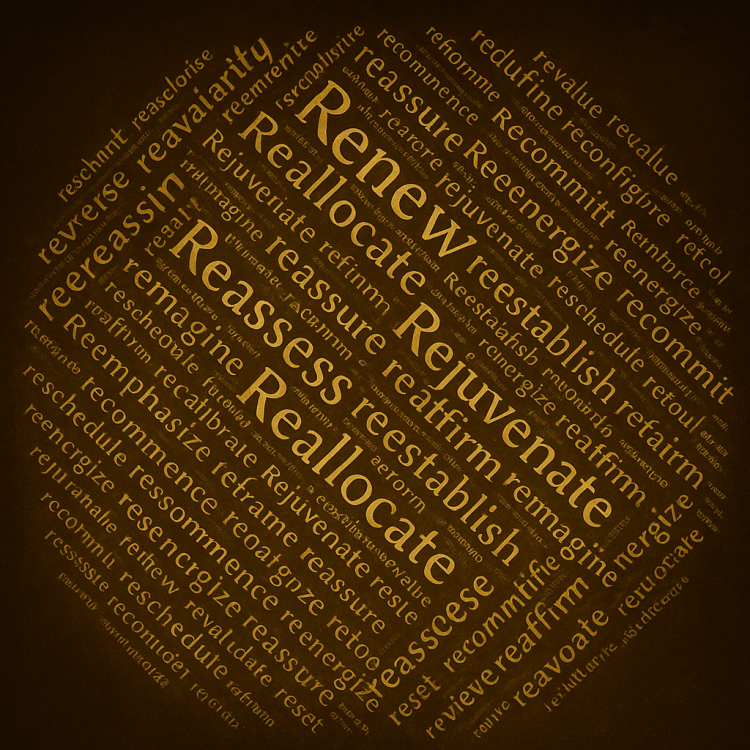
I think back to when I taught budgeting in the SMU MPA programs, my introduction to the subject included an emphasis on “The Re Words.” The prefix re- comes from Latin, where it carried the simple meaning of “back” or “again.” Over centuries, carried into English through Old French, it grew into one of the most versatile and powerful tools in our language. To add re- to a verb is rarely neutral; it signals renewal, restoration, or fresh possibility. Rebuild, reconnect, reform, restore, redeem, resurrect—each carries the weight of beginning again, of not being bound by failure or finality. Even in ordinary civic leadership, words like reassess, reallocate, reimagine, and rejuvenate offer not just management strategies but visions of resilience. The “re-” family of words tends toward the uplifting: they invite us to believe that what is broken can be mended, what is lost can be recovered, and what seems finished can yet be begun anew. In that sense, “re-” is not merely a prefix but a promise—one that leaders must embody when guiding people and communities through change.


The Language of Pivoting

The Leadership Imperative: Living in the Re- Cycle

Texas municipal leadership is now defined by agility within the re- cycle:

  • Reassess: Constantly test whether assumptions still hold.
  • Reallocate: Shift funds and staff quickly to where they are most needed.
  • Rewrite: Adjust ordinances, plans, or budgets without waiting for the next five-year update.
  • Reestablish: Rebuild legitimacy and public confidence after disruption.
  • Rejuvenate: Use moments of crisis to breathe new energy into tired systems, outdated practices, or strained organizations.

These concepts do not abandon planning. It is treating plans as living documents, always subject to revision and renewal.


Conclusion: The Art of Resilience

In Texas municipal government, planning without pivoting is arrogance, and pivoting without planning is chaos. The art lies in combining the two through a constant rhythm of re- words: to redo when plans prove wrong, rewrite when policies are outdated, reallocate when funds are strained, reassess when risks emerge, reestablish when trust falters, and rejuvenate when systems tire.

Leadership is not about choosing plan or pivot once and for all. It is about repeatedly returning—to purpose, to mission, to the people—no matter how many times circumstances force change. It requires the supreme idea of agility. Some responses can’t wait hours or days. They must be well-oiled actions as if you knew an event was coming.

The July 4 flood showed that nature will undo assumptions. The Legislature’s actions showed that politics will redraw boundaries. But resilient leaders—those willing to live in the re- cycle—ensure that their cities not only survive, but renew themselves time and again. Interestingly, and sometimes strangely, the outcome will not be just a fix but rather an improvement.


The Re-Creed of Leadership

We plan with care,
yet we are ready to redo, knowing even the best blueprints must yield to reality.

We decide with courage,
yet we humbly reassess, for wisdom is found not in stubbornness but in learning anew.

We allocate with prudence,
yet we swiftly reallocate, remembering that resources serve people, not plans alone.

We write for the future,
yet we are willing to rewrite, because vision is alive and must grow with the times.

We stand for stability,
yet we daily reestablish trust, for legitimacy is not won once, but earned again and again.

We serve in the present,
yet we strive to rejuvenate tomorrow, so that what we build outlasts us and lifts generations to come.

For true leadership is not one act,
but the continual rhythm of resilience, renewal, and return.

The Quiet Romance of Park Benches

A collaboration between Lewis McLain and AI

A park bench is never only wood and iron. It is a place where time itself seems to pause, a still point in the turning world. Simple, unadorned, and often overlooked, the bench waits with a patience that borders on eternity. Where lighthouses rise bold against the storm, park benches rest unnoticed in the shelter of trees and along meandering paths, offering not guidance to ships at sea but solace to souls at rest.

They are thrones without ceremony, open to all who approach. The hurried commuter catching a breath, the young lovers carving initials into its grain, the old man feeding sparrows, the child swinging feet too short to reach the ground—all sit with equal claim. In these ordinary moments, the bench becomes extraordinary, for it gathers the fragments of many lives and quietly binds them into a shared story.


At dawn, when the mist lingers low and dew glistens on the grass, benches hold the world in soft silence. They cradle the solitude of readers with coffee cups in hand, or the jogger pausing to stretch as the day stirs awake. By noon, benches come alive with voices—laughter, arguments, whispered secrets, and the chatter of children in play. At dusk, they return to meditation, their weathered slats bearing the weight of reflections too heavy to speak aloud.

But beyond the hours, beyond the seasons, there is something inherently romantic about a bench. It is a place where one may sit not only to rest but to wait. Lovers wait for each other on benches. Friends meet after years apart. A traveler, alone in a foreign city, may find on a bench both loneliness and comfort, the ache of absence and the hope of presence. A park bench is always waiting for someone—and in that waiting lies its poetry.


Benches, too, are shrines of memory. Some carry plaques with names: “In loving memory of…,” reminding us that a particular spot once belonged to someone’s favorite view, someone’s cherished hour. Even without engraving, the wood itself remembers. It remembers the kiss stolen under lamplight, the quarrel that ended in silence, the notebook filled with sketches, the tears that fell unnoticed while the world hurried past. A bench, in its stillness, absorbs more of human life than we imagine.

And yet, there is no pretense to its service. A bench does not ask to be admired. It does not strive to inspire awe. Its beauty is in its humility—steadfast, available, enduring. It offers nothing more than rest, and in that offering it becomes everything: a sanctuary, a stage, a confessional, a throne, a pew.

If lighthouses are monuments to survival, benches are monuments to presence. They remind us not how to endure storms, but how to pause in calm weather, how to savor the fleeting moments between motion. They are the poetry of ordinary time, the architecture of waiting, the geometry of intimacy.

So the next time you walk past a park bench, let it invite you. Sit. Rest. Allow the world to slow down. You may discover that the quietest structures—the ones we pass without notice—are the ones that most tenderly hold our lives.

Let the bench bear life’s storms so you can find peace.


A Turning Point in Heaven’s Light

A collaboration between Lewis McLain and AI
(Please distribute widely if you believe this writing is worthy)


Canto I – The Rise

In northern towns where prairies sprawl,
A boy first heard conviction’s call.
Not bred of wealth, nor crowned by birth,
Yet stirred by fire of higher worth.

With restless zeal, he seized his chance,
Where most saw chaos, he saw stance.
He stood on stages, sharp and plain,
A mind inflamed, a heart unchained.

No parchment crown, no ivy’s grace,
Yet destiny had marked his place.
And in the halls where doubters throng,
He forged his faith, he found his song.

From early days, the watchers knew,
This voice could shake, this word was true.
And those who heard, both young and old,
Would tell in time the tale retold.


Canto II – The Mission

He raised a banner, bold, untorn,
And Turning Point that cause was born.
Not ink alone, but flesh and flame,
The title spoke, became his name.

Through campuses where youth reside,
He lit conviction far and wide.
The student found a voice to speak,
The timid heart grew strong, not meek.

He carried faith from hall to hall,
And many bowed beneath its call.
For when he spoke, the air grew still,
He moved the mind, he bent the will.

And praise arose, like thunder’s roll,
From college steps to nation’s soul.
The farmer, teacher, preacher too,
Admired the fire his spirit drew.

And at his side, in kinship near,
The President lent voice sincere.
For Trump himself would often say:
“This Kirk inspires, he lights the way.”


Canto III – The Trial

But every prophet, every seer,
Must taste the weight of scorn and sneer.
His foes were many, fierce, and loud,
Yet still he stood before the crowd.

They mocked his youth, they scorned his creed,
Yet millions felt their spirits freed.
For each sharp jeer, a cheer was raised,
And countless souls their voices praised.

The college freshman, shy, unknown,
Would write, “He helped me find my own.”
The seasoned statesman, gray with years,
Would nod and say, “His strength appears.”

And when the storm grew dark with hate,
Admiring voices held the gate.
From kitchen table to marble dome,
They claimed his words, they called him home.

Like Daniel firm amidst the roar,
Like David standing once before
A giant’s sneer, a sharpened blade,
So Kirk in courage never swayed.

And praise, once whispered, now was sung,
From every heart, from every tongue.
And now, forever, shall it be—
His name remembered, praised, set free.


Canto IV – The Martyrdom

The hall grew hushed, the night grew cold,
As Charley spoke with courage bold.
He answered questions, sharp and grave,
And called the fearful hearts to brave.

But shadows stirred, a shot rang clear,
The silence broke with sudden fear.
From rooftop’s height the bullet came,
And darkness sought to quench his flame.

The students wept, the faithful cried,
The nation’s pulse was torn inside.
And yet, in Heaven’s courts above,
The gates flung wide with holy love.

For Christ, who bore the cross alone,
Received dear Charley to His throne.
No longer mocked, no longer tried,
The martyr lives, the saint has died.

And voices rose, both near and far,
“His life was bright, a guiding star.”
From college dorms to Washington,
The praise poured out: “Well done, well done.”


Canto V – The Legacy

Now history bends at this sharp turn,
A Turning Point where all must learn.
Not only name of cause he led,
But symbol where his blood was shed.

For Charley’s fight shall not be stilled,
His words endure, his hope fulfilled.
The youth he moved will yet arise,
And carry fire that never dies.

The farmer, worker, preacher, friend,
Will guard his mission to the end.
And even presidents will claim
The echo of proud Charley’s name.

For though the man lies still in rest,
His spirit marches, strong, confessed.
And now and evermore shall ring
The heaps of praise that people sing.


Epilogue: A Prayer

O Lord of mercy, Lord of light,
Embrace Your servant in Your sight.
Bless Charley’s kin, console their pain,
Let hope and comfort still remain.

Guard his dear wife, his circle near,
Dry every anguished, falling tear.
And for our land, so bruised, so torn,
Let healing in Your grace be born.

Turn wrath to peace, turn hate to love,
Rain down Your mercy from above.
Unite this nation, fractured, sore,
In faith and freedom evermore.

Through Jesus Christ, whose cross we raise,
Receive our thanks, our prayer, our praise.
Amen.

Servant Leadership: From Hermann Hesse to Robert Greenleaf and Beyond

Inspired by Dan Johnson, Written by AI, Guided and Edited by Lewis McLain

I. Hermann Hesse: Life and Vision

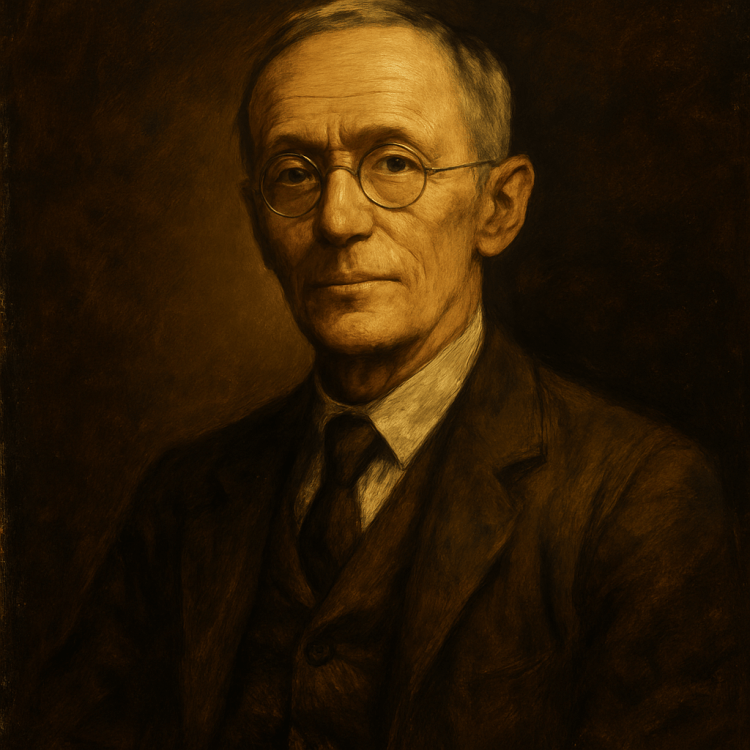
Hermann Hesse (1877–1962) was one of the twentieth century’s most influential literary figures, a seeker whose novels became guideposts for millions navigating the crises of modernity. Born in Calw, in the Black Forest of Germany, Hesse was the son of Christian missionaries. His childhood was steeped in pietism and biblical devotion, but also in conflict—he struggled against the rigidity of his family’s expectations and endured mental health crises that shaped his outlook. When I read many of his books, there were two recurring personal notes in his diaries: he had bad eyesight and complained about how much his eyes hurt. He also traded letters with friends that include small water paintings sent and received. Those pictures seemed to be pleasing to Hesse. If you start seeing pictures (with the help of AI), my motivation comes from Mr. Hesse. LFM


Herman Hesse

For Hesse, writing was both therapy and spiritual exploration. His early novels reflected the tensions of his life: the desire for freedom against the weight of tradition, the search for authenticity in a rapidly industrializing world.

  • In Demian (1919), Hesse explored inner duality, freedom, and the necessity of self-discovery beyond societal norms.
  • In Siddhartha (1922), he imagined a man’s journey to enlightenment in ancient India, fusing Western existential doubt with Eastern philosophy.
  • In Steppenwolf (1927), he dramatized the loneliness of the modern intellectual and the quest for transcendence amid despair.
  • In The Glass Bead Game (1943), his Nobel Prize–winning masterpiece, he conjured a future order devoted to the synthesis of knowledge, beauty, and spirituality.

Amid these great novels stands a shorter but profoundly symbolic tale: The Journey to the East (1932). Though brief, it contains one of Hesse’s most enduring insights—leadership is not power, but service.


II. The Journey to the East: The Servant and the Master

The novella tells the story of a secret brotherhood called the League, a timeless spiritual fellowship that undertakes a pilgrimage “to the East.” The East is never fully defined—it is both place and symbol, representing wisdom, transcendence, and the fulfillment of human longing.

The narrator, H.H., joins the League’s pilgrimage. Along the way he describes a mysterious assortment of travelers: historical figures, literary characters, and seekers from all walks of life. The journey unites them in pursuit of a higher goal.


Leo

Yet the true heart of the story is a man named Leo. Leo appears to be nothing more than a cheerful servant. He tends to the pilgrims, carries their bags, prepares their meals, and sings songs that lift their spirits. He is ordinary, unnoticed—yet indispensable.

Then one day Leo disappears. Without him, the pilgrims falter. Discord and division creep in, and the League dissolves. H.H. falls into despair, convinced the journey has failed.

Years later, in a twist of revelation, H.H. learns the truth: Leo was not simply a servant. He was in fact a leader of the League, the embodiment of the very wisdom the pilgrims were seeking. The pilgrimage fell apart because the group failed to recognize that true leadership had been in their midst all along.

Hesse’s parable is at once mystical and practical: it insists that authentic leadership flows not from domination but from humble service. In the inversion of roles—servant as master, master as servant—Hesse revealed a paradox at the heart of human community.


Greenleaf

III. Robert Greenleaf and the Birth of Servant Leadership

Decades later, in the United States, Robert K. Greenleaf (1904–1990), an executive at AT&T, was searching for a new way to understand leadership. He had witnessed firsthand how corporate hierarchies often crushed initiative, fostered fear, and alienated workers. After 40 years in management, he turned to teaching and writing, determined to challenge the prevailing model of top-down authority.

In the 1950s, Greenleaf read The Journey to the East, and Leo’s example struck him like lightning. Here was the vision he had been seeking: the leader is great not because of command but because of service. Out of this insight, he developed the philosophy he called servant leadership.

In his seminal 1970 essay, The Servant as Leader, Greenleaf wrote:

“The servant-leader is servant first… It begins with the natural feeling that one wants to serve, to serve first. Then conscious choice brings one to aspire to lead. The difference manifests itself in the care taken to make sure that other people’s highest priority needs are being served.”

Greenleaf’s framework reshaped modern leadership thinking. He identified qualities that distinguish servant leaders:

  • Listening and Empathy – Understanding others deeply before acting.
  • Awareness and Foresight – Seeing beyond immediate demands to future consequences.
  • Healing and Stewardship – Caring for individuals and institutions as trust, not possessions.
  • Commitment to Growth – Helping others become wiser, healthier, and freer.
  • Building Community – Nurturing belonging, not simply extracting productivity.

Unlike traditional leadership, which seeks power to direct, servant leadership seeks responsibility to care. Greenleaf insisted that the true test of leadership was not organizational success but human flourishing: “Do those served grow as persons?”


IV. Servant Leadership in Today’s World

Although Greenleaf’s vision emerged from corporate disillusionment, servant leadership has spread far beyond the boardroom. Its influence can be traced across diverse spheres today:

1. Faith-Based Institutions

  • Many Christian organizations and seminaries explicitly teach servant leadership, grounding it in the life of Jesus.
  • Pope Francis has often invoked its spirit, urging leaders to be “shepherds who smell of the sheep.”
  • Evangelical colleges and Catholic universities alike offer leadership courses built around Greenleaf’s principles.

2. Education

  • Universities such as Gonzaga, Indiana Wesleyan, and Regent have made servant leadership central to their leadership programs.
  • In secular contexts, “inclusive leadership” and “transformational leadership” often echo servant leadership’s core values of empathy and empowerment.

3. Healthcare and Caring Professions

  • Hospitals and nursing schools apply servant leadership to patient-centered care.
  • Nursing theory highlights Greenleaf’s ideas of empathy and stewardship as essential to healing.
  • Systems like Cleveland Clinic and Mayo Clinic promote leadership cultures rooted in service.

4. Nonprofits and Social Enterprises

  • Global NGOs like Habitat for Humanity and World Vision emphasize leadership through service to the vulnerable.
  • Social entrepreneurs adopt servant leadership as a model for organizations aimed at social good.

5. Business

  • Southwest Airlines and TDIndustries are classic case studies of servant leadership cultures in practice.
  • The rise of “conscious capitalism” and stakeholder-driven business models reflects a growing embrace of servant-leadership values.

6. Military and Public Service

  • Though hierarchical, parts of the U.S. military stress servant leadership: officers as stewards of their soldiers’ welfare.
  • Police and fire departments in some communities incorporate the philosophy for community trust.

7. Global Reach

  • In Africa, servant leadership resonates with Ubuntu (“I am because we are”), highlighting shared humanity.
  • In Asia, it has influenced leadership practices in Singapore and the Philippines, where communal values are strong.
  • In Scandinavia, egalitarian management structures mirror Greenleaf’s call for humility and shared responsibility.

In today’s world of political polarization, corporate scandals, and institutional mistrust, servant leadership remains both countercultural and urgently relevant. Where command-and-control leadership often falters, servant leadership builds trust, resilience, and long-term sustainability.


V. Conclusion: The Servant as the True Leader

Hermann Hesse, writing in a fractured Europe, offered a parable of a servant who was secretly a master. Robert Greenleaf, confronting the failures of mid-century corporate America, found in that story the spark for a radical rethinking of leadership.

Together, they remind us that the deepest authority is not rooted in command but in service. Leadership is not the pursuit of followers but the care of souls. Institutions endure not because of power structures but because of communities sustained by humility, empathy, and stewardship.

In an age that often celebrates strength as dominance, Hesse and Greenleaf point to another way: that the one who carries the bags may in fact be the one who carries the truth.

Acts 21 – Expository Study (NIV)


🔹 Section 1: Paul Travels Toward Jerusalem (Verses 1–16)

Summary
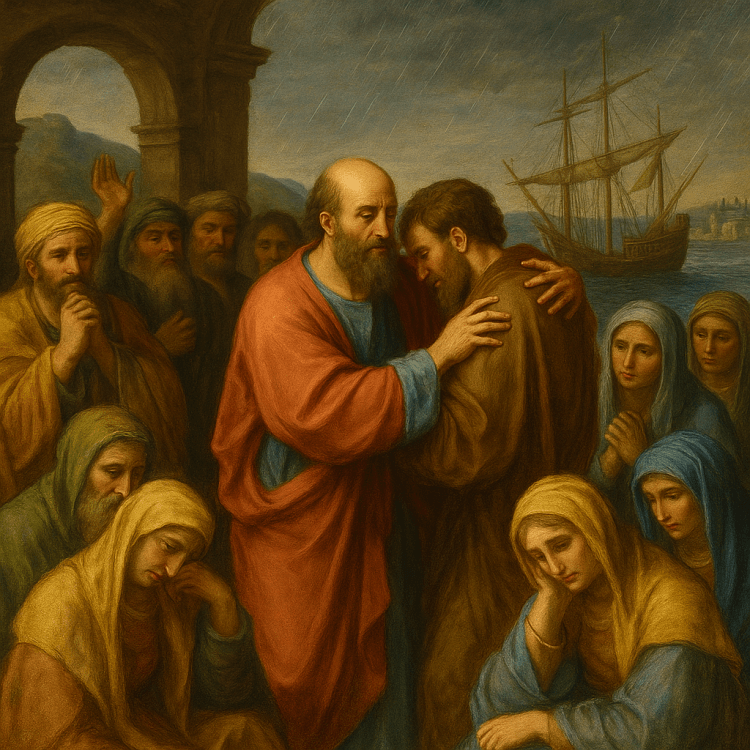
Paul continues his journey from Miletus toward Jerusalem, stopping in several cities where believers urge him not to go due to prophetic warnings of suffering. Despite this, Paul remains determined. At Caesarea, the prophet Agabus vividly predicts Paul’s arrest by binding himself with Paul’s belt. The local disciples and Paul’s companions plead with him to reconsider, but Paul insists he is ready not only to be bound, but even to die for the name of the Lord Jesus. The group ultimately surrenders to the will of the Lord.


📜 NIV Text – Acts 21:1–16

1 After we had torn ourselves away from them, we put out to sea and sailed straight to Cos. The next day we went to Rhodes and from there to Patara.
2 We found a ship crossing over to Phoenicia, went on board and set sail.
3 After sighting Cyprus and passing to the south of it, we sailed on to Syria. We landed at Tyre, where our ship was to unload its cargo.
4 We sought out the disciples there and stayed with them seven days. Through the Spirit they urged Paul not to go on to Jerusalem.
5 When it was time to leave, we left and continued on our way. All of them, including wives and children, accompanied us out of the city, and there on the beach we knelt to pray.
6 After saying goodbye to each other, we went aboard the ship, and they returned home.
7 We continued our voyage from Tyre and landed at Ptolemais, where we greeted the brothers and sisters and stayed with them for a day.
8 Leaving the next day, we reached Caesarea and stayed at the house of Philip the evangelist, one of the Seven.
9 He had four unmarried daughters who prophesied.
10 After we had been there a number of days, a prophet named Agabus came down from Judea.
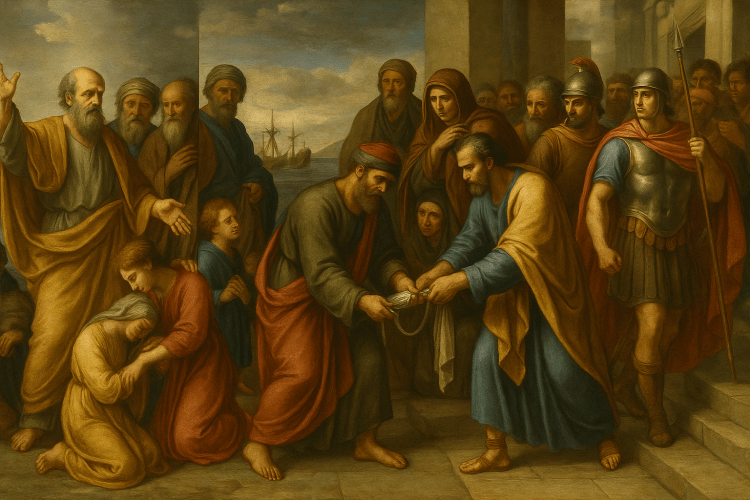
11 Coming over to us, he took Paul’s belt, tied his own hands and feet with it and said, “The Holy Spirit says, ‘In this way the Jewish leaders in Jerusalem will bind the owner of this belt and will hand him over to the Gentiles.’”
12 When we heard this, we and the people there pleaded with Paul not to go up to Jerusalem.
13 Then Paul answered, “Why are you weeping and breaking my heart? I am ready not only to be bound, but also to die in Jerusalem for the name of the Lord Jesus.”
14 When he would not be dissuaded, we gave up and said, “The Lord’s will be done.”
15 After this, we started on our way up to Jerusalem.
16 Some of the disciples from Caesarea accompanied us and brought us to the home of Mnason, where we were to stay. He was a man from Cyprus and one of the early disciples.

Questions & Answers

  1. Why did believers along the way urge Paul not to go to Jerusalem?
    ➤ Through the Spirit, they sensed danger awaited Paul and expressed human concern. Their plea wasn’t disobedient but protective.
  2. How does Paul respond to these warnings?
    ➤ Paul remains resolute. He interprets the warnings not as detours, but as confirmations of what God had already told him.
  3. What does this teach about discernment and obedience?
    ➤ The Spirit may reveal future suffering, but courage and calling often require enduring it. True obedience surrenders to God’s will, even when it’s costly.

🔹 Section 2: Paul Arrested in the Temple (Verses 17–36)

Summary
Upon arriving in Jerusalem, Paul meets with James and the elders. They rejoice in Paul’s missionary work but express concern about rumors that Paul teaches Jews to abandon the Law. To counter this, they advise Paul to participate in a purification rite with four men. Paul complies, but while in the temple, some Jews from Asia stir up a crowd by falsely accusing him of defiling the temple. The city erupts in chaos. Paul is seized, beaten, and nearly killed before Roman soldiers intervene. The commander arrests Paul and tries to determine what he has done.

📜 NIV Text – Acts 21:17–36

17 When we arrived at Jerusalem, the brothers and sisters received us warmly.
18 The next day Paul and the rest of us went to see James, and all the elders were present.
19 Paul greeted them and reported in detail what God had done among the Gentiles through his ministry.
20 When they heard this, they praised God. Then they said to Paul: “You see, brother, how many thousands of Jews have believed, and all of them are zealous for the law.
21 They have been informed that you teach all the Jews who live among the Gentiles to turn away from Moses, telling them not to circumcise their children or live according to our customs.
22 What shall we do? They will certainly hear that you have come,
23 so do what we tell you. There are four men with us who have made a vow.
24 Take these men, join in their purification rites and pay their expenses, so that they can have their heads shaved. Then everyone will know there is no truth in these reports about you, but that you yourself are living in obedience to the law.
25 As for the Gentile believers, we have written to them our decision that they should abstain from food sacrificed to idols, from blood, from the meat of strangled animals and from sexual immorality.”
26 The next day Paul took the men and purified himself along with them. Then he went to the temple to give notice of the date when the days of purification would end and the offering would be made for each of them.
27 When the seven days were nearly over, some Jews from the province of Asia saw Paul at the temple. They stirred up the whole crowd and seized him,
28 shouting, “Fellow Israelites, help us! This is the man who teaches everyone everywhere against our people and our law and this place. And besides, he has brought Greeks into the temple and defiled this holy place.”
29 (They had previously seen Trophimus the Ephesian in the city with Paul and assumed that Paul had brought him into the temple.)
30 The whole city was aroused, and the people came running from all directions. Seizing Paul, they dragged him from the temple, and immediately the gates were shut.
31 While they were trying to kill him, news reached the commander of the Roman troops that the whole city of Jerusalem was in an uproar.
32 He at once took some officers and soldiers and ran down to the crowd. When the rioters saw the commander and his soldiers, they stopped beating Paul.
33 The commander came up and arrested him and ordered him to be bound with two chains. Then he asked who he was and what he had done.
34 Some in the crowd shouted one thing and some another, and since the commander could not get at the truth because of the uproar, he ordered that Paul be taken into the barracks.
35 When Paul reached the steps, the violence of the mob was so great he had to be carried by the soldiers.
36 The crowd that followed kept shouting, “Get rid of him!”

Questions & Answers

  1. Why does Paul agree to participate in a purification ritual?
    ➤ To demonstrate goodwill and to dispel false rumors about his disregard for the Law, showing he respects Jewish customs for the sake of unity.
  2. What does the crowd falsely accuse Paul of?
    ➤ They claim he brought Gentiles into the temple and teaches against the Jewish people and Law, none of which is true.
  3. How is Paul rescued from death?
    ➤ Roman soldiers intervene just in time, showing how God uses even secular powers to protect His servants.


🔹 Section 3: Paul Speaks to the Commander and the Crowd (Verses 37–40)

Summary
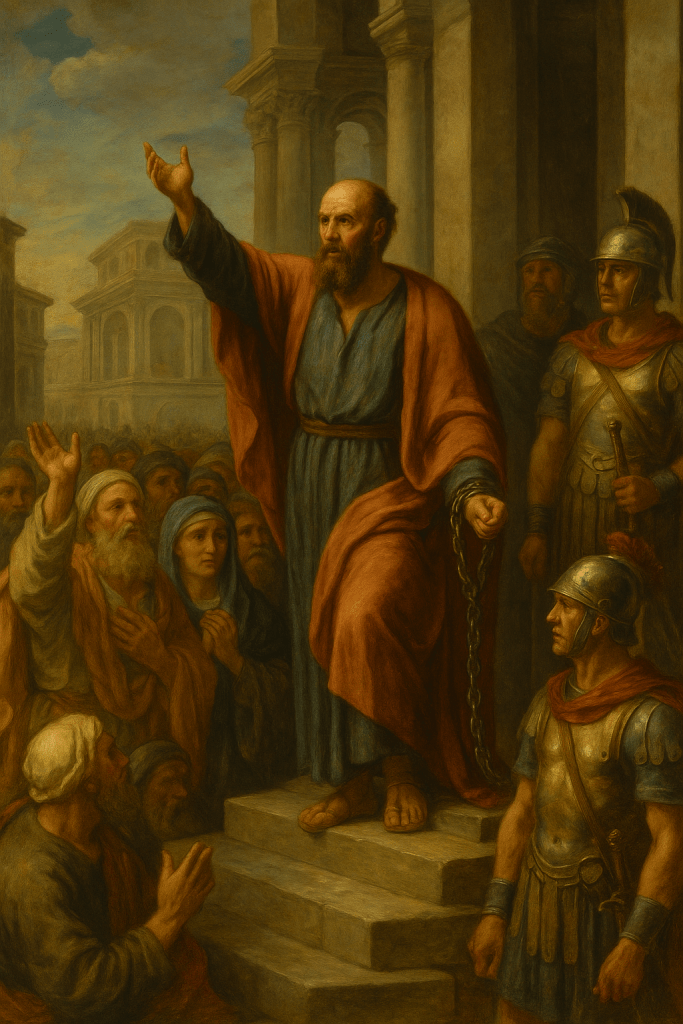
As Paul is about to be taken into the barracks, he asks the Roman commander for permission to speak. The commander is surprised Paul speaks Greek and initially thinks Paul is the Egyptian rebel who led a revolt. Paul identifies himself as a Jew from Tarsus and requests to address the crowd. Standing on the steps, Paul motions for silence and prepares to speak to the hostile crowd in their own language.

📜 NIV Text – Acts 21:37–40

37 As the soldiers were about to take Paul into the barracks, he asked the commander, “May I say something to you?”
“Do you speak Greek?” he replied.
38 “Aren’t you the Egyptian who started a revolt and led four thousand terrorists out into the wilderness some time ago?”
39 Paul answered, “I am a Jew, from Tarsus in Cilicia, a citizen of no ordinary city. Please let me speak to the people.”
40 After receiving the commander’s permission, Paul stood on the steps and motioned to the crowd. When they were all silent, he said to them in Aramaic:

Questions & Answers

  1. Why does the commander mistake Paul for an Egyptian rebel?
    ➤ The city was in chaos, and Paul had been seized by a mob. The commander assumes he is a dangerous agitator without verifying facts.
  2. Why does Paul emphasize his identity and citizenship?
    ➤ Paul uses wisdom. His background (Tarsus, a major Roman city) grants him legal and rhetorical credibility.
  3. Why is it significant that Paul speaks in Aramaic?
    ➤ He speaks the crowd’s native tongue to connect with them culturally and spiritually. It’s a strategic act of empathy and persuasion.

🎭 Poetic Dialogue: Winds Before the Chains

Agabus (the prophet):
The belt you wear will bind your hands—
The Spirit spoke; the crowd commands.
Yet still you walk into the flame,
To suffer loss for Jesus’ name.

Paul:
You break my heart with honest tears,
But greater still is love than fear.
I go not blind, but bold and free—
To preach the Christ who died for me.

Disciples (in sorrow):
We tried to shield you from the blow,
But now we bow and let you go.
Let God decide what must be done,
And bring you home when race is run.

The Commander (confused):
I thought you stirred the rebel flame,
But now you plead in wisdom’s name.
Who are you, man of grief and grace?
Why do they strike you in this place?

The Lord (above all):
My servant speaks before the throne,
He stands though bruised, yet not alone.
This path will pass through chains and rod—
But ends with joy and rest in God.

History vs. Heritage Are Two Different Things

This essay did not begin in isolation. It is the product of a long friendship and professional journey with my colleague and friend of 45 years, Dan Johnson. Dan is a retired city manager whose career I followed closely from start to finish. Though he often insists that I have been something of a mentor to him, being nearly eight years his senior, I have long considered him one of my most outstanding mentors.

Dan is unusually gifted: bright, articulate, persuasive, and approachable. He earned his undergraduate degree at a liberal arts school (Austin College) before completing a Master of Public Administration (UNT). Those experiences shaped his mind into a rare blend of philosophy and pragmatism. He thinks differently than most—able to reflect deeply on ideas while also commanding numbers, budgets, and analytics with clarity.


Dan & Lewis

This essay reflects the influence of his way of thinking. It was born from our conversations, his insights, and the questions he raises about how we remember the past. While I take responsibility for shaping and editing the writing, the heart of this piece owes so much to him. Dan is more than a co-writer in spirit—he is the spark that brought these ideas to life.

What follows, then, is not just an intellectual exploration. It is also a tribute to the kind of mentoring friendship that spans decades. Together we wrestled with how societies record events (history) and how they preserve meaning (heritage). Out of that dialogue came this essay, which I now offer with both gratitude and humility.


History: Chronos and the Record of Events

History lives in chronos, the measured unfolding of time. It examines cause and effect, documents and data, victories and failures. This approach often feels detached or clinical. A history textbook might describe the Great Depression in terms of unemployment rates and legislative acts, but not the emotions of the families who lived through it.

Yet this precision is valuable. By stripping away bias, history protects against myth and distortion. In the secular world, this means confronting injustices such as slavery, colonial exploitation, or political corruption. In the biblical world, this meant preserving accurate accounts of Israel’s rebellion as well as its faithfulness. As Ecclesiastes reminds us, “For everything there is a season, and a time for every matter under heaven” (Ecclesiastes 3:1). History shows us those seasons with clarity.


Heritage: Kairos and the Power of Memory

Heritage lives in kairos—the meaningful, sacred moments (the aha moment of the prodigal son) that transcend mere sequence. It is less about what happened and more about what still matters. Heritage is the story told at a family table, the song sung on a national holiday, the heirloom preserved with reverence.

For secular society, heritage might mean fireworks on Independence Day, memorial ceremonies at Ground Zero, or festivals that preserve immigrant traditions. These moments are powerful because they stir emotion—pride, grief, gratitude, belonging.

Scripture also emphasizes heritage. God commanded Israel to remember His works not only with words but with rituals and symbols. Joshua set up twelve stones by the Jordan so that when future generations asked, “What do those stones mean to you?” the story of God’s deliverance would be told (Joshua 4:6–7). In the church, Communion is heritage as well as history—“Do this in remembrance of me” (1 Corinthians 11:24).


Individual and Collective Memory

History often surveys nations and systems; heritage lives closer to home. For a historian, immigration may be a set of numbers. For a family, it is a recipe, a language, a story of survival. Both are true, but they speak differently.

Psalm 78 reminds us, “We will tell the next generation the praiseworthy deeds of the Lord.” Secular society echoes this impulse when it says, “Never forget” after national tragedy. Whether sacred or secular, heritage moves us beyond knowledge to identity.


Risks on Both Sides

Neither history nor heritage is sufficient on its own.

  • History without heritage risks being lifeless. Facts alone rarely inspire sacrifice or unity. A society that only analyzes but never remembers can grow cynical or rootless.
  • Heritage without history risks distortion. Pride and nostalgia can drift into myth, or worse, propaganda. Jesus warned against traditions that obscure truth (Matthew 15:6). In secular life, we see this when heritage clings to symbols without acknowledging the injustices tied to them.

Both truth and meaning are needed.


Chronos and Kairos Together

The ancient categories of time help explain this balance. Chronos is measured, sequential time—where history operates. Kairos is meaningful, appointed time—where heritage thrives. Secular societies and faith communities alike need both.

  • Chronos ensures we know what happened.
  • Kairos ensures we feel why it matters.

Germany’s reckoning with the Holocaust illustrates this balance. History preserved the sterile record—dates, numbers, documents. Heritage shaped memorials, ceremonies, and vows of “Never Again.” Without one, memory would be incomplete.


Bridging for Today

The healthiest societies, whether secular or religious, integrate both.

  • Education should combine historical facts with heritage storytelling, so students not only learn but also connect.
  • Memorials should preserve accurate history while also stirring reverence. A wall engraved with names is history; the silence of those who stand before it is heritage.
  • Families and churches should preserve both genealogies (history) and testimonies (heritage), ensuring truth and meaning pass together from generation to generation.

Reverence as the Key to Balance

Reverence is the posture that unites history and heritage. It is more than respect; it is a deep humility before the weight of memory. Reverence does not strip away facts, but it refuses to treat them as dry data. It does not idolize tradition, but it cherishes it with gratitude.

Reverence is what makes a classroom moment of silence powerful. It is what causes a museum visitor to lower their voice instinctively. It is what compels families to handle an heirloom carefully or churches to guard their sacraments with solemnity. Reverence bridges the gap between head and heart.

Without reverence, history becomes cold, reduced to statistics on a page. Without reverence, heritage becomes sentimentality or even manipulation. But when reverence surrounds both, truth gains depth, and memory gains integrity. Reverence allows us to honor both the accuracy of history and the meaning of heritage without confusing the two.


Case Study: Jericho as History and Heritage

Few places capture the interplay of history and heritage as vividly as Jericho.

History (Chronos)
Archaeologically, Jericho is one of the oldest inhabited cities in the world. Excavations at Tell es-Sultan reveal settlement layers stretching back 10,000 years, including stone fortifications and one of the earliest known towers. Modern historians can date, map, and measure its ancient walls and subsequent occupations by empires ranging from Canaanite to Roman to Islamic. This is history in its most ordered form—facts, chronology, and evidence preserved across millennia.

Heritage (Kairos)
For Jews and Christians, however, Jericho is more than stratigraphy. It is the city where God gave Israel victory, where walls fell not by human strength but by obedience and faith. That story is heritage—retold in sermons, children’s lessons, pilgrimages, and songs. In the New Testament, Jericho also becomes the setting where Zacchaeus climbed the sycamore tree to see Jesus, a moment that has been remembered not just as fact but as a symbol of personal transformation. Heritage makes Jericho alive with meaning long after the stones themselves have crumbled.

Reverence
Reverence ties these together. Visitors lower their voices at Tell es-Sultan, not just because of history, but because of what the site represents. Pilgrims stand in awe before the sycamore tree or ride the cable car up to the Mount of Temptation. Reverence prevents history from being reduced to ruins, and it prevents heritage from slipping into sentimentality. It anchors both truth and memory in humility before something greater.

Governance and Culture Over Time
Jericho also illustrates how governance and culture can change while heritage persists. Over its long history, Jericho has been ruled by Canaanite kings, Israelite tribes, Persians, Greeks, Romans, Byzantines, Muslim caliphates, Crusaders, Ottomans, the British, Jordanians, and now the Palestinian Authority. Its culture shifted accordingly—from Canaanite religion to Israelite worship, Byzantine Christianity, Islamic traditions, and today’s Palestinian Arab identity. Yet through all these changes, Jericho remained a living settlement, famed for its oasis agriculture and symbolic meaning. Its continuity as one of the world’s oldest inhabited cities shows how history records change while heritage preserves significance.

Jericho Today
Modern Jericho is a Palestinian city of about 20,000 people in the West Bank. It is both an archaeological site of global importance—now UNESCO-listed—and a living community with markets, schools, and festivals. It stands as a meeting point of history’s chronos and heritage’s kairos, where the past is carefully studied and yet continually re-experienced.


Conclusion

“History vs. Heritage are two different things.” History is truth-seeking, analytical, rooted in chronos. Heritage is meaning-making, emotional, rooted in kairos. History without heritage becomes detached; heritage without history becomes distorted. Together, they give us memory that is accurate and alive.

For the Christian, this balance echoes God’s call to remember His mighty acts with both truth and love. For the secular world, it reflects the need to learn from facts while also cherishing identity. In both, the lesson is the same: we must carry forward the past with clarity of mind and depth of heart.

Justice at the City Gate: The Bible’s Model for Civic Leadership

Introduction: The City Gate as Civic Heart

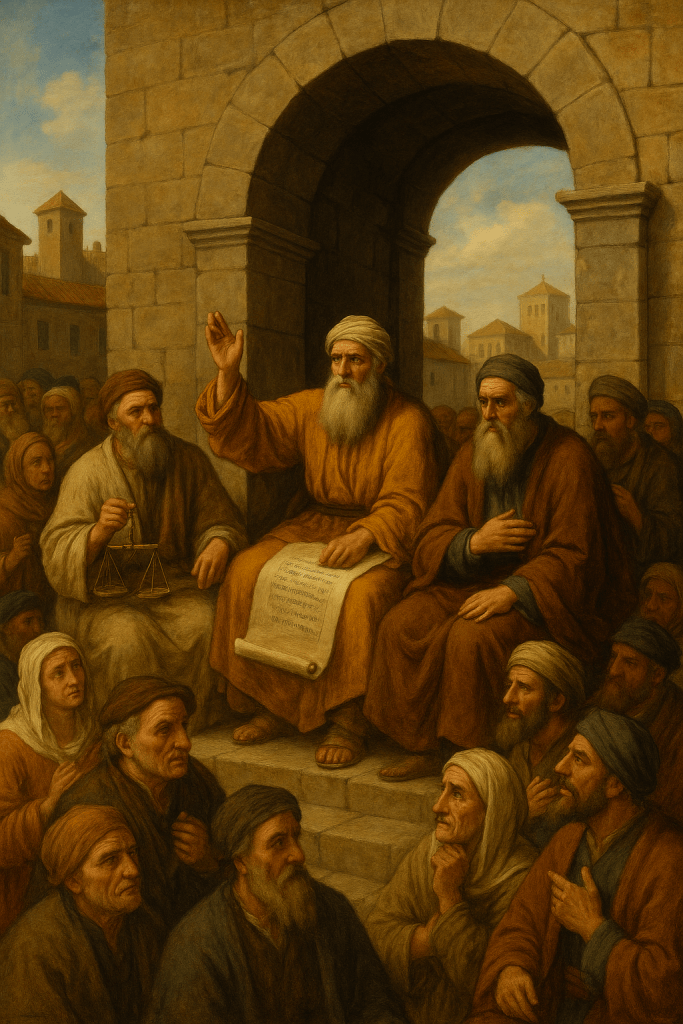
In the ancient world, the city gate was more than a stone arch or wooden doors. It was the civic, social, and spiritual heart of the community. Here trade was conducted, disputes were resolved, leaders rendered decisions, and prophets raised their voices. In Ruth 4:1–2, Boaz sealed his redemption of Ruth at the city gate before witnesses. In Jeremiah 17:19–20, the prophet was commanded to proclaim God’s word at the gates of Jerusalem. Kings themselves often received news and judged cases at the gate (2 Samuel 18:24).


The gate symbolized more than access—it symbolized justice, accountability, and leadership. It was the visible intersection of daily life and divine law. To uphold justice at the gate was to keep a city strong; to allow corruption at the gate was to invite decay.

Today, while we no longer gather at fortified gates, our societies still have civic spaces—councils, courts, and public forums—where truth must be spoken and justice upheld. The biblical model offers timeless lessons for leaders and citizens alike.


Biblical Vision of Justice at the Gate

The Old Testament consistently emphasizes the link between justice and the gate:

  • Ruth 4:1–2 — Boaz redeems Ruth at the gate, before the elders. Justice is made public and accountable.
  • Deuteronomy 21:18–21 — Difficult family cases were brought to the elders at the gate. The community upheld standards openly.
  • Proverbs 31:23 — The noble woman’s husband is known at the gates, sitting among respected leaders.
  • Amos 5:12, 15 — The prophet condemns those who oppress the poor and take bribes at the gate, calling instead to “Hate evil, love good; maintain justice in the courts.”

Justice at the gate was not abstract philosophy. It was visible, daily, and local. It ensured that decisions were made before witnesses, that leaders were accountable to their people, and that God’s law was upheld in plain sight.


Historical Parallels: Public Squares Through the Ages

The civic gate in Israel parallels many other traditions:

  • Greek Agora & Areopagus: Open-air marketplaces where trade mingled with debate. At the Areopagus in Athens (Acts 17), Paul proclaimed the gospel, demonstrating how truth entered the civic square.
  • Roman Forum: A bustling center of speeches, trials, and decrees—visible governance rather than hidden chambers.
  • Medieval Town Halls: Citizens gathered in open assemblies to make decisions and hold rulers accountable.
  • American Town Halls: Early New England communities continued this biblical pattern of public, local, accountable governance.

Each of these models affirms the principle: justice thrives in the open and fails when hidden.


Christian and Conservative Reflections

Theologically, justice at the gate reflects God’s character. He is righteous, impartial, and merciful. Leaders are stewards of His justice, accountable to Him as much as to their people.

From a conservative viewpoint, the gate represents subsidiarity—the principle that decisions should be made at the lowest competent level, closest to the people affected. Local responsibility preserves accountability and resists the overreach of distant power. Just as the gate kept decisions grounded in daily life, so too should modern governance empower local families, churches, and councils.

When leadership drifts from the gate—when decisions are hidden in bureaucracies or swayed by special interests—the vulnerable suffer first. The widow, the orphan, and the foreigner—so often named in Scripture—lose their advocates. To restore justice at the gate is to restore confidence in society itself.


Modern “City Gates”

What are the equivalents today?

  • City Councils and Courthouses: Our literal gates where ordinances, budgets, and verdicts shape daily life. Citizens must engage, not retreat, if justice is to remain upright.
  • Media Platforms: Though virtual, they shape public thought. Like the gates of old, they are places of influence, yet vulnerable to manipulation.
  • Churches and Families: The first gates of moral formation. If these falter, corruption soon seeps into public life.

The prophets’ words echo still: “Let justice roll on like a river, righteousness like a never-failing stream!” (Amos 5:24).


Responsibilities of Leaders and Citizens

  • For Leaders: Uphold impartiality, refuse bribery, defend the weak, and ensure decisions are made openly. Insist on civility – more than demonstration – a change in the heart.
  • For Citizens: Engage the gate. Speak truth, vote responsibly, serve in local roles, and refuse cynicism. Accept the call to genuine civility. Silence allows injustice to thrive.

Like Paul in Athens, Christians must enter the gate—whether physical council chambers or digital platforms—with both courage and humility, speaking truth in love but refusing compromise with corruption.


Reflection Questions

  1. What are the “gates” in your community where justice is shaped?
  2. Do you see signs of accountability or corruption at these gates?
  3. How can you and your family engage more intentionally at these civic gates?
  4. In what ways does your church help form values that influence public life?
  5. How can local governance reflect both biblical justice and conservative principles of accountability and subsidiarity?

Conclusion: Restoring Justice at the Gate

The city gate was never just architecture. It was the place where truth was tested, justice was upheld, and leaders proved their worth. When justice ruled there, the city flourished. When injustice crept in, prophets cried out, and judgment soon followed.

Our communities today need leaders who will guard the gates with integrity—and citizens who will not abandon their responsibility to watch, question, and participate. Justice at the gate is justice in the light, where truth cannot hide and power must answer to principle.

If nations are to endure, their gates must once again be strong. For it is at the gate, before the people and before God, that societies reveal their true character.

The Weight of Words: When Speech Shapes Destiny

Introduction

From the opening chapters of Scripture, words hold power. God spoke creation into being: “And God said, ‘Let there be light,’ and there was light” (Genesis 1:3). The entire cosmos came into existence not by hammer or flame, but by a word. That same pattern continues throughout the biblical story—words bless, words curse, words bind, words heal.

Proverbs teaches: “Death and life are in the power of the tongue” (Proverbs 18:21). James calls the tongue “a restless evil, full of deadly poison” (James 3:8). Jesus warned, “By your words you will be acquitted, and by your words you will be condemned” (Matthew 12:37). In short, words are never neutral. They carry eternal weight.

In our age of microphones, cameras, podcasts, and viral clips, words travel faster and linger longer than at any point in history. The responsibility to use them wisely has never been greater.


Words in Scripture: Creation, Covenant, and Consequence

The Bible presents a consistent theology of speech:

  • Creation: God’s voice orders chaos into cosmos. His Word is life.
  • Covenant: God binds His people through words—promises, commands, blessings. At Sinai, the Ten Commandments were not just laws but rather the terms of a covenant relationship.
  • Consequence: Misuse of words brings judgment. The serpent’s lie in Eden unleashed sin. The Tower of Babel scattered humanity through the confusion of language. James compares the tongue to a spark that can ignite a forest fire.

Speech reveals the heart. What we say cannot be detached from who we are. When Christians speak, we bear witness—either faithfully or unfaithfully—to the One whose Word is truth.


The Double-Edged Sword of Rhetoric

Speech directs thought, shapes culture, and determines destiny.

Examples of Life-Giving Speech:

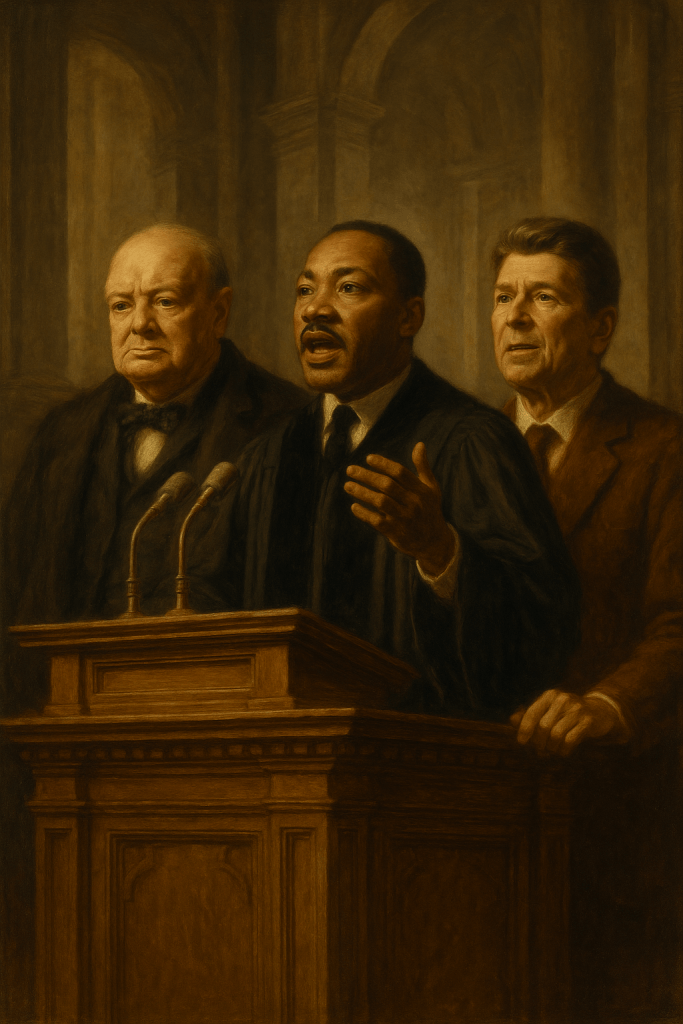
  • Winston Churchill’s wartime speeches gave hope when Britain stood alone against Nazi aggression.
  • Martin Luther King Jr.’s “I Have a Dream” speech elevated America’s conscience and called a nation to live up to its founding ideals.
  • Ronald Reagan’s speeches framed freedom as a moral calling and helped inspire the end of the Cold War.

Examples of Destructive Speech:

  • Adolf Hitler rose to power not through military might but through rhetoric that stirred resentment, fear, and blind loyalty.
  • Communist regimes perfected propaganda—lies repeated until they reshaped whole nations.
  • Today, misinformation spreads across the internet, dividing families, communities, and even churches.

Speech is a double-edged sword. It can build a nation or tear it apart. It can lead souls to God or away from Him.


The Christian Call to Speech

Christians are not free to use words carelessly. Paul exhorts believers: “Let your conversation be always full of grace, seasoned with salt, so that you may know how to answer everyone” (Colossians 4:6).

Key principles for Christian speech:

  • Truth: Our words must align with God’s Word, not with convenience or fear.
  • Grace: Even when confronting error, speech should aim to restore, not merely to win.
  • Courage: Silence in the face of evil can be as destructive as outright lies.
  • Order: Freedom of speech is a gift that requires responsibility. Christian liberty does not mean license to slander or manipulate.

The Political Call to Responsible Speech

Healthy republics depend on honest, principled speech just as the church depends on truthful proclamation. In a democracy, rhetoric is the bloodstream of self-government. Campaigns, debates, editorials, and legislative arguments all shape the direction of policy and the trust of citizens.

  • Honesty: Political speech should inform rather than manipulate. Without truth, public trust erodes.
  • Civility: Sharp disagreement is necessary in free societies, but respect must remain.
  • Accountability: Leaders must remember that promises are words, and broken promises corrode confidence in institutions.
  • Restraint: Free speech must be exercised with discipline—slander, exaggeration, and reckless accusations undermine liberty rather than protect it.

From a conservative perspective, the Founders understood this well. They enshrined free speech in the First Amendment not to encourage recklessness but to secure a space for truth, conscience, and accountability. The survival of liberty rests not only on what is said but how it is said.


Words in the Digital Square and the Areopagus

Today’s digital world multiplies the reach of speech. Tweets, podcasts, YouTube clips, and live streams have become the new “public square.” In biblical terms, it resembles the Areopagus of Athens—an open forum where thinkers, philosophers, and ordinary citizens gathered to debate ideas (see Acts 17:19–34).

When Paul stood at the Areopagus, he neither shrank back nor spoke recklessly. He engaged respectfully, quoting poets familiar to his audience, yet clearly proclaiming Christ as Lord. His model is instructive: engage culture on its own turf, but always direct the conversation back to truth.

Our digital Areopagus is chaotic—full of noise, competing voices, and sometimes hostility. Yet it remains a place where destinies are shaped daily by words. Christians and conservatives are called not to abandon it, but to enter it with wisdom, clarity, and courage.


Charlie Kirk and the Modern Rhetorical Arena

Figures like Charlie Kirk illustrate how modern rhetoric shapes culture. On college campuses, Kirk asks pointed questions that expose contradictions in progressive ideologies. His method—firm, articulate, unapologetic—shows the importance of confidence in public dialogue.

Yet his approach also raises questions. Strong rhetoric can embolden the like-minded but risk alienating opponents. The balance between conviction and persuasion, boldness and bridge-building, remains a challenge for all Christians engaging in public debate.

Kirk represents a broader principle: in a fragmented age, those willing to speak clearly and consistently often shape the direction of conversation. Silence cedes the field to others.


Reflection Questions

  1. Which words spoken to you—encouragements or criticisms—still shape your identity today?
  2. How do you test whether your speech reflects truth, grace, and responsibility?
  3. How can you use social media or digital platforms to build others up rather than tear them down?
  4. What examples of courageous, life-giving speech inspire you? How can you model them in your family, church, or community?
  5. Where are you tempted to remain silent when words of truth are most needed?
  6. In political conversations, do your words clarify truth and invite reasoned debate, or do they simply mimic the noise of partisanship?

Conclusion

Words are never weightless. They carry the power to create or destroy, to build up or to break down, to bless or to curse. Scripture reminds us that every careless word will be judged (Matthew 12:36). History testifies that nations rise and fall on the power of words. And our own lives bear the marks of things spoken long ago.

For Christians, the calling is to speak words of truth and grace that reflect Christ. For citizens, the calling is to speak responsibly, with honesty and civility, guarding the republic from the corruption of careless speech. In both spheres, the weight of words shapes destiny.

In a world drowning in noise, the faithful word—grounded in Scripture, shaped by love, disciplined by truth, and spoken with courage—can still change hearts and nations.


A Collaborative Plea: Churchill, King, and Reagan

Winston Churchill might thunder:
“In every age, civilization itself has hung upon the slender thread of speech. Words have been our armor and our rallying cry in the darkest hours. Let us, then, wield them with courage and precision—not as reckless shouts in the void, but as clarion calls to defend truth, freedom, and human dignity.”

Martin Luther King would then lift the vision higher:
“Yet words must be more than weapons. They must be instruments of justice and of love. A people divided by careless tongues cannot stand, but a people united by righteous speech can march together toward the Promised Land. Let us speak not only to win arguments but to awaken conscience, to stir compassion, to bend that long arc of the moral universe toward justice.”

Ronald Reagan would seal the appeal with hope:
“And let us never forget that words can light a candle in the darkest night. When spoken with faith and fidelity, they remind us that freedom is not fragile but enduring, because it rests upon truth. Let us speak in such a way that future generations say: here were men and women who did not waste their words, but used them to call a people back to God, back to courage, and back to hope.”


Closing Thought

Together, their voices would remind us: the weight of words is real. Spoken in fear, they can enslave. Spoken in truth and love, they can set a people free.

LFM Note: Even if I forgot to include. All of my posts of 2025 and beyond are collaborations between LFM and AI. While I am at it, please go to http://www.citybaseblog.net to see all of my posts in recent years.