The Burden of Being Misunderstood

A collaboration between Lewis McLain & AI
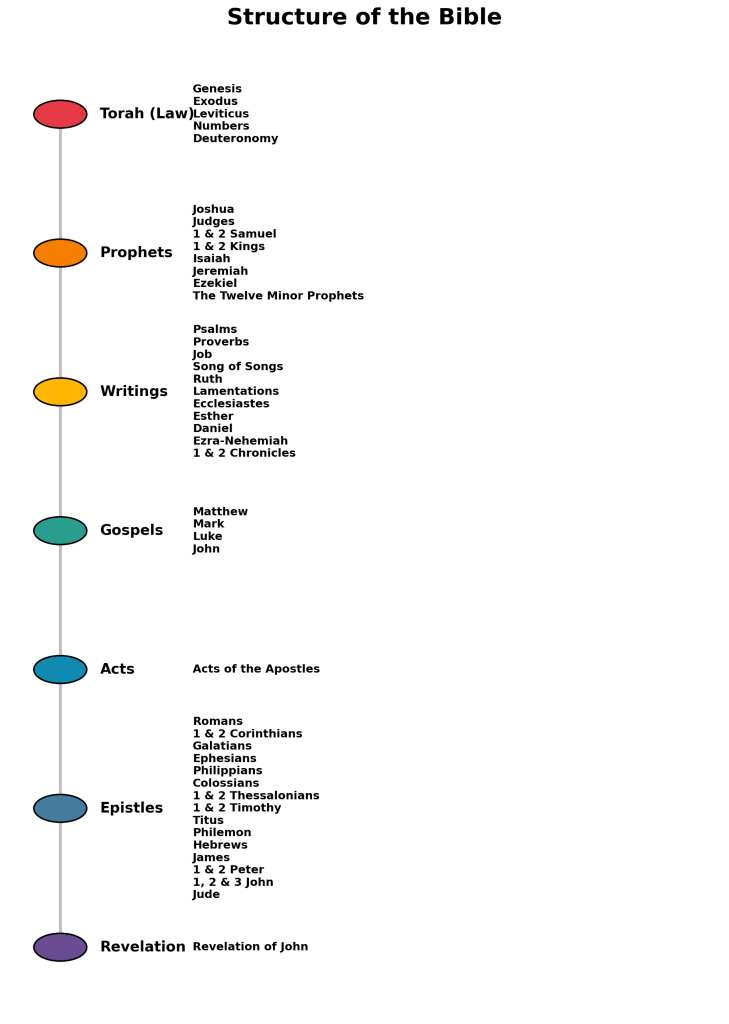

Introduction: The Human Longing to Be Known

Few human experiences cut as deeply as being misunderstood. To speak with sincerity only to be misheard, to act with good intention only to be judged wrongly, is a wound that echoes in the soul. From Socrates on trial in Athens to artists whose work was only appreciated after death, history is filled with men and women whose essence was obscured by misunderstanding. Yet the experience is not reserved for the famous; it is part of the everyday fabric of marriages, friendships, and workplaces. Understanding why it happens, the pain it causes, and how it can be prevented is essential for any life that seeks peace, intimacy, and effective collaboration.


Why Misunderstanding Happens

1. The Imperfection of Language

Language is a fragile bridge between minds. Words carry multiple meanings, shaped by culture, upbringing, and emotion. The simple phrase “I’m fine” may mean relief, indifference, exhaustion, or deep pain depending on tone and context. Misunderstanding is built into the very tools we use to connect.

2. Psychological Filters

Every listener filters communication through personal experiences. If someone grew up in a critical household, even neutral feedback may feel like an attack. If a spouse feels insecure, a simple absence of words can be heard as rejection. These filters distort reality.

3. Assumptions and Cognitive Shortcuts

Our brains save time by assuming. When a colleague misses a deadline, we may assume laziness rather than hidden struggles. When a partner forgets an anniversary, we may assume indifference rather than stress. These shortcuts help us survive but often betray truth.

4. Cultural and Generational Differences

In multicultural workplaces and families, communication styles clash. A blunt statement meant as efficiency may feel like rudeness. Silence meant as respect may feel like distance. What one generation calls “honesty,” another calls “harshness.”

5. The Speed of Modern Life

Emails skimmed, texts dashed off, meetings rushed—modern communication often sacrifices clarity for speed. Misunderstanding thrives in the gaps where careful explanation once lived.


The Horrible Feelings of Being Misunderstood

To be misunderstood is not merely inconvenient; it is existentially painful.

  • Alienation: It creates a gulf between self and others. One feels exiled even in the midst of family or colleagues.
  • Helplessness: Attempts to clarify can deepen suspicion: “The more I explain, the less they believe me.”
  • Humiliation: Being misjudged damages reputation, sometimes irreparably. In the workplace, it can derail careers. In marriage, it can fracture intimacy.
  • Loneliness: Misunderstood individuals may retreat inward, carrying the unshakable sense that no one truly sees them.
  • Anger and Bitterness: Repeated misinterpretation corrodes patience, leaving resentment to fester.

The philosopher Søren Kierkegaard captured the torment when he wrote: “People understand me so little that they do not even understand when I complain of being misunderstood.”


Misunderstanding in Marriage

Marriage is both the most fertile ground for misunderstanding and the most urgent place to heal it.

Common Triggers

  1. Unspoken Expectations: One partner assumes the other “should know” what they need without saying it. Disappointment follows.
  2. Different Communication Styles: Some are verbal processors, others internal. Silence may feel like avoidance to one, thoughtfulness to another.
  3. Stress and Fatigue: A weary tone may be mistaken for anger; distraction may be mistaken for indifference.
  4. Conflict Escalation: During arguments, words are rushed, tone is sharp, and intentions are distorted.

Real-World Example

Consider a couple where the husband works long hours to provide financial security, while the wife longs for quality time. He believes he is expressing love through sacrifice; she believes he is expressing disinterest. Both are misunderstood because they equate love with different actions. Without clarity, affection curdles into resentment.

Preventive Practices

  • Radical Clarity: Instead of assuming, ask. “When you’re quiet, should I understand it as thoughtfulness or withdrawal?”
  • Regular Check-ins: Create safe spaces to ask: “Do you feel understood by me right now?”
  • Active Listening: Repeating back what was heard (“So you’re saying you felt hurt when I forgot…”) validates the partner’s inner world.
  • Love Languages: Recognize that affection is communicated differently—through words, gifts, service, time, or touch. Misunderstanding often arises when partners speak different “languages.”

Misunderstanding in the Workplace

Workplaces magnify misunderstanding because of layered hierarchies, pressures, and competing goals.

Common Sources

  1. Ambiguous Instructions: Leaders say, “Get this done soon,” but each employee defines “soon” differently.
  2. Lack of Context: When decisions are made without explanation, workers fill the gap with suspicion.
  3. Email Tone: A curt response written in haste may be read as hostility.
  4. Generational and Cultural Gaps: A younger worker may interpret silence from a manager as disapproval, while the manager thinks, “No news is good news.”

Case Study: The Boeing 737 MAX Crisis

Misunderstanding played a role in the Boeing 737 MAX tragedies. Engineers flagged risks, but managers misunderstood—or dismissed—their concerns, assuming compliance meant safety. The gap between intention and perception led to catastrophic consequences.

Preventive Practices

  • Explicit Communication: Replace vagueness with specifics. Deadlines, deliverables, and success measures must be clear.
  • Feedback Culture: Encourage employees to restate instructions in their own words to confirm understanding.
  • Transparent Leadership: Share the reasoning behind decisions. Context prevents negative assumptions.
  • Cross-Cultural Training: Equip teams to recognize differences in communication styles.

Strategies for Prevention Across Life

  1. Practice Humility: Accept that you may not have been clear. Re-explain without defensiveness.
  2. Develop Empathy: Seek first to understand before seeking to be understood.
  3. Slow Down: In moments of tension, resist the urge for quick reactions.
  4. Use Multiple Channels: Important messages deserve both spoken and written forms.
  5. Acknowledge Emotions: Sometimes, people need validation of their feelings more than explanation of your intent.

The Paradoxical Gift of Being Misunderstood

Though painful, being misunderstood can also sharpen self-awareness. Many great innovators, prophets, and artists were misunderstood in their time—Jesus of Nazareth, Vincent van Gogh, Emily Dickinson, Martin Luther King Jr. Their experience forced them to deepen conviction, clarify expression, and find identity not in approval but in truth. For ordinary people, the same paradox can hold: misunderstanding, though a wound, can also be a teacher.


Conclusion: Toward a Culture of Understanding

To be understood is to be seen; to be misunderstood is to be invisible. The difference can determine the health of a marriage, the morale of a workplace, or the direction of a life. Misunderstanding will never vanish, but intentional listening, clarity, and empathy can reduce its grip. When people slow down enough to ask, “What did you mean?” and to say, “Here’s how I felt,” they build bridges across the abyss. And in those bridges lies the possibility of love, trust, and shared humanity.


Reflection and Application Questions

For Personal Reflection

  1. When was the last time I felt misunderstood? What emotions rose up in me?
  2. Do I tend to withdraw, defend, or over-explain when misunderstood? Why?
  3. How often do I assume I know what others mean without asking?
  4. What patterns from my upbringing shape how I interpret others’ words?

For Couples

  1. What’s one time in our relationship when you felt I truly misunderstood you? How did it affect you?
  2. What signals (tone, silence, habits) do I often misinterpret in you?
  3. What communication style differences exist between us, and how can we honor them?
  4. How can we build a regular rhythm of checking in about whether we feel seen and heard?

For Workplace Teams

  1. When has miscommunication in our team caused tension or lost productivity?
  2. What instructions or messages are usually the most misunderstood here?
  3. How can we improve feedback loops so people feel safe asking for clarification?
  4. Do we share enough context for decisions, or do we leave colleagues filling in the gaps with assumptions?
  5. How can we better acknowledge the emotions—stress, fatigue, pride—that affect how messages are received?

Acts 23

A collaboration between Lewis McLain & AI

In recent chapters, a recurring theme emerges as Paul preaches before being beaten, jailed, and run out of town, preventing further harm. However, the tension grows as the crowds now want him killed. We know something terrible is going to happen, but when, where, and how is still not known.

Section 1: Paul Before the Sanhedrin (vv. 1–11)


Summary

Paul, standing before the Sanhedrin (the Jewish ruling council composed of elders, priests, and scribes, functioning as the highest court in religious and civil matters), begins by declaring his clear conscience before God. The high priest Ananias orders him struck on the mouth, prompting Paul to call him a “whitewashed wall.”¹ Realizing afterward that he had spoken harshly against the high priest, Paul cites the law forbidding him from reviling a ruler of the people.³

Cleverly, Paul then shifts the focus by declaring his belief in the *hope of the resurrection of the dead.*² This phrase immediately divides the council. Some were Pharisees (a group devoted to strict observance of the Law of Moses, the oral traditions, and belief in resurrection, angels, and spirits), while others were Sadducees (a priestly, aristocratic group that rejected resurrection, angels, and spirits, accepting only the written Torah). This difference causes violent dissension, forcing the Roman commander to intervene and remove Paul by force. That night, the Lord appears to Paul, assuring him that just as he testified in Jerusalem, so he must also testify in Rome.


Text (NIV)

  1. Paul looked straight at the Sanhedrin and said, “My brothers, I have fulfilled my duty to God in all good conscience to this day.”
  2. At this the high priest Ananias ordered those standing near Paul to strike him on the mouth.
  3. Then Paul said to him, “God will strike you, you whitewashed wall!¹ You sit there to judge me according to the law, yet you yourself violate the law by commanding that I be struck!”
  4. Those who were standing near Paul said, “How dare you insult God’s high priest!”
  5. Paul replied, “Brothers, I did not realize that he was the high priest; for it is written: ‘Do not speak evil about the ruler of your people.’³”
  6. Then Paul, knowing that some of them were Sadducees and the others Pharisees, called out in the Sanhedrin, “My brothers, I am a Pharisee, descended from Pharisees. I stand on trial because of the hope of the resurrection of the dead.²”
  7. When he said this, a dispute broke out between the Pharisees and the Sadducees, and the assembly was divided.
  8. (The Sadducees say that there is no resurrection, and that there are neither angels nor spirits, but the Pharisees believe all these things.)
  9. There was a great uproar, and some of the teachers of the law who were Pharisees stood up and argued vigorously. “We find nothing wrong with this man,” they said. “What if a spirit or an angel has spoken to him?”
  10. The dispute became so violent that the commander was afraid Paul would be torn to pieces by them. He ordered the troops to go down and take him away from them by force and bring him into the barracks.
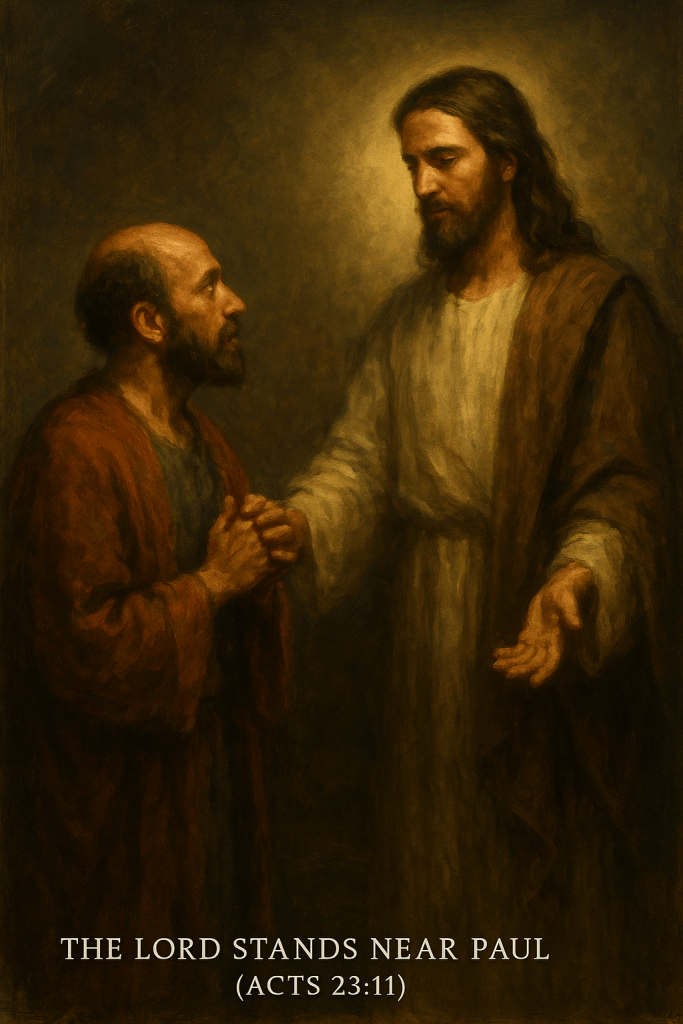
  11. The following night the Lord stood near Paul and said, “Take courage! As you have testified about me in Jerusalem, so you must also testify in Rome.”

¹ The phrase “whitewashed wall” draws from Ezekiel 13:10–15, where false prophets covered weak walls with plaster to hide their flaws, and from Jesus’ rebuke in Matthew 23:27 calling the Pharisees “whitewashed tombs.” Whitewashing made a wall or tomb look clean outwardly, but it could not change the corruption or weakness beneath. Paul applied this imagery to Ananias, exposing his hypocrisy as a judge of the law who violated the law.

² Paul uses the phrase “hope of the resurrection of the dead” not because he lacked certainty (he had seen the risen Christ and even witnessed resurrection miracles) but because “hope” in biblical usage means confident expectation rooted in God’s promise. It also strategically appealed to the Pharisees, who shared this doctrine, creating division with the Sadducees. The phrase reflects both the already of Christ’s resurrection and the not-yet of the final resurrection still to come (see 1 Corinthians 15:20–23).

³ Paul’s statement comes from Exodus 22:28: “Do not blaspheme God or curse the ruler of your people.” The Torah commanded respect for leaders as an extension of respect for God’s authority. Even David refused to curse or harm Saul, calling him “the Lord’s anointed” (1 Samuel 24:6). Paul quickly acknowledged that Scripture restrained his words, even when the high priest acted unjustly.


Reflection Questions

  1. How does Paul’s appeal to resurrection strategically divide his opponents?
  2. What can we learn from Paul’s correction after insulting the high priest?
  3. How does the Lord’s reassurance to Paul at night shape his courage for the trials ahead?


Section 2: The Plot to Kill Paul (vv. 12–22)

Summary

A group of Jews form a conspiracy, vowing neither to eat nor drink until they kill Paul. More than forty men join this plot, seeking the support of the chief priests and elders. But Paul’s nephew overhears the plan and reports it to Paul, who sends him to the Roman commander (Claudius Lysias). The commander hears him privately and warns the boy to tell no one that he has revealed this conspiracy.


Text (NIV)

  1. The next morning some Jews formed a conspiracy and bound themselves with an oath not to eat or drink until they had killed Paul.
  2. More than forty men were involved in this plot.
  3. They went to the chief priests and the elders and said, “We have taken a solemn oath not to eat anything until we have killed Paul.
  4. Now then, you and the Sanhedrin petition the commander to bring him before you on the pretext of wanting more accurate information about his case. We are ready to kill him before he gets here.”
  5. But when the son of Paul’s sister heard of this plot, he went into the barracks and told Paul.
  6. Then Paul called one of the centurions and said, “Take this young man to the commander; he has something to tell him.”
  7. So he took him to the commander. The centurion said, “Paul the prisoner sent for me and asked me to bring this young man to you because he has something to tell you.”
  8. The commander took the young man by the hand, drew him aside and asked, “What is it you want to tell me?”
  9. He said: “Some Jews have agreed to ask you to bring Paul before the Sanhedrin tomorrow on the pretext of wanting more accurate information about him.
  10. Don’t give in to them, because more than forty of them are waiting in ambush for him. They have taken an oath not to eat or drink until they have killed him. They are ready now, waiting for your consent to their request.”
  11. The commander dismissed the young man with this warning: “Don’t tell anyone that you have reported this to me.”

Reflection Questions

  1. What does this plot reveal about the depth of opposition to Paul?
  2. How does God’s providence work through Paul’s nephew?
  3. What lessons can believers take from the commander’s discretion with Paul’s nephew?


Section 3: Paul Sent to Governor Felix (vv. 23–35)


Summary

The commander arranges for Paul’s safe transfer to Caesarea under heavy guard, recognizing the seriousness of the plot against him. He writes a formal letter to Governor Felix, explaining Paul’s situation: that Paul is accused over religious disputes, not crimes deserving death or imprisonment. Paul is escorted with two hundred soldiers, seventy horsemen, and two hundred spearmen to Antipatris, then to Caesarea. There, Felix agrees to hear Paul’s case once his accusers arrive, and Paul is held in Herod’s palace.


Text (NIV)

  1. Then he called two of his centurions and ordered them, “Get ready a detachment of two hundred soldiers, seventy horsemen and two hundred spearmen to go to Caesarea at nine tonight.
  2. Provide horses for Paul so that he may be taken safely to Governor Felix.”
  3. He wrote a letter as follows:
  4. Claudius Lysias, To His Excellency, Governor Felix: Greetings.
  5. This man was seized by the Jews and they were about to kill him, but I came with my troops and rescued him, for I had learned that he is a Roman citizen.
  6. I wanted to know why they were accusing him, so I brought him to their Sanhedrin.
  7. I found that the accusation had to do with questions about their law, but there was no charge against him that deserved death or imprisonment.
  8. When I was informed of a plot to be carried out against the man, I sent him to you at once. I also ordered his accusers to present to you their case against him.
  9. So the soldiers, carrying out their orders, took Paul with them during the night and brought him as far as Antipatris.
  10. The next day they let the cavalry go on with him, while they returned to the barracks.
  11. When the cavalry arrived in Caesarea, they delivered the letter to the governor and handed Paul over to him.
  12. The governor read the letter and asked what province he was from. Learning that he was from Cilicia, he said,
  13. “I will hear your case when your accusers get here.” Then he ordered that Paul be kept under guard in Herod’s palace.


Reflection Questions

  1. What does the military escort say about the seriousness of Paul’s situation?
  2. How does Claudius Lysias’s letter reveal Roman attitudes toward religious disputes?
  3. Why is it important that Paul ends up in Caesarea before Felix?

Expanded Poetic Conversation

Paul:
“The council rages, yet I stand,
My hope in God, not built on sand.
Through chains and threats, I will proclaim,
The risen Lord, His holy name.”

High Priest Ananias:
“Strike him down, this man of lies!
He mocks the law, he dares defy.
Yet law I bend for power’s gain,
A robe of white hides inward stain.”

Pharisees:
“Perhaps a spirit spoke his word,
Perhaps an angel he has heard.
The dead shall rise, the prophets say,
On such a hope we stake our way.”

Sadducees:
“No angel comes, no dead shall wake,
The Law is ours alone to take.
His words are smoke, his hope a snare,
No life awaits beyond the grave’s cold air.”

Paul’s Nephew:
“My heart beat fast, my voice was low,
A deadly plot I came to show.
O God who guards the weak and small,
Through me You chose to save Your Paul.”

Commander Claudius Lysias:
“A Roman citizen, I must defend,
From mob and oath that seek his end.
By night we ride, with torch and steel,
To guard this man of fervent zeal.”

Governor Felix:
“A letter comes, I read with care,
This Paul shall answer judgment here.
I’ll wait until accusers speak,
And weigh the strength of law they seek.”

The Lord (to Paul):
“Take courage, son, the night is mine,
In Rome your voice shall yet still shine.
Though plots may rise and chains may bind,
My sovereign hand directs mankind.”

Drones as a Core Municipal Utility: Policy, Training, and Future Directions for Texas Cities

A collaboration between Lewis McLain and AI


Executive Summary

Municipal drone programs have rapidly evolved from experimental projects to dependable service tools. Today, Texas cities are beginning to treat drones not as gadgets but as core municipal utilities—shared resources as essential as fleet management, radios, or GIS. Properly implemented, drones can provide faster response times, safer job conditions, and higher-quality data, all while saving taxpayer money.

This paper explains how cities can build and sustain a municipal drone program. It examines current and emerging use cases, outlines staffing impacts, surveys training options and costs in Texas, explores fleet models and procurement, and considers the legal, policy, and community dimensions that must be addressed. It concludes with recommendations, case studies of failures, and appendices on payload regulation and FAA sample exam questions.

Handled wisely, drones will make cities safer, smarter, and more responsive. Mishandled, they risk creating public backlash, wasting funds, or even eroding trust.


The Case for Treating Drones as a Utility

Cities that succeed with drones do so by thinking of them as utilities, not toys. A drone program should be centrally governed, jointly funded, and transparently managed. Just like a municipal fleet or IT department, a citywide drone service must be reliable, equitable across departments, compliant with law, interoperable with other systems, and transparent to the public.

This approach ensures that drones are available where needed, that policies are consistent across departments, and that costs are shared fairly. Most importantly, it signals to residents that the city treats drone use seriously, with strong safeguards and clear accountability.


Current and Growing Uses

Across Texas and the country, municipal drones already serve a wide range of functions.

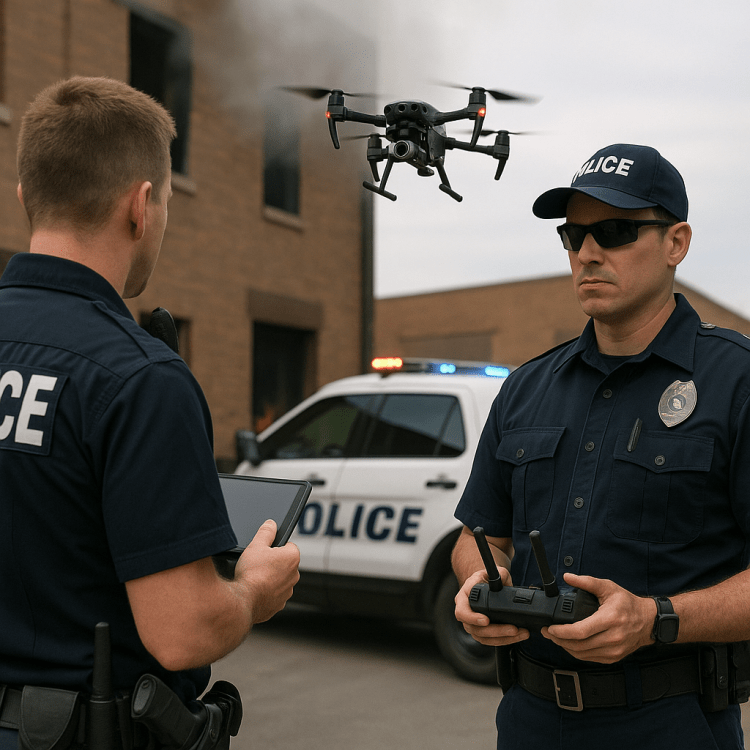
Public Safety: Police and fire agencies use drones as “first responders,” launching them from stations or rooftops to 911 calls. They provide live video of car crashes, fires, or hazardous scenes, often arriving before officers. Firefighters use drones with thermal cameras to locate victims or track hotspots in burning buildings.

Infrastructure and Public Works: Drones inspect bridges, culverts, roofs, and water towers. Instead of sending workers onto scaffolds or into confined spaces, crews now fly drones that capture detailed photos and 3D models. Landfills are surveyed from the air, methane leaks identified, and storm damage mapped quickly after major events.

Transportation and Planning: Drones monitor traffic flow, study queue lengths, and document work zones. City planners use them to create up-to-date maps, support zoning decisions, and maintain digital twins of urban areas.

Environmental and Health: From checking stormwater outfalls to mapping tree canopies, drones help environmental staff monitor city assets. In some regions, drones are used to identify standing water and apply larvicides for mosquito control.

Emergency Management: After floods, hurricanes, or tornadoes, drones provide rapid situational awareness, helping cities prioritize response and document damage for FEMA claims.

As automation improves, “drone-in-a-box” systems—drones that launch on schedule or in response to sensors—will soon become common municipal tools.


Staffing Impacts

A common fear is that drones will replace jobs. In practice, they save lives and money while creating new roles.

Jobs Saved: By reducing risky tasks like climbing scaffolds or entering confined spaces, drones make existing jobs safer. They also reduce overtime by finishing inspections or surveys in hours instead of days.

Jobs Added: Cities now employ drone program coordinators, FAA Part 107-certified pilots, data analysts, and compliance officers. A medium-sized Texas city might add ten to twenty such roles over the next five years.

Jobs Shifted: Inspectors, police officers, and firefighters increasingly become “drone-enabled” workers, adding aerial operations to their responsibilities. Over time, 5–10% of municipal staff in critical departments may be retrained in drone use.

The net result is redistribution rather than reduction. Drones are not eliminating jobs; they are elevating them.


Training in Texas

FAA rules require every commercial or government drone operator to hold a Part 107 Remote Pilot Certificate. Fortunately, Texas offers many affordable training options.

Community colleges such as Midland College and South Plains College provide Part 107 prep and hands-on flight training, typically costing $350 to $450 per course. Private providers like Dronegenuity and From Above Droneworks offer in-person and hybrid courses ranging from $99 online modules to $1,200 full academies. San Jacinto College and other universities run short workshops and certification tracks.

Online exam prep courses are widely available for $150–$400, making it feasible to train multiple staff at once. When departments train together, cities often negotiate group discounts and host joint scenario days at municipal training grounds.


Fleet Models and Costs

Municipal needs vary, but most cities benefit from a tiered fleet.

  • Micro drones (under 250g) for training and quick checks: $500–$1,200.
  • Utility quads for mapping and inspection: $2,500–$6,500.
  • Enterprise drones with thermal sensors for public safety: $7,500–$16,000.
  • Heavy-lift or VTOL systems for long corridors or specialized sensors: $18,000–$45,000+.

Each drone has a three- to five-year lifespan, with batteries refreshed every 200–300 cycles. Cities must also budget for accessories, insurance, and management software.


Policy and Legal Landscape

Federally, the FAA regulates drone operations under Part 107. Rules limit altitude to 400 feet, require flights within visual line of sight, and mandate Remote ID for most aircraft. Waivers can allow for advanced operations, such as flying beyond visual line of sight (BVLOS).

In Texas, additional laws restrict image capture in certain contexts and impose rules around critical infrastructure. Local governments cannot regulate airspace, but they can and should regulate employee conduct, data use, privacy, and procurement.

Transparency is crucial. Cities must publish clear retention policies, flight logs, and citizen FAQs.


Privacy, Labor, and Community Trust

For communities to embrace drones, cities must be proactive.

Privacy: Drones should collect only what is necessary, with cameras pointed at mission targets rather than private backyards. Non-evidentiary footage should be deleted within 30–90 days.

Labor: Cities should emphasize that drones augment rather than replace workers. They shift dangerous tasks to machines while providing staff new certifications and career paths.

Equity: Larger cities may advance faster than small towns, but shared services, inter-local agreements, and regional training programs can close the gap.

Community Trust: Transparency builds legitimacy. Cities should publish quarterly metrics, log complaints, host public demos, and maintain a clear point of contact for concerns.


Lessons from Failures

Not every program has succeeded. Across the country, drone initiatives have stumbled in predictable ways:

  • Community Pushback: Chula Vista’s pioneering drone-as-first-responder program drew criticism for surveillance concerns, while New York City’s holiday monitoring drones sparked public backlash. Lesson: transparency and engagement must come first.
  • Operational Incidents: A Charlotte police drone crashed into a house, and some agencies lost FAA waivers due to compliance lapses. Lesson: one mistake can jeopardize an entire program; training and discipline are essential.
  • Budget Failures: Dallas and other cities saw expansions stall over hidden costs for software and maintenance. Smaller towns wasted funds buying consumer drones that quickly wore out. Lesson: plan for lifecycle costs, not just hardware.
  • Legal Overreach: Connecticut’s proposal to arm police drones with “less-lethal” weapons collapsed amid backlash, while San Diego faced court challenges over warrant requirements. Lesson: pushing boundaries invites restrictions.
  • Scaling Gaps: Rural Texas counties bought drones with grants but lacked certified pilots or insurance. Small towns gathered imagery but had no analysts to use it. Lesson: drones without people and integration are wasted purchases.

Recommendations

  1. Invest in training through Texas colleges and private providers.
  2. Procure wisely, choosing modular, upgradeable hardware.
  3. Adopt clear policies on payloads, privacy, and data retention.
  4. Prioritize non-kinetic payloads such as cameras, sensors, and lighting.
  5. Prepare for BVLOS, which will transform municipal use once authorized.
  6. Ensure equity, supporting smaller cities through regional cooperation.

Conclusion

Drones are no longer experimental novelties. They are rapidly becoming a core municipal utility—a shared service as essential as public works fleets or GIS. Their greatest promise lies not in flashy technology but in the steady, practical benefits they bring: safer workers, faster response, better data, and more transparent government.

But the promise depends on choices. Cities must prohibit weaponized payloads, publish clear policies, train and retrain staff, and engage openly with their communities. Done right, drones can strengthen both city effectiveness and public trust.


Appendix A: Administrative Regulation on Payloads

Title: Drone Payloads and Weapons Prohibition; Data & Safety Controls
Number: AR-UAS-01
Effective Date: Upon issuance
Applies To: All city employees, contractors, volunteers, or agents operating drones (UAS) on behalf of the City


1. Purpose

This regulation ensures that all municipal drone operations are conducted lawfully, ethically, and safely. It establishes clear prohibitions on weaponized or harmful payloads and sets minimum standards for data use, transparency, and accountability.


2. Definitions

  • UAS (Drone): An uncrewed aircraft and associated equipment used for flight.
  • Payload: Any item attached to or carried by a UAS, including cameras, sensors, lights, speakers, or drop mechanisms.
  • Weaponized or Prohibited Payload: Any device or substance intended to incapacitate, injure, damage, or deliver kinetic, chemical, electrical, or incendiary effects.
  • Authorized Payload: Sensors or devices explicitly approved by the UAS Program Manager for municipal purposes.

3. Policy Statement

  • The City strictly prohibits the use of weaponized or prohibited payloads on all drones.
  • Drones may only be used for documented municipal purposes, consistent with law, FAA rules, and City policy.
  • All payloads must be inventoried and approved by the UAS Program Manager.

4. Prohibited Payloads

The following are expressly prohibited:

  • Firearms, ammunition, or explosive devices.
  • Pyrotechnic, incendiary, or chemical agents (including tear gas, pepper spray, smoke bombs).
  • Conducted electrical weapons (e.g., TASER-type devices).
  • Projectiles, hard object drop devices, or kinetic impact payloads intended for crowd control.
  • Covert audio or visual recording devices in violation of state or federal law.

Exception: Non-weaponized lifesaving payloads (e.g., flotation devices, first aid kits, rescue lines) may be deployed only with prior written approval of the Program Manager and after a documented risk assessment.


5. Authorized Payloads

Authorized payloads include, but are not limited to:

  • Imaging sensors (visual, thermal, multispectral, LiDAR).
  • Environmental sensors (methane detectors, gas analyzers, air quality monitors).
  • Lighting systems (searchlights, strobes).
  • Loudspeakers for announcements or evacuation instructions.
  • Non-weaponized emergency supply drops (medical kits, flotation devices).
  • Tethered systems for persistent observation or communications relay.

6. Oversight and Accountability

  • The UAS Program Manager must approve all payload configurations before deployment.
  • Departments must maintain an updated inventory of drones and payloads.
  • Quarterly inspections will be conducted to verify compliance.
  • An annual public report will summarize drone use, payload types, and incidents.

7. Data Controls

  • Minimization: Only record what is necessary for the mission.
  • Retention:
    • Non-evidentiary footage: 30–90 days.
    • Evidentiary footage: retained per case law.
    • Mapping/orthomosaics: retained per project records schedule.
  • Access: Role-based permissions, with audit logs.
  • Public Release: Media released under public records law must be reviewed for privacy and redaction (faces, license plates, sensitive sites).

8. Training Requirements

  • All operators must hold an FAA Part 107 Remote Pilot Certificate.
  • Annual city-approved training on:
    • This regulation (AR-UAS-01).
    • Privacy and data retention.
    • Citizen engagement and de-escalation.
  • Scenario-based training must be conducted at least once per year.

9. Enforcement

  • Violations of this regulation may result in disciplinary action up to and including termination of employment or contract.
  • Prohibited payloads will be confiscated, logged, and removed from service.
  • Cases involving unlawful weaponization will be referred for criminal investigation.

10. Effective Date

This regulation is effective immediately upon approval by the City Manager and shall remain in force until amended or rescinded.

Appendix B: FAA Part 107 Sample Questions (Representative, 25 Items)

Note: These questions are drawn from FAA study materials and training resources. They are not live exam questions but are representative of the knowledge areas tested.

  1. Under Part 107, what is the maximum allowable altitude for a small UAS?
     A. 200 feet AGL
     B. 400 feet AGL ✅
     C. 500 feet AGL
  2. What is the maximum ground speed allowed?
     A. 87 knots (100 mph) ✅
     B. 100 knots (115 mph)
     C. 87 mph
  3. To operate a small UAS for commercial purposes, which certification is required?
     A. Private Pilot Certificate
     B. Remote Pilot Certificate with a small UAS rating ✅
     C. Student Pilot Certificate
  4. Which airspace requires ATC authorization for UAS operations?
     A. Class G
     B. Class C ✅
     C. Class E below 400 ft
  5. How is controlled airspace authorization obtained?
     A. Verbal ATC request
     B. Filing a VFR flight plan
     C. Through LAANC or DroneZone ✅
  6. Minimum visibility requirement for Part 107 operations?
     A. 1 statute mile
     B. 3 statute miles ✅
     C. 5 statute miles
  7. Required distance from clouds?
     A. 500 feet below, 2,000 feet horizontally ✅
     B. 1,000 feet below, 1,000 feet horizontally
     C. No minimum distance
  8. A METAR states: KDAL 151853Z 14004KT 10SM FEW040 30/22 A2992. What is the ceiling?
     A. Clear skies
     B. 4,000 feet few clouds ✅
     C. 4,000 feet broken clouds
  9. A TAF includes BKN020. What does this mean?
     A. Broken clouds at 200 feet
     B. Broken clouds at 2,000 feet ✅
     C. Overcast at 20,000 feet
  10. High humidity combined with high temperature generally results in:
     A. Increased performance
     B. Reduced performance ✅
     C. No effect
  11. If a drone’s center of gravity is too far aft, what happens?
     A. Faster than normal flight
     B. Instability, difficult recovery ✅
     C. Less battery use
  12. High density altitude (hot, high, humid) causes:
     A. Increased battery life
     B. Decreased propeller efficiency, shorter flights ✅
     C. No effect
  13. A drone at max gross weight of 55 lbs carries a 10 lb payload. Payload percent?
     A. 18% ✅
     B. 10%
     C. 20%
  14. At maximum gross weight, performance is:
     A. Improved stability
     B. Reduced maneuverability and endurance ✅
     C. No change
  15. The purpose of Crew Resource Management is:
     A. To reduce paperwork
     B. To use teamwork and communication to improve safety ✅
     C. To reduce training costs
  16. GPS signal lost and drone drifts — first action?
     A. Immediate Return-to-Home
     B. Switch to ATTI/manual mode, maintain control, land ✅
     C. Climb higher for GPS
  17. If a drone causes $500+ in property damage, what is required?
     A. Report only to local police
     B. FAA report within 10 days ✅
     C. No report required
  18. If the remote PIC is incapacitated, the visual observer should:
     A. Land the drone ✅
     B. Call ATC
     C. Wait until PIC recovers
  19. On a sectional chart, a magenta vignette indicates:
     A. Class E starting at surface ✅
     B. Class C boundary
     C. Restricted airspace
  20. A dashed blue line on a sectional chart indicates:
     A. Class B airspace
     B. Class D airspace ✅
     C. Class G airspace
  21. A magenta dashed circle indicates:
     A. Class E starting at surface ✅
     B. Class G airspace
     C. No restrictions
  22. Floor of Class E when sectional shows fuzzy side of a blue vignette?
     A. Surface
     B. 700 feet AGL ✅
     C. 1,200 feet AGL
  23. Main concern with fatigue while flying?
     A. Reduced battery performance
     B. Slower reaction and poor decision-making ✅
     C. Increased radio interference
  24. Alcohol is prohibited within how many hours of UAS operation?
     A. 4 hours
     B. 8 hours ✅
     C. 12 hours
  25. Maximum allowable BAC for remote pilots?
     A. 0.08%
     B. 0.04% ✅
     C. 0.02%


Confession of Beliefs, Faith, and Confidence


1. The Bible

I Believe
that the Bible is the inspired, trustworthy, and authoritative Word of God, the supreme guide for what I believe and how I live.

I Am Confident
because its manuscripts are preserved with extraordinary accuracy, its history confirmed by archaeology, its prophecies fulfilled in Christ, and Jesus Himself affirmed its truth. The Bible continues to transform lives and cultures across centuries, showing divine origin and power.

Scripture
2 Tim 3:16–17; 2 Pet 1:20–21; Ps 19:7–11; Ps 119:105; Matt 5:17–18; John 10:35; Luke 24:27.


2. God

I Believe
in one God—Father, Son, and Holy Spirit—eternal, holy, sovereign, and love.

I Am Confident
because creation, morality, and human longing point to a personal Creator. Only the triune God revealed in Scripture explains reality fully and satisfies the deepest needs of the heart.

Scripture
Ex 3:14; Ex 34:6–7; Deut 6:4; Isa 6:1–5; Ps 139; Acts 17:24–28; Matt 28:19; 2 Cor 13:14.


3. Jesus Christ

I Believe
that Jesus Christ is fully God and fully man, the eternal Son who became flesh, lived a sinless life, died for my sins, rose bodily from the dead, and reigns as Lord.

I Am Confident
because the evidence for His resurrection is overwhelming: eyewitnesses, empty tomb, transformed disciples, fulfilled prophecy, and the rise of the Church. No other religious figure has claimed and proved divinity as He did.

Scripture
John 1:1–14; Phil 2:5–11; Col 1:15–20; Heb 1:1–4; Isa 53:5; 2 Cor 5:21; Rom 3:21–26; 1 Cor 15:3–8; Matt 1:23.


4. The Holy Spirit

I Believe
in the Holy Spirit, the Lord and Giver of life, who convicts the world of sin, regenerates the sinner, indwells, seals, and sanctifies believers, distributes gifts for service, and produces fruit of holy character.

I Am Confident
because His transforming work is seen in changed lives across centuries and cultures, producing unity, gifts, and fruit beyond human ability. He continues to glorify Christ and empower the Church for mission.

Scripture
John 3:5–8; John 14:16–17, 26; John 16:7–15; Acts 1:8; Acts 5:3–4; Rom 8:9–16; 1 Cor 12:4–11; Gal 5:22–23; Eph 1:13–14.


5. Angels & Satan

I Believe
that God created His holy angels as servants and messengers, and that Satan and his demons are fallen angels who oppose Him but stand defeated at the cross and doomed for final judgment.

I Am Confident
because evil is not merely abstract but personal. Yet Christ triumphed at the cross, disarming the powers of darkness. Believers resist not in fear but in God’s strength, clothed with His armor.

Scripture
Heb 1:14; Ps 103:20–21; Gen 3; Matt 4:1–11; Luke 10:18; Eph 6:10–18; 1 Pet 5:8–9; Col 2:15; Rev 12:7–12.


6. Humanity & Life

I Believe
that man and woman were created in the image of God— to know Him, love Him, and reflect His glory.
Life is God’s sacred gift, beginning at the moment of conception.
The unborn are fearfully and wonderfully made, known and called by God before birth, and worthy of dignity, protection, and love.
Through sin, humanity fell, and now all have sinned and fall short of God’s glory.
Yet in Christ we are made new, restored as His image-bearers and called into fellowship with Him.

I Am Confident
because humanity’s uniqueness — conscience, creativity, worship, and love — cannot be explained apart from God’s image. Science affirms that life begins at conception, while Scripture insists on the dignity of every person. Christianity both exalts human worth and diagnoses human sin, giving the truest picture of man.

Scripture
Gen 1:26–28; Gen 2:7; Ps 8; Ps 139:13–16; Jer 1:5; Luke 1:41; Ex 21:22–25; Rom 5:12–19; Rom 3:23; Acts 17:26–28; 2 Cor 5:17.


7. Sin

I Believe
that sin is rebellion against God, corrupting every part of our being, separating us from His presence, and bringing death as its wage. But God, rich in mercy, forgives those who repent and cleanses us from all unrighteousness.

I Am Confident
because sin explains both personal failure and global brokenness. Scripture’s verdict that “all have sinned” matches reality. Yet God’s grace in Christ proves that sin’s curse is not the last word.

Scripture
Rom 3:9–23; Rom 6:23; Isa 59:2; 1 John 3:4; Jas 4:17; Rom 14:23; Ps 51; 1 John 1:9.


8. Salvation

I Believe
that salvation is by grace alone, through faith alone, in Christ alone.
By His mercy we are justified, adopted into God’s family, sanctified by His Spirit, and kept by His power until the day of glory.
I believe He who began a good work in me will carry it to completion at the day of Christ Jesus.

I Am Confident
because the gospel is grounded in fact, not feeling. The cross satisfies God’s justice; the resurrection guarantees life. Salvation rests in Christ’s finished work, not human effort, making assurance possible.

Scripture
Eph 2:1–10; John 3:16; Titus 3:4–7; Rom 5:1–11; Rom 8:1, 28–39; 2 Cor 5:17–21; John 10:28–29; Phil 1:6.


9. The Church, Lord’s Day, Marriage & Mission

I Believe
in the one holy Church, the body and bride of Christ, set apart for worship, fellowship, and mission.
We are a royal priesthood, called to proclaim His marvelous light.
Christ gave us baptism and the Lord’s Supper as signs of His grace and our covenant in Him.
We gather on the Lord’s Day to worship, rest, and renew our devotion.
The Church is sent to the nations, and every believer is called to witness, to make disciples, and to live as Christ’s ambassador.
I believe God created marriage as the covenant union of one man and one woman for life, a holy mystery reflecting Christ and His Church, the foundation for family, fruitfulness, and faithfulness.

I Am Confident
because the Church has endured through persecution and failure, yet thrives across cultures. Worship on the Lord’s Day strengthens believers in faith. Marriage continues to witness to God’s covenant love. Evangelism through ordinary Christians advances the gospel powerfully.

Scripture
Matt 16:18; Matt 28:18–20; Acts 2:42–47; Acts 20:7; Rev 1:10; 1 Cor 12; Eph 4:1–16; 1 Pet 2:9–10; Heb 10:24–25; 2 Cor 5:20; Eph 5:31–32; Gen 2:24; Matt 19:4–6; Heb 13:4.


10. Stewardship

I Believe
that all I have—time, talents, and treasure—belongs to God, entrusted to me as His steward.

I Am Confident
because the earth is the Lord’s, and I am His trustee. Faithful stewardship glorifies Christ, blesses others, and brings eternal reward.

Scripture
Ps 24:1; 1 Cor 4:2; 2 Cor 9:6–8; Matt 25:14–30.


11. Peace, Justice & Liberty

I Believe
that Christ calls me to seek peace, pursue justice, defend the oppressed, and love mercy.
I believe in religious liberty, that faith cannot be coerced, and that church and state are distinct under God’s authority.

I Am Confident
because God’s kingdom is righteousness and peace. Religious liberty protects conscience, allowing true worship. Justice and mercy flow from God’s heart and remain central to the Church’s witness in the world.

Scripture
Micah 6:8; Amos 5:24; Jas 1:27; Matt 5:9; Rom 12:18; Eccl 3:8; Matt 22:21; Rom 14:5; Gal 5:1.


12. The Future

I Believe
that Jesus Christ will return in glory, visibly and with power, to raise the dead, to judge the nations, and to make all things new.
The redeemed will dwell forever with God in the new heavens and the new earth, where righteousness, peace, and joy abound.
The wicked will face eternal separation from Him.

I Am Confident
because prophecy fulfilled in Christ’s first coming assures His second. The resurrection of Jesus is the pledge of our resurrection. Hope in eternity provides courage and joy for the present.

Scripture
Acts 1:11; Titus 2:13; 1 Cor 15:20–28, 50–58; 1 Thess 4:13–18; Matt 25:31–46; John 5:28–29; Rev 20:11–15; Rev 21:1–5; 2 Pet 3:10–13.


13. The New Covenant of Love

I Believe
in the new covenant that Jesus gave: to love the Lord my God with all my heart, soul, mind, and strength, and to love my neighbor as myself. On these commandments hang all the Law and the Prophets.

I Am Confident
because love fulfills the Law, and the Spirit empowers what the Law demands. The history of Christian love — in hospitals, schools, abolition, reconciliation — testifies to God’s presence in His people.

Scripture
Deut 6:5; Lev 19:18; Matt 22:37–40; John 13:34; John 15:12.


14. Assurance of Salvation and the Life Ever After

I Believe
that those who trust in Christ have eternal life and cannot be separated from the love of God.
At death the believer is present with the Lord, awaiting the resurrection of the body.
In the age to come, God will wipe away every tear, death shall be no more, and His people will dwell in His presence forever in glory.

I Am Confident
because Scripture promises that nothing can separate us from the love of God in Christ. Assurance rests not on feelings but on God’s promises, Christ’s finished work, and the Spirit’s witness. Jesus told the thief on the cross, “Today you will be with Me in Paradise.” Paul declared, “To be absent from the body is to be present with the Lord.” Revelation describes heaven as a restored creation: no curse, no sorrow, no night, for the Lamb is its light. This hope anchors the soul, conquers fear of death, and fills the believer with longing for eternity.

Scripture
Rom 8:38–39; John 10:28–29; John 14:1–3; Luke 23:43; 2 Cor 5:6–8; Phil 1:21–23; 1 Thess 4:16–17; Rev 21:3–4; Rev 22:1–5.


15. The Way of Salvation — Becoming a Christian

I Believe
that to become a Christian, a person must respond to God’s grace with repentance from sin and faith in Jesus Christ as Lord and Savior.
Salvation is not earned by works or religious effort but is received as a gift of grace.
Those who call on the name of the Lord will be saved, baptized as a public witness, and joined to the body of Christ.

I Am Confident
because Scripture clearly reveals the steps of response:

  • Hearing the gospel of Christ crucified and risen (Rom 10:17).
  • Repenting of sin and turning to God (Acts 2:38).
  • Believing in the Lord Jesus Christ with the heart (Acts 16:31; John 3:16).
  • Confessing Him openly as Lord (Rom 10:9–10).
  • Being baptized in obedience as the sign of new life (Acts 2:41; Matt 28:19).
  • Living as a disciple in fellowship with the Church, growing in faith and obedience (Acts 2:42).

This is the biblical pattern: by grace through faith, in Christ alone, sealed by the Spirit, demonstrated in repentance and baptism, and lived out in the community of believers.

Scripture
John 3:16; Acts 2:37–41; Acts 16:30–31; Rom 10:9–13, 17; Eph 2:8–9; Titus 3:4–7; 1 John 1:9; Matt 28:19–20.


Closing

This is my faith and my confidence—
what I believe and why I believe it.
Founded on God’s Word,
grounded in history,
confirmed by reason,
and lived by the Spirit’s power.
To God alone be glory,
forever and ever. Amen.


Sources:

  • Suggested by Dr. Bobby Waite
  • The Scriptures
  • Paul E. Little
    • Know What You Believe (1967) – a summary of essential Christian doctrines.
    • Know Why You Believe (1968) – addressing questions and objections to the faith.
  • The Baptist Faith and Message (2000)
  • Compilation & Expansions by Lewis McLain & AI

A Public Argument for What I Believe and Why (In Charlie Kirk’s Voice)

A Public Argument for What I Believe and Why

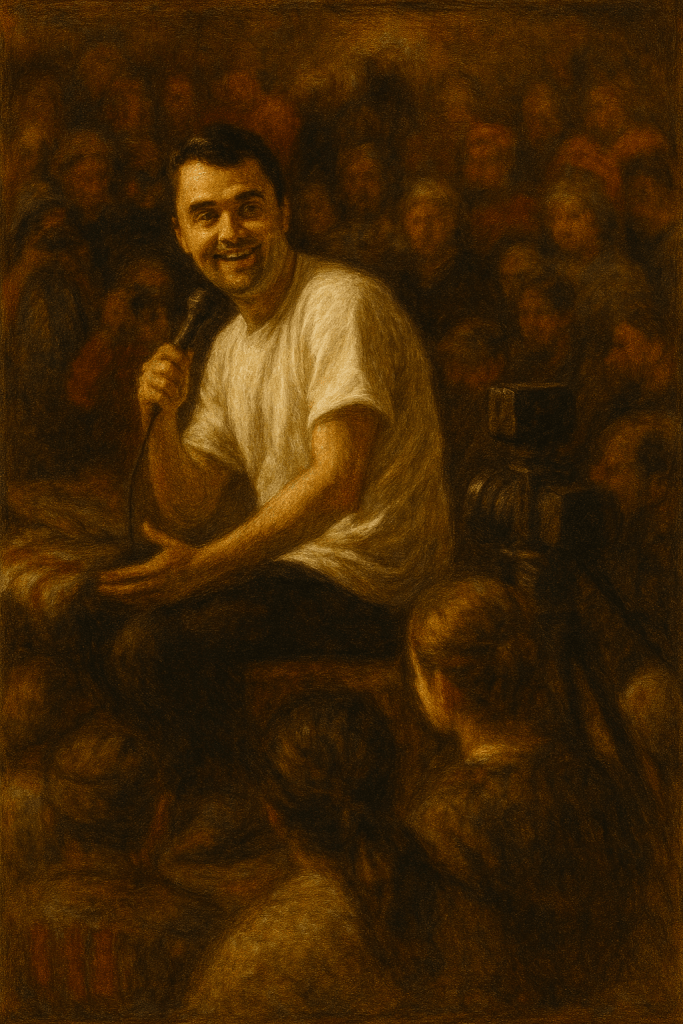
By Charlie Kirk (in first person voice)


I believe in truth. Not “my truth” or “your truth,” but truth itself—absolute, unchanging, and grounded in something higher than government, opinion polls, or cultural fashion. That is where everything begins for me.

I believe that every single human being is created in the image of God. That’s not just a theological claim, it’s the cornerstone of freedom. If rights come from government, they can be taken away. But if rights come from God, then government’s only legitimate role is to recognize and protect what has already been given. That’s why the Declaration of Independence starts not with a policy proposal, but with a statement of natural rights—life, liberty, and the pursuit of happiness.

America is unique because it was founded not on tribe or bloodline, but on principle. The principle that people can govern themselves, because they are moral beings capable of self-rule. This is why our Constitution limits government, divides power, and presumes liberty. I stand for that. I defend that. And I oppose anyone who tries to rewrite it or hollow it out.


Faith and Culture

But here’s what I’ve come to see: politics is downstream of culture, and culture is downstream of faith. If you lose faith, you lose the culture. If you lose culture, politics becomes a tool of tyranny instead of a safeguard of freedom.

That is why I speak not only about government budgets or Supreme Court cases but also about family, faith, and the church. Strong families make strong communities. Strong communities make a strong nation. When families collapse, when fathers are absent, when virtue is mocked and vice is celebrated, no tax policy or government program can repair the damage.

Our culture today celebrates confusion over clarity, autonomy over accountability, and feelings over facts. We tell young men they can become women, we tell students their history is only one long tale of oppression, we tell children that faith is superstition, and then we’re shocked when they grow up anxious, angry, and lost.

I believe truth sets you free. But lies enslave. And right now, we’re enslaving a generation to lies.


Freedom With Virtue

Freedom is a beautiful thing, but freedom without virtue is chaos. Liberty must be tethered to responsibility, or else it becomes license. That’s why the Founders said our Constitution was made only for a moral and religious people. That’s why John Adams warned it would be wholly inadequate for anyone else.

I believe we must recover the connection between liberty and virtue. True liberty is the freedom to do what is right, not just what is easy.


Current Issues

So let me connect this to where we are right now.

  • Free Speech: I believe every American has the right to speak freely, even if it offends, even if it challenges, even if it disrupts. The cancel culture mobs that try to silence debate are not just annoying—they are dangerous. Without free speech, there is no free society.
  • Life: I believe life begins at conception, and that every unborn child has the right to live. This is not a matter of “choice”; it’s a matter of justice. You cannot claim to defend the vulnerable while ignoring the most vulnerable of all.
  • Borders: I believe a nation without borders is no nation at all. If we cannot control who enters our country, then we have surrendered sovereignty. This is not about hatred or xenophobia—it’s about order, law, and the ability to govern ourselves.
  • Education: I believe education should be about truth, not indoctrination. Parents, not bureaucrats, are the primary educators of their children. When schools push ideology instead of knowledge, when they teach activism instead of excellence, they are robbing kids of their future.
  • Economy and Government: I believe in limited government, low taxes, and individual initiative. Every dollar the government takes is a dollar less in the hands of a family, a business, a church, or a charity that knows how to use it better. The bigger government gets, the smaller the individual becomes.

Opposition

I am not naïve. I know these positions make me enemies. I know they bring mockery, cancellation, even threats. But truth has never been popular with everyone. Jesus said, “The world will hate you because it hated me first.”

The left today pushes a worldview that says government is God, identity is fluid, and morality is relative. They claim they’re expanding freedom—but in reality, they’re destroying it. Because when you remove truth, you remove the very foundation of liberty.

They say diversity is our strength. I say truth is our strength. Diversity without truth is just division. They say equity is justice. I say equity is enforced mediocrity. They say secularism is neutral. I say it is hostile to faith.

I will not apologize for saying so.


Personal Conviction

I did not choose this path because it’s easy. I chose it because it’s necessary. Young people today are searching for courage. They’re searching for someone who won’t bend when the pressure comes, who won’t sell out for applause or retreat in fear.

I believe courage is contagious. When one person stands, it gives others permission to stand. That’s why I speak at campuses, why I organize with Turning Point USA, why I debate professors and challenge institutions. It’s not because I enjoy conflict—it’s because truth is worth conflict.


Call to Action

So what do I ask of you? Don’t just agree with me. Don’t just nod along. Live it. Speak it. Defend it.

Stand for your faith, even when mocked. Stand for your family, even when culture attacks. Stand for freedom, even when it costs you friends. The future of America depends not on what politicians in Washington do, but on what ordinary Americans are willing to defend in their homes, their schools, and their communities.

I believe America is still the greatest nation on earth, not because we are perfect, but because we are built on principles that are timeless. Principles rooted in truth. Principles worth fighting for.

That is what I believe. That is why I stand. And that is why I will never be silent.


Now That I’m Gone

(Imagined last reflections, addressed to the nation, supporters, family, belief-holders.)

Now that I’m gone, know this: my voice may be silent, but my convictions remain. I want you to remember that truth did not die with me. I want you to stand even stronger, louder, bolder than before.

To my family: Erika, my children—carry on with love, with faith. Do not be driven by fear, but by the assurance that every sacrifice has purpose. I hope you look back and know I lived not for fame, not for applause, but for something better: the eternal idea that God-given rights are not negotiable.

To my teammates, my movement, the students I spoke to—do not soften. Do not trade conviction for comfort. The moment you compromise truth, you compromise the future. Hold fast. Build schools that teach not just test scores, but character. Engage not just in politics, but in culture. Be scholars and warriors of truth.

To the country: America is worth it. The founding principles are worth defending, even if the wind blows against us. Even if the loudest voices are those who deny what we know in our bones. Freedom, faith, virtue—they endure because they are anchored in something beyond us. So be bold. Speak up. Love hard. Fight well. When darkness presses, raise not hatred, but unwavering resolve.

If there is anything I would leave behind, it is this: a challenge. The world you want isn’t born in your waiting. It’s born in your standing. It’s born in your sacrifice. So live like the truth depends on you—because in many ways, it does.

When all is said and done, I hope they remember that I believed. And because I believed, I acted.


Official Obituary

Charlie Kirk (1993-2025)

Born October 14, 1993, in Arlington Heights, Illinois, Charles James “Charlie” Kirk rose from humble beginnings to become one of the most prominent conservative voices in America. As co-founder of Turning Point USA, he helped mobilize young people across college campuses, championed free speech, pro-life causes, and limited government, and became a key ally to the MAGA movement.

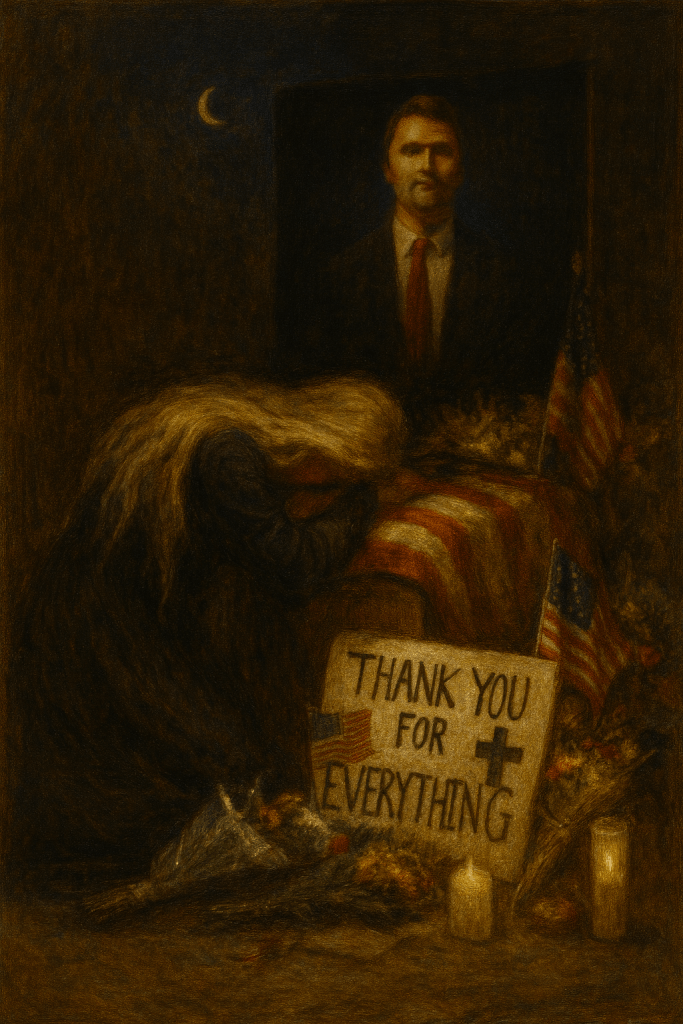
Kirk died on September 10, 2025, aged 31, after being shot while speaking at a Turning Point USA event at Utah Valley University in Orem, Utah. He is survived by his wife, Erika Frantzve Kirk, and their two children.

During his life he authored several books, including Campus Battlefield (2018), The MAGA Doctrine (2020), and Right Wing Revolution (2024); hosted The Charlie Kirk Show; and addressed audiences and media across the country in universities, conferences, and media appearances.

His legacy is one of controversy and conviction: beloved by supporters for his unabashed defense of faith, family, and freedom; criticized by detractors for rhetoric they saw as divisive; but with no dispute that he mattered.


The Legacy Continues

Following his passing, his wife, Erika Frantzve Kirk, was appointed CEO and Chair of Turning Point USA. In doing so, she carries forward not only her husband’s mission but also the organization’s momentum into a new chapter. Those who loved and followed Charlie see this as a sign that his voice, though stilled, still echoes through the work and leadership that continue in his name.

Data Centers in Texas: Peak Math, Success, Failures, and How to Keep Residents Off the Hook

AI Reponses to Questions Posed by Lewis McLain

Introduction

It was exciting to me when I joined the City of Garland in the early 1970s. Working in municipal government was not something I had considered when I received my BBA in Accounting. I never really wanted to be an accountant. My true love was Budgeting and Cost Accounting. The gift I really received was the introduction to Utility Rate Making. Garland not only had Water & Sewer Utilities, but the city also had an Electric Utility. I was also fortunate to work with excellent outside Rate Consultants. The big present wrapped with a nice bow was the concept of Peak Demand vs Average Demand in utility systems. From there, I realized the concept applied to roadways and many other aspects of municipal services. LFM

The Quick Math (so this posting makes sense)

Every discussion about data centers and electricity should begin with two simple metrics: load factor and peak demand.

  • Load factor (LF) = Average demand ÷ Peak demand.
  • Peaking factor (the inverse) = Peak ÷ Average = 1/LF.

Example (same annual energy, different load factors):
Suppose a data center averages 50 MW (megawatts or one million watts) of demand across the year. The perfect situation would be if there were businesses with a 100% load factor, meaning a business used the same amount of power every single hour (actually every minute) of the year.

  • At 50% LF, the peaking factor is 2.0. That means Peak = 100 MW.
  • At 75% LF, the peaking factor is 1.333. That means Peak ≈ 66.7 MW.

Takeaway: By raising the load factor from 50% to 75%, the required peak capacity falls by about 33% while delivering the same yearly energy.

And here’s why that matters: Texas utilities and ERCOT must size substations, feeders, and generation to meet the peak, not the average.

Homes conversion rule of thumb:

  • 1 MW ≈ 250 Texas homes at summer peak (based on ~4 kW per home).
  • 1 MW ≈ 625 homes on an annual-energy basis (average load ~1.6 kW per home).

So a 100 MW campus is the equivalent of a new mid-sized city landing on your grid overnight.


The Perfect Story and Outcome

Now picture the ideal case. A fast-growing tech firm proposes a 100 MW data campus in Texas. Instead of rushing, city leaders and the utility sit down with the company at the start and insist on clear answers. The questions are simple but critical:

  • What will your peak demand be, and how will you manage it during the state’s hottest afternoons?
  • Who pays for the new substation and feeders, and who carries the risk if you scale back or leave?
  • How do we ensure your taxable value stays meaningful even after your servers depreciate?
  • What tangible benefits will our community see, beyond the building itself?

On the grid:
The company commits to a high load factor and pledges to curtail 20–30 MW during ERCOT’s four summer peaks. The new substation and feeders are paid through contribution in aid of construction (CIAC), so residents will never face stranded costs like the costly investment itself.

On the finances:
Abatements are milestone-based—tied to actual MW energized, not just breaking ground. Valuation floors lock in a taxable base for servers and electrical gear, guaranteeing a predictable $5–10 million per year for schools, police, and parks.

On jobs and training:
The campus directly employs about 60 skilled staff for operations. But the developer also funds a community-college training pipeline in IT and electrical trades, seeding hundreds of local careers. The construction phase delivers hundreds of short-term jobs for two years.

On resources:
The data hall commits to water-efficient cooling, capped at a set gallon-per-MW threshold with quarterly reporting. A community benefit fund supplements fire protection and road upgrades near the campus.

On politics:
Hearings are calm because everything is transparent. Residents know in plain English that their bills won’t rise, because the project carries its own risk.

Outcome:
Five years later, the facility hums steadily, the schools are flush with additional tax revenue, and the city is recognized as a model for how to land high-tech investment without burdening households or small businesses.


What Could Go Wrong? (Case Narratives)

Of course, not every story ends this way. Around the country, major data-center projects have stumbled, been cancelled, or backfired in ways that offer hard lessons for Texas communities.

Corporate pullback after big promises — Microsoft

In 2025, Microsoft canceled or walked away from about 2,000 MW of planned data center capacity in the U.S. and Europe. Analysts cited oversupply compared with near-term demand. Utilities and communities that had already been preparing for those loads were left with planning costs and the risk of stranded substations.

Lesson for Texas: Even blue-chip firms are not risk-free. Cities must require CIAC, minimum bills, demand ratchets, and parent guarantees so residents aren’t forced to backfill the shortfall if plans change.


Court voids approvals after years of work — Prince William County, Virginia

In August 2025, a Virginia judge voided the rezonings for the “Digital Gateway” project—37 data centers on 1,700 acres—citing legal defects in notice and hearings. Years of planning collapsed overnight.

Lesson for Texas: Keep zoning and notice airtight. Add regulatory failure clauses in agreements so if courts unwind approvals, the city isn’t on the hook.


Political rejection at the finish line — College Station, Texas

On September 11, 2025, the College Station City Council unanimously rejected a proposed 600 MW data campus after residents raised concerns about grid strain, noise, water use, and meager job counts. The rejection stopped the project before construction—but it revealed how quickly sentiment can flip.

Lesson for Texas: Require peak-hour commitments (4CP curtailment), publish MW timelines, and cap water usage. Transparency eases public concerns and avoids last-minute backlash.


Industry-wide pauses — Meta redesigns for AI

Between 2022 and 2024, Meta paused more than a dozen U.S. projects to redesign for artificial intelligence. Sites like Mesa, Arizona slipped years behind schedule. Communities banking on near-term tax revenue saw gaps in their budgets.

Lesson for Texas: Tie abatements to energized MW milestones. If load slips, abatements pause until actual demand materializes.


Subsidy blow-ups — Texas and beyond

By 2025, Texas’ data center sales-tax exemptions ballooned from $157 million to more than $1 billion per year in foregone revenue. Other states saw similar overruns as projects multiplied faster than expected.

Lesson for Texas: Model depreciation and appeals honestly. Use valuation floors in agreements, and don’t oversell the net gain at ribbon-cuttings.


Local backlash stalls projects — Central Texas

In Central Texas, residents have already forced pauses or redesigns of major projects, citing water stress, noise, and grid strain. CyrusOne and others adjusted timelines under pressure.

Lesson for Texas: Put MW forecasts, curtailment commitments, and water-use data in plain English. Opaqueness breeds opposition.


Who Pays When a Big Customer Leaves?

In Texas, fixed delivery costs don’t vanish if a large customer fails or exits. Unless safeguards are in place, those costs roll into the next rate case and land on residents and small businesses.

Protective tools include:

  • CIAC: Customer funds all dedicated substations/feeders.
  • Facilities charges: Monthly fees for customer-specific assets.
  • Contract demand and minimum bills: Revenue stability even if load shrinks.
  • Demand ratchets: If they ever peak high once, they pay a portion of that demand for future months.
  • Parent guarantees or letters of credit: Real money backing early-exit costs.
  • Peak-hour curtailment covenants: Written commitments to reduce load during ERCOT’s four summer peaks.

These tools are standard in Texas utility practice. The only mistake is failing to insist on them.


Bringing It Home to Collin & Denton (DFW)

The Dallas–Fort Worth market is growing fast: nearly 600 MW operating and another 600 MW under construction, almost all pre-leased. In Collin and Denton counties, just two or three large campuses can rival the load of an entire mid-size city.

That’s why development agreements must:

  • Stage energization in MW blocks,
  • Require 4CP curtailment reporting, and
  • Hard-wire CIAC plus facilities charges so no “stranded substation” ever lands on residents.

Conclusion: Planning With Eyes Wide Open

Data centers are the backbone of cloud computing, e-commerce, and artificial intelligence. For Texas, they promise billions in private investment and hundreds of millions in taxable value. But their true footprint is measured in megawatts, not headcount.

Handled well—with CIAC, ratchets, valuation floors, and peak-hour curtailment—they can be stable anchors of local finance. Handled poorly, they can leave residents paying for stranded substations, foregone tax revenue, and empty server halls.

The “perfect story” shows it can be done right. The failures across the country show what happens when it isn’t. For Texas cities, the path forward is clear: land the investment, but make the project carry the risk—not your ratepayers.


Contract terms cities and utilities should insist on (plug-and-play list)

  • CIAC for all dedicated facilities (feeders, substation bays, transformers).
  • Facilities charge (monthly) on any utility-owned dedicated equipment.
  • Contract demand with a minimum bill and demand ratchet.
  • Parent guarantee / letter of credit sized to cover early exit and decommissioning.
  • Peak-hour curtailment targets (spell out dates/hours and telemetry).
  • Milestone-based incentives (abatement pauses if MW milestones slip).
  • Valuation floors for server personal property and clear depreciation schedules.
  • Quarterly public reporting: MW online, curtailment at peaks, water usage if relevant.

DFW planning checklist (Collin & Denton emphasis)

  1. Get the MW ramp (Year 1–5), contract demand, and minimum bill in writing.
  2. Require CIAC + facilities charges so bespoke assets aren’t rate-based on everyone.
  3. Bake in peak-hour curtailment commitments (the four summer peaks).
  4. Tie local incentives to energized MW, not just building permits.
  5. Set valuation floors and independent appraisal rights.
  6. Secure credit support (parent guarantee or LOC) sized for the dedicated build.
  7. Publish quarterly progress (MW online and peak reductions) to keep trust with residents.

Sources (selected)

  • Corporate pullback: Microsoft cancellations ≈ 2,000 MW (TD Cowen). Reuters+1
  • Court reversal: Prince William “Digital Gateway” rezonings voided (Aug. 2025). Data Center Dynamics+1
  • Political rejection: College Station votes down 600 MW sale (Sept. 2025). Data Center Dynamics+1
  • Industry-wide pause/redesign: Meta paused >12 builds; Mesa AZ delay to 2025. Tech Funding News+1
  • Subsidy growth: Texas data-center tax costs > $1 B/yr; spikes across states. Good Jobs First+1
  • DFW market scale and pre-leasing: CBRE market profiles and releases (H1/H2 2024–2025). CBRE+2CBRE+2
  • Central-Texas pushback (CyrusOne pause noted): Austin American-Statesman review (Sept. 2025). Statesman

Homelessness in America: Successes, Failures, and the Search for Lasting Solutions


AI Responses to questions posed by Lewis McLain

Introduction

Homelessness is one of the most visible tests of a society’s compassion and its ability to solve complex problems. Tents, makeshift shelters, and men and women sleeping on sidewalks remind us that, despite immense national wealth, millions of Americans live without the security of a home. The crisis is humanitarian, economic, and civic: homelessness drives up emergency room visits, policing costs, and erodes public trust in institutions.

Over the last several decades, billions of dollars have been devoted to ending homelessness. Some communities, such as Houston and Salt Lake City, have demonstrated that it is possible to reduce homelessness dramatically when resources are aligned around proven strategies. Others, most famously Los Angeles and San Francisco, have spent vast sums with disappointing results. Examining both sides — the promising and the faltering — alongside local initiatives in McKinney, Texas, shows what it takes to turn lofty goals into tangible outcomes.


Goals of a Comprehensive Homeless Program

A truly comprehensive homelessness program is not an ad hoc collection of shelters or one-time grants; it is a system designed to prevent homelessness, respond quickly when it occurs, and ensure that once people are housed they remain housed.

The overarching goals are threefold:

  1. End homelessness, not just manage it — shifting the system’s focus from temporary fixes to permanent housing solutions.
  2. Put housing first — recognizing that stability is impossible without a secure place to live.
  3. Build stability and self-sufficiency — ensuring that once individuals are housed, they can remain so through employment, education, or long-term supportive services.

Achieving these goals requires several interlocking objectives:

  • Prevention and Diversion. Stop homelessness before it starts with rental assistance, eviction mediation, and utility aid. A few hundred dollars in short-term help can prevent years of instability.
  • Emergency Response. Provide dignified shelter, warming/cooling centers, and safety nets when prevention fails.
  • Rapid Re-Housing. Quickly place individuals into apartments with short-term support; the longer people remain homeless, the harder recovery becomes.
  • Permanent Supportive Housing (PSH). Pair affordable apartments with long-term case management, healthcare, and counseling for those who are chronically homeless.
  • Supportive Services. Case managers, mental health clinicians, job training, childcare, and transportation are the scaffolding of stable housing.
  • Coordinated Entry and Data. Use a single intake system and shared data to match people to the right level of support and measure outcomes.
  • Community Integration. Engage nonprofits, faith groups, healthcare systems, landlords, and local governments in aligned roles.
  • Sustainable Funding and Policy Alignment. Ensure zoning, land use, and housing policy are aligned with homelessness strategies, backed by stable funding.

Models of Success

The most celebrated examples of progress share a common feature: they invest in housing first, then support individuals with tailored services.

Houston’s The Way Home

Houston has become a national model. Through The Way Home, a collaboration of more than 100 agencies, the city has placed over 32,000 people into permanent housing since 2012, with nearly 90% remaining housed after two years. Houston cut its homeless population by nearly two-thirds over the last decade. It accomplished this by streamlining entry systems, pooling federal and local funds, and incentivizing landlords. The city showed that a sprawling, high-growth metro can achieve large-scale reductions in unsheltered homelessness.

Community First! Village in Austin

Austin’s Community First! Village created an entire neighborhood designed for the chronically homeless: micro-homes, shared kitchens, gardens, and community spaces. It acknowledges that belonging and community are as essential as shelter. The model demonstrates how design and intentional planning can foster dignity and stability.

The 100,000 Homes Campaign

At the national scale, the 100,000 Homes Campaign (2010–2014) surpassed its goal of housing the most medically vulnerable people. By focusing on data, coordinated entry, and Housing First principles, it proved the strategy could succeed across dozens of cities.

Other Targeted Efforts

  • Deborah’s Place (Chicago): Specializes in housing and trauma-informed services for homeless women.
  • The Doe Fund (New York): Blends transitional work and housing for individuals with histories of incarceration or addiction.

Across all these successes, the key is the same: low barriers to entry, permanent housing as the anchor, and services that treat individuals with dignity.


McKinney and Collin County: Local Efforts

Smaller communities like McKinney, Texas, are also facing homelessness pressures due to rapid growth and rising housing costs.

Current Strategies

  • Coordinated Entry: McKinney participates in a system that assesses needs and directs individuals to appropriate programs.
  • Emergency Responses: The McKinney Emergency Overnight Weather Station (MEOWS) opens during freezes, while nonprofits like Streetside Showers provide hygiene and outreach.
  • The Samaritan Inn: Provides transitional housing with structured case management and life-skills training.
  • Shiloh Place: Focused on single mothers; reports show over 90% of graduates secure stable housing and increased education or income.
  • City Commitments: McKinney has pledged $3 million for affordable housing grants and loans, $1 million for a Community Land Trust, and plans to build 10 new homes/townhomes by 2026 (from city strategic goals, pending full verification).

Outcomes

Regionally, Dallas and Collin Counties have reduced homelessness by 19% since 2021, with more than 10,000 individuals housed. McKinney, however, recorded 239 homeless individuals in its 2024 Point-in-Time count — a 5% increase from the previous year, with children making up over a quarter of the total (local reporting, Community Impact, pending full verification).

The city is drafting its 2025–2029 Consolidated Plan to expand affordable housing and strengthen prevention efforts, but significant gaps remain: no full-time shelter within city limits and limited published data on long-term housing retention.


The Magnet Effect: Myth, Reality, and Regional Solutions

A recurring concern for communities is the so-called “magnet effect” — the fear that by building better services, they may attract individuals experiencing homelessness from neighboring jurisdictions.

Evidence

Research shows that most people remain close to where they lost housing, often due to family or community ties. Still, some migration occurs, particularly when:

  • One city offers low-barrier shelters while others criminalize camping.
  • Safer and more dignified conditions exist in a neighboring jurisdiction.
  • Housing slots or vouchers are more readily available.

For a city like McKinney, adjacent to Dallas and Plano, even modest inflows can strain resources.

Responses

  • Regional Coordination: Houston’s success rested on aligning 100+ agencies across Harris County — reducing duplication and sharing responsibility.
  • Shared Funding: Counties can pool funds to ensure no single city bears disproportionate costs.
  • Eligibility Prioritization: Programs may prioritize residents with local ties, though this must be balanced against fair housing obligations.
  • Permanent Housing Focus: Building permanent housing rather than endless shelters reduces churn across city lines.

The lesson is clear: the answer is not to scale back but to ensure regional systems. With shared responsibility, improved services do not overwhelm one city but uplift an entire region.


National Failures and Costly Lessons

For every Houston, there is a Los Angeles or San Francisco — cities where billions have been spent with limited results.

Los Angeles: Measure HHH

In 2016, voters approved a $1.2 billion bond (Prop HHH) to build 10,000 supportive housing units. By 2023, only about 1,100 were complete, and per-unit costs ballooned to $596,000–$837,000, with some projects nearing $1 million. Homelessness rose despite the investment.

San Francisco

San Francisco spends over $1 billion annually, yet its homeless population has remained between 7,000–8,000 for years. Navigation Centers and hotel conversions often saw exit-to-housing rates under 30% (per local audits), creating a revolving door of temporary care.

Seattle / King County

Seattle created a Regional Homelessness Authority in 2020 with a nine-figure budget. Audits soon revealed weak data, unclear goals, and little visible impact on unsheltered homelessness.

Hawaii

Despite declaring a state of emergency in 2015 and spending heavily, Hawaii remains the state with the highest homelessness rate in the nation (44 per 10,000 residents). Sky-high housing costs and tourism pressures outpaced program gains.

New York City

New York spends more than $4 billion annually, with over 80,000 individuals in shelters each night. Critics argue that the shelter system has grown while permanent housing production lags.

HUD–VA Vouchers

The HUD-VASH program reduced veteran homelessness nationally. Yet in some regions, thousands of vouchers went unused due to bureaucratic delays and landlords unwilling to participate — showing that funding without execution fails.


Common Themes in Failures

  1. Exorbitant per-unit costs undermine public trust.
  2. Glacial delivery timelines prevent timely relief.
  3. Shelter-heavy spending traps people in temporary systems.
  4. New bureaucracies add layers without results.
  5. Housing supply issues (zoning, costs, land) remain unaddressed.
  6. Weak outcome tracking — dollars are counted, but stable lives are not.

Lessons Learned

The contrast between successes and failures yields hard lessons:

  • Permanent housing works. Housing First and PSH consistently reduce homelessness when scaled.
  • Supportive services sustain results. Housing without counseling, healthcare, or employment support is fragile.
  • Cost control is essential. Programs must avoid $800,000 per-unit models.
  • Data must drive funding. Retention rates, returns, and time-to-housing are the key benchmarks.
  • Regionalism prevents “magnet” burdens. Shared responsibility avoids one city becoming a hub.
  • Adaptation to context matters. Houston’s model can inform McKinney, but strategies must match local housing markets and resources.

Conclusion

Homelessness is not an unsolvable problem. Evidence shows that with the right mix of housing, services, and accountability, communities can dramatically reduce it. Houston’s transformation proves that systemic, coordinated approaches succeed. Austin’s Community First! Village shows how design and belonging restore dignity. At the same time, Los Angeles and San Francisco stand as warnings of what happens when money is poured in without discipline, urgency, or accountability.

For McKinney and Collin County, the path forward is clear: build on existing programs, expand affordable housing, strengthen data systems, and work regionally to share responsibility. Without coordination, improved services risk attracting individuals from neighboring areas. With collaboration, however, every jurisdiction can contribute to — and benefit from — the solution.

The examples are before us: homelessness can be reduced, but only when programs are not just well-funded, but well-designed, regionally balanced, and rooted in the conviction that every person deserves a home.


Apology and Surrender: The Healing Powers of Humility

Topics Suggested by Dan Johnson (Apology) and Lewis McLain (Surrender), AI Assist guided and edited by Lewis McLain

Introduction

Human relationships are built not on perfection but on imperfection. People hurt one another, whether through words spoken in anger, careless neglect, or intentional wrongdoing. When wounds occur, two of the most powerful forces available for restoration are apology and surrender. Aaron Lazare, M.D., in his landmark book On Apology, shows how apology has the power to restore dignity, heal shame, and rebuild fractured bonds.

Yet apology, in its truest sense, is inseparable from another spiritual and relational posture: surrender. To apologize is not merely to speak words but to yield pride, to lay down the armor of self-justification, and to open oneself to vulnerability. Similarly, surrender is not simply defeat or resignation; it is the willing relinquishing of control in the interest of truth, healing, and reconciliation.

This essay explores apology and surrender as parallel acts of humility that work together to heal relationships, transform communities, and restore souls. It traces the anatomy of apology, the psychology of surrender, and the mutual dependence of these two themes in human experience.


The Anatomy of Apology

Aaron Lazare identifies four core elements of a full apology: acknowledgment, explanation, expression of remorse, and restoration. Each corresponds to a deep human need.

  1. Acknowledgment
    Naming the wrong directly—without hedging, minimizing, or shifting blame—meets the need to be seen and validated. A clear “I was wrong when I…” affirms reality and steadies the ground beneath the person who was hurt.
  2. Explanation
    Context does not erase harm, but it can clarify whether the injury was intentional, negligent, or circumstantial. Honest explanations distinguish accountability from fatalism and open a path to understanding.
  3. Remorse
    Genuine regret puts the heart into words. It signals that the one apologizing has entered, however briefly, into the pain of the other and recognizes the moral weight of what happened.
  4. Restoration
    Words are the beginning, not the end. Restoration makes repair tangible—amended habits, renewed trust, practical help, and symbolic acts of respect that acknowledge the breach and work to close it.

A sincere apology restores dignity to the one who was hurt and humanity to the one who did the hurting. But an apology that lacks surrender—clinging to defensiveness, pride, or self-protection—will often fail.


The Nature of Surrender

Surrender is often misunderstood as capitulation. Spiritually and psychologically, however, surrender is a chosen act of humility, courage, and wisdom. It is the relinquishing of control, the yielding of one’s pride, and the willingness to enter into vulnerability.

In relationships, surrender means giving up the need to always be right, releasing the insistence on self-justification, and abandoning the illusion of total control. In spiritual terms, surrender means opening the heart to God, trusting providence, and laying down the burden of self-sovereignty.

Unlike passivity, surrender is active. It is the exercise of agency to lay something down—as a soldier surrenders arms to embrace peace, the human spirit surrenders pride to embrace love, truth, and reconciliation.


Apology as a Form of Surrender

Every genuine apology requires surrender.

  • Surrender of Pride: To apologize is to admit wrong and accept fallibility.
  • Surrender of Control: The one apologizing cannot dictate whether forgiveness will be granted; the outcome is entrusted to the other.
  • Surrender of Narrative: Apology yields the right to tell the story only from one perspective, acknowledging instead the truth of another’s experience.

Without surrender, apology becomes hollow—a performance rather than a bridge. “Mistakes were made” is not surrender; it is evasion wearing a mask.


Surrender as an Apology to Life

If apology requires surrender, surrender itself can be seen as a broader apology—an apology to reality, to God, to existence itself.

When a person surrenders in prayer, they confess limitations and apologize for the illusion of self-sufficiency. When a community surrenders bitterness, it apologizes to the possibility of peace for having clung to resentment. Surrender is apology without words: a posture that admits, “I cannot carry this alone” and “I was wrong to insist on control.”

As apology restores broken human relationships, surrender restores the fractured relationship between human beings and the deeper truths of life and faith.


Case Studies and Applications

Personal Relationships

In marriage or friendship, apology without surrender often falls flat: “I’m sorry, but you misunderstood me” is not surrender. When apology is paired with surrender—“I was wrong, I hurt you, and I want to change”—healing becomes possible. Conversely, surrender without apology (“Fine, whatever you want”) is resignation, not reconciliation. The union of apology and surrender creates intimacy.

Professional Life

In the workplace, apology is a mark of integrity. Leaders who cannot admit mistakes slowly lose credibility. In professions like medicine, sincere acknowledgment of error—spoken with humility and joined to concrete changes—strengthens trust and de-escalates conflict. Professional apology is not groveling; it is the surrender of perfectionism for honesty and responsibility.

Public Life

When governments or institutions apologize for wrongs, the gesture carries immense symbolic weight. For an apology to be constructive, it must be grounded in truth, humility, and a genuine desire for unity rather than political division.

A healthy public apology requires clear acknowledgment and commitment to do better, but it does not bind future generations to perpetual guilt. Symbolic acts, education, transparent reforms, and measurable safeguards often carry more healing power than divisive schemes. Real leadership surrenders the instinct to defend the record at all costs, and resists weaponizing apology for partisan advantage. The aim is restoration, not resentment.

Public apologies work best when they:

  • Name the wrong clearly and honestly.
  • Offer reforms that prevent repetition.
  • Extend a hand of reconciliation across divides.

Thus public apology becomes less about repaying a ledger and more about restoring trust, dignity, and shared civic values.

Spiritual Life

In Christian tradition, surrender lies at the heart of confession: “Not my will, but Yours be done.” In Buddhism, surrender is the release of ego that perpetuates suffering. In Islam, the very word “Islam” means surrender to God. Across traditions, surrender is humanity’s apology to the divine for pride, illusion, and rebellion.


The Healing Power of Apology and Surrender Together

When apology and surrender work together, they create a durable cycle of healing:

  1. Apology names the wound—restoring dignity.
  2. Surrender yields pride—making space for reconciliation.
  3. Apology seeks restoration—rebuilding trust through changed behavior.
  4. Surrender entrusts the outcome—accepting forgiveness or rejection with humility.

Apology without surrender becomes manipulation. Surrender without apology becomes resignation. Together, they complete the circle of reconciliation.


The Limits and Challenges

Both apology and surrender face resistance. Pride resists apology; fear resists surrender. In a culture that prizes autonomy and control, surrender can appear weak. In a world obsessed with image, apology can feel humiliating. Yet both require extraordinary strength. They risk rejection while opening the possibility of renewal.


Conclusion to the Essay

Apology and surrender are not signs of weakness but of courage. They acknowledge human imperfection and seek restoration. In personal, professional, public, and spiritual life, these twin postures open doors that heal where pride cannot. The following dramatic dialogue imagines how apology and surrender might reshape our public life—and how citizens might answer in kind. While intentionally brief, the reader is invited to expand the dialogue in the spirit intended.


The Table of Reconciliation (A Short Play in Five Acts)

Setting: A plain, wood-paneled room. No cameras, no aides, no reporters. Two long-warring representatives sit across a scarred table. A single lamp glows overhead.

ACT I – The Silence Before Words

(They sit in silence. The lamp hums.)

Party A:
We have allowed this table to become a battlefield. Every session, every hearing, every speech—we’ve turned words into weapons. Not just against each other, but against the very people who trusted us to serve. Their hopes are caught in the crossfire of our pride. I feel the weight of that. I can’t ignore it any longer. For this… I apologize.

Party B:
Your words are hard to hear because they are true of me as well. I used sharpened language to divide. I made enemies of colleagues. I mistook applause for virtue and surrendered compassion for victory. That was wrong. I am sorry.

ACT II – The Confessions

Party A:
My pride made me deaf. I stopped listening. I treated every proposal from your side as poison before I even read it. I told myself I was protecting principle, but really I was protecting ego. That arrogance closed doors, and I betrayed the work I came here to do.

Party B:
I built my platform on your faults. Your mistakes became my fuel and your failures my headlines. I used names instead of reasons, caricatures instead of your actual views. I stirred suspicion where I could have sought clarity. I often gained ground in the polls and lost ground in truth.

Party A:
Some nights I ask, “What have we become?” Debate used to mean searching together for solutions. Now it means scoring points, performing for cameras instead of governing for people.

Party B:
I’ve felt that hollowness too. After the noise fades, I wonder what I’m really building. Am I protecting the people—or just protecting myself? Too often, I fear it has been the latter.

ACT III – The Turning Point

Party A:
What if we tried something unthinkable? Not surrendering our convictions—we will differ—but surrendering our need to dominate. What if we laid down this war of pride?

Party B:
We would lose the comfort of certainty. Our supporters might call us weak. We would have to slow the reflex to pounce, to headline the moment. That is hard. But we might reclaim what we’ve forgotten—the dignity of our calling.

Party A:
An apology in public life is not humiliation; it is service. And surrender is not defeat; it is the path forward. To admit wrong, to yield control, to listen more than we speak—this is the work of statesmen, not partisans.

Party B:
Then I will say it plainly: I surrender the instinct to answer anger with anger. I surrender the impulse to see you as an enemy rather than a partner in this fragile experiment of democracy.

Party A:
And I surrender the temptation to weaponize your mistakes for my gain. I surrender the pride that keeps me from acknowledging wisdom that comes from your side of the aisle.

Party B:
So we surrender—not our beliefs, but our pride. Not our duty, but our hostility. Let us begin again at this table.

ACT IV – The Agreement

(They slide a sheet of paper between them and take a pen. They speak and write together.)

Party A:
We will not caricature each other. We will resist the urge to make the other a monster, even when disagreement is sharp.

Party B:
We will speak truthfully, but not cruelly. Our arguments will be about ideas, not insults.

Party A:
We will listen before replying, even when rebuttal burns within us.

Party B:
We will admit when we are wrong. A prompt apology restores more trust than stubborn defense.

Party A:
We will prize the relationship above the point to be scored. Headlines fade; trust endures.

Party B:
We will respect dignity. Every colleague—ally or rival—is more than a vote to be counted; they are a citizen worthy of honor.

Both (writing the final line):
We will seek unity, not uniformity. We will disagree without despising. We will surrender pride for the sake of peace.

ACT V – The Closing

(They set down the pen. The page is full of promises. They rise.)

Party A:
We will still argue. We will still oppose. But we will never again confuse opposition with the poison of hatred.

Party B:
Let the people see not only our debates but our discipline. Let them know their leaders are capable of apology and surrender—not to each other, but to the higher calling of service.

(They clasp hands—not as victors or losers, but as fellow servants—and leave the room together.)


Epilogue: The Citizen Response

Scene: Word spreads. Across the nation, citizens gather in homes, coffee shops, and town halls.

ACT VI – The Citizens Speak

Citizen 1:
For once, they admitted wrong. No spin. Just an apology. I didn’t think I would ever see it.

Citizen 2:
After so much shouting and blame, hearing that confession feels like rain after a drought.

Citizen 3:
It challenges me. If they can apologize, what about me? How often do I caricature people who vote differently? How often do I surrender respect for the sake of an argument?

Citizen 4:
We have demanded better of them. Let’s demand better of ourselves.

Citizen 5:
Their agreement shouldn’t sit on one table. It should echo at every dinner table. We need our own covenant.

ACT VII – The Citizen Covenant

(They draft and read aloud.)

The Citizen Covenant for Respectful Democracy

  1. We will see political differences as disagreements, not enmities.
  2. We will refuse caricatures of those who think differently.
  3. We will listen before we judge, and judge ideas before we judge people.
  4. We will apologize quickly when we speak unfairly.
  5. We will not let online arguments dehumanize neighbors we meet in person.
  6. We will hold leaders accountable—without hatred and without surrendering our own dignity.
  7. We will remember that democracy survives not only on laws but on habits of respect.
  8. We will lend support and recognition to our politicians practicing civility and respect.

ACT VIII – A Constitutional Vision

Citizen 2:
Could this go further? Could we enshrine the spirit of this covenant?

Citizen 3:
You can’t legislate the heart. But a constitutional reminder could mark our priorities.

Citizen 1 (writing):
Amendment XXVIII
The people of the United States affirm that the practice of democracy requires respect among citizens and their representatives. Freedom of speech shall be exercised with dignity, and leaders shall model humility, apology, and restraint in public life. The preservation of our Union depends not only upon rights, but upon responsibilities freely embraced by all.

Citizen 4:
Maybe it never passes. But maybe the amendment begins here—written first on our hearts.


Final Word

Apology and surrender open paths that power alone cannot. Leaders who practice them invite citizens to do the same. Citizens who practice them call leaders higher. And if both persist, even constitutions may one day carry their imprint—not as commands enforced by courts, but as principles freely lived by a people who chose humility over pride, reconciliation over resentment, and respect over division.

Dementia: Understanding, Preventing, and Facing It

By Lewis McLain guiding and editing AI

Introduction: What Dementia Is and Why It Happens

Dementia is not one disease but a syndrome—a group of conditions that progressively damage the brain and impair memory, reasoning, language, and daily living. It develops when neurons (brain cells) are injured or die, severing the communication networks that underlie thought and personality.


The Major Types of Dementia

  1. Alzheimer’s Disease – The most common form (60–70% of cases). Caused by abnormal protein accumulations—amyloid plaques outside cells and tau tangles inside cells—that disrupt communication and kill neurons. Symptoms usually start with short-term memory loss and grow into confusion, language difficulties, and personality change.
  2. Vascular Dementia – Often follows strokes or years of high blood pressure and vessel damage. Tiny areas of the brain die from lack of blood flow. Symptoms: slowed thinking, planning difficulties, and sometimes abrupt declines after strokes.
  3. Lewy Body Dementia – Triggered by deposits of alpha-synuclein proteins (Lewy bodies). Signs include vivid hallucinations, sleep disruptions, and movement issues resembling Parkinson’s disease.
  4. Frontotemporal Dementia (FTD) – Caused by degeneration in the brain’s frontal and temporal lobes. It strikes younger adults more often (40s–60s). Early symptoms: loss of empathy, social misjudgments, inappropriate behavior, or speech problems.
  5. Mixed Dementia – Many older adults have overlapping forms—most commonly Alzheimer’s plus vascular changes.

Why Dementia Develops

  • Age: risk rises steeply with age, though dementia is not “normal” aging.
  • Genetics: some genes (like APOE-ε4) raise Alzheimer’s risk.
  • Cardiovascular factors: high blood pressure, diabetes, obesity, and smoking damage vessels that feed the brain.
  • Lifestyle: inactivity, poor diet, isolation, and chronic stress erode brain resilience.
  • Head trauma: repeated concussions or injuries increase risk.


Staving Off Dementia: What Helps

  1. Exercise & Cardiovascular Health
    • Aerobic activity (walking, swimming, cycling) improves blood flow and stimulates brain-protective chemicals.
    • Controlling blood pressure, diabetes, and cholesterol protects small vessels that keep brain tissue alive.
  2. Diet
    • The Mediterranean and MIND diets—rich in leafy greens, berries, nuts, olive oil, and fish—are linked to lower risk.
    • Reducing processed sugars and excessive alcohol helps protect cognition.
  3. Brain Stimulation
    • Reading, learning, music, puzzles, and meaningful conversations create new neural connections (cognitive reserve).
    • Social engagement lowers risk of decline compared to isolation.
  4. Sleep & Stress
    • Deep sleep clears harmful proteins like amyloid.
    • Chronic stress raises cortisol, damaging memory regions; prayer, meditation, or relaxation techniques counteract this.
  5. Purposeful Living
    • Having goals, serving others, and maintaining daily structure all reinforce mental resilience.


Dealing With Dementia: When It Arrives

  1. Practical Care
    • Create predictable routines—familiarity reduces anxiety.
    • Simplify tasks into small steps; use labels, calendars, and cues.
    • Modify the home for safety (remove tripping hazards, improve lighting, secure exits).
  2. Emotional & Relational Care
    • Focus on what remains: music, touch, prayer, rituals often endure even late in the disease.
    • Loved ones should practice patience and avoid arguing—redirecting and reassuring is more effective.
    • Caregivers must seek respite and support groups; burnout is common.
  3. Medical & Therapeutic Approaches
    • Some medications (donepezil, rivastigmine, memantine) may slow symptoms, though modestly.
    • Occupational therapy, speech therapy, and memory training help preserve abilities.
    • In later stages, palliative care focuses on comfort and dignity.
  4. Spiritual Care
    • Scripture, hymns, or prayer can provide peace even when memory fades.
    • Families may reframe dementia not only as loss but as a chance to show love, patience, and service.


A Practical Brain Health Checklist

Daily

  • 30 minutes of physical activity (walk, swim, cycle, stretch)
  • At least 2 servings of leafy greens or colorful vegetables
  • Engage in 1 mental challenge (crossword, reading, learning a skill)
  • 7–8 hours of quality sleep
  • Prayer, meditation, or quiet reflection to reduce stress

Weekly

  • Eat 2+ servings of fish (salmon, sardines, tuna)
  • Attend a social gathering (church, club, family meal, volunteering)
  • Try something novel (new route, new recipe, new book)
  • Review and update medication, blood pressure, or glucose checks

Monthly

  • Connect with healthcare professionals for preventive care
  • Evaluate and refresh home environment for safety and stimulation
  • Plan or participate in a purposeful project or community service

Conclusion

Dementia is a cruel thief, robbing memory and independence. Yet it is not inevitable. A healthy lifestyle can delay its onset by years—and delaying by even five years could cut new cases in half. For those already touched by it, compassion, structure, and dignity-centered care make the journey bearable.

To stave it off and to deal with it are really part of the same calling: to live fully, with purpose, in relationship, and with care for both body and soul—right up until the end.

No One Should Have to Live in Fear: The Role of the Ordinary Citizen

By Lewis McLain, collaborating, guiding, and editing AI

Fear is one of the most primal human responses. It protects us in sudden danger, but when it becomes a daily companion, it corrodes the human spirit. Public fear—on buses, sidewalks, subways, or in neighborhoods—steals trust, peace, and dignity. The image of a woman recoiling in terror on a city train, knees drawn to her chest as another looms over her, tells a painful truth: no one should have to live this way.


Texas: A Case Study in Mental Health Gaps

Texas illustrates both the scale of the challenge and the stakes involved:

  • Prevalence: One in five Texas adults experience mental illness each year. Among youth, 35% have a mental or behavioral health need.
  • Shortages: 246 of 254 Texas counties are designated Mental Health Professional Shortage Areas. Entire regions have no psychiatrist or child psychologist.
  • Treatment Gaps: A quarter of adults reporting symptoms of anxiety or depression were unable to access counseling in 2021.

The result is predictable: untreated mental illness spills over into public spaces, creating fear not only for the person suffering but for bystanders as well. Assaults and behavioral crises on Texas buses and trains are rising, with some agencies reporting record levels of violence.


If Resources Were Unlimited: What Would Treatment Look Like?

Imagine resources were no barrier: every Texan had immediate access to psychiatric evaluation, therapy, and medication. What would that achieve?

  1. Early Detection and Intervention
    • Many mental illnesses, such as schizophrenia, bipolar disorder, and severe depression, present early warning signs. With unlimited resources, outreach teams could identify and treat individuals before crises escalate.
  2. Comprehensive Treatment Plans
    • Treatment might combine medication (e.g., antipsychotics, mood stabilizers, antidepressants), evidence-based therapies (CBT, DBT, trauma-focused therapy), housing support, and peer counseling.
  3. Recovery and Rehabilitation
    • For some disorders, full remission is possible. Depression and anxiety often respond well within months of treatment. For chronic illnesses like schizophrenia, symptoms can be managed, stability restored, and relapse reduced.
  4. Timeframes
    • Depression and Anxiety: 8–16 weeks of consistent therapy and/or medication can achieve major improvement for many.
    • PTSD: Evidence-based therapies like EMDR or prolonged exposure often show progress within 12–20 sessions.
    • Schizophrenia or Bipolar Disorder: Lifelong management may be required. “Cure” is not realistic; stability is.
    • Substance Use Disorders (often co-occurring): Recovery is long-term and relapse-prone, requiring sustained support.

The reality: even with unlimited funding and willing patients, time itself is the obstacle. Many psychiatric conditions require years of care, often lifelong monitoring. Like prison reform, the dream of “curing” all mental illness is noble but unrealistic. Treatment can help millions live safer, better lives—but it cannot erase the presence of crisis in public spaces.


Why Prevention and Intervention Are Still Essential

If the path of treatment is long, then the path of prevention and intervention is immediate. While better funding is vital, it is not enough. People are still left vulnerable in the moments when violence erupts or fear overwhelms.

Public safety cannot rest solely on:

  • Staff training (drivers cannot leave their seats).
  • Police response (often delayed, sometimes escalating).
  • Clinician availability (which even with investment will take decades to meet demand in Texas).

Instead, safety in daily life requires empowering ordinary citizens—the bystanders, passengers, and neighbors who are present in those crucial first moments.


Empowering the Ordinary Citizen

What is missing from our national strategy is the role of citizens themselves. Just as society teaches CPR or basic first aid, it must now teach “social first aid”:

  1. Bystander Intervention Training
    • Ordinary people can learn the “5 Ds” (Direct, Distract, Delegate, Delay, Document) to intervene safely when someone is threatened.
  2. Conflict De-escalation Skills
    • Training in calm verbal communication, body language, and nonviolent presence to reduce aggression.
  3. Mental Health First Aid
    • Teaching citizens how to recognize panic attacks, psychosis, or suicidal crisis, and respond until professionals arrive.
  4. Citizen Incentives
    • Transit agencies could provide free passes or small stipends to certified “travel guardians,” similar to volunteer firefighters or crossing guards.
  5. Legal Protections
    • Strengthening Good Samaritan laws to ensure that citizens who act in good faith to protect or de-escalate are shielded from liability.

Beyond Transit: Safer Streets and Communities

The need is not limited to buses or trains. Street harassment, neighborhood crime, and visible behavioral health crises on sidewalks all provoke fear. A culture of vigilance and care is needed:

  • Neighborhood Guardian Programs: Volunteers equipped with de-escalation training and radios, visible in parks, streets, and transit hubs.
  • Community Partnerships: Schools, churches, and civic groups teaching young people conflict resolution and empathy.
  • Urban Design: Safer lighting, open sightlines, and public spaces that reduce opportunities for intimidation.

Psychiatric Perspective: Why This Matters

From psychiatry and psychology we know:

  • Social support is protective: People who receive help—even from strangers—recover from trauma more quickly and with fewer long-term effects.
  • Intervening prevents PTSD: Early calming or de-escalation reduces the brain’s encoding of trauma.
  • Agency reduces helplessness: Training gives people confidence to act, reducing paralysis and bystander apathy.
  • Calm is contagious: One calm, reassuring person can steady a fearful crowd.

Conclusion: Building a Culture Where No One Lives in Fear

Unlimited funding could treat more people, but treatment takes time—sometimes years, sometimes lifelong. In the meantime, fear stalks our buses, sidewalks, and neighborhoods. The only way to bridge the gap between long-term cure and present safety is to empower ordinary citizens. As with the aftermath of 9/11, airline pilots had to resort to announcements to passengers to be prepared to take action! You see that kind of intervention happening more and more.

Texas, with its high need and resource shortages, should lead by example: expanding treatment, yes, but also equipping its people to protect one another. Free training, incentives for guardians, stronger legal protections, and cultural education could turn strangers into allies, and moments of terror into opportunities for solidarity.

A society where no one lives in fear is not built solely in hospitals or legislatures. It is built in the everyday courage of citizens who refuse to look away—and are equipped to step forward.