The Soundtrack of a Life

A collaboration between Lewis McLain & AI

How Music Becomes the Memory, Meaning, and Map of Who We Are


Linda and I met in the first week of college when we were only 18. To this day, we can hear a song and instantly recall when we first heard it. Some evenings we will call up a concert we have saved on DirecTV. Linda knows precisely where to fast-forward so we can listen to a favorite. So, the topic of this essay is very close to our hearts.

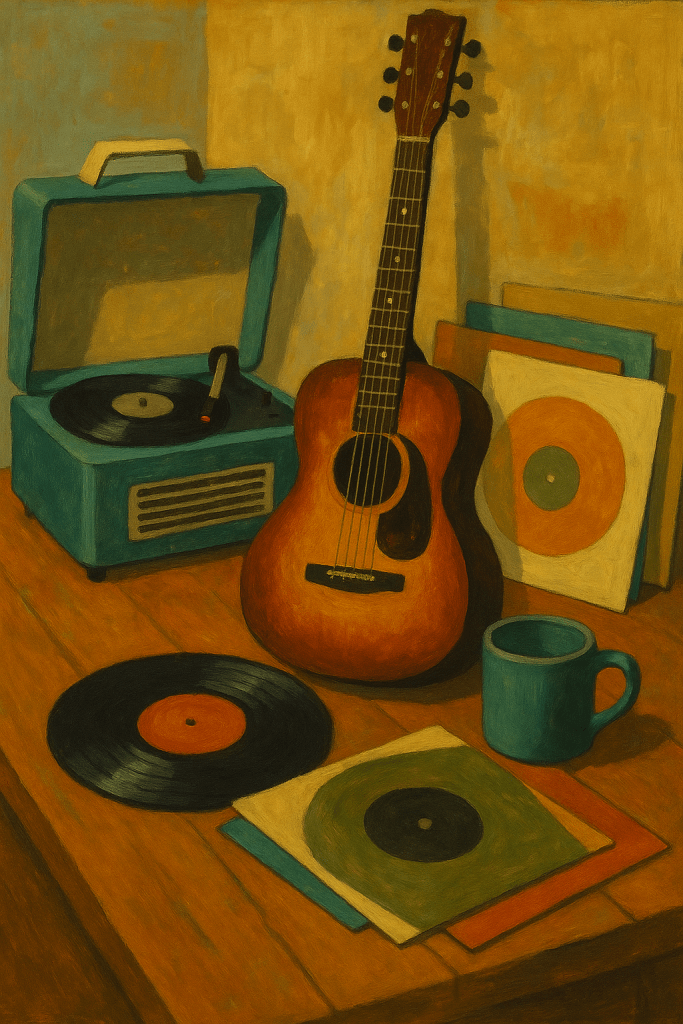
Most of the time we assume music is something we listen to — a pleasant accessory to the tasks and routines of the day. But if you pay attention, music is more like a hidden autobiography, quietly recording your inner life long before you are aware that a story is being written. The songs you return to, the ones that startle you when they play unexpectedly, the rare few that undo you in the quiet of a car or a grocery aisle — these are not just sound. They are memory in motion. They are identity with a rhythm.

Music does not simply accompany life; it arranges it. What memory loses, music preserves. What time distorts, music restores. And what emotion cannot articulate, music gives shape to with uncanny accuracy.

To understand this is to understand something profound about what it means to be human.


I. Music and the Mind’s First Language

Long before a child has words, they have rhythm. Infants calm at the steady cadence of a lullaby and recognize the pattern of a familiar voice long before understanding vocabulary. This is because the brain does not treat music as entertainment; it treats it as structure — a patterned, predictable, emotionally charged signal that is perfectly engineered for memory.

But music does something even deeper: it bypasses the intellectual filters adults use to sanitize emotion. A melody goes straight to the limbic system, sparking feelings before thought. That is why a song can make you cry before you even remember its meaning. The brain is reacting not to the information in the song, but to its emotional imprint.

Music, in this sense, is the first language of the inner life — the way feeling precedes understanding.


II. The Way Music Stores Time

Most memories fade, and many blur into general impressions. But not the memories attached to certain songs. These remain startlingly specific — not because the events were necessarily remarkable, but because music sealed them in.

What is remarkable is how effortless this process is. You do not choose to remember your first heartbreak through a particular ballad, or a college summer through a song that filled your roommate’s car. You do not choose the hymn that makes your throat tighten at a funeral, or the chorus that instantly brings back the living room of your childhood home. Music chooses for you.

There is something mysterious about the mind’s insistence on tethering emotion to sound. A song becomes a kind of timestamp. It gives the memory a fixed point in the otherwise loose fabric of time, and when the melody returns, the memory returns with it — intact, immediate, almost shockingly alive.

We often say a song “takes us back,” but the deeper truth is that the song allows the past to take hold of us again.


III. Music as Emotional Truth

There are emotions you can explain and emotions you can only feel. Music specializes in the latter. A melody can carry a complexity no sentence can hold. Consider the strange, tender ache of nostalgia — how a song can make you long for a life you no longer live or even one you never lived at all. Or consider the way a joyful song can suddenly reveal a sorrow you didn’t realize was sitting under the surface.

Music tells the truth of emotion without asking permission.

This is why people instinctively turn to it during grief, celebration, transition, or uncertainty. It steadies the self by restoring emotional coherence. In moments when language fails — when a prayer is wordless, when a loss is fresh, when a change is too large to understand — music becomes a way of anchoring the heart long enough for meaning to catch up.


IV. Why Some Songs Become Too Heavy to Carry

Everyone has songs they avoid — not because they dislike them, but because they are too full. A melody can carry the weight of a relationship, a season, or a dream that has since dissolved. Some songs hurt because they still tell the truth about who you were and who you loved, and the distance between then and now becomes too pronounced to bear.

But even these difficult songs serve a purpose. They remind us that the deepest chapters of our lives are rarely tidy. Music preserves the emotional residue of experiences that shaped us, even when we’d prefer to move on. The song remembers us more honestly than we sometimes remember ourselves.

And that honesty, however painful, is a form of reverence for what mattered.


V. Music as a Spiritual Technology

Even people who claim no religious belief often describe music in spiritual terms. It elevates, unites, quiets, or stirs the human spirit in ways that resemble prayer. Religious traditions have always understood this. Faith communities sing not because they need background noise, but because music allows meaning to move through people collectively, bypassing the intellectual hesitation that often dilutes belief.

A sung truth is felt before it is understood — and therefore becomes more deeply held.

Music is not a doctrine, but it delivers feeling with the force of revelation. It makes the invisible inner life audible.


VI. The Older We Grow, the More Our Soundtrack Solidifies

There is a moment in adulthood when you realize new music no longer imprints the way it once did. Songs still move you, but they do not become part of your inner architecture the way earlier ones did. Neurobiologists confirm this: the teenage and young adult years are when the brain is most porous to musical encoding, which is why those songs remain disproportionately powerful decades later.

By middle age, the soundtrack of your life is largely complete, and new music becomes something enjoyed but not absorbed. This is why older adults return to the songs they loved when they were young — not for nostalgia alone, but because those songs contain the memory of a self that time cannot fully dissolve.

Music becomes a way of maintaining continuity across the changing seasons of one’s identity.


VII. The Soundtrack We Become for Others

Most people think of their personal soundtrack as something private — the way certain songs follow them through life. What they often forget is that they have also become part of someone else’s soundtrack.

The lullaby you hummed.
The song you danced to at a wedding.
The hymn you sang beside a friend in a difficult season.
The album you played on a long drive with your child.
The record your mother played while cleaning the house.

Music is how we inhabit each other’s memories.

We rarely know which musical moments attach to the people we love. Years later, long after you’re gone, someone may hear a familiar song and be struck by a sudden, tender ache — not because of the music itself, but because it summoned your presence back into the room.

Music is one of the few ways we outlive ourselves without trying.


VIII. The Soundtrack as a Hidden Biography

A person’s life story includes far more than events.
It includes the emotional texture of those events — the inner landscape where meaning took shape. Music is the most faithful curator of that landscape.

If you were to line up the songs that have moved you most deeply, you could trace the entire shape of your life:

  • When you felt safe
  • When you felt lost
  • When you fell in love
  • When you learned resilience
  • When you dreamed big
  • When you let go
  • When you grieved
  • When you healed

Music is not a chronicle of facts.
It is a narrative of feeling — a record of who you became in the moments that mattered.

And because we never know which moments will matter most, the soundtrack evolves without our consent, revealing its meaning only in hindsight.


Conclusion: Listening Backward, Living Forward

Life changes, but the soundtrack remains.
We grow older, but the songs stay young.
We become different people, but music reintroduces us to every version we’ve ever been.

In the end, the soundtrack of your life is not merely a collection of songs. It is a map — a quiet, sensitive cartography of memory, identity, loss, love, change, and meaning. It tells the truth about you in ways you may not know how to express in words.

And the greatest mystery of all is this:

You did not choose most of it.
It chose you — and in doing so, it carried pieces of your life forward that time alone could never preserve.

If you listen closely enough,
you can hear your own story singing back to you.

Joe Walsh: The Guitarist Who Turned Chaos Into Clarity

A collaboration between Lewis McLain & AI

Happy Birthday, Joe! Linda and I have been fans for a very long time. He is our age, and that adds to the connection. We have seen him with the Eagles several times. We have also seen him on Darryl Hall’s one-hour show Darryl’s House where they play for an hour and sing each other’s songs.

Few American musicians embody the strange mixture of brilliance, humor, chaos, and redemption quite like Joe Walsh. For more than five decades, he has stood at the crossroads of rock music and American storytelling — part comedian, part philosopher, part virtuoso, and part survivor. His songs have become radio staples; his riffs have become part of the American songbook; and his personal journey has become a kind of warning and witness for generations of musicians who followed.

Walsh’s legacy rests on more than the bends of his guitar strings or the bite of his lyrics. He reminds us that genius is often turbulent, and that the road to maturity rarely travels in a straight line.


Beginnings: A Guitar, a Telecaster, and a Restless Mind

Joe Walsh was born in 1947 in Wichita, Kansas, but his musical identity formed all over the Midwest. He had the kind of brain that absorbed sound like others absorb language. His guitar became both companion and compass — a way of translating emotion, frustration, curiosity, and humor into something that made sense.

By the time he joined The James Gang in the late 1960s, Walsh had already developed a signature sound: part blues, part garage rock, part distortion-driven rebellion. His riffs in songs like Funk #49 and Walk Away weren’t just clever; they were seismic. They announced a musician who had complete command of chaos — a man who could ride a riff the way a surfer rides a wave.


The Solo Years: Humor as Resistance

Walsh’s solo career in the 1970s showcased something rare in rock: humor without loss of depth. His songs were both sharp and self-deprecating. Life’s Been Good, his most famous solo hit, became a cultural mirror — a satire of rock-star excess sung by a man who was uncomfortably familiar with the topic.

He joked about limousines, gold records, and houses he couldn’t find, but the laughter was edged with truth. Walsh understood that success could be as destructive as failure. Humor became his shield — a way to deflate ego, fend off darkness, and remind audiences that fame was not only absurd but dangerous if you took it too seriously.


Joining the Eagles: Precision Meets Instinct

When Joe Walsh joined the Eagles in 1975, the band gained something it had been missing: a raw, fearless, electric edge. Walsh brought the grit that balanced the group’s harmonies and precision.

His fingerprints are unmistakable on Hotel California. That iconic dual-guitar ending — the spiraling, perfectly structured solo — is one of the most recognizable musical passages in modern history. It’s meticulously crafted, yet wild at the edges. That fusion of control and abandon is Joe Walsh in pure form.

With Walsh, the Eagles didn’t just sound different; they felt different. The band’s music carried a tension between beauty and danger, polish and madness — a tension that defined American music for decades.


The Battle Within: Addiction and the Long Road Back

Behind the humor, behind the riffs, Joe Walsh was fighting a private war. The 1970s and 1980s pushed him into depths of addiction he wasn’t sure he would survive. He described those years as “watching myself disappear.” His talent never left, but his clarity did.

In time, sobriety became the greatest achievement of his life. Walsh has said that getting sober returned his soul and restored his purpose. Today, he speaks openly about recovery — with the same mix of humor and gravity that marks his music.

His witness matters. In an industry littered with the ghosts of artists who didn’t survive the storm, Joe Walsh stands as a reminder that it is possible to come back. His life has become a testimony to the idea that discipline can rescue creativity — that the clearest notes often come after the noise is tamed.


Legacy: The Sage Behind the Sunglasses

In recent decades, Joe Walsh has become an unexpected kind of elder statesman. When he speaks, people listen — because beneath his jokes lies a depth that surprises those who only know the caricature.

He talks about music as community, sobriety as responsibility, and aging as liberation. He has become a mentor to younger musicians, a guardian of rock history, and a persistent voice reminding America of the power of live instruments, honest lyrics, and imperfections that prove humanity.

Walsh’s influence extends far beyond riffs and radio plays. He represents something rare in American culture:

  • Brilliance without pretense.
  • Honesty without sentimentality.
  • Survival without self-glorification.

And through it all, he remains unmistakably Joe Walsh — sunglasses, grin, guitar slung low, playing music that reminds us that life is ridiculous, fragile, and worth savoring.


Conclusion: The Philosopher We Didn’t Expect

Joe Walsh is more than a guitarist. He is a cultural figure who turned turbulence into wisdom, addiction into advocacy, humor into truth, and music into therapy — for himself and for millions of listeners.

His career is a reminder that genius is rarely quiet, and redemption is rarely simple. But in Joe Walsh’s guitar lines, in his raspy jokes, in his surprising clarity, we hear the story of a man who managed to grow older without growing dull — and who found, somewhere along the way, not only his sound but himself.


Lyrics

I have a mansion, forget the price
Ain’t never been there, they tell me it’s nice
I live in hotels, tear out the walls
I have accountants pay for it all

They say I’m crazy but I have a good time
I’m just looking for clues at the scene of the crime
Life’s been good to me so far

My Maserati does one-eighty-five
I lost my license, now I don’t drive
I have a limo, ride in the back
I lock the doors in case I’m attacked

I’m makin’ records, my fans they can’t wait
They write me letters, tell me I’m great
So I got me an office, gold records on the wall
Just leave a message, maybe I’ll call

Lucky I’m sane after all I’ve been through
(Everybody say, “I’m cool, ” “He’s cool”)
I can’t complain but sometimes I still do
Life’s been good to me so far

I go to parties sometimes until four
It’s hard to leave when you can’t find the door
It’s tough to handle this fortune and fame
Everybody’s so different, I haven’t changed

They say I’m lazy but it takes all my time
(Everybody say, “Oh yeah, ” “Oh yeah”)
I keep on goin’ guess I’ll never know why
Life’s been good to me so far

Ah, yeah, yeah

Source: LyricFind

Songwriters: Joe Walsh

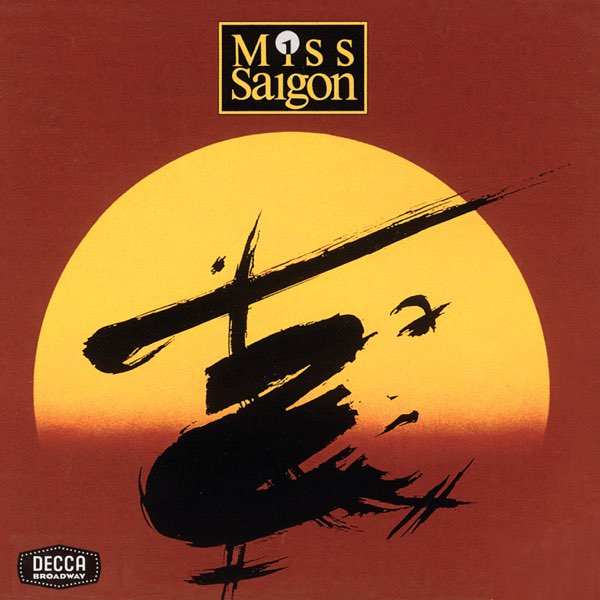
Miss Saigon: Love, Illusion, and the Mirage of the American Dream

A collaboration between Lewis McLain & AI

“You are sunlight and I moon, joined by the gods of fortune.”
“Sun and Moon”


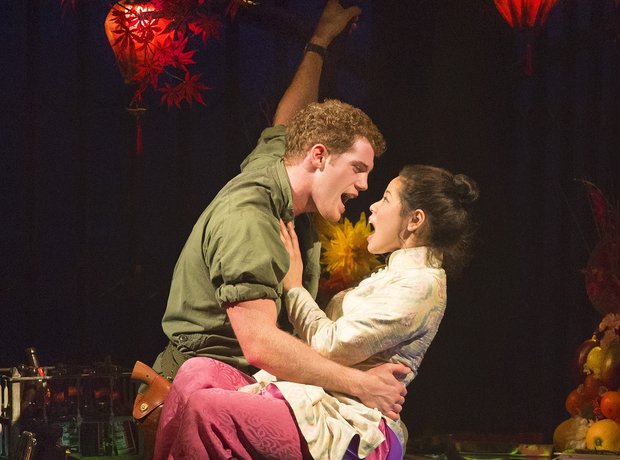
This dramatic musical was so remarkable to me. I remember writing that it was the best I had ever witnessed at the time, and wondering if I would ever see a better play. I think I saw it three times. The first time was in NYC, and the other two times were in Dallas. They were different in a few ways. The Dallas version was even more profound in the way they handled the opening of the second act. I will never forget the players and emotional content. LFM


I. The World in Ruin, the Heart Still Beating

In Miss Saigon, the world is ending in slow motion. Helicopters thunder above the city, neon signs flicker over shattered streets, and the air hums with the machinery of empire. Yet in the ruins of Saigon, two hearts still find each other. Kim and Chris meet not in peace but in aftermath—he, a disoriented soldier of a collapsing foreign power; she, a displaced orphan forced into a bar called Dreamland. Around them, history howls. Within them, something eternal stirs.

Their love begins as an accident of war but unfolds like a parable of Eden after the Fall: purity glimpsed in a poisoned world. “You are sunlight and I moon,” Kim sings, echoing Genesis more than Puccini—light and darkness yearning toward wholeness, even as they know their union is impossible. The tragedy of Miss Saigon is not simply that love fails; it is that love, though true, cannot redeem the systems that contain it.


II. The Gospel According to Kim

Kim is among the most spiritually resonant heroines of modern theater—a Christ-figure clothed in the garments of an Asian peasant girl. Her purity is not naivety but faith: a conviction that love can sanctify even the most defiled landscape. When Chris leaves her amid the chaos of Saigon’s fall, Kim does not curse him or her fate. She gathers their son, Tam, and holds him as both burden and promise. “You will see me through another season,” she seems to tell God, echoing Mary sheltering the child Messiah in exile.

Years later, in Bangkok, when confronted by Chris’s American wife, Kim’s theology of love reaches its consummation. She chooses death not as surrender but as offering: “Now you must take Tam with you / And you must go on / I’m dying for your sake, my son.” In that moment, Miss Saigon transcends its setting. Kim becomes every mother who has loved into suffering, every believer who has poured out life for another’s salvation. Her sacrifice restores no empire and reforms no politics—but it restores meaning.

To love purely, the musical insists, is to suffer. Yet in that suffering lies a kind of resurrection. When Chris cries over her body—“How in one night have we come so far?”—we hear the echo of humanity’s ancient lament: love arrives divine and departs crucified.


III. The Engineer and the False Heaven

“The American Dream / Is gonna make my dream come true.”

If Kim represents the soul’s yearning for redemption, the Engineer embodies civilization’s addiction to illusion. He is the show’s dark chorus—half clown, half devil, half prophet—hawking the fantasy of America as the new Jerusalem of lust and consumption. His anthem, “The American Dream,” drips with irony: “They’ll have a club for all the rich to join / Where you can drive your Cadillac through the eye of a needle.” It is a parody of Scripture, a theology of greed replacing the Beatitudes with billboards.

The Engineer’s dream is the shadow twin of Kim’s faith. Both are migrants of hope; both seek deliverance. But where Kim’s vision demands self-sacrifice, the Engineer’s demands self-erasure. His dream is not of freedom but of becoming the very machine that once enslaved him. He worships America not as idea but as idol—its neon signs as stained glass, its dollar bills as sacraments. Through him, the musical indicts a modern form of empire: not territorial but spiritual, not conquest but consumption.

In the end, the Engineer does make it to America, but his triumph is hollow. He ascends the staircase of Ellis Island as if entering heaven, yet we hear no music of redemption—only brass and discord. The promised paradise is another illusion; the dream devours its dreamer.


IV. The Mirage of Salvation

The love between Kim and Chris is real; the salvation offered by nations and ideologies is not. That is the paradox at the heart of Miss Saigon. When Chris returns to find Kim years later, married and broken by guilt, his words in “The Confrontation”“You’re here—Oh my God, you’re here!”—carry the force of resurrection. But it is too late. The world they inhabited has no place for resurrections. Kim’s suicide is not despair but testimony: that no earthly dream can absorb the fullness of love. Her body falls between two worlds—Asia and America, heaven and earth—and her blood exposes the lie that either side could claim moral victory.

Boublil and Schönberg thus turn history into allegory. The fall of Saigon becomes the Fall itself: humankind’s expulsion from innocence, still chasing salvation in the mirage of progress. The helicopter that lifts the last Americans away becomes a steel angel guarding the gate of paradise—an emblem of the separation between what is real and what we wish were real.


V. The Music of Heaven and the Sound of Machines

The score of Miss Saigon is not mere accompaniment; it is theology in melody. The lush orchestration, the merging of Asian tonal motifs with Western harmonies, enacts the same cultural collision as the story itself. In “I Still Believe,” Kim and Ellen sing the same words across oceans: “I still believe you will return / I know you will.” Two women, one melody, one delusion—the human capacity to believe even against evidence. This duet is not about romantic hope but about the nature of faith: to believe is to risk being wrong, and to love is to be wounded by that risk.

Likewise, “Bui Doi” (“dust of life”) transforms what could be sentimental into prophetic lament:

“They are the living reminder of all the good we failed to do.”
It is confession as chorus—the entire nation singing its mea culpa. The orphans of Saigon become symbols of moral residue, the souls left behind by history’s machinery. The music soars, not to glorify but to accuse.


VI. “Bui Doi” — The Children of Dust and the Conscience of a Nation

At the opening of the second act, the curtain rises not on Saigon or Bangkok, but on America’s memory—a stage transformed into a tribunal of conscience.
A single voice, John’s, steps forward beneath the glow of a projected photograph. His song, “Bui Doi,” erupts like thunder through the theater: a requiem, a sermon, and a national confession.

They’re called Bui-Doi.
The dust of life.
Conceived in Hell,
And born in strife.
They are the living reminder of all the good we failed to do.
We can’t forget
Must not forget
That they are all our children, too.

Like all survivors I once thought
When I’m home I won’t give a damn
But now I know I’m caught, I’ll never leave Vietnam

War isn?t over when it ends, some pictures never leave youmind.
They are the faces of the children the ones we left behind
They?re called Bui-doi.
The dust of life, conceived in hell and born in strife
They are the living reminders of all the good we failed to do
That?s why we know deep in our hearts, that they are all ourchildren too

These kids hit walls on ev?ry side, they don?t belong in anyplace.
Their secret they can?t hide it?s printed on their face.
I never thought one day I?d plead
For half-breeds from a land that?s torn
But then I saw a camp for children whose crime was being born

They’re called Bui-Doi, the dust of life conceived in hell and born in strife.
We owe them fathers and a family a loving home they never knew.
Because we know deep in our hearts that they are all our children too.

These are souls in need, they need us to give
Someone has to pay for their chance to live
Help me try

They’re called Bui-Doi.
The dust of life.
Conceived in Hell,
And born in strife.
They are the living reminders of all the good we failed to do.
That’s why we know
That’s why we know
Deep in our hearts
Deep in our hearts
That’s why we know
That they are all our children, too.

The Vietnamese phrase Bui Doi means “dust of life.” It names the children born of the war—half American, half Vietnamese—unclaimed by either world. But the phrase carries more than pity; it carries theology. In Genesis, humanity itself is formed from dust. To call these children “dust” is to recall creation and abandonment in a single breath. They are the living proof of divine image forgotten—the breath of life exhaled and left to drift.

John, once the soldier’s companion, now stands as the prophet. His voice shakes with the weight of unrepented sin:

“They are the living reminder of all the good we failed to do.”

That line cuts deeper than any artillery blast. It indicts not merely a nation but a civilization addicted to amnesia. The men’s chorus behind him—uniformed, disciplined, proud—becomes the choir of a guilty church. The horns sound like the trumpets of judgment; the snare rolls like the echo of marching ghosts. This is liturgy as lament, where patriotism and repentance collide.

Musically, the song is both anthem and elegy. The brass proclaims victory; the strings mourn the cost. The melody rises toward triumph but collapses into minor chords—hope bleeding into remorse. Boublil and Schönberg understood that guilt itself has rhythm, that moral awakening can be scored.

Philosophically, “Bui Doi” reframes the entire musical. It transforms Miss Saigon from personal tragedy to collective confession. Kim’s sacrifice in Act I was individual; this is national. Her love sanctified one child; this song pleads for all of them. In that sense, “Bui Doi” functions as the Mass of the piece—the moment when the audience, too, becomes congregation, murmuring its mea culpa in the dark.


VII. The Cinematic Mirror

In most major productions, “Bui Doi” is not sung to an empty backdrop but accompanied by film and photographs—documentary images of the real aftermath of war. As John sings, the theater dissolves into a moving archive: Vietnamese children of mixed heritage, refugee camps, faces pressed against wire and window.

This cinematic layer breaks the fourth wall. It shatters illusion and turns the audience into witness. The theater becomes a courtroom of conscience, the spectators no longer observers but participants in the confession.

It is one of the most striking multimedia sequences in stage history—fiction colliding with fact, melody colliding with memory. The children on screen do not sing, but their images form the silent choir beneath the orchestra’s thunder. When the camera pans across those faces and John intones,

“They are the living reminder of all the good we failed to do…”
the entire house falls still. The song becomes cinema, the cinema becomes prayer.

For a few minutes, Miss Saigon ceases to be a musical and becomes a moral documentary in song—a thunderous meditation on guilt, compassion, and the possibility of redemption through remembrance.


VIII. The Theological Horizon

Philosophically, Miss Saigon rests on one question:
Can love redeem a world built on illusion?

The answer is both yes and no. Kim’s love redeems her soul but cannot redeem the system. The Engineer’s illusion sustains his survival but damns his humanity. America itself becomes a metaphor for mankind’s restless migration toward false heavens—a new Babylon promising light but delivering neon.

In biblical terms, the musical is a modern Ecclesiastes. Everything is vanity: war, politics, even dreams. Yet amid that vanity, a single act of selfless love pierces the darkness. When Kim sings “The Sacred Bird” to Tam, she becomes both Mary and Magdalene—mourning and believing, broken yet beautiful.

Her death is not defeat but transcendence: she forces Chris to confront the cost of love, and through him, the audience to confront its own moral anesthesia. The play ends with Chris kneeling, unable to resurrect her, and the music fading into silence. That silence is judgment—the sound of conscience awakening.


IX. Conclusion: The Love That Outlives Empires

“And if you can forgive me now / For all the things I’ve done / Then I will be the one who’ll stay.”

Empires fall, dreams fade, illusions shatter—but love remains, not as sentiment but as wound.
Miss Saigon is not simply a retelling of Madame Butterfly; it is a spiritual reckoning. It asks whether humanity, in its hunger for progress, has forgotten the sacred art of sacrifice.

Kim’s death redeems nothing external—no nation, no system—but it redeems the meaning of love itself.
In her final act, she transforms the stage of war into an altar. The Engineer’s dream dissolves in irony, but Kim’s faith survives in silence. She proves that even in the rubble of civilization, the human heart can still whisper its prayer to heaven:

“You are sunlight and I moon / Joined here, brightening the sky.”

And for a moment, however brief, the audience feels that sky brighten—proof that art, like love, can still make light out of ruin.

The Boy Who Never Quite Learned to Dance

By Lewis McLain & AI

The first record I ever bought was a 45 rpm of Buddy Holly’s “Peggy Sue.” That tiny disc felt like it held the universe. I’d play it over and over, the guitar hiccupping like a nervous teenager and Buddy’s voice bouncing like he was trying not to spill a secret. And with every spin, my imagination took off. I could see myself out there in the middle of the dance floor, shirt collar open, fists pumping, sneakers pounding the wood in glorious rhythm. I wasn’t just dancing—I was inventing new categories of cool.


The Imagination

But imagination is a dangerous liar.

I was actually a wall flower somewhat comfortable just watching and wishing.


The Wall Flower Reality

Reality came when someone (probably one of my great friends from the third grade, Beverly or Janet) grabbed me by the sleeve and dragged me out onto the floor during a dance at the Teen Club in Farmers Branch. It wasn’t even a free form, “just shake and look natural” kind of number. No—this was a line formation. Rules. Steps. Coordination. I was in trouble.

My imagination became a mind recorder that night. I could practically see the playback: my feet trying to decide if left meant left or if left meant “trip over yourself.” My arms were pumping like I was milking invisible cows to some rock tune. And my face—my face was locked in that grimace-smile combination unique to teenagers who know they’re failing but are determined to look like they’re not.

I earned myself a C-minus, at best. And that was on a generous grading curve.


When I landed at the UNT campus (North Texas State University from 1961 to 1988), I thought maybe geography would help. New place, new people, new me. That’s when I met Linda, my Peggy Sue. Linda could dance. Linda had courage. And Linda—bless her—decided to loan me a little of both. With her experience and with a whisper of alcohol acting like rocket fuel to me at the time, dancing began to seem possible. Not easy, but possible. My grade improved to a C+ territory.

Still, I knew who the real dancer was. Linda glided. I lurched. Linda spun, and I rotated like a stubborn washing machine on its last cycle. But somehow it worked, because she kept encouraging me back onto the floor. She was patient and kind.

Fast forward to our mid-marriage years: Our solution? Humor. Any hopes for rhythm by booze were years in the past. But still—miraculously—we were moving and no longer needed the floor space we once did. Picture two hugging bears, braving the trip onto the floor, bobbing rhythmically and occasionally parting and then colliding. That was us. Linda still had it, but I set new lows even though we laughed through every step of it.


Now we’ve reached the senior edition of dancing. We’ve lost most of the urge to dance, yes, but we’ve also lost our audience. The dance floor has shrunk to the size of a kitchen, sometimes no bigger than the space between the refrigerator and the kitchen table. The music doesn’t come from Buddy Holly’s 45 anymore—it comes from whatever the Alexa thinks we meant when we said, “Play something we can dance to.” However, we don’t need any music.

We stick to slow dancing now. Easy to fake, harder to mess up. A sway, a shuffle, a turn if the knees allow. No one’s grading anymore. No one’s even watching. And that’s the secret: the freedom to just move, no grades, no pressure, no audience but each other.

From Peggy Sue to the kitchen floor, from C-minus to C-plus to “who cares,” we’ve carried the rhythm the best way we knew how. We never got to A-level dancing since I was the leg ball and chain. But we got the one grade that matters in the long run: an A in joy.

Because when the lights are low and the kitchen is ours, we aren’t as mobile anymore. We’re just two kids who never stopped trying. LFM