The Career Secret I Learned the Hard Way: Why I Build the First Model

A collaboration between Lewis McLain & AI

Actually, my first financial models were on green 13-columnar tablets. If you know what I am talking about, I can get pretty close guessing your age.


Most people assume that good analysis starts with a team gathered around a whiteboard, freely offering numbers, assumptions, and ideas. In theory, it sounds collaborative and egalitarian. In reality, that moment — the blank sheet of paper — is where analysis dies. People freeze. Smart, capable, experienced people who absolutely know their business suddenly say nothing when asked to put the first assumptions down.

Early in my career, I tried it the traditional way. I’d walk into a meeting ready to do things “the right way”: engage the group, ask for their best estimates, encourage open discussion. Instead, I got silence. Eyes drifted to the table. Pens clicked. People “would have to get back to me.” Suddenly, no one knew anything. It was as if asking someone to write the first number turned the room into a library reading room during finals week — quiet, anxious, and deeply unproductive.

It took me years to understand the psychology behind this. People aren’t reluctant because they lack insight. They are reluctant because they are afraid of owning the first mistake. The first assumption is the most vulnerable one. Once it is written down, it looks like a position, a commitment, a claim to be defended. And for many professionals — especially those who are cautious, political, or simply overwhelmed — that’s not a place they want to stand.

So, I developed a different approach. I stopped asking for the first draft of ideas and assumptions.

I started building the entire model myself — the assumptions, the structure, the logic, the forecasts — everything. I would take the best information I had, make the best reasonable assumptions I could, and produce a full version. Not a sketch. Not a preliminary worksheet. A full, working model.

Then I would send it to the very people who declined to give me assumptions and simply ask:

“Would you please critique this?”

That one sentence changed everything.


Why Critiquing Works When Creating Doesn’t

Something very human happens when someone is handed a complete model or draft of a report. The reluctance melts away. The fear of being wrong diminishes. The instinct to avoid being “first” is replaced by the instinct to correct, to improve, to clarify, to argue, to refine.

People who gave me nothing on a blank sheet suddenly became:

  • Detailed
  • Insightful
  • Opinionated
  • Protective of accuracy
  • Willing to explain nuances they never would have volunteered earlier

The entire room would come alive.

I used to think this was a flaw — that people should be willing to start from scratch. But then I realized the truth: starting is the hardest intellectual act in any field. Creation is vulnerable; critique is safe. The blank page is intimidating; a flawed draft is an invitation.

And here is the real secret:

People are most honest when they are correcting you.

They will tell you the real revenue figure.
They will tell you why an assumption is politically impossible.
They will tell you which number has never made sense.
They will tell you what they truly believe once you’ve already said something they can push against.

Ironically, by giving them something to disagree with, I got the truth I was searching for.


The Picker–Pickee Method for Analytical Work

I call this my “picker–pickee” method (AI hates my term) — not in the social sense of drawing people into conversation, but in the analytical sense of drawing them into ownership. I pick the model. They pick it apart. And in that exchange, we arrive at what I needed all along:

Their actual knowledge.
Their real assumptions.
Their unfiltered expertise.

Without forcing them to start from zero.


Why This Technique Became One of My Career Signatures

Over time, I realized this was more than a workaround. It was a strategic advantage.

  • It accelerated projects.
  • It produced better numbers.
  • It revealed hidden politics and constraints.
  • It allowed people to save face while still contributing.
  • It created buy-in because the team helped “fix” the model.
  • It insured that the final product reflected collective wisdom, not my isolated guesswork.

I stopped apologizing for this method. I embraced it. I refined it. And eventually I came to see it as one of the most reliable tools in my entire professional life.

Because the truth is simple:

People don’t want to write the first word, but they will gladly edit the whole paragraph.

If you want real input from reluctant contributors, do the hard part yourself. Build the model. Write the draft report. Take the risk. Put the first assumptions on the page. And then ask for critique — sincerely, humbly, and openly.

They will show you what you needed to know all along.


Closing Reflection

If there is any lesson I wish I had learned earlier, it is this:

You don’t get better analysis by demanding contribution.
You get better analysis by giving people something to respond to.

Once I accepted that, my work changed. My relationships with stakeholders changed. And the quality of every model I built improved dramatically.

It may not appear in textbooks, but after decades of practice, this remains one of my most effective — and most human — secrets of the profession.

The Monroe Doctrine and the Trump Corollary: From Defensive Declaration to Assertive Dominance

A collaboration between Lewis McLain & AI


Introduction

On December 5, 2025, the Trump administration released its National Security Strategy, a 33-page document that invokes—and dramatically expands upon—one of the oldest principles in American foreign policy: the Monroe Doctrine. The new strategy presents itself as a restoration of hemispheric clarity, but in substance it offers something far more ambitious: a Trump-era corollary that transforms a defensive warning into an assertion of American primacy.

Understanding what this “Trump Corollary” means—and whether it represents a legitimate evolution or a radical departure—requires revisiting the original doctrine, understanding how national security strategies gain force in American governance, assessing reactions across the hemisphere, and considering how American history might have looked had this posture been adopted earlier. It also requires confronting a deceptively simple question: Can a 19th-century doctrine be meaningfully revived in a 21st-century multipolar world?


Part I: The Monroe Doctrine of 1823

Historical Context

President James Monroe articulated his doctrine on December 2, 1823, at a moment when European empires were recalibrating their power in the Western Hemisphere. Russia pressed southward down the Pacific coast. Spain hoped to reclaim Latin American colonies that had recently secured independence. The United States, barely forty years old, lacked the naval power to enforce its preferences but had a growing conviction that the Western Hemisphere required a geopolitical boundary line separating Old World and New.

Monroe and his Secretary of State, John Quincy Adams, relied on an emerging American diplomatic philosophy—one that blended George Washington’s caution against entangling alliances with James Madison’s insistence that foreign interference in the Western Hemisphere posed unacceptable risks. The British sought joint action with the United States, but Adams famously rejected it, arguing that America should not appear as “a cock-boat in the wake of the British naval man-of-war.”

The Three Core Principles

Monroe’s declaration rested on three foundational principles:

  1. Non-Colonization — The Americas were no longer open to European colonization.
  2. Non-Intervention — Any European attempt to impose its system in the hemisphere would be viewed as a threat.
  3. Separate Spheres — Europe and the Americas operated under fundamentally different political logics and should remain separate.

Reciprocity and Restraint

Often forgotten today is Monroe’s reciprocal pledge:

“With the existing colonies or dependencies of any European power we have not interfered and shall not interfere.”

In other words, the doctrine was defensive, not dominative. It did not seek to revise political arrangements or expand American control. And because the United States lacked the power to enforce it, the doctrine functioned more as a diplomatic aspiration than a military guarantee—its viability propped up, ironically, by the British Royal Navy.

Latin American Perspectives

Latin America’s early reaction was complicated. While many leaders welcomed U.S. opposition to recolonization, they also recognized the unilateral nature of Monroe’s declaration. Over time, as the United States intervened repeatedly in the Caribbean, Central America, and northern South America, skepticism hardened. By the 20th century, much of Latin America viewed the Monroe Doctrine not as a shield against European ambitions but as a mask for American dominance. This historical memory forms the backdrop against which any modern revival—particularly one framed as a U.S. “right” to dictate hemispheric security—will be received.

Later Interpretations

The doctrine evolved dramatically:

  • Olney Interpretation (1895): Asserted U.S. authority to mediate hemispheric disputes.
  • Roosevelt Corollary (1904): Claimed the right to intervene in Latin American affairs to prevent “chronic wrongdoing.”
  • Good Neighbor Policy (1933): Pledged non-intervention, attempting to restore the doctrine’s original spirit.
  • Cold War Era: Revived interventionist logic to counter communism.

Thus, the doctrine became not a fixed principle but a malleable tool—sometimes restraining U.S. action, other times justifying it.


Part II: The Trump Corollary of 2025

A New Framework

The 2025 National Security Strategy sharply critiques the last 30 years of American foreign policy, dismissing post-Cold War global engagement as utopian overreach. The new governing principle is “America First”—defined not as isolationism but as a recalibration of American obligations, alliances, and priorities.

Core Philosophy

The strategy asserts that safeguarding American sovereignty requires:

  • “Full control over our borders”
  • A modernized nuclear deterrent and missile defense “Golden Dome”
  • Revitalization of American cultural and spiritual health
  • Economic growth from $30 trillion to $40 trillion within a decade

It rejects the long-standing assumption that American security depends on expansive global commitments.

Guiding Principles

Four principles structure the document:

  1. Peace Through Strength — Deterrence through overwhelming capability.
  2. Non-Interventionism — High thresholds for foreign wars outside the hemisphere.
  3. Flexible Realism — Friendly commercial relations without demanding political reform.
  4. Primacy of Nations — A world anchored in sovereign nation-states.

The Trump Corollary Defined

The document’s centerpiece is the “Trump Corollary to the Monroe Doctrine”:

“The United States will reassert and enforce the Monroe Doctrine to restore American preeminence in the Western Hemisphere… We will deny non-Hemispheric competitors the ability to position forces or other threatening capabilities.”

Where Monroe said “hands off,” Trump says “we will determine what happens here.” Where Monroe rejected joint declarations, Trump rejects even cooperative multipolarity.

The document authorizes military force against cartels, targeted deployments along the border, and the rollback of Chinese and European strategic positions in Latin America. It frames the hemisphere as a zone of exclusive American responsibility—echoing Theodore Roosevelt more than James Monroe.

Migration as National Security

The strategy’s most dramatic reframing is its treatment of migration:

“The era of mass migration must end. Border security is the primary element of national security.”

Migration is grouped with terrorism, drugs, and trafficking—an elevation far beyond Monroe’s language and even beyond the Cold War’s focus on ideology.

Confrontation with Europe

The strategy openly criticizes European allies and predicts their demographic and cultural decline. It encourages “patriotic parties” in European democracies—an unusual form of ideological interference. This is a noteworthy reversal: Monroe promised not to interfere in Europe; the Trump strategy seeks to influence European domestic politics.

China and Economic Competition

China is reframed strategically, not as an existential threat but as a commercial rival. The corollary treats Chinese presence in Latin America—ports, lithium mines, telecom infrastructure—as a red line, yet it simultaneously expresses interest in mutually beneficial trade.

This duality reflects the document’s broader tension: a desire for economic engagement with Beijing while preventing its influence anywhere in the Western Hemisphere.

Middle East and Africa

The document presents the Middle East as an emerging zone of stability and partnership, declaring an end to the era in which Middle Eastern crises consumed American attention. In Africa, it proposes replacing aid with trade, emphasizing partnerships with states that welcome American commerce.

Peace Claims

The strategy claims that President Trump achieved peace in eight international conflicts. Whether these claims will withstand scrutiny remains uncertain, but their inclusion underscores the administration’s desire to frame its approach as peace-producing rather than confrontational.


Part III: Who Must Approve or Honor These Strategies?

National Security Strategies Are Presidential Declarations

The National Security Strategy (NSS) is required by the Goldwater-Nichols Act (see appendix), but it does not have the force of law. It binds no future Congress, no court, and no ally. It is authoritative inside the executive branch, but constrained by law at every turn.

Domestic Legal Limits

  • Congress controls war powers and appropriations.
  • Treaties like NATO remain binding until formally abrogated.
  • Courts may block executive actions, as seen in litigation over birthright citizenship.
  • Posse Comitatus constrains domestic military enforcement, unless Congress authorizes exceptions.

International Law and Foreign Responses

The Monroe Doctrine has always been unilateral. No nation is obligated to honor it. Latin American states—many of which now rely heavily on Chinese investment—are unlikely to welcome a 2025 revival framed as exclusionary. Europe may resist American attempts to influence its domestic politics. China can ignore American demands that it divest from hemispheric assets.

The Trump Corollary’s success therefore depends not on diplomatic persuasion but on American capacity—economic, military, and political—to enforce it.

The Feasibility Problem

A critical analytical question emerges: Does the United States currently possess the power, resources, and political consensus needed to enforce hemispheric dominance?

Several issues complicate enforcement:

  • A Navy struggling to meet global commitments
  • A defense industrial base strained by years of underinvestment
  • Domestic political polarization
  • High federal debt limiting sustained military expansion
  • Latin American governments with alternative economic partners (especially China)

The Trump Corollary’s ambitions may exceed available means—an imbalance that has historically undermined doctrines that promise more than the nation can deliver.


Part IV: How Would the Trump Corollary Have Changed America Since 1960?

Counterfactual analysis reveals both the appeal and the risks of the Trump Corollary.

The Cuban Missile Crisis (1962)

Kennedy’s blockade aligned with Monroe’s principles, but his restraint—rejecting military strikes—contrasts sharply with the Trump strategy’s willingness to use lethal force to preempt threats. A Trump-style approach might have produced the airstrikes the Joint Chiefs recommended, risking nuclear escalation.

Vietnam and Cold War Interventions

A Trump Corollary framework would likely have avoided Vietnam entirely, given its skepticism of “forever wars” outside the hemisphere. Yet it might have intensified interventions in the Caribbean and Central America, where U.S. dominance was explicitly asserted.

Immigration Policy

The 1965 Immigration and Nationality Act would likely never have passed under a Trump Corollary worldview. The demographic, cultural, and economic consequences of that alternative history would be profound—yielding a more homogeneous but older and economically constrained nation.

Relations with Europe and NATO

A doctrine that treats alliances as transactional could have undermined Cold War deterrence. Europe might have developed independent nuclear forces sooner. The European Union itself may have taken a different form—or not emerged at all.

Economic Globalization

Rejecting trade liberalization would have preserved some manufacturing but at substantial economic cost. America might have had higher wages in industrial sectors but a smaller economy, reducing its ability to project power globally.

Middle Eastern Engagement

Much of America’s costly Middle Eastern involvement might have been avoided, though 9/11 demonstrated that even non-intervention cannot insulate the nation from transnational threats.

Latin America and China

A Trump Corollary applied since 1960 would have required far more sustained investment in Latin America to preempt Chinese influence—investment the United States historically has not provided.


Conclusion: Continuity, Rupture, and the Question of Endurance

The Trump Corollary is both a revival and a reinvention. Like the Monroe Doctrine, it asserts hemispheric boundaries and warns foreign powers away. But unlike Monroe, it does not promise reciprocity, restraint, or non-interference. It replaces Monroe’s defensive posture with a claim to hemispheric dominance. It critiques allies Monroe refused to criticize. It directly inserts the United States into the domestic ideological struggles of Europe. And it elevates migration—unimaginable to Monroe—as the central security issue of the age.

Ultimately, the Trump Corollary’s durability will depend on factors Monroe did not face:

  • a multipolar world,
  • a globally intertwined economy,
  • hemispheric partners with diversified alliances, and
  • a deeply polarized American electorate.

Doctrines endure only when they align national interests, national capacity, and national consensus. Monroe had that combination—though only decades later. Whether the Trump Corollary possesses the same enduring quality is uncertain.

In the end, the question is not whether the Trump Corollary represents a bold vision. It does. The question is whether it is sustainably bold—and whether future administrations will embrace or repudiate it.

Two hundred years separate Monroe from Trump. Both spoke to their time. History will determine which one better matched America’s enduring interests—and which one attempted more than the nation could ultimately sustain.


Appendix

How Presidents from Reagan to Biden
Treated the National Security Strategy Requirement

The modern National Security Strategy traces to the Goldwater-Nichols Act of 1986, which attempted to bring coherence to U.S. defense planning after Vietnam, Watergate, and the early Reagan-era military buildup. The act required the president to submit a comprehensive NSS to Congress on a regular basis. Yet from its inception, the requirement carried no enforcement mechanism, no deadline penalty, and no legal force beyond the obligation to publish. Every president since has treated the NSS accordingly—not as binding doctrine, but as a statement of priorities that may or may not shape actual policy.

Ronald Reagan (1981–1989): The First to Issue an NSS—But on His Own Terms

Reagan’s administration issued the first formal National Security Strategy in 1987. It articulated themes Reagan had been voicing for years—peace through strength, rollback of Soviet influence, and the strategic defense initiative. But even Reagan’s NSS served more as a codification of existing policy than a guiding document. The administration routinely adjusted its approach to the Soviet Union as diplomacy evolved, demonstrating the NSS’s role as an informational paper rather than a directive roadmap. Reagan never treated it as binding and did not revise policies to conform to it.

George H. W. Bush (1989–1993): A Strategy Overtaken by Events

President Bush issued strategies in 1990 and 1991, but the collapse of the Soviet Union forced constant revision in practice. The Gulf War likewise illustrated how new crises often moved faster than strategic paperwork. Bush embraced the NSS as a communication tool but never suggested it constrained presidential freedom of action. Its themes—collective security, stability in Europe, and regional deterrence—reflected Bush’s worldview, but the administration’s actions consistently adapted to rapidly shifting realities.

Bill Clinton (1993–2001): From Engagement to Enlargement

Clinton’s strategies in 1994, 1995, 1996, and 1997 emphasized “engagement and enlargement,” humanitarian intervention, and the spread of democratic institutions. Yet major Clinton-era actions—including Bosnia, Kosovo, and the 1994 Haiti intervention—were justified by presidential decision-making rather than strict adherence to the NSS texts. The administration used the NSS to signal broad values and priorities but not as a constraint on improvisational foreign policy.

George W. Bush (2001–2009): A Dramatic Strategy That Didn’t Bind Policy

Bush’s 2002 NSS was one of the most consequential ever written, famously introducing:

  • preemptive action,
  • the war on terrorism, and
  • the goal of advancing freedom as a strategic priority.

But even this powerful document was illustrative, not binding. It did not legally authorize military operations in Afghanistan or Iraq, nor did it override congressional war powers or treaty obligations. Bush’s later 2006 NSS softened some earlier claims, demonstrating again that an NSS reflects presidential messaging rather than statutory guidance.

Barack Obama (2009–2017): Strategies that Acknowledged Their Own Limits

Obama’s 2010 and 2015 strategies emphasized diplomacy, multilateralism, and the avoidance of open-ended conflicts. Yet Obama’s major decisions—including the 2011 intervention in Libya, the decision not to enforce the “red line” in Syria, the pivot to Asia, and the Iran nuclear deal—often diverged from or expanded beyond the documents’ frameworks. Obama openly recognized that strategies evolve with circumstances, implicitly affirming that the NSS carries no binding force.

Donald Trump (2017–2021): A Strategy Unaligned With Presidential Action

Trump’s 2017 NSS described China and Russia as great-power competitors, yet Trump often pursued warmer personal relations with both Xi Jinping and Vladimir Putin than the strategy implied. The administration’s withdrawal from the Iran deal, negotiations with North Korea, and approach to NATO frequently departed from traditional strategic guidance. Trump’s first-term NSS was more muscular than his actual foreign policy in some areas and more cautious in others—another demonstration that the NSS is aspirational, not mandatory.

Joe Biden (2021–present): Treating the NSS as Optional in Practice

Biden issued Interim Guidance in 2021, a document not envisioned in the statute but accepted without question because the NSS requirement has no enforcement. His formal 2022 NSS focused on strategic competition with China and support for democratic allies. Yet Biden’s major decisions—especially the Afghanistan withdrawal and the scale of support for Ukraine—illustrated the familiar pattern: presidents act according to events and politics, not according to NSS language. Biden’s NSS explicitly stated that it “provides direction to departments and agencies,” confirming its internal, advisory nature.

The Long Arc: A Consistent Pattern

Across nearly four decades, the pattern is unmistakable:

  • Presidents publish the NSS because the law requires it.
  • They adjust its content to reflect their broader worldview.
  • They frequently act outside it when circumstances require.
  • No president has treated it as binding—or asked that it be treated as binding.
  • Congress, the courts, and international partners do not view it as enforceable.

The NSS is an instrument of communication, coordination, and signaling, not a constraint on presidential power or a substitute for congressional authority.

It is in this historical lineage that the Trump Corollary appears: bold in rhetoric, sweeping in intent, but ultimately limited not by its ambition but by the same structural constraints that shaped every NSS since Reagan.

What Every Student Should Learn From Civics and Government — The Education of a Citizen

A collaboration between Lewis McLain & AI (4 of 4 in a Series)

If literature teaches us how to think,
and history teaches us where we came from,
and economics teaches us how choices shape the world,

then civics and government teach us how to live together in a free society.

When I was young, civics felt like a recitation of facts — three branches, the Constitution, the Bill of Rights. But I didn’t understand the deeper purpose or the tremendous responsibility that citizenship carries. I didn’t see that democracy is not self-sustaining. It requires informed people, disciplined judgment, and a shared understanding of how government actually works.

Years later, I came to realize that civics is not a list of facts to memorize — it is the operating manual for freedom.

This essay explores the essential civic knowledge students should learn, why it matters, and why it may be the single most endangered — and most important — subject today.


1. Understanding the Constitution — The Blueprint of American Government

Every student should know what the Constitution actually does.

At a minimum, students should understand:

  • Separation of powers
  • Checks and balances
  • Federalism (power divided between federal and state governments)
  • Individual rights
  • Limited government
  • Due process and equal protection

These aren’t abstract ideas. They’re the safeguards that prevent:

  • tyranny
  • abuse of power
  • unequal treatment
  • political retaliation
  • the erosion of liberty

Students should know why the Founders feared concentrated power. They should understand the debates between Hamilton and Jefferson, the compromises that made the system possible, and the principles that still hold it together.

A civically educated student knows what the government can do, what it cannot do, and what it should never be allowed to do.


2. How Laws Are Made — And Why It’s Supposed to Be Hard

A free people should know how laws move from idea to reality:

  • committee
  • debate
  • amendments
  • compromise
  • bicameral approval
  • executive signature
  • judicial review

Students should understand why the system has friction. The Founders designed lawmaking to be deliberate, slow, and thoughtful — not impulsive. This protects the nation from sudden swings of emotion, political fads, or the passions of the moment.

When students understand the process, they also understand:

  • why gridlock happens
  • why compromise is necessary
  • why no single branch can act alone
  • why courts exist as an independent check

This is how civics grounds expectations and tempers frustration.


3. Rights and Responsibilities — The Moral Core of Citizenship

Civics is not only about rights; it is also about responsibilities.

Students should understand:

  • free speech
  • free press
  • freedom of religion
  • right to vote
  • right to assemble
  • right to due process

But they should also learn:

  • the responsibility to vote
  • the responsibility to stay informed
  • the responsibility to obey just laws
  • the responsibility to serve on juries
  • the responsibility to hold leaders accountable
  • the responsibility to treat fellow citizens with dignity

A functioning democracy depends as much on personal virtue as it does on institutional design.


4. Local Government — The Level Students Understand the Least

Ironically, the level of government that affects daily life the most is the one students know the least about.

Students should understand:

  • cities, counties, school districts
  • zoning
  • local taxes
  • police and fire services
  • transportation systems
  • water and utility infrastructure
  • public debt and bond elections
  • local boards and commissions
  • how a city manager system works
  • how budgets are created and balanced

Local government is where the real work happens:

  • roads repaired
  • streets policed
  • water delivered
  • development approved
  • transit planned
  • emergency services coordinated
  • property taxes assessed

A civically educated adult understands where decisions are made — and how to influence them.


5. How Elections Work — Beyond the Headlines and Sound Bites

Every student should understand:

  • how voter registration works
  • how primaries differ from general elections
  • how the Electoral College works
  • how districts are drawn
  • what gerrymandering is
  • how campaign finance operates
  • the difference between federal, state, and local elections

They should learn how to evaluate:

  • candidates
  • platforms
  • ballot propositions
  • constitutional amendments
  • city bond proposals
  • school board decisions

Without civic education, elections become personality contests instead of informed deliberations.


6. The Balance Between Freedom and Order

Civics teaches students that government constantly manages tensions:

  • liberty vs. security
  • freedom vs. responsibility
  • majority rule vs. minority rights
  • government power vs. individual autonomy

These are not easy questions.
There are no perfect answers.
But a well-educated citizen understands the tradeoffs.

For example:

  • How far should free speech extend?
  • What powers should police have?
  • When should the state intervene in personal choices?
  • When does regulation protect people, and when does it stifle them?

Civics teaches students how to think through these issues, not what to believe.


7. Why Civics Matters Even More in the Age of AI

Artificial intelligence has changed the public square. It has amplified the need for civic understanding.

AI magnifies misinformation.

A civically uneducated population is easy to manipulate.

AI can imitate authority.

Only an informed citizen knows how to verify sources and test claims.

AI accelerates public emotion.

Civic education slows people down — it teaches them to evaluate before reacting.

AI makes propaganda more sophisticated.

Civics teaches how institutions work, which protects against deception.

Democracy cannot survive without an educated citizenry.

AI is powerful, but it is not responsible. Humans must be.

This is why civics — real civics — is urgently needed.


Conclusion: The Education of a Self-Governing People

History shows that democracies do not fall because enemies defeat them.
They fall because citizens forget how to govern themselves.

Civics teaches:

  • how power is structured
  • how laws are made
  • how rights are protected
  • how communities are built
  • how leaders should be chosen
  • how governments should behave
  • how citizens must participate

If literature strengthens the mind,
and history strengthens judgment,
and economics strengthens decision-making,

then civics strengthens the nation itself.

A free society is not sustained by wishes or by luck.
It is sustained by people who understand the system, value the responsibilities of citizenship, and guard the principles that keep liberty alive.

That is what civics is meant to teach —
and why it must remain at the heart of a complete education.

What Every Student Should Learn From Economics — The Missing Foundation for Adult Life

A collaboration between Lewis McLain & AI (3 of 4 in a Series)

If I struggled with literature when I was young, and if I misunderstood the purpose of history, then economics was the third great gap in my early education. I went through high school without any real understanding of how money works, how governments raise and spend it, how markets respond to incentives, or how personal financial decisions compound over time. I did not grasp the forces shaping wages, prices, interest rates, trade, taxation, inflation, or debt. I did get a good dose in college.

Looking back, I can see clearly:
Economics is the core life subject that students most need — and most rarely receive in a meaningful way.

What educators should want every student to know from required economics courses is nothing less than the mental framework necessary to navigate adulthood, evaluate public policy, make financial decisions, and understand why nations prosper or struggle. Economics is not simply business; it is the study of how people, families, governments, and societies make choices. A few years ago, I attended a multi-day course for high school teachers hosted by the Dallas Federal Reserve. It was an outstanding experience. Resources are there today, thank goodness!

This essay explores the essential economic understanding every student deserves — and why it matters now more than ever.


1. Scarcity, Choice, and Opportunity Cost: The Law That Governs Everything

The first truth of economics is painfully simple:
We cannot have everything we want.

Every choice is a tradeoff. Students should walk away understanding that:

  • Choosing to spend money here means not spending it there.
  • Choosing one policy means giving up another.
  • Choosing time for one activity means sacrificing time for something else.

Economics calls this opportunity cost — the value of the next best alternative you give up.

Once a student grasps this, the world becomes clearer:

  • Why governments cannot fund unlimited programs.
  • Why cities must prioritize.
  • Why individuals must budget.
  • Why nations cannot tax, borrow, or spend without consequences.

This one idea alone can save people from poor decisions, unrealistic expectations, and political manipulation.


2. How Markets Work — And What Happens When They Don’t

Every student should understand the basics of markets:

  • Supply and demand
  • Prices as signals
  • Competition as a force for innovation
  • Incentives as drivers of behavior

These are not theories — they are observable realities.

Examples:

  • When the price of lumber rises, construction slows.
  • When wages rise in one industry, workers shift into it.
  • When a product becomes scarce, people value it more.

Students should also learn about market failures, when markets do not work well:

  • Externalities (pollution)
  • Monopolies (lack of competition)
  • Public goods (national defense)
  • Information asymmetry (the mechanic knows more than the customer)

A well-educated adult should understand why some things are best left to markets, and others require collective action.


3. Money, Inflation, and the Hidden Forces That Shape Daily Life

Economics teaches students what money actually is — a medium of exchange, a store of value, a unit of account. It teaches why inflation happens, how interest rates work, and why credit matters.

This is the knowledge people most need to avoid lifelong mistakes:

  • High-interest debt
  • Payday loans
  • Adjustable-rate surprises
  • Over-borrowing
  • Misunderstanding mortgages
  • Under-saving for retirement
  • Falling for financial scams

Inflation, especially, is a quiet teacher.
Students should know:

  • Why prices rise
  • How purchasing power erodes
  • Why governments sometimes overspend
  • How central banks attempt to stabilize the economy

Without this understanding, adults become vulnerable to false promises, political slogans, and emotional decisions disguised as economic policy.


4. Government, Taxes, Debt, and the Economics of Public Choices

Students should understand how governments fund themselves:

  • income taxes
  • sales taxes
  • property taxes
  • corporate taxes
  • tariffs
  • fees and permits

They should know the difference between:

  • deficits and debt
  • mandatory vs. discretionary spending
  • expansionary vs. contractionary policy

And they should understand the consequences of borrowing:

  • interest costs
  • crowding out
  • inflationary risks
  • intergenerational burdens

A citizen who understands these concepts is harder to fool with slogans like:

  • “Free college for everyone!”
  • “We can tax the rich for everything!”
  • “Deficits don’t matter!”
  • “We can cut taxes without cutting services!”

Economics teaches that every promise has a cost — and someone must pay it.


5. Personal Finance: The Economics of Everyday Life

If there is one area where economics should be utterly practical, it is here.
Every student needs to understand:

  • budgeting
  • saving
  • compound interest
  • emergency funds
  • insurance
  • investing basics
  • retirement accounts
  • debt management
  • risk vs. reward

Without this, students walk into adulthood with no map — and they learn lessons the hard way.

One simple example:
$200 saved per month from age 22 to 65 at 7% grows to roughly $500,000.
The same $200 saved starting at age 35 grows to only ~$200,000.

Time matters.
Compounding matters.
Knowing this early changes lives.


6. Global Economics: Trade, Jobs, and National Strength

Students should understand why countries trade:

  • comparative advantage
  • specialization
  • global supply chains
  • exchange rates

They should understand what drives:

  • tariffs
  • sanctions
  • trade deficits
  • manufacturing shifts
  • labor markets

This is the foundation for understanding why:

  • some industries move overseas
  • some cities decline while others rise
  • automation replaces certain jobs
  • immigration affects labor supply
  • global shocks (like pandemics or wars) reshape economies

A student with global economic literacy is less fearful and more informed — and can better adapt to economic change.


7. Economics and Human Behavior

Economics is not just numbers — it is a window into human nature.

Students should learn:

  • why incentives matter
  • why people respond predictably to policy changes
  • why scarcity shapes decisions
  • why risk and reward are universal
  • why unintended consequences are common

For example:

  • Overly generous unemployment benefits can reduce the incentive to return to work.
  • Rent control can reduce housing supply, raising prices long-term.
  • Strict zoning can artificially inflate housing costs.
  • Tax breaks can shift business decisions but may not produce promised jobs.

Economics helps students see beyond intentions to outcomes.


8. Why Economics Matters Even More in the Age of AI

AI has changed everything — except human nature and economic reality.

AI can process data, but it cannot interpret incentives.

Only a human mind can understand why people behave as they do.

AI can forecast trends, but it cannot grasp consequences.

Consequences require judgment shaped by real-world understanding.

AI can make decisions quickly, but it cannot weigh tradeoffs ethically.

Economics teaches students how those tradeoffs work.

AI makes bad decisions faster when guided by people who don’t understand economics.

A poorly trained human with a powerful tool is dangerous.
A well-trained human with the same tool is wise.

Economics is the steadying force that helps society use AI responsibly.


Conclusion: The Blueprint for a Competent Adult

What educators want students to gain from economics is not technical jargon or narrow theories. It is an understanding of how the world works.

Economics teaches:

  • how choices shape outcomes
  • how incentives drive behavior
  • how money, markets, and governments interact
  • why prosperity is fragile and must be understood
  • how individuals, families, and nations manage limited resources
  • how to avoid financial mistakes and public illusions

If literature strengthens the mind and imagination,
and history strengthens judgment and citizenship,
economics strengthens decision-making — the backbone of adult life.

Together, they form the education every young person deserves before entering the real world. And the most important thing I hope you take away from this essay and my experience: college in general and high school in particular is where you launch into a lifetime of learning (and re-learning). Anything you see in this series that you judge you missed, go back and learn! LFM

What Every Student Should Learn From History — And Why It Matters More Than Ever

A collaboration between Lewis McLain & AI (2 of 4 in a Series)

I did not appreciate history when I was young. In school it felt like a jumble of dates, names, timelines, wars, and facts to memorize. I did not understand the purpose. I didn’t know how to study, I didn’t have mentors who could show me the deeper meaning, and I didn’t yet grasp the stakes. Little did I know that later in life I would marry and have a History Teacher as my partner for life.

Many of my history teachers were coaches. Their instructions were obligatory and without passion. That doesn’t excuse my behavior when I was jolted out of a trance as my teacher-coach impolitely asked if I wanted to go sit on a bulldozer outside the window and hold the operator’s cigar? RL Turner was under construction with a new wing every year I was there.

Years later, I came to see that history is not about memorizing the past — it is about understanding ourselves, our institutions, and the fragile world we inherit. It is about seeing the long arc of human behavior, the patterns of power, the recurring mistakes, and the moments when courage or wisdom changed everything.

What educators want students to learn in their required history courses is nothing less than the knowledge necessary to be responsible adults, thoughtful citizens, and wise participants in a free society.

This essay explores the core knowledge history is meant to provide — and why it matters now more than ever.


1. Understanding Cause and Effect in Human Affairs

At its heart, history teaches students to see how one event leads to another. Nothing happens in isolation.

  • World War I did not “just start.” It was the product of nationalism, alliances, imperial ambitions, and miscalculations.
  • The American Civil Rights Movement didn’t begin in 1955 with Rosa Parks; it was the result of centuries of injustice, Reconstruction failures, Jim Crow laws, and global human rights movements.
  • The Great Depression didn’t appear suddenly; it came from debt cycles, speculation, inequality, monetary decisions, and global linkages.

Students learn that societies succeed or fail for reasons — and those reasons can be studied, understood, and compared.

This is how history trains judgment.


2. Civic Literacy: Knowing How Your World Actually Works

A student who does not understand the history of:

  • the Constitution,
  • federalism,
  • separation of powers,
  • civil rights,
  • local government,
  • economic cycles,
  • or democratic institutions

…cannot fully participate in civic life.

History courses are designed to show how:

  • laws evolve
  • institutions adapt or break
  • cities rise or decline
  • policies succeed or backfire
  • rights are protected or lost

For example:

  • The struggles between small and large states at the Constitutional Convention explain today’s Senate and electoral system.
  • Reconstruction amendments explain modern voting rights battles.
  • The New Deal’s programs explain the foundations of Social Security, unemployment insurance, and federal regulation.

A student who knows this history is not easily misled by simplistic headlines or political rhetoric.


3. Recognizing Patterns: How Civilizations Rise, Prosper, and Fall

History gives students the ability to recognize enduring patterns.

  • Rome expanded, centralized power, grew decadent, ignored warnings, and fell.
  • Empires from the Ottomans to the British expanded too far and faced the limits of overreach. Later in history, you know more about “a bridge too far” than just a phrase.
  • Democracies faltered when citizens grew indifferent, cynical, or easily swayed by demagogues.

Students learn that:

  • debt can bring down nations
  • corruption corrodes institutions
  • leaders matter enormously
  • small decisions accumulate into major turning points
  • freedoms can vanish slowly before they disappear suddenly

History is not prophecy — but it is an early-warning system.


4. Learning From Mistakes We Never Want to Repeat

Human nature has not changed as much as we like to believe. The past is full of mistakes we must understand so we do not repeat them.

Examples include:

  • the Holocaust
  • slavery and segregation
  • totalitarianism in the 20th century
  • failed policies like Prohibition
  • economic disasters caused by speculation and deregulation
  • wars started by arrogance or misunderstanding
  • the letters of C.S. Lewis include him writing a friend on a Saturday night, saying he knows Hitler is bad news, but how compelling he sounded on the radio; then on Sunday after church, he writes another friend about a book he was going to write called The Screwtape Letters, about an old devil explaining to a young devil how to deceive a Christian.

When students learn these stories, they also learn humility — the humility to recognize that people before us believed they were right too.

History is the mirror that shows us our potential for both greatness and destruction.


5. Appreciating Hard-Won Progress

History is not only a record of failure — it is also a record of human resilience, courage, and moral progress.

Students learn:

  • how women gained the vote through decades of relentless organizing
  • how civil rights were won through sacrifice, leadership, and faith
  • how scientific and medical breakthroughs changed the world
  • how democracies have endured because ordinary people defended them

Understanding progress makes students wiser, more grateful, and more realistic about the work that remains.


6. Developing Perspective and Wisdom

History is one of the few subjects that cultivates perspective — the ability to see today’s challenges in context.

When you know:

  • America survived the Civil War
  • the nation rebuilt after the Great Depression
  • cities reinvented themselves after economic collapse
  • democracies withstood wars, recessions, and crises

…you gain a steadying wisdom.
You see that panic solves nothing, cycles are normal, and today’s crises are rarely unprecedented.

This is how history forms adults who are harder to manipulate and easier to reason with.


7. Why History Matters Even More in the Age of AI

Just as with literature, artificial intelligence has not reduced the value of historical understanding — it has magnified it.

AI can provide information, but it cannot judge truth.

Only a historically trained mind can distinguish between fact and propaganda, evidence and opinion, accuracy and distortion.

AI can summarize events, but it cannot explain causes.

It can tell you what happened — but only a thoughtful human being can interpret why it happened.

AI can generate narratives, but it cannot understand consequences.

Understanding consequences requires judgment shaped by actual historical knowledge.

AI can amplify misinformation.

A citizen without historical grounding is vulnerable in a world where false narratives spread instantly.

This is why history education is no longer optional — it is a civic defense mechanism.


Conclusion: The Memory of a Nation

What educators truly want students to learn from history is not trivia. They want students to know:

  • where we came from
  • how our institutions were built
  • how fragile democracy has always been
  • what strengthens a nation
  • what destroys one
  • why citizenship requires knowledge, not just opinion

History teaches humility, judgment, discernment, and perspective — qualities that only become more valuable as the world grows more complex.

If English literature teaches us how to understand the human heart,
history teaches us how to understand the human community: its failures, its triumphs, its responsibilities, and its future.

Together, they form an education worthy of a free people.

What Every Student Should Know: The Real Purpose of English Literature Education

A collaboration between Lewis McLain & AI (1 of 4 in a series)

I was not a good student until long after college. My high school education was mediocre at best — partly because of the school, but mostly because of me. I didn’t know how to study. I didn’t seek help. I had no real intellectual mentors. I was lazy in a quiet, unintentional way and never understood the bigger purpose or long-term path of a good education. I knew how to get through classes, most of the time, but not how to learn from them.

It took years before I realized what I had missed and why those required English literature courses mattered far more than I ever understood at the time. What educators were really trying to give me — and every student — was not just exposure to books, but the foundation for thinking, communicating, understanding, and living well.

This essay explains what those courses are actually designed to teach, why they matter, and why they still matter in a world now shaped by artificial intelligence.


1. The Ability to Understand Complex Texts

A central purpose of literature education is to build the skill of reading difficult material — the kind students will face throughout their adult lives. High school graduates, and especially college graduates, must be able to read:

  • Long, nuanced arguments
  • Old or formal language
  • Symbolic or poetic writing
  • Dense reports, court opinions, contracts, and historical documents

Literature is the training ground for that ability.

Shakespeare teaches students how to decode older forms of English. Faulkner tests their patience and perseverance. Austen reveals the layers beneath social formality. Toni Morrison stretches their emotional and cultural imagination.

As students wrestle with these texts, they develop a quiet but essential confidence:
“I can understand things that are difficult.”
That confidence becomes a life skill.


2. Understanding How Literature Works

Educators also want students to understand the machinery behind writing — the basic tools every author uses to create meaning.

Students learn:

  • Metaphor (the green light in The Great Gatsby)
  • Symbolism (the conch shell in Lord of the Flies)
  • Point of view (Scout’s innocent narration in To Kill a Mockingbird)
  • Irony (Orwell’s weapon of choice in Animal Farm)
  • Imagery and diction (Frost’s careful simplicity)

The goal is not to create literary critics. The goal is to give students the ability to recognize how language shapes thought. A person who understands how a story works is better equipped to understand political messaging, advertising, public relations, or even everyday persuasion.

This is why literature is not a luxury — it’s training in how not to be fooled.


3. Cultural Literacy: Joining the Human Conversation

There are certain books, ideas, and stories that form a shared cultural foundation. Literature courses introduce students to the stories that have shaped society, not because they are old, but because they remain true.

Students learn why:

  • Sophocles still speaks to our conflicts between conscience and law.
  • Shakespeare still reveals jealousy, ambition, love, and betrayal.
  • Dickens still exposes economic injustice and compassion.
  • Orwell still warns us about surveillance, language manipulation, and authoritarianism.
  • Austen still exposes pride, social pressure, and misunderstanding.

A culturally literate student becomes a culturally capable adult — someone able to participate in discussions about society, politics, ethics, and history.


4. Critical Thinking: The Lifelong Skill

Perhaps the most valuable outcome of English literature education is critical thinking.

In reading, students must ask:

  • What is the author really saying?
  • Why did they choose this perspective, this language, this structure?
  • What assumptions lie underneath the text?
  • What does this reveal about the world or human nature?

A student who can interpret a complex novel can interpret a tax policy, a city budget, a political speech, or a scientific claim.
A student who can evaluate a character’s flawed reasoning can evaluate flawed reasoning in real life.

Literature is not merely about stories. It is about sharpening the mind’s ability to see clearly.


5. Communication and Writing Mastery

Every literature course is also a writing course, whether students realize it or not. The act of writing about literature teaches students to:

  • Argue from evidence
  • Organize thoughts coherently
  • Write with clarity and purpose
  • Support ideas logically
  • Use language with precision

These skills matter in every field: law, finance, medicine, management, politics, engineering, ministry, and public service.

A student who can explain the theme of Macbeth can write a clear email, a persuasive memo, a professional proposal, or a thoughtful report. Writing is not an English-specific skill — it is a leadership skill.


6. Empathy, Imagination, and Emotional Intelligence

Developing the mind is not enough. Literature develops the heart.

When students read:

  • Elie Wiesel’s Night they encounter the raw trauma of the Holocaust.
  • Chimamanda Adichie’s Purple Hibiscus they glimpse life in postcolonial Nigeria.
  • Steinbeck’s Of Mice and Men they feel loneliness and dignity in the lives of the marginalized.
  • The Odyssey teaches themes of homecoming, loyalty, and courage.

Literature gives students the ability to imagine lives that are not their own.
It cultivates empathy — the ability to understand and care about other people’s experiences.

This is not sentimental. It is essential for citizenship, leadership, community, and family.


7. Why Literature Still Matters in the Age of AI

In a world where artificial intelligence can summarize, rewrite, and generate text in seconds, some people ask whether traditional literature education still matters.

It matters more than ever.

AI can produce words, but it cannot replace judgment.

Only a well-educated human being can tell whether a paragraph is wise, ethical, manipulative, or true.

AI can generate information, but it cannot generate insight.

Insight is born only from a well-trained mind — one capable of making connections, recognizing patterns, understanding motives, and evaluating consequences.

AI can mimic style, but it cannot understand meaning.

Understanding meaning requires the human experiences literature cultivates: empathy, cultural awareness, emotional maturity, and moral imagination.

AI can assist thinking, but it cannot replace thinkers.

A person who has never read deeply cannot judge whether an AI’s output is sound.
A person who has read deeply can use AI the way a carpenter uses a tool — with skill, caution, and purpose.

This is why literature education is not obsolete in the age of AI. It is the antidote to shallow thinking in a time of overwhelming information.


Conclusion: The Mind, The Heart, and The Citizen

When educators require English literature classes, they are not trying to burden students with book reports. They are trying to form capable human beings.

They want students to leave school with:

  • The ability to read hard things
  • The capacity to think deeply
  • A sense of cultural inheritance
  • The skill to write clearly
  • The imagination to empathize
  • The judgment to navigate an AI-driven future

I learned these truths later in life, long after I realized how much I had coasted through school. But I now understand that English literature — at its best — does not simply teach books. It teaches people how to live, how to think, how to understand others, and how to contribute meaningfully to society.

It is one of the few subjects that strengthens both the mind and the soul. It is why I think, research and blog.

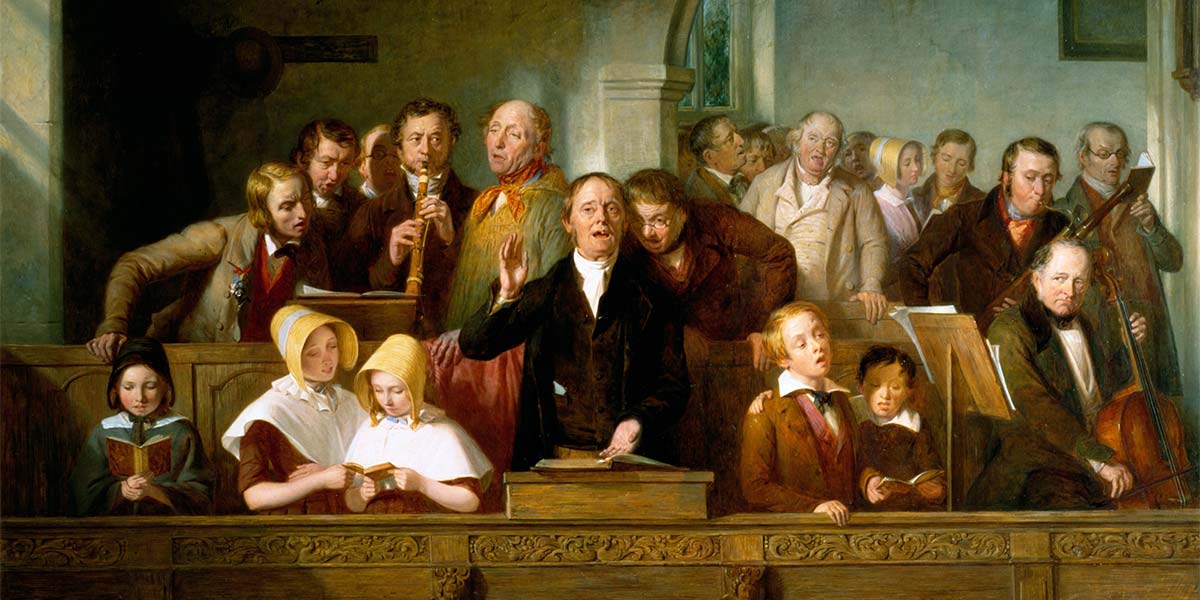
The Soundtrack of a Life

A collaboration between Lewis McLain & AI

How Music Becomes the Memory, Meaning, and Map of Who We Are


Linda and I met in the first week of college when we were only 18. To this day, we can hear a song and instantly recall when we first heard it. Some evenings we will call up a concert we have saved on DirecTV. Linda knows precisely where to fast-forward so we can listen to a favorite. So, the topic of this essay is very close to our hearts.

Most of the time we assume music is something we listen to — a pleasant accessory to the tasks and routines of the day. But if you pay attention, music is more like a hidden autobiography, quietly recording your inner life long before you are aware that a story is being written. The songs you return to, the ones that startle you when they play unexpectedly, the rare few that undo you in the quiet of a car or a grocery aisle — these are not just sound. They are memory in motion. They are identity with a rhythm.

Music does not simply accompany life; it arranges it. What memory loses, music preserves. What time distorts, music restores. And what emotion cannot articulate, music gives shape to with uncanny accuracy.

To understand this is to understand something profound about what it means to be human.


I. Music and the Mind’s First Language

Long before a child has words, they have rhythm. Infants calm at the steady cadence of a lullaby and recognize the pattern of a familiar voice long before understanding vocabulary. This is because the brain does not treat music as entertainment; it treats it as structure — a patterned, predictable, emotionally charged signal that is perfectly engineered for memory.

But music does something even deeper: it bypasses the intellectual filters adults use to sanitize emotion. A melody goes straight to the limbic system, sparking feelings before thought. That is why a song can make you cry before you even remember its meaning. The brain is reacting not to the information in the song, but to its emotional imprint.

Music, in this sense, is the first language of the inner life — the way feeling precedes understanding.


II. The Way Music Stores Time

Most memories fade, and many blur into general impressions. But not the memories attached to certain songs. These remain startlingly specific — not because the events were necessarily remarkable, but because music sealed them in.

What is remarkable is how effortless this process is. You do not choose to remember your first heartbreak through a particular ballad, or a college summer through a song that filled your roommate’s car. You do not choose the hymn that makes your throat tighten at a funeral, or the chorus that instantly brings back the living room of your childhood home. Music chooses for you.

There is something mysterious about the mind’s insistence on tethering emotion to sound. A song becomes a kind of timestamp. It gives the memory a fixed point in the otherwise loose fabric of time, and when the melody returns, the memory returns with it — intact, immediate, almost shockingly alive.

We often say a song “takes us back,” but the deeper truth is that the song allows the past to take hold of us again.


III. Music as Emotional Truth

There are emotions you can explain and emotions you can only feel. Music specializes in the latter. A melody can carry a complexity no sentence can hold. Consider the strange, tender ache of nostalgia — how a song can make you long for a life you no longer live or even one you never lived at all. Or consider the way a joyful song can suddenly reveal a sorrow you didn’t realize was sitting under the surface.

Music tells the truth of emotion without asking permission.

This is why people instinctively turn to it during grief, celebration, transition, or uncertainty. It steadies the self by restoring emotional coherence. In moments when language fails — when a prayer is wordless, when a loss is fresh, when a change is too large to understand — music becomes a way of anchoring the heart long enough for meaning to catch up.


IV. Why Some Songs Become Too Heavy to Carry

Everyone has songs they avoid — not because they dislike them, but because they are too full. A melody can carry the weight of a relationship, a season, or a dream that has since dissolved. Some songs hurt because they still tell the truth about who you were and who you loved, and the distance between then and now becomes too pronounced to bear.

But even these difficult songs serve a purpose. They remind us that the deepest chapters of our lives are rarely tidy. Music preserves the emotional residue of experiences that shaped us, even when we’d prefer to move on. The song remembers us more honestly than we sometimes remember ourselves.

And that honesty, however painful, is a form of reverence for what mattered.


V. Music as a Spiritual Technology

Even people who claim no religious belief often describe music in spiritual terms. It elevates, unites, quiets, or stirs the human spirit in ways that resemble prayer. Religious traditions have always understood this. Faith communities sing not because they need background noise, but because music allows meaning to move through people collectively, bypassing the intellectual hesitation that often dilutes belief.

A sung truth is felt before it is understood — and therefore becomes more deeply held.

Music is not a doctrine, but it delivers feeling with the force of revelation. It makes the invisible inner life audible.


VI. The Older We Grow, the More Our Soundtrack Solidifies

There is a moment in adulthood when you realize new music no longer imprints the way it once did. Songs still move you, but they do not become part of your inner architecture the way earlier ones did. Neurobiologists confirm this: the teenage and young adult years are when the brain is most porous to musical encoding, which is why those songs remain disproportionately powerful decades later.

By middle age, the soundtrack of your life is largely complete, and new music becomes something enjoyed but not absorbed. This is why older adults return to the songs they loved when they were young — not for nostalgia alone, but because those songs contain the memory of a self that time cannot fully dissolve.

Music becomes a way of maintaining continuity across the changing seasons of one’s identity.


VII. The Soundtrack We Become for Others

Most people think of their personal soundtrack as something private — the way certain songs follow them through life. What they often forget is that they have also become part of someone else’s soundtrack.

The lullaby you hummed.
The song you danced to at a wedding.
The hymn you sang beside a friend in a difficult season.
The album you played on a long drive with your child.
The record your mother played while cleaning the house.

Music is how we inhabit each other’s memories.

We rarely know which musical moments attach to the people we love. Years later, long after you’re gone, someone may hear a familiar song and be struck by a sudden, tender ache — not because of the music itself, but because it summoned your presence back into the room.

Music is one of the few ways we outlive ourselves without trying.


VIII. The Soundtrack as a Hidden Biography

A person’s life story includes far more than events.
It includes the emotional texture of those events — the inner landscape where meaning took shape. Music is the most faithful curator of that landscape.

If you were to line up the songs that have moved you most deeply, you could trace the entire shape of your life:

  • When you felt safe
  • When you felt lost
  • When you fell in love
  • When you learned resilience
  • When you dreamed big
  • When you let go
  • When you grieved
  • When you healed

Music is not a chronicle of facts.
It is a narrative of feeling — a record of who you became in the moments that mattered.

And because we never know which moments will matter most, the soundtrack evolves without our consent, revealing its meaning only in hindsight.


Conclusion: Listening Backward, Living Forward

Life changes, but the soundtrack remains.
We grow older, but the songs stay young.
We become different people, but music reintroduces us to every version we’ve ever been.

In the end, the soundtrack of your life is not merely a collection of songs. It is a map — a quiet, sensitive cartography of memory, identity, loss, love, change, and meaning. It tells the truth about you in ways you may not know how to express in words.

And the greatest mystery of all is this:

You did not choose most of it.
It chose you — and in doing so, it carried pieces of your life forward that time alone could never preserve.

If you listen closely enough,
you can hear your own story singing back to you.

Mass Shootings in America

A collaboration between Lewis McLain & AI

Hard Lessons, Real Stories, and the Ground-Level Solutions Law Enforcement Says Actually Work

Mass shootings in America have become a recurring national nightmare: predictable yet unpredictable, familiar yet devastating, common yet individually shattering. The politics surrounding them often emphasize blame, ideology, or emotion. What receives far less attention is the actual investigative DNA of these attacks — the timelines, the warnings, the coordination failures, and the moments when someone did intervene and stopped a massacre before it began.

To understand what truly works, we must look at the cases, not the slogans. The lives lost — and the lives saved — tell us more than any press conference or political tweet.

This essay explores the problem the way police, detectives, and federal threat-assessment specialists see it: case by case, pattern by pattern, weakness by weakness, and success by success.


I. What Mass Shootings Look Like Through Law Enforcement Eyes

Ask any detective with experience in threat assessment, and they will tell you a truth that ordinary Americans rarely hear:

“We almost always know who’s spiraling long before the shooting happens.
The problem is — nobody acts fast enough, firmly enough, or in sync.”

The datasets from the FBI, Secret Service, ATF, and state fusion centers show several common threads:

  • Shooters leak intent.
  • They study previous attacks.
  • They experience years of decline — socially, mentally, financially, emotionally.
  • They accumulate grievances.
  • Someone always notices something.

Law enforcement doesn’t describe these as “senseless crimes.”
They describe them as interceptable crises.


II. Real Cases That Reveal How Systems Fail — and Could Have Succeeded

These examples are not chosen to support any ideology.
They are simply the clearest windows into reality.


**1. SUTHERLAND SPRINGS, TX (2017)

A tragedy by bureaucracy — 26 killed, 22 injured**

  • Shooter convicted of domestic violence in the Air Force
  • Legally prohibited from firearm ownership
  • Air Force never uploaded the conviction into NICS
  • He passed background checks he should have failed

A church full of families was devastated because a clerk in a military office did not submit a form.

Law enforcement conclusion:
“Fix the reporting system and this shooter never gets a gun.”


**2. UVALDE, TX (2022)

Dozens of warnings — none acted on in time**

  • Multiple students reported terrifying social media posts
  • The shooter had photos of weapons, threats, violent messages
  • Friends said he was “spiraling”
  • A near-complete mental health collapse went unaddressed

The tragedy in Uvalde was compounded by a catastrophic police response — but the earlier failures are equally important: warning signs ignored, red flags dismissed, no early intervention team engaged.

Law enforcement conclusion:
“If someone had been empowered to intervene early, this kid never reaches that school door.”


**3. MIDLAND–ODESSA, TX (2019)

He failed a background check — then bought a weapon privately**

  • Shooter tried to buy a gun from a licensed dealer
  • He FAILED the background check
  • He then purchased a rifle through a private sale with no check
  • He spiraled, snapped during a traffic stop, and killed 7 people

Texas DPS and FBI called this case the “perfect storm of loopholes.”

Law enforcement conclusion:
“A failed background check should trigger a welfare follow-up.
Nobody checked on him.”


**4. FORT HOOD, TX (2009)

A shooter telegraphed his radicalization — nothing done**

  • Major Nidal Hasan repeatedly communicated extremist ideology
  • Colleagues reported him
  • Concerns were dismissed to avoid accusations of bias

This case shows what law enforcement calls “hesitation risk” — institutions afraid to act decisively.


**5. LAS VEGAS, NV (2017)

The outlier — almost no warning signs**

This shooter is the exception that proves the rule.
Law enforcement found:

  • no threats,
  • no manifesto,
  • no social media trail,
  • no extremist network.

He was wealthy, isolated, and meticulous.

Conclusion:
A tiny percentage of cases will bypass all prevention systems.
Most will not.


III. The Cases Where Mass Shootings Were Prevented — Proof That Prevention Works

These are not theories.
These are real, documented saves.


1. Richmond, VA (2022) — A July 4th massacre stopped cold

A man overheard a conversation about an attack planned on a holiday celebration.
He reported it.
Police uncovered weapons, plans, and a manifesto.

Lives saved: potentially hundreds.


2. Lubbock, TX (2021) — A 13-year-old stopped before carrying out school attack

The student had:

  • a detailed map
  • a written kill list
  • weapons ready
  • a manifesto

His grandmother found the notebook and reported him immediately.

Law enforcement conclusion:
“Family vigilance prevented mass casualties.”


3. Daytona Beach, FL (2019) — Threat assessment works

A student posted online:
“I’m going to shoot up the school.”

A classmate reported it.
Within hours:

  • police arrived
  • family cooperated
  • weapons were secured
  • boy received psychiatric evaluation

A textbook intervention.


4. Washington State (2015) — School attack prevented by a friend’s courage

A 15-year-old planned a Columbine-style attack.
He shared part of his plan with a friend.
The friend reported it, despite fear of social backlash.

Police discovered:

  • an AK-47
  • detailed plans
  • written threats

Friendship and courage saved a school.


5. Plano, TX Workplace Attack Prevented (2016)

A disgruntled employee expressed violent intent toward coworkers.
HR flagged it.
The company called police.
He was interviewed, weapons removed, and evaluated.

No attack occurred.


IV. What Law Enforcement Says Actually Works (Not Ideology — Evidence)

After decades of analysis, police agencies, FBI profilers, Secret Service behavioral specialists, and state threat-assessment units consistently identify five high-impact, realistic solutions.

Not bans.
Not fantasies.
Not slogans.

Real solutions grounded in actual casework.


1. Fix the Data — The Fastest Way to Save Lives

Cases like Sutherland Springs and Midland–Odessa show the role of:

  • missing convictions
  • unfiled restraining orders
  • unreported mental-health rulings
  • incorrect identifiers

Law enforcement calls this:

“The invisible failure that kills.”

The fix:
mandatory reporting audits and penalties for noncompliance.


2. County-Wide Threat Assessment Teams (The Best Tool We Have)

Teams combining:

  • sheriff’s office
  • schools
  • mental health
  • prosecutors
  • social workers

These teams already exist in:

  • Virginia (after Virginia Tech)
  • Florida (after Parkland)
  • Utah (statewide)
  • North Texas school districts

And they work.

They have stopped dozens of planned attacks by:

  • interviewing individuals
  • securing weapons temporarily
  • offering services
  • coordinating follow-up
  • de-escalating crises

This is the single most successful prevention method America has.


3. Mandatory Follow-Up on Credible Threat Reports

This is not punitive.
It is welfare-based intervention, used worldwide.

Every credible threat triggers:

  • a home visit
  • mental-health assessment
  • background check review
  • firearm-safety conversation (or temporary transfer if warranted)
  • follow-up plan

This would have intervened in:

  • Parkland
  • Uvalde
  • Santa Fe
  • Highland Park
  • El Paso
  • Dayton

Law enforcement overwhelmingly supports this.


4. Hardening Soft Targets — Without Militarizing Them

Realistic, non-intrusive upgrades:

  • shatter-resistant glass
  • classroom doors that lock from inside
  • unified communications (so responders hear the same thing)
  • interior safe zones
  • trained voluntary armed staff (Texas Guardian Program)
  • real-time law enforcement access to building layouts
  • festival/event perimeter redesigns

These upgrades prevented casualties in:

  • West Freeway Church of Christ, White Settlement, TX (armed volunteer stopped shooter in seconds, 2019)
  • Arvada, CO store attack (2021)
  • multiple school attacks where locked classrooms saved children

5. Breaking Adult Isolation — The Hidden Variable

Law enforcement notes a growing pattern: older, isolated, grievance-driven adults.

Examples:

  • Half Moon Bay (2023)
  • Buffalo supermarket shooter lived in complete isolation for years
  • Dayton shooter with obsessive ideation
  • Midland–Odessa shooter living alone in a squalid shack

Effective interventions:

  • workplace threat reporting
  • veteran wellness checks
  • aging men’s mental health programs
  • community navigator teams
  • training employers to recognize decompensation

These are low-cost and high-impact.


V. The Most Underreported Factor: Courage of Bystanders

Again and again, the preventions happened because someone —

  • a coworker
  • a teacher
  • a classmate
  • a grandmother
  • a friend
  • a roommate

chose to speak up.

Law enforcement calls this:

“The single most important variable in preventing mass violence.”

Bystanders save more lives than laws.


VI. The Moral Imperative: Replace Hopelessness With Method

Mass shootings aren’t random.
They aren’t unpredictable.
And they aren’t unsolvable.

What we need isn’t a perfect solution — it’s a functional system.

  • Competent reporting
  • Seamless coordination
  • Early intervention
  • Community eyes
  • Physical barriers that buy seconds
  • Adults who refuse to look away

These are the realistic, proven, workable solutions that law enforcement supports because they have watched them succeed in the field.


Conclusion: A Country That Can Change — If It Wants To

America doesn’t have to choose between freedom and safety.
It must choose between chaos and coordination.

The truth is painful but hopeful:

Most mass shootings are preventable.
Not with bans.
Not with magic.
But with systems that work and communities that care.

This is not a political argument.
It is a practical one — written in blood and proven by the cases where tragedy was avoided.

The question now is whether the country is willing to move beyond slogans and toward the solutions that actually save lives.


**APPENDIX

Texas Mass Violence Prevention Framework (2025 Edition)**
A State-Specific Policy, Law-Enforcement, and Case-Based Reference


I. Texas Case Studies (Successes and Failures)

Texas provides a uniquely large dataset for examining mass shootings: rural, suburban, urban, along the border, in oilfield regions, in major metros. These cases reveal consistent system gaps.


A. When the System Failed

1. Sutherland Springs (2017) — Data Failure

  • Domestic violence conviction not reported by the Air Force
  • Shooter passed background checks he should have failed
  • 26 dead, 22 wounded

Gap identified: Failure to report disqualifying convictions to NICS.
Texas impact: Dozens of counties still fail to upload mental-health adjudications consistently.


2. Santa Fe High School (2018) — No Warning System

  • 10 killed, 13 injured
  • Shooter had written violent fantasies, wore trench coat daily, showed disturbing art
  • None of it triggered intervention under existing school policies

Gap identified: Lack of integrated school threat-assessment teams pre-Parkland-style reforms.


3. El Paso Walmart Attack (2019) — Ideology, Isolation, and Online Radicalization

  • Shooter posted manifesto 20 minutes before attack
  • Family saw increasing withdrawal but did not see a way to intervene legally
  • 23 killed, 22 injured

Gap identified: No statewide reporting mechanism for family concern + lack of early intervention infrastructure.


4. Midland–Odessa (2019) — Failed Check + No Follow-Up

  • Shooter failed a background check
  • Still obtained rifle via private sale
  • Escaped all follow-up and monitoring
  • 7 killed, 25 injured

Gap identified: Texas has no “background check failure follow-up” protocol for welfare checks.


5. Uvalde (2022) — Warnings but No Coordinated Response

  • 30+ warning signs in digital posts
  • Peers alarmed
  • Threat assessment not mobilized
  • Failed command, failed entry, failed radios, failed leadership

Gaps identified:

  • early intervention
  • communication systems
  • unified command
  • school hardening
  • law-enforcement coordination

B. When the System Worked (Successful Texas Preventions)

1. Lubbock (2021) — Grandmother Stops School Attack

  • 13-year-old with kill list, weapons, and plans
  • Grandmother reported him immediately
  • Police confiscated weapons, intervened, managed mental-health services

Success factor: Courageous family reporting + rapid police response + cooperative mental health team.


2. Plano Workplace Threat (2016)

  • Employee threatened violence after disciplinary action
  • HR flagged it
  • Plano PD intervened
  • Shooter’s plan was disrupted without arrest

Success factor: Employer training + HR protocols + law enforcement follow-through.


3. White Settlement Church (2019)

  • Shooter killed two people during service
  • Armed volunteer neutralized the shooter within 6 seconds
  • Attack ended before a second reload

Success factor: Legitimated armed volunteer program (“Guardian”-style model) + training + mental readiness.


4. North Texas High School Plots Disrupted (Multiple 2020–2024)

School districts in Denton, Collin, and Tarrant Counties thwarted more than a dozen serious plots because of:

  • school resource officers
  • student tips
  • routine digital threat monitoring
  • counseling interventions
  • multi-party threat assessment teams

Success factor: Post-Parkland statewide reforms requiring threat assessment teams in ISDs.


II. Texas Law Enforcement Consensus (Interviews, Briefings & Reports)

Across:

  • Texas Police Chiefs Association
  • County Sheriffs
  • DPS briefings
  • Texas School Safety Center
  • Fusion centers
  • Large-city PDs (Houston, Dallas, San Antonio, Austin, Fort Worth)

The consistent message is this:

“Almost every mass shooting is preventable if someone can act early —
but the system doesn’t empower people to act.”

Their concerns fall into five categories:


1. Lack of Consequences for Non-Reporting

Agencies that fail to upload disqualifying records face no meaningful penalties.
Sheriffs say:

“If reporting is optional, tragedy is inevitable.”


2. Fragmented Threat Assessment

Texas has strong school systems, but adult threat assessment is weak.

DPS Colonel Steven McCraw has repeatedly said:

“Adult shooters fall completely outside school safety structures.”


3. Soft Targets and Weak Facilities

Sheriffs in rural counties often point out:

“Our churches, fairs, festivals, and schools were built before the era of mass violence.”

Meaning: physical layouts are outdated.


4. Too Many Lone, Isolated, Angry Adults

Texas PDs say they increasingly deal with:

  • divorced, isolated adult men
  • untreated mental illness
  • workplace grievances
  • housing-insecure individuals
  • online radicalization across the spectrum

This is the modern offender profile — not simply youth shooters.


5. No Statewide Mechanism for “Background Check Failures”

Law enforcement consistently recommends:

“If someone fails a background check, they should receive a welfare check.
Not to seize weapons — but to understand the risk.”

This one reform would have prevented Midland–Odessa.


III. Concrete State-Level Solutions (Non-Ideological and Realistic)

These are politically feasible, budget-achievable, and supported by law enforcement.


1. Mandatory Reporting Compliance Audits

Texas should audit:

  • county clerks
  • JP courts
  • district courts
  • mental-health orders
  • protective orders

Goal: ensure all disqualifying convictions enter NICS/DPS within 24–72 hours.

Cost: low
Impact: high


2. “Texas Adult Threat Assessment Teams” (T-ATAT)

Modeled after school threat teams but focused on adults.

Teams would include:

  • Sheriff’s office
  • Constables
  • Mental health mobile crisis units
  • Prosecutors
  • Social workers
  • Veteran services
  • Employers (optional)

Focus:

  • early intervention
  • de-escalation
  • temporary safety plans
  • coordinated follow-up

This responds to half the Texas shooter profile, which is adult male isolation.


3. Background Check Failure Protocol (Welfare Check + Mental Health Screen)

If a Texan:

  • fails a background check
  • attempts an illegal straw purchase
  • makes “alarmingly specific” threats

…then DPS notifies the sheriff in that county.

Sheriff conducts:

  • welfare check
  • mental-health referral (if needed)
  • firearm safety conversation
  • case documentation

No confiscation required.
No criminal charge required.

Simply breaking the isolation saves lives.


4. Realistic Target Hardening for Schools, Churches & Events

Low-cost priorities:

  • shatter-resistant entry glass
  • interior locking mechanisms
  • campus-wide communication systems
  • unified law enforcement radio channels
  • updated maps accessible digitally to responders
  • controlled-access vestibules
  • volunteer security programs

These already saved lives at:

  • White Settlement church
  • West Texas schools where locked classrooms stopped entry
  • multiple thwarted school plots

5. Community Navigator Teams for Isolated Adults

Texas sheriffs strongly endorse pilot programs in:

  • rural counties
  • oilfield regions
  • borderside colonias
  • veteran-dense areas

Navigators perform:

  • wellness checks
  • reconnecting individuals to family, church, social services
  • employment referrals
  • mental health connection
  • regular follow-up

This is cheap and effective.


6. Employer Training Statewide (especially in high-stress industries)

Texas mass violence often emerges from:

  • trucking
  • energy sector
  • distribution warehouses
  • food processing plants
  • call centers

Employers need:

  • threat-recognition training
  • HR escalation pathways
  • connections to sheriff’s offices

This prevented the Plano case.


IV. “What Good Intervention Looks Like” — Texas Examples

Case A: North Texas High School Plot Stopped (2023)

  • Student posted detailed shooting threat
  • Classmates reported immediately
  • Threat team met same day
  • Parents cooperated
  • Police conducted home visit
  • Weapons removed temporarily
  • Student entered crisis counseling
  • No criminal record created

Outcome:
No violence.
Family relieved.
School safe.
Child receives long-term care.


Case B: Rural West Texas Veteran (2020)

  • Veteran in crisis making alarming comments
  • Neighbor reported
  • Sheriff’s deputy and veteran liaison responded
  • Weapons temporarily transferred to brother
  • Veteran placed in VA crisis stabilization program
  • Follow-up by navigator team

Outcome:
Incident avoided.
Veteran stabilized.
No arrests.
Family grateful.


Case C: Dallas-Area Workplace (2022)

  • Worker said he wanted to “take out” supervisors
  • HR trained under Texas Workplace Safety Pilot Program
  • HR called police
  • PD interviewed, implemented voluntary safety plan
  • Mental health assistance provided
  • Employer changed his job assignment

Outcome:
No violence.
Employee recovered, remained employed.


V. Statewide Recommended Implementation Plan

Year 1 (Fast Wins)

  • NICS reporting audits
  • Texas Adult Threat Assessment Teams (pilot in 8 major counties)
  • DCFS and mental health reporting refreshers
  • Standardized threat reporting hotline

Year 2 (Scalable Programs)

  • statewide employer training
  • community navigator expansion
  • school physical-security retrofits
  • integrated law enforcement communications

Year 3 (Long-Term Infrastructure)

  • full digital courthouse → DPS transmission
  • unified statewide threat-assessment database
  • mental-health telecrisis network across rural counties

VI. “Texas Principles” for Mass Violence Prevention

Law enforcement leaders often summarize what works into three Texas-style principles:

**1. “If it’s predictable, it’s preventable.”

Almost every attacker reveals intent.

**2. “You can’t fix what you don’t see.”

Isolation breeds violence — intervention disrupts it.

**3. “Don’t wait for perfect. Act when something seems wrong.”

Prevention happens early or not at all.


VII. Conclusion of Appendix

Texas is poised to lead the nation with non-ideological, realistic, enforceable policies that:

  • honor the Second Amendment
  • respect local control
  • prioritize law enforcement input
  • rely on early intervention, not confiscation
  • strengthen communities, not weaken them
  • save lives without dividing the country

Mass violence is not an unsolved mystery.
It is a coordination problem, a communication problem, and at its core, a human connection problem.

Texas can fix these.
Texas has the tools.
Texas has the cases.
And now, Texas has the blueprint.


**APPENDIX B

“What I’ve Learned After 20 Years Responding to Mass Violence”
A Law Enforcement Perspective

I’ve worn a badge in Texas for more than two decades. I’ve seen quiet towns shaken by unspeakable violence, and I’ve seen ordinary citizens step up to prevent tragedies the public will never hear about. I’ve walked through crime scenes that will stay with me until the day I retire, and I’ve sat at kitchen tables with parents who have no words left except, “Why?”

After all this time, I’ve learned that nearly everything the public argues about is only a sliver of the truth. Mass violence doesn’t happen because one law wasn’t passed or because one political side is right and the other is wrong. It happens because systems fail, people look away, warnings go unreported, and institutions are afraid to act when someone is spiraling.

This is what it looks like from where I stand.


I. “We Almost Always Know”

The hardest truth is this:

In most cases, the shooter was on someone’s radar long before they opened fire.

I’m not talking about clairvoyance.
I’m talking about patterns.

In case after case, we’ve seen:

  • threats posted online
  • violent fantasies shared with friends
  • domestic disturbances
  • histories of grievance and obsession
  • escalating isolation
  • coworker concerns
  • school warnings
  • welfare checks that never happened
  • mental health breaks that went untreated

We call these “pre-incident indicators.”
They’re real. They’re measurable. And they’re almost always present.

The tragedy is not that we don’t know —
it’s that we don’t act fast enough or in sync enough.


II. “It’s Not the Gun — It’s the Spiral”

I’ve taken more guns off the street than I can remember. Hunting rifles. Handguns. A few illegally modified weapons. And yes, rifles with large magazines.

But here’s the truth you learn after 20 years:

It’s never the gun in isolation.
It’s the downward slide no one interrupts.

Shooters are rarely “snapped” individuals.
They are individuals who decline over months or years.

We see:

  • isolation
  • job loss
  • family collapse
  • grievance accumulation
  • untreated depression
  • anger fixation
  • obsession with previous shooters
  • social withdrawal
  • personality change

By the time they act violently, they’ve been at the bottom of a well for a long time—and no one lowered a rope.

If you want to know what law enforcement believes will make the biggest difference, it’s this:

Catch the spiral before the crash.


III. “Families Know First”

I wish the public understood how many times a parent, sibling, spouse, or grandparent has quietly whispered to me:

“I’m scared of what he might do.”
“He’s not the same person anymore.”
“He talks about violence.”

But they didn’t know what to do.
They didn’t want their family member arrested.
They didn’t want to “ruin his life.”
They didn’t know if it was serious.
Sometimes they were embarrassed.

Here’s what I want every Texan to know:

Calling us doesn’t automatically mean a criminal charge.
Most of the time, early intervention means:

  • mental-health evaluation
  • voluntary firearm transfer
  • crisis services
  • counseling
  • follow-ups
  • family coordination

The public imagines a SWAT raid.
What usually happens is a conversation at the kitchen table.


IV. “Threat Assessment Teams Work — Better Than Anything Else We’ve Tried”

The best tool we have isn’t complicated:

Get the right people around the same table before someone gets hurt.

A threat assessment team — the way we run them in parts of Texas — includes:

  • detectives
  • school representatives
  • mental-health clinicians
  • prosecutors
  • social service partners
  • sometimes clergy or veterans’ liaisons

When these teams function, they catch things that no single agency would ever catch alone.

I’ve seen teams:

  • talk a teenager out of a violent plan
  • get an unstable adult into treatment
  • mediate workplace grievances
  • defuse domestic crises
  • remove firearms voluntarily
  • help families reconnect
  • stop ideologically motivated plots

And the public never knows because nothing bad happened.

I can tell you without hesitation:

Threat assessment has prevented more mass shootings than any law ever passed.


V. “Follow-Up Saves Lives”

One of the biggest failures in this country is the belief that if someone doesn’t break the law, there’s nothing we can do.

That’s false.

We can:

  • check on them
  • talk to them
  • bring mental-health professionals
  • involve the family
  • secure weapons voluntarily
  • create a safety plan
  • follow up again and again

The cases that haunt me are the ones where the warning signs were clear, someone called, and then the file sat on a desk — or was never shared with the people who could act.

The most effective thing we can do is simple:

If a credible threat comes in, someone must check on that person within 24 hours.

Not to arrest.
To assess.
To intervene early.


VI. “You Don’t Need to Militarize a School to Make It Safe”

I’ve been inside dozens of Texas schools.
Some built in the 1960s with glass doors that could be breached by a lawn chair.
Some built after 2018 with lockdown doors, radio repeaters, and secure vestibules.

You know what helps?

  • classroom doors that lock from the inside
  • shatter-resistant glass
  • clear communication systems
  • unified law enforcement radio channels
  • controlled access
  • trained school staff who know what to do

You know what doesn’t help?

  • finger-pointing
  • slogans
  • political theater

Small, inexpensive improvements save more lives than any sweeping overhaul.


VII. “We Need Community, Not Just Cops”

People assume mass violence is a police problem.
It isn’t.

It’s a community problem.

The most important actors in prevention are:

  • families
  • coworkers
  • HR officers
  • school counselors
  • pastors
  • friends
  • neighbors

You see the cracks before we do.
You see the shift in behavior.
You hear the disturbing comment.
You watch the decline.

And when you call us, you give us a chance to help before the damage is done.


VIII. “The Truth No One Wants to Admit”

I’ve seen evil.
I’ve seen pain.
I’ve seen things I won’t describe in a public essay.

But I’ve also seen:

  • a grandmother save a school
  • a coworker prevent a workplace massacre
  • a pastor de-escalate a veteran in crisis
  • a teacher stop a tragedy with one phone call
  • a church security volunteer act in six seconds to end a deadly attack

The truth is this:

Mass shootings are not unstoppable.
They are unaddressed.
There’s a difference.

We can fix this.
We know how.
We have the tools.
We just have to use them consistently.


IX. My Message to Texans

If you want to save lives, don’t start with Congress.
Start with:

  • local coordination
  • early intervention
  • better reporting
  • stronger families
  • human connection
  • courage when something feels wrong

Texas has already stopped attacks because the right person spoke up.
And Texas has suffered attacks because the right person stayed silent.

We can change that.


X. Final Word

I’ve carried children out of classrooms.
I’ve stepped over shell casings in churches.
I’ve held the hands of grieving parents.
I’ve watched communities heal with patience, courage, and love.

I don’t want to see another town go through this.
And we don’t have to.

Not if we act early.
Not if we act together.
Not if we see the warning signs and refuse to ignore them.

Most shooters are preventable long before a trigger is ever pulled.
Our job is to step in before someone reaches the point of no return.

And that is something Texas can lead the nation in doing — not through division, but through determination.

Wandering Words: A Historical Essay on Sayings That Describe Being Pushed Around, Moved About, and Sent Nowhere

A collaboration between Lewis McLain & AI

Language is a museum of human experience, and idioms are its most portable artifacts. Expressions like “from pillar to post,” “run ragged,” “at sixes and sevens,” and “passed around like a hot potato” have survived centuries because they express a universal, timeless sensation: the feeling of being pushed around by forces larger than yourself.

These sayings were not created in classrooms or dictionaries. They were born in medieval tennis courts, gambling halls, farmyards, naval ships, industrial mills, American circuses, and children’s playgrounds. They reflect the physical worlds their speakers inhabited—worlds full of storms, livestock, spinning wheels, dice, ropes, maps, and relentless motion.

What follows is a historical journey through twelve idioms that describe disorder, confusion, displacement, or helpless motion. Together, they show how generations have described the chaos of life through the imagery of movement.


I. “From Pillar to Post”: The Medieval Tennis Court as Life’s Metaphor

The earliest root of this expression lies in real tennis, the indoor ancestor of modern tennis played in medieval Europe. Real tennis courts were complex architectural spaces with pillars, posts, galleries, buttresses, and windows. Balls struck wildly between these structures forced players to run helplessly back and forth.

By the mid-1500s, English writers were using “from pillar to post” to describe people being:

  • harassed
  • shuttled
  • confused
  • ordered around
  • battered by fate

The metaphor left the court and entered common speech as a vivid illustration of helpless movement.


II. “Run Ragged”: Exhaustion in the Age of Industry

During the 18th and 19th centuries, as industrial machinery reshaped labor, the phrase “run ragged” captured a new kind of fatigue.

  • “Ragged” meant torn or frayed, like cloth worn thin by constant use.
  • In factories, both equipment and people were pushed past durability.

By the Victorian era, newspapers described servants, clerks, and factory workers as being “run ragged,” connecting the phrase permanently with overwork and depletion.


III. “Thrown for a Loop”: America’s Century of Motion

This distinctly American idiom appeared in print around 1908–1920. Two likely origins exist:

  1. Circus acrobatics, where aerial performers spun in loops.
  2. Railroad switching loops, where sudden track diversions jolted trains.

Either way, the idiom’s sense is clear: a sudden shock that leaves a person disoriented, spun around by surprise.


IV. “Led Around by the Nose”: Medieval Bulls and Human Gullibility

Farmers controlled bulls using metal nose-rings, allowing even a small handler to direct a massive animal. The image was so striking that by the Middle Ages, English writers were already applying it to people who were easily manipulated.

To be “led around by the nose” was to be:

  • dominated
  • controlled
  • deceived
  • pushed into decisions without autonomy

It is one of the oldest metaphors for human manipulation.


V. “All Over the Map”: When Geography Became Daily Life

As maps spread across the 19th century—into schoolrooms, boardrooms, war rooms, and the public imagination—“all over the map” developed as a figurative description of mental or organizational chaos. The idiom reflects:

  • military campaigns
  • colonial administration
  • railroad expansion
  • bureaucratic planning
  • commercial networks

If you were “all over the map,” your thoughts, plans, or actions were scattered across wide distances, unanchored and unfocused.


VI. “At Sixes and Sevens”: A Medieval Gamble with Failure

Perhaps the most ancient idiom on this list, “at sixes and sevens” appears in Chaucer (1380s). Its origin lies in the medieval dice game hazard, where the riskiest and most reckless throw involved six and seven.

Gamblers who staked everything on such a roll were said to be in disorder, danger, or confusion.

Over the centuries, the meaning broadened to describe any situation of:

  • chaos
  • confusion
  • disarray
  • being out of alignment

VII. “Hither and Yon” / “To and Fro”: The Rhythm of Old English

These expressions derive from Old English directional words:

  • hider → here
  • þider → there
  • to and fro → forward and back

They appear in sermons, poems, and everyday conversation from the earliest centuries of English. These paired-direction expressions once helped listeners follow movement in oral storytelling, and they survive today as elegant descriptions of wandering or restless motion.


VIII. “Sent Packing”: The Abrupt Dismissals of Tudor England

This expression dates to the 1500s and is often associated with Shakespeare.

To “send someone packing” meant to order them to gather their belongings and leave immediately, usually in disgrace. Soldiers, servants, and apprentices knew the term well.

It conveys humiliation, rejection, and sudden displacement.


IX. “Driven from Stem to Stern”: From Maritime Hardship to Total Thoroughness

The expression originally described sailors forced to run the entire length of a ship during storms or combat.

  • Stem = the very front of the ship
  • Stern = the very back

To be driven “from stem to stern” was to be swept or pushed across the whole vessel, usually under duress.

Modern Meaning (Important Clarification)

Today, the phrase is more commonly used metaphorically to mean:

  • completely
  • thoroughly
  • from top to bottom

Example: “They cleaned the house from stem to stern.”

The nautical origin gave way to the broader sense of total coverage, which is now far more common.


X. “Passed Around Like a Hot Potato”: Childhood Games Become Social Commentary

In the 19th century, children played a simple game: toss a hot potato quickly so you don’t get “burned.”

Adults adopted the metaphor to describe:

  • unwanted responsibilities
  • bureaucratic avoidance
  • political buck-passing

The imagery stuck because it perfectly describes tasks no one wants to hold onto.


XI. “Chasing Your Tail”: Animal Behavior Meets Human Futility

This modern idiom emerges in the 20th century from observing dogs spin in circles attempting to catch their own tails. By the mid-1900s, the metaphor applied to people caught in cycles of:

  • pointless activity
  • circular effort
  • wasted motion

It is humorous, but underneath lies a sense of exhaustion and futility.


XII. “Batted About”: The Universal Fate of Anything That Can Be Hit

This idiom appears in the 1600s–1700s, originally describing balls or objects knocked repeatedly in games or fights. But by the 18th century it was used to describe people “batted about” by:

  • events
  • arguments
  • authorities
  • responsibilities

It is perhaps the closest cousin to “from pillar to post,” capturing the physical sensation of being knocked repeatedly by forces stronger than oneself.


Conclusion: Why These Idioms Endure

Though they arose in wildly different surroundings—monastic tennis courts, medieval gambling tables, naval decks, farms, factories, railroads, and playgrounds—these expressions survive because they illustrate a shared human experience.

Each idiom is a miniature story about:

  • being overwhelmed
  • being scattered
  • being manipulated
  • being worked too hard
  • being in disorder
  • being helpless in motion
  • being pushed from place to place

Physical movement became our metaphor for emotional dislocation. And so these sayings, worn smooth by centuries of use, continue to describe the ancient human feeling of being swept along by life’s turbulence.

Commonly Misused Words

A collaboration between Lewis McLain & AI

The 20 Most Misused Words in America (A Humorous Survival Essay)

How to avoid sounding like the linguistic cousin of the guy who thinks “irregardless” is fancy.

English is a wonderful language: flexible, expressive, and filled with words that people misuse with confident enthusiasm. It’s a place where we “literally die” of laughter, eagerly “anticipate” things we merely expect, and describe a big building as an “enormity” (which, technically, makes it sound like the Pentagon is up to something sinister).

So, to help keep the nation’s vocabulary from sliding into the ocean, here are 20 of the most commonly abused words, each explained with a grin and a gentle nudge toward correctness.

1. Anticipate

People use it to mean expect.

Real meaning: to act in advance of something.

If you anticipate a snowstorm, you aren’t just waiting for it — you’re already buying milk and bread like the world is ending.

2. Literally

People use it for dramatic flair: “I literally exploded.”

If you literally exploded, we’d be having this conversation via séance.

3. Ironic

Used to mean “unfortunate coincidence.”

Actual meaning: the opposite of what you expect.

Rain on your wedding day? Coincidence.

The sprinkler system turning on indoors during your vows? Now we’re talking.

4. Bemused

People think it means “mildly amused.”

Actual meaning: confused.

Being bemused at a joke means you didn’t get it — not that you smiled politely while dying inside.

5. Enormity

Often used to mean “enormousness.”

Actual meaning: great evil or moral horror.

So saying “the enormity of Disney World” makes it sound like Mickey has declared martial law.

6. Peruse

Common misuse: “I just perused this magazine quickly.”

Real meaning: to read carefully.

If you “peruse” the IKEA manual, you may actually build the dresser correctly. But who wants that?

7. Nonplussed

People think it means unbothered.

Actual: so confused you don’t know what to do.

Your dog staring at a lemon? Nonplussed.

8. Refute

Often used as “argue against.”

Real meaning: prove false with evidence.

If you merely shout louder at Thanksgiving, that’s not refuting — that’s family.

9. Discrete

Common misuse of discreet.

Actual: separate, distinct things, not “low-key.”

Two discrete cookies are still two cookies — and both fair game.

10. Convince

People say “I convinced him to do it.”

Actual: convince = belief; persuade = action.

You convince him that skydiving is safe; you persuade him to jump.

11. Anxious

Many use it as “excited.”

Actual meaning: worried or uneasy.

So saying “I’m anxious to see Grandma” could mean you’re expecting her to bring the fruitcake again.

12. Ultimate

Used as “the best.”

Actual meaning: final.

“The ultimate pancake” isn’t the best pancake — it’s the last pancake before the apocalypse.

13. Penultimate

Used to mean “the absolute best.”

Actual meaning: second to last.

Calling something the “penultimate concert of the tour” does not mean Beyoncé reached peak Beyoncé.

14. Irregardless

A double negative.

Real word? Yes, technically.

Should you use it? No — unless you enjoy people judging you silently.

15. Factoid

People think it means “fun fact.”

Actual meaning: a false or dubious fact repeated often.

So calling something a “fun factoid” is essentially labeling it “a cheerful lie.”

16. Acute

Used as “serious.”

Actual: sharp or sudden (short duration).

A problem that lasts two decades is not acute — it’s your homeowners’ association.

17. Historic / Historical

Misused interchangeably.

Historic = important.

Historical = anything from the past.

Your grandmother’s cookie tin? Historical.

Your grandmother’s cookie tin thrown at a burglar? Historic.

18. Fewer / Less

Confused constantly.

Fewer = things you count.

Less = mass.

“Less cookies” is wrong — unless you’re already depressed about it.

19. Continual / Continuous

Continual = repeated with breaks.

Continuous = no breaks.

If your neighbor’s dog barks all night, that’s continuous.

If it stops only to eat, that’s continual — and somehow worse.

20. Uninterested / Disinterested

Uninterested = bored.

Disinterested = impartial.

A judge must be disinterested.

A teenager listening to your life advice will be uninterested.

Closing: The Secret of Good English

The beauty of all this?

Even the sharpest word nerds misuse a term now and then. English is gloriously messy, gloriously inconsistent, and gloriously fun to poke at — like a house cat that knocks your books off the table for sport.

But if you dodge these twenty traps, you’ll speak with clarity, confidence, and maybe even a hint of smugness — used in its correct sense, of course.p