In The World, But Not Of It

I wish Bruce Springsteen had not cancelled his North Carolina show tonight due to his stance in favor of LGBT issues. I know I don’t agree with Bruce on many things, but I just would like to enjoy his music and shows. If he had cancelled in Dallas this week, it would have ended a love affair.

I wish the pastor of First Baptist Church of Dallas would not be political from the pulpit. He can write all he wants and appear on TV shows, because I do not watch those. But to start out a sermon with political anger interferes when I want to listen to his message about Christ from the Bible. I cannot be ministered to by a political activist.

I wish I could watch just one TV show without them having to weave a LGBT character into the plot – every single time. Even in a period show, can’t anyone write about a British/Scottish story two hundred years ago without including a gay issue? You see, I really don’t care until it gets shoved in my face. I scoffed at Bill Clinton’s “Don’t Ask, Don’t Tell” policy a few years back.  But I actually do prefer it.

I wish the Pope had not continued to cave in with his recent position on LGBT issues. I am not Catholic, but I look fondly at the Catholic Church. Linda and I were once part of a huge Marriage Encounter movement that was started in the Catholic Church. We were involved with our wonderful Catholic friends to start the program in the United Methodist Church. But the effort to save a church by boosting the effort or making it obligatory to recruit the LGBT folks is what bothers me. I am okay with worshiping God with a gay person next to me. But the in-my-face stuff, even a desire to support a LGBT recruiting program, is where I stop.

Oh, you could say, then Lewis, don’t watch those shows and don’t go to those places where you are going to be offended. It may surprise you, but I am perfectly okay with me removing myself to a certain extent. I’m not interested in fighting. It’s not that kind of anti-LGBT thing for me. I just don’t like being compelled to be pro-LGBT.

But I like artistic things of all kinds. Brilliant acting. Dramatic plots. Rock ‘n Roll. I’m a little bit conservative and a little bit liberal. I can handle a wide range exposures. I just don’t like it when the LGBT message is the main message. How can People Magazine devote that many front covers and stories about the “woman” formerly known as Bruce Jenner?

This is not my world, but I am forced to live in it. “Of the world, but not in the world” as some Christians might say. I don’t want to convince anyone to give up their LGBT lifestyle and to be like me. I just don’t want the LGBT folks to proselytize me. I don’t see the movement as progress. If it is, I don’t want to be progressive.

If I am headed toward the life of a recluse, then I’m actually okay with that, too. If it weren’t for having grandkids, I would worry little about what is ahead for generations. The Greatest Generation was the one my parents were in, but I know that was lost a long time ago. And I’m okay both relishing the good parts of their generation and glamorizing the bad parts. Since I am in the second class of Boomers, I know my generation was the transitional phase. My generation managed to screw up and set the stage for what came afterwards. In fact, the early part of the Boomers is quite different from the middle and later part. But we managed to let go of something that is not likely to ever return.

I do know that if an organization, whether a business, church, military, education or non-profit, is to survive when there are Boomers, Gen-Xers and Millennials working together, it takes organizational and management skills beyond me. I’m okay with admitting a lack of patience or skills. I’m okay with turning all of it over for someone else who cares to fight and lead. God bless them.

I do have the skill of being able to filter at times. I’ve never agreed with Bruce Springsteen’s politics, but I only hear his music. I can still enjoy a Rock Hudson movie and not see him marching in a LGBT parade. Because he didn’t. It might have been just after his heyday that I stopped watching any of the awards shows. Now you have to endure everybody wanting to champion their political or social issue instead of celebrating the talent factor of the awards ceremony.

I no longer believe this is my world, and there is not a damn thing I can do about it. The pendulum has swung too far, and it won’t swing back in my lifetime. I hope it does by the time my future great grandchildren and beyond are here. But I doubt it will.

My statistical lifetime almost exactly coincides with the end of the next two presidential elections. I don’t see anything getting better and the probability of them getting worse is extremely high no matter the presidential candidate.

But I will be happy or at least content. The things I cherish in life: family, Christ and friends will stay intact. I can turn off the TV, and I do. I can pick and chose the music I listen to. We already carefully research the musicals and plays ahead of time. My analytical skills and tools I use continue to advance. I’m having more fun than I ever have had with my work. I can be in the world but not of it due to decisions I make and things I control. And I will not compromise on those. LFM


McKinney ISD: You Are Working Hard Not To Be Transparent

Just before Christmas I made an Open Records Request to follow up on a rumor I had heard from more than one party. MISD wanted to withhold the information from me. I sent an email to the AG’s office that is reproduced below. They responded that they did not accept emails, so I needed to send a letter. I didn’t do that. I got my point across and was expecting the AG to side with MISD. You see, Ken Paxton has ties to just about every mover and shaker in Collin County and McKinney.

However, I received a letter from the AG’s office yesterday. They sided with me and against MISD.

So now I’m waiting to see what I get from MISD.

Meanwhile, here is my email to the AG:

Dear Ken Paxton:

 I have always believed that everything is a rumor until one can find proof – even if you hear the same rumor from multiple credible people over a relatively long time span. Even though the law does not allow a local government to ask a PIA requester the purpose of the request, I would like for you to know the reason behind my ORR that has now become the subject of a letter to you. It is also important to me that I explain how I see this as a dilemma for me. Equally important, perhaps more so, I think your colleagues have created a dilemma for you.

 The Rumor. I have heard from more than once source that several years ago (early 2000s) a city official passed by a house being built for McKinney ISD Assistant Superintendent Wyndol Fry. Supposedly there was an abundance of what appeared to be vehicles and equipment owned by Pogue Construction Company that has done a massive amount of work for MISD while Mr. Fry was over facilities. A person made this observation known to the MISD school superintendent at the time (I am not sure of his name). The superintendent confronted Mr. Fry, the rumor goes, and Mr. Fry abruptly resigned immediately or a few days later.

 My Dilemma. A Concerned Taxpayer, me, hears the rumor and wonders if this incident and set of events was ever made known to the public? So, I search newspapers and MISD online records the best I can and find no reference to the departure of Mr. Fry. So, I think how strange for a well tenured, highly respected and highly visible school official abruptly leaves and there is no record of it. Or at least I cannot find a record.

 So I did what the law provides for interested taxpayers to seek answers to such questions. I made an Open Records Request. I was fully expecting a set of documents to help me understand facts so that there would be no rumor involved. If you will simply look at my ORR, it is quite basic. And it is in line with hundreds of newspapers I scan through daily looking for stories that apply to local government officials in the only field I have worked in for 43 years. You know very well the news media ask these questions as well as bloggers and analysts like me.

 Your Dilemma. Hopefully you can see now why I was blown away when I received a copy of the attached letter sent to me by the MISD attorneys Abernathy Roeder Boyd & Hullett, PC. The letter is to you, and is the typical punt to the AG so somebody can say The Devil Made Us release these documents. I say typical because it is a well-used strategy here in your homeland – Collin County.

 What is not typical is that the letter asserts that MISD documents and information are excepted from disclosure by Sections 552.101 through Section 552.156 of the PIA! See: http://www.statutes.legis.state.tx.us/Docs/GV/htm/GV.552.htm.

 My goodness! How did my basic ORR end up covering the entirety of all those sections?

 Our Dilemma. I realize you haven’t ruled yet, but this response from the law firm fires my imagination as to what is behind this letter to you?

 Is it a true cover-up? I was told my some knowledgeable people in McKinney that this was exactly what was going to happen. That the powers in McKinney would not want this information to come out.

 And who are the powers? Well, this particular law firm and this particular construction firm are both respected and powerful in Collin County. In fact, as I have reviewed some information that reaches back several years, there are many prominent names that frequently circulate through all kinds of government committee appointments, elections, land purchases and zoning deals. And your name, sir, is quite prominent, too. So I have to wonder, are they kicking this ORR to you already knowing the answer you are going to give your former and perhaps even current colleagues?

 I also wonder if this ORR and the resulting letter was made known to the current superintendent and MISD board members? And if not, is there a don’t ask-don’t tell policy between the MISD board and this law firm. I know this question is not for you to answer, so that is the reason I am copying those folks.

 And how in the world did the McKinney media not find this quick departure of Mr. Fry intriguing and probe into it at the time? Not for you to answer but I’m sure you know the answer that I have heard so many times. Almost non-existent. Lazy. And maybe even not too smart. I’ve heard stories of reporters sitting in front of a gold mine of marginally or wholly questionable decisions and it not even catching their attention. So, I’m copying a few of them.

 In closing, I’m just a taxpayer wanting to understand if a rumor is true. I suspect it is and I suspect there is a well-known set of facts. Boards and superintendents turn over but there is usually a huge bundle of institutional knowledge in their offices and those of personnel administrators and attorneys.

 But it is now in your court, Mr. Paxton. I’m eagerly awaiting your answer.

I assume that law firms do what their clients tell them to do. The ORR I didn’t send to MISD but still might is how many ORRs automatically go to the AG as routine responses vs or answered as requested?

It was interesting to note the bond presentation to the City of McKinney City Council this week. Mostly softball questions. The only question that came close to being deep was about some statements in a Facebook page. Not mine. The Superintendent did the typical blow off to the question. When pressed harder, he came up with a bureaucratic response that tried to evade the question. The MISD sheep, the citizens, are accustomed to being told only what MISD staffers think they need to know.

I am very interested in MISD’s next move. I will keep you posted. LFM

The Energy & Legacy of Bruce Springsteen

The news story below does a decent job of describing the show my son Kenneth and I enjoyed last night. Most of you know my great love of Bruce Springsteen. I’ve listened to Bruce just about every day since the mid-1980s. He started just a few minutes after 8:00 p.m. was did not pause or break for 3-1/2 hours. Boundless energy. Especially since he can do this night after night.

“The River Tour” started in January 16, 2016. This was his 30th performance. He will do 8 more between now and April 25. He then heads over to Europe to do at least 25 more. That takes him through July 23. That’s just basically the first half of his year.

As I recall from an interview some time ago, he said he never has done drugs. He quickly saw what was happening to other rock stars early in his career. But he also says he knew he had been given a gift, and he wanted to protect it. He has a rich catalogue to show for close to 50 years of writing music and lyrics. If you listen closely, he has a religious reference in the bulk of his songs. Most are subtle. But he often introduces songs talking about his Catholic upbringings and how it was a component of his life, along with his relationship with his family. Some good and some not so good.

Last night Springsteen & The E Street Band delivered big time. Songs he has sung hundreds of times in major concerts came across with emotion felt by everyone. You simply have to listen to him and watch him live. This was the first time Kenneth had seen Bruce live. He seemed genuinely impressed and said so. Bruce touches every generation, and his audience is proof. He is simply having fun, feeding from the energy in the crowds. Uplifting. Reflective.

And then he does things like invite 20+ young girls about 8-10 years of age to come on stage to sing with him. The single most impressive memory I carried away from last night’s was the camera focused on a girl with Downs Syndrome in the group of girls. She was smiling to the limits, her eyes as bright as headlights, rocking with Bruce to her heart’s delight. That is classic Bruce Springsteen.

I’m mostly trying to share rather than proselytize, although it is inevitable when talking about something that moves you, is part of you. But it you are a fan or would like to get a sampling of what a house-full of us enjoyed last night, there are thousands of samples on Youtube.com as well as http://www.brucespringsteen.net. It’s pure unadulterated Rock ‘n Roll. LFM

Springsteen in Dallas: From ‘The River’ to ‘Thunder Road,’ diehards dug in and sang out
Hunter Hauk, Music Critic Dallas Morning News

The thousands of fans who turned up and pumped fists Tuesday night at American Airlines Center will be the first to say it: There’s no show like a Bruce Springsteen show. With the large and supercharged E Street Band behind him, the 66-year-old rock legend gave his Dallas diehards the same remarkable energy he’s banked on for decades.

His latest tour devotes more than half of its time to recreating the diverse and arena-ready magic of Springsteen’s 1980 double album, The River.

“‘The River’ was my coming of age record,” Springsteen said after kicking off with one of the album’s outtakes, “Meet Me in the City.” “All the ones before that were sort of young-man records.

“By the time I got to ‘The River’ I wanted to make a record that felt like an E Street show.”

As the band and Springsteen (a.k.a. “Bruuuuuuuce!”) worked their way through the album’s 20 tracks, its power as a self-contained setlist became more clear by the song.

“The Ties That Bind,” “Two Hearts” and “Ramrod” found the people on their feet, shouting the words and following Springsteen as he paced the open stage and shook fans’ hands. He basically handed most of “Hungry Heart” over to them, allowing them to sing much of it while he connected and, yes, crowd-surfed.

As buoyant as the faster tunes were, with their full-throated chants and the rock posturing of Springsteen’s bandmates (Steven Van Zandt, Nils Lofgren and Max Weinberg were particularly fun to watch), the stripped down sections impressed us even more. Springsteen’s voice on “Independence Day,” “The River” and “Wreck on the Highway” sounded world-weary, layered and beautiful.

McKinney Numbers Not Published Until There Is A Problem

Utility systems have fascinated me my entire career. Water, wastewater, stormwater drainage, electric, gas. Roadways are usually not referred to as a utility system, but they actually are part of utility family as I view it. All of them are expensive investments. Ginormous to use a word from my grandchildren’s vocabulary. A huge part of these assets are visible. However, the majority are not. They are underground. Even a roadway is thought to be visible, but it is the base material and conditions beneath the surface that is where the problems usually start.

The Water System.

There are two numbers I have been urging cities to place in the primary financial disclosure documents, mainly the Comprehensive Annual Financial Reports (CAFRs), for many years. The first is the Water Loss & Unaccounted For. This sounds like an awkward label and bad grammar. It is actually an officially recognized description by the American Water Works Association.

The “Loss” part is mainly referring to leaks in the water system. You can often pinpoint a leak with clarity. That is when the water is spewing 50 feet high from a breakage, and the news cameras are out for the photo-op. Or when water is leaking underground and creating rivulets that call your attention to a leak. Like a sprinkler system leaking, although usually larger. However, there are many leaks where the hole is on the bottom of the big water line creating a cavity that may not be detected until the street cracks open to reveal a huge cavern has been created over time and has swallowed a car.

The “Unaccounted For” includes many of the gallons of true lost water. But it is a bigger and more complicated issues. Water is brought into a city in huge transmission lines. The entry point is usually metered. However, the meter must be checked for accuracy and re-calibrated at times. McKinney receives about 25.3 million gallons every single day from the North Texas Municipal Water District to serve 51,636 connections. Those are published numbers available online.

Interestingly, the numbers not published are the ones most important to me – and they should be to you. The average per water customer use per day is 490 gpd. To put it in context, ten years ago that metric was 673 gpd. What can we make of it? Conservation? Inaccurate data? Actually, to be totally fair, we just start with that number, fill in the middle years and examine more closely to see the trends. There are many significant weather factors that can wreck those numbers. The water intake meters from NTMWD are read on the first of the month. The consumer meters are read on a cycle throughout the month, so one has to do a computation to get a good estimate of the water metered to the customer that matches the calendar month.

But the missing number is this: what is the Water Loss & Unaccounted For number?

It does not get published annually and for all to see. It is the most revealing number I can think of to grasp an understanding of the condition of the water distribution system. A newspaper account reports the City had a 28% loss in 2014. Are you kidding me? That would be about 2.5 billion gallons! That’s 12,500 elevated storage tanks the size on Virginia near Hardin!

Hold on. Let’s try to get a perspective. What was that WL&UF number over the last 10 years. Hmm! We don’t know. If it is calculated, it is not published in a report I can find online. It is generally believed that about the best that value can get for a city is about 7%. The paper reports 12% is the norm.

It depends on the age of the system, soil conditions and, of course, weather conditions. There can be unmetered water for street medians or even ballfields. In most cases, cities have either metered or have good estimating measures for those. Tell me the size of the meter and the water pressure, and I can tell you how many gallons per minute can go through the line. All I need is the hours the sprinklers have been on for the month.

There can be theft. However, I feel quite confident that this 2.5 billion gallons is not about theft. I do know that residential water meters tend to start under-reading when they get into the range of 7-10 years of age or about a million gallons. It would be nice to know the average age of the 51,636 connections. Let’s usage 12 years as an average to be generous. We would be fairly safe in expecting that about 4,300 meters per year are being replaced if we are keeping up with the necessary life-cycle plan. Is that happening?

In fact, what is the average age of 826 miles of water lines, 628 miles of sewer lines and 430 miles of storm drainage system? Most of those items last about 20-35 years, but do the math. Gee, “brand new” Stonebridge, at least the early sections of the 6,250 acres, is in that zone now. Infrastructure deterioration is an exponential curve, not a straight line.

Wastewater.

The key metric here is Inflow & Infiltration. (I&I). Inflow is when manhole covers have popped off from water just pouring into the sewer system. Infiltration is when roots and breaks underground are causing underground water to seep in. Together they make up millions of gallons (gee, I hope it is not billions of gallons!) that McKinney pays to treat that unnecessary part of rainwater. Same same factors discussed apply as with water except wastewater is not metered for all but the largest commercial customers as well as the city as a whole. It is an estimate based on the water usage. But even with estimates, it can be calculated with a fair degree of accuracy.

What we can guess is that the condition of the sewer system tends to be worse than the water system due to the content of the flow and the fact the flow is by gravity more than a forced flow under pressure. Roots don’t generally get into a pressurized water line and could get detected if they did. There are 51,636 checkers of the water quality as we turn on our faucets every day. Not so with the sewer system.

Conclusion.

I’m going to save roadways and other components of the infrastructure for future blogs.

I have a real problem with cities not showing these key statistics on a 10-year trend:

Water Loss & Unaccounted For.

Wastewater Inflow & Infiltration.

Average Age of Roadway Street Miles; Water and Sewer miles; and Water Meters.

In the name of transparency, I challenge the City of McKinney to publish these vital statistics in their next CAFR. Also, the CAFR will have 10-years of annual data. The Web site should show these calculations on a monthly basis as well as the linear feet of replacement or breakage repairs.

No business would operate a $Billion enterprise and not know these numbers and the trends. LFM

Is McKinney A Self-Sufficient Island?

It seems to me that McKinney is just far enough north on US 75 and just far enough east on SRT to be in the right pathways, and a city that could have it all if patience existed. We are part of a vibrant region, but we really don’t want to be a participant unless it is all to our benefit. Collin County Commissioners Court does not set a very good example, either. It wasn’t always that way. It was way before the Tea Party took control. In one sense, we are in a self-defeating mode. There is some inertia going for us, for sure. But we are only getting bread crumbs.

There are many municipal services that are too big for every city to handle. Water and sewer is a municipal service, but the cost of infrastructure and availability of a source is such that most cities had to create or be part of regional services decades ago. Now there are a few major players making sure there are ample supplies. The North Texas Municipal Water District (NTMWD) serves from the McKinney and Frisco Area to the the Garland and Plano area and beyond. Dallas Water Utilities (DWU) takes care of most of the entire Dallas Area. The Upper Trinity Municipal Water District (UTMWD) serves from below Denton to down to Flower Mound and out to areas both east and west of I-35. The Trinity River Authority (DWU) and Fort Worth Water Utilities (FTWU) serve most of west side of I-35 from Grapevine to the mid-cities area through Fort Worth.

The key point I am trying to make here is that some things are too big for single cities. And the infrastructure is so vast and costly that no city could do it by themselves.

Transportation.

The big elephant in the room is transportation. Like with other other major infrastructure systems, especially those that know no municipal boundaries, even the state and federal government can’t easily deal with well over a 1,000 municipalities in Texas. The counties provide some essential services as an arm of the state, such as the judicial system, but even the 254 counties are often too many to be effective to communicate and coordinate the big-ticket items.

So, 50 years ago Texas created 24 planning agencies to do just that – plan, coordinate and communicate. We live in the first and arguably the best and most effective planning agency area, the North Central Texas Council of Government (NCTCOG). The headquarters are located a few hundred feet from the corner where the roller coaster Judge Roy Scream is at Six Flags in Arlington. The entire first floor of the main building (NCTCOG is in three buildings) is for public meeting rooms. Decisions on as much as $200 million in federal and state monies annually are made in those meeting rooms.

NCTCOG serves a massive area that covers 16 counties. From Wise, Denton, Collin and Hunt to the north, Erath, Hood, Somerval, Johnson, Ellis and Navarro to the south, Palo Pinto to the west and Kaufman to the east, it’s all NCTCOG. Denton, Collin, Tarrant and Dallas County are where most of the dollars and attention are spent.

You can bet that county judges are highly involved as well as mayors and council members from both the major cities and many of the smaller cities. NCTCOG has an Executive Board made up of 13 elected officials. But get this, the Transportation Board has over 40 members. Those members are charged with watching out for all 16 counties, but you can be sure that they are watching out for their own.

And They Watch Us.

I have not talked to a single person at NCTCOG recently about what I am about to say. These are my views.  But I have watched the Transportation meetings, both live and recorded, over many years. If you go to the Collin County Administration Building here in McKinney, you will note that it is named after a long time regional player named Jack Hatchell.

Mr. Hatchell was a team player, a former councilmember at Plano. He also was a traffic professional. Literally. When I went to his funeral, the large church was filled with people and overflowing with praise for his vision, his leadership and his appreciation for the fabric of a region and how critical it is woven together. Mr. Hatchell was actually the president of the Executive Board at one time in addition to leading the Transportation Planning Council.

An observer watching our current County Judge would hardly find that kind of regional spirit. While he is protective of Collin County, which is nice, it is hard to see where he is interested in the region. He is tolerated, but he is not a player. He is viewed as arrogant and smug. Perhaps his Tea-Bagger constituency, of which he is a leader, is part of the reason. Here is the deal. The Transportation Staff and the Transportation Board make major decisions on how funds are allocated throughout the entire region.

So, let’s see how I would view Collin County and the City of McKinney if I were on the Transportation Board and Staff. There is a transportation provider that serves McKinney. That board is governed by key elected officials from both Collin County and McKinney. The local agency is providing services at a level that exceeds its income. What do the Collin County and McKinney elected officials on the local board as well as the McKinney City Council do? They bail! They are the captains of the ship that jump into lifeboat first while everybody left in the ship sinks.

NCTCOG comes into the picture and tries to help. They offer some temporary relief and a solution that would cost McKinney a little money every month while everything can be sorted out. The money was mainly to help provide a modest level of service for the handicapped and elderly. What does Collin County and the City of McKinney do? It involves communicating using the middle finger.

I believe DART may have offered some help, too. Again, middle finger.

Consequences.

Here’s the rub. Tea-Baggers don’t care about consequences. They just love the word NO, and the image of their leaders being tough on guv-ment.

I am fairly certain of one thing. The ultimate middle finger will come from the Transportation Board to Collin County and McKinney. Most of us don’t have a clue, but the Collin County and McKinney representatives know full well that there are $millions in discretionary funds controlled by the Transportation Board and Staff. It is very, very easy to help out with a $million here and a $million there since just about everybody has more project needs than they can afford locally. It is just as easy to say, nope, not gonna happen.

It will probably be impossible to document or trace, but I feel very confident in saying that the refusal for help offered by NCTCOG and the relatively few dollars McKinney was unwilling to come up with, pocket change in the bigger picture, is going to cost McKinney $millions. Thanks, Tea-Baggers, that’s being tough. And foolish.

Another Example.

If you really look at the way things have worked in McKinney and continue to unfold, it is easy to predict that we are going to be a community of nice homes first with a modest amount of non-residential property. Quite frankly, I am okay with that. But we aren’t thinking like a commuter community. We have no visionaries who will face the facts. We’ve got a lot, but we don’t have the patience to wait for the best. Developers don’t make money today by waiting until tomorrow.

We have $250 million we have spent without much to show for that amount of money. I am fairly sure that kind of money could have built a commuter line from the DART Parker Station to Bloomdale Road by now. Or our own bus system that would serve all of our internal needs plus just have a Park & Ride from McKinney to Downtown Dallas and to DFW Airport.

Yeah, yeah, I know those are restricted funds authorized by the voters. However, did you know that HB 157 now allows the voters to use the full 2-cents for any purpose the Council deems a priority?

We are 50% built out with all the growth north going to produce traffic going south to SRT or 75.

We should not just be a regional player, but the most impressive regional leader. We are not an island. LFM

How to Learn About Local Government In McKinney

There are three levels of local government I suggest my neighbors watch closely: Collin County, the City of McKinney and McKinney ISD. Being a student of local government is like being in a giant laboratory. Some people think that the only way you might be an effective player in governance is to run for office. I disagree.

Officeholders usually find themselves decision makers yet highly constrained. They have to operate under rules that, quite frankly, limit what they can do or say. And while they are at the table in meetings and at the dais, they actually find themselves having too much to read and study to be fully prepared if they also have to hold down full-time jobs.

Also, in my opinion, they lose some independence. Before long they end up having to go along to get along. If they want something done and need support, then they need three more votes (two in county government). It is said that politics is all about compromise. But the deep levels of compromise can be ugly and are often not what they expected — or wanted.

The real power is in the people. Well, it should be. But here is what happens. The majority of the citizens don’t care or don’t have time as long as their garbage gets picked up and emergency responses are relatively fast. If water comes out of the faucets and and sewerage is taken away, then the focus is on taking kids to sports activities, keeping the yard and house maintained and on advancing in a career. I understand.

And even the power of the citizen or business is compromised if you want something that directly benefits the person. I’ve been told by some prominent business people in McKinney that I am right on target, that I was their hero or some other words of encouragement. That is nice but when I ask them to help, they back away. Why? Because they do business or have favors to ask of an elected official. They have even told me that have to go along to get along.

Wait! They are knowledgeable about things that go on in McKinney, things they say irk them and are unethical or immoral at best and questionable about the legality in many cases, but can’t or won’t say anything because they rub shoulders with people at the Chamber or the county club and don’t won’t to get their friends upset at them? Ugh! You’re killing me!

So, the masses don’t know and don’t care and the knowledgeable are disgusted but may need a favor at some point in the future. Gee, that is a horrible community situation. But that is the way it is.

There is actually another group, and it is this particular group I am writing to today. There are those interested in the way government works, but they find it way too complicated. Politics are complex but finances are even more difficult to grasp. So, if you don’t want a single thing from local government other than good, honest decisions that serve all people today and, more importantly, our children and grandchildren in the future, then today’s blog is for you.

How Do You Learn?

It does take some time to learn, but most local governments have done a good job of putting information on their Web sites in the name of Transparency. There are documents, meeting videos and minutes available for your education. I believe there is the equivalent of a master’s degree just waiting for you to grasp.

However, in one sense, it can be like drinking from a fireplug. Most elected bodies do, in fact, get an orientation just before or after they are elected. However, these are usually just a few hours or maybe a two-day retreat. And then the remainder is on-the-job-training. And OJT will eventually get you there if you are on the governance boards long enough to get the benefit of hours of meetings.

First, just explore every single piece of information available on the Web sites of local governments. The amount of published information has grown immensely over the years – and for a reason – presumably for you to read! Here are just a few:

Budgets.
Comprehensive Annual Financial Reports (CAFRs).
Official Statements for Bond Issues.
Continuing Disclosure Filings Related to Bond Issues.
Video Recordings of Council Workshops and Council Meetings.
Video Recordings of MEDC/MCDC Meetings (not yet but coming).
Video Recordings of Planning & Zoning Meetings.
Agendas and Agenda Packets.
Minutes of Meetings.
The City Charter & Ordinances.
Pertinent State Laws (on another site).

How Does One Start?

In one of my MPA classes I taught at UNT years ago, I handed out a three-inch set of printouts of data to analyze. The class freaked out. I then told them to just study one page. Understand it completely. Hand calculate a few of the ratios. Then I said, all of the pages are the same. Different months, but the same data. Different classifications, but the same data.

That is not always the case, but my point applied here is to first glance through the entire budget, for instance. It is organized in a certain way for a reason. If in PDF format, as most are these days, there are bookmarks that help to navigate. Then read the transmittal letters and explanations in the front end. Read them twice. Maybe three times. Next year’s budget is likely to be in the exact same format with different numbers. And the key stories conveyed in the transmittal sections will usually tell you what is changed.

Let’s Stop Here.

In the spirit of taking a good spoonful and digesting before the next bite, let’s see if any McKinney or Collin County citizen (heck, anybody!) will take an interest in today’s blog and be willing to become a student again. After 42 years in the municipal business, I am still a student. I will always be. Yes, it is THAT interesting!

I hope my blogs, in their entirety but particularly those directly talking about local government, are being viewed as educational tools.

The Reward.

If I have to explain the rewards of being better educated or to make someone a better thinker, then I’m at a loss as to how to convey that motivation. A smarter citizenry can help a governing body. My goodness, just read the City’s weekly newsletter. They are begging the citizens to get more knowledgeable. It is a double-edged sword. You are likely to be way more supportive and understanding of most decisions that are being made.

You can also be there as a reminder that the body is veering from their stated goals. Or when something simply smells bad. Why did something that seems significant get placed on the consent agenda? Was it discussed before in a workshop and I just missed it? When some council members went against a staff recommendation, did they place on the record their explanation of their decision?

This is all about making government more open and honest. There is only one group of people who could possible be against such a goal. Let’s look at the group most of us want to be in. I was a Rotarian for only a short time years ago, but I am motivated to write these blogs today for similar reasons Rotarians subscribe to their Four-Way Test:

1) Is it the truth?

2) Is it fair to all concerned?

3) Will it build goodwill and better friendships?

4) Will it be beneficial to all concerned?

Some might argue that I am failing on the third one. But I think the first and second are my primary concerns now and the other two will work out over time. LFM

McKinney: What Have We Gotten For Our Quarter-Billion Dollars?

The City of McKinney is not having such a good week in the economic development department. First Lincoln Properties pulls out of the celebrated Gateway Project. This is particularly disappointing since the hotel component didn’t happen without lawsuits and  $millions spent before this more recent phase moved into the forefront. So in early 2014 we think something is finally going to happen on the remainder of the Gateway property. And by early 2016 it is stalled again as the developers walk away.

Now comes Barclays Bank. In September 2014, we hear that 500 jobs are coming with a $4 million investment on the City’s part. And now in April 2016, Barclays is leaving before fulfilling their mission. The City says none of the $4 million was spent because Barclays had not met their threshold for jobs. Not to Barclays, maybe, but not a penny paid to the property developer?

Are we just that unfortunate here in McKinney? Yes, things happen. And there is much not within our control. I suppose.

However, this opens a door. I’ve walked through it before when I have questioned how the money is being spent for both the McKinney Economic Development Corporation (MEDC) as well as the McKinney Community Development Corporation (MCDC). The City Council did give a nod to a gigantic step when they indicated it would be a good thing to move the MEDC/MCDC Board meetings to the Council Chambers and video record those meetings. I greatly appreciate that move when it happens.

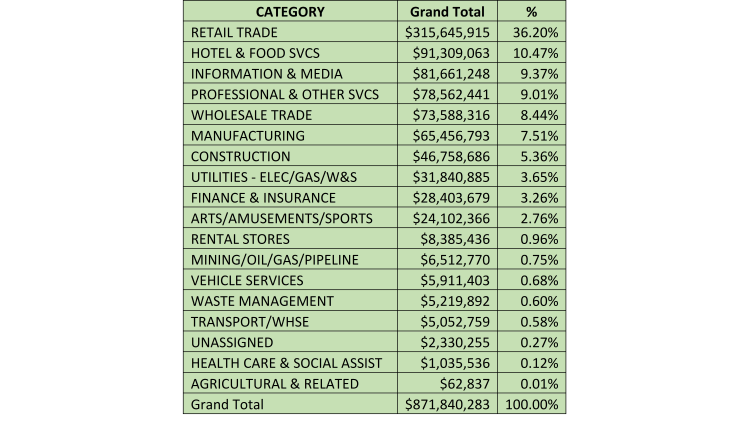
I have harped on this subject before, but I think it is imperative that the citizens of McKinney really get the full picture of where the MEDC/MCDC (4A & 4B) money has been used over the years. Between the two Money Boards, $250,955,609 of sales tax money has been collected for MEDC and MCDC operations and projects. For all the scrutiny the Council and public would give on the General Fund budget, is the same attention being paid to the Money Boards?

In just the past 12 months, $21,718,989 has been collected for the two funds. You may recall that I urged the MISD to show us the cost of the football stadium in terms of the Tax Rate Equivalent (TRE). So what is the TRE on the sales taxes going into the Money Boards? That’s very easy to determine. The taxable value is currently $15,200,173,814. If the City did not have sales taxes at all, and the same amount of money was spent in the City budget, it would take a property TRE of 28.58 cents to generate that much in funds.

Since the General Fund gets 1-penny while the other 1 penny is split evenly between the MEDC and MCDC, then we can see that these two Money Boards are getting the TRE of 14.29 cents.  That’s a lot of money!

So, what are we getting for that money? Let’s just focus on the MEDC right now or about 7.145 cents and $123 million since it started being a revenue source in 1996. What is the return on our investment?

Just how closely would you personally monitor every dollar if it was your $123 million? That’s the deal. It is our money. We elected the City Council, and they have appointed a City Manager and Boards to watch over it like it was their own checkbook.

In fact, when you go over the 75/SRT flyover and look down at Gateway, if you can see it, just exactly how much of OUR tax money has gone into that project? And after you head west on SRT and glance over at the Craig Ranch property you can partially see, how much money has been given to that developer? And what have we received in return?

In addition to cash, how much has been given by the City putting in infrastructure the benefited Craig Ranch? Or how many dollars have been waived that would have been paid in other parts of the City by developers for roadway and utility impact fees?

There is an exact amount. I have sent an Open Records Request asking for documents that will let me compile that number for my readers. It think it is going to be a shocking number. Later, I will hope to answer another question I am curious to learn more about. How many people were on the MEDC Board (and City Council) that were working for Craig Ranch, directly or indirectly, when decisions were made to give money to that project as well as to the Gateway Project?

How is it that this information isn’t more readily available on the City’s Web site in the holy name of Transparency? Maybe we can all learn soon. LFM

BTW, if you like to study charts, and I hope a few of you do, you will notice that the Rolling 12 Month totals spiked for a period started in September 2011 due to favorable audit adjustments that benefited the City to the tune of $5,345,794. State law protects the specifics from being revealed, but it is an anomaly that skews the data. Otherwise, you can actually see the exact months the City has headed into a recessionary period and recovered. Many cities are peaking in their sales tax collections at the current time.

MCKSalesTax


And Other Duties As Assigned

I wrote about Donna and treasures like her here the other day. This past Monday NCTCOG staff gave Donna a farewell reception. After Donna having to endure Monte Mercer’s daily assignments, she got to get ribbed before she took the podium. These were her words. I think just about everybody can relate when you apply for a job, interview and then after being hired being reminded you never really explored what “other duties as assigned” entails in your job description. Happy Friday!

MY INTERESTING 34 PLUS YEARS AT COG
By Donna Steward

Thank you all for coming! I’ve had quite an amusing and interesting career for the past 34-1/2 years at COG. I began working in the Regional Services Department (now known as RIS) in 1981. I was only 12 years old! After 10 years in RIS, I moved over to the Regional Police Academy and stayed there for less than a year when I was then hired in the Admin Department by Charles Cason in 1992. I like to think of Administration Department as COG’s 3-ring circus. The staff in Admin work hard for everyone in the agency by jumping through hoops, juggling every departments’ priorities, and we walk a tight rope trying to balance the needs of the agency. There’s a lot of hard work going on in Admin that doesn’t get the recognition that it deserves. Many of you know that I wear two hats in Administration: Procurement of goods and services and facilities management.

In Administration you can come to work thinking of what you plan to do for that day, but then all hell breaks loose and priorities change at the drop of a hat. Then I have to get into crisis mode because the icemaker leaked water all over the floor; mold was discovered, and I have to shut down the entire kitchen and meeting room; a major meeting is taking place and someone set off the fire alarm by burning popcorn so the meeting has to disburse; the transformer is popping and sparking so electricity to the building is totally shut down, it’s dark and the emergency lights aren’t working; a contractor needs access to all the locked closets and no one else has the key; movers need to finish the relocation and all other staff have gone home for the day leaving me there to make sure it all gets done.

There have been rumors of me being in the closet with the electrician, in the bathroom with the plumber or in the storage room with a contractor. Rumors sometimes are just that, but I have been in those places with those people several times throughout the years – discussing electrical, plumbing, janitorial and contractor related issues.

I am going to miss a lot of stuff that goes on around here such as the sleepless nights about whether or not a construction project is going to turn out right or if the multi-thousand-dollar furniture order has the right finish or color or if I have offended someone with an agency email with information that affects the whole agency. I know you’re gonna miss receiving those annoying emails! Especially the ones about turning in your pcard reports on time.

I’m gonna miss contacting building management that someone is cold and turn around and contact them 10 minutes later to say that the same someone is now too hot. I’m gonna miss someone telling me that the Coke tastes like battery acid, which is scary to think that one knows what battery acid tastes like. Or the coffee vending machine dispenses coffee without a cup or that one wishes the trees could be trimmed so they can see out the window when they should be working. But when the tree gets trimmed, ask why the tree was cut?

I’m gonna miss getting the emails to add project codes to copiers and a week later to remove those same codes because they are no longer needed. I’m gonna miss having to close a purchase order that is no longer necessary only to be asked to reopen it because the project wasn’t finished after all. I’m gonna miss emails telling me that some men’s underwear was found in the stairwell and later some women’s underwear outside the elevator. Not sure what was going on there!

I’m gonna miss getting requests to remove a squirrel nest from inside the hood of one’s car or that squirrels have been eating the wires of another’s car. I’m gonna miss hearing about a possible squirrel massacre in the parking lot because there were two dead ones out there. Probably killed by the vehicle owners! I’m gonna miss the complaints that we need to have air fresheners in the restrooms, only to go back and tell building management to remove them all because the smell was making one sick. I wondered how long they stayed in the restroom? I will miss having to ask building management to change out the soap because one didn’t feel their hands were getting clean enough.

I’m gonna miss hearing the complaint that some were getting bitten by fleas in their office only to learn that they had just sprayed for fleas at their home the night before. I’m gonna miss hearing that I’m too hot, and I can’t concentrate on my work and may have to go home. Or that I’m too cold and I can’t concentrate on my work and may have to go home. I’m gonna miss the complaints that someone was cooking fish in the microwave stinking up the entire office and that I need to send an email to tell people not to bring fish for lunch.

I’m gonna miss being asked to tell people to flush the toilet when they finish or to tell them to stop peeing on the seat. I’m gonna miss receiving requests to tell people to wash their hands after using the restroom or to tell them to not use their cell phones while other people are using the restroom or that I need to post a sign in the restroom on proper restroom etiquette. I’m gonna miss hearing about bugs being in the coffee from the vending machine and on the same day receive compliments that the new flavored coffee from the vending machine is really good. Perhaps it was the bugs that made it good!

I’m gonna miss hearing that there are grown men undressing outside one’s office window and then receive comments that they enjoy watching the police cadets running around outside half dressed. I’m gonna miss trying to help someone figure out what size, color or style of logo shirt that I think they should buy. I’m gonna miss being asked to make the workers outside stop their work because they’re being too noisy and people can’t hear what’s going on in a meeting inside. I’m gonna miss being asked to have the landscapers to come back later because the smell of the cut grass is making them sick or that the mowers are bagging the grass clippings instead of mulching them. I’m gonna miss having to get a vendor to adjust a 7-year old chair because it’s been uncomfortable all that time.

I’m gonna miss wondering how the entire door to the microwave ended up on top of the microwave. I’m gonna miss hearing that there’s a screaming cat sitting outside one’s office window or a family of skunks is burrowed in the bushes. I’m gonna miss hearing about the rules of drinking coffee since the agency no longer supplies it for employees. I’m gonna miss hearing about the ants that are marching across desks or wasps or bees swarming inside the office. I’m gonna miss being asked to tell people to stop using air fresheners in their office because some don’t like the smell. I’m gonna miss being asked to tell someone they shouldn’t wear a certain cologne because the smell is making one sick.

I’m gonna miss when someone tells me they want to order 50,000 pens that they need by next week, and I have to do an interrogation. Do you mean PINS or PENS? What brand, color, style, ink, is there a logo imprint, what color logo, is the logo created, can I get a copy? I’m gonna miss telling them that getting pens next week ain’t gonna happen since it has to be bid out and the product comes from China so the next question is what’s your real deadline so I can make this happen for you?

I’m gonna miss being called the COG mom. I’m gonna miss being told that I should be the Director of Whatever You Need. I’m gonna miss those words “go ask Donna.” I’m gonna miss being told that “you’re just like the Wizard of Oz – You make stuff happen behind the scenes. I see all of your emails, but I never see you.”

A lot of people have told me they could not do what I do on a daily basis. As you can see it’s been quite an amusing journey for me, and you have to have a sense of humor to keep your sanity. My secret is to get out for lunch EVERYDAY and unwind. I have bitten my tongue quite a bit over the years, but now that I’m retiring, I can let the holes begin to heal.

But all joking aside, what I’m really gonna miss is all of you. I’ve enjoyed working here for the past 34-1/2 years. I want to tell the newcomers that COG is a good place to work and you can make it what you want it to be. People wonder how I survived this crazy job and I tell them: “I do my job then I switch to my wife, mother, grandmother hat and go home.” Now I’m about to switch to my retirement hat!

My plans are to do some traveling, relaxing and just enjoying life. First stop will be in the words of Gladys Knight “I’ll be on the “midnight plane to Georgia” to visit my new grandson, Charles Joseph, expected to arrive in mid-April.

I want to close with this last thought: “Don’t get so busy making a living that you forget to make a life.”

Thank you all for coming!

Donna Steward
Procurement & Facilities Coordinator
Administration Department
10/5/81 – 4/1/16

Maslow & Municipal Services

I was fascinated with Abraham Maslow’s Hierarchy of Needs back in college. I won’t use this space to try to fully explain his theory, but I strongly encourage you to explore on your own. It didn’t occur to me then how I would later apply it later in my career and personal life. Before long I had no trouble applying the hierarchy to municipal services and even at other levels of government.

2000px-Maslow's_Hierarchy_of_Needs.svg

Physiological.

Most of us live in good cities measured in several different ways. We can best understand just how good we have life by taking away the first line of government, counties, schools and cities. We generally know we are going to have water brought to us and wastewater taken away from us before we can even build a house. And cleaned before and after. Just those two services allow us to move into a community, but it has to be continued to keep us there. Else we end up like Flint, Michigan. In case we were to get lax or just fussy about spending money for receiving and returning clean water, we have federal, state and local standards. And levels of necessary bureaucracy to enforce those standards.

Actually, it doesn’t matter what the cost is. If you are having to pump water from a lake 100 miles from you, and the lake was built in the recent decade rather than in the 1950s, then it is going to be very expensive. If the water is of a quality that requires above normal amounts of treatment (look up the word “brine” or “brackish), then it is going to cost more. If you move to a city that has charm promoted in the form of “beautiful hills” and terrain, don’t be surprised if your sewer bill is higher due to the dozens of lift stations as opposed to a city where wastewater gets to the treatment plant through gravity flow. Big difference.

My municipal career started right after the Clean Water Act of 1972 was created. The sewer bill was a flat $2.00 a month, as I recall. Up until then the usual phrase was “the solution to pollution is dilution,” but you had to say it with a heavy emphasis on “di” in dilution to sound Texan. Treatment plant were actually by-passed during heavy rains with massive amounts of rainwater inflow and infiltration from aging or shoddy lines going straight into the streams. So, yes, my friend Maslow was correct, there are basic physiological needs that have to be met before we can have a viable community.

Safety.

Let’s face it. If we have to live every day worrying about getting killed or someone stealing our property, we have no focus other than staying home with a gun in our hands. It is easy for jokes to come forth on this one, but this is not a Redneck issue for most of us. Yet it is always on our mind or at least we get frightening reminders when we hear of a home-invasion crime that has occurred close to us. As you get older, this concern increases. So, you are not going to have a good life or a good community if you don’t feel safe. And to know that if you need help, the response is only a few minutes away. But it does cost money. In fact, a response time of 30 minutes for a serious crime call instead of 5 minutes might save tax dollars. Which do you want?

And the same response time for a fire or rescue emergency is hardly a choice. Those minutes mean you either go to the hospital or to the morgue. I find it interesting that many of my peers want to retire and move way out into the country. At an age when they may need medical assistance the most. Not me. I want to live in a safe community with doctors and hospitals close and emergency workers who can get me to the care centers quickly. The bottom line is that fire and police workers are expensive and are always going to get priority in budgets. Besides, do the math. There are 8,760 hours in a year. For every worker you need 24×7, it takes 4.2 people to cover – and that is if they didn’t take a single day of vacation, holiday or sick leave. The real number is well over 5 people for every one employee needed for full coverage. Then add the logical team/squad requirement since you don’t send a firetruck with just one person on it.

The Others.

Each of the top three are as important as the first two in my mind if we want to live in communities and enjoy the benefits while also increasing our own personal growth. Linda and I don’t need a huge stadium full of friends, and prefer being homebodies to a full calendar of social events we lived as younger people. But we do need friends. We are more “waving” neighbors than social butterflies, but we like having good neighbors. We like to live where medians are well groomed with a sprinkling of color beds. It is nice to have city (and HOA) people who will enforce codes that keep weeds from becoming a problem. We are grateful for animal control who comes when we call about those obnoxious dogs behind us. We like a community full of churches.

We love going to the nicely groomed, well-lighted sports fields and recreation centers where we live and go watch our grandkids play. I cannot express the joy we feel being around young families and their kids. We get energy from their youthfulness. Our favorite thing to do is to see live entertainment – plays, musicals, dramatic readings, idea forums (like TedTalk) I mentioned recently. We get the benefit of enjoying not just McKinney but also the surrounding cities, Frisco, Fairview, Allen, Plano. We probably go to venues in Dallas every week or two. Our jaunts to Fort Worth and several cities in between have introduced us to some great venues.

I have attended college courses at the local community college and gone to enlightening, though provoking events held for vocational and personal growth. The first thing we did when we moved to McKinney is get our water turned on. The second thing we did is get library cards. The most wonderful sight when we go to the library is seeing a mom walking in or out with three kids, each holding books. That’s community!

Conclusion.

The most vibrant communities nourish the citizen and let them thrive to reach every level of Abraham Maslow’s Hierarchy of Need. Our children and grandchildren can flourish in these kinds of communities. Jobs are available here or nearby. Every need we have is met. We can partake as little or as much as we want. We can give, and we can take.

The real test is whether we can also be a good player in our larger region from which we can give and take? And that is my topic for tomorrow. LFM

Somebody is Stealing From You as You Read This

Written in 1998.
Updated in 2002.
Updated in 2008.
Tweaked in 2016.

Introduction.

The newspapers are full of reports daily. An appraisal district employee is indicted for stealing. A city manager is put on administrative leave while an audit is conducted to determine if his city credit card has been used for personal items over the past few years. A computer analyst is charged with fraud indictment after he allegedly hacked into the District Clerk’s wireless system and “intentionally caused damage without authorization to a protected computer.” A veterinarian, claiming he was fired after complaining about conditions at the city animal pound, wins a $1.2 million jury whistle-blower award.

 A former probation officer accused of stealing on the job was placed on probation by a jury, after pleading guilty to felony theft by a public servant. Another paper reports that an audit says the city may have overpaid the law firm hired to collect delinquent property taxes. In another city, a favorable court decision that could cost the city more than $500,000 for more than 200 firefighters continues to smolder as the city looks at appealing the ruling. Another paper reports that an ex-municipal court worker faces charges of tampering with public records – police say he tried to sell fake insurance cards to people with citations. In another city, a former building inspections office employee is charged with stealing more than $20,000 of permit fees. In yet another city, headlines announce that a police sergeant is on leave after a narcotics audit reveals $1,000 is discovered missing.

 This little sampling should be quite disturbing to finance officials and city managers for a number of reasons. The first reason is that these are stories from Texas alone. The second reason is that these are stories that have been in the papers in the last 10 days alone! The third reason is that there are probably just as many or even more stories similar to this that have not made the paper in the last ten days. Some of you have reported them to me. Many are handled quietly like is done in the private sector.

 There is a fourth reason. Our finance profession knows this reason but doesn’t want to talk about it. Elected officials don’t want to hear about it or don’t care. It is this: stealing is going to rise over the next few years.

 Why? Let’s return to another sampling of the headlines. Actually, I will put the headlines into a succinct composite. Tax bases are slowing or decreasing. Sales tax receipts are plunging. Positions are being eliminated. Pay raises are being canceled or will be minuscule. In some cases, pay may be cut. Employees are going to be asked to pay more of their insurance premiums. Some cities are having some of these budget balancing adjustments placed on them and some are having all of these and even more. It’s not a pretty picture.

 But, of course, you are saying this recession is everywhere and is temporary in the great scheme of things. It is even expected and the natural cleansing of the inefficient squeezed down by economic forces. Well, true to an extent. Except things are different now that we have factors induced by national security issues as well as national corruption on an unbelievable and unprecedented scale.

 But there is more. A large number of our government workforce has never been through a major cutback. A large number of our city managers and finance officials have never been through this experience – at least not since they have been in the top level positions they now fill. And all of us are just now coming into the realization that we knew would arrive at our doorstep some day: the drill of confronting the results of the Big Lie. The Big Lie is that we can do everything for everybody and, of course, it won’t cost a thing.

 How does this become a burden to be carried by finance officers and city managers? And perhaps the connection to stealing hasn’t become clear yet. Let me see if I can make my point. My article entitled “Why Good People Steal” written over four years ago dealt the centrality of dishonesty. It has to do with the rationalization of the mind. We must always be vigilant but really step up our sensitivity when circumstances become ripe for employees to believe in their own minds that they aren’t stealing but only borrowing or getting what is due to them. It is worth replaying the 1998 article and then to add some comments related to 2002 and the next few years that we may be in an economic slump around most of the state.

 Why Good People Steal

 “Right now — right this very minute — someone is stealing something from the city.” This was the answer to a new finance director’s question about what she should be concerned about in her new role. “And even after realizing this, you cannot become paranoid” was the second part of the answer. She gulped on cue and had that “Bambi in the headlights” look. The answer came from observations over the years and from stories directly shared by finance officials. The focus of this article is not on the method of theft or internal controls, but rather the underlying causes or excuses offered when a theft is discovered. Names of people and organizations are omitted. A couple of examples are even made up for illustration purposes.

 The goal is to help you become more effective as a city official by becoming more sensitive to the circumstances that can often lead to a good person making a decision to steal. The emphasis is on “good” people, not the common criminal. This is because rarely will you deal with the latter. It is almost always the former. In particular, a common yet surprising characterization of a person who has been caught stealing is that they were trusted, often long-tenured, and were the last people that would have been suspected of wrongdoing.

 The scary part of this topic is not only are good people involved, but much of stealing is petty. That is, the rationalization to steal does not need much effort if the stakes are small. This logic compounds itself if the person initially feels justified due to acceptable standards subtly set in the organization. When an offense is no worse than what someone else does and not any more significant than was done last week or last month, then the stage is set for the rationalizing mind to grant permission for a misdeed. In fact, it is possible that the organization has tacitly given an okay to an act — at least to the person rationalizing in his or her own mind.

 Here are some starters:

 _ A finance director cannot figure out why 40% of the Scotch tape usage occurs during the months of November and December. Can you help them out here?

 _ One city keeps open boxes of coffee packets in the break room but cannot figure out how coffee consumption averages 18 cups per day per employee. Got a clue?

 _ An employee makes personal copies at work, which is no worse than the waste of making 100 copies (only $2- $5 worth!) for the weekly office football pool.

 _ Employees tend to cash checks at the city collections department after 2:00 p.m. on Fridays because they know their checks will not be deposited until the following Monday.

 _ It is general knowledge in some city offices that the department directors instruct their secretaries to make airline reservations for a seat that costs $50-$100 more, but the directors get personal frequent flyer miles for traveling on the costlier airline.

 How much worse is each successive example compared to the one before? Are these examples of stealing? Is it an effective use of your time to worry about these little things? Are these bad people? Have you given tacit approval of these acts, knowingly or unknowingly? Do you wish that you had not started reading this article? Are you gulping yet?

 I got a call from a finance director asking for help one day. One of his best employees had been caught at a grocery store stealing less than $5.00 worth of products. The city’s policy was automatic termination. The finance director was disappointed because this was such a bright young person with so much promise. The request was to help the young man find some work elsewhere.

 The terminated employee came to visit me. He was remorseful beyond description. He had a wife and child and came from a good family. He had shamed them all. He was especially distraught because he simply had no explanation for why he took the petty store products. He had more than enough money in his pocket to pay for the goods. It was a “mental lapse,” he explained.

 A city had a loyal employee, a department head over revenue collections, steal over $25,000 during a two-year period. The reason given related to a son going through a divorce needing his help. In another city, a city manager got in hot water for accepting a $25,000 “consulting fee” from a developer on a land deal, a clear impropriety. The reason given was that he had a twin brother who had become addicted to prescription medicine and was in financial straits. He did nothing to help himself, only his brother. See how this works?

 A chief accountant, now in jail, was proud to show off his new car. But then his new boat and other things popped up that seemed out of reach for his one-salary. The finance director became suspicious and began digging into what eventually would be revealed as small daily cash thefts that had accumulated to more than $100,000. There was no formal explanation given, but the only conclusion was that his spouse had expectations of a grander lifestyle than is normally afforded a municipal employee.

 Another finance director considered a rising star was on her way to her fourth city and a major promotion in stature and a mid-$50’s salary ($100k+ in 2016). Upon vacating her third city, it was revealed that she owed the city several hundred dollars that stemmed from past due water bills for several months. How did that happen? She had instructed the staff to exempt herself, the city manager and the mayor from cut-offs for non-payment, unbeknownst to the latter two, but enough to convince her employees that this was a sanctioned directive.

The finance director acted surprised that her husband had not “taken care of the debt like he was supposed to.” She had just been given her final check with accrued vacation and paid sick leave and another check from her new city for moving expenses — all totaling several thousands of dollars. However, she could only pay half the past due bills — and then that check bounced! After being indicted, she plea bargained just before going to trial and got probation. This one is still a mystery.

 One of the highest paid school superintendents in the state has pled guilty to the misappropriation of funds, including purchasing $16,000 of personal furniture for her home with school funds. In another less publicized case, a utility billing manager making over $50,000 was terminated after adjusting her own water bill that amounted to only $30- $50 per month.

 What were these people thinking? How could they have possibly rationalized that what they did was okay? How did they think they could get away with it? And in every case, these were considered, bright, trusted and respected people by most of their peers and supervisors. How is anyone supposed to be able to spot these misdeeds or at least suspect that something is amiss before they surface in such obvious ways?

 Several municipal officials made a direct or indirect contribution to this article through their stories. There are also some insights that have been forged from their reflections and made a part of this article. They do not desire the focus to be on the person who disappointed them or on the city involved. They do share some advice, along with the author, for the benefit of those city managers and finance officials who not only might become embarrassed by a theft, but who might get their own necks chopped off when a theft occurs.

 Be vigilant.

 If you do not heed the yellow and red flags of this article, then you may be foolish only up to the moment a discovery is made. Vigilance is the smart substitute for paranoia. Trust your instincts when something does not look right or sound right. Be alert, watchful. Visualize in your mind the ways that money, tools, materials or other city property could be walking off.

Ask questions and walk around with regularity. Listen to cautions made by auditors. Mind the little things. If the organization realizes that little things matter to you, then it follows that larger offenses have commensurate consequences. The most honest person I ever met in government used to keep a can in the copy room labeled, “Personal Copies – $0.10.” He regularly asked with a friendly but serious tone of voice if people were making personal copies on COUNTY equipment and, if so, to kindly make a deposit.

Another finance director tells of her city manager who annually gave the city a check for several hundred dollars marked “for the little things I forgot.”

Open Door Policy.

A city manager was dismayed at what was acceptable by lower echelons of the organization as “authorized” improprieties once it became known that a finance director had instructed or approved a misdeed. The ever so simple solution was to publish a letter annually that, in essence, forbade even the slightest irregularity and personally granted every employee an open door invitation to speak about violations of city policy — real or perceived — with anonymity. E-mail now makes that message even easier to convey.

 Changes in Personal Lives – Part I. This advice is offered in the most compassionate manner possible. It can be understood only when you have been faced with a genuinely good employee in crisis who then wishes they could undo a foolish misdeed. You could be doing both the city and the employee a favor if internal controls are stepped up when a person handling money or goods has a crisis going on in their lives. The mind’s ability to rationalize is stretched to its illogical worse state when a spouse has lost their job or has been hospitalized, creating a financial hardship. The burden to make ends meet becomes substantial.

 Again, if this advice seems callous, then visualize working the problem backwards. This good person has stolen money, and it is up to you to correct the problem and to possibly destroy their career and lives. IT HAPPENS!

 Changes in Personal Lives – Part II. There have been several other stories told with dread over the years that have an especially ugly twist. When you look at the statistics of people in our society with addictions and other personal habits that require sizeable sums of money to sustain, the rationalizations are less honorable yet perhaps even stronger than the ones previously mentioned.

 One finance director caught an employee stealing who confessed to a gambling addiction. This thief provided him insight that she, like most gambling addicts, was absolutely certain she had a knack for winning at the gambling tables in Shreveport and Las Vegas. She had just “borrowed” the money with an intention of paying it back with her winnings — winnings that did not materialize.

 Another finance official tells of an employee with a drug addiction that quickly grew outside the bounds of affordability for the typical professional salary. One finance official was caught stealing sizeable sums of money after an expensive girlfriend on the side became necessary to hide from his wife. A city manager called me years ago to ask if I thought it was strange that his flamboyant and extravagant assistant city manager over finance had a $100,000 – 2% (this was in the 6-10% days) loan with the city’s depository bank. It is often difficult to spot a questionable lifestyle that could point to malfeasance, not to mention the possible legal hindrances involved in a probe. Ironically, it is often found that many people in this category do little to hide the product of their misdeed. Again, be vigilant and trust your instincts when you sense something is amiss.

 Organizational and Personal Clashes.

 Back to the less exciting and glamorous signals of conditions that foster improprieties. The ability to rationalize thefts is magnified in some cases when a person justifies the theft as fair compensation. This can be particularly bad organizationally when the city has gone for long periods of no pay increases granted by the city council. It is equally possible to rationalize a theft when someone has been passed over for a raise or has reached the top of their pay range and is no longer receiving pay increases. The signals may be manifested in poor attitudes or other disgruntled actions.

 This condition can also occur when there is disillusionment with life in general or with a person’s status in life related to their peers. If mid-life crisis enters the equation and a large percentage of the baby-boomers are into that stage of life, then misplaced justification may grow in the future. The characteristics of the baby-boomers in their 40’s and early 50’s include fewer big increases in income levels, overextended personal debt, high tuition demands for kids in college and increasing requirements to take care of aging parents.

 The point being offered is to be sensitive about those who you suspect feel cheated in life or by the organization and who could possibly rationalize that what they are doing is not stealing but righting a perceived wrong.

 Conclusion.

 It is critical to emphasize the second part of the advice given to the new finance director — do not be paranoid. This article is about the real world and the ugly side of being a financial official or city manager over all departments. On the other hand, it does not apply to most of your employees. It is meant to thrust you into that ugly scene when there has been a theft and to work backwards. If you have not had to deal with a theft in your organization, you are either still lacking experience or missing signals in front of you.

 If you can avoid ever having to spend the emotional time and energy working through a theft resolution, then more constructive and rewarding things can be added to your agenda. Most people will vouch that dealing with a theft is all consuming — often for months or years. They also will tell you that it is highly possible that you will get the blame and that you will personally kick yourself for not seeing the obvious or for not trusting your instincts and pursuing your suspicions.

 Also, there is a certain amount of effort involved in the establishment of internal controls. You must be adequately staffed in many cases to have effective internal controls. Ironically, many finance officials refuse to ask for justified positions in order to set an example for all departments being denied their budget requests. These sacrifices are all fine until a theft blows up in your face.

 I cannot recall a single finance official being thanked for their bare bones budget once malfeasance was pasted across the headlines and embarrassed city officials were looking for heads to roll. So, the perspective is important, the degree of alertness is crucial, the staffing and training for effective internal controls is the fundamental charges for the modern finance official. LFM (1998).

 Back To The Future

 I had many favorable comments to that article back in 1998. I repeated it again here in 2002, because I think the subject is timeless. As an avid reader of news from every corner of Texas, I can tell you that the frequency of malfeasance is increasing in relatively petty cases as well as with some quite grand.

 And what can be more grandiose than the stories that have come out and the stories that continue to come out almost weekly about major misdeeds. They are colossal. It is within the government sector that suspicion has be most prevalent all along. We now know that private sector misdeeds dwarf those found in the public sector – even the largest. But we can find no comfort with that piece of knowledge. We have too many of our own popping up on a regular basis to be smug.

 So What Are We Supposed To Do?

 This is a hard question to answer and for the answer to apply to everyone. We almost always have to rely on the judgment of the individual to determine what is best under the circumstances. Nevertheless, I am willing to throw out a few suggestions:

 Mind your business. This pertains to your shop, your people, their assignments, their level of training, their sensitivity. You cannot be everywhere and check every single thing. You must rely on your immediate fiscal staffers to be deputized to adhere to the most basic practices of internal control. You must be sufficiently staffed and for the staff to be sufficiently trained. A private sector colleague, now deceased, once told me that there isn’t enough money in the paychecks for most finance officials to take the risks they take. You would be well-advised to step up internal control standards, not lower to dilute them.

 Work It Backwards.

For motivation to be more vigilant, I suggest you think about how much your next few weeks or months are going to be tied up with a theft if you don’t prevent or discourage theft in all of it many, many forms. Go a step further, however, and assume it is happening. Where is that likely to be? Where do you think it is least likely to be? Call in a few key people and see if you are surprised with how many matches you might find if the question is posed. Involve supervisors dealing directly with money. It would be a healthy exercise just to send the signal through the organization. While you might be surprised with a theft situation, who is sitting next to the person involved in theft who ends up saying “there was something about him …”

Be extra vigilant when you know an employee may be struggling with a personal problem. Send an annual memo that is both a carrot and stick. Include an open invitation but express an expectation that there is a duty involved. You can do this without an Orwellian tone to it. LFM