Giving Thanks: A Biblical Theology of Gratitude

A collaboration between Lewis McLain & AI

Thanksgiving is more than a polite gesture in Scripture—it is a spiritual practice rooted in truth, memory, and worship. Gratitude pulls the believer’s heart away from fear and entitlement and redirects it toward trust, humility, and joy. It is one of Scripture’s most repeated teachings because it shapes the soul. Through thanksgiving, we learn to see God’s hand in our lives, remember His faithfulness, and live with open eyes and open hearts. These ten biblical groupings reveal a complete and interconnected theology of gratitude, showing why thanksgiving is essential for the Christian life.


1. Direct Commands to Give Thanks

The Bible does not treat thanksgiving as optional. It is commanded repeatedly because gratitude is a safeguard for the soul—it breaks pride, counters anxiety, renews memory, and keeps the heart anchored in God’s goodness. God commands thanksgiving not because He needs praise, but because we need the spiritual clarity that thanksgiving produces.

Key Scriptures:

  • 1 Thessalonians 5:18 — “Give thanks in all circumstances; for this is God’s will for you in Christ Jesus.”
  • Psalm 107:1 — “Give thanks to the LORD, for he is good; his love endures forever.”
  • Psalm 136:1 — “Give thanks to the LORD, for he is good. His love endures forever.”
  • Colossians 3:15–17 — “Be thankful…with gratitude in your hearts…giving thanks to God the Father.”

Thanksgiving here is obedience shaped by trust.


2. Thanksgiving as Worship

Thanksgiving is not separate from worship—it is the doorway into it. In Scripture, gratitude is how the Believer approaches God. It is how we acknowledge His greatness and His character before asking for anything else. Thanksgiving reminds us of who God is, long before we focus on what we need.

Key Scriptures:

  • Psalm 100:4 — “Enter his gates with thanksgiving and his courts with praise.”
  • Psalm 95:2 — “Let us come before him with thanksgiving and extol him with music and song.”
  • Hebrews 13:15 — “Let us continually offer to God a sacrifice of praise.”

Thanksgiving becomes the worshiper’s first act of reverence.


3. Examples of Thankfulness in Action

Scripture gives concrete stories showing gratitude practiced in real life: under pressure, in danger, during scarcity, after healing, and before miracles. These examples reveal that thanksgiving is not dependent on circumstances but grows out of faith, memory, and relationship with God.

Key Scriptures:

  • Daniel 6:10 — Daniel “gave thanks to his God” though it might cost him his life.
  • Luke 17:15–16 — One healed leper returned to thank Jesus—gratitude sets him apart.
  • John 6:11 — Jesus gives thanks before the loaves multiply, teaching that gratitude comes before abundance.
  • Acts 27:35 — Paul gives thanks publicly during a storm to strengthen others.

These examples show thanksgiving is a testimony—seen, heard, and influential.


4. Thanksgiving for God’s Works and Deliverance

Thanksgiving in Scripture is deeply tied to remembrance—remembering rescue, answered prayer, protection, healing, and God’s hand in crisis. Gratitude becomes the believer’s way of proclaiming what God has done.

Key Scriptures:

  • Psalm 118:21 — “I will give you thanks, for you answered me; you have become my salvation.”
  • Psalm 30:12 — “I will give you thanks forever.”
  • Psalm 34:1 — “His praise will always be on my lips.”
  • Revelation 11:17 — “We give thanks to you, Lord God Almighty,” for His victories.

Thanksgiving becomes memory turned into worship.


5. Thanksgiving and Prayer

Prayer and thanksgiving are inseparable in Scripture. Gratitude in prayer shifts the heart from fear to trust, from restlessness to peace. Thanksgiving acknowledges God’s past faithfulness as the foundation for today’s requests.

Key Scriptures:

  • Philippians 4:6 — Present your requests “with thanksgiving.”
  • Colossians 4:2 — “Devote yourselves to prayer, being watchful and thankful.”
  • Ephesians 5:20 — “Always giving thanks…for everything in the name of our Lord Jesus Christ.”

Thanksgiving deepens prayer by transforming it from a list into a relationship.


6. Thanksgiving for Salvation and Redemption

At the center of Christian gratitude stands the cross. Scripture repeatedly links thanksgiving to the saving work of Christ—victory over sin, death, and bondage. Every spiritual blessing, every promise, every hope flows from this gift.

Key Scriptures:

  • 2 Corinthians 9:15 — “Thanks be to God for his indescribable gift!”
  • 1 Corinthians 15:57 — “Thanks be to God! He gives us the victory through our Lord Jesus Christ.”
  • Romans 6:17 — “Thanks be to God” that believers are freed from sin.

Thanksgiving is the ongoing response to the Gospel.


7. Thanksgiving as a Mark of a Renewed Life

Gratitude is not merely something Christians do—it is something God forms in us. Scripture shows that a thankful heart is evidence of spiritual maturity, spiritual memory, and the transforming work of the Holy Spirit.

Key Scriptures:

  • Colossians 2:6–7 — Those rooted in Christ “overflow with thankfulness.”
  • Psalm 103:1–2 — “Forget not all his benefits.”
  • 1 Chronicles 16:34 — “Give thanks…for his love endures forever.”

Thankfulness reveals a soul awakened by grace.


8. Thanksgiving in the Psalms — Hymns of the Heart

The Psalms give us the Bible’s most beautiful language of thanksgiving. They model gratitude that is poetic, passionate, honest, and overflowing. The Psalms teach us that thanksgiving is not rigid—sometimes it is quiet and reflective; other times it is loud and exuberant.

Key Scriptures (each now explicitly included):

  • Psalm 9:1 — “I will give thanks to you, LORD, with all my heart.”
  • Psalm 28:7 — “My heart leaps for joy, and with my song I praise him.”
  • Psalm 92:1 — “It is good to give thanks to the LORD.”
  • Psalm 69:30 — “I will praise God’s name in song and glorify him with thanksgiving.”

The Psalms teach us how to pray, sing, and feel our gratitude.


9. Thanksgiving in Community Worship

Thanksgiving is most powerful when the people of God do it together. Corporate gratitude strengthens unity, lifts weary hearts, and testifies to God’s faithfulness across generations. Scripture repeatedly shows the people gathered in unified thanksgiving during moments of rebuilding, dedication, victory, and revival.

Key Scriptures:

  • Ezra 3:11 — “With praise and thanksgiving they sang to the LORD.”
  • Nehemiah 12:27 — The dedication of Jerusalem’s wall included choirs and songs of thanksgiving.
  • 2 Chronicles 5:13 — Unified thanksgiving filled the temple with God’s glory.

Gratitude becomes contagious when the people of God raise their voices together.


10. Warning About the Absence of Thankfulness

The Bible does not only encourage gratitude—it warns against its absence. Ingratitude leads to spiritual dullness, forgetfulness, entitlement, and eventually rebellion. A thankless heart loses sight of God.

Key Scriptures:

  • Romans 1:21 — They “neither glorified him as God nor gave thanks”—and their hearts darkened.
  • 2 Timothy 3:2 — “Ungrateful” is listed among serious end-times sins.

Where thanksgiving fades, spiritual decline begins.


Reflection Questions

  1. What blessings am I overlooking or rushing past today?
  2. How can Thanksgiving become the first step of my worship each day?
  3. Which biblical example of thanksgiving most challenges me?
  4. What deliverances in my life deserve renewed thanks?
  5. What would change in my prayer life if thanksgiving came first?
  6. How does Christ’s salvation inspire gratitude in me right now?
  7. Where has thanklessness crept into my thinking or habits?
  8. Which Psalm best expresses my current gratitude?
  9. How can I strengthen others through shared thanksgiving?
  10. What spiritual danger might ingratitude be creating in my heart?

Closing Prayer

Father, we give You thanks.
You are good, and Your love endures forever.
Teach our hearts to remember Your mercies,
to see Your hand at work,
to recognize Your gifts,
to trust Your purposes,
and to praise You in all circumstances.
Forgive us for forgetfulness, for worry, and for ingratitude.
Form in us a spirit that overflows with thanksgiving—
in worship, in prayer, in suffering, and in joy.
May our gratitude reflect the grace of Christ
and become a light to those around us.
In Jesus’ name, Amen.


Post-Note — A Personal Thanksgiving Message

From Lewis

To all of you—my clients, friends, family members, neighbors, mentors, and church family—I want to offer a heartfelt word of thanks.

To my clients:
Thank you for your trust, your collaboration, your patience, and your willingness to let me walk beside you through complex decisions and meaningful work. Your confidence honors me, and your dedication strengthens me. Working with you is a privilege I do not take lightly.

To my friends:
Your loyalty, humor, encouragement, and companionship have carried me through seasons both light and heavy. Thank you for bringing joy into ordinary days and wisdom into difficult ones. Life is richer because of your presence.

To my family:
Thank you for love that never quits, for understanding when life gets busy, for prayers whispered on my behalf, and for believing in me even on the days I do not believe in myself. You are God’s greatest earthly blessing to me. Special thanks to Linda, the love of my life, for standing with me for almost 60 years.

To my neighbors:
Thank you for kindness, shared community, watchful care, and genuine friendship across fences, streets, and sidewalks. A neighborhood becomes a family because of people like you.

To my church family:
Thank you for prayers, for meals, for conversations, for fellowship, for spiritual guidance, and for walking this journey of faith alongside me. Your encouragement strengthens my soul; your faith inspires mine.

To all of you together:
Thank you for the grace, guidance, blessings, loyalty, and love you have poured into my life. I see the fingerprints of God in every interaction. I thank Him for you—and I thank you for being who you are.

The Night Before the First Thanksgiving

A collaboration between Lewis McLain & AI

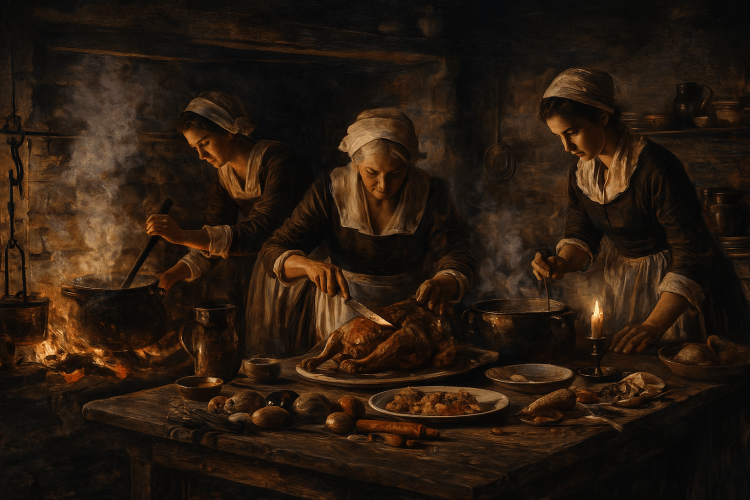
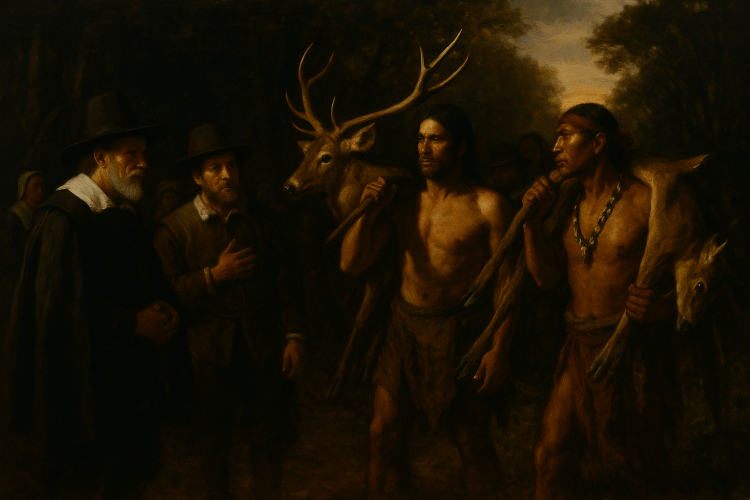
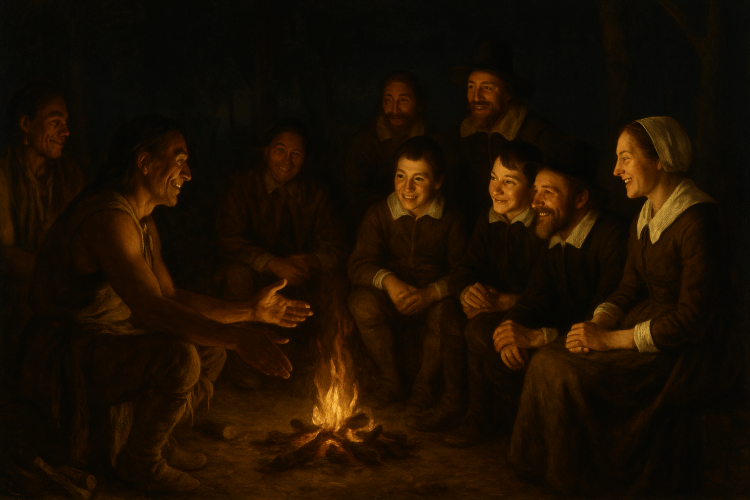
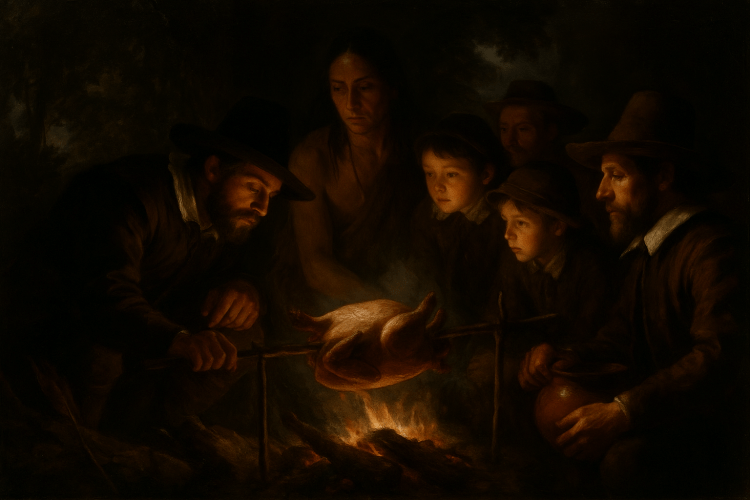
Suggestion: if you have kids or grandkids of the right age, read as a play to set the tone for tomorrow. Also, use the opportunity to teach them about the Caravaggio-style paintings. You can describe a scene to ChatGPT and ask for this style of painting. It does a really nice job! LFM

Plymouth Colony, late autumn, 1621.
A cold wind slides under the poorly sealed door of a small timber-framed house. A fire crackles. The smell of roasting cornmeal and dried herbs hangs in the air. A father, Thomas, mends a wooden plate near the hearth. A mother, Alice, stirs a pot of broth.

Their two children—John (12) and Elizabeth (10)—are bundled together under a wool blanket made from whatever scraps their mother could stitch together during the previous winter, the one that took half their company.

Outside, the colony gathers quietly, preparing for the great feast planned to begin the next day.


Dialogue

JOHN:
Mother, Father… is it true what everyone says? That tomorrow shall be a day of thanksgiving? A real feast? After everything?

ALICE:
Aye, John. ’Tis true. A feast to thank the Lord for what He hath provided—after such a year as we have endured.

ELIZABETH:
But why tomorrow? Why now? We have never had such a thing before.

THOMAS (smiling gently):
Because this harvest—modest as it is—came only through God’s mercy, long labor, and the kindness of our Wampanoag neighbors. And because Governor Bradford and Captain Standish wished for a time of rejoicing after months of toil. We sowed in the spring, we reaped in the fall, and now we pause to give thanks.

JOHN:
Who will come? Only our own people? Or… the Wampanoag too?

THOMAS:
Massasoit, their great sachem (leader), and many of his men shall join us. They helped us plant corn when we knew not how, and showed us what herbs might heal the sick. We invited them, for without their aid, we might all have perished as many did last winter.

ELIZABETH (softly):
Like Mistress Carver… and the young ones who came on the Mayflower but never saw the spring.

ALICE (puts a hand on her daughter’s shoulder):
Yes, my girl. We remember them tomorrow as well. A thankful heart remembers sorrow too. It gives thanks even through it.

JOHN:
Will we have enough to feed so many? I hear Governor Bradford asked for a day of “recreation,” but recreation requires a full belly, does it not?

THOMAS (laughs):
Recreation is but his word for shooting games, races, and displays of skill. As for food—well, we have what the land gave us. Not much bread, for wheat grows poorly here. But there is corn, venison, fowl, and perhaps wild turkey if we are blessed to catch one. And the Wampanoag come with what they will bring.

ELIZABETH:
Will there be pie? Mistress Alden says in England there was always pie.

ALICE (smiles):
Pie? Nay, sweetheart. Not without sugar, nor much butter, nor proper ovens. But we shall have stewed pumpkin, perhaps sweetened with what little maple we bartered for. A sort of pudding, if you wish it so.

JOHN:
And how long will this thanksgiving last?

THOMAS:
Some say one day. Others say three. Truth be told, none know for certain, for such a feast has never been held here before. Governor Bradford says we shall feast “after the harvest,” and that implies more than one meal. And if Massasoit brings ninety men—as rumor has it—then three days may hardly suffice!

ELIZABETH:
Ninety? All warriors?

THOMAS:
Warriors, hunters, friends. Men who stand with us. They come not for battle but fellowship. After the treaty we made with Massasoit in the spring, we owe one another peace and aid. And so far, that peace has held.

JOHN (leaning forward eagerly):
Will there be musket firing? Captain Standish promised a demonstration!

THOMAS:
Aye, he means to show the Wampanoag our marksmanship. Though I tell you, their scouts can track deer in the dark better than any Englishman. It will be sport, not contest.

ELIZABETH:
Mother, what do you look forward to tomorrow?

ALICE (pauses thoughtfully):
Seeing our people sit together, not mourning but rejoicing. Hearing laughter where there was once only coughing. Knowing that for one night, none shall go hungry. And seeing you two children grow in a land that is finally giving us hope.

JOHN:
Father, what do you expect?

THOMAS:
I expect gratitude. Not for a grand table—for our table will be modest. But for the simple truth that we lived to harvest this year. That God preserved us when the sickness swept through our homes. And that the Wampanoag, once strangers, now promise to stand with us.

ELIZABETH:
Will we pray?

ALICE:
We shall pray before the meal, after the meal, and whenever our hearts are moved to. We owe the Lord that much and more.

JOHN:
But why do we call it a thanksgiving? Is it because we are giving thanks to God for the food?

THOMAS:
For the food, yes—but more than that. For survival. For friendship. For peace. For the chance to build a life here. Our people left Leiden and England to worship freely. That longing cost us dearly. Tomorrow we honor that sacrifice.

ELIZABETH:
Mother… do you think we shall still be here next year? All of us?

ALICE (pulls her close):
If the Lord wills it. But listen, child: tomorrow is not about fear of what may come. It is about thanks for what has been given already. Every day we survive here is a kind of miracle.

JOHN:
Father… will you tell the story again? The story of how we came to be here?

THOMAS (sets aside the wooden plate, voice solemn):
Very well. One last time before the feast.

He clears his throat.

The Mayflower brought us across the sea for sixty and six days. Tempests tossed us, food spoiled, and sickness spread. When we reached Cape Cod, we thanked God though we were far from where we meant to settle. We found no houses built, no fields plowed—only the wilderness.

Half our company died that winter. Yet by spring, God sent Samoset to our door—speaking English! And through him came Squanto, who taught us how to plant corn in this poor soil, with fish for fertilizer, and how to find eels and clams. Through Squanto we met Massasoit, and peace was made.

This harvest—our first—is the fruit of all those mercies.

ELIZABETH (quietly):
So tomorrow we thank God… for all the ways He saw us through.

THOMAS:
Aye, my girl. That is the heart of it.

JOHN:
And will we feast like kings?

ALICE (laughs warmly):
Like pilgrims, my son. Which is to say—we shall feast gladly, even if not grandly.

ELIZABETH:
Will you sing, Mother?

ALICE:
If the spirit moves me. Perhaps Psalm 100. “Make a joyful noise unto the Lord, all ye lands.”

JOHN:
And what shall we children do?

THOMAS:
Eat. Play. Give thanks. And remember. One day, your children’s children may ask you what the first Thanksgiving was like. You shall tell them.

ELIZABETH:
Will they believe us?

THOMAS (with a grin):
Only if you describe it better than I ever could.

JOHN:
Then tomorrow, I will sit beside Massasoit himself and see how he smiles when he tastes roasted duck!

ALICE:
Mind your manners, John.

JOHN:
Yes, Mother.

ELIZABETH:
Father… do you think the Wampanoag give thanks too? Not just us?

THOMAS:
Oh yes. They thank the Creator for the harvest, the deer, the rivers, the berries, the corn. They celebrate their own harvest ceremonies. Tomorrow, in a way, both our peoples shall give thanks side by side.

ELIZABETH (leans against her mother):
That sounds… beautiful.

ALICE (softly):
It is.

A long, peaceful silence follows. Only the fire crackles.

THOMAS (whispering as he looks at his sleeping children):
Let them remember this night, Alice. The night before our first thanksgiving.

ALICE:
And let tomorrow be the beginning of many more.

The father places another log on the fire. Outside, the moon sits above the humble colony. Inside, the family sleeps—warm despite the cold—waiting for the dawn of a day that history will one day call The First Thanksgiving.

**After the Three Days:

What the Children Remember**

Three days later, the feast had ended. The fires had cooled. The sounds of musket volleys, laughter, drumming, and cheering had faded into memory. Plymouth had settled back into its quiet rhythm. But in the small timber house at the colony’s edge, the family gathered again near the hearth as the evening wind rattled the shutters.

JOHN (12) and ELIZABETH (10) sat cross-legged on the floor, shivering slightly in the early winter chill. Mother Alice was mending a torn sleeve. Father Thomas was binding two arrowheads to wooden shafts—gifts from a Wampanoag boy he’d met at the feast.

A comforting silence lingered, until Elizabeth finally spoke.


Dialogue: “What We Saw”

ELIZABETH:
Father… was that truly the end of it? The feast is done?

THOMAS:
Aye, sweetheart. Three days was enough for even the strongest among us. I dare say we shall not eat like that again until next year—if next year is as kind as this one.

JOHN (still full of restless excitement):
But Father—did you see Massasoit when he laughed at Standish’s musket misfire? He nearly dropped his plate! And the way his men cheered when the shooting contest was done!

THOMAS (smiling at the memory):
Aye, I saw it. ’Twas rare joy to see our peoples laugh together instead of watching one another in worry.

ELIZABETH:
The Wampanoag women brought so much food… more berries and corn cakes than I had ever seen. Why did they bring so much?

ALICE:
Because they wished to honor the peace between us. And perhaps because they saw our stores were not so plentiful as theirs. It was kindness, child. A generous kindness.

JOHN:
And the venison! I never saw so much meat in all my life. Five whole deer! They shared it freely.

THOMAS:
It is part of their custom. When a great meal is held, the hunters bring what they have. Hospitality, they call it—much like our own ways, though expressed differently.

ELIZABETH (looking into the fire):
I liked listening to their singing. It sounded like the wind through the trees.

ALICE (softly):
Yes. I thought it beautiful. Some said they sang thanks to the Creator, much as we did. Different words, different ways—but thanks all the same.

JOHN:
Father… do you think this peace will last?

THOMAS:
I pray it shall. Massasoit has kept his word. We have kept ours. We are two peoples sharing one land, and God willing, we shall find a way to live as neighbors.

ELIZABETH:
Do you think we will feast with them again next year?

THOMAS:
If the harvest is good, perhaps. But remember, my children—this first feast was not just celebration. It was relief. It was a breath drawn after hardship. It was the first time since we came here that joy outweighed sorrow.

ALICE (nodding):
These three days fed our spirits as much as our bodies.

JOHN:
I shall never forget it. The races, the shooting, the laughter, the dancing… I never thought so many people could smile at once.

ELIZABETH (gazing dreamily):
Or that strangers could feel like friends.

ALICE:
Hold fast to that thought, my girl. In this wild new land, friendship may be the difference between life and death.

THOMAS:
And between fear and hope.

A soft wind whistled through the cracks as the fire hissed. The children leaned against their parents.

JOHN:
Father… will history remember this? Will they write of these days?

THOMAS (looking thoughtfully into the flames):
Perhaps. Or perhaps only families like ours will remember. But even if no one writes a single word, it was still worth living. And worth giving thanks for.

ELIZABETH:
I want to remember every moment.

ALICE:
You shall. And someday, when your own children ask, you will tell them of the time when Pilgrims and Wampanoag sat at one table, shared one fire, and gave thanks together.

The fire crackled, warming their tired faces. The children drifted to sleep with memories of laughter, feasting, and newfound friendship—memories that would stay with them long after the wilderness around them grew quiet again.