The Quiet Romance of Park Benches
A collaboration between Lewis McLain and AI
A park bench is never only wood and iron. It is a place where time itself seems to pause, a still point in the turning world. Simple, unadorned, and often overlooked, the bench waits with a patience that borders on eternity. Where lighthouses rise bold against the storm, park benches rest unnoticed in the shelter of trees and along meandering paths, offering not guidance to ships at sea but solace to souls at rest.
They are thrones without ceremony, open to all who approach. The hurried commuter catching a breath, the young lovers carving initials into its grain, the old man feeding sparrows, the child swinging feet too short to reach the ground—all sit with equal claim. In these ordinary moments, the bench becomes extraordinary, for it gathers the fragments of many lives and quietly binds them into a shared story.
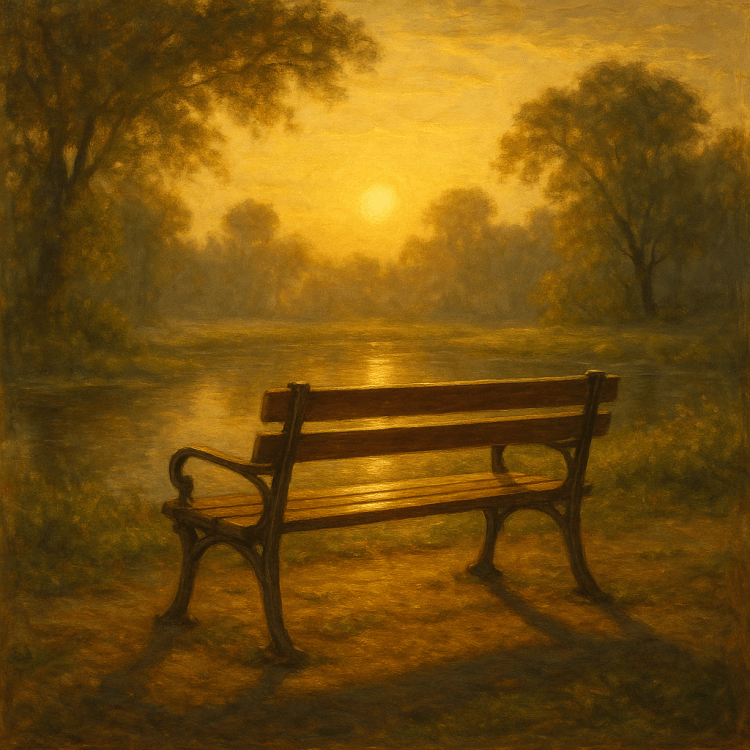
At dawn, when the mist lingers low and dew glistens on the grass, benches hold the world in soft silence. They cradle the solitude of readers with coffee cups in hand, or the jogger pausing to stretch as the day stirs awake. By noon, benches come alive with voices—laughter, arguments, whispered secrets, and the chatter of children in play. At dusk, they return to meditation, their weathered slats bearing the weight of reflections too heavy to speak aloud.
But beyond the hours, beyond the seasons, there is something inherently romantic about a bench. It is a place where one may sit not only to rest but to wait. Lovers wait for each other on benches. Friends meet after years apart. A traveler, alone in a foreign city, may find on a bench both loneliness and comfort, the ache of absence and the hope of presence. A park bench is always waiting for someone—and in that waiting lies its poetry.

Benches, too, are shrines of memory. Some carry plaques with names: “In loving memory of…,” reminding us that a particular spot once belonged to someone’s favorite view, someone’s cherished hour. Even without engraving, the wood itself remembers. It remembers the kiss stolen under lamplight, the quarrel that ended in silence, the notebook filled with sketches, the tears that fell unnoticed while the world hurried past. A bench, in its stillness, absorbs more of human life than we imagine.
And yet, there is no pretense to its service. A bench does not ask to be admired. It does not strive to inspire awe. Its beauty is in its humility—steadfast, available, enduring. It offers nothing more than rest, and in that offering it becomes everything: a sanctuary, a stage, a confessional, a throne, a pew.
If lighthouses are monuments to survival, benches are monuments to presence. They remind us not how to endure storms, but how to pause in calm weather, how to savor the fleeting moments between motion. They are the poetry of ordinary time, the architecture of waiting, the geometry of intimacy.
So the next time you walk past a park bench, let it invite you. Sit. Rest. Allow the world to slow down. You may discover that the quietest structures—the ones we pass without notice—are the ones that most tenderly hold our lives.
Let the bench bear life’s storms so you can find peace.

 Let's Talk About It, Lewis!
You must be logged in to post a comment.