Homelessness in America: Successes, Failures, and the Search for Lasting Solutions


AI Responses to questions posed by Lewis McLain

Introduction

Homelessness is one of the most visible tests of a society’s compassion and its ability to solve complex problems. Tents, makeshift shelters, and men and women sleeping on sidewalks remind us that, despite immense national wealth, millions of Americans live without the security of a home. The crisis is humanitarian, economic, and civic: homelessness drives up emergency room visits, policing costs, and erodes public trust in institutions.

Over the last several decades, billions of dollars have been devoted to ending homelessness. Some communities, such as Houston and Salt Lake City, have demonstrated that it is possible to reduce homelessness dramatically when resources are aligned around proven strategies. Others, most famously Los Angeles and San Francisco, have spent vast sums with disappointing results. Examining both sides — the promising and the faltering — alongside local initiatives in McKinney, Texas, shows what it takes to turn lofty goals into tangible outcomes.


Goals of a Comprehensive Homeless Program

A truly comprehensive homelessness program is not an ad hoc collection of shelters or one-time grants; it is a system designed to prevent homelessness, respond quickly when it occurs, and ensure that once people are housed they remain housed.

The overarching goals are threefold:

  1. End homelessness, not just manage it — shifting the system’s focus from temporary fixes to permanent housing solutions.
  2. Put housing first — recognizing that stability is impossible without a secure place to live.
  3. Build stability and self-sufficiency — ensuring that once individuals are housed, they can remain so through employment, education, or long-term supportive services.

Achieving these goals requires several interlocking objectives:

  • Prevention and Diversion. Stop homelessness before it starts with rental assistance, eviction mediation, and utility aid. A few hundred dollars in short-term help can prevent years of instability.
  • Emergency Response. Provide dignified shelter, warming/cooling centers, and safety nets when prevention fails.
  • Rapid Re-Housing. Quickly place individuals into apartments with short-term support; the longer people remain homeless, the harder recovery becomes.
  • Permanent Supportive Housing (PSH). Pair affordable apartments with long-term case management, healthcare, and counseling for those who are chronically homeless.
  • Supportive Services. Case managers, mental health clinicians, job training, childcare, and transportation are the scaffolding of stable housing.
  • Coordinated Entry and Data. Use a single intake system and shared data to match people to the right level of support and measure outcomes.
  • Community Integration. Engage nonprofits, faith groups, healthcare systems, landlords, and local governments in aligned roles.
  • Sustainable Funding and Policy Alignment. Ensure zoning, land use, and housing policy are aligned with homelessness strategies, backed by stable funding.

Models of Success

The most celebrated examples of progress share a common feature: they invest in housing first, then support individuals with tailored services.

Houston’s The Way Home

Houston has become a national model. Through The Way Home, a collaboration of more than 100 agencies, the city has placed over 32,000 people into permanent housing since 2012, with nearly 90% remaining housed after two years. Houston cut its homeless population by nearly two-thirds over the last decade. It accomplished this by streamlining entry systems, pooling federal and local funds, and incentivizing landlords. The city showed that a sprawling, high-growth metro can achieve large-scale reductions in unsheltered homelessness.

Community First! Village in Austin

Austin’s Community First! Village created an entire neighborhood designed for the chronically homeless: micro-homes, shared kitchens, gardens, and community spaces. It acknowledges that belonging and community are as essential as shelter. The model demonstrates how design and intentional planning can foster dignity and stability.

The 100,000 Homes Campaign

At the national scale, the 100,000 Homes Campaign (2010–2014) surpassed its goal of housing the most medically vulnerable people. By focusing on data, coordinated entry, and Housing First principles, it proved the strategy could succeed across dozens of cities.

Other Targeted Efforts

  • Deborah’s Place (Chicago): Specializes in housing and trauma-informed services for homeless women.
  • The Doe Fund (New York): Blends transitional work and housing for individuals with histories of incarceration or addiction.

Across all these successes, the key is the same: low barriers to entry, permanent housing as the anchor, and services that treat individuals with dignity.


McKinney and Collin County: Local Efforts

Smaller communities like McKinney, Texas, are also facing homelessness pressures due to rapid growth and rising housing costs.

Current Strategies

  • Coordinated Entry: McKinney participates in a system that assesses needs and directs individuals to appropriate programs.
  • Emergency Responses: The McKinney Emergency Overnight Weather Station (MEOWS) opens during freezes, while nonprofits like Streetside Showers provide hygiene and outreach.
  • The Samaritan Inn: Provides transitional housing with structured case management and life-skills training.
  • Shiloh Place: Focused on single mothers; reports show over 90% of graduates secure stable housing and increased education or income.
  • City Commitments: McKinney has pledged $3 million for affordable housing grants and loans, $1 million for a Community Land Trust, and plans to build 10 new homes/townhomes by 2026 (from city strategic goals, pending full verification).

Outcomes

Regionally, Dallas and Collin Counties have reduced homelessness by 19% since 2021, with more than 10,000 individuals housed. McKinney, however, recorded 239 homeless individuals in its 2024 Point-in-Time count — a 5% increase from the previous year, with children making up over a quarter of the total (local reporting, Community Impact, pending full verification).

The city is drafting its 2025–2029 Consolidated Plan to expand affordable housing and strengthen prevention efforts, but significant gaps remain: no full-time shelter within city limits and limited published data on long-term housing retention.


The Magnet Effect: Myth, Reality, and Regional Solutions

A recurring concern for communities is the so-called “magnet effect” — the fear that by building better services, they may attract individuals experiencing homelessness from neighboring jurisdictions.

Evidence

Research shows that most people remain close to where they lost housing, often due to family or community ties. Still, some migration occurs, particularly when:

  • One city offers low-barrier shelters while others criminalize camping.
  • Safer and more dignified conditions exist in a neighboring jurisdiction.
  • Housing slots or vouchers are more readily available.

For a city like McKinney, adjacent to Dallas and Plano, even modest inflows can strain resources.

Responses

  • Regional Coordination: Houston’s success rested on aligning 100+ agencies across Harris County — reducing duplication and sharing responsibility.
  • Shared Funding: Counties can pool funds to ensure no single city bears disproportionate costs.
  • Eligibility Prioritization: Programs may prioritize residents with local ties, though this must be balanced against fair housing obligations.
  • Permanent Housing Focus: Building permanent housing rather than endless shelters reduces churn across city lines.

The lesson is clear: the answer is not to scale back but to ensure regional systems. With shared responsibility, improved services do not overwhelm one city but uplift an entire region.


National Failures and Costly Lessons

For every Houston, there is a Los Angeles or San Francisco — cities where billions have been spent with limited results.

Los Angeles: Measure HHH

In 2016, voters approved a $1.2 billion bond (Prop HHH) to build 10,000 supportive housing units. By 2023, only about 1,100 were complete, and per-unit costs ballooned to $596,000–$837,000, with some projects nearing $1 million. Homelessness rose despite the investment.

San Francisco

San Francisco spends over $1 billion annually, yet its homeless population has remained between 7,000–8,000 for years. Navigation Centers and hotel conversions often saw exit-to-housing rates under 30% (per local audits), creating a revolving door of temporary care.

Seattle / King County

Seattle created a Regional Homelessness Authority in 2020 with a nine-figure budget. Audits soon revealed weak data, unclear goals, and little visible impact on unsheltered homelessness.

Hawaii

Despite declaring a state of emergency in 2015 and spending heavily, Hawaii remains the state with the highest homelessness rate in the nation (44 per 10,000 residents). Sky-high housing costs and tourism pressures outpaced program gains.

New York City

New York spends more than $4 billion annually, with over 80,000 individuals in shelters each night. Critics argue that the shelter system has grown while permanent housing production lags.

HUD–VA Vouchers

The HUD-VASH program reduced veteran homelessness nationally. Yet in some regions, thousands of vouchers went unused due to bureaucratic delays and landlords unwilling to participate — showing that funding without execution fails.


Common Themes in Failures

  1. Exorbitant per-unit costs undermine public trust.
  2. Glacial delivery timelines prevent timely relief.
  3. Shelter-heavy spending traps people in temporary systems.
  4. New bureaucracies add layers without results.
  5. Housing supply issues (zoning, costs, land) remain unaddressed.
  6. Weak outcome tracking — dollars are counted, but stable lives are not.

Lessons Learned

The contrast between successes and failures yields hard lessons:

  • Permanent housing works. Housing First and PSH consistently reduce homelessness when scaled.
  • Supportive services sustain results. Housing without counseling, healthcare, or employment support is fragile.
  • Cost control is essential. Programs must avoid $800,000 per-unit models.
  • Data must drive funding. Retention rates, returns, and time-to-housing are the key benchmarks.
  • Regionalism prevents “magnet” burdens. Shared responsibility avoids one city becoming a hub.
  • Adaptation to context matters. Houston’s model can inform McKinney, but strategies must match local housing markets and resources.

Conclusion

Homelessness is not an unsolvable problem. Evidence shows that with the right mix of housing, services, and accountability, communities can dramatically reduce it. Houston’s transformation proves that systemic, coordinated approaches succeed. Austin’s Community First! Village shows how design and belonging restore dignity. At the same time, Los Angeles and San Francisco stand as warnings of what happens when money is poured in without discipline, urgency, or accountability.

For McKinney and Collin County, the path forward is clear: build on existing programs, expand affordable housing, strengthen data systems, and work regionally to share responsibility. Without coordination, improved services risk attracting individuals from neighboring areas. With collaboration, however, every jurisdiction can contribute to — and benefit from — the solution.

The examples are before us: homelessness can be reduced, but only when programs are not just well-funded, but well-designed, regionally balanced, and rooted in the conviction that every person deserves a home.


Dementia: Understanding, Preventing, and Facing It

By Lewis McLain guiding and editing AI

Introduction: What Dementia Is and Why It Happens

Dementia is not one disease but a syndrome—a group of conditions that progressively damage the brain and impair memory, reasoning, language, and daily living. It develops when neurons (brain cells) are injured or die, severing the communication networks that underlie thought and personality.


The Major Types of Dementia

  1. Alzheimer’s Disease – The most common form (60–70% of cases). Caused by abnormal protein accumulations—amyloid plaques outside cells and tau tangles inside cells—that disrupt communication and kill neurons. Symptoms usually start with short-term memory loss and grow into confusion, language difficulties, and personality change.
  2. Vascular Dementia – Often follows strokes or years of high blood pressure and vessel damage. Tiny areas of the brain die from lack of blood flow. Symptoms: slowed thinking, planning difficulties, and sometimes abrupt declines after strokes.
  3. Lewy Body Dementia – Triggered by deposits of alpha-synuclein proteins (Lewy bodies). Signs include vivid hallucinations, sleep disruptions, and movement issues resembling Parkinson’s disease.
  4. Frontotemporal Dementia (FTD) – Caused by degeneration in the brain’s frontal and temporal lobes. It strikes younger adults more often (40s–60s). Early symptoms: loss of empathy, social misjudgments, inappropriate behavior, or speech problems.
  5. Mixed Dementia – Many older adults have overlapping forms—most commonly Alzheimer’s plus vascular changes.

Why Dementia Develops

  • Age: risk rises steeply with age, though dementia is not “normal” aging.
  • Genetics: some genes (like APOE-ε4) raise Alzheimer’s risk.
  • Cardiovascular factors: high blood pressure, diabetes, obesity, and smoking damage vessels that feed the brain.
  • Lifestyle: inactivity, poor diet, isolation, and chronic stress erode brain resilience.
  • Head trauma: repeated concussions or injuries increase risk.


Staving Off Dementia: What Helps

  1. Exercise & Cardiovascular Health
    • Aerobic activity (walking, swimming, cycling) improves blood flow and stimulates brain-protective chemicals.
    • Controlling blood pressure, diabetes, and cholesterol protects small vessels that keep brain tissue alive.
  2. Diet
    • The Mediterranean and MIND diets—rich in leafy greens, berries, nuts, olive oil, and fish—are linked to lower risk.
    • Reducing processed sugars and excessive alcohol helps protect cognition.
  3. Brain Stimulation
    • Reading, learning, music, puzzles, and meaningful conversations create new neural connections (cognitive reserve).
    • Social engagement lowers risk of decline compared to isolation.
  4. Sleep & Stress
    • Deep sleep clears harmful proteins like amyloid.
    • Chronic stress raises cortisol, damaging memory regions; prayer, meditation, or relaxation techniques counteract this.
  5. Purposeful Living
    • Having goals, serving others, and maintaining daily structure all reinforce mental resilience.


Dealing With Dementia: When It Arrives

  1. Practical Care
    • Create predictable routines—familiarity reduces anxiety.
    • Simplify tasks into small steps; use labels, calendars, and cues.
    • Modify the home for safety (remove tripping hazards, improve lighting, secure exits).
  2. Emotional & Relational Care
    • Focus on what remains: music, touch, prayer, rituals often endure even late in the disease.
    • Loved ones should practice patience and avoid arguing—redirecting and reassuring is more effective.
    • Caregivers must seek respite and support groups; burnout is common.
  3. Medical & Therapeutic Approaches
    • Some medications (donepezil, rivastigmine, memantine) may slow symptoms, though modestly.
    • Occupational therapy, speech therapy, and memory training help preserve abilities.
    • In later stages, palliative care focuses on comfort and dignity.
  4. Spiritual Care
    • Scripture, hymns, or prayer can provide peace even when memory fades.
    • Families may reframe dementia not only as loss but as a chance to show love, patience, and service.


A Practical Brain Health Checklist

Daily

  • 30 minutes of physical activity (walk, swim, cycle, stretch)
  • At least 2 servings of leafy greens or colorful vegetables
  • Engage in 1 mental challenge (crossword, reading, learning a skill)
  • 7–8 hours of quality sleep
  • Prayer, meditation, or quiet reflection to reduce stress

Weekly

  • Eat 2+ servings of fish (salmon, sardines, tuna)
  • Attend a social gathering (church, club, family meal, volunteering)
  • Try something novel (new route, new recipe, new book)
  • Review and update medication, blood pressure, or glucose checks

Monthly

  • Connect with healthcare professionals for preventive care
  • Evaluate and refresh home environment for safety and stimulation
  • Plan or participate in a purposeful project or community service

Conclusion

Dementia is a cruel thief, robbing memory and independence. Yet it is not inevitable. A healthy lifestyle can delay its onset by years—and delaying by even five years could cut new cases in half. For those already touched by it, compassion, structure, and dignity-centered care make the journey bearable.

To stave it off and to deal with it are really part of the same calling: to live fully, with purpose, in relationship, and with care for both body and soul—right up until the end.

No One Should Have to Live in Fear: The Role of the Ordinary Citizen

By Lewis McLain, collaborating, guiding, and editing AI

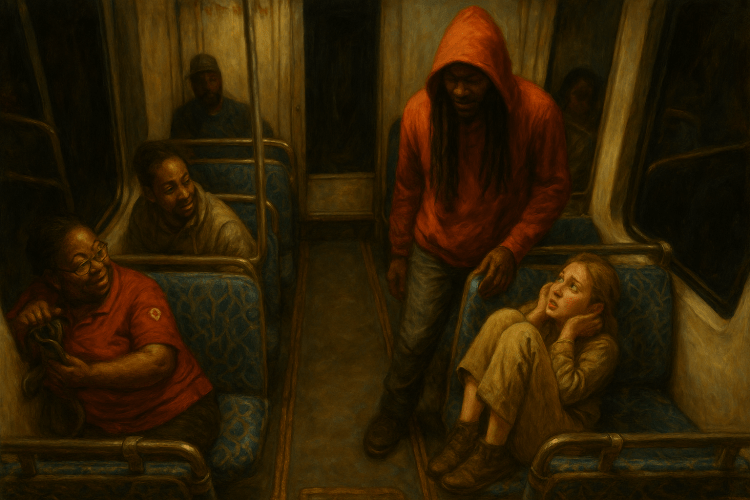
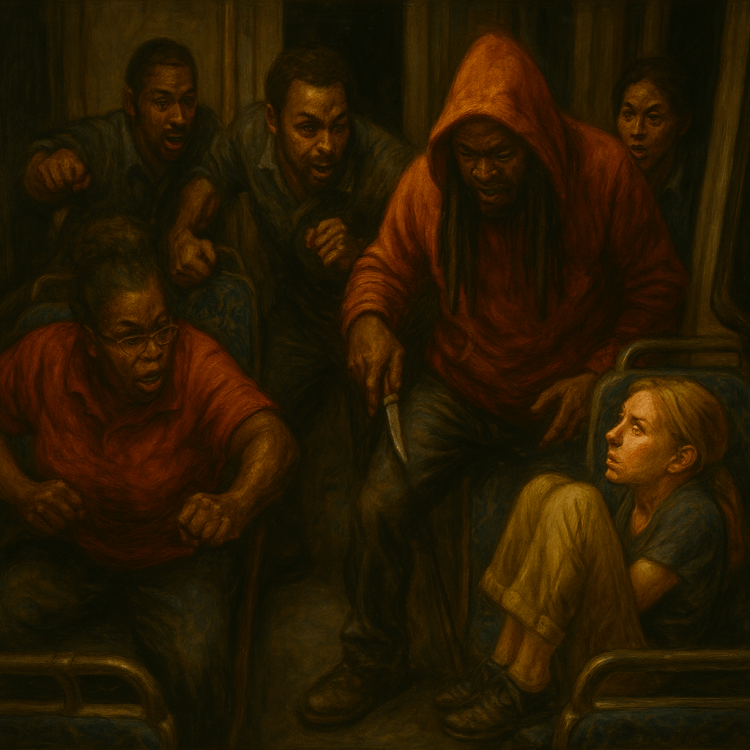
Fear is one of the most primal human responses. It protects us in sudden danger, but when it becomes a daily companion, it corrodes the human spirit. Public fear—on buses, sidewalks, subways, or in neighborhoods—steals trust, peace, and dignity. The image of a woman recoiling in terror on a city train, knees drawn to her chest as another looms over her, tells a painful truth: no one should have to live this way.


Texas: A Case Study in Mental Health Gaps

Texas illustrates both the scale of the challenge and the stakes involved:

  • Prevalence: One in five Texas adults experience mental illness each year. Among youth, 35% have a mental or behavioral health need.
  • Shortages: 246 of 254 Texas counties are designated Mental Health Professional Shortage Areas. Entire regions have no psychiatrist or child psychologist.
  • Treatment Gaps: A quarter of adults reporting symptoms of anxiety or depression were unable to access counseling in 2021.

The result is predictable: untreated mental illness spills over into public spaces, creating fear not only for the person suffering but for bystanders as well. Assaults and behavioral crises on Texas buses and trains are rising, with some agencies reporting record levels of violence.


If Resources Were Unlimited: What Would Treatment Look Like?

Imagine resources were no barrier: every Texan had immediate access to psychiatric evaluation, therapy, and medication. What would that achieve?

  1. Early Detection and Intervention
    • Many mental illnesses, such as schizophrenia, bipolar disorder, and severe depression, present early warning signs. With unlimited resources, outreach teams could identify and treat individuals before crises escalate.
  2. Comprehensive Treatment Plans
    • Treatment might combine medication (e.g., antipsychotics, mood stabilizers, antidepressants), evidence-based therapies (CBT, DBT, trauma-focused therapy), housing support, and peer counseling.
  3. Recovery and Rehabilitation
    • For some disorders, full remission is possible. Depression and anxiety often respond well within months of treatment. For chronic illnesses like schizophrenia, symptoms can be managed, stability restored, and relapse reduced.
  4. Timeframes
    • Depression and Anxiety: 8–16 weeks of consistent therapy and/or medication can achieve major improvement for many.
    • PTSD: Evidence-based therapies like EMDR or prolonged exposure often show progress within 12–20 sessions.
    • Schizophrenia or Bipolar Disorder: Lifelong management may be required. “Cure” is not realistic; stability is.
    • Substance Use Disorders (often co-occurring): Recovery is long-term and relapse-prone, requiring sustained support.

The reality: even with unlimited funding and willing patients, time itself is the obstacle. Many psychiatric conditions require years of care, often lifelong monitoring. Like prison reform, the dream of “curing” all mental illness is noble but unrealistic. Treatment can help millions live safer, better lives—but it cannot erase the presence of crisis in public spaces.


Why Prevention and Intervention Are Still Essential

If the path of treatment is long, then the path of prevention and intervention is immediate. While better funding is vital, it is not enough. People are still left vulnerable in the moments when violence erupts or fear overwhelms.

Public safety cannot rest solely on:

  • Staff training (drivers cannot leave their seats).
  • Police response (often delayed, sometimes escalating).
  • Clinician availability (which even with investment will take decades to meet demand in Texas).

Instead, safety in daily life requires empowering ordinary citizens—the bystanders, passengers, and neighbors who are present in those crucial first moments.


Empowering the Ordinary Citizen

What is missing from our national strategy is the role of citizens themselves. Just as society teaches CPR or basic first aid, it must now teach “social first aid”:

  1. Bystander Intervention Training
    • Ordinary people can learn the “5 Ds” (Direct, Distract, Delegate, Delay, Document) to intervene safely when someone is threatened.
  2. Conflict De-escalation Skills
    • Training in calm verbal communication, body language, and nonviolent presence to reduce aggression.
  3. Mental Health First Aid
    • Teaching citizens how to recognize panic attacks, psychosis, or suicidal crisis, and respond until professionals arrive.
  4. Citizen Incentives
    • Transit agencies could provide free passes or small stipends to certified “travel guardians,” similar to volunteer firefighters or crossing guards.
  5. Legal Protections
    • Strengthening Good Samaritan laws to ensure that citizens who act in good faith to protect or de-escalate are shielded from liability.

Beyond Transit: Safer Streets and Communities

The need is not limited to buses or trains. Street harassment, neighborhood crime, and visible behavioral health crises on sidewalks all provoke fear. A culture of vigilance and care is needed:

  • Neighborhood Guardian Programs: Volunteers equipped with de-escalation training and radios, visible in parks, streets, and transit hubs.
  • Community Partnerships: Schools, churches, and civic groups teaching young people conflict resolution and empathy.
  • Urban Design: Safer lighting, open sightlines, and public spaces that reduce opportunities for intimidation.

Psychiatric Perspective: Why This Matters

From psychiatry and psychology we know:

  • Social support is protective: People who receive help—even from strangers—recover from trauma more quickly and with fewer long-term effects.
  • Intervening prevents PTSD: Early calming or de-escalation reduces the brain’s encoding of trauma.
  • Agency reduces helplessness: Training gives people confidence to act, reducing paralysis and bystander apathy.
  • Calm is contagious: One calm, reassuring person can steady a fearful crowd.

Conclusion: Building a Culture Where No One Lives in Fear

Unlimited funding could treat more people, but treatment takes time—sometimes years, sometimes lifelong. In the meantime, fear stalks our buses, sidewalks, and neighborhoods. The only way to bridge the gap between long-term cure and present safety is to empower ordinary citizens. As with the aftermath of 9/11, airline pilots had to resort to announcements to passengers to be prepared to take action! You see that kind of intervention happening more and more.

Texas, with its high need and resource shortages, should lead by example: expanding treatment, yes, but also equipping its people to protect one another. Free training, incentives for guardians, stronger legal protections, and cultural education could turn strangers into allies, and moments of terror into opportunities for solidarity.

A society where no one lives in fear is not built solely in hospitals or legislatures. It is built in the everyday courage of citizens who refuse to look away—and are equipped to step forward.

Generational and Political Dynamics in Municipal Government

I am in the second class of the early Baby Boomers (1946-1964) with my work life still going with no plans to stop. My son and daughter-in-law are in mid-career. Our grandchildren are either just now joining the workforce or will be in the next four years. I don’t have any employees, so I don’t know what it is like these days to manage people. When I did, most of my employees were self-motivated and worked (almost) as hard (some harder) as I did. Still, I talk to my peers and those in mid to top level management. A lot. I’m not a patient person, so I could never be in management again. This essay is shaped by many of my clients and colleagues. I used AI to help compose this essay with my guidance and editing. LFM


Municipal governments are unusual workplaces because they bring together four very different generational mindsets, each carrying its own approach to urgency, planning, and achievement. Baby Boomers are often nearing retirement but remain the guardians of institutional knowledge. Gen X employees sit in mid-career roles, providing steadiness and pragmatism. Millennials and Gen Z staff bring technical skills, fresh perspectives, and a desire for meaningful impact. Over all of this hovers the council chamber, where elected officials with two- to four-year terms demand quick, visible results they can bring back to their voters. The interplay among these groups defines how city hall functions day to day.


Work Centrality and Urgency

For Baby Boomers, work has long been a central piece of identity. In municipal offices, that commitment shows up in a willingness to stay late until a council packet is complete or to double-check a utility billing run down to the penny. For them, urgency is not negotiable — it is part of their professional ethic.

Gen Z, by contrast, tends to look for structure and clarity in order to summon urgency. Younger employees often ask: “What does this deadline really mean?” A city analyst in their twenties may not feel the pressure of filing a revenue report until a supervisor explains that missing it will delay sidewalk repairs or park maintenance. They need to see how their task connects to resident outcomes before they embrace urgency with the same vigor as their older peers.

Council members occupy an entirely different space. Their urgency is political. They want to show constituents visible results within their limited terms. Even while reviewing long-term comprehensive plans, they lean forward in meetings to ask: “What have you done for me lately?” This mindset drives them to demand both the grand vision and the small, near-term deliverables that can be touted on campaign flyers or in town halls.


Tenure and Institutional Knowledge

Boomers typically stay with an organization for decades, and that tenure provides the city with memory and continuity. A veteran finance director or city clerk knows instinctively that missing a Truth-in-Taxation filing can derail the city’s entire budget process. That awareness creates an ingrained sense of urgency.

Gen Z staff, on the other hand, are more transient. Many stay only two or three years before moving on to graduate school or for a few bucks more in a similar municipal job. To them, a missed filing may seem like routine paperwork rather than a red flag that could trigger a state audit or expose the council to criticism. Without deliberate mentoring, the political and legal weight of such details can be lost.

Council members fall somewhere else entirely. With limited terms and frequent turnover, most do not retain the historical memory that long-serving staff carry. They may not appreciate why a master drainage plan has been on the books for twenty years, but they will press for what is visible and politically rewarding now — a groundbreaking ceremony, a grant announcement, or the repaving of a road their voters drive every day.


Achievement and Career Paths

For Boomers, achievement was tied to climbing the ladder. Moving from budget officer to finance director or from city engineer to public works director marked professional success. Titles and promotions were the visible proof of a career.

Gen Z defines achievement differently. They find satisfaction in project-based wins, skill certifications, and visible impact. A young GIS analyst may beam with pride after launching an interactive zoning map or automating pothole reporting, even if they have no desire to supervise a department.

Council members define achievement in yet another way. For them, success is measured in the short window of their term. They need evidence of change that voters can see and touch — new playground equipment, lower crime statistics, or faster permitting. Achievement is not what happens in twenty years but what is realized in time for the next election.


Planning Horizons and Future Thinking

Baby Boomers are comfortable thinking decades ahead. They embrace twenty- to thirty-year master plans, long-term bond financing, and phased capital improvements. Their approach is steady and deliberate, with a priority on compliance and fiscal security. They know exactly how fast a decade or two can go by.

Gen Z tends to thrive in short cycles. They want to pilot a new communications campaign or launch a mobile app that shows immediate value to residents. This emphasis on agility and visibility is energizing. But without guidance, it can overlook the structural foundation required for compliance and sustainability.

Council members straddle both worlds. They will dutifully review the 2045 comprehensive plan but will quickly pivot to ask, “What will residents see this year?” They want to be able to tell voters that congestion will ease at a key intersection or that park improvements will be visible before the next election. Their enthusiasm for a five-year bond program wanes if their individual pet projects won’t be started until the third or fourth year.


Engagement and Expectations

Boomers learned to operate in a “figure it out” culture, where direction was often implicit and completing the task without fanfare was expected. Gen Z, however, seeks clarity and regular feedback. Without explicit expectations, their sense of urgency weakens.

Council members communicate expectations in broad, sometimes vague terms. They declare priorities such as “reduce crime,” “fix the roads,” or “cut red tape.” Staff must translate those slogans into actionable projects with timelines, budgets, and measurable results. That translation requires both urgency and political astuteness.


Municipal Examples

In the budget office, a Boomer finance director focuses on adopting a balanced budget and protecting the city’s bond rating. A Gen Z analyst may be more excited about building a dashboard that shows residents how each tax dollar is spent. Council members, meanwhile, demand quick budget talking points: “Did we cut the tax rate? How much is in fund balance?”

In public works, a Boomer supervisor thinks in terms of phased capital projects spanning decades. A young engineer-in-training wants digital project boards and shorter sprint cycles. The council simply wants to know how many potholes were filled this week and whether residents can see progress on the ground.

In the city clerk’s office, a Boomer clerk never misses a statutory notice deadline. A Gen Z deputy clerk relies on structured reminders and may not appreciate the consequences of a missed posting. Council members, unaware of the statutory timelines, may ask why an ordinance was not on the agenda the prior week, not realizing the legal steps involved.


Recommendations for City Leaders

Leaders can bridge these horizons by pairing long-term initiatives with short-term wins. A master drainage plan can be complemented by a neighborhood pilot project. Deadlines should be translated into political stakes so that young staff understand that a missed report is not just a paperwork issue but a reputational risk for the council.

Visible “win boards” showing weekly metrics — permits issued, potholes filled, grants applied for — can serve both to motivate staff and to provide council with quick talking points.

When I was promoted from a paint maker to the purchasing department at Glidden years ago, I had a window painted so I wouldn’t be disturbed by the shift changes. I later noticed a small 1″x2″ rectangle of the paint was scratched clear.

At first, I was bothered. Then I realized they did that to see the shift production board past my office. The night shift wanted to track how they were doing compared to the day shift!

Finally, achievement should be reframed in terms of resident benefit. Rather than reporting “design is 80% complete,” staff should tell council that “traffic delays at Main and 380 will be cut by 25% within a year.”


Evaluating Gen X Employees: A Focus on Urgency and Engagement

Gen X workers, often in supervisory or mid-career roles, provide the balance between long-serving Boomers and tech-driven Gen Z. They are independent and pragmatic, but evaluations must probe whether they are sustaining urgency and engagement.

Questions for annual evaluations should include: Do you consistently complete assignments ahead of deadline, and how do you respond when unexpected issues arise? Can you share examples where your urgency prevented a delay or crisis? How engaged do you feel in your work, and have you taken initiative to improve efficiency or resident service? How do you work through periods of disillusionment?

Supervisors should ask whether Gen X employees communicate progress clearly, close out tasks without prompting, and set the pace for younger colleagues. They should also examine whether Gen X staff anticipate council questions and package their work so that both short-term progress and long-term outcomes are visible. Motivation and energy are crucial: do they show enthusiasm under pressure, and do they keep their teams energized during long projects? Finally, evaluators should probe how these employees prepare for future demands and avoid complacency after many years in the role.


Conclusion

Municipal governments thrive when each generation’s strengths are recognized and aligned with the realities of political leadership. Baby Boomers bring continuity and deep urgency rooted in institutional knowledge. Gen Z brings agility, tech savvy, and a desire for meaningful short-term impact. Gen X provides steadiness, independence, and the ability to bridge generational gaps. Council members inject political urgency, pressing for deliverables that can be seen within two to four years.

The challenge is not choosing one horizon over the other but weaving them together. By translating long-term plans into visible near-term wins, creating clarity around deadlines, and aligning staff achievement with resident impact, leaders can cultivate both urgency and engagement across the workforce while still meeting the immediate expectations of elected officials.

✅ Annual Evaluation Checklist: Gen X Employees

(Focus on Urgency & Engagement)

1. Urgency & Timeliness

  • Do you consistently complete assignments ahead of or on deadline?
  • How do you prioritize urgent tasks versus long-term projects?
  • When unexpected issues arise (e.g., a last-minute council request), how quickly do you respond?
  • Can you give an example of when your urgency prevented a delay or crisis?

2. Engagement & Initiative

  • How engaged do you feel in your work and the mission of the city?
  • Do you bring forward new ideas to improve efficiency or resident service?
  • Have you volunteered for projects outside your core role when needed?
  • Do you proactively track project progress without waiting for reminders?

3. Accountability & Follow-Through

  • Do you communicate status updates clearly, especially if deadlines are at risk?
  • How often do you close out tasks without being prompted?
  • Do you take ownership of mistakes and correct them quickly?
  • Do peers and supervisors see you as dependable under pressure?

4. Cross-Generational Collaboration

  • Do you model urgency and responsiveness for younger colleagues?
  • How do you engage with Boomers (institutional memory) and Gen Z (tech-focused) to keep projects on pace?
  • Have you mentored others in balancing speed with quality?

5. Responsiveness to Leadership & Council

  • When asked, “What have you done recently?” do you have clear, recent accomplishments ready?
  • Do you package your work so progress is visible in both short- and long-term outcomes?
  • Do you anticipate council or supervisor questions rather than reactively answering them?

6. Motivation & Energy

  • Do you show consistent enthusiasm even under pressure?
  • How do you keep yourself and your team energized during long or repetitive projects?
  • Are you setting an example of urgency and focus for the team?

7. Future Readiness

  • How are you preparing to maintain urgency and engagement under new conditions (tech, mandates, emergencies)?
  • What steps do you take to avoid complacency or “coasting”?
  • What professional development would help you stay sharp and engaged?