How Do You Know?

A collaboration between Lewis McLain & AI
(Please share my blog site with your friends and family and ask them to subscribe for free at http://www.citybaseblog.net)

A dialogue between a granddaughter and her grandmother


Scene:
The kitchen is quiet now, the light outside turning golden. The teapot is empty, but the warmth between them lingers. The grandmother leans back, smiling softly at her granddaughter — the kind of smile that carries both memory and hope.


Granddaughter:
Grandma, you’ve told me what love feels like when it’s real. But how do you really know if it’s right before you say “I do”?

Grandmother:
That’s a wise question, sweetheart — wiser than most your age ask. Knowing isn’t about a single moment. It’s about the patterns you see when the emotions calm down.

Granddaughter:
What kind of patterns?

Grandmother (counting gently on her fingers):
Start with faith. If your heart is anchored in God, make sure his is, too. You can’t walk together if one’s following the light and the other’s still chasing shadows. Shared faith doesn’t guarantee an easy life, but it gives you the same foundation when the storms come.

Granddaughter:
So religion really does matter?

Grandmother:
It matters more than you think. It shapes how you forgive, how you raise children, how you see the world. Without that common ground, even small differences start to feel like miles.

Granddaughter:
Okay… what else?

Grandmother:
Money. Not how much he earns, but how he treats it. Does he plan, save, and give? Or does he spend like there’s no tomorrow? Marriage magnifies everything — especially money habits. You want to face life as partners, not as each other’s accountant.

Granddaughter:
That’s practical, Grandma.

Grandmother (grinning):
So is love, darling. It’s not all candlelight and violins. It’s budgets, calendars, and choosing to be kind when you’re both tired.

Granddaughter:
And I guess it matters how you treat each other in public too?

Grandmother:
Oh yes — never, never speak badly about each other to anyone. The minute you let criticism slip into someone else’s ears, you give them power over your marriage. Protect one another’s reputation like it’s your own.

Granddaughter:
What about family?

Grandmother:
You marry more than the person — you marry their whole world. Watch how he treats his parents and siblings, and how they treat him. Family is the soil that shaped him. And when you bring him home, see how he fits among your people. If there’s no respect both ways, there’ll be cracks later.

Granddaughter:
That’s a lot to think about.

Grandmother:
It should be. Also, watch how he treats strangers — the waitress, the cashier, the stray dog. The smallest gestures reveal the biggest truths.

Granddaughter:
What about when life gets stressful?

Grandmother:
That’s when the real person comes out. See how he reacts under pressure — with patience or temper, faith or fear. The right one won’t crumble at every hardship. He’ll steady you when you start to shake.

Granddaughter:
And kids?

Grandmother:
Talk about it early. Whether he wants them, how he imagines raising them, what he values in a home. You can’t build together if you’re dreaming in opposite directions. You will be married singles.

Granddaughter:
You always say habits tell the truth.

Grandmother:
They do. Look for balance. Someone who knows moderation — with food, drink, work, and even opinions. Extremes wear people out. Balance keeps peace alive.

Granddaughter:
What about his purpose — like, his job or calling?

Grandmother:
A man who feels called to something greater than himself carries a steadier joy. It doesn’t have to be glamorous. But it has to mean something. When life gets heavy, purpose keeps him from drifting. How does he handle disillusionment? It WILL come.

Granddaughter:
Can he talk about emotions? Like fear, grief, or joy?

Grandmother:
He needs to. If he can’t name what he feels, he’ll turn silence into walls. Find someone who can talk through pain, who can admit fear, who can celebrate joy without shame. That’s emotional honesty — and that’s love’s backbone.

Granddaughter:
What about his heroes?

Grandmother:
Ask who he admires. A man’s role models are the map to his values. If he looks up to people of integrity — who serve others quietly — that’s a good sign.

Granddaughter:
And self-awareness?

Grandmother:
Oh, that’s gold. Can he say, “I was wrong”? Can he admit when he’s hurt someone and try to make it right? Pride destroys more love stories than infidelity ever could.

Granddaughter (pausing):
Grandma, this is a lot to remember.

Grandmother (smiling warmly):
It is — because marriage isn’t luck. It’s wisdom, patience, and prayer. But I’ll tell you one last thing — maybe the most important of all.

Granddaughter:
What’s that?

Grandmother (leaning close):
If the boy — or the man — isn’t just as curious about you… your faith, your family, your hopes, your habits, your fears, your calling — if he doesn’t want to know your story and your soul — then make sure he knows without any doubt: you are not someone to be half-known. You are someone to be understood, cherished, and respected in full — or not at all.

Oh, one more thing: No regrets. Strive to make wise choices. The best thing you want to be able to say when you get to be my age is “No regrets!”


(The granddaughter nods slowly. The kettle whistles again, and her grandmother rises to refill it — calm, steady, radiant with the kind of wisdom only a lifetime of love can teach.)

Miss Saigon: Love, Illusion, and the Mirage of the American Dream

A collaboration between Lewis McLain & AI

“You are sunlight and I moon, joined by the gods of fortune.”
“Sun and Moon”


This dramatic musical was so remarkable to me. I remember writing that it was the best I had ever witnessed at the time, and wondering if I would ever see a better play. I think I saw it three times. The first time was in NYC, and the other two times were in Dallas. They were different in a few ways. The Dallas version was even more profound in the way they handled the opening of the second act. I will never forget the players and emotional content. LFM


I. The World in Ruin, the Heart Still Beating

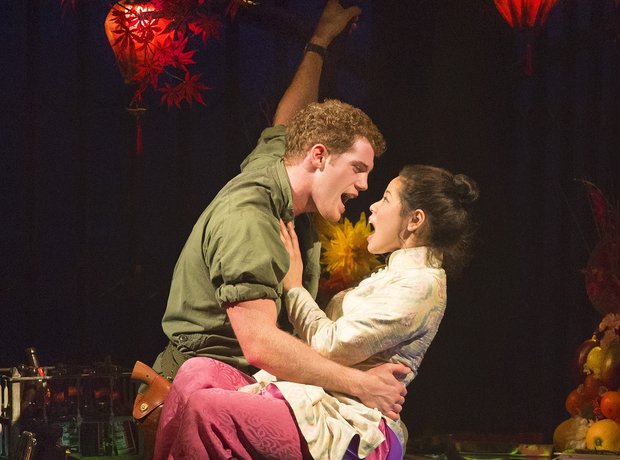
In Miss Saigon, the world is ending in slow motion. Helicopters thunder above the city, neon signs flicker over shattered streets, and the air hums with the machinery of empire. Yet in the ruins of Saigon, two hearts still find each other. Kim and Chris meet not in peace but in aftermath—he, a disoriented soldier of a collapsing foreign power; she, a displaced orphan forced into a bar called Dreamland. Around them, history howls. Within them, something eternal stirs.

Their love begins as an accident of war but unfolds like a parable of Eden after the Fall: purity glimpsed in a poisoned world. “You are sunlight and I moon,” Kim sings, echoing Genesis more than Puccini—light and darkness yearning toward wholeness, even as they know their union is impossible. The tragedy of Miss Saigon is not simply that love fails; it is that love, though true, cannot redeem the systems that contain it.


II. The Gospel According to Kim

Kim is among the most spiritually resonant heroines of modern theater—a Christ-figure clothed in the garments of an Asian peasant girl. Her purity is not naivety but faith: a conviction that love can sanctify even the most defiled landscape. When Chris leaves her amid the chaos of Saigon’s fall, Kim does not curse him or her fate. She gathers their son, Tam, and holds him as both burden and promise. “You will see me through another season,” she seems to tell God, echoing Mary sheltering the child Messiah in exile.

Years later, in Bangkok, when confronted by Chris’s American wife, Kim’s theology of love reaches its consummation. She chooses death not as surrender but as offering: “Now you must take Tam with you / And you must go on / I’m dying for your sake, my son.” In that moment, Miss Saigon transcends its setting. Kim becomes every mother who has loved into suffering, every believer who has poured out life for another’s salvation. Her sacrifice restores no empire and reforms no politics—but it restores meaning.

To love purely, the musical insists, is to suffer. Yet in that suffering lies a kind of resurrection. When Chris cries over her body—“How in one night have we come so far?”—we hear the echo of humanity’s ancient lament: love arrives divine and departs crucified.


III. The Engineer and the False Heaven

“The American Dream / Is gonna make my dream come true.”

If Kim represents the soul’s yearning for redemption, the Engineer embodies civilization’s addiction to illusion. He is the show’s dark chorus—half clown, half devil, half prophet—hawking the fantasy of America as the new Jerusalem of lust and consumption. His anthem, “The American Dream,” drips with irony: “They’ll have a club for all the rich to join / Where you can drive your Cadillac through the eye of a needle.” It is a parody of Scripture, a theology of greed replacing the Beatitudes with billboards.

The Engineer’s dream is the shadow twin of Kim’s faith. Both are migrants of hope; both seek deliverance. But where Kim’s vision demands self-sacrifice, the Engineer’s demands self-erasure. His dream is not of freedom but of becoming the very machine that once enslaved him. He worships America not as idea but as idol—its neon signs as stained glass, its dollar bills as sacraments. Through him, the musical indicts a modern form of empire: not territorial but spiritual, not conquest but consumption.

In the end, the Engineer does make it to America, but his triumph is hollow. He ascends the staircase of Ellis Island as if entering heaven, yet we hear no music of redemption—only brass and discord. The promised paradise is another illusion; the dream devours its dreamer.


IV. The Mirage of Salvation

The love between Kim and Chris is real; the salvation offered by nations and ideologies is not. That is the paradox at the heart of Miss Saigon. When Chris returns to find Kim years later, married and broken by guilt, his words in “The Confrontation”“You’re here—Oh my God, you’re here!”—carry the force of resurrection. But it is too late. The world they inhabited has no place for resurrections. Kim’s suicide is not despair but testimony: that no earthly dream can absorb the fullness of love. Her body falls between two worlds—Asia and America, heaven and earth—and her blood exposes the lie that either side could claim moral victory.

Boublil and Schönberg thus turn history into allegory. The fall of Saigon becomes the Fall itself: humankind’s expulsion from innocence, still chasing salvation in the mirage of progress. The helicopter that lifts the last Americans away becomes a steel angel guarding the gate of paradise—an emblem of the separation between what is real and what we wish were real.


V. The Music of Heaven and the Sound of Machines

The score of Miss Saigon is not mere accompaniment; it is theology in melody. The lush orchestration, the merging of Asian tonal motifs with Western harmonies, enacts the same cultural collision as the story itself. In “I Still Believe,” Kim and Ellen sing the same words across oceans: “I still believe you will return / I know you will.” Two women, one melody, one delusion—the human capacity to believe even against evidence. This duet is not about romantic hope but about the nature of faith: to believe is to risk being wrong, and to love is to be wounded by that risk.

Likewise, “Bui Doi” (“dust of life”) transforms what could be sentimental into prophetic lament:

“They are the living reminder of all the good we failed to do.”
It is confession as chorus—the entire nation singing its mea culpa. The orphans of Saigon become symbols of moral residue, the souls left behind by history’s machinery. The music soars, not to glorify but to accuse.


VI. “Bui Doi” — The Children of Dust and the Conscience of a Nation

At the opening of the second act, the curtain rises not on Saigon or Bangkok, but on America’s memory—a stage transformed into a tribunal of conscience.
A single voice, John’s, steps forward beneath the glow of a projected photograph. His song, “Bui Doi,” erupts like thunder through the theater: a requiem, a sermon, and a national confession.

They’re called Bui-Doi.
The dust of life.
Conceived in Hell,
And born in strife.
They are the living reminder of all the good we failed to do.
We can’t forget
Must not forget
That they are all our children, too.

Like all survivors I once thought
When I’m home I won’t give a damn
But now I know I’m caught, I’ll never leave Vietnam

War isn?t over when it ends, some pictures never leave youmind.
They are the faces of the children the ones we left behind
They?re called Bui-doi.
The dust of life, conceived in hell and born in strife
They are the living reminders of all the good we failed to do
That?s why we know deep in our hearts, that they are all ourchildren too

These kids hit walls on ev?ry side, they don?t belong in anyplace.
Their secret they can?t hide it?s printed on their face.
I never thought one day I?d plead
For half-breeds from a land that?s torn
But then I saw a camp for children whose crime was being born

They’re called Bui-Doi, the dust of life conceived in hell and born in strife.
We owe them fathers and a family a loving home they never knew.
Because we know deep in our hearts that they are all our children too.

These are souls in need, they need us to give
Someone has to pay for their chance to live
Help me try

They’re called Bui-Doi.
The dust of life.
Conceived in Hell,
And born in strife.
They are the living reminders of all the good we failed to do.
That’s why we know
That’s why we know
Deep in our hearts
Deep in our hearts
That’s why we know
That they are all our children, too.

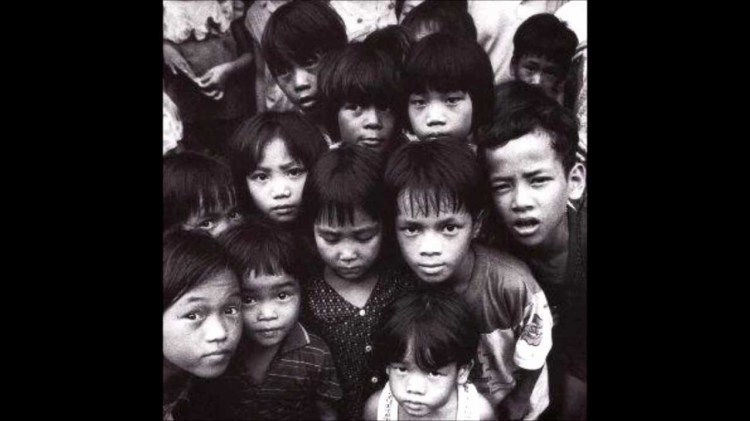
The Vietnamese phrase Bui Doi means “dust of life.” It names the children born of the war—half American, half Vietnamese—unclaimed by either world. But the phrase carries more than pity; it carries theology. In Genesis, humanity itself is formed from dust. To call these children “dust” is to recall creation and abandonment in a single breath. They are the living proof of divine image forgotten—the breath of life exhaled and left to drift.

John, once the soldier’s companion, now stands as the prophet. His voice shakes with the weight of unrepented sin:

“They are the living reminder of all the good we failed to do.”

That line cuts deeper than any artillery blast. It indicts not merely a nation but a civilization addicted to amnesia. The men’s chorus behind him—uniformed, disciplined, proud—becomes the choir of a guilty church. The horns sound like the trumpets of judgment; the snare rolls like the echo of marching ghosts. This is liturgy as lament, where patriotism and repentance collide.

Musically, the song is both anthem and elegy. The brass proclaims victory; the strings mourn the cost. The melody rises toward triumph but collapses into minor chords—hope bleeding into remorse. Boublil and Schönberg understood that guilt itself has rhythm, that moral awakening can be scored.

Philosophically, “Bui Doi” reframes the entire musical. It transforms Miss Saigon from personal tragedy to collective confession. Kim’s sacrifice in Act I was individual; this is national. Her love sanctified one child; this song pleads for all of them. In that sense, “Bui Doi” functions as the Mass of the piece—the moment when the audience, too, becomes congregation, murmuring its mea culpa in the dark.


VII. The Cinematic Mirror

In most major productions, “Bui Doi” is not sung to an empty backdrop but accompanied by film and photographs—documentary images of the real aftermath of war. As John sings, the theater dissolves into a moving archive: Vietnamese children of mixed heritage, refugee camps, faces pressed against wire and window.

This cinematic layer breaks the fourth wall. It shatters illusion and turns the audience into witness. The theater becomes a courtroom of conscience, the spectators no longer observers but participants in the confession.

It is one of the most striking multimedia sequences in stage history—fiction colliding with fact, melody colliding with memory. The children on screen do not sing, but their images form the silent choir beneath the orchestra’s thunder. When the camera pans across those faces and John intones,

“They are the living reminder of all the good we failed to do…”
the entire house falls still. The song becomes cinema, the cinema becomes prayer.

For a few minutes, Miss Saigon ceases to be a musical and becomes a moral documentary in song—a thunderous meditation on guilt, compassion, and the possibility of redemption through remembrance.


VIII. The Theological Horizon

Philosophically, Miss Saigon rests on one question:
Can love redeem a world built on illusion?

The answer is both yes and no. Kim’s love redeems her soul but cannot redeem the system. The Engineer’s illusion sustains his survival but damns his humanity. America itself becomes a metaphor for mankind’s restless migration toward false heavens—a new Babylon promising light but delivering neon.

In biblical terms, the musical is a modern Ecclesiastes. Everything is vanity: war, politics, even dreams. Yet amid that vanity, a single act of selfless love pierces the darkness. When Kim sings “The Sacred Bird” to Tam, she becomes both Mary and Magdalene—mourning and believing, broken yet beautiful.

Her death is not defeat but transcendence: she forces Chris to confront the cost of love, and through him, the audience to confront its own moral anesthesia. The play ends with Chris kneeling, unable to resurrect her, and the music fading into silence. That silence is judgment—the sound of conscience awakening.


IX. Conclusion: The Love That Outlives Empires

“And if you can forgive me now / For all the things I’ve done / Then I will be the one who’ll stay.”

Empires fall, dreams fade, illusions shatter—but love remains, not as sentiment but as wound.
Miss Saigon is not simply a retelling of Madame Butterfly; it is a spiritual reckoning. It asks whether humanity, in its hunger for progress, has forgotten the sacred art of sacrifice.

Kim’s death redeems nothing external—no nation, no system—but it redeems the meaning of love itself.
In her final act, she transforms the stage of war into an altar. The Engineer’s dream dissolves in irony, but Kim’s faith survives in silence. She proves that even in the rubble of civilization, the human heart can still whisper its prayer to heaven:

“You are sunlight and I moon / Joined here, brightening the sky.”

And for a moment, however brief, the audience feels that sky brighten—proof that art, like love, can still make light out of ruin.

The Burden of Being Misunderstood

A collaboration between Lewis McLain & AI


Introduction: The Human Longing to Be Known

Few human experiences cut as deeply as being misunderstood. To speak with sincerity only to be misheard, to act with good intention only to be judged wrongly, is a wound that echoes in the soul. From Socrates on trial in Athens to artists whose work was only appreciated after death, history is filled with men and women whose essence was obscured by misunderstanding. Yet the experience is not reserved for the famous; it is part of the everyday fabric of marriages, friendships, and workplaces. Understanding why it happens, the pain it causes, and how it can be prevented is essential for any life that seeks peace, intimacy, and effective collaboration.


Why Misunderstanding Happens

1. The Imperfection of Language

Language is a fragile bridge between minds. Words carry multiple meanings, shaped by culture, upbringing, and emotion. The simple phrase “I’m fine” may mean relief, indifference, exhaustion, or deep pain depending on tone and context. Misunderstanding is built into the very tools we use to connect.

2. Psychological Filters

Every listener filters communication through personal experiences. If someone grew up in a critical household, even neutral feedback may feel like an attack. If a spouse feels insecure, a simple absence of words can be heard as rejection. These filters distort reality.

3. Assumptions and Cognitive Shortcuts

Our brains save time by assuming. When a colleague misses a deadline, we may assume laziness rather than hidden struggles. When a partner forgets an anniversary, we may assume indifference rather than stress. These shortcuts help us survive but often betray truth.

4. Cultural and Generational Differences

In multicultural workplaces and families, communication styles clash. A blunt statement meant as efficiency may feel like rudeness. Silence meant as respect may feel like distance. What one generation calls “honesty,” another calls “harshness.”

5. The Speed of Modern Life

Emails skimmed, texts dashed off, meetings rushed—modern communication often sacrifices clarity for speed. Misunderstanding thrives in the gaps where careful explanation once lived.


The Horrible Feelings of Being Misunderstood

To be misunderstood is not merely inconvenient; it is existentially painful.

  • Alienation: It creates a gulf between self and others. One feels exiled even in the midst of family or colleagues.
  • Helplessness: Attempts to clarify can deepen suspicion: “The more I explain, the less they believe me.”
  • Humiliation: Being misjudged damages reputation, sometimes irreparably. In the workplace, it can derail careers. In marriage, it can fracture intimacy.
  • Loneliness: Misunderstood individuals may retreat inward, carrying the unshakable sense that no one truly sees them.
  • Anger and Bitterness: Repeated misinterpretation corrodes patience, leaving resentment to fester.

The philosopher Søren Kierkegaard captured the torment when he wrote: “People understand me so little that they do not even understand when I complain of being misunderstood.”


Misunderstanding in Marriage

Marriage is both the most fertile ground for misunderstanding and the most urgent place to heal it.

Common Triggers

  1. Unspoken Expectations: One partner assumes the other “should know” what they need without saying it. Disappointment follows.
  2. Different Communication Styles: Some are verbal processors, others internal. Silence may feel like avoidance to one, thoughtfulness to another.
  3. Stress and Fatigue: A weary tone may be mistaken for anger; distraction may be mistaken for indifference.
  4. Conflict Escalation: During arguments, words are rushed, tone is sharp, and intentions are distorted.

Real-World Example

Consider a couple where the husband works long hours to provide financial security, while the wife longs for quality time. He believes he is expressing love through sacrifice; she believes he is expressing disinterest. Both are misunderstood because they equate love with different actions. Without clarity, affection curdles into resentment.

Preventive Practices

  • Radical Clarity: Instead of assuming, ask. “When you’re quiet, should I understand it as thoughtfulness or withdrawal?”
  • Regular Check-ins: Create safe spaces to ask: “Do you feel understood by me right now?”
  • Active Listening: Repeating back what was heard (“So you’re saying you felt hurt when I forgot…”) validates the partner’s inner world.
  • Love Languages: Recognize that affection is communicated differently—through words, gifts, service, time, or touch. Misunderstanding often arises when partners speak different “languages.”

Misunderstanding in the Workplace

Workplaces magnify misunderstanding because of layered hierarchies, pressures, and competing goals.

Common Sources

  1. Ambiguous Instructions: Leaders say, “Get this done soon,” but each employee defines “soon” differently.
  2. Lack of Context: When decisions are made without explanation, workers fill the gap with suspicion.
  3. Email Tone: A curt response written in haste may be read as hostility.
  4. Generational and Cultural Gaps: A younger worker may interpret silence from a manager as disapproval, while the manager thinks, “No news is good news.”

Case Study: The Boeing 737 MAX Crisis

Misunderstanding played a role in the Boeing 737 MAX tragedies. Engineers flagged risks, but managers misunderstood—or dismissed—their concerns, assuming compliance meant safety. The gap between intention and perception led to catastrophic consequences.

Preventive Practices

  • Explicit Communication: Replace vagueness with specifics. Deadlines, deliverables, and success measures must be clear.
  • Feedback Culture: Encourage employees to restate instructions in their own words to confirm understanding.
  • Transparent Leadership: Share the reasoning behind decisions. Context prevents negative assumptions.
  • Cross-Cultural Training: Equip teams to recognize differences in communication styles.

Strategies for Prevention Across Life

  1. Practice Humility: Accept that you may not have been clear. Re-explain without defensiveness.
  2. Develop Empathy: Seek first to understand before seeking to be understood.
  3. Slow Down: In moments of tension, resist the urge for quick reactions.
  4. Use Multiple Channels: Important messages deserve both spoken and written forms.
  5. Acknowledge Emotions: Sometimes, people need validation of their feelings more than explanation of your intent.

The Paradoxical Gift of Being Misunderstood

Though painful, being misunderstood can also sharpen self-awareness. Many great innovators, prophets, and artists were misunderstood in their time—Jesus of Nazareth, Vincent van Gogh, Emily Dickinson, Martin Luther King Jr. Their experience forced them to deepen conviction, clarify expression, and find identity not in approval but in truth. For ordinary people, the same paradox can hold: misunderstanding, though a wound, can also be a teacher.


Conclusion: Toward a Culture of Understanding

To be understood is to be seen; to be misunderstood is to be invisible. The difference can determine the health of a marriage, the morale of a workplace, or the direction of a life. Misunderstanding will never vanish, but intentional listening, clarity, and empathy can reduce its grip. When people slow down enough to ask, “What did you mean?” and to say, “Here’s how I felt,” they build bridges across the abyss. And in those bridges lies the possibility of love, trust, and shared humanity.


Reflection and Application Questions

For Personal Reflection

  1. When was the last time I felt misunderstood? What emotions rose up in me?
  2. Do I tend to withdraw, defend, or over-explain when misunderstood? Why?
  3. How often do I assume I know what others mean without asking?
  4. What patterns from my upbringing shape how I interpret others’ words?

For Couples

  1. What’s one time in our relationship when you felt I truly misunderstood you? How did it affect you?
  2. What signals (tone, silence, habits) do I often misinterpret in you?
  3. What communication style differences exist between us, and how can we honor them?
  4. How can we build a regular rhythm of checking in about whether we feel seen and heard?

For Workplace Teams

  1. When has miscommunication in our team caused tension or lost productivity?
  2. What instructions or messages are usually the most misunderstood here?
  3. How can we improve feedback loops so people feel safe asking for clarification?
  4. Do we share enough context for decisions, or do we leave colleagues filling in the gaps with assumptions?
  5. How can we better acknowledge the emotions—stress, fatigue, pride—that affect how messages are received?

The Need to Remarry Every Day

By Lewis & Linda McLain (after 60 years), Assisted by AI

Marriage begins in radiance. Most of us can still picture that day—the nervous glances down the aisle, the joy in the faces of family and friends, the music rising as if the world itself paused to bless this covenant. The vows spoken then carry the sound of eternity: promises to love, to honor, to cherish, to remain faithful “for better or worse, for richer or poorer, in sickness and in health.” In those moments, dreams were unclouded. We imagined a life woven together in harmony, our future children, our shared home, our journey of growing old side by side.


And in 1966, The Beach Boys gave voice to that very longing with their iconic song Wouldn’t It Be Nice. It was the anthem of courtship dreams—“Wouldn’t it be nice if we were older, if tomorrow could start today?” For many couples, it became the soundtrack of first dates, long drives, and handwritten letters. The melody wasn’t just music; it was the hope of what love could become.

But dreams, no matter how sincere, eventually meet reality.

The Ups and Downs of Real Life

The truth of marriage is not just the wedding day, but every day that follows. Bills pile up, children cry in the night, careers bring stress, health falters, and personalities clash. Disappointments enter quietly: unmet expectations, miscommunications, small slights repeated until they sting more sharply. What once seemed effortless becomes labor. Disillusionments are not one-time events—they reappear, reshaping themselves with each stage of life.

In those moments, the youthful harmony can feel far away. Yet the refrain still calls: Wouldn’t it be nice if we could hold on through this storm, if we could rediscover the song that first drew us together?

The Daily Choice to “Remarry”

To stay married is not simply to refrain from leaving; it is to remake the choice of love every day. To “remarry” daily means that each morning we must decide again:

  • I will see you not as my opponent, but as my partner.
  • I will treat you not with indifference, but with honor.
  • I will choose forgiveness over resentment, conversation over silence, and patience over irritation.

This is not sentimental—this is disciplined love. To remarry each day is to awaken and recall the covenant made in youth, while layering it with the wisdom of years, the scars of hardship, and the humility that says, “I am still learning how to love you well.”

And each morning, as the alarm clock sounds, a faint echo might be heard: Wouldn’t it be nice if today we chose one another all over again?


The Skill Set of Endurance and Renewal

Love that endures is not merely a feeling; it is a skill set. Among the needed skills are:

  • Listening with depth. Hearing beneath words to the heart that speaks.
  • Conflict navigation. Arguing fairly, forgiving quickly, and refusing to keep score.
  • Resilience. Not giving up when seasons are barren, but waiting and tending until spring returns.
  • Humor. Finding laughter even when life is heavy, to remind one another that joy is still possible.
  • Faith. Believing that the story is bigger than today’s difficulty, and that grace is always available.
  • Presence and touch. Recognizing that sometimes love is best expressed without words—by simply sitting together, or by the gentle brush of a hand. Even the smallest touches—fingers brushing while passing a cup, a hand on the shoulder, the quiet weight of leaning against one another, maybe even a loving nudge with a sheepish smile—speak volumes. They are unspoken vows, reaffirmed in silence.

These are the harmonies that keep the melody alive.

More Than Vows: Returning to Courtship

But it is not only the vows we must recall. It is critical to return to the days of courtship—the beginning of the story. Do you remember the first conversation that made your heart race? The nervous excitement of a first date, the surprise of discovering how much you enjoyed being together, the eagerness to call or write, the long walks that felt too short? These are not frivolous memories; they are stored fuel.

And in those days, wasn’t there always music? Songs of longing, of wishing life could hurry up so you could finally build a life together. For some, The Beach Boys’ refrain became the anthem of that season: Wouldn’t it be nice if the world gave us permission to live out our love fully, right now?

But the heart of courtship was not only the words you spoke—it was being together. Sitting in the car long after the date ended, not needing conversation, just soaking in the nearness. The thrill of reaching for a hand and feeling it returned. These small gestures were never small; they were the first language of love. And they remain vital today. Presence itself is a gift. Touch itself is communication, no less meaningful than speech.

Rekindling the spark means asking again: What was it about you that first captured me? And then letting that answer guide new actions today—whether it is planning a small surprise, holding hands more often, or simply looking into your spouse’s eyes with the same wonder as in the beginning.

Love is not only covenant; it is also courtship renewed.

Returning to the Vows

When we “remarry” daily, we do not create new promises; we live into the ones already made. To recall the vows is to re-anchor ourselves:

  • “For better or worse” reminds us not to run when the worse comes.
  • “For richer or poorer” steadies us when financial strain presses hard.
  • “In sickness and in health” calls us to tenderness when bodies fail.

The vows are more than a contract; they are the rhythm section, steadying the music of love when the melody falters.


Practices of Daily Remarriage

  1. Leave Notes or Send Love Wishes. A small text in the middle of the workday—“Thinking of you”—or a sticky note tucked under the coffee mug can carry more weight than a grand gesture. These whispers of love remind your spouse: I see you. I choose you again today.
  2. Pray Together While Holding Hands. To clasp hands, look into each other’s eyes, and lift your marriage before God is both humbling and powerful. It says, We are not only for each other—we are with God together.
  3. Explore “For Better or Worse” Anew. Over time, the phrase deepens. What does “worse” look like in your season—financial struggle, illness, misunderstanding? Naming it together transforms the vow into shared resilience: No matter what comes, we endure side by side.
  4. Recount Your Blessings. Gratitude is glue. Sit together, list aloud the small and great gifts—your children, your laughter, your home, your faith. Counting blessings makes the heart remember that love has been carried by grace.
  5. Discuss Your Relationship with God. A marriage anchored in faith has a third strand that does not break. Speak openly about where you see God’s hand in your story, what you are praying for, and how your love can mirror His. In doing so, you are not just married to each other—you are bound within His covenant love.


Conclusion: A Lifelong Renewal

The wedding day was the first “yes.” Life after that requires thousands more. The beauty of remarriage every day is that it transforms endurance into renewal. It says that even in the weariness of years, we can rediscover the spark of the beginning. Love then becomes not only a memory of what was promised, but a living testament of what is still possible.

And so the chorus returns, softer now but deeper: Wouldn’t it be nice if today we made the same choice again, and tomorrow too, and the day after that—until one day we find that the dream we sang about in 1966 has become the life we’ve built together?

And sometimes, the most profound choice is made without a word—just in the quiet joy of being present, hand in hand, heart to heart.


A Closing Prayer

Lord, we thank You for the gift of marriage, for the joy of courtship, for the vows once spoken in trembling voices and still lived today. We ask for the courage to remarry each morning, to choose again the one You have given us.

May we be faithful for better or worse, patient for richer or poorer, tender in sickness and in health. May we learn daily to love, honor, and cherish—until death parts us, and even then, until love is made perfect in eternity.

Teach us also to treasure the quiet gift of presence—the holy silence of simply being together. May we never take for granted the power of touch, even the smallest brush of the hand, as a sacred language of love.

Bless every couple with the grace to return to their first love, to recall the courtship that began their story, to whisper love through notes and prayers, to count their blessings often, and to sing again the refrain of hope: Wouldn’t it be nice if, today, we chose each other anew?

Amen.


Wouldn’t It Be Nice – Beach Boys

Wouldn’t it be nice if we were older?
Then we wouldn’t have to wait so long
And wouldn’t it be nice to live together
In the kind of world where we belong?

You know it’s gonna make it that much better
When we can say goodnight and stay together

Wouldn’t it be nice if we could wake up
In the morning when the day is new?
And after having spent the day together
Hold each other close the whole night through

Happy times together we’ve been spending
I wish that every kiss was never ending
Oh, wouldn’t it be nice?

Maybe if we think and wish and hope and pray
It might come true (run, run, we-ooh)
Oh, baby, then there wouldn’t be a single thing we couldn’t do
We could be married (we could be married)
And then we’d be happy (and then we’d be happy)
Oh, wouldn’t it be nice?

You know it seems the more we talk about it
It only makes it worse to live without it
But let’s talk about it
But wouldn’t it be nice?

Goodnight, my baby
Sleep tight, my baby
Goodnight, my baby
Sleep tight, my baby
Goodnight, my baby
Sleep tight, my baby

Source: Musixmatch

Songwriters: Brian Douglas Wilson / Mike E. Love / Tony Asher

Wouldn’t It Be Nice lyrics © Sea Of Tunes Publishing Co., Sea Of Tunes Publishing Co Inc