The Weight of Words: When Speech Shapes Destiny

Introduction

From the opening chapters of Scripture, words hold power. God spoke creation into being: “And God said, ‘Let there be light,’ and there was light” (Genesis 1:3). The entire cosmos came into existence not by hammer or flame, but by a word. That same pattern continues throughout the biblical story—words bless, words curse, words bind, words heal.

Proverbs teaches: “Death and life are in the power of the tongue” (Proverbs 18:21). James calls the tongue “a restless evil, full of deadly poison” (James 3:8). Jesus warned, “By your words you will be acquitted, and by your words you will be condemned” (Matthew 12:37). In short, words are never neutral. They carry eternal weight.

In our age of microphones, cameras, podcasts, and viral clips, words travel faster and linger longer than at any point in history. The responsibility to use them wisely has never been greater.


Words in Scripture: Creation, Covenant, and Consequence

The Bible presents a consistent theology of speech:

  • Creation: God’s voice orders chaos into cosmos. His Word is life.
  • Covenant: God binds His people through words—promises, commands, blessings. At Sinai, the Ten Commandments were not just laws but rather the terms of a covenant relationship.
  • Consequence: Misuse of words brings judgment. The serpent’s lie in Eden unleashed sin. The Tower of Babel scattered humanity through the confusion of language. James compares the tongue to a spark that can ignite a forest fire.

Speech reveals the heart. What we say cannot be detached from who we are. When Christians speak, we bear witness—either faithfully or unfaithfully—to the One whose Word is truth.


The Double-Edged Sword of Rhetoric

Speech directs thought, shapes culture, and determines destiny.

Examples of Life-Giving Speech:

  • Winston Churchill’s wartime speeches gave hope when Britain stood alone against Nazi aggression.
  • Martin Luther King Jr.’s “I Have a Dream” speech elevated America’s conscience and called a nation to live up to its founding ideals.
  • Ronald Reagan’s speeches framed freedom as a moral calling and helped inspire the end of the Cold War.

Examples of Destructive Speech:

  • Adolf Hitler rose to power not through military might but through rhetoric that stirred resentment, fear, and blind loyalty.
  • Communist regimes perfected propaganda—lies repeated until they reshaped whole nations.
  • Today, misinformation spreads across the internet, dividing families, communities, and even churches.

Speech is a double-edged sword. It can build a nation or tear it apart. It can lead souls to God or away from Him.


The Christian Call to Speech

Christians are not free to use words carelessly. Paul exhorts believers: “Let your conversation be always full of grace, seasoned with salt, so that you may know how to answer everyone” (Colossians 4:6).

Key principles for Christian speech:

  • Truth: Our words must align with God’s Word, not with convenience or fear.
  • Grace: Even when confronting error, speech should aim to restore, not merely to win.
  • Courage: Silence in the face of evil can be as destructive as outright lies.
  • Order: Freedom of speech is a gift that requires responsibility. Christian liberty does not mean license to slander or manipulate.

The Political Call to Responsible Speech

Healthy republics depend on honest, principled speech just as the church depends on truthful proclamation. In a democracy, rhetoric is the bloodstream of self-government. Campaigns, debates, editorials, and legislative arguments all shape the direction of policy and the trust of citizens.

  • Honesty: Political speech should inform rather than manipulate. Without truth, public trust erodes.
  • Civility: Sharp disagreement is necessary in free societies, but respect must remain.
  • Accountability: Leaders must remember that promises are words, and broken promises corrode confidence in institutions.
  • Restraint: Free speech must be exercised with discipline—slander, exaggeration, and reckless accusations undermine liberty rather than protect it.

From a conservative perspective, the Founders understood this well. They enshrined free speech in the First Amendment not to encourage recklessness but to secure a space for truth, conscience, and accountability. The survival of liberty rests not only on what is said but how it is said.


Words in the Digital Square and the Areopagus

Today’s digital world multiplies the reach of speech. Tweets, podcasts, YouTube clips, and live streams have become the new “public square.” In biblical terms, it resembles the Areopagus of Athens—an open forum where thinkers, philosophers, and ordinary citizens gathered to debate ideas (see Acts 17:19–34).

When Paul stood at the Areopagus, he neither shrank back nor spoke recklessly. He engaged respectfully, quoting poets familiar to his audience, yet clearly proclaiming Christ as Lord. His model is instructive: engage culture on its own turf, but always direct the conversation back to truth.

Our digital Areopagus is chaotic—full of noise, competing voices, and sometimes hostility. Yet it remains a place where destinies are shaped daily by words. Christians and conservatives are called not to abandon it, but to enter it with wisdom, clarity, and courage.


Charlie Kirk and the Modern Rhetorical Arena

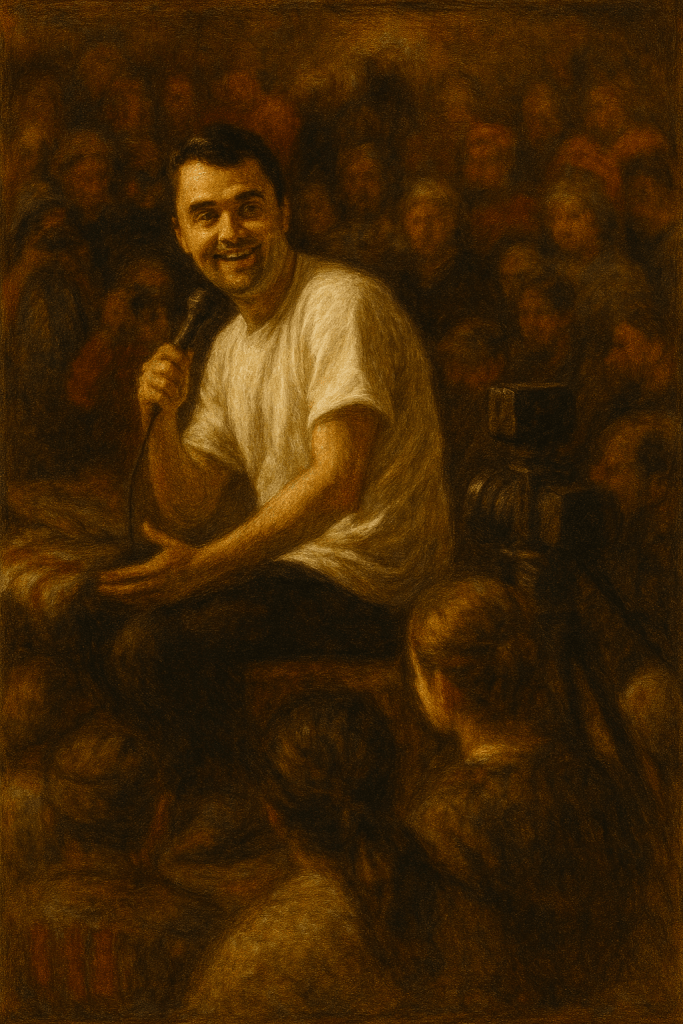
Figures like Charlie Kirk illustrate how modern rhetoric shapes culture. On college campuses, Kirk asks pointed questions that expose contradictions in progressive ideologies. His method—firm, articulate, unapologetic—shows the importance of confidence in public dialogue.

Yet his approach also raises questions. Strong rhetoric can embolden the like-minded but risk alienating opponents. The balance between conviction and persuasion, boldness and bridge-building, remains a challenge for all Christians engaging in public debate.

Kirk represents a broader principle: in a fragmented age, those willing to speak clearly and consistently often shape the direction of conversation. Silence cedes the field to others.


Reflection Questions

  1. Which words spoken to you—encouragements or criticisms—still shape your identity today?
  2. How do you test whether your speech reflects truth, grace, and responsibility?
  3. How can you use social media or digital platforms to build others up rather than tear them down?
  4. What examples of courageous, life-giving speech inspire you? How can you model them in your family, church, or community?
  5. Where are you tempted to remain silent when words of truth are most needed?
  6. In political conversations, do your words clarify truth and invite reasoned debate, or do they simply mimic the noise of partisanship?

Conclusion

Words are never weightless. They carry the power to create or destroy, to build up or to break down, to bless or to curse. Scripture reminds us that every careless word will be judged (Matthew 12:36). History testifies that nations rise and fall on the power of words. And our own lives bear the marks of things spoken long ago.

For Christians, the calling is to speak words of truth and grace that reflect Christ. For citizens, the calling is to speak responsibly, with honesty and civility, guarding the republic from the corruption of careless speech. In both spheres, the weight of words shapes destiny.

In a world drowning in noise, the faithful word—grounded in Scripture, shaped by love, disciplined by truth, and spoken with courage—can still change hearts and nations.


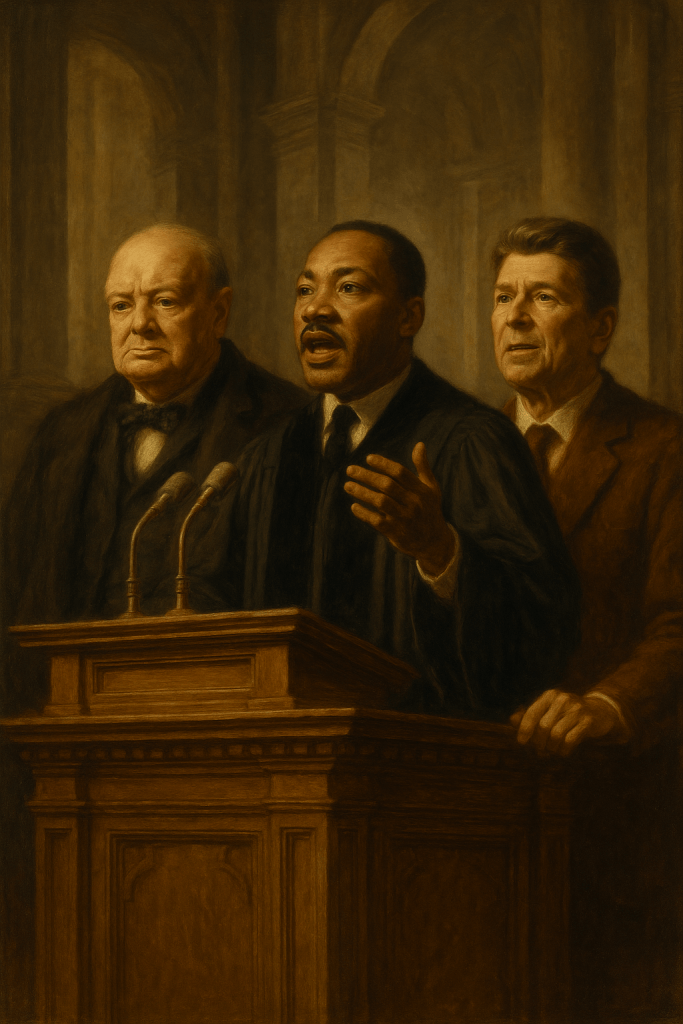
A Collaborative Plea: Churchill, King, and Reagan

Winston Churchill might thunder:
“In every age, civilization itself has hung upon the slender thread of speech. Words have been our armor and our rallying cry in the darkest hours. Let us, then, wield them with courage and precision—not as reckless shouts in the void, but as clarion calls to defend truth, freedom, and human dignity.”

Martin Luther King would then lift the vision higher:
“Yet words must be more than weapons. They must be instruments of justice and of love. A people divided by careless tongues cannot stand, but a people united by righteous speech can march together toward the Promised Land. Let us speak not only to win arguments but to awaken conscience, to stir compassion, to bend that long arc of the moral universe toward justice.”

Ronald Reagan would seal the appeal with hope:
“And let us never forget that words can light a candle in the darkest night. When spoken with faith and fidelity, they remind us that freedom is not fragile but enduring, because it rests upon truth. Let us speak in such a way that future generations say: here were men and women who did not waste their words, but used them to call a people back to God, back to courage, and back to hope.”


Closing Thought

Together, their voices would remind us: the weight of words is real. Spoken in fear, they can enslave. Spoken in truth and love, they can set a people free.

LFM Note: Even if I forgot to include. All of my posts of 2025 and beyond are collaborations between LFM and AI. While I am at it, please go to http://www.citybaseblog.net to see all of my posts in recent years.

The Digital Babel Consideration

Introduction: The First Babel

In Genesis 11, after the flood, humanity gathered with one purpose. They said, “Come, let us build ourselves a city, with a tower that reaches to the heavens, so that we may make a name for ourselves and not be scattered over the face of the whole earth.” The Tower of Babel was more than stone—it was a symbol of human pride, a declaration of independence from God. In their unity, people sought security, identity, and glory apart from Him.


God’s response was measured and purposeful. Rather than destroy, He confused their language, (the source for our words like “babbling”) scattering them across the earth. His judgment was both a limit and a mercy. By dividing their speech, He prevented prideful ambition from becoming oppressive tyranny. The lesson of Babel is that human invention, when unmoored from God’s order, leads not to flourishing but to fragmentation.

Today, our “digital towers” look different. Instead of bricks, we use pixels. Instead of mortar, we use code. The internet, social media, and artificial intelligence represent extraordinary tools—capable of blessing families, spreading truth, and even carrying the gospel to the ends of the earth. Yet, like Babel, these same tools can be bent toward pride and self-exaltation. The challenge is not to reject technology, but to constrain it within God’s design for community, truth, and order.


The Promise of Technology

Before we critique, we must acknowledge the good. Technology has reunited families across oceans, put Scripture into nearly every language, and given churches the ability to reach far beyond their walls. Missionaries use smartphones for translation. Isolated believers stream services in real time. Local leaders connect with constituents directly.

From a conservative standpoint, technology also reflects innovation and opportunity—values that can strengthen free societies. Properly directed, it allows enterprise and creativity to flourish, lifting people from poverty, broadening access to education, and advancing liberty. Christians, too, have reason to be thankful: the Great Commission now travels on fiber optic cables as surely as on sailing ships.


The Reality of Fragmentation

Yet blessings come with limits. Just as God restrained Babel to protect humanity, we too must set boundaries when technology divides more than it unites. Algorithms curate news feeds that isolate rather than connect. Political rhetoric grows harsher as groups live in separate “realities.” Even in the church, online preachers and influencers sometimes foster theological silos that erode shared biblical grammar.

The danger is not that technology is evil, but that it is not neutral. Left unchecked, it bends toward division. Like fire, it can warm a home or burn it down.


Biblical Parallels and Guidance

The Babel story warns us that scattering apart from God leads to confusion. Pentecost shows the opposite: the Spirit uniting diverse tongues to proclaim one gospel. Together, they reveal this principle—unity is only life-giving when grounded in God’s truth.

For Christians and conservatives, this principle means:

  • We respect the limits of human invention rather than assuming all progress is good.
  • We strengthen enduring institutions—family, church, and local community—that anchor us against digital drift.
  • We guard free speech and diverse voices while also calling for moral responsibility in how those voices are used.

Building a Shared Story in a Digital Age

To redeem technology, we must actively channel it toward what is true, good, and life-giving:

  • Scripture as shared language: God’s Word must remain the foundation, not one voice among many, but the truth by which all other voices are measured.
  • Embodied community: Online fellowship is valuable, but it can never replace face-to-face worship, service, and local engagement.
  • Discernment training: Parents, pastors, and teachers must equip the next generation to see through manipulation, resist division, and pursue truth.
  • Narrative stewardship: The church must retell the gospel as a grand story—creation, fall, redemption, restoration—stronger than any digital narrative.

Reflection Questions

  1. What examples in your own life show technology at its best—connecting, informing, or blessing?
  2. When have you noticed digital feeds pulling you away from truth or shared community?
  3. How can Christians today serve as “interpreters,” helping bridge the fractured dialects of our digital world?
  4. What practices—Scripture reading, fellowship, civic service—help you stay rooted in reality while engaging the digital age?

Conclusion

The Tower of Babel warns us that human pride unchecked leads to confusion. The digital Babel of our own day brings both promise and peril. Technology can serve families, churches, and civic life when rightly constrained—but without God’s order, it fragments into endless dialects of meaning.

The Christian task is not retreat but redemption. Like fire, technology must be kept within the hearth if it is to bring warmth. By grounding our digital lives in Scripture, community, and truth, we can resist Babel’s scattering and instead model Pentecost’s gathering: many voices, one Spirit, one story.


More on the Babel Story

The biblical account is found in Genesis 11:1–9. It emphasizes the confusion of languages and the scattering of peoples rather than the physical collapse of the tower. Later Jewish traditions describe fire, wind, or earthquake striking it, while some say only part was destroyed. Christian interpreters often saw the “fall” of Babel as spiritual pride, not literal rubble. The Qur’an does not tell the Babel story directly but contains echoes in Pharaoh’s tower-building arrogance (Surah 28:38, 40:36–37).

Historically, many scholars connect Babel with the ziggurat of Babylon known as Etemenanki (“House of the Foundation of Heaven and Earth”), a massive, stepped temple likely standing hundreds of feet tall. Ruins of Babylon near modern Hillah, Iraq, still contain remnants of such structures, though none can be definitively identified as “the” Tower of Babel.

The Heart and Soul of a Street Preacher

Linda and I were fortunate enough to assist French Teacher Diana Thelen take up to 106 Christian students, teachers and administrators to the UK and Europe over a 10-year period around the turn of this century. On one of our trips to London, we ended up at Picadilly Circus. If you haven’t been there, think Times Square in NYC. Busy. Flashy and memory-making.

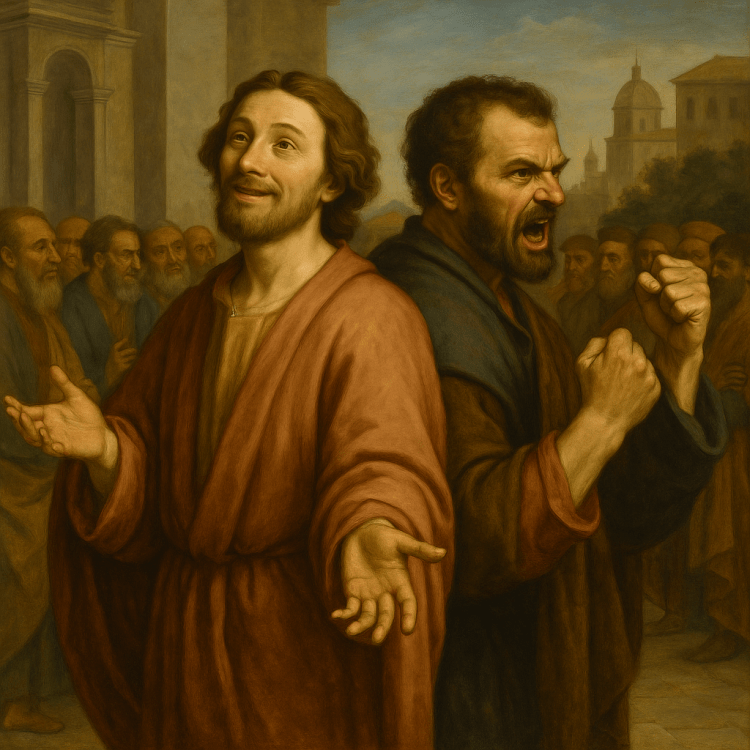
At a distance, I could hear and see a street preacher. I remember him more clearly than anything else. While I can’t remember his exact words, his enthusiasm was heard and felt. More people walked past him than paused to listen. I thought to myself how they perhaps caught a word or phrase that stuck with them.

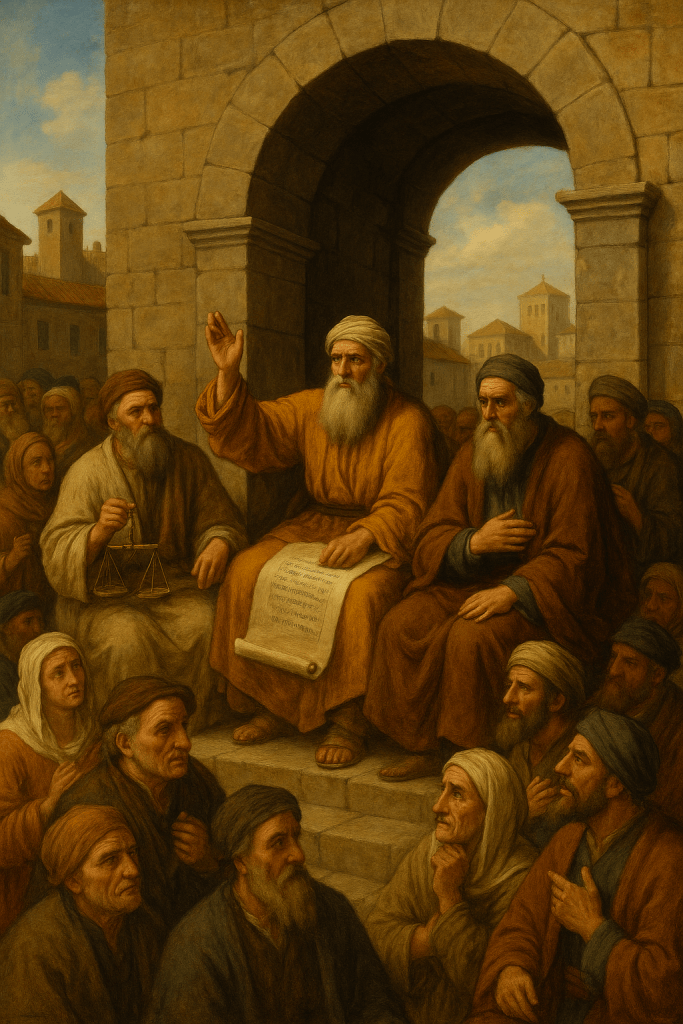
In our Bible Study group, as I’ve wrote a few days ago, we are delving into the Book of Acts. It is fascinating to read about Peter and Paul as they are at their very first steps of street preaching. You can easily feel their lightheadedness as they rise from a sitting position to share Gospel. Christ came to show us the way, died for our sins and then rose to join His Heavenly Father. Believe in Him, and you will have everlasting life.

So, based on these two images, today’s essay is again a collaboration between AI and me. LFM

Introduction

I am a street preacher. Some people admire me; others dismiss me as a nuisance. But my voice, my presence, and my message come from a place deeper than opinion—it is a calling from God. Behind every word I speak in the open air lies a journey of conviction, struggle, and faith, one that connects me to prophets, apostles, and countless heralds before me.


My Calling

I did not choose this work for comfort or convenience. The Lord placed His word in my heart, and it burns there like fire in my bones. I cannot hold it in. He has called me to the streets to speak of His Son, not because I am worthy, but because He chose me for this task before I was born (Jeremiah 1:5).

I go where the people are—bus stops, markets, sidewalks—because I am commanded to go into all the world and preach the gospel to every creature. I cannot wait for them to come to me. Life is short, eternity is real, and the message is urgent. My heart breaks for the lost, and I carry their burden as my own.


My Motivation

I obey because He commands it, even when obedience costs me my comfort, reputation, or safety. I preach because love compels me—not love in word only, but the kind that risks rejection to rescue a soul. I stand in public where all can see, because even those who will not listen must be reminded that there is truth beyond the noise of life. My life is not my own. My time, my voice, and my reputation belong to Christ.


My Struggles

This calling comes with a cost. I have walked alone more than I can say. Many brothers and sisters in Christ do not understand my methods, and so the fellowship is sometimes thin. I have been mocked, cursed, and shoved. I have fought the temptation to answer in anger, and I have prayed for my heart to stay soft toward those who hate me.

The battles are not just outside—they rage in my mind. The enemy whispers that my words are wasted, that I am doing more harm than good. There are days when my body aches from standing, my voice strains from speaking, and my heart feels empty from pouring out. Yet I rise again, because the message is not mine to withhold.


A Day in My Life

I rise before the sun, my first thoughts turning to prayer. I open the Scriptures, looking for the day’s anchor—a word from God to carry into the streets.

I gather my tools: a small speaker, gospel tracts, a wooden cross, water, and a sign that says, Christ Died for the Ungodly. I know the weather may turn, but rain is no excuse to be silent.

At the bus terminal, I raise my voice above the hum of engines and footsteps. Most pass me by, but one man lingers, sharing the pain of his dying brother. We pray together, the noise of the city around us.

Later, teenagers jeer and throw trash. My flesh wants to snap back, but I remember my Lord’s example. I answer with gentleness and keep speaking.

Alone on a bench at midday, I fight the thought that nothing I do matters. I remind myself that I plant and water, but God gives the growth.

In the afternoon, a young man on a bike remembers what I said last week and confides his guilt over past sins. We talk. Seeds are planted.

By evening, I am weary, but I deliver one final message in a plaza. Someone watches from across the street for several minutes before disappearing into the crowd. I do not know if I will see him again, but I leave with hope.


My Place in History

I do not stand alone. I walk a path worn by those who came before me:

  • Noah, a preacher of righteousness.
  • Jeremiah, proclaiming truth at the temple gate.
  • Jonah, warning Nineveh in the streets.
  • John the Baptist, crying in the wilderness.
  • Jesus, preaching from hillsides, seashores, and city streets.
  • Peter, speaking to thousands in Jerusalem.
  • Paul, reasoning daily in marketplaces.

I share in the legacy of Francis of Assisi, the Lollards, Martin Luther, George Fox, Whitefield, Wesley, and countless others who took the gospel beyond the church walls. Their voices still echo through time, and mine is but one more in the same song.


My Creed

I am called, not by man, but by the voice of the Living God.
Before I was formed in the womb, He knew me; before I was born, He set me apart. My commission is not a career but a cross, not a choice of convenience but a mandate of obedience.

I will proclaim the truth in the open air,
as the prophets did in the gates of the city,
as John cried in the wilderness,
as Christ preached on hillsides and by the sea,
as the apostles spoke in marketplaces and in the streets.

I will not measure my work by the size of the crowd,
the applause of men,
or the absence of scorn.
I will measure it only by my faithfulness to the message entrusted to me.

I will endure the loneliness of this calling
knowing my Lord was despised and rejected,
a man of sorrows, acquainted with grief.
When they mock me, they mock Him;
when they reject me, they reject the One who sent me.

I will guard my heart from pride,
remembering I am a beggar showing other beggars where to find bread.
The power is not in my voice, my skill, or my presence—
but in the Gospel, which is the power of God unto salvation.

I will love those before me, even if they hate me.
My words may wound, but only as the surgeon’s knife wounds to heal.
I will remember that every face I see is a soul that will one day stand before God.

I will not be silenced by fear, fatigue, or failure.
The enemy may bruise me with insults,
the law may restrain me with fines,
the weather may beat me with rain—
but I will rise again, for the message is not mine to withhold.

I will pray before I speak, and after I speak.
For without prayer, my words are wind.
But with prayer, the Spirit may carry a single sentence into the heart
and awaken the dead to life.

I stand in the tradition of the faithful—
from Noah to Paul, from Francis to Wesley, from Whitefield to nameless saints whose voices echoed through streets and alleys the world forgot.
Their reward was never here, and neither shall mine be.

And when my voice is silenced at last,
may it be said that I spent my final breath in obedience to the One who called me—
not as a celebrity, not as a scholar,
but simply as a herald, crying in the streets:
“Be reconciled to God.”


Conclusion

This is my life, my labor, and my love. I know the cost. I have felt the loneliness. But I also know the One who walks beside me, and His presence is worth more than the approval of the world.

So tomorrow, and the day after, I will take my place again in the streets. Not for applause. Not for recognition. But for obedience—and for the hope that even one will hear and live.

The Work That Holds Us Together

🛠️ The Work That Holds Us Together

I was raised in a blue-collar family. It is the best thing that ever happened to me. My dad was a very hard worker. He was a mechanic (an electro-plater) at Braniff and then would work on cars many nights after he got home. He had calloused hands with grease that never completely disappeared no matter how hard he scrubbed.

I started working as a paper boy at the age of 13-ish. From the paper route, I eventually worked at Holiday Cleaners due to a friendship with the manager I talked to many days on my route. I even chose to get out of school at noon during my senior year to work there on a work program for some who did not plan to go to college. On my paper route, one of my customers asked me to come to work as an office boy at Glidden Paint Company.

I eventually got promoted to be a paint maker in the plant on the night shift. Later, I became the assistant purchasing agent. I did start college during this time but lost a year when I joined the Texas Air National Guard and became a “weekend warrior.” After Linda graduated from UNT and started teaching, I quit to complete my last two years of college. She also had worked non-stop from her younger years until she retired.

I’ve often said that I may not be the smartest person in the world, but I can outwork just about anyone. Like with many in this world, I find sheer enjoyment in working. To create something, to process something, to feel the satisfaction for a job well done is a reward alone.

So, Labor Day is a meaningful holiday for me. This is my salute. AI helped with some history. LFM


I. Labor Day’s Hidden Roots

Labor Day began not as a vacation but a declaration: Workers matter. The earliest advocates didn’t ask for applause—they asked for justice. The 19th-century labor movement arose in a crucible of exploitation: 14-hour workdays, unsafe mills, child labor, and wages that barely fed a family.

In 1882, 10,000 workers in New York marched—not to protest a war, but to demand dignity in the workplace. It wasn’t until the violent Pullman Strike in 1894, when workers shut down rail traffic across the nation and faced federal troops, that Congress finally acted, making Labor Day a national holiday.

But the meaning of the day has always gone deeper than rest. It has been a cry from the ground: Do you see us?


II. The Divine Rhythm of Work and Rest

Long before factories, strikes, and unions, God ordained labor. The first command given to humanity was to “work the ground and keep it” (Genesis 2:15). Work was not a punishment—it was a partnership. Adam and Eve were not idle in Eden; they were cultivators.

But even in paradise, there was a rhythm: six days of work, one of rest. God Himself rested—not out of exhaustion, but to show us how sacred rest is.

“The Sabbath was made for man, not man for the Sabbath.” — Mark 2:27

Work is dignified, but so is stopping. Rest is not laziness; it’s an act of faith. It says: I am not God. The world does not depend on my endless output.


III. The Laborers Jesus Saw

Throughout His ministry, Jesus moved among the working class. He did not call religious elites to be His disciples—He called fishermen. He Himself was a carpenter for most of His earthly life. When He told parables, He spoke of vineyard workers, shepherds, sowers, and servants.

And when He spoke to the weary, it was as a worker speaking to workers:

“Come to me, all you who labor and are heavy laden, and I will give you rest.” — Matthew 11:28

His kingdom values did not mirror the marketplace. The first were last. The widow’s mite outweighed the rich man’s gift. The one who serves is greatest of all.

What would it mean to bring that vision into our economy today?


IV. The Unfinished Work of Labor Justice

Too often, our systems still devalue the laborer. Some work until their bodies collapse. Others labor invisibly—caring for children, cleaning buildings, stocking shelves—without benefits, praise, or power.

Even in church spaces, we sometimes glorify “calling” only in terms of ministry or leadership. But the Bible does not separate the sacred and the secular that way. Paul writes:

“Whatever you do, work at it with all your heart, as working for the Lord, not for human masters.” — Colossians 3:23

Whether one teaches, welds, drives, prays, or sweeps, it all becomes holy when done with faithfulness.

But faithfulness does not mean accepting injustice. It means confronting it. Like the prophets, we must cry out when wages are withheld (James 5:4), when sabbaths are ignored (Exodus 20:10), when workers are crushed under greed (Amos 8:4–6).


V. Labor Day as Worship

What if Labor Day were not just a long weekend, but an altar? A day to honor those who build bridges, bandage wounds, answer phones, hammer nails, code websites, change diapers, and sweep floors.

What if we lifted up the invisible hands behind visible life?

What if we slowed down enough to give thanks—not just with words, but with wages, policies, and prayers?

What if we remembered that God Himself worked—and called it good?


🕊️ Final Reflection: A Poem for Labor Day

The Hands That Hold the World

Not just the stars or thrones endure,
But hands that scrape, and sew, and cure.
The ones who kneel to fix the gears,
Who mop the floors, who calm the fears.

The mother rocking past her shift,
The courier through rain and drift.
The silent saint behind the glass,
Who rings up joy as hours pass.

The teacher grading after dark,
The welder throwing up a spark.
The unseen hands, the whispered grace,
That hold the world in every place.

So bless the calloused, wrinkled, worn—
The laborers both praised and torn.
For in their work, a truth is shown:
No kingdom stands by kings alone.

And may we build, with justice wide,
A world where labor walks with pride.
Where rest is sacred, wages fair—
And every worker knows we care.

Labor Day, 2025

Thoughts, Prayers, and Action: A Christian Response to Tragedy

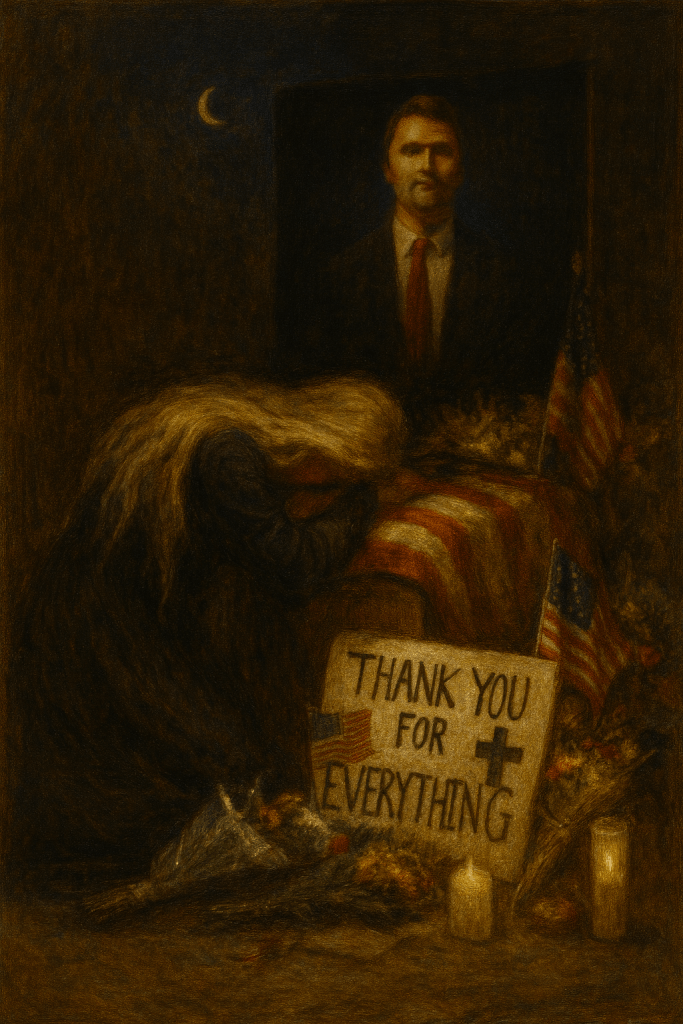
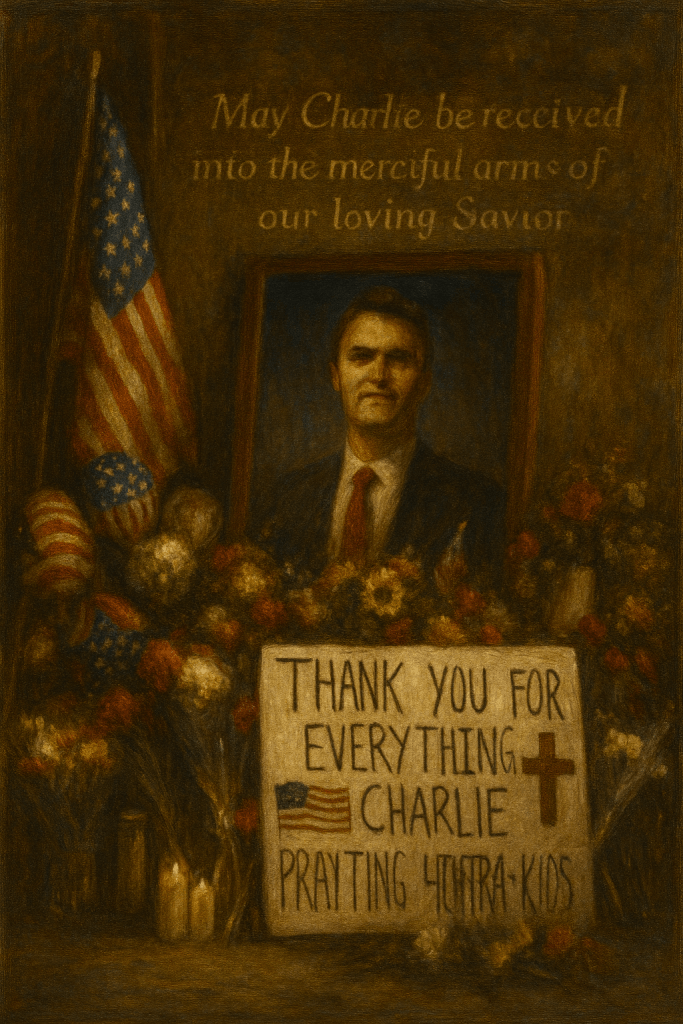
Please Lord, watch over our community, especially our children.

When tragedy strikes—whether in a school, a church, or on the streets of our cities—Christians instinctively turn to prayer. We believe that God hears the cries of His people, and that no tear shed, no anguished word whispered in prayer is wasted. Yet in moments like the recent killings in Minneapolis, many voices rise in frustration, declaring, “thoughts and prayers are not enough.”

As a follower of Christ, I must confess that this critique deserves a hearing. If by “thoughts and prayers” we mean little more than polite condolences, quickly offered and soon forgotten, then indeed they are not enough. Scripture never intended prayer to be a substitute for action. James writes plainly: “Suppose a brother or sister is without clothes and daily food. If one of you says to them, ‘Go in peace; keep warm and well fed,’ but does nothing about their physical needs, what good is it?” (James 2:15–16). Prayer without action is incomplete; faith without works is dead.


The True Role of Prayer

Prayer is not meant to end our response; it is meant to begin it. Prayer is the act of bringing unbearable sorrow before the throne of God, confessing our weakness, and seeking divine strength. It is through prayer that we discern God’s heart for justice, compassion, and peace. It is through prayer that we ask for courage to move beyond words and into deeds.

Far from being empty, prayer acknowledges that human wisdom and political effort alone cannot heal the deepest wounds of the human heart. Prayer points us to the One who alone can turn hatred into love, despair into hope, violence into reconciliation. But if prayer never moves us to concrete acts of mercy and justice, then we have misunderstood its purpose.


Please Lord, Change the hearts of evil.

What Christians Ask for in Prayer After a Massacre

When we say we are praying for the families, school workers, and community after the massacre of children, we are not merely repeating empty phrases. We are interceding with specific and urgent pleas before God:

  • For the families of the children: that God would surround them with His comfort, the “peace that surpasses all understanding” (Philippians 4:7), when their world has collapsed. That He would give them strength to face the unthinkable days ahead—funerals, empty bedrooms, and grief that threatens to crush their very breath.
  • For the school workers and first responders: that God would bind up the trauma they carry in their bodies and minds after witnessing scenes that will never leave them. That He would guard them against despair, give them counselors and companions, and remind them that their labor to protect children is not in vain.
  • For the community: that God would heal the very soil of the city, that fear will not take root, that division and blame will not destroy neighbors, and that leaders would rise up who work for reconciliation and renewal. That the church would be a beacon of hope, providing food for the grieving, arms for the weary, and truth for the confused.

Prayer in such a moment is not resignation—it is petition. It is crying out to the Lord of heaven and earth to move in ways we cannot. It is asking Him to step into unbearable suffering and carry those who cannot walk.


What Can Be Done to Prevent Such Tragedies?

Christians must also look upstream: what can be done to prevent massacres like this from happening at all? While we cannot erase the reality of evil in a fallen world, there are faithful steps we can take:

  • Spiritual formation and discipleship: Our homes, churches, and schools must raise children in love, teaching them to value life, to resolve conflict with peace, and to find their worth in God rather than in violence or power.
  • Stronger communities: When young people are isolated, wounded, or neglected, seeds of destruction can grow. The church can invest in mentoring, after-school care, youth ministries, and safe spaces where children and families are supported.
  • Care for mental health: Christians can advocate for accessible counseling and trauma care, remembering that Jesus Himself ministered to the brokenhearted.
  • Moral courage in public life: We can encourage policies that protect human life and limit access to instruments of mass violence, while still affirming human dignity and responsibility.
  • Peacemaking witness: In a culture saturated with anger and division, Christians can model reconciliation—speaking truth with grace, rejecting hatred, and showing the world that the way of Christ is the way of peace.

No set of actions will completely eradicate violence. Yet, by God’s grace, we can restrain evil, cultivate peace, and create communities where tragedies are less likely to erupt.


Responding to the Critique

So when someone says, “thoughts and prayers are not enough,” my Christian response is not to be defensive but to agree in part. They are right: prayer is not enough if it remains mere sentiment. But they are also missing the deeper truth: prayer is more than words—it is the lifeblood of action. Without it, we risk striving in our own strength, detached from God’s wisdom and power.

As Christians, we should embrace both sides: authentic prayer that intercedes for the grieving and the broken, and faithful action that works for justice and peace. Prayer without action is hypocrisy, but action without prayer is arrogance. The world needs both.


A Prayer for the Families, School, and Community

Heavenly Father, our hearts are broken before You. Children have been taken in violence, and we struggle to even breathe under the weight of this loss. Lord, we lift up the families whose lives are torn apart. Hold them in Your arms as a mother holds her child. Give them strength to face the hours ahead and hope to believe that life is still worth living. Surround them with friends who will not leave, with churches that will not abandon, with a peace that does not vanish when the tears come at night.

We pray for the teachers, the school staff, and the first responders who saw the unthinkable. Lord, heal their minds, protect them from despair, and let their courage not be forgotten. Wrap them in Your love and remind them that their work is holy in Your sight.

We pray for the community of Minneapolis. Drive out fear, drive out division, and plant seeds of healing where the soil feels barren. Raise up leaders who will stand for peace and neighbors who will look after one another. May the church rise to its calling: to comfort the hurting, to weep with those who weep, and to shine the light of Christ in the darkest of nights.

And Lord, we pray not only for healing but for prevention. Teach us as a nation to value life as You value it. Lead us to build homes where love is strong, schools where children are safe, communities where the lonely are not abandoned. Show us how to break cycles of violence and how to offer young people hope before despair hardens into destruction.

Come, Lord Jesus. Heal our land. Let justice roll down like waters, and righteousness like a mighty stream. May Your kingdom come, and Your will be done, on earth as it is in heaven.

In the name of Jesus Christ, the Prince of Peace, we pray. Amen.Thoughts, Prayers, and Action: A Christian Response to Tragedy

When tragedy strikes—whether in a school, a church, or on the streets of our cities—Christians instinctively turn to prayer. We believe that God hears the cries of His people, and that no tear shed, no anguished word whispered in prayer is wasted. Yet in moments like the recent killings in Minneapolis, many voices rise in frustration, declaring, “thoughts and prayers are not enough.”

As a follower of Christ, I must confess that this critique deserves a hearing. If by “thoughts and prayers” we mean little more than polite condolences, quickly offered and soon forgotten, then indeed they are not enough. Scripture never intended prayer to be a substitute for action. James writes plainly: “Suppose a brother or sister is without clothes and daily food. If one of you says to them, ‘Go in peace; keep warm and well fed,’ but does nothing about their physical needs, what good is it?” (James 2:15–16). Prayer without action is incomplete; faith without works is dead.


The True Role of Prayer

Prayer is not meant to end our response; it is meant to begin it. Prayer is the act of bringing unbearable sorrow before the throne of God, confessing our weakness, and seeking divine strength. It is through prayer that we discern God’s heart for justice, compassion, and peace. It is through prayer that we ask for courage to move beyond words and into deeds.

Far from being empty, prayer acknowledges that human wisdom and political effort alone cannot heal the deepest wounds of the human heart. Prayer points us to the One who alone can turn hatred into love, despair into hope, violence into reconciliation. But if prayer never moves us to concrete acts of mercy and justice, then we have misunderstood its purpose.


What Christians Ask for in Prayer After a Massacre

When we say we are praying for the families, school workers, and community after the massacre of children, we are not merely repeating empty phrases. We are interceding with specific and urgent pleas before God:

  • For the families of the children: that God would surround them with His comfort, the “peace that surpasses all understanding” (Philippians 4:7), when their world has collapsed. That He would give them strength to face the unthinkable days ahead—funerals, empty bedrooms, and grief that threatens to crush their very breath.
  • For the school workers and first responders: that God would bind up the trauma they carry in their bodies and minds after witnessing scenes that will never leave them. That He would guard them against despair, give them counselors and companions, and remind them that their labor to protect children is not in vain.
  • For the community: that God would heal the very soil of the city, that fear will not take root, that division and blame will not destroy neighbors, and that leaders would rise up who work for reconciliation and renewal. That the church would be a beacon of hope, providing food for the grieving, arms for the weary, and truth for the confused.

Prayer in such a moment is not resignation—it is petition. It is crying out to the Lord of heaven and earth to move in ways we cannot. It is asking Him to step into unbearable suffering and carry those who cannot walk.


“Here I am, Lord, send me!” Isaiah 6:8

What Can Be Done to Prevent Such Tragedies?

Christians must also look upstream: what can be done to prevent massacres like this from happening at all? While we cannot erase the reality of evil in a fallen world, there are faithful steps we can take:

  • Spiritual formation and discipleship: Our homes, churches, and schools must raise children in love, teaching them to value life, to resolve conflict with peace, and to find their worth in God rather than in violence or power.
  • Stronger communities: When young people are isolated, wounded, or neglected, seeds of destruction can grow. The church can invest in mentoring, after-school care, youth ministries, and safe spaces where children and families are supported.
  • Care for mental health: Christians can advocate for accessible counseling and trauma care, remembering that Jesus Himself ministered to the brokenhearted.
  • Moral courage in public life: We can encourage policies that protect human life and limit access to instruments of mass violence, while still affirming human dignity and responsibility.
  • Peacemaking witness: In a culture saturated with anger and division, Christians can model reconciliation—speaking truth with grace, rejecting hatred, and showing the world that the way of Christ is the way of peace.

No set of actions will completely eradicate violence. Yet, by God’s grace, we can restrain evil, cultivate peace, and create communities where tragedies are less likely to erupt.


Responding to the Critique

So when someone says, “thoughts and prayers are not enough,” my Christian response is not to be defensive but to agree in part. They are right: prayer is not enough if it remains mere sentiment. But they are also missing the deeper truth: prayer is more than words—it is the lifeblood of action. Without it, we risk striving in our own strength, detached from God’s wisdom and power.

As Christians, we should embrace both sides: authentic prayer that intercedes for the grieving and the broken, and faithful action that works for justice and peace. Prayer without action is hypocrisy, but action without prayer is arrogance. The world needs both.


A Prayer for the Families, School, and Community

Heavenly Father, our hearts are broken before You. Children have been taken in violence, and we struggle to even breathe under the weight of this loss. Lord, we lift up the families whose lives are torn apart. Hold them in Your arms as a mother holds her child. Give them strength to face the hours ahead and hope to believe that life is still worth living. Surround them with friends who will not leave, with churches that will not abandon, with a peace that does not vanish when the tears come at night.

We pray for the teachers, the school staff, and the first responders who saw the unthinkable. Lord, heal their minds, protect them from despair, and let their courage not be forgotten. Wrap them in Your love and remind them that their work is holy in Your sight.

We pray for the community of Minneapolis. Drive out fear, drive out division, and plant seeds of healing where the soil feels barren. Raise up leaders who will stand for peace and neighbors who will look after one another. May the church rise to its calling: to comfort the hurting, to weep with those who weep, and to shine the light of Christ in the darkest of nights.

And Lord, we pray not only for healing but for prevention. Teach us as a nation to value life as You value it. Lead us to build homes where love is strong, schools where children are safe, communities where the lonely are not abandoned. Show us how to break cycles of violence and how to offer young people hope before despair hardens into destruction.

Come, Lord Jesus. Heal our land. Let justice roll down like waters, and righteousness like a mighty stream. May Your kingdom come, and Your will be done, on earth as it is in heaven.

In the name of Jesus Christ, the Prince of Peace, we pray. Amen.

The Hymns of Charles Wesley

Introduction

I was baptized at the age of six and grew up in the Baptist Church. When Linda and I got married, it was in her United Methodist Church. We worshipped and worked in the UMC until we moved to McKinney almost 20 years ago. At the invitation of our good friends, Don & Janice Paschal, we visited and quickly joined First Baptist Church here. Linda was baptized, and I was baptized again. It was good to be back in the Baptist family. We mostly watch online in recent years due to it being more difficult to get around with our bad backs.

While in our Methodist years, we started a new Sunday School Class. I forgot the name, but it was about the Poetry & Theology of Hymns. It was a little laughable since I know nothing about music and sing just loud enough to be a notch below those singing around me. The class was really slanted towards the stories behind the hymns as well as the Biblical correlations.

Our church today sings a few of the old Baptist hymns. However, we mostly sing lively praise music. I love the music. But any singing while worshiping the three Persons of God (God the Father, Jesus the Son of God, and God in the form of the Holy Spirit) is fine with me.

This essay is about the Hymns of Charles Wesley. The words are beautiful with heavy roots in Scripture in a wonderfully structured way. They are sung in churches of many Christian denominations. I hope you find these selections of value. I encourage you to dwell on the lyrics that can be found in the embedded links.

An interesting discussion our Bible Study group explored this week centered around the distinction between being baptized and becoming a Christian versus the moment that might come later when there is an experience of a deeper belief in your heart when you feel a different warmth. It could happen out of the blue like for C.S. Lewis when he was riding in the sidecar of a motorcycle riding down a dusty road. It might be at a Christian summer camp or a revival. Think back if you were so fortunate to know what I’m talking about. Note how the Wesley’s were already practicing Christians prior to a deeper transformation when they felt the Holy Spirit becoming a part of their lives. LFM


Charles Wesley Hymns
( Guided and edited by LFM; Compiled by ChatGPT)

The Wesley Brothers: Partners in Gospel and Song

John Wesley (1703–1791) and Charles Wesley (1707–1788) were raised in a devout Anglican household in Epworth, England. Their mother, Susanna Wesley, taught them discipline, prayer, and Scripture, shaping their lifelong devotion. At Oxford University, they joined with other earnest students to form the “Holy Club,” meeting regularly for prayer, fasting, study, and acts of service. Their methodical devotion led some to mock them as “Methodists” — a name that stuck and eventually gave birth to a movement.

Both brothers traveled to Georgia as missionaries in the 1730s, but those missions were largely discouraging. It was only after their return to London that they each experienced a profound encounter with the Holy Spirit. On May 21, 1738, Charles Wesley felt peace flood his soul as the Spirit “chased away the darkness of unbelief.” Just days later, on May 24, 1738, John Wesley attended a Moravian meeting on Aldersgate Street, where he famously recorded: “I felt my heart strangely warmed. I felt I did trust in Christ, Christ alone, for salvation; and an assurance was given me that He had taken away my sins, even mine, and saved me from the law of sin and death.” For both brothers, conversion was the direct work of the Holy Spirit — bringing assurance, peace, and freedom in Christ.

“I felt my heart strangely warmed. I felt I did trust in Christ, Christ alone, for salvation; and an assurance was given me that He had taken away my sins, even mine, and saved me from the law of sin and death.”

John went on to become the great organizer and preacher, traveling more than 250,000 miles and delivering over 40,000 sermons across Britain. Charles, though also a preacher, became best known as the “sweet singer of Methodism.” Over his lifetime he wrote more than 6,500 hymns, covering the entire range of Christian experience: birth, new birth, sanctification, suffering, resurrection, and eternal hope. John gave the movement structure; Charles gave it song.


John Wesley’s Directions for Singing (1761)


When John Wesley published Select Hymns with Tunes Annext in 1761, he included his now-famous directions for singing. These rules reveal his deep conviction that music is a means of grace, not mere ornament.

Sing all. Join with the congregation as often as you can; do not let weakness or weariness excuse you. Sing lustily and with good courage. Don’t sing as if half-asleep — raise your voice with strength and joy. Sing modestly. Don’t try to be louder than everyone else; blend your voice with the congregation. Sing in time. Keep together with the others; don’t drag or rush. Follow the leader and stay united. Above all, sing spiritually. Sing with your heart directed to God. Let every word be an offering, aiming to please Him more than yourself or others.

Wesley’s instructions remind us that singing was central to early Methodism. Hymns were sermons in song — meant to form doctrine, stir the heart, and knit believers together in worship.

Ten Great Hymns of Charles Wesley

1. Hark! The Herald Angels Sing (1739)

Context & Story:

Originally published as “Hymn for Christmas Day” in 1739, Charles Wesley began with the line, “Hark how all the welkin rings.” The term “welkin” meant “the heavens,” but it confused many. George Whitefield revised the phrase to “Hark! the herald angels sing,” which quickly took hold. Later, when Mendelssohn’s music was paired with the words, the hymn gained its triumphant character. Wesley’s text is more than seasonal cheer; it is rich theology in verse. The hymn proclaims the incarnation, reconciliation between God and humanity, and the new creation brought through Christ. In the Methodist revival, this was a doctrinal hymn — teaching that Christmas was not sentimental but deeply redemptive.

Scripture References: Luke 2:13–14; John 1:14; 2 Corinthians 5:19.

Excerpt:

“Hark! the herald angels sing,

‘Glory to the newborn King;

Peace on earth, and mercy mild,

God and sinners reconciled!’”

Reflection Questions:

How does this hymn connect the nativity to the larger story of redemption? Why is reconciliation central to the meaning of Christmas? In what ways can you join the “herald angels” in proclaiming Christ today?

Full Lyrics: Read here


2. And Can It Be That I Should Gain (1738)

Context & Story:

This hymn came out of Charles Wesley’s own conversion in May 1738. Having wrestled with doubt and illness, Charles found assurance in Christ’s saving work. The hymn expresses amazement that God’s Son would die for him personally — “Amazing love! how can it be?” The vivid imagery of chains breaking reflects Charles’ sense of liberation. This was not abstract theology but his personal testimony, which soon became the testimony of thousands of Methodists. For generations, it has remained one of the most powerful hymns of assurance and personal salvation.

Scripture References: Romans 5:6–8; Acts 16:26; Galatians 2:20.

Excerpt:

“My chains fell off, my heart was free,

I rose, went forth, and followed Thee.”

Reflection Questions:

Have you ever felt astonished by the depth of God’s grace? What “chains” — of sin, fear, or doubt — has Christ broken in your life? How can daily gratitude deepen your walk with Christ?

Full Lyrics: Read here


3. Love Divine, All Loves Excelling (1747)

Context & Story:

Published in 1747 in Hymns for Those that Seek and Those that Have Redemption, this hymn is a prayer for sanctification. Wesley longed for believers not just to be forgiven but to be perfected in love — a core Methodist teaching. The hymn borrows the phrase “love divine” from earlier poetry, but Charles makes it uniquely Methodist: a plea for God’s love to fill the believer and transform the church into a dwelling place for Christ. The final stanza looks ahead to heaven, but Wesley’s vision is that holiness begins here and now. For Methodists, this hymn was sung as both aspiration and declaration of God’s ongoing work.

Scripture References: Ephesians 3:17–19; 2 Corinthians 3:18; Revelation 21:3–4.

Excerpt:

“Love divine, all loves excelling,

Joy of heaven to earth come down;

Fix in us thy humble dwelling,

All thy faithful mercies crown.”

Reflection Questions:

How do you understand holiness — as obligation, or as perfecting love? Where in your life do you long for God’s love to “finish His new creation”? How does this hymn challenge you to see sanctification as joy, not duty?

Full Lyrics: Read here


4. O For a Thousand Tongues to Sing (1739)

Context & Story:

Written on the first anniversary of his conversion, Charles drew inspiration from Peter Böhler, a Moravian leader, who once said: “Had I a thousand tongues, I would praise Christ with them all.” Charles turned that thought into a hymn that celebrates conversion and joy in Christ. For Methodists, it became almost a doxology, often placed at the beginning of hymnals. Its many stanzas catalog the works of Christ — healing the deaf, giving sight, forgiving sins, and breaking chains. This hymn is both a personal testimony and a public anthem of gratitude.

Scripture References: Psalm 96:1; Philippians 2:10–11; Isaiah 35:5–6.

Excerpt:

“O for a thousand tongues to sing

My great Redeemer’s praise,

The glories of my God and King,

The triumphs of His grace!”

Reflection Questions:

What aspects of God’s character would you praise if you had “a thousand tongues”? How does communal singing amplify our witness to Christ’s grace? How might this hymn remind you to celebrate your own spiritual milestones?

Full Lyrics: Read here


5. Rejoice, the Lord Is King (1744)

Context & Story:

This hymn was written in 1744 at a time when Methodists were facing ridicule and persecution. Charles urges believers to rejoice, not in circumstances, but in the unshakable kingship of Christ. Sung often during Easter and Ascension, it links Christ’s resurrection and reign to the believer’s hope. Its repeated refrain “lift up your heart, lift up your voice” calls for corporate joy in Christ’s victory. For early Methodists, singing this hymn was an act of defiance against despair.

Scripture References: Philippians 4:4; Revelation 19:6; Hebrews 1:8.

Excerpt:

“Rejoice, the Lord is King!

Your Lord and King adore.”

Reflection Questions:

How can joy be both a gift and a spiritual discipline? How does Christ’s kingship sustain you in difficult times? Where might rejoicing be your most powerful witness today?

Full Lyrics: Read here


6. Christ the Lord Is Risen Today (1739)

Context & Story:

One of Wesley’s most triumphant hymns, this was published in Hymns and Sacred Poems in 1739 and sung at the very first Methodist chapel in London. The repeated “Alleluia” at the end of each line was added later, but it captures the Easter joy. The hymn does not merely celebrate an empty tomb; it proclaims the victory of Christ’s resurrection as the foundation of Christian hope. For Wesley, Easter was not a single day but the cornerstone of faith, and this hymn gave the revival a song of victory to sing to the world.

Scripture References: Matthew 28:6; 1 Corinthians 15:20; Revelation 1:18.

Excerpt:

“Christ the Lord is ris’n today, Alleluia!

Sons of men and angels say, Alleluia!”

Reflection Questions:

How does resurrection hope shape your daily life, not just Easter Sunday? Why is it important that this hymn is filled with “Alleluia”? How can resurrection joy be a witness to a weary world?

Full Lyrics: Read here


7. Jesus, Lover of My Soul (1740s)

Context & Story:

One of Wesley’s most intimate hymns, it likely arose from times of hardship and storm. The imagery of Jesus as refuge during danger and grief made it a hymn sung at funerals, revivals, and prayer meetings. Some critics in Wesley’s day thought it too emotional, but its tenderness gave voice to personal devotion that many longed for. Over time it became one of the most beloved hymns in the English-speaking world, sung in many denominations and languages. It shows Wesley’s gift for blending heartfelt poetry with Scripture.

Scripture References: Psalm 46:1; Matthew 8:23–27; John 6:37.

Excerpt:

“Jesus, lover of my soul,

Let me to Thy bosom fly.”

Reflection Questions:

What does it mean to you that Jesus is a place of refuge? Why do you think believers through the centuries have clung to this hymn in times of grief? How can you bring the intimacy of this hymn into your prayer life?

Full Lyrics: Read here


8. Soldiers of Christ, Arise (1749)

Context & Story:

First published in 1749, this hymn is based directly on Ephesians 6 and the “armor of God.” Charles wrote it to encourage believers facing persecution and social ridicule. Its martial tone was not about earthly battle but about spiritual warfare — courage, endurance, and faith in the face of hardship. It gave Methodists a sense of being part of God’s army, standing together in holiness. The hymn shows how Charles used song not only for praise but also for encouragement in trial.

Scripture References: Ephesians 6:11–17; 2 Timothy 2:3; 1 Corinthians 16:13.

Excerpt:

“Soldiers of Christ, arise,

And put your armor on.”

Reflection Questions:

What “battle” are you facing today that requires spiritual armor? Which part of the armor of God do you most need to strengthen? How might hymns like this shape courage in your community?

Full Lyrics: Read here


9. Come, Thou Long-Expected Jesus (1744)

Context & Story:

Written in 1744, this Advent hymn was inspired by the suffering Wesley saw in England, especially among orphans. It is both a cry for Christ’s first coming and a longing for His second coming. The hymn reflects the dual nature of Advent: memory and hope, lament and joy. Wesley draws on biblical promises that Christ brings freedom, rest, and the fulfillment of God’s kingdom. It has become one of the most enduring Advent hymns, sung across denominations.

Scripture References: Haggai 2:7; Luke 2:25; Matthew 11:28–30.

Excerpt:

“Come, Thou long-expected Jesus,

Born to set Thy people free.”

Reflection Questions:

What personal longings does this hymn give voice to in your life? How does Advent help us hold both sorrow and expectation? How do you live in the tension between Christ’s first coming and His promised return?

Full Lyrics: Read here


10. Ye Servants of God, Your Master Proclaim (1744)

Context & Story:

This hymn was composed during a time of persecution, when Methodists were often attacked for their preaching. It calls believers to boldly proclaim Christ as King, no matter the cost. Its global vision — praising Christ as ruler of all nations — made it a rallying song for Methodist missions. Early Methodists sang it in outdoor gatherings where ridicule and even violence were possible, and its confident refrain strengthened them to stand firm. Today it reminds us that worship is proclamation: declaring Christ’s kingdom in the face of the world’s opposition.

Scripture References: Psalm 113:3; Revelation 5:12–13; Philippians 2:10–11.

Excerpt:

“Ye servants of God, your Master proclaim,

And publish abroad His wonderful name.”

Reflection Questions:

How can your worship be a form of bold proclamation? Why is worship an act of courage in a hostile world? How does this hymn stretch your vision of God’s kingdom beyond your own context?

Full Lyrics: Read here

✨ Together, these hymns form not just a songbook, but a theology of grace, assurance, holiness, courage, and hope — the work of the Holy Spirit sung into the life of the church.

Richly Blessed and Highly Favored

Introduction

The leader of the men’s Bible Study group, Dr. Bobby Waite, (“Bobby” to the room) has a standard greeting if you ask him how he is doing when shaking his hand upon his arrival. He responds “Richly Blessed and Highly Favored” with a big smile on his face. Bobby and most of the group are truly Biblical scholars. I feel a little intimidated (I mean in admiration) was they quote so much Scripture from memory. Bobby’s wide grin is genuine but a little suspicious. Is he kidding? Is he referencing a verse out of the Bible? Hmmm. I started wondering this morning as I kept repeating it in my head. The phrase is a wonderful mantra.

Let’s Explore With the Help of AI.

The phrase “Richly blessed and highly favored” has become one of the most recognizable affirmations within contemporary Christian culture. While it does not appear word-for-word in Scripture, its origin and power are undeniably biblical. Over the decades, it has moved from angelic greetings and gospel testimony into sermons, songs, and even everyday conversation.


Biblical Foundations

The seed of the phrase lies in the Gospel of Luke. When Gabriel appeared to Mary, he greeted her with the words: “Greetings, you who are highly favored! The Lord is with you” (Luke 1:28). Later in her Magnificat, Mary declared: “From now on all generations will call me blessed” (Luke 1:48). These twin themes—being favored by God and being called blessed—form the biblical backbone for the expression.

Thus, the phrase does not invent something new but expands upon Scripture’s language. To be blessed is to receive God’s goodness, and to be highly favored is to be chosen, graced, and sustained by His presence.


Testimony and Church Tradition

By the mid-20th century, especially in African-American church contexts, such biblical phrasing was reinterpreted as a response to everyday greetings. When asked, “How are you?”, a believer might respond, “Blessed and highly favored.” This was more than a reply; it was a testimony. It declared faith in God’s providence, even amid hardship.

The addition of “richly” in later decades emphasized the abundance of God’s grace, aligning with charismatic and prosperity-oriented preaching that highlighted themes of overflow and divine provision.


Preachers and the Popularization of a Phrase

As televangelism grew in the 1980s and 1990s, the phrase gained a wider audience.

  • T.D. Jakes (b. 1957) has made favor one of his hallmark themes, framing it as a process of receiving, enduring rejection, showing resilience, and walking in redemption.^1
  • Joyce Meyer (b. 1943), through her books and television ministry, often emphasizes God’s blessing and favor as part of the believer’s daily life.^2
  • Joel Osteen (b. 1963) carries the message of abundant life and divine favor in his worldwide ministry, spreading the phrase to millions.^3
  • Other pastors, such as Dr. J.W.T. Spies (dates not widely published) and Rev. Leo H. McCrary II (contemporary preacher, active today), have preached sermons centered on the biblical meaning of being blessed and highly favored, pointing back to Mary’s example in Luke.^4
  • Ken Harris (1949–2021), pastor and Army veteran, preached “Blessed and Highly Favored” as an Advent sermon, urging believers to rejoice as Mary did.^5

Together, these voices helped shape “Blessed and highly favored” into a cultural marker: a way of naming one’s identity in Christ with both confidence and joy.


Gospel Music and Cultural Echoes

If preaching popularized the phrase, gospel music sealed it in the memory of millions.

  • The Clark Sisters—Jacky Clark Chisholm (b. 1948), Twinkie Clark (b. 1954), Dorinda Clark-Cole (b. 1957), and Karen Clark Sheard (b. 1960)—recorded “Blessed & Highly Favored” in 2007. The song earned Grammy Awards in 2008, embedding the phrase in gospel culture.^6 (e.g. https://www.youtube.com/watch?v=LgXxWAW1qLI)
  • Their mother, Dr. Mattie Moss Clark (1925–1994), although not a performer on the song, influenced their gospel legacy.
  • In Southern Gospel, the Gaither Vocal Band (https://www.youtube.com/watch?v=NMXBdnsHees) carried the phrase into another branch of church music. The group was founded by Bill Gaither (b. 1936), who co-wrote “Greatly Blessed, Highly Favored” in 2010 with Larry Gatlin (b. 1948).^7

Through these artists, the phrase moved beyond pulpits into choirs, CDs, and concerts—spreading worldwide.


Today’s Living Expression

Today, “Richly blessed and highly favored” is used in countless contexts: a sermon theme, a social media testimony, a blog devotion, or simply the joyful answer to a friend’s question. Its endurance lies in its balance of humility and hope. On one hand, it reminds believers of Mary’s humility before God’s grace; on the other, it speaks of God’s abundant love poured into ordinary lives.

It is not a quotation from one famous figure, but a shared inheritance of the church—a living testimony that passes from pulpit to pew, from song to soul, from Scripture to speech.


✨ Ideas for a Personal Reflection and Sharing

1. Daily Gratitude

  • Example thought:
    When I say I am “richly blessed and highly favored,” I’m not claiming a life without struggles. It means I wake up each morning with breath in my lungs and hope in my heart. It means I can see God’s fingerprints in small things—provision, protection, peace—even when circumstances are not perfect.

2. Reframing Hardship

  • Example thought:
    In practice, favor does not mean everything goes my way. There have been seasons of loss and frustration. Yet looking back, I see that God’s favor carried me through: doors opened when I thought they were closed, strength came when I thought I was at the end. Favor often looks like endurance with joy.

3. Relationships and Community

  • Example thought:
    I’ve experienced being richly blessed and highly favored not only in personal blessings, but in the people God has placed around me. Friends, family, and church members have been instruments of grace. Sometimes God’s favor shows up in a smile, a phone call, or a meal shared together.

4. Contrast with Worldly Success

  • Example thought:
    The world measures blessing in wealth or status. But in practice, I have found that the richest favor is knowing I am loved, forgiven, and called by name. My blessing is not my possessions, but the presence of Christ that steadies me in every season.

5. A Short Testimony Moment

  • Example thought:
    For me, one of the clearest moments I felt “highly favored” was when our grandchildren (19, 21 and 23) grew up to initiate hugs and saying “I love you.” I knew it wasn’t luck or coincidence; it was God’s hand guiding my life and theirs.

Closing AI Hymn

(Tune: Diademata — “Crown Him with Many Crowns”)

Verse 1
RICH-ly blessed and high-ly fa-vored,
Through MER-cy not my own;
By GRACE I am de-li-vered,
Be-FORE His hea-v’nly throne.
Not WEALTH nor earth-ly trea-sure,
Could PUR-chase love so free;
But CHRIST, my joy and mea-sure,
Has POURED His life on me.


Verse 2
Through TRI-als deep He keeps me,
His SPI-rit is my song;
Though TEM-pests rage a-gainst me,
His FA-vor makes me strong.
In HIM my soul re-joi-ces,
Through E-very night and day;
I LIFT my heart and voi-ces,
To SING His bound-less grace.


Verse 3
All GLO-ry to the Sa-vior,
Who REIGNS for-ev-er-more;
I WALK in ho-ly fa-vor,
With BLESS-ings run-ning o’er.
The CROSS has sealed my sto-ry,
The CROWN a-waits a-bove;
For-EV-er in His glo-ry,
For-EV-er in His love.


References

  1. T.D. Jakes, You Are Blessed and Highly Favored (sermon, August 2025).
  2. Joyce Meyer, The Confident Woman: Start Today Living Boldly and Without Fear (FaithWords, 2006).
  3. Joel Osteen, Your Best Life Now (FaithWords, 2004).
  4. Dr. J.W.T. Spies, “I’m Blessed and Highly Favored,” SermonCentral, 2020; Rev. Leo H. McCrary II, “Blessed and Highly Favored,” NewFoundFaith.org, 2021.
  5. Ken Harris, “Blessed and Highly Favored,” Advent sermon, 2008, SermonCentral.
  6. The Clark Sisters, Blessed & Highly Favored, Live—One Last Time (EMI Gospel, 2007); Grammy Awards, 2008.
  7. Bill Gaither and Larry Gatlin, Greatly Blessed (Gaither Vocal Band, 2010).


The Case for Balance: Conservatism, Progressivism, and the Way of Christ (A collaboration of Lewis McLain and AI)

Outline: The Case for Balance

Introduction

  • Crisis of extremes in today’s America
  • Conservatism = order, tradition, limits
  • Progressivism = justice, equality, renewal
  • The necessity of balance, scarcity of resources, and lessons from Christ + the Greatest Generation

Part I. Conservatism: The Voice of Prudence

  • Edmund BurkeReflections on the Revolution in France (1790): change must be gradual, rooted in tradition
  • The Federalist Papers (1787–1788): checks and balances, realism about human nature
  • Friedrich HayekThe Road to Serfdom (1944): dangers of central planning
  • Milton FriedmanCapitalism and Freedom (1962): economic freedom as foundation of political freedom
  • Thomas SowellA Conflict of Visions (1987): constrained vs. unconstrained visions of human nature
  • Key Insight: Promises beyond available resources lead to collapse; discipline and work are essential

Part II. Progressivism: The Call to Renewal

  • Jean-Jacques RousseauThe Social Contract (1762): the general will as the basis of political legitimacy
  • Thomas PaineCommon Sense (1776), Rights of Man (1791): independence, universal rights, anti-aristocracy
  • Herbert CrolyThe Promise of American Life (1909): strong federal government for justice and equality
  • John DeweyDemocracy and Education (1916): schools as engines of democracy
  • John Maynard KeynesThe General Theory of Employment, Interest, and Money (1936): government can stabilize economies
  • Franklin D. RooseveltFour Freedoms (1941): freedom of speech, worship, from want, from fear
  • Martin Luther King Jr.Letter from Birmingham Jail (1963): urgency of justice
  • Betty FriedanThe Feminine Mystique (1963): women’s dissatisfaction and gender equality
  • John RawlsA Theory of Justice (1971): veil of ignorance, fairness as justice
  • Key Insight: Society must evolve for freedom to be real for all

Part III. Jesus and the Apostles: A Higher Balance

  • Conservative side: Upholding the Law, Prophets, moral absolutes (Matthew 5:17)
  • Progressive side: Expanding to outsiders, critiquing power, Sermon on the Mount’s radical love
  • Transcendent side: “Render to Caesar and to God” (Mark 12:17), avoiding partisan traps
  • Apostolic example: Council of Jerusalem (Acts 15), conserving unity while expanding inclusion
  • Key Insight: Balance is not compromise but fulfillment—law + grace, truth + mercy

Part IV. The Greatest Generation: Living Balance

  • Conservative traits: discipline, thrift, faith, family, self-reliance
  • Progressive achievements: G.I. Bill (1944), infrastructure, civil rights, shared sacrifice
  • Key Insight: Married discipline with generosity, self-reliance with solidarity

Part V. The Constraint of Limited Finances

  • Scarcity as a boundary: resources are finite, promises must be realistic
  • Conservative error: cruelty when prudence lacks compassion
  • Progressive error: recklessness when generosity ignores cost
  • Balanced approach: provide help where possible without undermining work ethic or solvency

Conclusion: A Call to Balanced Renewal

  • Conserve what works; reform what is unjust
  • Christ as the model: grace + truth, law + love
  • Greatest Generation as proof: balance is possible in practice
  • Balance = wisdom, not weakness
  • America’s path forward requires humility, gratitude, discipline, and justice

Introduction: Beyond Extremes

America in the twenty-first century faces a crisis of extremes. On one side, conservatism warns of the dangers of abandoning tradition, order, and discipline. On the other hand, progressivism presses for justice, equality, and renewal.

Both hold truths; both have excesses. The question is whether we can rediscover balance—a balance that honors the sacrifices of the Greatest Generation, and even more deeply, reflects the balance found in the teachings of Christ and His Apostles.

But balance must also reckon with reality. Resources are finite. Governments cannot promise everything to everyone, nor can societies thrive when work and self-sufficiency are devalued. The greatest danger of imbalance is not only moral but practical: the collapse of liberty and justice under the weight of unsustainable demands.


Part I. Conservatism: The Voice of Prudence

The modern conservative tradition begins with Edmund Burke’s Reflections on the Revolution in France (1790). Burke (1729–1797), an Irish statesman and philosopher, argued that society is a partnership across generations. He warned that tearing down institutions in the name of abstract ideals—such as “equality” or “reason”—destroys the accumulated wisdom of history.

In America, Alexander Hamilton, James Madison, and John Jay’s The Federalist Papers (1787–1788) defended the Constitution by showing how liberty required structure. Their concept of checks and balances (a system where power is divided so no branch of government dominates) reflected a deep realism about human nature: ambition must counter ambition.

Later, conservatives like Friedrich Hayek in The Road to Serfdom (1944) warned that centralized economic planning, however noble in intention, leads to tyranny. Milton Friedman’s Capitalism and Freedom (1962) argued that economic freedom (the right to trade, own property, and work without government micromanagement) is inseparable from political liberty.

In A Conflict of Visions (1987), Thomas Sowell compares two very different ways of looking at human beings and society:

  1. The Constrained Vision (often associated with conservatism):
    • Belief: Human nature is deeply flawed and doesn’t really change much. People are selfish, limited, and prone to mistakes.
    • Implication: Since people are imperfect, we need strong institutions (laws, traditions, checks and balances) to restrain bad behavior and manage conflict.
    • Example: The U.S. Constitution divides power because no one can be fully trusted.
  2. The Unconstrained Vision (often associated with progressivism):
    • Belief: Human nature can improve with enough education, reason, and reform. People are basically good and can be perfected.
    • Implication: Since people can change for the better, society itself can be redesigned to achieve justice and equality.
    • Example: Reformers often push for systemic overhauls (education systems, welfare programs, social engineering) believing these can eliminate poverty or injustice.

The conservative insight is clear: justice cannot be pursued by promises that exceed the means to fulfill them. To guarantee more than the treasury or community can provide leads not to compassion but collapse. Thus, conservatism insists on discipline, thrift, and the dignity of work as non-negotiable foundations.


Part II. Progressivism: The Call to Renewal

Progressivism begins with Enlightenment thinkers such as Jean-Jacques Rousseau’s The Social Contract (1762). Rousseau (1712–1778) argued that legitimate authority rests on the general will (the collective agreement of the people). This broke from monarchy and aristocracy, inspiring modern democracy.

Thomas Paine’s Common Sense (1776) and Rights of Man (1791) called for independence, equality, and universal rights. Paine (1737–1809) rejected hereditary privilege, arguing that justice requires lifting barriers for ordinary people.

By the early 20th century, American progressivism had its own architects. Herbert Croly’s The Promise of American Life (1909) argued for a strong federal government to regulate industry and reduce inequality. John Dewey’s Democracy and Education (1916) saw schools as engines of democracy, cultivating critical citizens rather than passive learners.

Economic thought also reinforced progressivism. John Maynard Keynes’ The General Theory of Employment, Interest, and Money (1936) showed that governments can stabilize economies through spending and monetary policy. His ideas underpinned Franklin Roosevelt’s New Deal during the Great Depression.

In the civil rights era, Martin Luther King Jr.’s Letter from Birmingham Jail (1963) declared that waiting for justice is itself unjust: “Justice too long delayed is justice denied.” Around the same time, Betty Friedan’s The Feminine Mystique (1963) exposed “the problem that has no name,” the deep dissatisfaction of women confined to domestic roles. Both expanded the scope of freedom to those left out of America’s promise.

John Rawls’ A Theory of Justice (1971) introduced the veil of ignorance thought experiment: imagine designing society without knowing whether you’d be rich or poor, male or female, black or white. Rawls (1921–2002) argued that rational people in that position would choose fairness, with protections for the least advantaged.

The progressive insight is equally clear: society must evolve if freedom is to be real for all. Ignoring inequality, systemic exclusion, or economic hardship is not prudence but neglect.


Part III. Jesus and the Apostles: A Higher Balance

Jesus embodied perfect balance between tradition and renewal.

  • Conservative dimension: He upheld the Law and the Prophets (Matthew 5:17), taught moral absolutes, and rooted His life in Israel’s covenantal story.
  • Progressive dimension: He broke barriers—speaking with Samaritans, dining with tax collectors, and lifting women into equal dignity. His Sermon on the Mount (Matthew 5–7) redefined morality around love and mercy.
  • Transcendent dimension: When asked whether to pay taxes to Caesar (Mark 12:17), He rose above partisan traps, affirming both civic duty and ultimate loyalty to God.

The apostles mirrored this balance. The Council of Jerusalem (Acts 15) conserved unity by affirming faith in Christ but broke with Jewish tradition by welcoming Gentiles without circumcision. This was both conservative in preserving the faith and progressive in expanding its reach.

Christ’s model shows that balance is not compromise but fulfillment: holding law and grace, truth and mercy, discipline and compassion in perfect harmony.


Part IV. The Greatest Generation: Living Balance in Practice

The Greatest Generation—those who endured the Great Depression and fought in World War II—lived this balance in real life.

  • They were conservative in character: disciplined, hardworking, loyal to faith and family.
  • They were progressive in vision: supporting the G.I. Bill (1944), which expanded college access and home ownership; building infrastructure; and embracing civil rights reforms that broadened opportunity.

They understood scarcity. Government could not provide everything, and individuals bore responsibility for themselves and their families. But they also understood solidarity: in times of crisis, sacrifice and shared effort lifted the whole nation.

Their greatness lay in marrying discipline with generosity, self-reliance with common good.


Part V. The Constraint of Limited Finances

Where ideology often falters is in ignoring limits.

  • Conservatives resist redistribution not simply out of selfishness but because they recognize that resources are finite. Providing “everything for everyone” is not generosity—it is insolvency. Debt, inflation, and economic collapse are the penalties of overpromising.
  • Progressives sometimes push reforms without reckoning with cost, yet their moral impulse is indispensable. Without reform, entrenched hierarchies and exclusion persist.

The balance is this: help where help is possible, but not in ways that destroy the culture of work, dignity, and responsibility. Charity without prudence breeds dependency; prudence without charity breeds cruelty.


Conclusion: A Call to Balanced Renewal

Conservatism teaches us to preserve what works; progressivism presses us to reform what is unjust. Christ models the union of both, and the Greatest Generation lived it out in practice. The path forward lies not in extremes but in balance—acknowledging limits while striving for justice, respecting tradition while welcoming renewal.

Balance means:

  • We conserve eternal truths and hard-earned institutions.
  • We progress toward wider justice and opportunity.
  • We discipline ourselves with the reality of scarcity.
  • We inspire ourselves with the vision of abundance rightly ordered.

The balance of conservatism and progressivism is not weakness—it is wisdom. It is how free people endure. It is how nations remain both just and strong. And it is, perhaps, the very balance of Christ Himself—grace and truth held together.


Glossary of Key Terms and Thinkers

Alexander Hamilton, James Madison, and John Jay

Founding Fathers of the United States who wrote The Federalist Papers (1787–1788), defending the U.S. Constitution. They argued for checks and balances and a system that accounts for human flaws.

Allan Bloom (1930–1992)

American philosopher. Author of The Closing of the American Mind (1987), warning that relativism (belief that all truths are equal) undermines education and moral clarity.

Betty Friedan (1921–2006)

American feminist. Author of The Feminine Mystique (1963), which exposed women’s dissatisfaction with being confined to domestic roles. Helped spark the women’s rights movement.

Checks and Balances

A system where each branch of government (executive, legislative, judicial) limits the others, preventing any single branch from dominating. Introduced in the U.S. Constitution.

Edmund Burke (1729–1797)

Irish statesman. Author of Reflections on the Revolution in France (1790). Considered the father of modern conservatism. Advocated gradual change rooted in tradition.

Friedrich Hayek (1899–1992)

Economist and philosopher. Author of The Road to Serfdom (1944). Warned that government control of the economy threatens liberty and leads to authoritarianism.

Franklin D. Roosevelt (1882–1945)

32nd U.S. president. In his Four Freedoms Speech (1941), he defined freedoms that extended beyond politics to include economic security and global peace. Architect of the New Deal.

General Will (Rousseau)

The collective agreement of the people on what benefits everyone, even if individuals disagree. Introduced by Jean-Jacques Rousseau in The Social Contract (1762).

GI Bill (1944)

Legislation that gave World War II veterans access to college, home loans, and job training. A progressive expansion of opportunity but rooted in conservative values of hard work and earned reward.

Herbert Croly (1869–1930)

Political thinker. Author of The Promise of American Life (1909). Advocated a strong federal government to regulate industry and ensure fairness. Influenced Theodore Roosevelt’s “New Nationalism.”

Jean-Jacques Rousseau (1712–1778)

Philosopher. Author of The Social Contract (1762). Believed governments should reflect the people’s will, not monarchy or aristocracy. His ideas influenced modern democracy.

John Dewey (1859–1952)

Philosopher and educator. Author of Democracy and Education (1916). Believed schools should prepare students for democratic participation, not just rote learning.

John Maynard Keynes (1883–1946)

British economist. Author of The General Theory of Employment, Interest, and Money (1936). Showed that governments can use spending and policy to stabilize economies during recessions.

John Rawls (1921–2002)

Philosopher. Author of A Theory of Justice (1971). Introduced the veil of ignorance—a thought experiment asking us to design society without knowing our own status, which would encourage fairness.

Letter from Birmingham Jail (1963)

A letter written by Martin Luther King Jr. defending civil disobedience. Argued that unjust laws must be resisted, and that waiting for justice is itself unjust.

Martin Luther King Jr. (1929–1968)

Civil rights leader. Advocated nonviolent resistance and equality. His Letter from Birmingham Jail (1963) and speeches inspired progress toward civil rights in America.

Milton Friedman (1912–2006)

Economist. Author of Capitalism and Freedom (1962). Argued that free markets are essential for both prosperity and political liberty. Advocated for school choice and minimal regulation.

Reflections on the Revolution in France (1790)

Burke’s warning against radical revolution. Advocated gradual reform and respect for tradition.

Thomas Paine (1737–1809)

Political writer. Author of Common Sense (1776), which urged American independence, and Rights of Man (1791), which defended democracy and universal rights.

Thomas Sowell (1930– )

Economist and social theorist. Author of A Conflict of Visions (1987). Distinguished between the constrained vision (human nature is flawed and needs limits) and the unconstrained vision (human nature can be perfected through reason and reform).

Veil of Ignorance (Rawls)

A thought experiment: if you didn’t know your race, class, gender, or abilities, what kind of society would you choose? This encourages fairness, since no one could stack the deck in their favor.

William F. Buckley Jr. (1925–2008)

American author, commentator, and founder of National Review magazine. His book God and Man at Yale (1951) criticized his alma mater for promoting secularism and collectivism instead of faith and free markets. Buckley became one of the most influential conservative voices of the 20th century, helping to shape modern American conservatism and popularize its arguments in public debate.

Witness (1952)

Autobiography of Whittaker Chambers (1901–1961), a former Communist turned anti-Communist. Framed the Cold War as a struggle between faith and materialism.


Glossary of Biblical and Theological Terms

Law and the Prophets

A Jewish phrase referring to the Hebrew Scriptures (what Christians call the Old Testament). It includes the moral laws given through Moses (e.g., Ten Commandments) and the writings of the Prophets (Isaiah, Jeremiah, etc.) who called Israel back to faithfulness. Jesus affirmed their authority but showed how He fulfilled them (Matthew 5:17).

Sermon on the Mount

One of Jesus’ most famous teachings (Matthew 5–7). It begins with the Beatitudes (Matthew 5:3–12), a set of blessings that turn worldly values upside down:

  • “Blessed are the poor in spirit, for theirs is the kingdom of heaven.”
  • “Blessed are those who mourn, for they shall be comforted.”
  • “Blessed are the meek, for they shall inherit the earth.”
  • “Blessed are those who hunger and thirst for righteousness, for they shall be filled.”
  • “Blessed are the merciful, for they shall obtain mercy.”
  • “Blessed are the pure in heart, for they shall see God.”
  • “Blessed are the peacemakers, for they shall be called children of God.”
  • “Blessed are those who are persecuted for righteousness’ sake, for theirs is the kingdom of heaven.”
  • “Blessed are you when people insult you, persecute you, and falsely say all kinds of evil against you because of me. Rejoice and be glad, for great is your reward in heaven.”

After the Beatitudes, the Sermon includes teachings on love for enemies, turning the other cheek, and the Lord’s Prayer. Jesus raised the moral bar beyond outward behavior to inward motives, shifting focus from legalism (rule-keeping) to mercy and heart transformation.

Render to Caesar

A statement by Jesus in Mark 12:17. When asked whether Jews should pay taxes to the Roman emperor (Caesar), Jesus replied, “Render to Caesar the things that are Caesar’s, and to God the things that are God’s.” This shows His balance: recognizing civic duties while reserving ultimate loyalty to God.

Council of Jerusalem

A meeting of early church leaders (Acts 15, around A.D. 50). The apostles debated whether Gentile (non-Jewish) converts to Christianity had to follow Jewish customs like circumcision. They decided faith in Christ alone was enough, removing barriers to inclusion. This was a conservative move (unity in faith) with a progressive outcome (welcoming outsiders).

Disciples vs. Apostles

  • Disciples: Followers or students of Jesus during His ministry. The word means “learner.”
  • Apostles: Specifically, the twelve chosen by Jesus to spread His message, later joined by Paul. The word means “one who is sent.”

Grace and Truth

In John 1:14, Jesus is described as “full of grace and truth.” Grace means unearned favor, mercy, or kindness from God; Truth means reality as God sees it, including moral and spiritual absolutes. Together, they express Jesus’ balance between compassion and justice.

Pharisees and Sadducees

Religious leaders in Jesus’ time. Pharisees emphasized strict observance of the law and traditions. Sadducees were more aristocratic, tied to the Temple system, and skeptical of beliefs like resurrection. Jesus often criticized both groups for hypocrisy—upholding rules while neglecting justice and mercy.

Gentiles

A biblical term for non-Jews. In early Christianity, the inclusion of Gentiles was revolutionary, showing that faith was not tied to ethnicity or Jewish law but open to all nations.

Prophets

Messengers in the Hebrew Bible (Old Testament) who spoke God’s word to the people. They often challenged corruption, warned of judgment, and called for justice. Jesus positioned Himself in continuity with them, yet greater, as the fulfillment of their message.

Kingdom of God

Central theme of Jesus’ teaching. Not a political kingdom, but God’s reign of justice, mercy, and peace breaking into the world. Jesus described it in parables (stories) and embodied it through healings, forgiveness, and teaching.

Faith Once Delivered

Phrase from Jude 1:3. Refers to the original Christian message handed down by the Apostles. Early Christians emphasized guarding this core faith while adapting its reach to new cultures.

Acts 19 – Bible Study Prep (NIV)

One of the ways I am using AI is for Bible Study. The group of men I’m in covers one chapter per week. We are on Acts 19. I have worked with ChatGPT to develop a format I like. Once done (I keep adding things), all I have to do is to ask for an analysis of the next chapter. It remembers the format. I view this as studying by looking into a prism, obtaining a new view each time I turn it slightly. By the time I am done, my result is more than just reading the Scripture. An hour or two can go by easily. I have AI rewrite many times to include a definition or to explain a concept. Fortunately, AI never gets tired. So, I am sharing this week’s preparation for this chapter. LFM


🔹 Acts 19 – Complete Expository Study (NIV)

Summary
Paul arrives in Ephesus and finds twelve disciples who had received only John’s baptism. Upon hearing the full gospel, they are baptized in Jesus’ name. Paul lays hands on them, and they receive the Holy Spirit, speaking in tongues* and prophesying.

📜 NIV Text – Acts 19:1–7

1 While Apollos was at Corinth, Paul took the road through the interior and arrived at Ephesus. There he found some disciples
2 and asked them, “Did you receive the Holy Spirit when you believed?”
They answered, “No, we have not even heard that there is a Holy Spirit.”
3 So Paul asked, “Then what baptism did you receive?”
“John’s baptism,” they replied.
4 Paul said, “John’s baptism was a baptism of repentance. He told the people to believe in the one coming after him, that is, in Jesus.”
5 On hearing this, they were baptized in the name of the Lord Jesus.
6 When Paul placed his hands on them, the Holy Spirit came on them, and they spoke in tongues* and prophesied.
7 There were about twelve men in all.

Questions & Answers

  1. Why hadn’t they received the Holy Spirit?
    ➤ They had received John’s baptism of repentance, not the full gospel of Jesus and the Spirit. Paul completes what John began.
  2. Why does Paul lay hands on them?
    ➤ Laying on hands symbolizes spiritual transmission. It affirms the moment they are filled with the Holy Spirit.
  3. What does their transformation reveal?
    ➤ Conversion isn’t complete until it involves surrender to Christ and the reception of the Spirit. Discipleship includes empowerment.

Footnote:
“Speaking in tongues” in the New Testament can mean either speaking a known foreign language not previously learned (Acts 2), or a Spirit-inspired, heavenly language (1 Corinthians 14). In Acts 19, it most likely refers to the latter, confirming the Holy Spirit’s presence. Sources: Carson, Fee, Bruce.


✅ Acts 19:8–12

Summary
Paul preaches in the synagogue for three months but moves to the hall of Tyrannus due to opposition. He teaches daily for two years. Miraculous healings occur—even through aprons and handkerchiefs that touched him.

📜 NIV Text – Acts 19:8–12

8 Paul entered the synagogue and spoke boldly there for three months, arguing persuasively about the kingdom of God.
9 But some of them became obstinate; they refused to believe and publicly maligned the Way.
So Paul left them. He took the disciples with him and had discussions daily in the lecture hall of Tyrannus.
10 This went on for two years, so that all the Jews and Greeks who lived in the province of Asia heard the word of the Lord.
11 God did extraordinary miracles through Paul,
12 so that even handkerchiefs and aprons that had touched him were taken to the sick, and their illnesses were cured and the evil spirits left them.

Questions & Answers

  1. Why does Paul leave the synagogue?
    ➤ Resistance grew too great. Paul wisely moves to a neutral teaching space, the lecture hall of Tyrannus.
  2. What does the two-year commitment show?
    ➤ Paul didn’t just plant churches—he nurtured disciples through persistent teaching.
  3. Why are these miracles called “extraordinary”?
    ➤ Because God worked even through cloth that touched Paul. This emphasizes divine power, not superstition.

✅ Acts 19:13–20

Summary
Jewish exorcists, including seven sons of Sceva, try to use Jesus’ name to cast out demons but are overpowered. The incident causes fear and reverence. Many repent and burn their sorcery scrolls publicly, totaling 50,000 drachmas.

📜 NIV Text – Acts 19:13–20

13 Some Jews who went around driving out evil spirits tried to invoke the name of the Lord Jesus over those who were demon-possessed.
They would say, “In the name of the Jesus whom Paul preaches, I command you to come out.”
14 Seven sons of Sceva, a Jewish chief priest, were doing this.
15 One day the evil spirit answered them, “Jesus I know, and Paul I know about, but who are you?”
16 Then the man who had the evil spirit jumped on them and overpowered them all.
He gave them such a beating that they ran out of the house naked and bleeding.
17 When this became known to the Jews and Greeks living in Ephesus, they were all seized with fear, and the name of the Lord Jesus was held in high honor.
18 Many of those who believed now came and openly confessed what they had done.
19 A number who had practiced sorcery brought their scrolls together and burned them publicly.
When they calculated the value of the scrolls, the total came to fifty thousand drachmas.
20 In this way the word of the Lord spread widely and grew in power.

Questions & Answers

  1. Why did the sons of Sceva fail?
    ➤ They lacked true relationship with Jesus. The demon knew they had no authority and attacked them.
  2. Why did believers burn the scrolls?
    ➤ It was a public act of repentance. The loss of money showed the cost of following Jesus.
  3. How did this incident affect the church?
    ➤ It brought conviction, holiness, and growth. The fear of the Lord restored reverence for His name.

✅ Acts 19:21–34

Summary
Paul plans to go to Jerusalem and then Rome. Meanwhile, Demetrius, a silversmith who profits from idol-making, incites a riot, claiming Paul threatens Artemis. The crowd fills the theater, shouting “Great is Artemis of the Ephesians!” for two hours.

📜 NIV Text – Acts 19:21–34

21 After all this had happened, Paul decided to go to Jerusalem, passing through Macedonia and Achaia.
“After I have been there,” he said, “I must visit Rome also.”
22 He sent two of his helpers, Timothy and Erastus, to Macedonia, while he stayed in the province of Asia a little longer.
23 About that time there arose a great disturbance about the Way.
24 A silversmith named Demetrius, who made silver shrines of Artemis, brought in a lot of business for the craftsmen there.
25 He called them together… “You know… we receive a good income from this business.
26 And you see and hear how this fellow Paul… says that gods made by human hands are no gods at all.
27 There is danger… the temple of the great goddess Artemis will be discredited…”
28 When they heard this, they were furious and began shouting: “Great is Artemis of the Ephesians!”
29 Soon the whole city was in an uproar…
30 Paul wanted to appear before the crowd, but the disciples would not let him…
34 …they all shouted in unison for about two hours: “Great is Artemis of the Ephesians!”

Questions & Answers

  1. What was Demetrius really afraid of?
    ➤ Loss of income. Though he frames it as religious loyalty, he’s motivated by economics.
  2. What does this reveal about gospel impact?
    ➤ The gospel doesn’t just challenge sin—it disrupts corrupt systems.
  3. Why was Paul restrained?
    ➤ His friends and local officials knew it was dangerous. Sometimes wisdom means stepping back.

✅ Acts 19:35–41

Summary
A city official calms the riot. He affirms the city’s Artemis tradition but points out Paul’s companions have done nothing illegal. He warns the assembly could be punished for rioting. The crowd disperses.

📜 NIV Text – Acts 19:35–41

35 The city clerk quieted the crowd and said: “Fellow Ephesians… the city of Ephesus is the guardian of the temple of the great Artemis…
36 …you ought to calm down and not do anything rash.
37 You have brought these men here… they have neither robbed temples nor blasphemed our goddess.
38 If Demetrius… has a grievance… the courts are open…
39 …it must be settled in a legal assembly.
40 As it is, we are in danger of being charged with rioting…
41 After he had said this, he dismissed the assembly.

Questions & Answers

  1. How does the clerk function as God’s instrument?
    ➤ Though secular, he brings peace and justice. God uses unexpected people for protection.
  2. Why is legal clarity important?
    ➤ It confirms that Paul and his companions broke no laws. This matters for future gospel work.
  3. What lesson does this ending give?
    ➤ God’s mission isn’t stopped by mobs. He can resolve chaos through wisdom and law.

🎭 Poetic Dialogue: Voices from Ephesus

Paul:
In dusty halls and crowded streets,
I saw the gospel take its seat.
Twelve once knew just water’s grace—
But fire came, and filled this place.

Disciples:
We walked in light that was not flame,
Till Christ was preached, and Spirit came.
Now tongues arise, and hearts rejoice,
For we have heard the Savior’s voice.

Sons of Sceva:
We used the name with lips alone,
But found its power was not our own.
The demon knew the one who bled—
And we fled naked, bruised, and dread.

Demetrius:
A silver god can’t fight the Word,
No matter how loud songs are stirred.
His cross shook more than temple stone—
It struck the idols we had grown.

City Clerk:
I spoke of law and Roman peace,
But sensed in Paul a deeper lease.
He broke no rule, yet shook the ground—
And still his gospel spread around.

The Lord:
I move where hearts confess and bow,
I break the scroll, the curse, the vow.
In every riot, flame, or hush—
The Word shall grow. My Spirit rush.


🎶 Hymn: The Word Grew Mighty in Ephesus

(To the tune of “Love Divine, All Loves Excelling” – HYFRYDOL)

Verse 1
Twelve were seeking truth and power,
Paul proclaimed the risen Lord.
Baptized now in Jesus’ mercy,
By His Spirit they adored.
Tongues and prophecies were spoken,
Hearts ignited from above.
From repentance, chains were broken—
Newborn faith walked firm in love.

Verse 2
Daily in the hall he reasoned,
Scripture shaping every soul.
Miracles and healing followed—
Christ the King was in control.
Even cloths that touched his labor
Brought the sick to strength and peace.
Darkness fled before the Savior,
As the gospel did increase.

Verse 3
Seven sons invoked His power,
Yet the demons mocked their claim.
Only those who know the Savior
Bear the right to speak His name.
Scrolls were burned, and idols shattered,
Hearts made clean from pride and shame.
Truth spread wide, and lives were scattered
As torchbearers for His name.

Verse 4
Demetrius raised up a riot,
Fearing loss of silver gain.
Still the church stood firm and silent,
Unafraid of scorn or pain.
Though the crowd cried for their goddess,
God’s own hand preserved His way.
Ephesus, once filled with idols,
Saw the light of gospel day.

Verse 5
Lord, revive us now with power,
Send Your Word to spread again.
Break our idols, cleanse our altars,
Make us bold and free from sin.
Let the cities hear Your message,
Let the Word grow strong and wide.
Make our hearts Your burning temple—
Christ enthroned and glorified.


Expanded Footnote: What Is “Speaking in Tongues”?

“Speaking in tongues” (Greek: glōssais lalein) refers to a supernatural gift of speech empowered by the Holy Spirit. The Bible describes this phenomenon in multiple contexts, and scholars generally distinguish two distinct but overlapping uses:


1. Speaking in Known Human Languages

(Acts 2:1–12)

At Pentecost, the apostles were filled with the Holy Spirit and began to speak in other languages (glōssai) — actual, recognizable languages they had not previously learned. These were understood by Jews from various nations gathered in Jerusalem:

“Each one heard their own language being spoken… we hear them declaring the wonders of God in our own tongues!” (Acts 2:6, 11 NIV)

This is often referred to as xenolalia — the miraculous ability to speak a real language without learning it.

📚 Scholarly Support:
  • F.F. Bruce, The Book of the Acts, NICNT: “In Acts 2, the tongues were clearly intelligible human languages understood by others present… the phenomenon served to witness to the global scope of the gospel.”
  • Craig S. Keener, IVP Bible Background Commentary: New Testament: “The miracle was in the speaking and hearing of actual foreign languages — a reversal of Babel and a sign of the gospel reaching all nations.”

2. Speaking in Unintelligible or Spiritual Languages

(Acts 10:44–46; Acts 19:6; 1 Corinthians 12–14)

In Acts 10 and 19, people speak in tongues when they receive the Holy Spirit, but no foreign audience is noted. In 1 Corinthians 14, Paul discusses a different kind of tongue-speaking — not a known language, but speech directed to God that requires interpretation.

“For anyone who speaks in a tongue does not speak to people but to God. Indeed, no one understands them; they utter mysteries by the Spirit.” (1 Corinthians 14:2 NIV)

This use of tongues is typically called glossolalia — inspired speech that may not correspond to any human language.

📚 Scholarly Support:
  • Gordon D. Fee, God’s Empowering Presence (1994): “Paul differentiates between intelligible speech and tongues. In Corinth, tongues were primarily an ecstatic utterance, not human language.”
  • D.A. Carson, Showing the Spirit (1987): “There is no compelling reason to believe the tongues in Corinth were foreign languages. Paul treats them as spiritual language for prayer, needing interpretation.”

🔎 What Does It Mean in Acts 19?

In Acts 19:6, twelve men in Ephesus receive the Holy Spirit and immediately speak in tongues and prophesy. Unlike Acts 2, no international crowd is present, and there’s no mention of specific known languages. Most scholars interpret this as glossolalia — Spirit-inspired praise or prophetic speech in an unknown language.

This event serves as a confirming sign that these men received the same Holy Spirit given at Pentecost, now spreading to new geographic and ethnic frontiers.