The recent revelation that federal prosecutors believe up to half of roughly $18 billion in federal funds administered through Minnesota programs may have been fraudulently claimed has raised a deeper and more troubling question than simple criminal wrongdoing. The central issue is not whether fraud occurred — it clearly did — but how such a vast scheme could persist for years without decisive intervention, and why similar failures did not reach the same scale in other states, particularly Texas.
Answering that question requires stepping away from partisan framing and examining program design, administrative architecture, timing of awareness, and institutional decision-making.
I. The Nature of the Programs Involved
Most of the funds at issue flowed through federally funded, state-administered social service programs, including:
Child nutrition programs
Medicaid-related services (including autism therapy and home-based supports)
Housing and disability assistance
These programs share several structural features:
Claim-based reimbursement Providers self-report services and are reimbursed automatically.
Pay-first, audit-later design Verification occurs months or years after funds are disbursed.
Private delivery model States administer eligibility and payment, but do not deliver services directly.
This structure prioritizes speed, access, and continuity of care, particularly for vulnerable populations. It also creates an inherent vulnerability: fraud can scale faster than oversight.
II. What Was the Same Across States
Minnesota’s experience was not unique in its basic mechanics. Similar fraud dynamics appeared in California, New York, Illinois, and federal pandemic programs.
Across all jurisdictions:
Emergency COVID waivers loosened documentation and oversight
Provider enrollment was expedited
Site visits and in-person verification were suspended
Payment systems remained automated
Fraud exploited time gaps, not policy intent. These systems were designed to avoid denying care — not to stop sophisticated abuse in real time.
III. Where Minnesota Was Different
Minnesota’s case diverged from other states in three critical ways.
1. Scale and concentration
Other states experienced:
Thousands of small or mid-sized fraud cases
Losses spread across geography and programs
Minnesota experienced:
Highly organized networks
Multi-program overlap
Extraordinary dollar concentration per scheme
Federal prosecutors described the activity as “industrial-scale fraud”, not opportunistic abuse.
2. Early warnings before peak losses
Unlike many states where fraud was discovered after funds were gone, Minnesota agencies:
Flagged suspicious activity as early as 2019–2020
Documented implausible service volumes
Raised concerns internally and to federal partners
In the Feeding Our Future case — the catalyst for the broader investigation — state officials attempted to halt funding, triggering litigation that slowed enforcement. Payments continued while warning signs mounted.
This is a critical distinction: Minnesota saw the smoke before the fire peaked.
3. Fragmented authority
Minnesota’s human-services system is highly decentralized:
Provider approval, payment, audit, and enforcement are split across agencies
Counties and nonprofits operate with significant autonomy
Courts can limit administrative action during disputes
No single entity had both the authority and speed to stop payments decisively once fraud was suspected.
IV. When the Administration Became Aware — and How
The timeline matters.
2019–early 2020: Program staff note irregular claims
Summer 2020: State agencies formally report concerns to federal partners
Late 2020: State attempts to terminate funding; litigation intervenes
February 2021: Referral to the FBI; federal criminal investigation begins
January 2022: FBI raids and indictments become public
2022–2025: Investigation expands across multiple programs, revealing the larger scope
Senior state leadership was aware of suspected fraud well before public disclosure, but precise documentation of when the governor’s office was formally briefed remains unclear in the public record.
What is clear is that awareness preceded full intervention, and intervention lagged the growth of the schemes.
V. Why This Did Not Dominate the 2024 Election
Despite early knowledge within agencies, the issue did not meaningfully shape the 2024 election for several reasons:
The full scale was not publicly known The $18 billion figure emerged only in late 2025.
Early cases appeared isolated Feeding Our Future (~$300 million) looked large but contained.
Complexity discouraged amplification The story lacked a simple narrative during a crowded election cycle.
Investigations were ongoing Media and campaigns avoid claims not yet fully adjudicated.
By the time the magnitude became undeniable, the election had passed.
VI. Comparison to Texas: Same Programs, Different Outcomes
Texas administers the same federal programs — yet did not experience Minnesota-scale losses. The difference lies in governance design, not moral superiority.
1. Centralized authority
Texas operates through a strongly centralized Health and Human Services Commission. Provider enrollment, payment, and termination authority are consolidated.
Result: Payments can be halted quickly.
2. Provider enrollment rigor
Texas imposes:
Lengthy onboarding
Fingerprinting and ownership scrutiny
Financial viability checks
This slows access — and blocks shell entities.
3. Willingness to disrupt services
Texas is institutionally willing to:
Suspend providers first
Litigate later
Accept short-term service disruption
Minnesota showed greater hesitation, prioritizing continuity and legal caution.
4. Enforcement posture
Texas uses:
An aggressive Medicaid Fraud Control Unit
Early Attorney General involvement
Parallel civil and criminal actions
Fraud is treated as law enforcement first, not program management.
5. Blunt controls over elegant analytics
Texas relies on:
Hard caps
Billing thresholds
Manual overrides
The system is crude — but constraining. Minnesota relied more on trust and review.
VII. The Tradeoff at the Core
The contrast reveals a fundamental governance choice:
Minnesota prioritized access, trust, and decentralization
Texas prioritized control, authority, and risk tolerance
Neither model is clean. Both have costs. Only one prevented runaway scale.
VIII. What This Case Ultimately Reveals
This was not a failure of compassion, nor evidence of coordinated state wrongdoing. It was a failure of system architecture.
Modern aid systems that optimize for:
Speed
Equity
Access
must also invest in:
Real-time anomaly detection
Unified authority
Rapid payment suspension powers
Without those, fraud will always scale faster than oversight.
Conclusion
Minnesota did not invent fraud, and Texas did not eliminate it. The difference lies in how quickly each system can say “stop” when something goes wrong.
Minnesota saw the warning signs — but lacked the integrated authority to act decisively. Texas acts decisively — sometimes harshly — and accepts the consequences.
That is the real lesson of the Minnesota case: not who failed morally, but which systems are structurally capable of stopping abuse once it begins.
Any serious discussion of Texas local government must begin with a foundational constitutional fact:
In the United States, there are only two levels of sovereign government: the federal government and the states.
That is the full list.
Counties, cities, school districts, special districts, authorities, councils, boards, and commissions are not sovereign. They possess no inherent authority. They exist only because a state legislature has chosen to delegate specific powers to them, and those powers may be expanded, limited, preempted, reorganized, or withdrawn entirely.
Texas local government is therefore not a story of decentralization. It is a story of delegated administration, followed—inevitably—by state-directed coordination when delegation produced excessive fragmentation.
The State of Texas as Sovereign and System Designer
The State of Texas is sovereign within its constitutional sphere. That sovereignty includes the authority to:
Create local governments
Define and limit their powers
Redraw or freeze their boundaries
Preempt their ordinances
Reorganize or abolish them
Local governments are not junior partners in sovereignty. They are instruments through which the state governs a vast and diverse territory.
From the beginning, Texas made a defining structural choice: rather than consolidate government as complexity increased, it would delegate narrowly, preserve local identity, and retain sovereignty at the state level. That choice explains the layered system that followed.
Counties: The First Subdivision of State Power
Counties were Texas’s original subdivision of state authority, adopted after independence and statehood from Anglo-American legal traditions.
They were designed for a frontier world:
Sparse population
Horseback travel
Local courts
Recordkeeping
Elections
Law enforcement
During the 19th century, Texas rapidly carved itself into counties so residents could reach a county seat in roughly a day’s travel. By the early 20th century, the county map had largely frozen at 254 counties, a number that remains unchanged today.
Counties are constitutional entities, but they are governed strictly by Dillon’s Rule. They have no inherent powers, no residual authority, and little flexibility to adapt structurally. Once the county map was locked in place, counties became increasingly mismatched to Texas’s urbanizing reality—too small in some areas, too weak in others, and too rigid everywhere.
Rather than consolidate counties, Texas chose to work around them.
Dillon’s Rule: The Legal Engine of Delegation
The doctrine that made this system possible is Dillon’s Rule, named after John Forrest Dillon (1831–1914), Chief Justice of the Iowa Supreme Court and later a professor at Columbia Law School. His 1872 treatise, Commentaries on the Law of Municipal Corporations, emerged during a period of explosive city growth and widespread municipal corruption.
Dillon rejected the notion that local governments possessed inherent authority. He articulated a rule designed to preserve state supremacy:
A local government may exercise only (1) powers expressly granted by the legislature, (2) powers necessarily implied from those grants, and (3) powers essential to its declared purpose—not merely convenient, but indispensable. Any reasonable doubt is resolved against the local government.
Texas did not merely adopt Dillon’s Rule; it embedded it structurally. Counties, special districts, ISDs, and authorities operate squarely under Dillon’s Rule. Even cities escape it only partially through home-rule charters, and only to the extent the Legislature allows.
Dillon’s Rule explains why Texas governance favors many narrow entities over few powerful ones.
Cities: Delegated Urban Management, Not Local Sovereignty
As towns grew denser, counties proved incapable of providing urban services. The state responded by authorizing cities to manage:
Police and fire protection
Streets and utilities
Zoning and land use
Local infrastructure
Cities are therefore delegated urban managers, not sovereign governments.
Texas later adopted home-rule charters to give larger cities greater flexibility, but home rule is widely misunderstood. It does not reverse Dillon’s Rule. It merely allows cities to act unless prohibited—while preserving the Legislature’s power to preempt, override, or limit local authority at any time.
Recent state preemption is not a breakdown of the system. It is the system operating as designed.
Independent School Districts: Function Over Geography
Education exposed the limits of place-based governance earlier than any other function.
Counties were too uneven. Cities were too political. Education required stability, long planning horizons, and uniform oversight.
Texas responded by removing education from both counties and cities and creating Independent School Districts.
ISDs are:
Single-purpose governments
Granted independent taxing authority
Authorized to issue bonds
Subject to state curriculum and accountability mandates
ISDs do not answer to cities or counties. They answer directly to the state. This was one of Texas’s earliest and clearest moves toward functional specialization over territorial governance.
Special Districts: Precision Instead of Consolidation
As Texas industrialized and urbanized in the 20th century, the Legislature faced increasingly specific problems:
Flood control
Water supply
Drainage
Fire protection
Hospitals
Ports and navigation
Rather than expand general-purpose governments, Texas created special districts—single-mission entities with narrow authority and dedicated funding streams.
Special districts are not accidental inefficiencies. They reflect a deliberate state preference:
Solve problems with precision, not with consolidation.
The result was effectiveness and speed, at the cost of growing fragmentation.
MUDs and Authorities: Growth and Risk as State Policy
Municipal Utility Districts and authorities are often mistaken for private or quasi-private entities. Legally, they are governments.
MUDs:
Are created under state law
Levy taxes
Issue bonds
Are governed by elected boards
Provide essential infrastructure
They allow the state to:
Enable development before cities arrive
Finance infrastructure without municipal debt
Shift costs to future residents
Avoid restructuring counties
Similarly, transit authorities, toll authorities, housing authorities, and local government corporations exist to isolate risk, bypass constitutional debt limits, and accelerate projects. These are not loopholes. They are state-designed instruments.
The Consequence: Functional Fragmentation
By the mid-20th century, Texas governance had become highly functional—and deeply fragmented:
Fixed counties
Expanding cities
Independent ISDs
Thousands of special districts
Authorities operating alongside cities
Infrastructure crossing every boundary
The system worked locally, but failed regionally.
No entity could plan coherently across jurisdictions. Funding decisions conflicted. Infrastructure systems overlapped. Federal requirements could not be met cleanly. At this point, Texas made another defining choice.
It did not consolidate governments. It pulled planning and coordination back upward, closer to the state.
Councils of Governments: State-Authorized Coordination
Beginning in the 1960s, Texas authorized Councils of Governments (COGs) to address fragmentation.
Today:
24 COGs cover the entire state
Each spans multiple counties
Membership includes cities, counties, ISDs, and districts
COGs:
Have no taxing authority
Have no regulatory power
Have no police power
They exist to coordinate, not to govern—to reconnect what delegation had scattered. Their weakness is intentional. They sit conceptually just beneath the state, not beneath local governments.
MPOs: Transportation Planning Pulled Upward
Transportation forced an even clearer pull-back.
Texas has 25 Metropolitan Planning Organizations, designated by the state to comply with federal law. MPOs plan, prioritize, and allocate federal transportation funding. They do not build roads, levy taxes, or override governments.
MPOs act as planning membranes between federal mandates and Texas’s fragmented local structure.
Water: Where Texas Explicitly Rejected Fragmentation
Water planning most clearly demonstrates the limits of local delegation.
Texas spans 15 major river basins, with annual rainfall ranging from under 10 inches in the west to over 50 inches in the east. Water ignores counties, cities, ISDs, and districts entirely.
Texas responded by creating:
Approximately 23 river authorities, organized by watershed
16 Regional Water Planning Areas, overseen by the Texas Water Development Board
A unified State Water Plan, adopted by the Legislature
Regional Water Planning Groups govern planning, not operations. Funding eligibility flows from compliance. This is state-directed regional planning with local execution.
Texas also created 95+ Groundwater Conservation Districts, organized by aquifer rather than politics—another instance of function overriding geography.
Public Health and Other Quiet Pull-Backs
Public health produced the same result. Disease ignores jurisdictional lines. Texas authorized county, city-county, and multi-county health districts to exercise delegated state police powers regionally.
The same pattern appears elsewhere:
Emergency management regions
Workforce development boards
Judicial administrative regions
20 Education Service Centers
Air-quality nonattainment regions
Each represents the same logic:
Delegation fragments
Fragmentation impairs system performance
The state restores coordination without transferring sovereignty
Final Synthesis
Texas local government did not evolve haphazardly. It followed a consistent philosophy:
Preserve sovereignty at the state level
Delegate functions narrowly
Avoid consolidation
Specialize relentlessly
Pull planning back upward when fragmentation becomes unmanageable
What appears complex or chaotic is actually layered intent.
Services are delegated downward. Planning is pulled back upward. Sovereignty never moves.
That tension—between delegation and coordination—is not a flaw in Texas government. It is its defining structural feature.
Public tragedies have a way of collapsing time. Old debates are reopened as if they were never had. Long-standing policies are treated as provisional. And political reflexes reassert themselves with a familiar urgency: something must be done, and whatever is done must be fast, visible, and legislative.
A recent Reuters report describing a mass shooting at a beachside gathering in Australia illustrates this pattern with uncomfortable clarity. The event itself was horrifying. The response was predictable. Within hours, political leaders were discussing emergency parliamentary sessions, tightening gun licensing laws, and revisiting a firearm regime that has been in place for nearly three decades.
What makes this episode especially instructive is not that it occurred in Australia, but that it occurred despite Australia’s reputation for having among the strictest gun control laws in the world. The country’s post-1996 framework—created in the wake of the Port Arthur massacre—has long been cited internationally as a model of decisive legislative action. Yet here, after decades of regulation, registration, licensing, and oversight, the instinctive answer remains the same: more law.
This essay treats the Australian response not as an anomaly, but as a continuation—and confirmation—of two arguments I have made previously: one concerning mass shootings as a systems failure rather than a purely legal failure, and another concerning what I have called “one-page laws”—the belief that complex social problems can be solved by concise statutes and urgent press conferences.
The Reuters Story, Paraphrased
According to Reuters, a deadly shooting at a public gathering in Bondi shocked Australians and immediately raised questions about whether the country’s long-standing firearms regime remains adequate. One of the suspects reportedly held a legal gun license and was authorized to own multiple firearms. In response, state and federal officials suggested that parliament might be recalled to consider reforms, including changes to license duration, suitability assessments, and firearm ownership limits.
The article notes that while Australia’s gun laws dramatically reduced firearm deaths after 1996, the number of legally owned guns has since risen to levels exceeding those prior to the reforms. Advocates argue that this growth, combined with modern risks, requires updated legislation. Political leaders signaled openness to acting quickly.
What the article does not do—and what most post-tragedy coverage does not do—is explain precisely how additional laws would have prevented this specific act, or how such laws would be meaningfully enforced without expanding surveillance, discretion, or intrusion into everyday life.
That omission is not accidental. It reflects a deeper habit in public governance.
The First Essay Revisited: Mass Shootings as Systems Failures
In my earlier essay on mass shootings, I argued that these events are rarely the result of a single legal gap. Instead, they emerge from systemic breakdowns: failures of detection, communication, intervention, and follow-through. Warning signs often exist. Signals are missed, dismissed, or siloed. Institutions act sequentially rather than collectively.
The presence or absence of one additional statute does little to alter those dynamics.
The Australian case reinforces this point. The suspect was not operating in a legal vacuum. The system already required licensing, registration, and approval. The breakdown did not occur because the law was silent; it occurred because law is only one input into a much larger human system.
When tragedy strikes, however, it is far easier to amend a statute than to admit that prevention depends on imperfect human judgment, social cohesion, mental health systems, community reporting, and inter-agency coordination. Laws are tangible. Systems are messy.
The Second Essay Revisited: The Illusion of One-Page Laws
My essay on one-page laws addressed a related but broader problem: the temptation to treat legislation as a substitute for governance.
One-page laws share several characteristics:
They are easy to describe.
They signal moral seriousness.
They create the appearance of action.
They externalize complexity.
The harder questions—Who enforces this? How often? With what discretion? At what cost? With what error rate?—are deferred or ignored.
The Australian response fits this pattern precisely. Proposals to shorten license durations or tighten suitability standards sound decisive, but they conceal the real burden: reviewing thousands of existing licenses, detecting future risk in people who have not yet exhibited it, and doing so without violating basic principles of fairness or due process.
The law can authorize action. It cannot supply foresight.
Where the Two Essays Converge
Taken together, these two arguments point to a shared conclusion: legislation is often mistaken for resolution.
Mass violence is not primarily a legislative failure; it is a detection and intervention failure. One-page laws feel comforting because they compress complexity into moral clarity. But compression is not the same as control.
Australia’s experience underscores a difficult truth: once a society has implemented baseline restrictions, further legislative tightening produces diminishing returns. The remaining risk lies not in legal gaps, but in human unpredictability. Eliminating that last fraction of risk would require levels of monitoring and preemption that most free societies rightly reject.
This is the trade-off no emergency session of parliament wants to articulate.
Why the Reflex Persists
The rush to legislate after tragedy is not irrational—it is political. Laws are visible acts of leadership. They reassure the public that order is being restored. Admitting that not every horror can be prevented without dismantling civil society is a harder message to deliver.
But honesty matters.
Governance is not the art of passing laws; it is the discipline of building systems that function under stress. When tragedy is followed immediately by legislative theater, it risks substituting symbolism for substance and urgency for effectiveness.
Conclusion
The Bondi shooting is not evidence that Australia’s gun laws have failed in some absolute sense. Nor is it proof that further legislation will succeed. What it is is a case study—one that reinforces two prior conclusions:
First, that mass violence persists even in highly regulated environments because it arises from human systems, not statutory voids.
Second, that one-page laws offer emotional relief but rarely operational solutions.
Serious problems deserve serious thinking. Not every response can be reduced to a bill number and a headline. And not every tragedy has a legislative cure.
The real challenge is resisting the comforting illusion that lawmaking alone is governance—and doing the slower, quieter, less visible work of strengthening the systems that stand between instability and catastrophe.
A collaboration between Lewis McLain, Paul Grimes & AI (Idea prompted by Paul Grimes, City Manager of McKinney)
Urban Theory Meets the New Texas Growth Regime
I. Why cities experience service growth faster than population
Cities rarely experience growth as a smooth, proportional process. Long before population numbers appear alarming, residents begin to sense strain: longer response times, crowded facilities, rising calls for service, and increasing friction in public space. The discrepancy between modest population growth and outsized service demand has been observed across cities and eras, and it has produced a deep body of urban theory seeking to explain why cities behave this way.
Across disciplines, a shared conclusion emerges: density increases interaction, and interaction accelerates outcomes. These outcomes include innovation, productivity, and cultural vitality—but also conflict, disorder, and service demand. What varies among theorists is not the mechanism itself, but how cities can shape, moderate, or absorb its consequences.
II. Geoffrey West and the mathematics of acceleration
Geoffrey West’s contribution is foundational because it removes morality, politics, and culture from the initial explanation. Cities, in his framework, are not collections of individuals; they are networks. As networks grow denser, the number of possible interactions grows faster than the number of nodes. This produces superlinear scaling in many urban outputs. When population doubles, certain outcomes more than double.
Crucially, West shows that the same mathematical logic governs both positive and negative outcomes. Innovation and GDP rise superlinearly; so do some forms of crime, disease transmission, and social friction. The implication is unsettling but clarifying: cities are social accelerators by design. Service demand tied to interaction will often grow faster than population, not because governance has failed, but because the underlying structure makes it inevitable.
West assumes, however, that cities respond to acceleration by reinventing themselves—upgrading systems, redesigning institutions, and continuously adapting. That assumption becomes important later.
III. Jane Jacobs and the conditions that turn density into order
Jane Jacobs does not dispute that density increases interaction. Her work asks a different question: what kind of interaction?
Jacobs argues that dense places can be remarkably safe and resilient when they are mixed-use, human-scaled, and continuously occupied. Her concept of “eyes on the street” is not sentimental; it is a theory of informal governance. In healthy neighborhoods, constant presence creates passive supervision. People notice deviations. Streets regulate themselves long before police are required.
But Jacobs is equally clear about the failure mode. Density without diversity—large single-use developments, commuter-only corridors, or isolated residential blocks—removes the stabilizing feedback loops. Interaction still increases, but it becomes episodic, anonymous, and harder to regulate informally. In those conditions, service demand rises sharply.
Jacobs therefore reframes West’s mathematics: density raises interaction; urban form determines whether interaction stabilizes or combusts.
IV. Sampson and the social capacity to absorb friction
Robert Sampson’s work further refines the picture by introducing collective efficacy—the capacity of a community to maintain order through shared norms and willingness to intervene. His research demonstrates that dense or disadvantaged neighborhoods do not inevitably experience high crime. Where social cohesion is strong and institutions are trusted, communities suppress disorder even under pressure.
This matters because it shows that service demand is not driven by density alone. Two areas with similar physical form can generate radically different workloads depending on stability, tenure, turnover, and informal social control. For forecasting, Sampson’s insight is critical: interaction becomes costly when social capacity erodes.
V. Glaeser, incentives, and why density keeps happening
Edward Glaeser explains why density persists despite its costs. Proximity is economically powerful. Dense cities match labor and opportunity more efficiently, transmit knowledge faster, and generate wealth. These benefits accrue quickly and privately, while the costs—service strain, infrastructure wear, social friction—arrive later and publicly.
This asymmetry explains why development pressure is relentless and why political systems often favor growth even when local governments struggle to keep up. Density is not an accident; it is the predictable outcome of incentives embedded in land markets and regional economies.
VI. Scott and the danger of simplified governance
James C. Scott provides the warning. Governments, he argues, tend to simplify complex systems into legible categories because they are easier to manage. But cities function through local variation, informal practices, and spatial nuance. When governance relies too heavily on abstract averages—per-capita ratios, citywide forecasts—it often misses where strain actually emerges.
Service demand concentrates in places, not evenly among people. This is why cities often feel stressed long before the spreadsheets confirm it.
VII. The missing assumption: cities control the form of their own growth
Despite their differences, these thinkers share a quiet assumption: the city experiencing density also has authority over that density. West assumes institutional reinvention is possible. Jacobs assumes local control over land use and street design. Sampson assumes neighborhoods evolve within a municipal framework. Glaeser assumes prosperity helps fund adaptation. Scott assumes the state has power, even if it misuses it.
That assumption no longer reliably holds in Texas.
VIII. The Texas legislative shift: density without authority
Over the past decade, Texas has steadily constrained municipal authority over annexation and extraterritorial jurisdiction while expanding developer freedom. Growth has not slowed; it has been redirected. Increasingly, large, dense developments are built outside city limits, beyond zoning authority, and often beyond meaningful density control.
Yet interaction does not stop at the city line. Residents of these developments commute through cities, use city roads, access city amenities, and generate service demand that cities are often contractually or practically compelled to address. The result is a new condition: density without authority.
This interrupts the thinkers’ chain of logic. Interaction still accelerates. Service demand still rises. But the city’s ability to shape the form, timing, and integration of growth is weakened. Institutional adaptation becomes reactive rather than formative.
IX. Houston and the path North Texas is now taking
This pattern is not new statewide. The Houston region has long operated under fragmented governance: cities, counties, MUDs, and special districts collectively producing urban form without a single coordinating authority. Houston’s growth model has always relied on externalized infrastructure finance and delayed incorporation.
North Texas historically followed a different path. Cities like McKinney and Plano grew through annexation, internalized infrastructure, and municipal sequencing. Density, services, and revenue were aligned.
Texas policy has changed that trajectory. North Texas is being pushed toward a Houston-style future—not by local choice, but by legal structure.
X. Aging: the force that converts today’s growth into tomorrow’s strain
Growth does not remain new. Aging is the force that locks in consequences.
A city dominated by 0–5 year-old apartments is operationally different from the same city thirty years later. As housing stock ages, rents soften, tenant turnover increases, maintenance is deferred, and informal adaptations emerge. The same density produces more service demand over time. Homeowners turning to renters are two different types of censuses in the same city.
Infrastructure ages alongside housing. Systems built in growth waves fail in cohorts. Maintenance demands converge. Replacement cycles collide with operating budgets. Even if population stabilizes, service pressure intensifies.
Aging transforms density from an abstract risk into a concrete workload.
XI. Schools as the clearest signal of the lifecycle mismatch
School closures—such as those experienced by McKinney ISD and many other Texas districts—are not isolated education issues. They are urban lifecycle signals.
When cities are young:
Family formation is high
Enrollment grows
Schools are built quickly
As housing ages:
Household size shrinks
Families age in place
Single-family homes convert to rentals
Multifamily units turn over rapidly
Student yield per unit declines
At the same time, infrastructure and neighborhoods age, and service demand rises elsewhere. Police calls, code enforcement, and social services grow even as schools empty. This is the paradox many Texas cities now face: closing schools in growing cities.
School closures therefore mark the transition from growth-driven demand to aging-driven demand. They reveal that population alone no longer explains service needs.
XII. The compounding effect of ETJ growth and aging
ETJ-driven development postpones this reckoning but does not prevent it. New developments outside city limits age just as surely as those inside. When they do, cities face a delayed shock: aging neighborhoods and infrastructure they did not shape, often without full fiscal integration. New growth in the ETJ require new local schools. Capacity of old schools cannot be absorbed by new growth as buses and distances act as a constraint.
Houston has lived with this reality for decades. North Texas is entering it now.
XIII. Conclusion: a new urban regime
The urban theorists remain correct about density, interaction, and acceleration. What Texas has altered is the governing environment in which those forces play out. Annexation limits and ETJ erosion do not stop growth. They delay accountability. Aging ensures that delay is temporary.
For cities like McKinney, the future is not simply more growth, nor even more density. It is a shift toward a fragmented, aging, interaction-heavy urban form—one that increasingly resembles Houston’s long-standing condition rather than North Texas’s historical model.
Understanding this arc—density → interaction → aging → service strain, under diminished local control—is essential before any discussion of elasticity, finance, or sustainability can be honest. Great thinkers are rethinking!
Appendix A
Key Thinkers, Publications, and Intellectual Contributions Referenced in This Essay
This appendix summarizes the principal authors and works referenced in the essay Density, Interaction, Aging, and the Fracturing of Local Control. Each has influenced modern thinking about cities, growth, density, governance, and service demand. The summaries below are intentionally descriptive rather than argumentative.
Geoffrey West
Primary Works
Scale: The Universal Laws of Growth, Innovation, Sustainability, and the Pace of Life in Organisms, Cities, Economies, and Companies (2017)
Bettencourt, L. M. A., et al., “Growth, innovation, scaling, and the pace of life in cities,” Proceedings of the National Academy of Sciences (PNAS)
Core Contribution West applies principles from physics and network theory to biological and social systems. His work demonstrates that many urban outputs—economic production, innovation, and certain social pathologies—scale superlinearly with population because cities function as dense interaction networks. His framework explains why some service demands grow faster than population and why cities must continually adapt to accelerating pressures.
Relevance to the Essay Provides the mathematical foundation for understanding why interaction-driven services (public safety, emergency response, enforcement) often outpace population growth.
Jane Jacobs
Primary Works
The Death and Life of Great American Cities (1961)
Core Contribution Jacobs challenges top-down planning and argues that healthy cities depend on mixed uses, short blocks, human-scale design, and continuous street activity. Her concept of “eyes on the street” explains how informal social control stabilizes dense environments.
Relevance to the Essay Explains why density does not automatically produce disorder and how urban form determines whether interaction becomes self-regulating or service-intensive.
Robert J. Sampson
Primary Works
Great American City: Chicago and the Enduring Neighborhood Effect (2012)
Sampson, Raudenbush, and Earls, “Neighborhoods and Violent Crime: A Multilevel Study of Collective Efficacy,” Science (1997)
Core Contribution Sampson introduces the concept of collective efficacy—the ability of communities to maintain order through shared norms and informal intervention. His work demonstrates that social cohesion and neighborhood stability can suppress disorder independent of density.
Relevance to the Essay Provides the social mechanism explaining why similar densities can produce very different service demands over time.
Edward Glaeser
Primary Works
Triumph of the City (2011)
Core Contribution Glaeser emphasizes the economic benefits of density, arguing that cities exist because proximity increases productivity, innovation, and opportunity. He frames density as an economic choice driven by incentives rather than a planning failure.
Relevance to the Essay Explains why growth pressure persists despite service strain and why development tends to outpace municipal capacity to respond.
James C. Scott
Primary Works
Seeing Like a State: How Certain Schemes to Improve the Human Condition Have Failed (1998)
Core Contribution Scott critiques centralized planning and “legibility”—the tendency of governments to simplify complex systems into administratively convenient categories. He shows how ignoring local knowledge and spatial nuance often produces unintended consequences.
Relevance to the Essay Warns against overreliance on citywide averages and per-capita metrics in forecasting service demand.
Crime Concentration and Place-Based Policing
Key Authors
David Weisburd
Anthony Braga
Representative Works
Weisburd, “The Law of Crime Concentration at Places,” Criminology
Braga et al., studies on hot-spots policing
Core Contribution Demonstrates that crime and disorder are highly concentrated in small geographic areas rather than evenly distributed across populations.
Relevance to the Essay Supports the argument that service demand accelerates spatially and perceptually before it appears in aggregate population statistics.
Urban Economics and Land-Use Structure
Additional Influential Works
Alain Bertaud, Order Without Design (2018)
Donald Shoup, The High Cost of Free Parking (2005)
Core Contributions Bertaud emphasizes cities as labor markets shaped by land constraints rather than plans. Shoup demonstrates how parking policy distorts density, travel behavior, and land use.
Relevance to the Essay Provide supporting context for how policy choices shape interaction patterns and service demand indirectly.
Houston-Region Governance and Fragmentation
Institutions and Research
Rice University Kinder Institute for Urban Research
Texas A&M Real Estate Research Center
Core Contribution Document the long-standing use of special districts, MUDs, and fragmented governance structures in the Houston region and their implications for infrastructure, service delivery, and long-term municipal responsibility.
Relevance to the Essay Establish Houston as a precedent for the fragmented growth model North Texas is increasingly approaching.
Texas Local Government and Annexation Policy
Statutory Context
Texas Local Government Code, Chapter 42 (Extraterritorial Jurisdiction)
Legislative reforms including SB 6 (2017), HB 347 (2019), and SB 2038 (2023)
Core Contribution These changes constrain municipal annexation and weaken ETJ authority, altering the alignment between growth, governance, and service responsibility.
Relevance to the Essay Provide the legal backdrop for the “density without authority” condition described.
School District Demographic and Facility Trends
Contextual Sources
Texas Education Agency (TEA) enrollment data
District-level facility planning and consolidation reports (e.g., MISD and peer districts)
Core Contribution School closures and consolidations reflect long-term demographic shifts, housing lifecycle effects, and declining student yield in aging neighborhoods.
Relevance to the Essay Serve as a visible indicator of urban aging and lifecycle mismatch in growing cities.
Closing Note on Use
This appendix is intended to clarify intellectual provenance, not to prescribe policy positions. The essay draws from multiple disciplines—physics, sociology, economics, planning, and public administration—to explain why modern cities experience accelerating service demand under changing governance conditions.
LFM Note: My personal circle of great thinkers leaves me always yearning for more time to visit with them. Lunch with Paul Grimes always takes a deeper probe than I am expecting. A visit with David Leininger always expands my knowledge and surprises me with more than just nuances to improve my vocabulary and vision. Dan Johnson considers me one of his mentors, but he thinks so far above and ahead as he describes his way of thinking with facts mixed with a tinge of Greek mythology. Even a short visit with Dan clarifies who the real mentor is. Our conversations start off with energy and end up with us feeding off each other like two little kids making a discovery. Don Paschal has been a friend and colleague for the longest and is full of experience, wisdom, but with a refreshing biblical integration. Becky Brooks is one of my closest colleagues and like a sister in sync with common vision and analyses. There are more. But I must stop here. LFM
For more than fifty years, Texas has been at the center of American redistricting law. Few states have produced as many major Supreme Court decisions shaping the meaning of the Voting Rights Act, the boundaries of racial gerrymandering doctrine, and—perhaps most significantly—the Court’s modern unwillingness to police partisan gerrymandering.
Two cases define the modern era for Texas: LULAC v. Perry (2006) and Abbott v. Perez (2018). Together, they reveal how the Court analyzes racial vote dilution, when partisan motives are permissible, how intent is inferred or rejected, and what evidentiary burdens challengers must meet.
At the heart of the Court’s reasoning is a recurring tension:
the Constitution forbids racial discrimination in redistricting,
the Voting Rights Act prohibits plans that diminish minority voting strength,
but the Court has repeatedly held that partisan advantage, even aggressive partisan advantage, is not generally unconstitutional.
Texas’s maps have allowed the Court to articulate, refine, and—many argue—narrow these doctrines.
I. LULAC v. Perry (2006): Partisan Motives Allowed, But Minority Vote Dilution Not
Background
In 2003, after winning unified control of state government, Texas Republicans enacted a mid-decade congressional redistricting plan replacing the court-drawn map used in 2002. It was an openly partisan effort to convert a congressional delegation that had favored Democrats into a Republican-leaning one.
Challengers argued:
The mid-decade redistricting itself was unconstitutional.
The legislature’s partisan intent violated the Equal Protection Clause.
The plan diluted Latino voting strength in violation of Section 2 of the Voting Rights Act, particularly in old District 23.
Several districts were racial gerrymanders, subordinating race to politics.
Arguments Before the Court
Challengers:
Texas had engaged in unprecedented partisan manipulation lacking a legitimate state purpose.
The dismantling of Latino opportunity districts—especially District 23—reduced the community’s ability to elect its preferred candidate.
Race was used as a tool to achieve partisan ends, in violation of Shaw v. Reno-line racial gerrymandering rules.
Texas:
Nothing in the Constitution forbids mid-decade redistricting.
Political gerrymandering, even when aggressive and obvious, was allowed under Davis v. Bandemer (1986).
Latino voters in District 23 were not “cohesive” enough to qualify for Section 2 protection.
District configurations reflected permissible political considerations.
The Court’s Decision
The Court’s ruling was a fractured opinion, but several clear conclusions emerged.
1. Mid-Decade Redistricting Is Constitutional
The Court held that states are not restricted to once-a-decade redistricting. Nothing in the Constitution or federal statute bars legislatures from replacing a map mid-cycle. This effectively legitimized Texas’s overtly partisan decision to redraw the map simply because political control had shifted.
The Court again declined to articulate a manageable standard for judging partisan gerrymandering. Justice Kennedy, writing for the controlling plurality, expressed concern about severe partisan abuses but concluded that no judicially administrable rule existed.
Key takeaway: Texas’s partisan motivation, even if blatant, was not itself unconstitutional.
3. Section 2 Violation in District 23: Latino Voting Strength Was Illegally Diluted
This was the major substantive ruling.
The Court found that Texas dismantled an existing Latino opportunity district (CD-23) precisely because Latino voters were on the verge of electing their preferred candidate. The legislature:
removed tens of thousands of cohesive Latino voters from the district,
replaced them with low-turnout Latino populations less likely to vote against the incumbent,
and justified the move under the guise of creating a new Latino-majority district elsewhere.
This manipulation, the Court held, denied Latino voters an equal opportunity to elect their candidate of choice, violating Section 2.
4. Racial Gerrymandering Claims Mostly Fail
The Court rejected most Shaw-type racial gerrymandering claims because plaintiffs failed to prove that race, rather than politics, predominated. This reflects a theme that becomes even stronger in later cases: when race and politics correlate—as they often do in Texas—challengers must provide powerful evidence that race, not party, drove the lines.
II. Abbott v. Perez (2018): A High Bar for Proving Discriminatory Intent
Background
After the 2010 census, Texas enacted new maps. A federal district court found that several districts were intentionally discriminatory and ordered Texas to adopt interim maps. In 2013, Texas then enacted maps that were largely identical to the court’s own interim maps.
Challengers argued that:
The original 2011 maps were passed with discriminatory intent.
The 2013 maps, though based on the court’s design, continued to embody the taint of 2011.
Multiple districts across Texas diluted minority voting strength or were racial gerrymanders.
Texas argued that:
The 2013 maps were valid because they were largely adopted from a court-approved version.
Any discriminatory intent from 2011 could not be imputed to the 2013 legislature.
Plaintiffs bore the burden of proving intentional discrimination district by district.
The Court’s Decision
In a 5–4 ruling, the Supreme Court reversed almost all findings of discriminatory intent against Texas.
1. Burden of Proof Is on Challengers, Not the State
The Court rejected the lower court’s presumption that Texas acted with discriminatory intent in 2013 merely because the 2011 legislature had been found to do so.
Key Holding: A finding of discriminatory intent in a prior map does not shift the burden; challengers must prove new intent for each new plan.
This significantly tightened the evidentiary bar.
2. Presumption of Legislative Good Faith
Chief Justice Roberts emphasized a longstanding principle:
Legislatures are entitled to a presumption of good faith unless challengers provide direct and persuasive evidence otherwise.
This presumption made it much harder to prove racial discrimination unless emails, testimony, or map-drawing files showed explicit racial motives.
Challengers failed to show that minority voters were both cohesive and systematically defeated by white bloc voting in many districts. The Court stressed the need for:
clear demographic evidence,
consistent voting patterns,
and demonstration of feasible alternative districts.
4. Only One District Violated the Constitution
The Court affirmed discrimination in Texas House District 90, where the legislature had intentionally moved Latino voters to achieve a specific racial composition.
But the Court rejected violations in every other challenged district.
5. Practical Effect: Courts Must Defer Unless Evidence Is Unusually Strong
Abbott v. Perez is widely viewed as one of the strongest modern statements of judicial deference to legislatures in redistricting—even when past discrimination has been found.
Justice Sotomayor’s dissent called the majority opinion “astonishing in its blindness.”
III. What These Cases Together Mean: Why the Court Upheld Texas’s Maps
Across both LULAC (2006) and Abbott (2018), a coherent theme emerges in the Supreme Court’s reasoning:
1. Partisan Gerrymandering Is Not the Court’s Job to Police
Unless partisan advantage clearly crosses into racial targeting, the Court will not strike it down. Texas repeatedly argued political motives, and the Court repeatedly accepted them as legitimate.
2. Racial Discrimination Must Be Proven With Specific, District-Level Evidence
Plaintiffs must demonstrate that race—not politics—predominated.
Correlation between race and partisanship is not enough.
Evidence must address each district individually.
3. Legislatures Receive a Strong Presumption of Good Faith
Abbott v. Perez reaffirmed that courts should not infer intent from
LULAC (2006) found a violation only because evidence clearly showed cohesive Latino voters whose electoral progress was intentionally undermined.
5. Courts Avoid Intruding into “Political Questions”
The Court has repeatedly signaled reluctance to take over the political process. This culminated in Rucho v. Common Cause (2019), where the Court held partisan gerrymandering claims categorically non-justiciable—a rule entirely consistent with how Texas cases were decided.
Conclusion: Why Texas Keeps Winning
Texas’s redistricting cases illustrate how the Supreme Court draws a sharp—and highly consequential—line:
Racial discrimination is unconstitutional, but must be proven with very specific evidence.
Partisan manipulation, even extreme manipulation, is permissible.
Courts defer heavily to state legislatures unless plaintiffs can clearly show that lawmakers used race as a tool, not merely politics.
In LULAC, challengers succeeded only where the evidence of racial vote dilution was unmistakable. In Abbott v. Perez, they failed everywhere except one district because intent was not proven with the level of granularity the Court demanded.
The result is that Texas has repeatedly prevailed in redistricting litigation—not necessarily because its maps are racially neutral, but because the Court has set an unusually high bar for proving racial motive and has washed its hands of partisan claims altogether.
A collaboration between Lewis McLain & AI (4 of 4 in a Series)
If literature teaches us how to think, and history teaches us where we came from, and economics teaches us how choices shape the world,
then civics and government teach us how to live together in a free society.
When I was young, civics felt like a recitation of facts — three branches, the Constitution, the Bill of Rights. But I didn’t understand the deeper purpose or the tremendous responsibility that citizenship carries. I didn’t see that democracy is not self-sustaining. It requires informed people, disciplined judgment, and a shared understanding of how government actually works.
Years later, I came to realize that civics is not a list of facts to memorize — it is the operating manual for freedom.
This essay explores the essential civic knowledge students should learn, why it matters, and why it may be the single most endangered — and most important — subject today.
1. Understanding the Constitution — The Blueprint of American Government
Every student should know what the Constitution actually does.
At a minimum, students should understand:
Separation of powers
Checks and balances
Federalism (power divided between federal and state governments)
Individual rights
Limited government
Due process and equal protection
These aren’t abstract ideas. They’re the safeguards that prevent:
tyranny
abuse of power
unequal treatment
political retaliation
the erosion of liberty
Students should know why the Founders feared concentrated power. They should understand the debates between Hamilton and Jefferson, the compromises that made the system possible, and the principles that still hold it together.
A civically educated student knows what the government can do, what it cannot do, and what it should never be allowed to do.
2. How Laws Are Made — And Why It’s Supposed to Be Hard
A free people should know how laws move from idea to reality:
committee
debate
amendments
compromise
bicameral approval
executive signature
judicial review
Students should understand why the system has friction. The Founders designed lawmaking to be deliberate, slow, and thoughtful — not impulsive. This protects the nation from sudden swings of emotion, political fads, or the passions of the moment.
When students understand the process, they also understand:
why gridlock happens
why compromise is necessary
why no single branch can act alone
why courts exist as an independent check
This is how civics grounds expectations and tempers frustration.
3. Rights and Responsibilities — The Moral Core of Citizenship
Civics is not only about rights; it is also about responsibilities.
Students should understand:
free speech
free press
freedom of religion
right to vote
right to assemble
right to due process
But they should also learn:
the responsibility to vote
the responsibility to stay informed
the responsibility to obey just laws
the responsibility to serve on juries
the responsibility to hold leaders accountable
the responsibility to treat fellow citizens with dignity
A functioning democracy depends as much on personal virtue as it does on institutional design.
4. Local Government — The Level Students Understand the Least
Ironically, the level of government that affects daily life the most is the one students know the least about.
Students should understand:
cities, counties, school districts
zoning
local taxes
police and fire services
transportation systems
water and utility infrastructure
public debt and bond elections
local boards and commissions
how a city manager system works
how budgets are created and balanced
Local government is where the real work happens:
roads repaired
streets policed
water delivered
development approved
transit planned
emergency services coordinated
property taxes assessed
A civically educated adult understands where decisions are made — and how to influence them.
5. How Elections Work — Beyond the Headlines and Sound Bites
Every student should understand:
how voter registration works
how primaries differ from general elections
how the Electoral College works
how districts are drawn
what gerrymandering is
how campaign finance operates
the difference between federal, state, and local elections
They should learn how to evaluate:
candidates
platforms
ballot propositions
constitutional amendments
city bond proposals
school board decisions
Without civic education, elections become personality contests instead of informed deliberations.
6. The Balance Between Freedom and Order
Civics teaches students that government constantly manages tensions:
liberty vs. security
freedom vs. responsibility
majority rule vs. minority rights
government power vs. individual autonomy
These are not easy questions. There are no perfect answers. But a well-educated citizen understands the tradeoffs.
For example:
How far should free speech extend?
What powers should police have?
When should the state intervene in personal choices?
When does regulation protect people, and when does it stifle them?
Civics teaches students how to think through these issues, not what to believe.
7. Why Civics Matters Even More in the Age of AI
Artificial intelligence has changed the public square. It has amplified the need for civic understanding.
AI magnifies misinformation.
A civically uneducated population is easy to manipulate.
AI can imitate authority.
Only an informed citizen knows how to verify sources and test claims.
AI accelerates public emotion.
Civic education slows people down — it teaches them to evaluate before reacting.
AI makes propaganda more sophisticated.
Civics teaches how institutions work, which protects against deception.
Democracy cannot survive without an educated citizenry.
AI is powerful, but it is not responsible. Humans must be.
This is why civics — real civics — is urgently needed.
Conclusion: The Education of a Self-Governing People
History shows that democracies do not fall because enemies defeat them. They fall because citizens forget how to govern themselves.
Civics teaches:
how power is structured
how laws are made
how rights are protected
how communities are built
how leaders should be chosen
how governments should behave
how citizens must participate
If literature strengthens the mind, and history strengthens judgment, and economics strengthens decision-making,
then civics strengthens the nation itself.
A free society is not sustained by wishes or by luck. It is sustained by people who understand the system, value the responsibilities of citizenship, and guard the principles that keep liberty alive.
That is what civics is meant to teach — and why it must remain at the heart of a complete education.
A collaboration between Lewis McLain & AI (2 of 4 in a Series)
I did not appreciate history when I was young. In school it felt like a jumble of dates, names, timelines, wars, and facts to memorize. I did not understand the purpose. I didn’t know how to study, I didn’t have mentors who could show me the deeper meaning, and I didn’t yet grasp the stakes. Little did I know that later in life I would marry and have a History Teacher as my partner for life.
Many of my history teachers were coaches. Their instructions were obligatory and without passion. That doesn’t excuse my behavior when I was jolted out of a trance as my teacher-coach impolitely asked if I wanted to go sit on a bulldozer outside the window and hold the operator’s cigar? RL Turner was under construction with a new wing every year I was there.
Years later, I came to see that history is not about memorizing the past — it is about understanding ourselves, our institutions, and the fragile world we inherit. It is about seeing the long arc of human behavior, the patterns of power, the recurring mistakes, and the moments when courage or wisdom changed everything.
What educators want students to learn in their required history courses is nothing less than the knowledge necessary to be responsible adults, thoughtful citizens, and wise participants in a free society.
This essay explores the core knowledge history is meant to provide — and why it matters now more than ever.
1. Understanding Cause and Effect in Human Affairs
At its heart, history teaches students to see how one event leads to another. Nothing happens in isolation.
World War I did not “just start.” It was the product of nationalism, alliances, imperial ambitions, and miscalculations.
The American Civil Rights Movement didn’t begin in 1955 with Rosa Parks; it was the result of centuries of injustice, Reconstruction failures, Jim Crow laws, and global human rights movements.
The Great Depression didn’t appear suddenly; it came from debt cycles, speculation, inequality, monetary decisions, and global linkages.
Students learn that societies succeed or fail for reasons — and those reasons can be studied, understood, and compared.
This is how history trains judgment.
2. Civic Literacy: Knowing How Your World Actually Works
A student who does not understand the history of:
the Constitution,
federalism,
separation of powers,
civil rights,
local government,
economic cycles,
or democratic institutions
…cannot fully participate in civic life.
History courses are designed to show how:
laws evolve
institutions adapt or break
cities rise or decline
policies succeed or backfire
rights are protected or lost
For example:
The struggles between small and large states at the Constitutional Convention explain today’s Senate and electoral system.
Reconstruction amendments explain modern voting rights battles.
The New Deal’s programs explain the foundations of Social Security, unemployment insurance, and federal regulation.
A student who knows this history is not easily misled by simplistic headlines or political rhetoric.
3. Recognizing Patterns: How Civilizations Rise, Prosper, and Fall
History gives students the ability to recognize enduring patterns.
Rome expanded, centralized power, grew decadent, ignored warnings, and fell.
Empires from the Ottomans to the British expanded too far and faced the limits of overreach. Later in history, you know more about “a bridge too far” than just a phrase.
Democracies faltered when citizens grew indifferent, cynical, or easily swayed by demagogues.
Students learn that:
debt can bring down nations
corruption corrodes institutions
leaders matter enormously
small decisions accumulate into major turning points
freedoms can vanish slowly before they disappear suddenly
History is not prophecy — but it is an early-warning system.
4. Learning From Mistakes We Never Want to Repeat
Human nature has not changed as much as we like to believe. The past is full of mistakes we must understand so we do not repeat them.
Examples include:
the Holocaust
slavery and segregation
totalitarianism in the 20th century
failed policies like Prohibition
economic disasters caused by speculation and deregulation
wars started by arrogance or misunderstanding
the letters of C.S. Lewis include him writing a friend on a Saturday night, saying he knows Hitler is bad news, but how compelling he sounded on the radio; then on Sunday after church, he writes another friend about a book he was going to write called The Screwtape Letters, about an old devil explaining to a young devil how to deceive a Christian.
When students learn these stories, they also learn humility — the humility to recognize that people before us believed they were right too.
History is the mirror that shows us our potential for both greatness and destruction.
5. Appreciating Hard-Won Progress
History is not only a record of failure — it is also a record of human resilience, courage, and moral progress.
Students learn:
how women gained the vote through decades of relentless organizing
how civil rights were won through sacrifice, leadership, and faith
how scientific and medical breakthroughs changed the world
how democracies have endured because ordinary people defended them
Understanding progress makes students wiser, more grateful, and more realistic about the work that remains.
6. Developing Perspective and Wisdom
History is one of the few subjects that cultivates perspective — the ability to see today’s challenges in context.
When you know:
America survived the Civil War
the nation rebuilt after the Great Depression
cities reinvented themselves after economic collapse
democracies withstood wars, recessions, and crises
…you gain a steadying wisdom. You see that panic solves nothing, cycles are normal, and today’s crises are rarely unprecedented.
This is how history forms adults who are harder to manipulate and easier to reason with.
7. Why History Matters Even More in the Age of AI
Just as with literature, artificial intelligence has not reduced the value of historical understanding — it has magnified it.
AI can provide information, but it cannot judge truth.
Only a historically trained mind can distinguish between fact and propaganda, evidence and opinion, accuracy and distortion.
AI can summarize events, but it cannot explain causes.
It can tell you what happened — but only a thoughtful human being can interpret why it happened.
AI can generate narratives, but it cannot understand consequences.
Understanding consequences requires judgment shaped by actual historical knowledge.
AI can amplify misinformation.
A citizen without historical grounding is vulnerable in a world where false narratives spread instantly.
This is why history education is no longer optional — it is a civic defense mechanism.
Conclusion: The Memory of a Nation
What educators truly want students to learn from history is not trivia. They want students to know:
where we came from
how our institutions were built
how fragile democracy has always been
what strengthens a nation
what destroys one
why citizenship requires knowledge, not just opinion
History teaches humility, judgment, discernment, and perspective — qualities that only become more valuable as the world grows more complex.
If English literature teaches us how to understand the human heart, history teaches us how to understand the human community: its failures, its triumphs, its responsibilities, and its future.
Together, they form an education worthy of a free people.
Based on the National League of Cities Report (2025) (Source: “City Fiscal Conditions 2025” PDF) 2025-City-Fiscal-Conditions-Rep…
Introduction
The City Fiscal Conditions 2025 report arrives at a moment when American cities are quietly but decisively transitioning into a new era of fiscal discipline. For several years after the pandemic, local governments benefited from an unusual combination of strong economic conditions and extraordinary federal aid. Revenue surged as consumers spent aggressively, home values climbed, and the job market reached historic strength. Cities responded by expanding public services, restoring depleted reserves, and tackling long-delayed projects.
But this report makes it clear that the “recovery period” is over. Growth has cooled, inflation remains persistent, and the federal support that once acted as a financial stabilizer is now winding down. The challenge for cities today is not collapse or crisis—it is how to regain balance in a world that feels more constrained, more expensive, and more uncertain than the one they just emerged from.
Texas cities illustrate these national trends with particular force. Their rapid population growth, heavy reliance on sales tax, and strict state revenue limitations make them a lens through which the pressures of this new era can be seen even more sharply.
I. From Rebound to Restraint: A New Phase of Municipal Budgeting
During FY2024, municipal general fund spending rose sharply—up 7.5 percent when adjusted for inflation. This increase was partly the result of postponed investments from the COVID years, when many cities limited expenditures and built reserves. It was also fueled by federal recovery programs such as the American Rescue Plan Act (ARPA) and the Infrastructure Investment and Jobs Act (IIJA), both of which infused substantial resources into local budgets.
By contrast, FY2025 reflects a deliberate slowing. Spending is still rising, but only by 0.7 percent, suggesting that cities are tightening operations and reassessing priorities. Revenue projections tell the same story: after a healthy 3.9 percent increase in FY2024, cities now expect a 1.9 percent decline for FY2025. This decline is driven largely by the tapering of federal relief funds and the normalization of consumer behavior after several years of unusually high spending.
Texas Context: Revenue Limits Under Rapid Growth
Texas cities feel this shift even more acutely. Most Texas municipalities rely heavily on sales tax revenues, which surged during the post-pandemic boom but have since flattened. When sales activity cools, city budgets weaken immediately because there is no corresponding income tax or other broad-based revenue source to cushion the decline. At the same time, the Texas 3.5 percent State Property Tax Revenue Cap prevents cities from increasing property tax collections to keep pace with population growth, even when new residents significantly increase service demand.
The combination of high growth and tight limits creates a unique challenge. Texas cities are being asked to do more—with policing, fire protection, streets, parks, utilities, and emergency services—while having less flexibility to raise the revenues needed to deliver these services. The national report identifies a slowdown; Texas turns that slowdown into a structural strain.
II. Public Safety: The Dominant and Growing Budget Pressure
Public safety remains the largest and most rapidly expanding area of municipal spending nationwide. In the average U.S. city, it now accounts for over 60 percent of the general fund, up from 54 percent just two years earlier. This includes police, fire, and emergency medical services, all of which have seen rising personnel costs, higher call volumes, increased equipment prices, and greater public expectations.
Other services—such as recreation, parks, culture, libraries, and general government—occupy a much smaller share of the municipal budget. Cities often want to invest in these quality-of-life functions, but the dominant weight of public safety makes this increasingly difficult.
Texas Context: A Perfect Storm of Public Safety Costs
Texas amplifies this national trend. Major Texas cities such as Dallas, Houston, Austin, Fort Worth, and San Antonio routinely spend 60 to 70 percent of their general funds on public safety. Several factors drive this. First, rapid population growth leads to higher 911 call volumes and more complex service demands. Second, Texas has faced serious police recruitment challenges since 2020, prompting cities to increase wages, offer signing bonuses, and add incentives to remain competitive with suburban agencies. Third, hospitals in many Texas metro areas struggle with capacity issues, causing local Fire/EMS departments to handle more medical emergency calls—including mental health-related incidents—which increases staffing and overtime costs.
Taken together, public safety becomes both essential and unavoidable. But it also pushes cities into a corner, leaving less room for parks, street maintenance, libraries, community programs, and long-term capital upkeep. The national report identifies public safety as the dominant expense; in Texas, it is the defining budget reality.
III. Fiscal Confidence Declines
Municipal finance officers across the country report declining confidence. In the survey, 52 percent say they feel better able to meet FY2025 needs than in the prior year—a noticeable drop from previous surveys. Looking ahead to FY2026, only 45 percent express optimism, down sharply from the 64 percent optimism reported a year earlier. 2025-City-Fiscal-Conditions-Rep…
Cities cite inflation, workforce costs, capital needs, and public safety demands as the primary drivers of this sentiment. Inflation has raised the price of everything from asphalt to ambulances. Recruiting employees—particularly equipment operators, utility technicians, IT personnel, police officers, and firefighters—requires higher wages. And a backlog of infrastructure projects, many delayed during the pandemic, continues to grow in scope and cost.
Texas Context: Growth Without Elasticity
Texas cities experience each of these pressures but with added difficulty because their revenue systems are less flexible. A city such as Frisco, McKinney, or Leander may grow by 5–10 percent annually, bringing thousands of new residents who need water, police protection, parks, and roads. Yet the property tax cap prevents revenue from rising at the same pace unless voters approve a tax increase—a difficult political hurdle. Meanwhile, sales taxes can fluctuate unpredictably depending on regional retail activity.
The result is a mismatch: demand expands rapidly, but revenue cannot. The national report describes growing financial caution; Texas cities describe a tightening vise.
Texas Case Studies: How National Trends Become Texas Realities
These case studies are woven here to illustrate the national themes and show how Texas cities embody them with exceptional clarity and scale.
Case Study 1: Dallas
Dallas faces the full spectrum of pressures described in the report. Its infrastructure backlog—including streets, drainage systems, and public facilities—has grown as construction costs rise due to inflation and tariffs. Public safety spending consumes over 60 percent of the general fund, leaving limited room for parks, libraries, and cultural services. In addition, the city’s relationship with Dallas Area Rapid Transit (DART) has placed new focus on cost allocation practices, as suburban cities question their share of contributions relative to the services they receive.
Taken together, Dallas demonstrates how the national transition from recovery to restraint becomes a difficult balancing act: maintaining essential services, planning long-term capital investments, and managing regional partnerships with limited financial headroom.
Case Study 2: Houston
Houston’s fiscal challenges reveal how structural issues magnify national trends. The city continues to manage large pension obligations for police, fire, and municipal employees—obligations that constrain budget flexibility. At the same time, Houston’s commercial tax base is unusually sensitive to office valuation cycles. Post-pandemic work changes have depressed office demand nationwide, and Houston, with one of the largest office markets in the country, is particularly vulnerable. Sales tax revenues also depend heavily on energy-sector cycles; when oil prices soften, household spending often does as well.
Houston illustrates the report’s warning that cities tied to volatile economic sectors face heightened revenue uncertainty during national fiscal cooling.
Case Study 3: Austin
Austin is one of the fastest-growing cities in the nation. Population growth brings economic strength, but it also drives up demand for water, roads, transit, and public safety faster than revenue can legally expand under Texas law. The city’s ambitious capital plans—including the long-term Project Connect transit system—are deeply affected by construction cost inflation and tariff-driven price increases. Meanwhile, Austin’s hiring environment requires competitive wages to attract talent in a city with a high cost of living.
Austin underscores one of the report’s central themes: rapid growth does not guarantee fiscal ease. In fact, growth can intensify financial pressure when infrastructure needs escalate faster than revenue authority.
Case Study 4: San Antonio
San Antonio has historically maintained one of the most stable fiscal profiles in Texas, but even its disciplined budget faces rising strain. Public safety consumes nearly two-thirds of the general fund, mirroring the national trend. Tourism-driven sales tax revenues softened as consumer habits returned to pre-pandemic patterns. As one of the most military- and federal-contract-dependent cities in the state, San Antonio must continuously monitor federal procurement and tax policy—including potential changes to the municipal bond tax exemption.
San Antonio demonstrates the report’s finding that even stable cities are preparing for leaner years ahead.
Case Study 5: Fort Worth
Fort Worth is the fastest-growing large city in America, and its infrastructure needs are enormous. New neighborhoods require water lines, fire stations, streets, schools, and parks. Inflation and tariffs have raised the cost of steel, heavy equipment, and construction services, making public works significantly more expensive. At the same time, the revenue cap restricts how quickly Fort Worth can scale up funding to match new demand. With sales taxes now flattening, a key engine of local revenue has slowed at exactly the moment the city needs it most.
Fort Worth illustrates the report’s broad conclusion: even cities with extraordinary growth cannot outpace the pressures of rising costs and declining federal support.
IV. Tariffs and Municipal Bond Policy: Watching for External Shocks
Nationally, cities report that tariffs are complicating procurement. Nearly half say tariffs have affected their ability to secure materials or equipment, and some describe major project delays. Tariffs raise the cost of steel, vehicles, water infrastructure components, public safety equipment, and construction materials. When these costs rise, cities often must delay projects, revise budgets, or seek alternative suppliers.
Cities are also closely watching federal discussions about the municipal bond tax exemption. Should the exemption be weakened, the cost of borrowing would rise sharply. Because cities rely heavily on debt to build long-lived infrastructure—roads, water systems, drainage, bridges—the financial impact would be significant. 2025-City-Fiscal-Conditions-Rep…
Texas Context: Higher Exposure
Texas cities—especially large, fast-growing metro areas—would be among the hardest hit by these changes. Their capital programs are enormous, covering everything from freeway interchanges and transit expansions to water treatment plants and flood control systems. If borrowing costs rise, Texas cities would be forced to trim projects, delay improvements, or seek new revenue sources in a system already marked by tight constraints.
V. Tax Sources and a Shifting Economic Base
The report highlights that property taxes are projected to grow modestly while sales taxes level off. Income taxes—where they exist—are expected to decline. Since property taxes lag real-time economic changes by one to three years, cities often experience fiscal conditions later than the private sector. 2025-City-Fiscal-Conditions-Rep…
Texas Context: High Volatility in a Sales-Heavy System
Texas cities, with no income tax option, are uniquely exposed to consumer spending shifts. When retail slows, so do city revenues. This exposure becomes even more pronounced when combined with declining commercial property valuations, which are emerging in major Texas metros as the office market softens. The state’s combination of cyclical industries, rapid development patterns, and legally restricted revenue capacity creates both opportunities and vulnerabilities that align closely with the national findings.
VI. The Broader Narrative: Resilience Through Adaptation
Across the nation, the report shows cities taking proactive steps to manage uncertainty. They are adjusting their budgets, building reserves, planning capital projects more cautiously, and monitoring federal policy developments. Many are exploring domestic supply alternatives, streamlining operations, and prioritizing essential services. The tone is neither pessimistic nor alarmist—it is grounded, realistic, and strategic.
Texas Context: Innovation as Necessity
Texas cities have long relied on creative financial tools to navigate their constrained revenue environment. These include Public Improvement Districts (PID), Tax Increment Reinvestment Zones (TIRZ), Municipal Management Districts (MMD), and Economic Development Corporations (EDC). These tools allow cities to capture value from growth and reinvest it into infrastructure, parks, roads, drainage, and redevelopment projects. Texas cities also maintain some of the strongest financial ratings in the nation due to disciplined reserve policies and long-term planning.
In other words, the very constraints that challenge Texas cities also push them to become some of the most innovative financial stewards in America.
VII. Conclusion: A New Era of Municipal Pragmatism
The City Fiscal Conditions 2025 report captures a decisive moment. Cities across the nation are transitioning from recovery to resilience—from a period defined by federal lifelines to one marked by local decision-making, capital discipline, and an unflinching look at long-term responsibilities. The post-pandemic boom has given way to a quieter, more demanding phase of municipal governance.
Texas cities exemplify this shift even more vividly. They face explosive growth, aging infrastructure, strict revenue constraints, and heavy public safety demands. Yet they continue to innovate and adapt, often serving as national models for fiscal management in high-growth environments.
As the report concludes, cities are not facing an imminent crisis—they are facing a long horizon of disciplined planning. The margin for error may be narrower than before, but the commitment to resilience, adaptability, and pragmatic leadership remains strong. Texas cities, with all their complexity and dynamism, reflect that spirit—and in many ways, illuminate the path forward for the rest of the country.
Skills, Motivation, and the Capabilities Behind Accurate Mapping
Introduction: The Human Attempt to Shrink the World Into Understanding
A map seems simple at first glance: a flat surface covered with lines, shapes, labels, and colors. Yet the act of creating an accurate map is one of the most difficult intellectual tasks humans have ever attempted. Mapping demands a rare combination of observation, mathematics, engineering, imagination, artistry, philosophy, and courage. It requires a person to look at a world too large to see all at once and to represent it faithfully on something small enough to hold in the hand. Every map, whether carved on a clay tablet or drawn by satellite algorithms, is a claim about what is real and what matters.
This paper explores the mapmaker’s mind across four eras—ancient, exploratory, philosophical, and modern technological—and then strengthens that understanding through case studies and technical appendices. Throughout the narrative, one idea remains constant: accuracy is not merely a technical achievement; it is a human triumph grounded in the mapmaker’s inner capabilities.
I. Ancient Mapmakers: Building Accuracy from Memory, Observation, and Survival
For thousands of years, before the invention of compasses, sextants, or even numerals as we know them, mapmakers relied on the most fundamental tools available to any human being: their memory, their senses, and their endurance.
A Babylonian cartographer might spend long days walking field boundaries and tying lengths of rope to stakes to re-establish property lines after floods. An Egyptian “rope stretcher” could look at the shadow of a pillar, note the angle, and derive a surprisingly accurate sense of latitude and season. Polynesian navigators sensed the shape of islands from the swell of the ocean, the direction of prevailing winds, the pattern of clouds, or the flight paths of birds—even when land was hundreds of miles away. All of this happened without written language in many places, and without anything like formal mathematics.
The motivations were simple but powerful. Survival required knowing where water, game, shelter, and danger lay. Governance required knowing how much farmland belonged to whom, where the temples held jurisdiction, and how to tax agricultural output. Trade required predictable knowledge of paths, distances, and safe passages. Human curiosity played its own role as well; people have always wanted to know the shape of their world.
Accuracy in ancient mapping was limited by natural constraints. Long distances could not be measured with confidence. Longitude remained elusive for nearly all of human history. Oral traditions, though rich, introduced distortions. Political agendas often shaped borders. And yet ancient maps show remarkable competence: logical river systems, consistent directions, recognizable landforms, and surprisingly stable proportionality. Accuracy was relative to the tools available, but the intent—the desire to record reality—was the same as today.
II. Explorers and Enlightenment Surveyors: Lewis & Clark and the Birth of Scientific Mapping
The early nineteenth century introduced a new kind of cartographer: the trained surveyor who combined field observation with scientific measurement. Lewis and Clark exemplify this transition.
Armed with sextants, compasses, chronometers, astronomical tables, and notebooks filled with surveying instructions, they attempted to impose geometric precision on a landscape no European-American had ever mapped. They measured solar angles to determine latitude, recorded compass bearings at virtually every bend of the Missouri River, estimated distances by managing travel speeds, and triangulated mountain peaks whenever weather permitted. Their notebooks reveal how meticulously they checked, recalculated, and corrected their own readings.
Their motivation blended national ambition, Enlightenment science, personal curiosity, and a desire for legacy. President Jefferson viewed the expedition as a grand experiment in empirical observation and hoped to gather geographic, botanical, zoological, and ethnographic knowledge all at once. Lewis and Clark themselves were deeply committed to documenting not only what they saw but how they measured it.
Despite their tools, they faced severe limitations. Cloud cover often prevented celestial readings. Magnetic variation made some compass bearings unreliable. River distances were difficult to estimate accurately when paddling against currents. Longitudes were usually approximations, sometimes guessed, because no portable timekeeping device of the period could maintain accuracy under field conditions. Yet the map produced from their expedition defined the American West for decades, confirmed mountain ranges, captured river systems, located tribal lands, and fundamentally reshaped the geographic understanding of a continent.
Their accomplishment demonstrates that accuracy is a function not only of tools but of discipline, repetition, cross-checking, and the mental fortitude to tolerate error until it can be corrected.
III. The Philosophical Mapmaker: Understanding That a Map Is a Model, Not the World
One of the most difficult but essential truths in cartography is that a map can never be fully accurate in every dimension. A map is a model, not the thing itself. Understanding this transforms how we judge accuracy.
No map can include everything. The mapmaker must decide what to include and what to omit, what to emphasize and what to generalize. This selective process shapes meaning as much as measurement does. A map that focuses on roads sacrifices terrain; a map that shows landforms hides political boundaries; a nautical chart prioritizes depth, hazards, and tides while ignoring nearly everything inland.
Even more fundamentally, the Earth is round and a map is flat. Flattening a sphere introduces distortions in shape, area, distance, or direction. No projection solves all problems at once. The Mercator projection preserves direction for navigation but distorts the sizes of continents dramatically. Equal-area projections preserve proportional land area but contort shapes. Conic projections work beautifully for mid-latitude regions like the United States but fail near the equator and poles.
Scale introduces another layer of philosophical choice. A map of a neighborhood can show driveways, footpaths, and fire hydrants; a map of a nation must erase tens of thousands of such details. At global scale, even major rivers become thin suggestions rather than features.
Finally, maps inevitably carry bias. National borders are often political statements as much as geographic descriptions. Cultural assumptions guide what is considered important. The purpose of a map—a subway map, a floodplain map, a highway atlas—governs its priorities. Every map quietly expresses a worldview.
Thus, “accurate” does not mean “perfectly true.” It means “fit for the purpose.” A map is correct to the extent that it serves the need it was created for.
IV. The Modern Cartographer: Satellites, GIS, and the Era of Precision
The modern mapmaker operates in a world overflowing with spatial information. GPS satellites circle the earth, constantly broadcasting timing signals that allow any handheld receiver to determine position within a few meters—and survey-grade receivers to reach centimeter-level accuracy. High-resolution satellite imagery captures coastlines, forests, highways, and rooftops with astonishing clarity. LiDAR sensors measure elevation by firing millions of laser pulses per second, creating three-dimensional models of terrain. GIS (Geographic Information Systems) software organizes, analyzes, and visualizes enormous spatial datasets.
The work of the modern cartographer is less about drawing lines and more about managing data. A GIS analyst must understand spatial statistics, database schemas, metadata verification, remote sensing interpretation, coordinate transformations, and the difference between nominal, ordinal, interval, and ratio data. The skill set is analytical, computational, and scientific.
The motivations have expanded as well. Modern mapping supports transportation engineering, zoning, emergency response, flood mitigation, environmental policy, epidemiology, commercial logistics, climate science, and international security. Governments, companies, and researchers all rely on constantly updated maps to make daily decisions.
Yet the abundance of data introduces new complications. Errors no longer stem primarily from lack of information but from inconsistency among datasets, outdated imagery, automated misclassification, incorrect coordinate transformation, or the false sense of precision that digital numbers can give. Even in a world of satellites, the mapmaker must remain vigilant and skeptical. Accuracy must still be earned, not assumed.
V. Case Studies: How Real Maps Achieve Real Accuracy
The theory of mapmaking becomes clearer when examined through specific examples. Four case studies reveal how different contexts produce different solutions to the same universal problem.
Case Study 1: The USGS Topographic Map
The United States Geological Survey began producing standardized topographic maps in the late nineteenth century, combining triangulation, plane-table surveying, and field verification. Later editions incorporated aerial photography and eventually satellite data. These maps formed the spatial backbone of national development. Engineers relied on them to place highways, dams, airports, pipelines, and railroads. Hikers and outdoor enthusiasts still use them today.
Their accuracy was remarkable for their time: often within a few meters horizontally and within a meter vertically. They became the nation’s common spatial language, demonstrating how consistent methodology and repeated verification create reliability across vast geographic space.
Case Study 2: Nautical Charts and the Challenge of the Ocean
No mapping discipline demands more caution than nautical charting. Mariners depend on accurate depths, hazard markings, and tidal information. Early sailors used weighted ropes and visual triangulation to estimate depth. Today’s hydrographers use multibeam sonar, satellite altimetry, LiDAR bathymetry, and tide-corrected measurements to produce charts that can reveal underwater features with astonishing detail.
Yet the ocean floor is dynamic. Storms move sandbars. Currents reshape channels. Dredging alters harbor depths. For this reason, nautical charts are never fully “finished.” They require constant updating. The challenge is not simply measuring depth once, but sustaining accuracy in a world that changes.
Case Study 3: The London Underground Map and the Meaning of “Accuracy”
The London Tube Map, introduced by Harry Beck in 1933, revolutionized the concept of cartographic truth. Beck realized that subway riders did not need geographic precision. They needed simplicity, clarity, and relational accuracy—knowing how stations connected, not how far apart they were in miles.
By replacing geographic realism with abstract geometry, he created a map that was technically inaccurate but functionally brilliant. Nearly all subway maps worldwide now follow the same principle. This case study illustrates that the “right” map is the map that serves the user’s need, not the map that most faithfully represents ground truth.
Case Study 4: Google Maps and the Algorithmic Cartographer
Google Maps represents an entirely new form of mapping. Unlike paper maps, it is not a static depiction of geography. It is a constantly shifting model created from satellite images, aerial photos, street-level observations, user reports, and complex routing algorithms. It recalculates itself continuously, adjusting for traffic, construction, business changes, and political variations in border representation.
Its power is extraordinary, but its limitations remind us that automation cannot eliminate human judgment. The platform reflects commercial incentives, political boundaries, and the imperfections of crowdsourced information. Accuracy is high but uneven, and like the ocean charts, the system must be updated constantly to remain trustworthy.
VI. A Unified Theory of Mapmaking
Across all eras and technologies, the mapmaker’s challenge remains the same. The world is too large and too complex to be perceived directly, so the mapmaker must choose which aspects of reality to capture. Those choices—shaped by purpose, tools, knowledge, and bias—determine whether the resulting map will be useful or misleading. Measurement introduces error; projection introduces distortion; interpretation introduces judgment. Accuracy is always relative to context, intention, and method.
The mapmaker succeeds not by eliminating error altogether, but by understanding its sources, managing its influence, and balancing the competing truths that every map must negotiate.
VII. Technical Appendices
Appendix A: Coordinate Systems and Projections
Modern mapping rests on systems that allow the entire Earth to be described mathematically. Latitude and longitude divide the globe into degrees, providing a universal reference easy to conceptualize but difficult to measure perfectly at large scales. The Universal Transverse Mercator (UTM) system divides the Earth into narrow vertical zones, each of which minimizes distortion for engineering purposes. The North American Datum (NAD83) and the World Geodetic System (WGS84) provide precise mathematical models of the Earth’s shape, enabling GPS receivers to calculate location with remarkable accuracy.
Map projections translate the curved surface of the Earth to a flat plane. Each projection sacrifices something: the Mercator preserves direction but exaggerates the size of high-latitude regions; equal-area projections maintain proportional land area at the cost of distorting continents; the Robinson projection compromises carefully to create a visually balanced world. The choice of projection reflects the map’s purpose more than the mapmaker’s preference.
Appendix B: Surveying Instruments Through Time
The tools of mapping have evolved dramatically. Ancient civilizations used gnomons to measure shadows, ropes to mark distances, and rudimentary cross-staffs to gauge angles. Renaissance innovations introduced compasses, astrolabes, sextants, and the plane table, bringing scientific precision to exploration. By the eighteenth century, the theodolite allowed surveyors to measure angles with unprecedented accuracy.
Modern surveyors rely on total stations, which combine angle measurement with laser-based distance calculation; GNSS receivers capable of centimeter-level precision; LiDAR instruments that generate three-dimensional point clouds of terrain; and drones that capture aerial photographs suitable for photogrammetric reconstruction. Although the instruments have changed, the underlying goal has remained constant: to measure the Earth in a way that minimizes error and maximizes reliability.
Appendix C: Sources of Error and How Mapmakers Correct Them
Cartographic errors emerge from several sources. Positional error occurs when instrument readings or GPS signals are distorted by environmental conditions, equipment limitations, or signal reflections from buildings or terrain. Projection error arises because any flat map must distort some combination of shape, area, direction, or distance. Human interpretation error appears during the classification of aerial images or the delineation of ambiguous features. Temporal error affects maps that have not been updated to reflect natural or man-made changes.
Mapmakers mitigate these errors by using redundant measurements, cross-checking data from multiple sources, incorporating ground-truth verification, applying statistical corrections, and selecting projections tailored to the region being mapped. Accuracy is achieved not through perfection but through a disciplined process of detecting, bounding, and correcting inevitable imperfections.
Conclusion: The Eternal Mind Behind the Map
From a Babylonian surveyor tying knots in a rope, to a Polynesian navigator reading waves in the dark, to Lewis and Clark marking compass bearings along unknown rivers, to a modern GIS analyst adjusting satellite layers on a computer screen, the mapmaker’s mind has never changed in its essential character. The world is too vast, varied, and dynamic to be seen directly, so we create representations—models that reveal structure, meaning, and relationship.
A map is not merely a depiction of space. It is a human judgment about what matters. Every accurate map represents a triumph of curiosity over ignorance, order over chaos, and understanding over confusion. The tools are part of the story, but the deeper story is the capability of the person wielding them: the patience to measure carefully, the discipline to verify and correct, the imagination to translate complexity into clarity, and the humility to know that no map is final, complete, or perfect.
Mapmaking is the oldest form of reasoning about the world, and perhaps the most enduring. To draw a map is to make the world legible. To understand a map is to understand the choices of the person who created it. And to appreciate accuracy is to recognize that behind every line lies a mind trying to grasp the infinite.
A Guide to How Schools Are Paid For, Why It Never Feels Like Enough, and the Big Debate Now at Texas’ Doorstep
Public education in Texas is both enormous and intimate. It is a system of more than 1,200 school districts serving nearly 5.5 million children. It is funded by formulas that even experienced administrators struggle to explain, yet it is felt every time a homeowner opens a property tax bill or a teacher receives a paycheck. It is rich in promise, strained by costs, and increasingly defined by political crosscurrents. Texas prides itself on flexibility, local control, and low taxes — but those values continually collide with the financial realities of running schools in a fast-growing, geographically massive state.
This essay maps the entire landscape of school funding in Texas: where the money comes from, how it is distributed, what the Legislature has changed in recent years, how vouchers and property-tax relief affect the system, and why Governor Greg Abbott has embraced the bold and controversial idea of eventually eliminating school property taxes altogether. Whether this vision becomes reality — and what shape the public-school system will take in the next decade — depends on understanding the architecture beneath it.
One truth stands out: Texas cannot fix teacher pay, student achievement, enrollment pressure, recapture, or facilities needs until it confronts the underlying structure of its finance system.
I. Constitutional Foundation: What Texas Promised
All school-funding debates begin with the Texas Constitution, Article VII, which requires the Legislature to establish and maintain an “efficient system of public free schools.” The courts have consistently interpreted “efficient” to mean:
equitable across districts
fundamentally adequate
not dependent on extreme disparities in local wealth
In the late 1980s and early 1990s, the Edgewood v. Kirby decisions transformed Texas school finance. The Texas Supreme Court ruled that wide disparities between wealthy and poor districts violated the Constitution. To remedy this, the Legislature created recapture, often called “Robin Hood,” a system requiring wealthy districts to send excess local revenue back to the state.
This constitutional framework — equity, adequacy, and local autonomy — continues to shape every reform today.
II. The Three Revenue Streams: Local, State, Federal
Texas school districts rely on three primary revenue sources, but they play very different roles.
1. Local Property Taxes
These are the backbone of school funding. Districts levy:
Maintenance & Operations (M&O) tax rates for salaries and day-to-day operations
Interest & Sinking (I&S) tax rates for debt on buildings
Local revenue varies dramatically depending on the strength of the tax base.
2. State Funding
State dollars are distributed through the Foundation School Program (FSP). The system uses:
a Basic Allotment (BA)
adjustments for special-population students via Weighted Average Daily Attendance (WADA)
transportation allotments, small district adjustments, and more
If a district cannot raise enough locally to meet its entitlement, the state fills the gap.
3. Federal Funds
These make up roughly 10 percent of district revenue, supporting:
Title I
IDEA special education
school nutrition programs
and other targeted mandates
These funds help but are not the backbone of Texas school finance.
III. How Texas Calculates Funding: Tier I and Tier II
Texas uses a tiered structure.
Tier I — The Foundation Program
This ensures a minimum educational program for every student through:
Basic Allotment × WADA
special-population weights
transportation
small/midsize adjustments
Tier II — Local Enrichment
Districts can raise additional M&O pennies called golden pennies and copper pennies.
Golden pennies: high yield, not subject to recapture
Most enrichment beyond the compressed rate requires voter approval through a VATRE.
IV. Recapture: The Equalizer Few Love but Courts Demand
Recapture exists because property values vary wildly across Texas. Districts with high property wealth per WADA (often due to mineral values or commercial tax bases) generate far more revenue per penny than property-poor districts.
The formula is simple:
When local wealth per WADA exceeds the Equalized Wealth Level, the surplus must be recaptured.
It is politically controversial but constitutionally necessary.
Districts like Austin ISD — wealthy tax bases but high needs — often pay recapture amounts far larger than their own programmatic flexibility would prefer. Meanwhile, rural or urban property-poor districts rely heavily on these equalized dollars.
V. Texas in the National Landscape
Texas educates one of the largest student bodies in the nation yet consistently ranks in the lower third for per-pupil spending. Factors include:
rapid population growth
inflation decreasing the value of the Basic Allotment
aging facilities in older districts
special-education obligations that exceed state reimbursement
The teacher-retention crisis reflects these funding pressures directly.
VI. Vouchers and Education Savings Accounts (ESAs)
The introduction of ESAs in 2025 marked a structural shift. These accounts divert state dollars to private education options. Crucially:
ESA dollars are removed before school-finance formulas operate
which reduces the total funding pool for public education
and increases the state’s long-term cost obligations
Supporters emphasize choice; critics highlight the impact on district resources.
VII. Tax Compression and Homestead Exemptions
Texas has repeatedly compressed school M&O tax rates — most dramatically in 2006 and again in 2019 under HB 3. Recent constitutional amendments increased homestead exemptions and compressed rates further.
This means:
homeowners feel relief
but the state must backfill more revenue
and state obligations grow exponentially over time
If the economy slows, the state may struggle to maintain these commitments.
VIII. Governor Abbott’s Proposal: Eliminate School Property Taxes
Governor Abbott has stated he wants Texas to eliminate school property taxes completely. This would shift the largest funding mechanism for public schools to:
sales taxes
consumption-based alternatives
growth revenue
or new statewide tax instruments
This raises critical questions:
How do we preserve local control?
How do we ensure equity across 1,200+ districts?
What happens in recessions?
How do ESAs interact with a fully state-funded system?
It is the most ambitious tax proposal in modern Texas history.
IX. Where Funding Pressures Are Felt Most
Teacher Pay
Texas trails the national average, especially in large urban districts.
Special Education
State funding does not cover true required costs; districts subsidize heavily.
Facilities
Older urban districts face major reinvestment needs, while fast-growth suburban districts must build rapidly.
Operational Costs
Inflation affects utilities, transportation, insurance, and program expenses.
Across Texas, educational needs are rising faster than revenue.
X. Adequacy and Equity in a Changing State
Texas is now more:
urban
suburban
economically diverse
demographically complex
than at any point in its history.
Equity concerns involve not just property wealth but:
disability status
rural decline
special-population needs
enrollment patterns
Ensuring adequacy will require updating the Basic Allotment and adjusting cost structures to reflect modern realities.
XI. What a Stable System Would Require
A modern, stable school finance system would include:
indexing the Basic Allotment to true local inflation (can be much higher than the national headline inflation!)
meaningful local discretion without destabilizing equity
predictable state funding even in downturns
sustainable integration of ESA costs
adequate support for special-population students
transparent outcomes and accountability
Without long-term structural reforms, Texas will continue to struggle with volatility.
XII. The Elephant in the Room
Every major issue — teacher pay, property taxes, recapture, ESAs, special education, enrollment shifts — all trace back to one fundamental question:
How does Texas choose to fund its schools?
Until the state updates this architecture for a 21st-century population, every subsequent debate will remain a patch on an aging foundation.
APPENDIX A — Key Definitions and Formula Explanations
Basic Allotment (BA): foundational per-student funding. Weighted Average Daily Attendance (WADA): adjusts attendance for special-population weights. M&O Tax Rate: used for daily operations. I&S Tax Rate: used for bond repayment and facilities. Tier I: baseline program funded by state and local revenue. Tier II: enrichment funding through local discretion (golden and copper pennies). Golden Pennies: high-yield pennies, free from recapture. Copper Pennies: enrichment pennies subject to recapture. Foundation School Program (FSP): state’s primary funding system. Equalized Wealth Level (EWL): recapture threshold. Recapture: excess local property wealth reclaimed by the state. ESA: Education Savings Account for private schooling. Tax Compression: state-mandated lowering of local M&O rates.
APPENDIX B — Major Historical Milestones in Texas School Finance
Late 1800s–1950s: Foundation of statewide public education; wide funding disparities. 1989–1995 (Edgewood era): Courts declare system unconstitutional; recapture created. 2006: HB 1 compresses tax rates after West Orange-Cove. 2019 (HB 3): Major reform expanding Tier II, adjusting weights, compressing M&O rates. 2023–2025: Homestead-tax changes; continued compression; ESAs approved; funding obligations expand.
APPENDIX C — Data Landscape & Current Funding Realities
Texas spends below the national average per pupil. Recapture exceeds $3 billion yearly. Districts across Texas experience:
fast-growth facility pressures
rural staffing shortages
urban aging infrastructure
special education obligations beyond state reimbursement
recapture obligations that limit program flexibility
Teacher turnover is high, especially in high-need districts.
Despite GDP strength, education funding levels struggle to keep pace with demographic realities.
APPENDIX D — Policy Options, Trade-Offs, and Pathways Forward
1. Index the Basic Allotment to inflation
Maintains purchasing power and stabilizes district operations.
2. Reform recapture but preserve equity
Consider raising EWL thresholds or adjusting guaranteed yields while still ensuring a constitutionally “efficient” system.
3. Provide recession-proof state support
Create rainy-day triggers that stabilize district budgets during economic downturns.
4. Integrate ESAs into long-term fiscal planning
Ensure private-education subsidies do not undermine district stability or local control.
5. Support special-population students adequately
Reevaluate weights for bilingual, special education, and compensatory education.
6. Rebalance state–local responsibility
Clarify long-term commitments given rapid local tax-base shifts.
7. Increase transparency and public accountability
Build trust in allocation decisions and avoid opaque formula adjustments.
APPENDIX E — Top 100 Districts Paying Recapture Amounts.
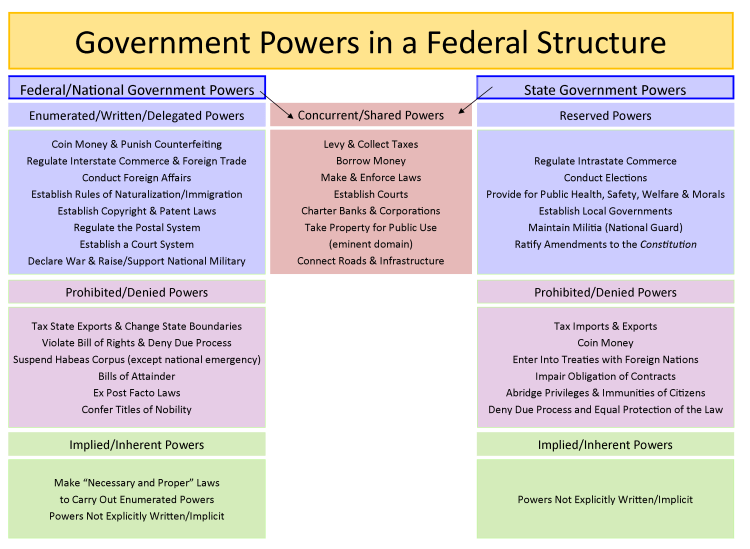
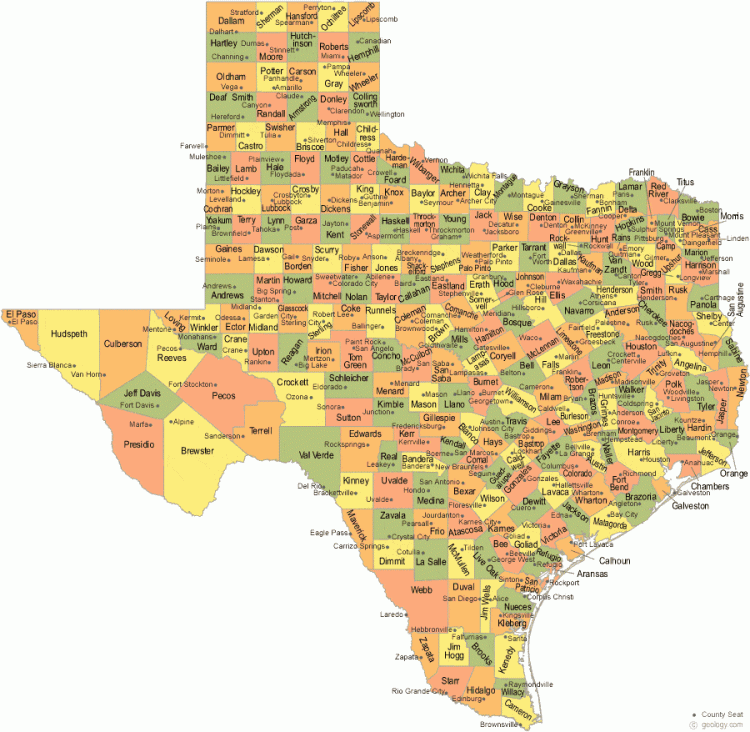
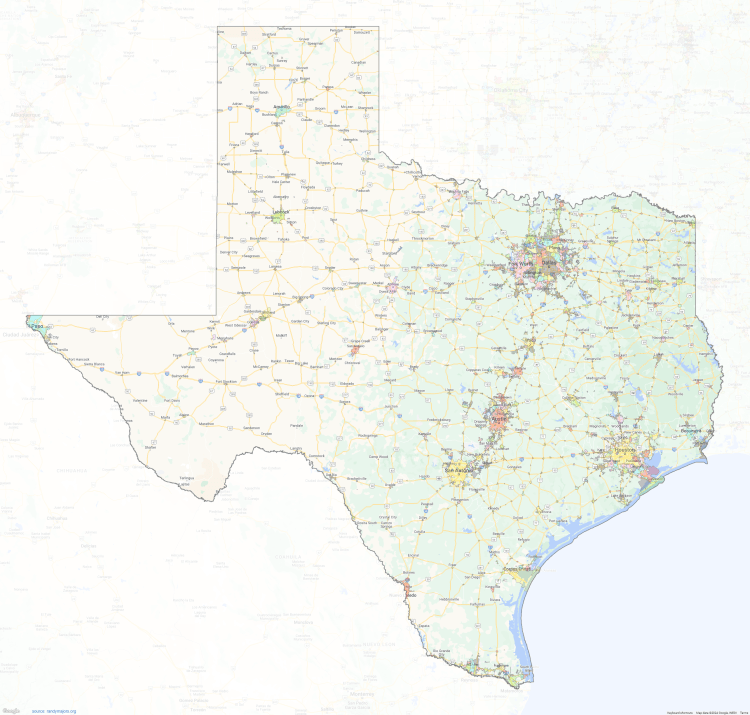
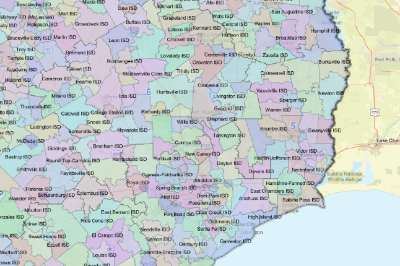
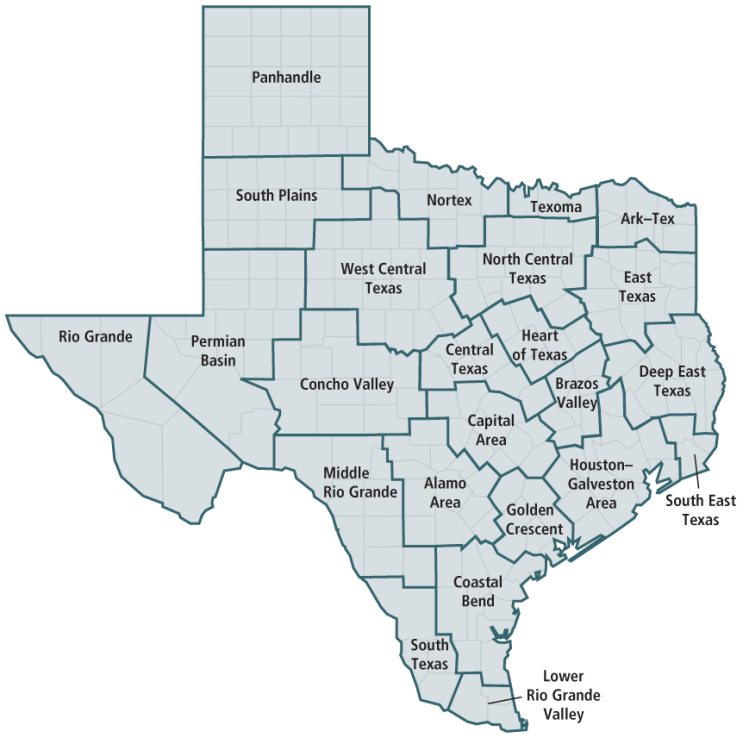
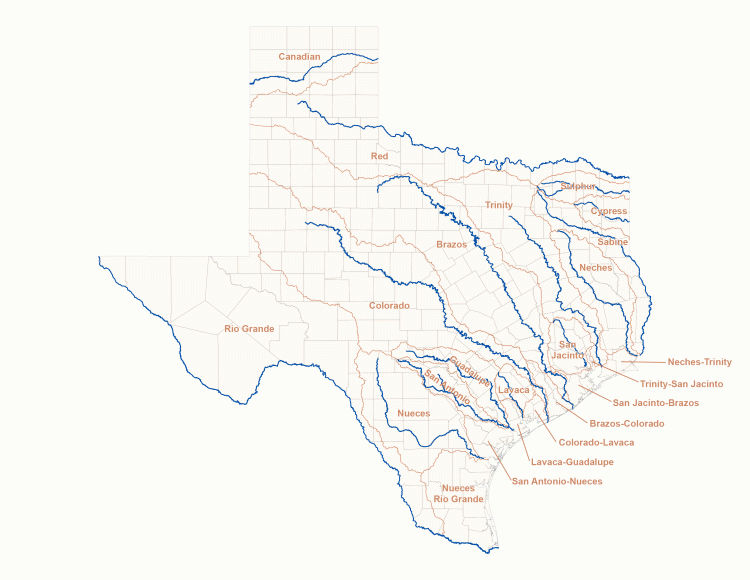
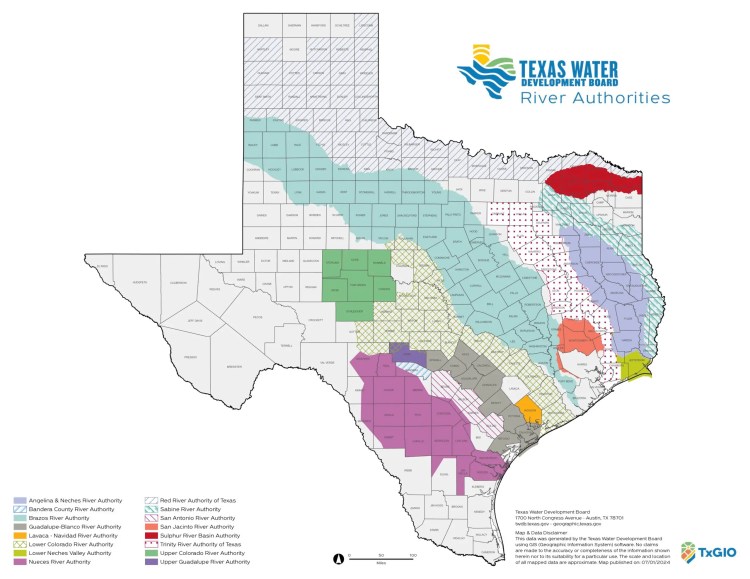
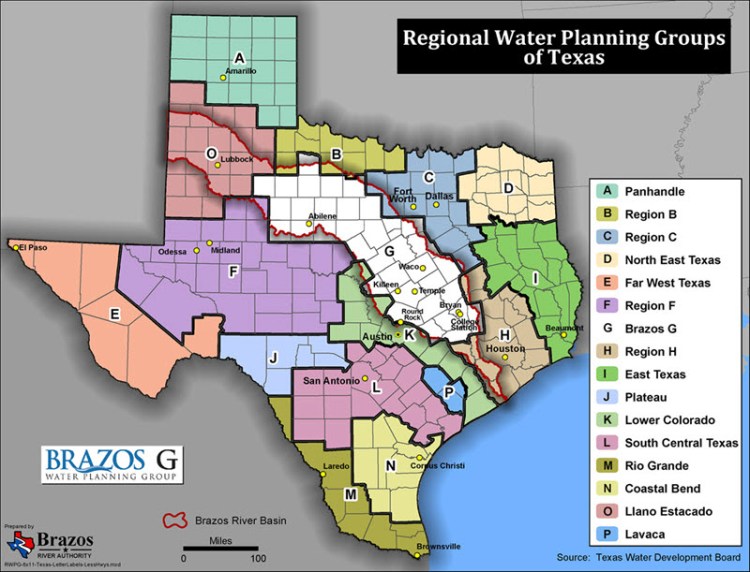









 Let's Talk About It, Lewis!
You must be logged in to post a comment.