Greenland and the Logic of Defense
Why Trump’s Focus Was Strategic, Proactive, and Grounded in Reality


A collaboration between Lewis McLain & AI
Second blog on this topic.
The Greenland episode is often remembered as a rhetorical curiosity—an offhand remark that drew laughter and disbelief. That framing misses what was actually at stake. Stripped of tone, headlines, and cultural reflexes, Greenland represents a coherent defense-first strategy rooted in geography, early warning, and long-horizon deterrence.
Seen this way, Greenland fits a broader pattern in the strategic thinking of Donald Trump: identify neglected strategic terrain early, force attention to it, and reposition the United States before time removes options. This essay explains that logic fully, followed by detailed appendices covering minerals, timelines, missile-defense physics, alliance dynamics, and supply-chain security.
I. Defense begins with geography—and geography does not negotiate
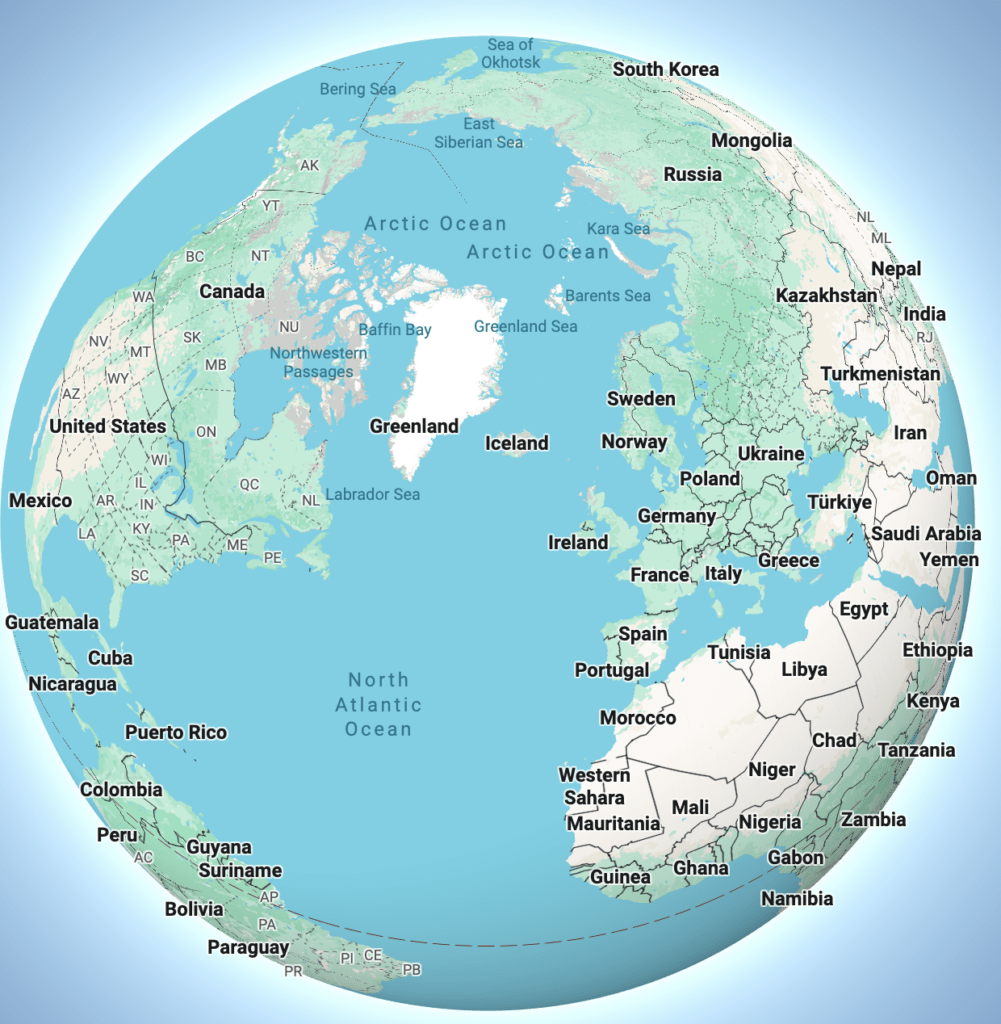
The Arctic is not a future battlefield; it is an existing one whose importance is accelerating. The shortest routes between Eurasia and North America pass over the pole. That has been true since the dawn of intercontinental missiles and matters even more today as hypersonic systems compress warning times.
Greenland sits at the center of this geometry.
Any polar missile trajectory, any bomber route, any space-tracking architecture critical to North American defense intersects Greenland’s airspace or sensor horizon. This is why the United States has operated Pituffik Space Base for decades. Trump did not discover Greenland’s importance; he recognized that Cold War assumptions were aging faster than the threat environment.
Early warning only matters if it evolves faster than the weapons it is meant to detect.
II. From retaliation to time-denial
Modern deterrence is no longer defined solely by what happens after an attack. It is increasingly defined by what happens before leaders must decide.
Hypersonic glide vehicles fly lower, maneuver unpredictably, and reduce decision windows. Space-based sensors, forward radar, and Arctic basing reduce uncertainty—the most precious commodity in national defense.
From a defense standpoint, greater U.S. access to Greenland means:
- earlier and more reliable missile detection
- improved space-domain awareness
- redundancy against sensor disruption
- logistics and sustainment for Arctic operations
None of this requires sovereignty. All of it requires access, infrastructure, and long-term alignment.
III. Why Trump forced the issue publicly
A common critique is that Greenland should have been handled quietly. That critique misunderstands Trump’s governing instinct.
Trump operates on the belief that institutions drift unless compelled to confront uncomfortable realities. By elevating Greenland into public debate, he:
- forced Denmark to re-engage Arctic defense seriously
- pushed North Atlantic Treaty Organization to refocus on its northern flank
- broke the inertia surrounding outdated Arctic assumptions
This was agenda-setting, not improvisation. In Trump’s framework, provocation is sometimes the price of movement.
IV. Defense does not stop at bases—it extends into supply chains
A modern defense posture is only as strong as the materials that sustain it. Precision-guided weapons, radar, satellites, jet engines, and secure communications depend on rare earth elements and other critical minerals.
Trump’s Greenland interest included minerals not as a commercial curiosity but as a defense-industrial vulnerability. The United States and its allies remain heavily dependent on adversarial supply chains for materials embedded in core weapons systems.
Greenland offers a rare combination:
- world-class mineral endowment
- Western legal institutions
- NATO security umbrella
Defense autonomy begins upstream.
V. Sovereignty versus access: the distinction that matters
Critics often collapsed Trump’s remarks into a false binary: ownership or nothing. Modern power does not operate that way.
Strategic value flows from:
- guaranteed access
- long-term basing rights
- integrated infrastructure
- alliance alignment
Greenland can remain Danish and Greenlandic while still serving as a cornerstone of allied defense. Owning territory is antiquated. Securing alignment is decisive.
VI. NATO, burden-sharing, and Arctic realism
Trump’s Greenland initiative aligns with his broader view of alliances: relevance requires adaptation. By pushing Arctic defense forward, he shifted burden-sharing from abstract commitments to concrete investments—runways, sensors, logistics, and sustainment.
Greenland makes the Arctic tangible. It converts theory into infrastructure.
VII. Proactive leadership and the value of time
Arctic infrastructure takes decades. Windows for construction, political consensus, and environmental tolerance are narrowing. Russia and China are already moving.
Trump treated time as the scarce resource. Acting early preserved optionality. Waiting would have raised costs or closed doors entirely.
That is the essence of proactive strategy.
Conclusion: Greenland as foresight, not folly
Greenland was never about planting a flag. It was about anchoring defense posture in geography, warning time, and industrial resilience. Trump’s approach—force attention early, shift baselines, integrate defense and supply chains—reflects a strategic mindset oriented toward prevention rather than reaction.
History is often kinder to leaders who act before consensus forms, because consensus usually arrives after options narrow. Greenland may ultimately be remembered less for its controversy than for the quiet repositioning it triggered.
Appendix A — Greenland’s Strategic Minerals: Data, Scale, and Certainty
Rare Earth Elements (REEs)
- Location: Southern Greenland (Ilímaussaq / Kvanefjeld)
- Scale: ~10–11 million tonnes of rare-earth oxides (REO)
- Significance: Heavy REEs (dysprosium, terbium) critical for guidance systems, radar, and motors
- Certainty: High geologically; constrained politically due to uranium association
Uranium
- Scale: ~500,000–600,000 tonnes
- Certainty: High geologically, low politically
Zinc & Lead
- Key deposit: Citronen Fjord
- Scale: ~10–15 million tonnes zinc; several million tonnes lead
- Certainty: Very high
Nickel, Copper, Cobalt
- Scale: Moderate, expandable with exploration
- Certainty: Medium
Iron Ore
- Key region: Isua
- Scale: ~1.5–2.0 billion tonnes
- Certainty: High; economics depend on logistics and prices
Key takeaway: The minerals are real and well-documented. Uncertainty lies in politics and infrastructure, not geology.
Appendix B — Defense Timelines: Why Waiting Loses
Typical Arctic defense timelines:
- Site studies & environmental review: 3–5 years
- Design & procurement: 3–4 years
- Construction (seasonal): 5–10 years
- Integration & testing: 2–3 years
Total: 10–20 years from decision to full capability.
Threats evolve faster than democracies build. Acting early compensates for that asymmetry.
Appendix C — Missile-Defense Physics: Why Greenland Is Irreplaceable
- Polar routes are shortest for missiles and bombers
- Hypersonics fly lower and maneuver, reducing warning time
- Sensor geometry—not politics—determines detection quality
Greenland enables:
- earlier detection than continental sensors alone
- cross-cueing between space and ground systems
- redundancy against sensor disruption
Alaska alone cannot replicate this geometry.
Appendix D — Alliance Optics: Why the Method Looked Abrasive
Alliances tend to underinvest in low-visibility threats and delay spending until crises force action. The Arctic fit that pattern.
By elevating Greenland publicly, Trump:
- forced allied attention
- shifted baselines
- normalized Arctic investment
Once the baseline moves, quieter diplomacy follows.
Appendix E — Defense + Minerals: One Strategy
Defense systems depend on materials. Materials depend on secure supply chains.
- China dominates REE processing
- Western defense relies on those inputs
Greenland matters only when paired with:
- allied processing capacity
- long-term contracts
- integrated industrial policy
Basing without supply security is temporary. Supply security without basing is vulnerable.
Final Synthesis
Across all sections, a consistent worldview emerges:
- Geography still rules
- Time is the scarce resource
- Defense begins before crisis
- Supply chains are part of deterrence
- Alliances respond to pressure faster than to memos
Greenland belongs in this frame—not as an impulse, but as an early move in a long game where foresight matters more than comfort.
 Let's Talk About It, Lewis!
You must be logged in to post a comment.