The Birth of the Television
📺 A collaboration between Lewis McLain & AI
The improbable, human, and slightly mad story of how television came to be


On a cold January afternoon in 1926, a handful of men crowded into a modest upstairs room at 22 Frith Street in Soho, London. The space smelled faintly of hot dust and ozone. Wires lay exposed. Motors whirred. A spinning metal disk clattered like a nervous clock.
At the center of this precarious contraption stood John Logie Baird—thin, intense, perpetually short of money, and absolutely convinced that the future was about to blink into existence.
Then it happened.
On a small screen—no larger than a postcard—a human face appeared, flickering, ghostly, undeniably alive. The man was not in the room. He was nearby, but separate. Yet there he was: eyes blinking, lips moving, a living person transmitted through space.
The witnesses understood instantly.
They were watching the birth of television.
A device that shouldn’t have worked (but did)
Baird’s system was not elegant. It was mechanical, not electronic. At its heart was a Nipkow disk, a spinning metal plate punched with spiral holes that scanned an image line by line. Light passed through the disk, struck a photosensitive cell, and was converted into an electrical signal. Another spinning disk reassembled the image at the receiver.
The result was crude.
Resolution was laughable.
Brightness was terrible.
Stability was optional.
But it worked.
The test subject that day—famously nicknamed “Stooky Bill,” a ventriloquist’s dummy used because living faces were hard to light—was soon replaced by real people. That mattered. Objects are clever. Faces are revolutionary.
This was the first public demonstration of television—not theory, not diagrams, not laboratory hints, but a working system shown to independent witnesses. January 26, 1926 is the line history draws in ink.
The man behind the madness


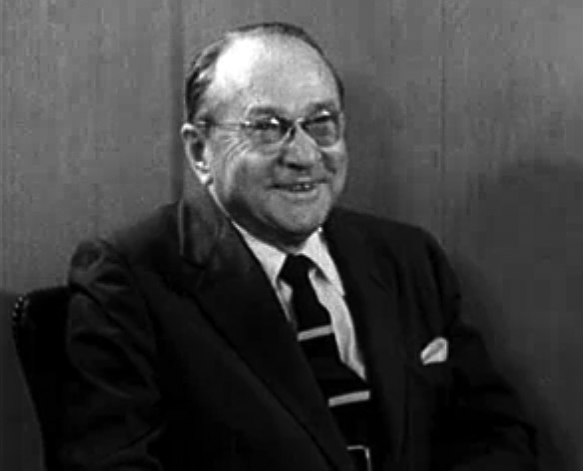
Baird himself was an unlikely prophet. Chronically ill. Financially unstable. Frequently dismissed as eccentric. He once tried to make diamonds from graphite in his kitchen and nearly poisoned himself experimenting with chemicals.
Yet he had vision in the literal sense.
He wanted to send sight itself across distance.
And for a brief moment, he succeeded spectacularly.
By the late 1920s, Baird’s mechanical television could:
- Transmit images over telephone lines
- Broadcast experimental programs
- Even produce crude color and 3D effects
He gave demonstrations to the BBC. He televised the Derby horse race. He beamed images across the Atlantic.
And then—almost as suddenly—his approach began to collapse under its own limits.
The quiet coup of electrons
While Baird wrestled with spinning disks and motors, others pursued a different path.
In America, a farm boy from Utah named Philo Farnsworth had a simpler, more dangerous idea: no moving parts at all.
Farnsworth envisioned scanning images electronically, using cathode rays controlled by magnetic fields. Faster. Sharper. Scalable.
At RCA, Vladimir Zworykin pursued similar goals, backed by corporate muscle, lawyers, and laboratories that Baird could only dream of.
This was the real turning point in television history—not a technical tweak, but a philosophical shift:
- Mechanical TV imitated the eye
- Electronic TV outpaced it
By the early 1930s, the verdict was clear. Mechanical television had proven the concept—but electronic television would own the future.
Baird, tragically and heroically, kept experimenting. He never stopped inventing. But history moved on without him.
Television becomes a public force
In 1936, the BBC launched the world’s first regular high-definition television service from Alexandra Palace. Two systems were tested side by side: Baird’s mechanical approach and a fully electronic system.
The electronic system won.
Within a decade, television would:
- Broadcast World War II aftermaths
- Bring political leaders into living rooms
- Turn moon landings into shared human experiences
- Reshape advertising, culture, and power itself
What began as a flickering face in Soho became the dominant medium of the 20th century.
The deeper meaning of that flicker
Television didn’t just change entertainment. It changed how truth feels.
For the first time:
- Distance collapsed into presence
- Authority gained a face
- Events became emotional before they became understood
Radio told you something happened.
Television made you feel like you were there.
That power has been used brilliantly, irresponsibly, manipulatively, heroically—often all at once.
And it began not with polish or confidence, but with:
- A fragile machine
- A stubborn inventor
- A moment when a human face appeared where none should have been
Epilogue: the man history almost forgot
John Logie Baird died in 1946, worn down, underfunded, and overshadowed by the electronic systems he helped make possible. Yet without him, television’s story would be incomplete.
He didn’t perfect the medium.
He proved it could exist.
History is often like that. The ones who open the door don’t always get to live in the house.
But on January 26, 1926, the world crossed a boundary it can never uncross:
Humanity learned how to see itself from afar.
Everything else—good and bad—followed.
 Let's Talk About It, Lewis!