An Update on Drone Uses in Texas Municipalities

A second collaboration between Lewis McLain & AI

From Tactical Tools to a Quiet Redefinition of First Response

A decade ago, a municipal drone program in Texas usually meant a small team, a locked cabinet, and a handful of specially trained officers who were called out when circumstances justified it. The drone was an accessory—useful, sometimes impressive, but peripheral to the ordinary rhythm of public safety.

That is no longer the case.

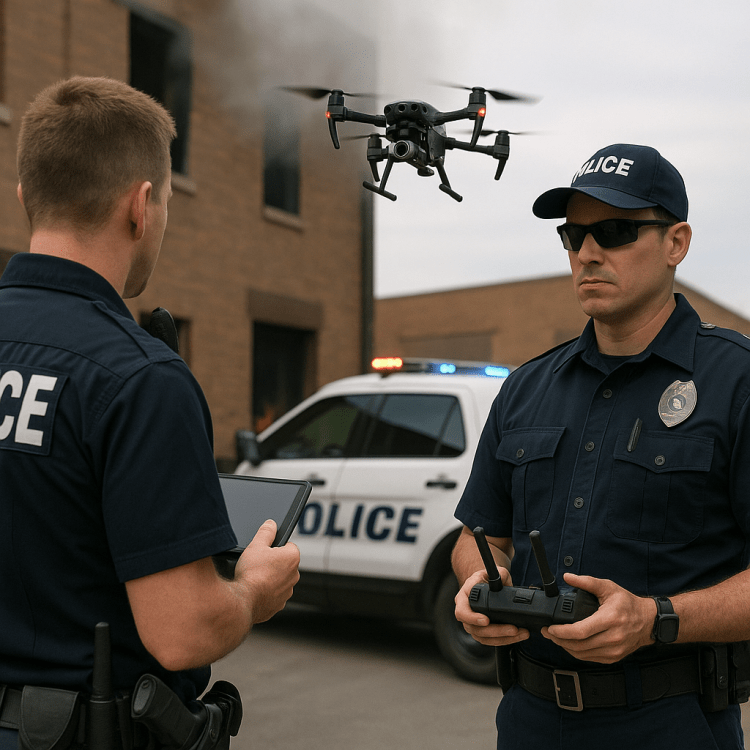
Across Texas, drones are being absorbed into the daily mechanics of emergency response. In a growing number of cities, they are no longer something an officer brings to a scene. They are something the city sends—often before the first patrol car, engine, or ambulance has cleared an intersection.

This shift is subtle, technical, and easily misunderstood. But it represents one of the most consequential changes in municipal public safety design in a generation.


The quiet shift from tools to systems

The defining change is not better cameras or longer flight times. It is program design.

Early drone programs were built around people: pilots, certifications, and equipment checklists. Today’s programs are built around systems—launch infrastructure, dispatch logic, real-time command centers, and policies that define when a drone may be used and, just as importantly, when it may not.

Cities like Arlington illustrate this evolution clearly. Arlington’s drones are not stored in trunks or deployed opportunistically. They launch from fixed docking stations, controlled through the city’s real-time operations center, and are sent to calls the way any other responder would be. The drone’s role is not to replace officers, but to give them something they rarely had before arrival: certainty.

Is someone actually inside the building? Is the suspect still there? Is the person lying in the roadway injured or already moving? These are small questions, but they shape everything that follows. In many cases, the presence of a drone overhead resolves a situation before physical contact ever occurs.

That pattern—early information reducing risk—is now being repeated, in different forms, across the state.


North Texas as an early laboratory

In North Texas, the progression from experimentation to normalization is especially visible.

Arlington’s program has become a reference point, not because it is flashy, but because it works. Drones are treated as routine assets, subject to policy, supervision, and after-action review. Their value is measured in response times and avoided escalations, not in flight hours.

Nearby, Dallas is navigating a more complex path. Dallas already operates one of the most active municipal drone programs in the state, but scale changes everything. Dense neighborhoods, layered airspace, multiple airports, and heightened civil-liberties scrutiny mean that Dallas cannot simply replicate what smaller cities have done.

Instead, Dallas appears to be doing something more consequential: deliberately embedding “Drone as First Responder” capability into its broader public-safety technology framework. Procurement language and public statements now describe drones verifying caller information while officers respond—a quiet but important acknowledgement that drones are becoming part of the dispatch process itself. If Dallas succeeds, it will establish a model for large, complex cities that have so far watched DFR from a distance.

Smaller cities have moved faster.

Prosper, for example, has embraced automation as a way to overcome limited staffing and long travel distances. Its program emphasizes speed—sub-two-minute arrivals made possible by automated docking stations that handle charging and readiness without human intervention. Prosper’s experience suggests that cities do not have to grow into DFR gradually; some can leap directly to system-level deployment.

Cities like Euless represent another important strand of adoption. Their programs are smaller, more cautious, and intentionally bounded. They launch drones to specific call types, collect experience, and adjust policy as they go. These cities matter because they demonstrate how DFR spreads laterally, city by city, through observation and imitation rather than mandates or statewide directives.


South Texas and the widening geography of DFR

DFR is not a North Texas phenomenon.

In the Rio Grande Valley, Edinburg has publicly embraced dispatch-driven drone response for crashes, crimes in progress, and search-and-rescue missions, including night operations using thermal imaging. In regions where heat, terrain, and distance complicate traditional response, the value of rapid aerial awareness is obvious.

Further west, Laredo has framed drones as part of a broader rapid-response network rather than a narrow policing tool. Discussions there extend beyond observation to include overdose response and medical support, pointing toward a future where drones do more than watch—they enable intervention while ground units close the gap.

Meanwhile, cities like Pearland have quietly done the hardest work of all: making DFR ordinary. Pearland’s early focus on remote operations and program governance is frequently cited by other cities, even when it draws little public attention. Its lesson is simple but powerful: the more boring a drone program becomes, the more likely it is to scale.


What 2026 will likely bring

By 2026, Texas municipalities will no longer debate drones in abstract terms. The conversation will shift to coverage, performance, and restraint.

City leaders will ask how much of their jurisdiction can be reached within two or three minutes, and what it costs to achieve that standard. DFR coverage maps will begin to resemble fire-station service areas, and response-time percentiles will replace anecdotal success stories.

Dispatch ownership will matter more than pilot skill. The most successful programs will be those in which drones are managed as part of the call-taking and response ecosystem, not as specialty assets waiting for permission. Pilots will become supervisors of systems, not just operators of aircraft.

At the same time, privacy will increasingly determine the pace of expansion. Cities that define limits early—what drones will never be used for, how long video is kept, who can access it—will move faster and with less friction. Those that delay these conversations will find themselves stalled, not by technology, but by public distrust.

Federal airspace rules will continue to separate tactical programs from scalable ones. Dense metro areas will demand more sophisticated solutions—automated docks, detect-and-avoid capabilities, and carefully designed flight corridors. The cities that solve these problems will not just have better drones; they will have better systems.

And perhaps most telling of all, drones will gradually fade from public conversation. When residents stop noticing them—when a drone overhead is no more remarkable than a patrol car passing by—the transformation will be complete.


A closing thought

Texas cities are not adopting drones because they are fashionable or futuristic. They are doing so because time matters, uncertainty creates risk, and early information saves lives—sometimes by prompting action, and sometimes by preventing it.

By 2026, the question will not be whether drones belong in municipal public safety. It will be why any city, given the chance to act earlier and safer, would choose not to.


Looking Ahead to 2026: When Drones Become Ordinary

By 2026, the most telling sign of success for municipal drone programs in Texas will not be innovation, expansion, or even capability. It will be normalcy.

The early years of public-safety drones were marked by novelty. A drone launch drew attention, generated headlines, and often triggered anxiety about surveillance or overreach. That phase is already fading. What is emerging in its place is quieter and far more consequential: drones becoming an assumed part of the response environment, much like radios, body cameras, or computer-aided dispatch systems once did.

The conversation will no longer revolve around whether a city has drones. Instead, it will focus on coverage and performance. City leaders will ask how quickly aerial eyes can reach different parts of the city, how often drones arrive before ground units, and what percentage of priority calls benefit from early visual confirmation. Response-time charts and service-area maps will replace anecdotes and demonstrations. In this sense, drones will stop being treated as technology and start being treated as infrastructure.

This shift will also clarify responsibility. The most mature programs will no longer center on individual pilots or specialty units. Ownership will move decisively toward dispatch and real-time operations centers. Drones will be launched because a call meets predefined criteria, not because someone happens to be available or enthusiastic. Pilots will increasingly function as system supervisors, ensuring compliance, safety, and continuity, rather than as hands-on operators for every flight.

At the same time, restraint will become just as important as reach. Cities that succeed will be those that articulate, early and clearly, what drones are not for. By 2026, residents will expect drone programs to come with explicit boundaries: no routine patrols, no generalized surveillance, no silent expansion of mission. Programs that fail to define those limits will find themselves stalled, regardless of how capable the technology may be.

Federal airspace rules and urban complexity will further separate casual programs from durable ones. Large cities will discover that scaling drones is less about buying more aircraft and more about solving coordination problems—airspace, redundancy, automation, and integration with other systems. The cities that work through those constraints will not just fly more often; they will fly predictably and defensibly.

And then, gradually, the attention will drift away.

When a drone arriving overhead is no longer remarkable—when it is simply understood as one of the first tools a city sends to make sense of an uncertain situation—the transition will be complete. The public will not notice drones because they will no longer symbolize change. They will symbolize continuity.

That is the destination Texas municipalities are approaching: not a future where drones dominate public safety, but one where they quietly support it—reducing uncertainty, improving judgment, and often preventing escalation precisely because they arrive early and ask the simplest question first: What is really happening here?

By 2026, the most advanced drone programs in Texas will not feel futuristic at all. They will feel inevitable.

Drones as a Core Municipal Utility: Policy, Training, and Future Directions for Texas Cities

A collaboration between Lewis McLain and AI


Executive Summary

Municipal drone programs have rapidly evolved from experimental projects to dependable service tools. Today, Texas cities are beginning to treat drones not as gadgets but as core municipal utilities—shared resources as essential as fleet management, radios, or GIS. Properly implemented, drones can provide faster response times, safer job conditions, and higher-quality data, all while saving taxpayer money.

This paper explains how cities can build and sustain a municipal drone program. It examines current and emerging use cases, outlines staffing impacts, surveys training options and costs in Texas, explores fleet models and procurement, and considers the legal, policy, and community dimensions that must be addressed. It concludes with recommendations, case studies of failures, and appendices on payload regulation and FAA sample exam questions.

Handled wisely, drones will make cities safer, smarter, and more responsive. Mishandled, they risk creating public backlash, wasting funds, or even eroding trust.


The Case for Treating Drones as a Utility

Cities that succeed with drones do so by thinking of them as utilities, not toys. A drone program should be centrally governed, jointly funded, and transparently managed. Just like a municipal fleet or IT department, a citywide drone service must be reliable, equitable across departments, compliant with law, interoperable with other systems, and transparent to the public.

This approach ensures that drones are available where needed, that policies are consistent across departments, and that costs are shared fairly. Most importantly, it signals to residents that the city treats drone use seriously, with strong safeguards and clear accountability.


Current and Growing Uses

Across Texas and the country, municipal drones already serve a wide range of functions.

Public Safety: Police and fire agencies use drones as “first responders,” launching them from stations or rooftops to 911 calls. They provide live video of car crashes, fires, or hazardous scenes, often arriving before officers. Firefighters use drones with thermal cameras to locate victims or track hotspots in burning buildings.

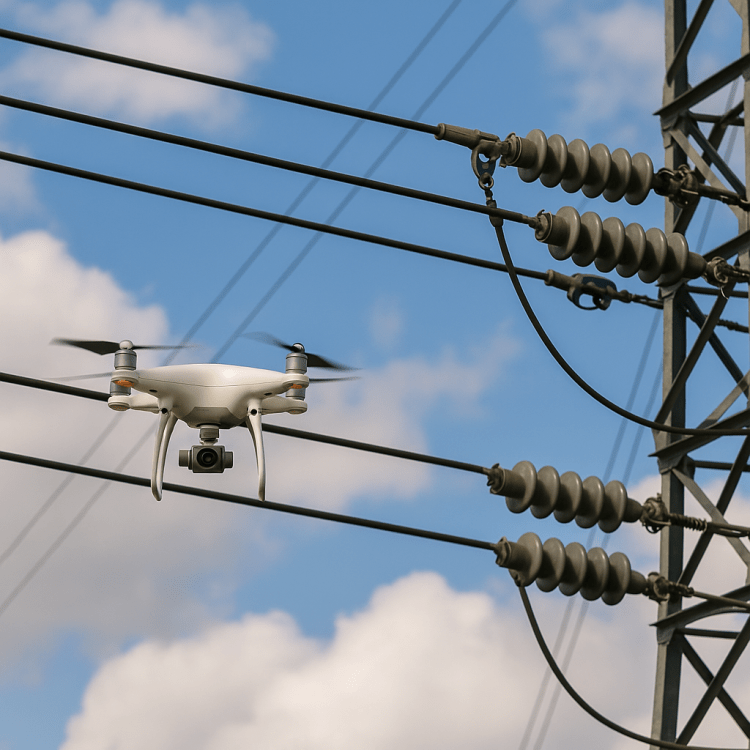
Infrastructure and Public Works: Drones inspect bridges, culverts, roofs, and water towers. Instead of sending workers onto scaffolds or into confined spaces, crews now fly drones that capture detailed photos and 3D models. Landfills are surveyed from the air, methane leaks identified, and storm damage mapped quickly after major events.

Transportation and Planning: Drones monitor traffic flow, study queue lengths, and document work zones. City planners use them to create up-to-date maps, support zoning decisions, and maintain digital twins of urban areas.

Environmental and Health: From checking stormwater outfalls to mapping tree canopies, drones help environmental staff monitor city assets. In some regions, drones are used to identify standing water and apply larvicides for mosquito control.

Emergency Management: After floods, hurricanes, or tornadoes, drones provide rapid situational awareness, helping cities prioritize response and document damage for FEMA claims.

As automation improves, “drone-in-a-box” systems—drones that launch on schedule or in response to sensors—will soon become common municipal tools.


Staffing Impacts

A common fear is that drones will replace jobs. In practice, they save lives and money while creating new roles.

Jobs Saved: By reducing risky tasks like climbing scaffolds or entering confined spaces, drones make existing jobs safer. They also reduce overtime by finishing inspections or surveys in hours instead of days.

Jobs Added: Cities now employ drone program coordinators, FAA Part 107-certified pilots, data analysts, and compliance officers. A medium-sized Texas city might add ten to twenty such roles over the next five years.

Jobs Shifted: Inspectors, police officers, and firefighters increasingly become “drone-enabled” workers, adding aerial operations to their responsibilities. Over time, 5–10% of municipal staff in critical departments may be retrained in drone use.

The net result is redistribution rather than reduction. Drones are not eliminating jobs; they are elevating them.


Training in Texas

FAA rules require every commercial or government drone operator to hold a Part 107 Remote Pilot Certificate. Fortunately, Texas offers many affordable training options.

Community colleges such as Midland College and South Plains College provide Part 107 prep and hands-on flight training, typically costing $350 to $450 per course. Private providers like Dronegenuity and From Above Droneworks offer in-person and hybrid courses ranging from $99 online modules to $1,200 full academies. San Jacinto College and other universities run short workshops and certification tracks.

Online exam prep courses are widely available for $150–$400, making it feasible to train multiple staff at once. When departments train together, cities often negotiate group discounts and host joint scenario days at municipal training grounds.


Fleet Models and Costs

Municipal needs vary, but most cities benefit from a tiered fleet.

  • Micro drones (under 250g) for training and quick checks: $500–$1,200.
  • Utility quads for mapping and inspection: $2,500–$6,500.
  • Enterprise drones with thermal sensors for public safety: $7,500–$16,000.
  • Heavy-lift or VTOL systems for long corridors or specialized sensors: $18,000–$45,000+.

Each drone has a three- to five-year lifespan, with batteries refreshed every 200–300 cycles. Cities must also budget for accessories, insurance, and management software.


Policy and Legal Landscape

Federally, the FAA regulates drone operations under Part 107. Rules limit altitude to 400 feet, require flights within visual line of sight, and mandate Remote ID for most aircraft. Waivers can allow for advanced operations, such as flying beyond visual line of sight (BVLOS).

In Texas, additional laws restrict image capture in certain contexts and impose rules around critical infrastructure. Local governments cannot regulate airspace, but they can and should regulate employee conduct, data use, privacy, and procurement.

Transparency is crucial. Cities must publish clear retention policies, flight logs, and citizen FAQs.


Privacy, Labor, and Community Trust

For communities to embrace drones, cities must be proactive.

Privacy: Drones should collect only what is necessary, with cameras pointed at mission targets rather than private backyards. Non-evidentiary footage should be deleted within 30–90 days.

Labor: Cities should emphasize that drones augment rather than replace workers. They shift dangerous tasks to machines while providing staff new certifications and career paths.

Equity: Larger cities may advance faster than small towns, but shared services, inter-local agreements, and regional training programs can close the gap.

Community Trust: Transparency builds legitimacy. Cities should publish quarterly metrics, log complaints, host public demos, and maintain a clear point of contact for concerns.


Lessons from Failures

Not every program has succeeded. Across the country, drone initiatives have stumbled in predictable ways:

  • Community Pushback: Chula Vista’s pioneering drone-as-first-responder program drew criticism for surveillance concerns, while New York City’s holiday monitoring drones sparked public backlash. Lesson: transparency and engagement must come first.
  • Operational Incidents: A Charlotte police drone crashed into a house, and some agencies lost FAA waivers due to compliance lapses. Lesson: one mistake can jeopardize an entire program; training and discipline are essential.
  • Budget Failures: Dallas and other cities saw expansions stall over hidden costs for software and maintenance. Smaller towns wasted funds buying consumer drones that quickly wore out. Lesson: plan for lifecycle costs, not just hardware.
  • Legal Overreach: Connecticut’s proposal to arm police drones with “less-lethal” weapons collapsed amid backlash, while San Diego faced court challenges over warrant requirements. Lesson: pushing boundaries invites restrictions.
  • Scaling Gaps: Rural Texas counties bought drones with grants but lacked certified pilots or insurance. Small towns gathered imagery but had no analysts to use it. Lesson: drones without people and integration are wasted purchases.

Recommendations

  1. Invest in training through Texas colleges and private providers.
  2. Procure wisely, choosing modular, upgradeable hardware.
  3. Adopt clear policies on payloads, privacy, and data retention.
  4. Prioritize non-kinetic payloads such as cameras, sensors, and lighting.
  5. Prepare for BVLOS, which will transform municipal use once authorized.
  6. Ensure equity, supporting smaller cities through regional cooperation.

Conclusion

Drones are no longer experimental novelties. They are rapidly becoming a core municipal utility—a shared service as essential as public works fleets or GIS. Their greatest promise lies not in flashy technology but in the steady, practical benefits they bring: safer workers, faster response, better data, and more transparent government.

But the promise depends on choices. Cities must prohibit weaponized payloads, publish clear policies, train and retrain staff, and engage openly with their communities. Done right, drones can strengthen both city effectiveness and public trust.


Appendix A: Administrative Regulation on Payloads

Title: Drone Payloads and Weapons Prohibition; Data & Safety Controls
Number: AR-UAS-01
Effective Date: Upon issuance
Applies To: All city employees, contractors, volunteers, or agents operating drones (UAS) on behalf of the City


1. Purpose

This regulation ensures that all municipal drone operations are conducted lawfully, ethically, and safely. It establishes clear prohibitions on weaponized or harmful payloads and sets minimum standards for data use, transparency, and accountability.


2. Definitions

  • UAS (Drone): An uncrewed aircraft and associated equipment used for flight.
  • Payload: Any item attached to or carried by a UAS, including cameras, sensors, lights, speakers, or drop mechanisms.
  • Weaponized or Prohibited Payload: Any device or substance intended to incapacitate, injure, damage, or deliver kinetic, chemical, electrical, or incendiary effects.
  • Authorized Payload: Sensors or devices explicitly approved by the UAS Program Manager for municipal purposes.

3. Policy Statement

  • The City strictly prohibits the use of weaponized or prohibited payloads on all drones.
  • Drones may only be used for documented municipal purposes, consistent with law, FAA rules, and City policy.
  • All payloads must be inventoried and approved by the UAS Program Manager.

4. Prohibited Payloads

The following are expressly prohibited:

  • Firearms, ammunition, or explosive devices.
  • Pyrotechnic, incendiary, or chemical agents (including tear gas, pepper spray, smoke bombs).
  • Conducted electrical weapons (e.g., TASER-type devices).
  • Projectiles, hard object drop devices, or kinetic impact payloads intended for crowd control.
  • Covert audio or visual recording devices in violation of state or federal law.

Exception: Non-weaponized lifesaving payloads (e.g., flotation devices, first aid kits, rescue lines) may be deployed only with prior written approval of the Program Manager and after a documented risk assessment.


5. Authorized Payloads

Authorized payloads include, but are not limited to:

  • Imaging sensors (visual, thermal, multispectral, LiDAR).
  • Environmental sensors (methane detectors, gas analyzers, air quality monitors).
  • Lighting systems (searchlights, strobes).
  • Loudspeakers for announcements or evacuation instructions.
  • Non-weaponized emergency supply drops (medical kits, flotation devices).
  • Tethered systems for persistent observation or communications relay.

6. Oversight and Accountability

  • The UAS Program Manager must approve all payload configurations before deployment.
  • Departments must maintain an updated inventory of drones and payloads.
  • Quarterly inspections will be conducted to verify compliance.
  • An annual public report will summarize drone use, payload types, and incidents.

7. Data Controls

  • Minimization: Only record what is necessary for the mission.
  • Retention:
    • Non-evidentiary footage: 30–90 days.
    • Evidentiary footage: retained per case law.
    • Mapping/orthomosaics: retained per project records schedule.
  • Access: Role-based permissions, with audit logs.
  • Public Release: Media released under public records law must be reviewed for privacy and redaction (faces, license plates, sensitive sites).

8. Training Requirements

  • All operators must hold an FAA Part 107 Remote Pilot Certificate.
  • Annual city-approved training on:
    • This regulation (AR-UAS-01).
    • Privacy and data retention.
    • Citizen engagement and de-escalation.
  • Scenario-based training must be conducted at least once per year.

9. Enforcement

  • Violations of this regulation may result in disciplinary action up to and including termination of employment or contract.
  • Prohibited payloads will be confiscated, logged, and removed from service.
  • Cases involving unlawful weaponization will be referred for criminal investigation.

10. Effective Date

This regulation is effective immediately upon approval by the City Manager and shall remain in force until amended or rescinded.

Appendix B: FAA Part 107 Sample Questions (Representative, 25 Items)

Note: These questions are drawn from FAA study materials and training resources. They are not live exam questions but are representative of the knowledge areas tested.

  1. Under Part 107, what is the maximum allowable altitude for a small UAS?
     A. 200 feet AGL
     B. 400 feet AGL ✅
     C. 500 feet AGL
  2. What is the maximum ground speed allowed?
     A. 87 knots (100 mph) ✅
     B. 100 knots (115 mph)
     C. 87 mph
  3. To operate a small UAS for commercial purposes, which certification is required?
     A. Private Pilot Certificate
     B. Remote Pilot Certificate with a small UAS rating ✅
     C. Student Pilot Certificate
  4. Which airspace requires ATC authorization for UAS operations?
     A. Class G
     B. Class C ✅
     C. Class E below 400 ft
  5. How is controlled airspace authorization obtained?
     A. Verbal ATC request
     B. Filing a VFR flight plan
     C. Through LAANC or DroneZone ✅
  6. Minimum visibility requirement for Part 107 operations?
     A. 1 statute mile
     B. 3 statute miles ✅
     C. 5 statute miles
  7. Required distance from clouds?
     A. 500 feet below, 2,000 feet horizontally ✅
     B. 1,000 feet below, 1,000 feet horizontally
     C. No minimum distance
  8. A METAR states: KDAL 151853Z 14004KT 10SM FEW040 30/22 A2992. What is the ceiling?
     A. Clear skies
     B. 4,000 feet few clouds ✅
     C. 4,000 feet broken clouds
  9. A TAF includes BKN020. What does this mean?
     A. Broken clouds at 200 feet
     B. Broken clouds at 2,000 feet ✅
     C. Overcast at 20,000 feet
  10. High humidity combined with high temperature generally results in:
     A. Increased performance
     B. Reduced performance ✅
     C. No effect
  11. If a drone’s center of gravity is too far aft, what happens?
     A. Faster than normal flight
     B. Instability, difficult recovery ✅
     C. Less battery use
  12. High density altitude (hot, high, humid) causes:
     A. Increased battery life
     B. Decreased propeller efficiency, shorter flights ✅
     C. No effect
  13. A drone at max gross weight of 55 lbs carries a 10 lb payload. Payload percent?
     A. 18% ✅
     B. 10%
     C. 20%
  14. At maximum gross weight, performance is:
     A. Improved stability
     B. Reduced maneuverability and endurance ✅
     C. No change
  15. The purpose of Crew Resource Management is:
     A. To reduce paperwork
     B. To use teamwork and communication to improve safety ✅
     C. To reduce training costs
  16. GPS signal lost and drone drifts — first action?
     A. Immediate Return-to-Home
     B. Switch to ATTI/manual mode, maintain control, land ✅
     C. Climb higher for GPS
  17. If a drone causes $500+ in property damage, what is required?
     A. Report only to local police
     B. FAA report within 10 days ✅
     C. No report required
  18. If the remote PIC is incapacitated, the visual observer should:
     A. Land the drone ✅
     B. Call ATC
     C. Wait until PIC recovers
  19. On a sectional chart, a magenta vignette indicates:
     A. Class E starting at surface ✅
     B. Class C boundary
     C. Restricted airspace
  20. A dashed blue line on a sectional chart indicates:
     A. Class B airspace
     B. Class D airspace ✅
     C. Class G airspace
  21. A magenta dashed circle indicates:
     A. Class E starting at surface ✅
     B. Class G airspace
     C. No restrictions
  22. Floor of Class E when sectional shows fuzzy side of a blue vignette?
     A. Surface
     B. 700 feet AGL ✅
     C. 1,200 feet AGL
  23. Main concern with fatigue while flying?
     A. Reduced battery performance
     B. Slower reaction and poor decision-making ✅
     C. Increased radio interference
  24. Alcohol is prohibited within how many hours of UAS operation?
     A. 4 hours
     B. 8 hours ✅
     C. 12 hours
  25. Maximum allowable BAC for remote pilots?
     A. 0.08%
     B. 0.04% ✅
     C. 0.02%