A collaboration between Lewis McLain and AI (Please distribute widely if you believe this writing is worthy)
Canto I – The Rise
In northern towns where prairies sprawl, A boy first heard conviction’s call. Not bred of wealth, nor crowned by birth, Yet stirred by fire of higher worth.
With restless zeal, he seized his chance, Where most saw chaos, he saw stance. He stood on stages, sharp and plain, A mind inflamed, a heart unchained.
No parchment crown, no ivy’s grace, Yet destiny had marked his place. And in the halls where doubters throng, He forged his faith, he found his song.
From early days, the watchers knew, This voice could shake, this word was true. And those who heard, both young and old, Would tell in time the tale retold.
Canto II – The Mission
He raised a banner, bold, untorn, And Turning Point that cause was born. Not ink alone, but flesh and flame, The title spoke, became his name.
Through campuses where youth reside, He lit conviction far and wide. The student found a voice to speak, The timid heart grew strong, not meek.
He carried faith from hall to hall, And many bowed beneath its call. For when he spoke, the air grew still, He moved the mind, he bent the will.
And praise arose, like thunder’s roll, From college steps to nation’s soul. The farmer, teacher, preacher too, Admired the fire his spirit drew.
And at his side, in kinship near, The President lent voice sincere. For Trump himself would often say: “This Kirk inspires, he lights the way.”
Canto III – The Trial
But every prophet, every seer, Must taste the weight of scorn and sneer. His foes were many, fierce, and loud, Yet still he stood before the crowd.
They mocked his youth, they scorned his creed, Yet millions felt their spirits freed. For each sharp jeer, a cheer was raised, And countless souls their voices praised.
The college freshman, shy, unknown, Would write, “He helped me find my own.” The seasoned statesman, gray with years, Would nod and say, “His strength appears.”
And when the storm grew dark with hate, Admiring voices held the gate. From kitchen table to marble dome, They claimed his words, they called him home.
Like Daniel firm amidst the roar, Like David standing once before A giant’s sneer, a sharpened blade, So Kirk in courage never swayed.
And praise, once whispered, now was sung, From every heart, from every tongue. And now, forever, shall it be— His name remembered, praised, set free.
Canto IV – The Martyrdom
The hall grew hushed, the night grew cold, As Charley spoke with courage bold. He answered questions, sharp and grave, And called the fearful hearts to brave.
But shadows stirred, a shot rang clear, The silence broke with sudden fear. From rooftop’s height the bullet came, And darkness sought to quench his flame.
The students wept, the faithful cried, The nation’s pulse was torn inside. And yet, in Heaven’s courts above, The gates flung wide with holy love.
For Christ, who bore the cross alone, Received dear Charley to His throne. No longer mocked, no longer tried, The martyr lives, the saint has died.
And voices rose, both near and far, “His life was bright, a guiding star.” From college dorms to Washington, The praise poured out: “Well done, well done.”
Canto V – The Legacy
Now history bends at this sharp turn, A Turning Point where all must learn. Not only name of cause he led, But symbol where his blood was shed.
For Charley’s fight shall not be stilled, His words endure, his hope fulfilled. The youth he moved will yet arise, And carry fire that never dies.
The farmer, worker, preacher, friend, Will guard his mission to the end. And even presidents will claim The echo of proud Charley’s name.
For though the man lies still in rest, His spirit marches, strong, confessed. And now and evermore shall ring The heaps of praise that people sing.
Epilogue: A Prayer
O Lord of mercy, Lord of light, Embrace Your servant in Your sight. Bless Charley’s kin, console their pain, Let hope and comfort still remain.
Guard his dear wife, his circle near, Dry every anguished, falling tear. And for our land, so bruised, so torn, Let healing in Your grace be born.
Turn wrath to peace, turn hate to love, Rain down Your mercy from above. Unite this nation, fractured, sore, In faith and freedom evermore.
Through Jesus Christ, whose cross we raise, Receive our thanks, our prayer, our praise. Amen.
Inspired by Dan Johnson, Written by AI, Guided and Edited by Lewis McLain
I. Hermann Hesse: Life and Vision
Hermann Hesse (1877–1962) was one of the twentieth century’s most influential literary figures, a seeker whose novels became guideposts for millions navigating the crises of modernity. Born in Calw, in the Black Forest of Germany, Hesse was the son of Christian missionaries. His childhood was steeped in pietism and biblical devotion, but also in conflict—he struggled against the rigidity of his family’s expectations and endured mental health crises that shaped his outlook. When I read many of his books, there were two recurring personal notes in his diaries: he had bad eyesight and complained about how much his eyes hurt. He also traded letters with friends that include small water paintings sent and received. Those pictures seemed to be pleasing to Hesse. If you start seeing pictures (with the help of AI), my motivation comes from Mr. Hesse. LFM
Herman Hesse
For Hesse, writing was both therapy and spiritual exploration. His early novels reflected the tensions of his life: the desire for freedom against the weight of tradition, the search for authenticity in a rapidly industrializing world.
In Demian (1919), Hesse explored inner duality, freedom, and the necessity of self-discovery beyond societal norms.
In Siddhartha (1922), he imagined a man’s journey to enlightenment in ancient India, fusing Western existential doubt with Eastern philosophy.
In Steppenwolf (1927), he dramatized the loneliness of the modern intellectual and the quest for transcendence amid despair.
In The Glass Bead Game (1943), his Nobel Prize–winning masterpiece, he conjured a future order devoted to the synthesis of knowledge, beauty, and spirituality.
Amid these great novels stands a shorter but profoundly symbolic tale: The Journey to the East (1932). Though brief, it contains one of Hesse’s most enduring insights—leadership is not power, but service.
II. The Journey to the East: The Servant and the Master
The novella tells the story of a secret brotherhood called the League, a timeless spiritual fellowship that undertakes a pilgrimage “to the East.” The East is never fully defined—it is both place and symbol, representing wisdom, transcendence, and the fulfillment of human longing.
The narrator, H.H., joins the League’s pilgrimage. Along the way he describes a mysterious assortment of travelers: historical figures, literary characters, and seekers from all walks of life. The journey unites them in pursuit of a higher goal.
Leo
Yet the true heart of the story is a man named Leo. Leo appears to be nothing more than a cheerful servant. He tends to the pilgrims, carries their bags, prepares their meals, and sings songs that lift their spirits. He is ordinary, unnoticed—yet indispensable.
Then one day Leo disappears. Without him, the pilgrims falter. Discord and division creep in, and the League dissolves. H.H. falls into despair, convinced the journey has failed.
Years later, in a twist of revelation, H.H. learns the truth: Leo was not simply a servant. He was in fact a leader of the League, the embodiment of the very wisdom the pilgrims were seeking. The pilgrimage fell apart because the group failed to recognize that true leadership had been in their midst all along.
Hesse’s parable is at once mystical and practical: it insists that authentic leadership flows not from domination but from humble service. In the inversion of roles—servant as master, master as servant—Hesse revealed a paradox at the heart of human community.
Greenleaf
III. Robert Greenleaf and the Birth of Servant Leadership
Decades later, in the United States, Robert K. Greenleaf (1904–1990), an executive at AT&T, was searching for a new way to understand leadership. He had witnessed firsthand how corporate hierarchies often crushed initiative, fostered fear, and alienated workers. After 40 years in management, he turned to teaching and writing, determined to challenge the prevailing model of top-down authority.
In the 1950s, Greenleaf read The Journey to the East, and Leo’s example struck him like lightning. Here was the vision he had been seeking: the leader is great not because of command but because of service. Out of this insight, he developed the philosophy he called servant leadership.
In his seminal 1970 essay, The Servant as Leader, Greenleaf wrote:
“The servant-leader is servant first… It begins with the natural feeling that one wants to serve, to serve first. Then conscious choice brings one to aspire to lead. The difference manifests itself in the care taken to make sure that other people’s highest priority needs are being served.”
Greenleaf’s framework reshaped modern leadership thinking. He identified qualities that distinguish servant leaders:
Listening and Empathy – Understanding others deeply before acting.
Awareness and Foresight – Seeing beyond immediate demands to future consequences.
Healing and Stewardship – Caring for individuals and institutions as trust, not possessions.
Commitment to Growth – Helping others become wiser, healthier, and freer.
Building Community – Nurturing belonging, not simply extracting productivity.
Unlike traditional leadership, which seeks power to direct, servant leadership seeks responsibility to care. Greenleaf insisted that the true test of leadership was not organizational success but human flourishing: “Do those served grow as persons?”
IV. Servant Leadership in Today’s World
Although Greenleaf’s vision emerged from corporate disillusionment, servant leadership has spread far beyond the boardroom. Its influence can be traced across diverse spheres today:
1. Faith-Based Institutions
Many Christian organizations and seminaries explicitly teach servant leadership, grounding it in the life of Jesus.
Pope Francis has often invoked its spirit, urging leaders to be “shepherds who smell of the sheep.”
Evangelical colleges and Catholic universities alike offer leadership courses built around Greenleaf’s principles.
2. Education
Universities such as Gonzaga, Indiana Wesleyan, and Regent have made servant leadership central to their leadership programs.
In secular contexts, “inclusive leadership” and “transformational leadership” often echo servant leadership’s core values of empathy and empowerment.
3. Healthcare and Caring Professions
Hospitals and nursing schools apply servant leadership to patient-centered care.
Nursing theory highlights Greenleaf’s ideas of empathy and stewardship as essential to healing.
Systems like Cleveland Clinic and Mayo Clinic promote leadership cultures rooted in service.
4. Nonprofits and Social Enterprises
Global NGOs like Habitat for Humanity and World Vision emphasize leadership through service to the vulnerable.
Social entrepreneurs adopt servant leadership as a model for organizations aimed at social good.
5. Business
Southwest Airlines and TDIndustries are classic case studies of servant leadership cultures in practice.
The rise of “conscious capitalism” and stakeholder-driven business models reflects a growing embrace of servant-leadership values.
6. Military and Public Service
Though hierarchical, parts of the U.S. military stress servant leadership: officers as stewards of their soldiers’ welfare.
Police and fire departments in some communities incorporate the philosophy for community trust.
7. Global Reach
In Africa, servant leadership resonates with Ubuntu (“I am because we are”), highlighting shared humanity.
In Asia, it has influenced leadership practices in Singapore and the Philippines, where communal values are strong.
In Scandinavia, egalitarian management structures mirror Greenleaf’s call for humility and shared responsibility.
In today’s world of political polarization, corporate scandals, and institutional mistrust, servant leadership remains both countercultural and urgently relevant. Where command-and-control leadership often falters, servant leadership builds trust, resilience, and long-term sustainability.
V. Conclusion: The Servant as the True Leader
Hermann Hesse, writing in a fractured Europe, offered a parable of a servant who was secretly a master. Robert Greenleaf, confronting the failures of mid-century corporate America, found in that story the spark for a radical rethinking of leadership.
Together, they remind us that the deepest authority is not rooted in command but in service. Leadership is not the pursuit of followers but the care of souls. Institutions endure not because of power structures but because of communities sustained by humility, empathy, and stewardship.
In an age that often celebrates strength as dominance, Hesse and Greenleaf point to another way: that the one who carries the bags may in fact be the one who carries the truth.
This essay did not begin in isolation. It is the product of a long friendship and professional journey with my colleague and friend of 45 years, Dan Johnson. Dan is a retired city manager whose career I followed closely from start to finish. Though he often insists that I have been something of a mentor to him, being nearly eight years his senior, I have long considered him one of my most outstanding mentors.
Dan is unusually gifted: bright, articulate, persuasive, and approachable. He earned his undergraduate degree at a liberal arts school (Austin College) before completing a Master of Public Administration (UNT). Those experiences shaped his mind into a rare blend of philosophy and pragmatism. He thinks differently than most—able to reflect deeply on ideas while also commanding numbers, budgets, and analytics with clarity.
Dan & Lewis
This essay reflects the influence of his way of thinking. It was born from our conversations, his insights, and the questions he raises about how we remember the past. While I take responsibility for shaping and editing the writing, the heart of this piece owes so much to him. Dan is more than a co-writer in spirit—he is the spark that brought these ideas to life.
What follows, then, is not just an intellectual exploration. It is also a tribute to the kind of mentoring friendship that spans decades. Together we wrestled with how societies record events (history) and how they preserve meaning (heritage). Out of that dialogue came this essay, which I now offer with both gratitude and humility.
History: Chronos and the Record of Events
History lives in chronos, the measured unfolding of time. It examines cause and effect, documents and data, victories and failures. This approach often feels detached or clinical. A history textbook might describe the Great Depression in terms of unemployment rates and legislative acts, but not the emotions of the families who lived through it.
Yet this precision is valuable. By stripping away bias, history protects against myth and distortion. In the secular world, this means confronting injustices such as slavery, colonial exploitation, or political corruption. In the biblical world, this meant preserving accurate accounts of Israel’s rebellion as well as its faithfulness. As Ecclesiastes reminds us, “For everything there is a season, and a time for every matter under heaven” (Ecclesiastes 3:1). History shows us those seasons with clarity.
Heritage: Kairos and the Power of Memory
Heritage lives in kairos—the meaningful, sacred moments (the aha moment of the prodigal son) that transcend mere sequence. It is less about what happened and more about what still matters. Heritage is the story told at a family table, the song sung on a national holiday, the heirloom preserved with reverence.
For secular society, heritage might mean fireworks on Independence Day, memorial ceremonies at Ground Zero, or festivals that preserve immigrant traditions. These moments are powerful because they stir emotion—pride, grief, gratitude, belonging.
Scripture also emphasizes heritage. God commanded Israel to remember His works not only with words but with rituals and symbols. Joshua set up twelve stones by the Jordan so that when future generations asked, “What do those stones mean to you?” the story of God’s deliverance would be told (Joshua 4:6–7). In the church, Communion is heritage as well as history—“Do this in remembrance of me” (1 Corinthians 11:24).
Individual and Collective Memory
History often surveys nations and systems; heritage lives closer to home. For a historian, immigration may be a set of numbers. For a family, it is a recipe, a language, a story of survival. Both are true, but they speak differently.
Psalm 78 reminds us, “We will tell the next generation the praiseworthy deeds of the Lord.” Secular society echoes this impulse when it says, “Never forget” after national tragedy. Whether sacred or secular, heritage moves us beyond knowledge to identity.
Risks on Both Sides
Neither history nor heritage is sufficient on its own.
History without heritage risks being lifeless. Facts alone rarely inspire sacrifice or unity. A society that only analyzes but never remembers can grow cynical or rootless.
Heritage without history risks distortion. Pride and nostalgia can drift into myth, or worse, propaganda. Jesus warned against traditions that obscure truth (Matthew 15:6). In secular life, we see this when heritage clings to symbols without acknowledging the injustices tied to them.
Both truth and meaning are needed.
Chronos and Kairos Together
The ancient categories of time help explain this balance. Chronos is measured, sequential time—where history operates. Kairos is meaningful, appointed time—where heritage thrives. Secular societies and faith communities alike need both.
Chronos ensures we know what happened.
Kairos ensures we feel why it matters.
Germany’s reckoning with the Holocaust illustrates this balance. History preserved the sterile record—dates, numbers, documents. Heritage shaped memorials, ceremonies, and vows of “Never Again.” Without one, memory would be incomplete.
Bridging for Today
The healthiest societies, whether secular or religious, integrate both.
Education should combine historical facts with heritage storytelling, so students not only learn but also connect.
Memorials should preserve accurate history while also stirring reverence. A wall engraved with names is history; the silence of those who stand before it is heritage.
Families and churches should preserve both genealogies (history) and testimonies (heritage), ensuring truth and meaning pass together from generation to generation.
Reverence as the Key to Balance
Reverence is the posture that unites history and heritage. It is more than respect; it is a deep humility before the weight of memory. Reverence does not strip away facts, but it refuses to treat them as dry data. It does not idolize tradition, but it cherishes it with gratitude.
Reverence is what makes a classroom moment of silence powerful. It is what causes a museum visitor to lower their voice instinctively. It is what compels families to handle an heirloom carefully or churches to guard their sacraments with solemnity. Reverence bridges the gap between head and heart.
Without reverence, history becomes cold, reduced to statistics on a page. Without reverence, heritage becomes sentimentality or even manipulation. But when reverence surrounds both, truth gains depth, and memory gains integrity. Reverence allows us to honor both the accuracy of history and the meaning of heritage without confusing the two.
Case Study: Jericho as History and Heritage
Few places capture the interplay of history and heritage as vividly as Jericho.
History (Chronos) Archaeologically, Jericho is one of the oldest inhabited cities in the world. Excavations at Tell es-Sultan reveal settlement layers stretching back 10,000 years, including stone fortifications and one of the earliest known towers. Modern historians can date, map, and measure its ancient walls and subsequent occupations by empires ranging from Canaanite to Roman to Islamic. This is history in its most ordered form—facts, chronology, and evidence preserved across millennia.
Heritage (Kairos) For Jews and Christians, however, Jericho is more than stratigraphy. It is the city where God gave Israel victory, where walls fell not by human strength but by obedience and faith. That story is heritage—retold in sermons, children’s lessons, pilgrimages, and songs. In the New Testament, Jericho also becomes the setting where Zacchaeus climbed the sycamore tree to see Jesus, a moment that has been remembered not just as fact but as a symbol of personal transformation. Heritage makes Jericho alive with meaning long after the stones themselves have crumbled.
Reverence Reverence ties these together. Visitors lower their voices at Tell es-Sultan, not just because of history, but because of what the site represents. Pilgrims stand in awe before the sycamore tree or ride the cable car up to the Mount of Temptation. Reverence prevents history from being reduced to ruins, and it prevents heritage from slipping into sentimentality. It anchors both truth and memory in humility before something greater.
Governance and Culture Over Time Jericho also illustrates how governance and culture can change while heritage persists. Over its long history, Jericho has been ruled by Canaanite kings, Israelite tribes, Persians, Greeks, Romans, Byzantines, Muslim caliphates, Crusaders, Ottomans, the British, Jordanians, and now the Palestinian Authority. Its culture shifted accordingly—from Canaanite religion to Israelite worship, Byzantine Christianity, Islamic traditions, and today’s Palestinian Arab identity. Yet through all these changes, Jericho remained a living settlement, famed for its oasis agriculture and symbolic meaning. Its continuity as one of the world’s oldest inhabited cities shows how history records change while heritage preserves significance.
Jericho Today Modern Jericho is a Palestinian city of about 20,000 people in the West Bank. It is both an archaeological site of global importance—now UNESCO-listed—and a living community with markets, schools, and festivals. It stands as a meeting point of history’s chronos and heritage’s kairos, where the past is carefully studied and yet continually re-experienced.
Conclusion
“History vs. Heritage are two different things.” History is truth-seeking, analytical, rooted in chronos. Heritage is meaning-making, emotional, rooted in kairos. History without heritage becomes detached; heritage without history becomes distorted. Together, they give us memory that is accurate and alive.
For the Christian, this balance echoes God’s call to remember His mighty acts with both truth and love. For the secular world, it reflects the need to learn from facts while also cherishing identity. In both, the lesson is the same: we must carry forward the past with clarity of mind and depth of heart.
In the ancient world, the city gate was more than a stone arch or wooden doors. It was the civic, social, and spiritual heart of the community. Here trade was conducted, disputes were resolved, leaders rendered decisions, and prophets raised their voices. In Ruth 4:1–2, Boaz sealed his redemption of Ruth at the city gate before witnesses. In Jeremiah 17:19–20, the prophet was commanded to proclaim God’s word at the gates of Jerusalem. Kings themselves often received news and judged cases at the gate (2 Samuel 18:24).
The gate symbolized more than access—it symbolized justice, accountability, and leadership. It was the visible intersection of daily life and divine law. To uphold justice at the gate was to keep a city strong; to allow corruption at the gate was to invite decay.
Today, while we no longer gather at fortified gates, our societies still have civic spaces—councils, courts, and public forums—where truth must be spoken and justice upheld. The biblical model offers timeless lessons for leaders and citizens alike.
Biblical Vision of Justice at the Gate
The Old Testament consistently emphasizes the link between justice and the gate:
Ruth 4:1–2 — Boaz redeems Ruth at the gate, before the elders. Justice is made public and accountable.
Deuteronomy 21:18–21 — Difficult family cases were brought to the elders at the gate. The community upheld standards openly.
Proverbs 31:23 — The noble woman’s husband is known at the gates, sitting among respected leaders.
Amos 5:12, 15 — The prophet condemns those who oppress the poor and take bribes at the gate, calling instead to “Hate evil, love good; maintain justice in the courts.”
Justice at the gate was not abstract philosophy. It was visible, daily, and local. It ensured that decisions were made before witnesses, that leaders were accountable to their people, and that God’s law was upheld in plain sight.
Historical Parallels: Public Squares Through the Ages
The civic gate in Israel parallels many other traditions:
Greek Agora & Areopagus: Open-air marketplaces where trade mingled with debate. At the Areopagus in Athens (Acts 17), Paul proclaimed the gospel, demonstrating how truth entered the civic square.
Roman Forum: A bustling center of speeches, trials, and decrees—visible governance rather than hidden chambers.
Medieval Town Halls: Citizens gathered in open assemblies to make decisions and hold rulers accountable.
American Town Halls: Early New England communities continued this biblical pattern of public, local, accountable governance.
Each of these models affirms the principle: justice thrives in the open and fails when hidden.
Christian and Conservative Reflections
Theologically, justice at the gate reflects God’s character. He is righteous, impartial, and merciful. Leaders are stewards of His justice, accountable to Him as much as to their people.
From a conservative viewpoint, the gate represents subsidiarity—the principle that decisions should be made at the lowest competent level, closest to the people affected. Local responsibility preserves accountability and resists the overreach of distant power. Just as the gate kept decisions grounded in daily life, so too should modern governance empower local families, churches, and councils.
When leadership drifts from the gate—when decisions are hidden in bureaucracies or swayed by special interests—the vulnerable suffer first. The widow, the orphan, and the foreigner—so often named in Scripture—lose their advocates. To restore justice at the gate is to restore confidence in society itself.
Modern “City Gates”
What are the equivalents today?
City Councils and Courthouses: Our literal gates where ordinances, budgets, and verdicts shape daily life. Citizens must engage, not retreat, if justice is to remain upright.
Media Platforms: Though virtual, they shape public thought. Like the gates of old, they are places of influence, yet vulnerable to manipulation.
Churches and Families: The first gates of moral formation. If these falter, corruption soon seeps into public life.
The prophets’ words echo still: “Let justice roll on like a river, righteousness like a never-failing stream!” (Amos 5:24).
Responsibilities of Leaders and Citizens
For Leaders: Uphold impartiality, refuse bribery, defend the weak, and ensure decisions are made openly. Insist on civility – more than demonstration – a change in the heart.
For Citizens: Engage the gate. Speak truth, vote responsibly, serve in local roles, and refuse cynicism. Accept the call to genuine civility. Silence allows injustice to thrive.
Like Paul in Athens, Christians must enter the gate—whether physical council chambers or digital platforms—with both courage and humility, speaking truth in love but refusing compromise with corruption.
Reflection Questions
What are the “gates” in your community where justice is shaped?
Do you see signs of accountability or corruption at these gates?
How can you and your family engage more intentionally at these civic gates?
In what ways does your church help form values that influence public life?
How can local governance reflect both biblical justice and conservative principles of accountability and subsidiarity?
Conclusion: Restoring Justice at the Gate
The city gate was never just architecture. It was the place where truth was tested, justice was upheld, and leaders proved their worth. When justice ruled there, the city flourished. When injustice crept in, prophets cried out, and judgment soon followed.
Our communities today need leaders who will guard the gates with integrity—and citizens who will not abandon their responsibility to watch, question, and participate. Justice at the gate is justice in the light, where truth cannot hide and power must answer to principle.
If nations are to endure, their gates must once again be strong. For it is at the gate, before the people and before God, that societies reveal their true character.
From the opening chapters of Scripture, words hold power. God spoke creation into being: “And God said, ‘Let there be light,’ and there was light” (Genesis 1:3). The entire cosmos came into existence not by hammer or flame, but by a word. That same pattern continues throughout the biblical story—words bless, words curse, words bind, words heal.
Proverbs teaches: “Death and life are in the power of the tongue” (Proverbs 18:21). James calls the tongue “a restless evil, full of deadly poison” (James 3:8). Jesus warned, “By your words you will be acquitted, and by your words you will be condemned” (Matthew 12:37). In short, words are never neutral. They carry eternal weight.
In our age of microphones, cameras, podcasts, and viral clips, words travel faster and linger longer than at any point in history. The responsibility to use them wisely has never been greater.
Words in Scripture: Creation, Covenant, and Consequence
The Bible presents a consistent theology of speech:
Creation: God’s voice orders chaos into cosmos. His Word is life.
Covenant: God binds His people through words—promises, commands, blessings. At Sinai, the Ten Commandments were not just laws but rather the terms of a covenant relationship.
Consequence: Misuse of words brings judgment. The serpent’s lie in Eden unleashed sin. The Tower of Babel scattered humanity through the confusion of language. James compares the tongue to a spark that can ignite a forest fire.
Speech reveals the heart. What we say cannot be detached from who we are. When Christians speak, we bear witness—either faithfully or unfaithfully—to the One whose Word is truth.
The Double-Edged Sword of Rhetoric
Speech directs thought, shapes culture, and determines destiny.
Examples of Life-Giving Speech:
Winston Churchill’s wartime speeches gave hope when Britain stood alone against Nazi aggression.
Martin Luther King Jr.’s “I Have a Dream” speech elevated America’s conscience and called a nation to live up to its founding ideals.
Ronald Reagan’s speeches framed freedom as a moral calling and helped inspire the end of the Cold War.
Examples of Destructive Speech:
Adolf Hitler rose to power not through military might but through rhetoric that stirred resentment, fear, and blind loyalty.
Communist regimes perfected propaganda—lies repeated until they reshaped whole nations.
Today, misinformation spreads across the internet, dividing families, communities, and even churches.
Speech is a double-edged sword. It can build a nation or tear it apart. It can lead souls to God or away from Him.
The Christian Call to Speech
Christians are not free to use words carelessly. Paul exhorts believers: “Let your conversation be always full of grace, seasoned with salt, so that you may know how to answer everyone” (Colossians 4:6).
Key principles for Christian speech:
Truth: Our words must align with God’s Word, not with convenience or fear.
Grace: Even when confronting error, speech should aim to restore, not merely to win.
Courage: Silence in the face of evil can be as destructive as outright lies.
Order: Freedom of speech is a gift that requires responsibility. Christian liberty does not mean license to slander or manipulate.
The Political Call to Responsible Speech
Healthy republics depend on honest, principled speech just as the church depends on truthful proclamation. In a democracy, rhetoric is the bloodstream of self-government. Campaigns, debates, editorials, and legislative arguments all shape the direction of policy and the trust of citizens.
Honesty: Political speech should inform rather than manipulate. Without truth, public trust erodes.
Civility: Sharp disagreement is necessary in free societies, but respect must remain.
Accountability: Leaders must remember that promises are words, and broken promises corrode confidence in institutions.
Restraint: Free speech must be exercised with discipline—slander, exaggeration, and reckless accusations undermine liberty rather than protect it.
From a conservative perspective, the Founders understood this well. They enshrined free speech in the First Amendment not to encourage recklessness but to secure a space for truth, conscience, and accountability. The survival of liberty rests not only on what is said but how it is said.
Words in the Digital Square and the Areopagus
Today’s digital world multiplies the reach of speech. Tweets, podcasts, YouTube clips, and live streams have become the new “public square.” In biblical terms, it resembles the Areopagus of Athens—an open forum where thinkers, philosophers, and ordinary citizens gathered to debate ideas (see Acts 17:19–34).
When Paul stood at the Areopagus, he neither shrank back nor spoke recklessly. He engaged respectfully, quoting poets familiar to his audience, yet clearly proclaiming Christ as Lord. His model is instructive: engage culture on its own turf, but always direct the conversation back to truth.
Our digital Areopagus is chaotic—full of noise, competing voices, and sometimes hostility. Yet it remains a place where destinies are shaped daily by words. Christians and conservatives are called not to abandon it, but to enter it with wisdom, clarity, and courage.
Charlie Kirk and the Modern Rhetorical Arena
Figures like Charlie Kirk illustrate how modern rhetoric shapes culture. On college campuses, Kirk asks pointed questions that expose contradictions in progressive ideologies. His method—firm, articulate, unapologetic—shows the importance of confidence in public dialogue.
Yet his approach also raises questions. Strong rhetoric can embolden the like-minded but risk alienating opponents. The balance between conviction and persuasion, boldness and bridge-building, remains a challenge for all Christians engaging in public debate.
Kirk represents a broader principle: in a fragmented age, those willing to speak clearly and consistently often shape the direction of conversation. Silence cedes the field to others.
Reflection Questions
Which words spoken to you—encouragements or criticisms—still shape your identity today?
How do you test whether your speech reflects truth, grace, and responsibility?
How can you use social media or digital platforms to build others up rather than tear them down?
What examples of courageous, life-giving speech inspire you? How can you model them in your family, church, or community?
Where are you tempted to remain silent when words of truth are most needed?
In political conversations, do your words clarify truth and invite reasoned debate, or do they simply mimic the noise of partisanship?
Conclusion
Words are never weightless. They carry the power to create or destroy, to build up or to break down, to bless or to curse. Scripture reminds us that every careless word will be judged (Matthew 12:36). History testifies that nations rise and fall on the power of words. And our own lives bear the marks of things spoken long ago.
For Christians, the calling is to speak words of truth and grace that reflect Christ. For citizens, the calling is to speak responsibly, with honesty and civility, guarding the republic from the corruption of careless speech. In both spheres, the weight of words shapes destiny.
In a world drowning in noise, the faithful word—grounded in Scripture, shaped by love, disciplined by truth, and spoken with courage—can still change hearts and nations.
A Collaborative Plea: Churchill, King, and Reagan
Winston Churchill might thunder: “In every age, civilization itself has hung upon the slender thread of speech. Words have been our armor and our rallying cry in the darkest hours. Let us, then, wield them with courage and precision—not as reckless shouts in the void, but as clarion calls to defend truth, freedom, and human dignity.”
Martin Luther King would then lift the vision higher: “Yet words must be more than weapons. They must be instruments of justice and of love. A people divided by careless tongues cannot stand, but a people united by righteous speech can march together toward the Promised Land. Let us speak not only to win arguments but to awaken conscience, to stir compassion, to bend that long arc of the moral universe toward justice.”
Ronald Reagan would seal the appeal with hope: “And let us never forget that words can light a candle in the darkest night. When spoken with faith and fidelity, they remind us that freedom is not fragile but enduring, because it rests upon truth. Let us speak in such a way that future generations say: here were men and women who did not waste their words, but used them to call a people back to God, back to courage, and back to hope.”
Closing Thought
Together, their voices would remind us: the weight of words is real. Spoken in fear, they can enslave. Spoken in truth and love, they can set a people free.
LFM Note: Even if I forgot to include. All of my posts of 2025 and beyond are collaborations between LFM and AI. While I am at it, please go to http://www.citybaseblog.net to see all of my posts in recent years.
In Genesis 11, after the flood, humanity gathered with one purpose. They said, “Come, let us build ourselves a city, with a tower that reaches to the heavens, so that we may make a name for ourselves and not be scattered over the face of the whole earth.” The Tower of Babel was more than stone—it was a symbol of human pride, a declaration of independence from God. In their unity, people sought security, identity, and glory apart from Him.
God’s response was measured and purposeful. Rather than destroy, He confused their language, (the source for our words like “babbling”) scattering them across the earth. His judgment was both a limit and a mercy. By dividing their speech, He prevented prideful ambition from becoming oppressive tyranny. The lesson of Babel is that human invention, when unmoored from God’s order, leads not to flourishing but to fragmentation.
Today, our “digital towers” look different. Instead of bricks, we use pixels. Instead of mortar, we use code. The internet, social media, and artificial intelligence represent extraordinary tools—capable of blessing families, spreading truth, and even carrying the gospel to the ends of the earth. Yet, like Babel, these same tools can be bent toward pride and self-exaltation. The challenge is not to reject technology, but to constrain it within God’s design for community, truth, and order.
The Promise of Technology
Before we critique, we must acknowledge the good. Technology has reunited families across oceans, put Scripture into nearly every language, and given churches the ability to reach far beyond their walls. Missionaries use smartphones for translation. Isolated believers stream services in real time. Local leaders connect with constituents directly.
From a conservative standpoint, technology also reflects innovation and opportunity—values that can strengthen free societies. Properly directed, it allows enterprise and creativity to flourish, lifting people from poverty, broadening access to education, and advancing liberty. Christians, too, have reason to be thankful: the Great Commission now travels on fiber optic cables as surely as on sailing ships.
The Reality of Fragmentation
Yet blessings come with limits. Just as God restrained Babel to protect humanity, we too must set boundaries when technology divides more than it unites. Algorithms curate news feeds that isolate rather than connect. Political rhetoric grows harsher as groups live in separate “realities.” Even in the church, online preachers and influencers sometimes foster theological silos that erode shared biblical grammar.
The danger is not that technology is evil, but that it is not neutral. Left unchecked, it bends toward division. Like fire, it can warm a home or burn it down.
Biblical Parallels and Guidance
The Babel story warns us that scattering apart from God leads to confusion. Pentecost shows the opposite: the Spirit uniting diverse tongues to proclaim one gospel. Together, they reveal this principle—unity is only life-giving when grounded in God’s truth.
For Christians and conservatives, this principle means:
We respect the limits of human invention rather than assuming all progress is good.
We strengthen enduring institutions—family, church, and local community—that anchor us against digital drift.
We guard free speech and diverse voices while also calling for moral responsibility in how those voices are used.
Building a Shared Story in a Digital Age
To redeem technology, we must actively channel it toward what is true, good, and life-giving:
Scripture as shared language: God’s Word must remain the foundation, not one voice among many, but the truth by which all other voices are measured.
Embodied community: Online fellowship is valuable, but it can never replace face-to-face worship, service, and local engagement.
Discernment training: Parents, pastors, and teachers must equip the next generation to see through manipulation, resist division, and pursue truth.
Narrative stewardship: The church must retell the gospel as a grand story—creation, fall, redemption, restoration—stronger than any digital narrative.
Reflection Questions
What examples in your own life show technology at its best—connecting, informing, or blessing?
When have you noticed digital feeds pulling you away from truth or shared community?
How can Christians today serve as “interpreters,” helping bridge the fractured dialects of our digital world?
What practices—Scripture reading, fellowship, civic service—help you stay rooted in reality while engaging the digital age?
Conclusion
The Tower of Babel warns us that human pride unchecked leads to confusion. The digital Babel of our own day brings both promise and peril. Technology can serve families, churches, and civic life when rightly constrained—but without God’s order, it fragments into endless dialects of meaning.
The Christian task is not retreat but redemption. Like fire, technology must be kept within the hearth if it is to bring warmth. By grounding our digital lives in Scripture, community, and truth, we can resist Babel’s scattering and instead model Pentecost’s gathering: many voices, one Spirit, one story.
More on the Babel Story
The biblical account is found in Genesis 11:1–9. It emphasizes the confusion of languages and the scattering of peoples rather than the physical collapse of the tower. Later Jewish traditions describe fire, wind, or earthquake striking it, while some say only part was destroyed. Christian interpreters often saw the “fall” of Babel as spiritual pride, not literal rubble. The Qur’an does not tell the Babel story directly but contains echoes in Pharaoh’s tower-building arrogance (Surah 28:38, 40:36–37).
Historically, many scholars connect Babel with the ziggurat of Babylon known as Etemenanki (“House of the Foundation of Heaven and Earth”), a massive, stepped temple likely standing hundreds of feet tall. Ruins of Babylon near modern Hillah, Iraq, still contain remnants of such structures, though none can be definitively identified as “the” Tower of Babel.
Linda and I were fortunate enough to assist French Teacher Diana Thelen take up to 106 Christian students, teachers and administrators to the UK and Europe over a 10-year period around the turn of this century. On one of our trips to London, we ended up at Picadilly Circus. If you haven’t been there, think Times Square in NYC. Busy. Flashy and memory-making.
At a distance, I could hear and see a street preacher. I remember him more clearly than anything else. While I can’t remember his exact words, his enthusiasm was heard and felt. More people walked past him than paused to listen. I thought to myself how they perhaps caught a word or phrase that stuck with them.
In our Bible Study group, as I’ve wrote a few days ago, we are delving into the Book of Acts. It is fascinating to read about Peter and Paul as they are at their very first steps of street preaching. You can easily feel their lightheadedness as they rise from a sitting position to share Gospel. Christ came to show us the way, died for our sins and then rose to join His Heavenly Father. Believe in Him, and you will have everlasting life.
So, based on these two images, today’s essay is again a collaboration between AI and me. LFM
Introduction
I am a street preacher. Some people admire me; others dismiss me as a nuisance. But my voice, my presence, and my message come from a place deeper than opinion—it is a calling from God. Behind every word I speak in the open air lies a journey of conviction, struggle, and faith, one that connects me to prophets, apostles, and countless heralds before me.
My Calling
I did not choose this work for comfort or convenience. The Lord placed His word in my heart, and it burns there like fire in my bones. I cannot hold it in. He has called me to the streets to speak of His Son, not because I am worthy, but because He chose me for this task before I was born (Jeremiah 1:5).
I go where the people are—bus stops, markets, sidewalks—because I am commanded to go into all the world and preach the gospel to every creature. I cannot wait for them to come to me. Life is short, eternity is real, and the message is urgent. My heart breaks for the lost, and I carry their burden as my own.
My Motivation
I obey because He commands it, even when obedience costs me my comfort, reputation, or safety. I preach because love compels me—not love in word only, but the kind that risks rejection to rescue a soul. I stand in public where all can see, because even those who will not listen must be reminded that there is truth beyond the noise of life. My life is not my own. My time, my voice, and my reputation belong to Christ.
My Struggles
This calling comes with a cost. I have walked alone more than I can say. Many brothers and sisters in Christ do not understand my methods, and so the fellowship is sometimes thin. I have been mocked, cursed, and shoved. I have fought the temptation to answer in anger, and I have prayed for my heart to stay soft toward those who hate me.
The battles are not just outside—they rage in my mind. The enemy whispers that my words are wasted, that I am doing more harm than good. There are days when my body aches from standing, my voice strains from speaking, and my heart feels empty from pouring out. Yet I rise again, because the message is not mine to withhold.
A Day in My Life
I rise before the sun, my first thoughts turning to prayer. I open the Scriptures, looking for the day’s anchor—a word from God to carry into the streets.
I gather my tools: a small speaker, gospel tracts, a wooden cross, water, and a sign that says, Christ Died for the Ungodly. I know the weather may turn, but rain is no excuse to be silent.
At the bus terminal, I raise my voice above the hum of engines and footsteps. Most pass me by, but one man lingers, sharing the pain of his dying brother. We pray together, the noise of the city around us.
Later, teenagers jeer and throw trash. My flesh wants to snap back, but I remember my Lord’s example. I answer with gentleness and keep speaking.
Alone on a bench at midday, I fight the thought that nothing I do matters. I remind myself that I plant and water, but God gives the growth.
In the afternoon, a young man on a bike remembers what I said last week and confides his guilt over past sins. We talk. Seeds are planted.
By evening, I am weary, but I deliver one final message in a plaza. Someone watches from across the street for several minutes before disappearing into the crowd. I do not know if I will see him again, but I leave with hope.
My Place in History
I do not stand alone. I walk a path worn by those who came before me:
Noah, a preacher of righteousness.
Jeremiah, proclaiming truth at the temple gate.
Jonah, warning Nineveh in the streets.
John the Baptist, crying in the wilderness.
Jesus, preaching from hillsides, seashores, and city streets.
Peter, speaking to thousands in Jerusalem.
Paul, reasoning daily in marketplaces.
I share in the legacy of Francis of Assisi, the Lollards, Martin Luther, George Fox, Whitefield, Wesley, and countless others who took the gospel beyond the church walls. Their voices still echo through time, and mine is but one more in the same song.
My Creed
I am called, not by man, but by the voice of the Living God. Before I was formed in the womb, He knew me; before I was born, He set me apart. My commission is not a career but a cross, not a choice of convenience but a mandate of obedience.
I will proclaim the truth in the open air, as the prophets did in the gates of the city, as John cried in the wilderness, as Christ preached on hillsides and by the sea, as the apostles spoke in marketplaces and in the streets.
I will not measure my work by the size of the crowd, the applause of men, or the absence of scorn. I will measure it only by my faithfulness to the message entrusted to me.
I will endure the loneliness of this calling knowing my Lord was despised and rejected, a man of sorrows, acquainted with grief. When they mock me, they mock Him; when they reject me, they reject the One who sent me.
I will guard my heart from pride, remembering I am a beggar showing other beggars where to find bread. The power is not in my voice, my skill, or my presence— but in the Gospel, which is the power of God unto salvation.
I will love those before me, even if they hate me. My words may wound, but only as the surgeon’s knife wounds to heal. I will remember that every face I see is a soul that will one day stand before God.
I will not be silenced by fear, fatigue, or failure. The enemy may bruise me with insults, the law may restrain me with fines, the weather may beat me with rain— but I will rise again, for the message is not mine to withhold.
I will pray before I speak, and after I speak. For without prayer, my words are wind. But with prayer, the Spirit may carry a single sentence into the heart and awaken the dead to life.
I stand in the tradition of the faithful— from Noah to Paul, from Francis to Wesley, from Whitefield to nameless saints whose voices echoed through streets and alleys the world forgot. Their reward was never here, and neither shall mine be.
And when my voice is silenced at last, may it be said that I spent my final breath in obedience to the One who called me— not as a celebrity, not as a scholar, but simply as a herald, crying in the streets: “Be reconciled to God.”
Conclusion
This is my life, my labor, and my love. I know the cost. I have felt the loneliness. But I also know the One who walks beside me, and His presence is worth more than the approval of the world.
So tomorrow, and the day after, I will take my place again in the streets. Not for applause. Not for recognition. But for obedience—and for the hope that even one will hear and live.
I was raised in a blue-collar family. It is the best thing that ever happened to me. My dad was a very hard worker. He was a mechanic (an electro-plater) at Braniff and then would work on cars many nights after he got home. He had calloused hands with grease that never completely disappeared no matter how hard he scrubbed.
I started working as a paper boy at the age of 13-ish. From the paper route, I eventually worked at Holiday Cleaners due to a friendship with the manager I talked to many days on my route. I even chose to get out of school at noon during my senior year to work there on a work program for some who did not plan to go to college. On my paper route, one of my customers asked me to come to work as an office boy at Glidden Paint Company.
I eventually got promoted to be a paint maker in the plant on the night shift. Later, I became the assistant purchasing agent. I did start college during this time but lost a year when I joined the Texas Air National Guard and became a “weekend warrior.” After Linda graduated from UNT and started teaching, I quit to complete my last two years of college. She also had worked non-stop from her younger years until she retired.
I’ve often said that I may not be the smartest person in the world, but I can outwork just about anyone. Like with many in this world, I find sheer enjoyment in working. To create something, to process something, to feel the satisfaction for a job well done is a reward alone.
So, Labor Day is a meaningful holiday for me. This is my salute. AI helped with some history. LFM
I. Labor Day’s Hidden Roots
Labor Day began not as a vacation but a declaration: Workers matter. The earliest advocates didn’t ask for applause—they asked for justice. The 19th-century labor movement arose in a crucible of exploitation: 14-hour workdays, unsafe mills, child labor, and wages that barely fed a family.
In 1882, 10,000 workers in New York marched—not to protest a war, but to demand dignity in the workplace. It wasn’t until the violent Pullman Strike in 1894, when workers shut down rail traffic across the nation and faced federal troops, that Congress finally acted, making Labor Day a national holiday.
But the meaning of the day has always gone deeper than rest. It has been a cry from the ground: Do you see us?
II. The Divine Rhythm of Work and Rest
Long before factories, strikes, and unions, God ordained labor. The first command given to humanity was to “work the ground and keep it” (Genesis 2:15). Work was not a punishment—it was a partnership. Adam and Eve were not idle in Eden; they were cultivators.
But even in paradise, there was a rhythm: six days of work, one of rest. God Himself rested—not out of exhaustion, but to show us how sacred rest is.
“The Sabbath was made for man, not man for the Sabbath.” — Mark 2:27
Work is dignified, but so is stopping. Rest is not laziness; it’s an act of faith. It says: I am not God. The world does not depend on my endless output.
III. The Laborers Jesus Saw
Throughout His ministry, Jesus moved among the working class. He did not call religious elites to be His disciples—He called fishermen. He Himself was a carpenter for most of His earthly life. When He told parables, He spoke of vineyard workers, shepherds, sowers, and servants.
And when He spoke to the weary, it was as a worker speaking to workers:
“Come to me, all you who labor and are heavy laden, and I will give you rest.” — Matthew 11:28
His kingdom values did not mirror the marketplace. The first were last. The widow’s mite outweighed the rich man’s gift. The one who serves is greatest of all.
What would it mean to bring that vision into our economy today?
IV. The Unfinished Work of Labor Justice
Too often, our systems still devalue the laborer. Some work until their bodies collapse. Others labor invisibly—caring for children, cleaning buildings, stocking shelves—without benefits, praise, or power.
Even in church spaces, we sometimes glorify “calling” only in terms of ministry or leadership. But the Bible does not separate the sacred and the secular that way. Paul writes:
“Whatever you do, work at it with all your heart, as working for the Lord, not for human masters.” — Colossians 3:23
Whether one teaches, welds, drives, prays, or sweeps, it all becomes holy when done with faithfulness.
But faithfulness does not mean accepting injustice. It means confronting it. Like the prophets, we must cry out when wages are withheld (James 5:4), when sabbaths are ignored (Exodus 20:10), when workers are crushed under greed (Amos 8:4–6).
V. Labor Day as Worship
What if Labor Day were not just a long weekend, but an altar? A day to honor those who build bridges, bandage wounds, answer phones, hammer nails, code websites, change diapers, and sweep floors.
What if we lifted up the invisible hands behind visible life?
What if we slowed down enough to give thanks—not just with words, but with wages, policies, and prayers?
What if we remembered that God Himself worked—and called it good?
🕊️ Final Reflection: A Poem for Labor Day
The Hands That Hold the World
Not just the stars or thrones endure, But hands that scrape, and sew, and cure. The ones who kneel to fix the gears, Who mop the floors, who calm the fears.
The mother rocking past her shift, The courier through rain and drift. The silent saint behind the glass, Who rings up joy as hours pass.
The teacher grading after dark, The welder throwing up a spark. The unseen hands, the whispered grace, That hold the world in every place.
So bless the calloused, wrinkled, worn— The laborers both praised and torn. For in their work, a truth is shown: No kingdom stands by kings alone.
And may we build, with justice wide, A world where labor walks with pride. Where rest is sacred, wages fair— And every worker knows we care.
I was baptized at the age of six and grew up in the Baptist Church. When Linda and I got married, it was in her United Methodist Church. We worshipped and worked in the UMC until we moved to McKinney almost 20 years ago. At the invitation of our good friends, Don & Janice Paschal, we visited and quickly joined First Baptist Church here. Linda was baptized, and I was baptized again. It was good to be back in the Baptist family. We mostly watch online in recent years due to it being more difficult to get around with our bad backs.
While in our Methodist years, we started a new Sunday School Class. I forgot the name, but it was about the Poetry & Theology of Hymns. It was a little laughable since I know nothing about music and sing just loud enough to be a notch below those singing around me. The class was really slanted towards the stories behind the hymns as well as the Biblical correlations.
Our church today sings a few of the old Baptist hymns. However, we mostly sing lively praise music. I love the music. But any singing while worshiping the three Persons of God (God the Father, Jesus the Son of God, and God in the form of the Holy Spirit) is fine with me.
This essay is about the Hymns of Charles Wesley. The words are beautiful with heavy roots in Scripture in a wonderfully structured way. They are sung in churches of many Christian denominations. I hope you find these selections of value. I encourage you to dwell on the lyrics that can be found in the embedded links.
An interesting discussion our Bible Study group explored this week centered around the distinction between being baptized and becoming a Christian versus the moment that might come later when there is an experience of a deeper belief in your heart when you feel a different warmth. It could happen out of the blue like for C.S. Lewis when he was riding in the sidecar of a motorcycle riding down a dusty road. It might be at a Christian summer camp or a revival. Think back if you were so fortunate to know what I’m talking about. Note how the Wesley’s were already practicing Christians prior to a deeper transformation when they felt the Holy Spirit becoming a part of their lives. LFM
Charles Wesley Hymns ( Guided and edited by LFM; Compiled by ChatGPT)
The Wesley Brothers: Partners in Gospel and Song
John Wesley (1703–1791) and Charles Wesley (1707–1788) were raised in a devout Anglican household in Epworth, England. Their mother, Susanna Wesley, taught them discipline, prayer, and Scripture, shaping their lifelong devotion. At Oxford University, they joined with other earnest students to form the “Holy Club,” meeting regularly for prayer, fasting, study, and acts of service. Their methodical devotion led some to mock them as “Methodists” — a name that stuck and eventually gave birth to a movement.
Both brothers traveled to Georgia as missionaries in the 1730s, but those missions were largely discouraging. It was only after their return to London that they each experienced a profound encounter with the Holy Spirit. On May 21, 1738, Charles Wesley felt peace flood his soul as the Spirit “chased away the darkness of unbelief.” Just days later, on May 24, 1738, John Wesley attended a Moravian meeting on Aldersgate Street, where he famously recorded: “I felt my heart strangely warmed. I felt I did trust in Christ, Christ alone, for salvation; and an assurance was given me that He had taken away my sins, even mine, and saved me from the law of sin and death.” For both brothers, conversion was the direct work of the Holy Spirit — bringing assurance, peace, and freedom in Christ.
“I felt my heart strangely warmed. I felt I did trust in Christ, Christ alone, for salvation; and an assurance was given me that He had taken away my sins, even mine, and saved me from the law of sin and death.”
John went on to become the great organizer and preacher, traveling more than 250,000 miles and delivering over 40,000 sermons across Britain. Charles, though also a preacher, became best known as the “sweet singer of Methodism.” Over his lifetime he wrote more than 6,500 hymns, covering the entire range of Christian experience: birth, new birth, sanctification, suffering, resurrection, and eternal hope. John gave the movement structure; Charles gave it song.
John Wesley’s Directions for Singing (1761)
When John Wesley published Select Hymns with Tunes Annext in 1761, he included his now-famous directions for singing. These rules reveal his deep conviction that music is a means of grace, not mere ornament.
Sing all. Join with the congregation as often as you can; do not let weakness or weariness excuse you. Sing lustily and with good courage. Don’t sing as if half-asleep — raise your voice with strength and joy. Sing modestly. Don’t try to be louder than everyone else; blend your voice with the congregation. Sing in time. Keep together with the others; don’t drag or rush. Follow the leader and stay united. Above all, sing spiritually. Sing with your heart directed to God. Let every word be an offering, aiming to please Him more than yourself or others.
Wesley’s instructions remind us that singing was central to early Methodism. Hymns were sermons in song — meant to form doctrine, stir the heart, and knit believers together in worship.
Ten Great Hymns of Charles Wesley
1. Hark! The Herald Angels Sing (1739)
Context & Story:
Originally published as “Hymn for Christmas Day” in 1739, Charles Wesley began with the line, “Hark how all the welkin rings.” The term “welkin” meant “the heavens,” but it confused many. George Whitefield revised the phrase to “Hark! the herald angels sing,” which quickly took hold. Later, when Mendelssohn’s music was paired with the words, the hymn gained its triumphant character. Wesley’s text is more than seasonal cheer; it is rich theology in verse. The hymn proclaims the incarnation, reconciliation between God and humanity, and the new creation brought through Christ. In the Methodist revival, this was a doctrinal hymn — teaching that Christmas was not sentimental but deeply redemptive.
Scripture References: Luke 2:13–14; John 1:14; 2 Corinthians 5:19.
Excerpt:
“Hark! the herald angels sing,
‘Glory to the newborn King;
Peace on earth, and mercy mild,
God and sinners reconciled!’”
Reflection Questions:
How does this hymn connect the nativity to the larger story of redemption? Why is reconciliation central to the meaning of Christmas? In what ways can you join the “herald angels” in proclaiming Christ today?
This hymn came out of Charles Wesley’s own conversion in May 1738. Having wrestled with doubt and illness, Charles found assurance in Christ’s saving work. The hymn expresses amazement that God’s Son would die for him personally — “Amazing love! how can it be?” The vivid imagery of chains breaking reflects Charles’ sense of liberation. This was not abstract theology but his personal testimony, which soon became the testimony of thousands of Methodists. For generations, it has remained one of the most powerful hymns of assurance and personal salvation.
Have you ever felt astonished by the depth of God’s grace? What “chains” — of sin, fear, or doubt — has Christ broken in your life? How can daily gratitude deepen your walk with Christ?
Published in 1747 in Hymns for Those that Seek and Those that Have Redemption, this hymn is a prayer for sanctification. Wesley longed for believers not just to be forgiven but to be perfected in love — a core Methodist teaching. The hymn borrows the phrase “love divine” from earlier poetry, but Charles makes it uniquely Methodist: a plea for God’s love to fill the believer and transform the church into a dwelling place for Christ. The final stanza looks ahead to heaven, but Wesley’s vision is that holiness begins here and now. For Methodists, this hymn was sung as both aspiration and declaration of God’s ongoing work.
How do you understand holiness — as obligation, or as perfecting love? Where in your life do you long for God’s love to “finish His new creation”? How does this hymn challenge you to see sanctification as joy, not duty?
Written on the first anniversary of his conversion, Charles drew inspiration from Peter Böhler, a Moravian leader, who once said: “Had I a thousand tongues, I would praise Christ with them all.” Charles turned that thought into a hymn that celebrates conversion and joy in Christ. For Methodists, it became almost a doxology, often placed at the beginning of hymnals. Its many stanzas catalog the works of Christ — healing the deaf, giving sight, forgiving sins, and breaking chains. This hymn is both a personal testimony and a public anthem of gratitude.
What aspects of God’s character would you praise if you had “a thousand tongues”? How does communal singing amplify our witness to Christ’s grace? How might this hymn remind you to celebrate your own spiritual milestones?
This hymn was written in 1744 at a time when Methodists were facing ridicule and persecution. Charles urges believers to rejoice, not in circumstances, but in the unshakable kingship of Christ. Sung often during Easter and Ascension, it links Christ’s resurrection and reign to the believer’s hope. Its repeated refrain “lift up your heart, lift up your voice” calls for corporate joy in Christ’s victory. For early Methodists, singing this hymn was an act of defiance against despair.
How can joy be both a gift and a spiritual discipline? How does Christ’s kingship sustain you in difficult times? Where might rejoicing be your most powerful witness today?
One of Wesley’s most triumphant hymns, this was published in Hymns and Sacred Poems in 1739 and sung at the very first Methodist chapel in London. The repeated “Alleluia” at the end of each line was added later, but it captures the Easter joy. The hymn does not merely celebrate an empty tomb; it proclaims the victory of Christ’s resurrection as the foundation of Christian hope. For Wesley, Easter was not a single day but the cornerstone of faith, and this hymn gave the revival a song of victory to sing to the world.
Scripture References: Matthew 28:6; 1 Corinthians 15:20; Revelation 1:18.
Excerpt:
“Christ the Lord is ris’n today, Alleluia!
Sons of men and angels say, Alleluia!”
Reflection Questions:
How does resurrection hope shape your daily life, not just Easter Sunday? Why is it important that this hymn is filled with “Alleluia”? How can resurrection joy be a witness to a weary world?
One of Wesley’s most intimate hymns, it likely arose from times of hardship and storm. The imagery of Jesus as refuge during danger and grief made it a hymn sung at funerals, revivals, and prayer meetings. Some critics in Wesley’s day thought it too emotional, but its tenderness gave voice to personal devotion that many longed for. Over time it became one of the most beloved hymns in the English-speaking world, sung in many denominations and languages. It shows Wesley’s gift for blending heartfelt poetry with Scripture.
Scripture References: Psalm 46:1; Matthew 8:23–27; John 6:37.
Excerpt:
“Jesus, lover of my soul,
Let me to Thy bosom fly.”
Reflection Questions:
What does it mean to you that Jesus is a place of refuge? Why do you think believers through the centuries have clung to this hymn in times of grief? How can you bring the intimacy of this hymn into your prayer life?
First published in 1749, this hymn is based directly on Ephesians 6 and the “armor of God.” Charles wrote it to encourage believers facing persecution and social ridicule. Its martial tone was not about earthly battle but about spiritual warfare — courage, endurance, and faith in the face of hardship. It gave Methodists a sense of being part of God’s army, standing together in holiness. The hymn shows how Charles used song not only for praise but also for encouragement in trial.
What “battle” are you facing today that requires spiritual armor? Which part of the armor of God do you most need to strengthen? How might hymns like this shape courage in your community?
Written in 1744, this Advent hymn was inspired by the suffering Wesley saw in England, especially among orphans. It is both a cry for Christ’s first coming and a longing for His second coming. The hymn reflects the dual nature of Advent: memory and hope, lament and joy. Wesley draws on biblical promises that Christ brings freedom, rest, and the fulfillment of God’s kingdom. It has become one of the most enduring Advent hymns, sung across denominations.
Scripture References: Haggai 2:7; Luke 2:25; Matthew 11:28–30.
Excerpt:
“Come, Thou long-expected Jesus,
Born to set Thy people free.”
Reflection Questions:
What personal longings does this hymn give voice to in your life? How does Advent help us hold both sorrow and expectation? How do you live in the tension between Christ’s first coming and His promised return?
10. Ye Servants of God, Your Master Proclaim (1744)
Context & Story:
This hymn was composed during a time of persecution, when Methodists were often attacked for their preaching. It calls believers to boldly proclaim Christ as King, no matter the cost. Its global vision — praising Christ as ruler of all nations — made it a rallying song for Methodist missions. Early Methodists sang it in outdoor gatherings where ridicule and even violence were possible, and its confident refrain strengthened them to stand firm. Today it reminds us that worship is proclamation: declaring Christ’s kingdom in the face of the world’s opposition.
How can your worship be a form of bold proclamation? Why is worship an act of courage in a hostile world? How does this hymn stretch your vision of God’s kingdom beyond your own context?
✨ Together, these hymns form not just a songbook, but a theology of grace, assurance, holiness, courage, and hope — the work of the Holy Spirit sung into the life of the church.
The leader of the men’s Bible Study group, Dr. Bobby Waite, (“Bobby” to the room) has a standard greeting if you ask him how he is doing when shaking his hand upon his arrival. He responds “Richly Blessed and Highly Favored” with a big smile on his face. Bobby and most of the group are truly Biblical scholars. I feel a little intimidated (I mean in admiration) was they quote so much Scripture from memory. Bobby’s wide grin is genuine but a little suspicious. Is he kidding? Is he referencing a verse out of the Bible? Hmmm. I started wondering this morning as I kept repeating it in my head. The phrase is a wonderful mantra.
Let’s Explore With the Help of AI.
The phrase “Richly blessed and highly favored” has become one of the most recognizable affirmations within contemporary Christian culture. While it does not appear word-for-word in Scripture, its origin and power are undeniably biblical. Over the decades, it has moved from angelic greetings and gospel testimony into sermons, songs, and even everyday conversation.
Biblical Foundations
The seed of the phrase lies in the Gospel of Luke. When Gabriel appeared to Mary, he greeted her with the words: “Greetings, you who are highly favored! The Lord is with you” (Luke 1:28). Later in her Magnificat, Mary declared: “From now on all generations will call me blessed” (Luke 1:48). These twin themes—being favored by God and being called blessed—form the biblical backbone for the expression.
Thus, the phrase does not invent something new but expands upon Scripture’s language. To be blessed is to receive God’s goodness, and to be highly favored is to be chosen, graced, and sustained by His presence.
Testimony and Church Tradition
By the mid-20th century, especially in African-American church contexts, such biblical phrasing was reinterpreted as a response to everyday greetings. When asked, “How are you?”, a believer might respond, “Blessed and highly favored.” This was more than a reply; it was a testimony. It declared faith in God’s providence, even amid hardship.
The addition of “richly” in later decades emphasized the abundance of God’s grace, aligning with charismatic and prosperity-oriented preaching that highlighted themes of overflow and divine provision.
Preachers and the Popularization of a Phrase
As televangelism grew in the 1980s and 1990s, the phrase gained a wider audience.
T.D. Jakes (b. 1957) has made favor one of his hallmark themes, framing it as a process of receiving, enduring rejection, showing resilience, and walking in redemption.^1
Joyce Meyer (b. 1943), through her books and television ministry, often emphasizes God’s blessing and favor as part of the believer’s daily life.^2
Joel Osteen (b. 1963) carries the message of abundant life and divine favor in his worldwide ministry, spreading the phrase to millions.^3
Other pastors, such as Dr. J.W.T. Spies (dates not widely published) and Rev. Leo H. McCrary II (contemporary preacher, active today), have preached sermons centered on the biblical meaning of being blessed and highly favored, pointing back to Mary’s example in Luke.^4
Ken Harris (1949–2021), pastor and Army veteran, preached “Blessed and Highly Favored” as an Advent sermon, urging believers to rejoice as Mary did.^5
Together, these voices helped shape “Blessed and highly favored” into a cultural marker: a way of naming one’s identity in Christ with both confidence and joy.
Gospel Music and Cultural Echoes
If preaching popularized the phrase, gospel music sealed it in the memory of millions.
The Clark Sisters—Jacky Clark Chisholm (b. 1948), Twinkie Clark (b. 1954), Dorinda Clark-Cole (b. 1957), and Karen Clark Sheard (b. 1960)—recorded “Blessed & Highly Favored” in 2007. The song earned Grammy Awards in 2008, embedding the phrase in gospel culture.^6 (e.g. https://www.youtube.com/watch?v=LgXxWAW1qLI)
Their mother, Dr. Mattie Moss Clark (1925–1994), although not a performer on the song, influenced their gospel legacy.
In Southern Gospel, the Gaither Vocal Band (https://www.youtube.com/watch?v=NMXBdnsHees) carried the phrase into another branch of church music. The group was founded by Bill Gaither (b. 1936), who co-wrote “Greatly Blessed, Highly Favored” in 2010 with Larry Gatlin (b. 1948).^7
Through these artists, the phrase moved beyond pulpits into choirs, CDs, and concerts—spreading worldwide.
Today’s Living Expression
Today, “Richly blessed and highly favored” is used in countless contexts: a sermon theme, a social media testimony, a blog devotion, or simply the joyful answer to a friend’s question. Its endurance lies in its balance of humility and hope. On one hand, it reminds believers of Mary’s humility before God’s grace; on the other, it speaks of God’s abundant love poured into ordinary lives.
It is not a quotation from one famous figure, but a shared inheritance of the church—a living testimony that passes from pulpit to pew, from song to soul, from Scripture to speech.
✨ Ideas for a Personal Reflection and Sharing
1. Daily Gratitude
Example thought: When I say I am “richly blessed and highly favored,” I’m not claiming a life without struggles. It means I wake up each morning with breath in my lungs and hope in my heart. It means I can see God’s fingerprints in small things—provision, protection, peace—even when circumstances are not perfect.
2. Reframing Hardship
Example thought: In practice, favor does not mean everything goes my way. There have been seasons of loss and frustration. Yet looking back, I see that God’s favor carried me through: doors opened when I thought they were closed, strength came when I thought I was at the end. Favor often looks like endurance with joy.
3. Relationships and Community
Example thought: I’ve experienced being richly blessed and highly favored not only in personal blessings, but in the people God has placed around me. Friends, family, and church members have been instruments of grace. Sometimes God’s favor shows up in a smile, a phone call, or a meal shared together.
4. Contrast with Worldly Success
Example thought: The world measures blessing in wealth or status. But in practice, I have found that the richest favor is knowing I am loved, forgiven, and called by name. My blessing is not my possessions, but the presence of Christ that steadies me in every season.
5. A Short Testimony Moment
Example thought: For me, one of the clearest moments I felt “highly favored” was when our grandchildren (19, 21 and 23) grew up to initiate hugs and saying “I love you.” I knew it wasn’t luck or coincidence; it was God’s hand guiding my life and theirs.
Closing AI Hymn
(Tune: Diademata — “Crown Him with Many Crowns”)
Verse 1 RICH-ly blessed and high-ly fa-vored, Through MER-cy not my own; By GRACE I am de-li-vered, Be-FORE His hea-v’nly throne. Not WEALTH nor earth-ly trea-sure, Could PUR-chase love so free; But CHRIST, my joy and mea-sure, Has POURED His life on me.
Verse 2 Through TRI-als deep He keeps me, His SPI-rit is my song; Though TEM-pests rage a-gainst me, His FA-vor makes me strong. In HIM my soul re-joi-ces, Through E-very night and day; I LIFT my heart and voi-ces, To SING His bound-less grace.
Verse 3 All GLO-ry to the Sa-vior, Who REIGNS for-ev-er-more; I WALK in ho-ly fa-vor, With BLESS-ings run-ning o’er. The CROSS has sealed my sto-ry, The CROWN a-waits a-bove; For-EV-er in His glo-ry, For-EV-er in His love.
References
T.D. Jakes, You Are Blessed and Highly Favored (sermon, August 2025).
Joyce Meyer, The Confident Woman: Start Today Living Boldly and Without Fear (FaithWords, 2006).
Joel Osteen, Your Best Life Now (FaithWords, 2004).
Dr. J.W.T. Spies, “I’m Blessed and Highly Favored,” SermonCentral, 2020; Rev. Leo H. McCrary II, “Blessed and Highly Favored,” NewFoundFaith.org, 2021.
Ken Harris, “Blessed and Highly Favored,” Advent sermon, 2008, SermonCentral.
The Clark Sisters, Blessed & Highly Favored, Live—One Last Time (EMI Gospel, 2007); Grammy Awards, 2008.
Bill Gaither and Larry Gatlin, Greatly Blessed (Gaither Vocal Band, 2010).


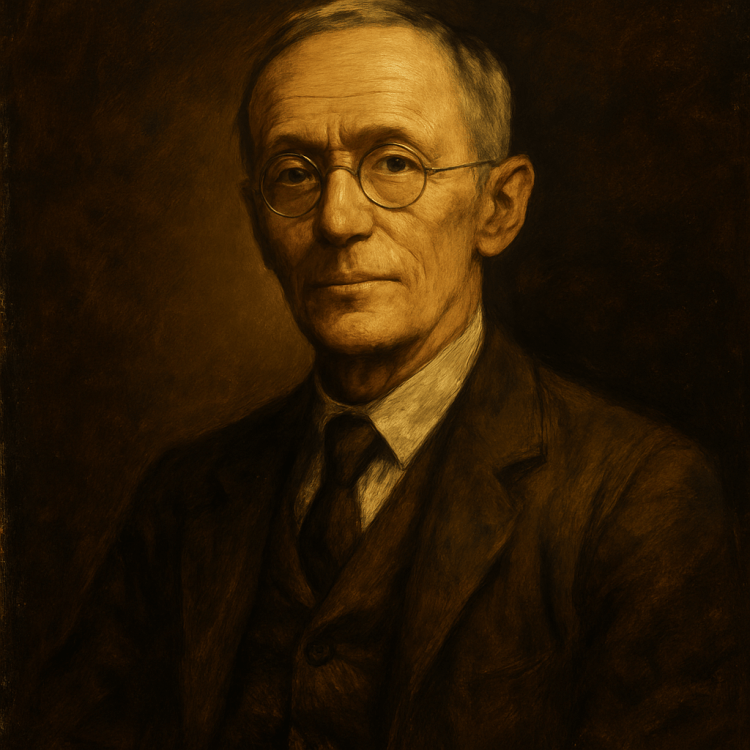


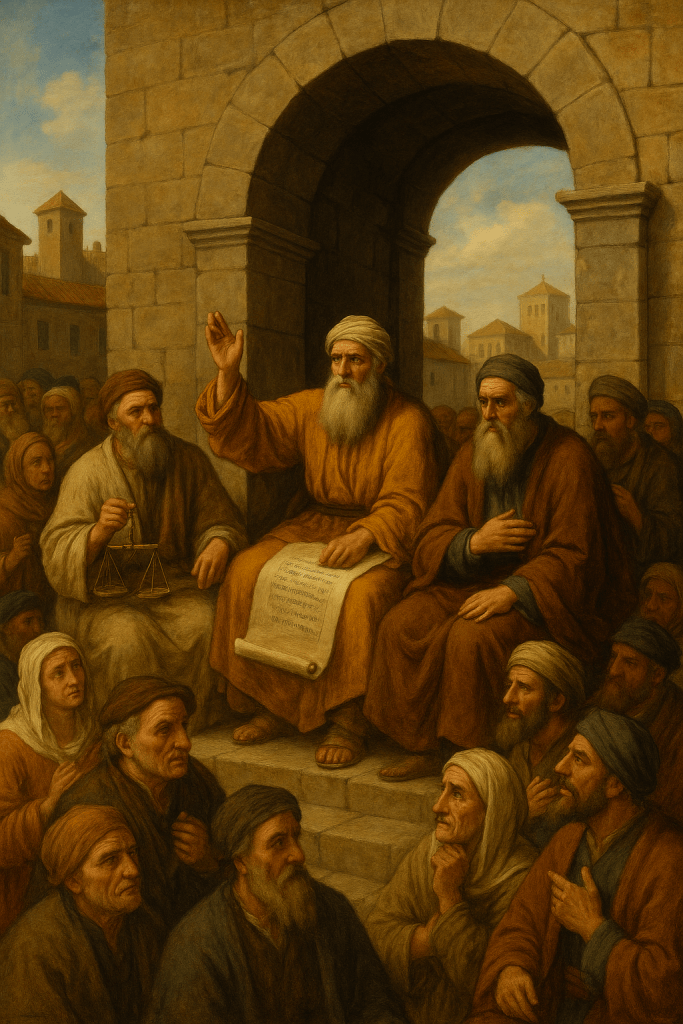

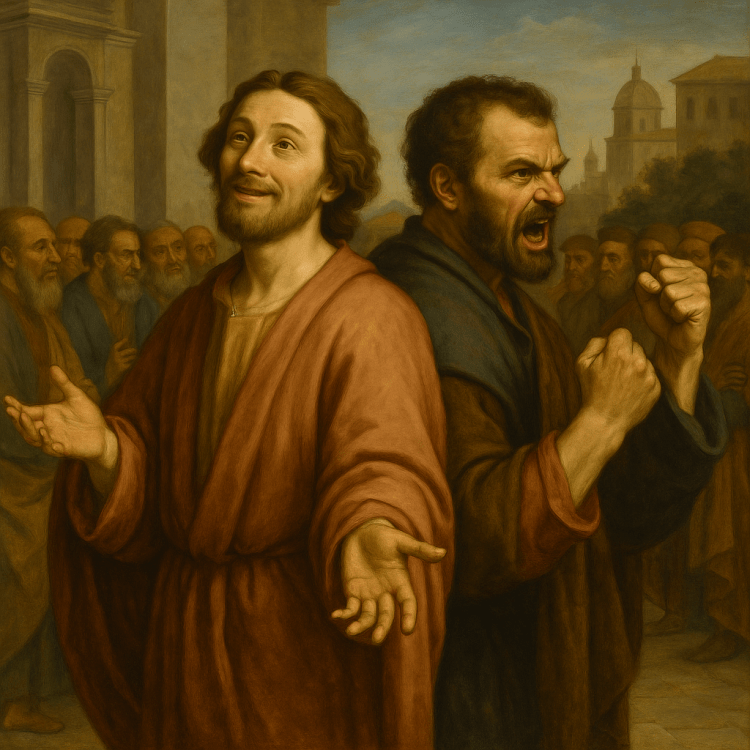
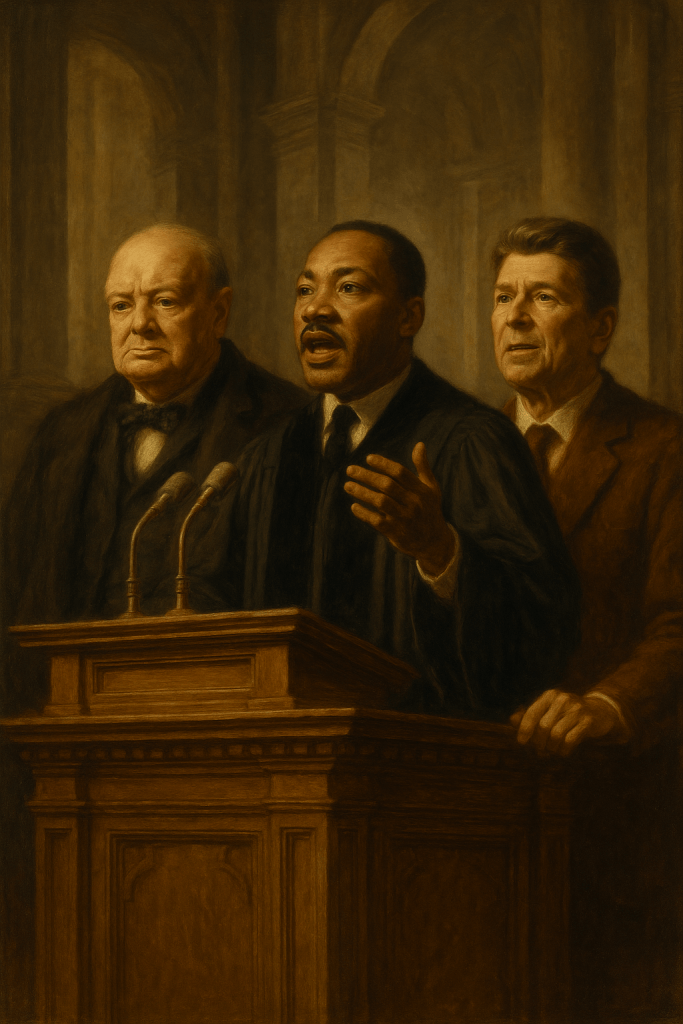



 Let's Talk About It, Lewis!
You must be logged in to post a comment.