Leaving the City Better: Leadership, Limits, and the Question of a Bridge Too Far

A collaboration between Lewis McLain & AI

Leaders inherit messes. They step into offices burdened by deferred maintenance, ignored threats, regulatory capture, and systems quietly bent by special interests. In such a world, passivity does not preserve stability; it preserves neglect. Action becomes the moral baseline, not the exception. The enduring civic question is not whether leaders should push, but how far pushing remains stewardship rather than overreach.

The ancient Greek civic pledge offers a compass: leave the city better than you found it. Public life is stewardship across generations. Authority exists to repair what neglect erodes and to confront what avoidance normalizes. The statesman acts not for comfort, but for continuity—aware that problems ignored do not stay small.

This is where leadership grows hard. Entrenched interests organize precisely because complexity protects them. Manipulation thrives in delay. Incentives reward stasis. Gentle pressure rarely unwinds decades of avoidance. Leaders who push against these forces often look abrasive in real time, not because ego drives them, but because reform disturbs equilibria that were never healthy to begin with.

The phrase “a bridge too far” sharpens this tension. It enters common language through Cornelius Ryan’s account of Operation Market Garden in A Bridge Too Far. The plan is bold and morally urgent—end the war sooner, save lives—but it asks reality to cooperate with optimism. One bridge lies just beyond what logistics, intelligence, and time can support. The failure is not daring; it is miscalculation. The lesson is not “do nothing.” It is “know the load.”

Applied to leadership, the metaphor cuts both ways. Societies stagnate when leaders merely manage decline. Yet institutions exist for reasons that are not always cynical. Some limits preserve legitimacy, trust, and continuity—the invisible infrastructure of a functioning republic. The craft of leadership lies in distinguishing protective limits from self-serving barriers, then pressing the latter without snapping the former.

Seen through this lens, modern leaders often operate in the present tense of pressure. They test boundaries, confront norms, and treat friction as evidence of movement. That posture can be corrective when systems have grown complacent. It can also be hazardous when escalation outruns institutional capacity or public trust. A bridge does not fail the first time it is stressed; it fails after stress becomes routine.

This is where Donald Trump enters the conversation—not as verdict, but as caution. Trump governs with explicit confrontation. He challenges norms openly, personalizes conflict, and compresses long-delayed debates into immediate contests. Supporters see overdue action against captured systems. Critics see erosion of the trust that makes systems work at all. Both readings coexist because the pressure is real and the inheritance is heavy.

The wondering question is not whether such pressure is justified—it often is—but whether its sequencing and tone preserve the very institutions meant to be improved. The post-election period after 2020 brings the metaphor into focus. Legal challenges proceed as allowed; courts rule; states certify. Rhetoric, however, accelerates beyond evidence, and persuasion shades toward insistence. The bridge becomes visible. Not crossed decisively, but clearly approached. The risk is not a single act; it is precedent—teaching future leaders that legitimacy can be strained without immediate collapse.

January 6 stands as a symbolic edge of that bridge. Whatever one concludes about intent, the episode reveals an old truth: rhetoric travels faster than control. When foundational processes are publicly contested, leaders cannot always govern how followers translate suspicion into action. The system endures—but at a cost to shared reality.

None of this denies the core point: leaders given a boatload of neglect are not obligated to be passive. Improvement demands pressure. But the Greek ideal pairs strength with sophrosyne—measured restraint guided by wisdom. The city is left better not by humiliating institutions, but by restoring their purpose; not by replacing trust with loyalty to a person, but by renewing confidence in processes that outlast any one leader.

So what does leadership require in a world of manipulation and special interests?

It requires action, because neglect compounds.
It requires push, because stagnation corrodes.
It requires listening, because limits exist for reasons.
It requires calibration, because strength without proportion becomes its own form of neglect.

A bridge too far is rarely obvious in the moment. It announces itself later—through fragility, cynicism, or precedent. The enduring task of leadership is to cross the bridges that must be crossed, stop short of those that should not, and leave the city—tested, repaired, and steadier—better than it was found.

The Municipal & Business Workquake of 2026: Why Cities Must Redesign Roles Now—Before Attrition Does It for Them

A collaboration between Lewis McLain & AI

Cities are about to experience an administrative shift that will look nothing like a “tech revolution” and nothing like a classic workforce reduction. It will arrive as a workquake: a sudden drop in the labor required to complete routine tasks across multiple departments, driven by AI systems that can ingest documents, apply rules, assemble outputs, and draft narratives at scale.

The danger is not that cities will replace everyone with software. The danger is more subtle and far more likely: cities will allow AI to hollow out core functions unintentionally, through non-replacement hiring, scattered tool adoption, and informal workflow shortcuts—until the organization’s accountability structure no longer matches the work being done.

In 2026, the right posture is not fascination or fear. It is proactive redesign.


I. The Real Change: Task Takeover, Not Job Replacement

Municipal roles often look “human” because they involve public trust, compliance, and service. But much of the day-to-day work inside those roles is structured:

  • collecting inputs
  • applying policy checklists
  • preparing standardized packets
  • producing routine reports
  • tracking deadlines
  • drafting summaries
  • reconciling variances
  • adding narrative to numbers

Those tasks are precisely what modern AI systems now handle with speed and consistency. What remains human is still vital—but it is narrower: judgment, discretion, ethics, and accountability.

That creates the same pattern across departments:

  • the production layer shrinks rapidly
  • the review and exception layer becomes the job

Cities that don’t define this shift early will experience it late—as a staffing and governance crisis.


II. Example- City Secretary: Where Governance Work Becomes Automated

The city secretary function sits at the center of formal governance: agendas, minutes, public notices, records, ordinances, and elections. Much of the labor in this area is procedural and document-heavy.

Tasks likely to be absorbed quickly

  • Agenda assembly from departmental submissions
  • Packet compilation and formatting
  • Deadline tracking for posting and notices
  • Records indexing and retrieval
  • Draft minutes from audio/video with time stamps
  • Ordinance/resolution histories and cross-references

What shrinks

  • clerical assembly roles
  • manual transcription
  • routine records handling

What becomes more important

  • legal compliance judgment (Open Meetings, Public Information)
  • defensibility of the record
  • election integrity protocols
  • final human review of public-facing outputs

In other words: the city secretary role does not disappear. It becomes governance QA—with higher stakes and fewer support layers.


III. Example – Purchasing & Procurement: Where Process Becomes Automated Screening

Purchasing has always been a mix of routine compliance and high-risk discretion. AI hits the routine side first, fast.

Tasks likely to be absorbed quickly

  • quote comparisons and bid tabulations
  • price benchmarking against history and peers
  • contract template population
  • insurance/required-doc compliance checks
  • renewal tracking and vendor performance summaries
  • anomaly detection (odd pricing, split purchases, policy exceptions)

What shrinks

  • bid tabulators
  • quote chasers
  • contract formatting staff
  • clerical procurement roles

What becomes more important

  • vendor disputes and negotiations
  • integrity controls (conflicts, favoritism risk)
  • exception approvals with documented reasoning
  • strategic sourcing decisions

Procurement shifts from “processing” to risk-managed decisioning.


IV. Example – Budget Analysts: Where “Analysis” Separates from “Assembly”

Budget offices are often mistaken as purely analytical. In reality, a large share of work is assembly: gathering departmental submissions, normalizing formats, building tables, writing routine narratives, and explaining variances.

Tasks likely to be absorbed quickly

  • ingestion and normalization of department requests
  • enforcement of submission rules and formatting
  • auto-generated variance explanations
  • draft budget narratives (department summaries, highlights)
  • scenario tables (base, constrained, growth cases)
  • continuous budget-to-actual reconciliation

What shrinks

  • entry-level budget analysts
  • table builders and narrative drafters
  • budget book production labor

What becomes more important

  • setting assumptions and policy levers
  • framing tradeoffs for leadership and council
  • long-range fiscal forecasting judgment
  • telling the truth clearly under political pressure

Budget staff shift from spreadsheet production to decision support and persuasion with integrity.


V. Example – Police & Fire Data Analysts: Where Reporting Becomes Real-Time Patterning

Public safety analytics is one of the most automatable municipal domains because it is data-rich, structured, and continuous. The “report builder” role is especially vulnerable.

Tasks likely to be absorbed quickly

  • automated monthly/quarterly performance reporting
  • response-time distribution analysis
  • hotspot mapping and geospatial summaries
  • staffing demand pattern detection
  • anomaly flagging (unusual patterns in calls, activity, response)
  • draft CompStat-style narratives and slide-ready briefings

What shrinks

  • manual report builders
  • map producers
  • dashboard-only roles
  • grant-report drafters relying on routine metrics

What becomes more important

  • human interpretation (what the pattern means operationally)
  • explaining limitations and avoiding false certainty
  • bias and fairness oversight
  • defensible analytics for court, public inquiry, or media scrutiny

Public safety analytics becomes less about producing charts and more about protecting truth and trust.


VI. Example – More Roles Next in Line

Permitting & Development Review

AI can quickly absorb:

  • completeness checks
  • code cross-referencing
  • workflow routing and status updates
  • templated staff reports

Humans remain essential for:

  • discretionary judgments
  • negotiation with applicants
  • interpreting ambiguous code situations
  • public-facing case management

HR Analysts

AI absorbs:

  • classification comparisons
  • market surveys and comp modeling
  • policy drafting and FAQ support

Humans remain for:

  • discipline, negotiations, sensitive cases
  • equity judgments and culture
  • leadership counsel and conflict resolution

Grants Management

AI absorbs:

  • opportunity scanning and matching
  • compliance calendars
  • draft narrative sections and attachments lists

Humans remain for:

  • strategy (which grants matter)
  • partnerships and commitments
  • risk management and audit defense

VII. The Practical Reality in Cities: Attrition Is the Mechanism

This won’t arrive as dramatic layoffs. It will arrive as:

  • hiring freezes
  • “we won’t backfill that position”
  • consolidation of roles
  • sudden expectations that one person can do what three used to do

If cities do nothing, AI will still be adopted—piecemeal, unevenly, and without governance redesign. That produces an organization with:

  • fewer people
  • unclear accountability
  • heavier compliance risk
  • fragile institutional memory

VIII. What “Proactive” Looks Like in 2026

Cities need to act immediately in four practical ways:

  1. Define what must remain human
    • elections integrity
    • public record defensibility
    • procurement exceptions and ethics
    • budget assumption-setting and council framing
    • public safety interpretation and bias oversight
  2. Separate production from review
    • let AI assemble
    • require humans to verify, approve, and own
  3. Rewrite job descriptions now
    • stop hiring for assembly work
    • hire for judgment, auditing, communication, and governance
  4. Build the governance layer
    • standards for AI outputs
    • audit trails
    • transparency policies
    • escalation rules
    • periodic review of AI-driven decisions

This is not an IT upgrade. It’s a redesign of how public authority is exercised.


Conclusion: The Choice Cities Face

Cities will adopt AI regardless—because the savings and speed will be undeniable. The only choice is whether the city adopts AI intentionally or accidentally.

If adopted intentionally, AI becomes:

  • a productivity tool
  • a compliance enhancer
  • a service accelerator

If adopted accidentally, AI becomes:

  • a quiet hollowing of institutional capacity
  • a transfer of control from policy to tool
  • and eventually a governance failure that will be blamed on people who never had the chance to redesign the system

2026 is early enough to steer the transition.
Waiting will not preserve the old model. It will only ensure the new one arrives without a plan.

End note: I usually spend a couple of days (minimum) completing the compilation of all my bank and credit card records, assigning a classification, summarizing and giving my CPA a complete set of documents. I uploaded the documents to AI, gave it instructions to prepare the package, answering a list of questions regarding reconciliation and classification issues. Two hours later, I had the full package with comparisons to past years from the returns I also uploaded. I was 100% ready on New Year’s Eve just waiting for the 1099’s to be sent to me by the end of January. Meanwhile, I have been having AI enhance and create a comprehensive accounting system with beautiful schedules like cash flow, taxation notes, checklists with new IRS rules and general help – more than I was getting from CPA. I’ll be able to actually take over the CPA duties. It’s just the start of the things I can turn over to AI while I become the editor and reviewer instead of the dreaded grunt work. LFM

Servant Leadership: From Hermann Hesse to Robert Greenleaf and Beyond

Inspired by Dan Johnson, Written by AI, Guided and Edited by Lewis McLain

I. Hermann Hesse: Life and Vision

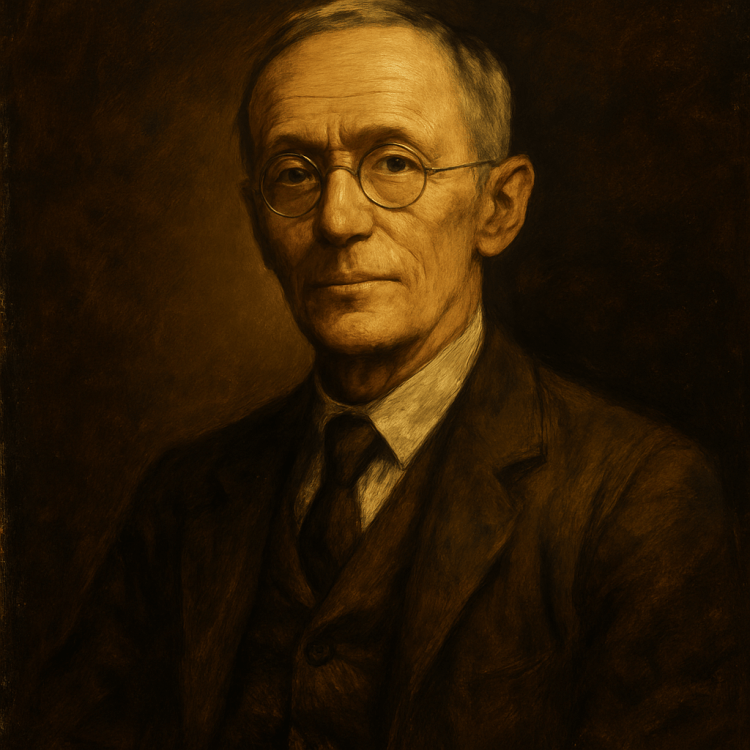
Hermann Hesse (1877–1962) was one of the twentieth century’s most influential literary figures, a seeker whose novels became guideposts for millions navigating the crises of modernity. Born in Calw, in the Black Forest of Germany, Hesse was the son of Christian missionaries. His childhood was steeped in pietism and biblical devotion, but also in conflict—he struggled against the rigidity of his family’s expectations and endured mental health crises that shaped his outlook. When I read many of his books, there were two recurring personal notes in his diaries: he had bad eyesight and complained about how much his eyes hurt. He also traded letters with friends that include small water paintings sent and received. Those pictures seemed to be pleasing to Hesse. If you start seeing pictures (with the help of AI), my motivation comes from Mr. Hesse. LFM


Herman Hesse

For Hesse, writing was both therapy and spiritual exploration. His early novels reflected the tensions of his life: the desire for freedom against the weight of tradition, the search for authenticity in a rapidly industrializing world.

  • In Demian (1919), Hesse explored inner duality, freedom, and the necessity of self-discovery beyond societal norms.
  • In Siddhartha (1922), he imagined a man’s journey to enlightenment in ancient India, fusing Western existential doubt with Eastern philosophy.
  • In Steppenwolf (1927), he dramatized the loneliness of the modern intellectual and the quest for transcendence amid despair.
  • In The Glass Bead Game (1943), his Nobel Prize–winning masterpiece, he conjured a future order devoted to the synthesis of knowledge, beauty, and spirituality.

Amid these great novels stands a shorter but profoundly symbolic tale: The Journey to the East (1932). Though brief, it contains one of Hesse’s most enduring insights—leadership is not power, but service.


II. The Journey to the East: The Servant and the Master

The novella tells the story of a secret brotherhood called the League, a timeless spiritual fellowship that undertakes a pilgrimage “to the East.” The East is never fully defined—it is both place and symbol, representing wisdom, transcendence, and the fulfillment of human longing.

The narrator, H.H., joins the League’s pilgrimage. Along the way he describes a mysterious assortment of travelers: historical figures, literary characters, and seekers from all walks of life. The journey unites them in pursuit of a higher goal.


Leo

Yet the true heart of the story is a man named Leo. Leo appears to be nothing more than a cheerful servant. He tends to the pilgrims, carries their bags, prepares their meals, and sings songs that lift their spirits. He is ordinary, unnoticed—yet indispensable.

Then one day Leo disappears. Without him, the pilgrims falter. Discord and division creep in, and the League dissolves. H.H. falls into despair, convinced the journey has failed.

Years later, in a twist of revelation, H.H. learns the truth: Leo was not simply a servant. He was in fact a leader of the League, the embodiment of the very wisdom the pilgrims were seeking. The pilgrimage fell apart because the group failed to recognize that true leadership had been in their midst all along.

Hesse’s parable is at once mystical and practical: it insists that authentic leadership flows not from domination but from humble service. In the inversion of roles—servant as master, master as servant—Hesse revealed a paradox at the heart of human community.


Greenleaf

III. Robert Greenleaf and the Birth of Servant Leadership

Decades later, in the United States, Robert K. Greenleaf (1904–1990), an executive at AT&T, was searching for a new way to understand leadership. He had witnessed firsthand how corporate hierarchies often crushed initiative, fostered fear, and alienated workers. After 40 years in management, he turned to teaching and writing, determined to challenge the prevailing model of top-down authority.

In the 1950s, Greenleaf read The Journey to the East, and Leo’s example struck him like lightning. Here was the vision he had been seeking: the leader is great not because of command but because of service. Out of this insight, he developed the philosophy he called servant leadership.

In his seminal 1970 essay, The Servant as Leader, Greenleaf wrote:

“The servant-leader is servant first… It begins with the natural feeling that one wants to serve, to serve first. Then conscious choice brings one to aspire to lead. The difference manifests itself in the care taken to make sure that other people’s highest priority needs are being served.”

Greenleaf’s framework reshaped modern leadership thinking. He identified qualities that distinguish servant leaders:

  • Listening and Empathy – Understanding others deeply before acting.
  • Awareness and Foresight – Seeing beyond immediate demands to future consequences.
  • Healing and Stewardship – Caring for individuals and institutions as trust, not possessions.
  • Commitment to Growth – Helping others become wiser, healthier, and freer.
  • Building Community – Nurturing belonging, not simply extracting productivity.

Unlike traditional leadership, which seeks power to direct, servant leadership seeks responsibility to care. Greenleaf insisted that the true test of leadership was not organizational success but human flourishing: “Do those served grow as persons?”


IV. Servant Leadership in Today’s World

Although Greenleaf’s vision emerged from corporate disillusionment, servant leadership has spread far beyond the boardroom. Its influence can be traced across diverse spheres today:

1. Faith-Based Institutions

  • Many Christian organizations and seminaries explicitly teach servant leadership, grounding it in the life of Jesus.
  • Pope Francis has often invoked its spirit, urging leaders to be “shepherds who smell of the sheep.”
  • Evangelical colleges and Catholic universities alike offer leadership courses built around Greenleaf’s principles.

2. Education

  • Universities such as Gonzaga, Indiana Wesleyan, and Regent have made servant leadership central to their leadership programs.
  • In secular contexts, “inclusive leadership” and “transformational leadership” often echo servant leadership’s core values of empathy and empowerment.

3. Healthcare and Caring Professions

  • Hospitals and nursing schools apply servant leadership to patient-centered care.
  • Nursing theory highlights Greenleaf’s ideas of empathy and stewardship as essential to healing.
  • Systems like Cleveland Clinic and Mayo Clinic promote leadership cultures rooted in service.

4. Nonprofits and Social Enterprises

  • Global NGOs like Habitat for Humanity and World Vision emphasize leadership through service to the vulnerable.
  • Social entrepreneurs adopt servant leadership as a model for organizations aimed at social good.

5. Business

  • Southwest Airlines and TDIndustries are classic case studies of servant leadership cultures in practice.
  • The rise of “conscious capitalism” and stakeholder-driven business models reflects a growing embrace of servant-leadership values.

6. Military and Public Service

  • Though hierarchical, parts of the U.S. military stress servant leadership: officers as stewards of their soldiers’ welfare.
  • Police and fire departments in some communities incorporate the philosophy for community trust.

7. Global Reach

  • In Africa, servant leadership resonates with Ubuntu (“I am because we are”), highlighting shared humanity.
  • In Asia, it has influenced leadership practices in Singapore and the Philippines, where communal values are strong.
  • In Scandinavia, egalitarian management structures mirror Greenleaf’s call for humility and shared responsibility.

In today’s world of political polarization, corporate scandals, and institutional mistrust, servant leadership remains both countercultural and urgently relevant. Where command-and-control leadership often falters, servant leadership builds trust, resilience, and long-term sustainability.


V. Conclusion: The Servant as the True Leader

Hermann Hesse, writing in a fractured Europe, offered a parable of a servant who was secretly a master. Robert Greenleaf, confronting the failures of mid-century corporate America, found in that story the spark for a radical rethinking of leadership.

Together, they remind us that the deepest authority is not rooted in command but in service. Leadership is not the pursuit of followers but the care of souls. Institutions endure not because of power structures but because of communities sustained by humility, empathy, and stewardship.

In an age that often celebrates strength as dominance, Hesse and Greenleaf point to another way: that the one who carries the bags may in fact be the one who carries the truth.

Generational and Political Dynamics in Municipal Government

I am in the second class of the early Baby Boomers (1946-1964) with my work life still going with no plans to stop. My son and daughter-in-law are in mid-career. Our grandchildren are either just now joining the workforce or will be in the next four years. I don’t have any employees, so I don’t know what it is like these days to manage people. When I did, most of my employees were self-motivated and worked (almost) as hard (some harder) as I did. Still, I talk to my peers and those in mid to top level management. A lot. I’m not a patient person, so I could never be in management again. This essay is shaped by many of my clients and colleagues. I used AI to help compose this essay with my guidance and editing. LFM


Municipal governments are unusual workplaces because they bring together four very different generational mindsets, each carrying its own approach to urgency, planning, and achievement. Baby Boomers are often nearing retirement but remain the guardians of institutional knowledge. Gen X employees sit in mid-career roles, providing steadiness and pragmatism. Millennials and Gen Z staff bring technical skills, fresh perspectives, and a desire for meaningful impact. Over all of this hovers the council chamber, where elected officials with two- to four-year terms demand quick, visible results they can bring back to their voters. The interplay among these groups defines how city hall functions day to day.


Work Centrality and Urgency

For Baby Boomers, work has long been a central piece of identity. In municipal offices, that commitment shows up in a willingness to stay late until a council packet is complete or to double-check a utility billing run down to the penny. For them, urgency is not negotiable — it is part of their professional ethic.

Gen Z, by contrast, tends to look for structure and clarity in order to summon urgency. Younger employees often ask: “What does this deadline really mean?” A city analyst in their twenties may not feel the pressure of filing a revenue report until a supervisor explains that missing it will delay sidewalk repairs or park maintenance. They need to see how their task connects to resident outcomes before they embrace urgency with the same vigor as their older peers.

Council members occupy an entirely different space. Their urgency is political. They want to show constituents visible results within their limited terms. Even while reviewing long-term comprehensive plans, they lean forward in meetings to ask: “What have you done for me lately?” This mindset drives them to demand both the grand vision and the small, near-term deliverables that can be touted on campaign flyers or in town halls.


Tenure and Institutional Knowledge

Boomers typically stay with an organization for decades, and that tenure provides the city with memory and continuity. A veteran finance director or city clerk knows instinctively that missing a Truth-in-Taxation filing can derail the city’s entire budget process. That awareness creates an ingrained sense of urgency.

Gen Z staff, on the other hand, are more transient. Many stay only two or three years before moving on to graduate school or for a few bucks more in a similar municipal job. To them, a missed filing may seem like routine paperwork rather than a red flag that could trigger a state audit or expose the council to criticism. Without deliberate mentoring, the political and legal weight of such details can be lost.

Council members fall somewhere else entirely. With limited terms and frequent turnover, most do not retain the historical memory that long-serving staff carry. They may not appreciate why a master drainage plan has been on the books for twenty years, but they will press for what is visible and politically rewarding now — a groundbreaking ceremony, a grant announcement, or the repaving of a road their voters drive every day.


Achievement and Career Paths

For Boomers, achievement was tied to climbing the ladder. Moving from budget officer to finance director or from city engineer to public works director marked professional success. Titles and promotions were the visible proof of a career.

Gen Z defines achievement differently. They find satisfaction in project-based wins, skill certifications, and visible impact. A young GIS analyst may beam with pride after launching an interactive zoning map or automating pothole reporting, even if they have no desire to supervise a department.

Council members define achievement in yet another way. For them, success is measured in the short window of their term. They need evidence of change that voters can see and touch — new playground equipment, lower crime statistics, or faster permitting. Achievement is not what happens in twenty years but what is realized in time for the next election.


Planning Horizons and Future Thinking

Baby Boomers are comfortable thinking decades ahead. They embrace twenty- to thirty-year master plans, long-term bond financing, and phased capital improvements. Their approach is steady and deliberate, with a priority on compliance and fiscal security. They know exactly how fast a decade or two can go by.

Gen Z tends to thrive in short cycles. They want to pilot a new communications campaign or launch a mobile app that shows immediate value to residents. This emphasis on agility and visibility is energizing. But without guidance, it can overlook the structural foundation required for compliance and sustainability.

Council members straddle both worlds. They will dutifully review the 2045 comprehensive plan but will quickly pivot to ask, “What will residents see this year?” They want to be able to tell voters that congestion will ease at a key intersection or that park improvements will be visible before the next election. Their enthusiasm for a five-year bond program wanes if their individual pet projects won’t be started until the third or fourth year.


Engagement and Expectations

Boomers learned to operate in a “figure it out” culture, where direction was often implicit and completing the task without fanfare was expected. Gen Z, however, seeks clarity and regular feedback. Without explicit expectations, their sense of urgency weakens.

Council members communicate expectations in broad, sometimes vague terms. They declare priorities such as “reduce crime,” “fix the roads,” or “cut red tape.” Staff must translate those slogans into actionable projects with timelines, budgets, and measurable results. That translation requires both urgency and political astuteness.


Municipal Examples

In the budget office, a Boomer finance director focuses on adopting a balanced budget and protecting the city’s bond rating. A Gen Z analyst may be more excited about building a dashboard that shows residents how each tax dollar is spent. Council members, meanwhile, demand quick budget talking points: “Did we cut the tax rate? How much is in fund balance?”

In public works, a Boomer supervisor thinks in terms of phased capital projects spanning decades. A young engineer-in-training wants digital project boards and shorter sprint cycles. The council simply wants to know how many potholes were filled this week and whether residents can see progress on the ground.

In the city clerk’s office, a Boomer clerk never misses a statutory notice deadline. A Gen Z deputy clerk relies on structured reminders and may not appreciate the consequences of a missed posting. Council members, unaware of the statutory timelines, may ask why an ordinance was not on the agenda the prior week, not realizing the legal steps involved.


Recommendations for City Leaders

Leaders can bridge these horizons by pairing long-term initiatives with short-term wins. A master drainage plan can be complemented by a neighborhood pilot project. Deadlines should be translated into political stakes so that young staff understand that a missed report is not just a paperwork issue but a reputational risk for the council.

Visible “win boards” showing weekly metrics — permits issued, potholes filled, grants applied for — can serve both to motivate staff and to provide council with quick talking points.

When I was promoted from a paint maker to the purchasing department at Glidden years ago, I had a window painted so I wouldn’t be disturbed by the shift changes. I later noticed a small 1″x2″ rectangle of the paint was scratched clear.

At first, I was bothered. Then I realized they did that to see the shift production board past my office. The night shift wanted to track how they were doing compared to the day shift!

Finally, achievement should be reframed in terms of resident benefit. Rather than reporting “design is 80% complete,” staff should tell council that “traffic delays at Main and 380 will be cut by 25% within a year.”


Evaluating Gen X Employees: A Focus on Urgency and Engagement

Gen X workers, often in supervisory or mid-career roles, provide the balance between long-serving Boomers and tech-driven Gen Z. They are independent and pragmatic, but evaluations must probe whether they are sustaining urgency and engagement.

Questions for annual evaluations should include: Do you consistently complete assignments ahead of deadline, and how do you respond when unexpected issues arise? Can you share examples where your urgency prevented a delay or crisis? How engaged do you feel in your work, and have you taken initiative to improve efficiency or resident service? How do you work through periods of disillusionment?

Supervisors should ask whether Gen X employees communicate progress clearly, close out tasks without prompting, and set the pace for younger colleagues. They should also examine whether Gen X staff anticipate council questions and package their work so that both short-term progress and long-term outcomes are visible. Motivation and energy are crucial: do they show enthusiasm under pressure, and do they keep their teams energized during long projects? Finally, evaluators should probe how these employees prepare for future demands and avoid complacency after many years in the role.


Conclusion

Municipal governments thrive when each generation’s strengths are recognized and aligned with the realities of political leadership. Baby Boomers bring continuity and deep urgency rooted in institutional knowledge. Gen Z brings agility, tech savvy, and a desire for meaningful short-term impact. Gen X provides steadiness, independence, and the ability to bridge generational gaps. Council members inject political urgency, pressing for deliverables that can be seen within two to four years.

The challenge is not choosing one horizon over the other but weaving them together. By translating long-term plans into visible near-term wins, creating clarity around deadlines, and aligning staff achievement with resident impact, leaders can cultivate both urgency and engagement across the workforce while still meeting the immediate expectations of elected officials.

✅ Annual Evaluation Checklist: Gen X Employees

(Focus on Urgency & Engagement)

1. Urgency & Timeliness

  • Do you consistently complete assignments ahead of or on deadline?
  • How do you prioritize urgent tasks versus long-term projects?
  • When unexpected issues arise (e.g., a last-minute council request), how quickly do you respond?
  • Can you give an example of when your urgency prevented a delay or crisis?

2. Engagement & Initiative

  • How engaged do you feel in your work and the mission of the city?
  • Do you bring forward new ideas to improve efficiency or resident service?
  • Have you volunteered for projects outside your core role when needed?
  • Do you proactively track project progress without waiting for reminders?

3. Accountability & Follow-Through

  • Do you communicate status updates clearly, especially if deadlines are at risk?
  • How often do you close out tasks without being prompted?
  • Do you take ownership of mistakes and correct them quickly?
  • Do peers and supervisors see you as dependable under pressure?

4. Cross-Generational Collaboration

  • Do you model urgency and responsiveness for younger colleagues?
  • How do you engage with Boomers (institutional memory) and Gen Z (tech-focused) to keep projects on pace?
  • Have you mentored others in balancing speed with quality?

5. Responsiveness to Leadership & Council

  • When asked, “What have you done recently?” do you have clear, recent accomplishments ready?
  • Do you package your work so progress is visible in both short- and long-term outcomes?
  • Do you anticipate council or supervisor questions rather than reactively answering them?

6. Motivation & Energy

  • Do you show consistent enthusiasm even under pressure?
  • How do you keep yourself and your team energized during long or repetitive projects?
  • Are you setting an example of urgency and focus for the team?

7. Future Readiness

  • How are you preparing to maintain urgency and engagement under new conditions (tech, mandates, emergencies)?
  • What steps do you take to avoid complacency or “coasting”?
  • What professional development would help you stay sharp and engaged?