January 5, 1933 — Steel, Strain, and the Day the Golden Gate Became Measurable

A collaboration between Lewis McLain & AI

https://www.pbs.org/wgbh/americanexperience/media/filer_public_thumbnails/filer_public/eb/e0/ebe02301-90e7-4abd-941b-dbf4300d2d3e/goldengate_spinning.jpg__400x567_q85_crop_subsampling-2_upscale.jpg
https://www.goldengate.org/assets/1/6/ggb-exhibit2-3_1.jpg

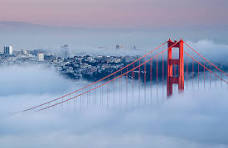
January 5, 1933 was the day the Golden Gate Bridge stopped being an argument and became a set of numbers, tolerances, stresses, and human limits. It was the day the bridge entered the physical world—where ideas are tested not by opinion, but by wind, gravity, and steel stretched to its breaking point.

This is what made that decision extraordinary: nothing at this scale had ever been built under conditions like these.


Before January 5: a problem defined by physics

The Golden Gate strait is not merely wide; it is hostile. The main span would need to cross 4,200 feet of open water—longer than any suspension bridge span in the world at the time. The water below reached depths of over 300 feet, with tidal currents exceeding 7 knots. Winds routinely pushed 50–60 mph through the narrow opening. Add fog, salt corrosion, and an active earthquake zone, and the engineering margins grew thin fast.

Critics were not being timid. They were doing the math.


The decision to build anyway

The project moved forward under the leadership of Joseph Strauss, supported by local governments and financed—barely—when Amadeo Giannini personally backed the bonds. The theoretical backbone of the structure came from calculations performed largely by Charles Alton Ellis, whose work translated vision into equations that said, yes, this can stand.

On January 5, those equations met the bay.


Foundations: anchoring the impossible

The first technical challenge was not the span—it was the towers.

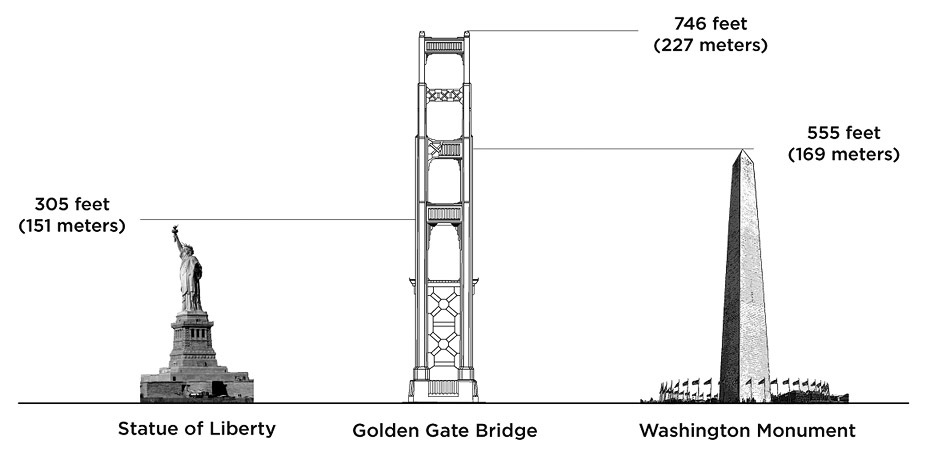
Each tower would rise 746 feet above the water, taller than most buildings of the era. To support them, crews sank massive foundations into bedrock far below the surface. This required working from floating platforms, battling currents that could push equipment sideways and make precise placement nearly impossible.

The south tower’s foundation alone weighed over 60,000 tons once complete.


Towers first, cables later

Construction followed a strict sequence:

  1. Foundations and piers
  2. Steel towers
  3. Main suspension cables
  4. Vertical suspender ropes
  5. Roadway deck

The towers were built section by section, steel plates riveted together in midair. Workers balanced on beams sometimes no wider than a boot sole, aligning steel to tolerances measured in fractions of an inch—because errors multiplied dramatically across a mile-long span.


The cables: strength measured in thousands of miles

The bridge’s two main cables remain its most astonishing technical feat.

Each cable:

  • Measures 36⅜ inches in diameter
  • Contains 27,572 individual steel wires
  • Each wire is 0.192 inches thick
  • Total wire length per cable: ~80,000 miles
  • Combined wire length: enough to wrap around the Earth more than three times

The wires were not prefabricated. They were spun in place using a moving wheel that carried each wire back and forth across the span, one at a time. Cable spinning took six months, with workers exposed to wind, fog, and vertigo at all hours.

Each cable supports a load of roughly 25,000 tons.


Tension, strain, and living steel

Steel under tension behaves differently than steel at rest. Engineers calculated:

  • Dead load (weight of the bridge itself)
  • Live load (traffic, pedestrians, wind)
  • Dynamic wind loading
  • Seismic forces

At full load, the bridge can sway up to 27 feet laterally. This is not a flaw. It is survival. Rigidity would have meant failure.

The bridge is designed to move, not resist movement.


Safety engineered into the process

Strauss insisted on safety innovations unheard of at the time:

  • Mandatory hard hats
  • Lifelines and handrails
  • On-site medical staff
  • And the massive safety net beneath the deck

The net saved 19 men—the “Halfway-to-Hell Club.” Eleven still died, ten in a single accident when a scaffold tore through the net. Even so, the fatality rate was far lower than comparable projects of the era.

Safety, for once, was treated as a technical requirement—not an afterthought.


The roadway: hanging a city street in the air

The deck was assembled in prefabricated sections and lifted into place by cranes mounted on the cables themselves. Once attached, vertical suspender ropes transferred load from deck to cable, distributing weight evenly.

Final dimensions:

  • Total length: 8,981 feet
  • Main span: 4,200 feet
  • Width: 90 feet
  • Clearance above water: 220 feet

Every number mattered. Change one, and the system changed everywhere.


After January 5: proof through survival

When the bridge opened in 1937, it immediately carried traffic loads no one fully anticipated. It later survived:

  • The 1957 Fort Point earthquake
  • The 1989 Loma Prieta earthquake
  • Constant wind cycles for nearly a century

Its survival validated not only the structure, but the philosophy behind it: design for movement, design for uncertainty, design for people.


What January 5 ultimately celebrates

January 5 is not a date about ribbon-cutting. It is about committing to numbers you cannot yet test and trusting human skill to meet them.

It honors the moment when:

  • theory met tide,
  • equations met wind,
  • safety met necessity,
  • and steel was asked to behave like a living thing.

The Golden Gate Bridge did not begin as poetry.
It began as calculations, rivets, wire under strain, and men willing to trust both.

That trust—measured in miles, tons, inches, and lives—is what January 5 truly marks.

The Church Steeple and the Soul of a Town

A collaboration between Lewis McLain & AI


When I was young, about 10, as I remember, a family on our street in Farmers Branch invited me to go to Galveston. There was no real highway like I-35 now, so we traveled down narrow Highway 75. No dividers between lanes. I remember that it was dark. I was sitting in the middle of the back seat with three of the family kids, leaning forward watching the bright headlights coming the opposite direction.

I think the crash happened in Center, Texas. All of a sudden, the movie froze like a broken reel in a theater. We had been hit by a car passing another car in our lane. I remember being stunned, getting out of the vehicle, and stumbling a few feet as I tried to make sense of what had just happened. Before long, emergency vehicles were everywhere. A man in the other car in the head-on collision was thrown through the windshield and was dead. The neighbor driving the car I was in was seriously injured when impelled by the steering wheel column.

The next thing I remember is that the mother went with the first responders to the hospital to be with her husband. All of us kids were taken to the home of someone in the community. I can’t remember if we stayed there one night or two. And I don’t know how we got back home to Farmer’s Branch.

What I do remember with perfect clarity is waking up to church bells on Sunday morning. If there were any churches with bells in Farmers Branch, they were too far off for me to hear. This was the first time I heard the wooing of the church bells. Soothing. Friendly. Assuring that everything was going to be okay. LFM


History, Meaning, and the Music of Bells

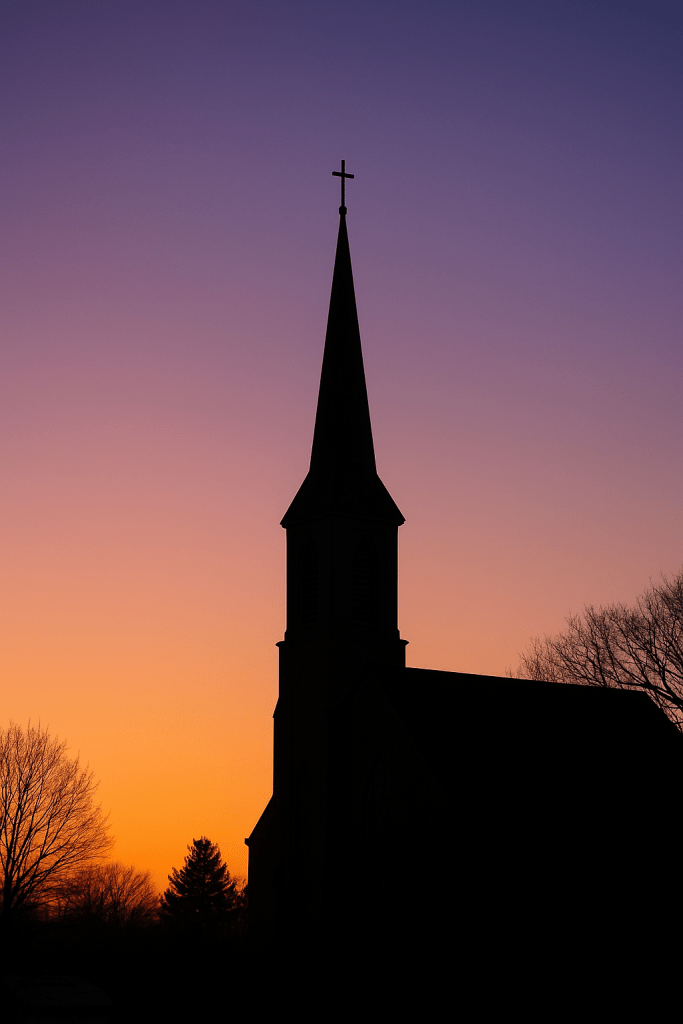
When you approach a village and see, beyond the trees and rooftops, a slender spire breaking the horizon, you are witnessing more than architecture. The church steeple is the meeting place of heaven and earth — a human hand raised upward, a prayer in timber and stone.

Long before skyscrapers and radio towers, the steeple was the tallest thing people knew.
It marked the center of the community, both geographically and spiritually. From its belfry rang the sounds of life itself — wedding chimes, funeral tolls, and the daily hours that once kept an entire village in rhythm.


To hear the bells was to belong. Their sounds crossed class lines, carried through fog and rain, and reminded each listener that they were part of something enduring. In the stillness of dawn or the hush of dusk, a steeple’s toll was not just a summons to worship, but an assurance that civilization itself still stood watch.

The sight of a steeple from afar was equally moving. For travelers, it meant arrival — a promise of rest, bread, and fellowship. For locals, it was the vertical symbol of continuity: seasons may turn, but the church still stands, calling hearts homeward.

Through centuries of design — Romanesque solidity, Gothic aspiration, and Colonial simplicity — the steeple has remained both beacon and anchor. Its height draws the eyes upward; its bells draw the soul inward. Together they create that rare harmony of architecture and faith where the material world becomes a metaphor for eternity.


The Steeple’s Song

From the tower’s view above the town

I’ve watched your rooftops silvered dawn,
Your children laughing on the lawn,
Your lovers walking as shadows fall,
And I have tolled the hour for all.

I’ve seen your seasons, year by year —
Spring’s first bloom and winter’s tear;
I’ve counted time in steady chime,
And kept your faith when you lost mine.

From up where swallows weave their flight,
I greet the day, I guard the night.
When thunder rolls and sirens cry,
My bells still sing to calm the sky.

I’ve heard your vows beneath my spire,
Your whispered prayers, your heart’s desire.
I’ve marked the birth, the ring, the rest —
Your cradle, union, final guest.

I’ve seen the fields turn gold, then gray,
The mills grow still, the children stray;
Yet still I stand, though years may dim,
A bridge between your world and Him.

For every soul that passes by,
I lift my gaze to where hopes lie.
My cross still gleams through storm and blue —
A finger pointing Godward, true.

So when my bells across the vale
Send echoes soft through hill and dale,
Know this: I ring not just for prayer,
But to remind you — Love is there.


Reflection

Every town needs a church with a steeple — not merely as a relic, but as a reminder.
It is the one structure that insists on looking up.

In its shadow, generations have laughed, wept, married, and buried. Its bells do not ask for perfection; they call for presence. They tell us that civilization, at its best, is not measured by wealth or power, but by how faithfully we lift our eyes and our hearts beyond ourselves.


Three Famous Steeples of the World


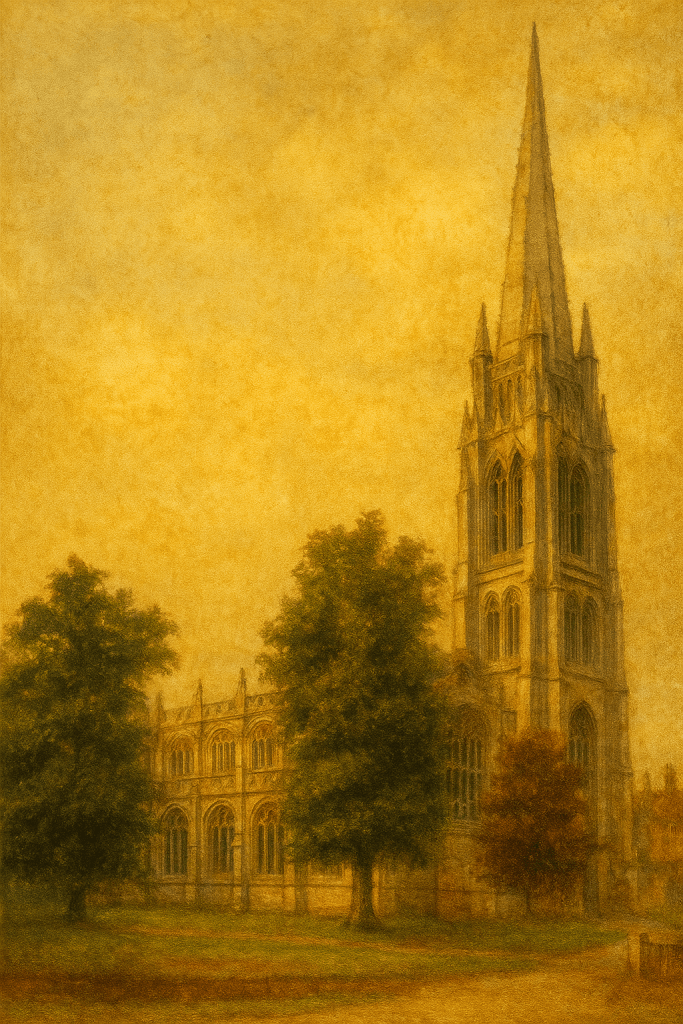
St. James’ Church, Louth (England)

Built: 15th–16th centuries
Height: 287 ft

A Gothic marvel rising from a modest market town, it is known for its elegant pinnacles and sheer verticality — evoking both awe and aspiration in the quiet Lincolnshire countryside. Its daring height symbolizes the upward reach of faith within ordinary life, where everyday worshippers once built a tower that nearly touches the clouds.


Temple Saint-Étienne, Mulhouse (France)

Built: 1859–1866
Height: 318 ft

An Alsatian landmark often called the “Cathedral of the Reformed Faith,” it stands as a Protestant interpretation of Gothic grandeur. Its rose windows and tracery recall medieval cathedrals, yet the spirit within it is one of clarity and simplicity — grandeur made humble, devotion expressed in light and stone.


St. Patrick’s Cathedral, New York City (USA)

Built: 1858–1878
Twin Spires: 330 ft

A marble monument to faith amid steel skyscrapers, it was completed when Midtown Manhattan was still young. Its soaring spires now rise among towers of commerce and glass, reminding the modern city that heaven’s reach and human ambition can coexist — that even in the noise of New York, the bells still call souls home.