Morning Has Broken: The Song That Welcomed the Dawn

A collaboration between Lewis McLain & AI

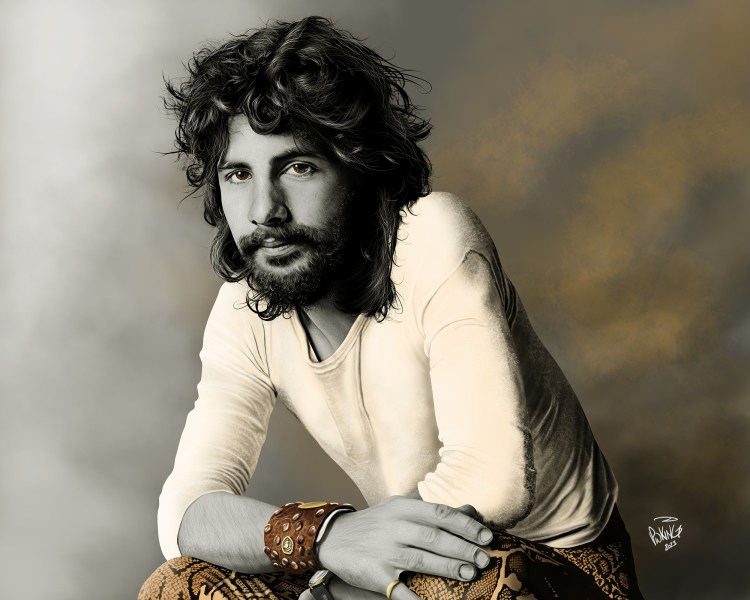
Oh, how I loved Cat Stevens from the first time I heard him. I saw him the first time when he performed in Fort Worth in the 1970s. It listened to his albums over and over. It was clear he was searching for spiritual clarity. He apparently found a solution for himself after his brother gave him a copy of the Quran. After his conversion, he gave away or destroyed all of his awards and guitars. He changed his name to Yusuf Islam. Decades later, his adult son found his guitar on the market and bought it. It is said that Yusuf immediately started playing. A few years ago, Linda and I flew to Washington, DC, where he played to an audience at the Kennedy Center. It was a wonderful trip back to hear his classics again. LFM



Morning Has Broken: The Song That Welcomed the Dawn

I. A Hymn Born in Simplicity (1931)

In 1931, British author Eleanor Farjeon was asked to craft new words for the traditional Scottish-Gaelic tune Bunessan (from the Isle of Mull). She wrote Morning Has Broken—three short stanzas that treat each sunrise as a fresh echo of Creation. Birds, dew, gardens, and “the Word” cast ordinary morning light as a sacrament of renewal. First printed in Songs of Praise (1931), the hymn traveled quietly through hymnals for decades.

II. Steven to Cat Stevens: Crisis, Silence, and Re-making (1968–1970)

Steven Demetre Georgiou—later known as Cat Stevens and today as Yusuf Islam—grew up over his father’s Greek-Cypriot restaurant in London, with a Swedish mother, a pencil and sketchpad never far from reach. By 18 he had a record deal; by 1967 he’d had pop hits and relentless touring. Then, in 1969, illness struck hard: tuberculosis with a collapsed lung. He was hospitalized for months and then sent into nearly a year of convalescence and isolation.

That enforced stillness became a hinge in his life. He read widely (mysticism, philosophy, scripture), sketched and wrote, questioned fame, and began composing the introspective songs that would define his second career: “Father and Son,” “Wild World,” “On the Road to Find Out,” “Into White.” When he returned, it was with a new sound—acoustic, intimate, spiritually searching—and a new partnership with producer Paul Samwell-Smith. The comeback albums followed in quick succession:

  • Mona Bone Jakon (1970): the quiet re-entry.
  • Tea for the Tillerman (1970): a masterpiece of spare folk-rock and spiritual longing.
  • Teaser and the Firecat (1971): the companion volume—gentler, sunlit, and home to “Moonshadow,” “Peace Train,” and “Morning Has Broken.”
    Stevens even painted the cover art—a child (Teaser) and a cat (Firecat)—an outward sign of the homemade sincerity of the era.

III. Finding a Hymn in a Hymnal (1971)

As Teaser and the Firecat neared completion, Stevens and Samwell-Smith wanted one more track that sounded like gratitude. Leafing through a hymnbook, Stevens found Farjeon’s Morning Has Broken. The text was brief, without a pop chorus, but it said exactly what his convalescent soul had learned: each day is a divine fresh start. “It fell into my lap,” he later said—less an idea than a gift arriving right on time.

IV. The Recording: Piano Like First Light

The arrangement needed light. Enter Rick Wakeman, a young session pianist (soon to join Yes). He improvised the now-famous piano prelude and interlude—those flowing, ascending figures that feel like sun lifting fog. Acoustic guitar, a modest rhythm bed, and Stevens’ hushed vocal kept the hymn’s humility while giving it living warmth. (Wakeman was initially uncredited, a footnote he’s mentioned ever since—ironically fitting for a song about unadorned grace.)

V. Release, Reception, and Reach (1971–present)

Issued late in 1971, the single bloomed slowly and then everywhere—Top-10 in the U.K., No. 6 on the U.S. Hot 100, and No. 1 on Adult Contemporary radio. It became a rare bridge between sacred hymnody and popular song, sung at school assemblies and charting on secular stations; used at weddings, dedications, and memorials; and re-introducing Farjeon’s text to churches that had forgotten it. For Stevens, the song sits on the arc that runs from illness → inward search → art as gratitude → later faith commitments and humanitarian work. For listeners, it proved a pop song can simply be thank you and still move the world.

VI. What the Verses Say (Paraphrased and Interpreted)

Verse 1 — The first morning, again
Morning opens like the world’s first dawn; birds break the silence like that first bird. Let all our singing and this very dawn become praise—new life springing from God’s speaking.

Verse 2 — Rain, light, and the garden
New rain gleams in sun; first dew pearls on fresh grass. Praise for sweetness in the watered garden—made whole where the Holy One has walked.

Verse 3 — Light we share, life we begin
Sunlight is ours; morning is ours—children of the same Light seen in Eden. So let joy rise with each dawn: every morning is God’s re-creation of the day.

Coda (Stevens’ reprise on record)
The album performance circles back to the opening stanza—musically and theologically saying: the first morning returns with every sunrise.

VII. Why It Endures

  • Simplicity that shelters depth: Three small verses, vast theology—creation as ongoing gift.
  • A voice recovered from silence: After TB and a season of doubt, Stevens chose wonder. You can hear recovery in the restraint.
  • Piano that paints light: Wakeman’s intro has become the sound of “daybreak” for multiple generations.
  • Common grace: It belongs equally to church pews and kitchen radios, to choirs and children.

VIII. Closing

Morning Has Broken is the sound of someone who nearly lost breath learning to love breath again. Farjeon’s parish hymn found its pilgrim singer; Stevens’ long quiet found its prayer. And the rest of us found a way to say, with the first bird and the last chord: thank You for today.


Morning has broken like the first morning
Blackbird has spoken like the first bird
Praise for the singing, praise for the morning
Praise for them springing fresh from the world
Sweet the rains new fall, sunlit from Heaven
Like the first dewfall on the first grass
Praise for the sweetness of the wet garden
Sprung in completeness where His feet pass

Mine is the sunlight, mine is the morning
Born of the one light, Eden saw play
Praise with elation, praise every morning
God’s recreation of the new day

Morning has broken like the first morning
Blackbird has spoken like the first bird
Praise for the singing, praise for the morning
Praise for them springing fresh from the world
Miss Saigon: Love, Illusion, and the Mirage of the American Dream

A collaboration between Lewis McLain & AI

“You are sunlight and I moon, joined by the gods of fortune.”
“Sun and Moon”


This dramatic musical was so remarkable to me. I remember writing that it was the best I had ever witnessed at the time, and wondering if I would ever see a better play. I think I saw it three times. The first time was in NYC, and the other two times were in Dallas. They were different in a few ways. The Dallas version was even more profound in the way they handled the opening of the second act. I will never forget the players and emotional content. LFM


I. The World in Ruin, the Heart Still Beating

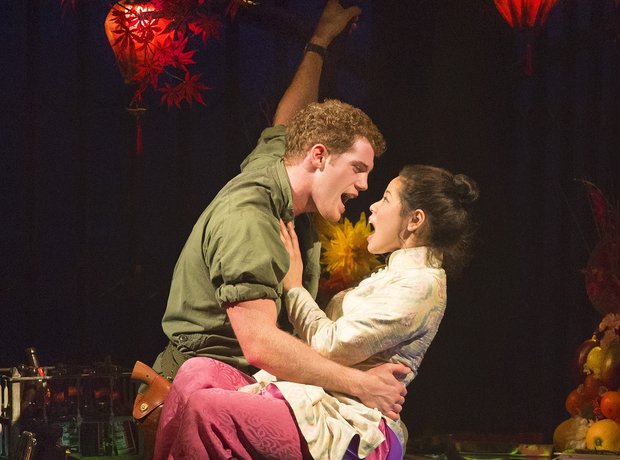
In Miss Saigon, the world is ending in slow motion. Helicopters thunder above the city, neon signs flicker over shattered streets, and the air hums with the machinery of empire. Yet in the ruins of Saigon, two hearts still find each other. Kim and Chris meet not in peace but in aftermath—he, a disoriented soldier of a collapsing foreign power; she, a displaced orphan forced into a bar called Dreamland. Around them, history howls. Within them, something eternal stirs.

Their love begins as an accident of war but unfolds like a parable of Eden after the Fall: purity glimpsed in a poisoned world. “You are sunlight and I moon,” Kim sings, echoing Genesis more than Puccini—light and darkness yearning toward wholeness, even as they know their union is impossible. The tragedy of Miss Saigon is not simply that love fails; it is that love, though true, cannot redeem the systems that contain it.


II. The Gospel According to Kim

Kim is among the most spiritually resonant heroines of modern theater—a Christ-figure clothed in the garments of an Asian peasant girl. Her purity is not naivety but faith: a conviction that love can sanctify even the most defiled landscape. When Chris leaves her amid the chaos of Saigon’s fall, Kim does not curse him or her fate. She gathers their son, Tam, and holds him as both burden and promise. “You will see me through another season,” she seems to tell God, echoing Mary sheltering the child Messiah in exile.

Years later, in Bangkok, when confronted by Chris’s American wife, Kim’s theology of love reaches its consummation. She chooses death not as surrender but as offering: “Now you must take Tam with you / And you must go on / I’m dying for your sake, my son.” In that moment, Miss Saigon transcends its setting. Kim becomes every mother who has loved into suffering, every believer who has poured out life for another’s salvation. Her sacrifice restores no empire and reforms no politics—but it restores meaning.

To love purely, the musical insists, is to suffer. Yet in that suffering lies a kind of resurrection. When Chris cries over her body—“How in one night have we come so far?”—we hear the echo of humanity’s ancient lament: love arrives divine and departs crucified.


III. The Engineer and the False Heaven

“The American Dream / Is gonna make my dream come true.”

If Kim represents the soul’s yearning for redemption, the Engineer embodies civilization’s addiction to illusion. He is the show’s dark chorus—half clown, half devil, half prophet—hawking the fantasy of America as the new Jerusalem of lust and consumption. His anthem, “The American Dream,” drips with irony: “They’ll have a club for all the rich to join / Where you can drive your Cadillac through the eye of a needle.” It is a parody of Scripture, a theology of greed replacing the Beatitudes with billboards.

The Engineer’s dream is the shadow twin of Kim’s faith. Both are migrants of hope; both seek deliverance. But where Kim’s vision demands self-sacrifice, the Engineer’s demands self-erasure. His dream is not of freedom but of becoming the very machine that once enslaved him. He worships America not as idea but as idol—its neon signs as stained glass, its dollar bills as sacraments. Through him, the musical indicts a modern form of empire: not territorial but spiritual, not conquest but consumption.

In the end, the Engineer does make it to America, but his triumph is hollow. He ascends the staircase of Ellis Island as if entering heaven, yet we hear no music of redemption—only brass and discord. The promised paradise is another illusion; the dream devours its dreamer.


IV. The Mirage of Salvation

The love between Kim and Chris is real; the salvation offered by nations and ideologies is not. That is the paradox at the heart of Miss Saigon. When Chris returns to find Kim years later, married and broken by guilt, his words in “The Confrontation”“You’re here—Oh my God, you’re here!”—carry the force of resurrection. But it is too late. The world they inhabited has no place for resurrections. Kim’s suicide is not despair but testimony: that no earthly dream can absorb the fullness of love. Her body falls between two worlds—Asia and America, heaven and earth—and her blood exposes the lie that either side could claim moral victory.

Boublil and Schönberg thus turn history into allegory. The fall of Saigon becomes the Fall itself: humankind’s expulsion from innocence, still chasing salvation in the mirage of progress. The helicopter that lifts the last Americans away becomes a steel angel guarding the gate of paradise—an emblem of the separation between what is real and what we wish were real.


V. The Music of Heaven and the Sound of Machines

The score of Miss Saigon is not mere accompaniment; it is theology in melody. The lush orchestration, the merging of Asian tonal motifs with Western harmonies, enacts the same cultural collision as the story itself. In “I Still Believe,” Kim and Ellen sing the same words across oceans: “I still believe you will return / I know you will.” Two women, one melody, one delusion—the human capacity to believe even against evidence. This duet is not about romantic hope but about the nature of faith: to believe is to risk being wrong, and to love is to be wounded by that risk.

Likewise, “Bui Doi” (“dust of life”) transforms what could be sentimental into prophetic lament:

“They are the living reminder of all the good we failed to do.”
It is confession as chorus—the entire nation singing its mea culpa. The orphans of Saigon become symbols of moral residue, the souls left behind by history’s machinery. The music soars, not to glorify but to accuse.


VI. “Bui Doi” — The Children of Dust and the Conscience of a Nation

At the opening of the second act, the curtain rises not on Saigon or Bangkok, but on America’s memory—a stage transformed into a tribunal of conscience.
A single voice, John’s, steps forward beneath the glow of a projected photograph. His song, “Bui Doi,” erupts like thunder through the theater: a requiem, a sermon, and a national confession.

They’re called Bui-Doi.
The dust of life.
Conceived in Hell,
And born in strife.
They are the living reminder of all the good we failed to do.
We can’t forget
Must not forget
That they are all our children, too.

Like all survivors I once thought
When I’m home I won’t give a damn
But now I know I’m caught, I’ll never leave Vietnam

War isn?t over when it ends, some pictures never leave youmind.
They are the faces of the children the ones we left behind
They?re called Bui-doi.
The dust of life, conceived in hell and born in strife
They are the living reminders of all the good we failed to do
That?s why we know deep in our hearts, that they are all ourchildren too

These kids hit walls on ev?ry side, they don?t belong in anyplace.
Their secret they can?t hide it?s printed on their face.
I never thought one day I?d plead
For half-breeds from a land that?s torn
But then I saw a camp for children whose crime was being born

They’re called Bui-Doi, the dust of life conceived in hell and born in strife.
We owe them fathers and a family a loving home they never knew.
Because we know deep in our hearts that they are all our children too.

These are souls in need, they need us to give
Someone has to pay for their chance to live
Help me try

They’re called Bui-Doi.
The dust of life.
Conceived in Hell,
And born in strife.
They are the living reminders of all the good we failed to do.
That’s why we know
That’s why we know
Deep in our hearts
Deep in our hearts
That’s why we know
That they are all our children, too.

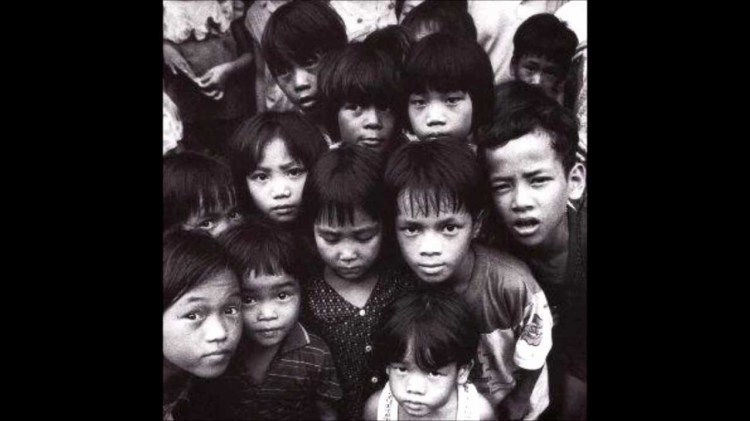
The Vietnamese phrase Bui Doi means “dust of life.” It names the children born of the war—half American, half Vietnamese—unclaimed by either world. But the phrase carries more than pity; it carries theology. In Genesis, humanity itself is formed from dust. To call these children “dust” is to recall creation and abandonment in a single breath. They are the living proof of divine image forgotten—the breath of life exhaled and left to drift.

John, once the soldier’s companion, now stands as the prophet. His voice shakes with the weight of unrepented sin:

“They are the living reminder of all the good we failed to do.”

That line cuts deeper than any artillery blast. It indicts not merely a nation but a civilization addicted to amnesia. The men’s chorus behind him—uniformed, disciplined, proud—becomes the choir of a guilty church. The horns sound like the trumpets of judgment; the snare rolls like the echo of marching ghosts. This is liturgy as lament, where patriotism and repentance collide.

Musically, the song is both anthem and elegy. The brass proclaims victory; the strings mourn the cost. The melody rises toward triumph but collapses into minor chords—hope bleeding into remorse. Boublil and Schönberg understood that guilt itself has rhythm, that moral awakening can be scored.

Philosophically, “Bui Doi” reframes the entire musical. It transforms Miss Saigon from personal tragedy to collective confession. Kim’s sacrifice in Act I was individual; this is national. Her love sanctified one child; this song pleads for all of them. In that sense, “Bui Doi” functions as the Mass of the piece—the moment when the audience, too, becomes congregation, murmuring its mea culpa in the dark.


VII. The Cinematic Mirror

In most major productions, “Bui Doi” is not sung to an empty backdrop but accompanied by film and photographs—documentary images of the real aftermath of war. As John sings, the theater dissolves into a moving archive: Vietnamese children of mixed heritage, refugee camps, faces pressed against wire and window.

This cinematic layer breaks the fourth wall. It shatters illusion and turns the audience into witness. The theater becomes a courtroom of conscience, the spectators no longer observers but participants in the confession.

It is one of the most striking multimedia sequences in stage history—fiction colliding with fact, melody colliding with memory. The children on screen do not sing, but their images form the silent choir beneath the orchestra’s thunder. When the camera pans across those faces and John intones,

“They are the living reminder of all the good we failed to do…”
the entire house falls still. The song becomes cinema, the cinema becomes prayer.

For a few minutes, Miss Saigon ceases to be a musical and becomes a moral documentary in song—a thunderous meditation on guilt, compassion, and the possibility of redemption through remembrance.


VIII. The Theological Horizon

Philosophically, Miss Saigon rests on one question:
Can love redeem a world built on illusion?

The answer is both yes and no. Kim’s love redeems her soul but cannot redeem the system. The Engineer’s illusion sustains his survival but damns his humanity. America itself becomes a metaphor for mankind’s restless migration toward false heavens—a new Babylon promising light but delivering neon.

In biblical terms, the musical is a modern Ecclesiastes. Everything is vanity: war, politics, even dreams. Yet amid that vanity, a single act of selfless love pierces the darkness. When Kim sings “The Sacred Bird” to Tam, she becomes both Mary and Magdalene—mourning and believing, broken yet beautiful.

Her death is not defeat but transcendence: she forces Chris to confront the cost of love, and through him, the audience to confront its own moral anesthesia. The play ends with Chris kneeling, unable to resurrect her, and the music fading into silence. That silence is judgment—the sound of conscience awakening.


IX. Conclusion: The Love That Outlives Empires

“And if you can forgive me now / For all the things I’ve done / Then I will be the one who’ll stay.”

Empires fall, dreams fade, illusions shatter—but love remains, not as sentiment but as wound.
Miss Saigon is not simply a retelling of Madame Butterfly; it is a spiritual reckoning. It asks whether humanity, in its hunger for progress, has forgotten the sacred art of sacrifice.

Kim’s death redeems nothing external—no nation, no system—but it redeems the meaning of love itself.
In her final act, she transforms the stage of war into an altar. The Engineer’s dream dissolves in irony, but Kim’s faith survives in silence. She proves that even in the rubble of civilization, the human heart can still whisper its prayer to heaven:

“You are sunlight and I moon / Joined here, brightening the sky.”

And for a moment, however brief, the audience feels that sky brighten—proof that art, like love, can still make light out of ruin.

Building Bridges in Early Childhood Special Education Programs

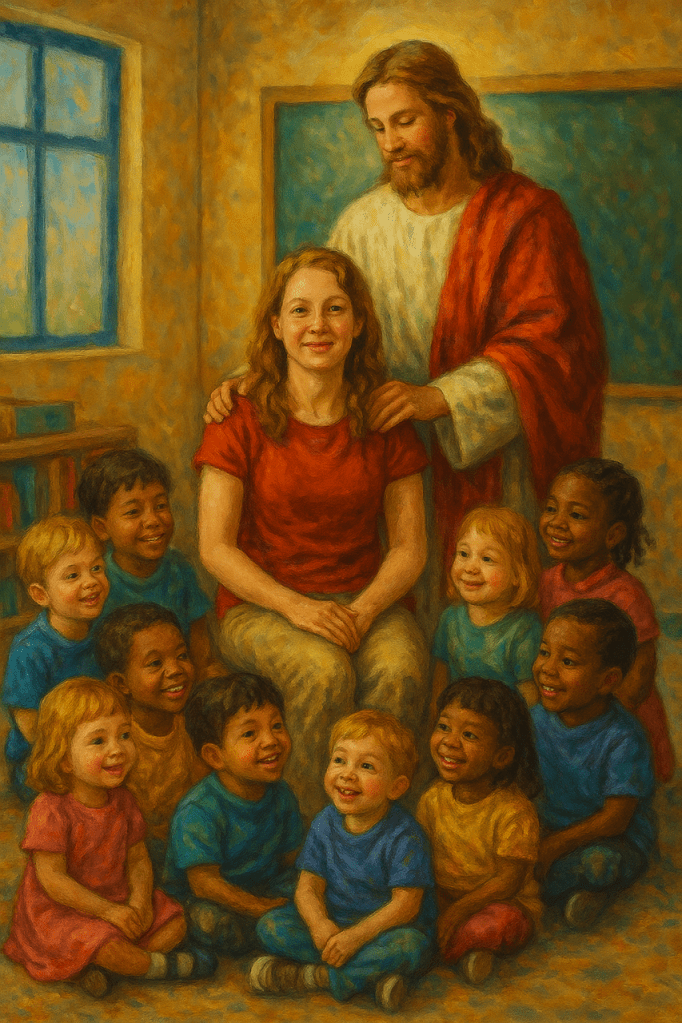
By Lindsey McLain, assisted by AI
lindseymclain17@gmail.com
Picture by proud Granddad as he listens to her stories!

Working with children with autism spectrum disorder is not just my career—it is my calling. My passion for special education began long before I entered the classroom as a teacher. In eighth grade at Faubion Middle School, I joined the Partners PE program—a life-changing experience that introduced me to the joy of working alongside students with disabilities. I didn’t know it then, but that program would be the beginning of finding my career.

Every day with my three- to five-year-old students reminds me that education is less about rigid lessons and more about relationships, trust, and patience. My years of experience supporting children of all ages with autism spectrum disorder, both in college and now in the classroom, have shaped the way I see teaching: as a bridge between worlds.


Trust as the First Lesson

Before I can expect children to learn letters, numbers, or colors, I have to show them that I am safe, consistent, and trustworthy. Building that relationship is the first lesson I teach, though I don’t do it with words. I do it with presence, with predictable routines, and with gentle encouragement. Only when a child trusts me can they begin to risk trying something new.

In my classroom, trust starts by connecting with what each child loves. Some of my students enjoy running and climbing on the playground, while others prefer sitting quietly with a favorite toy. Some love Eric Carle’s colorful storybooks, while others are captivated by anything with wheels or that flies. I use their preferences to build bridges—to join their world before asking them to join mine. When they see that I value what brings them joy, trust begins to grow.


Individual Needs, Individual Paths

No two children are alike, and no two learning journeys are the same. Some of my students need visual schedules to feel grounded. Others need sensory breaks to regain balance. Some thrive in structured play but struggle with transitions. My responsibility is to make sure every child is getting what they need. True fairness in special education isn’t sameness—it’s tailoring learning so that each child has a path forward.

I continue to learn how to adapt materials and instruction for my students. Recently, I was given the opportunity to go through an AAC (Augmentative and Alternative Communication) device training. Using what I learned, I now tailor communication to meet each student’s needs. Some of my students can access many words on their devices, while others focus on functional language—simple but powerful words like go, stop, and help. In the same classroom, I have children who can count to 100, read, and write simple words, and others who are still learning how to share preferred items or take turns. Each child’s growth is unique, and each one reminds me that progress comes in many forms.


Patience and the Pace of Progress

In the first month of school, my students were still learning to adjust to me as their teacher. They didn’t respond to my directions right away, and I quickly realized that relationships must come before expectations. In special education, we often say that progress is not linear—and it’s true. Growth happens at the student’s pace, not mine. Watching my students slowly build trust and routine has taught me to pause not just in my teaching, but in my own daily life. The slower I move, the more I notice the beauty in every little step forward.


Adapting Materials, Adapting Expectations

Every day I adapt. A worksheet might become a hands-on sorting activity, a storybook may come alive with picture cards, and a group activity might start one-on-one before a child joins peers. Adapting does not mean lowering expectations—it means clearing a path so the child can succeed. Flexibility is the tool that opens doors.

I’ve also learned that not all students learn best in the same way. Some benefit from tangible, hands-on experiences—holding real objects as they learn to identify them—while others respond better to visual supports like picture cards or digital images. For example, when working on identifying common objects, one child might need to touch and explore the physical item, while another can easily match it on a communication board. Differentiating materials this way allows each child to access learning in the way that fits them best.


Seeing Through Their Eyes

Teaching children with autism spectrum disorder means constantly trying to see the world through their eyes. What feels overwhelming to one child might be soothing to another. What looks like resistance may really be a need for predictability. The more I step into their perspective, the better I understand their needs—and the more compassion grows in me as a teacher.

Over time, I’ve learned that communication isn’t always spoken. Many of my students express their needs through subtle nonverbal cues—a shift in body language, a glance away, covering their ears, or beginning to pace. These moments often tell me more than words ever could. When I notice a child’s shoulders tense, their breathing quicken, or their focus fade, I know it’s time to pause. They may need a sensory break, help with a task, or simply a moment to feel safe again.

I’ve also come to understand that all behavior is communication. Sometimes a child might cry, run away, or throw items—not out of defiance, but out of frustration, fear, or an unmet need. Every action, whether it’s laughter, avoidance, or a meltdown, carries meaning. It’s my job to look beneath the surface and ask why a behavior is happening—what the child is trying to tell me through their actions.

Learning to read these signals has been one of the most powerful parts of my teaching journey. It reminds me that listening goes far beyond hearing words—it’s about observing, understanding, and responding with empathy. When I take the time to notice and respond with care, my students feel seen, supported, and understood.


Partnering with Families

I am also beginning to see the importance of resources for parents. Families often want to understand how to best support their children at home, and I’ve learned that open communication and sharing tools—like visuals, routines, and sensory supports—makes a huge difference. During my first parent-teacher conferences, I was able to share the progress I’d seen: new words, increased independence, and more engagement during group time. Seeing parents’ faces light up with pride reminded me why I love what I do.


Love, Smiles, and Joy

At the heart of my motivation is love—the love I give and the love I receive. It shows up in the smiles when a child recognizes me in the morning, in the laughter that bursts out during play, and in the quiet joy of a breakthrough moment. These children teach me as much about joy as I teach them about learning. Their small wins are also my wins. Their happiness, however fleeting, is a reminder of why I chose this path. Love is not just the motivation for teaching—it is the reward.

Now that I finally have a classroom of my own—two classes, ten students, and more to come—I feel the deep responsibility and joy of shaping a learning environment from the ground up. Every day brings new discoveries, laughter, and lessons. Watching my students love, smile, grow, and enjoy life just like all children do reaffirms that they are not defined by their challenges, but by their potential.


Celebrating the Small Wins

In my classroom, there is no such thing as a “small” win. Every word spoken, every step toward independence, and every positive interaction with a peer is cause for celebration. These victories remind the children—and me—that progress is real and possible. They build confidence and keep us moving forward together.

One of my favorite recent moments came during school picture day. One of my students was very nervous and hid their face when it was time for their photo. Their mother had been so excited to see their first school pictures and was eagerly looking forward to them. We decided to try again about an hour later, after the student had some time to feel calm and comfortable. This time, they walked up with confidence and gave the biggest smile. When their mother saw the photos, her face lit up with joy. That small moment reminded me that success doesn’t always come on the first try—sometimes it blooms quietly after patience, trust, and encouragement.


Conclusion: A Program of Hope

Teaching children with autism spectrum disorder is about more than academics. It is about dignity, relationship, and hope. My classroom is a place where every child can learn and grow at their own pace, supported and understood. It is a place where I adapt, celebrate, and most importantly—love.

McKinney ISD’s special education program is entering a new chapter with recent leadership changes, and I believe this will bring fresh opportunities for growth, collaboration, and advocacy. With continued focus on supporting teachers and families, we can keep building programs that meet every child where they are.

These children may see the world differently, but through their eyes, I have learned to see beauty, courage, and joy in ways I never imagined. Every day, I am reminded that teaching isn’t just about shaping their future—it’s about allowing them to shape mine.

Come to Me as a Child: The Invitation from Christ and Its Meaning Today

A collaboration between Lewis McLain & AI


Introduction: The Most Disarming Invitation

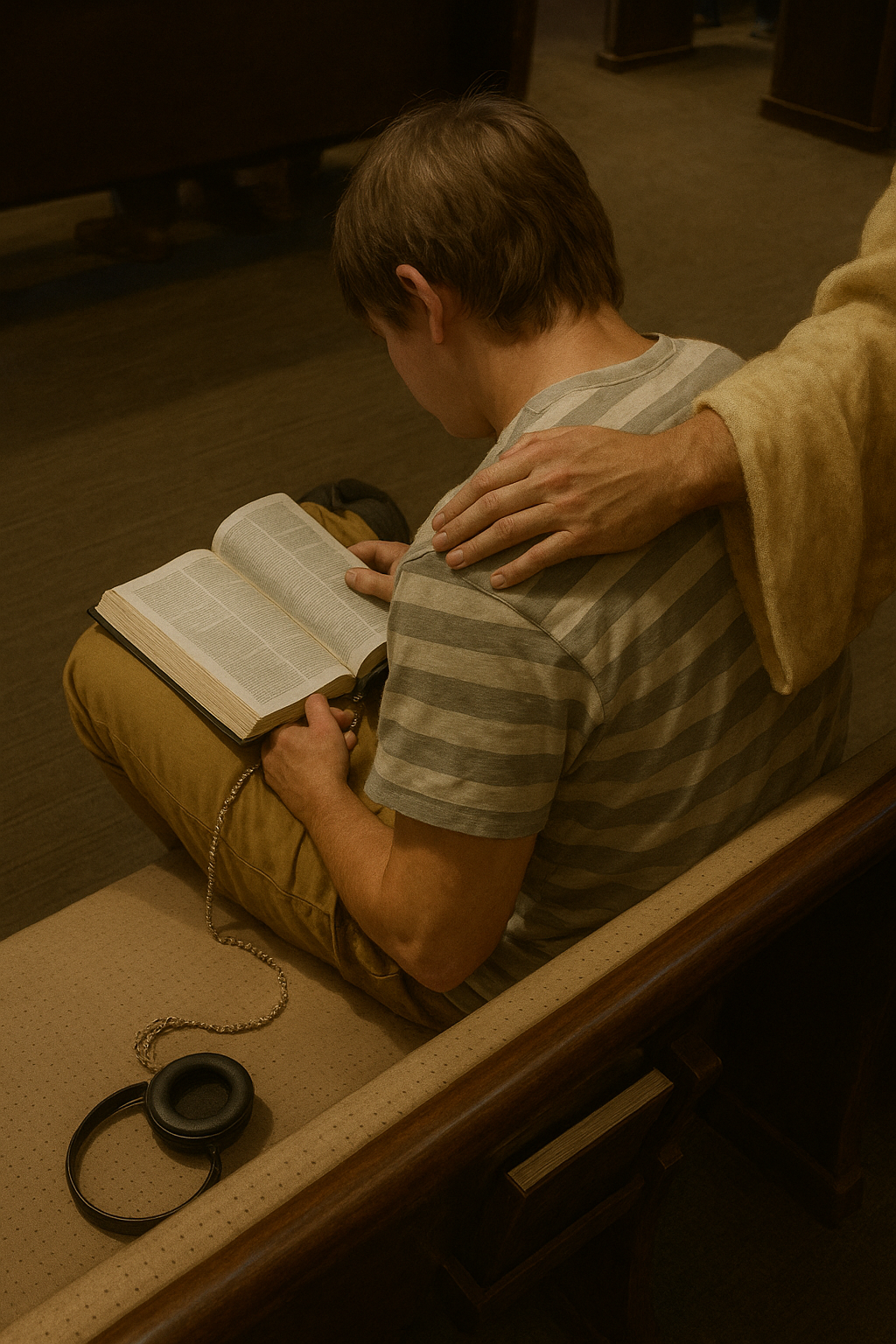
Of all the invitations Jesus ever gave, none is more tender or more revealing than His call to “Let the little children come to Me.” In a world that prized power, rank, and age, Jesus placed a child in the midst of grown men and declared that the way into His Kingdom was not through merit, intellect, or strength—but through simplicity of heart. The Gospels record this lesson several times (Matthew 18:1-5; 19:13-15; Mark 10:13-16; Luke 18:15-17), which tells us how central it is to the heart of the Christian life.


The Scene: Greatness Redefined

In Matthew 18, the disciples were debating who would be greatest in heaven. Their conversation revealed an adult obsession with comparison and hierarchy. Jesus interrupted their ambitions by calling over a small child—someone overlooked, unranked, and powerless.

“Unless you change and become like little children, you will never enter the kingdom of heaven.” (Matthew 18:3)

In one sentence, Jesus inverted the value system of His listeners. Greatness, He said, begins with humility. To “become like children” is to admit dependence and trust rather than display status. The Kingdom of God is not climbed into; it is received with open hands.

Reflection Questions

  1. What ambitions or comparisons most distract you from a childlike faith?
  2. How do humility and dependence challenge our culture’s idea of success?
  3. In what ways might “becoming smaller” actually enlarge your soul?

The Heart of the Matter: Childlike, Not Childish

Jesus did not praise immaturity, ignorance, or naivety. He praised childlikeness—qualities of heart that adults tend to lose: trust, wonder, forgiveness, curiosity, and the ability to be taught. A child depends without shame, asks without hesitation, and forgives without keeping score. These traits mirror the faith that connects us to God.

When He said, “Anyone who will not receive the kingdom of God like a little child will never enter it” (Mark 10:15), Jesus was describing an approach, not an age. The requirement is not to remain small but to remain soft—humble enough to receive grace instead of earning it.

Reflection Questions

  1. Which childlike quality—trust, wonder, forgiveness, curiosity—do you find hardest to retain?
  2. How can you cultivate teachability before God this week?
  3. What would your worship look like if you came with that childlike heart?

The Blessing: His Hands on the Children

In both Mark 10 and Matthew 19, people brought children to Jesus, and the disciples tried to push them away. Perhaps they thought He had more important work to do. But Jesus became indignant—a rare word for His righteous anger. He insisted, “Do not hinder them.” He gathered the children into His arms, laid His hands on them, and blessed them.

That gesture still defines the heart of Christian ministry. To hinder a child—by neglect, cynicism, or hardness—is to obstruct the very image of faith God desires. Every time the Church welcomes the least, protects the vulnerable, or teaches with gentleness, it reenacts that moment of blessing.

Reflection Questions

  1. Who in your life might be “hindered” from coming to Jesus by neglect or discouragement?
  2. How can your words or presence become an open invitation instead?
  3. What practical steps could your church take to bless children and the childlike?

The Application: What It Means Today

1. Trust Over Control

Modern life prizes control—plans, schedules, data, mastery. Yet the Gospel calls us to trust. A child steps forward because the parent’s voice is enough. To follow Jesus is to release the illusion of control and to rest in His character.

2. Wonder Over Cynicism

Children see beauty where adults see routine. Faith flourishes when we regain our sense of wonder—when sunrise, Scripture, and song awaken gratitude instead of fatigue. Cynicism may sound sophisticated, but it cannot worship.

3. Relationship Over Performance

Children do not earn their place at the table; they belong by birth and love. In the same way, believers are accepted not by performance but by adoption into God’s family. Our worth is not negotiated—it is bestowed.

4. Presence Over Hurry

A child notices the moment; an adult is often elsewhere. Jesus invited children to come to Him—a call to be present. Prayer and worship are not tasks but encounters. To come as a child is to arrive unhurried, eager, and attentive.

Reflection Questions

  1. Where in your life are you trying to control what only God can direct?
  2. When was the last time you paused to experience pure wonder before God?
  3. How can you practice “presence over hurry” in your daily prayer or worship?

The Challenge: Becoming Small in a Big World

It is striking that Jesus did not tell the children to become like the disciples, but the disciples to become like the children. In every generation, the Church is tempted to mirror worldly hierarchies—titles, influence, eloquence, size. But the Kingdom belongs to those who kneel, not to those who climb. To be childlike is not to be weak but to be free from pretense. It is the posture that allows grace to enter.

Reflection Questions

  1. Where might pride or performance still keep you from kneeling?
  2. How does God invite you to rest in grace rather than achievement?
  3. What would your leadership, parenting, or ministry look like if shaped by childlike humility?

I love you, Ben, and will always be by your side.

Conclusion: The Open Arms of Christ

When Jesus said, “Let the little children come to Me,” He was not limiting His invitation to a specific age. He was revealing the doorway of heaven. The arms that once cradled children on a Galilean hillside would soon stretch open on a cross to welcome all of God’s children home.

To come as a child is to come with empty hands, honest eyes, and an open heart. In that humility, we find not only the entrance to the Kingdom—but the embrace of the King Himself.


A Prayer of Childlike Faith

Lord Jesus,
Teach me to come to You not with pride but with peace,
not with credentials but with curiosity.
Make my heart soft again—able to wonder, to trust, to forgive.
Strip away the layers of cynicism that I have called wisdom,
and restore to me the joy of simple belief.
As a child finds rest in a father’s arms,
let me find rest in Yours.
Amen.

Fund 999


A collaboration between Lewis McLain & AI

Expanded Municipal Conference Edition
(A municipal one-act for finance directors, auditors, city managers, and anyone who fears the phrase “per GASB …”)

Dramatis Personae

  • Socrates — “Temporary Fiscal Clarity Consultant.”
  • Clerk — keeper of keys, minutes, and mysteries.
  • Finance Director — calm, caffeinated, bindered.
  • Auditor — cheerful, bespectacled, powered by sampling.
  • Councilmember — earnest, reform-minded, occasionally literal.
  • Budget Analyst — Excel whisperer, existential worrier.
  • Grants Coordinator — compliance hobbyist, binder color-coder.
  • IT Person — speaks API, fears “Final_FINAL_v27.xlsx.”
  • Bond Counsel (Cameo) — invokes covenants, vanishes.
  • City Manager — thunder on loafers.
  • Stranger — walk-on comic angel of clarity.
  • Chorus — two staffers labeled “Chart of Accounts,” who sing footnotes and disclaimers.

Scene 1 — Records Room, 8:01 a.m.

(A pull-chain bulb. Filing cabinets labeled “Special Revenue (Ancient)” and “Projects We Definitely Finished.” A banker’s box glows faintly.)

Clerk: (whispering) I found it behind the 1998 copier lease and an unsigned MOU.
Socrates: (peering in) Ah! A relic with a number: Fund 999. The last digit thrice—the mystics will be unbearable.
Clerk: We numbered it so we’d remember it. We forgot it because we numbered it.
Socrates: Thus the first law of bureaucracy: name a thing, and it hides behind the label.

(Enter Finance Director with coffee.)

Finance Director: We don’t use Fund 999. It’s legacy. Dormant. Harmless.
Socrates: Dead or sleeping?
Finance Director: With funds there is “active,” “should’ve been closed,” and “awaiting discovery by auditors.”
Chorus: (soft hum) GASB fifty-four… five flavors… evermore…
Socrates: Five flavors? I hope they pair with coffee.
Finance Director: They pair with pain.

(Lights shift.)


Scene 2 — The Conference Room of Unfinished Business

(Whiteboard reads: “CLOSE-OUT PLAN — DRAFT OF THE DRAFT.” A plate of cookies labeled “For Council Only.”)

Budget Analyst: We think it began as a Special Revenue Fund.
Socrates: “Special” in the sense of purpose or in the sense of “we didn’t know where else to put it”?
Budget Analyst: (shrugs) Column G says purpose. Column H says “¯\(ツ)/¯”.
Grants Coordinator: I found a 2004 email: “Use Fund 999 for ‘Economic Vibrancy Initiatives.’”
Socrates: A phrase so broad that even philosophy can’t hug it.

Finance Director: (opens binder) Under GASB 54, fund balance has five flavors: Nonspendable, Restricted, Committed, Assigned, Unassigned.
Socrates: Like Greek virtues, but with footnotes and acronyms. Which flavor is 999?
Finance Director: (grim) It says Assigned.
Socrates: Assigned by whom?
Finance Director: People who no longer work here and possibly never existed.

Councilmember: If it’s assigned, can we un-assign it and buy sidewalks?
Socrates: Can a promise made at midnight guide a parade at noon?

(Enter Auditor, jolly and terrifying.)

Auditor: I sensed ambiguity. I came as soon as it balanced.

(They gather around a laptop that immediately requests updates.)


Scene 3 — Field Audit, with Flashlight

(A worktable of binders, highlighters, and a flashlight for dramatic effect.)

Auditor: Three classic reasons a fund like this persists:

  1. Revenue vanished, meetings continued.
  2. It became a parking lot for “temporary” due-to/due-from balances during the Bronze Age.
  3. Someone feared commingling like they fear cilantro—

(Door SLAMS. Enter City Manager, thunder on loafers.)

City Manager: (booming) WHO SPOKE THE C-WORD?
(Everyone freezes. Coffee trembles.)
City Manager: The C-word is worse than profanity! It shall never enter your mind nor cross your lips. Should you contemplate inter-fund cross-pollination, your tenure shall be concluded by end of day—by end of lunch if I’ve had decaf! We separate by purpose, by law, by covenant, by destiny! Are we clear?
All: Crystal!
City Manager: Carry on. (Exits like a thunderclap. The doorknob impelled the wall and won’t close until maintenance can come.)

Socrates: Behold, a policy sermon in one act.
Auditor: We shall say “cash cross-contamination.”
Grants Coordinator: I prefer “inter-fund salsa.”
Finance Director: Let’s say none of that in the minutes.

Auditor: As I was saying: trace origin, verify restrictions, clear “temporary” balances old enough to vote, and—if unconstrained—close or repurpose per policy.
Socrates: A funeral with paperwork.
Budget Analyst: And an obituary in Column J.

Chorus: (singing softly) Schedule of Expenditures of Federal Awards… SEFA, SEFA, hallelujah…


Scene 4 — The Council Work Session That Lasts Forever

(Slide: “Agenda Item 7: Fund 999 — Close-Out Options.” The clock reads 5 p.m. It will continue to read 5 p.m.)

Councilmember: Why do we have so many funds?
Socrates: Because the human heart loves categories. Also, reports paginate badly.
Finance Director: Funds aren’t piles of cash; they’re accounting entities. The question: does 999 still serve a public purpose with the correct basis of accounting, or is it an honorary title we forgot to retire?
Councilmember: And the risk?
Finance Director: Confusion, misreporting, and the slow death of transparency by a thousand “Other Financing Sources.”
Socrates: When is a Special Revenue Fund truly special?
Finance Director: When a revenue is legally restricted or formally committed. “We like it this way” is not a restriction.
Socrates: Capital Projects Fund?
Finance Director: For major construction tracked over years.
Socrates: Internal Service?
Finance Director: Shared services—fleet, IT, insurance—half science, half therapy.
Socrates: Enterprise?
Finance Director: Water, sewer, airport—where depreciation is theoretical until cash runs out.
Councilmember: So Fund 999 may be none of these.
Socrates: Or all in spirit and none in substance—Schrödinger’s Fund- you know, the quantum mechanics thingy.
Auditor: And remember: no cross-conta—
All: SHH!
Auditor: (solemn) The thing we do not name.

(Suddenly, the door opens. A man in jeans and a checked shirt leans in, microphone in hand.)

Stranger: You might be a redneck if the only thing you know about debits and credits applies to your bar tab!

(He tips his hat and leaves before anyone can speak. A beat of stunned silence.)

Budget Analyst: Was that Jeff Foxworthy?
Councilmember: Sure looked like him.
Finance Director: Who invited him to this workshop?
Clerk: Dunno, but he nailed our internal controls problem.
Socrates: A wandering comic sage—he spoke truth in accruals.
Auditor: And violated no procurement policy.
(They shrug and return to the slide.)


Scene 5 — The Archive Yields a Scroll

(The IT Person hustles in with a USB drive labeled “Do_Not_Delete.”)

IT Person: I found the creation memo in a retired share. Also twelve copies named “Final.”
Budget Analyst: (reading) “Fund 999 established to collect developer contributions for ‘Vibrancy Improvements’: benches, trees, and public art—until expended.”
Grants Coordinator: That smells like Restricted—by agreement, maybe even by location.
Finance Director: If contribution agreements limit geography and purpose, the money can’t fund sidewalks three miles away or festival confetti.
Socrates: The fund’s soul is not empty; merely mislabeled.

Auditor: Proposed remedy:

  • Inventory balances; tie dollars to source agreements and zones.
  • Finish intended projects or amend agreements in public.
  • Anything orphaned goes to the closest lawful purpose via resolution, with a bright-line audit trail.

Councilmember: And if any dollars touched bonds?
(Enter Bond Counsel like a thundercloud.)
Bond Counsel: Then behold private use and spend-down rules. One does not mix—
All: SHH!
Bond Counsel: —one does not cohabit bond proceeds with things best left separate. (Vanishes.)
Socrates: A god descended, spoke in acronyms, and departed.


Scene 6 — The Ritual of Reclassification

(Whiteboard now reads: “Close-Out Steps (No New Mysteries).”)

Finance Director:

  1. Document the origin — revenue source, legal constraints, geographic limits.
  2. Reconcile balances — clear “temporary” due-tos/froms and identify encumbrances older than our interns.
  3. Reclassify fund balance — from “Assigned” to Restricted where supported; from myth to Committed via Council action; true orphans to Unassigned in General Fund—but only if truly free.
  4. Council resolution — honor original intent, specify projects, authorize closure or continuation in a proper fund.
  5. ERP updates — lock Fund 999; migrate remaining activity with a clean audit trail and a change log longer than the Iliad.
  6. Public report — plain-English: “Where it came from, where it’s going, why it’s right.”

Auditor: And when you close it, do not create a brand-new “Miscellaneous Special” for leftovers. That’s like cleaning your desk by buying a bigger drawer.
Budget Analyst: (guilty) Drawer 4 is full.

Socrates: Adopt a Fund Rationalization Policy:

  • Sunset clauses (“close within 24 months of project completion”).
  • Criteria for when a special revenue fund is warranted vs. a department in General.
  • An annual Fund Cemetery Review: who can be merged, closed, or resurrected only with cause.

Finance Director: (scribbling) I’ll title it “The No New Mysteries Act.”
Grants Coordinator: With an appendix: “Words We Don’t Say.”
All: (in unison) The C-word.


Scene 7 — The Public Hearing

(A citizen with a stroller; a teenager in a marching band shirt; a retiree holding a sapling.)

Councilmember: Tonight we confess: sometimes we created complex things for simple purposes, then forgot the purpose. We bind ourselves to clarity.
Citizen: Does this mean the benches and trees are finally coming?
Finance Director: (smiles) In the right places, for the right reasons, with the right dollars.
Socrates: If a city can discover the meaning of “assigned,” it can surely plant a tree.

Chorus: (like a lullaby)
Nonspendable for what cannot be spent,
Restricted by law and covenant;
Committed by council’s earnest vote,
Assigned by those who mind the float;
Unassigned to cushion rain…
and never hide your funds again.


Scene 8 — Epilogue in the Records Room

(The box labeled “Fund 999” now bears a red tag: “CLOSED—SEE RES. 2025-117.”)

Clerk: Will there be others like it?
Socrates: Anything built by people is half cathedral, half maze.
Finance Director: But now we keep a map—and a list of words we do not speak.
Auditor: See you next year. Fewer legends, more sidewalks.
(They nod. The bulb clicks off.)


Closing Hymn (Tempo: Workshop After 5 p.m.)

Verse 1
We opened every ledger, we traced the oldest thread,
Found dollars softly sleeping in the archives of the dead.
We numbered them with reverence, we labeled them with care,
Then closed them with a policy and sunlight everywhere.

Chorus
Oh sing the five fund flavors, in balance true and kind:
Restricted, Committed, Assigned, Unassigned!
And when the auditors arrive, we greet them with a grin—
For legends fade to footnotes when the policies begin.

Verse 2
We honored covenants sacred, we planted trees at last,
We cleared the “temporary” items from the echoes of the past.
If ever funds grow labyrinths on shelves we cannot see,
We’ll ask the simplest question first: “What is the purpose, be?”

Chorus (repeat)


Quick Reference

  • GASB 54 Fund Balance: Nonspendable / Restricted / Committed / Assigned / Unassigned
  • Special Revenue Fund: Use only for legally or formally constrained revenues.
  • Capital Projects Fund: Track major construction across years.
  • Internal Service Fund: Shared services; mind rate setting and net position.
  • Enterprise Fund: Business-type; depreciation is real (and so is cash).
  • Close-Out Steps: Origin → Reconcile → Reclassify → Council Action → ERP Migration → Public Summary.
  • Policy Fixes: Sunset clauses; annual fund rationalization; bright-line handling of orphans; glossary of “Words We Do Not Say.”

Staging & Use Notes

Run time ≈ 15–18 minutes. Cast 8–10. Props: banker’s box, scary binder, whiteboard, pull-chain bulb, one cookie labeled “For Council Only.”
Handout: Close-Out Checklist + Five Flavors explainer.


Psyche Revived by Cupid’s Kiss

A collaboration between Lewis McLain & AI (more from the three visits Linda & I had to the Louvre with high school students from Trinity Christian Academy).

Antonio Canova and the Awakening of the Soul


Introduction

Among the marble treasures of the Louvre Museum stands one of the most moving sculptures of all time — Psyche Revived by Cupid’s Kiss, carved by the Italian master Antonio Canova between 1787 and 1793. It depicts the mythological moment when the god Cupid (Eros) revives his beloved Psyche with a kiss, restoring her from deathlike sleep to life and love.

At once tender, idealized, and technically perfect, this masterpiece captures not only the beauty of myth but also the intellectual spirit of the Neoclassical age. For any student observer, it represents the perfect synthesis of form, feeling, and philosophy — a lesson in how art can make marble breathe.


1. The Artist and His Era

Antonio Canova (1757–1822) was born in Possagno, Italy, into a family of stonemasons. Trained in Venice and working in Rome, he became the undisputed master of the Neoclassical style, the artistic movement that sought to revive the order, harmony, and moral clarity of ancient Greece and Rome.

Canova’s art emerged during the Age of Enlightenment, a time when reason, science, and rediscovered antiquity guided intellectual life. Artists looked to classical sculpture for purity of line and noble simplicity. Against the emotional extravagance of the Baroque, Canova’s figures embodied balance, restraint, and serenity.

His goal, he once said, was to give marble the “appearance of living flesh” — and through meticulous polishing and proportion, he succeeded. His works, such as Perseus with the Head of Medusa and The Three Graces, stand as paragons of refinement and calm emotional depth.


2. The Myth of Cupid and Psyche

The story comes from Apuleius’s The Golden Ass (2nd century A.D.), one of the most enduring love myths of classical antiquity.

  • Psyche, a mortal woman of exceptional beauty, arouses the jealousy of Venus (Aphrodite), who orders her son Cupid to make Psyche fall in love with a monster.
  • Instead, Cupid himself falls in love with Psyche, visiting her each night unseen. When Psyche disobeys his order never to look at him, he vanishes.
  • After many trials set by Venus, Psyche opens a box meant to contain beauty but instead releases a deadly sleep upon herself.
  • Cupid finds her lifeless body, lifts her in his arms, and awakens her with a kiss.
  • In the end, the gods grant Psyche immortality so she may be eternally united with Cupid.

The myth is a timeless allegory of the soul’s (psyche) awakening to divine love and eternal life — a theme that resonated deeply with both ancient philosophy and Christian symbolism.


3. Commission and Creation

Canova received the commission around 1787 from Colonel John Campbell, a British nobleman visiting Rome. The sculptor completed the work by 1793, using Carrara marble, prized for its pure white translucence.

He later produced a second version (1796), now in the Hermitage Museum, but the first — the Louvre version — remains the most celebrated. It was acquired by Joachim Murat, Napoleon’s brother-in-law, and entered the Louvre’s collection in 1824.

Canova personally oversaw every stage of its creation, using fine abrasives and oil to achieve an extraordinary surface polish. This allowed light to glide across the marble as if over living skin, enhancing the illusion of breath and movement.


4. Composition and Form

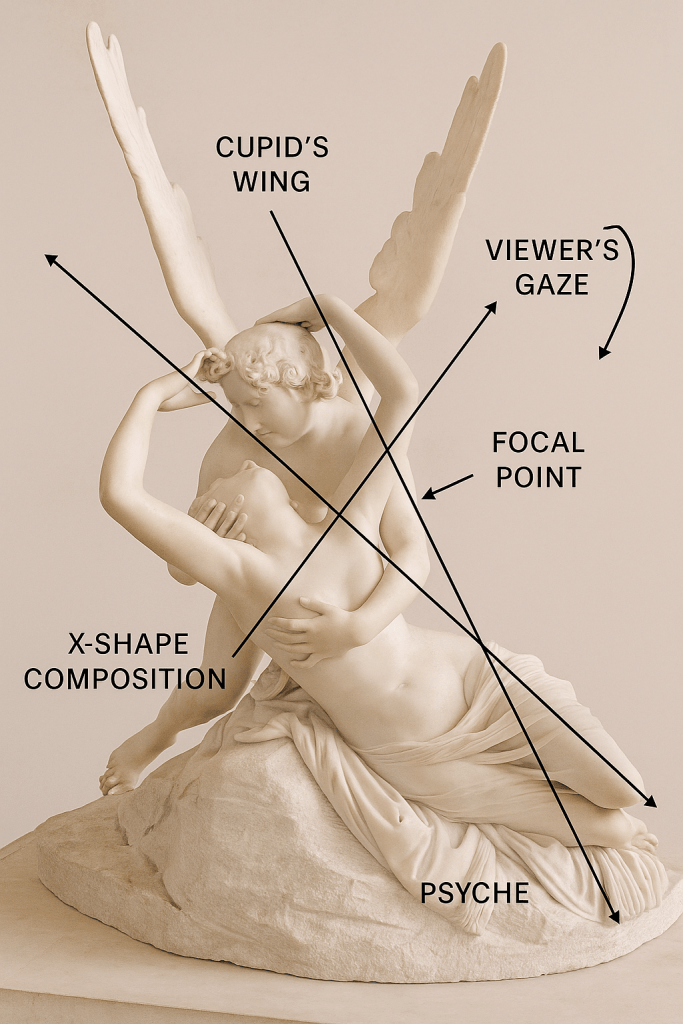
The sculpture captures the precise instant of awakening: Cupid bends over Psyche, supporting her head with one hand while their lips draw near. Psyche’s arms reach upward to encircle him, creating a perfect X-shaped composition — a dynamic cross of limbs and wings that binds the figures together.

Key features to observe:

  • Cupid’s wings rise upward like an angelic halo, framing the scene and drawing the eye toward the couple’s faces.
  • Psyche’s body arches in a graceful curve, suggesting both fragility and renewal.
  • Their hands and faces form the emotional focal point — the intersection of life, love, and divine energy.
  • The base of the sculpture, rough and unpolished, contrasts with the smooth flesh above, symbolizing the transition from earthly death to heavenly awakening.

In the educational diagram below, the X-shape composition and the diagonal lines of sight show how Canova directs the viewer’s gaze from Cupid’s wings to Psyche’s face and then downward through the drapery — a continuous flow of motion through stillness.


5. Symbolism and Interpretation

Canova’s sculpture is far more than an illustration of a myth — it is a philosophical meditation on love and the soul.

The moment of Psyche’s awakening becomes a symbol of spiritual rebirth. The butterfly, often associated with Psyche in classical art, represents transformation — the soul leaving its cocoon of mortality. Cupid, as divine love, breathes eternal life into that soul.

The composition’s diagonal tension embodies both physical energy and emotional ascent: the human yearning for the divine, the eternal dance between matter and spirit.

In Neoclassical thought, beauty was a moral force — the visible expression of virtue and truth. Thus, Canova’s restrained tenderness contrasts with the passionate turmoil of Baroque art. Love here is not sensual conquest but spiritual restoration.


6. Reception and Legacy

When first exhibited in Rome, Psyche Revived by Cupid’s Kiss was immediately recognized as a masterpiece. Critics called it “the triumph of grace over passion.” Visitors were captivated by its lifelike delicacy and emotional power conveyed without exaggeration.

It became a defining work of Neoclassicism, illustrating how calm form could evoke profound feeling. The sculpture influenced generations of artists — including Bertel Thorvaldsen, Jean-Baptiste Carpeaux, and later Romantic painters who explored the harmony of body and spirit.

Even into the 19th century, it remained a reference point for art academies, where students studied its anatomy, symmetry, and emotion as an ideal of beauty.


7. Observing the Sculpture in the Louvre

The sculpture is displayed in the Denon Wing, Room 403, near Michelangelo’s Dying Slave and Rebellious Slave. The museum’s lighting enhances the subtle contrast between shadow and shine that Canova intended.

For a student observer:

  • Move around the sculpture; every angle reveals a new emotional dialogue.
  • Notice how light travels across the marble — the figures almost seem to breathe.
  • Observe how Cupid’s downward gaze meets Psyche’s upward movement, forming an eternal loop of love and revival.
  • Pay attention to the texture contrast between the finely polished skin and the rough rock — symbolizing transformation from mortality to divinity.

This active observation turns the experience from passive viewing into an encounter with Canova’s philosophy of life and art.


8. Enduring Meaning for Students

For modern students, Psyche Revived by Cupid’s Kiss offers three timeless lessons:

  1. Technical mastery serves emotional truth. Canova’s polish and proportion allow the emotion to flow through form rather than overwhelm it.
  2. Balance creates beauty. The sculpture’s X-shaped harmony shows how composition guides feeling.
  3. Love awakens the soul. Beyond its mythic story, it reminds us that true beauty unites body and spirit, art and life.

In this sense, Canova’s work is not just about marble or myth — it is about humanity’s eternal desire for renewal, compassion, and transcendence.


Conclusion

In Psyche Revived by Cupid’s Kiss, Antonio Canova transformed stone into spirit. He captured the silent instant where death yields to love, and stillness becomes motion. His art bridges mythology and philosophy, sensuality and serenity, mortal and divine.

For all who stand before it — whether in wonder, study, or reverence — the message remains the same: Love revives, beauty endures, and art can awaken the sleeping soul.

“The beauty of the body is the beauty of the soul made visible.”
Antonio Canova

Dallas City Hall and the True Cost of Deferred Maintenance

🏛️ Dallas City Hall and the True Cost of Deferred Maintenance

A Case Study in Municipal Infrastructure, Veiled Optimism, and Avoidance


Dallas City Hall: Decades of Neglect?

Introduction: A Landmark in Decline

When it opened in 1978, Dallas City Hall embodied civic confidence. Designed by I. M. Pei (1917–2019)—the Chinese-American architect behind the Louvre Pyramid, John F. Kennedy Presidential Library, and Bank of China Tower—the building fused modernist ambition with civic purpose: a six-story administrative wedge, a vast public plaza, and a two-level underground parking garage spanning nearly twelve acres in downtown Dallas.

The original cost estimate in the mid-1960s bond plan was $42.200 M; by completion, the design + construction (building, plaza, and garage) exceeded $70.000 M 🔗Dallas City Archives—a 66 % escalation before inflation.

Half a century later, that same structure faces structural and systems decay: water infiltration, concrete fatigue, failing HVAC (heating, ventilation and air conditioning), and ADA (Americans with Disabilities Act) deficiencies. Engineers now warn that repairs could cost between $152.000 M and $345.000 M 🔗Dallas News.


What’s Broken—and How Much

Major SystemTypical 2024 EstimateNotes
Structural repairs – garage$25.000 M – $145.000 Mtwo-level; corrosion + leaks
Envelope / roof / plaza waterproofing$36.000 M – $100.000 Mcracked membrane + drainage failures
Electrical panels (210 units)$5.300 Mobsolete switchgear
Generators (5 units)$6.000 Mlimited backup capacity
HVAC retrofits$5.000 Maging air handlers and controls
Fire suppression systems$7.500 Mlow pressure / coverage issues
Code & ADA upgrades≥ $10.000 Melevators, security, IT rooms

Total deferred maintenance: ≈ $152.000 M – $345.000 M 🔗KERA News.
Citywide building-repair budget (FY 2024): ≈ $14.500 M 🔗Dallas News.


The Arithmetic of Neglect

Deferred maintenance is not delayed expense; it is multiplied expense.

From the FY 2024 Annual Comprehensive Financial Report (ACFR) 🔗City of Dallas FY 2024 ACFR:

  • Gross depreciable assets: $7.328 B
  • Accumulated depreciation: $3.222 B
  • Annual depreciation expense: $0.204 B (≈ 2.78 % of gross)
    Implied service life: ≈ 36 years

But accounting depreciation measures wear and tear at original cost, not replacement cost. Dallas City Hall is still carried at its 1977 cost.

Assuming 3 % annual inflation for 36 years: (1.03)^{36}=2.898 \text{ (multiplier)};\quad (1.03)^{36}-1=1.898\text{ (+189.8 % growth)}.

Adding a working-live premium—the inefficiency of renovating while occupied—raises costs further.
Industry studies from the U.S. General Services Administration, UK Office of Government Commerce, and construction research journals report 20 % – 40 % higher costs for occupied-building projects. Using 25 % here is conservative 🔗GSA Guidance. 2.898×1.25=3.622 (effective replacement multiplier).2.898 × 1.25 = 3.622 \text{ (effective replacement multiplier)}.2.898×1.25=3.622 (effective replacement multiplier).

Thus each $1 in 1977 requires ≈ $3.622 today.

Applying this to $7.328 B: 7.328×3.622=$26.553B(future replacement cost).7.328 × 3.622 = \$26.553 B (\text{future replacement cost}).7.328×3.622=$26.553B(future replacement cost).

Dividing by 36 years: ≈ $737.600 M per year, or ≈ 10 % of gross.
By comparison, Dallas books $204 M and spends only $14.5 M. That shortfall is the source of every headline repair bill.


Why Projects Go Off the Rails

City Hall’s $42.200 M → $70.000 M jump arose from six factors still common today:

  1. Optimism + scope under-definition (no contingency).
  2. Inflation (volatility of 1970s prices).
  3. Scope creep (additional features + art).
  4. Hidden conditions (garage, plaza).
  5. Regulatory drift (code changes).
  6. Working-live premiums (keeping operations open).

Incentives, Lowballing & the Change-Order Machine

Public projects exist within optimism, competition, and uncertainty.

  • Optimism bias / strategic understatement: research by Bent Flyvbjerg shows systemic under-pricing 🔗Flyvbjerg Study.
  • Procurement pressure: lowest bid wins → “winner’s curse.”
  • Client changes: owners add scope mid-stream.
  • Renovation unknowns: concealed defects force change orders.

Parallels: Boston “Big Dig” (≈ $15 B) 🔗Boston Globe, Denver Airport baggage system collapse, Sydney Opera House ($7 M → $100 M AUD).

Mitigations: use Reference-Class Forecasting (RCF), early builder input via Construction Manager at Risk (CMAR) or Design-Build, and independent estimators.


City Hall as Exhibit A

If Dallas funded renewal proportionally, City Hall’s share would be ≈ $35–$40 M per year.
Instead, the entire building portfolio gets < $15 M.
Hence City Hall’s $152–$345 M backlog—equal to 4–10 years of the whole program.


Reunion Arena: Not Good Enough!

The Political Blind Spot: Do They Really Want to Know?

Revaluing assets honestly would show many cities functionally bankrupt or near that line. It’s easier to fund prestige projects than repairs.

  • Reunion Arena (1980): $27.000 M; 18,187 (basketball)/17,001 (hockey).
  • American Airlines Center (2001): $420.000 M; ≈ 19,200/18,532 (+1,000 ≈ +5 %).
  • Cost multiple: ≈ 15× for marginal gain 🔗Wikipedia AAC.

Now in 2025, the Dallas Mavericks plan a new basketball-only arena and entertainment district, lease ending 2031, target opening 2031-32 season 🔗Axios Dallas.
Possible site: 182-acre tract in Irving already rezoned for mixed use 🔗WFAA.
Meanwhile the Dallas Stars explore relocation to Plano 🔗Front Office Sports.

The contrast is stark: a city that cannot find $35 M to maintain its seat of government may debate hundreds of millions for a 20-year-old arena’s replacement.
Deferred maintenance has no cheerleaders or naming rights—but it defines fiscal reality.


American Airlines Center: Now Not Good Enough?

The Roadway Analogy

A two-lane road built through cornfields is cheap; rebuilding it under 30,000 Average Annual Daily Traffic (AADT) requires detours and night work.
Renovating City Hall while occupied is the same exercise indoors.


Policy Framework for Renewal

  1. Budget to Depreciation. Phase from $204 M to ≈ $738 M.
  2. Facility Condition Assessments (FCA) every 3–5 years.
  3. Account for Working-Live Costs. Include swing space and night work.
  4. Adopt Long-Range Capital Planning. Align bond funding to renewal.
  5. Communicate the Cost of Doing Nothing. “Inaction” is the most expensive option.
  6. Procure Realistically. Apply RCF, independent estimators, and collaborative delivery (CMAR / Design-Build).

The Obligation of Stewardship

Stewardship is the ethical core of public office—the duty to preserve what the public has already paid for. Elected officials are not owners; they are trustees of assets whose value outlives their terms. Buying into stewardship means more than balancing a budget. It means:

  • Maintaining public assets as if they were irreplaceable, because for taxpayers, they are.
  • Acknowledging long-term costs upfront, not shifting them to future councils.
  • Funding depreciation as seriously as new construction, ensuring that every bridge, library, and city hall receives predictable renewal.
  • Communicating maintenance backlogs transparently, just as deficits are disclosed in financial reports.

The penalty for neglecting stewardship is not theoretical. It arrives as emergency appropriations, service interruptions, higher borrowing costs, and public distrust. Neglect widens inequality, because deferred infrastructure failures fall hardest on citizens least able to relocate or absorb disruption.

When councils delay roof repairs but approve stadium subsidies, they erode not only balance sheets but confidence in government itself. Stewardship is the measure of civic maturity: honoring obligations to predecessors who built and successors who depend.

If one really wanted to be harsh about it, take a panoramic view of each city council group’s photos over the last few decades. At some level, each of those groups may have been celebrated for trimming the tax rate or balancing the budget. They were also accruing a massive liability in the background by deferring maintenance. Now rank them for stewardship. There are no groundbreakings or plaques given for basic maintenance. Perhaps there should be.

Conclusion: From Symbol to Signal

Dallas City Hall is a mirror. Accounting depreciation at 1977 values made decline look cheap—until the true bill arrived. The lesson is mathematical and moral: pay small bills now, or giant ones later. Arenas may shine; maintenance sustains civilization.


Appendix A — Capital Asset and Depreciation Math

MeasureFY 2024 ($ 000)CalculationResult
Gross depreciable assets7,328,154ACFR Note 8
Accumulated depreciation3,222,182ACFR Note 8
Net book value4,105,9727,328,154 − 3,222,182
Annual depreciation expense203,991ACFR Note 8
Depreciation % of gross203,991 ÷ 7,328,1542.78 %
Implied service life100 ÷ 2.78≈ 36 yrs
Inflation factor (3 % × 36 yrs)(1.03)³⁶ − 1 = 1.898 (+189.8 %)
Future multiplier with disruption(1 + 1.898) × 1.25 = 3.622 ×
Future replacement cost7.328 B × 3.622$26.553 B
Required annual replacement funding26.553 B ÷ 36$0.738 B (≈ $737.600 M / yr)
Adjusted depreciation rate737.600 M ÷ 7.328 B≈ 10.07 % / yr

Interpretation: Dallas consumes ≈ 2.8 % of its capital stock each year but reinvests < 2 % of real need. The unfunded 8 % gap is the hidden liability behind every roof leak and garage closure.

Analysis: Crowd Size and Plausibility of the Boston “No Kings” Rally Photograph

Illustrative framework by David Leininger 50 years ago; Written by Lewis McLain & AI

About 50 years ago, I was sitting in a budget meeting at Garland. Fiscal Services Administrator David Leininger had just joined the city. The meeting included most of the other Administrators, including the Administrator for Public Works. The issue at hand was a budget request for a few new street sweepers. Then came my lifelong educational moment. David pulled out his new TI hand calculator and started asking questions. How many curb miles do we have? How fast does a street sweeper travel when in action? What is the frequency for sweeping streets annually? How many street sweepers do you have now? In only a minute or two, David concluded the city had more than enough street sweepers. Then he went deeper with his questions to reveal that the city didn’t have a sweeper machine problem. There was a scheduling problem where the existing program pulled several street workers off their regular jobs to spend a few days of the month focused on street sweeping. The budget request was withdrawn. I was changed forever. So, in that spirit, honed sharper for me over the decades, let’s apply it to another topic. If you think I’ve missed the mark, give me your variables or a different methodology. LFM

1. Background

The No Kings protests in October 2025 were nationwide demonstrations against perceived authoritarianism under Donald Trump’s second term. Major rallies occurred in multiple U.S. cities. One widely circulated image showed an enormous crowd gathered on Boston Common, with claims that the turnout exceeded one million people.


2. Conflicting Claims

Social media and some AI chatbots asserted that the photo was old—specifically from a 2017 rally—while outlets such as MSNBC, AP, and BBC Verify confirmed it was genuine footage from the October 18, 2025 event.

Fact-checkers determined that the mislabeling originated from Grok, an AI service that erroneously linked the image to 2017. Photographic metadata, timestamp analysis, and weather conditions verified the 2025 origin.

Conclusion:
✅ The image is authentic to the No Kings protest on October 18, 2025—not reused from 2017. Let’s accept that now, for the purposes of this essay. It is not about the authenticity of the picture date. It is about the crowd size.


3. Reported Crowd Size

Local and national reports varied:

  • WCVB-TV Boston: “More than 1 million descend on Boston Common for Pride and No Kings rallies.”
  • Boston 25 News: “Thousands gather at Boston Common.”
  • The Guardian: Estimated 4–6 million nationwide across all rallies.

Even assuming overlapping events, the 1 million figure for Boston alone invites scrutiny.


4. Physical Capacity of Boston Common

  • Total area: ≈ 50 acres × 43,560 sq ft = 2,178,000 sq ft
Density LevelSq ft / PersonCapacity Estimate
Extremely Packed3726,000
Very Tight Crowd4544,500
Standard Dense Rally6363,000

Thus, Boston Common cannot physically hold 1 million people. A realistic upper bound is 400 k–500 k.


5. Comparison: Times Square on New Year’s Eve

Times Square is a known benchmark for high-density gatherings.

  • Area: ≈ 500,000 sq ft (≈ 11–12 acres)
  • Managed Crowd: 60,000–100,000 people
  • Density: ≈ 6.25 sq ft per person

If Boston Common (2.18 M sq ft) were filled at that density:
2,178,000 ÷ 3 = 726,000 people (max)
2,178,000 ÷ 4 = 544,500 people (mid)
2,178,000 ÷ 6 = 363,000 people (low)

This matches the realistic physical estimate above.


6. Population Context

  • City of Boston: ≈ 675,647 people
  • Greater Boston Metro: ≈ 4,920,000 people

If the rally held 1 million participants: 1,000,000 ÷ 4,920,000= 0.20→20.331,000,000 ÷ 4,920,000 = 0.20 → 20.33% 1,000,000 ÷ 4,920,000 = 0.20→20.33%

If it held 400,000 participants: 400,000÷4,920,000=0.081→8.13400,000 ÷ 4,920,000 = 0.081 → 8.13 % 400,000 ÷ 4,920,000=0.081→8.13

Thus, a one-million crowd would equal 20.33 % of the metro population—implausible for a single-day demonstration—whereas 400,000 equals 8.13 %, a large but believable turnout.


7. Synthesis

FactorObservation
Photo AuthenticityGenuine 2025 event
Available Space≈ 2.18 M sq ft
Physical Capacity350–500 k max
Per Capita Share8.13 or 20.33 % of metro population
Density CheckMatches Times Square (~6 sq ft/person)

Conclusion: The “million-person” claim likely overstates attendance by a factor of two to three. The physically plausible range is 300 k–500 k.


8. Conclusion

The Boston Common photograph from the No Kings rally is authentic but misrepresented in scale. Spatial analysis, crowd-density benchmarks, and demographic data confirm that a realistic turnout was hundreds of thousands, not a full million.

This illustrates how imagery can magnify perception and how quantitative spatial reasoning helps anchor truth amid viral claims.

Venus de Milo: Beauty, Mystery, and the Ages of Greek Art

A collaboration between Lewis McLain & AI


Introduction

Linda and I were fortunate to co-lead taking students and adults to see the Louvre three times. In the next few days, we will discuss some of the art we found to be the most interesting. This particular essay will include two explanations, which you can see in the appendices.

Among the thousands of artworks in the Louvre Museum, few command such quiet reverence as the Venus de Milo. Standing alone in the softly lit gallery of ancient sculpture, her marble form seems to radiate both serenity and mystery. Though her arms are missing, her beauty and balance have captivated the world for over two millennia. This essay explores the history, discovery, artistic features, and enduring symbolism of this masterpiece, revealing why the Venus de Milo remains one of the most beloved and enigmatic sculptures in human history.


Historical Background

The Venus de Milo was sculpted around 130–100 BC, during the Hellenistic period of ancient Greece, when artists emphasized natural movement and human emotion.¹ She is attributed to Alexandros of Antioch, though for many years it was thought to be the work of Praxiteles, a celebrated Classical sculptor of an earlier age.

The statue was discovered in 1820 on the Greek island of Milos (also called Melos) by a farmer named Yorgos Kentrotas, who unearthed several marble fragments while digging near ancient ruins.² French naval officer Olivier Voutier recognized the sculpture’s significance and facilitated its acquisition by France. It was presented to King Louis XVIII, who donated it to the Louvre Museum in 1821, where it has remained ever since.

The name Venus de Milo literally means “Venus of Milos.” The Romans identified her as Venus, goddess of love and beauty, corresponding to the Greek Aphrodite.³ Some early scholars proposed she might instead represent Amphitrite, goddess of the sea, who was worshiped locally on Milos. However, stylistic and iconographic evidence strongly supports the identification as Aphrodite.


Artistic Features and Style

Carved from Parian marble, the Venus de Milo stands at an impressive 6 feet 8 inches (203 cm). The sculpture embodies both Classical idealism and Hellenistic naturalism, harmonizing stillness and motion. Her pose — the famed contrapposto — places her weight gracefully on one leg, creating a natural twist through her torso and hips that evokes lifelike balance and rhythm.⁴

The drapery clings loosely to her lower body, contrasting smooth skin with textured fabric folds. This interplay of surface and shadow displays the artist’s technical mastery. Her facial features — calm, symmetrical, and detached — reflect the Classical ideal of serene beauty, yet her slightly turned head and poised movement reveal the Hellenistic interest in individuality and emotional realism.

Though the statue’s arms are missing, her composition feels whole. The loss invites imagination: was she holding the apple of Paris,⁵ symbolizing her victory in the divine beauty contest? Or perhaps a mirror to admire her reflection, or a shield to inscribe her name? The mystery has made her even more powerful. Viewers are compelled to finish the sculpture in their own minds.


Symbolism and Meaning

The Venus de Milo represents more than physical beauty; she embodies timeless ideals of love, grace, and human aspiration. As a figure of Aphrodite, she symbolizes both the divine and the mortal aspects of beauty — perfect form tempered by vulnerability. Her missing arms and incomplete state transform her into a metaphor for survival and endurance.

Art historians note that while earlier Classical art sought perfection and restraint, Hellenistic works like the Venus de Milo embraced emotion and imperfection. She stands between eras: the discipline of the Classical and the dynamism of the Hellenistic. In that balance lies her universal appeal — an image of eternal poise amid time’s erosion.


Influence and Legacy

Since arriving in France, the Venus de Milo has become a symbol of French national pride and artistic idealism. When the Venus de’ Medici was returned to Italy after Napoleon’s defeat, France longed for a new emblem of classical beauty. The Venus de Milo, with her calm dignity, filled that void.⁶

Throughout the 19th and 20th centuries, she appeared in literature, theater, advertising, and art criticism as the embodiment of the “perfect woman.” She inspired poets like Rilke and sculptors like Rodin. In modern times, surrealists such as Salvador Dalí reimagined her form in dreamlike variations, turning her missing arms into symbols of lost wholeness and modern fragmentation. Even today, she remains a reference point for discussions of ideal beauty versus lived humanity.


Personal Reflection

Standing before the Venus de Milo in the Louvre, a student cannot help but feel awe. The soft light that falls upon her marble shoulders seems almost divine. Her stillness invites silence, contemplation, and humility. Despite her brokenness, she radiates strength; though she is ancient, she feels eternal.

To behold her is to realize that art endures not because it is complete, but because it continues to speak to every generation. The Venus de Milo reminds us that beauty can survive time’s losses — that what remains can sometimes be even more powerful than what was lost.


Conclusion

The Venus de Milo endures as one of the world’s greatest artistic achievements. Discovered by chance, embraced by France, and revered by millions, she represents not only the goddess of love but the resilience of beauty itself. Her missing arms no longer mark absence, but meaning — an open invitation to imagine, to admire, and to understand that true beauty is not perfection, but persistence. In her silence, she teaches a universal truth: what is incomplete can still be eternal.


Footnotes

  1. See Appendix A: “The Ages of Greek Art.”
  2. Louvre Museum Archives, “Acquisition of the Venus de Milo,” 1821 Collection Records.
  3. Ovid, Metamorphoses, Book X; Homeric Hymns to Aphrodite.
  4. Ridgway, Brunilde. Hellenistic Sculpture I: The Styles of ca. 331–200 B.C. University of Wisconsin Press, 1990.
  5. The “apple of Paris” refers to the mythic contest between Hera, Athena, and Aphrodite, in which Paris judged Aphrodite the fairest.
  6. Louvre Museum Guide, “The Venus de Milo: Room 346 — Greek, Etruscan, and Roman Antiquities Wing,” 2023 edition.

Appendix A: The Ages of Greek Art

1. The Geometric Period (c. 900–700 BC)

Traits: Abstract patterns, simple silhouettes, geometric motifs, narrative vases.
Example: Dipylon Amphora (Athens).
Meaning: Order and repetition reflected the emerging Greek sense of harmony after the Dark Ages.

2. The Orientalizing Period (c. 700–600 BC)

Traits: Near Eastern influence; floral designs and mythic creatures.
Example: Mantiklos Apollo.
Meaning: Greece absorbed new motifs through trade, expanding its artistic vocabulary.

3. The Archaic Period (c. 600–480 BC)

Traits: Stiff postures, the “Archaic smile,” emerging realism.
Examples: Kroisos Kouros, Peplos Kore.
Meaning: The birth of realism and human expression in sculpture.

4. The Classical Period (c. 480–323 BC)

Traits: Ideal proportion, balance, and grace. Introduction of contrapposto.
Examples: Doryphoros (Polykleitos); Discobolus (Myron).
Meaning: Harmony and reason became the highest artistic virtues.

5. The Late Classical Period (c. 400–323 BC)

Traits: Greater emotion, softer forms, and intimacy.
Examples: Aphrodite of Knidos (Praxiteles); Apoxyomenos (Lysippos).
Meaning: The divine became humanized; beauty was approachable.

6. The Hellenistic Period (c. 323–31 BC)

Traits: Drama, motion, and psychological depth.
Examples: Laocoön and His Sons; Winged Victory of Samothrace; Venus de Milo.
Meaning: Emotion and individuality replaced the Calm of Classical art.

7. The Greco-Roman Period (c. 31 BC–AD 300)

Traits: Roman adaptations of Greek masterpieces.
Examples: Augustus of Prima Porta; marble copies of Greek bronzes.
Meaning: Greek art lived on through Roman patronage and influence.

8. The Legacy of Greek Art

Greek art evolved from geometric abstraction to human emotion, laying the foundation for Western aesthetics. The Venus de Milo embodies this continuum — the balance of ideal and real, of stone and spirit.


Appendix B: The History of the Louvre Museum

Panoramic aerial view of Le Louvre Museum along the Seine River in Paris downtown, France.

Origins: A Fortress on the Seine (12th–14th Centuries)

The name “Louvre” has uncertain origins. It may derive from the Latin lupara (“wolf’s den”) or from Old French leouar (“castle” or “watchtower”). Either way, its roots reflect its first purpose — defense.
Built by King Philip II Augustus around 1190 AD, the Louvre began as a fortress protecting Paris from Viking attacks. Its moat and towers stood on what is now the Right Bank of the Seine. Remnants of this castle can still be seen beneath the modern museum.
By the 14th century, Charles V converted it into a royal residence, introducing gardens and ornamentation that hinted at its future grandeur.


Renaissance Rebirth (16th Century)

Under Francis I, the Louvre became a palace of art and learning. He commissioned architect Pierre Lescot to replace the old fortress with a Renaissance palace and brought Leonardo da Vinci and his Mona Lisa to France.
Successors Henry II and Catherine de’ Medici added the Tuileries Gardens, linking palace and landscape.


A Palace of Kings (17th Century)

Henry IV began the Grande Galerie, while Louis XIII and Louis XIV expanded the complex with Baroque facades and the East Colonnade. The Louvre became home to royal academies of art. When Louis XIV moved his court to Versailles in 1682, the Louvre was left to artists and scholars — a quiet incubator of the arts.


The Birth of a Museum (18th Century)

The Enlightenment transformed the palace into a public museum. In 1793, the Muséum Central des Arts opened its doors, displaying art seized from royal and church collections. It became the first great public museum of the modern world.


Napoleon and the Imperial Louvre (1799–1815)

Under Napoleon Bonaparte, renamed the Musée Napoléon, the collection swelled with European treasures. Many were returned after his defeat, but his ambition redefined the museum as a symbol of French cultural power.


19th-Century Expansion

From Louis XVIII to Napoleon III, the Louvre was rebuilt and enlarged. Architect Hector Lefuel completed the vast quadrangle, creating a complex spanning roughly 25–35 acres of galleries, courtyards, and gardens — a city within a city.


Modernization and the Pyramid (20th–21st Centuries)

In 1989, President François Mitterrand unveiled the Louvre Pyramid, designed by I. M. Pei, a glass and steel entrance rising from the Cour Napoléon. It symbolized transparency and modernity within a historic setting. Beneath it lies a vast visitor concourse linking the museum’s wings.
The museum has since expanded internationally with Louvre-Lens (2012) and Louvre Abu Dhabi (2017).


The Louvre Today

Now covering nearly 25 acres of exhibition and administrative space, the Louvre houses over 380,000 works of art across eight departments — from Ancient Antiquities to Islamic Art, Sculpture, and Painting. With more than eight million visitors annually, it remains the largest and most visited museum in the world.

From fortress to palace to public museum, the Louvre stands as a living symbol of France’s artistic and intellectual legacy — a place where beauty once reserved for kings is now shared with all humanity.


[Insert Image: Aerial View of the Louvre Complex, Paris]
[Insert Image: The Louvre Pyramid Entrance by I. M. Pei]


Would you like me to produce a PDF or Word version with the images embedded in the Appendix B section, ready for classroom

The Hands That Speak: The Ministry of Those Who Serve the Deaf

Based on a letter from Lewis McLain to Pastor Sam One Year Ago Today.


Jenna Glory

Across sanctuaries, classrooms, and living rooms, there are remarkable people whose work often goes unnoticed yet speaks as loud as any sermon. They are the ones who serve the deaf — interpreters, teachers, and companions who translate not only words but compassion, joy, and the very movement of the Holy Spirit into a living language of hands and heart.

These servants of God live in a world where communication is not limited to sound but expanded by sight, rhythm, and spirit. Their hands become instruments of connection, conducting a symphony of faith that transcends the barriers of silence. In every gesture and facial expression, they proclaim that God’s voice cannot be confined to a single sense. They embody the truth that faith comes not only by hearing, but by believing — and by seeing love made visible.

Those who minister to the deaf practice a form of worship that requires complete presence. To interpret a sermon, a hymn, or a prayer is to listen deeply and respond with the whole body. It is worship in motion. Each word must be felt, understood, and then released through graceful precision. That requires more than technical skill — it takes empathy, reverence, and a heart completely surrendered to the Spirit.

Many of us in church may not realize that while we experience the service through sound, others around us are experiencing the same Spirit through light, touch, and motion. The same gospel is preached in two languages — voice and hand — yet both point to the same God who speaks to every heart.

A Living Example: My Church in McKinney

I have seen this truth with my own eyes. We often sit behind the deaf seating section. The Holy Spirit is all over, in, around, and through our church in McKinney. You can’t listen to the musicians play and the choir and worship leaders sing without being moved by the Holy Spirit. You can’t listen to Pastor Sam preach, or to any of our ministry staff speak, without feeling that the words of the Holy Spirit are flowing through them. The genuineness is visible.

There is no doubt in my heart — He’s real. He is a Spirit made tangible through our gifted leaders. Almost touchable, and certainly able to be breathed in.

But if there ever were a doubt, that doubt would disappear the moment you looked over at the Living Spirit working through the special people like Jenna Glory, signing for the deaf. They glow with a light not often seen in this world. They move with a rhythm that surpasses even the songs and words. It is God alive — vibrant, warm, and powerful.

A Conversation with Luella

Just yesterday, I sat next to a wonderful person named Luella Funderburg at an afternoon church gathering while we watched the Cowboys play. I asked her a few questions, and before long, I learned something extraordinary. She and her husband Ken drive in from Sherman, about thirty miles away. Their former church didn’t have a deaf ministry — but ours does.

Louella told me she teaches a Sunday school class for deaf members of our congregation, ranging from teenagers to senior adults. She even earned a college degree in ministering to the deaf. Truly amazing!

As she shared her story, I couldn’t help but see how her quiet faithfulness mirrors the Spirit I see every Sunday on the stage — hands alive with meaning, faces radiant with joy. Through her, and through all who serve like her, the Spirit continues to speak. The experience is a blessing. I was enriched by our conversation.

A Prayer of Gratitude

Lord, bless Your servants — Sam, Justin, Hollye, the choir, the musicians, and especially those wonderful signers who bring Your Word to life in ways that transcend hearing.

Thank You for people like Louella, who devote their lives to ensuring that every person, regardless of hearing, can feel Your presence fully.

Their ministry reminds me that worship is not limited to sound waves — it’s about Spirit waves. The Holy Spirit doesn’t just fill the air; He fills the heart.

Poem: “The Hands That Praise”

They do not shout, yet mountains move,
Their silence hums a holy groove.
Each motion breathes what words can’t say,
The gospel seen in hands that pray.

They catch the rhythm of unseen choirs,
Their fingers blaze like tongues of fire.
Each sign a psalm, each glance a hymn,
Each movement light, not shadow, dim.

For where we hear, they see the song,
And teach us where our hearts belong.
Through them, the Spirit softly sings,
With holy breath upon their wings.

O ministers whose hands reveal
The love no voice could e’er conceal,
May God renew your strength each day—
The world is blessed by what you say.