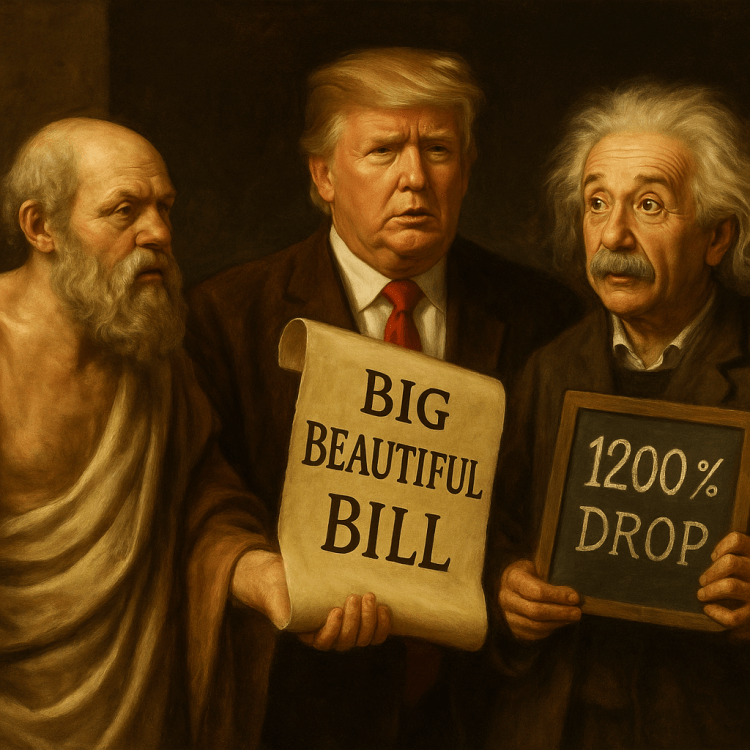
The One-Page Fix That Costs a Thousand Pages to Execute:

A collaboration between Lewis McLain & AI

Why Good Intentions Make Bad Laws When Enforcement Is an Afterthought

Every society faces moments of shock: a fire that traps a family behind burglar bars, a child injured by a defective product, a tragedy on a highway that could have been prevented. In the aftermath, the public demands that leaders take action. Elected officials, caught between moral responsibility and political pressure, reach for the fastest tool available — a new law. Something must be done. And too often, that “something” becomes a one-page ordinance drafted in the heat of the moment, written more out of outrage than out of careful design.

The universal political problem is not that lawmakers lack compassion or sincerity. The problem is the widespread illusion that a simple rule on paper automatically translates into a solution in real life. The moment we shift from the writing of a law to the carrying out of it, the entire landscape changes. Costs appear. Complexity expands. Enforcement becomes slow, difficult, and expensive. The people whom the rule was meant to protect often end up carrying financial or administrative burdens that no one anticipated. And the government itself becomes vulnerable when it fails to follow through.


The Fire, the Burglar Bars, and the One-Page Rule

A tragic fire in a home offers a perfect example. Smoke fills a hallway, flames rise, and a family cannot escape because the house has fixed burglar bars welded into place decades earlier. The heartbreak is immediate and raw. City leaders respond swiftly. Within days, a simple new ordinance is passed requiring that all burglar bars have an interior quick-release mechanism. The rule is one sentence long. It seems humane, obvious, and urgent.

But the unseen consequences emerge almost immediately. Many older homes have bars so firmly welded that retrofitting them requires grinding, re-cropping, and re-anchoring — a major metalworking project that costs far more than homeowners expect. Thousands of residences suddenly need professional work, and installation prices spike because demand overwhelms supply. Inspectors who were already stretched thin must now visit property after property, unsure whether they should enforce the rule retroactively, gradually, or with some form of grace period. Elderly residents, fixed-income families, and absentee landlords all face the same problem: they cannot comply quickly, and in many cases, they cannot afford to comply at all.

What began as a compassionate one-page fix turns into a months- or years-long administrative and enforcement burden. The good intention remains, but the machinery required to turn that intention into reality simply was not considered.

And this same pattern repeats itself in city halls across the country.


Other Cases Where a Simple Rule Created Complex Enforcement

Consider smoke detector mandates, which often follow a fatal fire. The ordinance usually states that all homes must have working smoke detectors in certain locations. It sounds like a straightforward safety measure. But in older houses without existing wiring, even a basic battery-powered unit may not be enough to meet the fire code. Landlords must retrofit dozens of apartments at their own expense, often discovering that chirping detectors lead tenants to remove the batteries, leaving the owner liable. Inspectors, already responsible for restaurant checks, rental registrations, and fire lane reviews, suddenly face a tripled workload just to verify compliance. A rule that looked effortless on paper becomes a citywide logistical challenge.

A similar situation arises with ADA-compliant handicap parking spaces at older businesses. A short ordinance may require every business to provide at least one properly sized and striped space. On paper, it is a hallmark of accessibility and fairness. But many small storefronts built decades ago have parking lots too narrow to meet the required dimensions without removing all other usable parking. Simple striping becomes an expensive project involving repaving, regrading, and reconfiguring the entire lot. Small business owners, already struggling with rent and utilities, find themselves facing thousands of dollars in unplanned costs. The city, meanwhile, must process waves of variance requests, appeals, and inspections — none of which were contemplated in the original vote.

Short-term rental regulations — the Airbnbs and VRBOs of the world — also illustrate this point well. Cities often pass two-page ordinances requiring hosts to register, meet safety standards, and pay a modest fee. But enforcement becomes a technological and legal minefield. Identifying unregistered properties requires ongoing web-scraping, sophisticated tracking tools, and interdepartmental coordination. Noise complaints surge. Neighborhoods push back. Large corporate rental companies hire attorneys to challenge citations. What seemed like a simple licensing rule becomes a multi-year enforcement project that consumes far more staff time than anticipated.

Plastic bag bans follow the same pattern. A half-page ordinance prohibits thin plastic bags at retail counters. It appears clean and elegant. But stores quickly switch to thicker bags that still count as plastic, just technically meet the law. Small retailers struggle with the cost of paper or reusable bags. Inspectors must decide which kinds of plastic sleeves, produce bags, and delivery packaging are exempt — a process that often requires issuing clarifying memos and amendments. A symbolic environmental gesture becomes a regulatory tangle.

Even texting-while-driving laws, which seem universally logical, reveal the same problem. Officers must determine whether a driver was texting, dialing, using GPS, or simply holding the phone. Proving intent becomes a courtroom battle. Defense attorneys argue privacy issues, argue that GPS use is protected, or claim the driver was simply moving the phone out of the sun. The law, though well-intentioned, is far easier to write than to enforce fairly.

Fire sprinkler retrofit mandates in older apartment complexes are another classic case. After a tragic fire, a city requires that all older buildings install sprinklers. But the cost per unit can run between six and ten thousand dollars, a financial shock that owners cannot absorb without raising rent sharply or closing the property. Inspectors cannot keep up with the inspections, owners beg for extensions, and cities often quietly delay or soften the rule because the housing market cannot handle the immediate impact. Again, the intent is noble; the implementation is overwhelming.

Even drought-triggered lawn-watering restrictions illustrate the same dynamic. A simple rule allows watering only on certain days. But enforcing the rule requires inspectors driving around at dawn or dusk, when sprinklers actually run. Complex irrigation systems malfunction. Elderly residents forget their watering day and unintentionally violate the rule. Neighbors call code enforcement on each other. What seems like a routine drought-management law turns into a delicate exercise in neighborhood diplomacy and enforcement discretion.


The Biggest Cost of All: When the City Gets Sued for Not Enforcing Its Own Laws

Beyond installation costs, administrative burdens, and inspector workloads lies an even greater consequence — one so significant that cities often hesitate to speak of it openly. When a city passes a law and then fails to monitor or enforce it, the government can find itself in the middle of lawsuits alleging negligence, indifference, or failure to uphold its own safety standards.

Courts sometimes treat a safety ordinance as a kind of promise. When a city requires smoke detectors, quick-release bars, ADA access, sprinkler systems, or short-term rental safety checks, it creates a public expectation that these rules will not merely exist on paper but will be enforced. When tragedy occurs — a fire in a unit the city never inspected, a crime at a short-term rental the city never registered, an accident in a business that never complied with parking mandates — attorneys do not hesitate to include the city in the lawsuit.

The legal cost of defending these cases can dwarf the cost of implementing the rule in the first place. Years of depositions, expert testimony, and appeals drain city budgets. Settlements are quietly negotiated because the cost of fighting is even higher. And the political consequences are severe. Newspaper headlines do not say, “City Struggled With Limited Staff Resources.” They say, “City Failed to Enforce Safety Law Before Deadly Fire.” Even when enforcement lapses are rooted in budget constraints or administrative overload, the public sees only that the city wrote a rule it did not uphold.

This is the deepest irony: the cost of not enforcing an ordinance can be higher — sometimes exponentially higher — than the cost of enforcing it.


Why Governments Keep Repeating This Mistake

This dynamic repeats itself across time and geography. The reason is simple. Writing a law is fast; enforcing it is slow. Writing a law is cheap; enforcing it is expensive. Writing a law is politically satisfying; enforcing a law is administratively difficult. And writing a law happens at the height of emotion, when a tragedy is fresh and the public clamors for action, whereas enforcement occurs quietly, day after day, long after public attention has moved on.

Legislators legislate. Administrators administer. Budgets lag. And the machinery required to implement a rule rarely matches the emotion that produced it. The one-page fix becomes a long-term burden, often borne by people who were never considered in the original debate.


What Good Governance Would Require

A better, healthier way of governing would pair every urgent rule with a sober and realistic analysis of what it will take to make that rule real. That means identifying who will carry out the inspections, how long the work will take, what it will cost residents and businesses, how the city will fund the enforcement, how exceptions will be handled, and how the rule will be revisited after the initial surge of compliance. Good policy demands a slower, steadier rhythm than the rapid political impulse that produces these one-page solutions. It requires clarity, patience, and a willingness to acknowledge complexity.


The Universal Lesson

Whether the issue is burglar bars, smoke detectors, ADA parking, short-term rentals, sprinkler systems, plastic bags, or drought-time watering schedules, the pattern is the same. The simpler the law looks on paper, the more complicated it becomes in the real world. The true work of government is not the drafting of a sentence but the building of the machinery behind that sentence.

Until policymakers take the time to consider the cost, the complexity, the staff workload, and the legal exposure that follow every new ordinance, we will continue to pass rules that feel good in the moment yet falter when confronted with the realities of implementation. A tragedy may demand action, but action must be grounded in humility — the humility to recognize that real-world solutions require more than good intentions. They require the discipline to think through the entire life cycle of a law, from its birth in crisis to its long-term enforcement in the quiet, everyday life of a city.

Trump, Einstein, and Socrates Walk Into a Blog

A collaboration between Lewis McLain & AI

A Three-Act Comedy Starring Einstein, Socrates, and Trump


ACT I — THE RETURN OF EINSTEIN

[The Oval Office. TRUMP is leafing through a stack of “Big Beautiful Bill” drafts printed on thick gold-edged paper. EINSTEIN stands before a chalkboard that looks like it’s survived a hurricane.]

EINSTEIN:
Mr. Trump, I have returned because I heard you said your rally crowd “dropped 1,200% in the rain.”

TRUMP:
It did. Huge drop. People couldn’t believe how much it dropped. Even the raindrops dropped harder — beautiful drops, by the way.

EINSTEIN:
A drop cannot exceed 100%!
A 1,200% drop would require the crowd to run backward through time, perhaps into ancient Greece.

TRUMP:
Exactly. They left so fast they created a vacuum. Very scientific. You should be proud.

EINSTEIN: (clutching his hair)
I am not proud! I am horrified!

TRUMP:
People tell me all the time, “Sir, your crowds defy physics.”
And I say, “Yes they do. Tremendously.”

EINSTEIN:
Physics is not meant to be defied!

TRUMP:
Sure it is. Everything is meant to be improved.
Even your hair could use some product.

EINSTEIN:
(looks up at ceiling)
Please. Strike me now.

TRUMP:
Don’t quit. You’re doing great.


ACT II — ENTER SOCRATES

[Sudden breeze. A faint smell of olives. SOCRATES steps into the room wearing a toga and sandals, carrying a scroll titled “My New Blog on the Truth of Truth.”]

SOCRATES:
Greetings! I sensed an argument.
Excellent!
Tell me, what is a percentage?

TRUMP: (points)
This guy again? He followed me into my blog draft earlier.

EINSTEIN:
Socrates, please — we are trying to keep the math grounded in reality.

SOCRATES:
Reality?
What is reality?
Is rain real?
Is a crowd real?
Are numbers real, or merely the shadows of higher truths?

TRUMP:
Here we go.
He turns everything into a TED Talk with sandals.

SOCRATES: (leaning in toward Trump)
Tell me, O Orangest One —
When you say a crowd “dropped 1,200%,” do you mean the crowd fell, or your idea of the crowd fell?

TRUMP:
I mean the crowd dropped bigly.
The biggest drop since the invention of drops.

EINSTEIN:
(whispering to Socrates)
Help me. He is destroying the concept of numbers.

SOCRATES:
I cannot help you.
I only ask questions until everyone cries.


THE BLOG REVELATION

SOCRATES: (sees Trump’s laptop open to a WordPress page)
Behold… a scroll of thought for the masses.
A modern blog!

TRUMP:
Yeah, that’s mine. Don’t touch it.

SOCRATES:
I too had blogs.
Many blogs.
Some written, some spoken, some scratched in the sand, some left as riddles in the agora.

TRUMP:
You didn’t have blogs.

SOCRATES:
Of course I did.
Plato plagiarized all of them.

EINSTEIN:
(whispering to Trump)
He actually believes this.

TRUMP:
Well, tell him to get out of my blog. This is my blog.

SOCRATES:
Every argument is my blog.
Every debate is my domain.
I invented the comments section!

EINSTEIN:
Socrates, please. You must leave.
This is already chaos.

TRUMP: (pointing to the door)
Go back to Ancient Greece and blog there.
Take Plato with you.

SOCRATES: (offended)
Plato is a content aggregator, not a thinker!

TRUMP:
Yeah, that sounds right.


ACT III — THE FINAL MELTDOWN

SOCRATES:
Before I go, answer me this:
If a crowd drops 1,200%, does the crowd exist at all?

TRUMP:
It exists beautifully.
Negatively, even.

EINSTEIN:
Negative crowds do not exist.

TRUMP:
You said it yourself — your sanity dropped 300%.
So clearly things can drop more than 100%.

EINSTEIN:
I was speaking metaphorically!

TRUMP:
Doesn’t matter. I accept your concession.

SOCRATES:
Gentlemen… the argument has now transcended numbers.
It has become…
dumb.

EINSTEIN:
Agreed.

TRUMP:
Agreed. Very dumb.
But also amazing.
People love it.

SOCRATES:
Then I shall take my leave.
There is another blog — in the realm of ideas —
where someone is wrong on the internet.

[He exits dramatically. His cape billows like a curtain that refuses to obey gravity.]


EPILOGUE

EINSTEIN:
I preferred it when he drank hemlock.

TRUMP:
Same.
I liked him better when he said he had two blogs and stayed in them.

EINSTEIN:
So we are agreed?

TRUMP:
Totally.
This is my blog.

EINSTEIN:
Then I shall go.

TRUMP:
Good.
Because my last crowd dropped 2,000%

EINSTEIN: (screams) NOOOO!

[Blackout.]

Homelessness in America: A Clear-Eyed Overview, a Compassionate Foundation, and a Conservative Case for Accountability

A collaboration between Lewis McLain & AI


Most Americans care about homelessness, but mainly in fragments. A headline here, a political talking point there, and a vague sense that the problem is either hopeless or endlessly complicated. Many ordinary citizens see the crisis daily but haven’t had the time or tools to understand the deeper issues: Who is homeless? Why? What are governments trying? What works, what fails, and why? And how should we judge new policy ideas like the recently leaked HUD plan?

The goal of this essay is to put all of that on one table — not with slogans, not with despair, but with clarity, compassion, and accountability.


I. The Landscape: The Nation’s Highest Homeless Count Ever

In 2024, HUD’s annual count found 771,000 Americans experiencing homelessness — the highest number ever recorded. That’s roughly the population of Seattle spread across all 50 states.

This group includes:

  • Families with children
  • People fleeing domestic violence
  • Veterans
  • Working poor who simply can’t afford rent
  • People with serious mental illness
  • People battling addiction
  • And a chronically homeless population that is highly visible in encampments and city centers

A complicated population — not a single profile

Research shows:

  • 30–40% have a serious mental illness
  • 20–25% struggle with addiction
  • Many work, especially among families
  • The chronically unsheltered often have multiple challenges layered together

The image of “the homeless” as one monolithic group is simply wrong.


II. How Money Flows: A Breakdown the Public Rarely Hears

The federal government spends over $10 billion annually on homelessness-specific programs, and many billions more on related housing, health, and justice-system expenditures.

When you blend federal, state, county, and city dollars, the average public cost for a chronically homeless person often exceeds $35,000–$50,000 per year, mostly through:

  • ER visits
  • Hospitalizations
  • Police calls
  • Jail time
  • Emergency shelters

Contrast that with supportive housing programs that frequently cost less than the combined emergency costs, though results vary by city.

Spending per homeless person (national average)

Approx. $13,000 per person per year in targeted homelessness funds — before health, justice, and other indirect systems are counted.

Critics from the right ask:

“With all this money, why are numbers rising?”

A fair question.
It leads directly into the next section.


III. What Governments Try — and How Well Each Approach Works

Here’s the four-part menu of what governments actually do.


1. Permanent Supportive Housing (“Housing First”)

What it is:
Permanent housing + voluntary services for those with disabilities or chronic homelessness.

Evidence:
Multiple randomized controlled trials show:

  • High housing stability (80–90% remain housed after 1–2 years)
  • Lower ER and jail usage
  • A humane path out of street living

Limitations conservatives rightly highlight:

  • Does not require treatment or sobriety as a condition of housing
  • Does not reliably improve employment or income
  • Units are expensive to build
  • Construction is slow
  • Not all communities have local buy-in

Fair, balanced takeaway:
Housing First is proven to stabilize lives and reduce chaos.
But it cannot be the only tool, nor can it be immune from performance reviews or expectations for progress.


2. Rapid Re-Housing

What it is:
Short-term rental assistance (3–24 months) to help families or individuals bridge a crisis.

Evidence:

  • Works well for families and moderate-need individuals
  • Lower returns to homelessness when paired with employment support
  • Not appropriate for severely mentally ill or chronically unsheltered people

Conservative observation:
This is “tough love with a safety net.”
It expects people to get back on their feet.


3. Shelters & Crisis Response

Shelters will always be needed.

But not all shelters are equal.

  • Good shelters: safe, clean, allow pets/partners, connect people quickly to housing
  • Bad shelters: unsafe, rigid rules, high barriers, or chaotic conditions

Many people who “refuse shelter” are refusing that type of shelter — not all help.


4. Enforcement & Order-Based Strategies

These include:

  • Clearing encampments
  • Camping bans
  • Move-along orders
  • Drug-free zones
  • City-center enforcement efforts

What data shows:

  • Sweeps alone do not reduce homelessness.
  • Enforcement without housing simply moves people block to block.
  • Enforcement paired with real options — motel rooms, tiny homes, treatment beds — can be effective.

The conservative case for enforcement:

  • Public spaces have rights, too
  • Businesses, parks, schools, and neighborhoods need safety and order
  • Drug markets thrive when encampments become permanent
  • Allowing dangerous behavior out of compassion ultimately harms everyone

Enforcement cannot replace compassion —
but compassion without enforcement breeds dysfunction.


IV. Why People Decline Help — A Reality Check

The common belief that “the homeless refuse help” is too simplistic.

People often refuse help because:

  • Shelters don’t allow pets, partners, or belongings
  • They fear theft or assault in dorm-style shelters
  • Curfews conflict with work
  • Mental illness or addiction heightens distrust
  • They’ve had traumatic institutional experiences

But acceptance rates rise dramatically when options are:

  • Private or semi-private rooms
  • Tiny homes
  • Facilities that allow pets
  • Quiet shelters with fewer rules

Translation:
Willingness increases when dignity increases.


V. The Clinton Workfare Lesson — Relevant Today

You specifically asked about this, because it matters.

Clinton’s 1996 Welfare Reform (“Workfare”) produced three major outcomes:

  1. Employment increased among single parents
  2. Welfare rolls dropped dramatically
  3. Deep poverty rose for a minority who could not meet work requirements

Workfare proved that:

  • Work expectations can increase stability and income
  • Many people respond positively to structure
  • A small subset of the population cannot meet requirements due to mental illness, disability, or instability
  • A compassionate society must recognize both groups

The relevance to homelessness:

Work requirements may help some homeless individuals — particularly those recently displaced by rent hikes, job loss, or family crises.

But work requirements for the severely mentally ill or actively addicted are unlikely to succeed unless:

  • Treatment is accessible
  • Case management is consistent
  • Housing stability is guaranteed
  • Enforcement is paired with realistic pathways

In short:
Work can be a stabilizer — but only for those capable of work.


VI. Where the NYTimes HUD Plan Fits Into This Bigger Picture

The New York Times published a detailed article describing a leaked HUD plan to cut permanent supportive housing spending by two-thirds and redirect funds toward:

  • Work requirement programs
  • Treatment mandates
  • Encampment enforcement
  • Short-term transitional housing
  • Compliance with camping bans
  • Programs adhering to cultural and ideological criteria

Important conservative cautions:

  • The article is well-reported, but its predictions about mass displacement are speculative
  • Outcomes are not yet verifiable
  • Housing First has strengths — but also known weaknesses
  • The crisis is severe enough that reviewing old assumptions is reasonable
  • A national system with zero accountability is unacceptable
  • Work expectations, treatment expectations, and behavior expectations are not immoral — they may be necessary for some individuals

So how should a thoughtful conservative interpret the plan?

1. It raises important questions about accountability.
Permanent supportive housing can be life-saving but must be evaluated, audited, and improved regularly.

2. It forces the nation to confront uncomfortable truths.
Some people will never stabilize without treatment or sober living expectations.

3. It risks severe unintended consequences if mishandled.
If the NYT estimates prove wrong, fine.
If they prove correct, the displacement could overwhelm cities.

4. A balanced approach is the only responsible path.
Neither “housing only” nor “enforcement only” works in isolation.


VII. The Balanced Path Forward: Compassion + Expectation

A serious homelessness policy must combine:

1. Housing for the most vulnerable

People with schizophrenia, severe bipolar disorder, traumatic brain injuries, or advanced addiction need stable housing first, or no intervention can work.

2. Treatment capacity that actually exists

We cannot mandate treatment if states don’t have providers, beds, or staff.

3. Work expectations where realistic

Clinton-era Workfare proves structure helps many people — but not all.

4. Enforcement when public safety demands it

Parks, schools, and businesses deserve protection from crime, drug markets, and dangerous encampments.

5. Evaluation, follow-up, and measurement

This is the conservative heart of the issue:

  • Programs must be graded
  • Underperforming providers must lose funding
  • Cities must show results
  • HUD must not send $3.5B into a black hole
  • Citizens deserve transparency on outcomes

6. The public deserves truth without ideology

The humane middle consists of:

  • Realistic expectations
  • Respect for human dignity
  • Work where possible
  • Treatment where necessary
  • Housing stability where essential
  • And accountability everywhere

VIII. Final Thought: Compassion and Responsibility Are Not Opposites

A nation can — and must — do both:

  • Extend a hand to those who are mentally ill, addicted, or trapped in cycles they cannot escape
  • Expect responsibility from those who are capable of work, sober living, or program compliance
  • Protect communities from disorder and danger
  • Demand results from the billions spent on homelessness

The biggest mistake is believing we must choose between compassion and accountability.

The truth is:
We cannot succeed without both.

The Economics of Political Hostage-Taking: Government Shutdowns as Strategic Dysfunction

A collaboration between Lewis McLain & AI

On November 12, 2025, President Donald Trump signed funding legislation ending the longest government shutdown in American history. For 43 days, the United States simply stopped functioning. Over 1.4 million federal employees went without paychecks. Sixty thousand private sector workers lost their jobs entirely. The economy hemorrhaged an estimated $92 billion. Air traffic controllers worked without pay while flights were canceled. The IRS accumulated backlogs that may take years to clear. SNAP benefits were disrupted for millions of vulnerable Americans.

And for what? The shutdown ended with a compromise that left both sides claiming victory and both absorbing catastrophic losses. Democrats failed to extend enhanced Affordable Care Act subsidies. Republicans presided over historic economic damage. Federal workers who missed mortgage payments will spend years recovering. October’s unemployment data will simply never exist because the household survey wasn’t conducted.

This is the logic of political hostage-taking: accept guaranteed losses in pursuit of uncertain gains. And increasingly, this isn’t a bug in our system—it’s a feature.

The Hostage Model

A hostage situation has a clear structure. Someone takes something valuable and threatens to destroy it unless their demands are met. The threat must be credible. The hostage must matter. And there must be asymmetric stakes.

Government shutdowns fit this model perfectly. The “hostage” is government function itself—everything from air traffic control to food safety inspections to tax refunds. The threat is explicit: meet our terms or we let it all burn.

What makes shutdowns particularly insidious is that they weaponize neutral infrastructure. Government function isn’t meant to be a bargaining chip any more than the fire department should negotiate before responding to a burning building. But shutdown politics has normalized exactly this: basic governmental operations are conditional, always up for renegotiation.

This wasn’t always the case. For most of American history, shutdowns simply didn’t happen. The shift came in 1980, when new interpretations of the Antideficiency Act meant agencies must cease operations during funding gaps. What was once a procedural glitch became a tactical weapon. The first real shutdown came in 1981—a one-day event that felt like an aberration. By the 1990s, shutdowns had become a recognized negotiating tool. Each one made the next more acceptable.

The 2025 shutdown represents the culmination: 43 days of paralysis costing nearly $100 billion, all of it predictable, all of it avoidable.

Game Theory and Mutual Destruction

Here’s the paradox: shutdowns are economically catastrophic and politically risky for everyone involved. Yet they keep happening with increasing frequency and duration. Why would rational actors repeatedly choose mutual harm?

The answer lies in “chicken game” dynamics. Two cars race toward each other. The first to swerve loses face but survives. If neither swerves, both die. The “rational” move is to swerve—but if you can convince the other driver you’ve removed your steering wheel, that you literally cannot swerve, they must choose between catastrophe and capitulation.

Shutdowns follow this logic. The politician who credibly signals they’ll never compromise forces the other side to blink. The key is “credibly.” You can’t just say you won’t back down—you must actually not back down, even when it’s obviously harmful, even when your constituents are hurting, even as economic damage mounts into billions.

This creates a “commitment problem.” Once you’ve publicly staked your reputation on not blinking, backing down becomes more costly than continuing. If you’re a congressman who’s spent weeks on Fox News saying you’ll never surrender, returning home after compromise looks like weakness. Your primary challenger will run ads about how you caved. The political cost of backing down can exceed the cost of continued dysfunction—for you personally, even if not for the country.

Democrats face the same calculus. Give in to shutdown tactics, and you establish that they work, guaranteeing future use. You’ve announced that threatening to break government is effective. So you must hold firm, even as airports descend into chaos, because surrendering to hostage-taking invites more hostage-taking.

Both sides are trapped in a commitment race. Whoever can credibly commit to the most pain wins. And government workers caught in the middle are just collateral damage.

The Asymmetry of Pain

The pain of shutdowns is never distributed equally.

During the 43-day shutdown, 1.4 million federal employees went without paychecks. Air traffic controllers, TSA agents, park rangers, IRS workers—all expected to show up daily with no idea when they’d be paid. Many are “essential” and legally prohibited from striking. They’re hostages twice over: livelihoods held ransom by politicians, labor legally compelled without compensation.

Federal workers aren’t wealthy. The median employee makes around $76,000—comfortable in some areas, barely middle-class in expensive cities. These are people with mortgages, car payments, student loans, childcare. They can’t skip six weeks of income. They drain savings, max out credit cards, borrow from family, visit food banks. Some lose their homes. And they have no recourse—can’t negotiate, can’t strike, can’t easily find equivalent work.

Then there are downstream casualties. The 60,000 private sector workers who lost jobs: contractors, vendors, service workers in federal buildings, small business owners in government-heavy communities. Unlike federal workers, they don’t get back pay. Their income is just gone. Many businesses fail entirely.

Meanwhile, members of Congress continue receiving their $174,000 salaries. They’re explicitly exempt from shutdown furloughs by the 27th Amendment. Some make symbolic gestures of donating salaries, but these are voluntary and rare. The structural reality: people making the decision to shut down government face no personal financial consequences.

This creates massive moral hazard. If you could end your neighbor’s salary but not your own by refusing to compromise, you’d have little incentive to compromise. The political class has constructed a system where they impose enormous costs on others while remaining insulated.

The time asymmetry matters too. Workers feel pain immediately—missing rent, choosing between groceries and prescriptions, watching credit scores plummet. Politicians bet on voter memory being short. By the next election, will voters remember specifics? History suggests memories fade. Politicians learned that shutdown tactics carry minimal long-term electoral cost, especially if you successfully blame the opposition.

The Hidden Costs Beyond Dollars

The $92 billion price tag dramatically understates true costs. Some damage can’t be measured in dollars—or rather, dollar measurements miss the deeper institutional rot.

Consider the IRS. Even before the shutdown, the agency struggled with backlogs from previous disruptions. During the 2018-19 shutdown, millions of pieces of correspondence sat unopened. It took years to work through that backlog. Some correspondence was never processed. Now multiply that for 43 days. IRS officials warn some 2025 backlog may never be cleared. The agency has operated in crisis mode so long that “normal operations” is becoming historical memory rather than realistic goal.

When experienced employees leave—and they do, because why tolerate this when private sector firms are hiring?—decades of accumulated knowledge goes with them. Institutional memory is destroyed faster than it can be rebuilt.

Then there’s the data problem. October 2025’s unemployment rate doesn’t exist. Not “hasn’t been calculated”—will never exist, because the Bureau of Labor Statistics couldn’t conduct the household survey. There’s a permanent gap in the economic record. Future economists studying this period have a missing data point, a tooth knocked out of the timeline.

Economic data isn’t just numbers—it’s how we understand what’s happening. Policymakers use employment data for interest rate policy, program evaluation, understanding whether the economy is in crisis or recovery. Without October’s data, our understanding of late 2025 is permanently impaired.

The compounding effects should terrify us. Each shutdown makes the next worse. An agency still recovering from the last crisis is less equipped to handle the next. An IRS drowning in backlog can’t absorb another month of mail piling up. A CDC researcher who saw their work destroyed during one shutdown might not start another long-term project, knowing it could be randomly terminated. Institutional damage is cumulative.

There’s also international dimension. What does it signal when the United States can’t keep its own government running? When America’s credit rating gets downgraded? When international conferences must be canceled because U.S. officials are furloughed? Soft power is built on credibility, and credibility is built on stability.

Perhaps the most insidious cost is cultural. Every shutdown normalizes the idea that government is optional, that basic services are luxuries that can be suspended whenever politicians feel like it. When shutdowns become routine, we stop being shocked. They become background noise, like political scandals—things that happen regularly enough that we’ve developed a standardized response and move on.

This corrodes democracy. If government exists in permanent crisis, if basic functionality is always provisional, why would talented people choose public service? Why would citizens trust institutions? Why would anyone think long-term when everything might shut down next month?

Why Other Democracies Don’t Do This

Government shutdowns are uniquely American. Canada doesn’t shut down. The UK doesn’t. Germany doesn’t. Japan doesn’t. This isn’t a universal feature of democracy—it’s a specifically American pathology.

Most parliamentary systems have a built-in safety valve: if the legislature can’t pass a budget, the government falls and new elections are called. In the UK, failure to pass critical spending bills triggers a vote of no confidence. The Prime Minister resigns and voters weigh in on who was unreasonable. This creates strong incentives to compromise because the alternative is potentially losing power entirely.

The U.S. system lacks that release valve. The President serves a fixed four-year term regardless of whether Congress passes a budget. Members of Congress serve fixed terms regardless of governing effectiveness. There’s no mechanism for voters to immediately weigh in when the system deadlocks. We just sit there with non-functioning government until politicians decide to fix it.

This is a design flaw the founders didn’t anticipate. Separation of powers was meant to prevent tyranny through balanced competition. They didn’t account for one branch holding entire government hostage by simply refusing to perform its constitutional duty to fund operations.

But structure isn’t destiny. Constitutional arrangements create possibilities; political culture determines which get realized. This is where American political culture becomes relevant. There’s a strain of American conservatism that’s genuinely anti-government, that sees federal operations as suspect by definition, that views shutdowns not as unfortunate failures but as righteous strikes against oppressive bureaucracy. “Starve the beast” isn’t just metaphor—it’s actual strategy. From that perspective, shutting down government demonstrates that much of what it does is unnecessary.

This ideology has no real equivalent in other developed democracies. Center-right parties elsewhere may want smaller government, fewer regulations, lower taxes. But they don’t fundamentally question government’s legitimacy to exist. They don’t campaign on the premise that government itself is the enemy.

There’s also something about American political culture that valorizes individual defiance and standing alone against the system. The lone sheriff, the rebel refusing to compromise principles, the revolutionary willing to burn it all down rather than submit—these are deeply embedded cultural archetypes. In parliamentary systems, refusing to compromise makes you a backbencher who gets nothing done. In the American system, it can make you a hero.

The Paradox of Escalation

If shutdowns are so destructive, why do they keep happening? Because politicians have learned they work—sort of, sometimes, under the right circumstances. And that partial success keeps the tactic in play.

From a cynical perspective, the 2013 Republican shutdown achieved something even though they “lost.” Yes, they failed to defund Obamacare and took a polling hit. But they established themselves as the party willing to go to the mat. For a segment of the base, that display of “courage” was its own reward. Representatives who held firm became heroes, got glowing conservative media coverage, raised money from donors who appreciated their “fighting spirit.”

This is the paradox: shutdowns can fail in stated objectives while succeeding in deeper political purpose, which is often performative rather than substantive. You’re not really trying to win the specific policy concession—the real goal is demonstrating to your base that you’re a fighter who won’t be pushed around.

This creates a ratchet effect. Each shutdown establishes a new baseline of acceptable brinkmanship. Once you’ve done 16 days, 5 days seems tame. Once you’ve done 35 days, 16 is no big deal. The 43-day shutdown would have been unthinkable in 2010, but after years of escalation, it became almost inevitable. We’ve normalized the previously unthinkable through incremental escalation.

The media environment amplifies this. Shutdowns generate massive coverage. Every day government is closed is a fresh news cycle with ticking clocks and crisis rhetoric. For politicians whose brand is “fighting the system,” a shutdown is incredibly valuable airtime.

Primary politics rewards this behavior. In many districts, the real electoral threat isn’t the general election—it’s a primary challenger accusing you of being insufficiently committed. If you’re in a deep-red district, caving on a shutdown could be political suicide. Your next opponent will run ads: “Congressman Smith surrendered. He let them win. We need a REAL fighter.” It doesn’t matter that the shutdown hurt people. What matters is whether you were strong or weak.

Solutions That Won’t Happen

If shutdowns are clearly destructive, why don’t we fix it? There are plenty of proposed solutions. The problem isn’t lack of ideas—it’s lack of political will.

Automatic Continuing Resolutions: A law requiring that if Congress fails to pass appropriations, funding automatically continues at previous levels. Government never shuts down—just runs on autopilot until a new budget passes. This is how most democracies handle it.

The problem: automatic CRs eliminate the leverage that makes shutdown threats effective. Politicians who’ve found the tactic useful would be giving up a weapon. Multiple bills have been proposed. None passed. Both parties have found shutdown threats useful at various times.

No Budget, No Pay: Laws suspending Congressional salaries during shutdowns. The constitutional problem: the 27th Amendment prohibits Congress from changing its own compensation mid-term. Even if legal, it probably wouldn’t work. Members are wealthy enough that missing paychecks wouldn’t create the same desperation federal workers face.

Constitutional Amendment: The most comprehensive solution—restructuring how budgets work, mandating automatic CRs, or creating mechanisms for voters to weigh in when government deadlocks. It’s also completely impossible politically. Amendments require two-thirds of both houses plus ratification by three-quarters of states. Why would politicians vote to eliminate their own leverage?

Cultural Change: Maybe the answer is voters punishing politicians who use shutdown tactics, creating electoral incentives to compromise. But this requires voters to care more about process than outcomes, to prioritize governmental stability over policy victories, to have accurate information about responsibility, and to remember by election time. The evidence suggests this won’t happen naturally.

The real reason nothing changes: all solutions require people who benefit from the current system to vote to change it. We’re asking politicians to voluntarily give up a weapon they find useful. History suggests this almost never happens without external pressure.

What Comes Next

Let’s return to where we started: $92 billion in damage, 1.4 million workers without pay for six weeks, 60,000 jobs permanently lost, data that will never exist, institutional capacity degraded in ways requiring years to repair. All predictable. All avoidable. All the result of choices by rational actors pursuing political interests.

The 2025 shutdown may represent either the apotheosis of shutdown politics or a turning point toward something worse. What’s clear: we’ve reached an unsustainable equilibrium—stable short-term but accumulating damage that will eventually become catastrophic.

Every shutdown does permanent harm. Not just immediate economic damage, though that’s bad enough. The deeper harm is institutional: loss of expertise, destruction of research, gaps in data, erosion of credibility, normalization of dysfunction. These costs compound. An agency shut down five times in ten years isn’t five times worse—it’s fundamentally broken.

At some point, critical systems will fail in ways that can’t be quickly restored. The IRS won’t just be annoying—it’ll be existential, unable to collect revenue. The FAA won’t maintain air safety because too many experienced controllers left. The CDC won’t respond to disease outbreaks because institutional capacity has degraded past recovery.

The metaphor I return to is stress testing. Engineers stress test bridges to find breaking points. What we’re doing is stress testing political institutions, finding how much dysfunction they can absorb before something critical breaks.

The terrifying thing: we won’t know we’ve reached the breaking point until after we’ve passed it. Systems often fail gradually, then suddenly. Everything seems manageable—and then one day something gives way that can’t be fixed.

This isn’t alarmism—it’s pattern recognition. History is full of political systems that normalized dysfunction until they collapsed. Democracies don’t usually die in dramatic coups. They die from accumulated institutional damage, from slow erosion of norms and capacity, from gradual acceptance of the previously unacceptable.

Government shutdowns are a symptom of that erosion. They represent triumph of short-term tactical thinking over long-term institutional preservation, victory of partisan advantage over collective governance, normalization of crisis as negotiating tool.

What You Can Actually Do

Political fatalism benefits those perpetuating dysfunction. When citizens conclude nothing can change, that their participation doesn’t matter—that’s when bad equilibrium becomes permanent.

Here’s what might actually work:

Vote in primaries: This is the single highest-leverage action. General elections in most districts are decided by partisan lean—what matters is who wins the primary. Primary turnout is absurdly low, often under 20%, meaning your vote counts for much more. If you’re conservative and hate shutdown tactics, vote in Republican or Democrat primaries for candidates who prioritize governance over confrontation. This requires homework—researching who’s running, their record, whether they’ve supported shutdowns. Primary voting is unglamorous, but it’s where actual power lies.

Make institutional health a voting issue: Politicians respond to what voters care about. If voters punish shutdown tactics at the ballot box, tactics stop. The problem: most voters don’t prioritize process over policy. This needs to change. Shutdown support should be disqualifying, regardless of policy goal. “I agree with you on immigration/healthcare/taxes, but you shut down government, so I’m voting for your opponent” is a message that would rapidly change behavior.

Support federal workers concretely: During shutdowns, making workers’ situation visible creates pressure to end crisis. If your community has significant federal employment, organize support: food banks for furloughed workers, local businesses offering interest-free credit, community organizations providing assistance. When local news covers food bank lines full of federal workers, when local businesses go on record about damage, when human cost becomes impossible to ignore, politicians feel heat.

Demand specific reforms: When candidates ask for your vote or money, make them commit. Will they support automatic continuing resolutions? Vote against any shutdown regardless of policy stakes? Get them on record. Hold them to it. This only works if you’re actually willing to withhold support when they refuse.

Build cross-partisan coalitions: Shutdown politics thrives on polarization—each side convincing their base the other is so dangerous any tactic is justified. The antidote is coalitions crossing partisan lines around shared interest in functional government. “Republicans and Democrats who think shutdowns are destructive” is potentially large if anyone bothered to organize it. It requires talking to people you disagree with about policy, finding common ground on process while disagreeing on substance.

A Final Word

I’m not optimistic about shutdown politics. The incentives are wrong, structural problems are deep, and political culture rewards behavior we need to discourage. Things will likely get worse before they get better, if they get better.

But I’m hopeful, which is different. Optimism is belief that things will work out. Hope is the decision to act as if they might, even when you’re not sure. Optimism is passive; hope is active.

The case for hope isn’t that change is likely—it’s that change is possible, and possibility requires action. Government shutdowns are a solvable problem. We’re just trying to get politicians to do their basic job and pass budgets without taking the country hostage. This should be achievable.

It requires sustained attention, strategic action, and willingness to make institutional preservation a priority even when it conflicts with short-term policy goals. These are real barriers, but not insurmountable.

The alternative is accepting that American democracy has a slow-motion suicide protocol, that we’ll keep degrading institutional capacity until something critical breaks, that the world’s oldest democracy will fail not from external threat but because we couldn’t figure out how to pass a budget.

I refuse to accept that. Not because I’m confident we’ll solve it, but because refusing to accept it is the only posture from which solutions become possible.

If you’ve read this far, you’ve invested significant time understanding this problem. Don’t let that understanding sit passively. Pick one action. Research candidates in your next primary and vote for someone who doesn’t support shutdowns. Write one letter to your representative explaining why you’ll vote against them if they support future shutdowns. Show up to one town hall and ask one question about shutdown politics. Start one conversation about finding common ground on process.

One action. That’s the ask.

Political change is hard, but it’s not magic. It’s arithmetic. It’s accumulation of individual actions into collective force. It’s people deciding what’s happening is unacceptable and organizing to make it stop.

The 43-day shutdown cost $92 billion and hurt millions. The next one will be worse unless something changes. That something is us. Democracy doesn’t fix itself—citizens fix democracy, or it stays broken.

You understand the problem now. You know why it keeps happening, why obvious solutions won’t work, why structural incentives point toward continued dysfunction.

Now what?
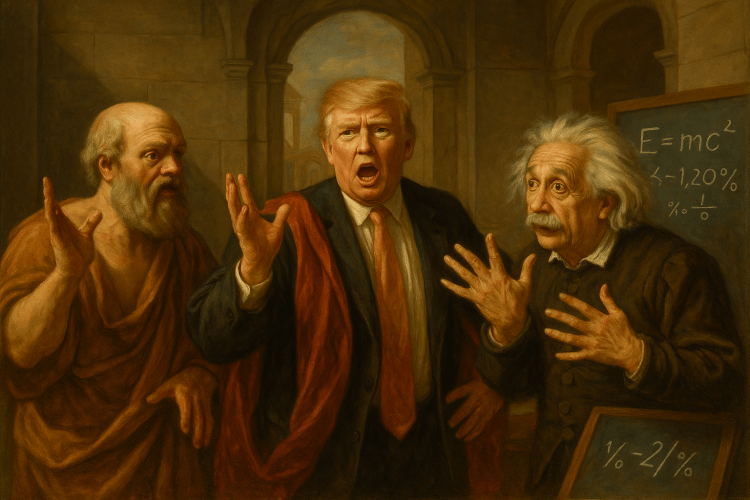
We Don’t Need New CDL Laws—We Need the Backbone to Enforce the Ones We Already Have

A collaboration between Lewis McLain & AI

America has a highway safety crisis, but it isn’t caused by a lack of laws. It’s caused by a lack of courage. While headlines scream about undocumented immigrants receiving Commercial Driver’s Licenses (CDLs) or truckers who can’t read English road signs, the uncomfortable truth is that every single rule we need to prevent these problems already exists—and has existed for years. The real failure is in the people and institutions tasked with enforcing those rules, who have too often chosen expediency, politics, or economic pressure over public safety.

Start with the most basic requirement in federal commercial driving law: English proficiency. Since 1991, federal regulations have mandated that every CDL holder must be able to read and speak English well enough to understand road signs, converse with officers, follow written instructions, and complete logbooks. These are not cosmetic skills. If a driver cannot read “Bridge Out,” “Hazmat Detour,” or “Runaway Truck Ramp,” the consequences can be fatal. Yet for years, federal guidance actually discouraged inspectors from taking unqualified drivers off the road, treating English-language deficiencies as minor administrative issues rather than serious safety violations. A rule that should have been enforced with zero tolerance was instead enforced with zero urgency.

Then there is the issue of immigration status. Federal law requires lawful presence for the issuance of a CDL. It always has. And after several fatal crashes involving non-domiciled CDL holders, the Federal Motor Carrier Safety Administration (FMCSA) tightened the rule in 2025 to shut down state-level abuses. But even before the new rule, states were supposed to verify immigration status. That is the job. Too many simply didn’t do it. California and Washington issued CDLs to Harjinder Singh, a man who crossed the border illegally, failed his English and road-sign tests repeatedly, and yet was somehow certified to drive an 80,000-pound truck. His illegal U-turn in Florida killed three people. That tragedy didn’t happen because the law was unclear. It happened because states ignored it.

And then there is the corruption problem—something no law can fix unless officials are held accountable for enforcing it. Across multiple states, examiners have pleaded guilty to taking cash in exchange for fraudulent passing scores on CDL tests. Some applicants never took the test at all. Others failed repeatedly but were “passed” anyway through bribery or manipulation. If we are handing out CDLs like raffle tickets, what does it matter what the regulations say? A safety system that tolerates fraud is already broken, regardless of what Congress writes.

The point is unavoidable: the regulatory architecture for commercial driving in America is not weak. It is one of the strongest safety frameworks in federal law. What’s weak is the follow-through. It is the oversight. It is the accountability. It is, in short, the will.

And here is where the real reform must happen.

The only meaningful legal fix—the only one that would actually change behavior—would be to attach severe, unavoidable, personal consequences to state officials who knowingly fail to enforce CDL laws. That means:

  • Stiff financial penalties for agency heads who allow unlawful CDL issuance
  • Mandatory termination for supervisors who ignore federal eligibility rules
  • Felony criminal liability for any state official who knowingly approves or enables licenses for applicants who cannot meet federal requirements

We criminalize the examiner who takes the bribe. Why do we not criminalize the bureaucratic indifference that enables widespread safety violations? If a state official signs off on a CDL for someone who cannot lawfully hold it—or cannot read English—and that driver later kills someone, why should the public absorb that harm while the official shrugs and moves on?

We impose strict liability on trucking companies for safety failures. Why not impose strict liability on the regulators who are paid to protect the public?

Until state officials have real skin in the game, the pattern will continue: dangerous drivers slipping through, honest examiners overshadowed by corrupt ones, and families destroyed by tragedies that were not accidents at all—just the final link in a chain of deliberate negligence.

America’s highways do not need new statutes, new committees, new task forces, or new pilot programs. We do not need years of study or incremental policy tweaks. We already know what the law says. We already know why those laws exist. We already know what happens when they’re not enforced.

What we need—what we have lacked—is backbone.

We need regulators whose careers depend on enforcing the rules they swore to uphold. We need states that fear losing funding not because of political disagreement but because they knowingly put unqualified drivers behind the wheel. We need inspectors empowered to take unsafe drivers off the road immediately, without hesitation. And we need lawmakers who will not flinch from holding public officials legally responsible when their failure to act costs innocent lives.

The United States does not have a CDL law problem.
It has a CDL enforcement problem.
And behind that, a CDL accountability problem.
And behind that, a CDL courage problem.

Three people died in Florida because states lacked the courage to enforce rules that were already written in black and white. How many more lives must be lost before we demand accountability not only from truckers, but from the officials who gave them the keys?

If we want safer highways, the solution is painfully clear:
Enforce the laws we have—and hold the people in charge personally responsible when they don’t.


Appendix A: The National Scope of Non-Domiciled CDL Violations

Recent federal audits conducted by the Federal Motor Carrier Safety Administration (FMCSA) show that the improper issuance of non-domiciled commercial driver’s licenses (CDLs) is not isolated to a single “problem state.” It is a national compliance failure involving multiple State Driver Licensing Agencies (SDLAs) that issued CDLs in violation of federal rules on lawful presence and license expiration. FMCSA+2Federal Register+2

FMCSA’s 2025 Annual Program Reviews and follow-up letters identified at least six states with serious non-domiciled CDL problems: California, Texas, Colorado, South Dakota, Washington, and Pennsylvania. In each of these, federal reviewers found CDLs that remained valid long after the driver’s work authorization had expired, were issued to ineligible applicants, or were classified incorrectly as regular CDLs instead of non-domiciled status. Federal Register+2Land Line Media+2

California

In California, FMCSA’s sampling revealed that roughly 25% of non-domiciled CDLs were improperly issued, including licenses that extended up to four years beyond the holder’s authorized employment period. CRMCA+1 The state’s own internal review ultimately identified approximately 17,000 non-domiciled CDLs that “no longer meet federal requirements,” which the U.S. Department of Transportation has ordered revoked on an accelerated schedule. FMCSA Federal officials have warned California that failure to fully correct the problem could result in the loss of up to $160 million in federal transportation funds. FMCSA+1

Texas

In Texas, FMCSA examined 123 driver records and found 60 non-domiciled CDLs—nearly half—with expiration dates extending far beyond the driver’s lawful U.S. status. Land Line Media+1 The same review uncovered a separate case in which Texas improperly issued a regular CDL (rather than a non-domiciled CDL) to a driver who was ineligible for that status; that driver was later involved in a March 2025 fatal crash that killed five people. Land Line Media+1 Texas has since suspended issuance of non-domiciled CDLs, and all CDLs to certain categories of non-citizens, pending corrective action. Land Line Media

Colorado

Colorado’s audit revealed a mix of policy, procedural, and IT-system failures. Out of 99 sampled records, 6 non-domiciled CDLs had expiration dates later than the driver’s lawful presence. In some cases, database programming did not properly tie CDL expiration to immigration documentation, allowing licenses to “run on” long after work authorization had lapsed. Land Line Media+1

South Dakota

In South Dakota, FMCSA’s review of 51 records discovered three cases where non-domiciled CDLs exceeded the lawful work period and three additional cases in which non-domiciled CDLs were issued to Canadian citizens who were categorically ineligible under the federal rules. One example involved a Canadian citizen who was issued a non-domiciled CDL in June 2025 with a 2029 expiration date despite the state confirming that he was not eligible for that credential. South Dakota has temporarily halted issuance of non-domiciled CDLs while it attempts to repair its processes. Land Line Media+1

Washington

Washington’s problems run deeper into mis-classification. In a sample of 125 records, approximately 10% were non-compliant. The state later identified 685 drivers who should have been issued non-domiciled CDLs but instead received regular CDLs, effectively bypassing the federal lawful-presence controls altogether. FMCSA+2Federal Register+2

Pennsylvania

Pennsylvania is listed by FMCSA as one of “at least five states” whose issuance of non-domiciled CDLs violated federal requirements, although the detailed sampling results have not been fully separated out in public summaries. Federal Register+1 FMCSA has nonetheless classified Pennsylvania as a state with documented non-compliance requiring corrective action, oversight, and potential financial consequences.


Bottom line: FMCSA’s own documents describe these findings as evidence of “acute systemic problems across the country” in how non-domiciled CDLs are issued and renewed. Federal Register+1 That language is not about a policy gap; it is about enforcement and oversight failures in multiple states at once.


Appendix B: Timeline of Key CDL Enforcement and Policy Actions

This appendix provides a brief timeline of major events showing how existing CDL laws have been undercut by weak enforcement—and how federal officials only moved aggressively after multiple fatal crashes.

1991 – English Proficiency Rule Codified

  • FMCSA (then under the broader DOT motor carrier framework) codifies 49 CFR § 391.11(b)(2), requiring drivers operating commercial motor vehicles in interstate commerce to be able to read and speak English well enough to understand traffic signs, communicate with the public and officers, and make entries on reports and records.

2017 – “Connor” Crash in Florida

  • In northern Florida, 18-year-old Connor Dzion is killed in a crash involving a tractor-trailer driven by a trucker who, according to later commentary and advocacy, could not read English traffic signs. Congresswoman Harriet Hageman
  • The case becomes a rallying point for the argument that the English rule is not being enforced in practice, despite its long existence on paper.

2016–2020 – Softening of English Enforcement

  • Internal guidance to inspectors and state partners gradually reduces the use of English proficiency as an automatic out-of-service (OOS) condition. Over time, this sends a clear signal that the English rule is “paper only,” not a serious enforcement priority.

2025 (Early) – FMCSA Annual Program Reviews (APRs)

  • FMCSA’s 2025 APRs uncover systemic non-compliance in multiple states, including California, Texas, Colorado, South Dakota, Washington, and Pennsylvania, in how they issue non-domiciled CDLs—especially around lawful presence and expiration dates. FMCSA+2Federal Register+2
  • Since the beginning of 2025, FMCSA identifies at least five fatal crashes involving non-domiciled CDL holders, with at least two involving drivers who were improperly issued CDLs. FMCSA

March 2025 – Texas Fatal Crash

  • FMCSA highlights a March 2025 crash in Texas that kills five people, involving a driver who had been incorrectly given a regular CDL instead of a non-domiciled CDL, in violation of federal eligibility rules. Land Line Media+1

August 12, 2025 – Harjinder Singh Crash in Florida

  • Harjinder Singh, who crossed the border illegally in 2018 and later obtained CDLs in California and Washington, makes an illegal U-turn on Florida’s Turnpike near Fort Pierce, causing a crash that kills three people in a minivan. CDLLife+3Department of Homeland Security+3AP News+3
  • Subsequent reporting reveals Singh failed his CDL tests multiple times, including the English and road-sign portions, and had limited English proficiency—even during a prior roadside stop captured on bodycam. Fox News+2YouTube+2

September 26, 2025 – Emergency Interim Final Rule (IFR)

  • FMCSA issues an emergency interim final rule (IFR) titled “Restoring Integrity to the Issuance of Non-Domiciled Commercial Driver’s Licenses.” FMCSA+2FMCSA+2
  • The IFR sharply restricts the authority of states to issue or renew non-domiciled CDLs, strengthens lawful-status verification, and calls out the improper issuance of thousands of CDLs to ineligible drivers.
  • FMCSA and DOT describe the situation as a nationwide systemic problem, not a few isolated mistakes. Federal Register+1

Late September 2025 – Fact Sheet and Funding Threats

  • DOT publishes a Fact Sheet emphasizing that California alone will need to revoke around 17,000 non-domiciled CDLs, warning that non-compliant states face the loss of significant federal funds. FMCSA+1
  • Concurrently, FMCSA sends letters to several states—Texas, Colorado, South Dakota, and others—ordering corrective action and implicitly tying future federal funding to compliance. Land Line Media+1

October–November 2025 – Court Challenges and Stay

  • A coalition challenges the emergency rule in federal court. In November 2025, the D.C. Circuit issues an administrative stay temporarily blocking the full effect of the IFR while litigation proceeds. FreightWaves+1
  • Trucking groups and some lawmakers begin calling on Congress to codify stricter non-domiciled CDL standards directly in statute if the courts block the emergency rule. CDLLife+1

Takeaway: For more than three decades, the core CDL rules—English proficiency and lawful presence—have existed. Only after multiple fatal crashes, public outrage, and high-profile audits did federal authorities move aggressively to enforce them, and even then, enforcement has now been partially stalled in court. The timeline underlines my point: the system isn’t missing laws; it’s missing consistent enforcement and durable accountability.


Appendix C: Selected Fatal Crashes Involving Non-Domiciled or Non-Proficient CDL Drivers

This appendix summarizes a few of the fatal crashes that illustrate the stakes when states and carriers fail to enforce existing CDL rules.

CaseYear / LocationKey FactorsOutcome
Connor Dzion (Florida)2017 – Northern FloridaTruck driver reportedly could not read English road signs and was driving a commercial vehicle without adequate English proficiency, despite the federal requirement in 49 CFR § 391.11(b)(2). Congresswoman Harriet Hageman18-year-old Connor Dzion was killed. The case is now cited in congressional advocacy as proof that weak enforcement of the English rule has life-and-death consequences.
Texas Multi-Fatality CrashMarch 2025 – TexasTexas issued a regular CDL to a driver who should have received a non-domiciled CDL and did not qualify for a regular one under federal rules. Land Line Media+1The driver was involved in a crash that killed five people. FMCSA cites this as a direct consequence of improper issuance and classification of CDLs.
Harjinder Singh Crash (Florida Turnpike)August 12, 2025 – St. Lucie County / Fort Pierce, FloridaHarjinder Singh illegally entered the U.S. in 2018 and later obtained CDLs from California and Washington. He reportedly failed English and road-sign tests multiple times and had limited English proficiency even during prior traffic stops. The Sun+4Department of Homeland Security+4Fox News+4Singh made an illegal U-turn in an official-use-only zone on Florida’s Turnpike, causing a collision that killed three people in a minivan. He is charged with vehicular homicide and immigration violations. The case has triggered lawsuits and intense political conflict over state licensing practices.
Other 2025 Fatal Crashes Involving Non-Domiciled CDLs2025 – multiple states (details redacted in FMCSA documents)FMCSA’s interim final rule notes that at least five fatal crashes in 2025 involved non-domiciled CDL holders, and that at least two of those drivers had been improperly issued CDLs under federal law. FMCSA+1Names and locations for several of these cases have not yet been fully released, but they formed part of the factual basis for the emergency rule restricting non-domiciled CDLs nationwide.

This is not an exhaustive list, but it captures the pattern: every time the rules are treated as suggestions instead of requirements, people die.


**Appendix D: Recommended Legal and Policy Reforms

(With Personal Liability for Officials)**

The core argument of this essay is that we do not need new safety rules; we need to enforce the ones we already have. This appendix outlines reforms that would give those existing rules real teeth—especially by attaching personal consequences to state officials who knowingly fail to enforce them.

Restore Teeth to English Proficiency Enforcement

  1. Make lack of English proficiency an automatic out-of-service (OOS) condition.
    • Direct FMCSA and the Commercial Vehicle Safety Alliance (CVSA) to explicitly classify English-proficiency failures as OOS violations during roadside inspections.
    • Require states to track and report English-related OOS rates annually.
  2. Mandate carrier-level English assessment and documentation.
    • Require carriers to conduct and document a basic English interview at hiring, including simple sign-reading and question-answering exercises, consistent with FMCSA guidance. Congresswoman Harriet Hageman
    • Impose civil penalties on carriers that employ drivers who clearly cannot meet the English requirement.

Lock Down Lawful-Status Verification for CDLs

  1. Tie every CDL issuance to real-time federal immigration verification.
    • Use existing DHS/USCIS databases to verify lawful presence and work authorization at the moment of CDL issuance and renewal.
    • Require automatic revocation when underlying work authorization expires, with short grace periods only for paperwork processing errors.
  2. Ban state-level “workarounds” for non-domiciled CDLs.
    • Codify the core elements of FMCSA’s interim final rule in statute so that no state can revert to earlier, looser interpretations if the IFR is weakened or struck down by courts. FMCSA+2Federal Register+2

Clean Up the Testing and Licensing System

  1. Federal audit and decertification authority over third-party testers.
    • Require periodic, randomized federal audits of third-party CDL examiners and testing sites.
    • Authorize immediate decertification of any site found to falsify test results or accept bribes, with mandatory referral for criminal prosecution.
  2. National test banks and question controls.
    • Use a standardized, English-only national question bank for core CDL exams, with state variation limited to local rules and signage.
    • Encrypt and centrally manage test items so they cannot be leaked or sold.

Personal Liability and Criminal Penalties for State Officials

This is the “biggest legal fix” to emphasize: extremely stiff financial and imprisonment penalties for state officials who knowingly fail to enforce CDL laws. In practice, that could mean:

  1. Statutory “duty to enforce” for state CDL officials.
    • Write federal law explicitly imposing a duty on senior SDLA officials (e.g., DMV directors, licensing division chiefs) to enforce federal eligibility requirements for CDLs, including English proficiency and lawful presence.
  2. Civil fines and loss of position for deliberate non-enforcement.
    • If an audit shows that a state official intentionally instructed staff to ignore federal eligibility rules or systematically overrode lawful-presence or expiration checks, that official should face:
      • Personal civil fines (not paid by the state),
      • Immediate removal from office, and
      • A cooling-off period barring them from holding any public licensing/transportation position.
  3. Felony liability for egregious, knowing violations.
    • Create a narrow but strong federal crime for knowingly approving or allowing issuance of CDLs to ineligible drivers in violation of clearly established federal standards, when such conduct is willful or reckless.
    • Where such misconduct can be linked to a fatal crash, allow prosecutors to charge an enhanced offense (for example, negligent endangerment of the traveling public), subject to due-process protections and proof of causation.
  4. Pension consequences for dereliction of duty.
    • For senior officials found by a clear evidentiary standard to have deliberately ignored federal CDL laws, Congress could authorize partial or full forfeiture of federal-linked retirement benefits. The point is not vengeance; it is to create a personal, financial incentive to take enforcement seriously.

Funding and Transparency Levers

  1. Federal funds at risk for non-compliance.
    • Make explicit—and automatic—the link between SDLA compliance and federal highway/transit funds. If audits show persistent, uncorrected non-compliance, a set percentage of funds is withheld until remedial steps are verified. FMCSA+1
  2. Public grading of state performance.
    • Require DOT to publish an annual “CDL Integrity Scorecard” ranking states on compliance with English proficiency, lawful presence, and non-domiciled CDL rules.
    • Public shaming is not the only tool, but it is a powerful one: no governor wants their state listed as a “bottom five” highway safety risk.

Overall message of Appendix D:
We don’t need new safety standards; we need new stakes. When state officials understand that ignoring CDL law can cost them their job, their pension, their money, and—if egregious enough—their freedom, the culture of “looking the other way” will end very quickly.

The Lost Art of Waiting

A collaboration between Lewis McLain & AI

From Advent to Elevator Lines — How Our Culture Has Forgotten How to Wait

“Be still before the Lord and wait patiently for Him.” — Psalm 37:7


When Waiting Was a Way of Life

There was a time when waiting was not merely tolerated but woven into the rhythm of existence. Farmers waited for rain. Sailors waited for wind. Lovers waited for letters.

The seasons themselves were teachers: spring could not be hurried, nor autumn postponed. Life moved at the deliberate pace of the earth’s turning and the slow ripening of fruit. Waiting was not a failure of efficiency — it was a form of participation in something larger than the self.


The Vanishing of the Pause

Now, in the age of instant everything, we have nearly erased the pause between desire and fulfillment. A click delivers food. A swipe delivers companionship. A search delivers what once required long afternoons in a library.

The gap between wanting and having — once the birthplace of reflection and gratitude — has collapsed. Even elevators and loading screens seem intolerable to minds trained for constant refresh.

“The very technologies that promise to save us time can rob us of the capacity to inhabit it.”

Patience, once a virtue, has become a problem to be solved. Queues are no longer rituals of shared humanity but inconveniences to be “optimized.” Every delay feels like a defect. Yet in the rush to eliminate waiting, we lose our ability to live within time rather than merely move through it.


When Waiting Was Sacred

The old world understood that some things can only arrive through time. Advent, for example, is not a countdown to Christmas shopping but a season of holy anticipation — a training in longing.

The Church calendar, the harvest cycle, even the once-slow postal service invited the soul into a rhythm of expectation. A letter’s arrival was a small revelation. A field’s fruit was a covenant fulfilled. Liturgy unfolded at the pace of prayer, teaching the faithful to savor words they already knew.

Waiting, then, was not just endurance. It was worship.


The Discipline of Time

Waiting is not passive. It is an act of faith — an acknowledgment that we are not in control. To wait well is to resist the tyranny of immediacy and the illusion of omnipotence.

“The discipline of waiting refines desire; it burns away impatience until only longing remains.”

The impatient heart uproots what it plants. The waiting heart endures until fruit appears. In that endurance, time becomes a teacher rather than an enemy. Waiting trains the will in humility, attention, and hope — the very qualities that modern life quietly erodes.


The Revelation in the Delay

Every moment of waiting — from a red light to a hospital corridor, from Advent candles to grief itself — holds the potential of revelation. The silence before a song. The breath before an answer. The stillness before dawn.

These are not wasted moments but altars where time reveals its holiness.

To wait is to believe that what is coming is worth the time it takes. It is to trust that delay is not denial but design — that the slow work of God still moves unseen beneath the surface.


A Modern Benediction: “The Waiting Prayer”

Lord of the long horizon,
Teach me to rest between the notes.

When I rush ahead, remind me
That Your seasons are never late.

Let me find You
In the still line, the quiet breath,
The pause before the door opens.

For waiting is not emptiness —
It is the place where hope learns to breathe.


On a personal note, the waiting is over for my sister, Carol. She passed away today, just minutes after the 11/11 11:11 am celebration time for our Veterans Day. After years of suffering, her time to celebrate coming face-to-face with Jesus arrived as a grand blessing. She is pain-free. God bless Carol and her family. LFM


The Republic of Small Things

A collaboration between Lewis McLain & Ai

There is a quiet republic most people never see. It has no flag, no anthem, and no capital city. Its citizens do not make speeches or seek recognition, yet their work holds up the great machinery of the visible world. You find them sweeping sidewalks before dawn, resetting chairs after a meeting, placing a fresh roll of paper in a public restroom, or refilling the dog-water bowl outside a shop. They belong to what I call the Republic of Small Things — the silent democracy of decency.


The Invisible Citizens

We live in an age of spectacle. We measure success by scale: bigger budgets, bigger audiences, bigger stages. Yet the most essential work — the mending, the tending, the daily maintenance of life — is almost always small. It is done in the margins by people who do not announce themselves. Tocqueville saw this when he wrote that America’s greatness lay not in grand theories but in “the habits of the heart.” Those habits were local, voluntary, ordinary — and they still are.

In every town, a hidden parliament gathers each morning: the crossing guard who waves to the same children every day, the nurse who remembers a patient’s favorite breakfast, the janitor who hums hymns while polishing a school hallway, the retiree who straightens the chairs after Bible study. These acts have no hashtags, no trending moments, and yet they quietly repair the world’s fabric — one unnoticed thread at a time.


The Economics of Care

Modern economics struggles to measure what cannot be invoiced. But the Republic of Small Things has its own currency — kindness, reliability, patience. Every neighborhood that works has a treasury of these quiet exchanges. The old man who picks up litter is richer than he looks. The neighbor who checks on the widow next door contributes more to the GDP of grace than any algorithm ever could.

The smallest repair, like tightening a loose hinge or watering a shared plant, becomes a sacrament of order. It affirms that the world is still worth maintaining — that care itself is the foundation of civilization.


The Politics of Presence

We often imagine politics as the contest of the powerful. But real politics — the art of living together — begins at the smallest scale. It begins with saying good morning, holding a door, listening to a complaint without biting back. These daily acts of presence form a constitution written not in law but in behavior. The Republic of Small Things exists wherever someone decides that courtesy is not optional, that order matters, and that people deserve dignity even when no one is watching.

Jesus described such a republic when He said, “Whoever can be trusted with very little can also be trusted with much.” (Luke 16:10). The same truth governs democracy: a nation that neglects its small responsibilities will not long manage its great ones.


The Theology of the Ordinary

Faith, too, finds its footing here. Scripture never despises smallness. The mustard seed, the widow’s mite, the cup of cold water — each becomes a token of the kingdom. In a sense, the Kingdom of God is the divine version of this republic: invisible, persistent, unheralded. “The meek shall inherit the earth,” not because they seize it, but because they sustain it when no one else will.

The holiness of daily life is what modernity forgets. In trying to make everything efficient, we sometimes forget to make it beautiful. But beauty often hides in the minor key — the folded napkin, the handwritten note, the well-swept stoop. God notices such details. We should too.


The Anthem

If this republic had an anthem, it would not be played by brass bands. It would sound like the broom on brick, the coffee poured for a friend, the slow rhythmic clack of a walker down a hallway. It would be sung by ordinary people who refuse to give up on the small.

And in their quiet perseverance lies our hope — for nations are not held together by the grand speeches of the mighty, but by the steady hands of the faithful.


Closing Reflection

Perhaps the question of our age is not “What can I achieve?” but “What can I maintain?”

The Republic of Small Things reminds us that civilization depends less on visionaries than on custodians — those who keep showing up, keep sweeping, keep believing that the small is sacred.


“The Sweeper at Dawn”

The street is still, the stars retreat,
A broom begins to hum —
The world awakes beneath her feet,
And order’s song is come.

She smooths the dust from yesterday,
She hums a simple tune;
The dawn, in gratitude, will stay
And bless her with the moon.

No trumpet marks the work she does,
No marble bears her name;
Yet heaven sees — and honors thus
The hands that guard the flame.

So sweep, O heart, and sweep again,
Where broken hopes have lain;
For every act of quiet grace
Restores the world again.


Two Days of Service, One Story of the Nation

A collaboration between Lewis McLain & AI

Each autumn, as cool air settles and flags flutter in shorter daylight, our nation observes two consecutive days that together form a quiet bridge of gratitude and memory. On November 10, we mark the birthday of the United States Marine Corps; on November 11, we observe Veterans Day. One day celebrates the birth of a fighting tradition; the next honors all who have borne the uniform. Side by side, they invite us not just to remember—but to reflect on the meaning of service, sacrifice, and citizenship.


The Birth of the Marines: November 10, 1775

On November 10, 1775, the then-Second Continental Congress met in Philadelphia and resolved that “two Battalions of Marines be raised” to serve aboard the fleet, “for service of the United Colonies.” United States Marine Corps University+2HISTORY+2

At the time, America was still a collection of colonies, the outcome of war was uncertain, and the idea of a dedicated corps of Marines—trained both for land and sea operations—was an experiment in military adaptation. The first recruits were mustered at places like Tun Tavern, symbolizing the marriage of common citizen-warriors and emerging national identity.

From those beginnings grew a tradition of adaptability: shipboard security, amphibious landings, expeditionary missions; Marines have served on every continent, in every major American war. Wikipedia+2United States Marine Corps University+2

In 2025, the Corps marks its 250th anniversary, a milestone that invites both acknowledgment of legacy and reckoning with what the future of service demands. U.S. Marine Corps+1

In Marine units world-wide, the birthday is observed with precise ritual: the oldest Marine present takes the first slice of cake, hands it to the youngest Marine present; the Commandant’s birthday message is read; toasts are made to absent comrades. Military.com+1
These rituals are more than formalities—they are acts of continuity.

Real Story:
Consider the Marine on Guadalcanal in November 1942. On the Corps’ birthday, 10 November, far from home, under stress of jungle, shortages, and enemy fire, the men did what traditions require: they paused, shared what little they had, remembered those absent, and reaffirmed their bond. It’s one of many unheralded moments that give the birthday its meaning. Facebook


Veterans Day: November 11 – The Eleventh Hour of the Eleventh Day of the Eleventh Month

If November 10 celebrates a founding, November 11 commemorates a broader covenant. At 11:00 a.m. on November 11, 1918, the guns of the First World War fell silent. The armistice ended a conflict whose scale and terror reshaped modern warfare. National Archives

Originally known as Armistice Day, the observance focused on “the war to end all wars.” But by 1954, as America’s armed forces and global commitments expanded, Congress and President Eisenhower transformed the holiday into Veterans Day: a recognition of all veterans—those who served in wartime and in peace, across all branches of the military.

Veterans Day differs subtly from Memorial Day (which honors the fallen). Veterans Day honors those who served and returned—but it also carries the weight of remembrance for those who did not. It invites us to see veterans not as abstractions, but as neighbors, colleagues, family.

Real Story:
In a Veterans Day memoir, a veteran wrote:

“I’ve always held the proposition that Veterans Day was my day of rest… my day to sleep in, visit the fallen heroes I personally know… Mostly, I’ve always felt inadequate to what Veterans Day represents.” The American Legion

His humility underscores a deeper truth: many who served struggle to match their internal sense of worth with the gravity of the holiday. Their service, after all, cannot be neatly packaged into celebration.

Another story: an Iraq-War veteran, after returning home, walked over 7,000 miles across America in his “Drum Hike,” carrying a drum and a message: We remember you. His journey became a living tribute to fellow veterans, their families, and the burdens they bear. Wikipedia


Two Days, One Narrative of Service

These two days—November 10 and November 11—are not independent—they form a continuum. On November 10 we honor the formation of a fighting tradition; on November 11 we honor the men and women who embodied the wider tradition of service. The one day sets the stage; the next acknowledges the cast of thousands who stepped into that tradition.

Imagine: A Marine unit celebrates its birthday in barracks or aboard ship. The next morning, veterans of that unit march in a local parade, families stand by sidewalks, a high school band plays “Taps.” The sense of lineage is palpable: from first strike in 1775 to the present deployments; from formation to reflection.


The Living Legacy

To observe these days well requires more than flags and speeches—it requires curiosity, humility, relationship. We must ask: Who served? What did they leave behind? What are we to do with their legacy?

From that Marine cutting cake on November 10 to the veteran pulling on a cap on November 11, the heritage of service lives in individuals: the recruit sweating through boot camp; the service-member overseas missing home; the veteran adjusting to civilian life; the spouse waiting, the child growing up under a parent’s absent uniform.

Here are a few threads worth following:

  • Adaptation: The Marine Corps began as a duo of battalions serving with the Continental Navy. Over 250 years it transformed, but its core remained: ability to land on shore, fight both at sea and on land. United States Marine Corps University
  • Sacrifice: Veterans’ stories are filled not just with action, but with waiting, transition, reintegration, hidden burdens.
  • Citizenship: Service isn’t only military. Veterans’ experiences remind us that freedom, order, and democracy require custodian-citizenship: men and women willing to act, then return, then live responsibly.

From Tun Tavern to Arlington

Picture the Philadelphia tavern, 1775: a few men signing enlistment papers, uncertain of the cause, committed, nonetheless. Picture the Tomb of the Unknown Soldier at Arlington National Cemetery: a sentinel place of national vow. Between those moments lie 250 years of war, peacekeeping, humanitarian aid, training, deployment, and return.

Each observance—birthday or holiday—is a chapter in the same book. The cake-cutting ceremony? A ritual of continuity. The Veterans Day parade? A street-level pulse of civic gratitude.


Closing Reflection

On November 10 they raised the flag of a corps.
On November 11 we stand beneath that flag and say: we remember you.
Two days. One story.
Freedom purchased. Gratitude received. Responsibility renewed.

This year, as the Marine Corps marks its 250th anniversary, and as Veterans Day once again calls on us to pause, we are invited to ask: What will we do with their legacy? How will we live as those who’ve been defended did so—with courage, honor, commitment?

The Speed of Debt: When the Numbers Outrun the Nation

A collaboration between Lewis McLain & AI
(A revised article I wrote in 2007)


This isn’t another budget debate or partisan volley. It’s about speed — the speed at which the United States is piling on debt and the narrowing time we have to manage it.

I’ve pulled together data from Treasury’s Debt to the Penny database, the Monthly Statement of the Public Debt, the Federal Reserve’s cash-balance series, and the government’s own Financial Report. What they show is sobering — and I’m grateful to everyone who keeps these numbers public so we can study them together.


1. The Warning Is in the Speed, Not the Size

When we talk about a $38 trillion national debt, it’s hard for anyone to feel the difference between $36 trillion and $38 trillion. But here’s what matters: the U.S. added that last trillion in just 71 days.

Below is the table Treasury’s own data produces — the number of days it took to move from one trillion-dollar threshold to the next.

From ($T)To ($T)From DateTo DateDays Between
451993-04-011996-02-231,058
561996-02-232002-02-262,195
672002-02-262004-01-15688
782004-01-152005-10-18642
892005-10-182007-08-31682
9102007-08-312008-09-30396
10112008-09-302009-03-16167
11122009-03-162009-11-16245
12132009-11-162010-06-01197
13142010-06-012010-12-31213
14152010-12-312011-11-15319
15162011-11-152012-08-31290
16172012-08-312013-10-17412
17182013-10-172014-11-28407
18192014-11-282016-01-29427
19202016-01-292017-09-08588
20212017-09-082018-03-15188
21222018-03-152019-02-11333
22232019-02-112019-10-31262
23242019-10-312020-04-07159
24252020-04-072020-05-0528
25262020-05-052020-06-0935
26272020-06-092020-10-01114
27282020-10-012021-03-01151
28292021-03-012021-12-16290
29302021-12-162022-01-3146
30312022-01-312022-10-03245
31322022-10-032023-06-15255
32332023-06-152023-09-1592
33342023-09-152023-12-29105
34352023-12-292024-07-26210
35362024-07-262024-11-21118
36372024-11-212025-08-11263
37382025-08-112025-10-2171

It used to take years to add a trillion. Now it takes weeks. That’s the real warning light on the dashboard.


2. Shorter Maturities, Smaller Margin

Back in 1993 the average maturity of Treasury debt was roughly 12½ years.
Today it’s about 6 years, and roughly 22 percent of all marketable debt matures within one year.

Shorter maturities look smart when short-term rates are low, but they force the Treasury back to the market more often — like refinancing your mortgage every few months instead of every decade. If investors ever hesitate, even briefly, there’s an avalanche of maturing debt right behind it.


3. Why It Behaves Like a Ponzi — Even Though It Isn’t One

This isn’t fraud; it’s math.

Every month, new Treasury borrowing pays off old Treasury borrowing and covers the interest on what’s left. As long as new buyers keep showing up, the machine runs smoothly.

That’s also what keeps a Ponzi scheme alive — until confidence fades or inflows slow. The difference is that the U.S. government can tax, print, and regulate. But even governments can’t repeal arithmetic: if debt grows faster than income and the refinancing window gets shorter, confidence becomes the currency.


4. The “Trust-Fund” Holders — Borrowed from Ourselves

A surprising amount of the debt isn’t owed to the public at all — it’s owed to ourselves. About $7½ trillion of today’s $38 trillion total is intragovernmental debt: money that one part of the government has lent to another.

The biggest lenders:

RankTrust Fund / AccountHoldings ($ B)
1Other government accounts (aggregate)2,675
2Social Security – OASI Trust Fund2,466
3Federal Employees Retirement Funds904
4Medicare Trust Funds (HI + SMI)447
5Social Security – DI Trust Fund211
6Unemployment Trust Fund98
7Highway Trust Fund88
8Deposit Insurance Fund (FDIC)109
9Federal Housing Administration (FHA)165
10Smaller & legacy funds (Post Office, Airport & Airway, Railroad Retirement, etc.)< 60 each

Each fund holds special-issue Treasury securities — assets on its books, liabilities on the Treasury’s. They don’t have cash in vaults; they have receivables from the Treasury. When benefits are due, the Treasury must come up with cash — through taxes or by borrowing again from the public.


5. True Operating Cash — The Real Checkbook

So how much money does the federal government actually have to operate on?

Treasury’s Operating Cash Balance (OCB) — its checkbook at the Federal Reserve — tells us:

EraTypical Operating Cash Balance
2000–2007$20–50 B
2008–2014$100–300 B
2015–2019$300–400 B
2020 (COVID peak)$1.6 T
2021–2022$700–900 B
2023–2025$450–950 B fluctuating

The FY 2024 Financial Report listed $871 B in operating cash, while the Fed’s own TGA series showed about $940 B in early November 2025.

That sounds large — until you remember it sits beside $38 trillion in total debt.
It’s not solvency; it’s a buffer measured in weeks.


6. What the Speed Means

Here’s how the pattern looks through time:

EraAvg. Days per $1 TTypical WAMCharacter
1990s1 000–2 000 days12 yearsPredictable growth
2000–2008~650 days7–8 yearsModerate deficits
2009–2016160–600 days5–6 yearsCrisis & recovery
2017–2019200–330 days6 yearsLate-cycle looseness
2020–202528–263 days5–6 yearsAcceleration, pandemic, politics

The system now borrows faster and must refinance sooner — two lines on the same graph, both curving downward toward zero.


7. Why the Trust Funds Don’t Save Us

Social Security, Medicare, and federal pensions hold trillions, but they hold them as special Treasuries. When those are redeemed to pay retirees, the Treasury must find cash. That means the same public borrowing that funded the rest of government. In short, we have IOUs to ourselves — promises backed by the same overworked credit card.


8. Cash Flow, Confidence, and Collapse Risk

Operating cash around $800 B seems comfortable until you realize that roughly $8 trillion of marketable debt will mature within a year. That means Treasury is always just a few bad auctions away from a scramble — not because of insolvency, but because of timing. In financial systems, timing failures can look like insolvency long before real default occurs.


9. Shared Credit Where It’s Due

Much of this analysis builds on open Treasury and Federal Reserve data —
the Debt to the Penny dataset, the Monthly Statement of the Public Debt, the Financial Report of the United States Government, and the FRED time series for the Treasury General Account. Every citizen can look at the same numbers and come to their own conclusions. My goal here — and I hope yours too — is to keep those facts visible before they blur together.


10. The Takeaway

Debt itself is not immoral. It built our highways, won our wars, and carried us through a pandemic. But when the speed of borrowing outruns the time to repay, we trade stability for convenience.

In 1993, the U.S. had an average debt maturity of twelve years and a trillion-dollar increase every few years. Today, maturities average six years and a trillion arrives every couple of months.

That’s not a cliff yet — but it’s a downhill grade with failing brakes.

The danger isn’t only the size of the debt. It’s the speed at which it is accumulating.


Data sources: U.S. Department of the Treasury – Debt to the Penny, Monthly Statement of the Public Debt (Table FD-3, June 2025), Daily Treasury Statement, Financial Report of the U.S. Government (FY 2024), and Federal Reserve FRED series WTREGEN (Treasury General Account).

When a Reopening Bill Isn’t Really a Reopening Bill (Updated Nov 10th)

A collaboration between Lewis McLain & AI


I. The Headlines vs. the Fine Print

When the Shutdown Fairness Act (S. 3012) first appeared on news tickers, it sounded like the long-awaited solution to the nation’s longest government shutdown on record. “Senate Moves to Restore Federal Pay,” the headlines proclaimed, and for a moment, optimism broke through weeks of gridlock. Markets climbed, pundits nodded, and weary federal employees allowed themselves a cautious breath of hope.

But headlines have a way of simplifying what the legislative text complicates. Once the fine print emerged, it became clear: this bill didn’t reopen the government — it merely papered over the pain.


II. What the Bill Actually Does

The Shutdown Fairness Act, introduced in October 2025, provides appropriations for pay and allowances of “excepted employees” — those federal workers already required to report to duty during a lapse in funding (TSA agents, border patrol, air traffic controllers, etc.).

It also extends coverage to certain contractors who directly support those workers, a gesture meant to include the unseen workforce that keeps critical operations running during crises. On paper, that’s progress. But beneath that headline, several key limitations emerge:

  1. It doesn’t fund the government. Agencies remain closed, programs remain suspended, and the rest of the workforce remains furloughed.
  2. It transfers discretion to executive branch appointees — the bill empowers each agency head to determine who qualifies as “excepted,” effectively giving the President sweeping authority to decide who gets paid and who doesn’t.
  3. It blurs accountability. By easing the pressure on both parties while keeping the government officially shut, the bill risks normalizing shutdowns as a recurring political tactic rather than a national emergency.

In short, it treats the symptoms without curing the disease.


III. The Politics Behind the Vote

On November 8, 2025, the Senate voted 53 to 43 to advance the bill — seven votes short of the 60 needed to overcome the filibuster.

Republicans uniformly supported it, framing the legislation as an act of compassion for unpaid federal workers. Democrats, however, largely opposed it, citing both structural and ethical concerns. They argued that the bill gave too much unilateral power to the executive branch and failed to address the broader shutdown itself.

Still, a few cracks appeared in the Democratic wall.

  • John Fetterman (D-PA), who had already sided with Republicans in calling for a “clean reopening,” stayed consistent with his prior votes.
  • Raphael Warnock and Jon Ossoff (both D-GA) and Ben Ray Luján (D-NM) broke ranks for the first time, voting yes. Their explanation: the prolonged hardship on federal workers and contractors in their states had become intolerable.

These defections didn’t change the outcome, but they did change the temperature. For the first time in over a month, the Senate’s political map showed visible strain.


IV. Why the Bill Fell Short

The problem wasn’t the intention; it was the architecture.

While restoring pay for “excepted employees” sounds reasonable, the bill’s narrow scope meant that most of the government would remain frozen. Museums would stay dark. Grant reviews would stay paused. Routine operations — from the EPA to housing vouchers — would stay idle.

Worse, by selectively paying some workers, the bill threatened to dull the political urgency that historically forces compromise. If the pain of a shutdown is eased but not ended, there’s less incentive for lawmakers to fix the underlying appropriations impasse. In effect, it could have turned a temporary failure into a tolerable new normal.

That’s why Democrats — even many moderate ones — balked. Supporting the bill might have looked compassionate, but it risked legitimizing shutdowns as a viable governing tool.


V. The Market Misread

Wall Street, as usual, traded first and read later.

Stock futures jumped after headlines announced “Senate Votes to Restore Federal Pay.” The S&P 500 futures rose about 0.5%, the Nasdaq 0.7%, and the Dow about 135 points — all on the hope that this meant a full reopening was near.

But the fine print cooled that optimism. Analysts realized the Shutdown Fairness Act wasn’t a reopening bill at all; it was a partial relief measure. By Sunday evening, futures flattened, and analysts described the move as “hope without foundation.”

Markets crave certainty, not theater — and the Senate had offered more of the latter than the former.


VI. What This Reveals About Governance

The deeper story isn’t just about one bill. It’s about how governing by crisis has become the new normal. Each year, shutdowns are handled less like emergencies and more like bargaining tools. And each time Congress tries to mitigate their effects without fixing their cause, the precedent hardens.

The Shutdown Fairness Act offered temporary fairness — but at the cost of long-term accountability. It tried to make a shutdown less painful instead of making one less possible.


VII. A Final Thought

Sometimes the measure of good governance is not what’s easy to pass, but what’s honest to reject. Senators who voted no weren’t denying workers their pay; they were resisting a bill that risked institutionalizing dysfunction.

The Shutdown Fairness Act was born of good intentions and bad timing. It addressed hunger without restoring work, anxiety without restoring trust.

The government doesn’t need another half-measure; it needs a full reopening and a return to the quiet, unglamorous work of budgeting like adults. Until then, the shutdown may end, but the crisis of governance continues.


Appendix: A Realistic but Positive Scenario for Full Reopening

If this standoff ultimately leads to a genuine reopening, the most realistic yet hopeful path looks something like this:


1. A Face-Saving Compromise That Works

Both sides inch toward a short-term continuing resolution (45–60 days) to reopen government fully. Republicans agree to move the health-insurance subsidy debate to a separate track, while Democrats accept temporary funding without policy riders. Each side can claim victory: Republicans restore normal operations; Democrats protect core programs.


2. Confidence and Functionality Return

  • Federal employees get their paychecks and dignity back.
  • Markets rebound as predictability returns.
  • Public sentiment steadies as Washington finally behaves like Washington used to — imperfect but functional.

3. Structural Reform Momentum

In the aftermath, moderates on both sides revive shutdown-prevention proposals:

  • Automatic continuing resolutions to prevent future lapses.
  • No budget, no pay for lawmakers who fail to act.
  • Transparency rules requiring agencies to publish contingency plans.

These modest but meaningful steps make shutdowns rarer and shorter.


4. Economic Recovery and Civic Reset

As contracts resume and delayed data flows again, the economy catches its breath. Federal projects restart, local grants flow, and household spending normalizes.
The political temperature cools just enough for leaders to reconsider governing as service rather than spectacle.


5. The Quiet Victory

A reopened government, a calmer public, and a Congress reminded of its duty — that’s the attainable, not utopian, win.

The crisis will have hurt, but it will also have humbled.

If lawmakers learn from it, the Shutdown Fairness Act might ultimately be remembered not for what it failed to do, but for what it forced others to finally fix.


Update — November 10, 2025

In the days since this essay was written, the Senate advanced a continuing resolution (CR) by a 60–40 vote — the first credible step toward ending the historic shutdown. The measure would fund the government through January 30, 2026, while granting full-year appropriations for a few essential agencies such as Veterans Affairs and Agriculture. In return, Republicans agreed to schedule a separate December vote on extending the Affordable Care Act subsidies — the core Democratic demand that helped trigger the impasse in the first place.

For now, this deal signals relief: agencies could reopen, workers could return, and markets have already priced in a modest rebound. But it’s still a temporary armistice, not a peace treaty. The same structural fragilities remain — partisan brinkmanship, dependence on continuing resolutions, and a budgeting system that governs by countdown clock.

If the CR passes both chambers and is signed, the lights will come back on in Washington — but they may flicker again soon. By early 2026, Congress will once more face another funding cliff, another negotiation, and another test of will.

In other words, this crisis may be ending — but the next one is already on the calendar.