Distractions

The reason I went dark from November 11, 2016, until now is that I have been distracted.

Not all distractions are attached to bad reasons. But they are distractions just the same.

Maybe it started with the presidential elections. The person I voted for won the election. I was surprised and ecstatic. I predicted if he won that he would be a train wreck. If so, let ‘er rip! I’m tired of talk, talk, talk. Dumb Republicans had eight years to groom a candidate but let an Independent steal their party. They got what they deserved.

But after I suffered for eight years and never complained publicly, I’ll not spend a second listening to the whiners who want to protest at sufficiently loud levels as if the more noise will rewind history. Rally all you want. I can’t hear you!

I equally despise Republicans and Democrats. And most of all, the Tea Party. But I do have one good thing to say about the TP (and only one), which I will save for a future blog.

For a long time, I have cherished silence. That need is growing. I opted to send my sister-in-law in my place on a family cruise at the last minute in early March. I spent a week in silence, just working. I watched zero on TV, and still have not turned on my office TV. I deactivated my FaceBook account and still have not reactivated. Same thing for LinkedIn. And Twitter. I do get plenty of news alerts that I read since news is one of my primary businesses. Silence is golden to me.

I am distracted by McKinney politics. Well, until I checked out a few months ago. McKinney is run by an underground that key people in the know will not deny. They also won’t do anything about it. In fact, they have winked for so many years that newbies know no difference and aren’t about to mess up the favoritism playpen. That might change with this upcoming election. Hope so. But it’s going to take some major changes on the Council and inside City Hall.

It bothers me that AG Ken Paxton is abusing the legal system to save his hide. I’m sitting in the middle of Collin County, his Mother Ship, and his nature of doing business up here is legendary. He is bad, but his worshippers won’t admit it.

It got distracted by Bruce Springsteen standing up in a foreign country and telling the world he came to them as an embarrassed American. I was okay with his rants and others before the presidential election, but I was ready to puke when he (and others in the entertainment industry) wouldn’t give it up after the election. After listening to him every single day for decades and giving my family instructions to bury me in one of my Springsteen shirts, he is dead to me. He does not exist. But, honestly, I am grieving. You would have to know what his music and performances meant to me to understand.

Perhaps distractions are affecting me differently since I am turning 70 this year. I don’t feel THAT old. My mind says I am much, much younger. Or so it seems. But my preferences are to stay in my cockpit of two computers and ten monitors to work, think, analyze. And maybe even start writing again.

I’ve sworn off going to conferences. The last one I attended included me falling off the back of the stage just before I spoke. The one before that I forgot my conference clothes and came back from Houston before it even started. The one before that I had to return just before the conference started due to my mother’s impending death. I think the message is clear: stay in your cockpit, Lewis!

I have had some health distractions. Nothing serious, yet, but true distractions.

When I said that not all distractions have been bad, I was particularly thinking about a project I am working on with a client under new city management leadership. It is a multi-year contract to provide an entire series of budgeting, long-range planning, utility rate studies and more. I am considering it to be my final exam regarding just about everything I have done in my 44-year career. I am having a blast.

I started part of this approach years ago, but now I have a real application. I am calling it McLain’s All-In, Top-Down, Visual Skinny Budgeting or Skinny Budgeting (I was using the term before Trump picked it up). If I could work “No Stone Left Unturned” into the title, I would do it. More on that subject over the next few months. It is a dream project for an analyst like me.

Related, I have closed my Confidential Sales Tax Reporting & Analysis work to only current clients until 2018 so I can focus on just them as well as my new project. I have a great client base of 15 cities plus DART that includes 13 cities.

In my career, I have done hundreds of workshops, presentations, and analyses for no compensation. Willingly. To serve the entire municipal family is an honor. I am changing that slightly. I won’t be doing any presentations in the future. Too many rude people in the audience checking their phones for messages or talking.

The exception will be a workshop I am going to do in a few months to promote Skinny Budgeting. I won’t be seeking new clients for anything other than fee-based training. I just want to see the approach used in governance and fiscal policy decisions.

On the other hand, I love one-on-one conversation. I am happy to meet with anyone willing to come to McKinney to chat over a cup of coffee. I also will usually respond quickly to an emailed question on just about anything within my knowledge base, which is narrowing. I treasure my pen pals.

My blog will provide a considerable amount of my thoughts and analyses for those who sign up through http://www.citybaseblog.net. I feel called to write, but the time competes with everything else I do.

Otherwise, I plan to take care of my CityBase subscribers, my Confidential Sales Tax Clients and my one Skinny Budgeting client.

I’m not sure about where I might head blogging about McKinney politics. If the governance and culture do not change, McKinney politics will be dead to me. Not worth it. Life is too short. But I am hopeful that some will leave and go crawl in a hole somewhere. And that some staff who are part of the underground will be run off. We’ll see. LFM

On My Watch

I was impressed with the mayor of Dallas proclaiming that a spike in the crime rate happened on his watch and, therefore, he was taking responsibility for it. I would be prone to argue that his willingness to fall on the sword is unnecessary unless he is claiming perpetrator status. As I said recently, three 100-year floods have happened in sequential years before. Some things are not totally within your sphere of influence. I also doubt that he, the city manager or the police chief would be solely responsibility for a one-year drop in the crime statistics. A longer trend, up or down, would be a different story.

However, this blog is not about that particular press conference in Dallas. The purpose is a tip of my hat for the condition that exists when any leader, manager, supervisor or even an individual employee feels that special “on my watch” responsibility. It is the way most of us deal with someone’s safety or well-being if they come into our life while we are “on watch.” It is a privileged status when we are put in charge of caring for someone else, especially when the circumference of our circle of care is quite large.

The City of Grapevine had men stand watch over the small town at night from the early 1900s into the 1950s. There is an eight-foot, six-hundred pound statue on top of city hall honoring those men. The icon is the Watchman, holding a lantern. I love it! It is bold and speaks volumes about security. But the outward appearance doesn’t interest me as much as the internal drive and calling to be a person taking the responsibilities of the shepherd.

Linda and I were part of a team of teachers who took high school students to Europe each year during winter break for about a decade through the 1990s. It was a very popular program. At its peak we had 104 people traveling each year, two bus loads. We would have 104 signed up again within 30 days of returning from a trip even though the destinations for the following year were still undecided.

Our leader, Dianah, had a rule. It was to say Yes to the students in every way possible. That meant to let a small group go walking after returning to our hotel. Or to go across the street to a cafe for coffee. But one of us would go with them. I can’t begin to tell you the joyful burden it was to watch over our assigned teenagers. We had to keep all of their medicines. I have fond memories of handing out meds at the assigned times, especially to one student with a heart condition. How simple. How important. And how fulfilling it was for me to be taking care of people on our watch. I was on high alert for 11-12 days and did not rest easy until the wheels of the airplane touched down at DFW at the end. We cherish those days.

This “on my watch” gift is ingrained in almost every local government worker I have ever known. A very close friend and I discussed the burglar bar blog after I wrote it. He has had a heavy influence on me since junior high days. He persuaded me to realize governments can’t be responsible for everybody under every circumstance. I forget that point sometimes, and have no argument with the point. He’s dead right.

Yet I am conflicted because I know that when a life is lost, fire and police personnel stuggle to not take it personally. Even though they fully understand something is beyond their control, it doesn’t help the human part inside that really haunts them. It happened on their watch. Could it have been prevented? The answer is almost always Yes. Could I have prevented it? The answer is almost always No. But that internal calling to keep people safe is hard to satisfy at times even though it won’t be long, maybe the same day, when they have transformed another threat into a safe situation by their presence and actions. You shake off saving a life as duty. Losing a life is personal.

The calling is powerful. It starts with the servant magnet pulling them to be in a particular line of service, whether teacher or a public safety staffer. But it goes deep, very deep for others as well. It’s real for just about everybody who cares and believes without a doubt that they are called to be doing what they are doing. If you are in charge of the city streets, you take it very personally when heavy equipment is tearing up the street with their weight or spikes. If there is a wreck that knocks down light poles, there is both a duty to get it fixed quickly and a frustration that “their” assets got damaged.

If ballfields get destroyed by dirt bikes or weather, there are parks people who take it hard after working so diligently to have fields mowed, groomed and ready for play. Those folks are often invisible like the janitor story yesterday. They are probably sitting off to the side somewhere in pickups or golf carts waiting for games to end so they can pick up litter left behind. They are also watching the weather, relying on the lightening detectors to warn parents and players. I would expect that some are saying prayers that nobody gets hurt on their watch – even if there is nothing they could do to prevent some injuries. And can you imagine the relief that a ton of school and public safety officials feel when a football game is over, the stands are emptied and the parking lots with no cars without there being an incident?

If parents upheld their duty to be on watch and remain on watch over their kids, a ton of municipal services could be less riskier and even reduced in some cases. Parents can say Yes to many, many requests from their children, and should. But ask our son Kenneth how many times he heard “not on my watch, not under my roof or not on my dollar” when growing up.

So, I’m a conflicted person, and I admit it. The deal is, being a caring public official, whether elected or appointed, makes it hard to say No. But it takes a boldness and a level of discernment that is rarely found in most of us. I am often reminded of the powerful words of the Serenity Prayer: “God grant me the serenity to accept the things I cannot change; the courage to changes the things I can; and the wisdom to know the difference.”

God bless those standing watch. And in some form or fashion, that’s all of us. Every single one of us. LFM

Leadership and the Janitor

I don’t have permission to reprint this story, but a colleague forwarded it to me to read. I’ve got to share it with you. It says so much. Coming from a blue collar background, I have always been grateful for my upbringings as well as my successes. When I see workers like the one in this story, I always see my dad and mom.

At a conference the past two days, I always look for a janitor, maid or meal server to whisper my usual, “thank you for taking care of us.” It is easy to see they get a surprised look on their face and then smile. What I don’t do is take the time to ask about their family, their history, their life. What a blessing that would be.

This story today gave me a big lift. There is always a person around us to appreciate and to let them know their service or just a pleasant quietness does not go unnoticed. How surprised we might be if we knew a little more about them. Nothing but ourselves prevents that from happening. LFM

Leadership and the Janitor

by

William “Bill” Crawford was an unimpressive figure, one you could easily overlook during a hectic day at the U.S. Air Force Academy. Mr. Crawford, as most of us referred to him back in the late 1970s, was our squadron janitor.Army Master Sergeant William J. Crawford (Ret.), poses for a photo for a Denver Post photographer shortly before a Fourth of July parade in Denver, Colorado. Photo courtesy of Beverly Crawford-Kite.Army Master Sergeant William J. Crawford (Ret.), poses for a photo for a Denver Post photographer shortly before a Fourth of July parade in Denver, Colorado. Photo courtesy of Beverly Crawford-Kite.

While we cadets busied ourselves preparing for academic exams, athletic events, Saturday morning parades, and room inspections — or never — ending leadership classes—Bill quietly moved about the squadron mopping and buffing floors, emptying trash cans, cleaning toilets, or just tidying up the mess 100 college-age kids can leave in a dormitory.

Sadly, and for many years, few of us gave him much notice, rendering little more than a passing nod or throwing a curt, “G’morning!” in his direction as we hurried off to our daily duties. Why? Perhaps it was because of the way he did his job — he always kept the squadron area spotlessly clean, even the toilets and showers gleamed. Frankly, he did his job so well, none of us had to notice or get involved. After all, cleaning toilets was his job, not ours.

Maybe it was his physical appearance that made him disappear into the background. Bill didn’t move very quickly, and in fact, you could say he even shuffled a bit, as if he suffered from some sort of injury. His gray hair and wrinkled face made him appear ancient to a group of young cadets. And his crooked smile, well, it looked a little funny. Face it, Bill was an old man working in a young person’s world. What did he have to offer us on a personal level?

Maybe it was Mr. Crawford’s personality that rendered him almost invisible to the young people around him. Bill was shy, almost painfully so. He seldom spoke to a cadet unless they addressed him first, and that didn’t happen very often. Our janitor always buried himself in his work, moving about with stooped shoulders, a quiet gait, and an averted gaze. If he noticed the hustle and bustle of cadet life around him, it was hard to tell. For whatever reason, Bill blended into the woodwork and became just another fixture around the squadron. The Academy, one of our nation’s premier leadership laboratories, kept us busy from dawn till dusk. And Mr. Crawford… well, he was just a janitor.

That changed one fall Saturday afternoon in 1976. I was reading a book about World War II and the tough Allied ground campaign in Italy, when I stumbled across an incredible story.

On September 13, 1943, a Private William Crawford from Colorado, assigned to the 36th Infantry Division, had been involved in some bloody fighting on Hill 424 near Altavilla, Italy.

William Crawford's Medal of Honor Citation. William Crawford’s Medal of Honor Citation. The words on the page leapt out at me, “in the face of intense and overwhelming hostile fire… with no regard for personal safety… on his own initiative, Private Crawford single-handedly attacked fortified enemy positions.” It continued, “for conspicuous gallantry and intrepidity at risk of life above and beyond the call of duty, the President of the United States…”

“Holy cow,” I said to my roommate, “you’re not going to believe this, but I think our janitor is a Medal of Honor recipient.” We all knew Mr. Crawford was a World War II Army vet, but that didn’t keep my friend from looking at me as if I was some sort of alien being. Nonetheless, we couldn’t wait to ask Bill about the story.

We met Mr. Crawford bright and early Monday and showed him the page in question from the book, anticipation and doubt on our faces. He stared at it for a few silent moments and then quietly uttered something like, “Yep, that’s me.” Mouths agape, my roommate and I looked at one another, then at the book, and quickly back at our janitor. Almost at once, we both stuttered, “Why didn’t you ever tell us about it?” He slowly replied after some thought, “That was one day in my life and it happened a long time ago.” I guess we were all at a loss for words after that. We had to hurry off to class and Bill, well, he had chores to attend to.

After that brief exchange, things were never again the same around our squadron. Word spread like wildfire among the cadets that we had a hero in our midst — Mr. Crawford, our janitor, had been bestowed The Medal! Cadets who had once passed by Bill with hardly a glance, now greeted him with a smile and a respectful, “Good morning, Mr. Crawford.”

Those who had before left a mess for the “janitor” to clean up, started taking it upon themselves to put things in order. Cadets routinely stopped to talk to Bill throughout the day and we even began inviting him to our formal squadron functions. He’d show up dressed in a conservative dark suit and quietly talk to those who approached him, the only sign of his heroics being a simple blue, star-spangled lapel pin. Almost overnight, Bill went from being a simple fixture in our squadron to one of our teammates.

Mr. Crawford changed too, but you had to look closely to notice the difference. After that fall day in 1976, he seemed to move with more purpose, his shoulders didn’t seem to be as stooped, he met our greetings with a direct gaze and a stronger “good morning” in return, and he flashed his crooked smile more often. The squadron gleamed as always, but everyone now seemed to notice it more. Bill even got to know most of us by our first names, something that didn’t happen often at the Academy. While no one ever formally acknowledged the change, I think we became Bill’s cadets and his squadron.

As often happens in life, events sweep us away from those in our past. The last time I saw Bill was on graduation day in June 1977. As I walked out of the squadron for the last time, he shook my hand and simply said, “Good luck, young man.” With that, I embarked on a career that has been truly lucky and blessed.

Mr. Crawford continued to work at the Academy and eventually retired in his native Colorado, one of four Medal of Honor recipients who lived in the small town of Pueblo.

A wise person once said, “It’s not life that’s important, but those you meet along the way that make the difference.” Bill was one who made a difference for me. Bill Crawford, our janitor, taught me many valuable, unforgettable leadership lessons, and I think of him often.

Here are ten I’d like to share:

1.) Be Cautious of Labels. Labels you place on people may define your relationship to them and bind their potential. Sadly, and for a long time, we labeled Bill as just a janitor, but he was so much more. Therefore, be cautious of a leader who callously says, “Hey, he’s just an Airman.” Likewise, don’t tolerate the O-1, who says, “I can’t do that, I’m just a lieutenant.”

2.) 
Everyone Deserves Respect. Because we hung the “janitor” label on Mr. Crawford, we often wrongly treated him with less respect than others. He deserved much more, and not just because he was received the Medal of Honor. Bill deserved respect because he was a janitor, walked among us, and was a part of our team.

3.) 
Courtesy Makes a Difference. Be courteous to all around you, regardless of rank or position. Military customs, as well as common courtesies, help bond a team. When our daily words to Mr. Crawford turned from perfunctory “hellos” to heartfelt greetings, his demeanor and personality outwardly changed. It made a difference for all of us.

4.) Take Time to Know Your People. Life in the military is hectic, but that’s no excuse for not knowing the people you work for and with. For years a hero walked among us at the Academy and we never knew it. Who are the heroes that walk in your midst?

5.) 
Anyone Can Be a Hero. Mr. Crawford certainly didn’t fit anyone’s standard definition of a hero. Moreover, he was just a private on the day he earned his Medal. Don’t sell your people short, for any one of them may be the hero who rises to the occasion when duty calls. On the other hand, it’s easy to turn to your proven performers when the chips are down, but don’t ignore the rest of the team. Today’s rookie could and should be tomorrow’s superstar.

6.) Leaders Should Be Humble. Most modern day heroes, and some leaders, are anything but humble, especially if you calibrate your “hero meter” on today’s athletic fields. End zone celebrations and self-aggrandizement are what we’ve come to expect from sports greats. Not Mr. Crawford—he was too busy working to celebrate his past heroics. Leaders would be well served to do the same.

7.) 
Life Won’t Always Hand You What You Think You Deserve. We in the military work hard and, dang it, we deserve recognition, right? However, sometimes you just have to persevere, even when accolades don’t come your way. Perhaps you weren’t nominated for junior officer or airman of the quarter as you thought you should — don’t let that stop you. Don’t pursue glory; pursue excellence. Private Bill Crawford didn’t pursue glory — he did his duty and then swept floors for a living.

8.)  No Job is Beneath a Leader. If Bill Crawford, a Medal of Honor recipient, could clean latrines and smile, is there a job beneath your dignity? Think about it.

9.) 
Pursue Excellence. No matter what task life hands you, do it well. Dr. Martin Luther King said, “If life makes you a street sweeper, be the best street sweeper you can be.” Mr. Crawford modeled that philosophy and helped make our dormitory area a home.

10.) Life is a Leadership Laboratory. All too often we look to some school or class to teach us about leadership when, in fact, life is a leadership laboratory. Those you meet everyday will teach you enduring lessons if you just take time to stop, look, and listen. I spent four years at the Air Force Academy, took dozens of classes, read hundreds of books, and met thousands of great people. I gleaned leadership skills from all of them, but one of the people I remember most is Mr. Bill Crawford and the lessons he unknowingly taught. Don’t miss your opportunity to learn.

Bill Crawford was a janitor. However, he was also a teacher, friend, role model, and one great American hero.

Thanks, Mr. Crawford, for some valuable leadership lessons.William Crawford poses with his statue in Pueblo, Colorado.William Crawford poses with his statue in Pueblo, Colorado.


“Semper Vercundus”

Private William John Crawford was a scout for 3rd Platoon, Company I, 142nd Regiment, 36th Infantry Division, fighting in Italy during World War II on September 13, 1943 — just four days after the invasion of Salerno.

Crawford was a hero, lauded by peers for his actions in combat but was missing in action and presumed dead. Army Major General Terry Allen presented Crawford’s Medal of Honor posthumously to his father, George, on May 11, 1944, at Camp (now Fort) Carson, near Colorado Springs, Colorado.

It was later learned that Crawford was alive and in a POW camp. He returned to the United States after 18 months in captivity.

Crawford retired from the Army after 23 years and went to work as a janitor at the U.S. Air Force Academy so that he could remain close to the military. Master Sergeant William J. Crawford passed away in 2000. He is buried on the grounds of the U.S. Air Force Academy in Colorado Springs, Colorado.

Two Girls & Four Painters

LFM Note: I was fortunate to be invited to read to each of my granddaughter’s classes about four years ago. Instead of reading a book, I wrote my own stories. This one was adopted from a story circulated on the Internet (author unknown) that you will recognize. Our granddaughter Lily loves art. All three of our grandchildren do. However, Lily is all about art and has a gift to draw and cut out three dimensional objects that fascinate us. This story was for her class. I wrote an original story for Lindsey, two years older, when she was in either kindergarten or first grade. This age was great to be around.

When I arrived, the classmates were sitting at their desks. The teacher, Ms. Holland, told me to sit in the rocking chair close to the far corner of the room. I thought I was going to read to the kids at their desks. Then she told the kids to sit on the big rug in front of the rocking chair, literally up against my feet. I have never had such an attentive audience in my life. Legs crossed, chins on their fists, the scene as they peered up at me is a fond memory. Just so you will know the names, Mr. Morris, the Head of of the Lower School just retired at Trinity Christian Academy, the most loved man at TCA after 40 years of service.

I offer this to you as a suggestion to make up your own stories to your young kids and grandkids. I see at least 25 potential stories in the cute and funny Facebook quips and clips you send around every day. The personal touch is appreciated. As with many stories, you can also convey many life-lessons.


Two Girls & Four Painters

Lily was not happy. She was rolled into a hospital room two hours after surgery on her leg. They told her she would be staying for about three days before she could go home. She didn’t want to be in the hospital unable to get out of bed. Lily wanted to be home with her paint set. She was happiest when she was painting or creating a craft project.

The hospital room had two beds separated by a wooden wall that went about halfway to the ceiling. One bed had a window and the other bed didn’t. Lily got the bed without a window. She went from being unhappy to being disappointed as could be seen by the frown etched on her face.

“What’s your name?” Lily didn’t realize there was already somebody in the bed on the other side of the room – the side with a window – until she heard the voice.

“My name is Lily. “What is your name?”

“My name is Lindsey. Welcome!”

“I don’t like it here,” said Lily. “I’d rather be home painting.”

Lindsey said, “You’re a painter? I am, too.”

“What do you like to paint?” asked Lily.

“Just about everything,” Lindsey replied.

Lily had brought her paint brushes and some paper to paint on while in the hospital. But she was in no mood to paint. In fact, she didn’t really have an interest in talking to Lindsey. She just wanted to pout. It even bothered her that Lindsey sounded so happy. How could anybody be happy in a hospital bed? Even if you had a window?

Lindsey could sense that Lily didn’t want to be there. She had been there for two days and had one more day before she could go home. The surgery Lindsey had on her foot had kept her in bed, but she was trying to stay positive. She hoped she could get a roommate who was more pleasant than Lily seemed to be.

The day ended with Lily and Lindsey falling to sleep without saying much more to each other. Lily wondered what Lindsey looked like. It was strange talking to someone she could not see because of the wall between them.

The next morning Lily was awakened when Lindsey yelled, “Lily, wake up! Wake up!”

Lily buried her head under the pillow. She wanted to be left alone.

“Lily, there’s a cardinal on the window sill!”

Lily couldn’t resist this comment. The only things she loved more than painting were birds and animals. Any kind of animal! Especially baby animals. Lily couldn’t think of an animal she didn’t like.

“Is it a male with bright red and crest on his head,” asked Lily?

“Yes, and he is very big. He looks like he has just eaten a big meal.”

Lily wanted more details. “What is he doing?”

“He’s looking in the window like a curious neighbor watching kids playing in the street. Except he is looking in instead of out. He is cocking his head back and forth like he sees me but can’t quite figure out who is in our room.”

“Gee,” said Lily, “I wish I could see out the window.”

Then Lindsey told Lily the cardinal had just flown away.

Nurse Stephens and Holland then came in to give the two girls their breakfast.

Before long Dr. Morris came in to check on Lily and Lindsey to make sure their leg and foot were healing from the surgery. Everything was looking just fine.

While Lily had perked up after hearing about the cardinal, she slumped back into her bed and began to feel sorry for herself confined in a hospital bed. The day went by, night came and both girls fell asleep. Lindsey was worried about Lily being unhappy and hoped that the next day would be better.

The next morning started off about like the previous morning. “Lily, Lily, wake up! I can see a dog park from the window. It is Saturday morning with tons of families with their dogs running and playing in the dog park.”

Lily sat straight up in her bed. Without thinking she reached under her bed and pulled out her pad and paints. “Tell me what you see, Lindsey. Don’t leave out a thing.”

Lindsey described the dog park that had many trees. There were also benches where people could sit as their dogs ran free. There was a large oval water pan at one end of the dog park. It was about 3 feet wide and 5 feet long. Next to the pan was a low place where dogs had splashed so much water than it had become muddy.

Lily stopped Lindsey and asked, “What color are the park benches? How many are there? How many people and dogs are there? Tell me more about the water puddle? What color is the mud? Are most of the dogs big or small? Are any of them fighting or all playing?”

As Lindsey started describing the dog park in more detail, Lily started painting. The benches were made of metal with green tops and seats on gray piping. The trees were tall and provided about half sunlight and half shade. There were about 20 dogs of all sizes. They were all playing, many running in circles. The mud was brown.

“What color is the brown,” asked Lily? Reddish brown like a bowl of chili or a dark brown, like a grizzly bear.”

The more Lindsey described the details, the faster Lily painted.

“Lily, there’s a little dog chasing a big dog in circles, and their pathway goes right through the mud puddle!”

“Really? Tell me more” giggled Lily.

Lindsey said Big Dog was lopping along like he was happy with his ears flapping in the wind. It was almost as if you could see a smile on his face. Little Dog was trying to show Big Dog how brave he was, but when Big Dog stopped suddenly, Little Dog slid right under Big Dog’s belly. Lindsey was shouting each movement like an announcer at a football game.

Lily’s giggle turned into a belly laugh. She had to put down her paint brush. She could imagine what the scene looked like. She was laughing so hard that her sides were aching. “Oh Lindsey, please tell me more!”

By the end of the day, Lily had painted three scenes of the dog park. She was exhausted, but it had been a very good day. The evening ended with Lily and Lindsey talking for several hours in their dark room. They both talked about their favorite students at their different schools. They talked about their dreams when they went to high school and then to college. They talked about family vacations. They talked about church. They fell asleep talking about God and their understandings of Jesus and the Bible. They both prayed out loud as they drifted to sleep.

Lily slept so soundly that she was awakened only because Nurse Holland brought her breakfast tray to her. “Where’s Nurse Stephens with Lindsey’s tray?”

“Lindsey checked out of the hospital early this morning” said Nurse Holland. Dr. Morris said it was time for her to return home to continue healing.

“Oh no,” said Lily, “I didn’t get to tell her goodbye.”

Nurse Holland said, “Well, one more day and you can go home, too.”

Lily said, “Nurse Holland, would it be okay if we moved my bed to the other side of the room so I can be near the window?”

Nurse Holland looked puzzled and said, “Lily, why would you want to move? The window looks out to the brick wall of the building next to us. You can’t see anything.”

Lily was confused but then got mad. “Lindsey lied to me! She said there was a dog park she could see. She described it in detail. Here are three pictures I painted after listening to her tell me about what she saw.”

About that time Nurse Stephens walked in to hear the conversation. “Lily, it is impossible for Lindsey to have seen those things. Not only is there a brick wall outside the window, but Lindsey cannot see at all. Lindsey is blind. She has no eyesight.”

There was a silence in the room as the two nurses and Lily looked stunned and just stared at each other. Nobody could think of what to say.

Dr. Morris walked in the room and asked what was going on. There was a commotion as Lily was holding up her paintings and the nurses were trying to explain.

He then started laughing, adding to the shocked reaction to Lily and Nurses Holland and Stephens.

“Don’t you see what we have here? This room has been home to two girls and four painters.”

“What do you mean?” they all three said at the same time.

“Lily paints with brushes and paper. She uses colors and brush strokes to tell a story. The types of strokes she chooses add emphasis to details she wants people to see. The images she forms communicate a message between Lily and the person looking at her pictures.”

“Lindsey, on the other hand, is the second and third painter. She paints in her mind. She does not have eyesight, but the images in her head are clear and have color and details just as vivid as if she had painted them like Lily.”

“Lindsey also paints with her words. She has a rich vocabulary. She is a writer and a poet. Words can describe the details of many things. Not just colors. Words can describe how things smell, feel and sound. Lily, one of your pictures shows two dogs romping around a dog park. I can see fun, I can see action and I can see humor in your picture. You drew that picture that says all of those things from the words used by Lindsey. Neither you nor Lindsey actually saw those pictures until they were put in your heads by words.”

Lily had to think about the different kinds of painters for a few minutes as did Nurse Stephens and Nurse Holland.

Then Lily said, “Dr. Morris, you said there were four painters and described three. Who is the fourth painter?”

“It is you, Lily” Dr. Morris said. “When I talked to Lindsey as she left this morning, she told me about how much she enjoyed you. She said you kept motivating her to see more details. You pulled those details out of her imagination. If she had eyesight, you would have been encouraging her to look closer and deeper at things. She described two dogs running around in circles. You made her see the action, the fun, the life of the event. That is also want a painter does. So you are the first and fourth painter. Lindsey is the second and third painter.”

They all heard a noise and turned around to see Lindsey’s mom pushing her in a wheelchair. They had returned to the room to pick up an iPod Lindsey left in the room.

Lindsey rolled over to Lily’s bedside and gave her a hug. Lily was in disbelief that Lindsey really was blind. She told Lindsey how she now understood. Lindsey was trying to help Lily cheer up. She knew it was by giving her something to paint so that Lily would snap out of her sadness.

Lindsey explained to Lily that while she did not have eyesight that she really was not blind. “I saw a dog park, but you made it crisp and clear, with more colors and with a lot more action than I saw at first. I am the one who should be thanking you for giving me better sight. I also saw your friends and family and pets and everything you described when we talked and prayed after the lights were out. During that time we both were relying on our thoughts and our words to see in the darkness. God gave both of us certain gifts. Those gifts are even greater when we work together!”

Lindsey and Lily both promised to call each other each week so they could “paint” over the phone. LFM

Adapted and embellished from a story circulated on the Internet (author unknown)


In The World, But Not Of It

I wish Bruce Springsteen had not cancelled his North Carolina show tonight due to his stance in favor of LGBT issues. I know I don’t agree with Bruce on many things, but I just would like to enjoy his music and shows. If he had cancelled in Dallas this week, it would have ended a love affair.

I wish the pastor of First Baptist Church of Dallas would not be political from the pulpit. He can write all he wants and appear on TV shows, because I do not watch those. But to start out a sermon with political anger interferes when I want to listen to his message about Christ from the Bible. I cannot be ministered to by a political activist.

I wish I could watch just one TV show without them having to weave a LGBT character into the plot – every single time. Even in a period show, can’t anyone write about a British/Scottish story two hundred years ago without including a gay issue? You see, I really don’t care until it gets shoved in my face. I scoffed at Bill Clinton’s “Don’t Ask, Don’t Tell” policy a few years back.  But I actually do prefer it.

I wish the Pope had not continued to cave in with his recent position on LGBT issues. I am not Catholic, but I look fondly at the Catholic Church. Linda and I were once part of a huge Marriage Encounter movement that was started in the Catholic Church. We were involved with our wonderful Catholic friends to start the program in the United Methodist Church. But the effort to save a church by boosting the effort or making it obligatory to recruit the LGBT folks is what bothers me. I am okay with worshiping God with a gay person next to me. But the in-my-face stuff, even a desire to support a LGBT recruiting program, is where I stop.

Oh, you could say, then Lewis, don’t watch those shows and don’t go to those places where you are going to be offended. It may surprise you, but I am perfectly okay with me removing myself to a certain extent. I’m not interested in fighting. It’s not that kind of anti-LGBT thing for me. I just don’t like being compelled to be pro-LGBT.

But I like artistic things of all kinds. Brilliant acting. Dramatic plots. Rock ‘n Roll. I’m a little bit conservative and a little bit liberal. I can handle a wide range exposures. I just don’t like it when the LGBT message is the main message. How can People Magazine devote that many front covers and stories about the “woman” formerly known as Bruce Jenner?

This is not my world, but I am forced to live in it. “Of the world, but not in the world” as some Christians might say. I don’t want to convince anyone to give up their LGBT lifestyle and to be like me. I just don’t want the LGBT folks to proselytize me. I don’t see the movement as progress. If it is, I don’t want to be progressive.

If I am headed toward the life of a recluse, then I’m actually okay with that, too. If it weren’t for having grandkids, I would worry little about what is ahead for generations. The Greatest Generation was the one my parents were in, but I know that was lost a long time ago. And I’m okay both relishing the good parts of their generation and glamorizing the bad parts. Since I am in the second class of Boomers, I know my generation was the transitional phase. My generation managed to screw up and set the stage for what came afterwards. In fact, the early part of the Boomers is quite different from the middle and later part. But we managed to let go of something that is not likely to ever return.

I do know that if an organization, whether a business, church, military, education or non-profit, is to survive when there are Boomers, Gen-Xers and Millennials working together, it takes organizational and management skills beyond me. I’m okay with admitting a lack of patience or skills. I’m okay with turning all of it over for someone else who cares to fight and lead. God bless them.

I do have the skill of being able to filter at times. I’ve never agreed with Bruce Springsteen’s politics, but I only hear his music. I can still enjoy a Rock Hudson movie and not see him marching in a LGBT parade. Because he didn’t. It might have been just after his heyday that I stopped watching any of the awards shows. Now you have to endure everybody wanting to champion their political or social issue instead of celebrating the talent factor of the awards ceremony.

I no longer believe this is my world, and there is not a damn thing I can do about it. The pendulum has swung too far, and it won’t swing back in my lifetime. I hope it does by the time my future great grandchildren and beyond are here. But I doubt it will.

My statistical lifetime almost exactly coincides with the end of the next two presidential elections. I don’t see anything getting better and the probability of them getting worse is extremely high no matter the presidential candidate.

But I will be happy or at least content. The things I cherish in life: family, Christ and friends will stay intact. I can turn off the TV, and I do. I can pick and chose the music I listen to. We already carefully research the musicals and plays ahead of time. My analytical skills and tools I use continue to advance. I’m having more fun than I ever have had with my work. I can be in the world but not of it due to decisions I make and things I control. And I will not compromise on those. LFM


The Energy & Legacy of Bruce Springsteen

The news story below does a decent job of describing the show my son Kenneth and I enjoyed last night. Most of you know my great love of Bruce Springsteen. I’ve listened to Bruce just about every day since the mid-1980s. He started just a few minutes after 8:00 p.m. was did not pause or break for 3-1/2 hours. Boundless energy. Especially since he can do this night after night.

“The River Tour” started in January 16, 2016. This was his 30th performance. He will do 8 more between now and April 25. He then heads over to Europe to do at least 25 more. That takes him through July 23. That’s just basically the first half of his year.

As I recall from an interview some time ago, he said he never has done drugs. He quickly saw what was happening to other rock stars early in his career. But he also says he knew he had been given a gift, and he wanted to protect it. He has a rich catalogue to show for close to 50 years of writing music and lyrics. If you listen closely, he has a religious reference in the bulk of his songs. Most are subtle. But he often introduces songs talking about his Catholic upbringings and how it was a component of his life, along with his relationship with his family. Some good and some not so good.

Last night Springsteen & The E Street Band delivered big time. Songs he has sung hundreds of times in major concerts came across with emotion felt by everyone. You simply have to listen to him and watch him live. This was the first time Kenneth had seen Bruce live. He seemed genuinely impressed and said so. Bruce touches every generation, and his audience is proof. He is simply having fun, feeding from the energy in the crowds. Uplifting. Reflective.

And then he does things like invite 20+ young girls about 8-10 years of age to come on stage to sing with him. The single most impressive memory I carried away from last night’s was the camera focused on a girl with Downs Syndrome in the group of girls. She was smiling to the limits, her eyes as bright as headlights, rocking with Bruce to her heart’s delight. That is classic Bruce Springsteen.

I’m mostly trying to share rather than proselytize, although it is inevitable when talking about something that moves you, is part of you. But it you are a fan or would like to get a sampling of what a house-full of us enjoyed last night, there are thousands of samples on Youtube.com as well as http://www.brucespringsteen.net. It’s pure unadulterated Rock ‘n Roll. LFM

Springsteen in Dallas: From ‘The River’ to ‘Thunder Road,’ diehards dug in and sang out
Hunter Hauk, Music Critic Dallas Morning News

The thousands of fans who turned up and pumped fists Tuesday night at American Airlines Center will be the first to say it: There’s no show like a Bruce Springsteen show. With the large and supercharged E Street Band behind him, the 66-year-old rock legend gave his Dallas diehards the same remarkable energy he’s banked on for decades.

His latest tour devotes more than half of its time to recreating the diverse and arena-ready magic of Springsteen’s 1980 double album, The River.

“‘The River’ was my coming of age record,” Springsteen said after kicking off with one of the album’s outtakes, “Meet Me in the City.” “All the ones before that were sort of young-man records.

“By the time I got to ‘The River’ I wanted to make a record that felt like an E Street show.”

As the band and Springsteen (a.k.a. “Bruuuuuuuce!”) worked their way through the album’s 20 tracks, its power as a self-contained setlist became more clear by the song.

“The Ties That Bind,” “Two Hearts” and “Ramrod” found the people on their feet, shouting the words and following Springsteen as he paced the open stage and shook fans’ hands. He basically handed most of “Hungry Heart” over to them, allowing them to sing much of it while he connected and, yes, crowd-surfed.

As buoyant as the faster tunes were, with their full-throated chants and the rock posturing of Springsteen’s bandmates (Steven Van Zandt, Nils Lofgren and Max Weinberg were particularly fun to watch), the stripped down sections impressed us even more. Springsteen’s voice on “Independence Day,” “The River” and “Wreck on the Highway” sounded world-weary, layered and beautiful.

Maslow & Municipal Services

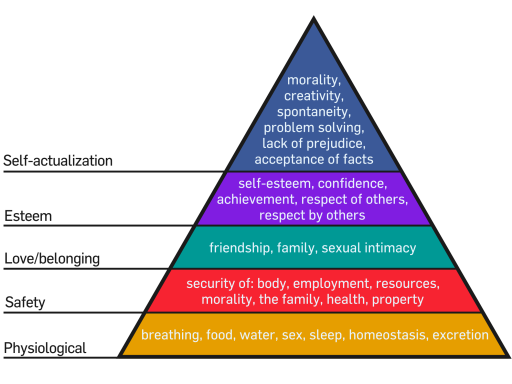
I was fascinated with Abraham Maslow’s Hierarchy of Needs back in college. I won’t use this space to try to fully explain his theory, but I strongly encourage you to explore on your own. It didn’t occur to me then how I would later apply it later in my career and personal life. Before long I had no trouble applying the hierarchy to municipal services and even at other levels of government.

2000px-Maslow's_Hierarchy_of_Needs.svg

Physiological.

Most of us live in good cities measured in several different ways. We can best understand just how good we have life by taking away the first line of government, counties, schools and cities. We generally know we are going to have water brought to us and wastewater taken away from us before we can even build a house. And cleaned before and after. Just those two services allow us to move into a community, but it has to be continued to keep us there. Else we end up like Flint, Michigan. In case we were to get lax or just fussy about spending money for receiving and returning clean water, we have federal, state and local standards. And levels of necessary bureaucracy to enforce those standards.

Actually, it doesn’t matter what the cost is. If you are having to pump water from a lake 100 miles from you, and the lake was built in the recent decade rather than in the 1950s, then it is going to be very expensive. If the water is of a quality that requires above normal amounts of treatment (look up the word “brine” or “brackish), then it is going to cost more. If you move to a city that has charm promoted in the form of “beautiful hills” and terrain, don’t be surprised if your sewer bill is higher due to the dozens of lift stations as opposed to a city where wastewater gets to the treatment plant through gravity flow. Big difference.

My municipal career started right after the Clean Water Act of 1972 was created. The sewer bill was a flat $2.00 a month, as I recall. Up until then the usual phrase was “the solution to pollution is dilution,” but you had to say it with a heavy emphasis on “di” in dilution to sound Texan. Treatment plant were actually by-passed during heavy rains with massive amounts of rainwater inflow and infiltration from aging or shoddy lines going straight into the streams. So, yes, my friend Maslow was correct, there are basic physiological needs that have to be met before we can have a viable community.

Safety.

Let’s face it. If we have to live every day worrying about getting killed or someone stealing our property, we have no focus other than staying home with a gun in our hands. It is easy for jokes to come forth on this one, but this is not a Redneck issue for most of us. Yet it is always on our mind or at least we get frightening reminders when we hear of a home-invasion crime that has occurred close to us. As you get older, this concern increases. So, you are not going to have a good life or a good community if you don’t feel safe. And to know that if you need help, the response is only a few minutes away. But it does cost money. In fact, a response time of 30 minutes for a serious crime call instead of 5 minutes might save tax dollars. Which do you want?

And the same response time for a fire or rescue emergency is hardly a choice. Those minutes mean you either go to the hospital or to the morgue. I find it interesting that many of my peers want to retire and move way out into the country. At an age when they may need medical assistance the most. Not me. I want to live in a safe community with doctors and hospitals close and emergency workers who can get me to the care centers quickly. The bottom line is that fire and police workers are expensive and are always going to get priority in budgets. Besides, do the math. There are 8,760 hours in a year. For every worker you need 24×7, it takes 4.2 people to cover – and that is if they didn’t take a single day of vacation, holiday or sick leave. The real number is well over 5 people for every one employee needed for full coverage. Then add the logical team/squad requirement since you don’t send a firetruck with just one person on it.

The Others.

Each of the top three are as important as the first two in my mind if we want to live in communities and enjoy the benefits while also increasing our own personal growth. Linda and I don’t need a huge stadium full of friends, and prefer being homebodies to a full calendar of social events we lived as younger people. But we do need friends. We are more “waving” neighbors than social butterflies, but we like having good neighbors. We like to live where medians are well groomed with a sprinkling of color beds. It is nice to have city (and HOA) people who will enforce codes that keep weeds from becoming a problem. We are grateful for animal control who comes when we call about those obnoxious dogs behind us. We like a community full of churches.

We love going to the nicely groomed, well-lighted sports fields and recreation centers where we live and go watch our grandkids play. I cannot express the joy we feel being around young families and their kids. We get energy from their youthfulness. Our favorite thing to do is to see live entertainment – plays, musicals, dramatic readings, idea forums (like TedTalk) I mentioned recently. We get the benefit of enjoying not just McKinney but also the surrounding cities, Frisco, Fairview, Allen, Plano. We probably go to venues in Dallas every week or two. Our jaunts to Fort Worth and several cities in between have introduced us to some great venues.

I have attended college courses at the local community college and gone to enlightening, though provoking events held for vocational and personal growth. The first thing we did when we moved to McKinney is get our water turned on. The second thing we did is get library cards. The most wonderful sight when we go to the library is seeing a mom walking in or out with three kids, each holding books. That’s community!

Conclusion.

The most vibrant communities nourish the citizen and let them thrive to reach every level of Abraham Maslow’s Hierarchy of Need. Our children and grandchildren can flourish in these kinds of communities. Jobs are available here or nearby. Every need we have is met. We can partake as little or as much as we want. We can give, and we can take.

The real test is whether we can also be a good player in our larger region from which we can give and take? And that is my topic for tomorrow. LFM

This Side of Easter

We have a benefit over those followers of Jesus in His day walking the earth. We remember the events leading up to the cross, but they lived it. However, we know before He dies, he will rise again. What an advantage! We see everything on this side of Easter.

Today we celebrate the empty cross, the Risen Lord and all we have learned about what comes after the discovery of the tomb that could not hold Him. Our grief yields to celebration. Despair turns to hope. We lift our heads and look high. A new Day has been born.

The Re Words.

There are dozens of them. I call them the “re” words. They are almost all powerful words. They are Spring words. Renewal. Revisit. Rejuvenate. Restart. Reconcile. Return. Reconsider. Rethink. Recommit. I love them all. They all blend “surrender” in with “power.” To yield is strength when we see from the back side of a decision.

These words apply to people, to relationships and to communities themselves. A visionary sees the entire continuum. A wife or husband can see the necessity of healing, and the results. Some fast-growing cities are overwhelmed with new growth. A mature mayor and city manager place equal joy on rebuilding the old parts of town. Birth and rebirth taken together result in resiliency and vibrancy.

Easter Song.

While I mentioned hymns on Good Friday, it is actually praise music that has added to my re-energized soul in recent years. Many churches have blended the old hymns with lively praise, often in the same song. I like that. I am one of those who firmly believes that Heaven will be filled with songs of praise and worship. It is the worship service today that gives me the best glimpse of Heaven. I don’t see Heaven being a passive experience.

It is this spirit that I direct you to a few links of some praise music. I searched with pleasure and found way too many to make it an easy choice. If you have never heard of Hillsong, then let me introduce them to you. This is a church in Australia that has turned their music into a ministry of its own. A highlight is a woman named Darlene Zschech. We were fortunate to see Hillsong and Darlene a few years back at a church in Carrollton.

The first song is called Hallelujah Choir Opener. I like this version (Darlene is not in this one) because it involves normal city scenes that show how we can be in a mindset of praise in the middle of our busy lives. It also gives me hope to see Gen-Xers and Millennials taking the lead.

The second song involves Darlene singing Shout to the Lord, one of my favorites. She is joined by Michael W. Smith. When our son Kenneth was a young teenager, he attended a Christian sports camp in Missouri. The owner of Kamp Kanakuk, Joe White, was a friend of Michael W. Smith and had him surprise the campers one night for their very own show.

If this music speaks to you, I promise you could fill your day searching YouTube, and you will be richly blessed.

Happy Easter! LFM


Let Your Reach Exceed Your Grasp

There were thirty of us selected in Leadership Metrocrest, Class IV in what seems like a long time ago. We were given tee-shirts shouting Robert Browning’s famous quote: “Let your reach exceed your grasp.” I’m not sure how someone could come up with so few words that say so much. I was the odd-ball of the class of 30. When we took one of those leadership characteristics and style tests during the first class meeting, the test that places you in one of four quadrants, the outcome was funny. Well, at least everybody laughed when it was revealed that 29 were split fairly evenly into three quadrants. I was in the fourth quadrant. I don’t recall what the groupings meant, but I do remember the outcome.

Leadership comes in many forms. The variations intrigue me. Another characteristic captures my fascination as well. It is the interactions between different disciplines. Taken a step further, it is the application of one discipline to another. Let me see if I can explain. Part of my enjoyment of working on utility rate studies and impact fees in years past (I only work on sales tax analyses and reports now) had a lot to do with the number crunching. But none of that is important to my point now.

But here was the deal. The work involved, actually required, planners, lawyers, engineers and finance people (me) to communicate with each other. I was fortunate to work with the same consulting team on several projects. We all had to interpret compliance with the state law that had requirements but no guidelines. Before long we could actually have one of us not in attendance at a meeting with the other three answering most questions for the discipline not in attendance. We knew what the missing person would say in most cases.

I love listening to a lawyer or engineer explain how they think. Since I am not the best person in the world to interpret maps, I appreciate learning what a planner sees that I might miss. Many people have an advanced degree potential under the same roof that goes ignored if they would just talk to each other and be a good student.

What Makes A City Great.

The City of Dallas once hosted an annual gathering under headline of What Makes a City. I added the “great” in my mind back then as well my blog today. Unfortunately, I was unable to attend those annual meetings, but I got copies of the presenter’s transcripts. I was awestruck with the mix of speakers. There were educators, historians, architects and planners. There were also farmers, ranchers and other philosophers and thinkers. Each was a visionary. And articulate. But most of all, they were passionate.

TedTalks.

I first heard about TedTalks from a colleague. Then from another. Finally I Googled and found out about this amazing organization. It appeared that they have a simple but highly effective format – bring a group of people together to listen to a variety of presenters. The presentations generally last less than 18 minutes. The speakers are interviewed and their presentations vetted. The topics are varied. Oh, are they ever varied! But the quality of the lighting, sound and video is very high. Many of the speakers are experienced, but also many are ordinary people with an extraordinary urge to communicate and to compel the audience to think and see things from a different perspective.

You can go to www.ted.com to get a better glimpse of the organization. You can also have access to thousands of podcasts. I try to listen to one each day. While I tend to pick and choose, I have also found that a surprise is waiting in some of the podcasts that don’t sound very interesting at first. For instance, the topic might be about one thing, but you can easily see how applicable it might be in your own professional or personal life. If I were to put a single label to describe just about all of them, it would be the title of my blog.

Tedx.

The concept of TedTalks and their tagline Ideas Worth Spreading reaches globally. Last night my colleague Jerry Byrd and I attended TedxPlano. I was surprised to learn a few months ago that this was their third year to host an extension of TedTalks. That is the “x” designation in Tedx sites. There is going to be another one coming up soon at SMU. It’s funny how you learn of something you thought was new only to find its all around you and has been going on for years.

Last night at TedxPlano, it was exactly as I expected from what I had viewed on podcasts from all over the world. There were eight speakers presenting from the stage and two that were videos. There was a biology teacher talking about his experiences in class and the formation of opinions. One speaker talked about the challenges of managing an organization with Baby Boomers, Gen-Xers and Millennials all trying to work together. One was a 20-year city manager who woke up one day, wrote her resignation letter, and took her skills and passion to a non-profit she felt called to serve.

There was a 17-year girl who blew us away with a challenge to apply adult expectations to the younger generation as she already had her own non-profit serving a need. The last speaker, a dance teacher, almost had the audience rising out of their seats to join her in her passion for teaching young girls raised in slavery in foreign countries to build self-esteem.

The common thread, as I reflected on the great evening was: let your reach exceed your grasp. One speaker who was proficient in several foreign languages emphasized how one tiny step of learning daily can keep pushing us out of our comfort zone to accumulate huge advances in knowledge and experiences. LFM


And Can It Be That I Should Gain

Good Good Friday to you! Or Holy Friday. Or Great Friday. Or Easter Friday.

Years ago I taught a Sunday School class on the Poetry & Theology of Hymns. In one sense, I was not very qualified. I am not a musician nor am I a singer. I just enjoyed the power of a hymn to both explain the Gospel and to draw one nearer to Christ. Part of the fascination, too, was about word study. Especially when the lines in the hymn are directly tied to Scripture as well as the language usage at the time the hymn was written.

The lessons included the story behind the hymn. You might love Amazing Grace, but the hymn is bound to your heart forever once you know it was written by the master of a slave ship having an awakening. It is Well With My Soul grabs you in a deeper way when you learn it was written after a man lost his entire family. And Blest Be The Ties That Bind is more relatable when you read it through the eyes of a pastor who changes his mind about leaving his church for another one. Many of the best hymns are relatively simple, easy to remember and compelling in their message.

And then there was Charles Wesley. Most historical references to Charles Wesley say he wrote over 6,000 hymns. He was highly educated. He and his brother John’s rigid devotion and worship was methodical, hence the label Methodists was placed on the Wesleyan movement of that day. Another noteworthy point about both of the Wesley brothers is that they were both involved in Christian ministry and were believers without a doubt. But both had a subsequent religious experience. A profound revelation.

This is relatable to many of us who were born and raised into Christian families, attended church and were perhaps well into adulthood when something happened. It is often that one moves from a head knowledge to a heart knowledge. It may be due to a major event, such as a family death or an accident. It may not be earth shattering at all. C.S. Lewis experienced that moment riding down a dusty road in a motorcycle sidecar driven by his brother. It becomes real. Personal. Rich. You own it. It is a special moment. It is often repeated through rededication or yet another inexplicable time of reawakening. Sometimes a result of an intentional search. Many times by surprise. Always wonderful!

These transformational moments reset one’s GPS. Things are different from that point forward. It was after a life-changing moment, separated by days for the Wesleys, that their true belief became alive and their ministries flourished. This setting is important to understand when you study the context in which many hymns were written.

Charles Wesley wrote many of the great hymns sung in churches today. I had heard of most of them and used many in my Sunday School class. However, it was when I heard that a favorite hymn of Mike Beidel’s was And Can It Be That I Should Gain that I took a closer look. Mike was the headmaster of Trinity Christian Academy in Addison at the time, and a man I greatly respected – and still do. I then read the hymn and listened to the music many times. It grabbed me.

There is an awe in the words. Charles Wesley is writing in disbelief that Jesus’ death for the sins of Man was to benefit him, Charles! So, on this Good Friday, I lift up the words of this hymn for you to consider. Like any piece of poetry, this is not a drive-by collection of words, thoughts and concepts. Dwell on them, and make them yours. Read them and think of Charles crafting each word, each line.

In fact, if you really want some meditative material that will make you think and find nuggets of joy, just savor the poetry and theology in hymns. Some will be familiar, such as O For a Thousand Tongues to Sing. Others such as my favorite Love Divine, All Loves Excelling may be new. All of them have a needed message for us today. They are timeless, as is the case in most things we search for in an effort to find comfort and guidance. LFM

And Can It Be That I Should Gain
By Charles Wesley

1 And can it be that I should gain
An int’rest in the Savior’s blood?
Died He for me, who caused His pain?
For me, who Him to death pursued?
Amazing love! how can it be
That Thou, my God, should die for me?

Refrain:
Amazing love! how can it be
That Thou, my God, should die for me!

2 ‘Tis mystery all! Th’Immortal dies!
Who can explore His strange design?
In vain the firstborn seraph tries
To sound the depths of love divine!
‘Tis mercy all! let earth adore,
Let angel minds inquire no more. [Refrain]

3 He left His Father’s throne above,
So free, so infinite His grace;
Emptied Himself of all but love,
And bled for Adam’s helpless race;
‘Tis mercy all, immense and free;
For, O my God, it found out me. [Refrain]

4 Long my imprisoned spirit lay
Fast bound in sin and nature’s night;
Thine eye diffused a quick’ning ray,
I woke, the dungeon flamed with light;
My chains fell off, my heart was free;
I rose, went forth and followed Thee. [Refrain]

5 No condemnation now I dread;
Jesus, and all in Him is mine!
Alive in Him, my living Head,
And clothed in righteousness divine,
Bold I approach th’eternal throne,
And claim the crown, through Christ my own. [Refrain]

After soaking up the message from reading several times, read it again while listening to the hymn here.