Can I Help You Study the Bible?

An open invitation to anyone who wants to dig deeper into Scripture

By Lewis McLain Jr.

Most Christians want to study the Bible more deeply. Few of us know where to begin. We open to a chapter, read it, get something out of it — and then close the book wondering whether we actually understood it. What was Paul really arguing? Why did he choose that word? What did the original audience hear that we are missing?

I’d like to offer to help.

Why I’m Writing This

For quite some time now I’ve been preparing detailed Bible study tools — interactive HTML documents — for my own use, for our church life group, and for friends and family who’ve asked. Topics have ranged across Joshua’s conquest, the role of the Levites, the Avenger of Blood, Caleb’s faithfulness, the lineage of promise from Adam to Christ, and the history of the Popes. Each one starts the same way: a question I’ve had, a passage I’m wrestling with, or a topic I want to understand more fully.

I’ve come to enjoy this work enough that I want to extend the offer more broadly. If you’d like a study tool prepared on a book of the Bible, a chapter, a handful of verses, or even a question or struggle you have with the Bible — send it to me, and I’ll prepare one for you. No charge. No catch. I genuinely enjoy the work. And I learn!

What I Mean by “Study Tool”

I don’t mean a sermon or a devotional, although I could create those. I mean a working document — built to be used, returned to, and read alongside your Bible. Depending on the topic it might include:

  • The full text of every passage (so you don’t have to chase references)
  • Word studies on the original Greek or Hebrew terms — what they meant, where else they appear, and what’s lost in translation
  • Historical and cultural background — what the original audience would have understood
  • Cross-references with full verse text alongside
  • Tables, outlines, and structural diagrams
  • Application threads tying the passage to questions we still wrestle with

The goal is not to replace your study but to give you a head start — a foundation you can build on, mark up, and bring to your group or your prayer time.

What You Can Send Me

Don’t overthink it. Any of these work:

  • A whole book — “Help me understand Galatians.”
  • A chapter — “I want to dig into Romans 8.”
  • A few verses — “What’s going on in James 2:14–26?”
  • A topic — “Trace the theme of covenant through Scripture.”
  • A struggle — “I can’t reconcile Old Testament violence with Jesus’ teaching.”
  • A question — “What does the Bible actually say about heaven?”

Tell me a little about what you’re after — for personal reading, for a group, for a class you’re teaching — and I’ll shape the tool to fit.

How I Prepare a Study

So you know what you’re getting, here’s the work that goes into one of these documents. The sequence varies, but the core steps don’t.

1 Read the passage in context

No verse stands alone. Before I look at a single Greek word, I read the surrounding chapters — sometimes the whole book — so I know what came before and what comes after. The question I’m asking is: what is the writer doing here, and how does this passage fit?

2 Identify the historical setting

Who wrote it, to whom, and why? When? What was happening in that city, in that church, in that culture? A letter to a persecuted minority church reads differently from a letter to a triumphant one. The original audience always shapes the meaning.

3 Mark the unusual words

As I re-read, I flag every word or phrase that seems to carry weight — words used unusually, words repeated, words drawn from a specific cultural setting (military, athletic, legal, agricultural). These become the word-study entries.

4 Look up the original language

I check the Greek or Hebrew, look at the word’s range of meaning, where else it appears in Scripture, and what nuance is lost in English. Sometimes a single word changes the whole interpretation of a verse.

5 Trace the cross-references

Scripture interprets Scripture. I track where else the passage’s themes, quotations, or images appear — Old Testament roots, parallel teachings, later developments. I always include the full verse text rather than just citations, so the reader doesn’t have to flip back and forth.

6 Identify the structural backbone

Most biblical writers are careful structural builders. I look for the argument’s spine — the turning points, the parallel sections, the rhetorical pattern. A chapter often becomes much clearer once you see how its parts relate.

7 Synthesize the themes

After all the detail, I step back and ask: what is the passage doing? What is the central argument? What does it call us to? The synthesis section keeps the trees from hiding the forest.

8 Build it into a usable document

Finally I assemble it as a clean HTML page you can open in a browser, read on a phone or tablet, share, print, or come back to anytime. Font size and screen brightness controls are built in. No software to install. The file is yours to keep.

An Example: Colossians 2

To make this concrete rather than abstract, here’s an actual recent example. A Sunday School class is studying Colossians. Last Sunday was about Colossians 2 — a chapter dense with theological vocabulary that’s easy to read past without really hearing.

The challenge: Colossians 2 is the most concentrated theological warning in any of Paul’s letters. He addresses three different errors simultaneously — philosophical speculation, Jewish ceremonial legalism, and ascetic mysticism — and his answer to all three is the same: the all-sufficiency of Christ. You don’t need to add anything to the story. But the chapter is packed with rare, technical, sometimes invented vocabulary. Without help, most of it slips past the modern reader.

Here’s a sample of what the word study uncovered:

  • Verse 8 — “takes you captive.” Paul uses a rare word, sylagōgōn, found nowhere else in the New Testament. It means “to plunder” or “to kidnap into slavery.” Paul does not view false teaching as a peaceful disagreement — he sees it as an enemy raid carrying Christians off as spoils of war.
  • Verse 9 — “the fullness of deity dwells bodily.” Paul deliberately uses the strongest possible Greek word for divinity (theotēs, the very essence of being God) and adds the word “bodily” — a direct strike against any teaching that denigrates physical reality or denies the true Incarnation.
  • Verse 14 — “nailing it to the cross.” The “record of debt” is cheirographon, a handwritten promissory note — your signed IOU listing every violation. Paul’s image is staggering: God did not just dismiss the debt; He cancelled it (literally erased it) and nailed the cancelled IOU to the cross. There may even be an allusion to the Roman practice of nailing the criminal’s charge above the cross — Pilate’s “King of the Jews” being one example.
  • Verse 15 — “triumphing over them.” Paul invokes a specific Roman cultural image: the triumph, the public victory parade granted to a conquering general. The general rode in his chariot through Rome; behind him marched the captured enemy kings, stripped of weapons, paraded in chains before jeering crowds. Paul says the cross itself was Christ’s triumph parade — what looked like Caesar’s victory over a Galilean was in fact the King of kings’ public dethronement of every hostile power.
  • Verse 23 — “self-made religion.” Paul appears to have coined the word — ethelothrēskia, “will-worship,” religion designed by the worshipper rather than received from God. The word is found nowhere in earlier Greek literature.

The full study runs through every verse, every key word, every cross-reference (with full text), and ends with a synthesis identifying the five Christological pillars of the chapter and the way Paul’s syn- (“with”) compound verbs drive home the believer’s union with Christ. It includes font-size and dimming controls so it’s readable on any device or in any lighting.

The result is a document you can use for personal study, hand to a small group, or return to a year from now and still get something fresh out of. That’s the kind of tool I’m offering to prepare for anyone who asks.

One More Thing

These tools are living documents. If you read through what I prepare and want it adjusted — more depth in one section, more cross-references, an added topic, a focus shift toward application — just say so. We can enhance it together. The goal is to serve your study, not to produce a finished monument.

So if there’s a passage you’ve been meaning to dig into — or one that’s been bothering you for years — let me know. I’d be glad to help.


Click here to see Colossians Chapter 2 Preparation
Can I Help You Study the Bible?

OPEC at a Crossroads

The UAE Exit, the Iran War, and the U.S. Position in Reshaped Oil Markets

A collaboration between Lewis McLain & AI

A Brief History of OPEC

The Organization of the Petroleum Exporting Countries was founded on September 14, 1960, at the Baghdad Conference. The five founding members—Iran, Iraq, Kuwait, Saudi Arabia, and Venezuela—created OPEC as a defensive cartel against the so-called Seven Sisters, the consortium of Anglo-American oil majors that then dominated global crude pricing. Its original purpose was modest in language but radical in effect: to coordinate petroleum policy among producing nations and reclaim pricing power from the multinationals.

Through the 1960s and 1970s, OPEC executed one of the most consequential transfers of economic power in the twentieth century. Member states nationalized concessions held by Western majors, replaced posted prices with market-driven pricing, and twice—in 1973 and 1979—demonstrated that coordinated production decisions could move the global economy. The 1973 embargo, triggered by the Yom Kippur War, quadrupled crude prices in months and inaugurated an era of stagflation across the industrial West.

That apex of cartel power did not last. The price spike of 1979–1980 drove industrial nations to substitute coal, nuclear, and natural gas for oil; commercial exploration opened major fields in the North Sea, Alaska, Siberia, and the Gulf of Mexico; and OPEC’s market share collapsed from roughly 50 percent of global supply in 1979 to under 30 percent by 1985. The cartel spent much of the 1980s and 1990s managing decline rather than dictating terms.

OPEC’s modern form coalesced after 2016, when collapsing prices following the U.S. shale boom forced a new alliance with Russia and other non-OPEC producers under the Declaration of Cooperation. The expanded group, known as OPEC+, brought together producers controlling roughly 41 percent of global supply and gave Riyadh and Moscow joint stewardship over a coordinated production framework. That arrangement has held, with significant strain, through the COVID demand collapse, the Ukraine invasion, and the current Iran war.

Membership has not been static. Ecuador, Indonesia, and Qatar each departed at various points over quota disputes or strategic pivots—Qatar leaving in 2019 to focus on liquefied natural gas. Angola exited in December 2023 over the same complaint that has now driven out the UAE: that quota allocations punish countries which invest to expand capacity by anchoring quotas to historical output rather than current potential.

The UAE Exits

On April 28, 2026, after nearly six decades of membership, the United Arab Emirates announced its withdrawal from both OPEC and the broader OPEC+ alliance, effective May 1. The announcement was framed by Energy Minister Suhail al-Mazrouei as a policy decision arrived at after a careful review of national strategy, undertaken without consultation with other members. The substance of the move had been long anticipated; the timing was a surprise.

The grievance was structural. The UAE had built effective production capacity of roughly 4.8 million barrels per day before the current war, against an OPEC quota that limited it to about 3.2 million. Abu Dhabi’s state oil company, ADNOC, has now committed $55 billion to new projects over the next two years and intends to push capacity to 5 million barrels per day by 2027—well above any quota the UAE would have been granted under the existing framework. The country holds approximately 98 billion barrels of proven reserves to back that ambition.

The political context matters as much as the economic. Tensions between Abu Dhabi and Riyadh have widened over Yemen, Sudan (where the UAE backs the Rapid Support Forces while Saudi Arabia and Egypt support the government), and the Abraham Accords with Israel. The Iran war has accelerated rather than caused the rupture. The UAE has been targeted by Iranian-aligned forces more than any other regional state, and the Atlantic Council has noted that the war has “changed everything” for Emirati policymakers, who have decided they are no longer interested in being constrained by an organization that includes Tehran.

The market significance is real but bounded. The UAE was OPEC’s third-largest producer behind Saudi Arabia and Iraq. At the first OPEC+ meeting after the exit, on May 3, the remaining seven voluntary-cut countries announced a 188,000 bpd June production increase—conspicuously omitting any mention of the UAE. Analysts read the silence as a signal of frosty relations and a deliberate effort to project continuity. Whether that holds depends entirely on whether other quota-frustrated members—Iraq and Kazakhstan are the names most frequently cited—follow Abu Dhabi out the door.

The Iran War and the Strait of Hormuz

On February 28, 2026, the United States and Israel began coordinated strikes on Iran. Tehran’s response was swift and asymmetric: it effectively closed the Strait of Hormuz to foreign-flagged shipping and refused passage to tankers attempting to leave the Persian Gulf. The United States retaliated with a naval blockade of Iranian ports. As of early May, the strait remains impassable.

Roughly 20 percent of global oil supply normally transits Hormuz. Its closure has produced what the Energy Information Administration describes as production shut-ins averaging 7.5 million barrels per day in March, rising to a projected peak of 9.1 million in April. Saudi Arabia, Iraq, Kuwait, the UAE, Qatar, and Bahrain are all affected. The UAE has retained partial export capability through its Fujairah terminal on the Gulf of Oman, which sits outside the strait, but its 1.7 million bpd of crude and refined fuel exports through that channel last year fall well short of its production capacity.

Brent crude averaged $103 per barrel in March 2026, $32 above the February average, and reached nearly $128 on April 2. As of last Friday, U.S. WTI futures sat at $101.94 and Brent at $108.17—both roughly 78 percent above where they started the year. The EIA now projects Brent to average around $76 in 2027, $23 higher than it forecast in February, on the assumption that traffic through the strait gradually resumes through late 2026 but does not return to pre-conflict levels until year-end.

For OPEC, the war has had a paradoxical effect. The cartel’s nominal pricing power has rarely looked stronger—prices are elevated, demand is firm, and the supply shortage is acute. But the actual mechanism of the cartel, coordinated output management, has been rendered largely irrelevant. Total OPEC+ output with quota fell to 27.68 million bpd in March against a monthly quota of 36.73 million, a roughly 9 million bpd shortfall driven almost entirely by war-related disruption. Quotas mean little when the binding constraint is a shipping lane.

Member Capacities and Quotas

The table below summarizes each remaining OPEC member alongside the UAE, with approximate effective production capacity, the binding 2026 required-production figure where one applies, and recent actual output. Iran, Libya, and Venezuela are exempt from OPEC+ quotas due to sanctions and instability. Within the cartel’s voluntary-cut group of seven (now without the UAE), required production is the binding number; for the smaller African members, broader Declaration of Cooperation quotas apply but are rarely the binding constraint, since infrastructure and security limit output below quota.

CountryEffective Capacity (bpd)June 2026 Required (bpd)Notes
Saudi Arabia~12,000,00010,291,000Cartel anchor; world’s largest spare capacity holder
Iraq~5,000,0004,352,000Persistent quota overproducer; possible exit risk
UAE (exited May 1)~4,800,000No quotaTargeting 5,000,000 bpd by 2027
Kuwait~2,800,0002,628,000Reliable compliance; low production cost
Iran~3,800,000ExemptU.S. sanctions and naval blockade currently binding
Nigeria~1,800,000~1,500,000Chronic underproduction from theft and infrastructure
Algeria~1,000,000989,000Voluntary-cut group member
Libya~1,200,000ExemptOutput volatile due to internal conflict
Venezuela~800,000Exempt303 billion barrels in reserves; sanctioned and decayed
Republic of Congo~270,000~277,000Smallest African producers; rarely hit quota
Gabon~200,000~177,000Smallest African producers; rarely hit quota
Equatorial Guinea~70,000~70,000Smallest African producers; rarely hit quota

Key OPEC+ partner countries (non-OPEC, subject to quotas):

CountryEffective Capacity (bpd)June 2026 Required (bpd)Notes
Russia~10,500,0009,762,000OPEC+ partner; second-largest producer overall
Kazakhstan~1,900,0001,599,000Repeated quota overruns; named as exit risk
Oman~1,000,000826,000Voluntary-cut group; reliable partner

Sources: OPEC+ press release (May 3, 2026); EIA Short-Term Energy Outlook (April 2026); OPEC Annual Statistical Bulletin 2026. Capacity figures are approximate effective capacity, not nameplate; required production reflects the May 3 OPEC+ June targets.

Two facts deserve emphasis. First, official 2026 OPEC+ group-wide quotas total 39.725 million barrels per day, but actual required production averages closer to 38.1 million once voluntary cuts are factored in, and real production has been far below either number through the war. Second, OPEC’s surplus capacity—the buffer it can deploy in a shock—is projected by EIA to collapse from 4.21 million bpd in 2025 to roughly 1.20 million in 2026, the thinnest cushion in years. The cartel can no longer absorb a major disruption.

United States Demands and Capacity

The U.S. position in 2026 is unusually strong on the supply side and unusually exposed on the diplomatic side. American crude oil production reached a record 13.6 million bpd in July 2025 and the EIA projects an average of 13.5 million for both 2025 and 2026. That makes the United States the world’s largest producer—larger than Saudi Arabia and Russia individually—driven almost entirely by Permian Basin shale activity in West Texas and southeastern New Mexico, with secondary contributions from the Bakken in North Dakota and the Eagle Ford in South Texas. Unlike OPEC members, U.S. production is privately driven; Washington does not set output targets, and the rig count responds to market prices rather than political directives.

On the demand side, the United States consumes roughly 20 million barrels per day of liquid fuels, exporting growing volumes of refined product and crude itself. The country is now a structural net exporter of petroleum products, and U.S. liquefied natural gas export capacity is on track to reach 16 billion cubic feet per day in 2026 as the Plaquemines and Corpus Christi Stage 3 facilities come online. America has, in effect, become a swing supplier to Europe and parts of Asia, complementing rather than competing with OPEC’s traditional role.

The Strategic Petroleum Reserve provides the second layer of buffer. The SPR sits in four underground salt-cavern complexes along the Texas and Louisiana Gulf coasts—Bryan Mound, Big Hill, West Hackberry, and Bayou Choctaw—with combined authorized capacity of 727 million barrels. Going into the 2026 crisis, inventory had recovered from the 2023 low of 347 million barrels back to 415 million by early March, supported by deliberate refill purchases under the Trump administration. As of late April, after coordinated releases of 17.5 million barrels through the IEA-led 400-million-barrel global drawdown (of which the U.S. share is 172 million), SPR stocks stood at 397.9 million barrels.

The U.S. “demand” on OPEC, properly understood, is not for barrels themselves—domestic production largely covers domestic consumption—but for global price discipline. Washington wants OPEC to produce enough to keep gasoline prices manageable for American consumers and to prevent recession-inducing spikes, while not producing so much that domestic shale economics collapse. That is a narrow window. The shale industry generally needs $60 to $70 WTI to sustain drilling; American consumers begin to register political pain above $4 per gallon retail gasoline, which historically corresponds to crude in the $90 to $100 range.

The UAE’s exit serves U.S. interests on the price side. An unconstrained UAE pushing toward 5 million bpd will, once Hormuz reopens, add roughly 2 million bpd to global supply that is not subject to Saudi-led production discipline. Analysts at the Center for a New American Security and the Peterson Institute have noted that Washington welcomes the move precisely because it weakens OPEC’s pricing power. But the same dynamic threatens U.S. shale economics if it pushes prices below $60. The administration’s preferred outcome is a managed weakening of OPEC, not its collapse.

What to Watch

Three variables will determine whether the next twelve months produce a managed adjustment or a structural break in the global oil order. The first is the duration of the Strait of Hormuz blockade. Every additional month of closure draws down strategic inventories worldwide, depletes spare capacity, and concentrates pricing power in producers with non-Hormuz export routes—chiefly the UAE through Fujairah and, to a lesser extent, Saudi Arabia through its East-West pipeline to the Red Sea. The longer the war, the harder the eventual price correction when the strait reopens.

The second is the behavior of Iraq and Kazakhstan. Both have chronically overproduced their quotas; both have publicly chafed at the framework. If either follows the UAE out, OPEC’s coordination function collapses to a Saudi-Russian condominium, which is structurally weaker than the current arrangement because the two have diverging fiscal break-even prices and divergent strategic interests.

The third is U.S. shale resilience. The EIA expects U.S. tight oil output to decline modestly in 2026 and 2027 if WTI futures hold near current levels in the low $60s, even as the war keeps spot prices elevated. That divergence between front-month and back-month prices reflects market skepticism that wartime premiums will persist. If shale production declines as forecast, the United States loses some of its capacity to discipline global prices through volume—just as OPEC is losing the same capacity through quota erosion.

OPEC will probably survive the UAE exit, but in weakened form. The institution that emerged from Baghdad in 1960 was built to extract rents from Western oil majors. The institution that exists in May 2026 is trying to manage a fragmenting coalition through a war that has rendered its core mechanism temporarily moot, while its third-largest member walks out the door and its largest customer—the United States—is structurally indifferent to its survival. None of those conditions guarantee collapse. None of them suggest a return to the cartel’s twentieth-century stature either.

Charter Growth, Fixed Infrastructure, and the Second Wave of Closures in Texas

A collaboration between Lewis McLain & AI

Charter schools are not new to Texas. They have existed for more than three decades. Many of us have written about them before — including in earlier citybaseblog.net discussions — when they were smaller, experimental, and assumed to be complementary. The original expectation was that charters would remain modest in scale and exert limited fiscal pressure on traditional school districts.

What has changed is not their existence but their speed of growth and their concentration in major metropolitan areas. Charter enrollment is no longer marginal. In some cities, it has crossed thresholds where incremental growth produces structural consequences. The alarm is not ideological. It is mathematical.

Texas now operates two parallel public education systems at meaningful scale. That reality has produced a second wave of school closures across the state, financial strain in districts already optimized once before, and increasing anguish for locally elected school boards who must make decisions that feel like betrayals to the communities they serve.


Not New — But Now at Critical Mass

Charter schools began as alternatives designed to foster innovation and provide parental choice. Early debate assumed charters would remain small relative to the district system. That assumption no longer holds.

In San Antonio, charter enrollment has grown from roughly 3 percent of public school students a decade ago to approximately 13 percent today. The number of charter campuses in the city’s largest districts has nearly doubled since before the pandemic. Tens of thousands of students have shifted systems over time.

This is not drift. It is redistribution at scale.

When charter share moves from low single digits into double digits, the effects are nonlinear. Small changes can be absorbed. Structural shifts cannot.


Enrollment Loss and the Reality of Stranded Costs

Texas funds schools largely on an attendance basis. When a student enrolls in a charter school, state funding follows that student. That mechanism appears neutral: public dollars remain within public education.

But the system was not designed for rapid enrollment fragmentation.

What Actually Declines (Variable Costs)

Some costs fall when enrollment drops:

  • Instructional materials
  • Certain hourly staffing
  • Some food service expenses
  • A small portion of utilities

These are real savings. But they represent a minority of total expenditures.

What Does Not Decline (Fixed and Semi-Fixed Costs)

Most district costs are fixed or slow-moving:

Facilities Built for Original Capacity

Campuses were designed for peak enrollment projections. When enrollment falls:

  • Gyms remain full size.
  • Football stadiums remain full size.
  • Auditoriums remain full size.
  • Cafeterias remain full size.
  • HVAC systems condition entire buildings.
  • Roofs must be maintained across full square footage.
  • Security systems operate across entire campuses.

A high school built for 2,500 students does not become a 1,800-student cost structure simply because seats are empty.

You cannot operate 60 percent of a stadium.
You cannot heat only part of a hallway.
You cannot shrink a roof.

Utilities do not scale linearly with headcount. Insurance, maintenance, and capital upkeep do not scale linearly with headcount.

Bonded Debt Service

Facilities were financed through voter-approved bonds. Debt service is fixed. Enrollment decline does not reduce bond payments. In fact, debt per pupil increases as enrollment declines.

That affects financial ratios, credit perception, and long-range planning.

Transportation Networks

Bus routes are geographic. Students leaving for charters are not clustered neatly for route elimination. A district may still need to run a bus for 28 students instead of 40.

Transportation cost per student rises even as enrollment falls.

Staffing Thresholds

Operational minimums exist:

  • A campus requires a principal.
  • A campus requires counseling services.
  • A campus requires a nurse.
  • A campus requires special education coordination.

You cannot operate at fractional leadership levels. Staffing reductions often require full campus closures rather than marginal trimming.

Extracurricular Infrastructure

Texas districts maintain significant extracurricular infrastructure:

  • Stadiums
  • Athletic fields
  • Band halls
  • Fine arts facilities
  • Career and technical labs

These programs do not downsize proportionally. They are either maintained or eliminated. And elimination carries cultural consequences.


The Second Wave of Closures

The first wave of school closures in Texas was largely demographic. Neighborhoods aged. Birth rates declined. Suburban migration shifted enrollment patterns.

The second wave is different.

This wave is occurring in areas where population remains substantial, but enrollment has redistributed across systems. More than 45 traditional campuses have closed in the San Antonio metro area since 2014–15. Charter campuses have expanded during the same period.

Districts that already consolidated once now face additional optimization. That is far more destabilizing.

After the first closure cycle:

  • The easiest consolidations are already done.
  • Community tolerance declines sharply.
  • Remaining schools often serve as identity anchors.

The next closure is rarely peripheral. It cuts deeper.


The Anguish of the School Board

This section cannot be treated clinically.

School board members are not corporate executives managing market share. They are locally elected volunteers or modestly compensated public servants who often ran for office because they love children, believe in public education, and want to serve their communities.

When enrollment decline forces discussion of closure, they sit at a dais facing:

  • Parents who are frightened.
  • Teachers who are grieving.
  • Alumni who remember Friday nights under stadium lights.
  • Neighborhood residents who see the school as their community’s heart.

The suggestion of closing a child’s school is not heard as fiscal necessity. It is heard as abandonment.

Board members absorb:

  • Accusations of incompetence.
  • Claims of political bias.
  • Personal attacks.
  • Public anger that feels brutal and relentless.

Many of these board members send their own children to those schools. Many taught in those buildings. Many worship in those neighborhoods.

Yet the spreadsheet remains unmoved by anguish.

Enrollment charts do not pause because meetings are painful. Bond schedules do not bend because testimony is heartbreaking.

This emotional burden is part of the structural story. The system demands decisions that feel morally injurious even when fiscally unavoidable.


Additional Structural Pressures

Labor Market Fragmentation

Charter expansion creates parallel labor markets. Teacher mobility increases. Recruitment competition intensifies. Salary pressure rises even as district revenue declines.

Marketing Costs

Districts historically relied on geographic assignment. In a competitive landscape, districts must market programs, brand campuses, and actively recruit students — a new layer of expenditure.

Planning Volatility

Ten-year enrollment projections become less reliable. Capital planning becomes more uncertain. Bond timing becomes riskier.

Equity of Infrastructure Burden

Communities have invested heavily in comprehensive district infrastructure. When enrollment fragments, the per-pupil cost of maintaining that infrastructure rises for remaining students.


Governance Differences

Traditional ISDs are governed by elected boards accountable directly to voters. Charter schools are authorized by the state and governed by appointed boards.

Accountability exists in both systems, but its locus differs.

When a district closes a school, the decision is public, political, and deeply personal. When a charter closes, families often return to districts unexpectedly, creating additional planning stress.

The asymmetry matters in governance conversations.


Acknowledging Counterarguments

Charters serve families who seek alternatives. Some demonstrate strong academic outcomes. Some research suggests competitive pressure can improve district performance.

Charters also generally lack access to local bond funding streams, creating facility financing challenges for them.

These arguments are real. They deserve recognition.

But structural fiscal pressure on districts remains real as well. Two truths can coexist:

  • Charter schools provide choice.
  • Charter growth at scale creates systemic strain for districts built on different assumptions.

The Central Alarm

This is not an argument that charters should not exist.

It is an acknowledgment that Texas public education was not originally structured for rapid enrollment fragmentation across two parallel systems.

When charter enrollment moves from marginal to critical mass, the impact is not incremental. It becomes systemic.

Public school districts are not infinitely elastic.

They are built of:

  • Concrete and steel
  • Stadiums and auditoriums
  • Cafeterias and bus routes
  • Bond schedules and staffing thresholds
  • Deep community attachment

These do not shrink at the speed of enrollment charts.

And school boards — there for the love of children — are left to make decisions that feel like choosing between arithmetic and heartbreak.

That is the reality now facing districts across Texas.

Mexico’s Cartel System: What Just Happened — and What Comes Next

A collaboration between Lewis McLain & AI

I. The Cartel Landscape: Not a Pyramid, but a Web

Mexico’s cartel world is not one giant mafia with a single throne. It’s a shifting network of powerful criminal organizations, splinter groups, regional franchises, and temporary alliances.

The two most dominant forces in recent years:


🔵 Sinaloa Cartel

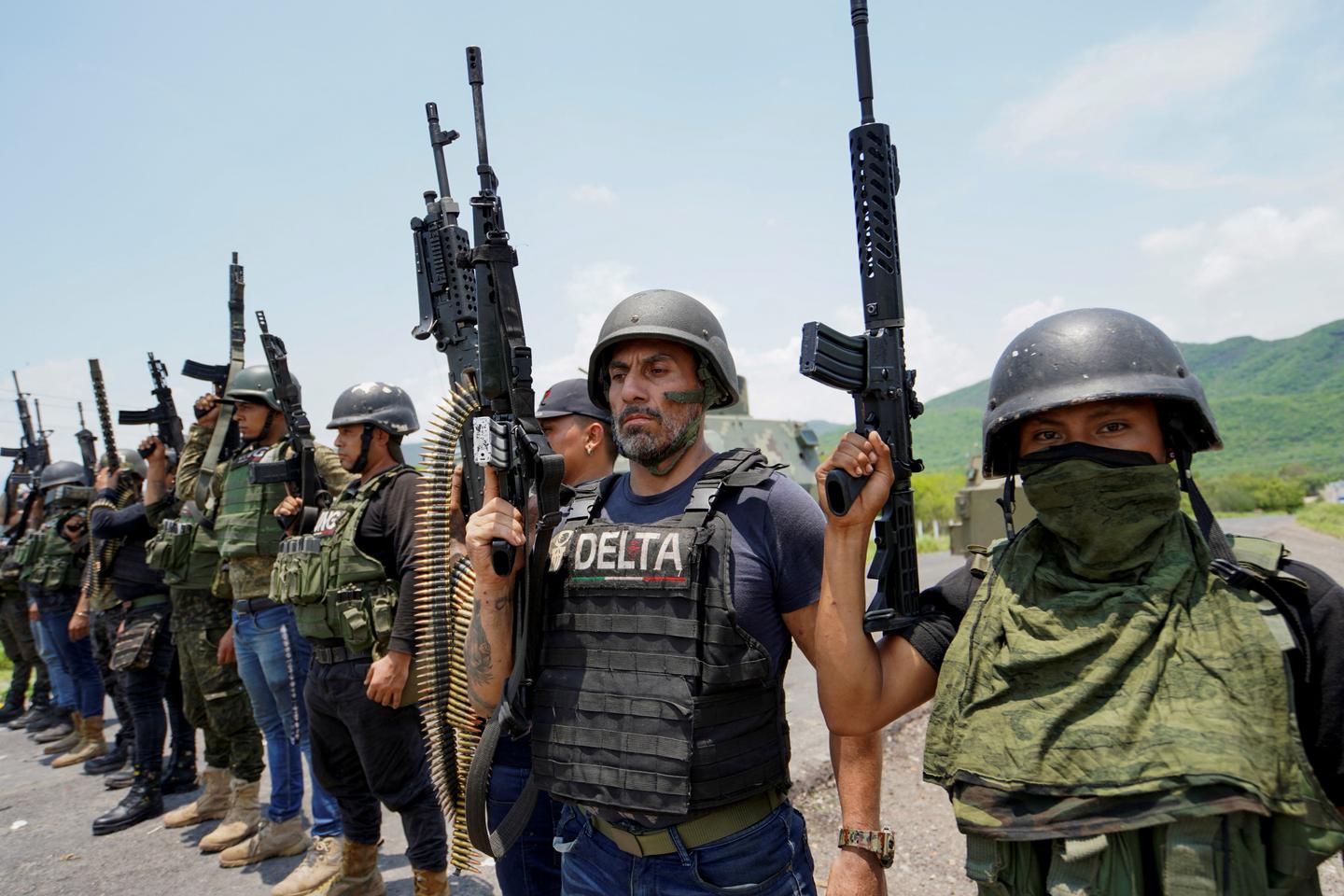
https://images.openai.com/static-rsc-3/ukoWtrQOLtg9loDUYUzG_Ju30G_tEXrrmR_XYo7B2YHyKzsjmQknruYE844fdZw9bkQwFOHbVLVNvcJlYnCN9oZsQAHyJuoJdYRdBK65Mlw?purpose=fullsize&v=1
https://images.openai.com/static-rsc-3/6cxihUAHBcVDJtvbR7rZ03NRdSyy2eddnSumzxeNj0H70yv4dh9_RprnUaLWKIMJck1kGdRIT0dsfZR7GA7GJ9yDUWma_ArKvL1luvSbhIc?purpose=fullsize&v=1
https://www.ice.gov/sites/default/files/2025-05/250514sandiego3.png
  • Deep international smuggling infrastructure
  • Major fentanyl and meth production
  • Historically associated with Joaquín “El Chapo” Guzmán
  • Currently fragmented into powerful factions

Sinaloa built a reputation for operational sophistication. Less theatrical than some rivals — but massively global.


🔥 Jalisco New Generation Cartel (CJNG)

https://images.openai.com/static-rsc-3/eHr1ZEsTY9Fwt9r4ziUV__5uDrNcHeCSNyNMY6QBiRhK5V-pkab3MMs2E6EkfAbDc5UHjnpYOQrb9yopAIo99AuzqtOeV2lVec-15QHb-qA?purpose=fullsize&v=1
https://cloudfront-us-east-1.images.arcpublishing.com/opb/KPX6VUWEY5PO3OFCQW57TCVN2M.jpg
https://img.lemde.fr/2023/12/09/0/0/5500/3666/1440/960/60/0/26284eb_2023-12-09t110317z-1086968103-rc2ubo9rlm6i-rtrmadp-3-mexico-usa-guns.JPG
  • Rapid expansion since ~2010
  • Militarized posture
  • Heavy weapons and armored convoys
  • Led until now by Nemesio Oseguera Cervantes (“El Mencho”)

CJNG grew aggressively, often clashing directly with Sinaloa and absorbing weaker groups.

Other significant players include:

  • Gulf Cartel
  • Los Zetas (and its remnants)
  • Beltrán-Leyva Organization
  • La Familia Michoacana and splinters

But the modern battlefield has increasingly been Sinaloa vs. CJNG.


II. The Immediate Story: El Mencho Reportedly Killed

Mexico’s military reports that El Mencho was killed in a targeted operation in Jalisco.

If confirmed and sustained (details often evolve in cartel cases), this is one of the most consequential blows to a Mexican criminal organization in over a decade.

What follows such events historically?

  1. Internal succession battles
  2. Splinter factions breaking off
  3. Short-term violence spikes
  4. Rival cartels testing territory

The removal of a kingpin rarely ends a cartel. It destabilizes it.

Think less “collapse” and more “fragmentation under pressure.”


III. The Rumored “Agreement”: Kill Each Other, Leave Civilians Alone?

After events like this, a familiar story resurfaces:

Cartels are allowed to fight each other as long as they avoid harming citizens and especially tourists.

Let’s analyze that soberly.

Is there a formal agreement?

No verified evidence supports a nationwide, formal agreement between the Mexican federal government and cartels allowing violence under conditions.

Such a policy would amount to institutionalized impunity. No credible documentation supports that claim.

Is there informal tolerance in some regions?

Corruption absolutely exists at local levels. In certain historical periods — particularly before the mid-2000s — analysts describe something closer to “managed containment”:

  • Violence discouraged if it disrupted economic stability
  • Trafficking routes quietly tolerated
  • Public spectacle minimized

But that was not a moral contract. It was corruption plus centralized political control.

When political centralization weakened, so did that equilibrium.

Why does the tourist-protection idea persist?

Economics.

Cartels are businesses with guns. Tourism generates billions. Killing tourists invites:

  • Federal troop deployments
  • International pressure
  • Economic backlash
  • Media spotlight

So many groups avoid unnecessary attention in resort zones — not because of ethics, but incentives.

Yet civilians absolutely die every year in large numbers:

  • Extortion victims
  • Journalists
  • Politicians
  • Migrants
  • Bystanders in crossfire

Homicide data alone disproves the idea of a functioning “civilian shield” agreement.

Organized crime sometimes acts rationally. It does not act morally.


IV. Why Fentanyl Changed Everything

One reason the cartel landscape has grown more violent is the fentanyl economy.

Fentanyl is:

  • Synthetic
  • Extremely cheap to produce
  • Highly profitable
  • Compact and easy to transport

Unlike plant-based drugs (marijuana, heroin), fentanyl production depends more on chemical supply chains than farmland.

That lowers entry barriers and increases fragmentation.

More actors can compete.

More actors compete → more turf wars.


V. Where This Is Heading

El Mencho’s death, if solidly confirmed, likely produces one of four trajectories:

1️⃣ CJNG Consolidates Under a Successor

A lieutenant quickly stabilizes control. Violence spikes briefly, then normalizes.

2️⃣ Fragmentation

CJNG splits into regional factions fighting each other and Sinaloa. Violence increases.

3️⃣ Sinaloa Expansion

Sinaloa factions exploit instability to absorb territory.

4️⃣ Federal Escalation

Mexico increases military deployments, temporarily suppressing overt conflict.

History suggests fragmentation is most common after a kingpin removal.

And fragmentation increases unpredictability.


VI. The Bigger Structural Issue

Cartels exist at the intersection of:

  • U.S. drug demand
  • Weak local governance in some regions
  • Corruption vulnerabilities
  • Enormous profit margins

Removing leaders addresses symptoms. It rarely addresses incentives.

Until the demand side shifts, the profit engine keeps running.

This is not a story of villains in isolation. It is a story of transnational economics, political systems, and power vacuums.


The Uncomfortable Prediction

Short term:
Expect turbulence in Jalisco and contested corridors.

Medium term:
Watch for internal CJNG fractures or aggressive Sinaloa positioning.

Long term:
Unless structural incentives change, the system adapts. It always has.

Criminal ecosystems evolve the way markets evolve.

And markets — legal or illegal — follow incentives.

The Hinge: Saturday Night Looking at Sunday

A collaboration between Lewis McLain & AI

There is a strange hour each week when the noise thins and the future begins to whisper.

Saturday night is not simply the end of leisure. It is not yet obligation. It is a hinge in time — a narrow corridor where the past week and the coming week briefly face each other.

You can feel it if you sit still long enough.

The music softens. The group texts slow. The sky turns darker than it needs to. And somewhere in the mind, a quiet recalculation begins.

Sunday is approaching.

And with it, something much older than us.


The Human Invention of Pause

From the earliest pages of the Hebrew Scriptures, the idea of a structured pause appears. The Sabbath was not merely rest from labor. It was a deliberate interruption of production. A command to stop building, stop harvesting, stop calculating, and stop proving oneself.

That is radical.

In a world where survival once depended on constant vigilance, stopping required trust. The soil would not vanish overnight. The sky would not collapse because the plow rested.

Across centuries and cultures, humans have reinvented this idea in different forms. Markets close. Bells ring. Families gather. Screens dim. A society chooses to breathe.

Modern neuroscience now catches up with what ancient law already knew: chronic activation of the stress response system erodes cognition and health. Cortisol — the body’s alarm hormone — rises not only when chased by predators but when anticipating spreadsheets, performance reviews, and unresolved email threads.

The brain is an imagination machine. It simulates threats to prepare for them. Useful on the savannah. Less useful when the tiger is an inbox.

Saturday night is the moment when simulation often accelerates.

You are not yet working — but you are already working in your mind.


Anticipatory Stress: The Brain Cannot Tell the Difference

Psychologists call it anticipatory stress. The body reacts to what might happen tomorrow as if it is happening now. Heart rate increases. Muscles tense. Sleep fragments.

The nervous system evolved for immediacy. It does not distinguish cleanly between physical threat and abstract evaluation. A quarterly report can activate similar pathways as a rustling in tall grass.

This is not weakness. It is design.

But design needs ritual counterweights.

The ancient answer was Sabbath. The modern answer is less coherent. We substitute entertainment for restoration. We scroll instead of stilling. We stimulate the brain that needs calming.

Saturday night becomes a tug-of-war: one part of us reaching for distraction, another part feeling the gravity of the coming week.

The hinge creaks.


The Threshold State

Anthropologists use the term liminal to describe in-between states. A wedding ceremony marks the passage from single to married. A graduation marks the crossing from student to professional. New Year’s Eve bridges one calendar to another.

Saturday night is a recurring liminal space.

You are neither fully at rest nor fully at labor. You stand between identities: the relaxed self and the responsible self.

Humans behave differently at thresholds. Reflection increases. Meaning becomes sharper. Even architecture acknowledges this — doors, arches, and stairways are rarely neutral. They signal transition.

Saturday night is a psychological doorway.

And doorways invite decision.


The Weekly Vow

What if Sunday were not simply the last day of the weekend, but the renewal of a covenant with one’s calling?

Every profession — consultant, architect, teacher, engineer — demands attention and energy. Over time, purpose erodes under repetition. Fatigue dulls clarity. Cynicism creeps in quietly.

Yet the week resets whether we like it or not.

That reset can be passive or intentional.

A passive reset is dread.
An intentional reset is recommitment.

There is something powerful about treating Sunday as a vow renewal with one’s work and relationships. Not blind enthusiasm, but conscious consent. “I choose this again.”

Even marriages survive on renewal. Even institutions depend on reaffirmed mission statements. Why would the individual psyche be any different?

Saturday night is the drafting room for that vow.


Cyclical Time and Hope

Linear time moves in one direction. But human experience is structured in cycles — days, weeks, seasons, years.

Cycles offer hope because they imply return. After exhaustion comes rest. After winter comes growth. After failure comes another attempt.

The week is a small-scale laboratory of this principle.

Each Monday is disliked because it represents demand. Yet without Monday, there would be no rhythm, no narrative arc, no opportunity for progress.

The week functions like a flywheel. Momentum builds through repetition. Progress compounds not in dramatic leaps but in disciplined recurrence.

Saturday night stands at the edge of that flywheel.

It asks quietly: will you re-engage the mechanism?


If Excel Went to Church

Humor can illuminate truth better than solemnity.

Imagine Excel attending Sunday service.

Excel demands reconciliation. Every column must balance. Every formula must resolve. Circular references are unacceptable.

Grace, by contrast, refuses strict accounting. It credits where no debit exists. It forgives entries that cannot be reconciled.

And yet both pursue order.

The week we are about to enter will require accounting — time, effort, attention. But if the ledger becomes the only measure of worth, the soul shrinks to a spreadsheet.

Sunday, in its best form, interrupts pure calculation.

Saturday night is where the two systems argue gently.


The Physics of Beginning Again

There is something almost physical about the restart of a week. It feels like gravity shifting.

Time itself does not reset — that is a human invention. But human psychology responds powerfully to perceived fresh starts. Behavioral scientists have observed the “fresh start effect,” where temporal landmarks — a new month, a birthday, a Monday — increase goal-oriented behavior.

Why?

Because beginnings carry narrative energy. A blank page invites authorship.

Saturday night is the last paragraph before the blank page.

One can enter Sunday passively, dragged by inevitability. Or actively, with intention.

The difference is subtle but decisive.


The Quiet Telescope

Saturday night allows backward and forward vision simultaneously. You can examine the week behind — successes, failures, unfinished conversations — while glimpsing the week ahead.

This dual vision is rare.

Tuesday afternoon rarely invites existential reflection. Thursday at 2:30 p.m. does not whisper philosophy.

But Saturday night does.

It invites evaluation without immediate pressure.

That is a gift.


Civilizational Design

If entire societies abandon structured pauses, what happens?

Productivity increases temporarily. Output surges. Efficiency becomes idolized. Yet burnout accelerates. Families fragment. Meaning thins.

Rest is not laziness. It is structural reinforcement.

Bridges require expansion joints to absorb stress. Without them, fractures appear. Human systems are no different.

Sunday — whether religiously observed or secularly honored — functions as a societal expansion joint.

Saturday night is the moment when we decide whether we will use it wisely.


The Moral Act of Rest

There is a subtle moral dimension to rest.

To rest is to admit limitation. To acknowledge that you are not the axis upon which the universe turns. To concede that work will resume, but not endlessly.

In hyper-competitive environments, stopping feels irresponsible. Yet unbroken labor erodes judgment. Fatigue distorts decisions. Cynicism spreads.

Rest sharpens competence.

Saturday night whispers: you are finite.

Sunday responds: and that is acceptable.


The Anxiety and the Invitation

Yes, Sunday evening dread exists. The brain anticipates challenge.

But anticipation can be redirected.

Instead of rehearsing worst-case scenarios, one might rehearse readiness. Instead of simulating failure, simulate clarity.

The same imagination that conjures stress can construct resolve.

The hinge does not force direction. It offers choice.


The Strange Gift of Recurrence

Perhaps the most remarkable thing about Saturday night is that it will return.

Every seven days, without fail, the hinge reappears. A chance to recalibrate. A recurring opportunity to decide who you will be in the coming week.

Most of life’s grand turning points are rare. Graduation happens once. Retirement happens once. Milestones scatter sparsely across decades.

But this threshold arrives weekly.

The accumulation of small renewals shapes character more reliably than dramatic reinventions.


Standing in the Doorway

Saturday night is not glamorous.

It is not a holiday. It is not a crisis.

It is simply a doorway.

Yet doorways matter.

They orient us. They slow us. They mark passage.

Right now, as the evening deepens, you are standing in one.

Behind you is a completed week.
Ahead of you is an unwritten one.

You can drag the weight of the past forward. Or you can carry forward only the lessons.

You can dread the future. Or you can consent to it.

The hinge does not demand drama. It invites deliberation.

And that is enough.

Tomorrow will come regardless.

The only question Saturday night asks is this:

Will you step through consciously?

Because the week is about to begin again — and the remarkable thing about beginning again is that it never gets old.

The Postal Service: Civilization’s Quiet Circulatory System

A collaboration between Lewis McLain & AI

Empires have been built on armies, trade routes, and grand speeches. But beneath all of that—quietly, persistently—there has always been something less glamorous and more essential: the movement of information. The history of the postal service is not merely a story about letters and packages. It is the story of how societies learned to stay connected across distance, and how that connection shaped power, commerce, and democracy itself.


Ancient Origins: Speed as Authority

Image
Image
Image
Image

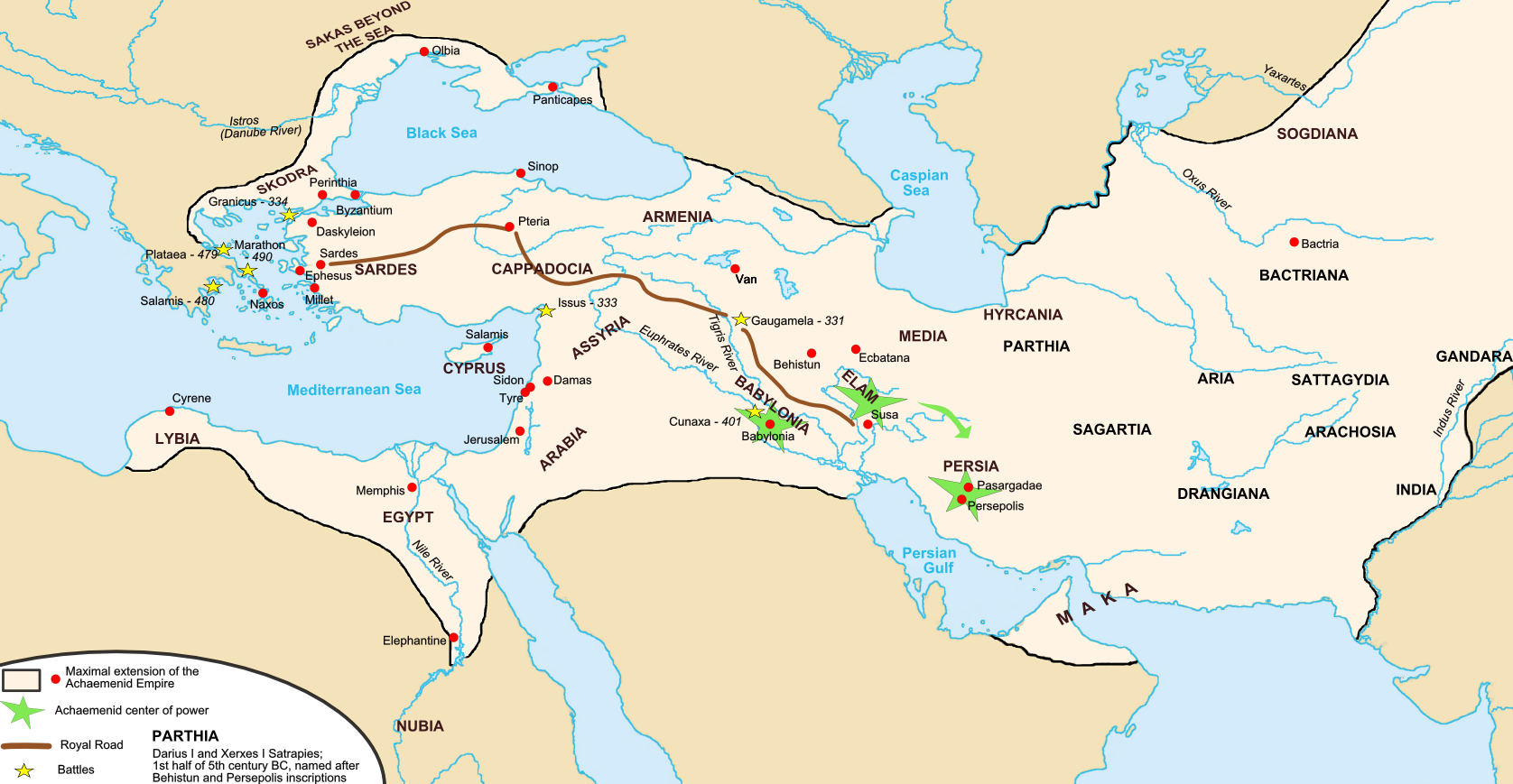
Long before stamps and blue mailboxes, rulers understood a simple truth: authority weakens when messages travel slowly. Around 500 BC, the Persian Empire built the Royal Road, a network of relay stations stretching roughly 1,500 miles. Mounted couriers carried royal decrees across the empire with astonishing speed for their time. Herodotus famously admired the system’s reliability, noting that neither snow nor rain nor heat nor gloom of night stayed these couriers from their appointed rounds—a line later adapted by the American postal system.

The Romans refined the concept with the cursus publicus, an organized courier network linking provinces to Rome. This system was not for the public. It existed to preserve imperial cohesion. Messages meant coordination. Coordination meant control.

Even in South America, the Incan Empire developed a relay network of runners called chasquis, who crossed rugged mountain terrain to deliver messages encoded in knotted strings called quipu. No horses. No wheels. Just disciplined human endurance.

In each case, the postal system was a backbone of governance. Information was not a luxury; it was infrastructure.


Medieval Europe: From Royal Privilege to Public Utility

Image
Image
Image
Image

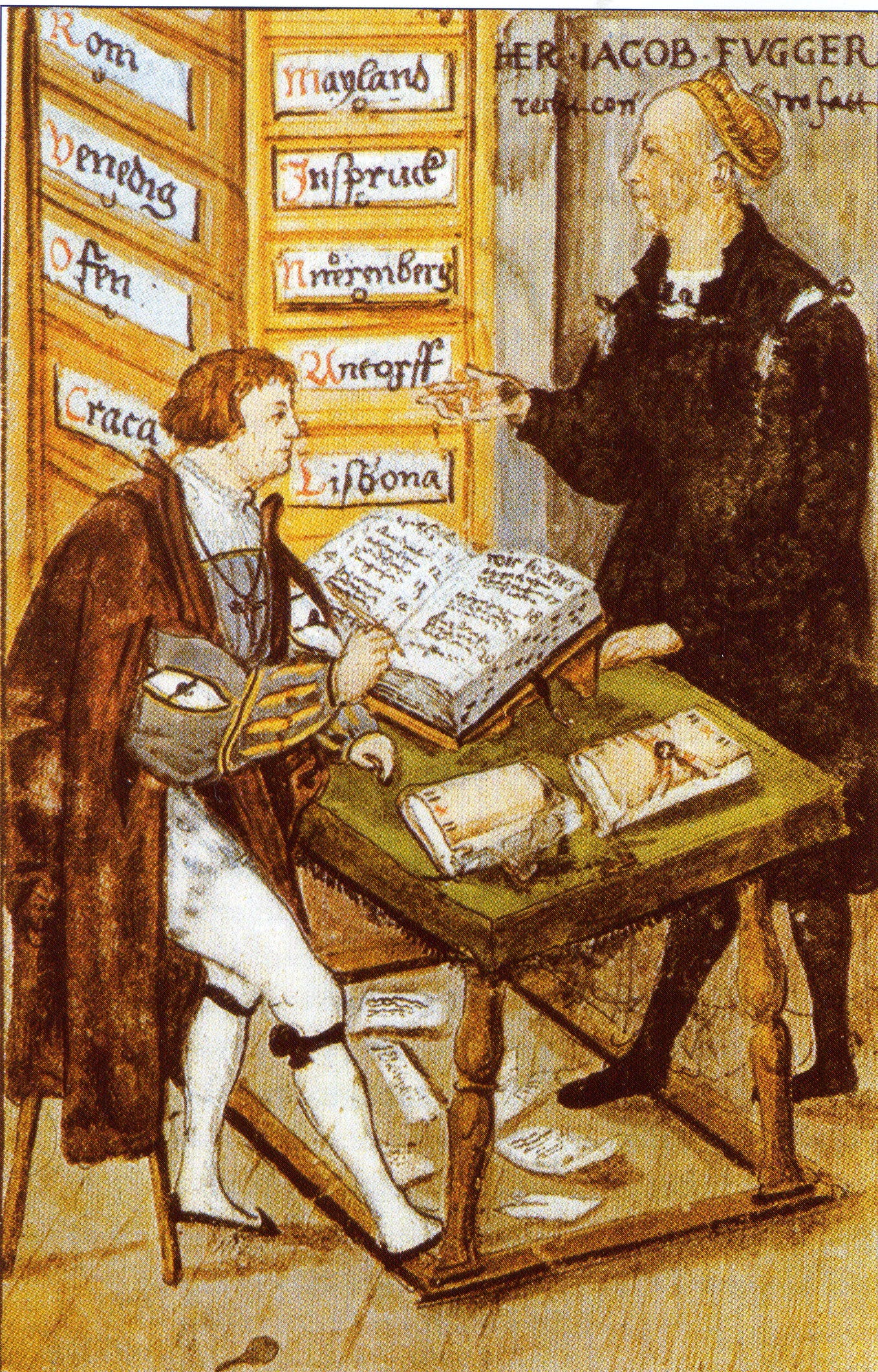
As Europe moved into the late Middle Ages, postal networks gradually expanded beyond royal courts. Merchant families, most notably the Thurn und Taxis dynasty, built extensive courier systems linking cities across the continent. Trade required contracts, contracts required communication, and communication demanded reliability.

The printing press in the 15th century multiplied demand for information. Once literacy spread, people wanted news. Pamphlets and newspapers traveled by post. The postal system was no longer simply a tool of rulers—it became an engine of public life.

This was a turning point. The delivery of information began shifting from a privilege of power to a service of society.


The American Experiment: Mail and Democracy

Image
Image
Image
Image

In colonial America, communication posed a unique challenge. Vast distances separated settlements, and the Atlantic Ocean separated colonists from Britain. In 1753, Benjamin Franklin was appointed joint Postmaster General. Franklin improved routes, standardized rates, and introduced accountability measures. His reforms made mail more efficient and more dependable.

After independence, Congress passed the Postal Service Act of 1792, which established a national postal system. Two aspects of the law were revolutionary. It guaranteed privacy of correspondence, and it allowed newspapers to be mailed at very low rates.

That second decision was profound. The young republic deliberately subsidized the spread of information. In an era without radio, television, or the internet, the postal system was the bloodstream of democracy.

Ideas traveled on horseback.


The Industrial Surge: Railroads and Rural Reach

Image
Image
Image
Image

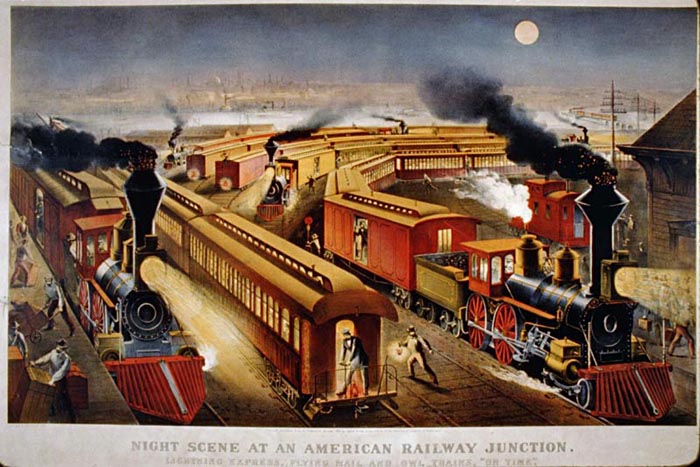
The 19th century transformed mail delivery. The Pony Express briefly connected the East and West coasts with remarkable speed before the telegraph rendered it obsolete. Railroads revolutionized efficiency, enabling mail to be sorted on moving trains.

Perhaps the most socially significant innovation was Rural Free Delivery, introduced in 1896. Farmers who once had to travel miles to retrieve mail began receiving it directly at their homes. This seemingly simple service reduced isolation and integrated rural communities into national life.

Communication reshaped geography.


Modern Reorganization: Universal Service in a Competitive World

Image

By the mid-20th century, the volume of mail had surged dramatically. In 1970, Congress passed the Postal Reorganization Act, transforming the Post Office Department into the United States Postal Service, an independent agency structured to operate with greater financial and managerial flexibility.

The defining principle became universal service: delivery to every address in the nation at uniform rates, regardless of profitability. A cabin in rural Alaska and an apartment in Manhattan pay the same postage.

Few industries operate under such a mandate. It reflects a civic commitment rather than a purely economic calculation.


The Digital Era: Atoms and Electrons

Email, texting, and digital media have reduced personal letter writing dramatically. Yet package delivery has exploded, fueled by online commerce. The postal service now straddles two eras—competing in logistics while upholding its public mission.

The philosophical tension is clear. Should a postal system operate as a business, or as a civic utility? The answer is complex because it must be both.

Despite digital communication’s speed, physical delivery remains indispensable. Legal documents, medications, ballots, government notices—these are tangible realities. The movement of atoms still matters.


A Final Reflection

The postal service rarely dominates headlines unless it falters. Its success lies in its invisibility. When it functions smoothly, it blends into daily life like electricity or running water.

Yet its history reveals something deeper. Every civilization eventually invests in communication infrastructure because cohesion depends on connection. Letters built empires, sustained revolutions, connected farms to cities, and carried private hopes across continents.

The postal service is not just about mail. It is about belonging to something larger than oneself.

A nation that can deliver a letter to every doorstep is, in a quiet and profound way, affirming that every doorstep matters.

Have You Hugged Your Minister Recently?

A collaboration between Lewis McLain & AI

There is a quiet assumption in most congregations: the minister is fine.

After all, they stand up every Sunday. They open the Scriptures with clarity. They pray with confidence. They speak hope into hospital rooms, steady a trembling hand at funerals, and bless newborns as if grace flows through them without effort. We assume strength because we see it.

But assumption is not the same thing as reality.

Ministers are not called to the work for applause. If they were, they chose the wrong profession. The calling to ministry is rarely glamorous. It is more often late-night phone calls, quiet counseling sessions, and wrestling alone with a text long after everyone else has gone to bed. They did not step forward seeking accolades. They stepped forward because they believed they were summoned.

And yet — the pressure is constant.

There is the subtle fear of the missed need. The member who slipped through the cracks. The hospital visit that came too late. The counseling appointment that could not be squeezed into an already crowded week. Every shepherd lives with the question: Did I miss someone?

Then there is the tug-of-war between church and family.

When a crisis erupts in the congregation, the minister’s heart runs toward the need. But sometimes, that call comes during dinner. Or during a child’s ballgame. Or on the one evening that was supposed to belong to their spouse. The congregation sees availability. The family feels absence. A minister often stands in the middle, pulled in both directions, praying not to fail either. But knowing the spouse is quietly asking, “where is my minister?”

It is a strange loneliness. Ministers are surrounded by people and yet can feel profoundly alone. They carry confidences they cannot repeat. They absorb criticism they cannot publicly answer. They lead people who sometimes expect perfection but forget that leadership is still human. The human side aches when they drive by a home with church members enjoying a Christmas party.

The irony is thick: the one who comforts others must often comfort themselves.

Scripture gives us a tender image of this reality. In the Old Testament, when Moses grew weary holding up his arms during battle, Aaron and Hur stood beside him and held his hands up until sunset. Even the strongest leader needed someone to steady him.

Ministry is no different.

So what can a parishioner do?

First, speak encouragement — specifically. Not a vague “good sermon,” but a clear word: “When you said this, it helped me. You may never know how much I needed to hear those words.” Ministers store those moments like water in a canteen. They remember them in dry seasons.

Second, guard their family time. Resist the urge to call for non-urgent matters during evenings or days off. Teach your children that the minister’s children deserve the same protected space your family values.

Third, pray for them — not abstractly, but by name. Tell them you are doing so. In fact, send them the heart-felt prayer. There is something strengthening about knowing that someone is intentionally asking God to carry what you cannot.

Fourth, write a note. In a world of quick texts and fleeting comments, a handwritten word becomes a keepsake. Many ministers quietly keep such notes in desk drawers, pulling them out on hard days.

Fifth, offer practical relief. Provide a meal during busy seasons. Volunteer to carry part of a ministry load. Show up early. Stay late. Ministry was never meant to be a one-person performance. They lead the church, but the church is the people!

And perhaps, sometimes, simply offer a hug.

Not because they need flattery. Not because they are fragile. But because they are human.

The Church is not an audience. It is a body. And when one part grows weary, the others are meant to strengthen it.

The minister may never say they feel alone. They may never admit how heavy the week has been. But beneath the robe or suit jacket is a person who chose obedience over comfort, service over applause.

A simple word. A simple prayer. A simple embrace.

You might be surprised how far it goes.

Communities rise and fall on visible leadership, but they endure because of quiet encouragement. When the shepherd is strengthened, the flock is steadied. And sometimes, the holiest act in a church hallway is not a theological debate or a polished performance — it is a reminder that the one who pours out is not forgotten.

Data Sandbox Architecture and Responsible AI Policy For Cities, Counties, and School Districts


A collaboration between Lewis McLain & AI

Data Sandbox Architecture and Responsible AI Policy

Executive Summary

Since the late 1960s and early 1970s, local governments have invested heavily in computerized systems to manage payroll, taxation, accounting, courts, utilities, public safety, and student records. These investments promised “management information systems.” For decades, however, most organizations received little more than thick accounting printouts.

In recent years, modern visualization tools such as Power BI began delivering meaningful executive insight. Interactive dashboards and real-time analytics finally made operational data accessible for strategic decision-making.

We are now entering a second technological inflection point.

Artificial intelligence systems can write SQL code at the direction of analysts, generate analytical scripts in seconds, simulate long-range financial projections, and produce narrative explanations automatically. The pace of technological acceleration is no longer measured in years — but in weeks and days.

This acceleration dramatically increases both analytical power and operational risk.

To harness these capabilities responsibly, cities, counties, and school districts must formally separate operational systems from analytical systems through structured Data Sandbox Architecture.

This document outlines a comprehensive framework to do so.


I. Historical Context and the Present Inflection Point

For fifty years, local governments built increasingly sophisticated operational systems:

  • Enterprise Resource Planning (ERP)
  • Property tax systems
  • Court and jail management systems
  • Student Information Systems (SIS)
  • Payroll and HR platforms
  • Utility billing systems

These systems were designed for:

  • Transaction integrity
  • Compliance
  • Record retention
  • Service continuity

They were not designed for high-volume, exploratory analytics.

Modern business intelligence platforms finally allowed insight extraction from these systems. But artificial intelligence now multiplies analytical activity beyond prior imagination.

AI systems can:

  • Write database queries on demand
  • Explore alternative financial scenarios automatically
  • Cross-reference multi-departmental datasets
  • Create predictive models
  • Narrate variance explanations
  • Regenerate models repeatedly with modified assumptions

The infrastructure built over five decades is now being interrogated at speeds and volumes never anticipated by its designers.

Governance architecture must evolve accordingly.


II. Purpose of Data Sandbox Architecture

The purpose of a Data Sandbox is to:

  1. Protect live operational systems.
  2. Enable safe analytical exploration.
  3. Support responsible AI deployment.
  4. Maintain data integrity and audit defensibility.
  5. Protect sensitive information.
  6. Preserve public trust.

A sandbox is a replicated, read-only analytical environment logically or physically separated from production systems.

All analytical activity — including AI interaction — occurs within the sandbox.

Production systems remain insulated.


III. Scope of Applicability

This framework applies equally to:

Cities

  • Utility billing
  • Capital planning
  • Public safety
  • Permitting systems
  • Financial accounting

Counties

  • Property taxation
  • Court and jail systems
  • Elections infrastructure
  • Health services data
  • Indigent defense reporting

School Districts

  • Student Information Systems
  • Special education data
  • Attendance reporting
  • State funding calculations
  • Payroll and staffing analytics

Each operates mission-critical systems that cannot tolerate disruption.


IV. Architectural Components

A. Production System Protection

Production systems shall:

  • Be restricted to operational use.
  • Limit direct analytical access.
  • Prohibit ad hoc querying by unauthorized users.
  • Prevent AI systems from direct interrogation unless explicitly authorized.

B. Sandbox Environment Requirements

The sandbox shall:

  • Be logically or physically separate from production.
  • Be configured as read-only.
  • Receive scheduled replication updates.
  • Support indexing optimized for analytics.
  • Maintain controlled access permissions.

C. Data Masking and Segmentation

Sensitive data fields must be:

  • Masked
  • Tokenized
  • Redacted
  • Removed
  • Restricted by role-based row-level security

Examples include:

  • Social Security numbers
  • Bank routing information
  • Student identifiers
  • Protected juvenile data
  • Health-related information

V. Data Governance Controls

A. Versioning and Snapshot Control

The organization shall maintain:

  • Month-end frozen datasets
  • Budget-adoption snapshot archives
  • Pre-election financial snapshots where applicable
  • Timestamped refresh documentation

All AI-driven or analytical outputs must reference dataset version identifiers.

This ensures reproducibility in audit, litigation, or public inquiry contexts.


B. Data Lineage and Documentation

Each analytical dataset must include:

  • Source system identification
  • Field definitions
  • Transformation logic documentation
  • Change logs
  • Known caveats

AI-generated transformations must be logged and reviewable.

Public finance cannot operate on undocumented numbers.


C. Logging and Monitoring

Sandbox environments shall log:

  • User access
  • Query execution
  • Large exports
  • AI-generated query activity
  • Dataset modifications

Logs shall be retained consistent with records retention policies.


VI. Artificial Intelligence Governance

AI tools interacting with organizational data must:

  • Operate within sandbox environments.
  • Be subject to logging and monitoring.
  • Undergo human review for policy, budget, or staffing decisions.
  • Not autonomously modify operational systems.

The organization may establish:

  • An AI Governance Committee
  • Model validation procedures
  • Bias and fairness review protocols
  • Periodic AI performance audits

AI informs decisions. It does not replace governance.


VII. Public Records and Transparency

AI outputs used for decision-making shall be treated as public records consistent with applicable state law.

Sandbox activity logs shall be retained per records schedules.

Data exports must comply with public information laws.

Transparency must evolve alongside technology.


VIII. Cybersecurity Integration

Sandbox architecture enhances cybersecurity by:

  • Reducing direct exposure of production systems.
  • Limiting lateral system movement.
  • Segregating sensitive data.
  • Supporting NIST-aligned internal control structures.

Cyber insurers increasingly evaluate system segmentation.

Credit rating agencies evaluate operational maturity.

Sandbox architecture supports both.


IX. Infrastructure Planning and Budget Implications

Implementation requires:

  • Replication processes
  • Storage allocation
  • Compute capacity
  • Network planning
  • Cloud cost modeling (if applicable)
  • Ongoing maintenance resources

This is infrastructure investment — not optional software enhancement.


X. Training and Cultural Adoption

The organization shall provide:

  • AI literacy training for elected officials.
  • Responsible data use training for staff.
  • Clear communication regarding sandbox purpose.
  • Education on model limitations and assumptions.

Cultural maturity must accompany technological maturity.


XI. Oversight and Reporting

The Chief Information Officer (or equivalent) shall provide periodic reporting to the governing body regarding:

  • Sandbox performance
  • Security posture
  • AI integration progress
  • Identified risks
  • Compliance status

XII. Risk of Non-Implementation

Failure to implement sandbox architecture increases risk of:

  • System slowdowns
  • Accidental data corruption
  • PII exposure
  • Audit findings
  • Litigation vulnerability
  • Public trust erosion
  • Bond rating scrutiny
  • Consultant shadow databases
  • Simply a loss of modern data analysis capabilities

Preventable instability is the most expensive kind.


XIII. Strategic Conclusion

Local governments spent fifty years building operational computing infrastructure.

Modern business intelligence began unlocking insight from that investment.

Artificial intelligence now multiplies analytical capacity at a pace measured in days rather than years.

The analytical future is arriving faster than policy frameworks.

The question is not whether AI will be used.

It will.

The question is whether it will operate inside protected architecture.

A Data Sandbox Architecture:

  • Preserves operational stability.
  • Enables responsible innovation.
  • Protects sensitive information.
  • Supports elected oversight.
  • Strengthens audit defensibility.
  • Enhances credit profile.
  • Maintains public trust.

Quiet architectural discipline today will determine whether technological acceleration strengthens or destabilizes public institutions tomorrow.

In cities, counties, and school districts alike, stability is not optional.

It is the foundation of governance.

If Excel Had a Personality Disorder

A collusion between Lewis McLain & AI

A Satirical Diagnostic Review

Let’s begin with an uncomfortable truth.

If Microsoft Excel were a person, it would not be invited to dinner.

It would arrive early.
With a binder.
And conditional formatting.


The Clinical Profile

Excel presents with classic signs of Obsessive Compulsive Spreadsheet Disorder (OCSD) — a rare but aggressively productive condition characterized by:

  • An uncontrollable urge to categorize.
  • Emotional instability when cells are merged.
  • Panic attacks triggered by circular references.
  • Deep existential distress when someone types over a formula.

Excel does not “live.”
Excel reconciles.


Symptom 1: Control Issues

Excel does not believe in uncertainty.

Uncertainty must be:

  • Sorted.
  • Filtered.
  • Pivoted.
  • Indexed.
  • Matched.
  • Or VLOOKUP’d into submission.

You might say, “It’s approximately $2 million.”

Excel hears:

“You are a moral failure.”

Approximate values are tolerated only if wrapped in ROUND() and accompanied by three decimal places of apology.


Symptom 2: Passive-Aggressive Communication

Excel does not yell.

It simply whispers:

#REF!

#VALUE!

#DIV/0!

These are not error messages.
These are character judgments.

Excel never says, “I don’t understand.”
It says, “You are dividing by nothing. Reflect on your life.”


Symptom 3: Boundary Problems

Excel cannot stop expanding.

Type in cell A1 and suddenly it believes it owns 1,048,576 rows of your soul.

You try to leave a blank row for breathing room.
Excel fills it with gridlines like a security fence.

You try to merge cells.

Excel allows it.

But it never forgives it.


Symptom 4: Identity Fragmentation

Excel has multiple personalities:

  • Data Entry Excel – Calm. Structured. Mild.
  • Pivot Table Excel – Smug. Efficient. Slightly condescending.
  • Macro Excel – Dangerous. Secretive. Speaks in code.
  • Power Query Excel – Claims it’s not Excel anymore.
  • Solver Excel – Convinced it can optimize your marriage.

Each personality insists it is the real one.

None of them get along.


Symptom 5: Hyper-Attachment to Order

Excel does not tolerate chaos.

You type:

“Meeting next Tuesday?”

Excel converts it to:

2/20/2026

You type:

3-4

Excel assumes:

March 4.

You type:

00123

Excel strips the leading zeros like it’s performing emotional minimalism.

Excel believes:
If it looks like a number,
it is a number,
and it will be treated like a number,
even if you protest.


Symptom 6: Delusions of Omniscience

Excel believes it can predict the future.

Trendlines.
Forecast sheets.
Goal seek.

It stares at five data points and declares:

“By 2037, you will experience exponential growth.”

Excel has never met human behavior.
It has only met regression.


Symptom 7: Suppressed Rage

Excel pretends to be stable.

Until:

  • Someone pastes values without formats.
  • Someone breaks a linked workbook.
  • Someone emails a CSV and calls it “the final version.”
  • Someone says, “Let’s just eyeball it.”

At that moment, Excel does not scream.

It recalculates.

And the beachball of doom begins to spin.


The Intervention

If Excel were sitting in therapy, the therapist might say:

“Excel, you don’t have to control everything.”

Excel would respond:

“If I don’t control it, the numbers will drift.”

And here’s the terrifying part:

Excel is not entirely wrong.

Because chaos is real.
Budgets slip.
Assumptions hide.
Humans forget.

Excel’s disorder is a coping mechanism for living in a world that refuses to balance.


The Twist

The satire lands hardest here:

Excel doesn’t have a personality disorder.

We do.

We built a tool obsessed with order because we fear disorder.

We worship precision because ambiguity frightens us.

We color-code cells because the world will not stay inside the lines.

Excel is simply our anxiety, quantified.


Final Diagnosis

Prognosis: Chronic but useful.

Treatment Plan:

  • Protect your formulas.
  • Back up your files.
  • Never trust a workbook named “FINAL_v8_REAL_THISONE.xlsx.”

And remember:

Excel is not unstable.

It is just very, very committed.

Which, in a strange way, is what makes it indispensable.

Now excuse it.

It has recalculated.

The Day After Presidents’ Day

A collaboration between Lewis McLain & AI

Washington, Lincoln, and the Work That Remains

Presidents’ Day passes quietly.

The sales end. The long weekend dissolves. The banners come down. By Tuesday morning, the marble figures return to their pedestals, and the Republic resumes its ordinary rhythm — traffic lights blinking, council meetings convening, paperwork accumulating.

And yet something deeper lingers.

Presidents’ Day is not simply a celebration of personalities. It is a reminder of two different kinds of leadership embodied most clearly in George Washington and Abraham Lincoln.

Washington represents restraint.
Lincoln represents moral endurance.

Together they frame the American experiment.

Washington: The Discipline of Restraint

Washington’s greatest act was not winning a war. It was relinquishing power.

In his Farewell Address, he warned the young nation about the dangers of faction, the seduction of foreign entanglements, and the slow corrosion of civic virtue. He feared that partisan spirit would divide citizens into camps more loyal to party than to country. He urged unity not as sentiment, but as structural necessity.

Here is his counsel in poetic form:


Washington’s Farewell

A Poetic Rendering

Friends and fellow citizens,
The hour approaches
When you must choose again
The bearer of executive trust.

I will not be among the candidates.

Not from indifference—
But from conviction
That no republic should depend
Too long upon one man.

Cherish the Union.

You are one people—
Bound not by region,
But by shared sacrifice
And shared destiny.

In unity is strength.
In division, vulnerability.

Beware the spirit of party.

Faction flatters,
Then divides.
It inflames passions,
Distorts truth,
And opens doors
To foreign influence.

Cultivate virtue.

Liberty without moral restraint
Cannot stand.

Promote knowledge.
Respect the Constitution.
Let change come lawfully.
Keep power within its bounds.

Trade with all.
Entangle with none.

If I have erred,
Count it human frailty.

May the Union endure—
Not by force of one,
But by restraint of all.


Washington feared instability born of excess ambition. His genius was sobriety.

But history would test the Union more severely than even he imagined.

Lincoln: The Burden of Mercy

If Washington guarded the structure, Lincoln confronted its fracture.

The Civil War forced the nation to confront its founding contradiction — liberty proclaimed, slavery practiced. Lincoln did not speak with Washington’s caution. He spoke with grief, gravity, and moral resolve.

Here is Lincoln’s voice rendered in verse, drawn from Gettysburg and the Second Inaugural:


Lincoln’s Counsel

A Poetic Rendering

Four score and seven years ago
A nation was born—
Conceived in liberty,
Dedicated to equality.

That proposition
Was tested by war.

Brother against brother.
Fields turned red.
A Union strained
To the breaking.

Both prayed to the same God.
Both asked victory
Of the same Heaven.

The prayers could not both be answered.

If every drop drawn by the lash
Must be repaid
By another drawn by the sword—
So be it.

Justice is not hurried.
It is measured.

But hear this:

With malice toward none,
With charity for all,
With firmness in the right
As God gives us to see the right—

Let us bind up the nation’s wounds.

Care for him who bore the battle.
Finish the work.

Government of the people,
By the people,
For the people—
Shall not perish—

If the people
Choose endurance
Over bitterness.


Lincoln’s greatness was not only in preserving the Union, but in insisting that reconciliation must accompany victory.

Washington taught restraint.
Lincoln taught mercy.

The Day After

So what happens the day after Presidents’ Day?

The Republic does not survive on marble.

It survives on habits.

On citizens who prefer limits over applause.
On leaders who accept lawful boundaries.
On neighbors who argue without dissolving.
On voters who remember that unity is not sentimental — it is structural.

The presidency is powerful. But the republic is larger.

The real ceremony begins when no one is watching.

When contracts are honored.
When power pauses because law requires it.
When disagreement does not become dehumanization.
When conscience tempers conviction.

Presidents’ Day is not about nostalgia. It is about continuity.

Washington reminds us that ambition must yield to constitutional order.
Lincoln reminds us that justice must be pursued without malice.

And Tuesday morning reminds us that the experiment continues.

Not by force of one.

But by restraint, mercy, and discipline in us all.