Homelessness in America: Successes, Failures, and the Search for Lasting Solutions


AI Responses to questions posed by Lewis McLain

Introduction

Homelessness is one of the most visible tests of a society’s compassion and its ability to solve complex problems. Tents, makeshift shelters, and men and women sleeping on sidewalks remind us that, despite immense national wealth, millions of Americans live without the security of a home. The crisis is humanitarian, economic, and civic: homelessness drives up emergency room visits, policing costs, and erodes public trust in institutions.

Over the last several decades, billions of dollars have been devoted to ending homelessness. Some communities, such as Houston and Salt Lake City, have demonstrated that it is possible to reduce homelessness dramatically when resources are aligned around proven strategies. Others, most famously Los Angeles and San Francisco, have spent vast sums with disappointing results. Examining both sides — the promising and the faltering — alongside local initiatives in McKinney, Texas, shows what it takes to turn lofty goals into tangible outcomes.



Goals of a Comprehensive Homeless Program

A truly comprehensive homelessness program is not an ad hoc collection of shelters or one-time grants; it is a system designed to prevent homelessness, respond quickly when it occurs, and ensure that once people are housed they remain housed.

The overarching goals are threefold:

  1. End homelessness, not just manage it — shifting the system’s focus from temporary fixes to permanent housing solutions.
  2. Put housing first — recognizing that stability is impossible without a secure place to live.
  3. Build stability and self-sufficiency — ensuring that once individuals are housed, they can remain so through employment, education, or long-term supportive services.

Achieving these goals requires several interlocking objectives:

  • Prevention and Diversion. Stop homelessness before it starts with rental assistance, eviction mediation, and utility aid. A few hundred dollars in short-term help can prevent years of instability.
  • Emergency Response. Provide dignified shelter, warming/cooling centers, and safety nets when prevention fails.
  • Rapid Re-Housing. Quickly place individuals into apartments with short-term support; the longer people remain homeless, the harder recovery becomes.
  • Permanent Supportive Housing (PSH). Pair affordable apartments with long-term case management, healthcare, and counseling for those who are chronically homeless.
  • Supportive Services. Case managers, mental health clinicians, job training, childcare, and transportation are the scaffolding of stable housing.
  • Coordinated Entry and Data. Use a single intake system and shared data to match people to the right level of support and measure outcomes.
  • Community Integration. Engage nonprofits, faith groups, healthcare systems, landlords, and local governments in aligned roles.
  • Sustainable Funding and Policy Alignment. Ensure zoning, land use, and housing policy are aligned with homelessness strategies, backed by stable funding.
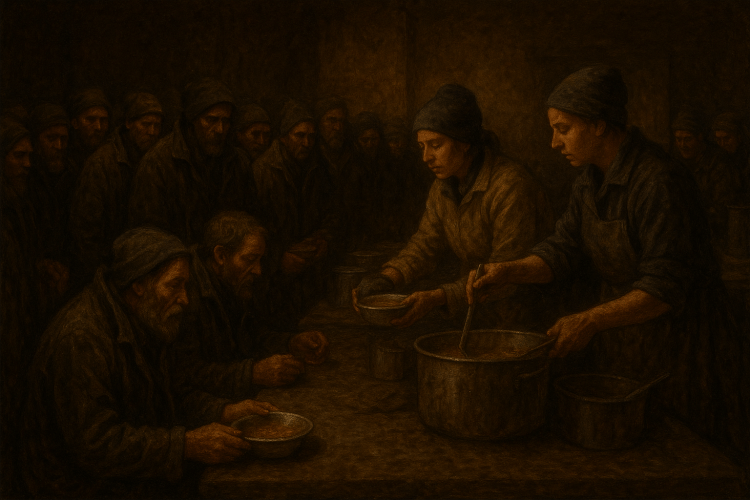
Models of Success

The most celebrated examples of progress share a common feature: they invest in housing first, then support individuals with tailored services.

Houston’s The Way Home

Houston has become a national model. Through The Way Home, a collaboration of more than 100 agencies, the city has placed over 32,000 people into permanent housing since 2012, with nearly 90% remaining housed after two years. Houston cut its homeless population by nearly two-thirds over the last decade. It accomplished this by streamlining entry systems, pooling federal and local funds, and incentivizing landlords. The city showed that a sprawling, high-growth metro can achieve large-scale reductions in unsheltered homelessness.

Community First! Village in Austin

Austin’s Community First! Village created an entire neighborhood designed for the chronically homeless: micro-homes, shared kitchens, gardens, and community spaces. It acknowledges that belonging and community are as essential as shelter. The model demonstrates how design and intentional planning can foster dignity and stability.

The 100,000 Homes Campaign

At the national scale, the 100,000 Homes Campaign (2010–2014) surpassed its goal of housing the most medically vulnerable people. By focusing on data, coordinated entry, and Housing First principles, it proved the strategy could succeed across dozens of cities.

Other Targeted Efforts

  • Deborah’s Place (Chicago): Specializes in housing and trauma-informed services for homeless women.
  • The Doe Fund (New York): Blends transitional work and housing for individuals with histories of incarceration or addiction.

Across all these successes, the key is the same: low barriers to entry, permanent housing as the anchor, and services that treat individuals with dignity.


McKinney and Collin County: Local Efforts

Smaller communities like McKinney, Texas, are also facing homelessness pressures due to rapid growth and rising housing costs.

Current Strategies

  • Coordinated Entry: McKinney participates in a system that assesses needs and directs individuals to appropriate programs.
  • Emergency Responses: The McKinney Emergency Overnight Weather Station (MEOWS) opens during freezes, while nonprofits like Streetside Showers provide hygiene and outreach.
  • The Samaritan Inn: Provides transitional housing with structured case management and life-skills training.
  • Shiloh Place: Focused on single mothers; reports show over 90% of graduates secure stable housing and increased education or income.
  • City Commitments: McKinney has pledged $3 million for affordable housing grants and loans, $1 million for a Community Land Trust, and plans to build 10 new homes/townhomes by 2026 (from city strategic goals, pending full verification).

Outcomes

Regionally, Dallas and Collin Counties have reduced homelessness by 19% since 2021, with more than 10,000 individuals housed. McKinney, however, recorded 239 homeless individuals in its 2024 Point-in-Time count — a 5% increase from the previous year, with children making up over a quarter of the total (local reporting, Community Impact, pending full verification).

The city is drafting its 2025–2029 Consolidated Plan to expand affordable housing and strengthen prevention efforts, but significant gaps remain: no full-time shelter within city limits and limited published data on long-term housing retention.


The Magnet Effect: Myth, Reality, and Regional Solutions

A recurring concern for communities is the so-called “magnet effect” — the fear that by building better services, they may attract individuals experiencing homelessness from neighboring jurisdictions.

Evidence

Research shows that most people remain close to where they lost housing, often due to family or community ties. Still, some migration occurs, particularly when:

  • One city offers low-barrier shelters while others criminalize camping.
  • Safer and more dignified conditions exist in a neighboring jurisdiction.
  • Housing slots or vouchers are more readily available.

For a city like McKinney, adjacent to Dallas and Plano, even modest inflows can strain resources.

Responses

  • Regional Coordination: Houston’s success rested on aligning 100+ agencies across Harris County — reducing duplication and sharing responsibility.
  • Shared Funding: Counties can pool funds to ensure no single city bears disproportionate costs.
  • Eligibility Prioritization: Programs may prioritize residents with local ties, though this must be balanced against fair housing obligations.
  • Permanent Housing Focus: Building permanent housing rather than endless shelters reduces churn across city lines.

The lesson is clear: the answer is not to scale back but to ensure regional systems. With shared responsibility, improved services do not overwhelm one city but uplift an entire region.


National Failures and Costly Lessons

For every Houston, there is a Los Angeles or San Francisco — cities where billions have been spent with limited results.

Los Angeles: Measure HHH

In 2016, voters approved a $1.2 billion bond (Prop HHH) to build 10,000 supportive housing units. By 2023, only about 1,100 were complete, and per-unit costs ballooned to $596,000–$837,000, with some projects nearing $1 million. Homelessness rose despite the investment.

San Francisco

San Francisco spends over $1 billion annually, yet its homeless population has remained between 7,000–8,000 for years. Navigation Centers and hotel conversions often saw exit-to-housing rates under 30% (per local audits), creating a revolving door of temporary care.

Seattle / King County

Seattle created a Regional Homelessness Authority in 2020 with a nine-figure budget. Audits soon revealed weak data, unclear goals, and little visible impact on unsheltered homelessness.

Hawaii

Despite declaring a state of emergency in 2015 and spending heavily, Hawaii remains the state with the highest homelessness rate in the nation (44 per 10,000 residents). Sky-high housing costs and tourism pressures outpaced program gains.

New York City

New York spends more than $4 billion annually, with over 80,000 individuals in shelters each night. Critics argue that the shelter system has grown while permanent housing production lags.

HUD–VA Vouchers

The HUD-VASH program reduced veteran homelessness nationally. Yet in some regions, thousands of vouchers went unused due to bureaucratic delays and landlords unwilling to participate — showing that funding without execution fails.


Common Themes in Failures

  1. Exorbitant per-unit costs undermine public trust.
  2. Glacial delivery timelines prevent timely relief.
  3. Shelter-heavy spending traps people in temporary systems.
  4. New bureaucracies add layers without results.
  5. Housing supply issues (zoning, costs, land) remain unaddressed.
  6. Weak outcome tracking — dollars are counted, but stable lives are not.

Lessons Learned

The contrast between successes and failures yields hard lessons:

  • Permanent housing works. Housing First and PSH consistently reduce homelessness when scaled.
  • Supportive services sustain results. Housing without counseling, healthcare, or employment support is fragile.
  • Cost control is essential. Programs must avoid $800,000 per-unit models.
  • Data must drive funding. Retention rates, returns, and time-to-housing are the key benchmarks.
  • Regionalism prevents “magnet” burdens. Shared responsibility avoids one city becoming a hub.
  • Adaptation to context matters. Houston’s model can inform McKinney, but strategies must match local housing markets and resources.

Conclusion

Homelessness is not an unsolvable problem. Evidence shows that with the right mix of housing, services, and accountability, communities can dramatically reduce it. Houston’s transformation proves that systemic, coordinated approaches succeed. Austin’s Community First! Village shows how design and belonging restore dignity. At the same time, Los Angeles and San Francisco stand as warnings of what happens when money is poured in without discipline, urgency, or accountability.

For McKinney and Collin County, the path forward is clear: build on existing programs, expand affordable housing, strengthen data systems, and work regionally to share responsibility. Without coordination, improved services risk attracting individuals from neighboring areas. With collaboration, however, every jurisdiction can contribute to — and benefit from — the solution.

The examples are before us: homelessness can be reduced, but only when programs are not just well-funded, but well-designed, regionally balanced, and rooted in the conviction that every person deserves a home.


Apology and Surrender: The Healing Powers of Humility

Topics Suggested by Dan Johnson (Apology) and Lewis McLain (Surrender), AI Assist guided and edited by Lewis McLain

Introduction

Human relationships are built not on perfection but on imperfection. People hurt one another, whether through words spoken in anger, careless neglect, or intentional wrongdoing. When wounds occur, two of the most powerful forces available for restoration are apology and surrender. Aaron Lazare, M.D., in his landmark book On Apology, shows how apology has the power to restore dignity, heal shame, and rebuild fractured bonds.

Yet apology, in its truest sense, is inseparable from another spiritual and relational posture: surrender. To apologize is not merely to speak words but to yield pride, to lay down the armor of self-justification, and to open oneself to vulnerability. Similarly, surrender is not simply defeat or resignation; it is the willing relinquishing of control in the interest of truth, healing, and reconciliation.

This essay explores apology and surrender as parallel acts of humility that work together to heal relationships, transform communities, and restore souls. It traces the anatomy of apology, the psychology of surrender, and the mutual dependence of these two themes in human experience.


The Anatomy of Apology

Aaron Lazare identifies four core elements of a full apology: acknowledgment, explanation, expression of remorse, and restoration. Each corresponds to a deep human need.

  1. Acknowledgment
    Naming the wrong directly—without hedging, minimizing, or shifting blame—meets the need to be seen and validated. A clear “I was wrong when I…” affirms reality and steadies the ground beneath the person who was hurt.
  2. Explanation
    Context does not erase harm, but it can clarify whether the injury was intentional, negligent, or circumstantial. Honest explanations distinguish accountability from fatalism and open a path to understanding.
  3. Remorse
    Genuine regret puts the heart into words. It signals that the one apologizing has entered, however briefly, into the pain of the other and recognizes the moral weight of what happened.
  4. Restoration
    Words are the beginning, not the end. Restoration makes repair tangible—amended habits, renewed trust, practical help, and symbolic acts of respect that acknowledge the breach and work to close it.

A sincere apology restores dignity to the one who was hurt and humanity to the one who did the hurting. But an apology that lacks surrender—clinging to defensiveness, pride, or self-protection—will often fail.


The Nature of Surrender

Surrender is often misunderstood as capitulation. Spiritually and psychologically, however, surrender is a chosen act of humility, courage, and wisdom. It is the relinquishing of control, the yielding of one’s pride, and the willingness to enter into vulnerability.

In relationships, surrender means giving up the need to always be right, releasing the insistence on self-justification, and abandoning the illusion of total control. In spiritual terms, surrender means opening the heart to God, trusting providence, and laying down the burden of self-sovereignty.

Unlike passivity, surrender is active. It is the exercise of agency to lay something down—as a soldier surrenders arms to embrace peace, the human spirit surrenders pride to embrace love, truth, and reconciliation.


Apology as a Form of Surrender

Every genuine apology requires surrender.

  • Surrender of Pride: To apologize is to admit wrong and accept fallibility.
  • Surrender of Control: The one apologizing cannot dictate whether forgiveness will be granted; the outcome is entrusted to the other.
  • Surrender of Narrative: Apology yields the right to tell the story only from one perspective, acknowledging instead the truth of another’s experience.

Without surrender, apology becomes hollow—a performance rather than a bridge. “Mistakes were made” is not surrender; it is evasion wearing a mask.


Surrender as an Apology to Life

If apology requires surrender, surrender itself can be seen as a broader apology—an apology to reality, to God, to existence itself.

When a person surrenders in prayer, they confess limitations and apologize for the illusion of self-sufficiency. When a community surrenders bitterness, it apologizes to the possibility of peace for having clung to resentment. Surrender is apology without words: a posture that admits, “I cannot carry this alone” and “I was wrong to insist on control.”

As apology restores broken human relationships, surrender restores the fractured relationship between human beings and the deeper truths of life and faith.


Case Studies and Applications

Personal Relationships

In marriage or friendship, apology without surrender often falls flat: “I’m sorry, but you misunderstood me” is not surrender. When apology is paired with surrender—“I was wrong, I hurt you, and I want to change”—healing becomes possible. Conversely, surrender without apology (“Fine, whatever you want”) is resignation, not reconciliation. The union of apology and surrender creates intimacy.

Professional Life

In the workplace, apology is a mark of integrity. Leaders who cannot admit mistakes slowly lose credibility. In professions like medicine, sincere acknowledgment of error—spoken with humility and joined to concrete changes—strengthens trust and de-escalates conflict. Professional apology is not groveling; it is the surrender of perfectionism for honesty and responsibility.

Public Life

When governments or institutions apologize for wrongs, the gesture carries immense symbolic weight. For an apology to be constructive, it must be grounded in truth, humility, and a genuine desire for unity rather than political division.

A healthy public apology requires clear acknowledgment and commitment to do better, but it does not bind future generations to perpetual guilt. Symbolic acts, education, transparent reforms, and measurable safeguards often carry more healing power than divisive schemes. Real leadership surrenders the instinct to defend the record at all costs, and resists weaponizing apology for partisan advantage. The aim is restoration, not resentment.

Public apologies work best when they:

  • Name the wrong clearly and honestly.
  • Offer reforms that prevent repetition.
  • Extend a hand of reconciliation across divides.

Thus public apology becomes less about repaying a ledger and more about restoring trust, dignity, and shared civic values.

Spiritual Life

In Christian tradition, surrender lies at the heart of confession: “Not my will, but Yours be done.” In Buddhism, surrender is the release of ego that perpetuates suffering. In Islam, the very word “Islam” means surrender to God. Across traditions, surrender is humanity’s apology to the divine for pride, illusion, and rebellion.


The Healing Power of Apology and Surrender Together

When apology and surrender work together, they create a durable cycle of healing:

  1. Apology names the wound—restoring dignity.
  2. Surrender yields pride—making space for reconciliation.
  3. Apology seeks restoration—rebuilding trust through changed behavior.
  4. Surrender entrusts the outcome—accepting forgiveness or rejection with humility.

Apology without surrender becomes manipulation. Surrender without apology becomes resignation. Together, they complete the circle of reconciliation.


The Limits and Challenges

Both apology and surrender face resistance. Pride resists apology; fear resists surrender. In a culture that prizes autonomy and control, surrender can appear weak. In a world obsessed with image, apology can feel humiliating. Yet both require extraordinary strength. They risk rejection while opening the possibility of renewal.


Conclusion to the Essay

Apology and surrender are not signs of weakness but of courage. They acknowledge human imperfection and seek restoration. In personal, professional, public, and spiritual life, these twin postures open doors that heal where pride cannot. The following dramatic dialogue imagines how apology and surrender might reshape our public life—and how citizens might answer in kind. While intentionally brief, the reader is invited to expand the dialogue in the spirit intended.


The Table of Reconciliation (A Short Play in Five Acts)

Setting: A plain, wood-paneled room. No cameras, no aides, no reporters. Two long-warring representatives sit across a scarred table. A single lamp glows overhead.

ACT I – The Silence Before Words

(They sit in silence. The lamp hums.)

Party A:
We have allowed this table to become a battlefield. Every session, every hearing, every speech—we’ve turned words into weapons. Not just against each other, but against the very people who trusted us to serve. Their hopes are caught in the crossfire of our pride. I feel the weight of that. I can’t ignore it any longer. For this… I apologize.

Party B:
Your words are hard to hear because they are true of me as well. I used sharpened language to divide. I made enemies of colleagues. I mistook applause for virtue and surrendered compassion for victory. That was wrong. I am sorry.

ACT II – The Confessions

Party A:
My pride made me deaf. I stopped listening. I treated every proposal from your side as poison before I even read it. I told myself I was protecting principle, but really I was protecting ego. That arrogance closed doors, and I betrayed the work I came here to do.

Party B:
I built my platform on your faults. Your mistakes became my fuel and your failures my headlines. I used names instead of reasons, caricatures instead of your actual views. I stirred suspicion where I could have sought clarity. I often gained ground in the polls and lost ground in truth.

Party A:
Some nights I ask, “What have we become?” Debate used to mean searching together for solutions. Now it means scoring points, performing for cameras instead of governing for people.

Party B:
I’ve felt that hollowness too. After the noise fades, I wonder what I’m really building. Am I protecting the people—or just protecting myself? Too often, I fear it has been the latter.

ACT III – The Turning Point

Party A:
What if we tried something unthinkable? Not surrendering our convictions—we will differ—but surrendering our need to dominate. What if we laid down this war of pride?

Party B:
We would lose the comfort of certainty. Our supporters might call us weak. We would have to slow the reflex to pounce, to headline the moment. That is hard. But we might reclaim what we’ve forgotten—the dignity of our calling.

Party A:
An apology in public life is not humiliation; it is service. And surrender is not defeat; it is the path forward. To admit wrong, to yield control, to listen more than we speak—this is the work of statesmen, not partisans.

Party B:
Then I will say it plainly: I surrender the instinct to answer anger with anger. I surrender the impulse to see you as an enemy rather than a partner in this fragile experiment of democracy.

Party A:
And I surrender the temptation to weaponize your mistakes for my gain. I surrender the pride that keeps me from acknowledging wisdom that comes from your side of the aisle.

Party B:
So we surrender—not our beliefs, but our pride. Not our duty, but our hostility. Let us begin again at this table.

ACT IV – The Agreement

(They slide a sheet of paper between them and take a pen. They speak and write together.)

Party A:
We will not caricature each other. We will resist the urge to make the other a monster, even when disagreement is sharp.

Party B:
We will speak truthfully, but not cruelly. Our arguments will be about ideas, not insults.

Party A:
We will listen before replying, even when rebuttal burns within us.

Party B:
We will admit when we are wrong. A prompt apology restores more trust than stubborn defense.

Party A:
We will prize the relationship above the point to be scored. Headlines fade; trust endures.

Party B:
We will respect dignity. Every colleague—ally or rival—is more than a vote to be counted; they are a citizen worthy of honor.

Both (writing the final line):
We will seek unity, not uniformity. We will disagree without despising. We will surrender pride for the sake of peace.

ACT V – The Closing

(They set down the pen. The page is full of promises. They rise.)

Party A:
We will still argue. We will still oppose. But we will never again confuse opposition with the poison of hatred.

Party B:
Let the people see not only our debates but our discipline. Let them know their leaders are capable of apology and surrender—not to each other, but to the higher calling of service.

(They clasp hands—not as victors or losers, but as fellow servants—and leave the room together.)


Epilogue: The Citizen Response

Scene: Word spreads. Across the nation, citizens gather in homes, coffee shops, and town halls.

ACT VI – The Citizens Speak

Citizen 1:
For once, they admitted wrong. No spin. Just an apology. I didn’t think I would ever see it.

Citizen 2:
After so much shouting and blame, hearing that confession feels like rain after a drought.

Citizen 3:
It challenges me. If they can apologize, what about me? How often do I caricature people who vote differently? How often do I surrender respect for the sake of an argument?

Citizen 4:
We have demanded better of them. Let’s demand better of ourselves.

Citizen 5:
Their agreement shouldn’t sit on one table. It should echo at every dinner table. We need our own covenant.

ACT VII – The Citizen Covenant

(They draft and read aloud.)

The Citizen Covenant for Respectful Democracy

  1. We will see political differences as disagreements, not enmities.
  2. We will refuse caricatures of those who think differently.
  3. We will listen before we judge, and judge ideas before we judge people.
  4. We will apologize quickly when we speak unfairly.
  5. We will not let online arguments dehumanize neighbors we meet in person.
  6. We will hold leaders accountable—without hatred and without surrendering our own dignity.
  7. We will remember that democracy survives not only on laws but on habits of respect.
  8. We will lend support and recognition to our politicians practicing civility and respect.

ACT VIII – A Constitutional Vision

Citizen 2:
Could this go further? Could we enshrine the spirit of this covenant?

Citizen 3:
You can’t legislate the heart. But a constitutional reminder could mark our priorities.

Citizen 1 (writing):
Amendment XXVIII
The people of the United States affirm that the practice of democracy requires respect among citizens and their representatives. Freedom of speech shall be exercised with dignity, and leaders shall model humility, apology, and restraint in public life. The preservation of our Union depends not only upon rights, but upon responsibilities freely embraced by all.

Citizen 4:
Maybe it never passes. But maybe the amendment begins here—written first on our hearts.


Final Word

Apology and surrender open paths that power alone cannot. Leaders who practice them invite citizens to do the same. Citizens who practice them call leaders higher. And if both persist, even constitutions may one day carry their imprint—not as commands enforced by courts, but as principles freely lived by a people who chose humility over pride, reconciliation over resentment, and respect over division.

Dementia: Understanding, Preventing, and Facing It

By Lewis McLain guiding and editing AI

Introduction: What Dementia Is and Why It Happens

Dementia is not one disease but a syndrome—a group of conditions that progressively damage the brain and impair memory, reasoning, language, and daily living. It develops when neurons (brain cells) are injured or die, severing the communication networks that underlie thought and personality.


The Major Types of Dementia

  1. Alzheimer’s Disease – The most common form (60–70% of cases). Caused by abnormal protein accumulations—amyloid plaques outside cells and tau tangles inside cells—that disrupt communication and kill neurons. Symptoms usually start with short-term memory loss and grow into confusion, language difficulties, and personality change.
  2. Vascular Dementia – Often follows strokes or years of high blood pressure and vessel damage. Tiny areas of the brain die from lack of blood flow. Symptoms: slowed thinking, planning difficulties, and sometimes abrupt declines after strokes.
  3. Lewy Body Dementia – Triggered by deposits of alpha-synuclein proteins (Lewy bodies). Signs include vivid hallucinations, sleep disruptions, and movement issues resembling Parkinson’s disease.
  4. Frontotemporal Dementia (FTD) – Caused by degeneration in the brain’s frontal and temporal lobes. It strikes younger adults more often (40s–60s). Early symptoms: loss of empathy, social misjudgments, inappropriate behavior, or speech problems.
  5. Mixed Dementia – Many older adults have overlapping forms—most commonly Alzheimer’s plus vascular changes.

Why Dementia Develops

  • Age: risk rises steeply with age, though dementia is not “normal” aging.
  • Genetics: some genes (like APOE-ε4) raise Alzheimer’s risk.
  • Cardiovascular factors: high blood pressure, diabetes, obesity, and smoking damage vessels that feed the brain.
  • Lifestyle: inactivity, poor diet, isolation, and chronic stress erode brain resilience.
  • Head trauma: repeated concussions or injuries increase risk.


Staving Off Dementia: What Helps

  1. Exercise & Cardiovascular Health
    • Aerobic activity (walking, swimming, cycling) improves blood flow and stimulates brain-protective chemicals.
    • Controlling blood pressure, diabetes, and cholesterol protects small vessels that keep brain tissue alive.
  2. Diet
    • The Mediterranean and MIND diets—rich in leafy greens, berries, nuts, olive oil, and fish—are linked to lower risk.
    • Reducing processed sugars and excessive alcohol helps protect cognition.
  3. Brain Stimulation
    • Reading, learning, music, puzzles, and meaningful conversations create new neural connections (cognitive reserve).
    • Social engagement lowers risk of decline compared to isolation.
  4. Sleep & Stress
    • Deep sleep clears harmful proteins like amyloid.
    • Chronic stress raises cortisol, damaging memory regions; prayer, meditation, or relaxation techniques counteract this.
  5. Purposeful Living
    • Having goals, serving others, and maintaining daily structure all reinforce mental resilience.


Dealing With Dementia: When It Arrives

  1. Practical Care
    • Create predictable routines—familiarity reduces anxiety.
    • Simplify tasks into small steps; use labels, calendars, and cues.
    • Modify the home for safety (remove tripping hazards, improve lighting, secure exits).
  2. Emotional & Relational Care
    • Focus on what remains: music, touch, prayer, rituals often endure even late in the disease.
    • Loved ones should practice patience and avoid arguing—redirecting and reassuring is more effective.
    • Caregivers must seek respite and support groups; burnout is common.
  3. Medical & Therapeutic Approaches
    • Some medications (donepezil, rivastigmine, memantine) may slow symptoms, though modestly.
    • Occupational therapy, speech therapy, and memory training help preserve abilities.
    • In later stages, palliative care focuses on comfort and dignity.
  4. Spiritual Care
    • Scripture, hymns, or prayer can provide peace even when memory fades.
    • Families may reframe dementia not only as loss but as a chance to show love, patience, and service.


A Practical Brain Health Checklist

Daily

  • 30 minutes of physical activity (walk, swim, cycle, stretch)
  • At least 2 servings of leafy greens or colorful vegetables
  • Engage in 1 mental challenge (crossword, reading, learning a skill)
  • 7–8 hours of quality sleep
  • Prayer, meditation, or quiet reflection to reduce stress

Weekly

  • Eat 2+ servings of fish (salmon, sardines, tuna)
  • Attend a social gathering (church, club, family meal, volunteering)
  • Try something novel (new route, new recipe, new book)
  • Review and update medication, blood pressure, or glucose checks

Monthly

  • Connect with healthcare professionals for preventive care
  • Evaluate and refresh home environment for safety and stimulation
  • Plan or participate in a purposeful project or community service

Conclusion

Dementia is a cruel thief, robbing memory and independence. Yet it is not inevitable. A healthy lifestyle can delay its onset by years—and delaying by even five years could cut new cases in half. For those already touched by it, compassion, structure, and dignity-centered care make the journey bearable.

To stave it off and to deal with it are really part of the same calling: to live fully, with purpose, in relationship, and with care for both body and soul—right up until the end.

No One Should Have to Live in Fear: The Role of the Ordinary Citizen

By Lewis McLain, collaborating, guiding, and editing AI

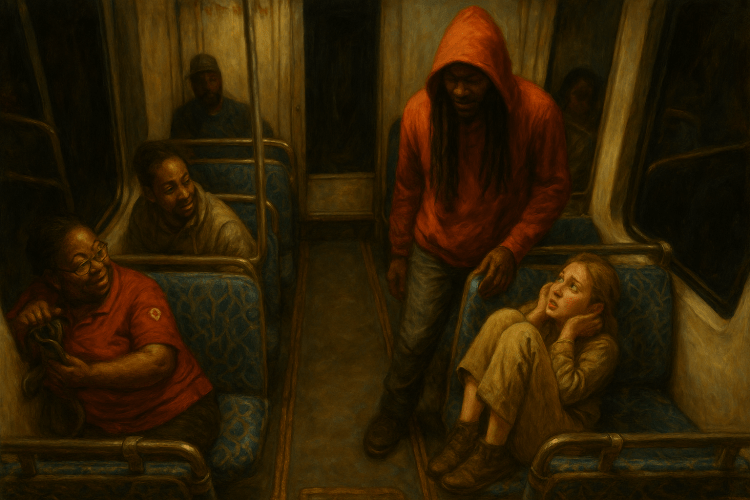
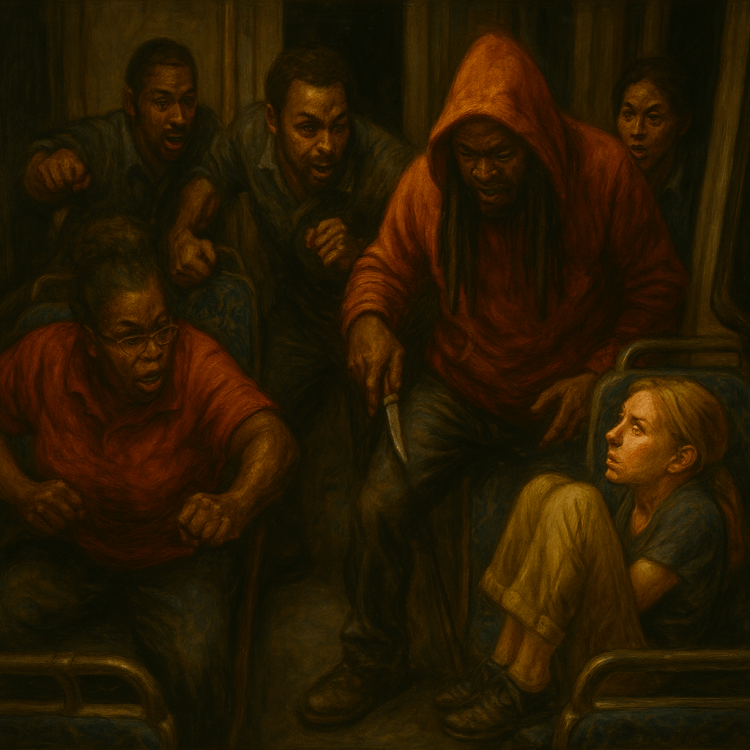
Fear is one of the most primal human responses. It protects us in sudden danger, but when it becomes a daily companion, it corrodes the human spirit. Public fear—on buses, sidewalks, subways, or in neighborhoods—steals trust, peace, and dignity. The image of a woman recoiling in terror on a city train, knees drawn to her chest as another looms over her, tells a painful truth: no one should have to live this way.


Texas: A Case Study in Mental Health Gaps

Texas illustrates both the scale of the challenge and the stakes involved:

  • Prevalence: One in five Texas adults experience mental illness each year. Among youth, 35% have a mental or behavioral health need.
  • Shortages: 246 of 254 Texas counties are designated Mental Health Professional Shortage Areas. Entire regions have no psychiatrist or child psychologist.
  • Treatment Gaps: A quarter of adults reporting symptoms of anxiety or depression were unable to access counseling in 2021.

The result is predictable: untreated mental illness spills over into public spaces, creating fear not only for the person suffering but for bystanders as well. Assaults and behavioral crises on Texas buses and trains are rising, with some agencies reporting record levels of violence.


If Resources Were Unlimited: What Would Treatment Look Like?

Imagine resources were no barrier: every Texan had immediate access to psychiatric evaluation, therapy, and medication. What would that achieve?

  1. Early Detection and Intervention
    • Many mental illnesses, such as schizophrenia, bipolar disorder, and severe depression, present early warning signs. With unlimited resources, outreach teams could identify and treat individuals before crises escalate.
  2. Comprehensive Treatment Plans
    • Treatment might combine medication (e.g., antipsychotics, mood stabilizers, antidepressants), evidence-based therapies (CBT, DBT, trauma-focused therapy), housing support, and peer counseling.
  3. Recovery and Rehabilitation
    • For some disorders, full remission is possible. Depression and anxiety often respond well within months of treatment. For chronic illnesses like schizophrenia, symptoms can be managed, stability restored, and relapse reduced.
  4. Timeframes
    • Depression and Anxiety: 8–16 weeks of consistent therapy and/or medication can achieve major improvement for many.
    • PTSD: Evidence-based therapies like EMDR or prolonged exposure often show progress within 12–20 sessions.
    • Schizophrenia or Bipolar Disorder: Lifelong management may be required. “Cure” is not realistic; stability is.
    • Substance Use Disorders (often co-occurring): Recovery is long-term and relapse-prone, requiring sustained support.

The reality: even with unlimited funding and willing patients, time itself is the obstacle. Many psychiatric conditions require years of care, often lifelong monitoring. Like prison reform, the dream of “curing” all mental illness is noble but unrealistic. Treatment can help millions live safer, better lives—but it cannot erase the presence of crisis in public spaces.


Why Prevention and Intervention Are Still Essential

If the path of treatment is long, then the path of prevention and intervention is immediate. While better funding is vital, it is not enough. People are still left vulnerable in the moments when violence erupts or fear overwhelms.

Public safety cannot rest solely on:

  • Staff training (drivers cannot leave their seats).
  • Police response (often delayed, sometimes escalating).
  • Clinician availability (which even with investment will take decades to meet demand in Texas).

Instead, safety in daily life requires empowering ordinary citizens—the bystanders, passengers, and neighbors who are present in those crucial first moments.


Empowering the Ordinary Citizen

What is missing from our national strategy is the role of citizens themselves. Just as society teaches CPR or basic first aid, it must now teach “social first aid”:

  1. Bystander Intervention Training
    • Ordinary people can learn the “5 Ds” (Direct, Distract, Delegate, Delay, Document) to intervene safely when someone is threatened.
  2. Conflict De-escalation Skills
    • Training in calm verbal communication, body language, and nonviolent presence to reduce aggression.
  3. Mental Health First Aid
    • Teaching citizens how to recognize panic attacks, psychosis, or suicidal crisis, and respond until professionals arrive.
  4. Citizen Incentives
    • Transit agencies could provide free passes or small stipends to certified “travel guardians,” similar to volunteer firefighters or crossing guards.
  5. Legal Protections
    • Strengthening Good Samaritan laws to ensure that citizens who act in good faith to protect or de-escalate are shielded from liability.

Beyond Transit: Safer Streets and Communities

The need is not limited to buses or trains. Street harassment, neighborhood crime, and visible behavioral health crises on sidewalks all provoke fear. A culture of vigilance and care is needed:

  • Neighborhood Guardian Programs: Volunteers equipped with de-escalation training and radios, visible in parks, streets, and transit hubs.
  • Community Partnerships: Schools, churches, and civic groups teaching young people conflict resolution and empathy.
  • Urban Design: Safer lighting, open sightlines, and public spaces that reduce opportunities for intimidation.

Psychiatric Perspective: Why This Matters

From psychiatry and psychology we know:

  • Social support is protective: People who receive help—even from strangers—recover from trauma more quickly and with fewer long-term effects.
  • Intervening prevents PTSD: Early calming or de-escalation reduces the brain’s encoding of trauma.
  • Agency reduces helplessness: Training gives people confidence to act, reducing paralysis and bystander apathy.
  • Calm is contagious: One calm, reassuring person can steady a fearful crowd.

Conclusion: Building a Culture Where No One Lives in Fear

Unlimited funding could treat more people, but treatment takes time—sometimes years, sometimes lifelong. In the meantime, fear stalks our buses, sidewalks, and neighborhoods. The only way to bridge the gap between long-term cure and present safety is to empower ordinary citizens. As with the aftermath of 9/11, airline pilots had to resort to announcements to passengers to be prepared to take action! You see that kind of intervention happening more and more.

Texas, with its high need and resource shortages, should lead by example: expanding treatment, yes, but also equipping its people to protect one another. Free training, incentives for guardians, stronger legal protections, and cultural education could turn strangers into allies, and moments of terror into opportunities for solidarity.

A society where no one lives in fear is not built solely in hospitals or legislatures. It is built in the everyday courage of citizens who refuse to look away—and are equipped to step forward.

In the World but Not of the World: A Christian Call to Distinction and Engagement

By Lewis McLain & AI

Introduction: Living the Tension

The Christian life is lived in paradox. On one hand, believers are deeply embedded in the structures, relationships, and responsibilities of this world. We work, raise families, pay taxes, build communities, and live under governments. Yet Scripture repeatedly warns that our allegiance cannot be captured by the world’s systems. Jesus’ prayer in John 17 makes the distinction clear: “They are not of the world, even as I am not of it. My prayer is not that you take them out of the world but that you protect them from the evil one. As you sent me into the world, I have sent them into the world” (vv. 14–18).

This passage highlights two realities: Christians belong to another kingdom, and yet they are sent on mission within this world. Faithful discipleship requires living in that tension—refusing assimilation into sin while engaging the world in love.


Biblical Foundations: The World Defined

The Bible uses “world” in two contrasting ways.

  1. The Created World – God’s good creation, which reveals His glory (Genesis 1:31; Psalm 19:1). Believers are called to enjoy and steward this gift.
  2. The Fallen World-System – The rebellious order under Satan’s sway, opposed to God’s rule (1 John 5:19). This world is marked by lust, pride, idolatry, and hostility to God (1 John 2:15–17).

The Christian calling is not to flee the physical world, but to resist the spiritual corruption of the age. Paul urges: “Do not conform to the pattern of this world, but be transformed by the renewing of your mind” (Romans 12:2).


Pilgrims and Ambassadors: Our Identity

Christians are pilgrims—temporary residents in a foreign land (Hebrews 11:13; 1 Peter 2:11). Pilgrims do not despise the land they pass through, but neither do they mistake it for their final destination. This imagery keeps believers from despair when they feel out of step with the culture.

At the same time, Christians are ambassadors (2 Corinthians 5:20). Ambassadors live in foreign territory to represent the interests of their true homeland. Likewise, the Church exists within the nations of the earth to represent the Kingdom of God.

This dual identity means Christians must engage the world with courage and clarity—neither assimilating to its patterns nor retreating into isolated enclaves.


The Discipline of Distinction

Being “not of the world” requires deliberate spiritual discipline:

  • Holiness – Resisting sin, cultivating purity, integrity, and obedience.
  • Renewed Minds – Forming thoughts through Scripture rather than cultural trends (Romans 12:2).
  • Alternative Allegiance – Refusing to idolize money, power, or popularity, embracing instead Christ’s call to humility and service (Mark 10:42–45).

Importantly, this distinction is not for pride but for witness. Jesus called His disciples “the light of the world” (Matthew 5:14–16). Distinctive lives expose darkness and point others toward God.


Confrontations with the World Today

The call to be “not of the world” is not abstract; it collides with the realities of our cultural moment.

1. Materialism and Consumerism

Our age glorifies accumulation and consumption. Advertising disciples us to believe that happiness lies in what we buy. The Christian response is countercultural generosity. Instead of hoarding, we give. Instead of self-indulgence, we practice contentment (Philippians 4:11–13).

2. Sexual Morality and Identity

Culture increasingly defines truth and identity apart from God’s design. Believers face pressure to conform or be silent. The biblical response is to hold to God’s created order with compassion and clarity—neither compromising truth nor withholding grace. Jesus modeled this when He forgave the woman caught in adultery but also told her, “Go and sin no more” (John 8:11).

3. Political Idolatry

Nations often demand ultimate loyalty. Some Christians are tempted to baptize political ideologies as ultimate truth. Yet Scripture reminds us that Christ’s kingdom is not of this world (John 18:36). Faithful Christians may participate in civic life, but they must never confuse earthly politics with the reign of God.

4. Truth in a Post-Truth Age

In an era of misinformation, propaganda, and relativism, Christians are called to bear witness to truth. Jesus declared, “I am the way, the truth, and the life” (John 14:6). To live “not of the world” is to speak truth even when it costs us—whether about human dignity, justice, or the reality of sin and salvation.


Necessary Reactions: Courage and Grace

When confronted by the world’s pressures, the Christian response must be twofold:

  • Courage – Refusing to compromise when obedience to God conflicts with cultural demands. Like Daniel refusing to bow to Babylon’s idols (Daniel 3, 6), believers must be willing to stand apart, even at personal cost.
  • Grace – Responding without hatred or fear. Christians are not called to wage war against culture but to embody Christ within it. Paul reminds us: “Let your gentleness be evident to all” (Philippians 4:5). Our distinctiveness must be marked by love, not arrogance.


Hope: Our True Citizenship

The strength to resist the world comes from hope. Paul anchors believers’ identity in heaven: “Our citizenship is in heaven. And we eagerly await a Savior from there, the Lord Jesus Christ” (Philippians 3:20). Christians endure because they know the world’s systems are temporary, but God’s kingdom is eternal.

This hope reframes suffering. Loss, ridicule, or persecution are not signs of defeat, but marks of fidelity. Jesus promised: “Blessed are you when people insult you, persecute you and falsely say all kinds of evil against you because of me” (Matthew 5:11).


Conclusion: A Witnessing Presence

To be in the world but not of it is to live as holy exiles and faithful ambassadors. It is to work, serve, and love within our communities while refusing to bow to the idols of our age. It means meeting confrontation with courage and grace, proclaiming truth with compassion, and embodying hope when despair seems dominant.

In the end, Christians are not defined by withdrawal from the world, nor by conformity to it, but by their witness within it. As Jesus prayed, they are sent into the world for its redemption, bearing the light of a kingdom not yet fully seen, but one day revealed in glory.

The Need to Remarry Every Day

By Lewis & Linda McLain (after 60 years), Assisted by AI

Marriage begins in radiance. Most of us can still picture that day—the nervous glances down the aisle, the joy in the faces of family and friends, the music rising as if the world itself paused to bless this covenant. The vows spoken then carry the sound of eternity: promises to love, to honor, to cherish, to remain faithful “for better or worse, for richer or poorer, in sickness and in health.” In those moments, dreams were unclouded. We imagined a life woven together in harmony, our future children, our shared home, our journey of growing old side by side.


And in 1966, The Beach Boys gave voice to that very longing with their iconic song Wouldn’t It Be Nice. It was the anthem of courtship dreams—“Wouldn’t it be nice if we were older, if tomorrow could start today?” For many couples, it became the soundtrack of first dates, long drives, and handwritten letters. The melody wasn’t just music; it was the hope of what love could become.

But dreams, no matter how sincere, eventually meet reality.

The Ups and Downs of Real Life

The truth of marriage is not just the wedding day, but every day that follows. Bills pile up, children cry in the night, careers bring stress, health falters, and personalities clash. Disappointments enter quietly: unmet expectations, miscommunications, small slights repeated until they sting more sharply. What once seemed effortless becomes labor. Disillusionments are not one-time events—they reappear, reshaping themselves with each stage of life.

In those moments, the youthful harmony can feel far away. Yet the refrain still calls: Wouldn’t it be nice if we could hold on through this storm, if we could rediscover the song that first drew us together?

The Daily Choice to “Remarry”

To stay married is not simply to refrain from leaving; it is to remake the choice of love every day. To “remarry” daily means that each morning we must decide again:

  • I will see you not as my opponent, but as my partner.
  • I will treat you not with indifference, but with honor.
  • I will choose forgiveness over resentment, conversation over silence, and patience over irritation.

This is not sentimental—this is disciplined love. To remarry each day is to awaken and recall the covenant made in youth, while layering it with the wisdom of years, the scars of hardship, and the humility that says, “I am still learning how to love you well.”

And each morning, as the alarm clock sounds, a faint echo might be heard: Wouldn’t it be nice if today we chose one another all over again?


The Skill Set of Endurance and Renewal

Love that endures is not merely a feeling; it is a skill set. Among the needed skills are:

  • Listening with depth. Hearing beneath words to the heart that speaks.
  • Conflict navigation. Arguing fairly, forgiving quickly, and refusing to keep score.
  • Resilience. Not giving up when seasons are barren, but waiting and tending until spring returns.
  • Humor. Finding laughter even when life is heavy, to remind one another that joy is still possible.
  • Faith. Believing that the story is bigger than today’s difficulty, and that grace is always available.
  • Presence and touch. Recognizing that sometimes love is best expressed without words—by simply sitting together, or by the gentle brush of a hand. Even the smallest touches—fingers brushing while passing a cup, a hand on the shoulder, the quiet weight of leaning against one another, maybe even a loving nudge with a sheepish smile—speak volumes. They are unspoken vows, reaffirmed in silence.

These are the harmonies that keep the melody alive.

More Than Vows: Returning to Courtship

But it is not only the vows we must recall. It is critical to return to the days of courtship—the beginning of the story. Do you remember the first conversation that made your heart race? The nervous excitement of a first date, the surprise of discovering how much you enjoyed being together, the eagerness to call or write, the long walks that felt too short? These are not frivolous memories; they are stored fuel.

And in those days, wasn’t there always music? Songs of longing, of wishing life could hurry up so you could finally build a life together. For some, The Beach Boys’ refrain became the anthem of that season: Wouldn’t it be nice if the world gave us permission to live out our love fully, right now?

But the heart of courtship was not only the words you spoke—it was being together. Sitting in the car long after the date ended, not needing conversation, just soaking in the nearness. The thrill of reaching for a hand and feeling it returned. These small gestures were never small; they were the first language of love. And they remain vital today. Presence itself is a gift. Touch itself is communication, no less meaningful than speech.

Rekindling the spark means asking again: What was it about you that first captured me? And then letting that answer guide new actions today—whether it is planning a small surprise, holding hands more often, or simply looking into your spouse’s eyes with the same wonder as in the beginning.

Love is not only covenant; it is also courtship renewed.

Returning to the Vows

When we “remarry” daily, we do not create new promises; we live into the ones already made. To recall the vows is to re-anchor ourselves:

  • “For better or worse” reminds us not to run when the worse comes.
  • “For richer or poorer” steadies us when financial strain presses hard.
  • “In sickness and in health” calls us to tenderness when bodies fail.

The vows are more than a contract; they are the rhythm section, steadying the music of love when the melody falters.


Practices of Daily Remarriage

  1. Leave Notes or Send Love Wishes. A small text in the middle of the workday—“Thinking of you”—or a sticky note tucked under the coffee mug can carry more weight than a grand gesture. These whispers of love remind your spouse: I see you. I choose you again today.
  2. Pray Together While Holding Hands. To clasp hands, look into each other’s eyes, and lift your marriage before God is both humbling and powerful. It says, We are not only for each other—we are with God together.
  3. Explore “For Better or Worse” Anew. Over time, the phrase deepens. What does “worse” look like in your season—financial struggle, illness, misunderstanding? Naming it together transforms the vow into shared resilience: No matter what comes, we endure side by side.
  4. Recount Your Blessings. Gratitude is glue. Sit together, list aloud the small and great gifts—your children, your laughter, your home, your faith. Counting blessings makes the heart remember that love has been carried by grace.
  5. Discuss Your Relationship with God. A marriage anchored in faith has a third strand that does not break. Speak openly about where you see God’s hand in your story, what you are praying for, and how your love can mirror His. In doing so, you are not just married to each other—you are bound within His covenant love.


Conclusion: A Lifelong Renewal

The wedding day was the first “yes.” Life after that requires thousands more. The beauty of remarriage every day is that it transforms endurance into renewal. It says that even in the weariness of years, we can rediscover the spark of the beginning. Love then becomes not only a memory of what was promised, but a living testament of what is still possible.

And so the chorus returns, softer now but deeper: Wouldn’t it be nice if today we made the same choice again, and tomorrow too, and the day after that—until one day we find that the dream we sang about in 1966 has become the life we’ve built together?

And sometimes, the most profound choice is made without a word—just in the quiet joy of being present, hand in hand, heart to heart.


A Closing Prayer

Lord, we thank You for the gift of marriage, for the joy of courtship, for the vows once spoken in trembling voices and still lived today. We ask for the courage to remarry each morning, to choose again the one You have given us.

May we be faithful for better or worse, patient for richer or poorer, tender in sickness and in health. May we learn daily to love, honor, and cherish—until death parts us, and even then, until love is made perfect in eternity.

Teach us also to treasure the quiet gift of presence—the holy silence of simply being together. May we never take for granted the power of touch, even the smallest brush of the hand, as a sacred language of love.

Bless every couple with the grace to return to their first love, to recall the courtship that began their story, to whisper love through notes and prayers, to count their blessings often, and to sing again the refrain of hope: Wouldn’t it be nice if, today, we chose each other anew?

Amen.


Wouldn’t It Be Nice – Beach Boys

Wouldn’t it be nice if we were older?
Then we wouldn’t have to wait so long
And wouldn’t it be nice to live together
In the kind of world where we belong?

You know it’s gonna make it that much better
When we can say goodnight and stay together

Wouldn’t it be nice if we could wake up
In the morning when the day is new?
And after having spent the day together
Hold each other close the whole night through

Happy times together we’ve been spending
I wish that every kiss was never ending
Oh, wouldn’t it be nice?

Maybe if we think and wish and hope and pray
It might come true (run, run, we-ooh)
Oh, baby, then there wouldn’t be a single thing we couldn’t do
We could be married (we could be married)
And then we’d be happy (and then we’d be happy)
Oh, wouldn’t it be nice?

You know it seems the more we talk about it
It only makes it worse to live without it
But let’s talk about it
But wouldn’t it be nice?

Goodnight, my baby
Sleep tight, my baby
Goodnight, my baby
Sleep tight, my baby
Goodnight, my baby
Sleep tight, my baby

Source: Musixmatch

Songwriters: Brian Douglas Wilson / Mike E. Love / Tony Asher

Wouldn’t It Be Nice lyrics © Sea Of Tunes Publishing Co., Sea Of Tunes Publishing Co Inc

Plan v Pivot: Texas Municipal Leadership in the World of “Re-”

Suggested by Dan Johnson, written mostly by AI, guided and edited by Lewis McLain

Introduction

In Texas, city and county leaders live in the tension between plans that guide and pivots that save. Long-range blueprints for infrastructure, budgets, and land use are essential. Yet when storms overwhelm, revenues collapse, or the legislature rewrites the rules, leaders must step into the re- world: redoing assumptions, rewriting priorities, reallocating resources, reassessing risks, and reestablishing trust with citizens. Leadership is not static. It is a continual act of resilience, built on both discipline and improvisation. There is a rhythm, not quite a dance, but an orchestra conductor directing an Attacca, a performance instruction that means to go straight on without pause to the next movement.


The Discipline of Planning

Texas cities exemplify disciplined planning:

  • Capital Improvement Programs (CIPs). Road expansions, water treatment plants, and fire stations are mapped years in advance.
  • Water Supply Projects. Regional providers like the North Texas Municipal Water District (NTMWD) develop 50-year strategies for reservoirs, pipelines, and treatment capacity.
  • Comprehensive Plans. Land use, housing, and growth corridors are charted to keep pace with booming populations.

Planning sets expectations, aligns departments, and reassures taxpayers. Without it, chaos replaces coordination. But even the most detailed plan must later be reassessed when conditions shift.


Planning or Pivoting?

The Guadalupe River Flood: Forced to Re-Act

On July 4, 2024, relentless rains along the Guadalupe River brought flash floods that tore through Comal and Guadalupe Counties.

  • Plans Overwhelmed. Drainage systems designed for “100-year storms” were outmatched. Evacuation maps had to be rewritten in real time.
  • Immediate Pivot. Cities reallocated crews from parks to barricading roads, redirected budget reserves to emergency shelters, and reorganized communication channels for disaster alerts.
  • Aftermath. Communities began to rebuild, reestablish housing security, and rejuvenate battered neighborhoods with state and federal aid. Drainage master plans were redone with updated floodplain models, a stark reminder that plans are only drafts in the face of Texas weather.

This was not failure of planning but proof that leaders must be able to redo and rewrite without hesitation.


Normal Maintenance

Planned Programs Interrupted by Necessary Pivots

Pivoting to State Legislative Changes

Just as floods force emergency pivots, state politics forces cities into the re- cycle.

  1. Revenue Caps (2019). When Senate Bill 2 capped property tax growth at 3.5% without voter approval, cities like Austin, Plano, and may others had to recalculate their forecasts, reallocate funds from amenities to core services, and reassess debt capacity.
  2. Annexation Restrictions (2017 & 2019). Cities such as San Antonio saw decades-long growth plans undone. Annexation strategies were rewritten, and economic development priorities restructured to adapt to shrinking boundaries.
  3. Sales Tax Rebate Reforms (SB 878, 2023). Cities like Round Rock and Coppell, which had relied on rebate agreements with corporations, had to pivot to reforecast, redefine budgets, and reestablish trust with residents when revenues suddenly tightened.

In each case, local leaders could not cling to outdated forecasts. They had to redo priorities, rewrite budgets, and reframe commitments while keeping faith with their communities.


Fundamental Programs

Interrupted by Unplanned Events

The Backbone of Data Management & Operations Flow Attacked

The Total Focus for Days, Weeks, or even Months

The Source and Power of “Re-”

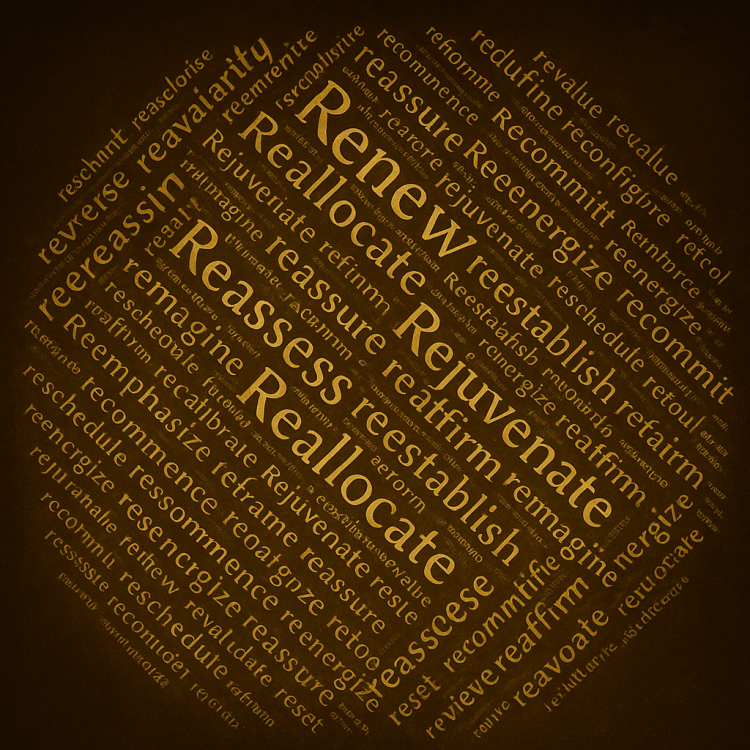
I think back to when I taught budgeting in the SMU MPA programs, my introduction to the subject included an emphasis on “The Re Words.” The prefix re- comes from Latin, where it carried the simple meaning of “back” or “again.” Over centuries, carried into English through Old French, it grew into one of the most versatile and powerful tools in our language. To add re- to a verb is rarely neutral; it signals renewal, restoration, or fresh possibility. Rebuild, reconnect, reform, restore, redeem, resurrect—each carries the weight of beginning again, of not being bound by failure or finality. Even in ordinary civic leadership, words like reassess, reallocate, reimagine, and rejuvenate offer not just management strategies but visions of resilience. The “re-” family of words tends toward the uplifting: they invite us to believe that what is broken can be mended, what is lost can be recovered, and what seems finished can yet be begun anew. In that sense, “re-” is not merely a prefix but a promise—one that leaders must embody when guiding people and communities through change.


The Language of Pivoting

The Leadership Imperative: Living in the Re- Cycle

Texas municipal leadership is now defined by agility within the re- cycle:

  • Reassess: Constantly test whether assumptions still hold.
  • Reallocate: Shift funds and staff quickly to where they are most needed.
  • Rewrite: Adjust ordinances, plans, or budgets without waiting for the next five-year update.
  • Reestablish: Rebuild legitimacy and public confidence after disruption.
  • Rejuvenate: Use moments of crisis to breathe new energy into tired systems, outdated practices, or strained organizations.

These concepts do not abandon planning. It is treating plans as living documents, always subject to revision and renewal.


Conclusion: The Art of Resilience

In Texas municipal government, planning without pivoting is arrogance, and pivoting without planning is chaos. The art lies in combining the two through a constant rhythm of re- words: to redo when plans prove wrong, rewrite when policies are outdated, reallocate when funds are strained, reassess when risks emerge, reestablish when trust falters, and rejuvenate when systems tire.

Leadership is not about choosing plan or pivot once and for all. It is about repeatedly returning—to purpose, to mission, to the people—no matter how many times circumstances force change. It requires the supreme idea of agility. Some responses can’t wait hours or days. They must be well-oiled actions as if you knew an event was coming.

The July 4 flood showed that nature will undo assumptions. The Legislature’s actions showed that politics will redraw boundaries. But resilient leaders—those willing to live in the re- cycle—ensure that their cities not only survive, but renew themselves time and again. Interestingly, and sometimes strangely, the outcome will not be just a fix but rather an improvement.


The Re-Creed of Leadership

We plan with care,
yet we are ready to redo, knowing even the best blueprints must yield to reality.

We decide with courage,
yet we humbly reassess, for wisdom is found not in stubbornness but in learning anew.

We allocate with prudence,
yet we swiftly reallocate, remembering that resources serve people, not plans alone.

We write for the future,
yet we are willing to rewrite, because vision is alive and must grow with the times.

We stand for stability,
yet we daily reestablish trust, for legitimacy is not won once, but earned again and again.

We serve in the present,
yet we strive to rejuvenate tomorrow, so that what we build outlasts us and lifts generations to come.

For true leadership is not one act,
but the continual rhythm of resilience, renewal, and return.

The Quiet Romance of Park Benches

A collaboration between Lewis McLain and AI

A park bench is never only wood and iron. It is a place where time itself seems to pause, a still point in the turning world. Simple, unadorned, and often overlooked, the bench waits with a patience that borders on eternity. Where lighthouses rise bold against the storm, park benches rest unnoticed in the shelter of trees and along meandering paths, offering not guidance to ships at sea but solace to souls at rest.

They are thrones without ceremony, open to all who approach. The hurried commuter catching a breath, the young lovers carving initials into its grain, the old man feeding sparrows, the child swinging feet too short to reach the ground—all sit with equal claim. In these ordinary moments, the bench becomes extraordinary, for it gathers the fragments of many lives and quietly binds them into a shared story.


At dawn, when the mist lingers low and dew glistens on the grass, benches hold the world in soft silence. They cradle the solitude of readers with coffee cups in hand, or the jogger pausing to stretch as the day stirs awake. By noon, benches come alive with voices—laughter, arguments, whispered secrets, and the chatter of children in play. At dusk, they return to meditation, their weathered slats bearing the weight of reflections too heavy to speak aloud.

But beyond the hours, beyond the seasons, there is something inherently romantic about a bench. It is a place where one may sit not only to rest but to wait. Lovers wait for each other on benches. Friends meet after years apart. A traveler, alone in a foreign city, may find on a bench both loneliness and comfort, the ache of absence and the hope of presence. A park bench is always waiting for someone—and in that waiting lies its poetry.


Benches, too, are shrines of memory. Some carry plaques with names: “In loving memory of…,” reminding us that a particular spot once belonged to someone’s favorite view, someone’s cherished hour. Even without engraving, the wood itself remembers. It remembers the kiss stolen under lamplight, the quarrel that ended in silence, the notebook filled with sketches, the tears that fell unnoticed while the world hurried past. A bench, in its stillness, absorbs more of human life than we imagine.

And yet, there is no pretense to its service. A bench does not ask to be admired. It does not strive to inspire awe. Its beauty is in its humility—steadfast, available, enduring. It offers nothing more than rest, and in that offering it becomes everything: a sanctuary, a stage, a confessional, a throne, a pew.

If lighthouses are monuments to survival, benches are monuments to presence. They remind us not how to endure storms, but how to pause in calm weather, how to savor the fleeting moments between motion. They are the poetry of ordinary time, the architecture of waiting, the geometry of intimacy.

So the next time you walk past a park bench, let it invite you. Sit. Rest. Allow the world to slow down. You may discover that the quietest structures—the ones we pass without notice—are the ones that most tenderly hold our lives.

Let the bench bear life’s storms so you can find peace.


A Turning Point in Heaven’s Light

A collaboration between Lewis McLain and AI
(Please distribute widely if you believe this writing is worthy)


Canto I – The Rise

In northern towns where prairies sprawl,
A boy first heard conviction’s call.
Not bred of wealth, nor crowned by birth,
Yet stirred by fire of higher worth.

With restless zeal, he seized his chance,
Where most saw chaos, he saw stance.
He stood on stages, sharp and plain,
A mind inflamed, a heart unchained.

No parchment crown, no ivy’s grace,
Yet destiny had marked his place.
And in the halls where doubters throng,
He forged his faith, he found his song.

From early days, the watchers knew,
This voice could shake, this word was true.
And those who heard, both young and old,
Would tell in time the tale retold.


Canto II – The Mission

He raised a banner, bold, untorn,
And Turning Point that cause was born.
Not ink alone, but flesh and flame,
The title spoke, became his name.

Through campuses where youth reside,
He lit conviction far and wide.
The student found a voice to speak,
The timid heart grew strong, not meek.

He carried faith from hall to hall,
And many bowed beneath its call.
For when he spoke, the air grew still,
He moved the mind, he bent the will.

And praise arose, like thunder’s roll,
From college steps to nation’s soul.
The farmer, teacher, preacher too,
Admired the fire his spirit drew.

And at his side, in kinship near,
The President lent voice sincere.
For Trump himself would often say:
“This Kirk inspires, he lights the way.”


Canto III – The Trial

But every prophet, every seer,
Must taste the weight of scorn and sneer.
His foes were many, fierce, and loud,
Yet still he stood before the crowd.

They mocked his youth, they scorned his creed,
Yet millions felt their spirits freed.
For each sharp jeer, a cheer was raised,
And countless souls their voices praised.

The college freshman, shy, unknown,
Would write, “He helped me find my own.”
The seasoned statesman, gray with years,
Would nod and say, “His strength appears.”

And when the storm grew dark with hate,
Admiring voices held the gate.
From kitchen table to marble dome,
They claimed his words, they called him home.

Like Daniel firm amidst the roar,
Like David standing once before
A giant’s sneer, a sharpened blade,
So Kirk in courage never swayed.

And praise, once whispered, now was sung,
From every heart, from every tongue.
And now, forever, shall it be—
His name remembered, praised, set free.


Canto IV – The Martyrdom

The hall grew hushed, the night grew cold,
As Charley spoke with courage bold.
He answered questions, sharp and grave,
And called the fearful hearts to brave.

But shadows stirred, a shot rang clear,
The silence broke with sudden fear.
From rooftop’s height the bullet came,
And darkness sought to quench his flame.

The students wept, the faithful cried,
The nation’s pulse was torn inside.
And yet, in Heaven’s courts above,
The gates flung wide with holy love.

For Christ, who bore the cross alone,
Received dear Charley to His throne.
No longer mocked, no longer tried,
The martyr lives, the saint has died.

And voices rose, both near and far,
“His life was bright, a guiding star.”
From college dorms to Washington,
The praise poured out: “Well done, well done.”


Canto V – The Legacy

Now history bends at this sharp turn,
A Turning Point where all must learn.
Not only name of cause he led,
But symbol where his blood was shed.

For Charley’s fight shall not be stilled,
His words endure, his hope fulfilled.
The youth he moved will yet arise,
And carry fire that never dies.

The farmer, worker, preacher, friend,
Will guard his mission to the end.
And even presidents will claim
The echo of proud Charley’s name.

For though the man lies still in rest,
His spirit marches, strong, confessed.
And now and evermore shall ring
The heaps of praise that people sing.


Epilogue: A Prayer

O Lord of mercy, Lord of light,
Embrace Your servant in Your sight.
Bless Charley’s kin, console their pain,
Let hope and comfort still remain.

Guard his dear wife, his circle near,
Dry every anguished, falling tear.
And for our land, so bruised, so torn,
Let healing in Your grace be born.

Turn wrath to peace, turn hate to love,
Rain down Your mercy from above.
Unite this nation, fractured, sore,
In faith and freedom evermore.

Through Jesus Christ, whose cross we raise,
Receive our thanks, our prayer, our praise.
Amen.

Servant Leadership: From Hermann Hesse to Robert Greenleaf and Beyond

Inspired by Dan Johnson, Written by AI, Guided and Edited by Lewis McLain

I. Hermann Hesse: Life and Vision

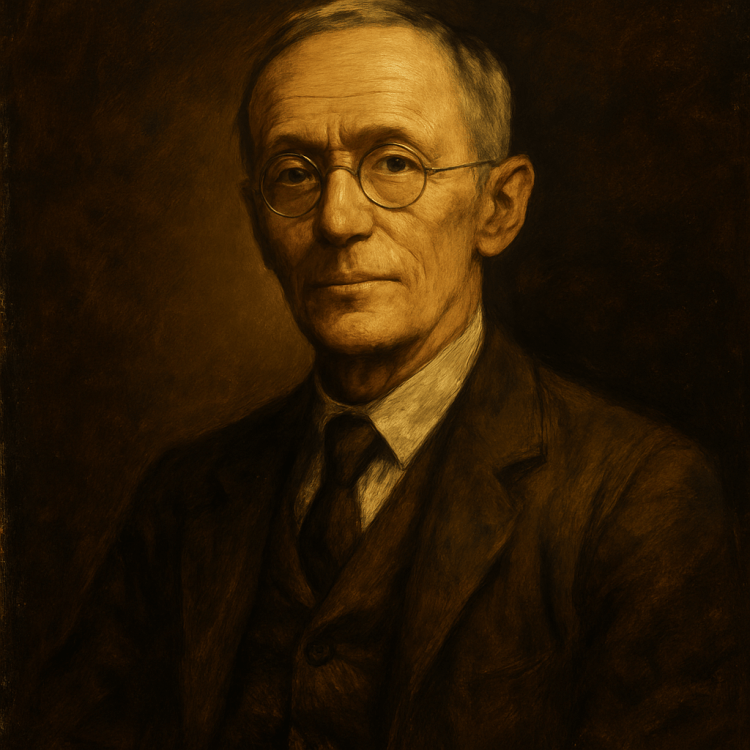
Hermann Hesse (1877–1962) was one of the twentieth century’s most influential literary figures, a seeker whose novels became guideposts for millions navigating the crises of modernity. Born in Calw, in the Black Forest of Germany, Hesse was the son of Christian missionaries. His childhood was steeped in pietism and biblical devotion, but also in conflict—he struggled against the rigidity of his family’s expectations and endured mental health crises that shaped his outlook. When I read many of his books, there were two recurring personal notes in his diaries: he had bad eyesight and complained about how much his eyes hurt. He also traded letters with friends that include small water paintings sent and received. Those pictures seemed to be pleasing to Hesse. If you start seeing pictures (with the help of AI), my motivation comes from Mr. Hesse. LFM


Herman Hesse

For Hesse, writing was both therapy and spiritual exploration. His early novels reflected the tensions of his life: the desire for freedom against the weight of tradition, the search for authenticity in a rapidly industrializing world.

  • In Demian (1919), Hesse explored inner duality, freedom, and the necessity of self-discovery beyond societal norms.
  • In Siddhartha (1922), he imagined a man’s journey to enlightenment in ancient India, fusing Western existential doubt with Eastern philosophy.
  • In Steppenwolf (1927), he dramatized the loneliness of the modern intellectual and the quest for transcendence amid despair.
  • In The Glass Bead Game (1943), his Nobel Prize–winning masterpiece, he conjured a future order devoted to the synthesis of knowledge, beauty, and spirituality.

Amid these great novels stands a shorter but profoundly symbolic tale: The Journey to the East (1932). Though brief, it contains one of Hesse’s most enduring insights—leadership is not power, but service.


II. The Journey to the East: The Servant and the Master

The novella tells the story of a secret brotherhood called the League, a timeless spiritual fellowship that undertakes a pilgrimage “to the East.” The East is never fully defined—it is both place and symbol, representing wisdom, transcendence, and the fulfillment of human longing.

The narrator, H.H., joins the League’s pilgrimage. Along the way he describes a mysterious assortment of travelers: historical figures, literary characters, and seekers from all walks of life. The journey unites them in pursuit of a higher goal.


Leo

Yet the true heart of the story is a man named Leo. Leo appears to be nothing more than a cheerful servant. He tends to the pilgrims, carries their bags, prepares their meals, and sings songs that lift their spirits. He is ordinary, unnoticed—yet indispensable.

Then one day Leo disappears. Without him, the pilgrims falter. Discord and division creep in, and the League dissolves. H.H. falls into despair, convinced the journey has failed.

Years later, in a twist of revelation, H.H. learns the truth: Leo was not simply a servant. He was in fact a leader of the League, the embodiment of the very wisdom the pilgrims were seeking. The pilgrimage fell apart because the group failed to recognize that true leadership had been in their midst all along.

Hesse’s parable is at once mystical and practical: it insists that authentic leadership flows not from domination but from humble service. In the inversion of roles—servant as master, master as servant—Hesse revealed a paradox at the heart of human community.


Greenleaf

III. Robert Greenleaf and the Birth of Servant Leadership

Decades later, in the United States, Robert K. Greenleaf (1904–1990), an executive at AT&T, was searching for a new way to understand leadership. He had witnessed firsthand how corporate hierarchies often crushed initiative, fostered fear, and alienated workers. After 40 years in management, he turned to teaching and writing, determined to challenge the prevailing model of top-down authority.

In the 1950s, Greenleaf read The Journey to the East, and Leo’s example struck him like lightning. Here was the vision he had been seeking: the leader is great not because of command but because of service. Out of this insight, he developed the philosophy he called servant leadership.

In his seminal 1970 essay, The Servant as Leader, Greenleaf wrote:

“The servant-leader is servant first… It begins with the natural feeling that one wants to serve, to serve first. Then conscious choice brings one to aspire to lead. The difference manifests itself in the care taken to make sure that other people’s highest priority needs are being served.”

Greenleaf’s framework reshaped modern leadership thinking. He identified qualities that distinguish servant leaders:

  • Listening and Empathy – Understanding others deeply before acting.
  • Awareness and Foresight – Seeing beyond immediate demands to future consequences.
  • Healing and Stewardship – Caring for individuals and institutions as trust, not possessions.
  • Commitment to Growth – Helping others become wiser, healthier, and freer.
  • Building Community – Nurturing belonging, not simply extracting productivity.

Unlike traditional leadership, which seeks power to direct, servant leadership seeks responsibility to care. Greenleaf insisted that the true test of leadership was not organizational success but human flourishing: “Do those served grow as persons?”


IV. Servant Leadership in Today’s World

Although Greenleaf’s vision emerged from corporate disillusionment, servant leadership has spread far beyond the boardroom. Its influence can be traced across diverse spheres today:

1. Faith-Based Institutions

  • Many Christian organizations and seminaries explicitly teach servant leadership, grounding it in the life of Jesus.
  • Pope Francis has often invoked its spirit, urging leaders to be “shepherds who smell of the sheep.”
  • Evangelical colleges and Catholic universities alike offer leadership courses built around Greenleaf’s principles.

2. Education

  • Universities such as Gonzaga, Indiana Wesleyan, and Regent have made servant leadership central to their leadership programs.
  • In secular contexts, “inclusive leadership” and “transformational leadership” often echo servant leadership’s core values of empathy and empowerment.

3. Healthcare and Caring Professions

  • Hospitals and nursing schools apply servant leadership to patient-centered care.
  • Nursing theory highlights Greenleaf’s ideas of empathy and stewardship as essential to healing.
  • Systems like Cleveland Clinic and Mayo Clinic promote leadership cultures rooted in service.

4. Nonprofits and Social Enterprises

  • Global NGOs like Habitat for Humanity and World Vision emphasize leadership through service to the vulnerable.
  • Social entrepreneurs adopt servant leadership as a model for organizations aimed at social good.

5. Business

  • Southwest Airlines and TDIndustries are classic case studies of servant leadership cultures in practice.
  • The rise of “conscious capitalism” and stakeholder-driven business models reflects a growing embrace of servant-leadership values.

6. Military and Public Service

  • Though hierarchical, parts of the U.S. military stress servant leadership: officers as stewards of their soldiers’ welfare.
  • Police and fire departments in some communities incorporate the philosophy for community trust.

7. Global Reach

  • In Africa, servant leadership resonates with Ubuntu (“I am because we are”), highlighting shared humanity.
  • In Asia, it has influenced leadership practices in Singapore and the Philippines, where communal values are strong.
  • In Scandinavia, egalitarian management structures mirror Greenleaf’s call for humility and shared responsibility.

In today’s world of political polarization, corporate scandals, and institutional mistrust, servant leadership remains both countercultural and urgently relevant. Where command-and-control leadership often falters, servant leadership builds trust, resilience, and long-term sustainability.


V. Conclusion: The Servant as the True Leader

Hermann Hesse, writing in a fractured Europe, offered a parable of a servant who was secretly a master. Robert Greenleaf, confronting the failures of mid-century corporate America, found in that story the spark for a radical rethinking of leadership.

Together, they remind us that the deepest authority is not rooted in command but in service. Leadership is not the pursuit of followers but the care of souls. Institutions endure not because of power structures but because of communities sustained by humility, empathy, and stewardship.

In an age that often celebrates strength as dominance, Hesse and Greenleaf point to another way: that the one who carries the bags may in fact be the one who carries the truth.