Every few years, Americans brace for news of a looming federal government shutdown. Media coverage describes them as looming catastrophes, filled with images of barricaded monuments, national parks closed, and frustrated travelers at airports. Politicians on both sides amplify the tension, using the threat of shutdown as leverage in their broader battles. But step back from the noise, and a more complicated picture emerges. Shutdowns are disruptive, yes—but much of the panic they generate stems from a broader financial reality: many workers, public and private alike, simply don’t have enough savings to weather even a temporary pause in pay.
The Mechanics of a Shutdown
By law, when Congress fails to pass appropriations, agencies must cease operations that are not legally “excepted” for safety or essential services. Furloughed employees are ordered home, barred from working even if they wish to. Others—air traffic controllers, Border Patrol agents, TSA officers—must continue working without pay until the shutdown ends. Since the Government Employee Fair Treatment Act of 2019, federal workers are guaranteed back pay once the government reopens. Contractors, however, are not: a janitor or cafeteria worker may permanently lose income for the weeks the government was closed.
The Record Since 1976
The modern shutdown era began after a 1976 Justice Department opinion forced agencies to halt during funding gaps. Since then, there have been 10 shutdowns where furloughs actually occurred:
In the early 1980s, several shutdowns lasted 1–3 days each over spending disputes.
In 1986, there was a 1-day lapse.
In 1990, a 3-day shutdown unfolded during deficit reduction talks.
In late 1995, the government closed for 5 days, followed soon after by a 21-day shutdown into early 1996.
In 2013, the government shut down for 16 days over the Affordable Care Act.
In January 2018, a 3-day lapse occurred, followed by a few-hour closure in February 2018.
From December 2018 to January 2019, the U.S. endured its longest shutdown, lasting 34–35 days over border wall funding.
The averages
10 shutdowns since 1976 with furloughs.
~87 total days lost to shutdowns.
Average length: about 8–9 days each.
Average spacing: roughly 51 months between shutdowns or just over 4 years.
Here lies the heart of the issue. For all the headlines about missed paychecks, the true problem is one shared across the American economy: too many households have little or no emergency savings. Federal Reserve surveys consistently show that a significant share of Americans struggle to cover even a $400 unexpected bill.
To put this in perspective, the average federal worker earns about $75,000 per year, or roughly $6,250 per month before taxes. If an employee had just one month’s salary set aside, most shutdowns—lasting a week or two—would be a financial nuisance rather than a personal crisis. Yet many federal workers, like many in the private sector, do not keep that cushion. The result is that a temporary disruption is felt as if it were permanent.
Public vs. Private Sector Contrast
In fact, federal employees are relatively shielded compared to their private-sector counterparts. Federal workers furloughed during a shutdown now know they will receive full back pay once it ends. That makes a shutdown more like a forced, interest-free loan taken from their personal finances—unpleasant, but not ruinous for those with only modest savings.
Private-sector workers, by contrast, face layoffs or plant closures with no promise of retroactive pay. When a factory shuts down or a store closes, wages are gone permanently. The drama over government shutdowns often overlooks this harsher reality faced daily by millions outside the public sector.
The Theatrics of Shutdowns
Here lies the “farce.” The political theater surrounding shutdowns magnifies their significance beyond their actual economic scope. Members of Congress stage dramatic press conferences in front of locked gates to national parks or shuttered museums. Leaders exchange blame in nightly news cycles, accusing the other party of holding the nation hostage.
Yet the reality is that these shutdowns are typically short—averaging less than nine days over the last 50 years—and resolved with little structural change. They function less as fiscal turning points and more as bargaining chips in partisan standoffs. For many politicians, the shutdown becomes a stage prop: a way to appear tough, principled, or uncompromising before their base, while knowing full well that the lights will turn back on once both sides agree to a continuing resolution.
Anecdotal Stories and Media Amplification
The media plays its own role in heightening the drama. During shutdowns, reporters easily find stories of hardship: a young family lining up at a food pantry, a federal employee selling personal belongings online, or a worker worried about making rent. These are real and often heartbreaking situations, but they are also selective snapshots. By highlighting the most sympathetic cases, the press frames shutdowns as universal devastation rather than as uneven disruptions that many households could withstand with even modest savings. The cycle feeds public anxiety, while offering politicians ready-made examples to cite in their rhetorical battles.
Conclusion and Prescription
Government shutdowns are disruptive and unnecessary, but they are not the economic cataclysm they are often made out to be. Federal employees, uniquely, are made whole with back pay; private-sector workers are not so fortunate. The real lesson is not just about partisan gridlock but about financial preparedness. If American households—federal and private alike—had even a modest emergency fund, much of the sting would disappear.
Epilogue: Preparing for the Inevitable
Shutdowns are not a question of if but when. For the average federal employee earning approximately $6,250 per month (gross pay), setting aside 5–10% of their income could quickly build a safety net. Within two to three years, such a worker could accumulate two months’ expenses in savings—enough to glide through even the 35-day shutdown of 2018–19 without panic. The same principle applies to private-sector employees, who face even harsher risks with no guarantee of back pay. Theatrics will continue in Washington, but for workers, the best defense is the same as for any economic shock: live as though a disruption is always around the corner, and be ready when it arrives.
Beyond Government: A Call for Financial Common Sense
One final lesson extends beyond shutdowns: governments and all employers should take a proactive role in preparing their workers for financial resilience. Offering personal finance workshops—covering emergency savings, debt management, and budgeting—would give employees tools to withstand not just shutdowns but any economic shock. Teaching that a minimum of one month’s savings is essential could shift shutdowns from feared national dramas to mere inconveniences. In the end, the best safeguard against political theater is not another law from Congress, but households equipped with the discipline and knowledge to weather storms on their own.
Appendix: Common-Sense Financial Resilience Training — Questions for Employees
Premise: don’t be surprised by the predictable. Cars age. Roofs wear out. Water heaters (tanks) fail. Paychecks get disrupted. The goal is to plan for what will happen so you don’t add new debt when it does.
A. Paycheck Reality Check
If your paycheck stopped today, how many days could you cover essential bills (housing, utilities, food, transportation) from cash on hand?
Could you cover one missed paycheck? two? What specifically would break first?
B. Emergency Fund
What is one month of essentials for your household (in dollars)?
Do you have that amount in liquid savings?
What automatic transfer (5–10% of pay) will get you there in the next 12 months?
C. Predictable Replacements
Car: age, mileage, major repairs due? Tires, brakes, battery?
Roof: age, replacement cost target?
HVAC: age (12–15 year lifespan), plan if failure hits peak season?
Water heater: age (8–12 years), funds set aside for replacement?
Appliances: fridge, washer/dryer, dishwasher—what’s next to fail?
D. Insurance & Deductibles
Do you have cash equal to your health, auto, and home/renter deductibles?
Do you know your out-of-pocket max for health insurance?
E. Debt
Balances, interest rates, and minimums?
Which debts can be deferred in hardship?
Which must be paid first to avoid cascading damage?
F. Cash-Flow Triage
What subscriptions and extras get cut first?
Which bills stay on autopay, which switch to manual to prevent overdraft?
Who do you call in week 1 (landlord, mortgage servicer, credit cards, utilities)?
G. Banking Setup
Do you keep your emergency cash in a separate account?
Are due dates aligned with paydays?
Is overdraft protection turned off to avoid hidden fees?
H. Income Backstops
What side jobs or overtime are realistic in a crunch?
Do you have licenses/gear ready to activate them?
I. Documentation
Do you have account numbers, phone contacts, hardship scripts written down?
Are IDs and policies stored securely but accessibly?
J. Household Coordination
Does every adult know the cutback order?
What are the “spending freeze” triggers?
K. Shutdown-Specific Planning
Federal employees: do you have one month’s expenses in cash (back pay is coming)?
Contractors: do you have 2+ months saved (no back pay guarantee)?
L. After-Action & Rebuild
After disruption, do you rebuild the emergency fund before lifestyle upgrades?
What habit (auto transfer, monthly review) keeps the cushion growing?
Why have I, Lewis McLain, spent my career in municipal government? What was it that drew me to the public sector? A big part of my choice is directly attributed to this book. After one year in a branch of a big private sector company (Boise Cascade), where promotions meant moving, I knew I wasn’t ready for the sacrifice. I remember people jokingly saying that IBM is short for “I’ve been moved!” Then I read Toffler’s book. It scared the heck out of me. I sought a job with the City of Garland, where we lived at the time. Cities don’t have branches! LFM
Published in 1970, Alvin Toffler’s Future Shock was one of the most influential books of its generation. Toffler, a journalist turned futurist, gave words to an emerging unease: life was speeding up, choices were multiplying, and technology was accelerating change faster than people could adjust. His phrase “future shock” entered the lexicon to describe the psychological disorientation produced by “too much change in too short a period of time.” Much like a traveler overwhelmed by jet lag, whole societies were beginning to feel a kind of “time sickness.”
The book was not a narrow technological manual but a sweeping cultural diagnosis. Toffler’s aim was to alert readers that the accelerating pace of life, driven by computers, automation, new forms of media, and global connectivity, would alter not only how we work but how we think, love, and build communities.
Alvin Toffler
Alvin Toffler: A Brief Biography
Alvin Toffler (1928–2016) was born in New York City and grew up in a working-class family. After studying English at New York University, he worked as a laborer and welder before becoming a journalist. Those early years in industry gave him a firsthand view of the transformation of work and technology. Later, as a writer for publications such as Fortune, he began to explore the social and cultural impact of science and industry.
Toffler’s career blended journalism, research, and futurism. Together with his wife and intellectual partner Heidi Toffler, he developed a series of influential books—Future Shock (1970), The Third Wave (1980), and Powershift (1990)—that examined the accelerating changes of modern society. Known for his sweeping predictions and cultural diagnoses, he became one of the most widely read futurists of the 20th century. His work was translated into dozens of languages and influenced policymakers, business leaders, and educators across the globe.
Why Toffler Wrote the Book
Toffler wrote Future Shock because he sensed a growing mismatch between human adaptability and technological progress. He had worked in factories and later as a researcher at IBM, where he saw firsthand how automation was transforming industry. He and his wife, Heidi, realized that while institutions and technologies were racing ahead, human beings were still wired for slower, steadier rhythms of life.
In his own words, “Man has a limited biological capacity for change. When this capacity is overwhelmed, the capacity is in future shock.” His mission was both descriptive and prescriptive: to describe what was happening, and to warn that societies must learn “future consciousness” to survive.
Over-Choices
Core Principles and Examples
One of the most important principles in Future Shock is Toffler’s idea of the acceleration of change. He noted that while in earlier centuries a new invention or a new trade might take generations to spread, by 1970 the cycle of change had compressed dramatically. Technologies were appearing and disappearing within a single lifetime, creating disorientation. He used examples such as careers that no longer lasted a lifetime and marriages that no longer endured in the same way as before. Today, the constant churn of smartphone models, rapid software updates, and the rise of gig-work platforms confirm his observation that technological and social change move faster than human beings can comfortably absorb.
Another theme in the book is what Toffler called “overchoice.” He observed that supermarkets, which once carried just a handful of cereals, were beginning to display dozens of varieties. He argued that such abundance, far from liberating people, often left them paralyzed by indecision. In modern times, we see the same phenomenon in streaming services with their endless libraries, in online dating platforms where swiping can feel overwhelming, and in online marketplaces where too many options make decision-making difficult. Choice itself can become a source of stress.
Toffler also warned about the rise of what he called the “disposable society.” This was not simply about throwaway plastic cups or paper plates, though he noted those as signs. It was also about a mentality of disposability—relationships, careers, and even values that could be cast aside when they no longer seemed convenient. Fast fashion, job-hopping, and the casual end of personal ties in the digital age show that this disposability has expanded beyond what Toffler imagined.
A further insight was Toffler’s concept of “modular man.” He believed people would increasingly live modular lives, attaching and detaching themselves from jobs, communities, and identities with little permanence. Instead of being deeply rooted in one place or one community, individuals would assemble their lives like building blocks, changing them as circumstances shifted. In our own time, this is reflected in global mobility, fluid online identities, and the constant reinvention demanded by the modern labor market.
Finally, though developed more fully in his later work The Third Wave, Toffler hinted at what he called the “high-tech, high-touch” paradox. The faster technology advanced, the more people would seek grounding in intimate, human experiences. In other words, as life became digitized and accelerated, there would be a compensating hunger for touch, presence, and slower rhythms. This is echoed in today’s wellness culture, mindfulness movements, and digital detox practices, all of which point to a longing for balance in the midst of technological saturation.
Technology Leaps
Theological and Human Reflections
Although Future Shock is a secular work, it raises questions that touch on theology and human meaning. Communities of faith, for example, can help people resist the disorientation of accelerated change by offering stability, ritual, and timeless wisdom. The book invites reflection on whether virtues such as patience, faithfulness, and steadfastness might be even more critical in an age of flux. It also forces us to ask what balance is needed between embracing innovation and protecting the slow, deliberate work of relationships, worship, and contemplation.
Practical “What Now?” Guide
Toffler’s warnings are even more urgent today, and his book is not only descriptive but suggestive of how people might adapt. One practical response is to cultivate what he called “future consciousness.” This means developing awareness of trends without being enslaved to them, and preparing mentally for change so that it does not always arrive as a shock. Staying informed about developments in artificial intelligence, for example, is important not to chase every novelty but to anticipate how such innovations will affect our lives and relationships.
Another practice is to build anchors of stability. Families can preserve rituals such as shared meals. Communities of faith can preserve weekly worship. Individuals can establish rhythms such as journaling or walking. These acts may seem small, but they create continuity in a sea of change.
It is also important to curate choices deliberately. In a world that constantly multiplies options, simplicity is itself a discipline. People can unsubscribe from unnecessary information streams, set limits on consumption, and consciously define what truly matters. By narrowing the field of decision-making, they recover a sense of peace.
Toffler also challenges us to value durability in an age of disposability. This might mean investing in long-term commitments such as marriage, vocation, or community service, even when the cultural tide pulls toward transience. Such commitments may feel countercultural, but they are also deeply human.
Finally, balance is essential. For every hour spent online, one might dedicate an hour to embodied presence: walking with a friend, eating together, or praying quietly. Technology can expand horizons, but it cannot replace touch, silence, or love. In this way, people can ensure that “high-tech” is matched with “high-touch.”
Conclusion: The Prophecy Fulfilled
More than fifty years later, Future Shock feels less like a dated prophecy and more like a daily reality. Toffler’s words anticipated social media churn, rapid job disruption, the mental health crisis of overstimulation, and the dizzying pace of globalization. His essential message—that humans must consciously adapt to the speed of change without losing their humanity—remains a guidepost.
Just as Reuel Howe in The Miracle of Dialogue called us back to authentic encounter, Alvin Toffler in Future Shock calls us back to authentic stability. We cannot slow technology, but we can anchor ourselves, our families, and our communities to withstand the storm of acceleration.
Few books (if any) have shaped human history as profoundly as the Bible. Revered as sacred Scripture by Jews and Christians, and respected by other traditions, the Bible is at once an ancient library, a theological manifesto, a work of literature, and a source of personal devotion. For Christians in particular, it is not merely a record of human religious thought but the inspired Word of God — “God-breathed,” as the Apostle Paul put it (2 Timothy 3:16). Inspiration means that, while written by human authors in particular times and places, the Bible ultimately conveys the message and truth of God Himself.
Because of this conviction, believers affirm the Bible’s infallibility: that in all matters of faith and practice it speaks without error, reliably guiding humanity to God’s will and salvation. The trustworthiness of the Scriptures is supported not only by theological conviction but also by historical evidence. The remarkable preservation of manuscripts, such as the Dead Sea Scrolls (1), shows the consistency of the biblical text over centuries. Thousands of New Testament manuscripts, some dating to within a century of the originals, provide far more textual support than any other ancient work. Archeological discoveries — from the ruins of Jericho to the records of Babylonian kings — often corroborate biblical accounts. Prophecies fulfilled in history, such as Isaiah’s foretelling of the suffering servant or Micah’s prediction of Bethlehem as Messiah’s birthplace, lend further weight to the claim of divine inspiration.
Yet Christians also recognize that not every mystery of the Bible can be resolved by reason or evidence alone. Faith is required. The most faithful of believers often acknowledge that some questions belong to what they call the “Why Line” — matters that will only be fully understood when we reach Heaven. This humble acceptance of mystery underscores the conviction that the Bible is trustworthy even where human understanding reaches its limits.
Historical Foundations and Canon
The Bible is best understood as a collection of sacred writings rather than a single book. Composed over some 1,500 years, it brings together voices as varied as shepherds and kings, prophets and priests, apostles and tentmakers. The Hebrew Bible, or Tanakh, is traditionally divided into three major sections: the Torah, the Prophets, and the Writings. Christians inherit this structure but order the books differently and add the New Testament, which consists of Gospels, Acts, Epistles, and Revelation.
The Torah provided the foundation for Jewish faith and practice, while the Prophets carried forward Israel’s story and interpreted it through the lens of God’s covenant demands. The Writings offered poetry, wisdom, and reflections for worship and daily living. Christians then recognized the Gospels as testimonies to the life, death, and resurrection of Jesus; Acts as the bridge between Jesus and the early church; the Epistles as letters of instruction; and Revelation as a vision of ultimate hope.
The recognition of these writings as authoritative was gradual, with Jewish communities closing their canon in the first centuries AD, and the Christian church largely confirming the New Testament canon by the fourth century. The very process of canonization (2) reveals how the community of faith shaped the Bible even as the Bible shaped the community. For believers, this process was guided not merely by human decision but by God’s providence, ensuring that the inspired Word was faithfully preserved for future generations.
The Hebrew Bible / Old Testament
The Torah, sometimes called the Pentateuch, includes Genesis, Exodus, Leviticus, Numbers, and Deuteronomy. These five books lay the theological foundation for everything that follows. Genesis introduces creation, humanity’s fall, and the beginnings of God’s covenant with Abraham. Exodus recounts Israel’s dramatic liberation from slavery and the giving of the Law at Sinai. Leviticus focuses on holiness, ritual, and the priestly system, while Numbers portrays Israel’s wilderness wanderings. Deuteronomy concludes the Torah by rehearsing the covenant and calling the nation to faithfulness before entering the promised land.
The Torah reveals God’s character as Creator, Redeemer, and Lawgiver, and its preservation through centuries testifies to its central role in Jewish and Christian faith. While skeptics debate details of chronology or authorship, believers affirm that God ensured the Torah’s message remained intact, even if some questions about its composition remain for the “Why Line.”
The Prophets are traditionally divided into the Former and the Latter Prophets. The Former Prophets — Joshua, Judges, Samuel, and Kings — recount Israel’s history from the conquest of Canaan to the Babylonian exile. These books are not merely chronicles of events; they interpret history through the lens of covenant obedience and disobedience.
The Latter Prophets include the “Major Prophets” — Isaiah, Jeremiah, and Ezekiel — as well as the “Minor Prophets,” the twelve shorter books from Hosea to Malachi. Isaiah brings a grand vision of judgment and restoration, Jeremiah warns of destruction yet promises a New Covenant, and Ezekiel combines vivid symbolic acts with hope for renewal.
This “New Covenant,” first announced in Jeremiah 31:31–34, promised that God would write His law not on tablets of stone but on the hearts of His people. Unlike the old covenant, which Israel repeatedly broke, the New Covenant would be marked by forgiveness of sins, an intimate knowledge of God, and a transformed inner life. Jesus later defined its essence when He declared that all the Law and the Prophets rest on two commandments: to love God with all one’s heart, soul, and mind, and to love one’s neighbor as oneself (Matthew 22:37–40). In this way, the New Covenant is both fulfillment and simplification — distilling the law’s deepest intent into love for God and love for others, made possible through the transforming power of the Holy Spirit.
The Writings form a diverse collection that includes poetry, wisdom, and historical reflection. Psalms gathers prayers and songs that span the full range of human emotion, from despair to jubilation. Proverbs offers compact sayings of wisdom for daily living, while Ecclesiastes reflects on the meaning of life in the face of mortality. Job wrestles with suffering and divine justice — a book that especially challenges human understanding, where many Christians confess that only eternity will fully reveal God’s purposes.
Other writings, like Ruth and Esther, tell stories of ordinary faithfulness and courage in extraordinary times. Lamentations mourns the destruction of Jerusalem, while Daniel combines narratives of exile with visions of God’s sovereignty. Chronicles and Ezra-Nehemiah retell Israel’s story with an eye toward restoration after exile. Together, the Writings remind readers that faith involves trust in God’s wisdom even when the reasons behind life’s trials are hidden.
The Judeo-Christian Heritage
The close relationship between the Old and New Testaments explains why many speak of the “Judeo-Christian” tradition. Christianity is deeply rooted in the faith of Israel. The moral law of the Torah, the prayers of the Psalms, and the prophetic hope of redemption all form the groundwork upon which Christianity is built.
Jesus himself was a Jew who affirmed the authority of the Hebrew Scriptures and declared that He came not to abolish the Law or the Prophets but to fulfill them (Matthew 5:17). The early church drew its Scriptures, liturgy, and moral vision from Judaism, even as it proclaimed the New Covenant established in Christ — the fulfillment of Jeremiah’s promise of a covenant written on the heart, sealed in the blood of Jesus, and offering forgiveness and transformation to all who believe.
When Christians use the term “Judeo-Christian,” they affirm continuity — that the God of Abraham, Isaac, and Jacob is the same God revealed in Jesus Christ. The phrase also highlights shared ethical commitments, such as the sanctity of life, justice, compassion for the poor, and the dignity of work, which have shaped Western civilization.
This heritage also explains why many Christians express solidarity with the Jewish people and support for Israel. While Christianity and Judaism diverge in their understanding of Jesus as Messiah, Christians nevertheless honor Israel’s role as God’s covenant people and see in them the roots of their own faith. For some, this connection is not only historical but also prophetic, tied to God’s ongoing purposes for Israel. Thus, the Judeo-Christian tradition is more than a cultural phrase — it represents a living bond between two faiths that share Scripture, history, and hope.
The New Testament
The Gospels — Matthew, Mark, Luke, and John — stand at the heart of the New Testament. Each one offers a distinctive portrait of Jesus. Matthew emphasizes Jesus as the fulfillment of Old Testament prophecy, Mark presents a fast-paced account of His ministry, Luke highlights compassion for the marginalized, and John portrays Jesus as the eternal Word made flesh.
While critics sometimes note variations among the Gospel accounts, Christians see these differences as complementary perspectives rather than contradictions — much like multiple witnesses to the same event. The sheer number of manuscript copies, their closeness to the originals, and their consistency across centuries provide strong evidence of accuracy. Yet, faith still plays a role: Christians acknowledge that understanding how divine sovereignty and human authorship blend is part of the mystery left for the “Why Line.”
The Acts of the Apostles continues the story, tracing the Spirit-empowered spread of the church from Jerusalem to Rome. Its historical details align with known geography, customs, and Roman administration, lending confidence in its reliability. At the same time, it reminds believers that the work of the Spirit often exceeds human explanation.
The Epistles provide pastoral and theological guidance, shaping doctrine and practice. Their survival across centuries and wide circulation among early Christian communities speak to their authenticity. Still, Christians accept that some teachings, like the relationship between divine sovereignty and human choice, will only be fully understood in eternity.
Revelation: The Consummation of God’s Story
The New Testament concludes with the Book of Revelation, a work unlike any other in the biblical canon. Written by the Apostle John while in exile on the island of Patmos, Revelation is both a pastoral letter to persecuted churches and a sweeping vision of cosmic conflict and ultimate victory. Its opening chapters contain messages to seven churches in Asia Minor, urging faithfulness amid suffering and compromise. These letters ground the book’s apocalyptic visions in real communities, reminding readers that Revelation is not mere speculation about the future but a call to perseverance in the present.
Revelation is filled with vivid imagery: beasts rising from the sea, trumpets sounding, bowls of wrath poured out, and a radiant city descending from heaven. These symbols draw heavily on Old Testament prophecy — echoes of Daniel, Ezekiel, Isaiah, and Zechariah run throughout the text. Rather than providing a literal timetable of end-time events, Revelation uses this imagery to unveil spiritual realities. The word “apocalypse” itself means “unveiling.” What John unveils is the deeper truth that behind political powers, wars, and persecutions lies a spiritual battle between the Lamb who was slain and the forces of evil.
Central to Revelation is the vision of Christ as the triumphant Lamb. Though slain, He is victorious, and by His blood people from every tribe and nation are redeemed. This paradox — victory through sacrifice — is the heart of Christian hope. The book shows that worldly empires may rage, false prophets may deceive, and persecution may intensify, but Christ reigns sovereign. The throne room vision in chapters 4 and 5 pulls back the curtain on history to reveal that God, not Rome or any earthly power, sits at the center of the universe.
Revelation also portrays the judgment of evil. Babylon, the symbol of corrupt power and idolatry, is cast down. The dragon, representing Satan, is defeated. Death and Hades are thrown into the lake of fire. These images remind believers that evil, though real and destructive, is not eternal. God’s justice will prevail, even if its timing is hidden from human sight. For many Christians, the exact details of how and when these events occur belong to the “Why Line” — mysteries entrusted to God until eternity clarifies them.
The climax of Revelation is its vision of new creation. In the final chapters, John sees a new heaven and a new earth, where the holy city, the New Jerusalem, descends like a bride adorned for her husband. Here God dwells with humanity, wiping away every tear, and abolishing death, mourning, and pain. The imagery returns readers to the garden of Genesis, now transformed into a city where the river of life flows and the tree of life bears fruit for the healing of nations. The Bible’s story, which began with creation and was marred by sin, concludes with re-creation and eternal communion with God.
For Christians, Revelation offers both warning and comfort. It warns against complacency, idolatry, and compromise with worldly powers, while comforting believers with the assurance that Christ is victorious and that suffering will give way to glory. While debates about millennial timelines, rapture theories, and symbolic details have divided interpreters, the central message remains clear: God is sovereign, Christ has triumphed, and the faithful are called to endure with hope.
Revelation continues to speak powerfully to the modern church. In a world marked by war, corruption, persecution, and uncertainty, its message of hope remains as relevant as ever. Believers under oppressive regimes find courage in its assurance that earthly empires do not have the last word. Christians navigating cultural pressure are reminded, like the seven churches of Asia, to hold fast to truth and resist compromise. Even in prosperous societies, Revelation warns against complacency and lukewarm faith. Most of all, it reassures every generation that history is not spiraling out of control but moving toward God’s promised renewal. For the church today, Revelation calls for perseverance, purity, and trust in Christ’s ultimate victory — a hope that sustains the faithful until the day when the “Why Line” is finally crossed and God’s purposes are made fully known.
Literary Diversity
Across these divisions, the Bible reveals itself as a rich tapestry of literary forms. Historical narratives, poetry, laws, parables, letters, and visions each serve unique purposes. The diversity of style strengthens rather than weakens the Bible’s credibility, demonstrating that its inspiration spans genres and cultures while still carrying a unified message.
Theological Core
Through all its varied voices, the Bible tells a single story: creation, fall, covenant, Christ, church, and consummation. At points this story confronts human understanding with mysteries — how God’s sovereignty works with human freedom, why suffering persists, or how eternity will unfold. Christians hold that such questions belong to faith, trusting that the God who inspired Scripture will one day supply answers.
Practical Application
Because of its varied content and structure, the Bible speaks to every dimension of human life. The Torah calls for obedience, the Prophets demand justice, the Writings shape worship and wisdom, the Gospels reveal Christ, the Epistles guide the church, and Revelation instills hope. Believers live with confidence in the reliability of God’s Word, while also acknowledging that some matters remain beyond comprehension — entrusted to God until the “Why Line” is crossed in eternity.
Cultural Influence
The Bible’s influence extends beyond the boundaries of faith communities. Its stories and phrases have seeped into common speech — “the powers that be,” “the writing on the wall,” “by the skin of your teeth.” Its themes have inspired the greatest achievements of Western art and music, from Michelangelo’s Creation of Adam to Handel’s Messiah. Its moral vision has informed legal systems, human rights movements, and social reforms.
At times, its words have been misused to defend injustice, but they have also served as rallying cries for freedom and equality, from the abolition of slavery to the civil rights movement. The Bible’s cultural legacy demonstrates its unique power to speak to the human condition across time and space.
Conclusion
To explore the Bible is to encounter both unity and diversity. Its structure — Torah, Prophets, Writings, Gospels, Acts, Epistles, and Revelation — provides the framework for God’s grand story. Within this structure lie literary beauty, theological depth, practical wisdom, and cultural influence.
For Christians, the Bible is more than history or literature; it is the inspired, infallible Word of God. It is accurate in its transmission, reliable in its message, and enduring in its truth. At the same time, it calls for faith — faith that accepts both what is clear and what remains a mystery for the “Why Line” in Heaven.
The Bible is a historical witness, a literary masterpiece, a theological anchor, an ethical guide, and a cultural fountainhead. Above all, it is the living Word of God that continues to speak, comfort, challenge, and transform.
Notes:
(1) The Dead Sea Scrolls were discovered between 1946 and 1956 in a series of caves near Qumran, on the northwest shore of the Dead Sea in modern-day Israel.
The first discovery came in late 1946 or early 1947, when Bedouin shepherds stumbled upon clay jars containing scrolls.
Over the next decade, archaeologists and local tribesmen uncovered 11 caves with thousands of fragments.
In total, the scrolls represent about 900 different manuscripts, including portions of nearly every book of the Hebrew Bible (except Esther), as well as sectarian writings from the Jewish community that lived there.
These texts are dated from about 250 BC to AD 70, making them the oldest surviving biblical manuscripts, and they confirm the remarkable consistency of Scripture over centuries of transmission.
(2) The Process of Canonization: Canon comes from the Greek word kanōn, meaning “rule” or “measuring rod.” In the context of Scripture, it refers to the official list of books recognized as inspired and authoritative for faith and practice.
1. Old Testament / Hebrew Bible
Torah (Pentateuch): The first five books were accepted earliest. By the time of Ezra (5th century BC), the Law of Moses was already authoritative.
Prophets: Historical books (Joshua–Kings) and prophetic writings were recognized as Scripture by around the 2nd century BC.
Writings: Books like Psalms, Proverbs, and Chronicles were accepted later. By the end of the 1st century AD (around the time of the Jewish Council at Jamnia, c. AD 90), the Hebrew Bible was essentially fixed.
Criteria: Books were accepted if they had recognized prophetic or divine authority, were consistent with the Torah, and were widely used in worship.
2. New Testament
Early Use: By the end of the 1st century, Paul’s letters and the four Gospels were already circulating among churches. Early Christians read them alongside the Hebrew Scriptures.
Apostolic Authority: Writings had to be connected to the apostles or their close companions (e.g., Luke with Paul, Mark with Peter).
Orthodoxy: The teaching had to align with the “rule of faith” — the core message of Jesus’s life, death, and resurrection.
Widespread Use: Books accepted and read across many churches carried more weight than local or sectarian texts.
Recognition, not Selection: Early councils did not “create” the canon but confirmed what was already being used and recognized as inspired.
3. Key Milestones
By AD 170, the Muratorian Fragment lists most New Testament books.
By the 4th century, church councils (Hippo in 393 and Carthage in 397) confirmed the 27 books of the New Testament we know today.
The canon was recognized by both usage and consensus — seen not as human invention, but as God’s providence guiding the church.
📖 Summary: The canonization process was organic and Spirit-led, unfolding over centuries. The Bible wasn’t “invented” at a council but recognized as Scripture because the people of God had already experienced these writings as the inspired Word.
Every year, more than a billion birds migrate across North America, traversing thousands of miles between their breeding and wintering grounds. These journeys are guided by instinct, celestial navigation, magnetic fields—and increasingly disrupted by one major human factor: artificial light at night. The bright glow of modern cities lures birds off course, disorients them, and often leads to fatal collisions with glass buildings.
Cities that turn off or dim nonessential lights during peak migration seasons can prevent hundreds of thousands of bird deaths. Implementing such changes requires more than flipping a switch—it involves understanding bird behavior, adjusting building policies, managing light pollution, and building public awareness.
This guide educates and equips local governments, building owners, designers, students, and the public to understand and address this avoidable ecological crisis.
Part 1: The Science of Migration
Birds migrate to survive. They follow ancient routes each spring (March through June) and fall (August through November), driven by food availability, breeding cycles, and temperature shifts. Most species migrate at night to avoid predators, conserve energy, and navigate by the stars.
However, artificial light confuses their internal compass. Most birds take off within 30 to 60 minutes after sunset. Peak flights typically occur 2 to 4 hours after dusk, with birds flying at elevations of 500 to 2,000 feet. This makes them especially vulnerable to tall, illuminated buildings.
Part 2: How Light and Glass Kill
Birds cannot recognize glass as a barrier. To them, it either reflects what’s behind them or appears invisible. Transparent corners, reflective windows, and brightly lit interiors create the illusion of open sky or shelter.
Birds are drawn toward city lights—particularly during cloudy or moonlit nights. The brighter the building, the more likely it is to attract and disorient migratory species. Fatal collisions spike during migration peaks. One study in Chicago found that turning off lights on a set of downtown buildings reduced bird deaths by over 80% (Ecological Applications, 2009).
Part 3: When and Where Collisions Are Worst
Spring migration (March 15–June 15) and fall migration (August 15–November 15) are the most critical periods. Birds such as the wood thrush, blackpoll warbler, and golden-winged warbler are among the most vulnerable.
Cities on major flyways—like Chicago (Mississippi Flyway), Dallas (Central Flyway), and New York (Atlantic Flyway)—see the highest levels of mortality. On some nights, radar confirms that over 400 million birds are airborne across the U.S. (BirdCast).
Part 4: Current Ordinance Models
Cities have approached the issue in multiple ways:
Voluntary programs such as “Lights Out” (Chicago, Dallas, Houston)
Mandated bird-safe glazing ordinances (New York City, Toronto)
Green building guidelines that include bird protection standards (San Francisco)
Strong laws target buildings 4 stories or taller or those with 40%+ glass on lower façades. Effective programs reduce exterior lighting from 8:00 PM to 2:00 AM and require bird-safe glass in new construction.
Part 5: Sample Model Ordinance Components
Migration Periods: March 15 to June 15 and August 15 to November 15
Covered Buildings: Structures 4+ stories tall or with ≥40% glass within first 60 vertical feet
Lighting Rule: Extinguish/dim nonessential exterior/interior lighting from 8:00 PM to 2:00 AM
Glass Rule: Bird-safe glazing (e.g., fritted, patterned, UV reflective) on new construction or major renovation
Reporting: Building managers must report if 3 or more birds die on their site in one night
Enforcement: Educational warnings escalate to fines and permit reviews
Public Engagement: Outreach campaigns, city-sponsored monitoring, BirdCast alerts
Incentives: Tax abatements, public awards, fast-track permits for compliant projects
Part 6: The Politics and Pushback
Some developers object to the cost of glass retrofits or the aesthetic limitations of fritting. Business associations worry about dimming signage or nighttime visibility.
In several U.S. states, especially those with strong anti-regulatory politics, local ordinances have been challenged or preempted. Nonetheless, cities have found success when they:
Start with voluntary programs
Apply rules to new construction only
Offer phase-in periods for retrofits
Provide clear visuals and alternative compliance paths
Part 7: A Scripted City Council Debate
[Scene: City Council Chambers – Exampleville – Evening Meeting on the Proposed Bird-Safe Lighting Ordinance. The public gallery is nearly full. A large screen behind the dais displays a title slide: “BIRD-SAFE LIGHTING: Proposed Ordinance for Migratory Protection.” The atmosphere is a mix of civic seriousness and simmering tension.]
Councilmember Rodriguez (Environment Committee Chair): “Colleagues, we have before us Ordinance 25-102: requiring certain buildings to dim or extinguish nonessential lighting between 8 PM and 2 AM during migratory seasons, and to incorporate bird-safe glazing in new construction. I want to start by saying: this is not a symbolic ordinance. This is about life and death—measurable, preventable, local deaths of creatures flying thousands of miles. This is stewardship.”
Councilmember Garrett (At-Large): “I appreciate the heart behind this, but I’m also hearing from property owners—especially downtown—that this proposal could cost them significantly. They’ve raised questions about how lighting reductions might affect nighttime safety, tourism visibility, and brand presence. What’s our strategy for mitigating unintended consequences?”
Councilmember Nguyen (District 3): “Let’s clarify: we are not banning lights. We’re asking that buildings dim or turn off nonessential lighting—accent lights, internal lobby glows, façade spotlights—during specific high-risk windows. That’s 8 PM to 2 AM, only from March to June and August to November. Buildings can still meet all safety and egress codes.”
Councilmember Vega (Deputy Mayor Pro Tem): “We also have to acknowledge public health and ecological science. This is backed by Cornell, the National Audubon Society, and hundreds of radar studies. We have collision data from our own downtown—over 1,000 carcasses collected last fall alone by volunteers from Local Audubon. Those are just the ones we found.”
City Planner (staff): “We’ve modeled the cost of retrofitting a mid-rise glass building with fritted or patterned glazing on the first 60 feet. It averages $3.50 to $5 per square foot. For new construction, the cost difference is often under 1%. For lighting, motion sensors and timers are inexpensive and often reduce utility costs.”
Public Comment – Ms. Lily Tran, 5th Grade Science Teacher: “My students are tracking migration using BirdCast and eBird. We identified over 50 species flying above this city just last week. They’re excited—until they hear about the dead birds outside City Hall and the convention center. They asked me, ‘Do the people in charge know? Do they care?’ Please show them we do.”
Public Comment – Mr. Elias Price, Developer Association: “I want to be clear: we support conservation in principle. But requiring bird-safe glass adds costs. Some of our clients are nonprofits and small businesses. They can’t absorb another code layer. Where are the incentives? Why not encourage first, regulate later?”
Public Comment – Ms. Carol Brenner, Private Citizen: “I don’t know when the city decided birds were more important than people. We’re already under pressure from zoning changes, water restrictions, emissions rules—and now you want to tell me what time I can turn my lights on? This is government overreach, plain and simple. I moved here for freedom, not to be micromanaged by a committee that’s never run a small business.”
Councilmember Rodriguez (responding): “Ms. Brenner, I understand the frustration. But let’s be clear—this ordinance doesn’t affect residential homes or mom-and-pop shops. It’s targeted to large commercial buildings with known collision risk. And it’s not just about birds. This reduces energy waste, saves on nighttime utilities, and lowers skyglow that affects human sleep patterns too.”
City Attorney: “The ordinance includes a variance process for hardship exemptions and allows for phased compliance. We also structured the enforcement to start with education and warnings—not immediate fines.”
Councilmember Nguyen: “We’ve done the listening. We’ve held four public forums. We’ve amended the original language to exclude single-story buildings, exempt signage, and clarify compliance options. We’ve built a reasonable, science-based, phased-in policy. And we’re still the second city in the region to even attempt this.”
Councilmember Garrett: “Can we include a provision that city-owned buildings must comply first? Lead by example?”
Councilmember Rodriguez: “Absolutely. That’s in Amendment B. Our libraries, fire stations, and City Hall will retrofit by next spring.”
Mayor: “Seeing no further comments, we move to vote. Ordinance 25-102, as amended, with variances, educational-first enforcement, and municipal leadership provisions. All in favor?”
[Six hands rise. One abstains. Motion carries. Applause from half the gallery.]
Part 8: Tools for Public Education
BirdCast provides live migration forecasts by region
Feather Friendly and Acopian BirdSavers offer DIY collision prevention materials
eBird allows citizen scientists to track local bird data
Students and volunteers can log bird deaths and document mitigation success
Part 9: Moral, Legal, and Ethical Dimensions
Migratory birds cross borders without passports. They are a shared public trust. The Public Trust Doctrine holds governments accountable for protecting wildlife held “in common” by society.
From an ethical standpoint, these deaths are unnecessary. Preventing them costs little and benefits ecosystems, climate goals, and public awareness. From a spiritual or stewardship lens, protecting creation reflects moral responsibility.
Conclusion: A Call to Action
The birds are flying tonight. Somewhere above the skyline, thrushes and warblers are navigating by instinct and starlight. Whether they live or die depends, in part, on what your city chooses to do.
LFM Note: I was curious about how the discussions go on this topic. I was formerly neutral at best. However, my financial background dampens my enthusiasm for supporting retrofitting. I’m not the one having to make decisions on protecting the birds, but my research has created an awareness of the passion some people have to protect migratory birds. Moreso, my empathy goes to the City Manager and City Council considering the issue with strong positions on both sides. LFM
I don’t actually remember where I found this book many years ago. I recall using it in year-long workshops I once conducted for new and emerging city managers, as well as another workshop for finance directors. I’m sure it was likely an attractive title to me since Linda & I were once involved in and led a marriage communication weekend. Nevertheless, I knew this book addressed a workplace need. I gave my 2,000+ library away to a high school librarian a few years back, so I can’t retrieve it to see any notes I might have written in the book. Still, this essay is an attempt to convey a critical message to anyone who might read my blog. LFM
When Reuel L. Howe, Episcopal priest and professor of pastoral theology, published The Miracle of Dialogue in 1963, he was addressing one of the deepest crises of his time: the loss of authentic communication. For Howe, dialogue was not simply conversation, but a sacred process through which persons discover themselves, one another, and God. His book outlined principles that remain as necessary today as they were in the turbulent 1960s.
Dialogue as Life-Blood
Perhaps the most vivid line in Howe’s book is this: “Dialogue is to love, what blood is to the body. When the flow of blood stops, the body dies. When dialogue stops, love dies and resentment and hate are born. But dialogue can restore a dead relationship. Indeed, this is the miracle of dialogue.”
Here, Howe underscores that dialogue is not optional. Just as circulation sustains physical life, communication sustains relational and spiritual life. When dialogue dries up—whether between spouses, friends, or nations—resentment, suspicion, and hostility emerge. Yet the miracle is that dialogue can revive what seems dead.
Barriers and Breakdowns
Howe was realistic about how hard this is. He wrote, “A barrier to communication is something that keeps meanings from meeting.” He understood that people may speak the same words but miss each other’s meaning because of fear, assumptions, or prejudice.
Such barriers are not merely semantic—they are deeply personal. He observed, “The breakdown of community and, therefore, of dialogue occurs when there is an obliteration of persons. This obliteration takes place when one person or the other exploits the relationship for any purpose other than its true one.”
In other words, dialogue collapses when we treat others as objects to be managed instead of persons to be honored.
The Ontological Depth of Dialogue
Howe believed dialogue reaches beyond words to touch the very core of being. “Every genuine conversation, therefore, can be an ontological event, and every exchange between husband and wife, parent and child, teacher and pupil, person and person, has more meaning than the thing talked about.”
In practice, even ordinary conversations about chores or daily frustrations carry transformative weight if both parties enter them with openness.
Knowing and Being Known
Howe taught that self-knowledge is relational: “Only as we know another and are known by him, can we know ourselves.” To be human is to be relational, created in the image of a God who exists in eternal relationship. Thus, dialogue is not just human skill but divine calling.
Why Howe Wrote the Book
Howe wrote The Miracle of Dialogue because he saw his culture losing this art. In politics, debate was replacing dialogue. In families, silence or command took the place of listening. In the church, sermons and programs often substituted for genuine pastoral presence. He believed the consequences were devastating: alienation, loneliness, and the collapse of community.
Yet he also believed that the miracle of dialogue could reverse the trend. By practicing vulnerability, respect, and attentiveness, people could rediscover each other and reweave the fabric of society.
What Now? A Practical Guide to Living Dialogue
Howe’s work begs the question: what should the reader actually do with this? The miracle of dialogue is not realized in theory but in practice. Here are five starting steps:
Create Space for Listening
Set aside time each day to listen without agenda. In a family, this may mean turning off devices at dinner and allowing everyone to share. In the workplace, it may mean pausing before giving answers and hearing out the full story.
Practice Vulnerable Speech
Risk saying what is truly on your heart, even if it feels small or unpolished. Howe reminds us that dialogue is born in honesty, not performance.
Check for Barriers
When a conversation feels stuck, ask: “What barrier is keeping our meanings from meeting?” Misunderstanding, assumption, or defensiveness may be blocking true exchange. Naming the barrier can begin to remove it.
Value Persons over Outcomes
Resist the temptation to enter conversation simply to win, persuade, or manage. Howe warns that exploitation obliterates persons. Instead, see the person as more important than the argument or decision.
Invite God into Dialogue
Whether through prayer before a difficult conversation or openness to the Spirit’s prompting while listening, recognize dialogue as a sacred act. Dialogue, for Howe, is not just about communication between humans but communion with God.
Practicing the Miracle of Dialogue: A 7-Day Plan
Reuel L. Howe believed dialogue was not merely theory but a way of life. To begin living it, here is a week-long practice plan drawn from the principles of The Miracle of Dialogue. Each day focuses on one theme, with a concrete exercise.
Day 1: Create Space for Listening
Choose one person in your life. Set aside 15–20 minutes today to listen to them without interruption. Repeat back what you heard to confirm understanding.
Day 2: Practice Vulnerable Speech
In a conversation, share something real from your heart—a worry, a hope, or a memory. Notice how honesty changes the dynamic.
Day 3: Check for Barriers
Reflect on a recent strained conversation. Identify at least one barrier—assumption, fear, or distraction. Plan a follow-up where you acknowledge the barrier and try again.
Day 4: Value Persons over Outcomes
In a conversation today, consciously put the relationship ahead of the result. Say to yourself: “This person is more important than my agenda.”
Day 5: Invite God into Dialogue
Before a key conversation, pause and pray: “Lord, help me to listen as You listen, and to speak as You would speak.” Reflect afterward on how the exchange felt.
Day 6: Engage Across Difference
Seek out a conversation with someone whose perspective differs from yours. Ask questions with genuine curiosity, aiming to understand rather than persuade.
Day 7: Reflect and Renew
At week’s end, journal about moments when dialogue felt alive. Identify one practice to carry forward—listening, praying, or honoring the person over the outcome.
Conclusion
Reuel L. Howe’s The Miracle of Dialogue is both timeless and timely. His insistence that dialogue is like blood to the body, that barriers keep “meanings from meeting,” that every genuine conversation is more than its subject, and that we only know ourselves by being known by others—all these insights point to dialogue as the lifeblood of human existence.
Howe wrote the book to warn against the dangers of monologue and manipulation and to point toward the sacred possibility of real conversation. For readers today, the “What Now” is clear: create space, practice vulnerability, check for barriers, value persons, and invite God into the exchange. In doing so, we participate in the miracle that can heal broken relationships, revive community, and draw us closer to God Himself.
On September 24, 2025, rifle shots cracked from a rooftop in Dallas. Below, detainees were being moved at an ICE facility. One man was killed, two critically wounded. Later, investigators found an unused bullet etched with the words “ANTI-ICE.”(1) The symbolism was unmistakable: this was not random violence but an assault on a federal institution, chosen precisely because it embodies the United States’ contested immigration enforcement system.
Americans are not new to such moments. The country has experienced waves of political violence before—sometimes aimed at presidents, sometimes at government buildings, sometimes at the police who embody state power. To understand Dallas, and to grasp what may come next, we have to trace the stories of the people who pulled triggers or lit fuses, the passions that moved them, and the way their actions reverberated across the republic.
From Riots and Anarchists to the Death of a President
The first great post–Civil War wave came in Reconstruction, when white mobs in Memphis and New Orleans (1866) attacked freedmen and federal soldiers. The perpetrators were not lone madmen but communities determined to reverse emancipation. These massacres were political messages: Washington’s power over the South would be resisted with blood.(2)
By the 1880s, a different current surged in American cities: anarchism. The Haymarket bombing of 1886 began as a peaceful labor rally, but someone hurled dynamite at the police, killing seven. The message was revolutionary: capitalist order itself was illegitimate. Fifteen years later, Leon Czolgosz, a lonely Ohio drifter enthralled by anarchist tracts, shot President William McKinley at the Buffalo Pan-American Exposition. Czolgosz declared himself an agent of the oppressed. He was executed in the electric chair within weeks, but his act imprinted the vulnerability of even the nation’s highest office.(3)
When John F. Kennedy was assassinated in Dallas in 1963, the shooter was not an anarchist but another alienated drifter, Lee Harvey Oswald. A Marine who defected to the Soviet Union and returned disillusioned, Oswald seethed at America’s capitalism and Cuba policy. With a $20 rifle and a perch in a book depository, he ended the life of the most charismatic leader of his age. Kennedy’s death traumatized the nation, hardened Secret Service doctrine, and proved that in America, politics could be rewritten in seconds by a man with a gun.(4)
The 1960s–70s: Assassins and Militants
The decade that followed brought more killings. Malcolm X was gunned down by rivals in 1965, his militancy turned against him. Martin Luther King Jr. was shot by James Earl Ray in 1968, an act of white supremacist vengeance against the dream of racial equality. Two months later, Robert F. Kennedy fell to Sirhan Sirhan, a Palestinian Christian enraged by Kennedy’s support for Israel.
Meanwhile, groups like the Weather Underground turned to bombings. Their leaders—Bernardine Dohrn, Bill Ayers—were children of affluence, convinced that America’s war in Vietnam and its treatment of Black citizens justified sabotage. They issued communiqués, set off bombs at the Capitol and Pentagon, and fled underground. Their goal was to awaken conscience through shock. Instead, they hardened the FBI’s resolve. COINTELPRO infiltrated, surveilled, and broke their networks until, by the 1980s, their dream of revolution had withered.(5)
Oklahoma City, 1995: The Archetype of Anti-Federal Terror
Timothy McVeigh, a Gulf War veteran, fit a different mold. Quiet, intense, obsessed with gun rights and anti-government literature, he seethed over the FBI’s raid on the Branch Davidians at Waco. With accomplice Terry Nichols, McVeigh built a truck bomb and parked it outside the Alfred P. Murrah Federal Building in Oklahoma City. On April 19, 1995, the blast killed 168 people, including 19 children in a day-care center.(6)
McVeigh was arrested within hours and executed six years later. He never repented. In his mind, he was a soldier striking back at tyranny. America responded with steel bollards, security perimeters, and new terrorism laws. But his ideology—the conviction that the federal government is the enemy—did not die with him. It migrated online, where it still lives.
Outside Terrorist Attacks: 9/11
While not the first attack, America witnessed the deadliest terrorist attack in its history on the morning of September 11, 2001. Nineteen al-Qaeda operatives hijacked four planes, crashing two into the Twin Towers of New York’s World Trade Center, one into the Pentagon, and a fourth into a Pennsylvania field after passengers fought back. Nearly 3,000 people were killed. Unlike earlier lone-wolf or domestic attacks, 9/11 was orchestrated abroad but executed on American soil, designed to strike the nation’s symbols of commerce, military power, and political resolve. Its impact reshaped American life: the creation of the Department of Homeland Security, two decades of war in Afghanistan and Iraq, sweeping surveillance through the Patriot Act, and a new culture of airport and border security. If Oklahoma City was the archetype of anti-federal domestic terror, 9/11 was the archetype of global jihad striking America’s core—and its shadow still hangs over every subsequent conversation about political violence, foreign or domestic.
Sacred Spaces and Schools Under Fire
In the years after Oklahoma City and 9/11, another pattern scarred the American landscape: the rise of mass shootings in schools and churches. Columbine High School in 1999, where two students killed thirteen classmates and teachers, marked a generational turning point. It was followed by Virginia Tech in 2007, Sandy Hook Elementary in 2012, and Uvalde in 2022, where a gunman slaughtered nineteen children and two teachers while police hesitated outside. Churches, too, became sanctuaries violated: the 2015 Charleston massacre, where a white supremacist gunned down nine Black worshippers at Emanuel AME Church, and the 2017 Sutherland Springs shooting in Texas, where 26 were murdered during Sunday service. More recently, in March 2023, a former student entered the Covenant School, a private Catholic elementary school in Nashville, and killed three children and three staff members.
These attacks were not always tied to partisan politics, but they carried symbolic weight—assaults on the most sacred spaces of American life: classrooms and sanctuaries. Over time, their repetition dulled shock into grim expectation, setting the stage for a culture in which violence at symbolic sites—whether a school, a church, or an ICE facility—feels chillingly imaginable.
The New Century: Lone Wolves and Symbolic Targets
Back to governmental attacks, the 21st century brought more “lone wolves” animated by grievance:
Andrew Joseph Stack (2010): A frustrated software engineer who railed against taxes, he loaded his Piper Dakota with fuel and crashed it into an IRS office in Austin. He left behind a manifesto comparing the IRS to tyranny.(7)
Willem Van Spronsen (2019): A Seattle anarchist, convinced ICE camps were “concentration camps,” attacked the Tacoma Northwest Detention Center with Molotov cocktails. He was killed by police at the gates.(8)
Micah Johnson (2016): An Army veteran who believed police were waging war on Black men, he ambushed officers during a Dallas protest, killing five before police robots killed him with an explosive charge—the first such use in U.S. policing.(9)
Each of these men was not simply disturbed; each saw himself as acting in history’s name.
2020s: Leaders in the Crosshairs
The last half-decade has added another dimension: direct attacks on political leaders.
Donald Trump (Butler, PA, July 2024): A gunman opened fire from a rooftop, grazing Trump’s ear and killing a rally attendee. Secret Service admitted grave security lapses, prompting major reforms.(10)
Donald Trump (West Palm Beach golf course, July 2025): Less than a year later, another assailant tried to target Trump during a morning round of golf. Secret Service agents spotted him early and neutralized the threat. That near-miss underscored the constant danger stalking political figures, even in seemingly private leisure spaces.
Charlie Kirk (Utah Valley University, Sept 2025): A rising conservative voice, founder of Turning Point USA, Kirk was shot by a leftist gunman while addressing students. To admirers, he became an instant martyr, canonized in eulogies from President Trump down to college students who saw him as a mentor.(11)
Dallas ICE (Sept 2025): Just two weeks later, the state itself—through ICE—was attacked. The shooter’s bullet, engraved “ANTI-ICE,” left no doubt of his motive.(1)
This sequence shows how the personal and the institutional now intersect. Leaders are hunted as symbols. Federal agencies are attacked as proxies. The violence is no longer episodic; it is converging.
International Parallels
Other democracies show how this can evolve:
Italy’s Years of Lead (1970s–80s): Leftist Red Brigades kidnapped and killed former prime minister Aldo Moro. Right-wing cells bombed train stations. Violence became chronic until prosecutions and public disgust finally choked it out.
Germany’s RAF (Baader–Meinhof): A clique of intellectual radicals waged kidnappings and killings until the state ground them down and their own political allies turned away.
Northern Ireland Troubles: Decades of tit-for-tat bombings and assassinations show how cycles become generational unless political settlement interrupts them.
The warning for America is stark: if partisans come to view violence as normal, the republic risks entering a long twilight of chronic bloodshed.
Are We at the Peak?
The evidence says no. The Center for Strategic and International Studies (CSIS) found that incidents tied to demonstrations surged from just 2% of domestic terror cases in 2019 to over half in 2021.(12) The Armed Conflict Location & Event Data Project (ACLED), which tracks political violence worldwide, counted 22,900 political violence and protest events in the United States during 2020 alone.(13) The START Global Terrorism Database shows that while most terror in America since 1970 has been non-lethal, the rare deadly outliers—Oklahoma City and 9/11—reshaped the country.(14) Analysts now warn that with ICE facilities under fire and leaders like Kirk and Trump directly targeted, America has entered a “higher baseline” of risk.(15)
How These Waves End—or Don’t
History offers clues, but never guarantees.
Institutions harden. After JFK was killed in Dallas, the Secret Service transformed presidential protection—no more slow convertible rides through open plazas. After Oklahoma City, federal buildings sprouted concrete barriers and stand-off distances. After Butler in 2024, counter-sniper doctrine was rewritten, and at West Palm Beach in 2025, those new protocols likely prevented Trump’s death. Every major attack leaves its mark on architecture, police posture, and the way Americans gather. Institutions do not collapse under pressure—they become fortresses. But that very hardening makes civic life colder, less open, and more fearful.(4)(6)(10)
Accountability deters—but only when applied evenly. McVeigh was executed. James Earl Ray, Sirhan Sirhan, and Czolgosz all faced trial or death. These punishments carried symbolic weight: violence against the state would not succeed. But when justice is politicized, the deterrent falters. The blanket pardons for Jan. 6 rioters sent the opposite signal: violence on behalf of one side may be excused. That lesson, if internalized, can make the next would-be attacker more confident, not less.(16)
In-group leaders must denounce their own. The Weather Underground’s wave in the 1970s collapsed not only because of FBI infiltration, but because fellow progressives disavowed them. When radicals lose legitimacy among their own base, recruitment withers. The same principle applies today. When Kirk’s killer—a leftist motivated by hatred of MAGA politics—fired at a conservative speaker, progressive leaders had a chance to respond not just with condolences but with a clear, “This is not who we are.” Likewise, when MAGA figures denounce their own extremists, they rob would-be killers of a sense of validation. But silence—or worse, winks—keeps the permission structure alive.(5)
Waves taper when mobilization ebbs. Violence feeds on mass gatherings. CSIS data shows that in 2019, only 2% of domestic terror incidents were linked to demonstrations; by 2021, more than half were.(12) That spike corresponded with nationwide protests over policing, COVID, and elections. When the streets are quieter, violence tends to subside. When protests swell, extremists see opportunities. The danger after Dallas and Kirk is that tit-for-tat attacks could turn every rally into a potential battlefield, ensuring the mobilization never fully ebbs.
But sometimes, waves don’t end at all—they mutate. The assassination of Kirk by a leftist could become a rallying cry for retaliation. If even one MAGA-aligned actor were to storm a progressive rally, claiming vengeance for Kirk, the spiral would deepen. That is precisely how Italy’s “Years of Lead” sustained itself: each side claimed its bomb was “revenge” for the other’s. If Americans accept that logic, then Dallas ICE and Kirk’s murder may not be the crest of a wave but the opening of a cycle.
Futures: Suppression, Normalization, or Escalation
1. Suppression Cycle (best-case)
America has lived this before. After the Weather Underground bombings, prosecutions and disavowals pushed violence to the margins. In this future, the Dallas shooter is tried, Kirk’s killer sentenced, Trump’s assailants locked away—all without partisan shielding. Both parties tell their followers: “Violence dishonors our cause.” Institutions harden, but civic life continues. Within a few years, the fever breaks.
2. Normalization Cycle (middle-case)
This is the darker road America already knows. School shootings, once shocking, are now routine. Imagine the same for political violence: another ICE ambush, another rally shooting, another would-be assassin at a golf course, each shocking for a news cycle but soon absorbed. Civic life survives, but scarred; leaders speak behind barriers, federal buildings become fortresses, the public grows numb.
3. Escalation Cycle (worst-case)
The nightmare path looks like Italy’s Years of Lead. A MAGA gunman storms a progressive rally, claiming vengeance for Kirk. A leftist retaliates against a conservative conference. Demonstrations turn into running street battles. Trust in elections collapses. Violence becomes not exception but expectation. In this world, Dallas ICE is remembered not as a tragedy but as a beginning.
Conclusion
Dallas ICE is part of a story as old as the Reconstruction mobs and as recent as a sniper’s bullet grazing a former president on a Pennsylvania stage. From JFK to Kirk, from Oklahoma City to West Palm Beach, America’s political violence has always been about symbols: presidents, agencies, grievances, ideologies.
Whether this wave fades or escalates depends not just on perimeters and body armor but on something deeper: whether Americans will find the courage to hold their own accountable, to say “not in our name,” and to rebuild the civic trust that makes violence unnecessary.
Footnotes
Reuters, Gunman wrote ‘ANTI-ICE’ on unused bullet in Dallas ICE attack, Sept 24, 2025【turn0news71†source】.
Wikipedia, Memphis Massacre of 1866【turn0search3†source】.
Wikipedia, Assassination of William McKinley【turn3search1†source】.
National Archives, Warren Commission Report on the Assassination of President Kennedy.
Cambridge University Press, American Political Violence and COINTELPRO【turn3news26†source】.
FBI & DOJ, Oklahoma City Bombing Case Files【turn0search3†source】.
New York Times, Pilot’s Suicide Attack on IRS Office, 2010【turn0search5†source】.
Few human experiences cut as deeply as being misunderstood. To speak with sincerity only to be misheard, to act with good intention only to be judged wrongly, is a wound that echoes in the soul. From Socrates on trial in Athens to artists whose work was only appreciated after death, history is filled with men and women whose essence was obscured by misunderstanding. Yet the experience is not reserved for the famous; it is part of the everyday fabric of marriages, friendships, and workplaces. Understanding why it happens, the pain it causes, and how it can be prevented is essential for any life that seeks peace, intimacy, and effective collaboration.
Why Misunderstanding Happens
1. The Imperfection of Language
Language is a fragile bridge between minds. Words carry multiple meanings, shaped by culture, upbringing, and emotion. The simple phrase “I’m fine” may mean relief, indifference, exhaustion, or deep pain depending on tone and context. Misunderstanding is built into the very tools we use to connect.
2. Psychological Filters
Every listener filters communication through personal experiences. If someone grew up in a critical household, even neutral feedback may feel like an attack. If a spouse feels insecure, a simple absence of words can be heard as rejection. These filters distort reality.
3. Assumptions and Cognitive Shortcuts
Our brains save time by assuming. When a colleague misses a deadline, we may assume laziness rather than hidden struggles. When a partner forgets an anniversary, we may assume indifference rather than stress. These shortcuts help us survive but often betray truth.
4. Cultural and Generational Differences
In multicultural workplaces and families, communication styles clash. A blunt statement meant as efficiency may feel like rudeness. Silence meant as respect may feel like distance. What one generation calls “honesty,” another calls “harshness.”
5. The Speed of Modern Life
Emails skimmed, texts dashed off, meetings rushed—modern communication often sacrifices clarity for speed. Misunderstanding thrives in the gaps where careful explanation once lived.
The Horrible Feelings of Being Misunderstood
To be misunderstood is not merely inconvenient; it is existentially painful.
Alienation: It creates a gulf between self and others. One feels exiled even in the midst of family or colleagues.
Helplessness: Attempts to clarify can deepen suspicion: “The more I explain, the less they believe me.”
Humiliation: Being misjudged damages reputation, sometimes irreparably. In the workplace, it can derail careers. In marriage, it can fracture intimacy.
Loneliness: Misunderstood individuals may retreat inward, carrying the unshakable sense that no one truly sees them.
Anger and Bitterness: Repeated misinterpretation corrodes patience, leaving resentment to fester.
The philosopher Søren Kierkegaard captured the torment when he wrote: “People understand me so little that they do not even understand when I complain of being misunderstood.”
Misunderstanding in Marriage
Marriage is both the most fertile ground for misunderstanding and the most urgent place to heal it.
Common Triggers
Unspoken Expectations: One partner assumes the other “should know” what they need without saying it. Disappointment follows.
Different Communication Styles: Some are verbal processors, others internal. Silence may feel like avoidance to one, thoughtfulness to another.
Stress and Fatigue: A weary tone may be mistaken for anger; distraction may be mistaken for indifference.
Conflict Escalation: During arguments, words are rushed, tone is sharp, and intentions are distorted.
Real-World Example
Consider a couple where the husband works long hours to provide financial security, while the wife longs for quality time. He believes he is expressing love through sacrifice; she believes he is expressing disinterest. Both are misunderstood because they equate love with different actions. Without clarity, affection curdles into resentment.
Preventive Practices
Radical Clarity: Instead of assuming, ask. “When you’re quiet, should I understand it as thoughtfulness or withdrawal?”
Regular Check-ins: Create safe spaces to ask: “Do you feel understood by me right now?”
Active Listening: Repeating back what was heard (“So you’re saying you felt hurt when I forgot…”) validates the partner’s inner world.
Love Languages: Recognize that affection is communicated differently—through words, gifts, service, time, or touch. Misunderstanding often arises when partners speak different “languages.”
Misunderstanding in the Workplace
Workplaces magnify misunderstanding because of layered hierarchies, pressures, and competing goals.
Common Sources
Ambiguous Instructions: Leaders say, “Get this done soon,” but each employee defines “soon” differently.
Lack of Context: When decisions are made without explanation, workers fill the gap with suspicion.
Email Tone: A curt response written in haste may be read as hostility.
Generational and Cultural Gaps: A younger worker may interpret silence from a manager as disapproval, while the manager thinks, “No news is good news.”
Case Study: The Boeing 737 MAX Crisis
Misunderstanding played a role in the Boeing 737 MAX tragedies. Engineers flagged risks, but managers misunderstood—or dismissed—their concerns, assuming compliance meant safety. The gap between intention and perception led to catastrophic consequences.
Preventive Practices
Explicit Communication: Replace vagueness with specifics. Deadlines, deliverables, and success measures must be clear.
Feedback Culture: Encourage employees to restate instructions in their own words to confirm understanding.
Cross-Cultural Training: Equip teams to recognize differences in communication styles.
Strategies for Prevention Across Life
Practice Humility: Accept that you may not have been clear. Re-explain without defensiveness.
Develop Empathy: Seek first to understand before seeking to be understood.
Slow Down: In moments of tension, resist the urge for quick reactions.
Use Multiple Channels: Important messages deserve both spoken and written forms.
Acknowledge Emotions: Sometimes, people need validation of their feelings more than explanation of your intent.
The Paradoxical Gift of Being Misunderstood
Though painful, being misunderstood can also sharpen self-awareness. Many great innovators, prophets, and artists were misunderstood in their time—Jesus of Nazareth, Vincent van Gogh, Emily Dickinson, Martin Luther King Jr. Their experience forced them to deepen conviction, clarify expression, and find identity not in approval but in truth. For ordinary people, the same paradox can hold: misunderstanding, though a wound, can also be a teacher.
Conclusion: Toward a Culture of Understanding
To be understood is to be seen; to be misunderstood is to be invisible. The difference can determine the health of a marriage, the morale of a workplace, or the direction of a life. Misunderstanding will never vanish, but intentional listening, clarity, and empathy can reduce its grip. When people slow down enough to ask, “What did you mean?” and to say, “Here’s how I felt,” they build bridges across the abyss. And in those bridges lies the possibility of love, trust, and shared humanity.
Reflection and Application Questions
For Personal Reflection
When was the last time I felt misunderstood? What emotions rose up in me?
Do I tend to withdraw, defend, or over-explain when misunderstood? Why?
How often do I assume I know what others mean without asking?
What patterns from my upbringing shape how I interpret others’ words?
For Couples
What’s one time in our relationship when you felt I truly misunderstood you? How did it affect you?
What signals (tone, silence, habits) do I often misinterpret in you?
What communication style differences exist between us, and how can we honor them?
How can we build a regular rhythm of checking in about whether we feel seen and heard?
For Workplace Teams
When has miscommunication in our team caused tension or lost productivity?
What instructions or messages are usually the most misunderstood here?
How can we improve feedback loops so people feel safe asking for clarification?
Do we share enough context for decisions, or do we leave colleagues filling in the gaps with assumptions?
How can we better acknowledge the emotions—stress, fatigue, pride—that affect how messages are received?
In recent chapters, a recurring theme emerges as Paul preaches before being beaten, jailed, and run out of town, preventing further harm. However, the tension grows as the crowds now want him killed. We know something terrible is going to happen, but when, where, and how is still not known.
Section 1: Paul Before the Sanhedrin (vv. 1–11)
Summary
Paul, standing before the Sanhedrin (the Jewish ruling council composed of elders, priests, and scribes, functioning as the highest court in religious and civil matters), begins by declaring his clear conscience before God. The high priest Ananias orders him struck on the mouth, prompting Paul to call him a “whitewashed wall.”¹ Realizing afterward that he had spoken harshly against the high priest, Paul cites the law forbidding him from reviling a ruler of the people.³
Cleverly, Paul then shifts the focus by declaring his belief in the *hope of the resurrection of the dead.*² This phrase immediately divides the council. Some were Pharisees (a group devoted to strict observance of the Law of Moses, the oral traditions, and belief in resurrection, angels, and spirits), while others were Sadducees (a priestly, aristocratic group that rejected resurrection, angels, and spirits, accepting only the written Torah). This difference causes violent dissension, forcing the Roman commander to intervene and remove Paul by force. That night, the Lord appears to Paul, assuring him that just as he testified in Jerusalem, so he must also testify in Rome.
Text (NIV)
Paul looked straight at the Sanhedrin and said, “My brothers, I have fulfilled my duty to God in all good conscience to this day.”
At this the high priest Ananias ordered those standing near Paul to strike him on the mouth.
Then Paul said to him, “God will strike you, you whitewashed wall!¹ You sit there to judge me according to the law, yet you yourself violate the law by commanding that I be struck!”
Those who were standing near Paul said, “How dare you insult God’s high priest!”
Paul replied, “Brothers, I did not realize that he was the high priest; for it is written: ‘Do not speak evil about the ruler of your people.’³”
Then Paul, knowing that some of them were Sadducees and the others Pharisees, called out in the Sanhedrin, “My brothers, I am a Pharisee, descended from Pharisees. I stand on trial because of the hope of the resurrection of the dead.²”
When he said this, a dispute broke out between the Pharisees and the Sadducees, and the assembly was divided.
(The Sadducees say that there is no resurrection, and that there are neither angels nor spirits, but the Pharisees believe all these things.)
There was a great uproar, and some of the teachers of the law who were Pharisees stood up and argued vigorously. “We find nothing wrong with this man,” they said. “What if a spirit or an angel has spoken to him?”
The dispute became so violent that the commander was afraid Paul would be torn to pieces by them. He ordered the troops to go down and take him away from them by force and bring him into the barracks.
The following night the Lord stood near Paul and said, “Take courage! As you have testified about me in Jerusalem, so you must also testify in Rome.”
¹ The phrase “whitewashed wall” draws from Ezekiel 13:10–15, where false prophets covered weak walls with plaster to hide their flaws, and from Jesus’ rebuke in Matthew 23:27 calling the Pharisees “whitewashed tombs.” Whitewashing made a wall or tomb look clean outwardly, but it could not change the corruption or weakness beneath. Paul applied this imagery to Ananias, exposing his hypocrisy as a judge of the law who violated the law.
² Paul uses the phrase “hope of the resurrection of the dead” not because he lacked certainty (he had seen the risen Christ and even witnessed resurrection miracles) but because “hope” in biblical usage means confident expectation rooted in God’s promise. It also strategically appealed to the Pharisees, who shared this doctrine, creating division with the Sadducees. The phrase reflects both the already of Christ’s resurrection and the not-yet of the final resurrection still to come (see 1 Corinthians 15:20–23).
³ Paul’s statement comes from Exodus 22:28: “Do not blaspheme God or curse the ruler of your people.” The Torah commanded respect for leaders as an extension of respect for God’s authority. Even David refused to curse or harm Saul, calling him “the Lord’s anointed” (1 Samuel 24:6). Paul quickly acknowledged that Scripture restrained his words, even when the high priest acted unjustly.
Reflection Questions
How does Paul’s appeal to resurrection strategically divide his opponents?
What can we learn from Paul’s correction after insulting the high priest?
How does the Lord’s reassurance to Paul at night shape his courage for the trials ahead?
Section 2: The Plot to Kill Paul (vv. 12–22)
Summary
A group of Jews form a conspiracy, vowing neither to eat nor drink until they kill Paul. More than forty men join this plot, seeking the support of the chief priests and elders. But Paul’s nephew overhears the plan and reports it to Paul, who sends him to the Roman commander (Claudius Lysias). The commander hears him privately and warns the boy to tell no one that he has revealed this conspiracy.
Text (NIV)
The next morning some Jews formed a conspiracy and bound themselves with an oath not to eat or drink until they had killed Paul.
More than forty men were involved in this plot.
They went to the chief priests and the elders and said, “We have taken a solemn oath not to eat anything until we have killed Paul.
Now then, you and the Sanhedrin petition the commander to bring him before you on the pretext of wanting more accurate information about his case. We are ready to kill him before he gets here.”
But when the son of Paul’s sister heard of this plot, he went into the barracks and told Paul.
Then Paul called one of the centurions and said, “Take this young man to the commander; he has something to tell him.”
So he took him to the commander. The centurion said, “Paul the prisoner sent for me and asked me to bring this young man to you because he has something to tell you.”
The commander took the young man by the hand, drew him aside and asked, “What is it you want to tell me?”
He said: “Some Jews have agreed to ask you to bring Paul before the Sanhedrin tomorrow on the pretext of wanting more accurate information about him.
Don’t give in to them, because more than forty of them are waiting in ambush for him. They have taken an oath not to eat or drink until they have killed him. They are ready now, waiting for your consent to their request.”
The commander dismissed the young man with this warning: “Don’t tell anyone that you have reported this to me.”
Reflection Questions
What does this plot reveal about the depth of opposition to Paul?
How does God’s providence work through Paul’s nephew?
What lessons can believers take from the commander’s discretion with Paul’s nephew?
Section 3: Paul Sent to Governor Felix (vv. 23–35)
Summary
The commander arranges for Paul’s safe transfer to Caesarea under heavy guard, recognizing the seriousness of the plot against him. He writes a formal letter to Governor Felix, explaining Paul’s situation: that Paul is accused over religious disputes, not crimes deserving death or imprisonment. Paul is escorted with two hundred soldiers, seventy horsemen, and two hundred spearmen to Antipatris, then to Caesarea. There, Felix agrees to hear Paul’s case once his accusers arrive, and Paul is held in Herod’s palace.
Text (NIV)
Then he called two of his centurions and ordered them, “Get ready a detachment of two hundred soldiers, seventy horsemen and two hundred spearmen to go to Caesarea at nine tonight.
Provide horses for Paul so that he may be taken safely to Governor Felix.”
He wrote a letter as follows:
Claudius Lysias, To His Excellency, Governor Felix: Greetings.
This man was seized by the Jews and they were about to kill him, but I came with my troops and rescued him, for I had learned that he is a Roman citizen.
I wanted to know why they were accusing him, so I brought him to their Sanhedrin.
I found that the accusation had to do with questions about their law, but there was no charge against him that deserved death or imprisonment.
When I was informed of a plot to be carried out against the man, I sent him to you at once. I also ordered his accusers to present to you their case against him.
So the soldiers, carrying out their orders, took Paul with them during the night and brought him as far as Antipatris.
The next day they let the cavalry go on with him, while they returned to the barracks.
When the cavalry arrived in Caesarea, they delivered the letter to the governor and handed Paul over to him.
The governor read the letter and asked what province he was from. Learning that he was from Cilicia, he said,
“I will hear your case when your accusers get here.” Then he ordered that Paul be kept under guard in Herod’s palace.
Reflection Questions
What does the military escort say about the seriousness of Paul’s situation?
How does Claudius Lysias’s letter reveal Roman attitudes toward religious disputes?
Why is it important that Paul ends up in Caesarea before Felix?
Expanded Poetic Conversation
Paul: “The council rages, yet I stand, My hope in God, not built on sand. Through chains and threats, I will proclaim, The risen Lord, His holy name.”
High Priest Ananias: “Strike him down, this man of lies! He mocks the law, he dares defy. Yet law I bend for power’s gain, A robe of white hides inward stain.”
Pharisees: “Perhaps a spirit spoke his word, Perhaps an angel he has heard. The dead shall rise, the prophets say, On such a hope we stake our way.”
Sadducees: “No angel comes, no dead shall wake, The Law is ours alone to take. His words are smoke, his hope a snare, No life awaits beyond the grave’s cold air.”
Paul’s Nephew: “My heart beat fast, my voice was low, A deadly plot I came to show. O God who guards the weak and small, Through me You chose to save Your Paul.”
Commander Claudius Lysias: “A Roman citizen, I must defend, From mob and oath that seek his end. By night we ride, with torch and steel, To guard this man of fervent zeal.”
Governor Felix: “A letter comes, I read with care, This Paul shall answer judgment here. I’ll wait until accusers speak, And weigh the strength of law they seek.”
The Lord (to Paul): “Take courage, son, the night is mine, In Rome your voice shall yet still shine. Though plots may rise and chains may bind, My sovereign hand directs mankind.”
Municipal drone programs have rapidly evolved from experimental projects to dependable service tools. Today, Texas cities are beginning to treat drones not as gadgets but as core municipal utilities—shared resources as essential as fleet management, radios, or GIS. Properly implemented, drones can provide faster response times, safer job conditions, and higher-quality data, all while saving taxpayer money.
This paper explains how cities can build and sustain a municipal drone program. It examines current and emerging use cases, outlines staffing impacts, surveys training options and costs in Texas, explores fleet models and procurement, and considers the legal, policy, and community dimensions that must be addressed. It concludes with recommendations, case studies of failures, and appendices on payload regulation and FAA sample exam questions.
Handled wisely, drones will make cities safer, smarter, and more responsive. Mishandled, they risk creating public backlash, wasting funds, or even eroding trust.
The Case for Treating Drones as a Utility
Cities that succeed with drones do so by thinking of them as utilities, not toys. A drone program should be centrally governed, jointly funded, and transparently managed. Just like a municipal fleet or IT department, a citywide drone service must be reliable, equitable across departments, compliant with law, interoperable with other systems, and transparent to the public.
This approach ensures that drones are available where needed, that policies are consistent across departments, and that costs are shared fairly. Most importantly, it signals to residents that the city treats drone use seriously, with strong safeguards and clear accountability.
Current and Growing Uses
Across Texas and the country, municipal drones already serve a wide range of functions.
Public Safety: Police and fire agencies use drones as “first responders,” launching them from stations or rooftops to 911 calls. They provide live video of car crashes, fires, or hazardous scenes, often arriving before officers. Firefighters use drones with thermal cameras to locate victims or track hotspots in burning buildings.
Infrastructure and Public Works: Drones inspect bridges, culverts, roofs, and water towers. Instead of sending workers onto scaffolds or into confined spaces, crews now fly drones that capture detailed photos and 3D models. Landfills are surveyed from the air, methane leaks identified, and storm damage mapped quickly after major events.
Transportation and Planning: Drones monitor traffic flow, study queue lengths, and document work zones. City planners use them to create up-to-date maps, support zoning decisions, and maintain digital twins of urban areas.
Environmental and Health: From checking stormwater outfalls to mapping tree canopies, drones help environmental staff monitor city assets. In some regions, drones are used to identify standing water and apply larvicides for mosquito control.
Emergency Management: After floods, hurricanes, or tornadoes, drones provide rapid situational awareness, helping cities prioritize response and document damage for FEMA claims.
As automation improves, “drone-in-a-box” systems—drones that launch on schedule or in response to sensors—will soon become common municipal tools.
Staffing Impacts
A common fear is that drones will replace jobs. In practice, they save lives and money while creating new roles.
Jobs Saved: By reducing risky tasks like climbing scaffolds or entering confined spaces, drones make existing jobs safer. They also reduce overtime by finishing inspections or surveys in hours instead of days.
Jobs Added: Cities now employ drone program coordinators, FAA Part 107-certified pilots, data analysts, and compliance officers. A medium-sized Texas city might add ten to twenty such roles over the next five years.
Jobs Shifted: Inspectors, police officers, and firefighters increasingly become “drone-enabled” workers, adding aerial operations to their responsibilities. Over time, 5–10% of municipal staff in critical departments may be retrained in drone use.
The net result is redistribution rather than reduction. Drones are not eliminating jobs; they are elevating them.
Training in Texas
FAA rules require every commercial or government drone operator to hold a Part 107 Remote Pilot Certificate. Fortunately, Texas offers many affordable training options.
Community colleges such as Midland College and South Plains College provide Part 107 prep and hands-on flight training, typically costing $350 to $450 per course. Private providers like Dronegenuity and From Above Droneworks offer in-person and hybrid courses ranging from $99 online modules to $1,200 full academies. San Jacinto College and other universities run short workshops and certification tracks.
Online exam prep courses are widely available for $150–$400, making it feasible to train multiple staff at once. When departments train together, cities often negotiate group discounts and host joint scenario days at municipal training grounds.
Fleet Models and Costs
Municipal needs vary, but most cities benefit from a tiered fleet.
Micro drones (under 250g) for training and quick checks: $500–$1,200.
Utility quads for mapping and inspection: $2,500–$6,500.
Enterprise drones with thermal sensors for public safety: $7,500–$16,000.
Heavy-lift or VTOL systems for long corridors or specialized sensors: $18,000–$45,000+.
Each drone has a three- to five-year lifespan, with batteries refreshed every 200–300 cycles. Cities must also budget for accessories, insurance, and management software.
Policy and Legal Landscape
Federally, the FAA regulates drone operations under Part 107. Rules limit altitude to 400 feet, require flights within visual line of sight, and mandate Remote ID for most aircraft. Waivers can allow for advanced operations, such as flying beyond visual line of sight (BVLOS).
In Texas, additional laws restrict image capture in certain contexts and impose rules around critical infrastructure. Local governments cannot regulate airspace, but they can and should regulate employee conduct, data use, privacy, and procurement.
Transparency is crucial. Cities must publish clear retention policies, flight logs, and citizen FAQs.
Privacy, Labor, and Community Trust
For communities to embrace drones, cities must be proactive.
Privacy: Drones should collect only what is necessary, with cameras pointed at mission targets rather than private backyards. Non-evidentiary footage should be deleted within 30–90 days.
Labor: Cities should emphasize that drones augment rather than replace workers. They shift dangerous tasks to machines while providing staff new certifications and career paths.
Equity: Larger cities may advance faster than small towns, but shared services, inter-local agreements, and regional training programs can close the gap.
Community Trust: Transparency builds legitimacy. Cities should publish quarterly metrics, log complaints, host public demos, and maintain a clear point of contact for concerns.
Lessons from Failures
Not every program has succeeded. Across the country, drone initiatives have stumbled in predictable ways:
Community Pushback: Chula Vista’s pioneering drone-as-first-responder program drew criticism for surveillance concerns, while New York City’s holiday monitoring drones sparked public backlash. Lesson: transparency and engagement must come first.
Operational Incidents: A Charlotte police drone crashed into a house, and some agencies lost FAA waivers due to compliance lapses. Lesson: one mistake can jeopardize an entire program; training and discipline are essential.
Budget Failures: Dallas and other cities saw expansions stall over hidden costs for software and maintenance. Smaller towns wasted funds buying consumer drones that quickly wore out. Lesson: plan for lifecycle costs, not just hardware.
Legal Overreach: Connecticut’s proposal to arm police drones with “less-lethal” weapons collapsed amid backlash, while San Diego faced court challenges over warrant requirements. Lesson: pushing boundaries invites restrictions.
Scaling Gaps: Rural Texas counties bought drones with grants but lacked certified pilots or insurance. Small towns gathered imagery but had no analysts to use it. Lesson: drones without people and integration are wasted purchases.
Recommendations
Invest in training through Texas colleges and private providers.
Adopt clear policies on payloads, privacy, and data retention.
Prioritize non-kinetic payloads such as cameras, sensors, and lighting.
Prepare for BVLOS, which will transform municipal use once authorized.
Ensure equity, supporting smaller cities through regional cooperation.
Conclusion
Drones are no longer experimental novelties. They are rapidly becoming a core municipal utility—a shared service as essential as public works fleets or GIS. Their greatest promise lies not in flashy technology but in the steady, practical benefits they bring: safer workers, faster response, better data, and more transparent government.
But the promise depends on choices. Cities must prohibit weaponized payloads, publish clear policies, train and retrain staff, and engage openly with their communities. Done right, drones can strengthen both city effectiveness and public trust.
Appendix A: Administrative Regulation on Payloads
Title: Drone Payloads and Weapons Prohibition; Data & Safety Controls Number: AR-UAS-01 Effective Date: Upon issuance Applies To: All city employees, contractors, volunteers, or agents operating drones (UAS) on behalf of the City
1. Purpose
This regulation ensures that all municipal drone operations are conducted lawfully, ethically, and safely. It establishes clear prohibitions on weaponized or harmful payloads and sets minimum standards for data use, transparency, and accountability.
2. Definitions
UAS (Drone): An uncrewed aircraft and associated equipment used for flight.
Payload: Any item attached to or carried by a UAS, including cameras, sensors, lights, speakers, or drop mechanisms.
Weaponized or Prohibited Payload: Any device or substance intended to incapacitate, injure, damage, or deliver kinetic, chemical, electrical, or incendiary effects.
Authorized Payload: Sensors or devices explicitly approved by the UAS Program Manager for municipal purposes.
3. Policy Statement
The City strictly prohibits the use of weaponized or prohibited payloads on all drones.
Drones may only be used for documented municipal purposes, consistent with law, FAA rules, and City policy.
All payloads must be inventoried and approved by the UAS Program Manager.
4. Prohibited Payloads
The following are expressly prohibited:
Firearms, ammunition, or explosive devices.
Pyrotechnic, incendiary, or chemical agents (including tear gas, pepper spray, smoke bombs).
Projectiles, hard object drop devices, or kinetic impact payloads intended for crowd control.
Covert audio or visual recording devices in violation of state or federal law.
Exception: Non-weaponized lifesaving payloads (e.g., flotation devices, first aid kits, rescue lines) may be deployed only with prior written approval of the Program Manager and after a documented risk assessment.
5. Authorized Payloads
Authorized payloads include, but are not limited to:
Tethered systems for persistent observation or communications relay.
6. Oversight and Accountability
The UAS Program Manager must approve all payload configurations before deployment.
Departments must maintain an updated inventory of drones and payloads.
Quarterly inspections will be conducted to verify compliance.
An annual public report will summarize drone use, payload types, and incidents.
7. Data Controls
Minimization: Only record what is necessary for the mission.
Retention:
Non-evidentiary footage: 30–90 days.
Evidentiary footage: retained per case law.
Mapping/orthomosaics: retained per project records schedule.
Access: Role-based permissions, with audit logs.
Public Release: Media released under public records law must be reviewed for privacy and redaction (faces, license plates, sensitive sites).
8. Training Requirements
All operators must hold an FAA Part 107 Remote Pilot Certificate.
Annual city-approved training on:
This regulation (AR-UAS-01).
Privacy and data retention.
Citizen engagement and de-escalation.
Scenario-based training must be conducted at least once per year.
9. Enforcement
Violations of this regulation may result in disciplinary action up to and including termination of employment or contract.
Prohibited payloads will be confiscated, logged, and removed from service.
Cases involving unlawful weaponization will be referred for criminal investigation.
10. Effective Date
This regulation is effective immediately upon approval by the City Manager and shall remain in force until amended or rescinded.
Appendix B: FAA Part 107 Sample Questions (Representative, 25 Items)
Note: These questions are drawn from FAA study materials and training resources. They are not live exam questions but are representative of the knowledge areas tested.
Under Part 107, what is the maximum allowable altitude for a small UAS? A. 200 feet AGL B. 400 feet AGL ✅ C. 500 feet AGL
What is the maximum ground speed allowed? A. 87 knots (100 mph) ✅ B. 100 knots (115 mph) C. 87 mph
To operate a small UAS for commercial purposes, which certification is required? A. Private Pilot Certificate B. Remote Pilot Certificate with a small UAS rating ✅ C. Student Pilot Certificate
Which airspace requires ATC authorization for UAS operations? A. Class G B. Class C ✅ C. Class E below 400 ft
How is controlled airspace authorization obtained? A. Verbal ATC request B. Filing a VFR flight plan C. Through LAANC or DroneZone ✅
Minimum visibility requirement for Part 107 operations? A. 1 statute mile B. 3 statute miles ✅ C. 5 statute miles
Required distance from clouds? A. 500 feet below, 2,000 feet horizontally ✅ B. 1,000 feet below, 1,000 feet horizontally C. No minimum distance
A METAR states: KDAL 151853Z 14004KT 10SM FEW040 30/22 A2992. What is the ceiling? A. Clear skies B. 4,000 feet few clouds ✅ C. 4,000 feet broken clouds
A TAF includes BKN020. What does this mean? A. Broken clouds at 200 feet B. Broken clouds at 2,000 feet ✅ C. Overcast at 20,000 feet
High humidity combined with high temperature generally results in: A. Increased performance B. Reduced performance ✅ C. No effect
If a drone’s center of gravity is too far aft, what happens? A. Faster than normal flight B. Instability, difficult recovery ✅ C. Less battery use
High density altitude (hot, high, humid) causes: A. Increased battery life B. Decreased propeller efficiency, shorter flights ✅ C. No effect
A drone at max gross weight of 55 lbs carries a 10 lb payload. Payload percent? A. 18% ✅ B. 10% C. 20%
At maximum gross weight, performance is: A. Improved stability B. Reduced maneuverability and endurance ✅ C. No change
The purpose of Crew Resource Management is: A. To reduce paperwork B. To use teamwork and communication to improve safety ✅ C. To reduce training costs
GPS signal lost and drone drifts — first action? A. Immediate Return-to-Home B. Switch to ATTI/manual mode, maintain control, land ✅ C. Climb higher for GPS
If a drone causes $500+ in property damage, what is required? A. Report only to local police B. FAA report within 10 days ✅ C. No report required
If the remote PIC is incapacitated, the visual observer should: A. Land the drone ✅ B. Call ATC C. Wait until PIC recovers
On a sectional chart, a magenta vignette indicates: A. Class E starting at surface ✅ B. Class C boundary C. Restricted airspace
A dashed blue line on a sectional chart indicates: A. Class B airspace B. Class D airspace ✅ C. Class G airspace
A magenta dashed circle indicates: A. Class E starting at surface ✅ B. Class G airspace C. No restrictions
Floor of Class E when sectional shows fuzzy side of a blue vignette? A. Surface B. 700 feet AGL ✅ C. 1,200 feet AGL
Main concern with fatigue while flying? A. Reduced battery performance B. Slower reaction and poor decision-making ✅ C. Increased radio interference
Alcohol is prohibited within how many hours of UAS operation? A. 4 hours B. 8 hours ✅ C. 12 hours
Maximum allowable BAC for remote pilots? A. 0.08% B. 0.04% ✅ C. 0.02%
I Believe that the Bible is the inspired, trustworthy, and authoritative Word of God, the supreme guide for what I believe and how I live.
I Am Confident because its manuscripts are preserved with extraordinary accuracy, its history confirmed by archaeology, its prophecies fulfilled in Christ, and Jesus Himself affirmed its truth. The Bible continues to transform lives and cultures across centuries, showing divine origin and power.
Scripture 2 Tim 3:16–17; 2 Pet 1:20–21; Ps 19:7–11; Ps 119:105; Matt 5:17–18; John 10:35; Luke 24:27.
2. God
I Believe in one God—Father, Son, and Holy Spirit—eternal, holy, sovereign, and love.
I Am Confident because creation, morality, and human longing point to a personal Creator. Only the triune God revealed in Scripture explains reality fully and satisfies the deepest needs of the heart.
Scripture Ex 3:14; Ex 34:6–7; Deut 6:4; Isa 6:1–5; Ps 139; Acts 17:24–28; Matt 28:19; 2 Cor 13:14.
3. Jesus Christ
I Believe that Jesus Christ is fully God and fully man, the eternal Son who became flesh, lived a sinless life, died for my sins, rose bodily from the dead, and reigns as Lord.
I Am Confident because the evidence for His resurrection is overwhelming: eyewitnesses, empty tomb, transformed disciples, fulfilled prophecy, and the rise of the Church. No other religious figure has claimed and proved divinity as He did.
Scripture John 1:1–14; Phil 2:5–11; Col 1:15–20; Heb 1:1–4; Isa 53:5; 2 Cor 5:21; Rom 3:21–26; 1 Cor 15:3–8; Matt 1:23.
4. The Holy Spirit
I Believe in the Holy Spirit, the Lord and Giver of life, who convicts the world of sin, regenerates the sinner, indwells, seals, and sanctifies believers, distributes gifts for service, and produces fruit of holy character.
I Am Confident because His transforming work is seen in changed lives across centuries and cultures, producing unity, gifts, and fruit beyond human ability. He continues to glorify Christ and empower the Church for mission.
Scripture John 3:5–8; John 14:16–17, 26; John 16:7–15; Acts 1:8; Acts 5:3–4; Rom 8:9–16; 1 Cor 12:4–11; Gal 5:22–23; Eph 1:13–14.
5. Angels & Satan
I Believe that God created His holy angels as servants and messengers, and that Satan and his demons are fallen angels who oppose Him but stand defeated at the cross and doomed for final judgment.
I Am Confident because evil is not merely abstract but personal. Yet Christ triumphed at the cross, disarming the powers of darkness. Believers resist not in fear but in God’s strength, clothed with His armor.
Scripture Heb 1:14; Ps 103:20–21; Gen 3; Matt 4:1–11; Luke 10:18; Eph 6:10–18; 1 Pet 5:8–9; Col 2:15; Rev 12:7–12.
6. Humanity & Life
I Believe that man and woman were created in the image of God— to know Him, love Him, and reflect His glory. Life is God’s sacred gift, beginning at the moment of conception. The unborn are fearfully and wonderfully made, known and called by God before birth, and worthy of dignity, protection, and love. Through sin, humanity fell, and now all have sinned and fall short of God’s glory. Yet in Christ we are made new, restored as His image-bearers and called into fellowship with Him.
I Am Confident because humanity’s uniqueness — conscience, creativity, worship, and love — cannot be explained apart from God’s image. Science affirms that life begins at conception, while Scripture insists on the dignity of every person. Christianity both exalts human worth and diagnoses human sin, giving the truest picture of man.
Scripture Gen 1:26–28; Gen 2:7; Ps 8; Ps 139:13–16; Jer 1:5; Luke 1:41; Ex 21:22–25; Rom 5:12–19; Rom 3:23; Acts 17:26–28; 2 Cor 5:17.
7. Sin
I Believe that sin is rebellion against God, corrupting every part of our being, separating us from His presence, and bringing death as its wage. But God, rich in mercy, forgives those who repent and cleanses us from all unrighteousness.
I Am Confident because sin explains both personal failure and global brokenness. Scripture’s verdict that “all have sinned” matches reality. Yet God’s grace in Christ proves that sin’s curse is not the last word.
Scripture Rom 3:9–23; Rom 6:23; Isa 59:2; 1 John 3:4; Jas 4:17; Rom 14:23; Ps 51; 1 John 1:9.
8. Salvation
I Believe that salvation is by grace alone, through faith alone, in Christ alone. By His mercy we are justified, adopted into God’s family, sanctified by His Spirit, and kept by His power until the day of glory. I believe He who began a good work in me will carry it to completion at the day of Christ Jesus.
I Am Confident because the gospel is grounded in fact, not feeling. The cross satisfies God’s justice; the resurrection guarantees life. Salvation rests in Christ’s finished work, not human effort, making assurance possible.
Scripture Eph 2:1–10; John 3:16; Titus 3:4–7; Rom 5:1–11; Rom 8:1, 28–39; 2 Cor 5:17–21; John 10:28–29; Phil 1:6.
9. The Church, Lord’s Day, Marriage & Mission
I Believe in the one holy Church, the body and bride of Christ, set apart for worship, fellowship, and mission. We are a royal priesthood, called to proclaim His marvelous light. Christ gave us baptism and the Lord’s Supper as signs of His grace and our covenant in Him. We gather on the Lord’s Day to worship, rest, and renew our devotion. The Church is sent to the nations, and every believer is called to witness, to make disciples, and to live as Christ’s ambassador. I believe God created marriage as the covenant union of one man and one woman for life, a holy mystery reflecting Christ and His Church, the foundation for family, fruitfulness, and faithfulness.
I Am Confident because the Church has endured through persecution and failure, yet thrives across cultures. Worship on the Lord’s Day strengthens believers in faith. Marriage continues to witness to God’s covenant love. Evangelism through ordinary Christians advances the gospel powerfully.
Scripture Matt 16:18; Matt 28:18–20; Acts 2:42–47; Acts 20:7; Rev 1:10; 1 Cor 12; Eph 4:1–16; 1 Pet 2:9–10; Heb 10:24–25; 2 Cor 5:20; Eph 5:31–32; Gen 2:24; Matt 19:4–6; Heb 13:4.
10. Stewardship
I Believe that all I have—time, talents, and treasure—belongs to God, entrusted to me as His steward.
I Am Confident because the earth is the Lord’s, and I am His trustee. Faithful stewardship glorifies Christ, blesses others, and brings eternal reward.
I Believe that Christ calls me to seek peace, pursue justice, defend the oppressed, and love mercy. I believe in religious liberty, that faith cannot be coerced, and that church and state are distinct under God’s authority.
I Am Confident because God’s kingdom is righteousness and peace. Religious liberty protects conscience, allowing true worship. Justice and mercy flow from God’s heart and remain central to the Church’s witness in the world.
Scripture Micah 6:8; Amos 5:24; Jas 1:27; Matt 5:9; Rom 12:18; Eccl 3:8; Matt 22:21; Rom 14:5; Gal 5:1.
12. The Future
I Believe that Jesus Christ will return in glory, visibly and with power, to raise the dead, to judge the nations, and to make all things new. The redeemed will dwell forever with God in the new heavens and the new earth, where righteousness, peace, and joy abound. The wicked will face eternal separation from Him.
I Am Confident because prophecy fulfilled in Christ’s first coming assures His second. The resurrection of Jesus is the pledge of our resurrection. Hope in eternity provides courage and joy for the present.
Scripture Acts 1:11; Titus 2:13; 1 Cor 15:20–28, 50–58; 1 Thess 4:13–18; Matt 25:31–46; John 5:28–29; Rev 20:11–15; Rev 21:1–5; 2 Pet 3:10–13.
13. The New Covenant of Love
I Believe in the new covenant that Jesus gave: to love the Lord my God with all my heart, soul, mind, and strength, and to love my neighbor as myself. On these commandments hang all the Law and the Prophets.
I Am Confident because love fulfills the Law, and the Spirit empowers what the Law demands. The history of Christian love — in hospitals, schools, abolition, reconciliation — testifies to God’s presence in His people.
Scripture Deut 6:5; Lev 19:18; Matt 22:37–40; John 13:34; John 15:12.
14. Assurance of Salvation and the Life Ever After
I Believe that those who trust in Christ have eternal life and cannot be separated from the love of God. At death the believer is present with the Lord, awaiting the resurrection of the body. In the age to come, God will wipe away every tear, death shall be no more, and His people will dwell in His presence forever in glory.
I Am Confident because Scripture promises that nothing can separate us from the love of God in Christ. Assurance rests not on feelings but on God’s promises, Christ’s finished work, and the Spirit’s witness. Jesus told the thief on the cross, “Today you will be with Me in Paradise.” Paul declared, “To be absent from the body is to be present with the Lord.” Revelation describes heaven as a restored creation: no curse, no sorrow, no night, for the Lamb is its light. This hope anchors the soul, conquers fear of death, and fills the believer with longing for eternity.
Scripture Rom 8:38–39; John 10:28–29; John 14:1–3; Luke 23:43; 2 Cor 5:6–8; Phil 1:21–23; 1 Thess 4:16–17; Rev 21:3–4; Rev 22:1–5.
15. The Way of Salvation — Becoming a Christian
I Believe that to become a Christian, a person must respond to God’s grace with repentance from sin and faith in Jesus Christ as Lord and Savior. Salvation is not earned by works or religious effort but is received as a gift of grace. Those who call on the name of the Lord will be saved, baptized as a public witness, and joined to the body of Christ.
I Am Confident because Scripture clearly reveals the steps of response:
Hearing the gospel of Christ crucified and risen (Rom 10:17).
Repenting of sin and turning to God (Acts 2:38).
Believing in the Lord Jesus Christ with the heart (Acts 16:31; John 3:16).
Confessing Him openly as Lord (Rom 10:9–10).
Being baptized in obedience as the sign of new life (Acts 2:41; Matt 28:19).
Living as a disciple in fellowship with the Church, growing in faith and obedience (Acts 2:42).
This is the biblical pattern: by grace through faith, in Christ alone, sealed by the Spirit, demonstrated in repentance and baptism, and lived out in the community of believers.
Scripture John 3:16; Acts 2:37–41; Acts 16:30–31; Rom 10:9–13, 17; Eph 2:8–9; Titus 3:4–7; 1 John 1:9; Matt 28:19–20.
Closing
This is my faith and my confidence— what I believe and why I believe it. Founded on God’s Word, grounded in history, confirmed by reason, and lived by the Spirit’s power. To God alone be glory, forever and ever. Amen.
Sources:
Suggested by Dr. Bobby Waite
The Scriptures
Paul E. Little
Know What You Believe (1967) – a summary of essential Christian doctrines.
Know Why You Believe (1968) – addressing questions and objections to the faith.
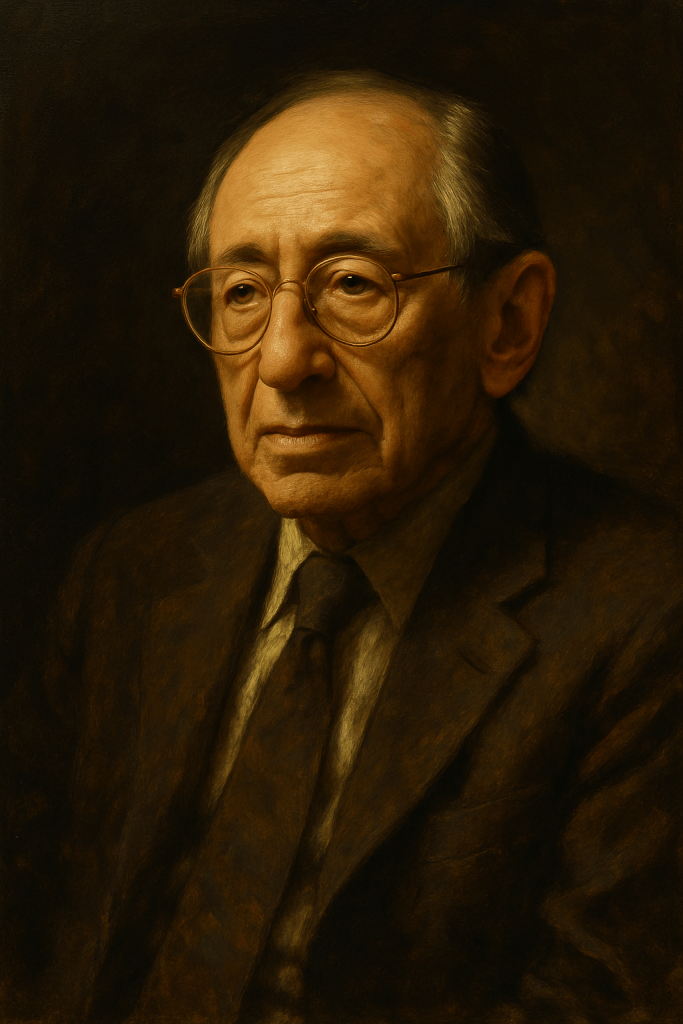
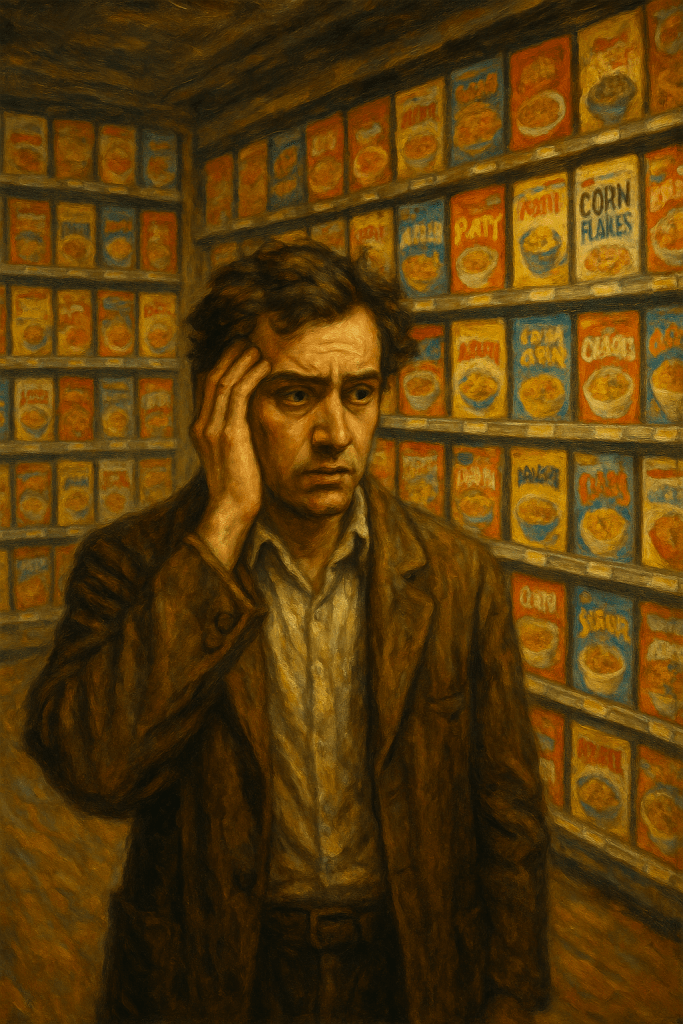

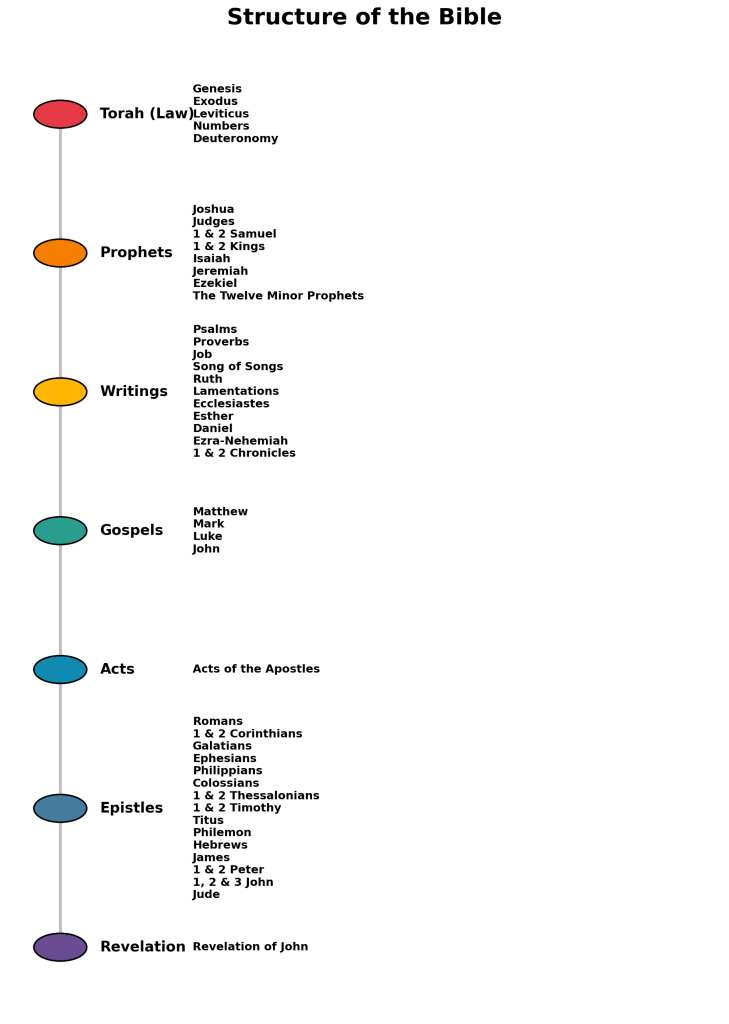


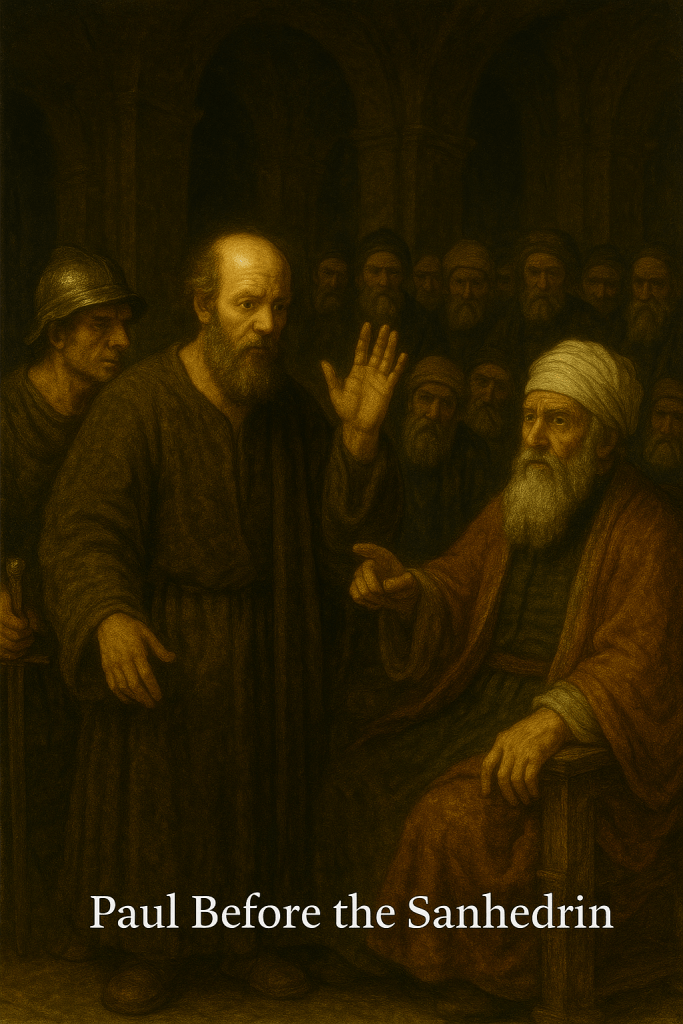





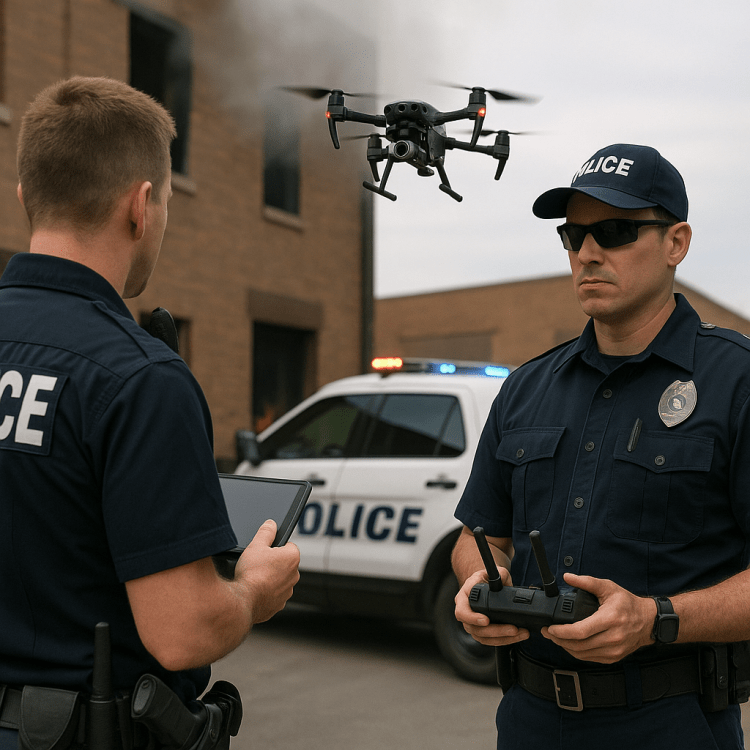







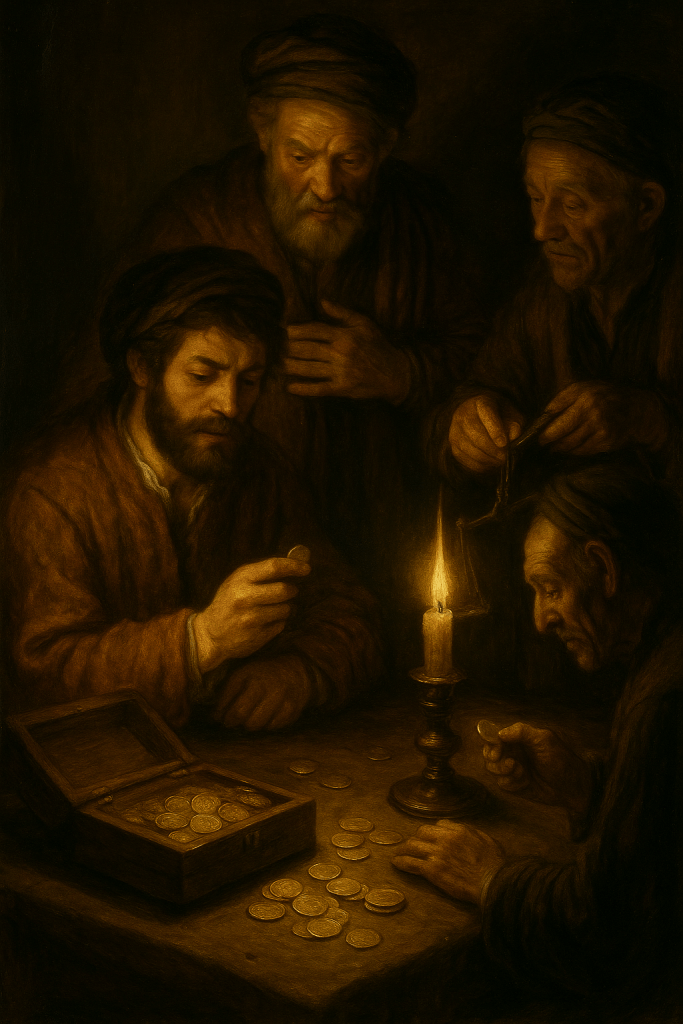
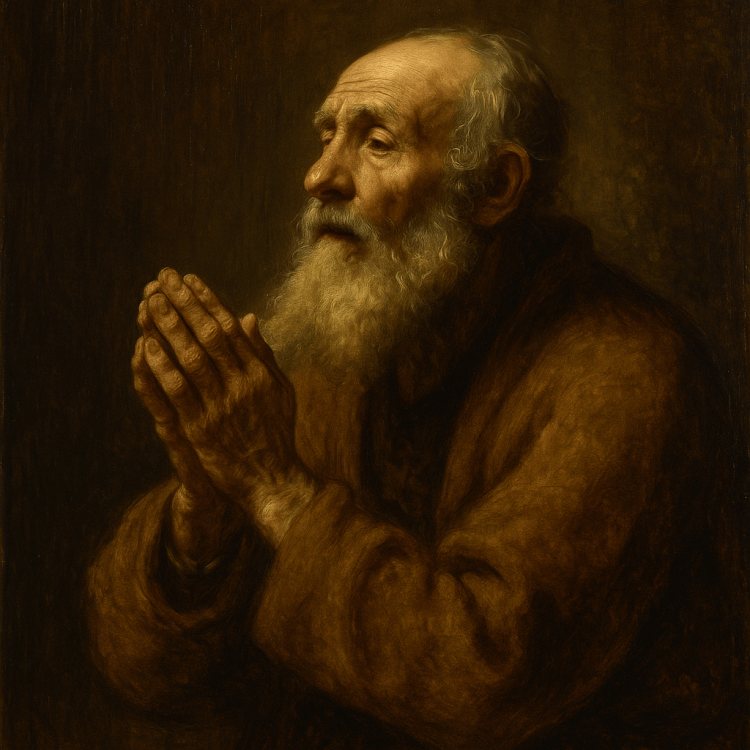


 Let's Talk About It, Lewis!
You must be logged in to post a comment.