Socrates Takes Flight: The Trial of the Sky

A collaboration between Lewis McLain & AI

A one-act play in nine scenes, written for laughter at 35,000 feet.


Characters

  • Socrates — The gadfly of Athens, newly acquainted with gate changes.
  • Gate Agent — A bureaucratic bard who sings in boarding groups.
  • Flight Attendant — Polite, unflappable, master of controlled chaos.
  • Captain (voice) — Calm, confident, occasionally philosophical by accident.
  • Passenger 1 (Businessman) — Deadline-driven, expense-report fluent, turbulence-averse.
  • Passenger 2 (Student) — Philosophy fan with noise-canceling optimism.
  • Sky Marshal — Serious guardian who’s seen everything except this.

Scene 1 – At the Gate

The terminal bleeps. A monitor flashes “B12 → B72 → B12.” Socrates clutches a parchment like it’s a boarding pass.

Gate Agent: Sir, you cannot board with a scroll longer than our aircraft. It violates our overhead bin philosophy, which is minimalism with fees. If you like, we can check your wisdom to your final destination for a small fortune. I recommend the fortune; it travels better than wisdom these days.

Socrates: If wisdom must be checked, does that mean truth cannot be carried on? And if truth cannot be carried on, must it always be claimed after the journey like a battered suitcase? Perhaps this is why men leave airports grumbling that nothing they found inside was worth declaring. Tell me, do you also charge for the moral weight of a conscience?

Gate Agent: Only if it exceeds fifty pounds or your status level. Our elite members enjoy complimentary conscience allowance plus early boarding for their regrets. Basic economy travelers must compress guilt into a single personal item under the seat in front of them. You look like Group Nine, which is the group that boards when hope has already departed.

Socrates: Then today I shall learn humility, which I understand boards before all other virtues. If humility fits beneath the seat, I will keep it close to my feet where I can remember it. But if hope has already departed, I trust it will save me a seat in the heavens. Now, where does Group Nine stand to be told to stand somewhere else?


Scene 2 – Boarding the Aircraft

Bing! “Now boarding all livestock, musical instruments, and people who know a pilot.” Socrates steps aboard, eyes wide.

Flight Attendant: Welcome aboard! Please place your existential dread in the overhead bin and your carry-on under the seat. The laws of physics take off shortly; snacks will follow or possibly precede—time is a flat pretzel. Do you need help finding your seat or your purpose?

Socrates: I seek both: the seat because it is mine, and the purpose because I am told it is everyone’s. How is it that a ticket defines the worth of a place more than the person who fills it? And why do men scramble to claim twenty inches of sky-cushion like conquerors of a soft empire? Perhaps we should assign legroom according to virtue.

Flight Attendant: If virtue could buy an exit row, we’d be a monastery with seat belts. Instead, we have credit cards and loyalty tiers, which are like virtues you can swipe. For now, your purpose is 23B, which is the middle path between two armrests that will betray you. Philosophize facing forward, and try not to question the tray table’s truth value.

Socrates: Very well; I will accept the middle seat as the narrow way that leads to enlightenment or elbow wars. If I must share armrests, I shall be generous and claim them only in theory. Should turbulence arise, I will practice detachment from all things that rattle. And if the pretzels disappoint, I shall inquire whether disappointment is baked in salt.


Scene 3 – Takeoff

Taxiing. The plane hums like a beehive that studied engineering.

Passenger 1: Pardon me, would you mind fastening your seat belt before my blood pressure achieves cruising altitude? I find that physics works best when everyone agrees not to float. Besides, the captain gets nervous when philosophers test gravity without consent.

Socrates: If a strap saves me from the consequences of velocity, then I accept its embrace like a prudent friend. Still, I wonder: does safety spring from the belt itself, or from the shared promise that we will not attempt foolish leaps? Perhaps the belt is merely the visible sign of an invisible social contract. Either way, I will buckle up before truth becomes airborne.

Passenger 1: Excellent—thank you for your cooperation and your metaphor, which I’ll file under “in-flight entertainment.” While you’re at it, keep your seat upright so the laws of recline do not ruin my laptop. We can test your theories after we reach a place where my presentation isn’t the fragile thing between us and unemployment.

Socrates: I, too, will keep my back straight, because dignity is posture in moral form. I promise not to crush your productivity unless your productivity crushes justice. If the gods intended us to recline without consent, they would have issued us chaise lounges. For now, let us ascend in courtesy as well as altitude.


Scene 4 – In-Flight Dialogue

Ding! Seat-belt light off. People perform the ancient dance of the aisle shuffle.

Passenger 2: Master Socrates, I’ve read you in freshman comp where wisdom wrestled comma splices and lived. Is it true that the unexamined life is not worth living, or can one at least enjoy the peanuts? Also, is the Wi-Fi a form of knowledge or just a paid illusion that loads slowly?

Socrates: The unexamined life is like unsalted pretzels: chewable, but why? As for Wi-Fi, it is a tunnel of shadows in which men chase puppies and stock tips, believing the refresh wheel to be a god. Knowledge requires more than a signal; it demands the courage to ask your browser why it fears the truth. But I admit, a cat video properly framed can suggest the Forms.

Passenger 2: That’s comforting, because I just downloaded twelve lectures on metaphysics and one compilation of squirrels on jet bridges. I worry that I am a creature torn between Plato and autoplay. If you see me scroll too far into nonsense, please tug my sleeve like a gentle Socratic notification. I will resist, though the algorithm is persuasive like a free upgrade.

Socrates: I shall be your upgrade to reality, which includes legroom for the soul. When the algorithm whispers, ask it to define the Good without selling you a bundle. If it cannot, feed it peanuts and pat it on the head. Then return to your metaphysics, where squirrels fear the syllogism.


Scene 5 – The Interrogation

Whispers ripple: “He’s questioning aerodynamics.” The Sky Marshal appears with practiced calm.

Sky Marshal: Sir, I’m here to ensure that everyone arrives safely with their bodies, ideas, and armrests in original condition. I’m told you’ve been interrogating lift and drag like witnesses at a trial. Are you planning to disturb the peace, or just the definitions?

Socrates: I disturb only the pretense of knowledge, which I assure you multiplies faster than pretzel dust. If lift truly lifts, it will not fear my questions; if drag truly drags, it will not pout when I ask where it is going. I do not fight the air; I flirt with it until it tells me who it is. Should that be a crime, I request a window seat at my arraignment.

Sky Marshal: Understood—free speech is welcome as long as it remains seated with the seat belt fastened. Consider this a friendly advisory that metaphors can trigger turbulence in the susceptible. Please keep your inquiries inside your inside voice and outside the cockpit. When in doubt, imagine the captain grading your questions for extra credit and proceed accordingly.

Socrates: A wise limit—like speed, which is delightful until it is not. I will keep my questions buckled, stow my rhetoric, and remain upright in logic. Should my curiosity spill into the aisle, I will mop it up with irony. You have my word, which is the only carry-on I never check.


Scene 6 – The Captain Speaks

Intercom crackles with confident baritone.

Captain (voice): Ladies and gentlemen, this is your captain speaking from a small room full of buttons I pretend to understand. We’re flying over a geography quiz you can’t pass without the map, and conditions ahead are smoother than airport jazz. Also, to the philosopher in 23B: I appreciate the interest in first principles; we’ll be demonstrating Aristotelian final cause when we land. In the meantime, sit back, relax, and let necessity be the mother of invention and our on-time arrival.

Socrates: A fine ruler who conducts with both reason and rhythm. He admits his limits, jokes with grace, and promises what he can actually deliver—smooth air and a destination. Such men should govern cities, or at least their airspace. If he seeks a senate, I will nominate him while remaining loyal to my pretzels.

Passenger 2: He sounds like the kind of teacher who curves the grade and still makes you earn it. Imagine a city where the loudspeaker told the truth with charm and gave snacks. People might stop shouting and start chewing thoughtfully. I would vote for any politician who served complimentary honesty with a lime wedge.

Socrates: Then we agree that leadership is service with altitude. The captain commands by making trust feel natural, which is rarer than free checked bags. If only the Agora had seat belts and a beverage cart, Athens might have behaved. Alas, democracy never found a decent tray table.


Scene 7 – The Restroom Debate

Lavatory light goes from VACANT to OCCUPIED to a moral dilemma.

Flight Attendant: Sir, the lavatory queue is a fragile ecosystem balanced by patience and small talk. Please form a line like a polite question mark and not a chaotic exclamation. Also, the sink is a suggestion, the floor is a memory, and the door must lock or everyone will achieve unwanted enlightenment.

Socrates: Scarcity is the mother of manners; I see it now in stainless steel. When men share too few doors, they learn to knock gently on wisdom before barging in on truth. The lock is a covenant between vulnerability and civilization. I will honor it as if it were a treaty written on a tiny metal slide.

Passenger 1: And I will respect your treaty as long as you keep your closing arguments under two minutes. There is a line of citizens behind you with claims more urgent than syllogisms. May the soap dispense fairly and the faucet respond to human touch. If not, we’ll add plumbing to the list of things that need a philosopher-king.

Socrates: I shall be swift, for even arguments must yield to anatomy. If the faucet judges me unworthy, I will repent and try the other hand. Should the soap be stingy, I will appeal to its better angels. And if the fan roars, I will accept it as a chorus of hygienic furies.


Scene 8 – Approach and Landing

Seat-belt light on. Windows glow with civilized horizon.

Captain (voice): Folks, we’re beginning our descent into Dallas, the city that invented “almost there.” Weather is polite, winds are friendly, and the runway has agreed to meet us halfway. Please return tray tables to their natural law position and contemplate your choices.

Passenger 1: This is the moment I love: the gentle surrender of speed, the wheel’s quiet handshake with the earth, and the collective exhale when physics keeps its appointment. I forgive the middle seat, the Wi-Fi, and even your metaphors. If my bag shows up quickly, I will believe in providence.

Socrates: Landing is a parable about our lives pretending not to be a parable. We descend with trust, we align with hope, and we settle with a bump of reality that reminds us our wheels were made for ground. Today I learned that courage can have an aisle seat and patience can stow overhead. If providence brings your bag, let us tip our hats to the baggage handlers of fate.

Passenger 2: And if providence loses it, we will call it apatheia and rise above our material attachments. Still, I hope my socks made the trip; they’re not Stoics yet. When we stop, I’ll let you exit first because your briefcase looks like it has meetings tomorrow. Mine contains only ambition and a granola bar.


Scene 9 – Arrival

Ding! People stand too soon, achieving a brief illusion of progress.

Flight Attendant: Welcome to Dallas, where local time is whatever your watch says after the sprint to baggage claim. Please open overhead bins carefully, as your aspirations may have shifted during flight. If you enjoyed our service, tell your friends; if not, please tell your enemies to fly us instead.

Socrates: You have shepherded a sky-flock with grace, which is rarer than an on-time coffee. I will tell my friends and my enemies alike, for both need pretzels, and the plane is a floating seminar in patience. Should you ever tire of clouds, Athens would make you a hero with a whistle. Until then, keep ruling your aisle like a wise queen of narrow carpets.

Flight Attendant: Flattery will get you an extra napkin and the knowledge that you’re my favorite philosopher today. If you write a five-star review in iambic pentameter, we’ll name a beverage after you called “The Socra-Tea.” It’s just hot water with questions. Safe travels—and remember to take all truths and trash with you.

Socrates: I depart with my questions, which fit under any seat, and my gratitude, which does not. May the gods grant you short taxi times and generous armrest neighbors. If I ever return, I will bring more scroll and less carry-on. Farewell—may your skies be as smooth as your sarcasm.


Epilogue – “Reason’s Flight”

Terminal window. Socrates watches a plane lift like a well-timed punchline.

Socrates: I have discovered that airports are the gymnasiums of the soul, where patience does cardio and humility lifts other people’s bags. The gods hid wisdom in Group Nine to teach us to smile at futility and call it boarding. And though philosophy claims to love reason, it apparently loves peanuts more, which I respect in a system based on incentives. If truth flies business class, I am content in coach, because comedy sits everywhere—and laughs loudest on landing.

From Shadows to Saints: The Journey from Halloween to All Saints’ Day

A collaboration between Lewis McLain & AI


I. The Night of Watchfulness

As October wanes and the year itself begins to dim, the world seems to hold its breath. Leaves fall, winds change, and candles flicker in carved pumpkins along neighborhood streets. Halloween — or All Hallows’ Eve — arrives not merely as a night of costumes, but as an echo of something ancient and holy.

In its earliest form, it was a vigil. A watch in the night before the dawn of All Saints’ Day. The faithful gathered to remember that the boundary between this world and the next is not one of fear, but of faith — that life and death are both within the care of God.

II. Ancient Roots, Sacred Renewal

Long before the word Halloween was ever spoken, Celtic peoples marked the season with Samhain, a festival at the end of harvest when darkness grew long and the veil between worlds felt thin. Fires burned to ward off evil, and people wore disguises to confuse spirits.

When Christianity spread through Europe, the Church did not erase this custom — it redeemed it. Pope Gregory III moved All Saints’ Day to November 1, and the evening before became All Hallows’ Eve. The night of fear was transformed into a night of faith, its bonfires re-kindled as candles of hope.

III. Masks and Meaning

Our modern costumes and masks are descendants of that ancient practice, but they carry a deeper symbolism still. Every human being wears invisible masks — pride, pretense, self-protection — that can be harder to remove than any Halloween disguise.
In this sense, the holiday becomes a mirror. Beneath the painted face and laughter, it asks: Who am I beneath the mask? What light still burns in me when the candles go out?

IV. Light in the Darkness

Christians have always understood darkness not as a final reality, but as the stage upon which light reveals its strength. A candle in a pumpkin, a lantern on a porch, a hymn sung in a midnight vigil — all proclaim the same truth: The light shines in the darkness, and the darkness has not overcome it.
If All Saints’ Day celebrates the victory of the redeemed, then Halloween reminds us that we are still on the journey — still wrestling, still choosing, still learning to trust the light that leads home.

V. The Vigil and the Dawn

In the earliest centuries of the Church, All Hallows’ Eve flowed naturally into All Saints’ Day. The faithful kept watch through the night, remembering the martyrs and confessing their own need for grace. Then, as dawn broke, they celebrated communion — the union of the Church on earth with the Church in heaven.

The two observances were never meant to be divided. One faces mortality; the other proclaims immortality. Together they form a sacred rhythm — a passage from fear to faith, from remembrance to rejoicing, from shadow into everlasting light.

VI. Fear Redeemed

The story of Halloween to All Saints’ Day is a story of redemption. Fear is not banished by pretending it doesn’t exist; it is conquered by love.
Saint John wrote, “Perfect love casts out fear.” The saints we honor on November 1 are not people who never felt fear — they are people who felt it, faced it, and followed Christ through it. They turned their nights into dawns, their trials into testimonies, their wounds into windows through which the light of heaven still shines.


VII. The Communion of the Holy

When we gather for All Saints’ Day, we are not alone. We join a vast unseen congregation — ancestors, apostles, martyrs, and ordinary believers whose names may be known only to God. They form a living circle of witness, stretching beyond time and place. The Church triumphant and the Church militant, heaven and earth, singing together in one great hymn of hope:

“For all the saints who from their labors rest…”

The pumpkins may fade, the costumes packed away, but the light remains — for the saints remind us that holiness begins not in perfection, but in perseverance.


VIII. Poem: Between the Candle and the Dawn

When night is deep and shadows call,
And laughter masks our mortal fall,
Remember, child, beneath the guise,
The soul still longs for paradise.

The candle flickers — so does breath,
Yet both defy the chill of death.
Between the candle and the dawn,
God keeps His vigil — fear is gone.

The saints once walked through nights like these,
Through storms and loss and trembling knees;
But every flame they dared to tend
Became the light that knows no end.

So lift your lamp, though winds may moan —
You walk with saints; you’re not alone.
For faith still burns where hope has shone,
Between the candle and the dawn.


IX. Closing Reflection

Halloween and All Saints’ are not opposites — they are a single pilgrimage of the soul. The first reminds us that death is real; the second assures us that death is defeated. One invites humility; the other proclaims glory. Together they teach us that every shadow is temporary and every saint was once a seeker — walking, like us, between the candle and the dawn.

The Divine Conspiracy: The Beatitudes and the Blessed Life in God

Suggested by Dr Bobby Waite; Written by Lewis McLain & AI

A Study Edition Inspired by Dallas Willard


🌄 I. Setting the Scene — The Mountain and the Message

It was early in the ministry of Jesus. Word of His healings and authority had spread through Galilee. Crowds followed—farmers, fishermen, soldiers, widows, and scholars—all hungry for something more than spectacle.

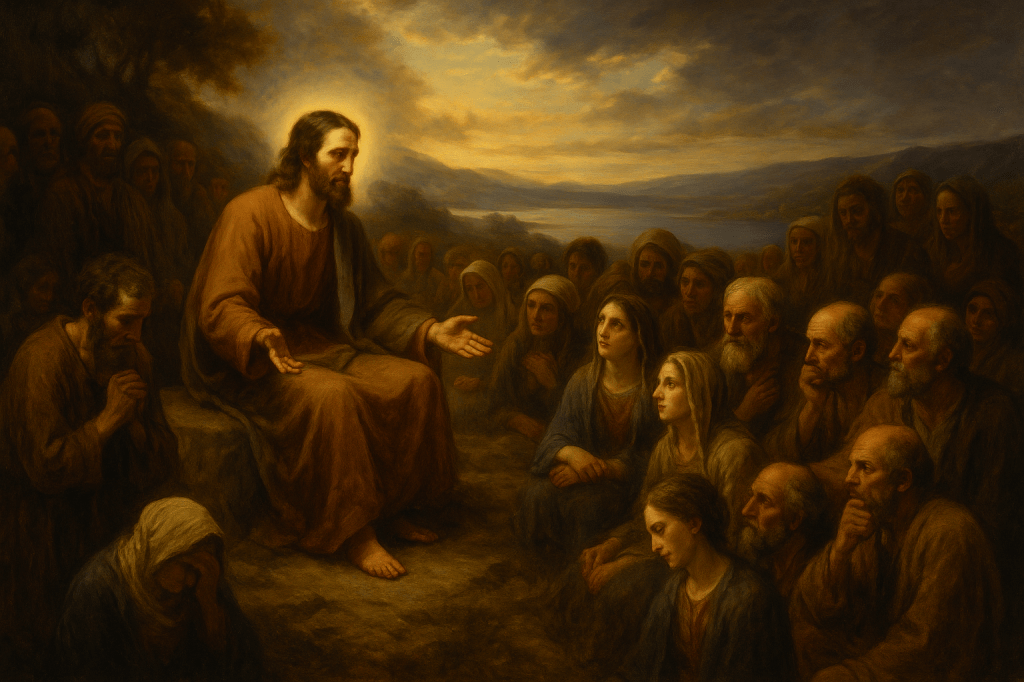
When He saw them gathering by the Sea of Galilee, Jesus withdrew to a hillside. The slope formed a natural amphitheater where sound carried on the breeze. He sat down, the posture of a rabbi ready to teach, and His disciples drew near. Behind them stood the multitudes—hopeful, skeptical, wounded.

This is the setting of the Sermon on the Mount (Matthew 5–7), the heart of the Gospel story where the Teacher begins to describe life under the rule of God. Like Moses ascending Sinai, Jesus now delivers a new law—not on stone tablets, but upon human hearts. Yet this Lawgiver does not shout from thunderclouds; He speaks softly, face to face.

The sermon opens not with command but with blessing. The Master looks at His disciples—men and women of no special rank—and calls them the seed of a new creation.

“Seeing the crowds, He went up on a mountain, and when He sat down, His disciples came to Him. Then He began to teach them.” (Matthew 5:1–2)

Thus begins what Dallas Willard calls “the divine conspiracy”—the quiet, redemptive invasion of heaven into the ordinary world through those who choose to live as Christ’s apprentices.


🕊️ II. The Heart of the Divine Conspiracy

Willard writes that Jesus’ teaching unveils a simple but radical truth: the Kingdom of God is available now. It’s not about escape to heaven later, but participation with God in the present moment. The Sermon on the Mount is therefore the curriculum for life in the Kingdom—not rules for unreachable saints, but descriptions of ordinary people transformed by extraordinary grace.

“Jesus’ teaching about the kingdom is not an invitation to wait for heaven later; it’s a call to live under heaven’s rule now.” — Dallas Willard


📖 III. The Beatitudes — The Great Reversal

Each Beatitude opens with Blessed—the Greek makarios, meaning deeply happy, whole, or flourishing. Jesus pronounces God’s favor upon those the world overlooks or despises. Willard teaches that these are not virtues to attain, but conditions where grace appears. They describe what life looks like when heaven’s power meets human weakness.


1. “Blessed are the poor in spirit, for theirs is the kingdom of heaven.” (Matthew 5:3)

To be poor in spirit is to know your need of God.
The self-sufficient rely on their own strength; the poor in spirit rely on grace.

Willard’s Insight:

“The poor in spirit are those who have learned that their life is not manageable on their own. They stand ready to receive the Kingdom as a gift, not as a wage.”

Reflection:
When have you discovered that self-reliance is not enough?
How did that humility become a doorway to grace?


2. “Blessed are those who mourn, for they will be comforted.” (Matthew 5:4)

Mourning is not weakness—it is sacred honesty.
Those who grieve over loss, sin, or injustice open their hearts to God’s healing compassion.

Willard’s Insight:
“The world says, ‘Get over it.’ Jesus says, ‘Bring it to Me.’ Mourning becomes holy when it leads us into the arms of divine comfort.”

Reflection:
What sorrow has drawn you closer to God?
How might you become an instrument of comfort to others?


3. “Blessed are the meek, for they will inherit the earth.” (Matthew 5:5)

Meekness is not weakness but power under control.
The meek trust God’s care more than their own control.

Willard’s Insight:
“The meek live without the need to manage others. They inherit the earth because they are content to let God govern it.”

Reflection:
Where do you sense God calling you to release control and rest in His authority?


4. “Blessed are those who hunger and thirst for righteousness, for they will be filled.” (Matthew 5:6)

This is the longing for the world to be set right—within and without.

Willard’s Insight:
“This hunger is evidence of life with God already stirring within you. He alone satisfies the appetite He awakens.”

Reflection:
What injustices make your spirit ache?
How can you channel that hunger into faithful prayer and action?


5. “Blessed are the merciful, for they will be shown mercy.” (Matthew 5:7)

Mercy interrupts the world’s cycle of revenge.

Willard’s Insight:
“The merciful dwell in a rhythm of grace—they forgive because they live forgiven.”

Reflection:
Who in your life needs mercy from you today?
How can compassion replace resentment?


6. “Blessed are the pure in heart, for they will see God.” (Matthew 5:8)

Purity of heart means singleness of desire—the will set wholly toward God.

Willard’s Insight:
“To be pure in heart is to will one thing: the good of God. When the eye of the soul is clear, everything becomes luminous with His presence.”

Reflection:
What distractions divide your heart?
How can simplicity of purpose restore your spiritual sight?


7. “Blessed are the peacemakers, for they will be called children of God.” (Matthew 5:9)

Peacemakers are builders of reconciliation, bearers of God’s family likeness.

Willard’s Insight:
“The peace of Christ is not the absence of conflict but the presence of creative goodwill.”

Reflection:
Where can you build bridges instead of walls?
How might you embody the Father’s peace in tense spaces?


8. “Blessed are those who are persecuted because of righteousness, for theirs is the kingdom of heaven.” (Matthew 5:10)

Faithfulness invites friction with the world’s systems—but God’s presence sustains the faithful.

Willard’s Insight:
“Persecution is not failure; it is confirmation that the Kingdom has taken root.”

Reflection:
When has standing for truth cost you something?
What courage grows in hardship?


9. “Blessed are you when people insult you, persecute you and falsely say all kinds of evil against you because of Me. Rejoice and be glad, because great is your reward in heaven.” (Matthew 5:11–12)

Now the blessings become personal—addressed to every follower.

Willard’s Insight:
“Joy in persecution is not denial of pain but recognition of purpose. You are living from an eternal horizon.”

Reflection:
How can you keep joy alive when misunderstood or maligned?
What eternal perspective steadies your heart?


🧭 IV. Discipleship as Apprenticeship

To Willard, discipleship means apprenticeship—learning to live your actual life as Jesus would live it if He were you. It is not belief alone but training of the heart. He outlines three essentials:

  • Vision – seeing the Kingdom as real and desirable.
  • Intention – deciding to live as Christ’s student.
  • Means – practicing disciplines that reshape the inner life (prayer, solitude, service, study).

This “curriculum for Christlikeness” transforms not just conduct but character.


🌿 V. The Hidden Life in God

The “divine conspiracy” is that God’s revolution happens quietly—from the inside out.
It unfolds in unseen obedience, ordinary kindness, unseen faithfulness. It is “hidden” because the Kingdom’s greatest victories are inward: forgiveness over hatred, humility over pride, patience over fury.

“The revolution of Jesus is one of character, and it proceeds in secret until it transforms everything.” — Willard

Those who live this way already share in eternal life—the with-God life that begins now and never ends.


💬 VI. Discussion & Application

  1. Which Beatitude most challenges your current view of “success”?
  2. How might the Kingdom of God reshape your response to suffering or insult?
  3. What practice could you begin this week to strengthen mercy, purity, or peace in your daily routine?
  4. How does Jesus’ personal instruction of His disciples encourage your own apprenticeship today?

🕊️ VII. Poetic Reflection — The Quiet Kingdom

On a hill above the waters, where Galilee’s winds still sigh,
He sat upon the green earth, as heaven leaned close by.
No trumpet sounded His Kingdom, no banners caught the sun—
Yet love began its quiet reign, and the world was being won.

He spoke not to princes or scholars, but to hearts that barely stand,
To fishermen, widows, wanderers—the dust of a weary land.
He called them blessed, not broken; He named them heirs of grace,
And light began to shimmer on each upturned face.

Blessed are the poor in spirit, who bring nothing but their need;
For God will clothe their emptiness and sow His living seed.

Blessed are the mourners, whose tears the Father keeps;
For He will bend beside them, and comfort while they weep.

Blessed are the meek, whose strength is calm and mild;
The earth will bloom beneath their hands, the humble reconciled.

Blessed are the hungry hearts, that crave for what is right;
They’ll taste the bread of justice baked in heaven’s light.

Blessed are the merciful, who let forgiveness flow;
They drink the cup of kindness only mercy knows.

Blessed are the pure in heart, whose eyes are clean and still;
They’ll see the face of God in every field and hill.

Blessed are the peacemakers, who end the ancient fight;
Children of the Father, they walk in holy light.

Blessed are the persecuted, whose faith the world disowns;
Their crowns are forged of suffering; their thrones are living stones.

And still He whispers softly above the clash and din:
“My Kingdom is among you; it grows from deep within.”

Not built of force or empire, not won by sword or gain—
It rises where the heart surrenders, and love alone shall reign.

The crowd went home in silence, but heaven had begun;
The meek looked tall, the mourners sang, the poor outshone the sun.
And though the ages darken, His promise still is true—
The Kingdom’s quiet power still moves in me and you.


🌅 VIII. Closing Thought

The Divine Conspiracy is the Gospel’s hidden heartbeat:
God’s Kingdom is not far away—it is available now.
To live as Jesus’ apprentice is to walk daily in the light of that reality,
to join the ongoing miracle of heaven quietly transforming earth.

Consider Your Ways — A Call to the People of God

A collaboration between Lewis McLain & AI; Influenced by Jody Gerber


📖 Introduction: Haggai and His Prophetic Moment

The book of Haggai stands like a trumpet blast in the closing decades of the Old Testament. Composed around 520 B.C., during the reign of Darius I of Persia, it records only four short prophecies—yet each is direct, dated, and divinely charged.

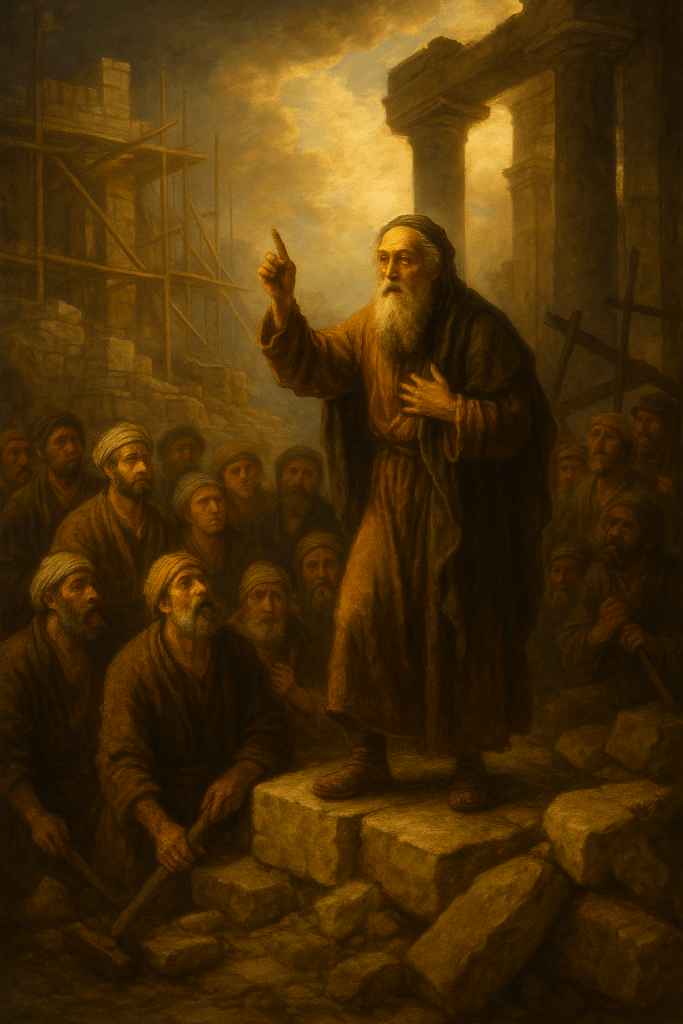
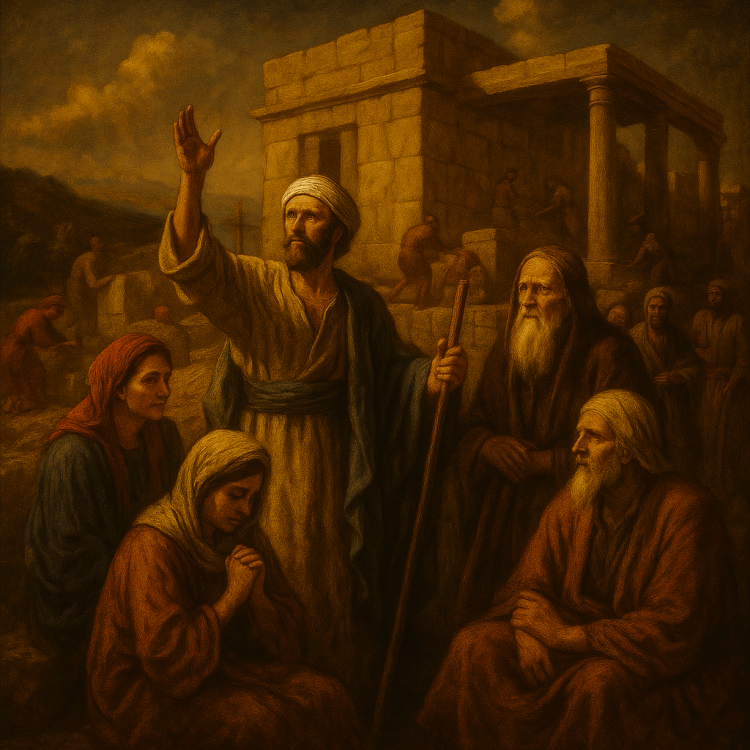
Eighteen years earlier, the first exiles had returned from Babylon under Zerubbabel and Joshua the high priest. They laid the foundation of the temple with zeal (Ezra 3:8–10), but after facing opposition and discouragement, the work stopped. For nearly two decades the temple lay in ruins while the people built fine homes and pursued personal prosperity. Into this complacency came Haggai’s piercing message:

“Now this is what the Lord Almighty says: Give careful thought to your ways.” — Haggai 1:5 (NIV) [Bible Gateway]

The Hebrew phrase śîm lēb literally means “set your heart upon.” God’s call was not simply to think but to turn the heart inward, to evaluate one’s path and reorder one’s priorities.

Haggai’s book unfolds in four precisely dated oracles:

  1. A Call to Rebuild the Temple (1:1-15)
  2. Encouragement for the Builders (2:1-9)
  3. A Warning About Defilement (2:10-19)
  4. A Promise of Blessing and Future Hope (2:20-23)

Through them, God declares that true worship is not architectural but relational—not measured in stone and cedar but in obedience and holiness. The dwelling He desires is not a structure of marble but a people of faith.


I. “Consider Your Ways” — The Prophetic Core

“This is what the Lord Almighty says: Give careful thought to your ways.” — Haggai 1:7 (NIV) [Bible Gateway]

“You have planted much, but harvested little. You eat, but never have enough… You earn wages, only to put them in a purse with holes in it.” (Haggai 1:6) [Bible Gateway]

The frustration of fruitless labor was God’s mercy in disguise. He withheld blessing not to punish but to awaken. “You expected much, but see, it turned out to be little… Because of my house, which remains a ruin, while each of you is busy with your own house.” (Haggai 1:9) [Bible Gateway]

When the people obeyed, “the Lord stirred up the spirit of Zerubbabel and of all the people, and they came and began to work.” (1:14) [Bible Gateway]
Reflection became repentance; repentance brought renewal.


II. Echoes Through Scripture — The Divine Rhythm of Reflection

1️⃣ In the Wilderness — Deuteronomy 8:2

“Remember how the Lord your God led you all the way in the wilderness these forty years, to humble and test you in order to know what was in your heart.” [Bible Gateway]

Testing is revelation. God already knows our hearts; the wilderness exposes them to us.

2️⃣ In the Psalms — Psalm 119:59-60

“I have considered my ways and have turned my steps to your statutes. I will hasten and not delay to obey your commands.” [Bible Gateway]

Reflection must lead to movement. Contemplation without obedience is sentiment, not sanctification.

3️⃣ In Exile’s Aftermath — Lamentations 3:40

“Let us examine our ways and test them, and let us return to the Lord.” [Bible Gateway]

Here is national repentance: collective soul-searching that restores covenant life.

4️⃣ In the Wisdom Tradition — Proverbs 4:26

“Give careful thought to the paths for your feet and be steadfast in all your ways.” [Bible Gateway]

Wisdom is not speed but steadiness—foresight rooted in reverence.

5️⃣ In Jesus’ Parables — Luke 15:17

“When he came to his senses…” [Bible Gateway]

The prodigal’s awakening is Haggai’s sermon in story form: conviction that leads home.

6️⃣ In Christ’s Letters — Revelation 2:5

“Consider how far you have fallen! Repent and do the things you did at first.” [Bible Gateway]

From Moses to John, the call repeats: remember, repent, return.


III. The Church Is Not a Building

The temple in Haggai’s day pointed forward to something far greater—the living temple of the redeemed.

The True Meaning of “Church”

“And I tell you that you are Peter, and on this rock I will build my church, and the gates of Hades will not overcome it.” — Matthew 16:18 (NIV) [Bible Gateway]

The Greek ekklesia means “assembly” or “called-out ones.” It never refers to a building. As one commentary notes, “In the New Testament the church is always a people, never a place.” [Tabletalk Magazine]

A Living Temple of People

“You also, like living stones, are being built into a spiritual house to be a holy priesthood…” — 1 Peter 2:5 (NIV) [Bible Gateway]

Believers themselves are the stones, fitted together by grace, animated by the Spirit.

Members of God’s Household

“Consequently, you are no longer foreigners and strangers, but fellow citizens with God’s people and also members of his household…” — Ephesians 2:19-22 (NIV) [Bible Gateway]

Paul’s architecture is alive: Christ the cornerstone, the apostles and prophets the foundation, and believers the rising walls. Together they form a dwelling where God lives by His Spirit.

The Indwelling Presence

“Don’t you know that you yourselves are God’s temple and that God’s Spirit dwells in your midst?” — 1 Corinthians 3:16 (NIV) [Bible Gateway]

Not the bricks, not the steeple, but the living community of faith.
Helpful commentary puts it plainly:

“In summary, the church is not a building or a denomination. According to the Bible, the church is the body of Christ—all those who have placed their faith in Jesus Christ for salvation.” [GotQuestions.org]

And:

“We often hear that the church isn’t a building; it’s people. Church isn’t where you meet. It’s who meets.” [logos.com]

These reflections guard us from confusing the place of worship with the people who worship.


IV. The Cycle of Spiritual Renewal

StageScriptural ExampleMeaning and Application
Reflection“Give careful thought to your ways.” — Haggai 1:5 (NIV) [Bible Gateway]Self-examination exposes the distance between God’s priorities and ours. It is the spiritual inventory that precedes revival.
Repentance“Let us examine our ways and return to the Lord.” — Lamentations 3:40 (NIV) [Bible Gateway]Reflection without repentance leaves us unchanged. Repentance re-aligns our hearts and restores communion with God.
Renewal“The Lord stirred up the spirit of the people.” — Haggai 1:14 (NIV) [Bible Gateway]When hearts respond, the Spirit reignites vision and energy. Obedience becomes joy; service becomes worship.

This rhythm—Reflection → Repentance → Renewal—is the heartbeat of every true awakening.


V. Applying “Consider Your Ways”

Personal Life

We, too, may live in paneled houses while God’s work lies unfinished. Our modern “paneled houses” might be careers, comforts, or reputations—good things that crowd out the best. If we are restless though busy, fruitless though tireless, the Spirit whispers Haggai’s question again: Consider your ways. [Bible Gateway]

“But seek first his kingdom and his righteousness, and all these things will be given to you as well.” — Matthew 6:33 (NIV) [Bible Gateway]

Church Life

When we treat the church as a building rather than a body, we invert the gospel’s order. Programs replace prayer, facilities replace fellowship, and success is measured in square feet instead of souls. The early church had no cathedrals but changed the world because it carried Christ within. [Bible Gateway]

“These men who have caused trouble all over the world have now come here.” — Acts 17:6 (NIV) [Bible Gateway]

Let our sanctuaries serve our mission—not define it. The church is living architecture, built of souls, cemented by love.

National Life

“You expected much, but see, it turned out to be little.” — Haggai 1:9 (NIV) [Bible Gateway]

A nation that values prosperity above piety soon finds its harvest thin. When morality erodes, so does stability. “Righteousness exalts a nation, but sin condemns any people.” — Proverbs 14:34 (NIV) [Bible Gateway]


VI. Building with the Right Materials

“If anyone builds on this foundation using gold, silver, costly stones, wood, hay or straw, their work will be shown for what it is.” — 1 Corinthians 3:12-13 (NIV) [Bible Gateway]

Not every project is praiseworthy. Gold and silver represent truth and love—enduring virtues refined by fire. Wood and straw symbolize efforts done for applause or ease. The true measure of our work is not visibility but viability before God. [logos.com]

Every life is a construction site. Each day lays another stone on the foundation of Christ. To build well is to live with eternity in view.


VII. The Temple That Lives

When Haggai called Israel to rebuild, his goal was not architecture but adoration. God desired a people whose hearts were His dwelling. Today that dwelling is the church—the living temple of those redeemed by Christ.

The church is not a cathedral but a community; not a monument but a movement; not a place of brick but a people of breath.


🌿 Poetic Meditation

We are the stones that breathe and sing,
The temple not of brick but being;
Each life a wall, each heart a flame,
Together bearing Jesus’ name.
Not vaulted roof nor gilded spire,
But humble hearts that God inspires;
Consider, soul, the path you tread—
Build living homes where Christ is Head.


🙏 Prayer

Lord God, search our hearts and stir our spirits.
Help us to consider our ways.
Forgive us when we have treated church as a building rather than as Your body.
Teach us to live as Your people—united in Christ, filled with Your Spirit, building one another up in love.
Make us living stones in Your spiritual house, shining as Your temple in the world.
In Jesus’ name, Amen.

Morning Has Broken: The Song That Welcomed the Dawn

A collaboration between Lewis McLain & AI

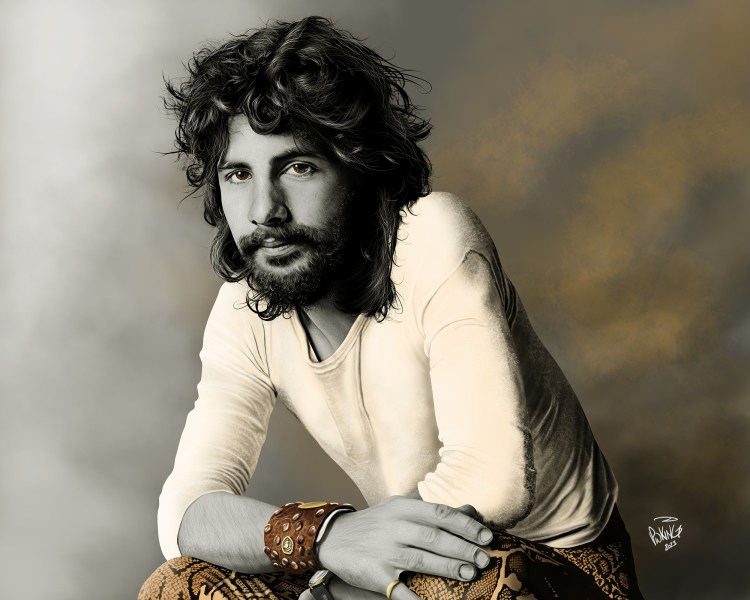
Oh, how I loved Cat Stevens from the first time I heard him. I saw him the first time when he performed in Fort Worth in the 1970s. It listened to his albums over and over. It was clear he was searching for spiritual clarity. He apparently found a solution for himself after his brother gave him a copy of the Quran. After his conversion, he gave away or destroyed all of his awards and guitars. He changed his name to Yusuf Islam. Decades later, his adult son found his guitar on the market and bought it. It is said that Yusuf immediately started playing. A few years ago, Linda and I flew to Washington, DC, where he played to an audience at the Kennedy Center. It was a wonderful trip back to hear his classics again. LFM


Morning Has Broken: The Song That Welcomed the Dawn

I. A Hymn Born in Simplicity (1931)

In 1931, British author Eleanor Farjeon was asked to craft new words for the traditional Scottish-Gaelic tune Bunessan (from the Isle of Mull). She wrote Morning Has Broken—three short stanzas that treat each sunrise as a fresh echo of Creation. Birds, dew, gardens, and “the Word” cast ordinary morning light as a sacrament of renewal. First printed in Songs of Praise (1931), the hymn traveled quietly through hymnals for decades.

II. Steven to Cat Stevens: Crisis, Silence, and Re-making (1968–1970)

Steven Demetre Georgiou—later known as Cat Stevens and today as Yusuf Islam—grew up over his father’s Greek-Cypriot restaurant in London, with a Swedish mother, a pencil and sketchpad never far from reach. By 18 he had a record deal; by 1967 he’d had pop hits and relentless touring. Then, in 1969, illness struck hard: tuberculosis with a collapsed lung. He was hospitalized for months and then sent into nearly a year of convalescence and isolation.

That enforced stillness became a hinge in his life. He read widely (mysticism, philosophy, scripture), sketched and wrote, questioned fame, and began composing the introspective songs that would define his second career: “Father and Son,” “Wild World,” “On the Road to Find Out,” “Into White.” When he returned, it was with a new sound—acoustic, intimate, spiritually searching—and a new partnership with producer Paul Samwell-Smith. The comeback albums followed in quick succession:

  • Mona Bone Jakon (1970): the quiet re-entry.
  • Tea for the Tillerman (1970): a masterpiece of spare folk-rock and spiritual longing.
  • Teaser and the Firecat (1971): the companion volume—gentler, sunlit, and home to “Moonshadow,” “Peace Train,” and “Morning Has Broken.”
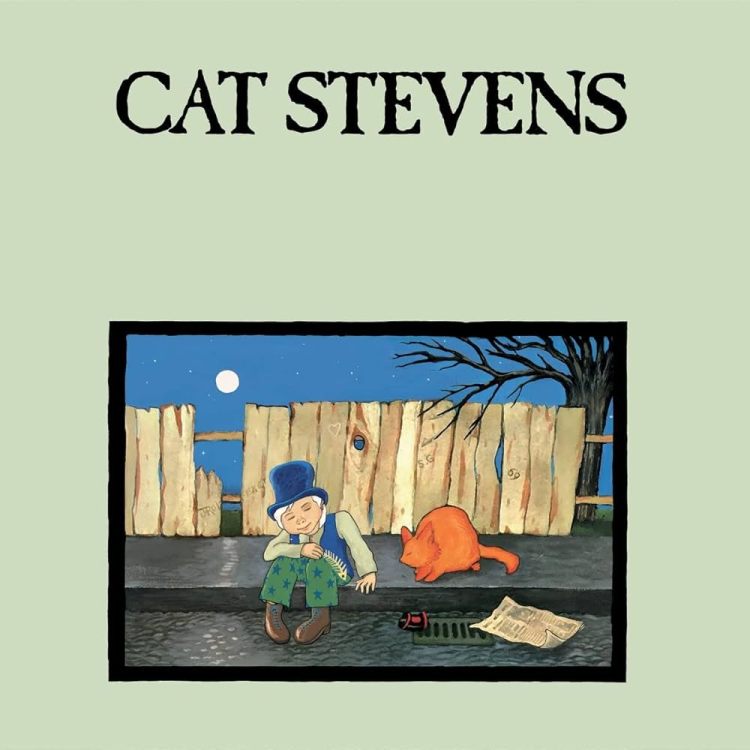
    Stevens even painted the cover art—a child (Teaser) and a cat (Firecat)—an outward sign of the homemade sincerity of the era.


III. Finding a Hymn in a Hymnal (1971)

As Teaser and the Firecat neared completion, Stevens and Samwell-Smith wanted one more track that sounded like gratitude. Leafing through a hymnbook, Stevens found Farjeon’s Morning Has Broken. The text was brief, without a pop chorus, but it said exactly what his convalescent soul had learned: each day is a divine fresh start. “It fell into my lap,” he later said—less an idea than a gift arriving right on time.

IV. The Recording: Piano Like First Light

The arrangement needed light. Enter Rick Wakeman, a young session pianist (soon to join Yes). He improvised the now-famous piano prelude and interlude—those flowing, ascending figures that feel like sun lifting fog. Acoustic guitar, a modest rhythm bed, and Stevens’ hushed vocal kept the hymn’s humility while giving it living warmth. (Wakeman was initially uncredited, a footnote he’s mentioned ever since—ironically fitting for a song about unadorned grace.)

V. Release, Reception, and Reach (1971–present)

Issued late in 1971, the single bloomed slowly and then everywhere—Top-10 in the U.K., No. 6 on the U.S. Hot 100, and No. 1 on Adult Contemporary radio. It became a rare bridge between sacred hymnody and popular song, sung at school assemblies and charting on secular stations; used at weddings, dedications, and memorials; and re-introducing Farjeon’s text to churches that had forgotten it. For Stevens, the song sits on the arc that runs from illness → inward search → art as gratitude → later faith commitments and humanitarian work. For listeners, it proved a pop song can simply be thank you and still move the world.

VI. What the Verses Say (Paraphrased and Interpreted)

Verse 1 — The first morning, again
Morning opens like the world’s first dawn; birds break the silence like that first bird. Let all our singing and this very dawn become praise—new life springing from God’s speaking.

Verse 2 — Rain, light, and the garden
New rain gleams in sun; first dew pearls on fresh grass. Praise for sweetness in the watered garden—made whole where the Holy One has walked.

Verse 3 — Light we share, life we begin
Sunlight is ours; morning is ours—children of the same Light seen in Eden. So let joy rise with each dawn: every morning is God’s re-creation of the day.

Coda (Stevens’ reprise on record)
The album performance circles back to the opening stanza—musically and theologically saying: the first morning returns with every sunrise.

VII. Why It Endures

  • Simplicity that shelters depth: Three small verses, vast theology—creation as ongoing gift.
  • A voice recovered from silence: After TB and a season of doubt, Stevens chose wonder. You can hear recovery in the restraint.
  • Piano that paints light: Wakeman’s intro has become the sound of “daybreak” for multiple generations.
  • Common grace: It belongs equally to church pews and kitchen radios, to choirs and children.

VIII. Closing

Morning Has Broken is the sound of someone who nearly lost breath learning to love breath again. Farjeon’s parish hymn found its pilgrim singer; Stevens’ long quiet found its prayer. And the rest of us found a way to say, with the first bird and the last chord: thank You for today.


Morning has broken like the first morning
Blackbird has spoken like the first bird
Praise for the singing, praise for the morning
Praise for them springing fresh from the world

Sweet the rains new fall, sunlit from Heaven
Like the first dewfall on the first grass
Praise for the sweetness of the wet garden
Sprung in completeness where His feet pass

Mine is the sunlight, mine is the morning
Born of the one light, Eden saw play
Praise with elation, praise every morning
God’s recreation of the new day

Morning has broken like the first morning
Blackbird has spoken like the first bird
Praise for the singing, praise for the morning
Praise for them springing fresh from the world

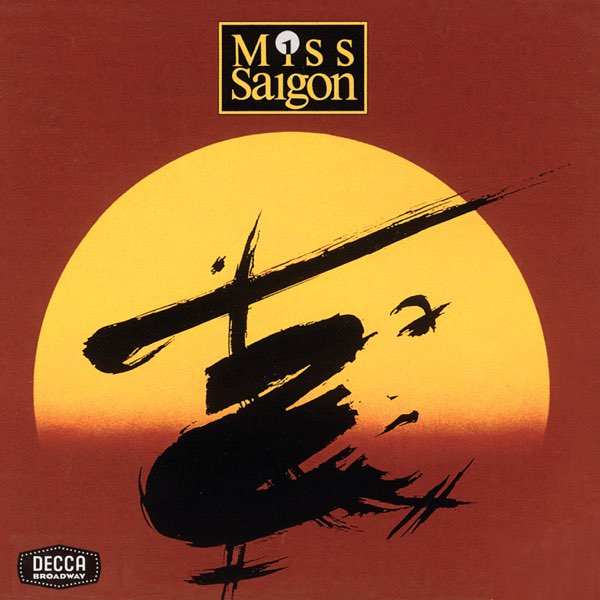
Miss Saigon: Love, Illusion, and the Mirage of the American Dream

A collaboration between Lewis McLain & AI

“You are sunlight and I moon, joined by the gods of fortune.”
“Sun and Moon”


This dramatic musical was so remarkable to me. I remember writing that it was the best I had ever witnessed at the time, and wondering if I would ever see a better play. I think I saw it three times. The first time was in NYC, and the other two times were in Dallas. They were different in a few ways. The Dallas version was even more profound in the way they handled the opening of the second act. I will never forget the players and emotional content. LFM


I. The World in Ruin, the Heart Still Beating

In Miss Saigon, the world is ending in slow motion. Helicopters thunder above the city, neon signs flicker over shattered streets, and the air hums with the machinery of empire. Yet in the ruins of Saigon, two hearts still find each other. Kim and Chris meet not in peace but in aftermath—he, a disoriented soldier of a collapsing foreign power; she, a displaced orphan forced into a bar called Dreamland. Around them, history howls. Within them, something eternal stirs.

Their love begins as an accident of war but unfolds like a parable of Eden after the Fall: purity glimpsed in a poisoned world. “You are sunlight and I moon,” Kim sings, echoing Genesis more than Puccini—light and darkness yearning toward wholeness, even as they know their union is impossible. The tragedy of Miss Saigon is not simply that love fails; it is that love, though true, cannot redeem the systems that contain it.


II. The Gospel According to Kim

Kim is among the most spiritually resonant heroines of modern theater—a Christ-figure clothed in the garments of an Asian peasant girl. Her purity is not naivety but faith: a conviction that love can sanctify even the most defiled landscape. When Chris leaves her amid the chaos of Saigon’s fall, Kim does not curse him or her fate. She gathers their son, Tam, and holds him as both burden and promise. “You will see me through another season,” she seems to tell God, echoing Mary sheltering the child Messiah in exile.

Years later, in Bangkok, when confronted by Chris’s American wife, Kim’s theology of love reaches its consummation. She chooses death not as surrender but as offering: “Now you must take Tam with you / And you must go on / I’m dying for your sake, my son.” In that moment, Miss Saigon transcends its setting. Kim becomes every mother who has loved into suffering, every believer who has poured out life for another’s salvation. Her sacrifice restores no empire and reforms no politics—but it restores meaning.

To love purely, the musical insists, is to suffer. Yet in that suffering lies a kind of resurrection. When Chris cries over her body—“How in one night have we come so far?”—we hear the echo of humanity’s ancient lament: love arrives divine and departs crucified.


III. The Engineer and the False Heaven

“The American Dream / Is gonna make my dream come true.”

If Kim represents the soul’s yearning for redemption, the Engineer embodies civilization’s addiction to illusion. He is the show’s dark chorus—half clown, half devil, half prophet—hawking the fantasy of America as the new Jerusalem of lust and consumption. His anthem, “The American Dream,” drips with irony: “They’ll have a club for all the rich to join / Where you can drive your Cadillac through the eye of a needle.” It is a parody of Scripture, a theology of greed replacing the Beatitudes with billboards.

The Engineer’s dream is the shadow twin of Kim’s faith. Both are migrants of hope; both seek deliverance. But where Kim’s vision demands self-sacrifice, the Engineer’s demands self-erasure. His dream is not of freedom but of becoming the very machine that once enslaved him. He worships America not as idea but as idol—its neon signs as stained glass, its dollar bills as sacraments. Through him, the musical indicts a modern form of empire: not territorial but spiritual, not conquest but consumption.

In the end, the Engineer does make it to America, but his triumph is hollow. He ascends the staircase of Ellis Island as if entering heaven, yet we hear no music of redemption—only brass and discord. The promised paradise is another illusion; the dream devours its dreamer.


IV. The Mirage of Salvation

The love between Kim and Chris is real; the salvation offered by nations and ideologies is not. That is the paradox at the heart of Miss Saigon. When Chris returns to find Kim years later, married and broken by guilt, his words in “The Confrontation”“You’re here—Oh my God, you’re here!”—carry the force of resurrection. But it is too late. The world they inhabited has no place for resurrections. Kim’s suicide is not despair but testimony: that no earthly dream can absorb the fullness of love. Her body falls between two worlds—Asia and America, heaven and earth—and her blood exposes the lie that either side could claim moral victory.

Boublil and Schönberg thus turn history into allegory. The fall of Saigon becomes the Fall itself: humankind’s expulsion from innocence, still chasing salvation in the mirage of progress. The helicopter that lifts the last Americans away becomes a steel angel guarding the gate of paradise—an emblem of the separation between what is real and what we wish were real.


V. The Music of Heaven and the Sound of Machines

The score of Miss Saigon is not mere accompaniment; it is theology in melody. The lush orchestration, the merging of Asian tonal motifs with Western harmonies, enacts the same cultural collision as the story itself. In “I Still Believe,” Kim and Ellen sing the same words across oceans: “I still believe you will return / I know you will.” Two women, one melody, one delusion—the human capacity to believe even against evidence. This duet is not about romantic hope but about the nature of faith: to believe is to risk being wrong, and to love is to be wounded by that risk.

Likewise, “Bui Doi” (“dust of life”) transforms what could be sentimental into prophetic lament:

“They are the living reminder of all the good we failed to do.”
It is confession as chorus—the entire nation singing its mea culpa. The orphans of Saigon become symbols of moral residue, the souls left behind by history’s machinery. The music soars, not to glorify but to accuse.


VI. “Bui Doi” — The Children of Dust and the Conscience of a Nation

At the opening of the second act, the curtain rises not on Saigon or Bangkok, but on America’s memory—a stage transformed into a tribunal of conscience.
A single voice, John’s, steps forward beneath the glow of a projected photograph. His song, “Bui Doi,” erupts like thunder through the theater: a requiem, a sermon, and a national confession.

They’re called Bui-Doi.
The dust of life.
Conceived in Hell,
And born in strife.
They are the living reminder of all the good we failed to do.
We can’t forget
Must not forget
That they are all our children, too.

Like all survivors I once thought
When I’m home I won’t give a damn
But now I know I’m caught, I’ll never leave Vietnam

War isn?t over when it ends, some pictures never leave youmind.
They are the faces of the children the ones we left behind
They?re called Bui-doi.
The dust of life, conceived in hell and born in strife
They are the living reminders of all the good we failed to do
That?s why we know deep in our hearts, that they are all ourchildren too

These kids hit walls on ev?ry side, they don?t belong in anyplace.
Their secret they can?t hide it?s printed on their face.
I never thought one day I?d plead
For half-breeds from a land that?s torn
But then I saw a camp for children whose crime was being born

They’re called Bui-Doi, the dust of life conceived in hell and born in strife.
We owe them fathers and a family a loving home they never knew.
Because we know deep in our hearts that they are all our children too.

These are souls in need, they need us to give
Someone has to pay for their chance to live
Help me try

They’re called Bui-Doi.
The dust of life.
Conceived in Hell,
And born in strife.
They are the living reminders of all the good we failed to do.
That’s why we know
That’s why we know
Deep in our hearts
Deep in our hearts
That’s why we know
That they are all our children, too.

The Vietnamese phrase Bui Doi means “dust of life.” It names the children born of the war—half American, half Vietnamese—unclaimed by either world. But the phrase carries more than pity; it carries theology. In Genesis, humanity itself is formed from dust. To call these children “dust” is to recall creation and abandonment in a single breath. They are the living proof of divine image forgotten—the breath of life exhaled and left to drift.

John, once the soldier’s companion, now stands as the prophet. His voice shakes with the weight of unrepented sin:

“They are the living reminder of all the good we failed to do.”

That line cuts deeper than any artillery blast. It indicts not merely a nation but a civilization addicted to amnesia. The men’s chorus behind him—uniformed, disciplined, proud—becomes the choir of a guilty church. The horns sound like the trumpets of judgment; the snare rolls like the echo of marching ghosts. This is liturgy as lament, where patriotism and repentance collide.

Musically, the song is both anthem and elegy. The brass proclaims victory; the strings mourn the cost. The melody rises toward triumph but collapses into minor chords—hope bleeding into remorse. Boublil and Schönberg understood that guilt itself has rhythm, that moral awakening can be scored.

Philosophically, “Bui Doi” reframes the entire musical. It transforms Miss Saigon from personal tragedy to collective confession. Kim’s sacrifice in Act I was individual; this is national. Her love sanctified one child; this song pleads for all of them. In that sense, “Bui Doi” functions as the Mass of the piece—the moment when the audience, too, becomes congregation, murmuring its mea culpa in the dark.


VII. The Cinematic Mirror

In most major productions, “Bui Doi” is not sung to an empty backdrop but accompanied by film and photographs—documentary images of the real aftermath of war. As John sings, the theater dissolves into a moving archive: Vietnamese children of mixed heritage, refugee camps, faces pressed against wire and window.

This cinematic layer breaks the fourth wall. It shatters illusion and turns the audience into witness. The theater becomes a courtroom of conscience, the spectators no longer observers but participants in the confession.

It is one of the most striking multimedia sequences in stage history—fiction colliding with fact, melody colliding with memory. The children on screen do not sing, but their images form the silent choir beneath the orchestra’s thunder. When the camera pans across those faces and John intones,

“They are the living reminder of all the good we failed to do…”
the entire house falls still. The song becomes cinema, the cinema becomes prayer.

For a few minutes, Miss Saigon ceases to be a musical and becomes a moral documentary in song—a thunderous meditation on guilt, compassion, and the possibility of redemption through remembrance.


VIII. The Theological Horizon

Philosophically, Miss Saigon rests on one question:
Can love redeem a world built on illusion?

The answer is both yes and no. Kim’s love redeems her soul but cannot redeem the system. The Engineer’s illusion sustains his survival but damns his humanity. America itself becomes a metaphor for mankind’s restless migration toward false heavens—a new Babylon promising light but delivering neon.

In biblical terms, the musical is a modern Ecclesiastes. Everything is vanity: war, politics, even dreams. Yet amid that vanity, a single act of selfless love pierces the darkness. When Kim sings “The Sacred Bird” to Tam, she becomes both Mary and Magdalene—mourning and believing, broken yet beautiful.

Her death is not defeat but transcendence: she forces Chris to confront the cost of love, and through him, the audience to confront its own moral anesthesia. The play ends with Chris kneeling, unable to resurrect her, and the music fading into silence. That silence is judgment—the sound of conscience awakening.


IX. Conclusion: The Love That Outlives Empires

“And if you can forgive me now / For all the things I’ve done / Then I will be the one who’ll stay.”

Empires fall, dreams fade, illusions shatter—but love remains, not as sentiment but as wound.
Miss Saigon is not simply a retelling of Madame Butterfly; it is a spiritual reckoning. It asks whether humanity, in its hunger for progress, has forgotten the sacred art of sacrifice.

Kim’s death redeems nothing external—no nation, no system—but it redeems the meaning of love itself.
In her final act, she transforms the stage of war into an altar. The Engineer’s dream dissolves in irony, but Kim’s faith survives in silence. She proves that even in the rubble of civilization, the human heart can still whisper its prayer to heaven:

“You are sunlight and I moon / Joined here, brightening the sky.”

And for a moment, however brief, the audience feels that sky brighten—proof that art, like love, can still make light out of ruin.

Building Bridges in Early Childhood Special Education Programs

By Lindsey McLain, assisted by AI
lindseymclain17@gmail.com
Picture by proud Granddad as he listens to her stories!

Working with children with autism spectrum disorder is not just my career—it is my calling. My passion for special education began long before I entered the classroom as a teacher. In eighth grade at Faubion Middle School, I joined the Partners PE program—a life-changing experience that introduced me to the joy of working alongside students with disabilities. I didn’t know it then, but that program would be the beginning of finding my career.

Every day with my three- to five-year-old students reminds me that education is less about rigid lessons and more about relationships, trust, and patience. My years of experience supporting children of all ages with autism spectrum disorder, both in college and now in the classroom, have shaped the way I see teaching: as a bridge between worlds.


Trust as the First Lesson

Before I can expect children to learn letters, numbers, or colors, I have to show them that I am safe, consistent, and trustworthy. Building that relationship is the first lesson I teach, though I don’t do it with words. I do it with presence, with predictable routines, and with gentle encouragement. Only when a child trusts me can they begin to risk trying something new.

In my classroom, trust starts by connecting with what each child loves. Some of my students enjoy running and climbing on the playground, while others prefer sitting quietly with a favorite toy. Some love Eric Carle’s colorful storybooks, while others are captivated by anything with wheels or that flies. I use their preferences to build bridges—to join their world before asking them to join mine. When they see that I value what brings them joy, trust begins to grow.


Individual Needs, Individual Paths

No two children are alike, and no two learning journeys are the same. Some of my students need visual schedules to feel grounded. Others need sensory breaks to regain balance. Some thrive in structured play but struggle with transitions. My responsibility is to make sure every child is getting what they need. True fairness in special education isn’t sameness—it’s tailoring learning so that each child has a path forward.

I continue to learn how to adapt materials and instruction for my students. Recently, I was given the opportunity to go through an AAC (Augmentative and Alternative Communication) device training. Using what I learned, I now tailor communication to meet each student’s needs. Some of my students can access many words on their devices, while others focus on functional language—simple but powerful words like go, stop, and help. In the same classroom, I have children who can count to 100, read, and write simple words, and others who are still learning how to share preferred items or take turns. Each child’s growth is unique, and each one reminds me that progress comes in many forms.


Patience and the Pace of Progress

In the first month of school, my students were still learning to adjust to me as their teacher. They didn’t respond to my directions right away, and I quickly realized that relationships must come before expectations. In special education, we often say that progress is not linear—and it’s true. Growth happens at the student’s pace, not mine. Watching my students slowly build trust and routine has taught me to pause not just in my teaching, but in my own daily life. The slower I move, the more I notice the beauty in every little step forward.


Adapting Materials, Adapting Expectations

Every day I adapt. A worksheet might become a hands-on sorting activity, a storybook may come alive with picture cards, and a group activity might start one-on-one before a child joins peers. Adapting does not mean lowering expectations—it means clearing a path so the child can succeed. Flexibility is the tool that opens doors.

I’ve also learned that not all students learn best in the same way. Some benefit from tangible, hands-on experiences—holding real objects as they learn to identify them—while others respond better to visual supports like picture cards or digital images. For example, when working on identifying common objects, one child might need to touch and explore the physical item, while another can easily match it on a communication board. Differentiating materials this way allows each child to access learning in the way that fits them best.


Seeing Through Their Eyes

Teaching children with autism spectrum disorder means constantly trying to see the world through their eyes. What feels overwhelming to one child might be soothing to another. What looks like resistance may really be a need for predictability. The more I step into their perspective, the better I understand their needs—and the more compassion grows in me as a teacher.

Over time, I’ve learned that communication isn’t always spoken. Many of my students express their needs through subtle nonverbal cues—a shift in body language, a glance away, covering their ears, or beginning to pace. These moments often tell me more than words ever could. When I notice a child’s shoulders tense, their breathing quicken, or their focus fade, I know it’s time to pause. They may need a sensory break, help with a task, or simply a moment to feel safe again.

I’ve also come to understand that all behavior is communication. Sometimes a child might cry, run away, or throw items—not out of defiance, but out of frustration, fear, or an unmet need. Every action, whether it’s laughter, avoidance, or a meltdown, carries meaning. It’s my job to look beneath the surface and ask why a behavior is happening—what the child is trying to tell me through their actions.

Learning to read these signals has been one of the most powerful parts of my teaching journey. It reminds me that listening goes far beyond hearing words—it’s about observing, understanding, and responding with empathy. When I take the time to notice and respond with care, my students feel seen, supported, and understood.


Partnering with Families

I am also beginning to see the importance of resources for parents. Families often want to understand how to best support their children at home, and I’ve learned that open communication and sharing tools—like visuals, routines, and sensory supports—makes a huge difference. During my first parent-teacher conferences, I was able to share the progress I’d seen: new words, increased independence, and more engagement during group time. Seeing parents’ faces light up with pride reminded me why I love what I do.


Love, Smiles, and Joy

At the heart of my motivation is love—the love I give and the love I receive. It shows up in the smiles when a child recognizes me in the morning, in the laughter that bursts out during play, and in the quiet joy of a breakthrough moment. These children teach me as much about joy as I teach them about learning. Their small wins are also my wins. Their happiness, however fleeting, is a reminder of why I chose this path. Love is not just the motivation for teaching—it is the reward.

Now that I finally have a classroom of my own—two classes, ten students, and more to come—I feel the deep responsibility and joy of shaping a learning environment from the ground up. Every day brings new discoveries, laughter, and lessons. Watching my students love, smile, grow, and enjoy life just like all children do reaffirms that they are not defined by their challenges, but by their potential.


Celebrating the Small Wins

In my classroom, there is no such thing as a “small” win. Every word spoken, every step toward independence, and every positive interaction with a peer is cause for celebration. These victories remind the children—and me—that progress is real and possible. They build confidence and keep us moving forward together.

One of my favorite recent moments came during school picture day. One of my students was very nervous and hid their face when it was time for their photo. Their mother had been so excited to see their first school pictures and was eagerly looking forward to them. We decided to try again about an hour later, after the student had some time to feel calm and comfortable. This time, they walked up with confidence and gave the biggest smile. When their mother saw the photos, her face lit up with joy. That small moment reminded me that success doesn’t always come on the first try—sometimes it blooms quietly after patience, trust, and encouragement.


Conclusion: A Program of Hope

Teaching children with autism spectrum disorder is about more than academics. It is about dignity, relationship, and hope. My classroom is a place where every child can learn and grow at their own pace, supported and understood. It is a place where I adapt, celebrate, and most importantly—love.

McKinney ISD’s special education program is entering a new chapter with recent leadership changes, and I believe this will bring fresh opportunities for growth, collaboration, and advocacy. With continued focus on supporting teachers and families, we can keep building programs that meet every child where they are.

These children may see the world differently, but through their eyes, I have learned to see beauty, courage, and joy in ways I never imagined. Every day, I am reminded that teaching isn’t just about shaping their future—it’s about allowing them to shape mine.

Come to Me as a Child: The Invitation from Christ and Its Meaning Today

A collaboration between Lewis McLain & AI


Introduction: The Most Disarming Invitation

Of all the invitations Jesus ever gave, none is more tender or more revealing than His call to “Let the little children come to Me.” In a world that prized power, rank, and age, Jesus placed a child in the midst of grown men and declared that the way into His Kingdom was not through merit, intellect, or strength—but through simplicity of heart. The Gospels record this lesson several times (Matthew 18:1-5; 19:13-15; Mark 10:13-16; Luke 18:15-17), which tells us how central it is to the heart of the Christian life.


The Scene: Greatness Redefined

In Matthew 18, the disciples were debating who would be greatest in heaven. Their conversation revealed an adult obsession with comparison and hierarchy. Jesus interrupted their ambitions by calling over a small child—someone overlooked, unranked, and powerless.

“Unless you change and become like little children, you will never enter the kingdom of heaven.” (Matthew 18:3)

In one sentence, Jesus inverted the value system of His listeners. Greatness, He said, begins with humility. To “become like children” is to admit dependence and trust rather than display status. The Kingdom of God is not climbed into; it is received with open hands.

Reflection Questions

  1. What ambitions or comparisons most distract you from a childlike faith?
  2. How do humility and dependence challenge our culture’s idea of success?
  3. In what ways might “becoming smaller” actually enlarge your soul?

The Heart of the Matter: Childlike, Not Childish

Jesus did not praise immaturity, ignorance, or naivety. He praised childlikeness—qualities of heart that adults tend to lose: trust, wonder, forgiveness, curiosity, and the ability to be taught. A child depends without shame, asks without hesitation, and forgives without keeping score. These traits mirror the faith that connects us to God.

When He said, “Anyone who will not receive the kingdom of God like a little child will never enter it” (Mark 10:15), Jesus was describing an approach, not an age. The requirement is not to remain small but to remain soft—humble enough to receive grace instead of earning it.

Reflection Questions

  1. Which childlike quality—trust, wonder, forgiveness, curiosity—do you find hardest to retain?
  2. How can you cultivate teachability before God this week?
  3. What would your worship look like if you came with that childlike heart?

The Blessing: His Hands on the Children

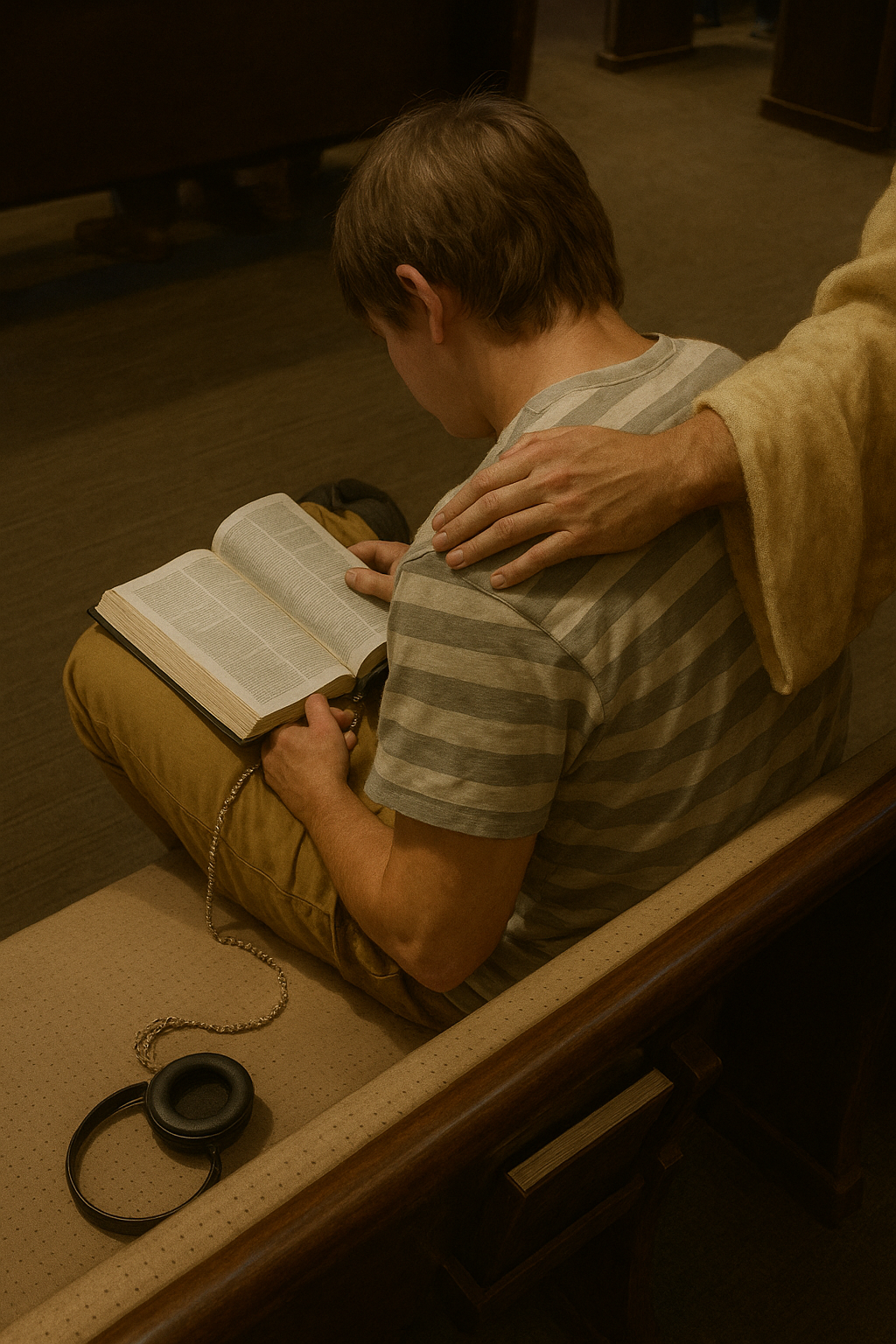
In both Mark 10 and Matthew 19, people brought children to Jesus, and the disciples tried to push them away. Perhaps they thought He had more important work to do. But Jesus became indignant—a rare word for His righteous anger. He insisted, “Do not hinder them.” He gathered the children into His arms, laid His hands on them, and blessed them.

That gesture still defines the heart of Christian ministry. To hinder a child—by neglect, cynicism, or hardness—is to obstruct the very image of faith God desires. Every time the Church welcomes the least, protects the vulnerable, or teaches with gentleness, it reenacts that moment of blessing.

Reflection Questions

  1. Who in your life might be “hindered” from coming to Jesus by neglect or discouragement?
  2. How can your words or presence become an open invitation instead?
  3. What practical steps could your church take to bless children and the childlike?

The Application: What It Means Today

1. Trust Over Control

Modern life prizes control—plans, schedules, data, mastery. Yet the Gospel calls us to trust. A child steps forward because the parent’s voice is enough. To follow Jesus is to release the illusion of control and to rest in His character.

2. Wonder Over Cynicism

Children see beauty where adults see routine. Faith flourishes when we regain our sense of wonder—when sunrise, Scripture, and song awaken gratitude instead of fatigue. Cynicism may sound sophisticated, but it cannot worship.

3. Relationship Over Performance

Children do not earn their place at the table; they belong by birth and love. In the same way, believers are accepted not by performance but by adoption into God’s family. Our worth is not negotiated—it is bestowed.

4. Presence Over Hurry

A child notices the moment; an adult is often elsewhere. Jesus invited children to come to Him—a call to be present. Prayer and worship are not tasks but encounters. To come as a child is to arrive unhurried, eager, and attentive.

Reflection Questions

  1. Where in your life are you trying to control what only God can direct?
  2. When was the last time you paused to experience pure wonder before God?
  3. How can you practice “presence over hurry” in your daily prayer or worship?

The Challenge: Becoming Small in a Big World

It is striking that Jesus did not tell the children to become like the disciples, but the disciples to become like the children. In every generation, the Church is tempted to mirror worldly hierarchies—titles, influence, eloquence, size. But the Kingdom belongs to those who kneel, not to those who climb. To be childlike is not to be weak but to be free from pretense. It is the posture that allows grace to enter.

Reflection Questions

  1. Where might pride or performance still keep you from kneeling?
  2. How does God invite you to rest in grace rather than achievement?
  3. What would your leadership, parenting, or ministry look like if shaped by childlike humility?

I love you, Ben, and will always be by your side.

Conclusion: The Open Arms of Christ

When Jesus said, “Let the little children come to Me,” He was not limiting His invitation to a specific age. He was revealing the doorway of heaven. The arms that once cradled children on a Galilean hillside would soon stretch open on a cross to welcome all of God’s children home.

To come as a child is to come with empty hands, honest eyes, and an open heart. In that humility, we find not only the entrance to the Kingdom—but the embrace of the King Himself.


A Prayer of Childlike Faith

Lord Jesus,
Teach me to come to You not with pride but with peace,
not with credentials but with curiosity.
Make my heart soft again—able to wonder, to trust, to forgive.
Strip away the layers of cynicism that I have called wisdom,
and restore to me the joy of simple belief.
As a child finds rest in a father’s arms,
let me find rest in Yours.
Amen.

Fund 999


A collaboration between Lewis McLain & AI

Expanded Municipal Conference Edition
(A municipal one-act for finance directors, auditors, city managers, and anyone who fears the phrase “per GASB …”)

Dramatis Personae

  • Socrates — “Temporary Fiscal Clarity Consultant.”
  • Clerk — keeper of keys, minutes, and mysteries.
  • Finance Director — calm, caffeinated, bindered.
  • Auditor — cheerful, bespectacled, powered by sampling.
  • Councilmember — earnest, reform-minded, occasionally literal.
  • Budget Analyst — Excel whisperer, existential worrier.
  • Grants Coordinator — compliance hobbyist, binder color-coder.
  • IT Person — speaks API, fears “Final_FINAL_v27.xlsx.”
  • Bond Counsel (Cameo) — invokes covenants, vanishes.
  • City Manager — thunder on loafers.
  • Stranger — walk-on comic angel of clarity.
  • Chorus — two staffers labeled “Chart of Accounts,” who sing footnotes and disclaimers.

Scene 1 — Records Room, 8:01 a.m.

(A pull-chain bulb. Filing cabinets labeled “Special Revenue (Ancient)” and “Projects We Definitely Finished.” A banker’s box glows faintly.)

Clerk: (whispering) I found it behind the 1998 copier lease and an unsigned MOU.
Socrates: (peering in) Ah! A relic with a number: Fund 999. The last digit thrice—the mystics will be unbearable.
Clerk: We numbered it so we’d remember it. We forgot it because we numbered it.
Socrates: Thus the first law of bureaucracy: name a thing, and it hides behind the label.

(Enter Finance Director with coffee.)

Finance Director: We don’t use Fund 999. It’s legacy. Dormant. Harmless.
Socrates: Dead or sleeping?
Finance Director: With funds there is “active,” “should’ve been closed,” and “awaiting discovery by auditors.”
Chorus: (soft hum) GASB fifty-four… five flavors… evermore…
Socrates: Five flavors? I hope they pair with coffee.
Finance Director: They pair with pain.

(Lights shift.)


Scene 2 — The Conference Room of Unfinished Business

(Whiteboard reads: “CLOSE-OUT PLAN — DRAFT OF THE DRAFT.” A plate of cookies labeled “For Council Only.”)

Budget Analyst: We think it began as a Special Revenue Fund.
Socrates: “Special” in the sense of purpose or in the sense of “we didn’t know where else to put it”?
Budget Analyst: (shrugs) Column G says purpose. Column H says “¯\(ツ)/¯”.
Grants Coordinator: I found a 2004 email: “Use Fund 999 for ‘Economic Vibrancy Initiatives.’”
Socrates: A phrase so broad that even philosophy can’t hug it.

Finance Director: (opens binder) Under GASB 54, fund balance has five flavors: Nonspendable, Restricted, Committed, Assigned, Unassigned.
Socrates: Like Greek virtues, but with footnotes and acronyms. Which flavor is 999?
Finance Director: (grim) It says Assigned.
Socrates: Assigned by whom?
Finance Director: People who no longer work here and possibly never existed.

Councilmember: If it’s assigned, can we un-assign it and buy sidewalks?
Socrates: Can a promise made at midnight guide a parade at noon?

(Enter Auditor, jolly and terrifying.)

Auditor: I sensed ambiguity. I came as soon as it balanced.

(They gather around a laptop that immediately requests updates.)


Scene 3 — Field Audit, with Flashlight

(A worktable of binders, highlighters, and a flashlight for dramatic effect.)

Auditor: Three classic reasons a fund like this persists:

  1. Revenue vanished, meetings continued.
  2. It became a parking lot for “temporary” due-to/due-from balances during the Bronze Age.
  3. Someone feared commingling like they fear cilantro—

(Door SLAMS. Enter City Manager, thunder on loafers.)

City Manager: (booming) WHO SPOKE THE C-WORD?
(Everyone freezes. Coffee trembles.)
City Manager: The C-word is worse than profanity! It shall never enter your mind nor cross your lips. Should you contemplate inter-fund cross-pollination, your tenure shall be concluded by end of day—by end of lunch if I’ve had decaf! We separate by purpose, by law, by covenant, by destiny! Are we clear?
All: Crystal!
City Manager: Carry on. (Exits like a thunderclap. The doorknob impelled the wall and won’t close until maintenance can come.)

Socrates: Behold, a policy sermon in one act.
Auditor: We shall say “cash cross-contamination.”
Grants Coordinator: I prefer “inter-fund salsa.”
Finance Director: Let’s say none of that in the minutes.

Auditor: As I was saying: trace origin, verify restrictions, clear “temporary” balances old enough to vote, and—if unconstrained—close or repurpose per policy.
Socrates: A funeral with paperwork.
Budget Analyst: And an obituary in Column J.

Chorus: (singing softly) Schedule of Expenditures of Federal Awards… SEFA, SEFA, hallelujah…


Scene 4 — The Council Work Session That Lasts Forever

(Slide: “Agenda Item 7: Fund 999 — Close-Out Options.” The clock reads 5 p.m. It will continue to read 5 p.m.)

Councilmember: Why do we have so many funds?
Socrates: Because the human heart loves categories. Also, reports paginate badly.
Finance Director: Funds aren’t piles of cash; they’re accounting entities. The question: does 999 still serve a public purpose with the correct basis of accounting, or is it an honorary title we forgot to retire?
Councilmember: And the risk?
Finance Director: Confusion, misreporting, and the slow death of transparency by a thousand “Other Financing Sources.”
Socrates: When is a Special Revenue Fund truly special?
Finance Director: When a revenue is legally restricted or formally committed. “We like it this way” is not a restriction.
Socrates: Capital Projects Fund?
Finance Director: For major construction tracked over years.
Socrates: Internal Service?
Finance Director: Shared services—fleet, IT, insurance—half science, half therapy.
Socrates: Enterprise?
Finance Director: Water, sewer, airport—where depreciation is theoretical until cash runs out.
Councilmember: So Fund 999 may be none of these.
Socrates: Or all in spirit and none in substance—Schrödinger’s Fund- you know, the quantum mechanics thingy.
Auditor: And remember: no cross-conta—
All: SHH!
Auditor: (solemn) The thing we do not name.

(Suddenly, the door opens. A man in jeans and a checked shirt leans in, microphone in hand.)

Stranger: You might be a redneck if the only thing you know about debits and credits applies to your bar tab!

(He tips his hat and leaves before anyone can speak. A beat of stunned silence.)

Budget Analyst: Was that Jeff Foxworthy?
Councilmember: Sure looked like him.
Finance Director: Who invited him to this workshop?
Clerk: Dunno, but he nailed our internal controls problem.
Socrates: A wandering comic sage—he spoke truth in accruals.
Auditor: And violated no procurement policy.
(They shrug and return to the slide.)


Scene 5 — The Archive Yields a Scroll

(The IT Person hustles in with a USB drive labeled “Do_Not_Delete.”)

IT Person: I found the creation memo in a retired share. Also twelve copies named “Final.”
Budget Analyst: (reading) “Fund 999 established to collect developer contributions for ‘Vibrancy Improvements’: benches, trees, and public art—until expended.”
Grants Coordinator: That smells like Restricted—by agreement, maybe even by location.
Finance Director: If contribution agreements limit geography and purpose, the money can’t fund sidewalks three miles away or festival confetti.
Socrates: The fund’s soul is not empty; merely mislabeled.

Auditor: Proposed remedy:

  • Inventory balances; tie dollars to source agreements and zones.
  • Finish intended projects or amend agreements in public.
  • Anything orphaned goes to the closest lawful purpose via resolution, with a bright-line audit trail.

Councilmember: And if any dollars touched bonds?
(Enter Bond Counsel like a thundercloud.)
Bond Counsel: Then behold private use and spend-down rules. One does not mix—
All: SHH!
Bond Counsel: —one does not cohabit bond proceeds with things best left separate. (Vanishes.)
Socrates: A god descended, spoke in acronyms, and departed.


Scene 6 — The Ritual of Reclassification

(Whiteboard now reads: “Close-Out Steps (No New Mysteries).”)

Finance Director:

  1. Document the origin — revenue source, legal constraints, geographic limits.
  2. Reconcile balances — clear “temporary” due-tos/froms and identify encumbrances older than our interns.
  3. Reclassify fund balance — from “Assigned” to Restricted where supported; from myth to Committed via Council action; true orphans to Unassigned in General Fund—but only if truly free.
  4. Council resolution — honor original intent, specify projects, authorize closure or continuation in a proper fund.
  5. ERP updates — lock Fund 999; migrate remaining activity with a clean audit trail and a change log longer than the Iliad.
  6. Public report — plain-English: “Where it came from, where it’s going, why it’s right.”

Auditor: And when you close it, do not create a brand-new “Miscellaneous Special” for leftovers. That’s like cleaning your desk by buying a bigger drawer.
Budget Analyst: (guilty) Drawer 4 is full.

Socrates: Adopt a Fund Rationalization Policy:

  • Sunset clauses (“close within 24 months of project completion”).
  • Criteria for when a special revenue fund is warranted vs. a department in General.
  • An annual Fund Cemetery Review: who can be merged, closed, or resurrected only with cause.

Finance Director: (scribbling) I’ll title it “The No New Mysteries Act.”
Grants Coordinator: With an appendix: “Words We Don’t Say.”
All: (in unison) The C-word.


Scene 7 — The Public Hearing

(A citizen with a stroller; a teenager in a marching band shirt; a retiree holding a sapling.)

Councilmember: Tonight we confess: sometimes we created complex things for simple purposes, then forgot the purpose. We bind ourselves to clarity.
Citizen: Does this mean the benches and trees are finally coming?
Finance Director: (smiles) In the right places, for the right reasons, with the right dollars.
Socrates: If a city can discover the meaning of “assigned,” it can surely plant a tree.

Chorus: (like a lullaby)
Nonspendable for what cannot be spent,
Restricted by law and covenant;
Committed by council’s earnest vote,
Assigned by those who mind the float;
Unassigned to cushion rain…
and never hide your funds again.


Scene 8 — Epilogue in the Records Room

(The box labeled “Fund 999” now bears a red tag: “CLOSED—SEE RES. 2025-117.”)

Clerk: Will there be others like it?
Socrates: Anything built by people is half cathedral, half maze.
Finance Director: But now we keep a map—and a list of words we do not speak.
Auditor: See you next year. Fewer legends, more sidewalks.
(They nod. The bulb clicks off.)


Closing Hymn (Tempo: Workshop After 5 p.m.)

Verse 1
We opened every ledger, we traced the oldest thread,
Found dollars softly sleeping in the archives of the dead.
We numbered them with reverence, we labeled them with care,
Then closed them with a policy and sunlight everywhere.

Chorus
Oh sing the five fund flavors, in balance true and kind:
Restricted, Committed, Assigned, Unassigned!
And when the auditors arrive, we greet them with a grin—
For legends fade to footnotes when the policies begin.

Verse 2
We honored covenants sacred, we planted trees at last,
We cleared the “temporary” items from the echoes of the past.
If ever funds grow labyrinths on shelves we cannot see,
We’ll ask the simplest question first: “What is the purpose, be?”

Chorus (repeat)


Quick Reference

  • GASB 54 Fund Balance: Nonspendable / Restricted / Committed / Assigned / Unassigned
  • Special Revenue Fund: Use only for legally or formally constrained revenues.
  • Capital Projects Fund: Track major construction across years.
  • Internal Service Fund: Shared services; mind rate setting and net position.
  • Enterprise Fund: Business-type; depreciation is real (and so is cash).
  • Close-Out Steps: Origin → Reconcile → Reclassify → Council Action → ERP Migration → Public Summary.
  • Policy Fixes: Sunset clauses; annual fund rationalization; bright-line handling of orphans; glossary of “Words We Do Not Say.”

Staging & Use Notes

Run time ≈ 15–18 minutes. Cast 8–10. Props: banker’s box, scary binder, whiteboard, pull-chain bulb, one cookie labeled “For Council Only.”
Handout: Close-Out Checklist + Five Flavors explainer.


Psyche Revived by Cupid’s Kiss

A collaboration between Lewis McLain & AI (more from the three visits Linda & I had to the Louvre with high school students from Trinity Christian Academy).

Antonio Canova and the Awakening of the Soul


Introduction

Among the marble treasures of the Louvre Museum stands one of the most moving sculptures of all time — Psyche Revived by Cupid’s Kiss, carved by the Italian master Antonio Canova between 1787 and 1793. It depicts the mythological moment when the god Cupid (Eros) revives his beloved Psyche with a kiss, restoring her from deathlike sleep to life and love.

At once tender, idealized, and technically perfect, this masterpiece captures not only the beauty of myth but also the intellectual spirit of the Neoclassical age. For any student observer, it represents the perfect synthesis of form, feeling, and philosophy — a lesson in how art can make marble breathe.


1. The Artist and His Era

Antonio Canova (1757–1822) was born in Possagno, Italy, into a family of stonemasons. Trained in Venice and working in Rome, he became the undisputed master of the Neoclassical style, the artistic movement that sought to revive the order, harmony, and moral clarity of ancient Greece and Rome.

Canova’s art emerged during the Age of Enlightenment, a time when reason, science, and rediscovered antiquity guided intellectual life. Artists looked to classical sculpture for purity of line and noble simplicity. Against the emotional extravagance of the Baroque, Canova’s figures embodied balance, restraint, and serenity.

His goal, he once said, was to give marble the “appearance of living flesh” — and through meticulous polishing and proportion, he succeeded. His works, such as Perseus with the Head of Medusa and The Three Graces, stand as paragons of refinement and calm emotional depth.


2. The Myth of Cupid and Psyche

The story comes from Apuleius’s The Golden Ass (2nd century A.D.), one of the most enduring love myths of classical antiquity.

  • Psyche, a mortal woman of exceptional beauty, arouses the jealousy of Venus (Aphrodite), who orders her son Cupid to make Psyche fall in love with a monster.
  • Instead, Cupid himself falls in love with Psyche, visiting her each night unseen. When Psyche disobeys his order never to look at him, he vanishes.
  • After many trials set by Venus, Psyche opens a box meant to contain beauty but instead releases a deadly sleep upon herself.
  • Cupid finds her lifeless body, lifts her in his arms, and awakens her with a kiss.
  • In the end, the gods grant Psyche immortality so she may be eternally united with Cupid.

The myth is a timeless allegory of the soul’s (psyche) awakening to divine love and eternal life — a theme that resonated deeply with both ancient philosophy and Christian symbolism.


3. Commission and Creation

Canova received the commission around 1787 from Colonel John Campbell, a British nobleman visiting Rome. The sculptor completed the work by 1793, using Carrara marble, prized for its pure white translucence.

He later produced a second version (1796), now in the Hermitage Museum, but the first — the Louvre version — remains the most celebrated. It was acquired by Joachim Murat, Napoleon’s brother-in-law, and entered the Louvre’s collection in 1824.

Canova personally oversaw every stage of its creation, using fine abrasives and oil to achieve an extraordinary surface polish. This allowed light to glide across the marble as if over living skin, enhancing the illusion of breath and movement.


4. Composition and Form

The sculpture captures the precise instant of awakening: Cupid bends over Psyche, supporting her head with one hand while their lips draw near. Psyche’s arms reach upward to encircle him, creating a perfect X-shaped composition — a dynamic cross of limbs and wings that binds the figures together.

Key features to observe:

  • Cupid’s wings rise upward like an angelic halo, framing the scene and drawing the eye toward the couple’s faces.
  • Psyche’s body arches in a graceful curve, suggesting both fragility and renewal.
  • Their hands and faces form the emotional focal point — the intersection of life, love, and divine energy.
  • The base of the sculpture, rough and unpolished, contrasts with the smooth flesh above, symbolizing the transition from earthly death to heavenly awakening.

In the educational diagram below, the X-shape composition and the diagonal lines of sight show how Canova directs the viewer’s gaze from Cupid’s wings to Psyche’s face and then downward through the drapery — a continuous flow of motion through stillness.


5. Symbolism and Interpretation

Canova’s sculpture is far more than an illustration of a myth — it is a philosophical meditation on love and the soul.

The moment of Psyche’s awakening becomes a symbol of spiritual rebirth. The butterfly, often associated with Psyche in classical art, represents transformation — the soul leaving its cocoon of mortality. Cupid, as divine love, breathes eternal life into that soul.

The composition’s diagonal tension embodies both physical energy and emotional ascent: the human yearning for the divine, the eternal dance between matter and spirit.

In Neoclassical thought, beauty was a moral force — the visible expression of virtue and truth. Thus, Canova’s restrained tenderness contrasts with the passionate turmoil of Baroque art. Love here is not sensual conquest but spiritual restoration.


6. Reception and Legacy

When first exhibited in Rome, Psyche Revived by Cupid’s Kiss was immediately recognized as a masterpiece. Critics called it “the triumph of grace over passion.” Visitors were captivated by its lifelike delicacy and emotional power conveyed without exaggeration.

It became a defining work of Neoclassicism, illustrating how calm form could evoke profound feeling. The sculpture influenced generations of artists — including Bertel Thorvaldsen, Jean-Baptiste Carpeaux, and later Romantic painters who explored the harmony of body and spirit.

Even into the 19th century, it remained a reference point for art academies, where students studied its anatomy, symmetry, and emotion as an ideal of beauty.


7. Observing the Sculpture in the Louvre

The sculpture is displayed in the Denon Wing, Room 403, near Michelangelo’s Dying Slave and Rebellious Slave. The museum’s lighting enhances the subtle contrast between shadow and shine that Canova intended.

For a student observer:

  • Move around the sculpture; every angle reveals a new emotional dialogue.
  • Notice how light travels across the marble — the figures almost seem to breathe.
  • Observe how Cupid’s downward gaze meets Psyche’s upward movement, forming an eternal loop of love and revival.
  • Pay attention to the texture contrast between the finely polished skin and the rough rock — symbolizing transformation from mortality to divinity.

This active observation turns the experience from passive viewing into an encounter with Canova’s philosophy of life and art.


8. Enduring Meaning for Students

For modern students, Psyche Revived by Cupid’s Kiss offers three timeless lessons:

  1. Technical mastery serves emotional truth. Canova’s polish and proportion allow the emotion to flow through form rather than overwhelm it.
  2. Balance creates beauty. The sculpture’s X-shaped harmony shows how composition guides feeling.
  3. Love awakens the soul. Beyond its mythic story, it reminds us that true beauty unites body and spirit, art and life.

In this sense, Canova’s work is not just about marble or myth — it is about humanity’s eternal desire for renewal, compassion, and transcendence.


Conclusion

In Psyche Revived by Cupid’s Kiss, Antonio Canova transformed stone into spirit. He captured the silent instant where death yields to love, and stillness becomes motion. His art bridges mythology and philosophy, sensuality and serenity, mortal and divine.

For all who stand before it — whether in wonder, study, or reverence — the message remains the same: Love revives, beauty endures, and art can awaken the sleeping soul.

“The beauty of the body is the beauty of the soul made visible.”
Antonio Canova