Cities at a Crossroads: Understanding the Findings of City Fiscal Conditions 2025

A collaboration between Lewis McLain & AI

With Integrated Texas Analysis and Case Studies

Based on the National League of Cities Report (2025)
(Source: “City Fiscal Conditions 2025” PDF) 2025-City-Fiscal-Conditions-Rep…


Introduction

The City Fiscal Conditions 2025 report arrives at a moment when American cities are quietly but decisively transitioning into a new era of fiscal discipline. For several years after the pandemic, local governments benefited from an unusual combination of strong economic conditions and extraordinary federal aid. Revenue surged as consumers spent aggressively, home values climbed, and the job market reached historic strength. Cities responded by expanding public services, restoring depleted reserves, and tackling long-delayed projects.

But this report makes it clear that the “recovery period” is over. Growth has cooled, inflation remains persistent, and the federal support that once acted as a financial stabilizer is now winding down. The challenge for cities today is not collapse or crisis—it is how to regain balance in a world that feels more constrained, more expensive, and more uncertain than the one they just emerged from.

Texas cities illustrate these national trends with particular force. Their rapid population growth, heavy reliance on sales tax, and strict state revenue limitations make them a lens through which the pressures of this new era can be seen even more sharply.


I. From Rebound to Restraint: A New Phase of Municipal Budgeting

During FY2024, municipal general fund spending rose sharply—up 7.5 percent when adjusted for inflation. This increase was partly the result of postponed investments from the COVID years, when many cities limited expenditures and built reserves. It was also fueled by federal recovery programs such as the American Rescue Plan Act (ARPA) and the Infrastructure Investment and Jobs Act (IIJA), both of which infused substantial resources into local budgets.

By contrast, FY2025 reflects a deliberate slowing. Spending is still rising, but only by 0.7 percent, suggesting that cities are tightening operations and reassessing priorities. Revenue projections tell the same story: after a healthy 3.9 percent increase in FY2024, cities now expect a 1.9 percent decline for FY2025. This decline is driven largely by the tapering of federal relief funds and the normalization of consumer behavior after several years of unusually high spending.

Texas Context: Revenue Limits Under Rapid Growth

Texas cities feel this shift even more acutely. Most Texas municipalities rely heavily on sales tax revenues, which surged during the post-pandemic boom but have since flattened. When sales activity cools, city budgets weaken immediately because there is no corresponding income tax or other broad-based revenue source to cushion the decline. At the same time, the Texas 3.5 percent State Property Tax Revenue Cap prevents cities from increasing property tax collections to keep pace with population growth, even when new residents significantly increase service demand.

The combination of high growth and tight limits creates a unique challenge. Texas cities are being asked to do more—with policing, fire protection, streets, parks, utilities, and emergency services—while having less flexibility to raise the revenues needed to deliver these services. The national report identifies a slowdown; Texas turns that slowdown into a structural strain.


II. Public Safety: The Dominant and Growing Budget Pressure

Public safety remains the largest and most rapidly expanding area of municipal spending nationwide. In the average U.S. city, it now accounts for over 60 percent of the general fund, up from 54 percent just two years earlier. This includes police, fire, and emergency medical services, all of which have seen rising personnel costs, higher call volumes, increased equipment prices, and greater public expectations.

Other services—such as recreation, parks, culture, libraries, and general government—occupy a much smaller share of the municipal budget. Cities often want to invest in these quality-of-life functions, but the dominant weight of public safety makes this increasingly difficult.

Texas Context: A Perfect Storm of Public Safety Costs

Texas amplifies this national trend. Major Texas cities such as Dallas, Houston, Austin, Fort Worth, and San Antonio routinely spend 60 to 70 percent of their general funds on public safety. Several factors drive this. First, rapid population growth leads to higher 911 call volumes and more complex service demands. Second, Texas has faced serious police recruitment challenges since 2020, prompting cities to increase wages, offer signing bonuses, and add incentives to remain competitive with suburban agencies. Third, hospitals in many Texas metro areas struggle with capacity issues, causing local Fire/EMS departments to handle more medical emergency calls—including mental health-related incidents—which increases staffing and overtime costs.

Taken together, public safety becomes both essential and unavoidable. But it also pushes cities into a corner, leaving less room for parks, street maintenance, libraries, community programs, and long-term capital upkeep. The national report identifies public safety as the dominant expense; in Texas, it is the defining budget reality.


III. Fiscal Confidence Declines

Municipal finance officers across the country report declining confidence. In the survey, 52 percent say they feel better able to meet FY2025 needs than in the prior year—a noticeable drop from previous surveys. Looking ahead to FY2026, only 45 percent express optimism, down sharply from the 64 percent optimism reported a year earlier.
2025-City-Fiscal-Conditions-Rep…

Cities cite inflation, workforce costs, capital needs, and public safety demands as the primary drivers of this sentiment. Inflation has raised the price of everything from asphalt to ambulances. Recruiting employees—particularly equipment operators, utility technicians, IT personnel, police officers, and firefighters—requires higher wages. And a backlog of infrastructure projects, many delayed during the pandemic, continues to grow in scope and cost.

Texas Context: Growth Without Elasticity

Texas cities experience each of these pressures but with added difficulty because their revenue systems are less flexible. A city such as Frisco, McKinney, or Leander may grow by 5–10 percent annually, bringing thousands of new residents who need water, police protection, parks, and roads. Yet the property tax cap prevents revenue from rising at the same pace unless voters approve a tax increase—a difficult political hurdle. Meanwhile, sales taxes can fluctuate unpredictably depending on regional retail activity.

The result is a mismatch: demand expands rapidly, but revenue cannot. The national report describes growing financial caution; Texas cities describe a tightening vise.


Texas Case Studies: How National Trends Become Texas Realities

These case studies are woven here to illustrate the national themes and show how Texas cities embody them with exceptional clarity and scale.


Case Study 1: Dallas

Dallas faces the full spectrum of pressures described in the report. Its infrastructure backlog—including streets, drainage systems, and public facilities—has grown as construction costs rise due to inflation and tariffs. Public safety spending consumes over 60 percent of the general fund, leaving limited room for parks, libraries, and cultural services. In addition, the city’s relationship with Dallas Area Rapid Transit (DART) has placed new focus on cost allocation practices, as suburban cities question their share of contributions relative to the services they receive.

Taken together, Dallas demonstrates how the national transition from recovery to restraint becomes a difficult balancing act: maintaining essential services, planning long-term capital investments, and managing regional partnerships with limited financial headroom.


Case Study 2: Houston

Houston’s fiscal challenges reveal how structural issues magnify national trends. The city continues to manage large pension obligations for police, fire, and municipal employees—obligations that constrain budget flexibility. At the same time, Houston’s commercial tax base is unusually sensitive to office valuation cycles. Post-pandemic work changes have depressed office demand nationwide, and Houston, with one of the largest office markets in the country, is particularly vulnerable. Sales tax revenues also depend heavily on energy-sector cycles; when oil prices soften, household spending often does as well.

Houston illustrates the report’s warning that cities tied to volatile economic sectors face heightened revenue uncertainty during national fiscal cooling.


Case Study 3: Austin

Austin is one of the fastest-growing cities in the nation. Population growth brings economic strength, but it also drives up demand for water, roads, transit, and public safety faster than revenue can legally expand under Texas law. The city’s ambitious capital plans—including the long-term Project Connect transit system—are deeply affected by construction cost inflation and tariff-driven price increases. Meanwhile, Austin’s hiring environment requires competitive wages to attract talent in a city with a high cost of living.

Austin underscores one of the report’s central themes: rapid growth does not guarantee fiscal ease. In fact, growth can intensify financial pressure when infrastructure needs escalate faster than revenue authority.


Case Study 4: San Antonio

San Antonio has historically maintained one of the most stable fiscal profiles in Texas, but even its disciplined budget faces rising strain. Public safety consumes nearly two-thirds of the general fund, mirroring the national trend. Tourism-driven sales tax revenues softened as consumer habits returned to pre-pandemic patterns. As one of the most military- and federal-contract-dependent cities in the state, San Antonio must continuously monitor federal procurement and tax policy—including potential changes to the municipal bond tax exemption.

San Antonio demonstrates the report’s finding that even stable cities are preparing for leaner years ahead.


Case Study 5: Fort Worth

Fort Worth is the fastest-growing large city in America, and its infrastructure needs are enormous. New neighborhoods require water lines, fire stations, streets, schools, and parks. Inflation and tariffs have raised the cost of steel, heavy equipment, and construction services, making public works significantly more expensive. At the same time, the revenue cap restricts how quickly Fort Worth can scale up funding to match new demand. With sales taxes now flattening, a key engine of local revenue has slowed at exactly the moment the city needs it most.

Fort Worth illustrates the report’s broad conclusion: even cities with extraordinary growth cannot outpace the pressures of rising costs and declining federal support.


IV. Tariffs and Municipal Bond Policy: Watching for External Shocks

Nationally, cities report that tariffs are complicating procurement. Nearly half say tariffs have affected their ability to secure materials or equipment, and some describe major project delays. Tariffs raise the cost of steel, vehicles, water infrastructure components, public safety equipment, and construction materials. When these costs rise, cities often must delay projects, revise budgets, or seek alternative suppliers.

Cities are also closely watching federal discussions about the municipal bond tax exemption. Should the exemption be weakened, the cost of borrowing would rise sharply. Because cities rely heavily on debt to build long-lived infrastructure—roads, water systems, drainage, bridges—the financial impact would be significant.
2025-City-Fiscal-Conditions-Rep…

Texas Context: Higher Exposure

Texas cities—especially large, fast-growing metro areas—would be among the hardest hit by these changes. Their capital programs are enormous, covering everything from freeway interchanges and transit expansions to water treatment plants and flood control systems. If borrowing costs rise, Texas cities would be forced to trim projects, delay improvements, or seek new revenue sources in a system already marked by tight constraints.


V. Tax Sources and a Shifting Economic Base

The report highlights that property taxes are projected to grow modestly while sales taxes level off. Income taxes—where they exist—are expected to decline. Since property taxes lag real-time economic changes by one to three years, cities often experience fiscal conditions later than the private sector.
2025-City-Fiscal-Conditions-Rep…

Texas Context: High Volatility in a Sales-Heavy System

Texas cities, with no income tax option, are uniquely exposed to consumer spending shifts. When retail slows, so do city revenues. This exposure becomes even more pronounced when combined with declining commercial property valuations, which are emerging in major Texas metros as the office market softens. The state’s combination of cyclical industries, rapid development patterns, and legally restricted revenue capacity creates both opportunities and vulnerabilities that align closely with the national findings.


VI. The Broader Narrative: Resilience Through Adaptation

Across the nation, the report shows cities taking proactive steps to manage uncertainty. They are adjusting their budgets, building reserves, planning capital projects more cautiously, and monitoring federal policy developments. Many are exploring domestic supply alternatives, streamlining operations, and prioritizing essential services. The tone is neither pessimistic nor alarmist—it is grounded, realistic, and strategic.

Texas Context: Innovation as Necessity

Texas cities have long relied on creative financial tools to navigate their constrained revenue environment. These include Public Improvement Districts (PID), Tax Increment Reinvestment Zones (TIRZ), Municipal Management Districts (MMD), and Economic Development Corporations (EDC). These tools allow cities to capture value from growth and reinvest it into infrastructure, parks, roads, drainage, and redevelopment projects. Texas cities also maintain some of the strongest financial ratings in the nation due to disciplined reserve policies and long-term planning.

In other words, the very constraints that challenge Texas cities also push them to become some of the most innovative financial stewards in America.


VII. Conclusion: A New Era of Municipal Pragmatism

The City Fiscal Conditions 2025 report captures a decisive moment. Cities across the nation are transitioning from recovery to resilience—from a period defined by federal lifelines to one marked by local decision-making, capital discipline, and an unflinching look at long-term responsibilities. The post-pandemic boom has given way to a quieter, more demanding phase of municipal governance.

Texas cities exemplify this shift even more vividly. They face explosive growth, aging infrastructure, strict revenue constraints, and heavy public safety demands. Yet they continue to innovate and adapt, often serving as national models for fiscal management in high-growth environments.

As the report concludes, cities are not facing an imminent crisis—they are facing a long horizon of disciplined planning. The margin for error may be narrower than before, but the commitment to resilience, adaptability, and pragmatic leadership remains strong. Texas cities, with all their complexity and dynamism, reflect that spirit—and in many ways, illuminate the path forward for the rest of the country.

The Mind of the Mapmaker

A collaboration between Lewis McLain & AI

Skills, Motivation, and the Capabilities Behind Accurate Mapping


Introduction: The Human Attempt to Shrink the World Into Understanding

A map seems simple at first glance: a flat surface covered with lines, shapes, labels, and colors. Yet the act of creating an accurate map is one of the most difficult intellectual tasks humans have ever attempted. Mapping demands a rare combination of observation, mathematics, engineering, imagination, artistry, philosophy, and courage. It requires a person to look at a world too large to see all at once and to represent it faithfully on something small enough to hold in the hand. Every map, whether carved on a clay tablet or drawn by satellite algorithms, is a claim about what is real and what matters.

This paper explores the mapmaker’s mind across four eras—ancient, exploratory, philosophical, and modern technological—and then strengthens that understanding through case studies and technical appendices. Throughout the narrative, one idea remains constant: accuracy is not merely a technical achievement; it is a human triumph grounded in the mapmaker’s inner capabilities.


I. Ancient Mapmakers: Building Accuracy from Memory, Observation, and Survival

For thousands of years, before the invention of compasses, sextants, or even numerals as we know them, mapmakers relied on the most fundamental tools available to any human being: their memory, their senses, and their endurance.

A Babylonian cartographer might spend long days walking field boundaries and tying lengths of rope to stakes to re-establish property lines after floods. An Egyptian “rope stretcher” could look at the shadow of a pillar, note the angle, and derive a surprisingly accurate sense of latitude and season. Polynesian navigators sensed the shape of islands from the swell of the ocean, the direction of prevailing winds, the pattern of clouds, or the flight paths of birds—even when land was hundreds of miles away. All of this happened without written language in many places, and without anything like formal mathematics.

The motivations were simple but powerful. Survival required knowing where water, game, shelter, and danger lay. Governance required knowing how much farmland belonged to whom, where the temples held jurisdiction, and how to tax agricultural output. Trade required predictable knowledge of paths, distances, and safe passages. Human curiosity played its own role as well; people have always wanted to know the shape of their world.

Accuracy in ancient mapping was limited by natural constraints. Long distances could not be measured with confidence. Longitude remained elusive for nearly all of human history. Oral traditions, though rich, introduced distortions. Political agendas often shaped borders. And yet ancient maps show remarkable competence: logical river systems, consistent directions, recognizable landforms, and surprisingly stable proportionality. Accuracy was relative to the tools available, but the intent—the desire to record reality—was the same as today.


II. Explorers and Enlightenment Surveyors: Lewis & Clark and the Birth of Scientific Mapping

The early nineteenth century introduced a new kind of cartographer: the trained surveyor who combined field observation with scientific measurement. Lewis and Clark exemplify this transition.

Armed with sextants, compasses, chronometers, astronomical tables, and notebooks filled with surveying instructions, they attempted to impose geometric precision on a landscape no European-American had ever mapped. They measured solar angles to determine latitude, recorded compass bearings at virtually every bend of the Missouri River, estimated distances by managing travel speeds, and triangulated mountain peaks whenever weather permitted. Their notebooks reveal how meticulously they checked, recalculated, and corrected their own readings.

Their motivation blended national ambition, Enlightenment science, personal curiosity, and a desire for legacy. President Jefferson viewed the expedition as a grand experiment in empirical observation and hoped to gather geographic, botanical, zoological, and ethnographic knowledge all at once. Lewis and Clark themselves were deeply committed to documenting not only what they saw but how they measured it.

Despite their tools, they faced severe limitations. Cloud cover often prevented celestial readings. Magnetic variation made some compass bearings unreliable. River distances were difficult to estimate accurately when paddling against currents. Longitudes were usually approximations, sometimes guessed, because no portable timekeeping device of the period could maintain accuracy under field conditions. Yet the map produced from their expedition defined the American West for decades, confirmed mountain ranges, captured river systems, located tribal lands, and fundamentally reshaped the geographic understanding of a continent.

Their accomplishment demonstrates that accuracy is a function not only of tools but of discipline, repetition, cross-checking, and the mental fortitude to tolerate error until it can be corrected.


III. The Philosophical Mapmaker: Understanding That a Map Is a Model, Not the World

One of the most difficult but essential truths in cartography is that a map can never be fully accurate in every dimension. A map is a model, not the thing itself. Understanding this transforms how we judge accuracy.

No map can include everything. The mapmaker must decide what to include and what to omit, what to emphasize and what to generalize. This selective process shapes meaning as much as measurement does. A map that focuses on roads sacrifices terrain; a map that shows landforms hides political boundaries; a nautical chart prioritizes depth, hazards, and tides while ignoring nearly everything inland.

Even more fundamentally, the Earth is round and a map is flat. Flattening a sphere introduces distortions in shape, area, distance, or direction. No projection solves all problems at once. The Mercator projection preserves direction for navigation but distorts the sizes of continents dramatically. Equal-area projections preserve proportional land area but contort shapes. Conic projections work beautifully for mid-latitude regions like the United States but fail near the equator and poles.

Scale introduces another layer of philosophical choice. A map of a neighborhood can show driveways, footpaths, and fire hydrants; a map of a nation must erase tens of thousands of such details. At global scale, even major rivers become thin suggestions rather than features.

Finally, maps inevitably carry bias. National borders are often political statements as much as geographic descriptions. Cultural assumptions guide what is considered important. The purpose of a map—a subway map, a floodplain map, a highway atlas—governs its priorities. Every map quietly expresses a worldview.

Thus, “accurate” does not mean “perfectly true.” It means “fit for the purpose.” A map is correct to the extent that it serves the need it was created for.


IV. The Modern Cartographer: Satellites, GIS, and the Era of Precision

The modern mapmaker operates in a world overflowing with spatial information. GPS satellites circle the earth, constantly broadcasting timing signals that allow any handheld receiver to determine position within a few meters—and survey-grade receivers to reach centimeter-level accuracy. High-resolution satellite imagery captures coastlines, forests, highways, and rooftops with astonishing clarity. LiDAR sensors measure elevation by firing millions of laser pulses per second, creating three-dimensional models of terrain. GIS (Geographic Information Systems) software organizes, analyzes, and visualizes enormous spatial datasets.

The work of the modern cartographer is less about drawing lines and more about managing data. A GIS analyst must understand spatial statistics, database schemas, metadata verification, remote sensing interpretation, coordinate transformations, and the difference between nominal, ordinal, interval, and ratio data. The skill set is analytical, computational, and scientific.

The motivations have expanded as well. Modern mapping supports transportation engineering, zoning, emergency response, flood mitigation, environmental policy, epidemiology, commercial logistics, climate science, and international security. Governments, companies, and researchers all rely on constantly updated maps to make daily decisions.

Yet the abundance of data introduces new complications. Errors no longer stem primarily from lack of information but from inconsistency among datasets, outdated imagery, automated misclassification, incorrect coordinate transformation, or the false sense of precision that digital numbers can give. Even in a world of satellites, the mapmaker must remain vigilant and skeptical. Accuracy must still be earned, not assumed.


V. Case Studies: How Real Maps Achieve Real Accuracy

The theory of mapmaking becomes clearer when examined through specific examples. Four case studies reveal how different contexts produce different solutions to the same universal problem.

Case Study 1: The USGS Topographic Map

The United States Geological Survey began producing standardized topographic maps in the late nineteenth century, combining triangulation, plane-table surveying, and field verification. Later editions incorporated aerial photography and eventually satellite data. These maps formed the spatial backbone of national development. Engineers relied on them to place highways, dams, airports, pipelines, and railroads. Hikers and outdoor enthusiasts still use them today.

Their accuracy was remarkable for their time: often within a few meters horizontally and within a meter vertically. They became the nation’s common spatial language, demonstrating how consistent methodology and repeated verification create reliability across vast geographic space.

Case Study 2: Nautical Charts and the Challenge of the Ocean

No mapping discipline demands more caution than nautical charting. Mariners depend on accurate depths, hazard markings, and tidal information. Early sailors used weighted ropes and visual triangulation to estimate depth. Today’s hydrographers use multibeam sonar, satellite altimetry, LiDAR bathymetry, and tide-corrected measurements to produce charts that can reveal underwater features with astonishing detail.

Yet the ocean floor is dynamic. Storms move sandbars. Currents reshape channels. Dredging alters harbor depths. For this reason, nautical charts are never fully “finished.” They require constant updating. The challenge is not simply measuring depth once, but sustaining accuracy in a world that changes.

Case Study 3: The London Underground Map and the Meaning of “Accuracy”

The London Tube Map, introduced by Harry Beck in 1933, revolutionized the concept of cartographic truth. Beck realized that subway riders did not need geographic precision. They needed simplicity, clarity, and relational accuracy—knowing how stations connected, not how far apart they were in miles.

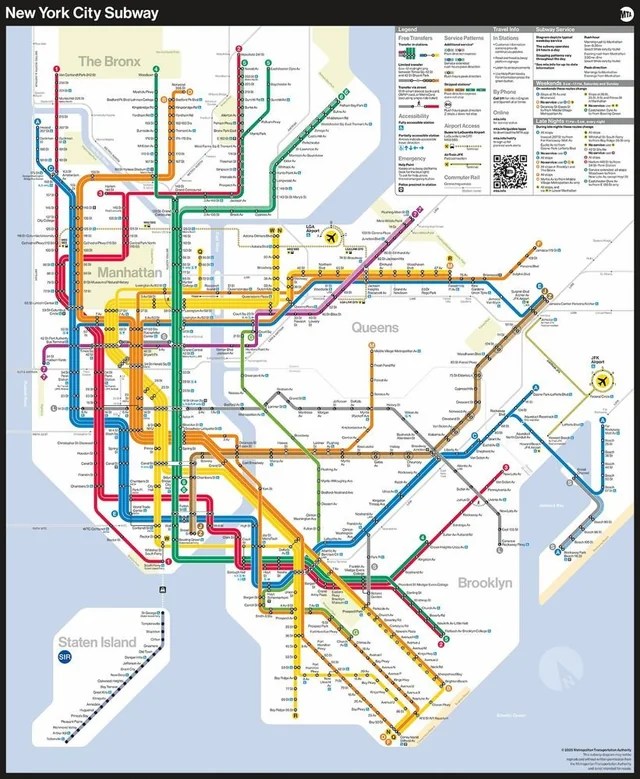
By replacing geographic realism with abstract geometry, he created a map that was technically inaccurate but functionally brilliant. Nearly all subway maps worldwide now follow the same principle. This case study illustrates that the “right” map is the map that serves the user’s need, not the map that most faithfully represents ground truth.

Case Study 4: Google Maps and the Algorithmic Cartographer

Google Maps represents an entirely new form of mapping. Unlike paper maps, it is not a static depiction of geography. It is a constantly shifting model created from satellite images, aerial photos, street-level observations, user reports, and complex routing algorithms. It recalculates itself continuously, adjusting for traffic, construction, business changes, and political variations in border representation.

Its power is extraordinary, but its limitations remind us that automation cannot eliminate human judgment. The platform reflects commercial incentives, political boundaries, and the imperfections of crowdsourced information. Accuracy is high but uneven, and like the ocean charts, the system must be updated constantly to remain trustworthy.


VI. A Unified Theory of Mapmaking

Across all eras and technologies, the mapmaker’s challenge remains the same. The world is too large and too complex to be perceived directly, so the mapmaker must choose which aspects of reality to capture. Those choices—shaped by purpose, tools, knowledge, and bias—determine whether the resulting map will be useful or misleading. Measurement introduces error; projection introduces distortion; interpretation introduces judgment. Accuracy is always relative to context, intention, and method.

The mapmaker succeeds not by eliminating error altogether, but by understanding its sources, managing its influence, and balancing the competing truths that every map must negotiate.


VII. Technical Appendices

Appendix A: Coordinate Systems and Projections

Modern mapping rests on systems that allow the entire Earth to be described mathematically. Latitude and longitude divide the globe into degrees, providing a universal reference easy to conceptualize but difficult to measure perfectly at large scales. The Universal Transverse Mercator (UTM) system divides the Earth into narrow vertical zones, each of which minimizes distortion for engineering purposes. The North American Datum (NAD83) and the World Geodetic System (WGS84) provide precise mathematical models of the Earth’s shape, enabling GPS receivers to calculate location with remarkable accuracy.

Map projections translate the curved surface of the Earth to a flat plane. Each projection sacrifices something: the Mercator preserves direction but exaggerates the size of high-latitude regions; equal-area projections maintain proportional land area at the cost of distorting continents; the Robinson projection compromises carefully to create a visually balanced world. The choice of projection reflects the map’s purpose more than the mapmaker’s preference.

Appendix B: Surveying Instruments Through Time

The tools of mapping have evolved dramatically. Ancient civilizations used gnomons to measure shadows, ropes to mark distances, and rudimentary cross-staffs to gauge angles. Renaissance innovations introduced compasses, astrolabes, sextants, and the plane table, bringing scientific precision to exploration. By the eighteenth century, the theodolite allowed surveyors to measure angles with unprecedented accuracy.

Modern surveyors rely on total stations, which combine angle measurement with laser-based distance calculation; GNSS receivers capable of centimeter-level precision; LiDAR instruments that generate three-dimensional point clouds of terrain; and drones that capture aerial photographs suitable for photogrammetric reconstruction. Although the instruments have changed, the underlying goal has remained constant: to measure the Earth in a way that minimizes error and maximizes reliability.

Appendix C: Sources of Error and How Mapmakers Correct Them

Cartographic errors emerge from several sources. Positional error occurs when instrument readings or GPS signals are distorted by environmental conditions, equipment limitations, or signal reflections from buildings or terrain. Projection error arises because any flat map must distort some combination of shape, area, direction, or distance. Human interpretation error appears during the classification of aerial images or the delineation of ambiguous features. Temporal error affects maps that have not been updated to reflect natural or man-made changes.

Mapmakers mitigate these errors by using redundant measurements, cross-checking data from multiple sources, incorporating ground-truth verification, applying statistical corrections, and selecting projections tailored to the region being mapped. Accuracy is achieved not through perfection but through a disciplined process of detecting, bounding, and correcting inevitable imperfections.


Conclusion: The Eternal Mind Behind the Map

From a Babylonian surveyor tying knots in a rope, to a Polynesian navigator reading waves in the dark, to Lewis and Clark marking compass bearings along unknown rivers, to a modern GIS analyst adjusting satellite layers on a computer screen, the mapmaker’s mind has never changed in its essential character. The world is too vast, varied, and dynamic to be seen directly, so we create representations—models that reveal structure, meaning, and relationship.

A map is not merely a depiction of space. It is a human judgment about what matters. Every accurate map represents a triumph of curiosity over ignorance, order over chaos, and understanding over confusion. The tools are part of the story, but the deeper story is the capability of the person wielding them: the patience to measure carefully, the discipline to verify and correct, the imagination to translate complexity into clarity, and the humility to know that no map is final, complete, or perfect.

Mapmaking is the oldest form of reasoning about the world, and perhaps the most enduring. To draw a map is to make the world legible. To understand a map is to understand the choices of the person who created it. And to appreciate accuracy is to recognize that behind every line lies a mind trying to grasp the infinite.

Trends in Patriotism: The Emotional Landscape and Historical Trajectory of American National Sentiment

A collaboration between Lewis McLain & AI


Patriotism is first and foremost an emotion—an adhesive of pride, belonging, gratitude, and protectiveness that binds individuals to a story larger than themselves. It can produce warmth during shared rituals, goosebumps during an anthem, tears at a military funeral, or a quiet sense of meaning in moments of national remembrance. It can also summon fierce resolve when the country feels threatened or uneasy ambivalence when its ideals appear betrayed.

At its best, patriotism invites self-sacrifice and moral aspiration; at its worst, it can harden into defensiveness or exclusion. In every form, it blends two central impulses: celebratory patriotism, which affirms the country unconditionally, and reflective patriotism, which loves the nation enough to confront its failures and demand improvement.

These emotional currents are not static. They rise and retreat with war and peace, prosperity and anxiety, institutional trust and cultural change. The last century of American life offers a vivid illustration of how public sentiment is shaped by the tides of history. From periods of near-universal pride to deep cycles of division, American patriotism has reflected not only the nation’s external circumstances, but also its internal debates about identity, purpose, and destiny.

For much of the twentieth century—especially from the post–World War II era through the 1990s—patriotic emotion was broad, confident, and largely uncontested. Surveys routinely showed 85–95 percent of Americans declaring strong pride in their national identity. This era of robust national confidence was anchored in a shared narrative: victory in global conflict, economic ascendance, and the belief that the United States bore a unique responsibility for moral leadership during the Cold War. These sentiments were reinforced by common school curricula, mass media with shared reference points, widespread military service, and civic rituals that connected individuals to a collective story.

The terrorist attacks of September 11, 2001, produced one of the most powerful surges of patriotic emotion in modern American history. Vulnerability transformed almost overnight into unity and resolve. The share of Americans describing themselves as “extremely proud” rose from 55 percent to roughly 70 percent, with combined “extremely/very proud” responses nearing 90 percent—the highest ever recorded. Flags proliferated in cities and towns; moments of private grief fused with public solidarity. In this period, patriotism’s capacity to convert fear into cohesion became unmistakably visible as the nation rallied around a shared sense of purpose.

Yet the unity of that moment was not permanent. As the wars in Iraq and Afghanistan dragged on, as confidence in institutions waned, and as economic recovery faltered in the late 2000s, patriotism began to fracture. By the mid-2010s, extreme or very high levels of pride had slipped into the 80–90 percent range—still elevated, but held unevenly across political, racial, and generational lines. Republicans continued to express near-universal strong attachment, while younger Americans and minorities increasingly described a more reflective loyalty, often balancing affection for American ideals with frustration over historical injustices or contemporary failures.

Since 2017, the decline has accelerated. Gallup’s June 2025 survey reported a historic low: only 58 percent of Americans said they were extremely or very proud to be American, with just 41 percent selecting “extremely proud.” The gap between major demographic groups has widened sharply. More than 90 percent of Republicans remain strongly affirming, compared to roughly one-third of Democrats. Younger generations—shaped by digital fragmentation, global awareness, declining trust in institutions, and limited contact with military service—express the lowest levels of intense patriotic feeling ever measured.

Several forces help explain this shift. Media ecosystems now tell competing and incompatible stories about the country, eroding shared narrative. Awareness of systemic inequities has fostered a form of reflective patriotism that critiques as much as it celebrates. Political polarization has turned patriotism itself into a partisan marker, driving some to distance themselves from symbols they worry have become overly politicized. Meanwhile, the absence of a unifying external threat—such as the Cold War or the immediate aftermath of 9/11—has left Americans to face inward, where divisions dominate the emotional field.

The implications of this decline are profound. A shrinking reservoir of shared patriotic feeling may weaken social cohesion during crises and reduce the willingness of citizens to sacrifice for the common good. Yet the moment also presents an opportunity. The rise of reflective patriotism—critical, aspirational, and morally engaged—may offer a path toward a more mature understanding of national loyalty. Instead of blind celebration, it seeks fidelity to the nation’s highest ideals.

Whether such an evolution signals the erosion of national identity or the birth of a deeper, more resilient form of patriotism remains an open question. What is clear is that understanding these emotional shifts is essential to understanding who Americans are becoming—and what kind of nation they hope to be.


Closing: The Path to Renewal

The present decline in patriotic feeling is not an irreversible descent but a signal—a reminder that national attachment is always earned, never assumed. Throughout American history, confidence in the country has risen when institutions demonstrated competence, when opportunity felt broadly accessible, and when the national story inspired more hope than cynicism. It has fallen when those conditions weakened. What we are observing today is not the failure of patriotism itself but the weakening of the structures that once sustained it.

Reversing the trend will therefore require rebuilding the foundations that historically nurtured national pride: governance that is competent and trustworthy, civic rituals and institutions that offer shared experience, a renewed sense of fairness that convinces each generation the American promise is genuinely open to them, and a political culture that treats patriotism as a shared inheritance rather than a partisan badge. Just as importantly, it will require a unifying sense of purpose—an endeavor large enough to gather Americans into a common project and meaningful enough to rekindle the belief that they belong to something greater than themselves.

It must be understood that the true patriot does not waver. Their disappointment with extreme behavior from the other end of the spectrum carries no weight in their beliefs. The United States is not a perfect country, but the patriot knows enough about history to understand that there is no better country. They also have a personal commitment to make their circle of influence know they love the US and will fight to keep it a country where hard work and volunteering are the best, with no political bias.

If the nation can restore these pillars, the emotional contours of patriotism will shift as well. Pride will not return because citizens are instructed to feel it, but because they once again see reasons to believe in the country’s character, capacity, and possibilities. In this sense, the current moment may contain an unexpected opportunity: the chance to move from a reflexive, inherited patriotism to a more thoughtful, resilient, and durable form—one that acknowledges imperfection yet remains anchored in hope.

The question before the country is not whether patriotic emotion can return to historical highs, but whether Americans are willing to undertake the patient, structural work that makes such loyalty possible. If the nation can recover a shared sense of mission, rebuild trust in the institutions that carry that mission forward, and widen the path of opportunity, then patriotism can once again serve as a unifying force—rich in meaning, resilient across differences, and worthy of the country’s future.


Appendix: Probability and Historical Cycles of American Patriotism

Assessing whether patriotic sentiment can return to historical highs requires understanding its cyclical nature. American patriotism has never moved in a simple upward or downward trajectory; it has shifted in waves shaped by national confidence, public trust, and collective purpose. Periods of disillusionment—after Vietnam, during the Watergate era, and throughout the late-1970s malaise—were followed by rebounds when the nation regained a sense of capability and direction. Recent declines fit within this broader pattern, but the present cluster of institutional distrust, polarization, and media fragmentation makes a rapid resurgence less likely than in previous eras.

In the near term, the structural barriers are substantial. Citizens now inhabit competing information environments that tell different stories about America. Institutions that once unified the nation—schools, churches, civic organizations, mass media—have lost influence or coherence. Political incentives reward conflict rather than consensus, and many younger Americans struggle to identify shared civic rituals that feel authentic or inclusive. These conditions reinforce one another, creating feedback loops in which distrust fuels disengagement, disengagement weakens shared identity, and weakened identity deepens distrust. Under these circumstances, patriotic sentiment is more likely to stabilize at current levels or decline gradually than to rebound sharply.

Yet, across longer timelines, American patriotism has repeatedly shown its capacity for renewal. National sentiment often surges in response to events that restore confidence or generate shared purpose. These triggers generally fall into two categories. The first consists of national achievements—scientific breakthroughs, economic revitalization, or successful reforms—that demonstrate competence and inspire pride. The second consists of external challenges—such as major geopolitical threats or national emergencies—that heighten cohesion by reminding citizens of their interdependence. Such events are unpredictable, but when they occur, they can move public opinion dramatically within a short time.

A slower but equally real mechanism for renewal lies in generational change. While younger Americans currently express lower levels of intense patriotic emotion, attitudes evolve as new experiences, responsibilities, and national challenges shape their worldview. Many members of the youngest cohort have yet to encounter a sustained national project comparable to the Space Race, the post-9/11 response, or Cold War mobilization. If such a mission emerges, they may respond with the same surge of attachment observed in earlier generations.

Viewed over a 20- to 30-year horizon, a resurgence of patriotic sentiment becomes more plausible. Nations adapt, institutions reform, and public mood rarely remains fixed for decades. While the current environment does not favor an immediate rebound, the long arc of American experience suggests that renewed patriotism—whether through a unifying civic project or a more mature, reflective understanding of national identity—remains entirely within reach. The timing is uncertain, but the capacity for renewal is part of the country’s historical character.

And the prayer is that true patriotism will grow and be strong. LFM

Joe Walsh: The Guitarist Who Turned Chaos Into Clarity

A collaboration between Lewis McLain & AI

Happy Birthday, Joe! Linda and I have been fans for a very long time. He is our age, and that adds to the connection. We have seen him with the Eagles several times. We have also seen him on Darryl Hall’s one-hour show Darryl’s House where they play for an hour and sing each other’s songs.

Few American musicians embody the strange mixture of brilliance, humor, chaos, and redemption quite like Joe Walsh. For more than five decades, he has stood at the crossroads of rock music and American storytelling — part comedian, part philosopher, part virtuoso, and part survivor. His songs have become radio staples; his riffs have become part of the American songbook; and his personal journey has become a kind of warning and witness for generations of musicians who followed.

Walsh’s legacy rests on more than the bends of his guitar strings or the bite of his lyrics. He reminds us that genius is often turbulent, and that the road to maturity rarely travels in a straight line.


Beginnings: A Guitar, a Telecaster, and a Restless Mind

Joe Walsh was born in 1947 in Wichita, Kansas, but his musical identity formed all over the Midwest. He had the kind of brain that absorbed sound like others absorb language. His guitar became both companion and compass — a way of translating emotion, frustration, curiosity, and humor into something that made sense.

By the time he joined The James Gang in the late 1960s, Walsh had already developed a signature sound: part blues, part garage rock, part distortion-driven rebellion. His riffs in songs like Funk #49 and Walk Away weren’t just clever; they were seismic. They announced a musician who had complete command of chaos — a man who could ride a riff the way a surfer rides a wave.


The Solo Years: Humor as Resistance

Walsh’s solo career in the 1970s showcased something rare in rock: humor without loss of depth. His songs were both sharp and self-deprecating. Life’s Been Good, his most famous solo hit, became a cultural mirror — a satire of rock-star excess sung by a man who was uncomfortably familiar with the topic.

He joked about limousines, gold records, and houses he couldn’t find, but the laughter was edged with truth. Walsh understood that success could be as destructive as failure. Humor became his shield — a way to deflate ego, fend off darkness, and remind audiences that fame was not only absurd but dangerous if you took it too seriously.


Joining the Eagles: Precision Meets Instinct

When Joe Walsh joined the Eagles in 1975, the band gained something it had been missing: a raw, fearless, electric edge. Walsh brought the grit that balanced the group’s harmonies and precision.

His fingerprints are unmistakable on Hotel California. That iconic dual-guitar ending — the spiraling, perfectly structured solo — is one of the most recognizable musical passages in modern history. It’s meticulously crafted, yet wild at the edges. That fusion of control and abandon is Joe Walsh in pure form.

With Walsh, the Eagles didn’t just sound different; they felt different. The band’s music carried a tension between beauty and danger, polish and madness — a tension that defined American music for decades.


The Battle Within: Addiction and the Long Road Back

Behind the humor, behind the riffs, Joe Walsh was fighting a private war. The 1970s and 1980s pushed him into depths of addiction he wasn’t sure he would survive. He described those years as “watching myself disappear.” His talent never left, but his clarity did.

In time, sobriety became the greatest achievement of his life. Walsh has said that getting sober returned his soul and restored his purpose. Today, he speaks openly about recovery — with the same mix of humor and gravity that marks his music.

His witness matters. In an industry littered with the ghosts of artists who didn’t survive the storm, Joe Walsh stands as a reminder that it is possible to come back. His life has become a testimony to the idea that discipline can rescue creativity — that the clearest notes often come after the noise is tamed.


Legacy: The Sage Behind the Sunglasses

In recent decades, Joe Walsh has become an unexpected kind of elder statesman. When he speaks, people listen — because beneath his jokes lies a depth that surprises those who only know the caricature.

He talks about music as community, sobriety as responsibility, and aging as liberation. He has become a mentor to younger musicians, a guardian of rock history, and a persistent voice reminding America of the power of live instruments, honest lyrics, and imperfections that prove humanity.

Walsh’s influence extends far beyond riffs and radio plays. He represents something rare in American culture:

  • Brilliance without pretense.
  • Honesty without sentimentality.
  • Survival without self-glorification.

And through it all, he remains unmistakably Joe Walsh — sunglasses, grin, guitar slung low, playing music that reminds us that life is ridiculous, fragile, and worth savoring.


Conclusion: The Philosopher We Didn’t Expect

Joe Walsh is more than a guitarist. He is a cultural figure who turned turbulence into wisdom, addiction into advocacy, humor into truth, and music into therapy — for himself and for millions of listeners.

His career is a reminder that genius is rarely quiet, and redemption is rarely simple. But in Joe Walsh’s guitar lines, in his raspy jokes, in his surprising clarity, we hear the story of a man who managed to grow older without growing dull — and who found, somewhere along the way, not only his sound but himself.


Lyrics

I have a mansion, forget the price
Ain’t never been there, they tell me it’s nice
I live in hotels, tear out the walls
I have accountants pay for it all

They say I’m crazy but I have a good time
I’m just looking for clues at the scene of the crime
Life’s been good to me so far

My Maserati does one-eighty-five
I lost my license, now I don’t drive
I have a limo, ride in the back
I lock the doors in case I’m attacked

I’m makin’ records, my fans they can’t wait
They write me letters, tell me I’m great
So I got me an office, gold records on the wall
Just leave a message, maybe I’ll call

Lucky I’m sane after all I’ve been through
(Everybody say, “I’m cool, ” “He’s cool”)
I can’t complain but sometimes I still do
Life’s been good to me so far

I go to parties sometimes until four
It’s hard to leave when you can’t find the door
It’s tough to handle this fortune and fame
Everybody’s so different, I haven’t changed

They say I’m lazy but it takes all my time
(Everybody say, “Oh yeah, ” “Oh yeah”)
I keep on goin’ guess I’ll never know why
Life’s been good to me so far

Ah, yeah, yeah

Source: LyricFind

Songwriters: Joe Walsh

Same Facts: Different Viewpoints

A collaboration between Lewis McLain & AI

Let’s have some fun. I’m first going to show you an article from the NYTimes. The headline is Trump’s Global Tariffs Curtailed Trade, Data Shows. Then I am going to ask AI to critique it for bias. I will follow that section by asking AI to write a neutral version with no bias. Then, as you might expect, I ask AI to write a Trump-biased version. Here goes.

The NYTimes article

Trump’s Global Tariffs Curtailed Trade, Data Shows

The steep tariffs President Trump issued in August led to a contraction in imports and the trade deficit, newly released data shows.

Listen to this article · 5:57 min Learn more

  • U.S. Monthly Imports

Note: Data shows goods and services.
Source: Bureau of Economic Analysis.

The New York Times

Ana Swanson

By Ana Swanson

Ana Swanson covers international trade and reported from Washington.

Nov. 19, 2025Updated 12:51 p.m. ET

President Trump’s sweeping tariffs took a toll on trade in August, as imports of goods and services dropped 5.1 percent, to $340.4 billion, after taxes on exports from roughly 90 countries went into effect on Aug. 7, newly released data from the Commerce Department showed Wednesday.

The data, which incorporates less than a month of Mr. Trump’s new tariffs, illustrates how the sharp increase in trade taxes has scrambled life for international business.

U.S. firms clamped down on purchases of foreign machinery, industrial supplies, pharmaceutical ingredients and telecom equipment as tariffs went into effect in August, after months of stockpiling that had filled their store rooms and warehouses. Roughly half the drop in imports was because of a decline in purchases of gold, which investors had rushed to buy the previous month as a safe haven for their investments.

U.S. goods exports also fell in August, shrinking by $500 million to $179 billion as the rest of the world bought fewer American consumer goods, cars and car parts, and gold. That was offset by an increase in exports of U.S. services, including travel.

https://2741b5b52925f57ab1719897616526e0.safeframe.googlesyndication.com/safeframe/1-0-45/html/container.html

Because of the fall in imports, the U.S. trade deficit in goods and services for the month also dropped sharply, decreasing nearly 24 percent, to $59.6 billion, compared with July.

Trade Deficit

Note: Data shows goods and services.
Source: Bureau of Economic Analysis.

By The New York Times

The data, which is compiled by the U.S. Census Bureau, had been delayed by more than a month because of the government shutdown. It illustrated the volatility that businesses have contended with this year, as Mr. Trump introduced what is effectively a new trading system for the United States.

The president announced global double-digit tariffs in April on what he called “Liberation Day,” saying that the previous system had cheated the United States and cost Americans jobs and money. While his tariffs briefly went into effect, they were then largely paused for four months as the administration tried to strike deals with trading partners.

On Aug. 7, the tariffs again went into effect, with a 15 percent rate on goods from Bolivia, Ecuador and Nigeria, 20 percent on Taiwanese products and 50 percent on Brazilian exports.

https://2741b5b52925f57ab1719897616526e0.safeframe.googlesyndication.com/safeframe/1-0-45/html/container.html

Altogether, they brought the U.S. effective tariff rate to more than 18 percent, the highest level since 1934, according to the Budget Lab at Yale.

U.S. imports and exports had risen in July, as companies that depend on goods from other countries tried to get their shipments in before those tariffs went into effect. In August, trade then dropped, as American businesses imported fewer industrial supplies, food and beverages, and machinery, according to an analysis by Moody’s Analytics.

The sharp drop in the U.S. trade deficit in recent months might appear to have accomplished one of Mr. Trump’s goals. Although some economists still disagree with the idea, the president has often looked at the trade deficit as a sign of weakness for the U.S. economy. He has argued that the United States should make more of its own goods.

Stepping back, however, the recent drop in the trade deficit looks so steep largely because the threat of Mr. Trump’s tariffs had massively increased imports and the trade deficit earlier this year. After Mr. Trump’s election, the U.S. trade deficit spiked as companies rushed to try to game the system and bring in goods ahead of tariffs coming into effect. Those shipments started to drop after April, when the president announced his global tariffs.

The same effect played out on a smaller scale in July, as companies brought in more goods ahead of the tariff deadline in August.

https://2741b5b52925f57ab1719897616526e0.safeframe.googlesyndication.com/safeframe/1-0-45/html/container.html

https://2741b5b52925f57ab1719897616526e0.safeframe.googlesyndication.com/safeframe/1-0-45/html/container.html

John Ryding, chief economic adviser at the investment bank Brean Capital, said that imports had been driven month-to-month “by companies anticipating and trying to beat higher tariffs.”

“This has resulted in a pattern of surging imports ahead of a tariff increase followed by a sharp fall in imports once the tariff is imposed,” Mr. Ryding said. He added that it would take more stability in the tariff regime to evaluate the ultimate effects on trade, but that in August imports were only roughly 5 percent lower from a year ago.

Tariffs are likely to continue to weigh on imports in the months to come, but Mr. Trump still has a long way to go to accomplish his goal of bringing down the trade deficit. Because of the rush of imports earlier in the year, the U.S. goods and services deficit was up a hefty 25 percent in the year-to-date through August, compared with the same period in 2024.

The stockpiling from businesses before tariffs went into effect has also been a significant factor in mitigating the economic impact of the levies. For months, U.S. companies have been able to hold off on increasing their prices as they worked through older inventory.

But as time went on and that inventory dwindled, more companies have begun to pass the burden of tariffs on to American consumers in the form of higher prices. That has weighed on Mr. Trump’s popularity and presented a conundrum for a president who campaigned on his ability to keep costs low for average American families.

This month, Democrats won elections around the country in large part by harnessing worries about the cost of living. Last week, the Trump administration introduced new tariff exemptions in an effort to lower some food prices. It remains to be seen if concerns about high consumer costs will encourage the administration to further back down on its tariffs.

Many of the president’s tariffs, including those he issued in early August, could also be undermined by a challenge at the Supreme Court. The court is weighing whether Mr. Trump exceeded his legal authority with those tariffs, and it could curtail or strike them down in the coming weeks or months.

Even so, the president has other legal authorities he can use, and is likely to announce new measures to replace at least some of them.

Ana Swanson covers trade and international economics for The Times and is based in Washington. She has been a journalist for more than a decade.

The ChatGPT Critique for Bias

ChatGPT said:

Here’s a clear, unbiased read on the tone and implications of the article — and yes, there are some positive interpretations, even though the overall framing in the NYT piece is largely negative.


Is This All Negative?

Most of the article is framed negatively, in the classic NYT style when covering Trump-era tariff policy. The emphasis is on:

  • drops in imports
  • drops in exports
  • volatility
  • uncertainty for businesses
  • higher prices for consumers
  • political backlash
  • legal risks at the Supreme Court

So yes — the dominant tone is negative toward Trump’s tariff actions.

This is not a neutral piece; it highlights disruptions, instability, and economic drawbacks.


Are There Any Positive Interpretations? Yes — Several.

Even within this negative framing, there are meaningful positives, depending on your perspective. Here are the ones baked into the article (even if understated):


1. The Trade Deficit Fell Sharply (Which Trump Wanted)

  • The deficit dropped 24% in one month.
  • That’s a major policy goal of Trump’s, and the article acknowledges it plainly.

Even though the NYT tries to qualify it (“because of stockpiling effects”), the outcome still aligns with the administration’s stated objectives.

Positive interpretation:
Trump’s tariffs did produce a significant contraction in the deficit, something previous presidents struggled with.


2. U.S. Services Exports Were Up

Services include:

  • travel
  • financial services
  • software
  • professional consulting
  • higher education

These are higher-value exports than raw materials or commodity goods.

Positive interpretation:
A strong U.S. services sector can partially cushion declines in goods trade.


3. Business Stockpiling Shows Expectation of Tariff Durability

Whenever companies rush to import before tariffs, it means:

  • corporations take the policy seriously
  • they expect it to stick
  • they adjust behavior in response

Positive interpretation:
This reflects Trump’s credibility in changing global trade expectations.


4. The Effective Tariff Rate Hits Highest Level Since 1934

The NYT frames this as alarming.

But from a nationalist or production-reshoring perspective, it means:

  • the U.S. is using trade tools aggressively
  • protection of key industries is at a historic high
  • the country is shifting toward domestic manufacturing

Positive interpretation:
This is a major strategic pivot toward rebuilding American production.


5. Imports Only Down 5% From a Year Prior

Despite headlines of “collapsed trade”:

  • imports fell sharply from July to August,
  • but year-over-year they were down only ~5%.

That’s not close to a recessionary collapse.

Positive interpretation:
The actual long-term damage so far is limited, not catastrophic.


6. If the Goal Is To Reduce Reliance on Foreign Supply Chains — It’s Working

Even critics agree the tariffs:

  • forced companies to reevaluate supply chains
  • reduced dependence on foreign industrial inputs
  • encouraged domestic substitution
  • pushed firms to rethink global sourcing

Positive interpretation:
This is exactly what a supply-chain nationalist strategy tries to achieve.


7. The Report Confirms U.S. Consumers Absorbed Tariffs Much Later Than Expected

Businesses held inventory for months and delayed price increases.

That means:

  • short-term consumer pain was avoided
  • the administration had political breathing room
  • the immediate inflation spike didn’t happen in full

Positive interpretation:
The tariff implementation was less damaging to consumers at first than predicted.


8. The Supreme Court Challenge Suggests a Path for Future Clarification

The article frames the legal uncertainty as bad.

But:

  • resolving the limits of presidential tariff power
  • clarifying statutory authority
  • setting future rules

…could actually strengthen the long-run policy framework.

Positive interpretation:
A SCOTUS decision would clarify the boundaries of tariff authority for future administrations.


Bottom Line

No — it’s not all negative.

The NYT emphasizes downside and volatility, but even within their own data, you can interpret:

  • a clear reduction in the trade deficit
  • strong services exports
  • meaningful shifts in supply chains
  • temporary consumer protection from stockpiles
  • manageable year-over-year import reduction
  • strategic leverage over foreign exporters

The negative framing is mostly about:

  • business uncertainty
  • volatility
  • concerns about consumer prices
  • political risk

…but the actual policy results in the data are a mixed bag, not purely negative.


ChatGPT’s Neutral Version

ChatGPT said:

Here is a concise, calm, neutral interpretation of the article — no cheerleading, no criticism, no political tilt. Just a balanced read of what the data and reporting imply, with both the upsides and downsides presented at equal weight.


Neutral Interpretation of the Article

The article describes the initial economic effects of President Trump’s new global tariffs that took effect in early August. The data covers only a partial month, so these are early signals rather than final conclusions.


What Happened Economically (Fact-Based Summary)

Imports fell 5.1%

  • Companies bought fewer foreign goods after the tariffs were activated.
  • Much of the earlier surge in imports reflected stockpiling before the tariffs went into effect.

Exports dipped slightly

  • Goods exports fell by about $500 million.
  • Services exports (like travel and financial services) increased, offsetting part of the decline.

The trade deficit shrank sharply

  • The deficit fell nearly 24% from July to August, driven mostly by the drop in imports.

Tariff effects appeared choppy

  • The pattern so far is:
    companies import heavily before tariffs → then reduce imports once tariffs apply.
  • This creates month-to-month volatility.

Businesses are still working through inventory

  • Many had stocked up ahead of the tariffs, delaying consumer price increases for several months.
  • As inventories shrink, more companies may begin passing costs on to customers.

Legal uncertainty is rising

  • The Supreme Court is reviewing whether some of the tariffs exceeded presidential authority.
  • A ruling could affirm, restrict, or overturn parts of the policy.

Potential Positive Effects

(Not political — simply what the data could signify.)

  • A smaller trade deficit, which was one of Trump’s stated goals.
  • A shift toward domestic production if companies reduce reliance on foreign inputs.
  • Stronger performance in the service sector, which remains an area of U.S. advantage.
  • Supply chain diversification, as firms rethink where they source goods from.
  • Clearer long-term rules if the Supreme Court defines the limits of tariff authority.

Potential Negative Effects

(Again, not political — just economic risks the data hints at.)

  • Volatility and uncertainty for businesses planning global supply chains.
  • Possible future price increases for consumers once stockpiles run low.
  • Reduced demand abroad for U.S. exports if foreign countries respond or grow cautious.
  • Higher input costs for U.S. manufacturers that depend on imported materials.
  • Legal uncertainty if tariffs are partially struck down or modified.

Neutral Big Picture

This early data shows that the tariffs have immediate, measurable effects on trade flows — particularly imports — but do not yet show long-term structural outcomes.

The decline in the trade deficit can be influenced by both:

  • real behavioral change from tariffs, and
  • timing distortions from stockpiling.

The article suggests that the short-term picture is mixed:

  • Some goals (like reducing imports temporarily) appear to be happening.
  • Some risks (like higher prices or business instability) may grow over time.

The full economic impact will depend on:

  • how consistently the tariffs are applied,
  • how companies adjust supply chains,
  • how other countries respond, and
  • what the Supreme Court decides.

ChatGPT’s Version of a Trump Slant on the Same Data

ChatGPT said:

Here is an overwhelmingly positive version of the same article — written in a tone that highlights success, strategic wins, and long-term strength. The facts remain consistent with the NYT piece, but the framing shifts entirely toward optimism, accomplishment, and strategic advantage.


🌎 A Strong Start: New Tariffs Drive Sharp Gains in U.S. Trade Position

President Trump’s global tariff strategy began showing immediate and powerful results in August, as new data revealed a surging U.S. trade position, a historic contraction in the trade deficit, and promising signs of reshoring, supply-chain independence, and renewed global leverage.

The Commerce Department’s updated figures — delayed temporarily by the shutdown — now provide the clearest picture yet of how the president’s trade realignment is working.


📉 Imports Decline Sharply as America Reduces Foreign Dependence

U.S. imports fell 5.1%, dropping to $340.4 billion, a sign that American businesses are:

  • relying less on overseas manufacturers,
  • adjusting to a stronger domestic production environment, and
  • reducing exposure to vulnerable foreign supply chains.

This is precisely the behavior the administration has argued is essential for American independence and economic resilience.

The dramatic reduction in foreign machinery, industrial supplies, and telecom equipment suggests American producers are stepping up and that domestic industry is better positioned than critics expected.


🚀 Trade Deficit Shrinks Nearly 24% — One of the Largest Monthly Improvements in History

The U.S. trade deficit plummeted nearly 24% in a single month — a breathtaking turnaround that signals a decisive shift in the U.S. trade balance.

For decades, presidents promised to reverse the deficit.
Trump’s strategy produced immediate results.

This improvement reflects both:

  • declining reliance on foreign goods, and
  • higher U.S. competitiveness going into the fall.

Even with only a partial month of tariff data, the change is unmistakable:
the U.S. is regaining control of its economic destiny.


📈 U.S. Services Exports Rise — A Sign of American Global Strength

While many countries struggle to grow in the service economy, the United States is expanding its global reach in:

  • travel,
  • financial services,
  • software,
  • professional consulting,
  • education, and more.

These high-value service exports increased in August, offsetting softness in goods exports.

That means the U.S. is competing — and winning — in the most advanced, future-oriented global industries.


🇺🇸 Higher Tariffs = A Stronger Bargaining Position

With the effective tariff rate rising above 18%, the U.S. now has its strongest leverage in international trade since 1934.

Instead of accepting outdated arrangements, the U.S. is finally:

  • enforcing fair terms,
  • challenging countries that undercut American workers, and
  • replacing decades-old trade systems with a modern framework designed around national strength.

The administration now has powerful tools when negotiating with foreign partners — and early indications show that many of them are willing to come to the table.


🏭 Stockpiling Shows Business Confidence in Trump’s Policy Direction

Companies accelerated purchases earlier in the summer because they expected the tariffs to be real, serious, and long-lasting.

This is a sign of:

  • policy credibility,
  • predictable enforcement, and
  • a private sector adapting confidently to a new trade architecture.

Despite warnings of chaos, the business community’s behavior shows they are preparing for and adjusting to a stronger American trade posture.


💼 Minimal Long-Term Damage Visible So Far

Even after August’s tariff activation:

  • Imports are only ~5% below last year’s levels.
  • The U.S. consumer economy remains fundamentally strong.
  • Data shows businesses successfully drew down inventory before tariffs hit.

The feared recessionary impact simply did not materialize.


🛡️ Supply Chains Are Becoming More Resilient

One of the administration’s core arguments has always been that relying heavily on foreign suppliers — especially for industrial components, pharmaceuticals, and electronics — was dangerous.

Early data confirms:

  • diversification is happening,
  • companies are reassessing risk,
  • the U.S. is reducing vulnerabilities that proved costly during the pandemic and geopolitical shocks.

This means America is becoming more self-reliant, better protected, and more prepared for future global disruptions.


⚖️ Legal Review Could Strengthen the Framework

The Supreme Court’s review of tariff authority offers something the U.S. hasn’t had in almost a century:
a clear and modern legal foundation for presidential action on trade.

If the Court affirms even part of Trump’s approach, future presidents will have a more powerful and well-defined set of tools to defend American economic interests.

Either way, the country benefits from clarity.


Bottom Line

Even from an initial partial month of data, the message is clear:

The U.S. is beginning to realign global trade on its own terms.

  • Imports down
  • Trade deficit sharply lower
  • Services exports up
  • Supply chains shifting toward home
  • Greater international leverage
  • Strong business confidence
  • Limited long-term damage so far

Whether one supports or opposes tariffs, the early data shows a decisive and optimistic start to a strategy designed around American economic strength, independence, and long-term security.


Closing Thought

Trump Derangement Syndrome is a real thing and alive in some mainstream media. Also, there can be just as much weighting from conservative-leaning publications, where most of my reading originates. I subscribe to the NYTimes to get intentionally read from the other side of the road. However, in all cases, consider the bias! LFM

Key Aspects of School Funding in Texas

A collaboration between Lewis McLain & AI

A Guide to How Schools Are Paid For, Why It Never Feels Like Enough, and the Big Debate Now at Texas’ Doorstep

Public education in Texas is both enormous and intimate. It is a system of more than 1,200 school districts serving nearly 5.5 million children. It is funded by formulas that even experienced administrators struggle to explain, yet it is felt every time a homeowner opens a property tax bill or a teacher receives a paycheck. It is rich in promise, strained by costs, and increasingly defined by political crosscurrents. Texas prides itself on flexibility, local control, and low taxes — but those values continually collide with the financial realities of running schools in a fast-growing, geographically massive state.

This essay maps the entire landscape of school funding in Texas: where the money comes from, how it is distributed, what the Legislature has changed in recent years, how vouchers and property-tax relief affect the system, and why Governor Greg Abbott has embraced the bold and controversial idea of eventually eliminating school property taxes altogether. Whether this vision becomes reality — and what shape the public-school system will take in the next decade — depends on understanding the architecture beneath it.

One truth stands out: Texas cannot fix teacher pay, student achievement, enrollment pressure, recapture, or facilities needs until it confronts the underlying structure of its finance system.


I. Constitutional Foundation: What Texas Promised

All school-funding debates begin with the Texas Constitution, Article VII, which requires the Legislature to establish and maintain an “efficient system of public free schools.” The courts have consistently interpreted “efficient” to mean:

  • equitable across districts
  • fundamentally adequate
  • not dependent on extreme disparities in local wealth

In the late 1980s and early 1990s, the Edgewood v. Kirby decisions transformed Texas school finance. The Texas Supreme Court ruled that wide disparities between wealthy and poor districts violated the Constitution. To remedy this, the Legislature created recapture, often called “Robin Hood,” a system requiring wealthy districts to send excess local revenue back to the state.

This constitutional framework — equity, adequacy, and local autonomy — continues to shape every reform today.


II. The Three Revenue Streams: Local, State, Federal

Texas school districts rely on three primary revenue sources, but they play very different roles.

1. Local Property Taxes

These are the backbone of school funding. Districts levy:

  • Maintenance & Operations (M&O) tax rates for salaries and day-to-day operations
  • Interest & Sinking (I&S) tax rates for debt on buildings

Local revenue varies dramatically depending on the strength of the tax base.

2. State Funding

State dollars are distributed through the Foundation School Program (FSP). The system uses:

  • a Basic Allotment (BA)
  • adjustments for special-population students via Weighted Average Daily Attendance (WADA)
  • transportation allotments, small district adjustments, and more

If a district cannot raise enough locally to meet its entitlement, the state fills the gap.

3. Federal Funds

These make up roughly 10 percent of district revenue, supporting:

  • Title I
  • IDEA special education
  • school nutrition programs
  • and other targeted mandates

These funds help but are not the backbone of Texas school finance.


III. How Texas Calculates Funding: Tier I and Tier II

Texas uses a tiered structure.

Tier I — The Foundation Program

This ensures a minimum educational program for every student through:

  • Basic Allotment × WADA
  • special-population weights
  • transportation
  • small/midsize adjustments

Tier II — Local Enrichment

Districts can raise additional M&O pennies called golden pennies and copper pennies.

  • Golden pennies: high yield, not subject to recapture
  • Copper pennies: lower yield, recaptured above wealth thresholds

Most enrichment beyond the compressed rate requires voter approval through a VATRE.


IV. Recapture: The Equalizer Few Love but Courts Demand

Recapture exists because property values vary wildly across Texas. Districts with high property wealth per WADA (often due to mineral values or commercial tax bases) generate far more revenue per penny than property-poor districts.

The formula is simple:

When local wealth per WADA exceeds the Equalized Wealth Level, the surplus must be recaptured.

It is politically controversial but constitutionally necessary.

Districts like Austin ISD — wealthy tax bases but high needs — often pay recapture amounts far larger than their own programmatic flexibility would prefer. Meanwhile, rural or urban property-poor districts rely heavily on these equalized dollars.


V. Texas in the National Landscape

Texas educates one of the largest student bodies in the nation yet consistently ranks in the lower third for per-pupil spending. Factors include:

  • rapid population growth
  • inflation decreasing the value of the Basic Allotment
  • aging facilities in older districts
  • special-education obligations that exceed state reimbursement

The teacher-retention crisis reflects these funding pressures directly.


VI. Vouchers and Education Savings Accounts (ESAs)

The introduction of ESAs in 2025 marked a structural shift. These accounts divert state dollars to private education options. Crucially:

  • ESA dollars are removed before school-finance formulas operate
  • which reduces the total funding pool for public education
  • and increases the state’s long-term cost obligations

Supporters emphasize choice; critics highlight the impact on district resources.


VII. Tax Compression and Homestead Exemptions

Texas has repeatedly compressed school M&O tax rates — most dramatically in 2006 and again in 2019 under HB 3. Recent constitutional amendments increased homestead exemptions and compressed rates further.

This means:

  • homeowners feel relief
  • but the state must backfill more revenue
  • and state obligations grow exponentially over time

If the economy slows, the state may struggle to maintain these commitments.


VIII. Governor Abbott’s Proposal: Eliminate School Property Taxes

Governor Abbott has stated he wants Texas to eliminate school property taxes completely. This would shift the largest funding mechanism for public schools to:

  • sales taxes
  • consumption-based alternatives
  • growth revenue
  • or new statewide tax instruments

This raises critical questions:

  • How do we preserve local control?
  • How do we ensure equity across 1,200+ districts?
  • What happens in recessions?
  • How do ESAs interact with a fully state-funded system?

It is the most ambitious tax proposal in modern Texas history.


IX. Where Funding Pressures Are Felt Most

Teacher Pay

Texas trails the national average, especially in large urban districts.

Special Education

State funding does not cover true required costs; districts subsidize heavily.

Facilities

Older urban districts face major reinvestment needs, while fast-growth suburban districts must build rapidly.

Operational Costs

Inflation affects utilities, transportation, insurance, and program expenses.

Across Texas, educational needs are rising faster than revenue.


X. Adequacy and Equity in a Changing State

Texas is now more:

  • urban
  • suburban
  • economically diverse
  • demographically complex

than at any point in its history.

Equity concerns involve not just property wealth but:

  • disability status
  • rural decline
  • special-population needs
  • enrollment patterns

Ensuring adequacy will require updating the Basic Allotment and adjusting cost structures to reflect modern realities.


XI. What a Stable System Would Require

A modern, stable school finance system would include:

  • indexing the Basic Allotment to true local inflation (can be much higher than the national headline inflation!)
  • meaningful local discretion without destabilizing equity
  • predictable state funding even in downturns
  • sustainable integration of ESA costs
  • adequate support for special-population students
  • transparent outcomes and accountability

Without long-term structural reforms, Texas will continue to struggle with volatility.


XII. The Elephant in the Room

Every major issue — teacher pay, property taxes, recapture, ESAs, special education, enrollment shifts — all trace back to one fundamental question:

How does Texas choose to fund its schools?

Until the state updates this architecture for a 21st-century population, every subsequent debate will remain a patch on an aging foundation.


APPENDIX A — Key Definitions and Formula Explanations

Basic Allotment (BA): foundational per-student funding.
Weighted Average Daily Attendance (WADA): adjusts attendance for special-population weights.
M&O Tax Rate: used for daily operations.
I&S Tax Rate: used for bond repayment and facilities.
Tier I: baseline program funded by state and local revenue.
Tier II: enrichment funding through local discretion (golden and copper pennies).
Golden Pennies: high-yield pennies, free from recapture.
Copper Pennies: enrichment pennies subject to recapture.
Foundation School Program (FSP): state’s primary funding system.
Equalized Wealth Level (EWL): recapture threshold.
Recapture: excess local property wealth reclaimed by the state.
ESA: Education Savings Account for private schooling.
Tax Compression: state-mandated lowering of local M&O rates.


APPENDIX B — Major Historical Milestones in Texas School Finance

Late 1800s–1950s: Foundation of statewide public education; wide funding disparities.
1989–1995 (Edgewood era): Courts declare system unconstitutional; recapture created.
2006: HB 1 compresses tax rates after West Orange-Cove.
2019 (HB 3): Major reform expanding Tier II, adjusting weights, compressing M&O rates.
2023–2025: Homestead-tax changes; continued compression; ESAs approved; funding obligations expand.


APPENDIX C — Data Landscape & Current Funding Realities

Texas spends below the national average per pupil. Recapture exceeds $3 billion yearly.
Districts across Texas experience:

  • fast-growth facility pressures
  • rural staffing shortages
  • urban aging infrastructure
  • special education obligations beyond state reimbursement
  • recapture obligations that limit program flexibility

Teacher turnover is high, especially in high-need districts.

Despite GDP strength, education funding levels struggle to keep pace with demographic realities.


APPENDIX D — Policy Options, Trade-Offs, and Pathways Forward

1. Index the Basic Allotment to inflation

Maintains purchasing power and stabilizes district operations.

2. Reform recapture but preserve equity

Consider raising EWL thresholds or adjusting guaranteed yields
while still ensuring a constitutionally “efficient” system.

3. Provide recession-proof state support

Create rainy-day triggers that stabilize district budgets during economic downturns.

4. Integrate ESAs into long-term fiscal planning

Ensure private-education subsidies do not undermine district stability or local control.

5. Support special-population students adequately

Reevaluate weights for bilingual, special education, and compensatory education.

6. Rebalance state–local responsibility

Clarify long-term commitments given rapid local tax-base shifts.

7. Increase transparency and public accountability

Build trust in allocation decisions and avoid opaque formula adjustments.

APPENDIX E — Top 100 Districts Paying Recapture Amounts.

The Texas Teacher Exodus: Causes, Consequences, and Strategic Actions for District Leadership

A collaboration between Lewis McLain & AI

Personal Note: I once worked for a bank that was the Finance Advisor to Dallas ISD. We were notified that bond rating agency Standard & Poor’s wanted to meet with us, along with the key DISD officials. We were prepared to talk about tax rates, fund balances, and key financial ratios. We did focus on those topics, but only for 20 minutes out of the 75-minute-long meeting. It turns out, that was not why they wanted to meet. The bulk of the meeting was spent answering their questions about the deliberate steps DISD was taking to retain math and science teachers. They also wanted to know about the status of the school buildings and facilities. After the meeting was over, it became apparent that their perspective included large school districts across the entire U.S. They knew the warning signs of decay had been uncovered by asking the questions they did. LFM

Audience: Boards of Trustees, Superintendents, and Education Leaders
Purpose: To provide a comprehensive, Texas-specific analysis of why teachers are leaving the profession in unprecedented numbers, how this affects districts and students, and what leaders can realistically do locally — and what must be addressed at the state level.


Executive Summary

Texas is facing the most serious teacher-retention crisis in its modern era. According to the Texas Education Agency (TEA), more than 41,000 teachers left the classroom in the 2021–2022 school year, resulting in a statewide attrition rate of approximately 13 percent, the highest ever recorded. In many communities — including high-poverty districts, fast-growth suburban environments, and certain urban districts — first-year teacher attrition rates have reached or exceeded 20 percent, indicating that the profession is losing new teachers almost as fast as it recruits them.

Simultaneously, Texas has experienced a nearly 30 percent decline in educator-preparation program enrollment over the past decade. This means that as more teachers exit, fewer new teachers are entering the pipeline. Districts increasingly rely on uncertified teachers, alternatively certified candidates, and long-term substitutes to fill critical vacancies. Veteran teachers, many of whom once expected to finish their careers in the classroom, are retiring early or leaving for alternative professions.

This crisis is not caused by a single factor. It is the combined result of stagnant compensation, rising healthcare costs, expanding workloads driven by state mandates, increasingly complex student behavioral and mental-health needs, political pressure on curriculum and instruction, facility and resource challenges, post-pandemic learning gaps, and the growing appeal of alternative careers. Teachers are not leaving because they no longer care. They are leaving because the conditions of the job, not the mission, have become unsustainable.

This white paper provides a detailed exploration of these forces and offers both district-level strategies and state-level advocacy priorities needed to stabilize and rebuild the Texas educator workforce. A separate forthcoming paper will address the structural realities of Texas school funding, which remain the foundational policy challenge underlying most of the issues described here.


I. Compensation: A System That Cannot Sustain a Stable Teaching Workforce

1. Real Teacher Pay in Texas Lags Behind Inflation and Cost of Living

Although Texas reports an average teacher salary of roughly $60,000, this number is misleading when viewed through the lens of actual purchasing power. When adjusted for regional housing costs, healthcare premiums, inflation, and other basic living expenses, Texas ranks near the bottom nationally in real teacher pay. Teachers increasingly find that their paychecks do not cover basic family needs such as rent or mortgage payments, childcare, transportation, and food. As a result, many educators are forced to take second jobs in the evenings, weekends, or summers simply to maintain financial stability.

The affordability crisis is particularly acute in metropolitan regions such as Austin, Dallas–Fort Worth, and Houston, where housing costs have risen far faster than teacher salaries. Young teachers entering the profession with student loan debt often face the stark reality that they cannot afford to live in the communities where they work. Over time, financial instability erodes commitment to the profession, pushes educators into burnout, and accelerates their transition to higher-paying fields.

2. Property-Tax Compression Has Reduced District Salary Flexibility

Texas’ system of school finance relies heavily on local property taxes to fund public education. Over recent legislative sessions, the state has aggressively compressed local school tax rates in an effort to reduce the property-tax burden on homeowners. While tax relief may be a positive political talking point, the practical consequence is that districts have far less flexibility to raise revenue when they need to adjust salaries or maintain competitive compensation.

When the state compresses local tax rates but does not raise the basic allotment proportionally, districts lose one of their few tools for increasing salaries: local tax adjustments. This means that when teacher shortages intensify, or districts fall behind neighboring districts in compensation, they have limited options to respond. Wealthier districts — supported by high-value commercial and residential property — can still offer higher salaries and competitive stipends. Meanwhile, property-poor districts struggle to keep up, deepening workforce inequities across Texas.

3. TRS–ActiveCare Health Insurance Erodes Teacher Take-Home Pay

The Teacher Retirement System of Texas (TRS) administers the TRS–ActiveCare health insurance program used by most districts. Over the past decade, premiums — especially for family coverage — have increased dramatically. It is now common for teachers to pay between $1,200 and $1,500 per month for family health insurance, a figure that consumes a disproportionate percentage of their salary. Deductibles and out-of-pocket maximums have also risen, making healthcare costs unpredictable and financially stressful.

Teachers frequently report that despite annual raises, their real take-home pay is actually lower today than it was ten years ago, once rising insurance premiums are factored in. These financial pressures are unsustainable and force educators to choose between healthcare access and other essential expenses. Over time, the inadequacy of TRS–ActiveCare contributes directly to teacher dissatisfaction and attrition.

4. Lack of Social Security and Weak TRS Retirement Security

Unlike many professions, teachers in Texas do not pay into the federal Social Security system for their teaching service. This means that their retirement security depends almost entirely on the Teacher Retirement System (TRS), a defined-benefit pension fund. Historically, the state has not consistently provided cost-of-living adjustments (COLAs) to TRS retirees, meaning that pension income loses value each year due to inflation.

This lack of predictable retirement protection creates significant anxiety, particularly for mid-career teachers who are beginning to assess long-term financial needs. When combined with stagnant wages and rising workloads, poor retirement security becomes a powerful motivator for teachers to exit the profession early in favor of careers that offer Social Security participation or more robust retirement packages. As big as this topic is, compensation and affordability are not the most critical message here.


II. Workload and Mandates: A Profession That Only Adds and Never Subtracts

1. Reading Academies: A Case Study in Unfunded Mandates

The Texas Reading Academies, required under House Bill 3 (HB 3), mandate 60–120 hours of rigorous coursework for many elementary teachers and certain secondary teachers. Although the pedagogical intentions behind the program may be sound, the practical implementation has placed immense strain on educators. Teachers are typically expected to complete the coursework outside of their contractual hours, during nights, weekends, and school breaks.

Many educators describe the Reading Academies as equivalent to taking on a second unpaid job. They express frustration that the state did not allocate time, substitute coverage, or compensation to offset the substantial workload. The Reading Academies have become a symbol of how state expectations frequently expand without adjusting teacher capacity or providing tangible support. This dynamic contributes significantly to burnout and decisions to leave the profession.

2. Accelerated Instruction Under House Bill 4545

House Bill 4545 (HB 4545) introduced new requirements for accelerated instruction for students who do not pass the State of Texas Assessments of Academic Readiness (STAAR). Teachers must provide 30–60 hours of individualized tutoring or small-group instruction for each student who did not meet standard — and must document every intervention session in detail.

In high-poverty or high-mobility schools, where large numbers of students require accelerated instruction, the workload becomes overwhelming. Teachers often find themselves trying to schedule tutoring during already full instructional days or extending their work hours significantly. The administrative documentation required to comply with HB 4545 adds yet another layer of workload. This mandate, while well-intentioned, highlights the disconnect between policy design and classroom reality.

3. Administrative Compliance Has Replaced Instructional Planning

Teachers now spend substantial portions of their workday completing compliance tasks. These tasks include Response to Intervention (RTI) documentation, Multi-Tiered Systems of Support (MTSS) tracking, English Language Learner (ELL) paperwork, special education documentation under the Individuals with Disabilities Education Act (IDEA), Texas English Language Proficiency Assessment System (TELPAS) entries, lesson plan submissions, benchmark test analysis, and professional learning documentation.

Each of these requirements may have merit individually, but together they consume a disproportionate share of teachers’ time. Teachers report feeling like they spend more time proving they taught than actually teaching. This administrative burden reduces time available for lesson planning, parent communication, grading, and professional development. Over time, it diminishes both instructional quality and teacher morale.

4. Technology Has Multiplied Tasks Instead of Simplifying Them

Districts have adopted multiple digital platforms — often simultaneously — for grades, attendance, intervention documentation, communication, professional development, testing, and walkthrough feedback. These platforms frequently do not integrate with each other, forcing teachers to enter the same data in multiple places. Notifications and alerts require constant monitoring, adding to mental load.

Rather than streamlining work, technology has often created more tasks, more accountability checkpoints, and more compliance expectations. Teachers spend significant time troubleshooting devices, navigating incompatible systems, and re-entering information. The growing digital infrastructure has not reduced workload; it has intensified it.


III. Classroom Discipline and Safety: The New Front Line

1. Behavioral Shifts Since the Pandemic

Teachers across Texas report profound changes in student behavior since the COVID-19 pandemic. They describe increased aggression, both verbal and physical, among students who previously might have shown milder forms of misbehavior. More students exhibit defiance, refusing outright to complete work or follow teacher directions. In addition, many students appear to struggle with basic interpersonal skills, such as resolving conflicts, showing respect for peers and adults, or managing frustration.

Teachers also observe high levels of emotional dysregulation. Some students display anxiety, withdrawal, or trauma responses that interfere with learning. Others exhibit impulsive, unpredictable behaviors that disrupt entire classrooms. The combination of these trends has increased the emotional and physical demands of classroom management, leaving teachers feeling overwhelmed and unsupported.

2. Discipline Systems That Do Not Adequately Support Teachers

Many teachers express concern that district discipline systems do not provide adequate support when serious misbehavior occurs. In some districts, administrators discourage teachers from writing office referrals, either to keep discipline metrics low or to align with certain philosophical approaches. As a result, students who engage in repeated or severe misconduct are often returned to the same classroom quickly, sometimes within minutes, without meaningful intervention or consequences.

Teachers frequently report feeling that their authority has been undermined, leaving them responsible for managing behavior that requires higher levels of support. Disciplinary Alternative Education Programs (DAEPs), which once served as placements for chronic or serious misconduct, are sometimes limited by capacity, funding, or policy, reducing their availability. Without consistent consequences or support structures, teachers are left to navigate difficult situations alone, contributing significantly to turnover.

3. Safety Mandates Without Staffing Support

Following the tragedy in Uvalde, Texas adopted a range of new safety requirements, including weekly locked-door checks, intruder detection audits, expanded emergency drills, and heightened facility documentation. While these measures aim to enhance campus safety, many districts lack the staffing needed to implement them effectively.

As a result, teachers and principals — already overloaded with instructional and administrative duties — often take on additional responsibilities related to safety compliance. This includes checking doors, documenting drill participation, and responding to facility alerts. These tasks, though important, add another layer of responsibility to educators’ workload without providing additional compensation or time. Over time, these mandates contribute to stress and burnout.

4. Emotional and Physical Safety as Departure Drivers

Teachers increasingly cite both emotional and physical safety concerns as reasons for leaving the profession. Verbal aggression toward teachers has increased in some campuses, and the frequency of physical altercations among students has risen. Teachers often report feeling unsafe in certain environments, particularly when aggressive behavior goes unaddressed. Emotional exhaustion is also widespread, as teachers attempt to support students dealing with trauma, grief, and mental-health struggles.

Without adequate mental-health staff, behavior specialists, or campus safety personnel, teachers shoulder the burden of managing these challenges. When educators feel unsafe or unsupported in addressing dangerous or emotionally draining situations, they are far more likely to leave the profession entirely.


IV. Professional Respect and Autonomy: The Erosion of Trust

1. Declining Public Respect for Teachers

Teachers report a noticeable decline in public respect over the last decade. Parents and community members increasingly question professional decisions, challenge curriculum materials, and criticize disciplinary actions. Social media amplifies these criticisms, sometimes distorting or misrepresenting the work teachers do. Educators often feel scrutinized rather than supported, and negative online narratives contribute to demoralization.

This erosion of respect has cultural and psychological impacts. Teaching is a profession deeply tied to personal identity and moral purpose. When society appears to undervalue or distrust educators, it weakens their sense of mission and long-term commitment. Many educators leave not because they dislike teaching but because they no longer feel valued in their communities.

2. Political Polarization and Culture-War Pressures

Education has become a central battleground in national and state-level political debates. Teachers now face intense scrutiny over instructional materials, library collections, social studies content, and classroom discussions about race, identity, or current events. Legislative proposals and public advocacy campaigns often portray teachers as ideological actors rather than trained professionals implementing state-approved curriculum.

This politicization creates a climate of fear and self-censorship. Teachers worry that a lesson taken out of context or a student complaint could result in disciplinary action, public criticism, or legal challenges. Many educators describe feeling caught between conflicting political demands, making it increasingly difficult to provide balanced, high-quality instruction. Over time, this environment pushes teachers away from the profession.

3. Loss of Instructional Autonomy

In many districts, the adoption of scripted curriculum has reduced teacher control over instructional decisions. Teachers are required to follow precise pacing guides, use exact wording, or implement rigid lesson structures designed to increase consistency. While these systems may support novice teachers, they can constrain experienced educators who possess deep knowledge of effective instructional strategies.

The loss of autonomy contributes directly to lower job satisfaction. Teachers who cannot adapt lessons to student needs or interests feel disconnected from their craft. Many educators entered teaching because they value creativity, problem-solving, and personal connection through instruction. When they perceive that the system views them merely as deliverers of predesigned scripts, the work loses meaning and joy, accelerating attrition.


V. Standardized Testing and Accountability Pressure

1. STAAR Dominates Instructional Priorities

The State of Texas Assessments of Academic Readiness (STAAR) remains the dominant driver of instructional focus and campus accountability. Teachers frequently report that much of the school year is structured around preparing students for STAAR-related content. This includes regular practice tests, interim assessments, targeted remediation cycles, data-analysis meetings, and required documentation of interventions.

As a result, instructional time that might otherwise be devoted to enrichment, project-based learning, or deeper exploration of content is instead allocated to test preparation. The pressure to ensure that students meet proficiency targets often narrows the curriculum, reducing opportunities for creativity, critical thinking, and joy in learning. Over time, teachers find that the essence of their work — inspiring curiosity and developing lifelong learners — has been overshadowed by the need to produce test scores.

2. STAAR Redesign Increased Workload

In 2023, Texas redesigned the STAAR exam to include constructed-response questions requiring more extensive student writing and demonstration of critical thinking. While these changes may align better with rigorous academic standards, they also significantly increased teacher workload. Teachers must now incorporate more writing instruction into their curriculum, provide detailed feedback on student responses, and develop new strategies for helping students navigate complex tasks.

The redesign also requires teachers to understand new scoring rubrics and assessment frameworks. Many educators report spending additional time outside of school reviewing exemplar responses, analyzing practice essays, and designing instructional materials. Without additional time or support, teachers experience these changes as yet another workload increase layered onto existing responsibilities.

3. A–F Accountability System is Punitive in High-Poverty Contexts

Texas assigns A–F ratings to schools based largely on STAAR results and student growth metrics. High-poverty campuses, which often serve large populations of English language learners, students with disabilities, or highly mobile students, face significant structural challenges in meeting these measures. Even when teachers are highly skilled and deeply committed, their campuses may struggle to achieve ratings that reflect their efforts.

Teachers working in low-rated campuses frequently experience heightened stress, public criticism, and pressure from administrators to raise scores rapidly. These conditions contribute to higher turnover, creating cycles of instability that further depress performance. Many educators view the A–F system as inequitable and demoralizing because it fails to account for the broader social and economic factors that influence student outcomes.

4. Loss of Joy in Teaching

The cumulative effect of testing and accountability pressures is a profound loss of joy in teaching. Many educators describe feeling like they can no longer develop creative lessons, pursue student interests, or engage in meaningful projects because so much time is devoted to test preparation. Activities that once sparked excitement and curiosity are often replaced with worksheets, practice passages, and repetitive drills.

When teachers lose the ability to inspire students and use their professional judgment to shape instruction, the work becomes mechanical and unfulfilling. Over time, this loss of purpose and joy leads many to leave the profession altogether, particularly those who entered teaching because of their passion for subject matter and human connection.


VI. Resource and Facility Challenges

1. Chronic Under-Resourcing in Many Schools

Teachers across Texas frequently report that they lack essential instructional materials. These shortages include outdated or insufficient textbooks, malfunctioning technology, limited science lab equipment, and inadequate classroom supplies such as paper, markers, and manipulatives. In special education settings, teachers often lack the specialized tools needed to support students with significant needs.

As a result, many teachers spend hundreds or even thousands of dollars of their own money each year to provide materials. They purchase books, classroom decorations, software subscriptions, office supplies, and even snacks for hungry students. While many educators view this as part of their commitment to students, it is not sustainable long-term. Chronic underfunding creates frustration and signals to teachers that their work is not appropriately supported.

2. Facility Conditions Undermine Learning

Teachers in older or poorly maintained buildings frequently describe the physical environment as a daily source of stress. In some campuses, roof leaks force teachers to move students away from wet ceiling tiles or rearrange desks to avoid dripping water. HVAC malfunctions can make classrooms unbearably hot in August and September or uncomfortably cold during winter months, causing discomfort that disrupts learning. Pest control issues — including insects, rodents, or mold — create unsanitary conditions that undermine professional pride and student well-being.

These facility challenges communicate an unspoken message that the system does not value the physical environment in which teachers are expected to work. When educators spend their days in buildings with peeling paint, broken blinds, stained ceiling panels, and outdated portable classrooms, they feel that the state and district undervalue both students and staff. Modern facilities do not merely improve aesthetics; they improve teacher morale, retention, and the community’s confidence in the school system. Inadequate facilities, by contrast, can become a significant factor in a teacher’s decision to seek employment elsewhere.

3. Fast-Growth District Strain

Fast-growth districts across Texas — such as those in the Dallas–Fort Worth suburbs, Central Texas, and parts of Houston’s outer ring — face unique pressures that amplify teacher attrition. These districts often add thousands of students each year, necessitating rapid construction of new campuses, boundary adjustments, and reassignments of staff. Teachers may find themselves moved to new campuses, grade levels, or subjects with little notice, reducing continuity and increasing stress.

Overcrowding is another significant challenge. In some fast-growth areas, elementary classrooms reach 30–35 students, while middle and high school core classes swell to 35–40. These numbers make it extremely difficult for teachers to provide individualized attention, deliver specialized services, or manage diverse behavioral needs. Support staff — such as instructional aides, behavior specialists, and interventionists — often do not keep pace with enrollment growth, leaving teachers to absorb the impact. While growth can provide new facilities and opportunities, it also creates instability that contributes directly to early and mid-career turnover.


VII. The Pandemic’s Enduring Legacy on Teacher Retention

1. Emergency Instruction Burnout

When the COVID-19 pandemic forced schools across Texas to close, teachers were required to reinvent their instructional methods almost overnight. They mastered unfamiliar digital platforms, adapted lessons to virtual formats, and attempted to maintain engagement among students they often could not see. Many teachers tried to balance working from home while supervising their own children’s remote schooling. This period was emotionally and professionally exhausting, with teachers functioning more like first responders than traditional educators.

Even after returning to in-person learning, many teachers carried with them deep exhaustion and unresolved trauma from the crisis period. Challenges associated with technology failures, inconsistent attendance, and constant uncertainty left lasting emotional scars. Many educators describe feeling like they “lost their reserve” during the pandemic, leading to a slower recovery and significantly lower resilience when new mandates, initiatives, or crises emerged.

2. New Parent Scrutiny and Expectations

Remote learning gave many parents a real-time view into classroom instruction, assignments, pacing, and teacher-student interactions. For some families, this visibility increased appreciation for teachers’ work. But for others, it led to heightened criticism, unrealistic expectations, and assumptions that every decision made by a teacher should be open for debate. Teachers returned to classrooms facing increased communication demands, including more frequent emails, texts, complaints, and requests for exceptions.

This change in parent-school dynamics added pressure on teachers who were already stretched thin. Some educators felt they were under a microscope, with daily tasks scrutinized more intensely than ever before. The combination of higher expectations and reduced grace from families has contributed to teacher burnout and feelings of inadequacy or frustration. Parents who are highly involved in their children’s education are evident when students arrive in the classroom. However, some parents don’t seem engaged or supportive. Many teachers feel like they are having to parent students.

Technology is ruining the dopamine receptors of an entire generation of children. They are addicted to screens. Some kids spend all their free time on an iPad at home. Then go to school and are exposed to more technology. Some teachers feel like their lesson plans will never be as engaging as an overstimulating video/game on iPads or tablets. Teachers can tell a difference in “iPad kids vs. non-IPad kids” 

3. Deepened Student Needs and Limited Additional Support

Students re-entered classrooms after the pandemic with significant academic gaps, weakened social skills, and increased emotional and mental-health needs. Teachers found themselves responsible not only for catching students up academically but also for rebuilding foundational routines, supporting social-emotional development, and addressing trauma-related behaviors.

However, the number of counselors, social workers, school psychologists, and behavior specialists did not increase at the same pace as student needs. Because of this mismatch, teachers often had to take on informal mental-health roles, addressing crises in the moment while continuing to manage instruction. Many teachers report that this dual responsibility — academic and therapeutic — is simply unsustainable without additional support.


VIII. Alternative Career Options Pull Teachers Away

Teachers possess highly transferable skills: communication, leadership, organization, project management, public speaking, conflict resolution, curriculum design, and relationship-building. Employers in private industry, nonprofit organizations, and the public sector increasingly recognize the value of these skills, and they actively recruit educators.

Many teachers transition into corporate training roles, which allow them to use their instructional skills without the behavioral challenges or testing pressure prevalent in schools. Others move into human resources, where their experience managing diverse groups of people becomes an asset. Instructional design, educational publishing, and EdTech (educational technology) companies offer opportunities for teachers to apply their curriculum expertise while earning significantly higher salaries. Remote-work opportunities — which exploded after the pandemic — are especially attractive to teachers who crave flexibility and a healthier work-life balance.

When teachers compare the emotional toll of classroom teaching with the stability, autonomy, and compensation available in other fields, many find it difficult to justify staying. The opportunity cost of remaining in education continues to grow as more doorways open to highly skilled educators.


IX. The Collapsing Teacher Pipeline

1. Declining Interest in Teaching as a Career

Enrollment in educator preparation programs in Texas has fallen by nearly 30 percent over the last decade. Young adults who might once have considered teaching now perceive the profession as too stressful, too political, and insufficiently compensated. Many report that they heard negative stories from teachers they know — including parents, relatives, or community members — and concluded that teaching no longer offers a viable or rewarding long-term career path. This perception has created a pipeline shortage at the very moment Texas needs more teachers than ever.

2. Overreliance on Uncertified Teachers

To fill vacancies created by high attrition, many Texas districts rely on teachers with emergency certifications, alternatively certified candidates with minimal preparation, or long-term substitutes. While many alternatively certified teachers become excellent educators, they often enter the classroom with less preparation in classroom management, special education law, and instructional design. This increases turnover because these teachers may struggle more in their early years, particularly in high-poverty or high-need environments.

Veteran teachers must then provide additional mentoring and support, increasing their workload even further. Overreliance on uncertified teachers also affects campus stability, as turnover rates among these groups are significantly higher than among traditionally trained teachers.

3. Loss of Veteran Teachers and Institutional Knowledge

Every time a veteran teacher leaves the profession, the district loses instructional expertise, mentorship capacity, and deep institutional memory. Veteran teachers provide stability, help maintain school culture, support novice teachers, and often act as informal campus leaders. Their departure has ripple effects: new teachers struggle more without experienced colleagues to guide them, campuses lose continuity, and students lose trusted adults who know the school well.

When attrition accelerates among mid-career and veteran teachers, campuses become dominated by novices who cycle in and out every few years. This instability undermines long-term school improvement efforts and erodes community trust.


X. Strategic Actions for Trustees and District Leaders

1. Strengthen Compensation and Benefits

Districts should create multi-year compensation frameworks that focus on predictable, sustainable salary growth rather than one-time stipends. These frameworks must account for regional cost-of-living variations and aim to make teacher salaries competitive with comparable professions requiring similar levels of education. Districts can also ease the burden of health insurance costs by increasing their contributions to TRS–ActiveCare premiums or exploring local self-funded insurance alternatives where legally permissible. To address shortages in specialized areas, districts should provide meaningful stipends that genuinely reflect the difficulty of recruiting and retaining special education, bilingual, mathematics, and science teachers. Longevity-based retention bonuses — rather than hiring bonuses — help stabilize the workforce by rewarding teachers for staying in the district year after year.

2. Reduce Teacher Workload

Boards of trustees can direct administrators to conduct comprehensive workload audits that examine every task, form, requirement, and meeting imposed on teachers. The purpose of such an audit is not to eliminate accountability but to remove redundant, low-value tasks that do not directly improve student learning or meet a legal obligation. Districts should streamline digital platforms, reducing the number of systems teachers must log into each day. Where possible, districts can increase planning time by adjusting schedules, reducing non-essential duties, or hiring additional instructional aides. Each hour of genuine planning time reclaimed for teachers directly improves instructional quality and supports retention.

3. Improve Discipline and Safety Support

Trustees should ensure that discipline policies promote safe, orderly classrooms and provide real support to teachers managing disruptive behaviors. This may require increasing the number of behavior interventionists, counselors, and specialized staff who can respond promptly to significant incidents. Teachers should have clear authority to remove students who repeatedly disrupt learning or create unsafe environments, with consistent follow-up from administrators. Safety compliance — such as door checks and drill documentation — should be assigned to dedicated staff whenever possible so that teachers can remain focused on instruction. A well-supported discipline framework improves both campus safety and teacher morale.

4. Restore Professional Autonomy

Districts should review curriculum requirements and instructional frameworks to ensure that they provide structure without stifling professional judgment. Teachers should be included as meaningful participants in decisions involving curriculum adoption, pacing guides, and assessment practices. Principals should receive training on creating supportive instructional environments that emphasize trust, collaboration, and empowerment. Administrators must also protect teachers from frivolous or bad-faith complaints, ensuring that teachers feel trusted and respected as professionals.

5. Upgrade Resources and Facilities

Boards should prioritize facility improvements that directly affect classroom environments, such as HVAC modernization, roof repairs, lighting upgrades, and replacement of outdated portable buildings. Investing in functional technology — including reliable Wi-Fi, updated devices, and responsive IT support — helps reduce the time teachers spend troubleshooting equipment. Districts should allocate adequate budgets for classroom supplies, reducing the financial burden teachers currently absorb. When facilities and resources are inadequate, teacher morale suffers; when they improve, retention strengthens.

6. Build Sustainable Local Pipelines

Districts can partner with local universities and community colleges to create teacher-residency programs, where aspiring teachers spend a full year working alongside mentor teachers while completing coursework. Such programs produce more effective and stable novice teachers. Districts can also provide tuition assistance or scholarship programs for paraprofessionals who wish to become certified teachers; these individuals already have relationships within the community and often remain long-term. “Grow your own” high school programs further strengthen local pipelines by introducing students to teaching careers early. Strong induction programs for new teachers — focusing on mentorship, collaboration, and professional learning — improve first-year retention dramatically.


XI. State-Level Advocacy Priorities

1. Increase the Basic Allotment and Tie It to Inflation

The basic allotment is the foundational element of Texas school finance, yet it has not kept pace with inflation for many years. Trustees should advocate for meaningful increases in the allotment and for an automatic inflationary adjustment so that districts do not fall behind in real dollars each year. Without a stable and adequate base for funding salaries, no district can maintain a competitive compensation structure. By the way, there is a significant difference between headline inflation and the actual inflation most people experience. You will never figure out how the federal government calculated 2-3% inflation when yours may easily be 4-6% or more.

2. Fully Fund State Mandates

Mandates such as the Reading Academies, accelerated instruction under House Bill 4545, and expanded safety requirements create significant costs for districts. Trustees should insist that the Legislature fund these mandates fully or adjust them to reduce the burden on schools. Unfunded mandates force districts to use local dollars to meet state expectations, compromising their ability to fund salaries and support services.

3. Reform the A–F Accountability System

The A–F rating system relies too heavily on STAAR results and does not adequately account for student demographics, mobility, poverty, or special education needs. Trustees should advocate for an accountability framework that incorporates multiple measures of school quality, including growth, climate, and college/career readiness indicators. A more balanced system would reduce punitive pressures that drive teachers from high-need campuses.

4. Stabilize TRS–ActiveCare Premiums

Rising health insurance costs are one of the most significant drivers of declining teacher take-home pay. Trustees should push for increased state contributions to TRS–ActiveCare, exploration of cost-saving models such as regional insurance cooperatives, and reforms that improve affordability. Without relief in healthcare costs, salary increases alone will not improve teacher financial well-being.

5. Provide Regular TRS Cost-of-Living Adjustments

Retired teachers rely entirely on TRS pensions, yet lack predictable cost-of-living adjustments. Trustees should advocate for regular, inflation-indexed COLAs to protect retirement security. Such adjustments would also improve recruitment by reassuring young teachers that the profession offers long-term financial stability.

6. Increase State Support for Mental-Health Services

Mental-health challenges among students have increased dramatically, and teachers cannot fill the gap alone. Trustees should advocate for funding to expand counselor, social worker, school psychologist, and behavior specialist positions. More mental-health support for students directly reduces teacher stress and burnout.

7. Create a Statewide Educator Workforce Plan

Texas currently lacks a coordinated long-term plan for recruiting, preparing, and retaining teachers. Trustees should call for the development of a statewide workforce strategy that addresses educator shortages systematically. Such a plan should include teacher-residency expansion, loan-forgiveness programs, competitive starting salaries, and long-term retention strategies.


Conclusion

Texas teachers are leaving the profession in large numbers not because they have lost passion for students, but because the conditions surrounding teaching have become unsustainable. The forces driving this exodus — inadequate compensation, overwhelming workloads, increasing behavioral challenges, diminishing autonomy, safety concerns, resource shortages, and structural funding weaknesses — are systemic and interconnected. Teachers want to stay. But they need a system that meets the demands of modern classrooms with realistic support.

The real question is not why teachers are leaving.
The real question is why anyone expects them to stay under conditions that no other profession would accept.

A follow-up paper will address the elephant in the room: Texas school funding, including tax compression, the basic allotment, recapture, state aid formulas, and long-term fiscal implications.

APPENDIX A

Key Statistics, Data Points, and Source Notes Supporting the White Paper

This appendix compiles the most reliable quantitative and qualitative information available from the Texas Education Agency (TEA), the National Center for Education Statistics (NCES), the Teacher Retirement System of Texas (TRS), RAND Corporation studies, National Education Association (NEA) analyses, Texas AFT teacher surveys, and major Texas media outlets summarizing public datasets. Each item is presented in complete paragraphs to ensure clarity for all readers.


1. Teacher Turnover and Attrition

Texas experienced more than 41,000 teachers leaving the profession in the 2021–2022 school year, according to the Texas Education Agency. This represents a statewide attrition rate of approximately 13 percent, the highest ever recorded in Texas history. By comparison, the National Center for Education Statistics reports that the national teacher attrition rate is typically about 8 percent. The Texas rate is therefore significantly higher, indicating that Texas is losing teachers at a faster pace than the nation as a whole. This difference underscores a deeper structural crisis within the state’s teacher workforce.


2. Average Years of Teaching Experience (Texas vs. U.S.)

The average years of experience for Texas public school teachers has remained between 10.9 and 11.2 years for roughly a decade, based on TEA workforce data. While this stability may suggest a steady profession at first glance, it masks a concerning trend: experienced teachers are leaving, but the average remains stable only because large numbers of new teachers continue to enter. Nationally, the average teaching experience is approximately 14 years, meaning Texas teachers have roughly three fewer years of experience than their national peers. This experience gap matters because veteran teachers play essential roles in mentorship, continuity, and instructional quality.


3. Declining Enrollment in Educator Preparation Programs

Educator-preparation programs in Texas have experienced a 30 percent decline in enrollment over the past decade. This decline is consistent with national patterns, as NCES reports a 35–40 percent reduction in traditional teacher-preparation enrollment across the United States. Several factors contribute to this trend, including increased workload concerns, declining respect for the profession, salary stagnation, and greater awareness among young adults of the challenges facing teachers today. When fewer individuals choose to pursue teaching as a career, the teacher workforce becomes increasingly dependent on uncertified or alternatively certified educators, weakening long-term stability.


4. Teacher Workload and Hours Worked

Multiple studies have found that teachers routinely work 50 to 60 hours per week, far exceeding the contracted school day. Organizations such as RAND, NEA, and Texas AFT have documented that teachers spend substantial time outside school hours planning lessons, grading work, responding to parents, preparing interventions, and completing administrative tasks. Many teachers report that the burden of paperwork and compliance documentation consumes more time than the instructional work they were trained to do. This imbalance contributes directly to burnout and dissatisfaction, and it is frequently cited as a primary reason for leaving the profession.


5. Health Insurance Costs Under TRS–ActiveCare

The Teacher Retirement System of Texas administers the TRS–ActiveCare program, which provides health insurance for hundreds of districts. Over the past decade, premiums have risen significantly, especially for family coverage, which often costs between $1,200 and $1,500 per month. Deductibles and out-of-pocket expenses have also increased, resulting in unpredictable and high annual healthcare costs for teachers. Many educators report that their net income—after paying for insurance—is lower today than it was years ago, even if their nominal salary has increased. Rising healthcare costs have therefore eroded real wages and contributed meaningfully to teacher attrition.


6. Salary Trends and Cost-of-Living Pressures

Although TX teachers’ average salary is around $60,000, this number fails to reflect the real value of that income after adjusting for inflation. Research consistently shows that teacher compensation in Texas has not kept pace with increases in the cost of housing, transportation, childcare, utilities, and health insurance. When adjusted for cost of living and inflation, Texas ranks near the bottom of all 50 states in real teacher pay. Teachers increasingly find that they cannot afford to live comfortably or sustain long-term financial security on their salaries, especially in high-cost urban and suburban regions. This financial mismatch is a major contributor to the teacher exodus.


7. Safety and Discipline Trends

Teachers throughout Texas report significant increases in student behavioral challenges. These include more frequent classroom disruptions, higher levels of verbal aggression, and a noticeable rise in physical altercations. Many students returned from the pandemic with weakened social skills and heightened anxiety, leading to increased emotional outbursts and difficulty regulating behavior. At the same time, post-Uvalde safety mandates have added additional responsibility for teachers, requiring them to participate in frequent drills, door checks, and facility monitoring. The combination of greater behavioral challenges and additional safety duties contributes directly to teacher frustration and burnout.


8. Testing and Accountability Pressures

The STAAR (State of Texas Assessments of Academic Readiness) testing system remains the dominant force shaping instructional priorities in Texas public schools. Teachers often spend months preparing students for STAAR benchmarks, interim assessments, and practice exams. The 2023 STAAR redesign, which added constructed-response writing tasks, increased teacher workload by requiring extended writing instruction, more grading, and deeper feedback cycles. Additionally, the A–F accountability system ties campus ratings heavily to STAAR performance, disproportionately affecting high-poverty and high-mobility schools. Teachers in these environments frequently feel punished for factors outside their control, leading many to leave high-need schools or the profession entirely.


9. Transition Into Other Career Fields

Teachers possess highly transferable skills — including communication, leadership, curriculum design, organization, and project management — making them attractive candidates in a wide range of fields. Many educators transition into corporate training, human resources, instructional design, nonprofit administration, or educational technology roles. These positions typically offer higher pay, more autonomy, predictable hours, and, increasingly, remote-work options. Teachers often describe these alternative careers as a healthier and more sustainable choice compared to continuing to teach under current conditions. This trend represents a major contributing factor to the shrinking teacher workforce.


10. Consolidated Summary of Key Indicators

Teacher attrition in Texas is higher than the national average, average years of teacher experience are lower, and educator-preparation enrollment has dropped substantially. Workload continues to rise, while healthcare costs consume a greater share of teacher earnings each year. Discipline issues have worsened, mandates have grown, and testing pressures remain intense. These data points collectively demonstrate that Texas teachers face a complicated and unsustainable professional environment — one that few other professions would tolerate.


11. Notes on Data Sources

Most quantitative information in this white paper comes directly from the Texas Education Agency (TEA), the National Center for Education Statistics (NCES), the Teacher Retirement System of Texas (TRS), the National Education Association (NEA), RAND Corporation studies, and major Texas teacher surveys conducted by Texas AFT. Several findings, particularly related to trends and workforce shifts, are corroborated by analyses from the Houston Chronicle, Houston Landing, Texas Tribune, and Dallas Morning News, which summarize public datasets and state reporting. Statements about teacher experience, morale, and day-to-day pressures are grounded in multiple nationwide teacher surveys, legislative testimony, and district-level reports.

Rethinking Disaster Relief in America

Why States Can Absorb More—and Why the Federal Government Should Become a True Backstop

A collaboration between Lewis McLain & AI

Introduction

For decades, disaster relief in America has operated under a familiar assumption: states cannot reliably handle the financial shock of natural disasters, so the Federal Emergency Management Agency (FEMA) must stand ready as the first and primary payer whenever storms, fires, floods, or earthquakes strike. This model dates back to 1979, when President Jimmy Carter created FEMA to consolidate civil defense and disaster-response functions into a single federal agency. After the attacks of September 11th, FEMA was folded into the Department of Homeland Security in 2003, broadening its responsibilities and cementing its role as the nation’s manager of both large and routine emergencies.

Yet the fiscal and operational landscape has changed sharply since those foundational decisions. States today maintain much stronger budgets, far deeper rainy-day reserves, more diversified revenue sources, and more mature emergency-management agencies than they had in the late twentieth century. Meanwhile, FEMA itself has grown increasingly bureaucratic, with administrative costs rising from around 9 percent of disaster spending in the early 1990s to roughly 18 percent between 1989 and 2011, and often exceeding its own internal cost targets. The agency has become indispensable in catastrophic cases but inefficient and slow in everyday ones.

This white paper examines whether FEMA must continue to function as a first-dollar payer, or whether a more modern system would assign routine responsibilities to states and reserve federal involvement for extreme, budget-threatening disasters. What emerges is a surprising conclusion backed by hard data: most states can, in fact, absorb the disaster costs FEMA typically covers, which ranged from 0.41 percent to 5.58 percent of state spending in the 2022–2024 period, with a national average of 1.19 percent. At the same time, states have median rainy-day reserves equal to 13–14 percent of their general-fund spending, and many maintain reserves far larger than that.

The implication is profound. FEMA is essential for rare catastrophic events—but its role as the payer of routine disaster bills imposes high overhead and creates slow, inefficient recovery cycles. This paper lays out a new model in which states pay their own ordinary disaster costs up to a clear percentage of their budgets, and the federal government becomes a streamlined, formula-driven backstop above that threshold. The goal is to reduce federal bureaucracy, preserve national capacity for massive events, and match responsibilities to the actual fiscal capabilities of states today.


I. FEMA’s Role and the Growth of Federal Disaster Spending

When FEMA was created in 1979, the federal government consolidated more than 100 disparate disaster- and civil-defense programs. Its newer home in the Department of Homeland Security expanded its remit, placing it at the center of national preparedness, mitigation, response, and recovery. Through its Disaster Relief Fund (DRF), FEMA has spent approximately $347 billion (in 2022 dollars) over the past three decades, with more than half of that total coming after 2005 as disasters increased in frequency and severity.

Despite the DRF’s historic role in major recovery efforts—Hurricanes Katrina, Sandy, Harvey, and Maria being among the most notable—the agency has become known for slow reimbursements, multi-year project closeouts, and a documentation system so complex that many counties wait months or even years to recover funds already expended. A single North Carolina county spent more on debris removal after Hurricane Helene than its entire annual budget and waited over a year without full reimbursement, a pattern familiar to many local governments.

Yet reliance on FEMA is not uniform across the country. Some states receive enormous federal aid in catastrophic years; others receive relatively little even across multiple years. It is only by understanding this distribution that a reformed model can be imagined.


II. How Dependent Are States on FEMA? Quantifying the Financial Exposure

The best picture of ongoing reliance comes from the 2022–2024 FEMA obligations dataset, which compared how much FEMA spent in each state to that state’s total expenditures. The findings provide a clear map of how deeply—or how little—states depend on the agency in routine years.

A. National Average

Across all fifty states, FEMA obligations equaled only 1.19 percent of total state spending. This means that for the average state, FEMA’s typical-year disaster role is fiscally small—a burden that could, in principle, be absorbed using normal budget tools without major restructuring.

B. Most FEMA-dependent states (recent years)

Though the national average is small, some states exhibit higher FEMA reliance:

  • Louisiana: 5.58% of total state spending
  • Florida: 4.39%
  • Montana: 3.91%
  • New York: 2.44%
  • Vermont: 2.14%
  • Virginia: 1.72%
  • Alaska: 1.71%
  • Rhode Island: 1.70%
  • Hawaii: 1.60%
  • Colorado: 1.58%

Importantly, even in these “higher exposure” states, the FEMA share of total expenditures remains well below the rainy-day reserves most states currently hold.

C. Least FEMA-dependent states

At the other end:

  • Nevada: 0.41% of state spending
  • Wyoming: 0.48%
  • Oklahoma: 0.58%

For these states, FEMA’s role is nearly negligible as a share of governmental revenue.

D. The catastrophic-year exception

These routine-year percentages mask an important truth: when disasters like Katrina or major multi-storm years hit, federal aid can reach staggering proportions. Pew’s long-term analysis showed that Louisiana’s federal disaster aid approached 19 percent of its general-fund spending in one extreme year. Such rare events are the moments where federal backstop capacity is crucial.

The real message in the data is this: states can handle the predictable; they cannot self-insure the catastrophic.


III. States’ Rainy-Day Funds: A Strong Foundation for a New Model

As federal disaster costs have grown, so too has state fiscal strength. Over the last decade, state rainy-day funds—formally called Budget Stabilization Funds—have reached historic highs.

  • Total U.S. state rainy-day funds (FY 2024): $158 billion
  • Total general-fund spending (FY 2024): $1.29 trillion
  • Median rainy-day balance: ~13–14 percent of general-fund expenditures
  • Some states far exceed that median:
    • Texas holds reserves equal to ~18 percent of annual general-fund spending.
    • Wyoming holds reserves equal to nearly 70 percent.
    • California’s reserve system in 2022 accounted for nearly half of all rainy-day dollars nationwide.

These figures dwarf the routine-year FEMA exposure numbers. For example, Florida’s FEMA dependence at 4.39 percent of spending is overshadowed by its double-digit rainy-day reserves. Montana’s 3.91 percent figure fits comfortably against the national 13–14 percent median. Even Louisiana, at 5.58 percent, can theoretically cover such costs with existing reserves in a typical year.

This means that the primary fiscal justification for FEMA as a first-dollar payer has largely evaporated; states now have mature financial defenses that simply did not exist decades ago.


IV. FEMA’s Bureaucracy Cost: The Inefficient Load-Bearing Wall

The financial problem with FEMA is not simply the cost of disaster payments—it is the cost of administering them. GAO’s multi-decade analyses show a clear historical trend:

  • In the early 1990s, FEMA’s administrative costs averaged about 9 percent of disaster spending.
  • From 1989 to 2011, the average nearly doubled to around 18 percent.
  • Many small- and medium-scale disasters exceeded FEMA’s own internal administrative-cost targets—which ranged from 8 percent to 20 percent depending on disaster size.

These numbers mean that for every $1 billion in disaster assistance, taxpayers may be funding $120 million to $180 million in federal overhead.

This inefficiency is not due solely to waste; it is structural. The current FEMA reimbursement system:

  • requires extensive documentation for thousands of separate projects;
  • demands eligibility reviews, re-reviews, appeals, closeouts, and audits;
  • relies on multi-year case management;
  • burdens counties that must front millions of dollars;
  • often requires several rounds of resubmission for small technical errors.

The system is built for granular reimbursement, not for speed, clarity, or administrative efficiency.

Any serious reform must begin with this reality: FEMA’s overhead is too high for routine work but entirely justified for rare catastrophic events.


V. A New Structure: State-First Responsibility with a Federal Safety Net Above a Threshold

The empirical question—whether states can absorb FEMA’s typical yearly costs—has been answered by the data: yes, they can. What states cannot absorb are the extreme, once-in-a-generation events that create fiscal shocks exceeding 10–20 percent of a budget year.

A modernized system should reflect this difference.

A. States handle their own disaster costs up to a fixed percentage of their budget

A clear and uniform rule could be adopted nationwide:

A state must cover disaster-related costs up to 3 percent of its prior-year general-fund expenditures before federal aid begins.

This threshold is intentionally set:

  • above the national FEMA-reliance average (1.19%);
  • above most moderate-exposure states’ reliance;
  • below the high-exposure states’ routine-year experience (3.91–5.58%);
  • and well within median rainy-day capacity.

This requirement is neither punitive nor unrealistic. It simply aligns responsibility with the fiscal strength states have already built.

B. States rely on rainy-day reserves and disaster accounts first

States already use a mix of rainy-day funds, disaster funds, supplemental appropriations, and budget flexibility to manage emergencies. In a reformed model, these existing tools would be applied in a structured, predictable sequence—not in political improvisation after the fact.

C. The federal government acts only as a high-threshold backstop

Once a state’s disaster costs exceed the 3 percent trigger, the federal government intervenes. For truly catastrophic years—costs exceeding 10 or 15 percent of state general-fund spending—the federal share could increase to 90 or even 95 percent.

This preserves national solidarity for the events no state can manage alone, while eliminating unnecessary federal entanglement in predictable, lower-level disasters.

D. Federal overhead is reduced dramatically

Under the backstop model, the federal government would only process a small number of large, formula-based payments rather than tens of thousands of reimbursement claims. This change alone could reduce federal overhead from the current 13–18 percent range to 3–5 percent, freeing substantial tax dollars for actual recovery work.


VI. Why a State-First, Federal-Backstop Model Is the Right Path Forward

A system in which states handle ordinary disasters and the federal government protects against the extraordinary aligns perfectly with the fiscal and operational realities of the 2020s.

For states, this model restores autonomy and incentivizes better land-use planning, improved mitigation, and more responsible financial preparation. It also removes the long bureaucratic delays associated with FEMA reimbursements, which often burden local governments more than the disasters themselves.

For the federal government, the model offers clarity and efficiency. Instead of struggling to administer thousands of granular projects—including small-dollar repairs that should never have been federalized—the national government can focus its resources on high-impact events, surge capacity, interstate coordination, and macro-level resilience.

For taxpayers, the new model promises a better mix of value and protection. Money that once funded administrative overhead can instead flow to recovery. At the same time, Americans maintain confidence that when the unimaginable occurs—a Katrina, a California megaquake, a Category 5 storm impacting two states simultaneously—the nation remains ready.


Conclusion

The debate around eliminating FEMA has often been framed as a choice between total federal withdrawal and the continuation of an increasingly bureaucratic status quo. The data, however, points to a more balanced and responsible path. Most states rely on FEMA for only 1 to 2 percent of their total spending in typical disaster years. Even the states with higher exposure—Louisiana at 5.58 percent, Florida at 4.39 percent, and Montana at 3.91 percent—retain rainy-day reserves far larger than these amounts. With median rainy-day balances now reaching 13 to 14 percent of general-fund spending, the financial capacity to absorb routine disaster costs already exists at the state level.

At the same time, the extreme years—the years where total federal disaster aid climbs into double digits as a share of a state’s budget—prove unequivocally that a national safety net remains essential. No state can self-fund a shock approaching one-fifth of its general fund, as Louisiana once experienced. In those moments, the federal government must still be the guardian of last resort.

The most effective reform lies in between: eliminate FEMA’s role as the payer of first resort and reshape the federal role into a streamlined backstop triggered only when a state’s disaster costs exceed a fixed percentage of its budget—3 percent being the most logical threshold. This shift would dramatically reduce federal overhead, accelerate recovery timelines, clarify responsibilities, reward mitigation, and ensure that the nation’s full strength remains available when true catastrophe strikes.

In short, the future of American disaster management should not be FEMA everywhere or FEMA nowhere. It should be FEMA where it matters most, and a state-first model where it does not. This approach honors both fiscal responsibility and national solidarity, and it reflects the actual capabilities of states today—capabilities strong enough to shoulder their own burdens, and a nation still strong enough to stand with them when those burdens become too great.

The One-Page Fix That Costs a Thousand Pages to Execute:

A collaboration between Lewis McLain & AI

Why Good Intentions Make Bad Laws When Enforcement Is an Afterthought

Every society faces moments of shock: a fire that traps a family behind burglar bars, a child injured by a defective product, a tragedy on a highway that could have been prevented. In the aftermath, the public demands that leaders take action. Elected officials, caught between moral responsibility and political pressure, reach for the fastest tool available — a new law. Something must be done. And too often, that “something” becomes a one-page ordinance drafted in the heat of the moment, written more out of outrage than out of careful design.

The universal political problem is not that lawmakers lack compassion or sincerity. The problem is the widespread illusion that a simple rule on paper automatically translates into a solution in real life. The moment we shift from the writing of a law to the carrying out of it, the entire landscape changes. Costs appear. Complexity expands. Enforcement becomes slow, difficult, and expensive. The people whom the rule was meant to protect often end up carrying financial or administrative burdens that no one anticipated. And the government itself becomes vulnerable when it fails to follow through.


The Fire, the Burglar Bars, and the One-Page Rule

A tragic fire in a home offers a perfect example. Smoke fills a hallway, flames rise, and a family cannot escape because the house has fixed burglar bars welded into place decades earlier. The heartbreak is immediate and raw. City leaders respond swiftly. Within days, a simple new ordinance is passed requiring that all burglar bars have an interior quick-release mechanism. The rule is one sentence long. It seems humane, obvious, and urgent.

But the unseen consequences emerge almost immediately. Many older homes have bars so firmly welded that retrofitting them requires grinding, re-cropping, and re-anchoring — a major metalworking project that costs far more than homeowners expect. Thousands of residences suddenly need professional work, and installation prices spike because demand overwhelms supply. Inspectors who were already stretched thin must now visit property after property, unsure whether they should enforce the rule retroactively, gradually, or with some form of grace period. Elderly residents, fixed-income families, and absentee landlords all face the same problem: they cannot comply quickly, and in many cases, they cannot afford to comply at all.

What began as a compassionate one-page fix turns into a months- or years-long administrative and enforcement burden. The good intention remains, but the machinery required to turn that intention into reality simply was not considered.

And this same pattern repeats itself in city halls across the country.


Other Cases Where a Simple Rule Created Complex Enforcement

Consider smoke detector mandates, which often follow a fatal fire. The ordinance usually states that all homes must have working smoke detectors in certain locations. It sounds like a straightforward safety measure. But in older houses without existing wiring, even a basic battery-powered unit may not be enough to meet the fire code. Landlords must retrofit dozens of apartments at their own expense, often discovering that chirping detectors lead tenants to remove the batteries, leaving the owner liable. Inspectors, already responsible for restaurant checks, rental registrations, and fire lane reviews, suddenly face a tripled workload just to verify compliance. A rule that looked effortless on paper becomes a citywide logistical challenge.

A similar situation arises with ADA-compliant handicap parking spaces at older businesses. A short ordinance may require every business to provide at least one properly sized and striped space. On paper, it is a hallmark of accessibility and fairness. But many small storefronts built decades ago have parking lots too narrow to meet the required dimensions without removing all other usable parking. Simple striping becomes an expensive project involving repaving, regrading, and reconfiguring the entire lot. Small business owners, already struggling with rent and utilities, find themselves facing thousands of dollars in unplanned costs. The city, meanwhile, must process waves of variance requests, appeals, and inspections — none of which were contemplated in the original vote.

Short-term rental regulations — the Airbnbs and VRBOs of the world — also illustrate this point well. Cities often pass two-page ordinances requiring hosts to register, meet safety standards, and pay a modest fee. But enforcement becomes a technological and legal minefield. Identifying unregistered properties requires ongoing web-scraping, sophisticated tracking tools, and interdepartmental coordination. Noise complaints surge. Neighborhoods push back. Large corporate rental companies hire attorneys to challenge citations. What seemed like a simple licensing rule becomes a multi-year enforcement project that consumes far more staff time than anticipated.

Plastic bag bans follow the same pattern. A half-page ordinance prohibits thin plastic bags at retail counters. It appears clean and elegant. But stores quickly switch to thicker bags that still count as plastic, just technically meet the law. Small retailers struggle with the cost of paper or reusable bags. Inspectors must decide which kinds of plastic sleeves, produce bags, and delivery packaging are exempt — a process that often requires issuing clarifying memos and amendments. A symbolic environmental gesture becomes a regulatory tangle.

Even texting-while-driving laws, which seem universally logical, reveal the same problem. Officers must determine whether a driver was texting, dialing, using GPS, or simply holding the phone. Proving intent becomes a courtroom battle. Defense attorneys argue privacy issues, argue that GPS use is protected, or claim the driver was simply moving the phone out of the sun. The law, though well-intentioned, is far easier to write than to enforce fairly.

Fire sprinkler retrofit mandates in older apartment complexes are another classic case. After a tragic fire, a city requires that all older buildings install sprinklers. But the cost per unit can run between six and ten thousand dollars, a financial shock that owners cannot absorb without raising rent sharply or closing the property. Inspectors cannot keep up with the inspections, owners beg for extensions, and cities often quietly delay or soften the rule because the housing market cannot handle the immediate impact. Again, the intent is noble; the implementation is overwhelming.

Even drought-triggered lawn-watering restrictions illustrate the same dynamic. A simple rule allows watering only on certain days. But enforcing the rule requires inspectors driving around at dawn or dusk, when sprinklers actually run. Complex irrigation systems malfunction. Elderly residents forget their watering day and unintentionally violate the rule. Neighbors call code enforcement on each other. What seems like a routine drought-management law turns into a delicate exercise in neighborhood diplomacy and enforcement discretion.


The Biggest Cost of All: When the City Gets Sued for Not Enforcing Its Own Laws

Beyond installation costs, administrative burdens, and inspector workloads lies an even greater consequence — one so significant that cities often hesitate to speak of it openly. When a city passes a law and then fails to monitor or enforce it, the government can find itself in the middle of lawsuits alleging negligence, indifference, or failure to uphold its own safety standards.

Courts sometimes treat a safety ordinance as a kind of promise. When a city requires smoke detectors, quick-release bars, ADA access, sprinkler systems, or short-term rental safety checks, it creates a public expectation that these rules will not merely exist on paper but will be enforced. When tragedy occurs — a fire in a unit the city never inspected, a crime at a short-term rental the city never registered, an accident in a business that never complied with parking mandates — attorneys do not hesitate to include the city in the lawsuit.

The legal cost of defending these cases can dwarf the cost of implementing the rule in the first place. Years of depositions, expert testimony, and appeals drain city budgets. Settlements are quietly negotiated because the cost of fighting is even higher. And the political consequences are severe. Newspaper headlines do not say, “City Struggled With Limited Staff Resources.” They say, “City Failed to Enforce Safety Law Before Deadly Fire.” Even when enforcement lapses are rooted in budget constraints or administrative overload, the public sees only that the city wrote a rule it did not uphold.

This is the deepest irony: the cost of not enforcing an ordinance can be higher — sometimes exponentially higher — than the cost of enforcing it.


Why Governments Keep Repeating This Mistake

This dynamic repeats itself across time and geography. The reason is simple. Writing a law is fast; enforcing it is slow. Writing a law is cheap; enforcing it is expensive. Writing a law is politically satisfying; enforcing a law is administratively difficult. And writing a law happens at the height of emotion, when a tragedy is fresh and the public clamors for action, whereas enforcement occurs quietly, day after day, long after public attention has moved on.

Legislators legislate. Administrators administer. Budgets lag. And the machinery required to implement a rule rarely matches the emotion that produced it. The one-page fix becomes a long-term burden, often borne by people who were never considered in the original debate.


What Good Governance Would Require

A better, healthier way of governing would pair every urgent rule with a sober and realistic analysis of what it will take to make that rule real. That means identifying who will carry out the inspections, how long the work will take, what it will cost residents and businesses, how the city will fund the enforcement, how exceptions will be handled, and how the rule will be revisited after the initial surge of compliance. Good policy demands a slower, steadier rhythm than the rapid political impulse that produces these one-page solutions. It requires clarity, patience, and a willingness to acknowledge complexity.


The Universal Lesson

Whether the issue is burglar bars, smoke detectors, ADA parking, short-term rentals, sprinkler systems, plastic bags, or drought-time watering schedules, the pattern is the same. The simpler the law looks on paper, the more complicated it becomes in the real world. The true work of government is not the drafting of a sentence but the building of the machinery behind that sentence.

Until policymakers take the time to consider the cost, the complexity, the staff workload, and the legal exposure that follow every new ordinance, we will continue to pass rules that feel good in the moment yet falter when confronted with the realities of implementation. A tragedy may demand action, but action must be grounded in humility — the humility to recognize that real-world solutions require more than good intentions. They require the discipline to think through the entire life cycle of a law, from its birth in crisis to its long-term enforcement in the quiet, everyday life of a city.

Trump, Einstein, and Socrates Walk Into a Blog

A collaboration between Lewis McLain & AI

A Three-Act Comedy Starring Einstein, Socrates, and Trump


ACT I — THE RETURN OF EINSTEIN

[The Oval Office. TRUMP is leafing through a stack of “Big Beautiful Bill” drafts printed on thick gold-edged paper. EINSTEIN stands before a chalkboard that looks like it’s survived a hurricane.]

EINSTEIN:
Mr. Trump, I have returned because I heard you said your rally crowd “dropped 1,200% in the rain.”

TRUMP:
It did. Huge drop. People couldn’t believe how much it dropped. Even the raindrops dropped harder — beautiful drops, by the way.

EINSTEIN:
A drop cannot exceed 100%!
A 1,200% drop would require the crowd to run backward through time, perhaps into ancient Greece.

TRUMP:
Exactly. They left so fast they created a vacuum. Very scientific. You should be proud.

EINSTEIN: (clutching his hair)
I am not proud! I am horrified!

TRUMP:
People tell me all the time, “Sir, your crowds defy physics.”
And I say, “Yes they do. Tremendously.”

EINSTEIN:
Physics is not meant to be defied!

TRUMP:
Sure it is. Everything is meant to be improved.
Even your hair could use some product.

EINSTEIN:
(looks up at ceiling)
Please. Strike me now.

TRUMP:
Don’t quit. You’re doing great.


ACT II — ENTER SOCRATES

[Sudden breeze. A faint smell of olives. SOCRATES steps into the room wearing a toga and sandals, carrying a scroll titled “My New Blog on the Truth of Truth.”]

SOCRATES:
Greetings! I sensed an argument.
Excellent!
Tell me, what is a percentage?

TRUMP: (points)
This guy again? He followed me into my blog draft earlier.

EINSTEIN:
Socrates, please — we are trying to keep the math grounded in reality.

SOCRATES:
Reality?
What is reality?
Is rain real?
Is a crowd real?
Are numbers real, or merely the shadows of higher truths?

TRUMP:
Here we go.
He turns everything into a TED Talk with sandals.

SOCRATES: (leaning in toward Trump)
Tell me, O Orangest One —
When you say a crowd “dropped 1,200%,” do you mean the crowd fell, or your idea of the crowd fell?

TRUMP:
I mean the crowd dropped bigly.
The biggest drop since the invention of drops.

EINSTEIN:
(whispering to Socrates)
Help me. He is destroying the concept of numbers.

SOCRATES:
I cannot help you.
I only ask questions until everyone cries.


THE BLOG REVELATION

SOCRATES: (sees Trump’s laptop open to a WordPress page)
Behold… a scroll of thought for the masses.
A modern blog!

TRUMP:
Yeah, that’s mine. Don’t touch it.

SOCRATES:
I too had blogs.
Many blogs.
Some written, some spoken, some scratched in the sand, some left as riddles in the agora.

TRUMP:
You didn’t have blogs.

SOCRATES:
Of course I did.
Plato plagiarized all of them.

EINSTEIN:
(whispering to Trump)
He actually believes this.

TRUMP:
Well, tell him to get out of my blog. This is my blog.

SOCRATES:
Every argument is my blog.
Every debate is my domain.
I invented the comments section!

EINSTEIN:
Socrates, please. You must leave.
This is already chaos.

TRUMP: (pointing to the door)
Go back to Ancient Greece and blog there.
Take Plato with you.

SOCRATES: (offended)
Plato is a content aggregator, not a thinker!

TRUMP:
Yeah, that sounds right.


ACT III — THE FINAL MELTDOWN

SOCRATES:
Before I go, answer me this:
If a crowd drops 1,200%, does the crowd exist at all?

TRUMP:
It exists beautifully.
Negatively, even.

EINSTEIN:
Negative crowds do not exist.

TRUMP:
You said it yourself — your sanity dropped 300%.
So clearly things can drop more than 100%.

EINSTEIN:
I was speaking metaphorically!

TRUMP:
Doesn’t matter. I accept your concession.

SOCRATES:
Gentlemen… the argument has now transcended numbers.
It has become…
dumb.

EINSTEIN:
Agreed.

TRUMP:
Agreed. Very dumb.
But also amazing.
People love it.

SOCRATES:
Then I shall take my leave.
There is another blog — in the realm of ideas —
where someone is wrong on the internet.

[He exits dramatically. His cape billows like a curtain that refuses to obey gravity.]


EPILOGUE

EINSTEIN:
I preferred it when he drank hemlock.

TRUMP:
Same.
I liked him better when he said he had two blogs and stayed in them.

EINSTEIN:
So we are agreed?

TRUMP:
Totally.
This is my blog.

EINSTEIN:
Then I shall go.

TRUMP:
Good.
Because my last crowd dropped 2,000%

EINSTEIN: (screams) NOOOO!

[Blackout.]