A collaboration between Lewis McLain & AI

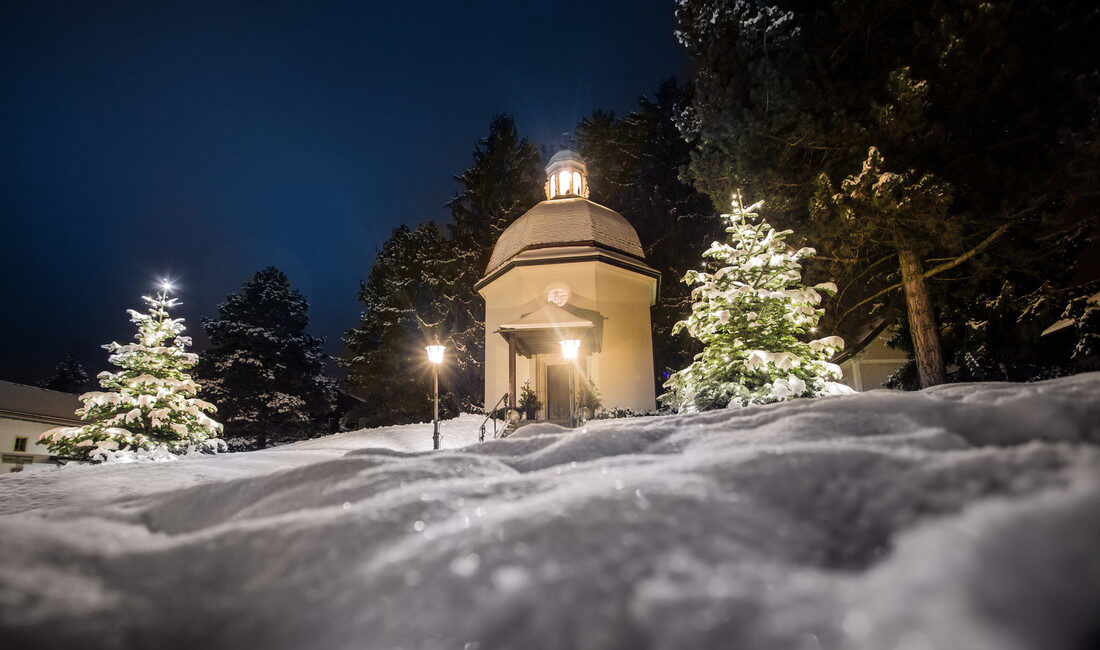

“Silent Night” — Lyrics
Silent night, holy night!
All is calm, all is bright
’Round yon Virgin, Mother and Child.
Holy infant so tender and mild,
Sleep in heavenly peace,
Sleep in heavenly peace.
Silent night, holy night!
Shepherds quake at the sight,
Glories stream from heaven afar,
Heavenly hosts sing: Alleluia!
Christ the Savior is born,
Christ the Savior is born.
Silent night, holy night!
Son of God, love’s pure light
Radiant beams from Thy holy face,
With the dawn of redeeming grace,
Jesus, Lord, at Thy birth,
Jesus, Lord, at Thy birth.
Silent Night: The Meaning of a Song the World Keeps Singing
When Silent Night was first sung on Christmas Eve in 1818, it arrived without fanfare. There was no great choir, no organ swelling beneath vaulted ceilings. The instrument most associated with the moment—a simple guitar—stood in for a broken organ in a small Austrian village church. A young priest’s poem and a schoolteacher’s melody met necessity, not ambition.
Nothing about that night suggested permanence. And yet the song endured.
It endured because Silent Night never tried to do too much. It did not explain Christmas. It did not argue doctrine. It simply named the moment at the heart of the Christian story: stillness, vulnerability, and peace entering the world quietly.
A Song Born of Quiet Necessity
Joseph Mohr, the priest who wrote the lyrics, had lived close to hardship. Franz Xaver Gruber, who composed the melody, was a village schoolteacher accustomed to making do. Their collaboration was practical and pastoral rather than artistic in the modern sense. The result was a hymn that ordinary people could sing without strain, remember without effort, and carry with them without instruction.
That simplicity is not accidental. The song mirrors its subject. The birth it describes is not dramatic. The setting is modest. The revelation unfolds without spectacle. Heaven does not interrupt the world—it enters it.
A Brief Turn Through History
Nearly a century later, during World War I, Silent Night surfaced unexpectedly in a very different setting. Letters written by soldiers in December of 1914 document a brief, unofficial pause in fighting on parts of the Western Front, during which familiar carols—including Stille Nacht—were sung across opposing trenches.
The moment was limited and fragile. It changed nothing strategically. The war continued.
It is remembered not because it altered history, but because it confirmed something already true about the hymn: Silent Night does not command events. It accompanies them.
With that, the story rightly returns to the song itself.
What the Hymn Is Really Saying
At its core, Silent Night makes a quiet but radical claim: that the decisive moment in human history did not arrive with noise, power, or force.
God enters the world as a child who sleeps.
The hymn lingers not on the politics of the time or the dangers beyond the stable, but on calm—heavenly peace—as something present even when circumstances remain uncertain. The peace the song names is not the absence of threat; it is the presence of God within it.
That distinction explains why the hymn has never felt outdated. Every generation understands unrest. Every generation recognizes the longing for a peace that does not depend on control.
The Power of Restraint
What Silent Night refuses to do is as important as what it does.
- It does not rush toward resolution.
- It does not elevate volume or tempo to stir emotion.
- It does not insist that the listener feel anything at all.
Instead, it creates space.
In that space, listeners are invited—not coerced—to consider a different measure of significance. Greatness arrives quietly. Light does not overwhelm darkness; it appears within it. The world does not stop, but it is momentarily reoriented.
Why the Song Endures
For more than two centuries, Silent Night has survived translation, adaptation, and cultural change because it rests on something deeper than style. Its endurance is rooted in recognition. People hear it and know, instinctively, that it is telling the truth about something essential.
It belongs equally in grand cathedrals and modest living rooms. It can be sung by choirs or whispered by a single voice. It does not demand perfection. It welcomes presence.
A Song for Every Age
Each year, when candles are lit and the final hymn begins, Silent Night does what it has always done. It slows the room. It lowers the temperature of the world just enough for reflection to occur.
Not because everything is calm.
Not because the night is truly silent.
But because, for a moment, we are willing to believe that peace does not need to be manufactured or enforced—only received.
And that belief, carried quietly from one generation to the next, is why the world keeps singing.
 Let's Talk About It, Lewis!