A collaboration between Lewis McLain & AI
Then vs. Now — Why DST Was Instituted
The concept of shifting clocks forward in spring and back in fall — the familiar “spring forward, fall back” of Daylight Saving Time (DST) — was originally introduced in the United States for practical wartime and energy-conservation reasons. In World War I, the U.S. passed the Standard Time Act of 1918, and later during World War II the country observed “War Time.” The intention was straightforward: reduce fuel and lighting usage by making better use of daylight hours. Later, the Uniform Time Act of 1966 sought to standardize the practice nationwide so that clock changes would occur on uniform dates in most states.
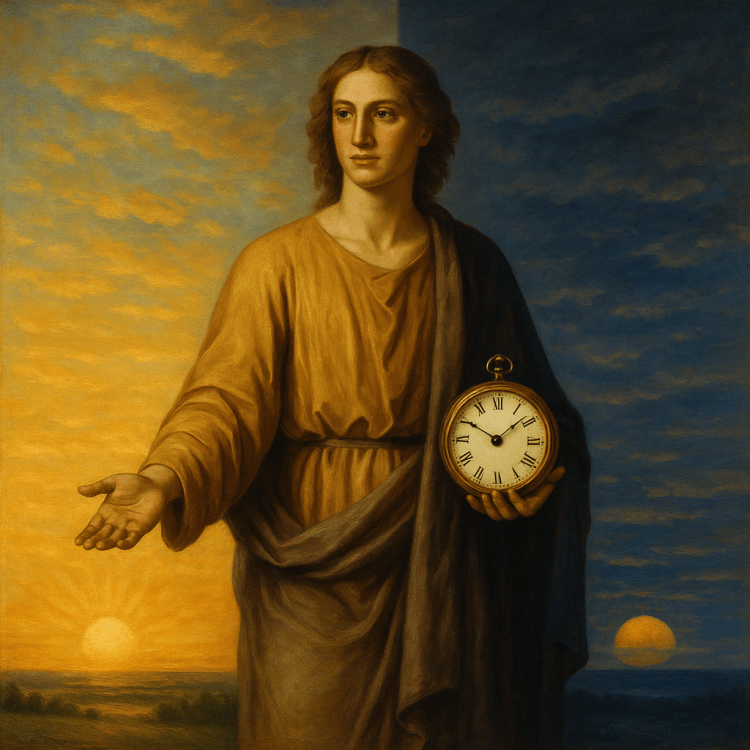
In that earlier era, lighting and fuel represented major portions of energy cost, work and commuting patterns were more uniform, and societal rhythms aligned more closely with sunrise and sunset. The logic made sense: by shifting the clock, people would make more use of the evening hours of daylight, thereby reducing artificial lighting and saving resources.
Fast-forward to today and many of those baseline conditions have changed dramatically. The energy profile of the country is very different: lighting is more efficient, air conditioning and electronics dominate electricity use, people commute at different hours, work is more global/24 hour-enabled, schooling has shifted, and digital media means social and economic activity occurs well after sunset. Thus, the original rationale for DST — large energy savings — appears weaker in the current context. Research suggests that the energy reduction is modest at best, and in some cases could be negligible or even reversed.
At the same time, the health, safety, and circadian (biological clock) implications of time shifts have become much more salient.
Understanding the Circadian Rhythm
Before proceeding further, it is necessary to explain what the “circadian rhythm” is, because it is central to understanding the modern debate. The term originates from the Latin circa diem meaning “about a day”, and refers to the approximately 24-hour cycle by which many biological processes in humans (and other organisms) are regulated. According to the American Academy of Sleep Medicine (AASM), our circadian rhythm is “our internal clock, and it is very tightly linked to the 24-hour day.” Sleep Education+2Sleep Foundation+2
More precisely, the circadian system synchronises internal physiological processes — including sleep-wake cycles, hormone release, body temperature, appetite, and metabolic regulation — to external environmental cues, most importantly the light-dark cycle of sunrise and sunset. Frontiers+1 When external time cues are altered (for example by travelling across time zones, shift work, or changing the clock), the internal circadian rhythm can become misaligned with the external environment — a condition sometimes termed “social jetlag.” Wikipedia+1
Why does this matter? Because when the human body is out of sync (i.e., our internal clock does not match the external light/dark schedule), there is growing evidence of negative downstream effects: increased risk of cardiovascular events, metabolic disorders, sleep disruption, mood disorders and impaired cognitive function. For example, in a review the AASM said that DST “can cause misalignment between the biological clock and environmental clock, resulting in significant health and public safety-related consequences.” JCSM
Thus, any policy that systematically shifts the external clock (such as DST) has the potential to interfere with the circadian rhythm — and that is why the modern health debate around DST looks very different from the original energy-saving rationale.
What’s Changed: The Health and Safety Lens
In recent years, a strong shift has occurred: from focusing primarily on energy and daylight use, to focusing on how clock changes and time-policy affect human health and safety. Several key points are worth emphasising:
- A number of studies document acute increases in cardiovascular risk following the spring clock-forward change. For example, one study found that the rate of ischemic stroke was 8 % higher in the first two days after the switch to DST. American Heart Association+1
- The transition to DST has been associated with more car accidents, reduced productivity and sleep disturbances (e.g., the Harvard Health blog notes: “Moving the clock ahead in the spring … can disrupt sleep and worsen conditions like depression, anxiety, and seasonal affective disorder.”) Harvard Health
- Regarding the circadian alignment, the AASM states flatly: “Standard time is best aligned with human circadian biology.” Sleep Education+1
- The effects are not just short-term. Longer-term misalignment — namely being on permanent DST or remaining out of sync with the sun/clock relationship — is increasingly flagged as a risk factor. One article states: “circadian misalignment … has been associated in some studies with increased cardiovascular disease risk, metabolic syndrome and other health risks.” PMC
So what has changed is that the “cost side” of the ledger has grown: we now have stronger data linking time-shifts and misalignment with real physiological harm; whereas the “benefit side” (energy savings, etc.) is weaker or more contested. Thus, the debate now centers less on “do we shift time” and more on “should we change the policy,” especially given the human biology dimension.
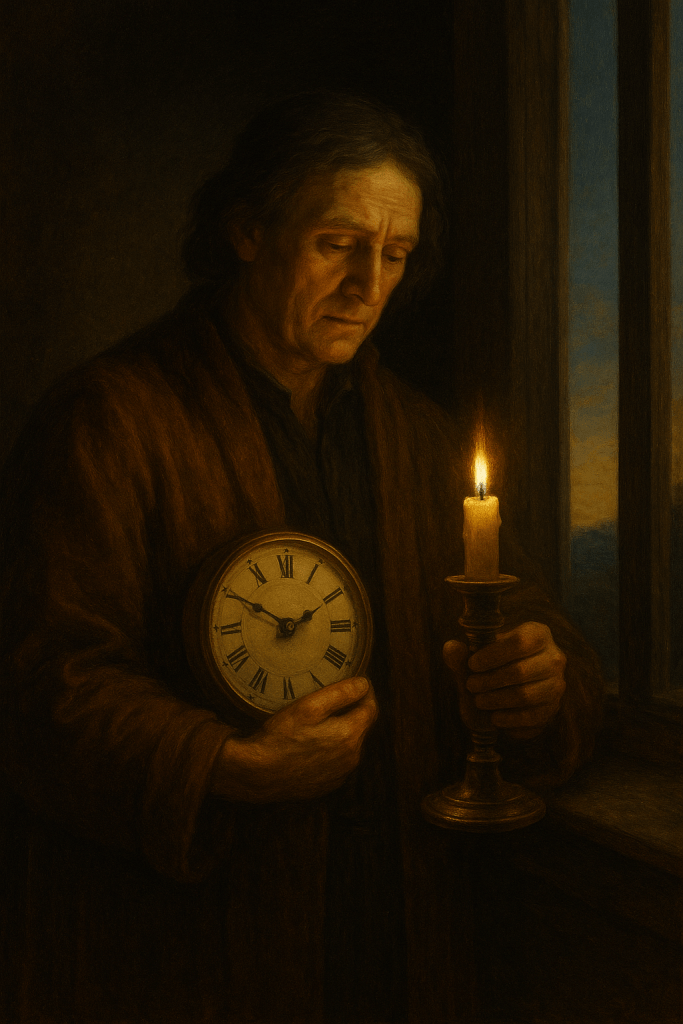
Pros and Cons in Today’s World
When evaluating whether to keep DST, adopt permanent DST, adopt permanent standard time (ST), or eliminate the clock change altogether, the key is to compare trade-offs. Below is a breakdown.
If we keep the status quo (twice-yearly clock changes)
Pros
- Maintains a summer-evening benefit: more daylight after school/work in the summer months, which can promote recreation, retail, safety in the evening.
- Retains what many people have adapted to culturally and socially; less change to business/industry routines.
Cons
- Biannual disruption: The shift (especially spring forward) produces acute health/safety consequences (heart attacks, strokes, accidents). PMC
- Chronic misalignment: Each change disrupts the circadian rhythm, prompting “social jetlag” that many sleep health researchers say is avoidable. Sleep Education+1
- Public dissatisfaction: Polls show large majorities of Americans dislike the clock-changing. (See other sources)
- The benefit of energy savings is weak/uncertain. Some studies suggest minimal savings; indeed some find usage may increase (e.g., more evening AC usage). Bloomberg School of Public Health
If we adopt permanent Daylight Saving Time (no more changes)
Pros
- Consistent throughout year: no more “spring forward/fall back” disruption.
- Longer evening daylight year-round may boost recreation/commerce, reduce some crime, support outdoor activity.
- Avoids the logistical and health-burden of twice-yearly shifts.
Cons
- Morning darkness in winter: With permanent DST, winter sunrises will be later. This means children, commuters start their day in darkness more often — with potential negative safety, alertness consequences. Many experts worry about that.
- From a circadian health perspective, DST places clocks further from solar time; the AASM and other authorities regard standard time as better aligned with biology. For example, one review says: “Although chronic effects of remaining in daylight saving time year-round have not been well studied, daylight saving time is less aligned with human circadian biology.” PMC
- Some of the benefits assumed (energy savings, etc.) may still be modest or offset by other factors (e.g., heating usage in the dark mornings).
If we adopt permanent Standard Time (no changes)
Pros
- From multiple sleep/health bodies this is the “best” alignment with human biology. AASM: “Standard time is best aligned with human circadian biology.” Sleep Education
- Removes the twice-yearly shift and avoids the morning darkness compromise of permanent DST.
- Some recent modelling suggests meaningful health gains: one article claims permanent ST could prevent hundreds of thousands of stroke cases and millions of obesity cases in the U.S. based on circadian modelling. Newsweek+1
- Simplifies time boundary issues and reduces transition risk.
Cons
- Evening daylight in summer will be slightly curtailed compared to permanent DST — some businesses/leisure sectors may object.
- Some regions may feel cultural or economic loss of later evening light.
- Politically may be harder to sell than “more daylight in evening” narrative.
In sum: the health and circadian-alignment arguments strongly favour ending the clock changes and favouring permanent standard time; arguments for DST often centre on lifestyle, recreation, commerce and evening daylight. The question becomes a policy decision of priorities: human biology vs. social/economic habits.
What Is Required to Change It in the U.S.
Under current U.S. federal law, the setting for time-zone and DST decisions is the Uniform Time Act of 1966. That law allows states to opt out of DST entirely and observe permanent standard time, but it does not allow a state to adopt permanent DST unilaterally. In the words of the federal government: “States do not have the authority to choose to be on permanent Daylight Saving Time.” Wikipedia+1
Therefore, what must happen:
- Congress must pass legislation amending the Uniform Time Act to allow permanent DST (or otherwise alter the schedule).
- A state legislature may pass a law to choose permanent standard time (which is already permitted) but cannot go to permanent DST without federal change.
- Because time changes affect interstate commerce, transportation, communications, business, etc., uniformity is a real concern, so the federal role remains central.
Bills in play
In the current 119th U.S. Congress (2025-26):
- The Sunshine Protection Act of 2025 (Senate Bill 29 / House Bill 139) proposes to make permanent Daylight Saving Time nationwide. Both bills were introduced in January 2025. As of late October 2025, however, legislative momentum remains stalled in the Senate, in part because of disagreements about winter morning darkness and other implications. Wikipedia+1
- Meanwhile, many states have passed so-called “trigger laws” or resolutions that express intent to move to permanent DST if Congress authorises it. For example, in Texas in 2025 the legislature passed a resolution in that direction. Wikipedia
Thus, while there’s considerable political interest, the actual legal change remains a matter for Congress. Unless Congress acts, the status quo remains: biannual clock changes, with states free to opt out and stay on standard time, but not free to permanently adopt DST.
The Policy Choice — Framed by Evidence
So what are the key take-away points?
- DST was introduced in a very different era with objectives (energy savings, wartime fuel use) that fit the historical context. Today those objectives are less compelling and the health/biological consequences are much clearer.
- The concept of the circadian rhythm — our internal 24-hour biological clock synchronized by light and dark — has become central to understanding why time-policy matters. When we force misalignment (via clock changes or permanent DST) we risk adverse health and safety effects.
- Expert consensus among sleep and circadian researchers leans heavily toward ending the biannual clock change and favouring permanent standard time. As the AASM states: “Standard time is best aligned with human circadian biology.” Sleep Education+1
- The trade-offs are real: evening daylight matters for social, economic, recreational reasons. But the health costs of misalignment and transition are non-trivial.
- Legally and politically, change is possible — but requires federal legislative action. Until then, states remain limited in what they can do.
- The modelling evidence (e.g., projections that permanent ST could reduce hundreds of thousands of strokes and millions of obesity cases) is striking — though it is based on modelling and circadian assumptions rather than longitudinal “real-world” proof. Newsweek+1
Bottom Line
In the early 20th century, DST made sense in its historical context. But in the 21st century, with vastly changed technology, lifestyles, and understanding of human biology, its justification is weaker — while its costs (especially on the circadian rhythm) are increasingly clear.
The most biologically sound policy appears to be: end the twice-yearly clock change and adopt permanent standard time. That aligns with the overwhelming recommendation of sleep and circadian health experts. If the U.S. moves instead to permanent DST, it may retain some cultural/evening daylight benefits — but it does so at the cost of further misalignment of human biology with the natural light-dark cycle.
Changing the law is feasible, but only if Congress acts. Until then, we are left with the compromise of biannual change — one that many experts argue is the worst of both worlds: disruption plus misalignment.
Appendix — Health Evidence on DST, With Key Numbers & Quotes
A. Expert consensus statements (health authorities)
- American Academy of Sleep Medicine (AASM), 2025 position (updated):
“The United States should eliminate seasonal time changes in favor of permanent standard time, which aligns best with human circadian biology… Evidence supports the distinct benefits of standard time for health and safety, while underscoring the potential harms that result from seasonal time changes.” AASM+1 - American Medical Association (AMA) policy:
The AMA House of Delegates voted to end seasonal time changes and support year-round standard time: “Eliminating the time changes… would be a welcome change. But… permanent daylight saving time overlooks potential health risks.” (policy and press coverage). American Medical Association+2American Medical Association+2
Circadian rhythm, defined: your body’s ~24-hour internal timing system (from circa diem, “about a day”) that synchronizes sleep-wake, hormones, temperature, metabolism, and alertness primarily to light and dark. When civil time is shifted (or kept far from solar time), circadian misalignment results—often called “social jetlag”—and is linked to higher risks across cardiovascular, metabolic, mood, and safety outcomes. (See peer-reviewed overview and AASM statements above.) JCSM+1
B. Acute effects around the spring (“forward”) shift
Cardiovascular
- Heart attacks (AMI): Meta-analysis and multi-setting studies report transient increases after the spring shift. Example synthesis: “DST transitions might increase the risk of acute myocardial infarction… disturbed circadian rhythms and lack of sleep after transitions are plausible mechanisms.” PMC
- Michigan cohort (often cited): +24% AMI on the Monday after spring DST vs. other Mondays. (AHA news release summarizing peer-reviewed work.) American Heart Association
Stroke
- Finnish national data: +8% ischemic stroke during the first two days after a DST transition. PubMed+1
Injuries/accidents
- Fatal motor-vehicle crashes: U.S. fatalities +6% during the workweek after spring forward; the spike shifted in 2007 when Congress moved the DST start date—strong quasi-experimental signal. University of Colorado Boulder
- Economic analysis: “Spring Forward at Your Own Risk” (American Economic Journal: Applied Economics) links DST transition to more fatal crashes using credible identification strategies. American Economic Association
C. Broader safety & performance evidence tied to circadian disruption
- Night-shift driving experiment (mechanism evidence): Polysomnography + driving simulator show markedly higher near-crash risk after circadian disruption and sleep restriction—illustrates the pathway (sleep loss + misalignment → safety risk). PNAS
D. Chronic misalignment: permanent DST vs. standard time
- Clinical/position review (AASM, Journal of Clinical Sleep Medicine):
“Standard time is best aligned with human circadian biology… remaining on DST year-round is less aligned with circadian timing and may carry chronic risks.” JCSM+1 - Circadian-informed modelling (PNAS, 2025):
Using region-specific light patterns and behavior, authors conclude the biannual shift and DST-tilted schedules impose meaningful, negative health consequences, with permanent standard time minimizing circadian burden in many regions. (Model-based but useful for policy.) PNAS
E. Mixed or null findings (what doesn’t agree)
- Recent cardiology reassessment (Duke, 2025): Press release on new analysis arguing heart-attack spikes may be smaller or inconsistent, suggesting long-term sleep habits matter more than the one-hour shift per se. (Underscores uncertainty bands and the value of focusing on chronic alignment.) Duke University School of Medicine
How to read the literature:
- Acute risks (first 1–7 days after spring forward) show the most consistent signals (fatal crashes, some AMI/stroke upticks).
- Chronic risks depend on how far clocks are set from sunlight—hence expert preference for permanent standard time.
- Effect sizes vary by latitude, seasonality, and population vulnerability; estimates are strongest where identification (e.g., policy shocks) is clean.
F. Selected landmark references (quick list)
- AASM position statements & toolkit (2023–2025): permanent standard time recommended; seasonal shifts linked to health & safety harms. AASM+2AASM+2
- AHA/AAN summaries of acute risks: +24% AMI (Michigan Monday), +8% ischemic stroke (Finland, first two days). American Heart Association+1
- Traffic safety: +6% fatal crashes week after spring forward (CU Boulder write-up of peer-reviewed research); AEJ-Applied Econ paper corroborates. University of Colorado Boulder+1
- Meta/overview on AMI: DST transitions plausibly raise AMI risk, via sleep and circadian disturbance. PMC
- Mechanism evidence: Circadian disruption → higher near-crash risk (PNAS). PNAS
- Counter-evidence note: New 2025 analysis questions size/consistency of AMI spikes. Duke University School of Medicine
- PNAS 2025 modelling: Circadian-informed national scenarios favor permanent ST to minimize health burden. PNAS
G. Policy takeaway from the evidence
- Most robust risks are acute (post-spring-forward) and safety-related (traffic);
- Chronic alignment with solar time is the health-optimal endpoint (hence expert preference for permanent standard time);
- Because state law can’t enact permanent DST alone, any national change (DST permanent or ending clock changes) still requires an Act of Congress—the current vehicle has been the Sunshine Protection Act, which has stalled repeatedly amid concerns about dark winter mornings and health trade-offs. (Legal mechanics discussed in the main essay.) AASM
 Let's Talk About It, Lewis!