A collaboration between Lewis McLain & AI
(Many of these we have visited as Linda & I assisted or led ten high school trips to Europe and two adult groups.)
I. The Cathedral as Theology in Stone
Throughout history, the cathedral has stood as more than a house of worship—it is a visible theology, a sermon in stone and glass, and the embodied aspiration of humankind toward heaven.
From the medieval masons of Chartres and Canterbury to the Renaissance masters of Florence and Rome, each cathedral was constructed not merely to enclose space but to draw the soul upward, guiding the eye from earth to eternity.
To step into a cathedral is to enter a world where faith becomes architecture—where mathematics, proportion, and light serve not only the intellect but the spirit.
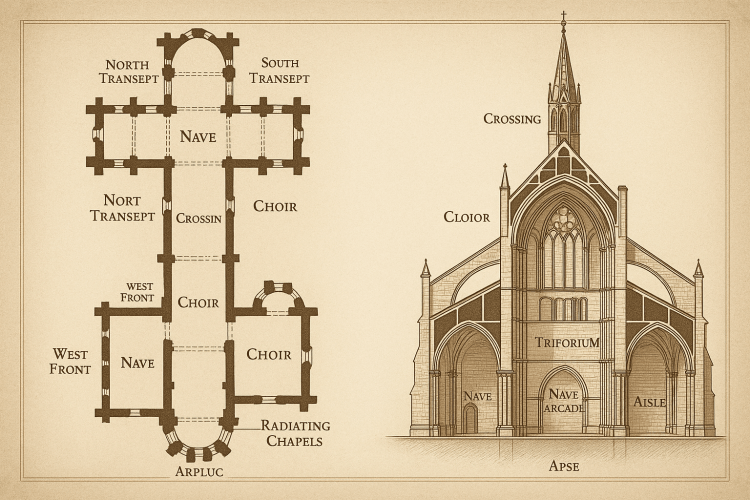
II. The Blueprint of Heaven: Structure and Meaning
The Cruciform Plan
The cathedral’s plan, shaped like the Latin Cross, mirrors Christ’s own body.
- Nave – “navis,” the ship of salvation, carries the faithful through the storms of life.
- Transept – the arms of the cross, symbolizing Christ’s embrace of the world.
- Choir and Apse – the head of the cross, where heaven meets earth at the altar.
Even the orientation was deliberate—churches faced east, toward the rising sun, the direction of the Resurrection. The faithful entered from the west, walking from darkness into light.
Verticality and Light
The pointed arch and ribbed vault were not inventions of vanity but revelations of grace. They allowed walls to dissolve into windows of divine light, flooding the interior with a spectrum of color from stained glass that told Scripture’s stories to those who could not read.
Abbot Suger of Saint-Denis called it lux nova—“new light”—through which, he wrote, “the dull mind rises to truth through material things.”
III. The Symbolic Language of the Cathedral
Cathedral design followed a theology of number, proportion, and form:
- Three = the Trinity.
- Four = the Gospels and the corners of the earth.
- Seven = perfection and the gifts of the Spirit.
- Twelve = the Apostles, the foundation of faith.
- Circle and square = heaven and earth, united in sacred geometry.
Every window, vault, and tower carried meaning.
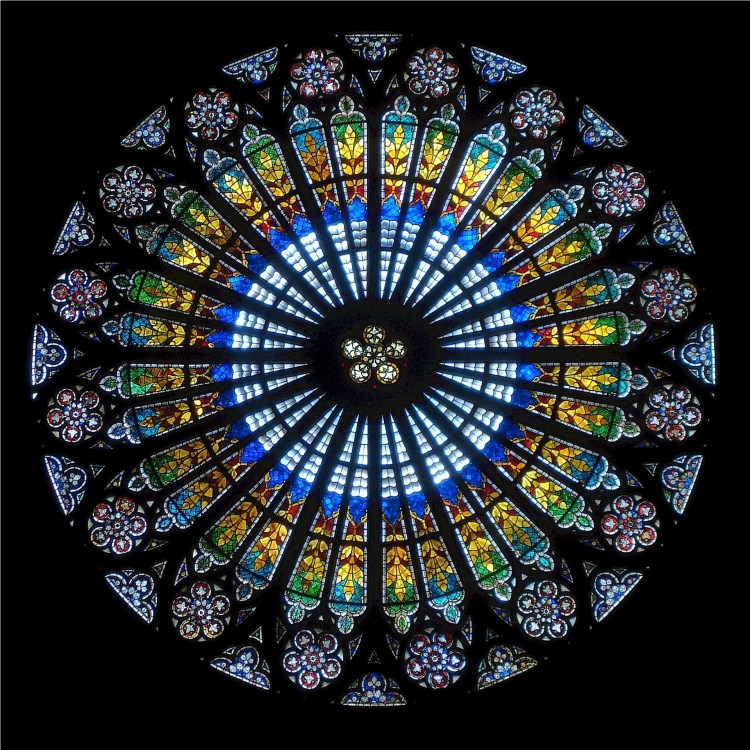
- The rose window symbolized divine perfection and Mary as the “Mystical Rose.”
- The spire pointed heavenward like a prayer.
- The crypt below the altar symbolized the foundation of faith and the tombs of saints.
- The labyrinth embedded in some floors symbolized the pilgrimage of life toward God.
Even the play of light and shadow served a theological role: the light revealed divine order, and the shadow reminded of mystery.
IV. The Cathedral as Living Drama
A cathedral was a stage for faith—its rituals, music, and movement forming a liturgical choreography.
- The procession down the nave echoed humanity’s journey toward God.
- Incense sanctified the air, turning breath itself into prayer.
- Chant rose through stone vaults, transforming mathematics into music.
- Candles and stained glass painted Scripture across stone, illuminating both mind and heart.
Inside, the boundary between heaven and earth blurred: the faithful participated in a cosmic drama, an ordered beauty that reflected divine creation.
V. The Master Builders: Artists of Eternity
These cathedrals did not bear a single author’s name; they were collaborations of generations. Yet a few names shine through history, bridging the Gothic and Renaissance ages.

- Abbot Suger (Saint-Denis, 12th century): envisioned light as the material of heaven.
- Robert de Luzarches (Amiens): achieved perfect proportion and balance.
- Filippo Brunelleschi (Florence): crowned the Duomo with the largest dome since Rome, merging faith and engineering.
- Michelangelo (St. Peter’s): sculpted a dome that became the symbol of Christian civilization.
- Sir Christopher Wren (St. Paul’s, London): united reason and reverence, geometry and grandeur.
Each architect turned theology into geometry, translating mystery into measure.
VI. The Geography of Faith

Chartres Cathedral, France – “The Light of Faith”
A symphony of stained glass and soaring stone, Chartres glows with blue light that seems born of heaven itself. Pilgrims entered not merely to pray, but to see faith.
Amiens Cathedral – “The Harmony of Heaven”
Its vertical precision and mathematical perfection made it a model for High Gothic architecture. The façade is a cathedral in miniature—Scripture carved in stone.
Canterbury Cathedral – “The English Light of Faith”
A beacon of Christian unity and martyrdom, where Thomas Becket’s shrine drew pilgrims across medieval Europe.
Florence’s Santa Maria del Fiore – “The Dome of Florence”
Brunelleschi’s miracle of engineering became the visible heart of the Renaissance—faith and reason wedded under one dome.
Cologne Cathedral – “The Towers of the Rhine”
Rising like twin prayers above the river, its Gothic spires were among the tallest structures of the medieval world—an anthem of perseverance.
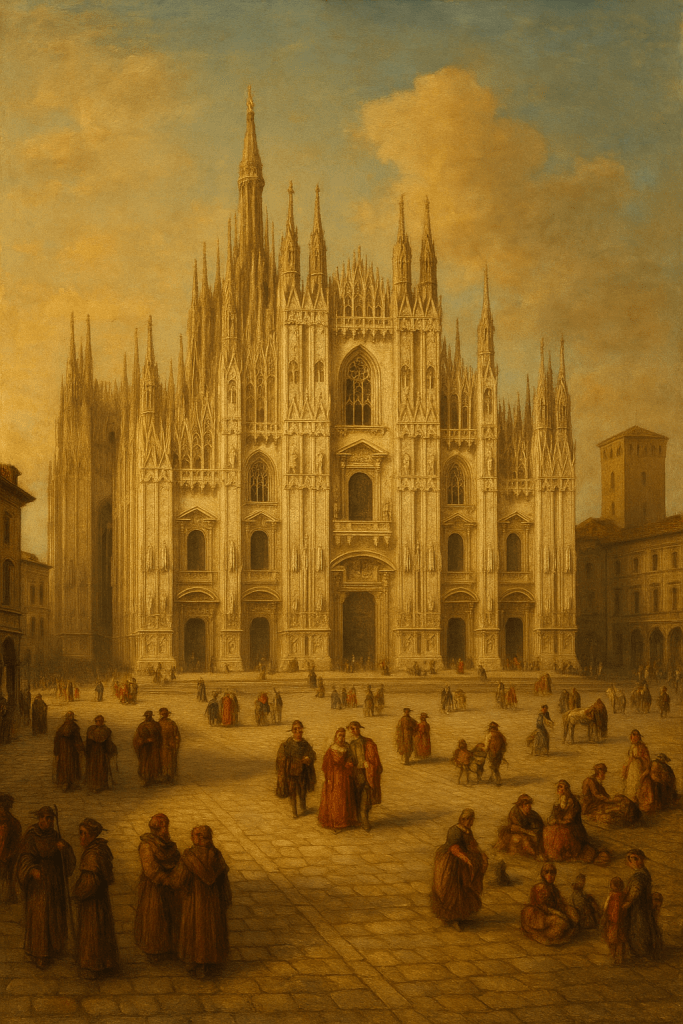
Milan Cathedral – “The Marble of Heaven”
A white forest of spires and statues, its façade glows with celestial light—a Gothic hymn in marble, completed across centuries.
St. Paul’s Cathedral, London – “The Dome of Reason and Faith”
Wren’s masterpiece rose from the ashes of the Great Fire, symbolizing rebirth and the Enlightenment’s reconciliation of science and spirit.
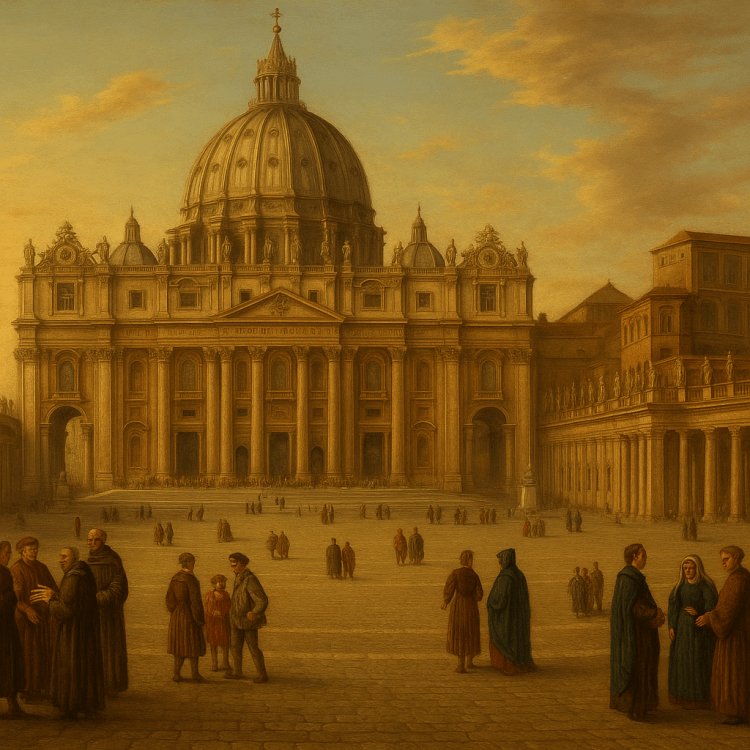
St. Peter’s Basilica, Rome – “The Dome of Heaven”
Michelangelo’s dome gathers light and shadow in one celestial curve—the architectural heart of Christendom.

Seville Cathedral – “The Crown of Andalusia”
Built on the foundations of a mosque, it embodies Spain’s golden age of faith and exploration, its Giralda tower uniting Moorish grace and Christian triumph.

St. Patrick’s Cathedral, New York – “The Gothic Heart of America”
Rising amid skyscrapers, it brought Old World faith to the New—its spires a reminder that even in commerce and ambition, the soul looks upward.

Reims Cathedral – “The Coronation of Kings”
Here France anointed her monarchs, blending political authority and divine sanction under a canopy of sacred art.

Westminster Abbey – “The Voices of the Crown”
Coronations, weddings, and burials fill its stones with national memory. Poets, saints, and sovereigns share its eternal silence.

Mont-Saint-Michel Abbey – “The Island of Heaven and Earth”
A miracle of nature and faith, rising from tidal sands like a vision of the New Jerusalem. Pilgrims still walk the ancient causeway.

Santiago de Compostela – “The Pilgrim’s End”
The journey’s end for millions—the place where weary travelers fall to their knees and find rest in the shadow of the Apostle’s tomb.
Chartres Cathedral Interior – “The Windows of Heaven”
Sunlight through sapphire glass transforms the nave into a sea of color, embodying the union of matter and spirit—light made prayer.
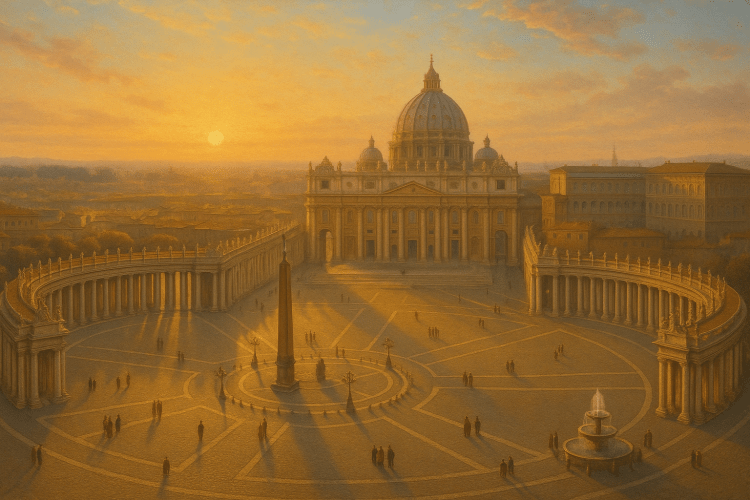
The Vatican at Dawn – “The Seat of Faith and Reason”
From above, St. Peter’s Square opens its arms to the world—Bernini’s architecture of embrace, illuminated by a new day’s first light.
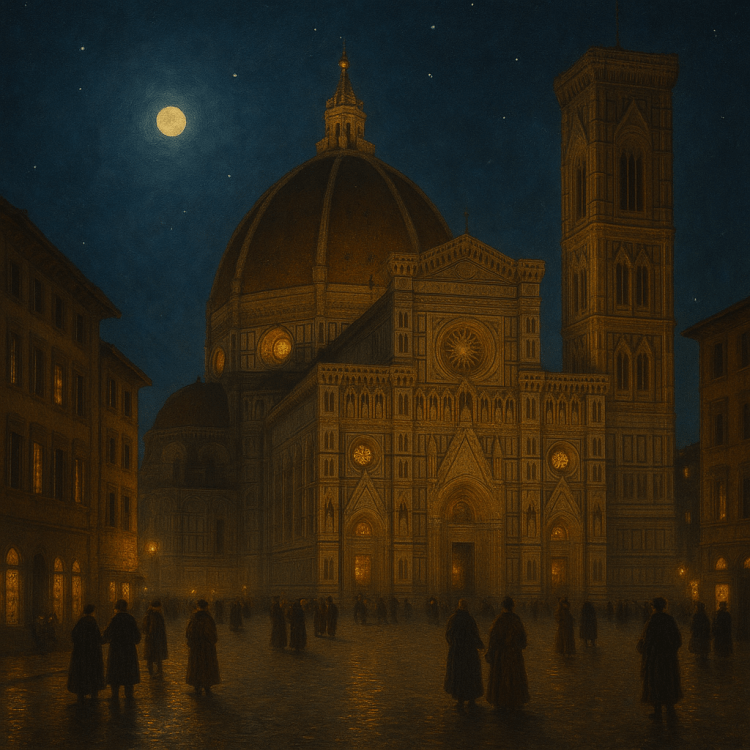
Florence by Night – “The Light Within”
Under moon and lamplight, the Duomo’s quiet majesty reminds that faith does not sleep. Beneath the stars, devotion becomes peace.
VII. The Cathedral and the Soul
Cathedrals were never just buildings—they were cosmoses of faith, reflections of a universe ordered by beauty, truth, and light.
They taught, healed, inspired, and endured.
In every stone lies an act of faith. In every window, the story of salvation.
To walk their aisles is to travel through time and eternity—the journey of creation itself rendered in glass, marble, and prayer.
They stand as the architecture of hope, proclaiming through centuries of war and change that heaven is nearer than we think.
VIII. Epilogue: The Eternal Architecture
When the builders of Chartres, Florence, and Rome set their compasses, they sought not fame but harmony with divine order.
Their work endures because it was built not only of stone—but of faith shaped into form.
The cathedral teaches us that beauty is not ornament; it is revelation.
And when light passes through the rose window, scattering colors across the floor, it speaks wordlessly what all believers feel:
“The heavens declare the glory of God;
and the firmament shows His handiwork.” — Psalm 19:1
Cathedrals are humanity’s greatest confession—
that even amid our dust, we dream of light.
 Let's Talk About It, Lewis!
Some of this was new to me. Very interesting. Thank you.
LikeLike
Thanks! I wish we could have had the students and parents (and me) read this before taking them to Europe.
LikeLike