A collaboration between Lewis McLain & AI
An overly serious guide to surviving the smallest challenges in life — one crooked picture, dead battery, and existential dishwasher load at a time.
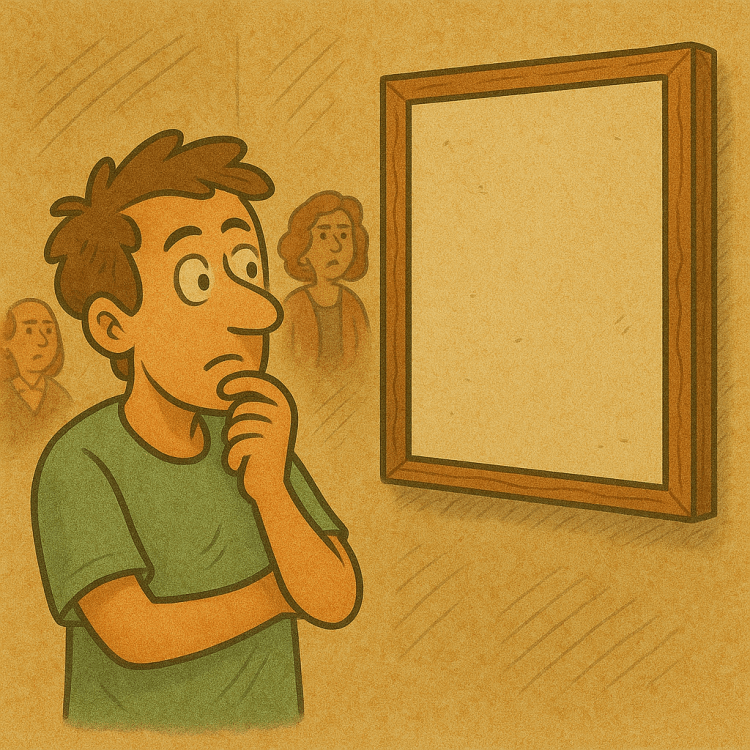
How to Hang a Picture Straight (Until Gravity Intervenes)
Step one: believe in yourself. Step two: realize that belief is misplaced. You begin with noble intentions — tape measure in hand, level app open, pencil behind your ear like a master craftsman. The first nail goes in perfectly. You step back, squint, tilt your head, and it’s crooked. You adjust. Now it’s more crooked. You consult the laws of physics, the spirit of Michelangelo, and finally your spouse, who declares it “fine.” You both nod in silence, knowing it’s not fine. The picture now leans like it’s whispering a secret to the floor. But here’s the truth: nothing is ever perfectly straight. Life, walls, and old houses all bend a little — and that’s where the charm hangs. You’ll pass by it tomorrow and think, maybe it’s the frame that’s off. You’ll leave it, knowing deep down that you’ve achieved something far more valuable than symmetry — peace through surrender.
How to Replace Batteries and Find the Remote Without Losing Faith in Humanity
First, accept that the remote has its own free will. It hides not out of malice but for sport. You’ll begin the search confident — couch cushions, coffee table, under the newspaper — and gradually devolve into muttering accusations at the cat. When you finally locate it (perhaps under a blanket or behind a decorative pillow), your victory is short-lived. The batteries are dead. You pry off the back cover, which instantly vanishes into another dimension, and dig through your junk drawer — a museum of expired warranties, old receipts, and exactly one AA battery. After aligning the mysterious + and – symbols, you press the button. Nothing. You flip them. Nothing again. You question the integrity of battery manufacturers and possibly the concept of hope itself. Finally, you find a new pair that works, and when the screen flickers back to life, it feels less like success and more like survival. The true moral: the remote controls you, not the other way around.
How to Assemble IKEA Furniture Without Destroying Your Marriage
It always begins the same way: optimism, an Allen wrench, and a relationship worth testing. The instructions are hieroglyphics drawn by someone who believes words are for the weak. Step one looks simple enough. By step five, you’re holding three dowels, two bolts, and a philosophical crisis. One of you insists on following the manual; the other claims to have “a system.” You take turns blaming the missing screw, the deceptive picture, and gravity itself. Hours later, you both stand over the completed furniture — slightly leaning, but functional — feeling as though you’ve survived a shared trauma. You swear never to shop there again, knowing full well you’ll be back by next weekend for a lamp named Flötsnörk. The furniture may wobble, but your love, against all odds, remains intact — loosely assembled, but holding.
How to Load a Dishwasher Correctly (According to Everyone Else)
The dishwasher is not an appliance — it’s a battleground of competing moral codes. The Pre-Rinsers believe every speck of food must be obliterated before loading, as if the machine requires purity. The Free-Loaders believe in faith alone: throw it in and let destiny decide. You hover between them, rearranging plates while pretending to be neutral. Forks go down, because safety; no, up, because sanitation. Cups must face inward for water flow, unless you’re married to someone who insists on “air efficiency.” By the end, you’re simply moving things for the illusion of control. You close the door with a satisfying click, hit “Start,” and hear the whoosh of reconciliation. In that moment, you realize the dishwasher doesn’t care who’s right — it just wants you both to stop arguing long enough for it to do its job.

How to Make Coffee Before You’re Awake
Before dawn, your brain negotiates with consciousness. You stumble toward the kitchen, guided only by instinct and caffeine withdrawal. You scoop grounds with the precision of someone performing brain surgery in mittens. Too much, and you’ll vibrate through space-time; too little, and the morning collapses. You pour water, forget the filter, remember too late, and baptize the counter in dark roast. The machine coughs, groans, and begins to hum like an angel warming up. That first drip hits the pot and fills the air with forgiveness. You take your first sip, feel your soul reboot, and briefly believe in the goodness of humanity. Then you realize you forgot to buy cream, and all faith is lost again. Coffee teaches humility: even perfection tastes bitter without balance.

How to Fold a Fitted Sheet (A Tragic Love Story)
The fitted sheet is proof that geometry has a sense of humor. You begin with optimism, clutching two corners like a bullfighter facing elastic destiny. You fold, twist, and tuck, determined to find logic in chaos. Somewhere along the way, you lose track of the corners — and yourself. You consult a YouTube tutorial, but the demonstrator’s hands move like divine beings beyond mortal comprehension. After twenty minutes, you accept defeat, roll the sheet into a soft cotton burrito, and declare victory. It’s not neat, but it fits in the closet, and that’s what matters. Like love, the fitted sheet cannot be tamed — only embraced, forgiven, and stored out of sight.

How to Decide What’s for Dinner Without Triggering a Family Civil War
Few negotiations in history are as fraught as the nightly dinner decision. It begins politely — “What do you want?” “I don’t know, what do you want?” — and descends quickly into stalemate. You scroll through takeout options like diplomats parsing a treaty, rejecting ideas not on merit but mood. Tacos sound good until someone remembers the cleanup. Pasta feels lazy. Salad sparks open rebellion. Thirty minutes later, you’ve burned more energy debating food than you would’ve spent cooking it. Eventually, pizza rises as the universal peace accord of modern civilization. It’s round, democratic, and no one has to wash dishes. The kitchen cools, the world steadies, and the family survives another night of culinary politics.
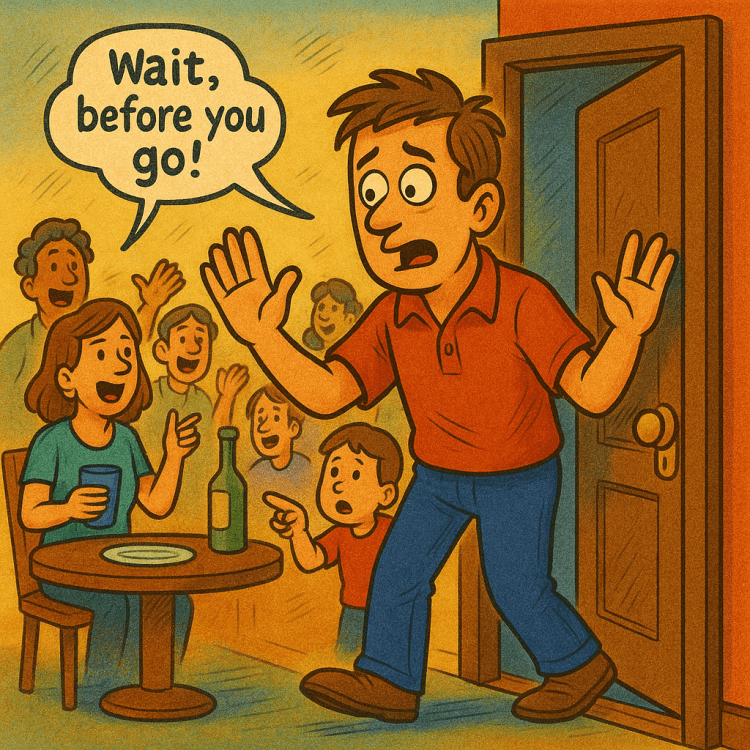
How to Leave a Party Gracefully (After Saying Goodbye 14 Times)
There’s no elegant exit — only stages of attempted escape. The first goodbye happens near the snacks, confident and cheerful. Then someone stops you with “Wait, before you go…” Twenty minutes later, you’re in the hallway, trapped in a conversation about podcasts. You edge toward the door, coat in hand, smile frozen in farewell fatigue. At the threshold, someone remembers a story you simply must hear. You stay, nodding, waiting for a natural pause that never comes. When you finally break free, you’ve achieved nothing short of diplomatic withdrawal. Driving home, you realize you left your casserole dish behind — and that you’ll have to return for it tomorrow, re-entering the social labyrinth anew.

How to Remember Why You Walked Into the Room
You stride in with purpose. You know you came for something — but what? You stand in silence, scanning the room like a detective in a crime scene, mentally retracing your steps. Was it your phone? Your keys? No, that’s too obvious. Perhaps it was your sense of direction, now gone forever. You backtrack to the kitchen, open a drawer you don’t remember opening, and — miracle — it comes to you! Then, by the time you reach the doorway again, you’ve forgotten why you remembered. Forgetfulness, like time, is circular. The best you can do is laugh and hope it comes back around before bedtime.
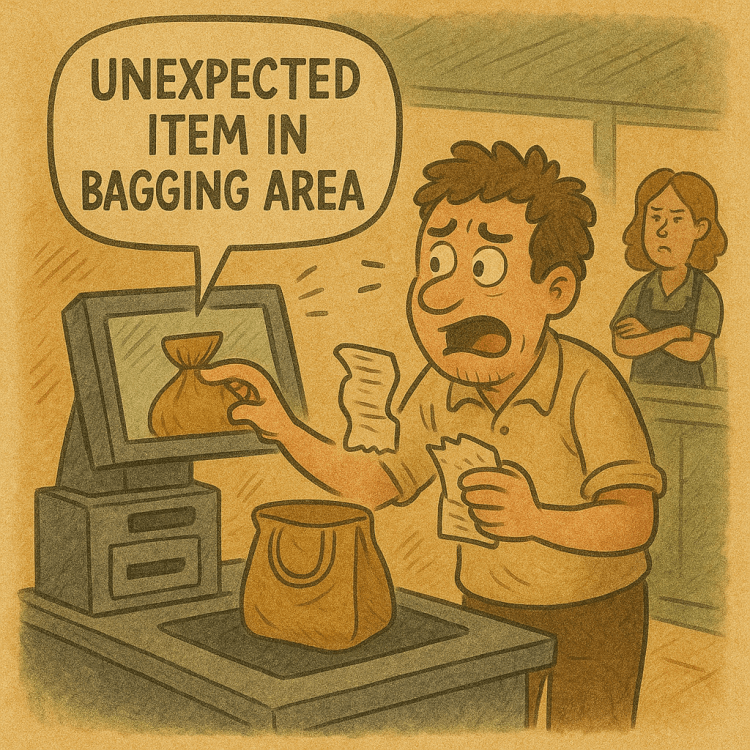
How to Use a Self-Checkout Without Being Judged by the Machine
The self-checkout promises efficiency and delivers psychological warfare. You scan your first item. Beep. You feel proud. Then it begins: “Unexpected item in bagging area.” Panic. You freeze, look at your hands as if they’ve betrayed you. You lift the bag, set it down again. “Remove item from bagging area.” The voice grows colder, the light flashes red, and the attendant approaches with that weary smile of someone who’s seen too much. You explain, they nod, and the machine resets — briefly. You reach for the next item, and it begins again. By the end, you’ve confessed to crimes you didn’t commit just to make it stop. You leave the store sweating, clutching your receipt like a pardon.

How to Set a Digital Clock on Your Microwave
It’s blinking 12:00. You try to ignore it, but it mocks you — a silent reminder that time itself has power over you. You press “Clock.” Nothing happens. You press “Set.” It resets the timer. You press “Cancel,” which erases your soul. The beeping grows smug. Eventually, you push random buttons until something changes, and for a brief, glorious moment, it shows the right time. Then there’s a power surge, and it blinks again. You surrender. The microwave has declared eternal midnight, and you are its obedient subject. Every time you glance at it, you’re reminded: control is an illusion, and punctuality is for the naïve.
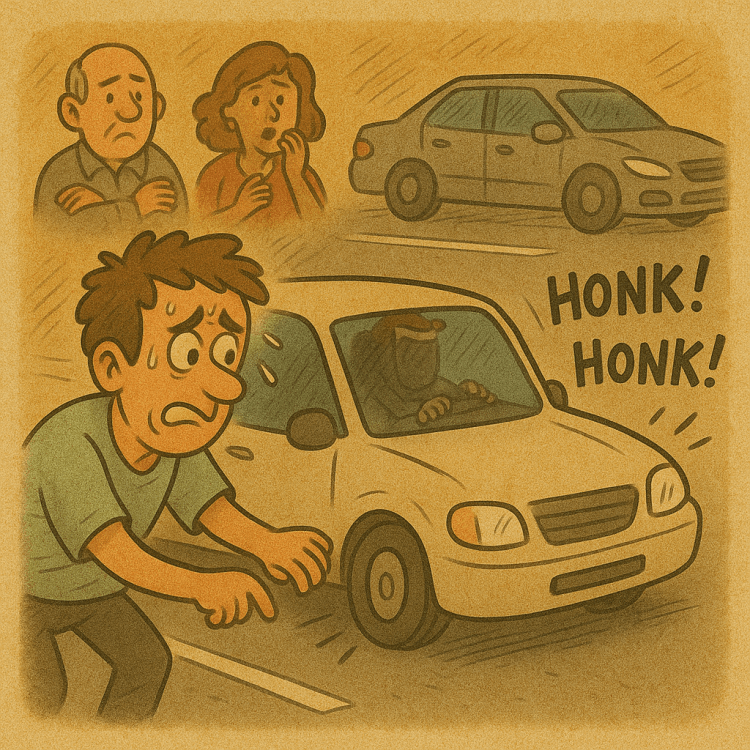
How to Back Into a Parking Spot Like You Know What You’re Doing
You spot your space and line up your vehicle with the confidence of a seasoned stunt driver. The first attempt goes wide. The second sends your sensors screaming. You pretend it’s intentional, that you’re just “adjusting angles.” Onlookers pause, whispering. A line of cars forms behind you, the automotive equivalent of judgment. You finally slide in — slightly diagonal but close enough to legal — and sit in silence, pretending to check your phone while your heart rate stabilizes. When you exit, you nod to imaginary fans as though it were a deliberate flourish. You will never return to that parking lot again.
How to Pretend You Understand Modern Art at a Gallery
Walk slowly. Squint often. Tilt your head as if listening to the painting. Whisper phrases like “the tension between form and void” or “the artist’s relationship with entropy.” Never admit confusion; ambiguity is the currency of culture. If the piece looks like something your toddler could do, that’s when you lean in and murmur, “It’s a commentary on innocence.” Smile knowingly and move on before anyone asks questions. Remember, in the world of modern art, confidence is comprehension — and the more puzzled you are, the more profound you appear.

How to Look Busy on Zoom When You’ve Zoned Out Entirely
It’s 2:37 p.m., and your soul has left your body. The meeting drones on. You master the sacred trifecta: nod, squint, and furrow. Occasionally unmute to say “Yes, good point,” before quickly muting again to whisper apologies to your dog. Your eyes dart across fake spreadsheets as your brain replays childhood memories. When someone calls your name, you repeat their last three words in a thoughtful tone — a timeless survival technique. As the meeting ends, you smile, stretch, and pretend you’ve accomplished something meaningful. In truth, you’ve just earned an honorary degree in performance art.
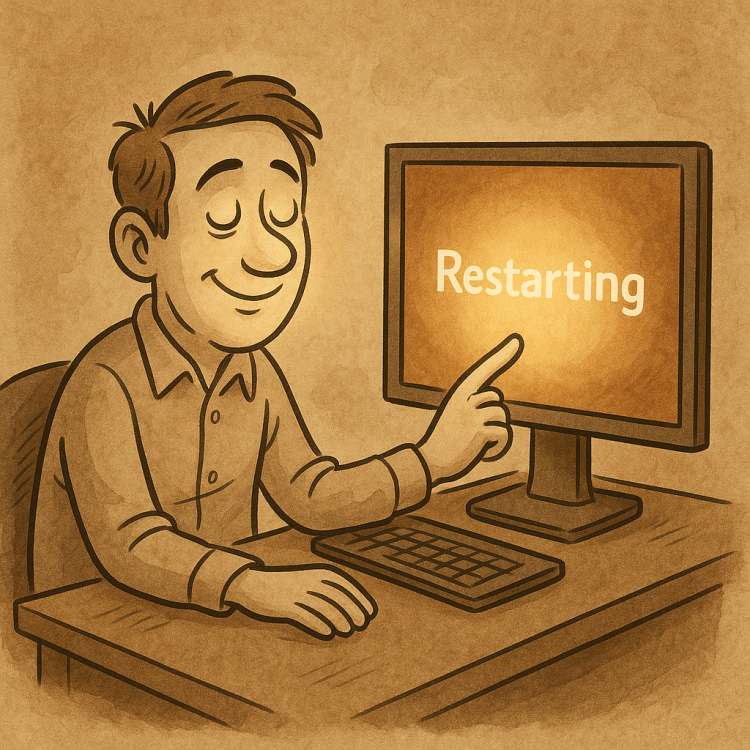
How to Restart Your Computer (and Your Life)
You’ve tried everything. The screen freezes, your patience collapses, and you begin negotiating with technology like an ancient priest. “Just one more click,” you plead. It ignores you. You sigh, press “Restart,” and watch the glowing circle spin — the modern mandala of surrender. In that moment, you realize the wisdom hidden in circuitry: sometimes you have to stop everything to start again. As your computer hums back to life, so do you. A clean desktop. A fresh start. Proof that even machines believe in resurrection.
Final Reflection: The Philosophy of the Everyday
Maybe the point isn’t to master these things at all. Maybe it’s to laugh through the mess — the crooked pictures, tangled cords, burnt toast, and blinking clocks. Life’s small struggles remind us that perfection is a myth and humility the only real user manual. We don’t conquer the domestic world; we dance awkwardly with it. So hang the picture, fold the sheet, make the coffee, and misplace the remote. You’re not failing — you’re participating in the grand comedy of being human. Somewhere, the universe is chuckling too, slightly crooked on its own cosmic nail.
 Let's Talk About It, Lewis!
Fun stuff – you covered a lot!
Sending to Lex for the IKEA piece in particular.
:0)
B
LikeLike