A collaboration between Lewis McLain & AI
Introduction
The Israel–Palestine conflict has long been one of the most polarizing issues in American politics and foreign policy. For decades, the majority of Americans leaned pro-Israel, citing shared democratic values, religious affinities, and strategic alignment. But in recent years, opinion has shifted, with growing criticism of Israeli policies, particularly regarding Gaza and the West Bank. The Hamas assault on Israel on October 7, 2023, reset the terms of debate—infusing discussions with new urgency, symbolism, and polarization.
At the same time, a U.S.-backed 20-point peace and reconstruction proposal now dangles the possibility of a ceasefire and political transition, if Hamas were to accept it. To understand today’s moment, one must examine American opinion, the meaning of October 7, Hamas’s motivations, the influence of external patrons like Iran, the role of Judeo-Christian heritage in shaping U.S. perceptions, and the possible outcomes of an acceptance of the plan. But to gain a full picture, it is also necessary to look at the Palestinian civilian experience, the reactions of neighboring Arab states, the role of U.S. domestic politics, the legal and human rights discourse, and the long-term question of Palestinian statehood.
American Opinion: Pro vs. Critical Israel Views
For decades, surveys by Gallup and Pew consistently showed that a clear plurality of Americans sympathized more with Israel than with Palestinians. In the early 2000s, this gap was often forty to fifty percentage points. Yet by 2025 the picture looks dramatically different. According to Pew Research, as of April 2025, fifty-three percent of Americans now hold an unfavorable view of Israel, up from forty-two percent in 2022.¹ Gallup polling in July 2025 showed that only forty-six percent of Americans say their sympathies lie more with Israel—the lowest figure in over twenty-five years.² An AP-NORC survey in 2025 found that about half of Americans believe Israel’s military response in Gaza has gone too far.³
This shift is not evenly distributed. Republicans remain strongly pro-Israel, while Democrats, especially younger Democrats, increasingly tilt toward sympathy for Palestinians. Independents fall in between, often critical of Israeli military action but still wary of Hamas. Generational change is the most striking factor of all. Among Americans under thirty, support for military aid to Israel hovers near fifteen percent, while among seniors it is closer to fifty-five percent. Younger cohorts are more influenced by social media, human rights frameworks, and anti-colonial narratives. Older generations often view Israel through Cold War, religious, or security lenses. The result is not a wholesale abandonment of Israel, but rather an erosion of support, a rise in criticism, and a new polarization that reflects party, age, and worldview.
The Weight of October 7
The Hamas assault on October 7, 2023—killing over one thousand Israelis, wounding thousands more, and abducting hundreds—functions as a watershed moment in the conflict. Its weight is felt in several dimensions. For many Israelis and their allies, October 7 is synonymous with atrocity. The brutality of the attack—striking homes, a music festival, and entire kibbutzim—carries symbolic force that justifies Israel’s demand for uncompromising security guarantees. Yet to critics, October 7 is a tragedy that does not justify the scale of retaliation unleashed on Gaza.
In the United States, the attack initially sparked a surge of solidarity with Israel, much like the wave of sympathy that followed the September 11 attacks. But as images of destruction in Gaza accumulated, sympathy began to shift. What began as proof of Israel’s victimhood became, for many Americans, the starting point for questioning the proportionality of Israel’s response.²
October 7 also functions as a tool of negotiation leverage: Israel cites it to frame its non-negotiables, insisting that Hamas must be disarmed, that security must be guaranteed, and that no agreement can permit the possibility of another such assault. Yet the event is also a constraint, for Israel’s retaliation—justified as defense—has generated accusations of collective punishment. Thus, the same event that legitimizes Israel’s military campaign also forces it to defend its proportionality on the world stage.
Why Hamas Did It
The reasons behind Hamas’s decision to launch such a devastating attack are debated, but several explanations recur. Many observers argue that Hamas had grown frustrated with incrementalism. For years the organization experimented with truces, partial ceasefires, and appeals to international bodies, only to see Israeli settlement expansion and Gaza’s blockade continue. Escalation, they may have concluded, was the only way to reset the agenda and force international attention.
Others point to internal legitimacy. Hamas governs Gaza but faces pressure from rival groups such as Palestinian Islamic Jihad, along with deep frustration from its own population over poverty, isolation, and the lack of progress. A dramatic attack was a way to reassert dominance, galvanize support, and forestall internal dissent. Strategically, Hamas may also have been seeking to disrupt regional developments, particularly the normalization of relations between Israel and Sunni Arab states such as Saudi Arabia. By provoking Israel, Hamas hoped to inflame Arab public opinion, complicate normalization, and force external actors to intervene.
At the deepest level, Hamas remains guided by its ideological commitment to resistance. Its charter and rhetoric emphasize opposition to Israel’s very existence, and October 7 can be read as an existential reaffirmation of that stance. At the same time, some analysts suggest Hamas miscalculated. Its leaders may have believed Israel’s retaliation would be limited and quickly restrained by international mediators. Instead, the scale of destruction in Gaza far exceeded what Hamas may have anticipated.⁴ Taken together, the October 7 attack was strategic, ideological, opportunistic, and in many ways a gamble born of overreach.
Iran as Hamas’s Patron and Proxy Role
Beyond Hamas’s own logic lies the role of external sponsorship. For years, Hamas has received funding, weapons technology, and training from Iran. While Hamas is not a simple puppet and pursues its own agenda, most analysts agree it functions as part of Iran’s broader network of proxies that includes Hezbollah in Lebanon, Shi’a militias in Iraq, and the Houthis in Yemen. Iran’s strategy is to keep Israel under constant pressure and to prevent U.S.-backed normalization with Arab neighbors. By supporting Hamas, Iran ensures that Israel faces a southern front in Gaza, complementing Hezbollah’s threat to the north.
The October 7 attack, therefore, was not simply a local escalation but also part of a larger regional struggle. Iran seeks to destabilize Israel, to test U.S. resolve, and to derail diplomatic initiatives that might isolate Tehran. Hamas’s role in this wider strategy underscores the conflict’s complexity: it is not only a bilateral struggle between Israel and Palestinians but also a node in the proxy wars of the Middle East.
The Judeo-Christian Heritage and American Blind Spots
Another overlooked factor in this debate is cultural and religious. Many American Christians strongly support Israel, viewing it as the biblical homeland and democracy’s outpost in the Middle East. Yet many of these same Christians are unaware of how deeply their own faith is Judeo-Christian in heritage. Christianity did not arise in isolation. Its Scriptures are rooted in the Hebrew Bible, its Messiah was a Jew, its moral law flows from the Torah, and its covenantal language rests on Israel’s story.
When Americans identify themselves as Christians, they are in fact standing within a Judeo-Christian stream. Their churches preach from Old Testament texts, their ethics are shaped by the Ten Commandments and the prophets, and their vision of redemption is drawn from Jewish categories. This explains why U.S. leaders so often invoke the phrase “Judeo-Christian values” to describe the foundation of Western society. Yet many ordinary believers fail to recognize how inseparably their faith is bound up with Judaism. That ignorance distorts the conversation. Some support Israel sentimentally without realizing that their entire theological framework already testifies to profound continuity with Jewish faith. Others oppose Israel politically while failing to see that their religious identity is inseparably tied to Jewish Scripture and history.
Acknowledging the Judeo-Christian reality clarifies why Israel holds such symbolic power in the American imagination. It also shows why debates over Israel so often transcend geopolitics to touch questions of theology, identity, and moral vision.
The Palestinian Civilian Perspective
Missing in many Western debates is the perspective of ordinary Palestinians. For civilians in Gaza, daily life has been marked by repeated wars, blockade, and chronic deprivation. The majority of Gaza’s population are refugees or descendants of refugees from the 1948 war. They live with restricted freedom of movement, unreliable electricity, limited water, high unemployment, and constant psychological strain. Each new round of bombing brings not only death and destruction but also the loss of homes, schools, and hospitals. For many Palestinians, Hamas is resented as an authoritarian ruler yet tolerated—or even supported—because it is perceived as the only force standing up to Israel.
In the West Bank, Palestinians live under military checkpoints, settlement expansion, and sporadic violence. For them, the problem is not just Hamas or Israeli retaliation but the sense of permanent displacement and powerlessness. This perspective helps explain why ceasefires alone cannot resolve the conflict. Without addressing the daily indignities and despair of Palestinian civilians, political solutions remain brittle.
Regional Arab Reactions
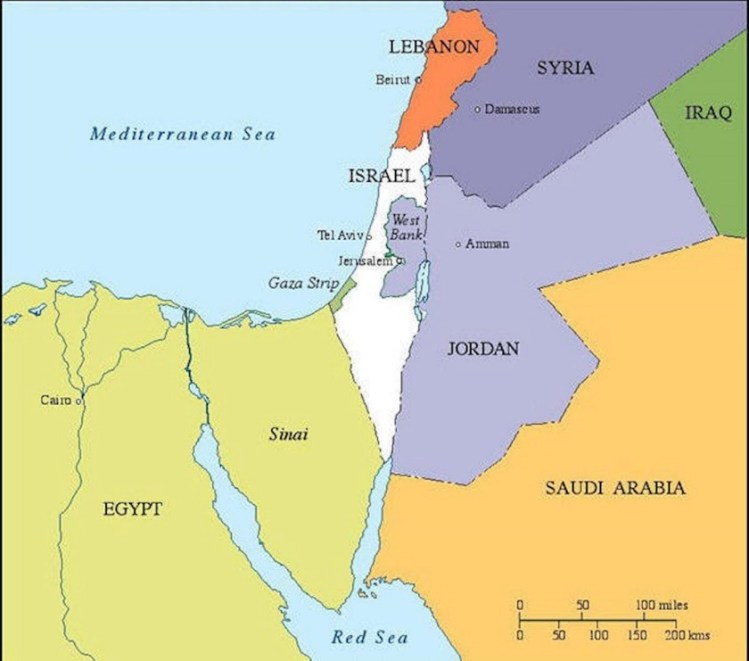
The conflict does not occur in isolation. Arab states watch closely and respond with their own interests in mind. Egypt, which controls Gaza’s southern border at Rafah, fears a mass exodus of refugees into the Sinai and therefore keeps the border tightly controlled even while calling for humanitarian relief. Jordan, with its large Palestinian population, faces constant pressure, fearing unrest if violence escalates. Saudi Arabia, which was moving toward normalization with Israel in 2023, pulled back after October 7, wary of angering its own public. Gulf states such as Qatar play a mediator role, hosting Hamas leaders and channeling aid into Gaza while maintaining relations with Washington.
Thus, the Arab world is divided between governments that fear instability and publics that remain deeply sympathetic to Palestinians. This gap shapes diplomacy: leaders often act pragmatically, but street opinion remains a constant constraint. The regional dimension means that any settlement is not just an Israel–Palestine question but a balance among Egypt, Jordan, Saudi Arabia, the Gulf states, and Iran.
U.S. Domestic Politics Beyond Opinion Polls
Shifts in American public opinion have translated into political pressure. In Congress, debates rage over whether U.S. military aid to Israel should remain unconditional. Progressive Democrats have called for conditioning or suspending arms sales, while Republicans insist on continued support. Presidential politics reflect this divide as well. The Biden administration sought to balance solidarity with Israel and concern for humanitarian costs, while Trump’s second term has leaned heavily toward Israel-first policies, framing them as both strategic and biblical. The divide over Israel now echoes the larger partisan polarization of American politics, making Middle East policy yet another battleground in the culture wars.
Legal and Human Rights Discourse
International law has become a central arena in this conflict. Human rights organizations such as Amnesty International and Human Rights Watch have accused Israel of practicing apartheid in its treatment of Palestinians.⁵ The International Court of Justice has issued advisory opinions on the illegality of settlements and the separation barrier.⁶ The United Nations has debated resolutions calling for ceasefires and humanitarian access. Meanwhile, supporters of Israel argue that Hamas’s deliberate targeting of civilians on October 7 constitutes war crimes, even genocide.⁷
This legal discourse matters because it shapes global opinion and diplomatic alliances. In Europe, Latin America, and Africa, references to international law increasingly drive critiques of Israel’s conduct. The United States remains more cautious in its language, but growing legal pressure is eroding Israel’s standing abroad and fueling calls for accountability.
The Long-Term Question of Statehood
Beneath the immediacy of ceasefires and military campaigns lies the unresolved question of Palestinian statehood. The two-state solution, once the consensus vision of the international community, appears increasingly distant as Israeli settlements expand and Palestinian politics remain fractured. Some analysts argue that the conflict is already sliding into a one-state reality in which Israel controls the territory between the Jordan River and the Mediterranean, with Palestinians relegated to varying degrees of restricted autonomy.
If the two-state solution collapses entirely, the struggle will shift from questions of sovereignty to questions of equal rights. Palestinians would then press for full political equality in a single state, a demand that would challenge Israel’s identity as a Jewish state. This horizon—two states, one unequal state, or one democratic state—is the long-term issue that no 20-point plan can resolve. It remains the core dilemma of the conflict.
The 20-Point Plan: What Would Change if Hamas Accepts?
The U.S.-backed 20-point plan seeks to blend ceasefire, humanitarian relief, hostage exchanges, demilitarization, and transitional governance. If Hamas were to accept it, the immediate effects would be dramatic. Fighting would halt, hostages would be released, and aid would flow into Gaza at an unprecedented scale. Families would experience relief, and international organizations would finally be able to reach many of the displaced and wounded. Israel would begin phased withdrawal from certain areas, although it would retain security control over borders, airspace, and maritime access.
Over the longer term, acceptance would require Hamas to disarm or place its weapons under international oversight, thereby transforming it from an armed movement into a constrained political actor. Gaza would enter a period of transitional governance, possibly under a mix of international and Palestinian Authority administration. For the United States, such acceptance would represent a major diplomatic success. Yet enormous risks would remain. Verification of disarmament is notoriously difficult, and hidden stockpiles could undermine trust. Both Israeli hardliners and Palestinian radicals would likely denounce the plan as betrayal. Moreover, the deal does not address the thorniest issues of all: the status of Jerusalem, the rights of Palestinian refugees, and the future of Israeli settlements in the West Bank. Without progress on those, peace would remain fragile.
Scenario Analysis: Three Paths Forward
If Hamas accepts the plan fully, the best-case scenario would see the war end, hostages return, and Gaza begin rebuilding under international oversight. Hamas would transition toward politics, Israel would enjoy greater security, and U.S. diplomacy would claim a rare victory. Yet this outcome would still rest on fragile foundations. Splinter groups might refuse to comply, and unresolved final-status issues could quickly reignite conflict.
A more middling scenario is that Hamas accepts only partially or with conditions. In this case, fighting would diminish but flare-ups would continue, some hostages would be released while others remained captive, and aid would enter Gaza only unevenly. Hamas might retain hidden weapons, while Israel maintained buffer zones and periodic military operations. Reconstruction would proceed slowly and be subject to political manipulation. In such a scenario, accusations of betrayal would mount, and the truce could collapse under pressure.
The worst-case scenario is outright rejection. In that event, fighting would continue, hostages would remain in captivity, and Gaza’s humanitarian crisis would deepen further. Israel would entrench its occupation of parts of Gaza, Hamas would double down on militancy, and regional diplomacy would collapse. Civilian casualties would mount, American public opinion would grow more critical, and the risk of wider regional escalation, involving Hezbollah or other Iranian proxies, would increase dramatically.
Conclusion
American opinion toward Israel has shifted from broad sympathy to a fractured and skeptical stance, especially among younger generations. The October 7 attack remains the lodestar of today’s debates: to Israel and its supporters, it is proof of the need for uncompromising security; to critics, it is a tragedy that cannot justify the scale of destruction in Gaza. Hamas launched the attack out of frustration, rivalry, ideology, and miscalculation—but also with the financial and strategic backing of Iran, as part of a broader proxy war.
Meanwhile, many American Christians, who speak most loudly on these issues, often forget that their faith is Judeo-Christian at its root. That heritage explains both the depth of solidarity with Israel and the intensity of the American debate. But beyond American debates lie the daily struggles of Palestinian civilians, the calculations of neighboring Arab states, the battles within U.S. politics, the judgments of international law, and the unresolved horizon of Palestinian statehood.
The 20-point plan now before the parties offers three possible futures. In the best case, Hamas accepts and Gaza gains a fragile reprieve. In the middling case, partial compliance delivers temporary relief but risks collapse. In the worst case, rejection leads to more death, devastation, and radicalization. The choice before Hamas, Israel, and international mediators is not simply between war and peace, but between fragile openings, temporary pauses, or outright catastrophe. What happens next will shape not only Gaza and Israel, but also American politics, regional stability, and the moral imagination of the twenty-first century.
Footnotes
- Pew Research Center, “How Americans view Israel and the Israel-Hamas War at the Start of Trump’s Second Term,” April 2025.
- Gallup, “Less than Half of Americans Sympathetic Toward Israelis,” July 2025.
- AP-NORC / PBS, “More Americans Feel Israel Has Gone Too Far in Gaza,” 2025.
- Center for Strategic and International Studies (CSIS), “Why Hamas Attacked When It Did,” 2023.
- Amnesty International, “Israel’s Apartheid Against Palestinians: Cruel System of Domination,” 2022.
- International Court of Justice, “Advisory Opinion on the Legal Consequences of the Construction of a Wall in the Occupied Palestinian Territory,” 2004; reaffirmed in subsequent proceedings.
- Cambridge University Press, Israel Law Review: “Hamas October 7th Genocide? Legal Analysis and the Weaponisation of Reverse Accusations,” 2024.
 Let's Talk About It, Lewis!
Great explanation. Just FYI, I’m pro-Israel. Worry that Islam seeks world domination. Hamas won’t ever be tamed. I think Saudi Arabia should offer land area for the Palestinians. They have room.
LikeLike
I agree.
LikeLike