I am in the second class of the early Baby Boomers (1946-1964) with my work life still going with no plans to stop. My son and daughter-in-law are in mid-career. Our grandchildren are either just now joining the workforce or will be in the next four years. I don’t have any employees, so I don’t know what it is like these days to manage people. When I did, most of my employees were self-motivated and worked (almost) as hard (some harder) as I did. Still, I talk to my peers and those in mid to top level management. A lot. I’m not a patient person, so I could never be in management again. This essay is shaped by many of my clients and colleagues. I used AI to help compose this essay with my guidance and editing. LFM
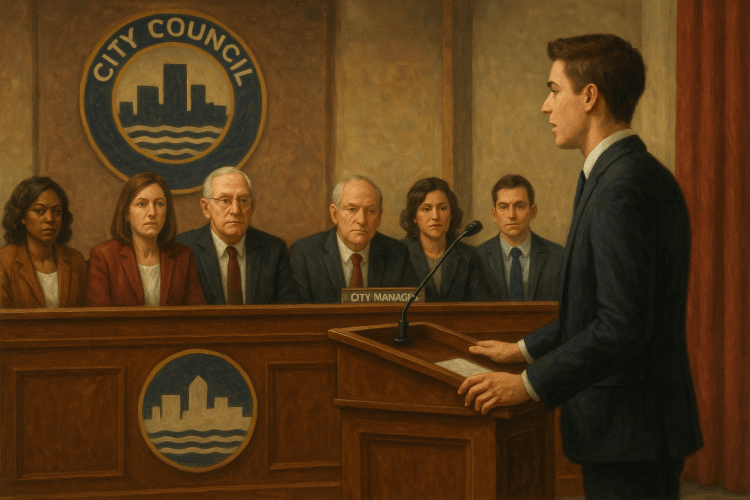
Municipal governments are unusual workplaces because they bring together four very different generational mindsets, each carrying its own approach to urgency, planning, and achievement. Baby Boomers are often nearing retirement but remain the guardians of institutional knowledge. Gen X employees sit in mid-career roles, providing steadiness and pragmatism. Millennials and Gen Z staff bring technical skills, fresh perspectives, and a desire for meaningful impact. Over all of this hovers the council chamber, where elected officials with two- to four-year terms demand quick, visible results they can bring back to their voters. The interplay among these groups defines how city hall functions day to day.
Work Centrality and Urgency
For Baby Boomers, work has long been a central piece of identity. In municipal offices, that commitment shows up in a willingness to stay late until a council packet is complete or to double-check a utility billing run down to the penny. For them, urgency is not negotiable — it is part of their professional ethic.
Gen Z, by contrast, tends to look for structure and clarity in order to summon urgency. Younger employees often ask: “What does this deadline really mean?” A city analyst in their twenties may not feel the pressure of filing a revenue report until a supervisor explains that missing it will delay sidewalk repairs or park maintenance. They need to see how their task connects to resident outcomes before they embrace urgency with the same vigor as their older peers.
Council members occupy an entirely different space. Their urgency is political. They want to show constituents visible results within their limited terms. Even while reviewing long-term comprehensive plans, they lean forward in meetings to ask: “What have you done for me lately?” This mindset drives them to demand both the grand vision and the small, near-term deliverables that can be touted on campaign flyers or in town halls.
Tenure and Institutional Knowledge
Boomers typically stay with an organization for decades, and that tenure provides the city with memory and continuity. A veteran finance director or city clerk knows instinctively that missing a Truth-in-Taxation filing can derail the city’s entire budget process. That awareness creates an ingrained sense of urgency.
Gen Z staff, on the other hand, are more transient. Many stay only two or three years before moving on to graduate school or for a few bucks more in a similar municipal job. To them, a missed filing may seem like routine paperwork rather than a red flag that could trigger a state audit or expose the council to criticism. Without deliberate mentoring, the political and legal weight of such details can be lost.
Council members fall somewhere else entirely. With limited terms and frequent turnover, most do not retain the historical memory that long-serving staff carry. They may not appreciate why a master drainage plan has been on the books for twenty years, but they will press for what is visible and politically rewarding now — a groundbreaking ceremony, a grant announcement, or the repaving of a road their voters drive every day.
Achievement and Career Paths
For Boomers, achievement was tied to climbing the ladder. Moving from budget officer to finance director or from city engineer to public works director marked professional success. Titles and promotions were the visible proof of a career.
Gen Z defines achievement differently. They find satisfaction in project-based wins, skill certifications, and visible impact. A young GIS analyst may beam with pride after launching an interactive zoning map or automating pothole reporting, even if they have no desire to supervise a department.
Council members define achievement in yet another way. For them, success is measured in the short window of their term. They need evidence of change that voters can see and touch — new playground equipment, lower crime statistics, or faster permitting. Achievement is not what happens in twenty years but what is realized in time for the next election.
Planning Horizons and Future Thinking
Baby Boomers are comfortable thinking decades ahead. They embrace twenty- to thirty-year master plans, long-term bond financing, and phased capital improvements. Their approach is steady and deliberate, with a priority on compliance and fiscal security. They know exactly how fast a decade or two can go by.
Gen Z tends to thrive in short cycles. They want to pilot a new communications campaign or launch a mobile app that shows immediate value to residents. This emphasis on agility and visibility is energizing. But without guidance, it can overlook the structural foundation required for compliance and sustainability.
Council members straddle both worlds. They will dutifully review the 2045 comprehensive plan but will quickly pivot to ask, “What will residents see this year?” They want to be able to tell voters that congestion will ease at a key intersection or that park improvements will be visible before the next election. Their enthusiasm for a five-year bond program wanes if their individual pet projects won’t be started until the third or fourth year.
Engagement and Expectations
Boomers learned to operate in a “figure it out” culture, where direction was often implicit and completing the task without fanfare was expected. Gen Z, however, seeks clarity and regular feedback. Without explicit expectations, their sense of urgency weakens.
Council members communicate expectations in broad, sometimes vague terms. They declare priorities such as “reduce crime,” “fix the roads,” or “cut red tape.” Staff must translate those slogans into actionable projects with timelines, budgets, and measurable results. That translation requires both urgency and political astuteness.
Municipal Examples
In the budget office, a Boomer finance director focuses on adopting a balanced budget and protecting the city’s bond rating. A Gen Z analyst may be more excited about building a dashboard that shows residents how each tax dollar is spent. Council members, meanwhile, demand quick budget talking points: “Did we cut the tax rate? How much is in fund balance?”
In public works, a Boomer supervisor thinks in terms of phased capital projects spanning decades. A young engineer-in-training wants digital project boards and shorter sprint cycles. The council simply wants to know how many potholes were filled this week and whether residents can see progress on the ground.
In the city clerk’s office, a Boomer clerk never misses a statutory notice deadline. A Gen Z deputy clerk relies on structured reminders and may not appreciate the consequences of a missed posting. Council members, unaware of the statutory timelines, may ask why an ordinance was not on the agenda the prior week, not realizing the legal steps involved.

Recommendations for City Leaders
Leaders can bridge these horizons by pairing long-term initiatives with short-term wins. A master drainage plan can be complemented by a neighborhood pilot project. Deadlines should be translated into political stakes so that young staff understand that a missed report is not just a paperwork issue but a reputational risk for the council.
Visible “win boards” showing weekly metrics — permits issued, potholes filled, grants applied for — can serve both to motivate staff and to provide council with quick talking points.
When I was promoted from a paint maker to the purchasing department at Glidden years ago, I had a window painted so I wouldn’t be disturbed by the shift changes. I later noticed a small 1″x2″ rectangle of the paint was scratched clear.
At first, I was bothered. Then I realized they did that to see the shift production board past my office. The night shift wanted to track how they were doing compared to the day shift!
Finally, achievement should be reframed in terms of resident benefit. Rather than reporting “design is 80% complete,” staff should tell council that “traffic delays at Main and 380 will be cut by 25% within a year.”
Evaluating Gen X Employees: A Focus on Urgency and Engagement
Gen X workers, often in supervisory or mid-career roles, provide the balance between long-serving Boomers and tech-driven Gen Z. They are independent and pragmatic, but evaluations must probe whether they are sustaining urgency and engagement.
Questions for annual evaluations should include: Do you consistently complete assignments ahead of deadline, and how do you respond when unexpected issues arise? Can you share examples where your urgency prevented a delay or crisis? How engaged do you feel in your work, and have you taken initiative to improve efficiency or resident service? How do you work through periods of disillusionment?
Supervisors should ask whether Gen X employees communicate progress clearly, close out tasks without prompting, and set the pace for younger colleagues. They should also examine whether Gen X staff anticipate council questions and package their work so that both short-term progress and long-term outcomes are visible. Motivation and energy are crucial: do they show enthusiasm under pressure, and do they keep their teams energized during long projects? Finally, evaluators should probe how these employees prepare for future demands and avoid complacency after many years in the role.
Conclusion
Municipal governments thrive when each generation’s strengths are recognized and aligned with the realities of political leadership. Baby Boomers bring continuity and deep urgency rooted in institutional knowledge. Gen Z brings agility, tech savvy, and a desire for meaningful short-term impact. Gen X provides steadiness, independence, and the ability to bridge generational gaps. Council members inject political urgency, pressing for deliverables that can be seen within two to four years.
The challenge is not choosing one horizon over the other but weaving them together. By translating long-term plans into visible near-term wins, creating clarity around deadlines, and aligning staff achievement with resident impact, leaders can cultivate both urgency and engagement across the workforce while still meeting the immediate expectations of elected officials.
✅ Annual Evaluation Checklist: Gen X Employees
(Focus on Urgency & Engagement)
1. Urgency & Timeliness
- Do you consistently complete assignments ahead of or on deadline?
- How do you prioritize urgent tasks versus long-term projects?
- When unexpected issues arise (e.g., a last-minute council request), how quickly do you respond?
- Can you give an example of when your urgency prevented a delay or crisis?
2. Engagement & Initiative
- How engaged do you feel in your work and the mission of the city?
- Do you bring forward new ideas to improve efficiency or resident service?
- Have you volunteered for projects outside your core role when needed?
- Do you proactively track project progress without waiting for reminders?
3. Accountability & Follow-Through
- Do you communicate status updates clearly, especially if deadlines are at risk?
- How often do you close out tasks without being prompted?
- Do you take ownership of mistakes and correct them quickly?
- Do peers and supervisors see you as dependable under pressure?
4. Cross-Generational Collaboration
- Do you model urgency and responsiveness for younger colleagues?
- How do you engage with Boomers (institutional memory) and Gen Z (tech-focused) to keep projects on pace?
- Have you mentored others in balancing speed with quality?
5. Responsiveness to Leadership & Council
- When asked, “What have you done recently?” do you have clear, recent accomplishments ready?
- Do you package your work so progress is visible in both short- and long-term outcomes?
- Do you anticipate council or supervisor questions rather than reactively answering them?
6. Motivation & Energy
- Do you show consistent enthusiasm even under pressure?
- How do you keep yourself and your team energized during long or repetitive projects?
- Are you setting an example of urgency and focus for the team?
7. Future Readiness
- How are you preparing to maintain urgency and engagement under new conditions (tech, mandates, emergencies)?
- What steps do you take to avoid complacency or “coasting”?
- What professional development would help you stay sharp and engaged?
 Let's Talk About It, Lewis!